



Abstract
Children and young people’s access to and engagement in education is a key determinant of future positive outcomes. Children and young people in out-of-home care disproportionally experience educational disruptions and disengagements affecting their ability to participate in schooling, further and higher education. There is increasing international interest in the participation of young people with lived experience of out-of-home (OOHC) in research projects. This paper presents the findings of a study in the Australian state of Victoria where a group of lived experience consultants (LECs) were employed to consult on the results of a broader survey of the attitudes of professionals, carers and care leavers regarding the educational experiences of children in OOHC. Two meetings were held with the LECs, one to gain their views on the survey findings, and secondly, to reflect on their experiences working on the project. The findings suggest that formalizing the engagement of lived experience voices in research, inherently a qualitative approach, promotes a more informed representation of the challenges faced by children and young people within OOHC. In this case, engaging young adults with lived experience helped identify key barriers to effective educational participation that the project design may otherwise have overlooked. They also identified key strategies for improving LEC engagement such as involving them in developing key research aims and questions, and enabling the provision of a ‘safe space’ for them to participate. This new approach promotes co-design at multiple levels, providing opportunities for a meaningful collaborative approach to research.
Introduction
Article 12 of the United Nations Convention on the Rights of the Child emphasizes that children have a right to be heard and to participate in any ‘judicial or administrative proceedings’ that impact on their life (United Nations, 2009; see also Mason and Fattore, 2021). This right to participate in decision-making processes is particularly significant for children and young people living in, or transitioning from, OOHC, whose lives are often controlled and directed by adult caregivers, corporate agents, legislation and court orders. The Victorian Commission for Children and Young People has argued that participation is not only a core human right, but also central to the process of ‘healing’ for many young people seeking to recover from adverse childhood experiences (CCYP, 2019: 105).
Researchers emphasize that participation by children and young people in OOHC decision-making and policy development should go well beyond occasional consultations. They should have access to detailed information that enables them to actively contribute to decision-making processes, be given an opportunity to freely express their views and preferences, and their opinions should be given respectful consideration (Cashmore, 2002; McDowall, 2013). Participation should extend to all important decisions ranging from daily activities to contact with family members and friends, education, and particularly placement arrangements (McDowall, 2013, 2019).
Additionally, policy makers and researchers are increasingly utilizing co-design processes with a range of service users whereby their experiential knowledge informs a process of mutual collaboration to define a social problem, identify needs and potential service options, plan and implement programs, and evaluate outcomes (Faulkner, 2018). Lived experience roles within research projects can take a number of forms ranging from consultancy which may involve membership of an advisory or consultative committee or board (Cleary et al., 2006) to directly leading or co-leading research via involvement in research design, data collection and analysis, and ethical overview (Rose, 2019). Lived experience insider knowledge can arguably assist to reduce the power imbalance between researchers and research subjects, and so enable more effective communication and sharing of ideas and information. It can also provide them with valuable work experience skills and training that enhances opportunities for further employment (Dixon et al., 2019; Kelly et al., 2016; Lynch et al., 2020). The narrative and reflective nature of lived experience research contributions primarily align with qualitative approaches. Strategies to promote the voice of lived experience should therefore be of key interest to qualitative social work researchers.
To date, lived experience contributions are well-established in the mental health and alcohol and drugs fields. For example, the consumer movement in mental health has been highly critical of the unequal power relations within psychiatric service systems particularly regarding forms of involuntary treatment such as seclusion and restraint. There are numerous global examples of lived experience activities informing the reform of mental health policies and practices to enable the introduction of co-designed and participatory services (Brosnan, 2012; Daya et al., 2020). Similarly, there is a significant history of lived experience roles via self-help groups such as Alcoholics Anonymous contributing to service and treatment reform in the AOD area (Bardwell et al., 2018). However, in both fields of practice, tensions and barriers remain around stigmatization by professional workers, and peer workers achieving satisfactory wages, working conditions and career opportunities (Bardwell et al., 2018; Brosnan, 2012).
Lived experience involvement is arguably less embedded in the out-of-home care field. Nevertheless, Dixon et al. (2019) present examples of three forms of co-design processes with care-experienced youth involving expanded levels of involvement ranging from consultation to peer research to co-production. Peer research methodology has been effectively applied in a number of leaving care research studies internationally such as Scotland (Frame, 2018), Northern Ireland, England and Argentina (Kelly et al., 2016; Lynch et al., 2020) and Africa (Kelly et al., 2020), aiming to optimize the impact of lived experience insights into research design and data analysis.
For example, a Finnish study utilized 10 care leavers as co-researchers alongside four academics to interview 53 young people leaving OOHC. That study involved the peer researchers in all stages of the research from research question design to data collection, and analysis to distribution of results. The study findings provided evidence that a peer research approach could enable youth to enhance their research skills, and inform better support services for young people transitioning from OOHC (Törrönen and Vornanen, 2014). Similarly, a study involving care leaver peer researchers in five European countries engaged the young people in research design, interviews and data analysis, and the dissemination of findings. That study also reported positive outcomes including the richness of the data, and the enhanced research and life skills of the young people involved (Verweijen-Slamnescu and Bowley, 2014).
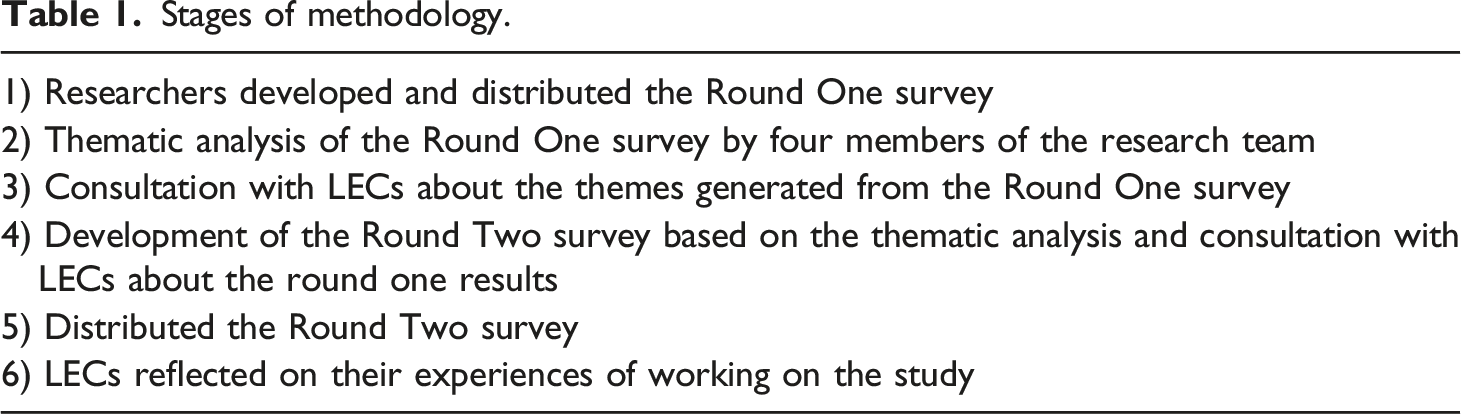
Stages of methodology.
Children in out-of-home care and their educational experiences
In June 2021, there were about 46,000 children in Australian OOHC nationally including 9146 in the State of Victoria, where the current study was located. The majority (90% in total) of those children in OOHC were either in relative/kinship care or foster care, while seven per cent lived in supervised residential care homes with rostered staff (AIHW, 2022).
Global research identifies children growing up in OOHC as a particularly vulnerable group who experience major barriers accessing key developmental and transitional opportunities pertaining to housing, physical and mental health, employment and training, and social relationships. One ongoing concern is the educational pathways and outcomes of children and young people living in and transitioning from OOHC (Strahl et al., 2020). Multiple studies suggest that children in OOHC experience poorer academic outcomes compared to the general population as reflected in measures of reading, writing and numeracy plus higher rates of school withdrawal, grade retention and school exclusion due to suspension or expulsion (Brady and Gilligan, 2019; Brownell et al., 2015). Yet, young people in long-term care demonstrate better educational progress than at-risk children who remain in the family home (Sebba et al., 2015).
Two recent Australian studies confirm concerns around poor outcomes for those in OOHC. Townsend et al. (2020) reported that a sample of 4126 children aged 0–17 years who entered care for the first time in the state of New South Wales between 2010 and 2011 had problematic academic outcomes including non-completion of core work, regular school absences, poorer grades and a threat of suspension or expulsion. Lund and Stokes (2020) completed a scoping study of 25 reports on the educational outcomes of children in care since 2010, and presented evidence of poor outcomes compared to their peers in the general population.
A range of pre-care, in-care and transition from care factors appear to either enable or hinder educational achievement. Pre-care experiences of abuse and neglect may cause long-term trauma that contributes to developmental delays and ongoing social and emotional difficulties (Day et al., 2012; Maclean et al., 2016). Many children enter care from highly disadvantaged families characterized by mental illness, family violence, substance use and general social exclusion which may have negative impact on educational engagement prior to entering care (Jackson and Cameron, 2012; Lund and Stokes, 2020; Sebba et al., 2015; Sebba, 2021).
Several in-care factors hinder or enhance educational outcomes and attainment including instability in placements and schools (Goyette et al., 2021), low expectations from social workers, teachers and carers, limited assistance with homework, a lack of supportive relationships with caring adults, and inadequate personal and financial support (Mendes et al., 2014). Additionally, there is a lack of collaboration between child protection agencies and education, and attitudinal and social problems at school for these children, including discrimination and bullying from other students and teachers, lack of interest in study and general unhappiness. This often leads to truancy, suspension and expulsion which have been linked to educational deficits (Mendes et al., 2014; Day et al., 2012; Lund and Stokes, 2020).
In contrast, there are a number of crucial in-care factors which can facilitate educational achievement. These include strong personal motivation and resilience including a capacity to overcome childhood trauma and adversity, having a close supportive relationship with a responsible adult, stability in care and school placements which facilitate continuity in school attendance, satisfactory accommodation and financial help (Mendes et al., 2014). Children and young people in care also require ongoing emotional support, encouragement and advocacy from carers, teachers, family members and social workers, and integrated child welfare and education case management. The active involvement of children in planning and decision-making around education is vital. Key practical supports may include early intervention to tackle literacy and numeracy deficits, and ongoing specialized coaching and tutoring based on individually tailored learning programs (Lund and Stokes, 2020; Mendes et al., 2014; Sebba and Luke, 2019; Townsend et al., 2020).
Additionally, holistic and gradual transitions from care are likely to contribute to educational success. Transitions should be based on levels of maturity and skill development rather than simply age, and include secure housing and financial support via an extension of care beyond 18 years (Courtney and Hook, 2017). Conversely, abrupt transitions that involve withdrawals of government support at a fixed chronological age of 18 years when young people are finishing or about to finish school, can significantly undermine prospects for participation in further and higher education (Mendes et al., 2014).
Study aims and methodology
To date, with some exceptions (e.g. Berridge, 2017), there has been limited empirical examination (Sebba and Luke, 2019; Sebba, 2021) of the academic and school-related strengths and challenges of young people in OOHC. Consequently, the broader aim of the Delphi study was to examine the educational experiences and challenges of children in OOHC from the perspectives of foster and kinship carers, residential care workers, professionals/educators, people with lived experience of OOHC and parents of children in care. An additional aim was to identify the strengths and limitations of current educational responses for children in OOHC, and the educational reforms needed to enhance the educational experiences of children in OOHC. An associated aim (which is the primary focus of this paper) was to examine whether the employment of LECs as participants in the project design would enhance our methodological processes, and overall understanding of the educational experiences of children in OOHC.
The presentation of this paper will outline both the details of the broader Delphi study, as well as the processes and contributions of the lived experience consultations. There is a growing literature examining peer research and co-design processes (Mannay et al., 2019; Pahor, 2020). This paper integrates lived experience consultation with Delphi survey results to demonstrate the benefits to knowledge and evidence building that qualitative lived experience consultation can achieve. More details about the Delphi methodology and results can be viewed in a further study by Berger et al. (2022).
The study employed a Delphi methodology which involved administration of two survey ‘rounds’ with people that had professional or personal experience of OOHC. This process involved interactive and multistage ‘rounds’ designed to capture expert opinions across key stakeholders (Hsu and Sandford, 2007
A significant design innovation was the employment of four care leavers as lived experience consultants (LECs), one holding a dual role as researcher and lived experience consultant, to ensure that the voices and experiences of care leavers were formally represented within the study. SM was initially hired as a researcher who contributed lived experience expertise in all stages of the study including research design, data collection and data analysis. Additionally, three further LECs (NA, GA and our third consultant whose name is not shared) were involved in analysing the themes generated from the initial coding of the qualitative content of the Round One open-ended questionnaire. Later, SM, NA and GA were invited to reflect on their experiences of working on the study. The findings section which follows primarily explores the role of the LECs in the study, and the benefits and challenges experienced. The broader study findings have been presented elsewhere (Berger et al., 2022).
Method
Participants
In Round One, 45 participants completed a self-report questionnaire consisting of open-ended questions about the educational experiences and needs of children in OOHC. Participants in Round One comprised 24 professionals working in OOHC or education systems, 10 people with lived experience of OOHC, and 11 carers of a child or young person placed into OOHC. The professionals and educators included child welfare caseworkers and managers directly engaged with young people in OOHC, or education professionals involved in policy planning. Carers included those providing direct care to children and young people in OOHC such as foster carers, kinship carers and residential care workers. A person with lived experience of OOHC is a young person who had formerly resided in OOHC, and was now aged 18 years or older. A parent or caregiver was an adult who had at least one child placed in OOHC.
Lived experience contributions
SM is an early career social work academic who holds lived experience of out-of-home care and disadvantage. Within this project, SM provided direction that promoted meaningful engagement with LECs, and ensured that care leaver views and individual life-story narratives were embedded within the study. To achieve these aims, SM’s role included reviewing the survey design and contributing to the broader Delphi development, facilitating the recruitment of LECs, undertaking both quantitative and qualitative analysis, and finally contributing to the collation of the findings of the study.
GA, NA and our third consultant were employed as LECs to provide broader insights into some of the issues faced by children and young people within OOHC and beyond, and how said experiences may impact on educational outcomes for this cohort. Consequently, their role included review of, and provision of feedback on, the results from Round One of the Delphi survey, alongside broader feedback on their experiences of collaborating on the research as LECs. These consultations were deliberately planned to be casual and informal, with a view to creating a comfortable space in which LECs could contribute their expertise.
Round one survey
The Round One survey consisted of a series of open-ended questions that related to the main research questions. Examples of open-ended questions used to elicit the expert opinion and perspectives of the key stakeholder groups include: 1. What do you think are the challenges that children and young people living in OOHC face when it comes to learning? What do you think are the strengths? 2. What do you think are the emotional challenges that children and young people living in OOHC face relating to their schooling or education? What do you think are their strengths? 3. Which types of supports available do you think are most effective in enhancing the educational experiences of children and young people in OOHC? 4. What do you think could enhance the educational experiences of children and young people in OOHC?
Procedures
Approval from the university Human Research Ethics Committee was obtained to undertake this research. The research team consisted of social work and education academics with expertise in the area of OOHC including (as noted above) one researcher with lived experience of OOHC who also holds a Master of Social Work degree. The team used their expertise and experience to identify potential participants to take part in the first survey round of the Delphi study who were contacted via our industry partner, Anglicare Victoria. The same participants were then invited to complete the Round Two survey 3 weeks later. A snowball sampling approach was also used which involved participants sharing the invitation to participate with other professionals/carers/parents and people with lived experience of OOHC. This approach is a useful means for accessing stigmatized groups such as care leavers, but a limitation is that it can result in fairly homogenous results as the participants may be connected via professional or social networks (Flynn and McDermott, 2016). The lived experience researcher (SM) and another member of our research team recruited the other three LECs whom they knew to have been involved in previous peer research roles. Two of three LECs are formally involved in Berry Street Victoria’s Y-Change group.
Data analyses
(Braun and Clarke, 2006) six steps for thematic analysis were used to analyse the Round One open-ended questions. Initially, three of the authors independently reviewed participants’ responses from the Round One survey. These three researchers then independently identified themes and patterns within the data. The three researchers (one of whom had lived experience of OOHC) then met to compare and converge their themes with a fourth member of the research team. The four authors then came to a consensus during this meeting on the final set of themes. The themes were then written up by members of the research team and presented to the three other LECS, for them to review and provide feedback on the themes. The three LECs gave feedback as to whether the experiences articulated by survey participants were, from their perspectives, representative of the educational experiences of children and youth in OOHC. This approach aimed to enhance the trustworthiness of the survey findings via triangulation with qualitative lived experience expertise. The feedback of LECs on the Round One survey findings was not further analysed, but rather directly reported alongside findings below. Themes generated from the thematic analysis of the first round of data plus the feedback from the three LECs then informed the development of the 5-point Likert style questions for Round Two of the Delphi. See Berger et al. (2022) for more information about the Round two survey and Delphi results. Finally, feedback from LECs on their experience of collaborating on this research, and their suggestions for future research including LECs is directly reported in the final section of the findings.
Findings and lived experience feedback
Summary of survey one results
The first round of survey responses from professionals established a consensus from their responses that: (a) Aboriginal and Torres Strait Islander children and young people in OOHC require culturally safe and inclusive spaces to promote learning environments that enhance educational outcomes; (b) the major challenges experienced by children and young people in OOHC are related to childhood trauma and adversity; (c) the principal strength that children and young people bring to their education is resilience (which incorporates self-determination, adaptability, independence and innovation).
The responses from the carers and care leavers highlighted a further range of challenges such as coping with the school environment as a result of early trauma and adversity, and difficulties with mental health, bullying, and adjusting to the social demands of school life. They emphasized that young people’s low confidence and their missing out on events as a result of limited finances or difficulties with securing approvals caused ongoing problems in the schooling environment. They also identified a number of strengths of young people such as resilience, adaptability to change, resourcefulness and independence. Additionally, they noted children and young people in OOHC held notable skills in socializing with different peer groups, empathy and compassion.
Overall, six key integrated themes were identified from the Round One responses emanating from the professionals, carers and care leavers. They are: 1) Indigenous children and young people are over-represented in OOHC, and require culturally safe and inclusive spaces to enhance their educational outcomes; 2) Children and young people in OOHC display enormous resilience in order to overcome barriers to educational participation; 3) Children and youth in OOHC experience an intersectionality of trauma and adversity which may impact adversely on their educational opportunities; 4) Current programs and policies are responsible for a systematic othering of children and youth in OOHC which results in poor educational supports and stigma. 5) The OOHC cohort need individualized responses, and integration into school community to facilitate a more functional learning environment; 6) A disconnect between policy and reality is reflected in the vastly different views of carers and care leavers compared with those of professionals. These divergent perspectives highlight the need for co-designed research which elevates the voices of those with lived experience as a means of improving service design and delivery.
Qualitative component one: Lived experience consultation findings
Following the compilation of the key integrated themes (above) from the Round One Survey, three of the CIs (one of whom was researcher/LEC (SM)) convened a meeting with the other three LECs to attain their perspective on those six themes. This meeting resulted in the following feedback:
There seems to be a major gap between professional workers and young people with lived experience regarding their knowledge of support services, which is likely to impact educational engagement. As noted by NA: ‘They (the professionals) always know what is available, but generally unless someone tells them or finds out through a community groups [care leavers] are not really going to know what’s available. And like, everything is too hard, so what’s the point?’
Professionals seem to hold unrealistic expectations concerning the behavioural/emotional coping and regulation skills of young people in OOHC, with potential impacts on relationships between young people and professionals, as well as educational engagement. According to NA: ‘A lot of young people that’s their entire life, that’s how they cope, they only know that way of living if they have been born into violence or whatever it is, so a lot of young people won’t identify that behaviour as being bad, because from the beginning of their life, that’s all they have known’.
As a result of childhood trauma, many youth in OOHC experience adverse mental health and behavioural outcomes. Yet, their mental health needs are not adequately addressed by services due to long waiting lists and inadequate number of sessions available within current mental health care plans. NA comments: ‘If you’re saying sixweeks and then you will get the mental health support, that doesn’t work and young people are going to disengage. If not, they might end their life in that time, it may sound really harsh, but it is true’.
Once youth leaving OOHC turn 21 years, there is an adverse impact on their access to mental health supports and associated well-being due to the cessation of funding for caseworkers. As noted by NA: ‘If you are someone who has stayed in your foster care placement past the age of 21 and then you are looking to move out and you need those resources to move out, that’s an issue. And especially if you are trying to do education but you don’t have the resources to be able to set yourself up stably in a house. You may have the house, but you don’t have a washing machine or some of the essentials, your education will suffer’.
Because young people in OOHC are often not provided with basic knowledge pertaining to washing, budgeting and shopping, they may leave care lacking core independent living skills. According to GA: That takes out a massive amount of effort dealing with that, not to mention all your time, so you can’t find further education, you can’t go back and get your Victorian Certificate of Education, and you can’t do any of that anyway. You don’t have the time to then find a caseworker if everything else in your life is taking up all your time’.
There are both positives and negatives involved in attending alternative schools, and it is important that youth in OOHC be given choices about their preferred educational pathways. NA noted that for some young people ‘that alternative school means they are more likely to engage and then there is less pressure on them for attendance and they’re reaching goals they may not have if they were in a mainstream school’.
It is crucial that plans and decisions about education or other interventions incorporate the consent of young people. They should always be given an opportunity to express their agency as highlighted by Berridge’s (2017) study of strategies that advance educational achievement. For example, GA noted that he was given extra support at school including more flexible times to attend classes, a teaching assistant in some classes, and access to after school programs. But in his view, ‘there wasn’t any choice around any of these things and with some of those things, it made the fact that I was in residential care much more obvious and I couldn’t distance myself from that fact if I wanted to’.
Similarly, NA advised that: What I have seen in care is that time and time again is like the control is out of the children’s hands and the young people’s hands and so decisions are made about their lives that potentially adversely affects them and they don’t know that that’s happened or they know it’s happened but they have had no control over it and so another issue with all of this stuff is that you are putting in place things for those young people without actually their consent.
Although the language of some support programs has changed and arguably improved (for example the introduction of ‘trauma-informed care’ and ‘therapeutic residential care’), young people feel there has been no real change in actual programs.
There is still only limited or inadequate information provided to young people about the content of support programs.
The word ‘resilience' has too often been problematically co-opted by professionals in a manner that individualizes success despite disadvantage, and fails to accurately reflect the extent of adversity and trauma that children and young people, in and who have left OOHC, have had to overcome to succeed educationally.
The reflections of the LECs were then used to inform the Likert questions (as noted above in the Methodology) that were used in the second Delphi survey.
Lived experience reflection findings
After completion of the two Delphi rounds of data collection, a further meeting was convened by two of the CIs with SM shifting into more of an LEC role alongside two other care leavers, NA and GA. All were asked to reflect on the benefits and challenges of the LEC process including any alternate strategies they would recommend for future projects, and whether they would have preferred to be involved in the project at an earlier stage. The fourth LEC, AB, was not able to participate in this meeting.
This consultation identified a number of benefits of the process. Previous research has identified that researchers with lived experience can advance the development of more effective interview questions (Kelly et al., 2016). Similarly in the initial design of our Round One survey questions, SM as a researcher and LEC identified a number of key terms that needed to be added such as residential care, and additionally targeted the inappropriate use of what was pejoratively termed ‘clinical’ language that required amending. LEC GA advised that SM’s involvement had ensured that the survey included a number of questions that researchers without lived experience often forget to ask. He added that the LEC participation also helped to ensure that questions were not framed in a ‘harsh or judging’ manner, ‘or just expecting a client to be one way or the other’, and that the wording was not skewed to a ‘researcher based academic viewpoint’ full of ‘fancy words’. Similarly, NA emphasized the importance of framing the language of the survey so that it did not distort the meaning of responses of care leavers. For example, she stated:
‘So you could ask was your second placement better than the first. And it could be a resounding yes, but that doesn’t mean that it was actually good. It just means that it was better than the previous one. Because a lot of young people with lived experience, they’re coming from a baseline of terrible life experiences, whereas people who may not have that lived experience are coming from a higher standard of what they think is the life experience of these young people, and it can mean the difference between good questions and questions that aren’t really getting to where you want them to be’.
Improved engagement with research by care-experienced young people
Other studies have reported that the presence of peer researchers may influence higher levels of participation by care leavers (Kelly et al., 2016; Verweijen-Slamnescu and Bowley, 2014). Similarly, LEC involvement in our study may have positively influenced survey engagement of people with lived experience. In NA’s opinion, other surveys have used ‘complex language that doesn’t accurately reflect other questions and allow you to accurately reflect on your experience … and you’re less likely to engage’. In contrast, regarding the current survey, she affirmed that she was ‘more likely to then recommend that to other young people to actually have a look at because it’s something that I’d personally looked at and that I could pass onto other young people to participate in’.
Lived experience expertise is valuable from early on
An earlier reflection by a peer researcher emphasized that care leavers should be formally involved in research design (Hoffman-Cooper, 2021). Similarly, the LECs argued that this study could have benefited further from involving young people with lived experience even earlier whilst developing the key research aims and questions. They also emphasized the diversity of views amongst care leavers. GA stated: ‘I think that the earlier on you have lived experience, because no two people with lived experience are going to have the same views or experiences, you also get a wider view on everything pretty much, because even if you have two people that went into OOHC at the exact same age and stayed in it for the same amount of time, they’re going to have two completely different views and opinions on things’.
GA added that OOHC varied widely according to the service provider: ‘So even though you could have five people each from a different organisation that all went through residential care for 3 years from the age of 10, you’ll have widely different experiences just because of the organisation’. Similarly, SM noted that whilst she and GA lived in the same residential care facility for 3 years, they had ‘vastly different experiences’.
Creating ‘safe spaces’ in research
Additionally, the LECs offered some concrete feedback on establishing the consultation process as a ‘safe space’. One recommendation was to provide a research team charter to affirm the validity of differing perspectives. Another proposal was to organize access (if required) to formal mental health support services to assist with debriefing in case the content triggered memories of bad personal experiences. An associated suggestion was to offer LECs a choice of multiple forms of participation (i.e. what Dixon et al., 2019:17 call the ‘where’ of participation) given some find it stressful to talk on the phone or dislike texting, whilst others may prefer to participate in a small group discussion rather than completing an online survey, and some like to attend in person or alternatively feel more comfortable in an online meeting. A further recommendation for live meetings was to include free meals and the option of taking food home given that many LECs come from disadvantaged backgrounds. These recommendations partly mirror findings from earlier cross-national studies about the importance of making emotional support available to peer researchers as needed (Kelly et al., 2016; Verweijen-Slamnescu and Bowley, 2014).
Conclusion
The involvement of four lived experience consultants (LECs) in our project provided an opportunity for care leaver voices as per similar projects in other countries (Dixon et al., 2019; Kelly et al., 2016; Lynch et al., 2020) to be heard in the development of research design, data analysis, and the dissemination of project findings to inform policy and practice reform. Recruitment of LECs relied on pre-existing relationships, the development of which will be key for other qualitative social work researchers looking to adopt similar methodologies. Indeed, these connections between academic researchers and LECs (as previously noted by Törrönen and Vornanen, 2014; Verweijen-Slamnescu and Bowley, 2014) seem to be crucial for ensuring that the latter receive appropriate levels of emotional support during the research process.
Feedback from the LECs (who also co-authored this article) suggests that their participation directly advanced the relevance and applicability of this study to care-experienced young people. In particular, they highlighted the ongoing personal challenges that many young people within and beyond OOHC have to overcome in order to succeed educationally. Their feedback identified the need for a holistic range of support services including mental health supports and living skills training given that many care leavers are still recovering from long-term trauma and adversity. They also provided constructive proposals for improving the gains from LEC involvement in future studies around involving all LECs earlier in the research process, and enabling the provision of a ‘safe space’ for LECs to participate.
The LECs also reminded us of the diversity in experiences and views of those who are care-experienced, and that care leaver voices need to reflect that diversity in research contexts. An obvious limitation of the study was that in contrast to some of the earlier peer research studies we noted (e.g. Törrönen and Vornanen, 2014), only one of the four LECs was able to participate in all processes of the study including the initial planning of the research design and the first round of data collection. It may have been particularly advantageous for the four LECs to be involved in framing the language of the survey before the first Delphi round was completed. Additionally, the four LECs cannot be viewed as representative of most young people with OOHC experience. A further limitation may have been the completion of only two rather than three rounds of the Delphi survey. Future research projects should ideally include LECs from a wide range of care backgrounds, those who have experienced more volatile transitions from care such as becoming young parents or entering the youth justice or homeless service systems, and particularly Aboriginal and Torres Strait Islander youth. Additionally, inclusion of LECs at the earliest possible point in research design and development is recommended, as well as ensuring flexible and supported options for consultation.
Footnotes
Declaration of conflicting interests
The author(s) declared no potential conflicts of interest with respect to the research, authorship, and/or publication of this article.
Funding
The author(s) disclosed receipt of the following financial support for the research, authorship, and/or publication of this article: This work was supported by the Anglicare Victoria (2020 Grant) and Monash University Inter-Faculty Seeding Grant (2020 Grant).
