




Abstract
The comprehensive exam process is a rite of passage in the scholarly world, and as such the movements of this process often feel like a guarded secret to graduate students. As a PhD candidate, I left the comprehensive exam process feeling both initiated and inundated. This article is an attempt to uncover the secret that is the comprehensive exam process, but more importantly this article is an artful documentation of my journey through the process. Through arts-based engagement with artifacts from my comprehensive exam process I hope to explore and uncover the power this academic journey holds so other graduate students can enter their journey with open eyes.
Jacob left Beersheba, and went toward Haran. He came to the place and stayed there that night, because the sun had set. Taking one of the stones of the place, he put it under his head and lay down in that place to sleep. And he dreamed, and behold, there was a ladder set up on the earth, and the top of it reached to heaven; and behold, the angels of God were ascending and descending on it! (Genesis 28:10–12, English Standard Version)
As a recent graduate from a PhD program, I feel as if I have just woken up from a dream much like Jacob’s, a dream where I was faced with the impossible task of ascending (and sometimes descending) a ladder leading nowhere and everywhere at the same time. The chaotic but organized movement of comprehensive exams, prospectus, and dissertation writing is one of great struggle followed by pronounced triumph; however, when it is over, the memory of it quickly begins to fade. With graduate school behind me, I feel the once vivid experience quickly fading from my consciousness, much like a dream. In an effort to create a tangible moment, I have chosen to collect and share a portion of my own experience in graduate school. This is my story of climbing Jacob’s ladder. While it is a story about my experience with the comprehensive exam process, it is also a story about how I used art to process the process of becoming.
The process of becoming
The comprehensive exam process is a rite of passage in the scholarly world, and as such the movements of this process often feel like a guarded secret to graduate students. In the United States, most PhD students are asked to complete a series of questions demonstrating their understanding of their research topic, methodology, and theory. These questions typically come from each of their dissertation committee members and involve a relatively quick turnaround time. At my university, we were asked to write around 20 pages and spend 2 weeks on each question. The overarching goal of the comprehensive exam is to prepare your thinking and writing before beginning your dissertation research. As a second year PhD student, I left this experience of writing and thinking feeling both initiated and inundated.
This article is an attempt to uncover the secret that is the comprehensive exam process, but more importantly, this article is an artful documentation of my becoming-through process. Having recently been catapulted into the real world, I find myself in a new role as an assistant professor, forced to consider assuaging my mother’s need for a grandchild, resume the chore of doing laundry in a timely manner, and once again make sure the grass is mowed so my neighbors will not whisper when my car pulls out of the driveway. With life swiftly creeping in, I feel the magic of the graduate experience slipping from my consciousness. There is something so empowering about allowing yourself to be consumed with a goal, and for the first time in my life, I abandoned all other endeavors and focused on one singular goal, to get a PhD. I want to remember this process the same way you remember your wedding, looking through the albums, touching the invitations, leafing through the cards, recalling the smell of the US$20 a plate dinners, and the look on your new husband’s face. Why are the memories of that experience so vivid, but the memories of years in school a myriad of word documents and grade point averages? I am forcing myself to stop and create a tangible moment. So as a wedding is the culmination of years of dating, comprehensive exams are the conclusion of years of writing, reading, and presenting. I saved EVERYTHING from my comprehensive exams, and now I am returning to them with new eyes, in search of insight and inspiration. In this article, I have set the task of re-discovering the moments in the comprehensive exam process and exploring them through art, writing, and poetry; all the images you see, the poetry you read, and some of the excerpts and journals are artifacts of my exam experience. This article documents the process of becoming I experienced. This article captures my ascent and descent of Jacob’s ladder.
The funny thing about ladders
The funny thing about ladders is once you go up them, you usually have to come back down. They take you somewhere with the exact goal of bringing you back down at some point. I see the comprehensive exam process as the going up part of my encounter with Jacob’s ladder, and this arts-based engagement of the experience as going down. In the middle of those two experiences is a lot of climbing up and down, backtracking and retracing my steps. What I hope to create is something new and exciting, to capture the essence of an experience through art, poetry, and research. This arts-based pursuit is not without influences, so next I hope to explore some of those influences and establish an understanding of knowing as an artful action.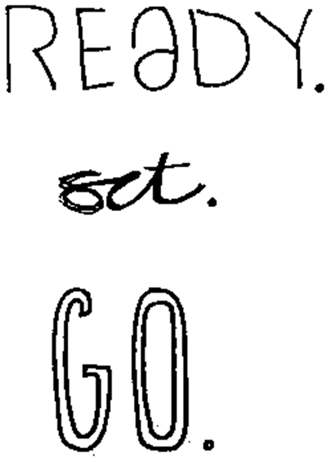
The art of knowing
From my comprehensive exam responses
Eisner (2008) has written extensively on the epistemology of art in an attempt to move away from the positivist tradition of art as emotive and into a place where art is viewed as a way of knowing. “The point here is that knowing is a multiple state of affairs, not a singular one … we need to know different things for different purposes” ( Eisner, 2008 ). Barone and Eisner (2012) discuss the practical, theoretical, and productive manifestations of knowledge. Practical knowledge is the ability to determine “courses of action, and commitments in order to resolve a particular situation that needs attention” ( Barone and Eisner, 2012 : 58), while theoretical knowledge is likened to the knowledge found through the hard sciences, a way of knowing derived from hypothesizing and systematic experimentation. The third form of knowledge Barone and Eisner draw on is productive knowledge; this way of knowing deals with the process of creating. “Productive knowledge is a making of something, not simply the ability to understand what a person has done. Productive knowledge lives in the universe of action” ( Barone and Eisner, 2012 : 58).
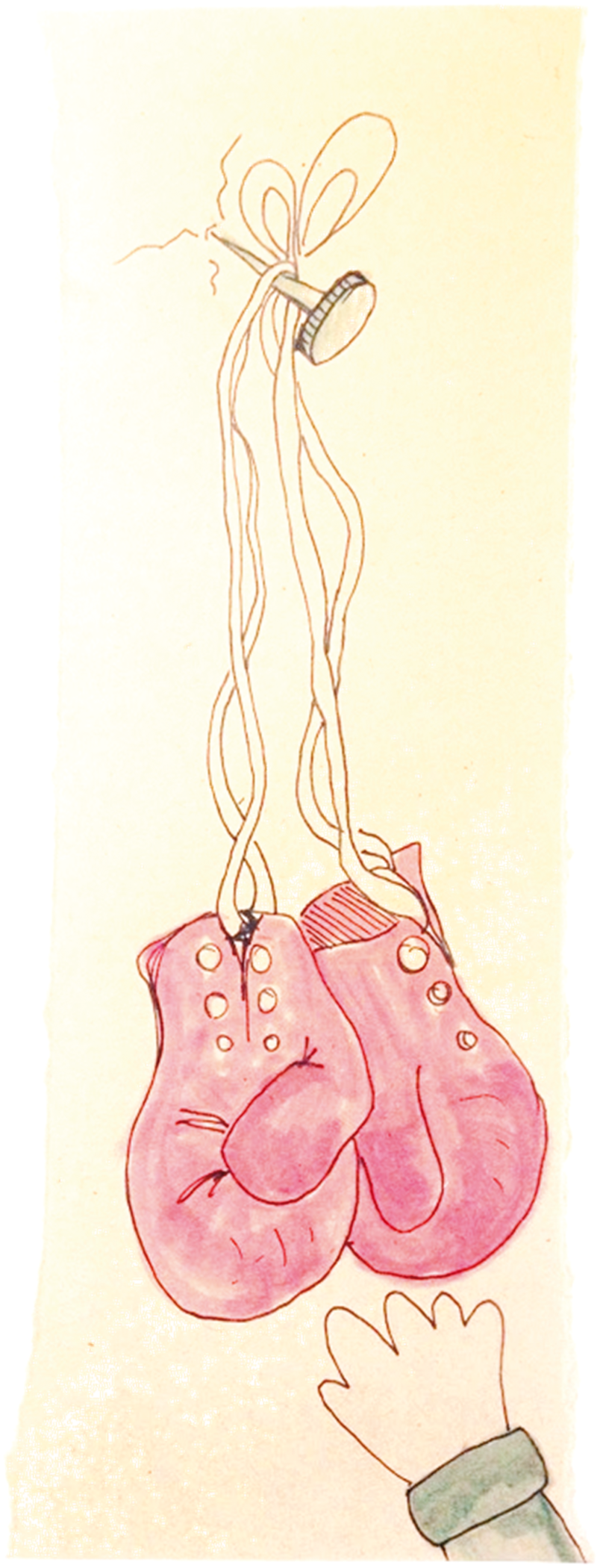 Because I am interested in writing prose, poetry, and creating artwork to work through this process, I thought it relevant to explore other arts-based understandings of knowledge, so keeping with the arts-based interests of knowledge as active, I searched the writings of Estelle
Barrett and Barbara Bolt (2010)
. As scholars in creative practice and production as active forms of research, I found they too had a multifaceted view of what constitutes knowledge. Making a distinction between precise or explicit knowledge and “tacit knowledge” (
Barrett and Bolt, 2010
: 4) allows for a conception of the action of making as a way to construct knowledge. Tacit knowledge considers “what Bourdieu has theorized as the logic of practice or of being in-the-game where strategies are not pre-determined, but emerge and operate according to specific demands of action and movement in time” (
Barrett and Bolt, 2010
: 4). Graeme Sullivan differentiates between knowledge that is collected and knowledge that is created, identifying the latter as knowledge realized through artistic production (
Sullivan, 2010
). “The tendency to identify research exclusively with science has created a limiting imbalance” (
McNiff, 1998
: 31) and expanding an understanding of knowledge to include artistic endeavors is an attempt at returning a balance to research. What all these conceptions of knowledge share is the acknowledgement of multiple ways of knowing paired with the construction of knowledge occurring in a progressive, active manner. Additionally, these explorations of knowledge consider the role of art in the creation of understanding. It seems to be a universally accepted reality that we gain something from looking at and making art, but what is that something? Additionally, when considering the juxtaposition of language and art in this project, the relationship becomes even more complex. Because much of what we know is situated and expressed in language, the added dimension of the visual forced me to closely examine the relationship between art and language as it informs the relationship of knowledge and truth.
Because I am interested in writing prose, poetry, and creating artwork to work through this process, I thought it relevant to explore other arts-based understandings of knowledge, so keeping with the arts-based interests of knowledge as active, I searched the writings of Estelle
Barrett and Barbara Bolt (2010)
. As scholars in creative practice and production as active forms of research, I found they too had a multifaceted view of what constitutes knowledge. Making a distinction between precise or explicit knowledge and “tacit knowledge” (
Barrett and Bolt, 2010
: 4) allows for a conception of the action of making as a way to construct knowledge. Tacit knowledge considers “what Bourdieu has theorized as the logic of practice or of being in-the-game where strategies are not pre-determined, but emerge and operate according to specific demands of action and movement in time” (
Barrett and Bolt, 2010
: 4). Graeme Sullivan differentiates between knowledge that is collected and knowledge that is created, identifying the latter as knowledge realized through artistic production (
Sullivan, 2010
). “The tendency to identify research exclusively with science has created a limiting imbalance” (
McNiff, 1998
: 31) and expanding an understanding of knowledge to include artistic endeavors is an attempt at returning a balance to research. What all these conceptions of knowledge share is the acknowledgement of multiple ways of knowing paired with the construction of knowledge occurring in a progressive, active manner. Additionally, these explorations of knowledge consider the role of art in the creation of understanding. It seems to be a universally accepted reality that we gain something from looking at and making art, but what is that something? Additionally, when considering the juxtaposition of language and art in this project, the relationship becomes even more complex. Because much of what we know is situated and expressed in language, the added dimension of the visual forced me to closely examine the relationship between art and language as it informs the relationship of knowledge and truth.
The visual and verbal as languages in the development of knowledge
Much like Barone and Eisner (2012) , Gadamer draws on a triadic relationship when he conceives of intellect, application, and agreement as components of understanding and thus knowledge ( Grondin, 2002 ). For Gadamer, intellectual understanding is a methodological understanding that is “the manifestation of life experience (Erlebnis), which our understanding actually strives to reenact (nacherleben) or to reconstruct” ( Grondin, 2002 : 37) while applicable knowledge deals with the use of knowledge, leaving us with agreement as a component of understanding. For Gadamer this agreement is relatable to a harmony, through language we seek to create a harmony between what we know through intellectual and applicable knowledge. The act of agreement “is something that occurs mostly through language, dialogue or conversation” ( Grondin, 2002 : 41). Gadamer believed that to understand or know something, we had to be able to put it into language, allowing us to convey our understanding through dialogue. By establishing the goal of understanding as rooted in language, Gadamer provides a justification for the “universality of hermeneutic experience … to articulate (a meaning, a thing, an event) into words … the application that is at the core of every understanding process thus grounds in language” ( Grondin, 2002 : 41). This focus on application as the goal of knowledge or understanding is foundational to the epistemology of knowing through creation. When engaging in art making, the participant is seeking a resolution to a tension; in the process of resolving the tension, the participant uses both visual and verbal languages to understand and communicate ( Dewey, 1910 ). The interpretation of thoughts or ideas realized through the application of visual and verbal forms of communication constitutes an active knowing. What is important in the process of creating is that the participant “be taken up by what he seeks to understand, that he responds, interprets, searches for words or articulation and thus understands. It is in this response that Gadamer sees the applicative, self-implying nature of understanding at work” ( Grondin, 2002 : 42). This application of understanding can be further extended to include the previously mentioned work of arts-based research. Through the application of understanding, we engage in the acquisition of knowledge founded in action.
The act of creating art in response to or in tandem with research is a way of documenting knowledge founded through action. It becomes both the vehicle for action and the collector of knowledge derived through action. By capturing the activity, we create a point of reference to return to, something documenting knowledge.
This back and forth motion between the art/ifact and the research is central to my research interest in this project because I believe in these moments of active knowing, of seeking connections, and experimenting with outcomes, we come to the dark places in our understanding of things. These dark spaces are difficult to navigate, and this project I am making, if whole-heartedly engaged, may offer opportunities for illumination. What follows is my attempt to illuminate the dark spaces found in the art/ifacts of my comprehensive exams.
The first question (on philosophical hermeneutics and practitioner research) 1
Journal entry 1: Loneliness
Just the other day, a professor stopped me as I walked down the hallway and asked, “How’s it going?” I replied with, “I’m struggling.” In that moment, I chose to make visible the struggle I was encountering during my first question. With only 2 weeks and the expectation of 20 pages, I feel overwhelmed with my task, and I still have three to go. My professor stopped and said, “The comps process is a lonely one.” These words reverberated in my gut. It is so true; this is the loneliest thing I have ever done. I am not a stranger to loneliness. As an artist I am quite comfortable with loneliness, not in a negative, self-loathing way, but in a quiet and peaceful way. To make art is to exist in solitude, to center yourself and open up a space to create. As an art teacher, I confronted loneliness in my classroom, as both the only adult in a room of adolescents and as the only art teacher in a sea of core subjects. But as a scholar, I have never encountered loneliness and up to now my experience has been one of deep collaboration. Through class discussions and guest lectures, I found a place of belonging. Then comps began, and my 8 weeks of complete and utter loneliness started. I am isolated with my thoughts and words; it is like nothing I have ever experienced before. Although surrounded by the work of other scholars, I am completely alone in the process. There is no asking for help or clarification, just a blank computer screen staring back at me. Even as I sit here now, I feel the loneliness creeping back in. This is why I am writing in this journal. I hope to remember my process … to process this process. I have been working for 2 years. THIS is important enough to be remembered!!!!
Excerpt from my question 1 response
Using words and images to create a moment, holding on to what is important in life, returning to those moments with new eyes, allowing those moments to dialogue with us, and listening to the soft whispers coming from the page constitute both the visual journaling [artmaking] and hermeneutic experience. It is this experience that interests me and through which I believe there is something deeper and more powerful—the transformation of lived experience into an object speaking to you, something that documents and illuminates your experience through images and words.
Then and now
As I sit in my office revisiting this first comprehensive exam response and the art-based renderings accompanying it, I realize at the core of this loneliness and solitude I stumbled upon one of the most valuable parts of the comps process. My desperate feelings allowed me to tap into the process of reading and writing with purpose. I suppose during my graduate experience I had encountered this process, but it felt superficial, always peppered with the reality of a course assignment or presentation. What sets the comps process apart from these experiences is that it takes your lived experiences from graduate school, all the information you read and clicked through in power points, and allows you to be lonely with it, then just when you think you can no longer stand the loneliness anymore, those memories speak to you. During the process of responding to my first question, I realized I was transforming my experience into an artifact representing a much larger one. Now as I create this meta-reflection about the process as a whole, I am attempting to create an experience for others to learn from, a companion for others to find when they are faced with the crushing loneliness that initially comes with writing for yourself. I hope to encourage you on your own journey and reassure you that feelings of great accomplishment often follow our darkest moments of solitude, for in dialoguing with our writing and with our self, we often come to see things in new and exciting ways.
The second question (on methods for analyzing the visual journal)
Journal entry 2: Poems
During my experience with the first question, I was confronted head on with overwhelming loneliness. One of the smartest decisions I made during this semester was taking a course while working on my questions. Not only does this class [arts-based research] allow me to escape the process of writing, but it also provides much needed social interactions. The class is filled with 13 other grad students, all interested in the intersection of art and research. Recently in class I discovered poetry as a form of data analysis. Well, I do not know if it is solely data analysis, really it is a way to be with your research in new ways and to see your concepts and thoughts in a different light, to experience the process of researching in alternate forms. This newest question is asking me to explore options for data analysis; I know for sure I want to explore poetic/lyric inquiry. The only problem is that I have not written a poem since I was 13 … and it was not one of those angsty poems that most teenagers write when they are alone at night thinking about their lost love … NO … this was a poem I wrote to appease my too cool for school literature teacher. I do not even remember what the poem was about. What does that say about me and poetry?
Excerpt from my question 2 response
The impact of the arts on my learning process pushed me to explore methodologies embracing the process of artistic creation as part of data analysis and representation. When considering what art forms have impacted my current trajectory, poetry was the first to emerge. The entirety of my work in graduate school has been impacted by a poet, MC Richards (1964) . In her poems, she conjures images of teaching and creating, challenging her readers to re-evaluate what they know and how they know it. A poem does for a reader what a painting does for a viewer, it pulls you in, pushes you out, makes you question and explore ideas. It is this movement I speak of so often in my writing, the navigation of experience is what I strive for in my engagement with the visual journal and the movement of life is an undercurrent in my teaching philosophy. The arts have a way of addressing parts of us that are otherwise ignored, causing us to break a linear trajectory in search of understanding. This semester I enrolled in an arts-based research class; admittedly I thought poems as a form of inquiry and analysis was a ridiculous idea. Then I wrote my first poem as a response to my first comp question. The process was both liberating and centering, with each line I struggled to say in a few words what I spent twenty pages saying in the paper. I found direction and focus through the creation of a poem, more importantly my peers understood what I was trying to say. While they did not know every nuance of my research design, they felt the process of writing comps, they felt my passion for artful experiences and illuminated spaces; they felt what I was feeling. These qualities called me to explore lyric inquiry more closely.
Lyric inquiry refers to both the process of writing and the outcome of the writing process, and as such it encompasses all avenues of a quality research methodology. Through lyric inquiry, the research can ground both “the personal and the aesthetic” ( Neilson, 2008 : 94). As a research tool, lyric inquiry is often used to explore and to represent data. This is not just a new or different way to present data but rather allows the research to “evoke different meanings from the data” ( Leavy, 2009 : 64), engaging the reader/researcher in multiple ways of knowing ( Leavy, 2009 ). Lyric inquiry includes many genres of writing, two of which are poetic and textu(r)al inquiry ( de Cosson, 2008 ; Leavy, 2009 ).
Lyric inquiry “as a research strategy challenges the fact/fiction dichotomy and offers a form for the evocative presentation of data” (
Leavy, 2009
: 44). As a methodology, lyric inquiry is broad, allowing for multiple iterations of data, each of which has the potential for “addressing issues in research such as the qualities of our relationships and the relevance and inclusiveness of our work” (
Neilson, 2008
: 94). One of the prominent goals of lyric inquiry is its ability to engage and impact the reader through resonance.
Liminality, ineffability, metaphorical thinking, embodied understanding, personal evocations, domestic and local understanding, and an embrace of the eros of language—the desire to honor and experience phenomenon through words and to communicate this experience to others (
Neilson, 2008
: 94).
My interest in poetic inquiry is twofold: first, the form of poetry is more accessible to an audience and second, poetry allows the researcher to say something that traditional prose cannot. Often words fall short when talking about the process or outcome of creative endeavors. It seems to me that by using poetry the researcher would be able to mirror the creative process in their poems, using poetic devices to engage the reader in a sensory experience that mimics the experience of creation, essentially the tool matches the job.
Another form of lyric inquiry I find interesting is textu(r)al representation and exploration of research. Similar to poetic inquiry in the use of poetic devices, textu(r)al inquiry deals with building textures and written sculpture out of text. While not explicitly
described, de Cosson (2008)
bases the concept of textu(r)al sculpture “within the context of methodologies based in journaling and autoethnography” (
de Cosson, 2008
: 277). In his writing,
de Cosson (2008)
attempts to situate textu(r)al writing within the realm of a/r/tography while demonstrating the form and method of inquiry in his writing. Using words, poetry, and different fonts, de Cosson creates language-based sculptures. An example can be found below (fonts have been adapted on my computer to the best of my ability)
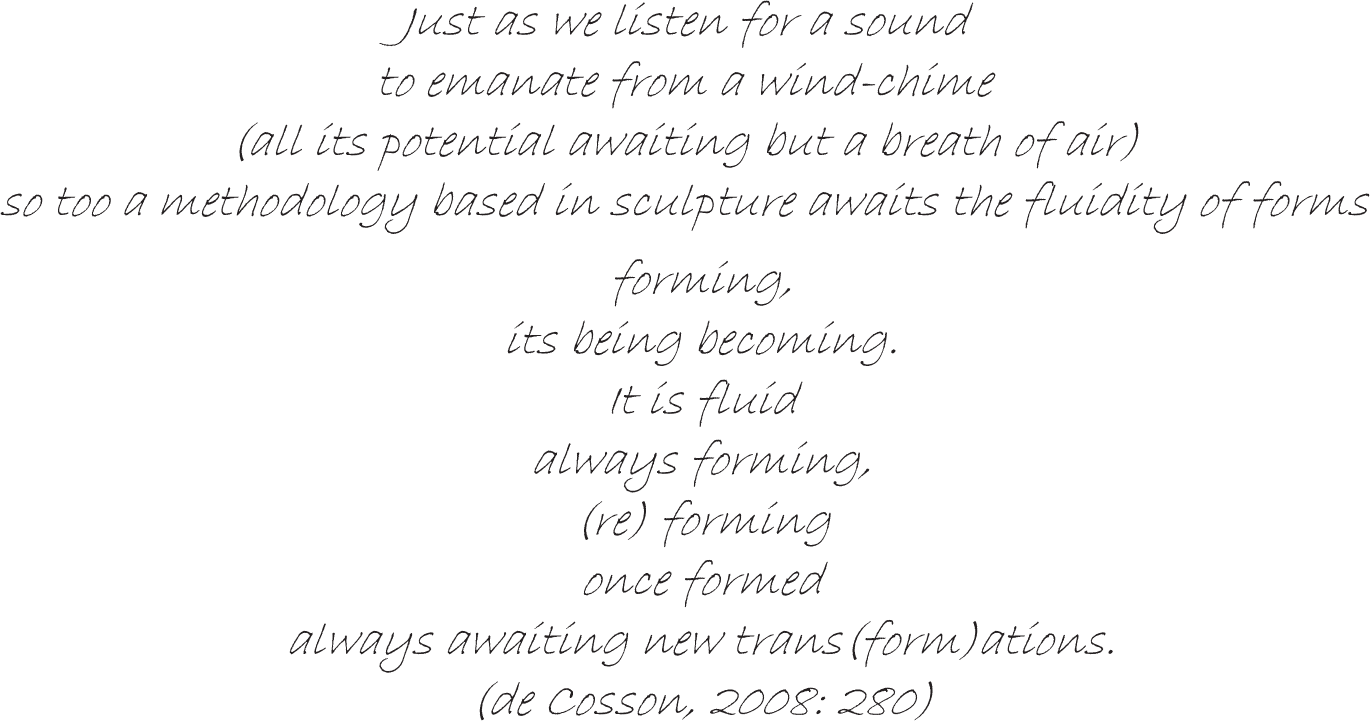
I really love that this method for working through and being with your data embraces a process that creates meaning as you write it and later as you read it, with an additional layer of texture through font changes. The textual insertions allow the reader and the researcher to really illustrate thinking, processing, and all the messy parts of research. “Ordinary time is the spaces between events, the parts of a life that do not show up in photo albums or get told in stories” ( de Cosson, 2008 : 282).
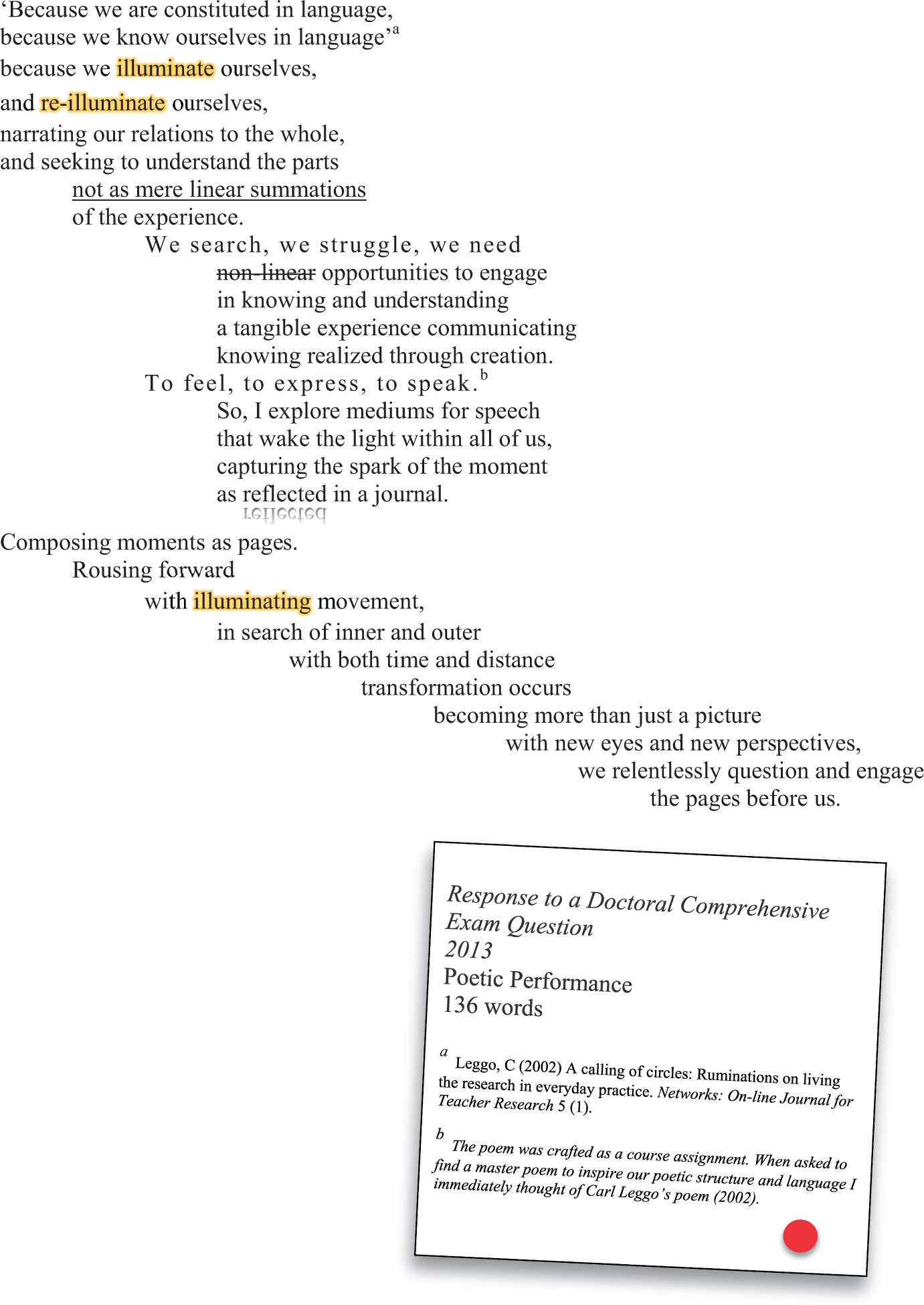
Found poem from my comp questions
Then and now
Stepping away from the comprehensive exam work allows me the opportunity to re-evaluate my thinking, to re-examine what I believe, and how those beliefs have changed in the wake of my dissertation and graduation. While this section of my comps served as a springboard for my methodological structure, what I learned most from this writing is how valuable time is in developing your thinking. As I began to draft my dissertation, I realized that poetry and textual elements would play a role in my writing, but that these were not in isolation from larger ideas. Poetry as a form of data representation allowed me to attempt to create a feeling, to evoke a guttural response from my reader. I came to think of poetry as a way of representing feelings about my data, rather than representing my data itself. In this sense, poetic devices serve the same goal as the images in this piece, to create an experience for the reader and encourage them to engage my research in a different space than traditional academic prose often allows. In my response to question two, I spend some time discussing the idea that poetry is more accessible to audiences than traditional academic writing, but is it really? In thinking about these statements, I realize effectiveness or accessibility is not what pushed poetry into an alternative space for me, rather poetry allowed me to capture the essence of an experience and to express this essence in a nonlinear way. Poetry engages the reader in an aesthetic experience and much like looking at art, poetry encourages the reader to feel the words. The power of poetry as an art form representing research and thinking is its ability to transform the writer and the reader. In its irreplaceability, the work of art is no mere bearer of meaning – as if the meaning could be transferred to another bearer. Rather the meaning of the work of art lies in the fact that it is there … above all, this creation is not something that we can imagine being deliberately made by someone (an idea that is still implied in the concept of the work). Someone who has produced a work of art stands before the creation of his hand in just the same way that anyone else does (Gadamer, 1986: 33).
The third question (on teaching the course “Art and the Child”)
Excerpt from my question 3 response
The language of art is not affected by the accidents of history that mark off different modes of human speech. The power of music in particular to merge different individualities in a common surrender, loyalty and inspiration, a power utilized in religion and in warfare alike, testifies to the relative universality of the language of art. The differences between English, French and German speech create barriers that are submerged when art speaks (
Dewey, 1934
: 349).
Maxine
Greene (1995)
writes extensively on the role of arts to arouse the senses and encourages us “to experience art as a way of understanding” (
Greene, 1995
: 149). While this does not directly assert that art is a language, it does speak volumes about the arts as an alternate way of communicating, and thus knowing. Being with art and creating art opens up new spaces for understanding. Through artful engagement with research, the researcher is able to come to new understandings. Just as arts education engenders a school community of wide-awakeness and awareness, so does living an artful life and engaging in artful research. My idea of illuminated experience, transforming the mundane into the lasting, is supported by a conception of artful living. I propose
Greene’s (1995)
understanding of art education’s role in schools as a parallel argument for art as a source of qualitative expression of experience and thereby a viable medium for research. Through increased awareness, attention to the unnoticed, engagement in experience, and exploration of unexplored paths, we come to know more. Having the ability to teach others to imagine things in a different way is crucial to educative processes. Having the ability to evaluate this development is crucial as a research process. Through the use of art as a language, I believe I can foster an appreciation and acknowledgement of multiple ways of knowing, and more importantly see from multiple vantage points when and how this knowing occurs.
Journal entry 4: Process
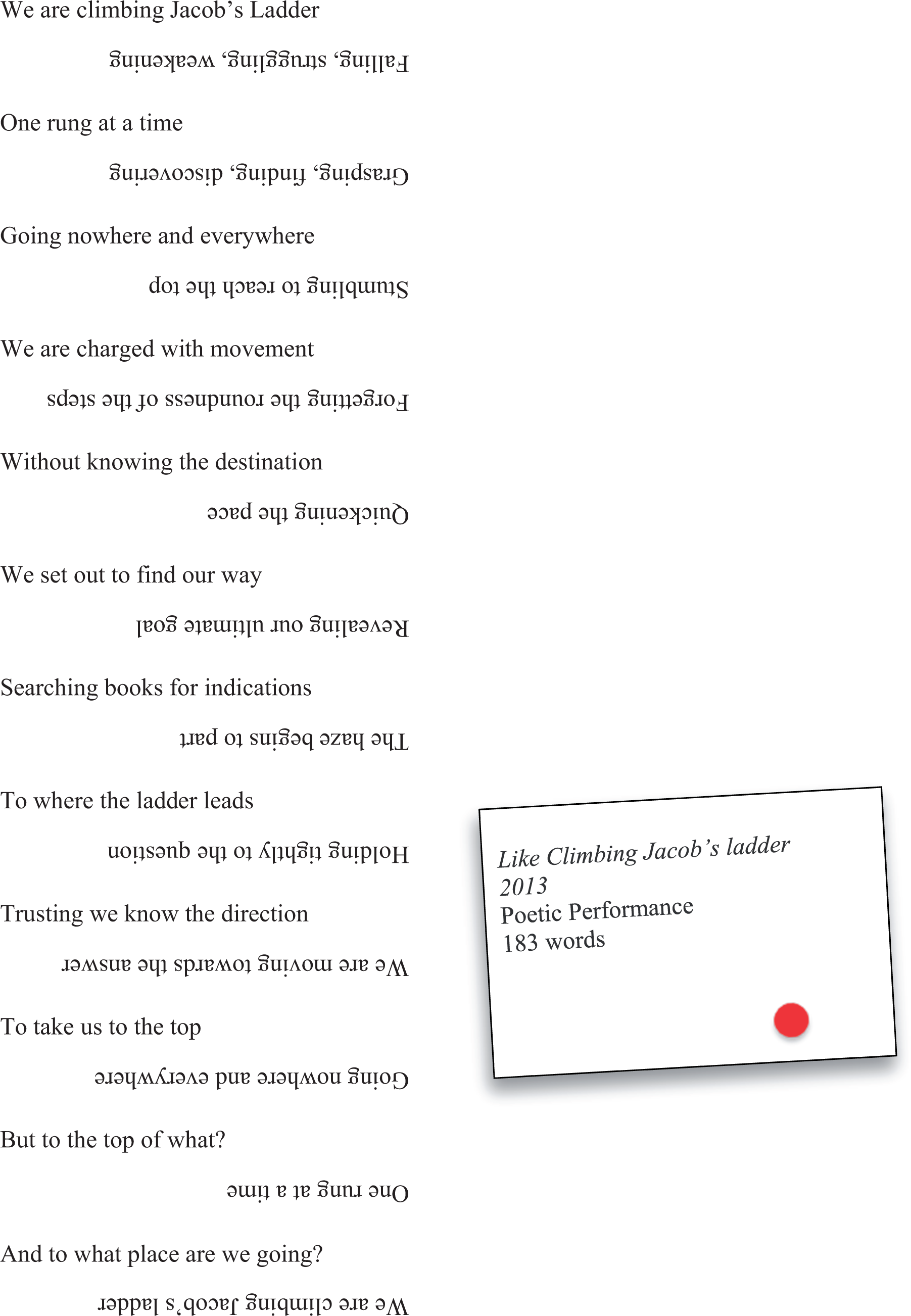
I am in awe of process. As an artist I find that my biggest insights come in the moments where I am wrapped up in what I am doing. This question forced me to really examine my process of learning and teaching, to look closely at what I value and why I value it. Process is the place where wisdom emerges from, and for me the process of creating artwork is the space I am most comfortable in. I want to make artwork about this process of writing my comps … but I am struggling with what to make. I keep thinking of books. Books are so much a part of this process of writing, they surround me always … with APA citations floating through my head constantly as I navigate through my day. But what kind of book to make? What is this journey like? I keep returning to the story of Jacob’s ladder from my childhood, faced with an insurmountable task, much like Jacob. This process is like climbing Jacob’s ladder. Maybe I will make Jacob’s ladder books … these books remind me of this journey. How when you turn them they reconfigure themselves and how they are so fluid and changing. They are linear but not, changing but constant. I don’t know what to make my books about. Do I use new thoughts and ideas or do I find words from my comps to include on the pages? Maybe I could use the poem I wrote earlier for class? The one inspired by my Comp questions? I could create visuals of the poem’s lines on the pages of the book. But then what? Is that enough? Who really cares … I just want to capture this journey, these moments, my thoughts and ideas.
Then and now
What I have come to understand about the comps process is that the value of the experience lies in its ability to inspire creation. The comps process afforded me the opportunity to allow my lived experiences as a graduate student to fuel an inward facing light that then reverberates back and lands on the page. The pages of my comprehensive exams became illuminated not just by what I was experiencing on a microlevel through my reading or thinking, but also on a macrolevel. For the first time in my academic career, I granted myself permission to engage in art making, writing, and questioning that was directed inward, and through this introspection I was able to push outward in my formal writing for the exam. This comps process began an experiential reaction. Through the task of recording, I documented my experience with the questions, allowing an inner light to project itself outward. Now that I am sitting on the outside of this experience, with both time and distance, these questions and answers become more than just a documentation of experience—they are somehow transformed into a much more important thing. I have returned to it from a new angle, a new perspective. This arts-based exploration has allowed me to re-visit, re-examine, and re-search my ideas. With this dialogue now beginning, I see new light emerging, encouraging me to manipulate these lights in different ways and take new understandings away from the process of completing my comprehensive exams (Scott Shields, 2014).
The fourth question (on the “pedagogical life” of the visual journal)
From my notebook
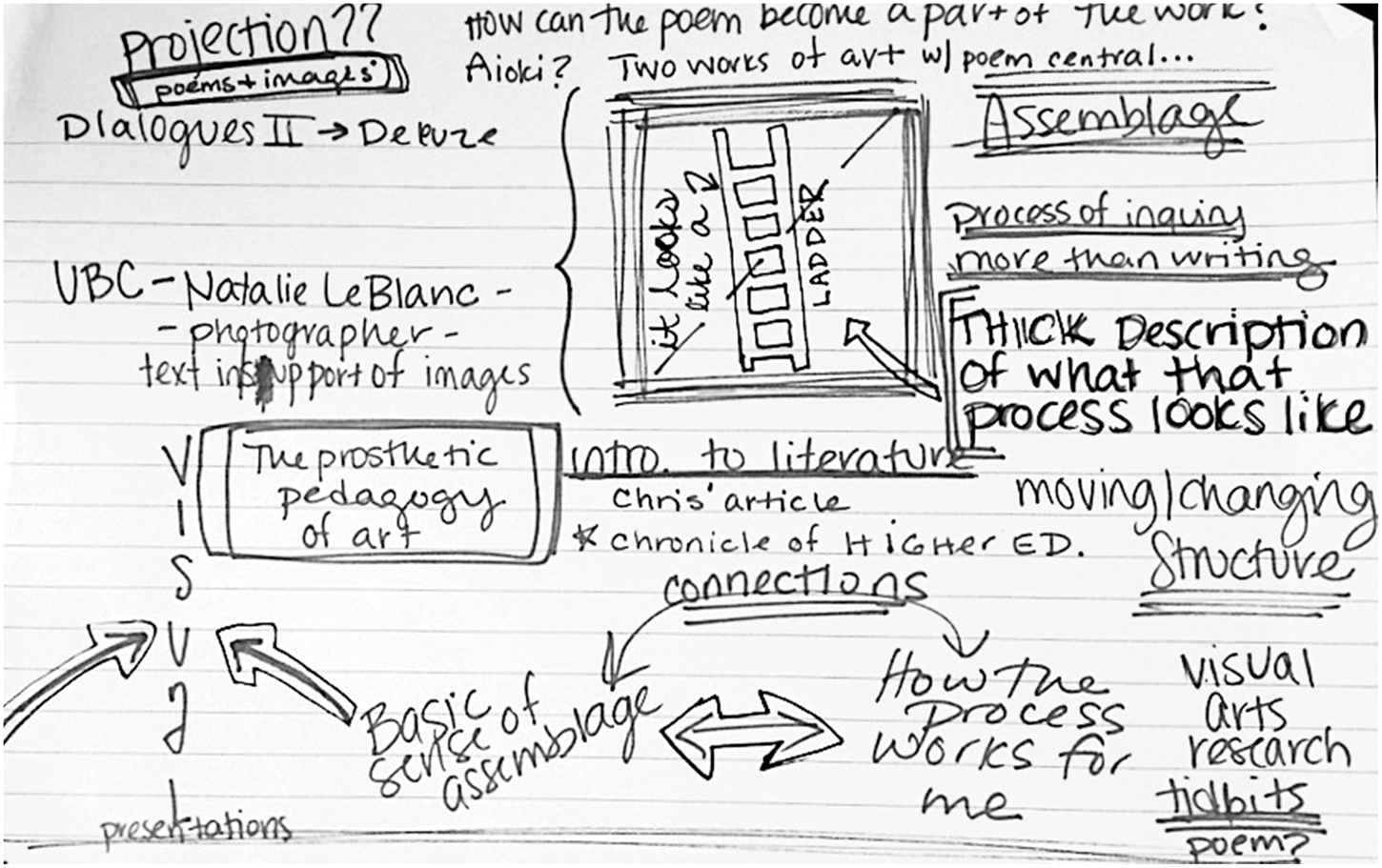
Excerpt from question 4 response
illumination (n.)
late 14c., “spiritual enlightenment,” from Latin illuminationem (nominative illuminatio), … “to throw into light, make bright, light up;” (
Harper, 2012
)
Then and now
My fourth question was the hardest, not hard in the way mountain climbing or literature reviews are hard, but hard in the way getting off the couch to do the dishes when all you want to do is watch TV is hard. I was exhausted and overwhelmed and had been given a question I did not know how to answer. But in this question I discovered more about myself, this process and this current project than I had in any other. What is interesting about the comps process is not only that learning has occurred in the answers I bound and submitted to my committee, but rather that the most valuable learning is occurring now. I have learned about myself as a researcher and artist. I have challenged myself to find ways to bring the worlds of my art making and my scholarly writing together. This question is where my concept of the Jacob’s ladder really came full circle.
Journal entry 5: The book and the defense
This last question really pushed me to want to do more with my ideas. I’ve started making this book, I had to make about two before I got the format right, but now that it is right it is SOOO cool! I used this beautiful batik fabric and colored paper to create the individual panels, then I used vellum to create the individual images that coincide with the lines of my first poem (the one inspired by Leggo). I have divided the poem so every other line is on each side of the book, that way the book creates a new version of the poem each time you flip the pages. I really think mirroring the comps process is important in this book. I may make more? I’m not quite sure. I know that I will be creating several different books to display. So on top of creating the book and doing this writing, I will be showing the artifacts of this journey at an art-based research exhibit. I’m still on the fence about how to do this. Since I have just finished my defense, I really want there to be a collaborative element that reflects the defense process … I was so inspired by the collaborative energy in the room when I defended my comps. Even though my questions were far from perfect, the group embraced the conversation and gave me such good feedback. I’m thinking of trying some found poems at the presentation? The process of creating a found poem is so much like the defense … all the different ideas and perspectives coming together to create something that never existed before we all came together to talk. All this making and thinking and collaborating has transformed the experience of comps into something so much more than answering four questions …

Then and now
Taking the opportunity to look back on my comprehensive exams has allowed me to think critically about what I learned and how this could impact how others approach their own engagment in the comprehensive exam process. Within the scope of an 8 week period, I found myself moving from feelings of intense loneliness to penetrating insight, pushing me toward who I am as an artist and a researcher. In looking back at my exam responses, the visual artifacts, and the culminating books and exhibition, I realize the key to my transformation was not in the exam questions or responses but in their ability to move me from a student to a researcher.
Comprehensive exams, much like academic writing, tend to follow a formula for success. I see this piece as pushing back on what that formula looks like. By juxtaposing my own comprehensive exam responses with journal excerpts, art, video, and reflective writing, I wanted to create an experience for both myself and the reader. While I have had the opportunity to think reflectively about my own experience as a graduate student, I also hope to also inspire dialogue among other academics about this process and how to best engage in it. As a seminal experience for every graduate student, I believe it is important to think carefully about how we frame and engage our students in this culminating exam. While the process has a clear and useful place in the graduate experience, I wonder: is this linear trajectory adequate? What more could graduate students learn through an intense and focused documentation and reflection on the experience? Is the goal of the exam the 80 page product, bound and submitted for review, or should the process play a more central role in the experience? I encourage graduate students to consider documenting their own experience during the exam process. Then consider letting these artifacts rest, pack them away in a box for a few months, until one day you go back and rediscover them. Look back over your experience and see what core understandings you can extract from your meta-reflection. Through this arts-informed exploration, I suggest the power of this process is not in the answers fervently typed on a computer screen at two in the morning, but rather in the collective experience and opportunities for personal growth.