



Abstract
Transnational branch campuses of universities are a growing phenomenon, particularly in the Middle-East. The cultures of home institutions and host countries are often foreign to each other. The result is a cultural and learning style gap between faculty and students impacting students’ learning and teachers’ effectiveness. A pilot study of the University of Calgary, at its Canadian branch campus located in Qatar, looks at the differences in learning styles between faculty who are predominantly from Canada and students predominantly from Qatar.
Introduction
Transnational university-level education is becoming more prevalent as students, instructors, administrators and even entire universities go global. Transnational education refers to a range of international education opportunities that includes foreign students relocating to attend main campuses in the original home location, and home campuses going to the students by creating branch campuses near the students, as well as various alternatives in between (Miller-Idriss and Hanauer, 2011). The number of transnational educational opportunities has grown substantially in the past 10 years globally, and particularly in the Middle-East. According to Miller-Idriss and Hanauer there are about 100 transnational educational institutions, with nearly 60 percent of these in the Middle-East. Of these, 34 are branch campuses operated by home campuses. In Qatar alone there are 10 branch campuses of higher education including two from Canada and six from the USA. All but one of these have opened since 2000. It should be noted that branch campuses are especially prevalent in the Middle-East, perhaps owing to these countries’ ability to fund these relatively expensive ventures.
An interesting feature of transnational branch campuses is that they are governed and operated by home campuses that are often located geographically and culturally at great distance from the branch campus. Of even more interest is that the vast majority of faculty who teach at these branch campuses come from the home campus or from culturally similar regions of the world (Dunn and Wallace, 2006; Gopal, 2011; Prowse and Goddard, 2010; L. Smith, 2009). The home campus is charged with delivering a curriculum that has been developed and standardized on a Western population, is delivered by Western faculty and, in this case, in a Middle-Eastern context to Middle-Eastern students with the constraint that it must meet the same standards as those of the home campus.
Various authors have discussed the need for more regional and academic cultural orientation (Gopal, 2011; K. Smith, 2009); however, experiences of faculty at the branch campuses have demonstrated that such orientation does not occur in a systematic way. Some models do exist to help guide foreigners (GLOBE, 2011; Hofstede, 1986; House et al., 2004; Peterson, 2004). However, model-based evidence gathering is only just beginning (see Heffernan et al., 2010; Prowse and Goddard, 2010). As would be expected in a newer area, most of the evidence thus far is case-based and anecdotal (L. Smith, 2009). Thus it may be hard to know where to start as little evidence exists that helps guide faculty or orientation programs.
Cultural differences are reinforced in any education system. These become more evident as one country exports its education system at post-secondary level to a host country with a different culture and secondary school system. For example, Heffernan et al. (2010) discuss the impact of ‘cultural differences, learning styles and transnational education’ for Australian institutions exporting their education to China. Culture underlies and affects values within education and the workplace, as well as learning and teaching styles in the classroom.
Culture also plays a major role in developing learning styles (Joy and Kolb, 2007; Wu and Alrabah, 2009). Faculty and students may have different learning styles and expectations reflecting their own cultural backgrounds and values, and this discrepancy may result in a mismatch between teaching methods and students’ learning styles. Identification of students’ specific learning styles and preferences may lead to the development of more effective teaching methods to eliminate learning barriers and foster student strengths in the educational setting (Gardner, 1999).
However, few research studies focusing on cultural differences and learning styles have been conducted in the Middle-East, and even fewer in Qatar. It is reasonable to expect that there would be cultural differences in learning styles between Western faculty and Middle-Eastern students in transnational institutions but, without evidence, the specific differences remain unclear.
Therefore, a research project was conducted at the Canadian University of Calgary in Qatar (UCQ) that examined students’ learning styles and strategies, as well as the instructors’ learning styles. The instructors are all Canadian while the students are mostly Qatari or from Arab regions nearby. Most students are long-term residents of Qatar, while most faculty come directly from Canada for a short-term contract. This pilot project was conducted at UCQ as part of a larger research study aimed at discovering the international learning styles of post-secondary students in Qatar. This research project was funded by Qatar Foundation and conducted by two UCQ faculty from Canada and four UCQ undergraduate students from Qatar. The research contrasted Western faculty with Middle-Eastern students using several international learning style tests. These were followed up with interviews to reveal in greater detail students’ attitudes towards learning and their strategies. Although the focus was specific, to begin with UCQ as a pilot project, the results may indicate learning style differences based on background education and cultural values, and may raise awareness of the issue for stakeholders in higher education, as well as for further research projects.
Cultural influences
Some of these differences between students and faculty may be based in differences in culture; therefore, this first section will look at research studies highlighting cultural differences. For example, in Many Forms of Culture, Adam B. Cohen (2009) argues that religion, socioeconomic status, and region are highly influential forms of culture affecting transmitted norms, values, beliefs and behaviors, along with core cultural influences such as ethnicity or nationality. In general, culture underlies and influences education values and learning styles. According to international global cultural studies by Global Leadership and Organizational Behavior Effectiveness (GLOBE), Canada is classified in the Anglo cultural cluster (along with the USA, Australia, Ireland, the UK, South Africa [White] and New Zealand which were included in the research data). Qatar, by contrast, is classified in the Middle-East cultural cluster (along with Turkey, Kuwait, Egypt and Morocco, which were involved in this research study) (GLOBE, 2011). These cultural contrasts are particularly interesting for North American universities, their faculty and students in the Middle-Eastern education system.
GLOBE had a worldwide team of 170 researchers work together over 10 years to collect and analyse data on cultural values and practices, and leadership attributes. Cultural groups or clusters were formed where Qatar was part of the Middle-East cultural cluster, and Canada part of the Anglo culture. The dimensions of culture used to form the clusters were performance orientation, future orientation, assertiveness, humane orientation, institutional collectivism, in-group collectivism, gender egalitarianism, power distance and uncertainty avoidance. For example, according to the GLOBE research, ‘These countries [Anglo] were high in performance orientation and low in in-group collectivism.’ So their culture is more ‘competitive and result-oriented’, and less oriented towards ‘families or similar groups’ than other cultures. Qatar, by contrast, is classified in the Middle-East cultural cluster and ‘these countries score high on in-group collectivism and low on future orientation … and uncertainty avoidance’ (Northouse, 2006, pp. 310, 312 (emphasis is original)).
More specific scores and cultural comparisons of Qatar and Canada may be helpful in the case of the University of Calgary Qatar. For instance, the first two cultural items had different scores in Canada and Qatar. For performance orientation, the Anglo group had a high score and the Middle-East a middle score in a rating system out of 7; Canada specifically had 4.49 and Qatar 3.45, so performance improvement and excellence are more highly rated in Canada than in Qatar. Note that means of high-score clusters are significantly higher (p < 0.05) than the rest, and means of mid-score clusters are not significantly different from the rest (Javidan et al., 2006). For future orientation, the Anglo group again scored high and the Middle-Eastern group medium with Canada scoring 4.44 and Qatar 3.78, so in Canadian culture, in general, people would plan more systematically, but be less opportunistic than people in the Qatari culture. The next two cultural dimensions were similar: assertiveness and humane orientation. In terms of assertiveness as a cultural dimension, Canada scored 4.05 and Qatar 4.11 – which means the trait of aggressiveness in relationships with others versus harmony has a mid-score. With humane orientation, again the Middle-East and Anglo cultures had similar scores, specifically with Qatar at 4.42 and Canada at 4.49, meaning that both cultures encourage and reward being fair, altruistic, generous, caring and kind to others. There were some differences in collectivism versus individualism, with Qatar scoring higher for both societal collectivism and in-group collectivism, emphasizing group performance and rewards in institutions, as well as loyalty and pride towards their families and organizations. In contrast, gender egalitarianism and power distance had similar scores between Canada and Qatar, with the latter having the most moderate scores in its Middle-Eastern cultural cluster. So for gender egalitarianism, Canada averaged 3.70 and Qatar 3.63 which shows tolerance for diversity of ideas and individuals. Power distance was also similar for both cultures, with Canada at 4.82 and Qatar at 4.73, which relate to stratification of society economically, socially and politically, in terms of authority, hierarchy and decision-making power. However, the final criterion of uncertainty avoidance was notably different with Anglo cultures on the whole preferring more certainty and Middle-Eastern cultures being more comfortable with ambiguity. Canada scored 4.58 towards avoiding uncertainty, and Qatar 3.99, allowing for more flexibility and new opportunities (House et al., 2004).
Overall, Qatar is more moderate than its Middle-Eastern cultural group, and has some cultural values closer to Canada’s such as assertiveness, humane orientation, gender egalitarianism and power distance. However, other areas are notably different such as performance orientation, future orientation, societal collectivism, in-group collectivism and uncertainty avoidance.
These cultural differences and norms are often transmitted and reinforced in local education systems. Therefore, a cultural challenge facing most transnational higher-education institutions in the Middle-East is that the majority of students have been educated during their elementary and secondary school years in the Middle-Eastern system, and only a few in international schools or abroad. The culture, language and education system of the branch campuses coming from North America and Europe are therefore foreign to them. In our case study at UCQ, one-third of the students are Qatari and most of the remaining students are long-term residents, while most students have completed their secondary school education locally before entering the Canadian university’s branch campus in Qatar. Therefore, most new students experience ‘culture shock’ in their initial year.
Research project
Our overarching hypothesis is that Western pedagogy may contrast with Middle-Eastern students’ preferred learning styles, based on cultural differences, resulting in a less than optimal learning environment. The premise was that pedagogy is driven, at least in part, by faculty learning styles and that an analysis of any gap between faculty and student learning styles will provide a starting point from which to review pedagogical practice in a transnational campus. Therefore, this current study looks at learning styles of students and faculty at a transnational branch campus in Qatar, in order to begin building an evidence base which will help inform and guide faculty working in transnational educational contexts, particularly in branch campuses.
In UCQ this study is essential as the faculty are primarily from Canada, while the students are predominantly Arab or Qatari nationals. Most of the faculty have an Anglo cultural background and Canadian education, while the students have a Middle-Eastern cultural background and secondary school education – mostly in Qatar. The student population at UCQ is predominantly female. In the current sample there were 56 female and 5 male students. Similarly the faculty population at UCQ is predominantly female. In the current sample there were 20 female and 5 male faculty. The program of study is the bachelor of nursing offered by the University of Calgary from Canada in its branch campus in Qatar. Approximately 25 percent of the students at UCQ are practicing nurses with a diploma from the Arab region who are now extending their education to the degree level. The remaining come out of regional high schools and enter the regular track for a bachelor degree in nursing. Most students are sponsored by national health care institutions. Conversely, the faculty are all Canadian: 50 percent are in nursing, 16 percent are teaching electives, 28 percent English for academic purposes and 6 percent are in foundation sciences.
Research methods
Learning styles model and instrument selection
In order to help guide the initial literature review the following questions were systematically reviewed:
What are learning styles?
How are learning styles measured?
Are there cultural aspects involved?
What models are available?
Which models would be appropriate for Qatar?
As a result, it was discovered that there are over 4000 references to learning styles, hundreds of professional publications, and as many as 100 models developed over the past 40 years (Cassidy, 2004; Coffield et al., 2004; Rayner and Riding, 1997). Currently 13 models are internationally used, extensively evaluated and critiqued (Coffield et al., 2004). Several predominant models were further investigated such as those of Dunn and Dunn, Gardner, Entwistle, Vermunt, and Kolb.
Based on the literature review and subsequent analysis, two complementary international learning style assessment tools were deemed appropriate for use in Qatar: the Kolb learning style inventory (LSI) (Kolb and Kolb, 2005), and Vermunt’s inventory of learning styles (ILS) (Vermunt, 2005; Vermunt and Vermetten, 2004). Both were included as influential models and instruments in the ‘systematic and critical review’ of ‘learning styles and pedagogy in post-16 learning’ by Coffield et al. (2004). After a 16-month review of learning styles literature for the Learning and Skills Research Centre in the UK, ‘this review selected for detailed study 13 of the most influential models of learning styles from a total of 71 which were identified in the literature’ (Coffield et al., 2004). Vermunt’s model was one of three which met most of their criteria by external independent researchers for internal consistency, test-retest reliability, construct validity and predictive validity. Kolb’s was also selected as one of the most influential models and met some of the criteria. Kolb is based in America and Vermunt in northern Europe. Both had international case studies and comparisons as well.
The Kolb assessment has been widely used in education and business, critiqued and revised since 1976, based on theoretical models (Kolb, 1984; Kolb and Kolb, 2005), and currently used internationally. The learning styles test has been simplified to include 12 questions with four possible answers, each to differentiate four learning styles. This was considered appropriate for our second language student population. Kolb developed the theory and test to explain and enrich the learning cycle consisting of concrete experience, reflective observation, abstract conceptualization, and active experimentation. For example, the Kolb test has a short question such as: how do you learn best? This is followed by four answers such as: by feeling or by watching or by thinking or by doing. (The question and answers have been simplified and modified to protect copyright.) These are ranked by the respondent according to which is: most like them, more like them, less like them or least like them. Based on self selection and description the total responses suggest a predominant learning style, and sometimes a secondary strength. According to this model, learners may use one style predominantly or initially, and then expand or build on their learning in different circumstances by trying other methods.
The Vermunt inventory of learning styles (ILS), of 100 statements, is based on what influences learning and success in higher education (Vermunt, 2005). The learning styles test is a thorough and in-depth analysis of students’ processing strategies and regulation strategies (study activities), learning orientations (study motives) and mental modes of learning (study views). In this model each question is more detailed to determine students’ strategies and attitudes. For example, when reading a new chapter, do you look at the overall content, or read sequentially? Do you review background ideas, or ask questions about the material? (The question has been modified in order to provide a general idea.) Each section has 25 questions to evaluate the students’ study preferences.
Research protocol development
To prepare for the learning styles workshops for students, a set of complementary documents for the learning styles assessment tools was developed. Simpler synonyms for academic vocabulary in the assessments were given in a list to assist English as a foreign language (EFL) students’ question comprehension. A background questionnaire was also developed to assess various items which were shown to influence learning styles (age, country, high school, work experience and higher education). Finally, a set of semi-structured interview questions were developed to provide further insight into the survey results. At all workshops one research faculty member and several undergraduate research students were present to ensure consistency across the workshops, and English to Arabic translation if necessary for clarification.
The selected learning style instruments, interview questions, and workshop format were piloted on several students resulting in minor modifications to the workshop format.
Data gathering
In the spring semester of 2010, 13 workshops were conducted for regular and graduating students. As well, 19 one-on-one sessions were conducted with faculty. Each participant was first given the consent form, background information questions and the Kolb LSI. They were given their results and an explanation of the research project. During the student workshops, the purpose of the research project was explained, consent forms reviewed and the surveys were completed: the Kolb LSI, followed by the Vermunt ILS. At the end of the workshops students were recruited for follow-up interviews. Student participants were given a certificate of their particular learning style according to the Kolb test.
In the fall semester in September 2010 the student workshops and faculty sessions were resumed. Two more workshops for students were conducted and an additional six new faculty members completed the Kolb survey. In total between the spring and fall sessions, approximately 80 percent of the student body of UCQ at the time as well as about 90 percent of the faculty participated in this learning styles project. At the time, this branch campus had just completed its third year of operations in Doha, Qatar.
Results
The following section focuses on the results, including those of the two learning style inventory tests by Kolb and Vermunt and the follow-up interviews with students. The research results confirmed that there were notable differences between Middle-Eastern students and Western faculty. The Kolb test not only differentiated between faculty and students but, interestingly enough, also between students in different years of study at UCQ. The Vermunt questionnaire added breadth to the analysis, and the interviews confirmed and provided insight into the survey results.
Kolb learning style inventory (LSI) results
Kolb learning styles
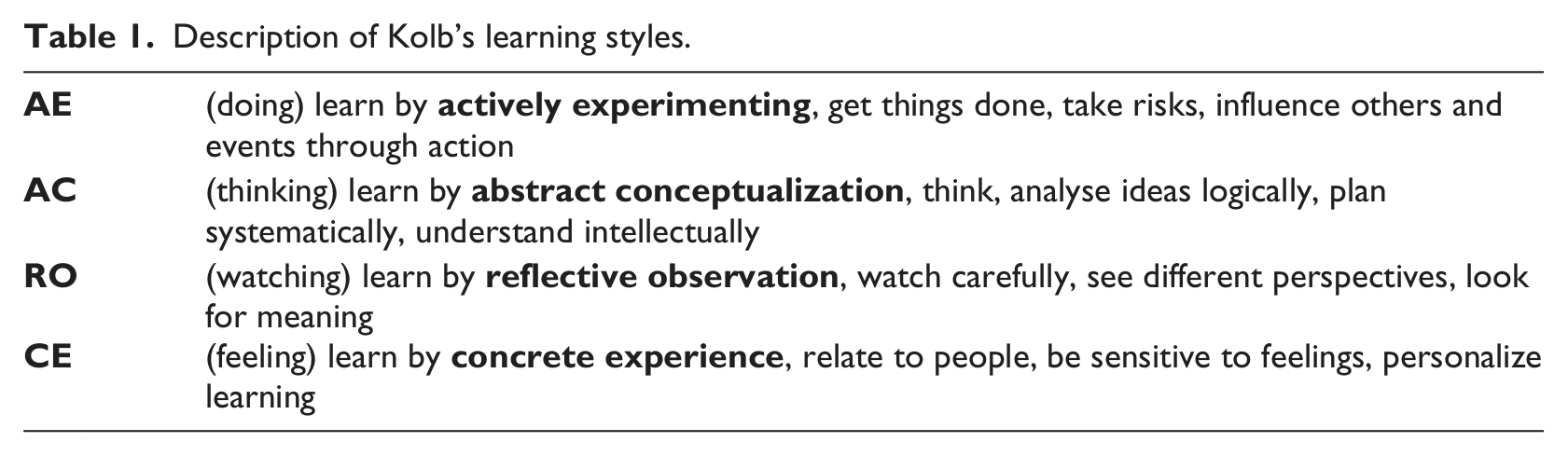
The Kolb LSI results indicate self-selected preferences for learning. One may have a predominant style or approach to process information or experiences, as well as a way to perceive or find meaning. According to Kolb, one may actively experiment or reflectively observe to learn, or one might concretely experience or abstractly conceptualize meaning. Table 1 provides a more detailed explanation of the four learning styles.
Description of Kolb’s learning styles.
At UCQ, students and faculty had distinct learning style preferences. The majority of the faculty (64 percent) had abstract conceptualization
There were also differences between students who were new to the university, students in their second or third year, or graduating students. New students preferred predominantly AE (or doing). Regular students had two strong learning preferences, also AE (or doing), as well as reflective observation (RO
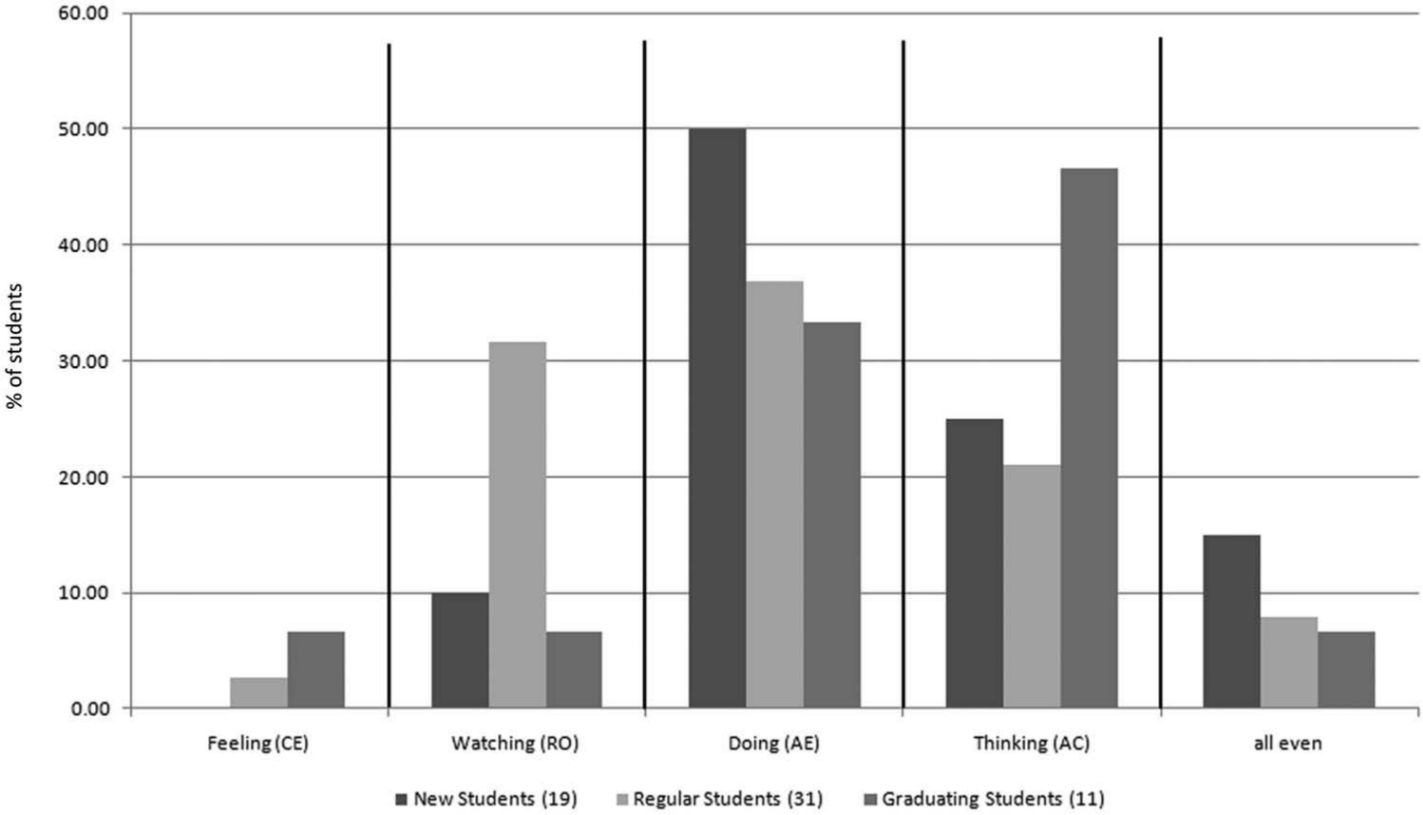
Differences between students according to their year of study and their dominant learning style.
This way of looking at the data focuses on the individual’s predominant learning style strength.
Kolb learning style dimensions
The Kolb LSI is based on the idea that people have a range of learning styles. They are inclined to approach learning from a dominant or preferred learning style, and then perhaps cycle through various learning styles or approaches during the course of their learning. Kolb also suggested that there is a continuum of learning styles along two dimensions (see Figure 2).
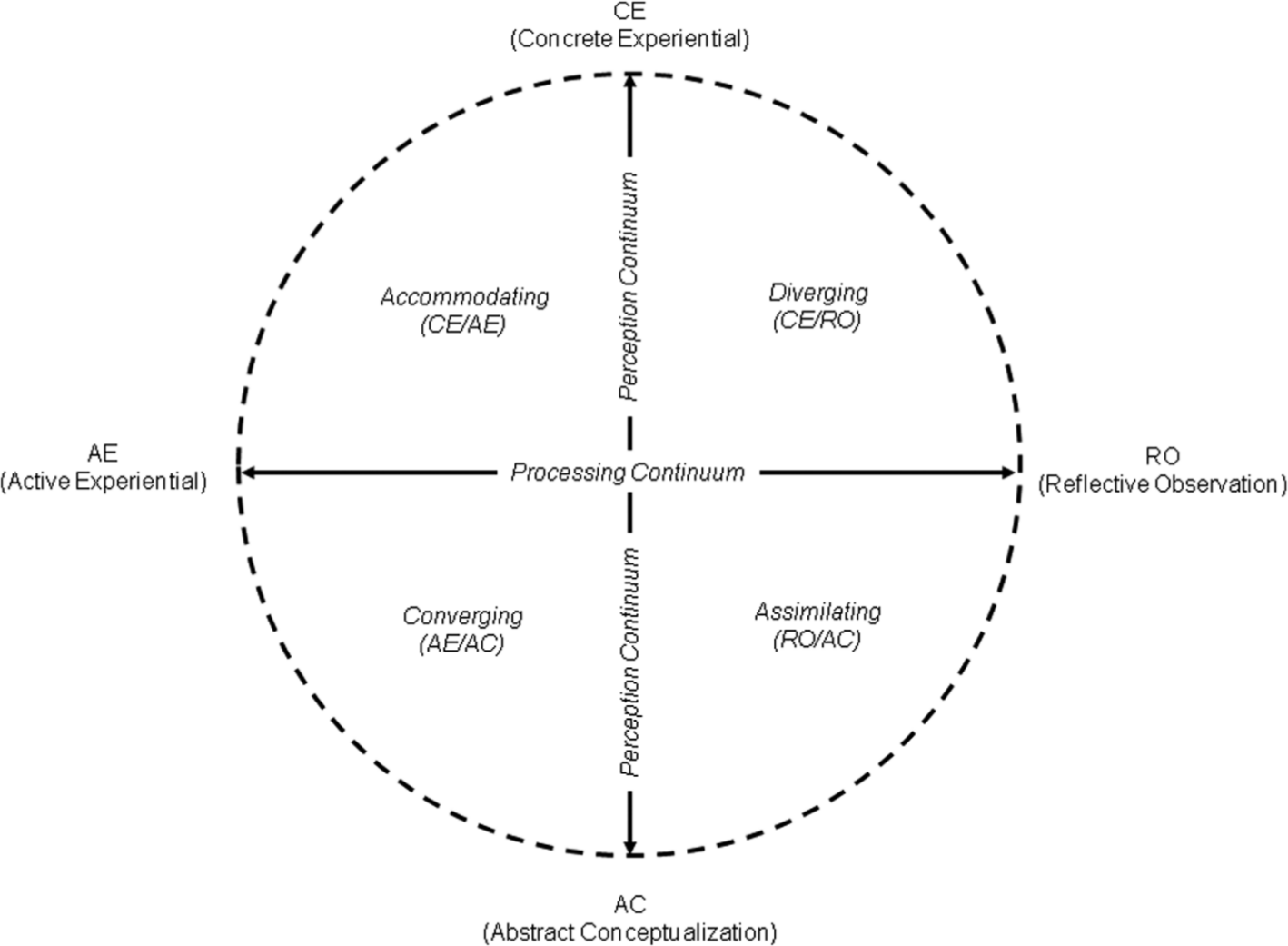
Kolb learning styles model (Kolb, 1984).
The first dimension ranges from AE to RO representing a processing continuum. The second dimension ranges from concrete experiential (CE) to abstract conceptualization (AC) representing the perception continuum.
A person may prefer to learn through RO but may also use each of the other learning styles to varying degrees. In the Kolb LSI people are asked to rate their preferred choice, as well as their second, third and fourth choice for each item. The resulting learning style profile is a snapshot of a person’s preferred learning styles.
A Kolb learning style profile maps the scores of each of the four learning styles on a chart and connects the four points resulting in a visual indicator of the learner’s profile.
Kolb learning style profiles
A total of 90 percent of faculty teaching at UCQ participated in the study (n = 25) by completing the Kolb LSI. Student participation was also high with 80 percent of all registered students also completing the Kolb LSI (n = 61).
The data gathered from the Kolb LSI were scored and charted to create learning style profiles for faculty and students. Student profiles were created for first-year (new) students, second- and third-year (regular) students and graduating students. Owing to an artifact of reporting, second- and third-year students were not clearly indicated; thus they were grouped together. The resulting profiles are shown in Figure 3 for faculty, and Figures 4(a-c) for students.
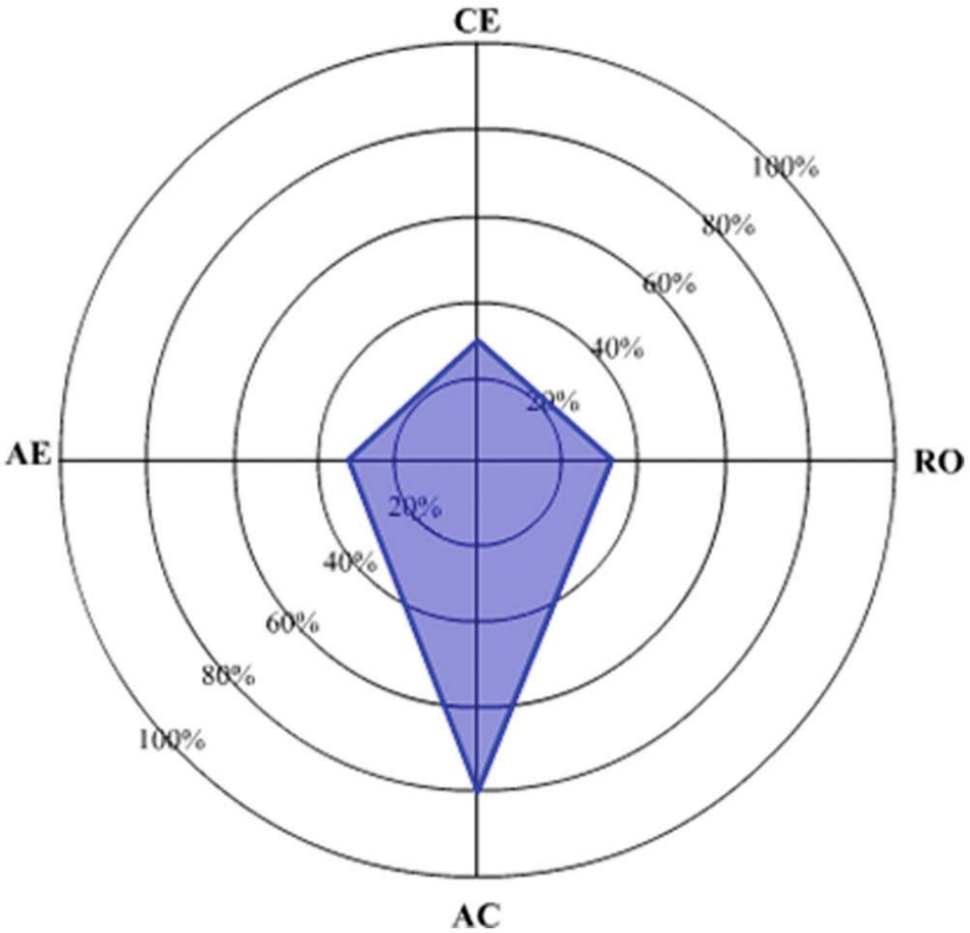
Faculty learning style profile.
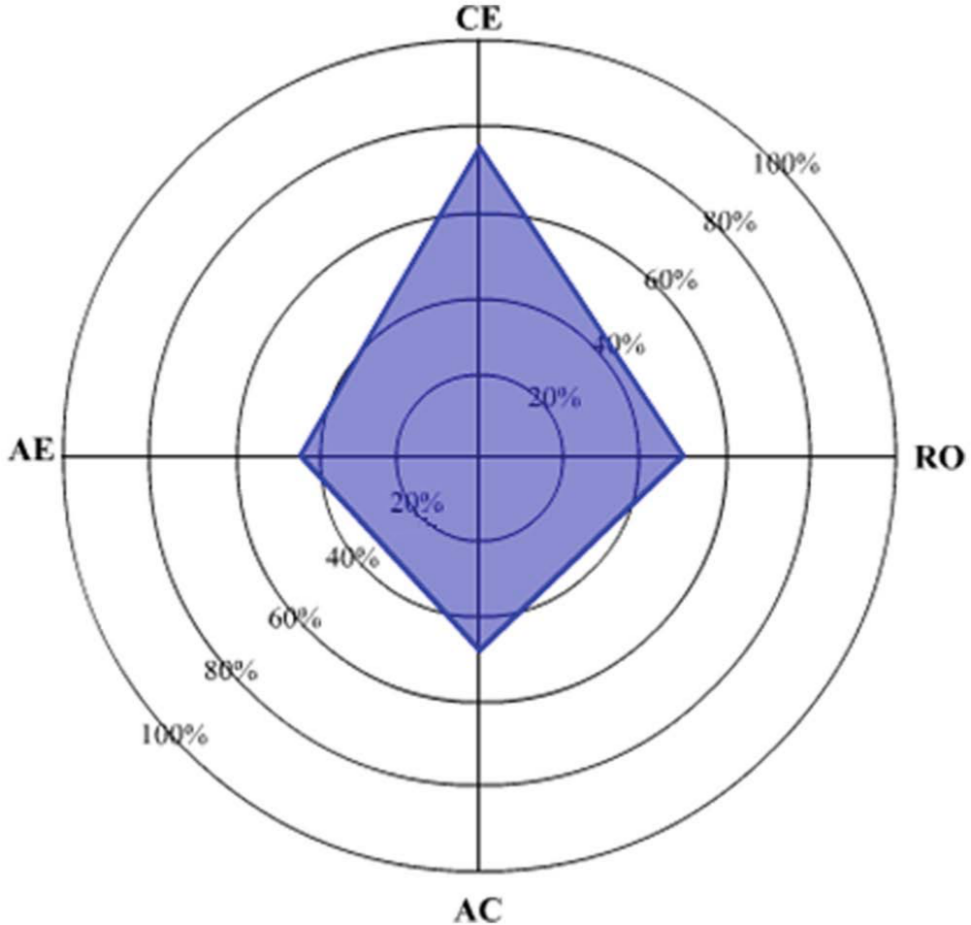
First-year students’ learning style profile.
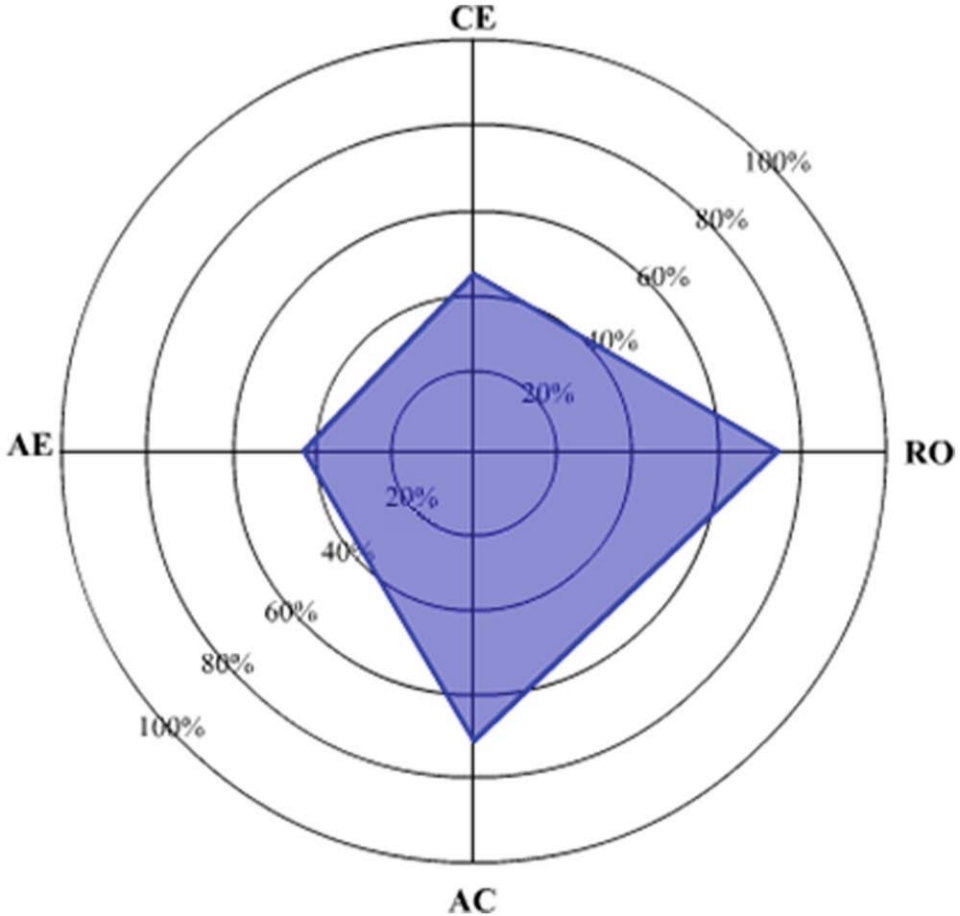
Second- and third-year students’ learning style profile.
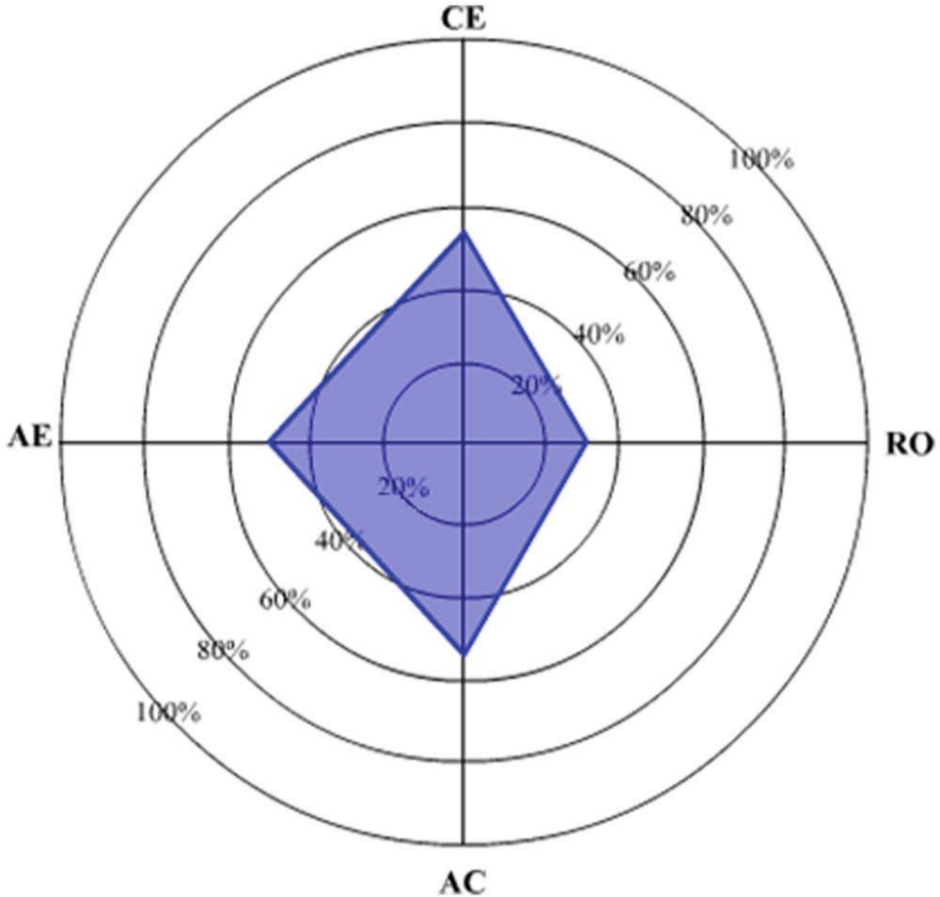
Graduating students’ learning style profile.
The composite faculty profile in Figure 3 shows a distinct preference for AC over any other learning style. Of course, there was some variance in preferences; 64 percent of faculty showed a preference for AC, 24 percent for each of RO and AE and 8 percent preferred CE.
The composite student profiles in Figure 4(a-c) show that student learning style preferences are different depending on their year of study in the program at UCQ. The first-year students’ profile shows a decided preference for CE suggesting that they prefer hands-on experiential learning. There is also, secondarily, a balance of the other learning styles. Second- and third-year students appear to adopt a more balanced profile with nearly equal preferences for RO and AC as strengths, suggesting they prefer a more logical and systematic approach to learning and are more likely to reflect on their education experiences. As well, these students had a secondary balance of AE and CE. Graduating students tend towards an AE learning style, as well as CE and AC, suggesting they are ready to learn by experiencing, practicing and practically trying out new ideas. It seems clear from this sample that faculty differ from students in all years of their program of study, at least in terms of learning style preferences and profiles.
Kolb learning style quadrants
Kolb also felt it was helpful to look at the range of preferences for each of the two learning dimensions by subtracting the scores along each dimension (AE - RO and CE - AC). This provides coordinates to place people in one of the four quadrants represented previously in Figure 1. Table 2 provides a description of what each of the quadrants means when combining learning preferences in this way.
Description of Kolb’s learning style quadrants.
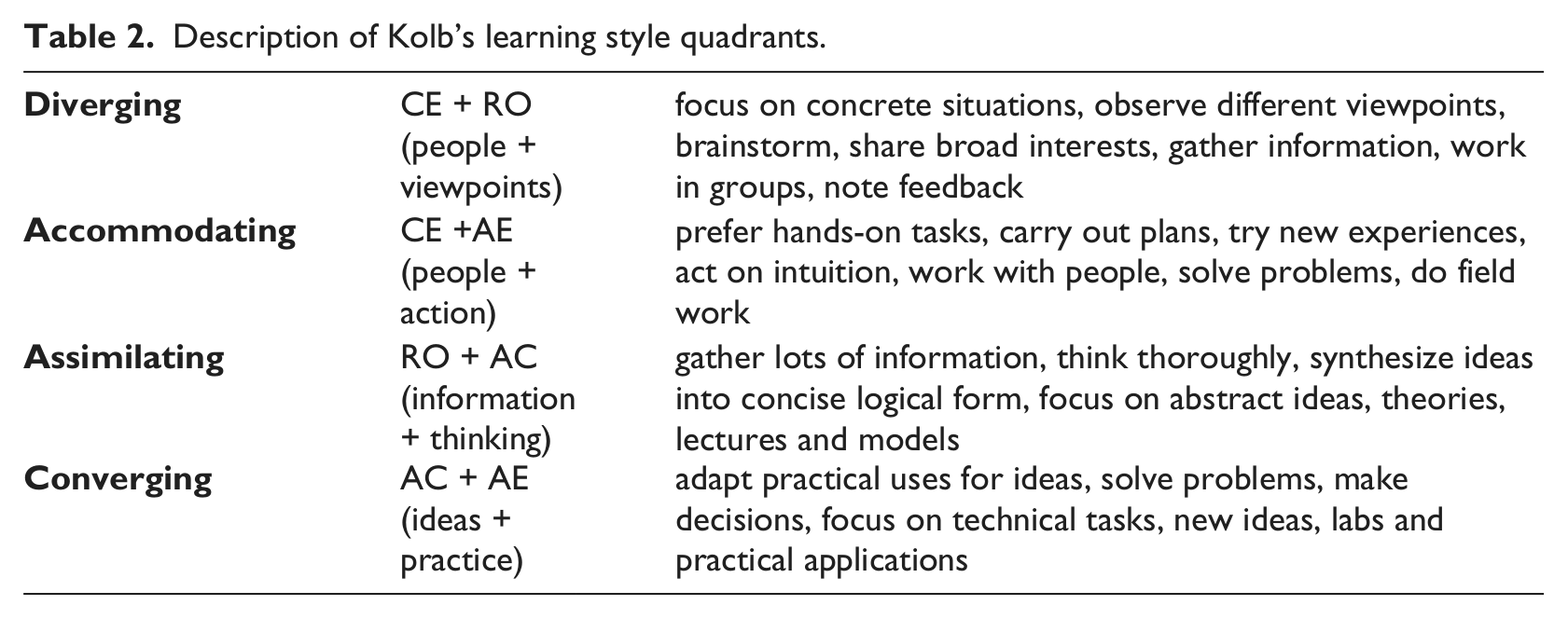
Coordinates were calculated for the average scores of faculty, first-year students, second- and third-year students and graduating students, and then mapped (see Figure 5).
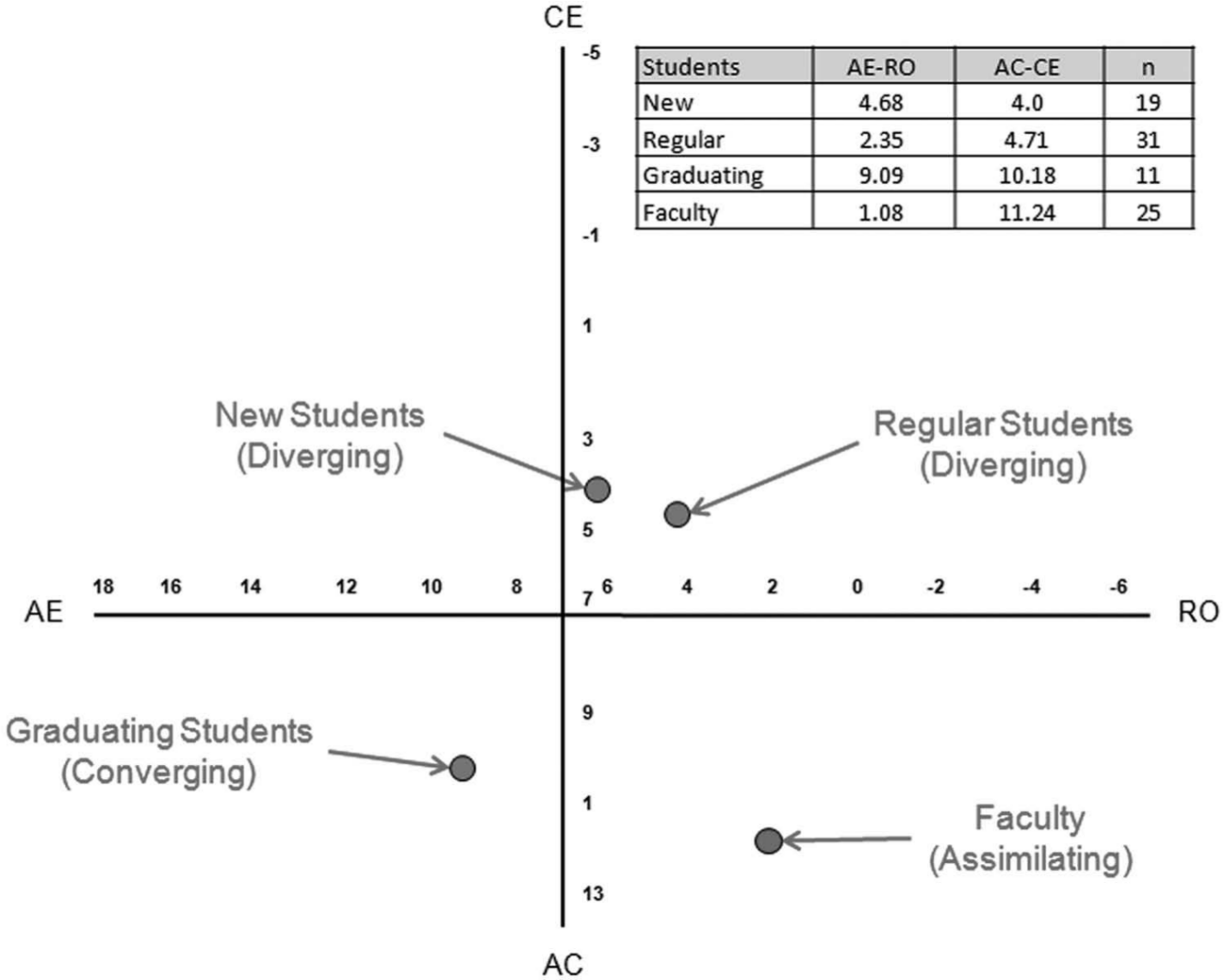
Student and faculty averages placed on the Kolb learning style quadrants.
New students and second and third year students’ scores placed them in the diverging quadrant, suggesting they are good at observing and participating in concrete situations, as well as brainstorming, generating ideas and discussing options in groups. Graduating students’ scores placed them, in contrast, in the converging quadrant. This suggests that they prefer solving problems especially those with clear applications. In contrast, faculty scores placed them in the assimilating quadrant, suggesting preferences for making meaning out of observations, synthesizing information, doing research and considering abstract concepts. Note the differences between the faculty and student quadrants.
Vermunt inventory of learning styles (ILS) results
The Vermunt inventory of learning styles consists of four dimensions: (1) processing strategies; (2) regulation strategies; (3) learning orientations; and (4) mental models of learning. It contains 25 Likert-style items for each of the dimensions, resulting in a total of 100 questions. Approximately 50 percent of the students completed this questionnaire. Owing to the focus on student learning strategies (for example, the dimensions of regulation strategies and learning orientation), faculty were not asked to complete the Vermunt inventory. Also the test was more time-consuming. Table 3 shows the sub-categories within each dimension and their respective average scores. Note that even small differences denote trends for using a certain strategy over another, as these are averages of all the students.
Average ILS Scores by program year.
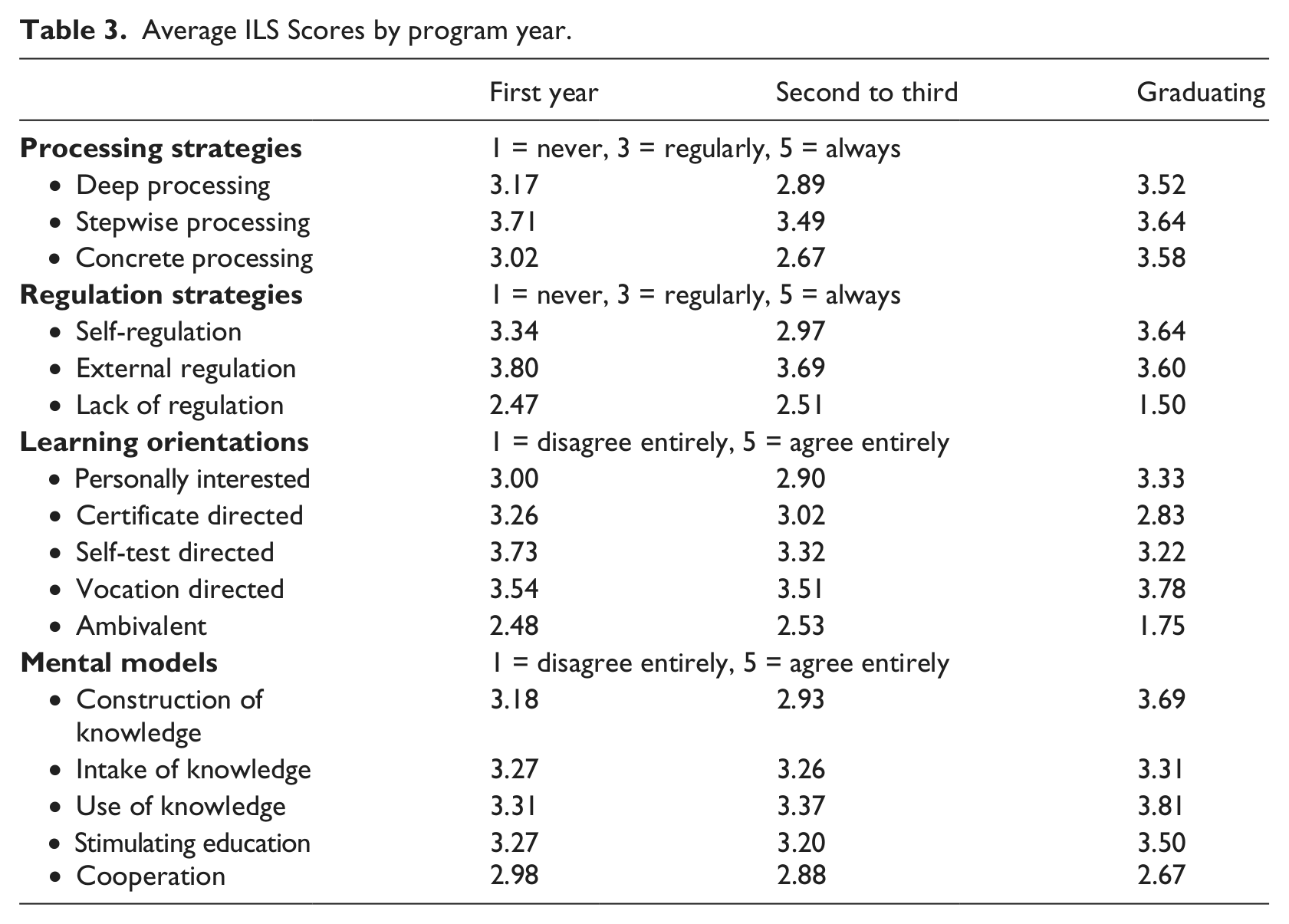
The Vermunt results show a pattern of differences between students depending if they were in their first year, second to third year, or graduating year, similar to the pattern shown by the Kolb results. Along most dimensions, first-year students have higher scores compared to second- and third-year students with slightly lower scores. Perhaps the latter struggle more with the demands of the program and start adapting to changes in the learning environment. Many subscales bounce back in the final graduating year but some notable and persistent differences do appear. For example, graduating students are more likely to engage in deep processing strategies along with stepwise and concrete processing strategies than first or second to third year students. Several other interesting differences include graduating students having less of a certificate directed orientation (for example, certificates of attendance - a particularly strong orientation in the local culture), and being more personally interested, as well as vocation directed. Also graduating students show a lower score in the lack of regulation subscale (a measure of perceived lack of control). The latter suggests that graduating students felt increasingly in control of their learning. Similarly, there was a marked lower score in the ambivalent subscale of the learning orientation dimension, suggesting a much stronger investment and interest in their learning by the end of the program. Overall, all students disagreed that they were ambivalent about their learning, meaning that they were motivated and directed in their learning goals.
Consistent with the Kolb results of active experimentation, students preferred to use knowledge and were quite vocation-directed especially as they entered their last year. Similarly, they tended to see and exercise a large degree of self-regulation, but also expected external regulation. This is consistent with a preference for stepwise and concrete processing. They tended to prefer doing things in order, and they preferred learning that relates to their profession or vocation.
Overall the Vermunt test revealed that students study in a stepwise manner to make concrete use of course content material. They think they are in control of the process and results of the course through planning their learning activities, monitoring their progress, reflecting on their problems and results, as well as their instructors who direct the objectives, assignments and evaluations of the course. Students are highly motivated to test their knowledge and use it for their vocation, in this case in nursing. They take in knowledge and use it, and want the instructors to make it a stimulating experience.
Student interview results
Thirteen students were selected for an interview to reflect more on their learning strategies. This group of respondents had already completed the Kolb and the Vermunt LSI. The interview used a semi-structured interview style which consisted of five questions. The responses to each question were reviewed and, where appropriate, analysed thematically, and compared to the Kolb and Vermunt results.
Question 1: During the workshop with tests on learning styles, what did you learn or find interesting about your learning style?
Students were interested and excited to learn about their learning style. Some students felt the learning style test results matched their understanding of how they learned, as shown in the following responses:
This is [the] first time … I found it interesting to know my learning style which is doing. I found that I learn through watching, listening and practicing. I loved to know my learning style. To know what is my style was the interesting part. When I discovered I’m learning using my feeling, it was a great experience. I learn about my way of learning and I found it nice. I learn how … to study for my test. I learn that my learning style is different from high school. I wasn’t surprised … because I knew I used to think before [I] act. The result of the test is right.
Question 2: How do you study, do well on assignments or prepare for tests?
The responses to this question were consistent with the results from the ‘processing’ dimension of the Vermunt survey. Students tended to use a stepwise strategy that included reading class notes and materials, and then applying more concrete strategies by doing exercises or generating ideas with brainstorming. The preponderance of ‘doing’ activities was also consistent with the Kolb learning style results.
I study the handouts and my notes that I wrote in the class. I do first brain storm and then solve my assignments. Review what I took in the class and study from the book. First I read the part I want to study then write it in a paper. Also, sometimes I draw for myself to understand better. Do example for myself and try to test myself. I study by exercising. I prepare and study directly after I take the class. I read and understand the things I’m reading. Most of the time I like to see and explain for myself. I look for some website and collect the information and write it down in my words. For tests … I read the books. I didn’t do much preparation for exams but I mostly depend on class work and lectures. I study in the beginning of the semester and try to get things on time, so before the exam night, I get to review. I have many ways for each type of assignment.
Question 3: Do you think your culture or background experience affect your way of learning? Explain.
Although this question was potentially the most revealing and pertinent of the questions, the responses were almost equally split. Six students said ‘no’, six students said ‘yes’, and one was ‘not sure’. This may suggest that students are not necessarily aware of how their background experience or culture can impact learning and thus their responses were equivocal. Several students did expand on their responses.
Well I’m not quite sure, but I don’t think so, there is any affects. However, our culture nowadays is improving and gives us opportunity to educate ourselves. Yes, my culture tell me to study. No, there is no relationship between them, because my way of learning is in me from the day I [was] born. This [is] what I think, but I don’t [know] if it affect on someone else. Yes, my culture asks us to educate ourselves. My whole family [are] educators and they support me to study.
These responses suggest that students perhaps aren’t clear about the question or cultural influences on learning styles. Having grown up in Qatar, these students are used to their Middle-Eastern culture and expectations; however, now they see their culture as being in a state of transition due to modernization. Their focus is in on learning and adapting in their changing environment.
Question 4: Has your learning style changed from high school or during your studies at UCQ? How? Do you think teachers affect your style?
The transition for many students from high school to university is perhaps universally difficult and representative of a growth period. The Kolb results certainly showed such a transition. Student perceptions, as demonstrated from their responses to this interview question, also supported those results. Students were able to articulate the change they had undergone and, to varying degrees, attributed some of that change to the impact teachers had on their learning.
Teachers encourage me to study by giving assignments. Yes, the way of study had been changed. Teachers helped me a lot by giving me effective ways to study. In high school I only remember the subject … However, in UCQ I need to understand the subject and I always ask my teacher to help me and to explain for me. The teacher affect on my style, because their style is different from my learning style. Also, if the teacher is nice I will study well and will love the class, but if she is not I will not study well. Also I need to see more than one source to help me out to understand well. The teachers affect me a lot, because their way is completely different from us as students. Yes, my learning style changed from high school and now I have more experience. They affect a lot, because they teach us in many different ways of learning that help us. I need to understand and do more research for assignments. Yes of course it changed, because in high school I always study what my teacher gives me. But here I do research and a lot of writing by myself. I improved a lot since I came at UCQ. In high school we were memorizing materials, but since I became a student in Calgary, I learn better from what teachers say during class … I just read power points and the course books for the exams.
Question 5: Is there anything else you would like to share about your learning experience?
Only four students responded to this question with extra information. Students generally expressed their appreciation for being in the study and for sharing their learning styles.
I’m happy to be part of your project interview. Good luck to all of you in this project. Thanks for letting me know what is my learning style. I will be looking forward [to] the result. It was a great experience that gave me the chance to know more about my learning style.
Students enjoyed finding out what their learning styles were. It appeared that the insight helped them gain a better understanding of themselves and perhaps how to maximize their learning. Responses to interview questions 2 and 4 were consistent with the Kolb and Vermunt results, suggesting that students prefer a systematic process for learning and studying that involves concrete examples and practical experiences. They also appreciate and understand that they need to adapt to the needs of a western-based curriculum and faculty style. Varied teaching strategies would help to address students’ existing learning style preferences and encourage their growth and development of other complementary learning styles.
Discussion
The measures used in this study included Kolb’s LSI, Vermunt’s ILS, and a qualitative measure obtained through semi-structured interviews. Together they paint a fairly consistent picture of students at UCQ in terms of learning styles and study preferences. The Kolb results for faculty help illustrate the difference in learning style preferences between faculty and students.
Student learning style preferences, at least for the UCQ students, differ depending on their year of study, although overall there is a strong preference for doing or AE. First-year students had the strongest preference for doing. It is interesting to note that in the middle of their program there is a tendency towards a balance of watching and thinking and doing. In their last year, the emphasis is again on AE or doing, as well as on AC or thinking. Reasons for this may include the influence of program needs and learning demands. As several students indicated in the interviews, they needed to shift their style of learning from remembering in high school to understanding in the university program. As students reach the end of their program with expectations of beginning or resuming their career as nurses, there is likely an expectancy that they will be in positions to try out their new ideas practically through implementation and evaluation. This is also reflected in the high scores in the ‘vocation directed’ and ‘use of knowledge’ elements of the Vermunt inventory for graduating students.
Our results from the Kolb LSI showed that the learning style preferences of Middle-Eastern students at UCQ are quite different than those of the predominantly Western-trained faculty. Faculty profiles were markedly different than those of students at any of the stages (first year, second and third year, and graduating). This was reflected in the learning style preference of the faculty as predominantly abstract conceptualization (AC). The more illustrative faculty learning style profile is shown in Figure 3. It is interesting to note that faculty learning style profiles were diametrically opposite to those of first-year students. Faculty need to be aware that first-year students are likely unprepared for the more reflective and abstract ways of thinking that are required by the program. Faculty need to be flexible when working with first-year students and consider a strong emphasis on ‘doing’ in their pedagogy. Approaching the students in this way and then gradually teaching them to be more reflective and thoughtful learners should benefit the students and help them become successful over the course of their program of study. As students progress through the nursing program, strategies can be used to help students become more flexible in their learning styles to accommodate the demands of the program and their careers.
The Vermunt results also showed that students tend to study in a step-wise manner and prefer to make concrete use of the content they are learning. This is consistent with the Kolb results. Perhaps faculty could provide ways to apply student learning, for example, by using problem-based learning or case-based work with their students. It was interesting to note that students feel they are in control of the learning process and in their course outcomes. Students reported using a number of study strategies to tackle course material and instructor expectations. They understood that they were making a transition from high school to university learning.
It is helpful for faculty to understand that students feel empowered as this can guide faculty when making recommendations regarding student academic support. For example, students will actively seek help, but may need guidance as to the most appropriate support. Similarly, students are motivated to do well, but may need concrete guidance from faculty as to how to break down their assignments and workload into steps and overall improve their academic skills.
The student responses in the interview questions suggest that they certainly seemed to feel a strong need to adapt and change in response to different learning demands from their high school in Qatar to the university program from Canada.
Conclusion
Teaching and learning challenges are heightened in a new environment, especially in transnational education where cultural components play a major role. Language issues may be a further barrier or obstacle to overcome. Transnational institutions require greater awareness of the factors involved through evidence in research and practical guidelines to ensure quality education. The international branch of an institution may also need to connect with the primary home campus to ensure inclusive, consistent, and cohesive program links.
The Kolb assessment results showed that faculty from Canada at UCQ in general tended more towards a learning style of abstract conceptualizing (or thinking), thus preferring theories, lectures, critical awareness and logical processing. In contrast, UCQ students, especially as they entered the program from their Middle-Eastern background and education system, had a more active experimenting style (or doing), thus preferring practical hands-on learning, concrete examples and action. As Kolb’s cycle of learning suggests, perhaps initially instructors could incorporate more practical tasks for students, and then lead students into critical thinking and reflection. Also according to the Vermunt assessment of strategies and learning orientations, students preferred concrete tasks, step by step processing and practical career outcomes. Furthermore, they expected teachers to make the classroom a stimulating and collaborative environment. The interviews revealed students’ eagerness to become more aware of their learning styles, the contrast between their high school education experience and the international university, and their appreciation for the quality and care of the instructors, as well as their different expectations and styles.
Although limited in scope, this project provided insight into the learning styles and study preferences of students in Qatar. Faculty results were similarly representative and useful. Future research efforts in this area would include expanding the population samples to a wider range of students and faculty across a larger number of transnational branch campuses in Qatar, as well as perhaps in the Gulf or other Middle-East regions. Extending this project to other education institutions would provide more interesting comparisons and more broadly applicable results.
Overall, transnational institutions and staff would do well to recognize their unique context, observe the differences and adapt to their environment. They could find ways to accommodate different students’ learning needs and the country’s cultural expectations. Further research studies on cross-culture experiences, student learning styles and strategies, and effective adaptation methods of institutions would facilitate and accelerate the education process in international settings.