




Abstract
In 2011, the Japanese government, in partnership with the International Baccalaureate (IB) Organization, embarked on an ambitious agenda of increasing the number of schools offering the IB Diploma Programme (DP) in Japan. One of the biggest challenges in this initiative is improving the recognition of the IB Diploma as an acceptable and sought after qualification for entry into the nation’s higher education institutions. By examining data on DP student matriculation and a survey of Japanese university admissions offices, this paper explores the relationship between the government project, growth of the DP and admissions reform in Japan. Analysis suggests that while the DP recognition situation in Japan is changing, the pace is fairly gradual compared to the timeline set by the government, and there is still some way to go to meet the project targets. Additionally, it appears to be the private universities rather than the national universities that are leading in the reforms and accepting the most DP students.
Introduction
Japan’s efforts to internationalize its education sector since the turn of the century have been well documented (e.g. Ninomiya et al, 2009; Ishikawa, 2011; Aspinall, 2013). While most of these efforts focus on the higher education sector, there are notable initiatives in the secondary sector as well. One of the major initiatives that bridges these two sectors is the 200 International Baccalaureate (IB) Diploma Programme (DP) school project announced in 2011. There have been few other attempts by central governments to grow the number of IB programmes on such a scale. Indeed, if the government succeeds in introducing 200 DP schools, Japan would have the third highest number of DP schools of any country in the world (after the US and Ecuador). The aim is to internationalize and diversify the secondary educational offerings in the country, encourage more Japanese students to study outside of Japan, and to bring more students with international perspectives into Japanese universities (Yamamoto et al, 2016). Thus, a critical component for the success of this initiative is the ability and willingness of DP students to matriculate into Japanese universities.
Now, more than six years after the announcement of the 200 school goal, this paper seeks to examine how the initiative has impacted university admissions reform in Japan and vice versa. Although there have been major reforms to Japanese university admissions systems in recent years (Yamamoto, 2017), it is still a relatively traditional model heavily weighted towards entrance examination results. Thus, while universities in Japan are beginning to introduce more flexible pathways, admissions for alternative groups of students, such as domestic students who have studied the DP, can still be somewhat of a challenge.
Beginning with brief descriptions of the IB Diploma Programme, its presence and growth in Japan, and university admissions in Japan, this paper then analyzes two datasets on matriculation of IB students into Japanese universities. The first set is data on the transcript sending patterns of DP students to and from Japan. The second is 2014 survey data collected from admissions offices at Japanese universities gathered as part of a nationwide research project on the implementation of the DP in Japan (Yamamoto et al, 2016). By combining the survey data with the transcript data we can generate a more complete picture of the relationship between the government reforms, university implementation, and student matriculation patterns.
The IB Diploma Programme
The International Baccalaureate (IB) is a global education organization that supplies international programs, curricula and assessment to schools around the world. Its first program, the Diploma Programme (DP), was founded in 1968 by international educators mainly located in Europe, although it was simultaneously introduced at seven schools in five countries around the world (Hill and Saxton, 2014). The DP is a two-year upper secondary university preparation course which, as of writing, is offered in more than 3,100 schools in around 150 countries. Each year approximately 150,000 students take end of course DP examinations and matriculate on to higher education institutions. The largest concentration of DP schools is in Anglo-countries such as the US, Canada and the UK, but there is a considerable and growing presence in countries including China, India and the Netherlands. Officially the DP is offered in English, Spanish and French, but there are a growing number of courses and program components that may be taken in Japanese, German, Chinese, Arabic and other languages.
The DP emphasizes an international mind-set and 21st century global competencies as well as traditional academics by requiring students to study six subject areas and complete an independent research project and essay (the Extended Essay), a structured service-oriented activity (Creativity, Activity, Service: CAS) and a course on the theoretical underpinnings of knowledge and understanding (Theory of Knowledge). Course syllabi and the end of term assessments are prepared by the IB, but schools and teachers are granted considerable autonomy in determining how to structure and deliver the courses and to mark the ‘internal assessments’. DP assessments aim to measure a student’s ability to interact with, analyze and explain a particular subject area, rather than memorization of facts and formulas (IB, 2018a).
Previous research generally suggests that the DP is very good preparation for university studies (Coca et. al., 2012; Bergeron, 2015; HESA, 2016), and is recognized as a credential for entry to many of the world’s most selective universities. There is also considerable evidence that universities, especially those in the Anglo-world, value the DP experience in admissions (ACSIS, 2016). Many offer advanced standing, transfer credits or scholarships to DP students. This is much less the case in many Asian contexts such as Korea, China, Taiwan and Japan, where national school leaving examinations are often the sole gateway into prestigious public institutions. Thus, despite the rapid growth of the program in Asia, it is often viewed as a pathway to study at Western universities (Lee et al, 2013).
The IB DP in Japan
Although it was 1979 when the Japanese government formally recognized the IB Diploma as a qualification for entry into higher education in Japan, there were few schools in the country that offered the program until the early 2000s. Those that did opt to introduce the DP were mainly international schools sitting outside of the mainstream educational system. This continues to be the case today. Only recently have a few public Article 1 schools (those regulated by the Japanese government under Article 1 of the School Education Act and typically offering the national curriculum) begun to introduce the DP. Following a tripling of the number of schools offering the DP in the first decade of the century, in 2011 the Japanese government announced a plan to introduce the IB into 200 secondary schools by 2018. This goal was largely aimed at creating more international education opportunities for local students in response to the increasing pressures of globalization. The number 200 was selected to ensure wide geographic distribution and that all students had a DP school within reasonable proximity. As shown in Figure 1, from the time the project was announced in 2011 to the end of 2017, the number of schools offering the DP increased from 15 to 36. Most of that growth has been among private schools.
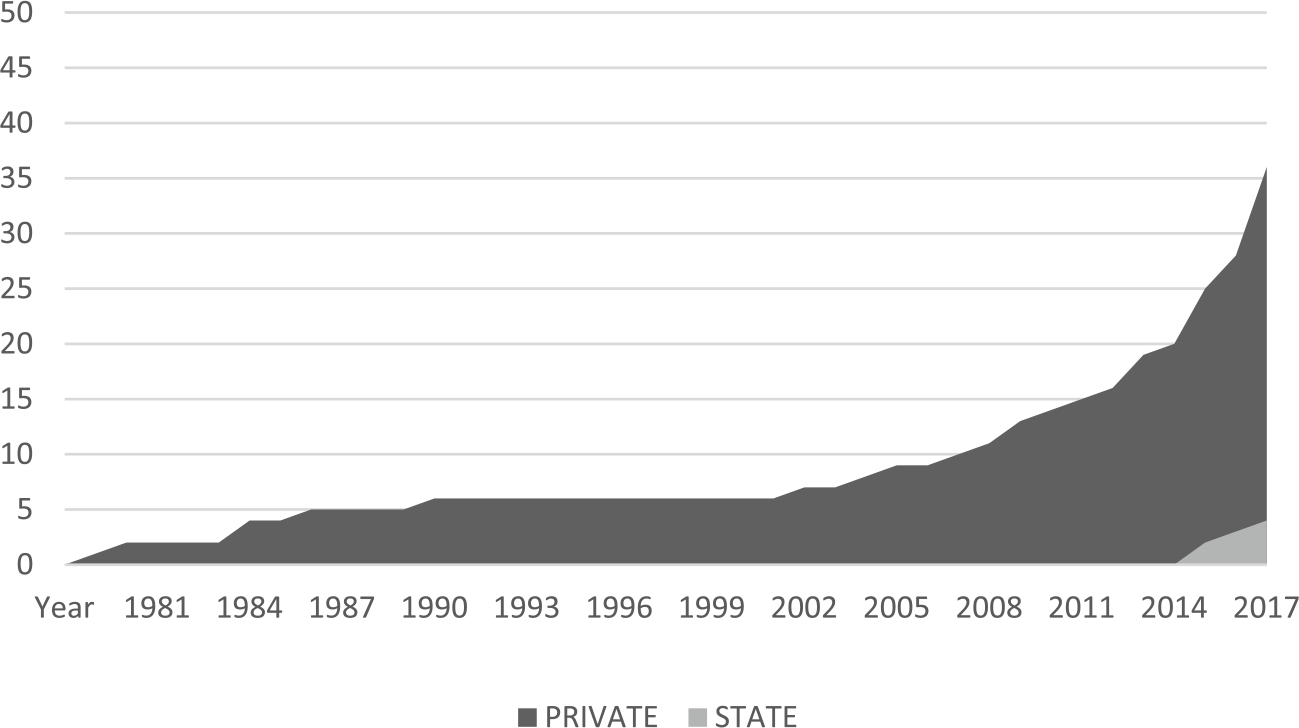
Growth of private (mainly international) and state high schools in Japan offering the IB DP from 1978 to 2017.
Although the number of schools in the country increased in the first few years of the project, there was virtually no growth in the number of students sitting DP exams between 2010 and 2014. Additionally, the number of DP students inside Japan remains substantially lower than the number of Japanese nationals taking the DP outside of Japan (see Figure 2). In 2015, the domestic DP cohort grew for the first time since the introduction of the project. This slow start may be attributable to the two-year authorization process that schools must go through in order to offer the DP and then the one to two years of teaching before students sit the DP examinations.
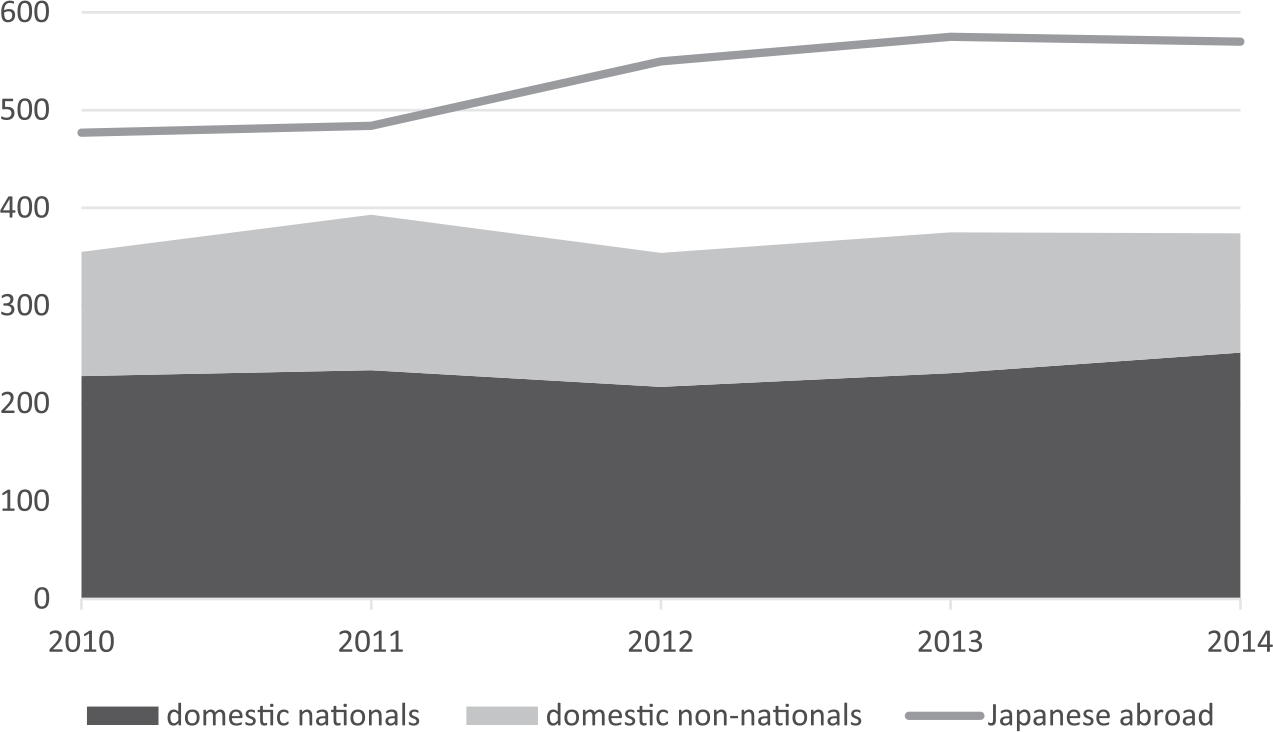
Number of Japanese nationals and non-Japanese nationals taking DP exams in Japan, and number of Japanese nationals taking DP examinations outside of Japan, 2010-2014.
Another factor that may have contributed to the increase in students in 2015 is the introduction of the Dual Language DP. In 2013, to address the challenges that many schools were facing in adopting the program, the Education Rebuilding Implementation Council recommended the development of a Dual Language DP, which allowed students to take up to four of their six DP courses in Japanese. Since the necessity for students to study in English was an obstacle in expanding the number of IB schools, it was felt that increasing the use of Japanese would improve the uptake by students. This would also allow students studying at Article 1 secondary schools to have a smoother transition from a Japanese national curriculum to the DP curriculum. In the following month, the Japan Revitalization Strategy (2013) echoed the statement, and set the target of reaching 200 schools by 2018; an ambitious goal considering the current situation.
Although growth is perhaps not happening at the pace the government would like, there has indeed been a steady increase in the number of schools offering the DP in Japan, and that growth is expected to continue into the future. This raises the question as to whether or not Japanese universities are ready not only to accept the growing body of IB students, but also to contribute to this growth by providing smoother pathways for them.
University admissions in Japan
There are in total 777 universities in Japan: 600 private, 91 public, and 86 national universities. National universities are primarily funded by the national government, while public universities are funded by the local municipalities. Private universities are funded by private educational foundations or corporations. The categories are mutually exclusive. In Japan, with some important exceptions, national universities tend to be the leaders in terms of prestige, and are certainly at the center of government reform agendas. However, the private higher education sector has proven itself to be the more flexible and pioneering in several regards, including admissions and internationalization.
Admission to universities in Japan has traditionally relied heavily on national or individual university written examinations. However, there is currently a shift from a test-score based approach to a more holistic review approach. In the 1990s, Japanese universities started to implement a more holistic admissions process in order to assess newly emerged competencies and provide diverse students with fair and equivalent admission opportunities. This is known as AO (Admission Office) Admissions. Admissions based on recommendations from high school principals also began to appear around this time. Keio University, one of the top private universities, was the first to offer the AO route in 1990, in an effort to model its admissions after the US system. After Keio, other major private universities followed suit, but it took another 10 years for national universities to begin to offer AO. This move was encouraged by the government in order to account for students’ backgrounds, personal experience, and potential, as well as academic achievements (Education Rebuilding Council, 2013). The initiative was motivated by a shift in thinking in what constitutes fairness in measuring scholastic ability. Government statistics for 2015 state that 43.9% of overall admissions were alternative admissions, outside of the traditional entrance examination pathway. However, while over half of private universities (51%) had AO tracks, the figures were only 15% for national universities and 27% for public universities, demonstrating the more progressive practices of the private institutions.
There are several pathways for IB DP students to enter Japanese universities: regular admissions requiring the same criteria as domestic students; special admissions for returnee students (kikokushijo: Japanese students who reside and study abroad for over three years); AO admissions; and special admissions (e.g. for English-medium programs or specifically for IB students). Depending on students’ educational and personal backgrounds (i.e. nationality, location in which IB Diploma was obtained, length of residing abroad, and language proficiency), students must determine which admission pathway they should apply through. Although there are shifting views in this context, many universities, especially national universities, have not moved away from the old concepts of scholastic abilities and fairness. The concept of ensuring fairness by using the same measurement for all applicants regardless of background still strongly persists, and has not allowed universities to move away from ‘objective’ test-score based admissions. Thus, many national universities still require DP students to take the national examination in addition to earning the IB Diploma.
To encourage and facilitate further reform in the nation’s leading higher education institutions, in 2014 the government introduced its latest competitive grant scheme, the ten-year Top Global University Project (TGUP). TGUP provides funding for two types of universities: 13 universities which will aim for top spots in the global rankings, and 24 which will lead in internationalization. TGUP emphasizes the hiring of international faculty and improving institutional governance, administration and strategic planning (Horie 2015; Yonezawa and Shimmi 2016). Importantly, TGUP also includes criteria for diversifying student admissions in general and creating more pathways for DP students in particular. Thus, the project funding is an important motivator for recipient universities to accept and accommodate more IB students.
Methodology
To paint a more complete and coherent picture of university admission reform in Japan as related to DP students, this paper draws on data from two main sources. It utilizes student transcript records provided by the International Baccalaureate Organization (IBO) to show student matriculation patterns, and then supplements this with data from an IBO commissioned 2014 survey of Japanese universities, to better understand the university perspective. From analysis of these two datasets, conclusions and recommendations are drawn.
In the case of the student transcript data, all figures reported are from the calendar year 2016, unless otherwise indicated. It should be noted that transcripts are the records of when students request the IBO to send their official IBDP assessment results to the university of their choice. In most countries, including Japan, this happens after the student has been tentatively accepted into the university, and the transcripts are sent for verification purposes. However, there are cases where transcripts are sent as part of the application process, and in such cases students often send transcripts to multiple institutions. Generally though, in the Japanese context there is a very high correlation between transcript requests and matriculation. This is helpful in showing where DP students end up attending university, but provides limited insight into their actual acceptance rates at universities they apply to, or whether they are matriculating to their first choice university.
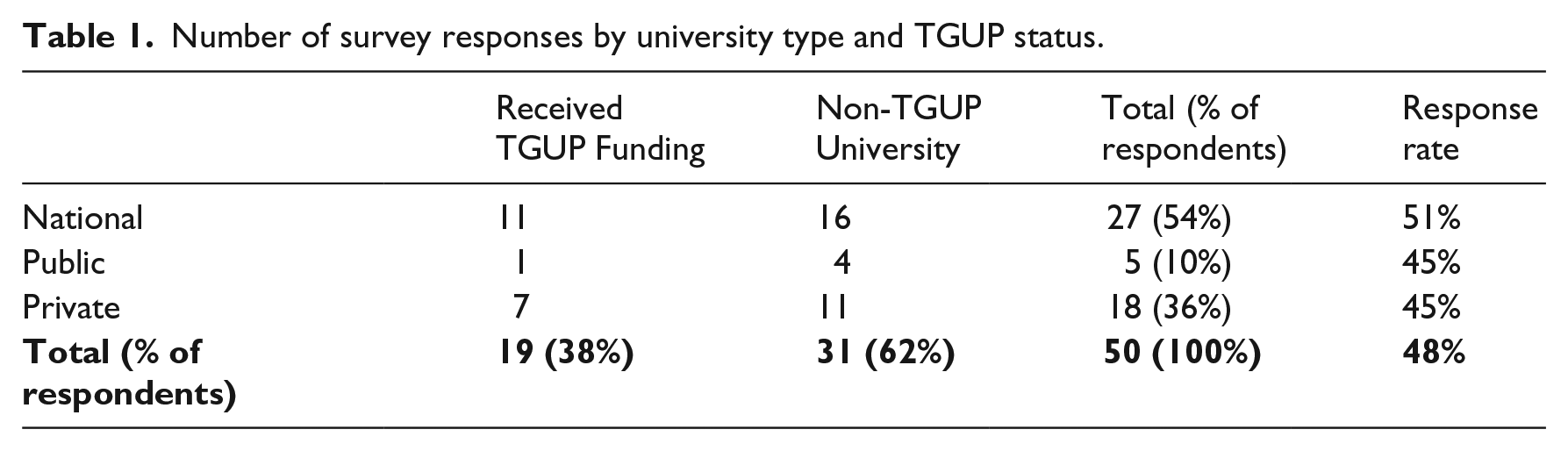
The survey data from Japanese admissions offices comes from a November 2014 survey sent to the admissions offices of all 104 universities offering undergraduate programs that applied to the government’s 2014 TGUP. All TGUP applicant universities were required to include a plan for admitting DP graduates. The survey, in Japanese, asked admissions officers about their perceptions of the IB DP, and current practices and future plans for recruiting and admitting IB students. In total, there were responses from 50 universities (a 48% response rate) (See Table 1). Since the survey data was collected at the end of 2014, admissions reforms in the country have been continuing, and acceptance of the DP as a qualification for entry has increased, especially among several progressive national universities. Thus, while the survey data is a good indicator of admissions offices’ perceptions of the DP, it should be noted that the situation may have changed since the data was collected.
Number of survey responses by university type and TGUP status.
Findings
The Matriculation of DP students to Japanese Universities
In 2016, DP students sent a total of 943 transcripts to 74 higher education institutions (HEIs) in Japan. This was a 10% increase over the previous year. Some HEIs received transcripts at multiple campuses or for individual programs. In these cases, for the purposes of this study such campuses were collapsed under a single parent institution. Globally, Japan is the 12th most common destination for transcripts requested by DP students worldwide. Although that rank has declined over the last decade, the growth of DP transcripts sent to Japanese HEIs slightly outpaces the average growth in transcripts sent globally (10.1% vs 8.9% compound annual growth rate), meaning that Japan is now attracting a slightly larger share of DP graduates globally. This suggests that the government project may be having a positive, albeit small, effect.
In terms of the students who send transcripts to Japanese HEIs, this analysis considers four discrete groups:
Japanese nationals studying the DP in Japan
Japanese nationals studying the DP outside of Japan
Non-Japanese nationals studying the DP in Japan
Non-Japanese nationals studying the DP outside of Japan
Japanese nationals (i.e. students who indicated they carry a Japanese passport) taking the DP outside of Japan account for the bulk of transcripts sent to Japanese HEIs (61% overall, and nearly 80% of all transcripts coming from outside of Japan). In 2016, this group sent 1152 transcripts globally, and nearly half of these (49.7%) went to Japanese universities. On the other hand, only 31.6% of transcripts sent by DP students from within Japan went to Japanese HEIs. These figures suggest that while Japanese universities are relatively successful at attracting Japanese nationals from abroad (‘returnees’), they are either less successful at attracting, or less willing to accept, domestic DP students. Figure 3 shows the relative portions of transcripts sent to Japanese universities by the four student types.
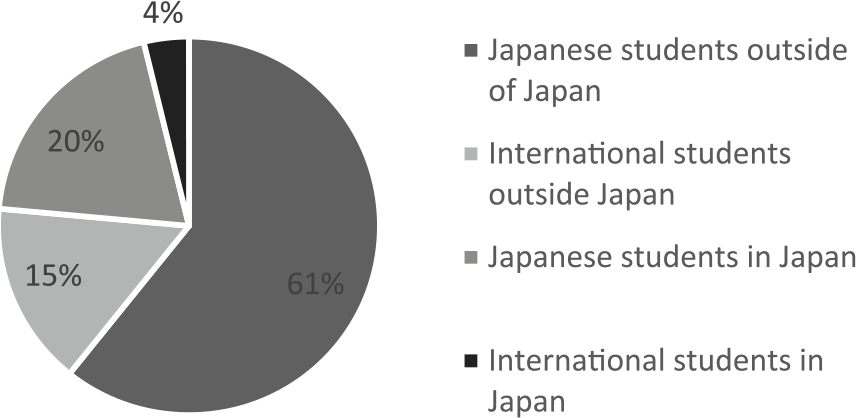
Relative proportions of types of students sending transcripts to Japanese HEIs, 2016.
There is some diversity in terms of the origins of DP transcripts to Japan, but it should be borne in mind that the majority of these transcript senders are Japanese nationals, and thus the pool of students is considerably less diverse than Figure 4 might indicate. As shown earlier in Figure 2, there are more Japanese nationals taking the DP outside of Japan than within Japan, and about half of these students return to Japan for their higher education.

Top 10 sources of transcripts sent to Japanese HEIs, 2016.
When considering the destinations of transcripts sent by students taking the DP inside Japan, the pattern largely mirrors global trends, with Anglophone countries as the major destinations after Japan (Figure 5).

Destinations of transcripts from all students taking the DP in Japan, 2016.
For transcripts (either domestic or international) that are sent to Japanese HEIs, it is instructive to consider the actual HEIs they are sent to. As shown by Figure 6, about half of all transcripts sent to Japanese HEIs go to just four universities, all private. This may be reflective of their more open admissions policies, more undergraduate offerings in English, and more active recruitment of IB students. When compared to other HEIs in the region, Japanese universities do not take in particularly large numbers of DP students, and there is not a single Japanese university among the 30 most common destinations in the Asia-Pacific. Interestingly, there seems to be little overlap between the universities that take in the most IB students and those that take in the most international students in general (JASSO, 2016). Only four of the top 10 universities that take in the most international students are among the top 10 destinations for IB students, and three of the top four for IB students are not among the top ten for international students in general.

Top destinations of transcripts sent to Japan, 2016.
Keio University in particular is a notable case, as the number of transcripts it received grew dramatically in a short span. This may be due to the recent revisions the university made to its DP recognition policies and more active recruitment of IB students through participating in IB related conferences, panels, etc. Although in smaller numbers, similar trends can be observed in such national universities as Tsukuba and Okayama, which have also recently revised their DP recognition policies and recruitment practices.
If the seven private universities that accept the most DP students are compared with the seven national universities that accept the most DP students, it can be seen that not only do the private universities matriculate far more DP students but, despite the positive trends seen in national universities since 2014, that gap is actually widening (Figure 7). Thus, the national universities do not seem likely to be catching up to the private universities any time soon.

Growth in the number of transcripts sent to the top 7 private Japanese HEIs and the top 7 national HEIs, 2006-2016.
When the breakdown of the student types matriculating to private and national universities is considered, it can be seen that while there are some differences in who these two groups of universities matriculate, these differences are not particularly sizable (Figure 8). In general, compared to the national universities, the private universities receive a higher portion of transcripts from students taking the DP within Japan (both Japanese and non-Japanese). This may be due to a longer history of these universities accepting students from international schools within the country, and thus to more well-established pipelines.
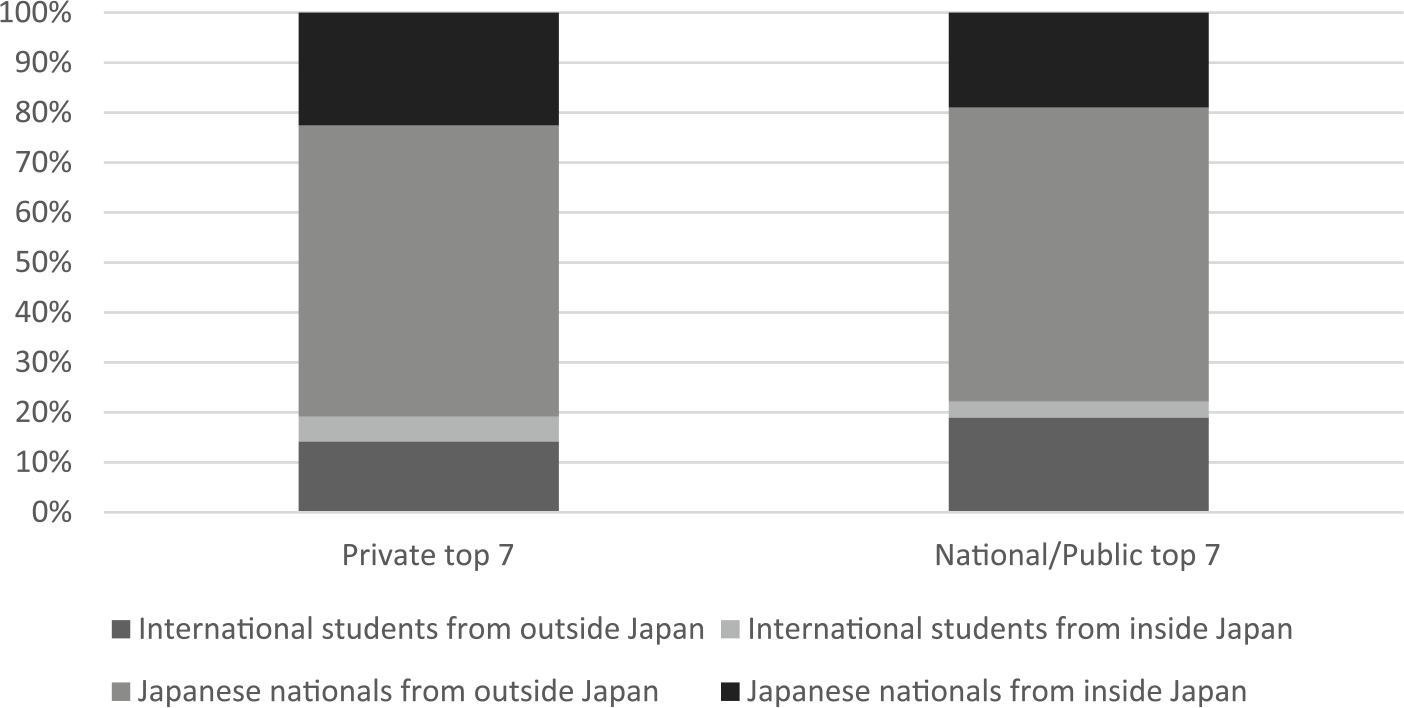
Breakdown of student types sending transcripts to the top 7 private and national universities, 2016.
Survey of Admissions Offices at Japanese Universities
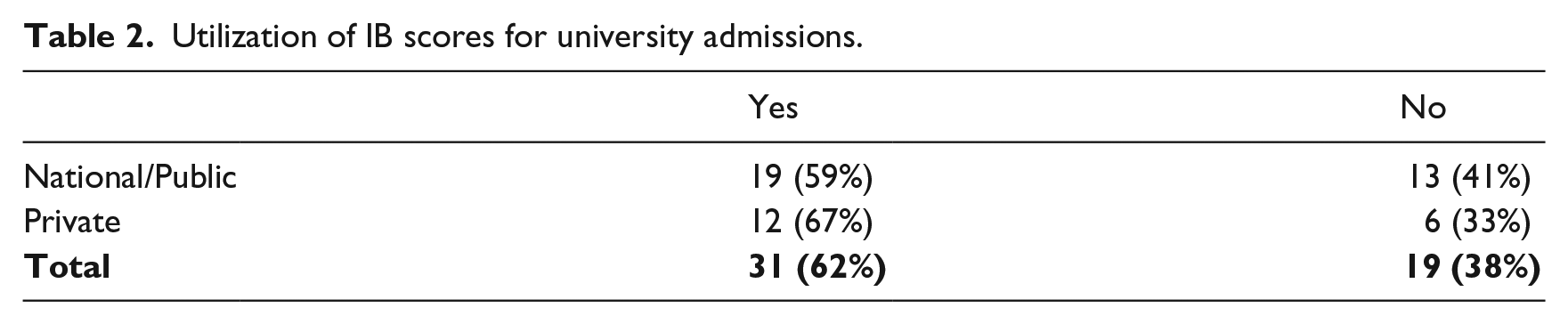
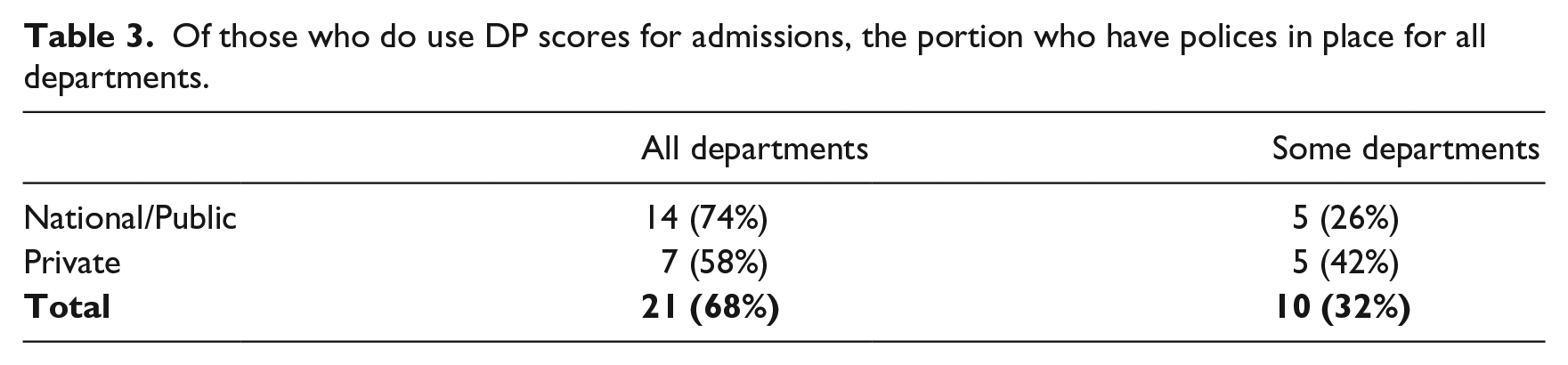
Of the total of 50 respondents to the admissions offices survey, 31 universities indicated that they already utilized IB scores for admissions purposes. Of these, 21 reported that all departments have policies to utilize IB scores, while 10 reported that only some departments have policies in place for utilizing IB scores for admissions (See Table 2). Interestingly, while the respondents from private universities were more likely to have an IB recognition policy in place, of those who responded positively the national universities were more likely to indicate they had institution-wide policies in place. Because of the small number of respondents from public universities, they are reported together with national universities in Tables 2 and 3.
Utilization of IB scores for university admissions.
Of those who do use DP scores for admissions, the portion who have polices in place for all departments.
When examining whom the universities target with their IB admissions policies, Figure 9 shows that universities target different student populations. Although the IB Diploma is consistent internationally in terms of curriculum and assessment, Japanese universities seem to treat it differently depending on student nationality and where the DP was undertaken. Returnees appear to have more access to Japanese universities than do non-Japanese IB students and Japanese students who took the DP in Japan. The latter group seem to have the most restricted access.

Student selection and admissions with IB scores. Respondents were asked to check all that apply.
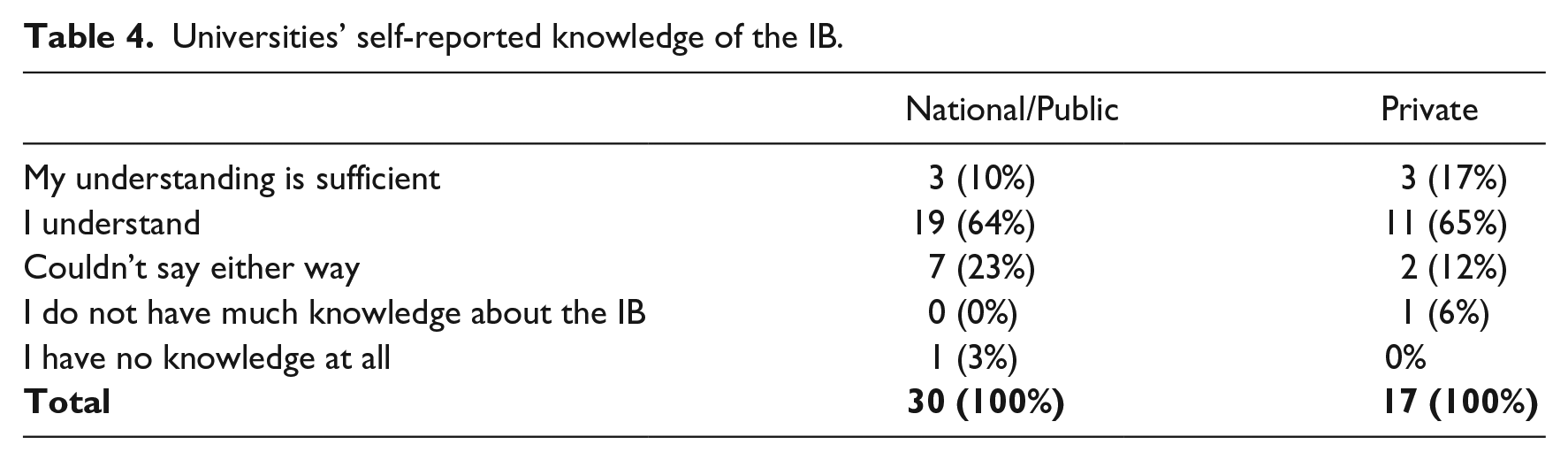
As for universities’ knowledge about the IB, 74% of respondents from national universities and 82% from private universities indicated that they either had sufficient understanding or some understanding of the DP (Table 4).
Universities’ self-reported knowledge of the IB.
Universities that are utilizing IB for their admissions were asked about their motivation (Table 5). For nearly all indicators, private and national universities had similar motivations for using the DP as an admissions pathway. The two biggest differences were in regard to government policies and university publicity, with both being a stronger motivation for the national universities.
Universities’ motivations for utilizing IB Diploma (average scores).

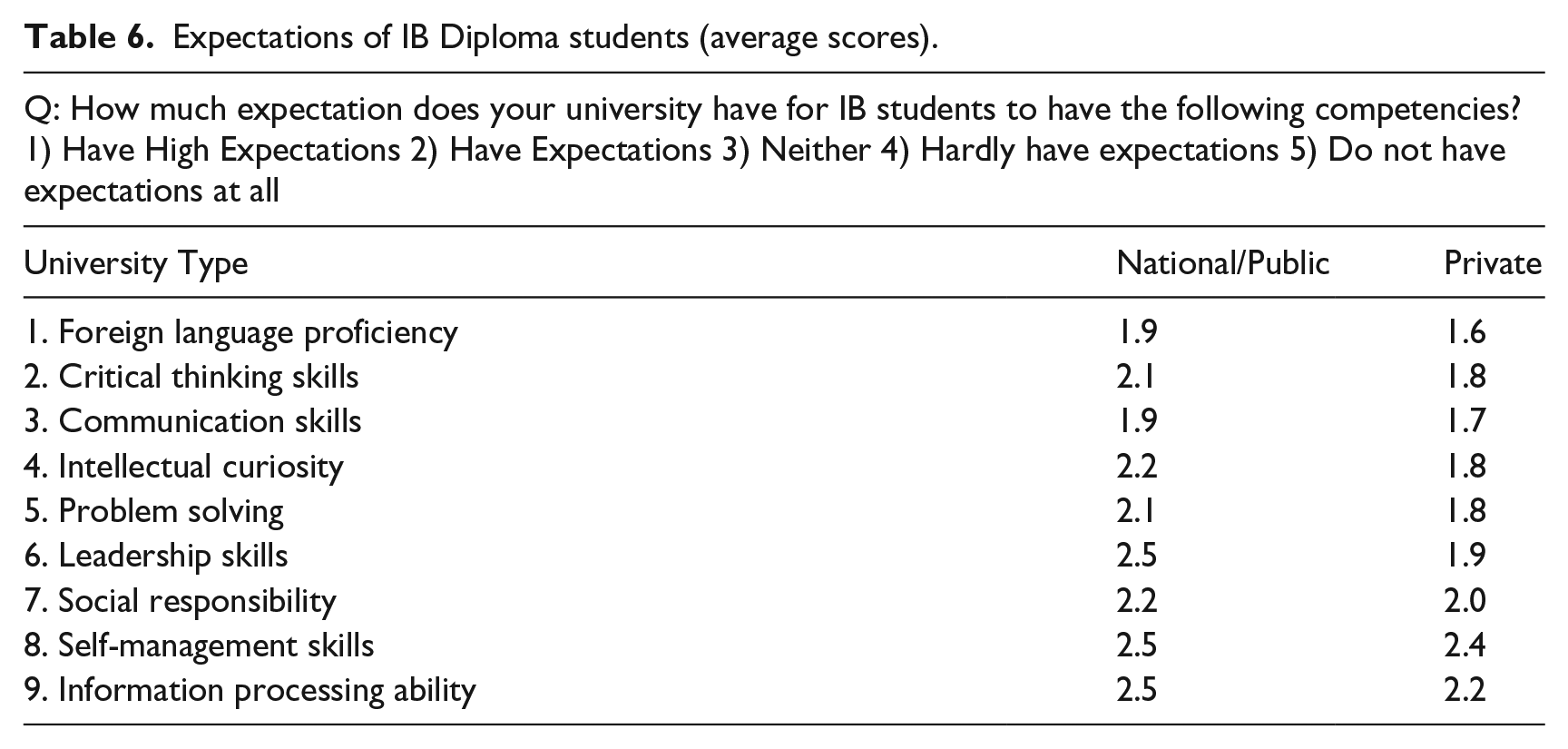
In regard to expectations of DP students (Table 6), national universities seemed to have the highest expectations with regard to foreign language proficiency (i.e. English) and communication skills. This may be linked to the national universities’ stated motivation of responding to government policies, as these policies actively promote the development of ‘global human resources’ with language and communication skills (Global Human Resource Development Committee of the Industry-Academia Partnership for Human Resource Development 2010, p. 6; Ministry of Economy, Trade and Industry 2012, p. 6). The attributes of IBDP students that national universities embrace could be foreign language proficiency and communication skills rather than other skills IB students gained through IB DP study. Overall, there were comparatively low expectations for social responsibility and self-management skills, which research indicates are key outcomes of participation in the DP (Resnik, 2008). Interestingly, on every measure, the national universities had lower expectations of DP students than did the private universities. The perception of whether the DP develops leadership skills was a particular point of divergence.
Expectations of IB Diploma students (average scores).
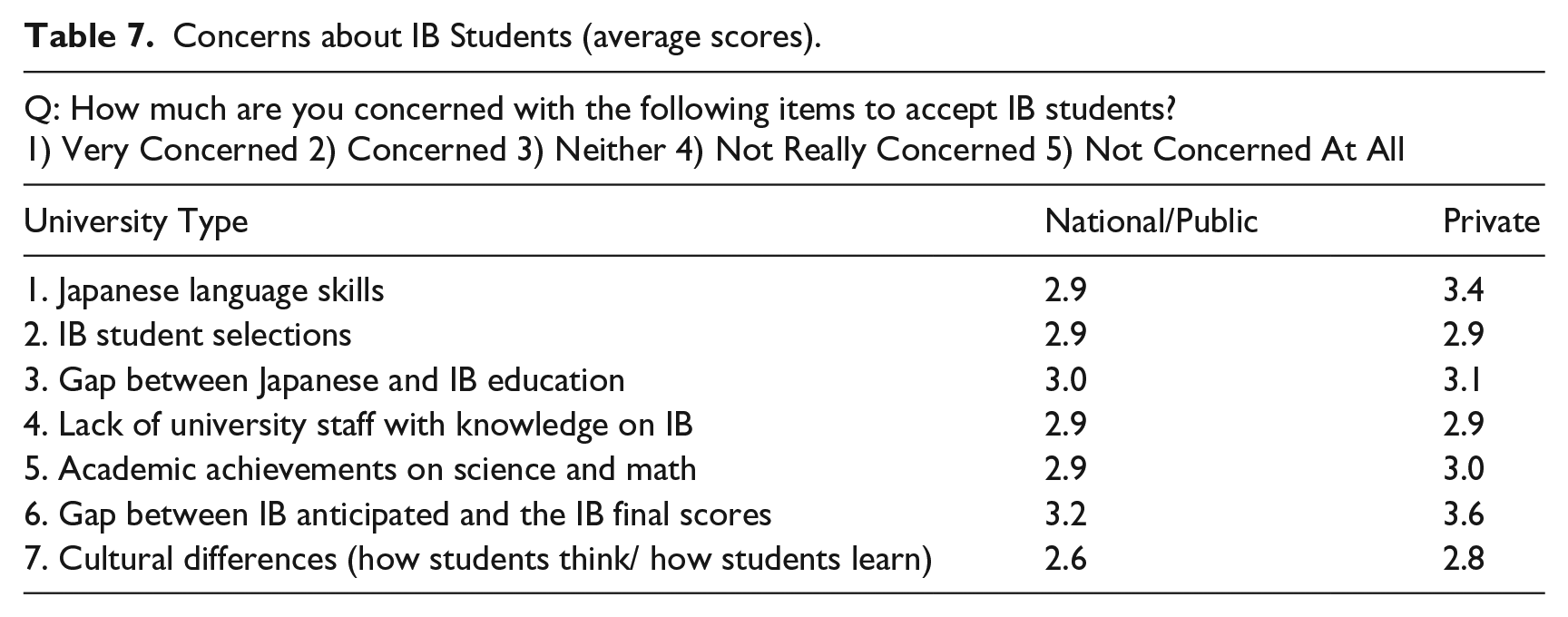
Although there were no major concerns expressed with regard to accepting DP students (Table 7), in general, national universities leaned slightly towards being somewhat concerned, especially in terms of cultural differences, whereas private universities tended to lean towards being not concerned on most measures. On most measures, respondents from national universities tended to show slightly more concern than did those from private universities.
Concerns about IB Students (average scores).
Discussion and recommendations
In very general terms, the data presented here indicate that changes in the recognition of the IB Diploma in Japan are beginning to take shape, but there seems to be a considerable way to go before the situation resembles that which the government project is aiming for. University recognition of the IB Diploma and growth of the program have a strong cyclical effect on each other. As universities increasingly recognize the Diploma as a valued pathway to their institution, schools and students are more likely to take on the program. At the same time, universities generally are not particularly incentivized to create specific admissions policies for IB students until there are enough students to warrant the time and energy needed. In the Japanese context especially, it is understandable that institutions which have maintained their prestige in large part through very transparent and rigorous admissions procedures would be somewhat protective of such procedures and slow to reform. It will take some time for institutions to gain the level of familiarity with and confidence in the capabilities of DP students before more favorable policies are likely to be put in place. At the same time, greater assurances will be needed that in fact the DP is available to all types of students throughout the country, not just the privileged.
The private universities are not only apparently more open to IB students; they also seem to have greater familiarity with and positive views of the program. Private universities taking the lead and setting the pace is a somewhat rare phenomenon in Japan, where higher education reforms are often driven by the central government. One of the most likely factors may be the reluctance of the national universities to tinker with admissions procedures that have been carefully constructed to both maintain their relative levels of prestige and communicate an aura of equitability. Private universities on the other hand rely more heavily on tuition fees for funding, and may be more willing to consider diverse pathways to bring in students. Additionally, in a few incidences, it may be a matter of greater alignment between the educational philosophies of the private institutions and the IB, which may create a more welcoming environment for DP students. The Japanese academic calendar may be another factor, as private universities may be more willing to consider second semester admissions, which better coincides with the academic calendar in much of the rest of the world. However, the changes taking place at a number of selective national universities should not be completely overlooked.
It is notable that neither the national nor private universities seem to be particularly popular destinations for students taking the DP within Japan. Domestic students are much less likely to send a transcript to a Japanese university then are Japanese nationals taking DP examinations outside of Japan (31.6% v 49.7%). This might indicate a relatively strong preference by the universities for local students to matriculate through the more traditional routes. It should be noted that this phenomenon is not unique to Japan and is consistent with several other countries in East Asia. Compared to the DP recognition environments of some of their neighbors, Japanese universities are considerably more accepting of domestic DP students. This trend may also be related to student motivations for undertaking the DP in different settings. Additionally, this may not run entirely counter to the government’s objectives for the 200 schools project. One of the key rationales for the project was to encourage more Japanese youth to pursue undergraduate studies abroad, and that seems to be happening. However, since 2014 the number of non-Japanese students taking the DP in Japan seems to be growing slightly faster than the number of domestic Japanese students, suggesting that greater effort may be needed to reach the project’s target group.
With regard to the survey results, it is clear that as of the time of the survey, there was still work to be done in terms of educating the admissions offices about the DP qualifications. While most indicated a general level of understanding, there was still a sizable portion that indicated they did not sufficiently understand the qualification. In terms of expectations, most respondents indicated fairly high expectations for DP students, although the private universities tended to have somewhat higher expectations. Similarly, while both sides expressed concerns in taking in growing numbers of DP students, the national universities were slightly more likely to express concerns, especially in terms of Japanese language proficiency, while this was among the least of the concerns for the private universities. This may be because the private universities offer more undergraduate course options in English, and at the same time have a longer history with and more exposure to DP students, and thus are more familiar and comfortable with their linguistic abilities. It should be kept in mind that the majority of students in both cases are Japanese, and this is also likely a major factor in the lack of concern. One thing that this study has not examined is how universities view and treat the Dual Language DP versus the DP delivered primarily in English. This is an area that warrants further investigation.
Globally, DP students are a fairly sought-after group of potential undergraduates. Students with top IB scores gain entry into the world’s most prestigious institutions and, in many cases, receive substantial benefits and support in attending such institutions. Yet many of the middle tier Japanese institutions seem to be reluctant to accept anything but top IB scores. This means that they are putting themselves on par with the world’s top universities in terms of entry requirements. There may not be much incentive for a student to choose a middle tier Japanese university when they would be eligible for advanced standing and scholarships at more prestigious universities elsewhere. More generous recognition policies and smoother admissions procedures at these middle-tier institutions might help them to both retain more domestic DP students and attract more international DP students.
On the second point, it seems that these universities are missing out on a key opportunity to capitalize on the DP in order to contribute to the national goal of attracting 300,000 international students by 2020. More than 150,000 students matriculate from the DP each year. With the effort many Japanese universities have exerted thus far in developing English-medium programs, reforming admissions, and familiarizing themselves with the DP, IB schools abroad might be fertile recruiting ground for international students. However, in the last decade Japan has actually fallen from the sixth to the tenth most popular destination for internationally mobile IB students. Japanese universities might do more to leverage the DP as a major contributor to the 300,000 student goal.
Of course, it is not just about getting students in the door. Adequate attention must also be paid to the educational experience of the students after they are admitted. The survey responses indicated that the universities are not particularly motivated to use increasing numbers of DP student as a way to improve the teaching and learning at their institutions. Additionally, the survey results suggested some concern over cultural differences with former IB students. If the universities are serious about producing more ‘gurobaru jinzai’ (globally capable human resources), it will not just be a matter of providing pathways for more diverse students. There will need to be adequate courses, programs and activities that can build upon the skills and interests the students bring with them.
Further research would be beneficial in better understanding the academic performance and experiences of DP students in Japanese universities. More evidence in this regard could help the universities in developing more equitable recognition policies as well as create more opportunities for the student body to benefit from the increased diversity on campus. It may also help more students and schools in Japan to understand what to expect when considering whether to take on the DP.
Going forward it will be important for the government, the tertiary and secondary education sectors and the IBO to work together to reach the project’s 200 school goal. Although the changes that have occurred thus far should be acknowledged and applauded, all sides have work to do to realize the project goals. Ultimately this is a good opportunity for the country to not just increase the number of IB schools, but to consider what it means to be “university-ready” in the 21st century Japanese context, and the implications for assessment and adequate pathways to success for the country’s youth.
Footnotes
Acknowledgements
The authors would first like to thank the IB for generously supplying us with the transcript data for analysis. The survey data also came from an IB commissioned study, and we would like to thank the IB and the research project team at Osaka University for allowing us to use the survey results, as well as the universities who participated in the survey. Additionally, special thanks go to Gregory Biggs and Julian Jefferies for contributions to an earlier iteration of the transcript analysis, and to the reviewers for precise and helpful feedback.
Funding
The author(s) disclosed receipt of the following financial support for the research, authorship, and/or publication of this article: No direct funding was received for this project, though the data for the survey came from an IB-sponsored project.