Editor-in-Chief: Dr Ganesh G Raman
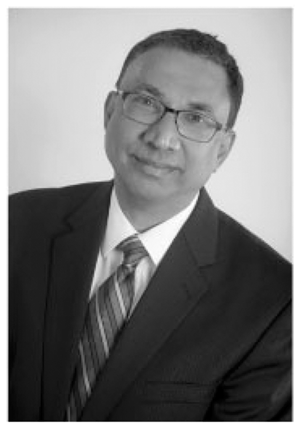
Dr Ganesh G Raman’s interests are in the areas of flow control and experimental aeroacoustics. His research in the fields of supersonic jet noise, screech, and high speed jet flows is widely recognized. Dr Raman has over 25 years of experience working with industry, academia, and the U.S. government. He is currently Assistant Vice-Chancellor for Research for the California State University system of 23 campuses. Prior to that he served as Deputy Vice-Provost for Research and Professor of Mechanical and Aerospace Engineering at the Illinois Institute of Technology, USA, where he has also served as the Associate Chair for Aerospace Engineering. Before joining IIT, he spent 14 years at NASA Glenn Research Centre performing contract research, including work for NASA High Speed Civil Transport Program. Dr Raman has over 150 technical publications that appeared in leading journals and conference proceedings. He is a Fellow of the American Institute of Aeronautics and Astronautics (AIAA), the American Society of Mechanical Engineers (ASME) and, a Fellow of the Royal Aeronautical Society. He also served as the Chairman of the Fluid Mechanics Technical Committee of ASME and the Aeroacoustics Technical Committee of AIAA. Dr Raman was awarded the ASME Lewis F Moody best paper award in 2002. In addition, he was cited in 2001 Boeing Special Invention Awards and received a NASA Certificate of Recognition for a creative innovation. Dr Raman has a bachelor’s degree from the Indian Institute of Technology, Bombay, and a PhD from Case Western Reserve University, USA.
Editorial Board, North America
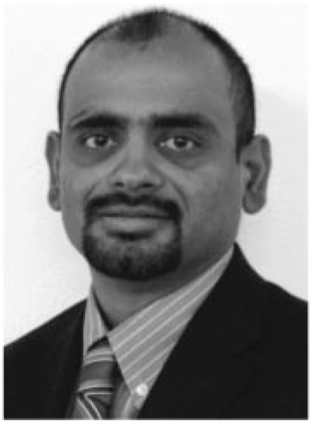
Dr Srinivasan Arunajatesan is a Principal Member of Technical Staff at Sandia National Laboratories. His technical activities span the spectrum of research, development, and application, over a wide range of fields including acoustics, numerical methods, turbulence modeling, fluid-structure interactions, uncertainty-quantification, reduced-order model development, and parallel programming for scientific applications. Prior to this, he spent 12 years as a Senior Research Scientist at CRAFT Tech, leading the development and application of Large Eddy Simulations for practical applications including flight test hard-ware design and development. He is currently a Senior Member of AIAA and serves on the Aeroacoustics Technical committee. Dr Arunajatesan earned his Doctorate and Master of Science Degrees from Georgia Institute of Technology in 1998 and 1994, respectively, and his Bachelor of Technology in Aerospace Engineering from Indian Institute of Technology, Chennai, in 1991.

Dr Thomas Brooks (retired) was a Senior Research Scientist at NASA Langley Research Center. He became a lead in Rotorcraft Aeroacoustics in 1990 and has led combined government and industry research teams for noise reduction and prediction portions of NASA programs. Since 1996, he has lead fixed-wing Airframe Noise research in the Aeroacoustics Branch. Dr Brooks has presented a number of papers and seminars on acoustic airframe and rotorcraft noise, wind tunnel testing, and array methods; consulted with government and industry on military acoustic concerns; and performed a AGARD FDP program consultation mission. He has served as the Associate Editor of the Journal of the American Helicopter Society responsible for the discipline of acoustics, as Chairman, Deputy Chairman, and member of AHS and AIAA Technical Committees, as well as Technical and Administrative Chair positions for Technical Meetings. Dr Brooks is a recipient of the Howard Hughes Award and has been named a Fellow of the AHS.

Dr Alan B Cain received his BS in Mechanical Engineering from Michigan State University where he held the Alcoa Scholarship and the Exxon Foundation Award. He received his MS and PhD in Mechanical Engineering from Stanford University where he was awarded a University Honors Fellowship. Dr Cain has held positions at the University of Notre Dame, McDonnell Douglas (and then Boeing), Saint Louis University, and most recently has established and is serving as President of Innovative Technology Applications Company. He is an Associate Fellow of the American Institute of Aeronautics and Astronautics (AIAA) and served as Vice Chair of the AIAA Aeroacoustics Technical Committee.
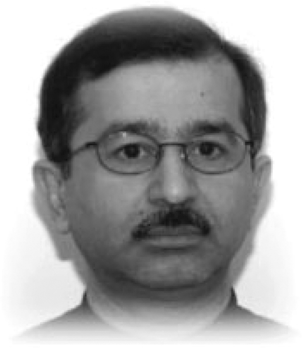
Dr Edmane Envia is a member of the Acoustics Branch at NASA Glenn Research Center. He joined Glenn in 1997, but has been involved with various NASA aircraft engine noise reduction programs since 1987. His expertise is in theoretical aeroacoustics, and he has been responsible for the development of several turbomachinery noise prediction theories and most recently has served as the Technical Manager of the fan noise reduction element of the Quiet Aircraft Technology program. Dr Envia received his PhD in Mechanical Engineering from the University of Arizona in 1988. He is an Associate Fellow of the American Institute of Aeronautics and Astronautics.
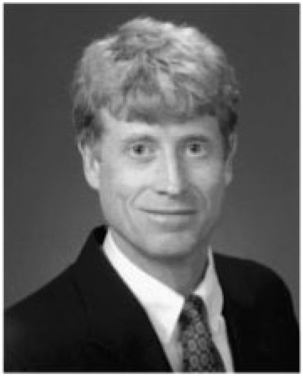
Dr Stewart AL Glegg received his PhD from the Institute of Sound and Vibration Research, Southampton University, UK, in 1979 for studies in acoustics. He was a research specialist with Westland Helicopters, UK, for two years (1977–1979) and then joined the Institute for Sound and Vibration Research, Southampton University (1979–1985) as a faculty member sponsored by the Navy working on Hydroacoustics. In 1985, Dr Glegg joined the faculty in the Department of Ocean Engineering at Florida Atlantic University, and he is currently the Director of the Center for Acoustics and Vibration. He was an Associate Editor for the AIAA Journal (1994–1997) and serves on the editorial board of the Journal of Sound and Vibration. In May 2004, he was awarded the American Institute for Aeronautics and Astronautics Aeroacoustics Award for ‘‘Outstanding contributions to the understanding and reduction of fan noise in turbo machinery.’’ Dr Glegg has published over 140 technical papers in leading scientific and engineering journals including the Proceedings of the Royal Society, Nature, the Journal of Sound and Vibration, the Journal of the Acoustical Society of America, and the AIAA Journal.
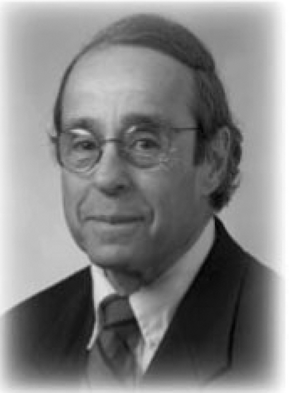
Dr Marvin E Goldstein is Chief Scientist at the National Aeronautics and Space Administration’s Glenn Research Center, Cleveland. His government career at Glenn spans 30 years. As Chief Scientist, Dr Goldstein serves as the Center Director’s senior scientific advisor and acts as principal interface between the national and international research community. He earned his degrees in mechanical engineering: his bachelor of science degree from Northeastern University, Boston, MA; his master of science degree from the Massachusetts Institute of Technology, Cambridge, MA; and his doctoral degree from the University of Michigan, Ann Arbor, MI. Dr Goldstein is a member of the National Academy of Engineering (NAE) and is a Fellow of the American Institute of Aeronautics and Astronautics (AIAA) and the American Physical Society (APS). Additionally, he is the recipient of various prestigious awards including the NASA Exceptional Scientific Achievement Award, APS Otto Laporte Award, the AIAA Aeroacoustics Award, the AIAA Pendray Award, and the Northeastern Outstanding Engineering Alumnus Award. Dr Goldstein has 118 published papers, many of which have been published in the Journal of Fluid Mechanics and the Proceedings of the Royal Society. He also wrote the book entitled Aeroacoustics, which has been translated into Russian and Japanese.
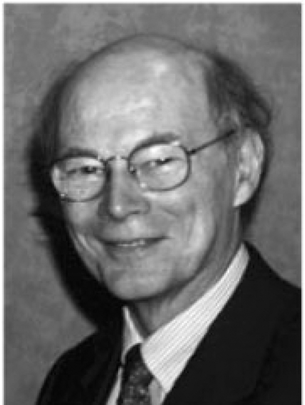
Dr Michael S Howe has over 25 years experience conducting research in fluid mechanics, acoustics, random vibration, and structural mechanics. He has published more than 150 refereed journal articles on these and related subjects. Dr Howe recently published Acoustics on Fluid-Structure Interactions in the Cambridge University Press series ‘‘Monographs of Mechanics.’’ His current sponsored and non-sponsored research are concerned with: (1) the production of sound, vibration, and self-noise by turbulent flow, transitional boundary layers, free shear layers, etc, interacting with elastic structures and projectiles, (2) pressure transients generated by high speed trains, (3) the mechanics of towed and free falling bodies, (4) scattering of sound, and (5) fluid mechanics of thermoacoustic systems.
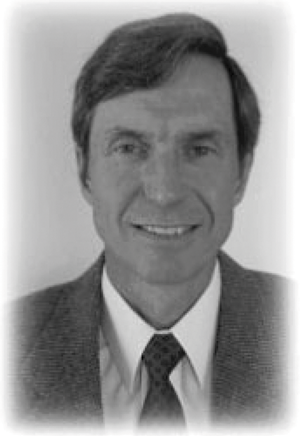
Dr Edward Kerschen is internationally recognized for his contributions in aeroacoustics, unsteady aerodynamics, and the receptivity of boundary-layer and shear-layer instabilities to forcing by free-stream disturbances. His research focuses primarily on theoretical modeling and asymptotic descriptions, but has also included experimental investigations. His contributions in aeroacoustics include gust-airfoil interactions, fan/propeller noise mechanisms, cavity acoustic resonances, flow noise, and the active control of noise and unsteady flows. Dr Kerschen received a PhD degree in Mechanical Engineering from Stanford University in 1978. From 1979 to 1981, he was employed by General Electric Corporate Research and Development in Schenectady, New York, with principal responsibilities in aircraft engine noise. In 1981, he moved to the University of Arizona, where he is now a full professor in the Department of Aerospace and Mechanical Engineering and a member of the steering committee of the Interdisciplinary Program in Applied Mathematics. He is a Fellow of the American Physical Society (Fluid Dynamics). Dr Kerschen has more than 50 publications and a US patent on airfoil noise control. He has served as an Associate Editor of the AIAA Journal, an organizer and scientific committee member for several technical conferences, and a consultant to aerospace companies and government laboratories.
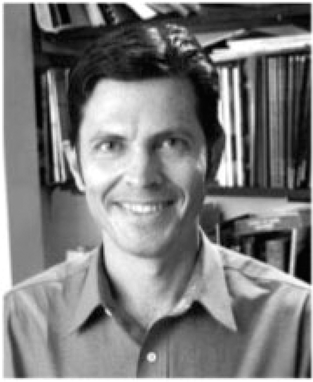
Dr Anastasios S Lyrintzis is a Distinguished Professor and Chairman of the Aerospace Engineering Department at Embry Riddle Aeronautical University. He was a Professor at Purdue University from 1994 until 2011. For seven years he has served on the faculties of University of Minnesota, Cornell, and Syracuse University. He is the Graduate Chair and the Director of the Computational Science and Engineering Interdisciplinary Program. His research interests are computational aeroacoustics and aerodynamics. He has co-authored 54 journal papers and 92 conference papers. He has been awarded several external grants (including grants from NASA, ARO, Rolls-Royce, Sikorsky Aircraft Company, and the Indiana 21st Century Research and Technology Fund). He spent the summers of 1993 and 1999 at NASA Glenn Research Center (Cleveland), the summer of 1998 at Boeing, and fall of 2000 at Rolls-Royce (Indianapolis). He has advised or co-advised 12 PhD and 15 MS students. Dr Lyrintzis teaches courses in fluid mechanics, aerodynamics, aeroacoustics, and rotorcraft aerodynamics. He won the School Teaching Award in the Fall of 2002. He has been a member of the AIAA Aeroacoustics Technical Committee (vice-chair 2005–2007, chair 2007–2009), the AHS Acoustics Committee, and the ASME Coordinating Group for CFD. He has organized several Sessions and Forums in AIAA, ASME, and AHS conferences. Dr Lyrintzis has participated in the development of award-winning (American Helicopter Society, Howard Hughes Award, NASA Group Achievement Award) TiltRotor Aeroacoustic Codes (TRAC) system of codes from NASA Langley. Dr Lyrintzis is a registered Professional Engineer, a Purdue University Faculty Scholar, an AIAA Associate Fellow, an ASME Fellow, and a Boeing Welliver Fellow.

Dr Reda R Mankbadi has contributed significantly to the advancement of science in the areas of aeroacoustics, propulsion systems, control of turbulent flows, and sustainable energy. He has published over 100 refereed technical articles, textbooks, and monographs in these areas. Dr Mankbadi has served as the first Dean of the Embry-Riddle College of Engineering and as the Research Director. Under his leadership, the college was ranked by US News & World Report as one of the top 10 engineering schools among non-PhD granting schools in USA. He has co-founded the Florida Center for Advanced Aero-Propulsion Technology through a multi-million dollar State grant. Prior to moving to Embry-Riddle, he has served as a NASA Senior Scientist, Director, and a Fellow of the Lewis Research Academy. Dr Mankbadi accomplishments have been nationally and internationally recognized. He has twice received the NASA Superior Performance Award, selected as a member of the editorial board of several international journals, as one of six NASA Lewis Academy Fellows, as a Fulbright Scholar, as an Ohio Board of Regents Professor, and elected a ASME Fellow.

Dr Lourdes Q Maurice is presently the Chief Scientific and Technical Advisor for Environment in the Federal Aviation Administration’s Office of Environment and Energy. She serves as the agency technical expert for basic and exploratory research and advanced technology development focused on aircraft environmental impacts and its application to noise and emissions certification. She previously served as the Air Force Deputy, Basic Research Sciences, and Propulsion Science and Technology in the office of the Deputy Associate Secretary of the Air Force for Science and Technology. She received a PhD in Mechanical Engineering from the University of London’s Imperial College. Dr Maurice is an Associate Editor for the AIAA Journal of Propulsion and Power and is serving a second term in AIAA’s Propellants and Combustion Technical Committee. She has authored over 80 publications and is a Fellow of AIAA as well as a member of Tau Beta Pi Honorary Engineering Society, the American Association for the Advancement of Science (AAAS), and the American Chemical Society (ACS).

Dr Dennis K McLaughlin teaches and conducts research in the general areas of experimental aerodynamics and aeroacoustics at the Pennsylvania State University. Aeroacoustic experiments have focused on measurements that connect flow instabilities and turbulence to the radiated noise. High-speed jet noise experiments in the high subsonic and supersonic flow regimes have provided major data bases for the validation of developing jet noise simulation codes. More recent contributions have explored the accuracy of simulating high-speed heated jets with mixtures of helium/air producing gas mixtures of comparable density and speed of sound. Also, the further development of the optical deflectometer has shown to produce two-point space–time correlations important in the modeling of jet noise sources. Dr McLaughlin has served on several advisory panels including the FAA Research, Engineering, and Development Advisory Committee. He is a former chair of the Aerospace Department Chairs Association, the AIAA Oklahoma Section, and the AIAA Aeroacoustics Technical Committee.
Dr. Jeffrey Mendoza is currently a Program Manager for the Sikorsky Program Office at United Technologies Research Center. Dr. Mendoza has responsibility for a broad portfolio of programs that includes acoustics, dynamics, and active and passive noise control. He works closely with Sikorsky to develop advanced technologies, R&D strategies, and Business Development opportunities. Dr. Mendoza joined UTRC in 2008 as the Acoustics Group Leader for UTRC. In that role he provided noise and vibration capabilities and technology options to the business units of United Technologies Corporation. Prior experience includes leading and supporting sponsored research programs at Honeywell and as a NASA research scientist. He is currently an Associate Fellow for the AIAA and serves as the Chair for the Aeroacoustics Technical Committee of the AIAA. He is also a member of the American Helicopter Society Acoustics Technical Committee and on the editorial board for the IJA. Dr. Mendoza serves as Industrial Advisory Council and Corporate Sponsor to multiple Universities. Dr. Mendoza earned his Doctorate and Master of Science degrees in AE from the Georgia Institute of Technology and his Bachelor of Science degree in MEAE from Arizona State University.

Dr Luc Mongeau obtained BS and MS degrees in Mechanical Engineering from Ecole Polytechnique in Montreal, Canada. He holds a PhD from the Graduate Program in Acoustics at the Pennsylvania State University in 1991. He has worked as a postdoctoral fellow at AT&T Bell Laboratories in Murray Hill, NJ, before joining the School of Mechanical Engineering at Purdue University in 1993, where he became a Professor in 2002. Dr Mongeau was appointed a Professor of Mechanical Engineering at McGill University in 2006, where he holds a Tier 1 Canada Research Chair in flow-induced sound and vibration. He serves as Associate Dean for Academic Affairs in the Faculty of Engineering, as well as Chair of Graduate Admissions and Fellowships in the Department of Mechanical Engineering. He has taught classes in dynamics, acoustics, and noise control at the undergraduate and graduate levels for over 20 years. His research spans a variety of topics, including the aerodynamics and biomechanics of voice production, wind noise in road vehicles, thermoacoustic refrigeration, aeroacoustics of flight vehicles, combustion noise, flow- and friction-induced vibrations, and turbomachinery noise. Dr Mongeau’s work has been supported by the industry (Ford, Exa, Daimler Chrysler, Decoma, AES, Caterpillar, etc.) as well as government agencies (NIH, NSF, ONR, FAA, NSERC, FCI, and others). His research has resulted in over 60 refereed journal publications and 100 conference publications. He has supervised over 30 MS and PhD students. Dr Mongeau is a Senior Member of the American Institute of Aeronautics and Astronautics, a Senior Member of the Society of Automotive Engineers, a Fellow of the Acoustical Society of America, a Member of the Institute for Noise Control Engineering, a Member of the American Society of Mechanical Engineers, and a Member of the Ordre des Ingénieurs du Québec.

Dr Philip J Morris is the Boeing/A.D. Welliver Professor of Aerospace Engineering at the Pennsylvania State University. He received his MS and PhD degrees in Advanced Acoustics and Aeronautics and Astronautics from the University of Southampton, England, in 1972. Following graduation, he was a post-doctoral research associate at the University of Toronto Institute for Aerospace Studies. He then joined the Lockheed Georgia Company in Marietta as a research engineer. In 1977, he joined the Aerospace Engineering Department at the Pennsylvania State University. In 1991, he was appointed as the Boeing/A.D. Welliver Professor of Aerospace Engineering. His research interests include computational aeroacoustics, noise prediction, acoustic and electromagnetic scattering, thermoacoustics, and protective technology. Dr Morris is a Fellow of the American Physical Society and the American Institute of Aeronautics and Astronautics. He is the former Director of both the Computational Fluid Dynamics Studies Program and Institute for High Performance Computing Applications at Penn State. He has received the Penn State Engineering Society’s Outstanding Teaching Award and Outstanding and Premier Research Awards. He was the recipient of the 1999 AIAA Aeroacoustics Award.

Dr Anthony R Pilon is currently a Senior Staff Engineer in Advanced Development Programs at the Lockheed Martin Aeronautics Company. He received a PhD in Aerospace Engineering from the University of Minnesota in 1997. In 1997 and 1998, he held a Senior Research Associate position in the Aerospace Engineering department at the Pennsylvania State University, where he performed research on numerical prediction of jet noise. Since 1998, Dr Pilon has worked on acoustics, aerodynamics, and CFD on a variety of Skunk Works programs, including X-35, F-35, F-22, Quiet Supersonic Platform, Shaped Sonic Boom Demonstration, FALCON, Blackswift, and multiple classified efforts. He is actively involved in aeroacoustics prediction, test, and analysis for aural detection, sonic fatigue, and community noise exposure. He is member of the Acoustical Society of America, and an Associate Fellow in AIAA. Dr Pilon is currently the Chairman of the AIAA Aeroacoustics Technical Committee.

Dr Alan Powell graduated with degree in aeronautical engineering from the now University of Loughborough in 1949. After working on aircraft structural design, in 1951, he joined the now University of Southampton. In that year, his experiments showed jet noise to depend on U8, just before Lighthill introduced his theory, and also discovered choked jet screech, a feed-back mechanism being proposed. He received his PhD and the Royal Aeronautical Society’s Orville Wright Prize in 1953. Dr Powell’s interest in aeroacoustics (and also hydroacoustics) continued throughout his career which embraced research, engineering, education (especially new courses), research direction and administration, consulting for the aerospace industry, and professional society activities. He has about 100 publications and papers at technical meetings in 13 countries, including a significant number of a prestigious nature. Dr Powell’s positions include consultant for the Douglas Aircraft Company (1956–1965), Professor of Engineering at the University of California at Los Angeles (1962–1965), Technical Director of the David Taylor Model Basin which became the Naval Ship Research and Development Center (1967–1985), Associate Editor (1963–1968) and President (1990–1991) of the Acoustical Society of America, Professor of Engineering at the University of Houston (1985–2000), now Professor Emeritous. He received the Biennial Award and the Silver Medal in Engineering Acoustics of the Acoustical Society of America, the Per Bruel Gold Medal for Noise Control of the American Society of Mechanical Engineers, the Aeroacoustics Award of the Institute of Aeronautics and Astronautics, an Honorary DTech from Loughborough University, the U.S. Navy Meritorious Civilian Service Award, the Capt. Robert Dexter Conrad Gold Medal for Scientific Achievement (U.S. Navy), and citation as ‘‘Meritorious Executive’’ by President Reagan.

Dr Ramons A Reba received his PhD from the University of Arizona in Aerospace Engineering and Applied Mathematics for theoretical studies of active control for wake-airfoil interaction noise. Since joining United Technologies Research Center (UTRC) in 1998, he has conducted analytical and experimental research of jet and fan noise relevant to both HVAC and gas turbine applications. Dr Reba is currently a Principal Investigator in the Pratt and Whitney Program Office at UTRC, responsible for technical and programmatic leadership of commercial engine noise technology programs. Recognition for his contributions to noise control engineering include the UTRC Outstanding Achievement Award. He has authored numerous technical papers in the areas of noise source modeling and experimental diagnostics and has been awarded multiple patents for jet and fan noise control concepts.

Dr Simon Richards is a mechanical engineer in the Computational Heat Transfer and Aeroacoustics Laboratory at the General Electric Global Research Center, Niskayuna, NY. He received a PhD in Computational Aeroacoustics from the University of Southampton, UK, following undergraduate studies in aerospace engineering from the same institution. His current research interests include the development of numerical schemes for the prediction of aeroacoustic phenomena and unsteady turbomachinery aerodynamics.
Mr Paul T Soderman began his career in 1965 with the Boeing Aircraft Co. working in the Supersonic Wind Tunnel. In 1967, he joined the U.S. Army Research and Technology Aeromechanics Laboratory at Moffett Field California and did pioneering work in aeroacoustic research using wind tunnels. He was the Aeroacoustics Group Leader in the Experimental Physics Branch until his retirement. He has conducted research programs in areas of aircraft propulsion noise, airframe noise, phased-array microphone systems, flow-induced resonance, silencer design, sound absorbent linings, wind tunnel acoustics, and noise control for International Space Station experiments. He has over 80 publications. Mr Soderman received a BS and MS in Aeronautical Engineering from the University of Washington and is a licensed professional engineer in California. He is an Associate Fellow of the American Institute of Aeronautics and Astronautics.

Dr K Viswanathan is a Boeing Technical Fellow in Aeroacoustics and Fluid Mechanics in Boeing Seattle. He received his Bachelor of Technology degree from the Indian Institute of Technology, Madras, and his PhD degree in Aerospace Engineering from the Pennsylvania State University. He was a senior engineer in the Acoustics, Propulsion, and Thermodynamics Group of the Lockheed Martin Aeronautical Systems, Marietta, GA. Dr Viswanathan moved to Boeing in 1996, where he has led several internal and external projects and has interacted extensively with leading researchers in NASA, academia, and aerospace industry. He served on the Steering Committee on the development of a mixer-ejector nozzle in NASA High Speed Research/High Speed Civil Transport Program. He conducts fundamental and applied research on jet aeroacoustics that would lead to noise reduction for commercial and military aircraft. His interests also include enhancing aeroacoustic testing capabilities, investigating flow-generated noise, improving the prediction of jet noise, and airbreathing propulsion. Dr Viswanathan is an Associate Fellow of AIAA, serves on the AIAA Publication Committee, and is the Vice-Chair of the Aeroacoustics Technical Committee. He has authored over 140 technical articles and has won 10 Outstanding/Exceptional Performance Awards at Boeing. He is listed in Who’s Who in America and Who’s Who in Science and Engineering.
Editorial Board, Europe
Dr Gareth J Bennett, BA, BAI, MSc, PhD, CEng, Senior Member AIAA, Fulbright Scholar, is an Associate Professor and Director of Research in the School of Engineering, Trinity College Dublin, the University of Dublin, Ireland. His research interests lie in the domain of sound and vibration with current activities focused on aeroacoustics and acoustic metamaterials. He is an elected member of the Aeroacoustics Specialists Committee of the Council of European Aerospace Societies (CEAS-ASC) and is the National Focal Point in Aeroacoustics in the H2020 Project “ANIMA”, previously “X-Noise EV,: Coordination and Support Action involving approximately 30
other European partners from Industry, Research Institutes and Universities. Dr Bennett has worked as a research fellow in the national nuclear facility of Portugal, a national fluid dynamics laboratory in Grenoble, France (LEGI), and in the School of Engineering in Stanford University where he was a funded Visiting Scholar. In 2016, he was awarded a Fulbright Scholarship to Notre Dame and NASA Glenn where he researched innovative low-noise solutions to reduce aviation noise for a sustainable environment. Dr Bennett has been the Principal Investigator on five EU framework collaborative research projects, of which he has been full project coordinator of three (14 partners), to conduct fundamental research and to develop solutions for quieter aircraft design.
Dr Ingo U Borchers has more than 30 years experience in the field of aerospace acoustics, particularly in aeroacoustics, interior and exterior noise as well as active noise and vibration control. He received his Diploma in Mechanical/Aerospace- Engineering from the RWTH Aachen University, Germany, and his PhD in Aerospace Engineering from the University of Tennessee Space Institute (UTSI), USA. At UTSI, he performed detailed jet noise research on linear nozzle arrays with and with-out ejector shrouds, which set a basis for several future studies. Dr Borchers started his industrial carrier at EADS Dornier, Germany, where he became Head of the Vibroacoustics Department. He has been responsible for a large number of important and widely recognized projects including Noise Control of Spacelab ECLS, Noise Reduction of the new Aircraft Family Dornier 328 to 728, and Interior Noise Control of Ariane 5 Speltra, Fairing, and Atlas V Fairing. He initiated and managed several successful national and European aircraft noise research programs including Advanced Study for Active Noise Control in Aircraft (ASANCA I and II) and he significantly contributed to various European Aircraft Engine Noise Control Studies. Currently, he is also responsible for aeroacoustic research at DaimlerChrysler Research & Technology. Dr Borchers has a large number of technical publications to his credit appeared in various conference proceedings and holds several patents in acoustics. He is the German industrial representative of the CEAS Aeroacoustics Specialist Committee and member of the AIAA Aeroacoustics Technical Committee.
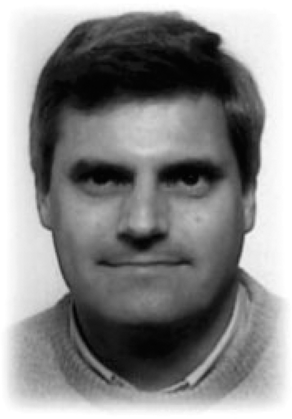
Dr Harry H Brouwer studied theoretical physics at the State University of Groningen (the Netherlands), where he graduated in 1983. He carried out research on the kinetic theory of plasmas at the Technical University of Eindhoven. In 1987, he received a doctor’s degree and joined the National Aerospace Laboratory (NLR) of the Netherlands to carry out research in the field of theoretical aeroacoustics, particularly on propeller noise and the refraction of sound by shear layers. Since 1993, Dr Brouwer is Head of the Department of Aeroacoustics of NLR. In 2001 and 2002, he served as the Chairman of the Aeroacoustics Specialists’ Committee of the Confederation of European Aerospace Societies.

Dr Luis B Campos received his PhD from the Engineering Department of Cambridge University in 1975. He was Senior Rouse Ball Scholar at Trinity College (1977–1978), Senior Visitor at the Department of Applied Mathematics and Theoretical Physics (1984– 1985) in Cambridge University, and Alexander von Humboldt Scholar at the Max-Planck Institut fur Aeronomie in Katlenburg-Lindau. He graduated as a mechanical engineer from Instituto Superior Técnico in 1967, holds a chair (Aerospace Mechanics) since 1986, and is coordinator of the Aerospace Engineering degrees. Dr Campos received the von Karman Medal from Research and Technology Organization (RTO/AGARD), and was the Chairman of the Flight Mechanics Panel/Flight Vehicle Integration Panel. He has served in several committees of the European Union, European Space Agency, United Nations, etc. Since 1987, Dr Campos is listed in Who is Who in the World. His research interests include aeroacoustics, flight dynamics, magnetohydrodynamics, and space science. He is the author of 6 books, 107 papers in 46 refereed journals, 150 communications to symposia, and has participated in 23 internationally funded research projects on aeronautical engineering.
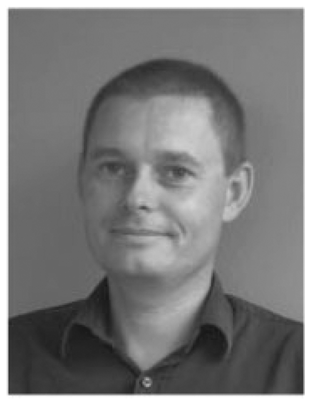
Dr Jan Delfs is the Head of branch Technical Acoustics at DLR Institute of Aerodynamics and Flow Technology since 2002 and simultaneously a Professor for Technical Acoustics at Technical University Braunschweig, Germany. He joined DLR in 1995 as research engineer for aeroacoustics. He conducted research at Florida State University and Stanford University. He has held a postdoc position at Technical University of Karlsruhe, Germany, studying hydrodynamic instability theory. Dr Delfs earned his doctoral degree in Mechanical Engineering with specialization in the numerical simulation of a transitional transonic boundary layer. He conducted research in mechanical engineering at Technical University of Braunschweig, Germany and University of Waterloo, Canada. Dr Delfs’ field of expertise includes development and application of computational aeroacoustics, flow noise reduction technology, including airframe noise, low noise design, and aeroacoustic installation effects. He is a member of German Society for Aeronautics and Astronautics (DGLR) and DGLR technology area representative for Flow Acoustics and Aviation Noise, appointed German Representative of the Aeroacoustics Specialist Committee in CEAS (Council of European Aerospace Societies), a member American Institute of Aeronautics and Astronautics, and an associate member of AIAA Technical Committee for Aeroacoustics.

Dr Charles Hirsch is Professor Emeritus at the Vrije Universiteit Brussel in the Department of Mechanical Engineering. He is a Fellow of the Royal Flemish Academy of Belgium for Sciences and Arts. Dr Hirsch is an Honorary Professor of the Xi’an JaiTong University, Xi’an, China (2004) and the President of NUMECA International.
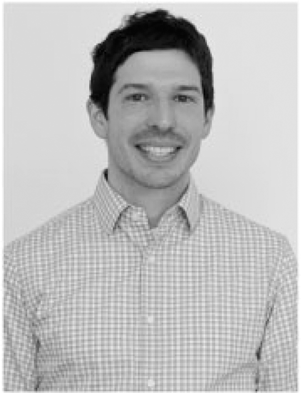
Dr Csaba Horváth is an assistant professor at the Budapest University of Technology and Economics (BME) in Budapest, Hungary. He acquired his BSc, MSc, and PhD degrees in mechanical engineering at BME, while also spending a considerable amount of time at other foreign institutions, such as NASA Glenn Research Center. The time spent at these institutions and the knowledge gained from the experts in the field who helped him along the way provided the basis for his great interest in turbomachinery aeroacoustics and aerodynamics, his key research directions. Though a relatively young researcher, he has won national as well as international awards for his contributions to the scientific community as well as being invited to serve on conference committees and editorial boards.
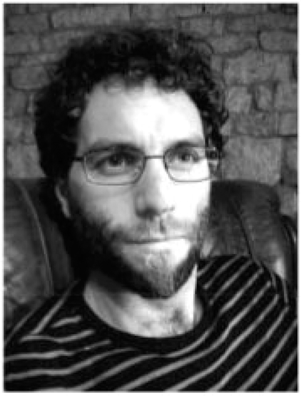
Dr Peter Jordan is a research associate of the Centre National de Recherche Scientifique (the French National Centre for Scientific Research) and currently conducts his research at the Laboratoire d’Etudes Aérodynamiques, University of Poitiers, ENSMA, France. He received his BA, BAI, and PhD degrees from Trinity College Dublin, Ireland, and then spent two years working as a post-doctoral research associate at the LEA before being appointed as a full-time researcher with the CNRS. Dr Jordan’s main research activity is in the field of aeroacoustics, and he is involved in the development of experimental and numerical ana- lysis-tools aimed at spaces understanding the mechanisms which underlie sound generation by turbulence. Other research interests include experimental and numerical studies of a variety of turbulent flows (rocket afterbody instabilities, high-speed jets, boundary-layers, separated flows associated with terrestrial transport, etc.) and an emphasis is placed on low-dimensional modelling and control.
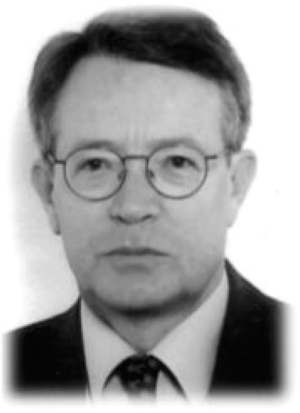
Dr Daniel Juvé is a Professor of Acoustics and Head of the Department of Fluid Mechanics, Energetics and Acoustics, École Centrale de Lyon (France). He is a Fellow of the Acoustical Society of America, a member of AIAA, and the Head of Aero/Hydro-Acoustics Specialists’ group of the French Acoustical Society (SFA). He is also a member of the CEAS Aeroacoustics Specialist’s Committee. Dr Juvé has won numerous awards including the Chavasse Prize (SFA, 1990) and Great Prize Alexandre Joannides of the French Academy of Sciences (2001). His main research interests are noise generation by flows, both from the experimental and numerical point of view, and sound propagation in non-homogeneous and/or random media.

Dr Victor F Kopiev is a Science Deputy Chief in the Acoustic Division of Central Aerohydrodynamics Institute (TsAGI), Moscow Branch (Russia) and Head of Theoretical Aeroacoustics Laboratory. He obtained his PhD in Physics– Mathematics from Moscow Institute (University) of Physics and Technology (MIPT) in 1987. In 1998, he received his DSc degree (Mechanics of Fluids). He is an Associate Professor of Aeroacoustics in Department of Aeromechanics and Flight Vehicles of MIPT. Dr Kopiev is a Fellow of the Russian Acoustical Society and a member of Fluid Mechanics Council of the Russian Foundation of Basic Research. His main research interests are vortex dynamics, theoretical and experimental aeroacoustics, flow instability, and large-scale coherent structure in turbulent flows. He received the Zhukovsky Award and Gold Medal for the best work in aviation theory in 1998 and Petrov’s Prize for outstanding work in the theory of hydrodynamics stability in 2002 from the Russian Academy of Sciences.
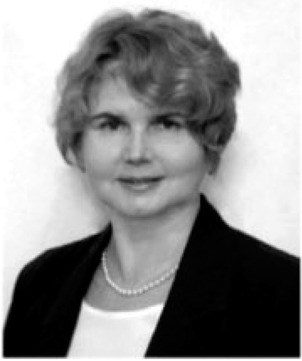
Dr Tatiana K Kozubskaya is a Senior Researcher at the Institute for Mathematical Modelling (IMM) of the Russian Academy of Sciences. After graduating a school, she studied applied mathematics and then, as a PhD student, mathematical modeling at the Moscow State Lomonosov University. Her PhD thesis (1988) is devoted to numerical simulation of radiative gas dynamics problems. In 2002, Dr Kozubskaya became a Head of Laboratory of Computational Aeroacoustics at IMM. Her current research interests include high accuracy numerical techniques and methods of computational experiment in aeroacoustics. She actively participates in European research activities in the field of computational aeroacoustics and fluid dynamics, in particular, as a team leader of FP7 European project VALIANT. In 2005, Dr Kozubskaya was a guest editor of the special IJA issue compiled from the contributions of Russian aeroacousticians. She is a member of AIAA.
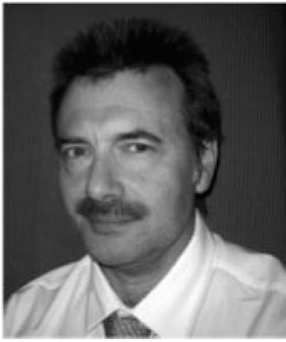
Dr Pierre Lempereur is a technical advisor of the Acoustics Department of Airbus Engineering. He is in charge of noise research development and strategy and supervising acoustics design of project aircraft. He obtained his Aeronautical Engineer Degree at the Ecole Natioanle Supérieure d’Ingénieurs en Constructions Aéronautique (ENSICA), then continued his post graduate training in acoustics at the University of Sherbrooke, with Canadair (Montreal) and ONERA (Toulouse). He joined Airbus Engineering (formerly Aerospatiale) Acoustics Department in 1984. Dr Lempereur developed turbofan nacelle acoustic treatment design and evaluation processes, aircraft noise modelling and prediction tools, and airport noise modelling. He was involved in the acoustic integration of A320, A330, and A340 propulsion systems. He initiated and conducted noise reduction technologies research programmes in the areas of high-speed propellers aeroacoustics, turbofan nacelles acoustic treatment, airframe noise, and advanced noise abatement procedures and brought some of them as far as full scale demonstration. Dr Lempereur supervised novel noise technologies implementation and acoustic design of the A380 aircraft. He has been a member of ICAO/CAEP experts working groups developing aircraft noise standards since 1993.
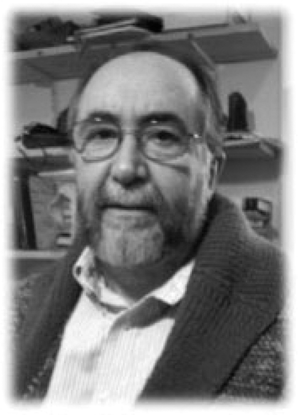
Dr Luigi Morino is a Professor of Applied Aeroelasticity at the University Roma Tre. He studied at La Sapienza (Dr, ME 1963, Dr, AE 1966). After a NATO Fellowship (MIT, 1967– 1968; non-linear flutter, shell dynamics), he joined the faculty of Boston University (1969– 1987; BEM for potential flows) and of Rome University (1987–present; rotor aeroacoustics, viscous flows, finite-state aeroelasticity, MDO). Dr Morino is the President of the International Association for Boundary Element Methods, Editor (1990–1991), Editor-in-Chief of Aerotecnica, Missili e Spazio (Journal of Associazione Italiana Aeronautica Astronautica, 1996–2002), a member of Scientific Advisory Council, Italian Center Aerospace Research. He is also a member of the Aeroacoustics Technical Committee, a member (and former Chairman) of the Aeroacoustics Specialists’ Committee, Confederation of European Aerospace Societies.
Dr Nigel Peake completed his PhD at the Department of Applied Mathematics and Theoretical Physics (DAMTP) at Cambridge University in 1991 on the subject of propeller acoustics, supervised by late Dr David Crighton. He is currently Reader in Fluid Mechanics, a position held jointly between DAMTP and the Cambridge Engineering Department. Dr Peake’s research interests include aeroacoustics (especially relating to turbomachinery), hydroacoustics, fluid-structure interaction, and hydrodynamic stability. He is especially interested in the use of mathematical, and particularly asymptotic, techniques to develop models of complex flow phenomena. He is an Associate Editor of the Journal of Fluid Mechanics.
Dr Christoph Reichl joined the Austrian Institute of Technology (AIT, former Austrian Research Centers, arsenal research) in 2001 specialising in computational fluid dynamics, leading industry and joint industrial-governmental research projects. His research areas cover aeroacoustics, turbulence modelling, high-speed computing, multi-phase- and phase-change processes. In addition to numerical methods, his interests also include laser optical and probe techniques in experimental flow research. He studied technical physics and received his MS and PhD degrees at the Institute of Experimental Physics and Institute of Solid State Physics at the Vienna Technical University in Austria. During his university research, he visited major European research facilities at PSI, CERN (Switzerland), ISIS (UK), CNRS, and ILL (France). Dr Reichl serves as the Chairman of the ADA Alpe Danube Adria ERCOFTAC (European Research Community on Flow, Turbulence, and Combustion) Pilot Centre and is the Head of the Acoustics Technical Committee of the Austrian Physical Society. In 2005, he received the ARC award for his computational aeroacoustic activities.
Dr Wolfgang Schröder is the Director of the Institute of Aerodynamics and holds the Chair of Fluid Dynamics at RWTH Aachen University. He received his doctorate degree 1987 from RWTH Aachen University. After finishing his postdoctoral study at the California Institute of Technology in 1989, he was in charge of the Aerothermodynamics Department, Space Infrastructure at the German Aerospace AG. In 1995, Dr Schröder joined the University of Applied Sciences in Braunschweig, then he returned to Aachen in 1998. His main research interests are in the fields of aeroacoustics, turbulence, and vortex dynamics in subsonic, transonic, and supersonic flows as well as biological and medical flows. He emphasizes a coupled numerical-experimental approach to double check the research results and to develop innovative theoretical models. Dr Schröder is a member of the Nordrhein-Westfälische Akademie der Wissenschaften, a member of the Board of the Deutsche Komitee für Mechanik, and a member of the IUTAM General Assembly. He has been Treasurer of EUROMECH since 2005.

Dr Xin Zhang is the Airbus Professor of Aircraft Engineering and the Director of Airbus Aircraft Noise Technology Centre at University of Southampton, UK. He holds a PhD degree in Fluid Mechanics from the Cambridge University, UK and BEng in aerospace engineering from Beijing University of Aeronautics and Astronautics, China. He is a Fellow of the Royal Aeronautical Society and an Associated Fellow of the American Institute of Aeronautics and Astronautics. Dr Zhang’s main research interests are in the areas of aircraft noise, unsteady aerodynamics, computational aeroacoustics, ground effect and racing car aerodynamics, and flow control. He has conducted studies of airframe noise including high-lift devices, landing gears and bluff bodies, self-sustained fluid flow oscillations, turbulent flow control through streamwise vortices and plasma actuation, flow control jets, engine and duct acoustics, etc. He is a principal investigator of a number of research projects funded by the UK government, European Commission, and aerospace and motor-racing industries, and has acted as a consultant for a number of industrial companies.
Editorial Board, Asia
Dr AR Acharya received his BS in Mechanical Engineering from Mysore University, MS in Mechanical Engineering from the Indian Institute of Science, and PhD in Germany. His area of expertise is structure design and dynamics, dynamic characterization and testing, vibration response studies, estimation of acoustic environment of launch vehicles during lift and atmospheric flight, acoustic response of structures—estimation and measurement and acoustic testing. He was formerly a visiting professor at the Indian Institute of Science in Bangalore and is ISRO’s outstanding scientist and a Fellow of the Aeronautical Society of India.
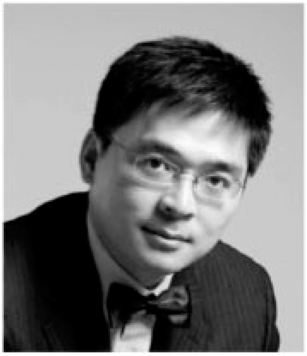
Dr Xun Huang received a BE degree in Aerospace Engineering from the Northwestern Polytechnical University, Xi’an, China, a ME degree in Automatic Control from Tsinghua University, Beijing, China, and a PhD degree in Aeronautics and Astronautics from the University of Southampton, Southampton, UK, in 1999, 2002, and 2006, respectively. He was a research engineer in GE Global Research Center in 2003. After receiving his PhD degree, he was a research fellow and was appointed as a lecturer of aeroacoustics in 2007 in the School of Engineering Sciences, University of Southampton. He is an Associate Professor in Mechanics and Aerospace Engineering Department, the College of Engineering, Peking University, Beijing, China. His main research interests are in the areas of flow and flow-induced noise control, computational aeroacoustics, active control, and microphone array signal processing. He has conducted several aeroacoustic projects funded by Airbus, EU, and Chinese government. Dr Huang is a Senior Member of the American Institute of Aeronautics and Astronautics.
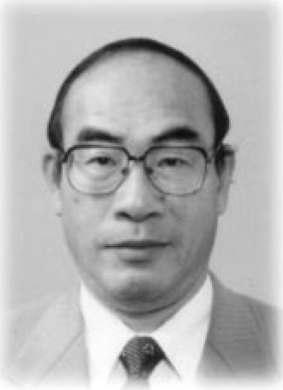
Dr Shojiro Kaji is a Professor at the Aerospace Engineering Department at Teikyo University. He is the Chairman of the Aeroacoustics Research Group of JSME, and a member of AIAA and IIAV. After graduation in 1964 from the University of Tokyo, his career started by studying aircraft engine fan noise. Sound propagation through blade rows was his main interest at that time. Recently, he is engaged in the study of supersonic jet screech and noise generation mechanism in a mixer-ejector nozzle of jet engines.

Dr Randolph CK Leung is currently an Associate Professor in the Department of Mechanical Engineering, The Hong Kong Polytechnic University. His major research areas are computational aeroacoustics, flow-induced structural vibration and noise, aviation science, diagnostics and control for product noise and vibration, and product sound quality design. He earned his BE in Mechanical Engineering in 1992 and PhD in Fluid Dynamics and Acoustics in 1998, both from The University of Hong Kong. He then continued his postdoctoral research in acoustic resonance of marine gas turbine exhaust at the Department of Engineering, University of Cambridge, UK, in 1998 and flow-induced vibration of turbine blade at the Department of Mechanical Engineering, The Hong Kong Polytechnic University in 1999. Afterwards, he moved to industry and became a Sound Engineer at Emerson Climate Technologies, supporting the sound and vibration design for refrigeration compressors and systems before joining The Hong Kong Polytechnic University again in 2002. Dr Leung is currently a Senior Member of the AIAA and served on the AIAA Aeroacoustics Technical Committee. He organized and chaired special sessions in aeroacoustics at the International Congress in Sound and Vibration.
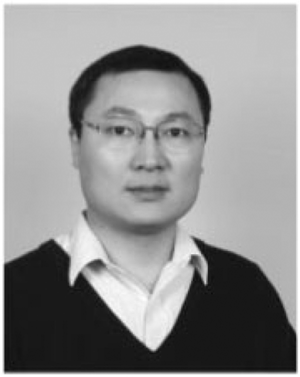
Dr Xiaodong Li is a Professor in the School of Jet Propulsion at the Beihang University (BUAA). He graduated from BUAA with Bachelor’s, Master’s, and PhD degrees in 1989, 1992, and 1995, respectively. He has been a guest scientist at German Aerospace Research Center (DLR) in 1997 and subsequently at Technical University of Berlin. Dr Li’s research interests are in the development of new theories and numerical methods for aeroacoustics, especially for jet noise, duct acoustics, turbomachinery noise, and airframe noise. His research has been funded by the National Natural Science Foundation of China, the National Basic Research Program of China (973 Program), and aerospace industries. He is an Associate Fellow of the American Institute of Aeronautics and Astronautics and serves as an international member of the Aeroacoustics Technical Committee of AIAA.
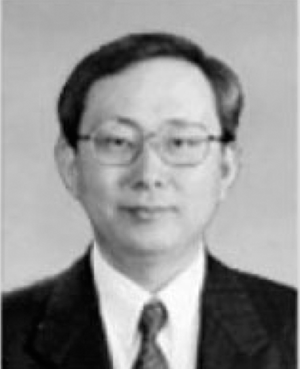
Dr Young J Moon is a Professor in the Mechanical Engineering Department at Korea University, Seoul, Korea. He received his BS degree from the State University of New York, Buffalo, MS degree from Stanford University, and PhD degree in 1988 from the University of California, Berkeley. After graduation, he worked at the NASA Lewis Research Center, performing contract research on supersonic flow mixing and shock-on-shock interactions. Since 1993, he has lead the Computational Fluid Dynamics and Aeroacoustics Laboratory at Korea University, where he conducts research in aeroacoustics and unsteady aerodynamics. His main interests are in the areas of low Mach number aeroacoustics, airframe noise, fan noise, cavitation noise, and bio-fluids sound in human larynx and insect flapping wings. He has served as the Editor of the Journal of Mechanical Science and Technology and the Korean Computational Fluids Engineering Journal.
Dr M Ravindranath Nayak studied at University of Mysore (MSc) and Mangalore University (PhD). As a Research Scientist at the National Institute of Oceanography, Goa, India, he was first involved in the design and development of an ocean acoustic tomography experiment in the Indian Ocean. He has led the Marine Instrumentation Division from 1994 to 2004. Previously Dr Nayak was involved in the design and development of the Airborne Navigation Computer at the National Aeronautical Laboratory, Bangalore, India, during the period from 1972 to 1976 (as a Research Fellow and later as a Senior Scientific Associate in the Electronics Division). He is a recipient of the National Science Talent Search Scholarship. He is currently working at the National Aerospace Laboratories, Bangalore, India, as a scientist and the Head of the Aerospace Electronics and Systems Division. Dr Nayak is a member of the Aeroacoustics Specialist Committee and the Vice Chairman of the Aeroacoustics and Hydroacoustics Technical Committee. He is a member of the Remotely Operated Vehicles Committee of the Marine Technology Society (USA), the IEEE Test Technology Technical Council of the IEEE Computer Society (USA), the IEEE Multi-Valued Logic Committee (USA), and the IEEE Standards Working Group P802.11 (USA) and WG473. He is a Fellow of the Institute of Electronics and Telecommunication Engineers (India). He is presently a member of the Scientific Advisory Council of the Aeroacoustics, Ocean Acoustic Tomography, and Ocean Acoustic Thermometry. Dr Nayak was also a member of the III Indian Scientific Expedition to Antarctica for setting up satellite communication terminals for SSTV, telex, and fax/telephone, and a member CASTME-Asia (Commonwealth Association of Science, Technology, and Mathematics Education).

Dr K Srinivasan is Professor of Mechanical Engineering at the Indian Institute of Technology (IIT), Madras. He received his Bachelor’s degree of Engineering (Honors) in Mechanical Engineering from Madurai Kamaraj University and his Master’s and Doctoral degrees in Aerospace Engineering from IIT Kanpur. Dr Srinivasan specializes in jet flow and acoustics for his doctoral thesis. He has held tenured/visiting faculty positions at IIT Guwahati and the Illinois Institute of Technology, Chicago. He is presently the Head of the Thermodynamics and Combustion Engineering Laboratory, Department of Mechanical Engineering, IIT Madras. His current areas of interest are resonant acoustics, jet aeroacoustics, and active and passive flow control. He has over 20 journal publications, 25 conference publications, and an Indian patent. Dr Srinivasan is a senior member of the American Institute of Aeronautics and Astronautics, and a member of the Institution of Engineers (India), the Aeronautical Society of India, the Indian Society for Technical Education, the Combustion Institute (India), the National Society of Fluid Mechanics and Fluid Power, and the Indian Society for Heat and Mass Transfer.
Editorial Board, Australia
Dr Daniel Edgington-Mitchell obtained his undergraduate degrees and PhD in aerospace engineering from Monash University, Australia. During his PhD, he was awarded a Fulbright Fellowship to undertake research in shock physics and optical thermometry in the High Temperature Gas Dynamics Laboratory at Stanford University. He now holds a teaching and research position at Monash University, working in the Laboratory for Turbulence Research in Aerospace and Combustion. Dr Edgington-Mitchell’s research focuses on the use of non-intrusive optical techniques to study fundamental mechanisms of compressible flow, jet noise, and multiphase flow. He is currently leading an Australian Research Council discovery project on supersonic jet screech.





