



Abstract
Imperfectly expanded jet flows are known to have additional noise sources known as Screech and broadband shock-associated noise. They are generated by the interaction between the instability waves that propagate from the lip of the nozzle and the shock cell structures. In this study, thorough experimental investigations were carried out on chevron nozzles to assess the importance of chevron parameters such as the chevron count and chevron penetration angle on the pressure field emitted by the jet. Data were acquired in the state-of-the-art aeroacoustic facility at the University of Bristol. Acoustic measurements such as pressure spectra, directivity and overall sound pressure levels along with near-field measurements were acquired for jet Mach numbers ranging from M = 1.1–1.4. Fourier-based and Wavelet-based analyses were used to highlight the different features of the various tested nozzles. Wavelet decomposition results highlight that the presence of the chevrons reduce the acoustic noise especially at a higher axial distance with increased levels of noise reduction achieved by chevron nozzle with deep penetration angle.
Introduction
Noise generated by jet engines is one of the major contributors to the overall aircraft sound levels. The unsteady turbulent flow from the jet leads to jet mixing noise and it is broadband in nature. Lighthill, 1 combining the full equations of motion, formulated a wave equation to develop an acoustic analogy for jet noise. Several other analogies2,3 were developed to predict the noise emitted by a single stream jet in the subsonic regime. However, nozzles operating at off-design conditions cause the jet flows to be imperfectly expanded, resulting in a significant increase in the noise emitted by the jet. This can be seen in commercial aircraft during take-off due to high thrust request or in cruise conditions due to lower external pressure. 4 It is well established in the literature that when a convergent jet operates in under-expanded conditions, additional noise sources are produced as a result of the interaction between jet hydrodynamic structures and the shock cell train.5–7
One of the important noise components of under-expanded jet noise is the broadband shock-associated noise (BBSAN). BBSAN is an upstream propagating broadband component generated when the turbulent eddies pass through shock cells. 8 The radiation from the subsequent shock wave shear layer interaction combines constructively and is characterized by multiple broad spectral lobes. 9 When considering the far-field noise, BBSAN is dominant at mid- to high-frequencies in the upstream and sideline directions relative to the jet flow. 10 Another important noise component in under-expanded jets is called Screech11–13 and it is tonal in nature. Screech was first identified and defined by Powell 14 as an embryonic disturbance that originates at the nozzle lip, grows as it propagates downstream, interacts with the shock cells to produce sound, and finally the sound generated propagates upstream to the nozzle lip, thus closing the resonant loop. Unlike BBSAN, stronger under-expanded conditions are required for screech tones to be generated. A critical assessment of current understanding around the Screech has been reported in several studies.11,15
The use of chevron nozzles16–23 is one of the most popular methods for jet noise reduction due to its effectiveness and simplicity in construction. Chevron nozzles achieve noise reduction by increasing the mixing and reducing the velocity gradients in the shear layer. They further azimuthally disrupt the formation of coherent structures. The flow around the chevron edges results in the generation of stream-wise vortices.16,17 The increase in smaller scales adds to high-frequency noise, however, the breakdown of large-scale structures considerably reduces the low-frequency noise. Bridges and Brown 16 noted that the increase in chevron numbers and penetration achieved considerable noise reduction at lower frequencies for convergent jet. Further reduction of the shock noise has been identified by azimuthally varying the chevron penetration. 24 However, the physical phenomenon of the impact on jet noise of the different nozzle shapes has not been completely understood, especially in under-expanded conditions. Tide and Srinivasan19,20 reported the shock structure and their related noise for chevron nozzles with different chevron count and penetration angles. The reported flow features showed reduction in the shock cell length with increasing penetration angle and chevron count.
In this paper, the near- and far-acoustic field pressure induced by the different chevron nozzles in under-expanded flow conditions are investigated. The jet Mach number from M = 1.1 up to M = 1.4 were used in order to vary the shock cell spacing. Four different nozzles with different shapes were investigated and results were compared with the baseline configuration. The shape of the shock cell was changed by varying the number of chevrons used and their penetration angle. Analyses were performed using various statistical approaches, in both Fourier-based and Wavelet-based domains. Wavelet decomposition techniques25,26 were used to extract the acoustic and hydrodynamic components from the near-field pressure for different nozzle shapes. It was observed that the shape of the nozzles had a significant influence on both the acoustic and hydrodynamic components. In particular, the use of chevrons provided a substantial reduction of the acoustic component in the near-field.
The paper has been organized in the following way: the experimental setup is reported in Sec.II and the preliminary results are discussed in Sec. III. Final remarks are presented in Sec. IV.
Experimental setup
The experiments were conducted at the newly commissioned Bristol Jet Aeroacoustic Research Facility (BJARF) at the University of Bristol. The flow in BJARF is conditioned and silenced using three different in-line silencers to create a clean quiet flow down to the jet exit Mach number M = 0.3. The first two silencers were placed right after the control valve outside the anechoic chamber and have a diameter of 0.3 m and a height of 1.5 m each. The third large silencer (as shown in Figure 1) was placed inside the chamber and has a diameter of 0.457 m and a height of 1.9 m. The silencers were equipped with perforated tubes for the air flow and the remaining area was packed with glass wool. The anechoic chamber is 7.9 m in length, 5.0 m in width and 4.6 m in height, including the surrounding acoustic walls and a lower cut-off frequency of 160 Hz.
27
Side view of the jet facility including the silencers: (A) Silencer, (B) Contraction for the jet nozzle, (C) Collector, and (D) Far-field microphone array.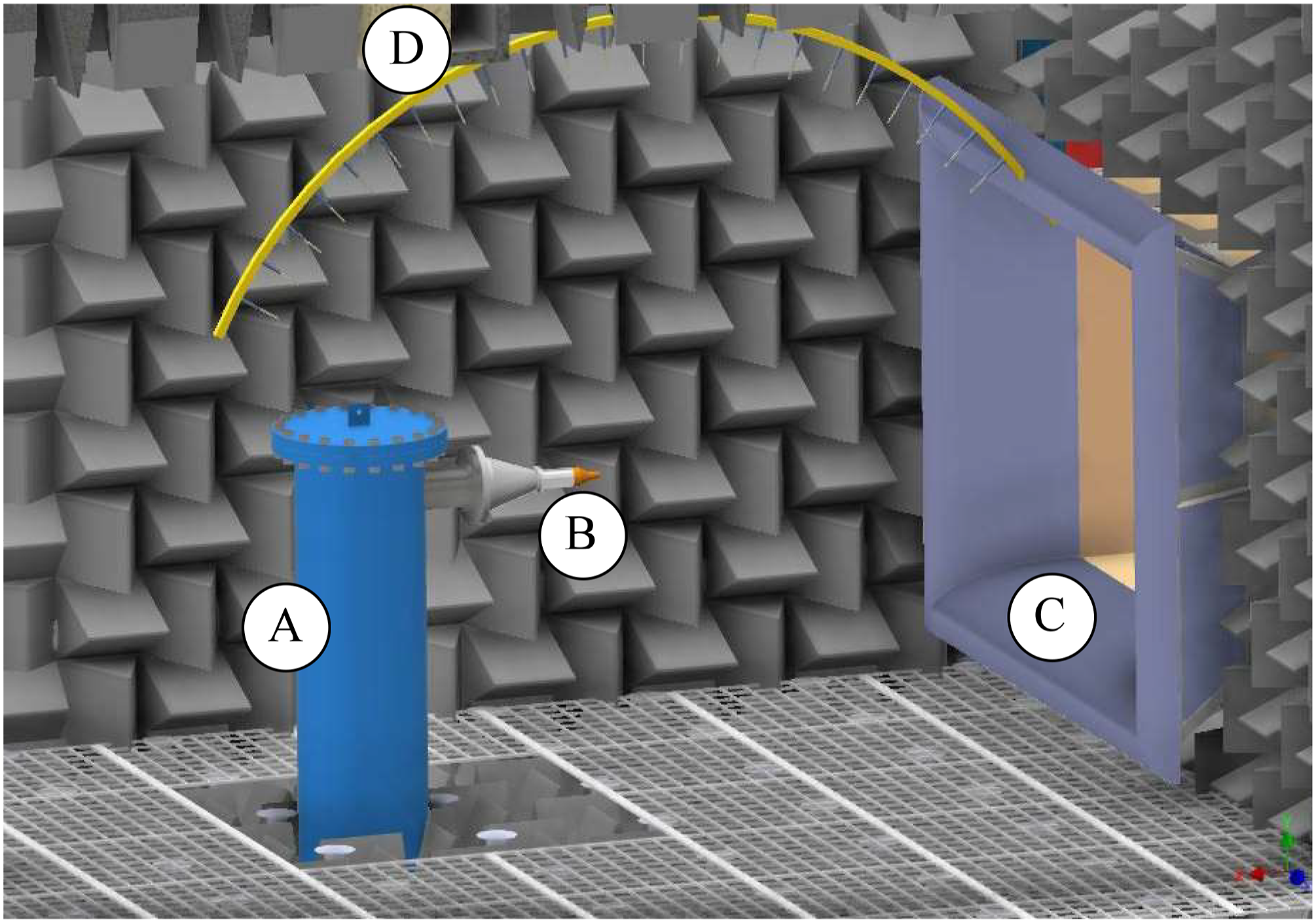
The chevron nozzles used in this paper were chosen based on the detailed study carried out by Bridges and Brown.
16
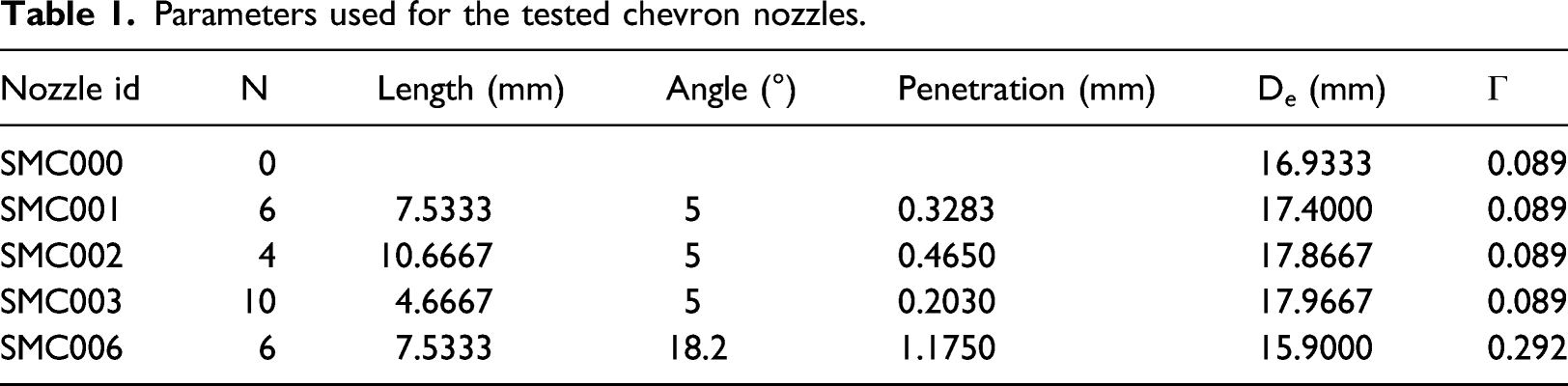
The tests at BJARF were carried out for a round convergent nozzle (SMC000) and four chevron nozzles (SMC001, SMC002, SMC003 and SMC006) as shown in Figure 2. The parameters for the tested nozzle configurations are detailed in Table 1. The effective nozzle diameter D
e
was determined from the measured mass flow based on previous studies by Bridges and Brown.
16
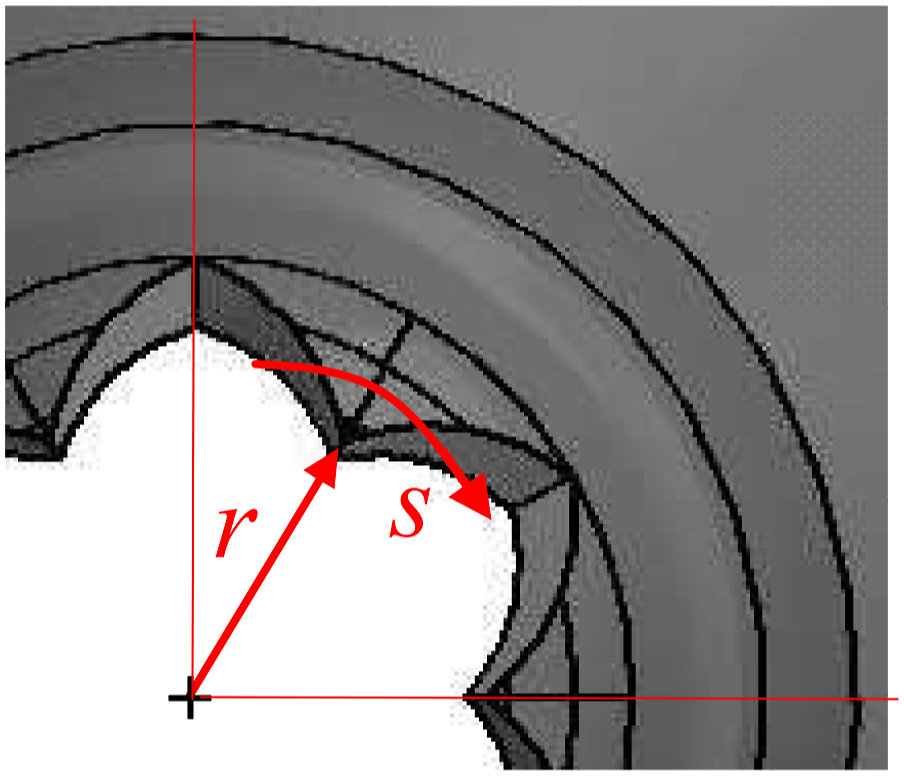
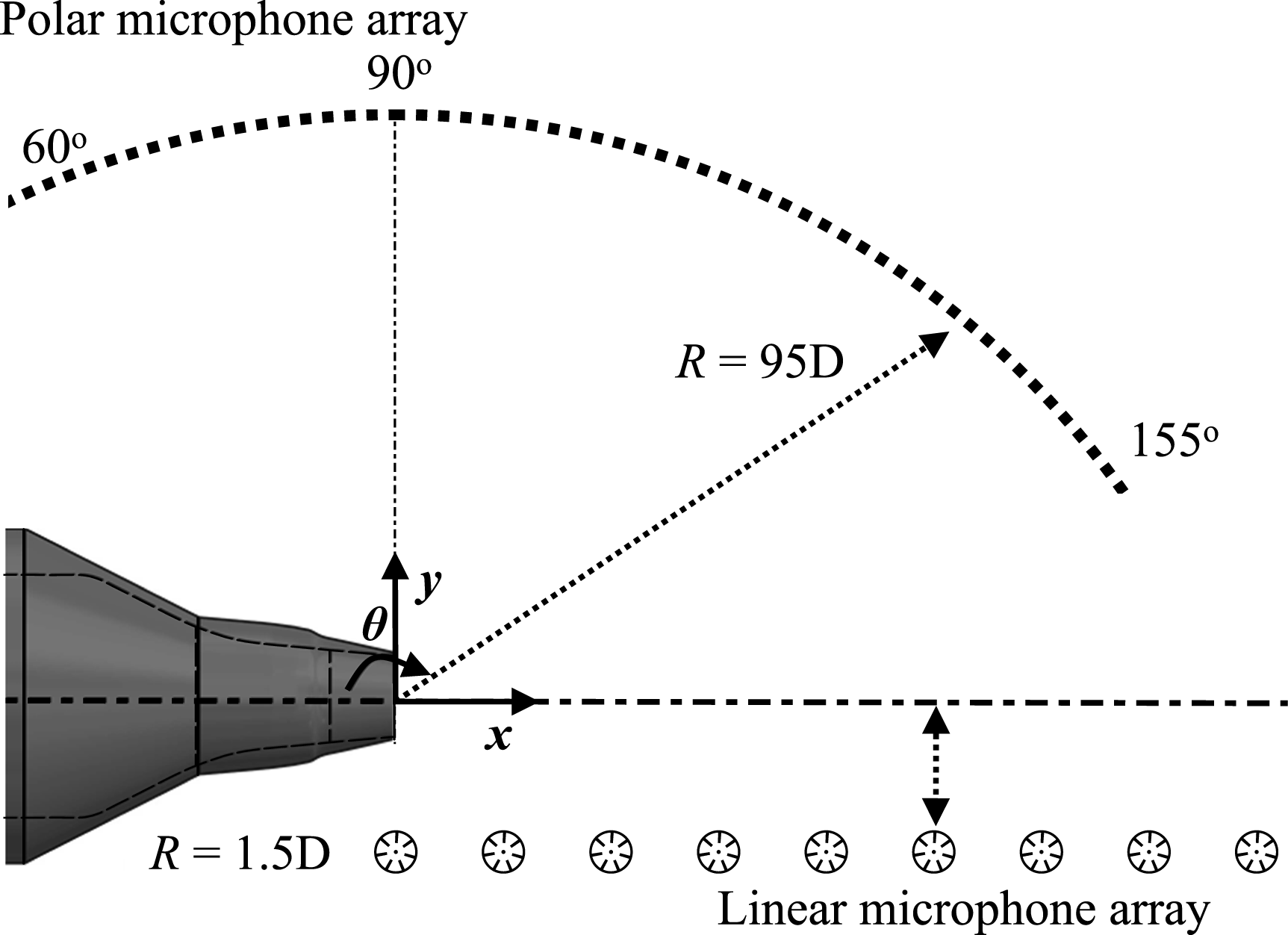
The vortex strength parameter, Γ, is defined as the slope of the chevron edge in the plane normal to the jet diameter, so Schematic representation of the various nozzle configurations used in the present study. Parameters used for the tested chevron nozzles. Illustration defining the vortex strength parameter Γ in Table 1. Schematic of the experimental setup with the position of the near- and far-field microphones used in the present study.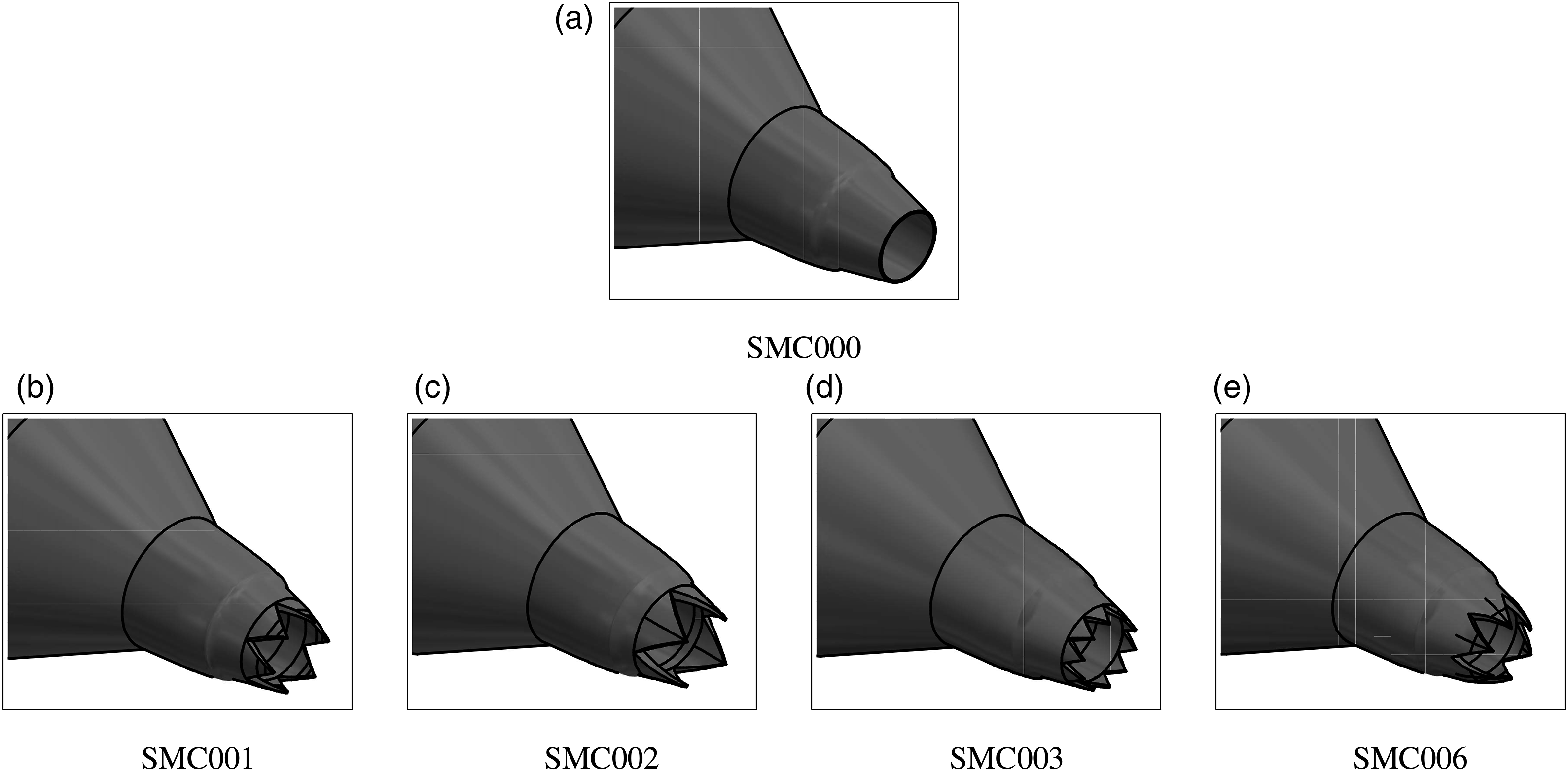

Results and discussion
Far-field noise characteristics
The sound pressure level (SPL) for all the tested nozzle configurations at jet mach numbers M = 1.1, 1.2, 1.3 and 1.4 are presented in Figure 5. The presented results were acquired at θ = 90° above the nozzle exit using the GRAS 46DD microphone with a flat frequency response up to 100 kHz. In general, lower SPL levels can be observed in the low-frequency region and higher SPL levels in the high-frequency region. The baseline configuration without chevrons (SMC000) exhibits characteristic tonal components associated with jet screech for all the tested flow conditions in line with previous studies.
7
As expected, the screech frequency reduces as the jet Mach number is increased. The spectral hump to the left of the screech frequency can be attributed to the turbulent mixing noise. The characteristic high-frequency spectral hump to the right of the screech associated with the BBSAN, often generated in moderately under-expanded jets, can be observed for all the tested nozzles and Mach numbers. The chevron nozzles do not emit screech tones. This behaviour was observed for all the presented penetration angles. The elimination of screech for chevron nozzles is most likely due to the disruption of the feedback loop by the altered lip of the chevron nozzle.20,28 The SPL results for the chevron nozzles show noise reduction over the entire frequency range compared to the round nozzle SMC000. Amongst the tested chevron configurations, SMC006 shows the most noise reduction possibly due to the increased penetration angle, which improves flow mixing.
16
At M = 1.1, substantial noise reduction of about 10 dB can be observed for SMC006 compared to the SMC000. Considerable reduction in low-frequency noise for the chevron configurations could be attributed to the increased penetration angle and the breakdown of large-scale structures as demonstrated in previous studies.16,20,29,28 It is important to note that the BBSAN frequency moves to higher frequencies for the chevron cases compared to the round jet. In the case of chevrons, SMC003 has BBSAN related high-frequency hump that is equal to the round jet configuration and higher than the other chevron configurations. SPL comparison for the various tested nozzle configurations measured at θ = 90° above the nozzle exit.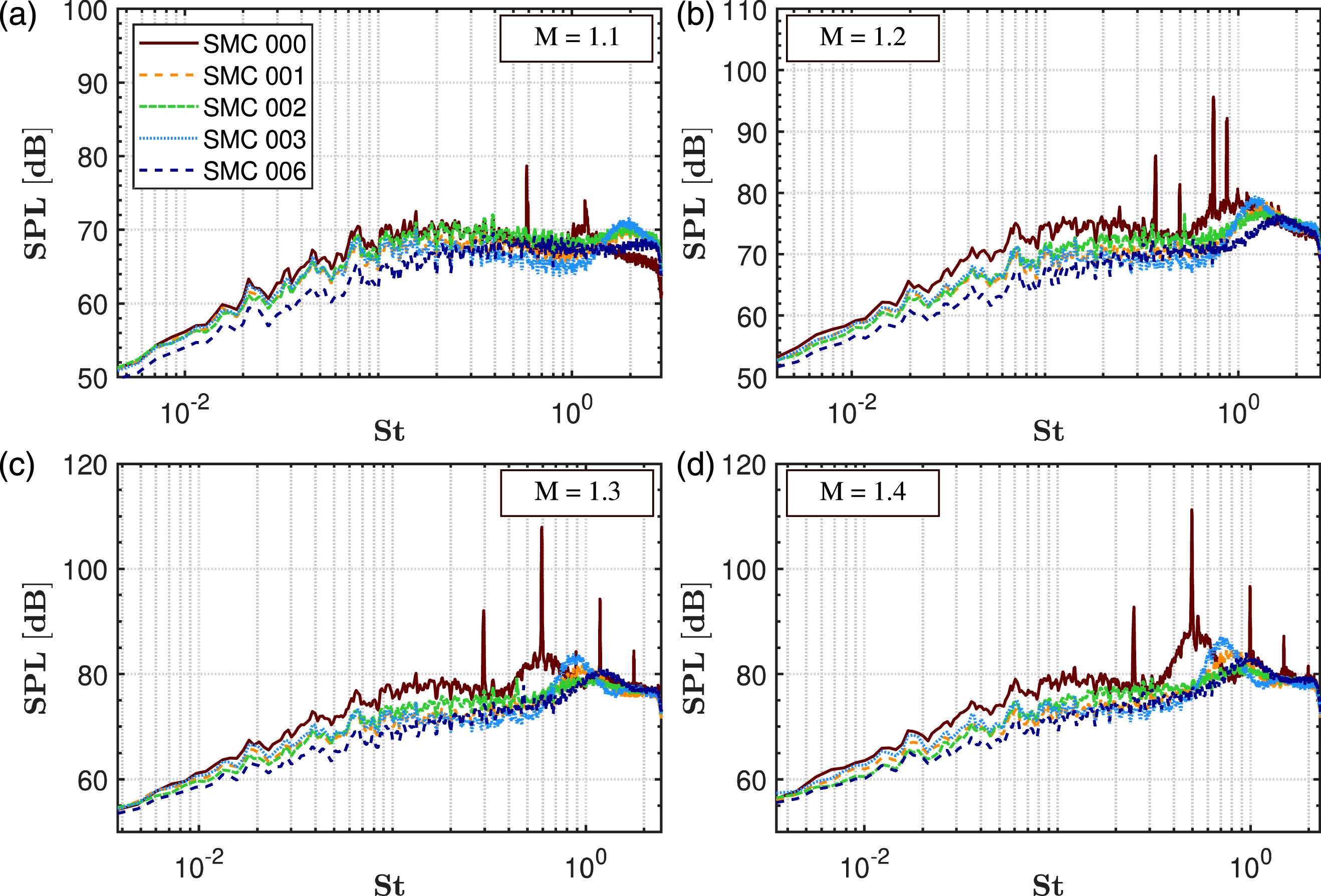
Chevron penetration has a strong impact on centreline decay and noise, increasing noise at high frequencies and lowering it at low frequencies.
The contour plots for the SPL in terms of inlet angles with respect to the jet axis (see Figure 4) and frequency for all the tested configurations are shown in Figure 6. The contour plots demonstrate a similar trend in directivity amongst the tested flow conditions, therefore, for the sake of brevity, the results are presented only for M = 1.4. For the round jet SMC000, the screech tones are distinctively present in the entire range of inlet angles, however, the harmonics are more prominent at inlet angles directly above the jet exit. The fundamental screech tone is seen at all the observed angles with peak levels present in regions above the jet exit. The high frequency BBSAN spectral hump is present only at upstream inlet angles θ = 60° − 120°. The BBSAN peak frequency increases with increasing inlet angles. The turbulent mixing noise is dominant at downstream inlet angles θ = 125° − 155°. In the case of chevrons, the screech tones are absent at all the measured angles. The high-frequency BBSAN is distinct for all the presented chevron configurations. It can be observed that the variation in BBSAN frequency has a hyperbolic trend and it is more pronounced for all the chevron configurations except SMC002. SMC003 configuration has the strongest BBSAN presence extending to increased downstream angles as opposed to the other chevron cases. The turbulent mixing noise is predominant at high inlet angles θ = 125° − 155° for all the chevron cases. Despite having the best overall noise reduction (see Figure 5), the SMC006 configuration shows considerable noise increase at higher frequencies compared to the other chevron cases. This increase in high-frequency noise could be attributed to the increase in small scale structures due the chevrons. SPL for SMC000 and SMC006 configurations for different microphone locations (θ = 60°, 90°, 120° and 155°).
The directivity of the overall sound pressure level (OASPL) measured at different inlet angles (θ = 60° − 155°) with respect to the jet axis are presented in Figure 7. OASPL for the round jet SMC000 shows a distinctive increase between θ = 80° and 100° and becomes more dominant at higher jet Mach numbers. This increase in the OASPL can be attributed to the screech tone. These results show that the impact of screech is more dominant in the direction normal to the jet axis close to the jet exit. As expected, OASPL results for the round jet SMC000 are more directive at downstream angles towards θ > 140°. The absence of screech for the chevron configurations results in substantial reduction of the OASPL compared to the round jet at low inlet angles θ < 100°. At higher inlet angles θ > 140°, the chevron nozzles show a substantial OASPL reduction of up to 10 dB compared to the round jet. The best performing chevron nozzle with highest noise reduction is SMC006. At M = 1.1, SMC003 shows slightly improved noise reduction compared to the SMC006 over the entire range of measured angles. However, at M = 1.3 and 1.4 at low inlet angles (θ < 100°), SMC003 shows slightly increased OASPL levels compared to SMC006. This is due to the increased BBSAN that SMC003 exhibits compared to the SMC006. Interestingly, SMC003 also shows increased noise reduction between θ = 110° − 140° compared to SMC006, after which SMC006 shows better performance. Overall, the directivity studies show that chevron nozzles are more directive at θ ≈ 130° in contrast to the classical value of θ = 150° observed for the round jet in line with previous studies.
20
OASPL for the various nozzle configurations for various inlet angles 60° − 155°.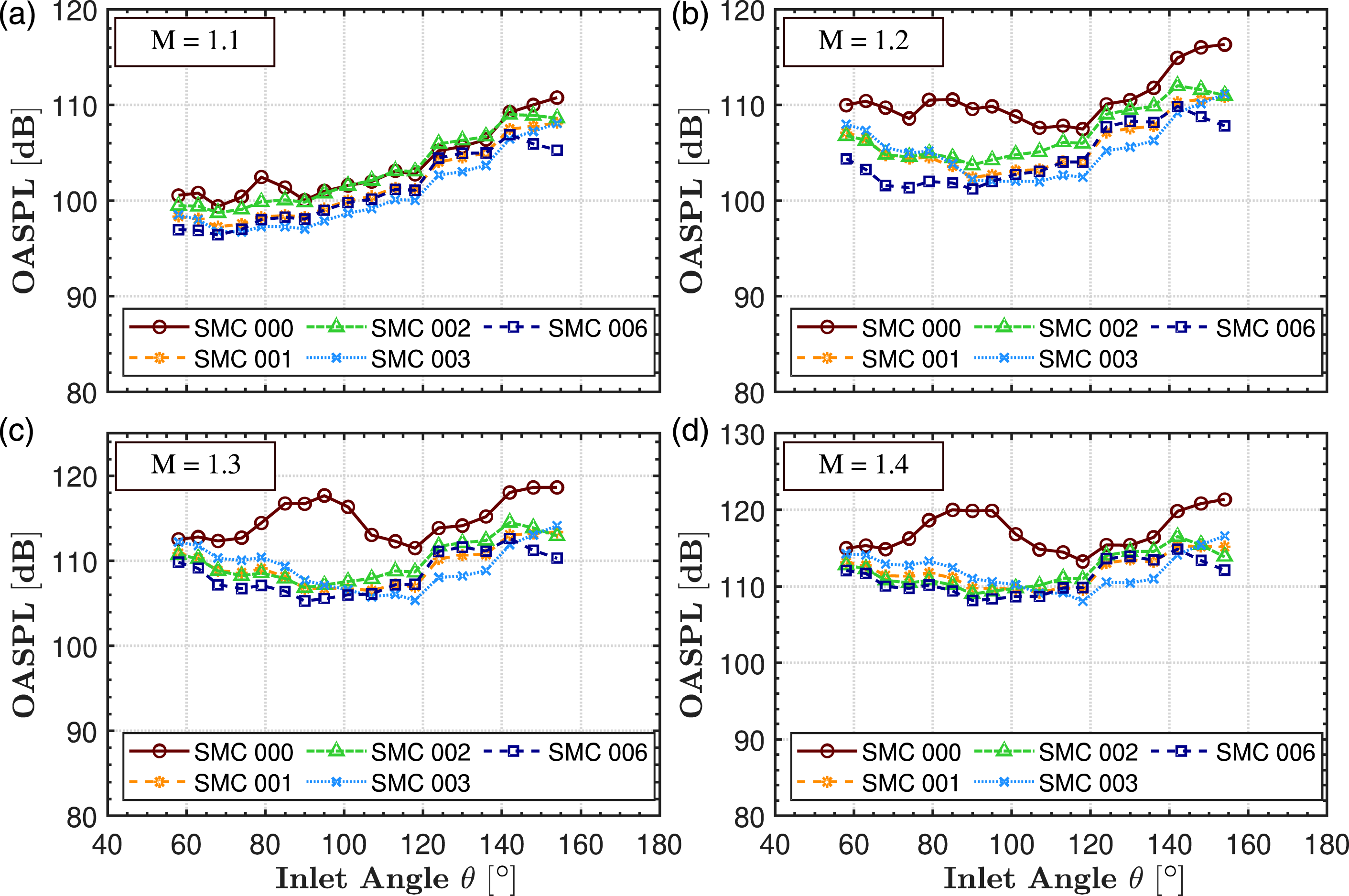
The auto-correlation function has been used to analyze the time scale of coherence of the sound field. Auto-correlation can be used to identify the difference in sound field generated by the large- and fine-scale turbulence structures in jet. 30 The use of normalized auto-correlation to distinguish the sound field in the radial direction to identify Mach wave radiation has been well established in previous studies for round jets. 30 In this study, we have extended the analysis for chevron nozzles to document the changes in the auto-correlation.
The auto-correlation of the acquired data was computed as follows
The results for the auto-correlation for all the tested nozzle configurations at M = 1.1 and 1.4 at four different inlet angles θ = 60°, 90°, 130° and 150° are presented in Figure 8. The results clearly exhibit two distinct shapes with θ = 60° and 90° following a narrow trend and θ = 130° and 150° following a wider trend, in line with previous studies.
30
The sharp auto-correlation shape corresponds to energetic fine-scale turbulence structures, whereas the larger shape corresponds to large turbulence structures measured within the Mach wave radiation cone. Normalized auto-correlations for the various nozzle configurations for far-field microphones at inlet angles 60°, 90°, 130° and 150° at M = 1.1 and M = 1.4.
The results presented in Figure 8 clearly show that the auto-correlation function for the chevron nozzles have increased fine-scale turbulence noise. This is expected since the chevrons break the large-scale structures in the jet flow. Energetic large structure turbulence noise is characterized by very large and deep negative peaks. 30 Similarly, intense fine-scale turbulence is characterized by sharp and deep negative peaks. The results for the chevron show increased fine-scale turbulence noise compared to the baseline configuration with sharp and deep negative peaks. At θ = 60° and 90°, the shape of the auto-correlation and deep negative peaks could be attributed to the BBSAN31,32 for the chevron configurations. However, at θ = 130°, the deep negative peak for chevrons could be attributed to the fine-scale turbulence noise that arises due to the shape of the nozzles. SMC006 shows deep negative peaks and SMC003 has shallow negative peaks compared to the other configurations. This corresponds to the increased OASPL for SMC006 and low OASPL for SMC003 previously shown in Figure 7. These observations also correspond to the relative sound pressure level shown in Figure 6. The slight similarity in shape between θ = 90° and 130° degree at M = 1.1 might be due to the low strength of the Mach wave for the round jet configuration. 30 The highly periodic behaviour of the baseline in Figure 8(d) could be attributed to the energetic Screech at M = 1.4. At θ = 150°, the auto-correlation function for the baseline nozzle has a deeper peak which represents large structure turbulence noise for the baseline and this has been reduced by the use of chevron nozzles which break the large-scale structures.
Near-field noise characteristics
In the following section, the effect of chevrons on the hydrodynamic and acoustic parts of the near-field measurements are investigated. It is well known from the literature that a near-field pressure signal could be considered as a combination of acoustic fluctuations and hydrodynamic or pseudo-sound contribution induced by the eddy structures. Wavelet decomposition techniques25,26 were carried out in order to separate the two components from the near-field pressure signal. This approach involves the projection of the pressure signal over a basis of compact-support functions obtained by the translation and dilation of a so-called mother wavelet function. The definition, according to Refs.[33] and [34], is reported in the following
The scope of the presented analysis is to apply the wavelet decomposition method on the near-field pressure induced by different nozzle configurations in an attempt to highlight how the two different components were modified by the chevron nozzles.
Figure 9 shows the decomposed pressure spectra in order to validate the wavelet decomposition technique used in the present study. As expected, the Screech tone remains acoustic (see Figure 9). It can be further observed that the acoustic component in both Figure 9(a) and (c) is present particularly for higher frequencies. Cross-correlations between two consecutive microphones are presented in the Figure 9(b) and (d) and the results for the hydrodynamic component are dominated by a negative and a positive bump that can be ascribed to the K-H instability, whereas the acoustic component exhibits an oscillatory trend that is typically expected of such signals.
26
Furthermore, the phase speed of the signals were evaluated considering the time delay of the cross-correlation at the first peak. The acoustic component (Figure 9(b) and (d)) presents a phase speed higher than the jet Mach number (higher than the sound speed) as opposed to the hydrodynamic component, which is characterized by a subsonic phase speed. Therefore, it can be confirmed that this method could be applied to the jet shear layer of supersonic flows. Following this validation, the aim of the analysis is to compare the two different pressure fields for all configurations. (a) and (c) Samples of decomposed pressure spectra at M = 1.3 with the microphone positioned at h/D = 1.5 and x/D = 7, for SMC000 and SMC006, respectively; (b) and (d) Cross-correlation coefficients of the reconstructed signals at the same nozzle configurations.
Figure 10 shows the hydrodynamic and acoustic components of the near-field pressure at various axial positions at a distance of h/D = 1.5 for the baseline configuration and two different chevron nozzles. For the sake of brevity, the results for only two chevron cases SMC003 and SMC006 are presented here. The same contour bars are used for better comparison between the cases. The results for the baseline configuration, SMC000 is shown in Figure 10(a) and (b), for the acoustic and hydrodynamic components, respectively. Acoustic signatures in Figure 10(a) show the frequencies related to the Screech as expected. Moreover, another region of increased acoustic components can be observed for the baseline configuration close to the end of the potential core for a wide frequency range. As expected, in this location, there is a rapid decay of the large turbulent structures that probably generates a noise source slightly downstream of the potential core end.
30
This trend of the acoustic signature is not observed for the chevron configurations. Near-field pressure maps for the acoustic components (left column) and hydrodynamic components (right column) evaluated at M = 1.3 and with the array positioned at h/D = 1.5. (a) and (b) SMC000 nozzle; (c) and (d)SMC003 nozzle; (e) and (f) SMC006 nozzle.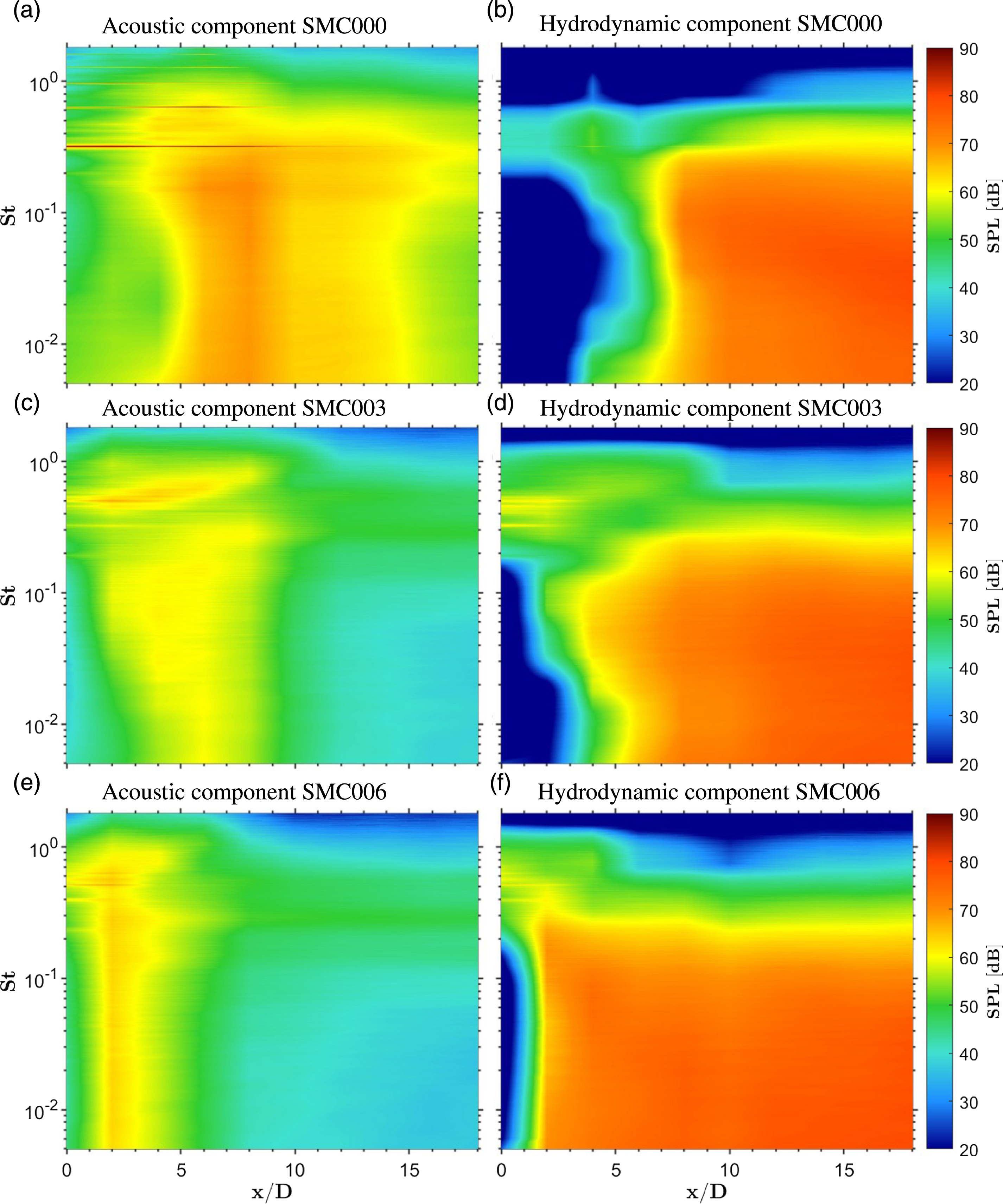
For the chevron configurations, a decrease in the acoustic component can be observed at axial positions closer to the nozzle in Figure 10(c) and (e). The results show that the type of chevron clearly affects the acoustic signature at the vicinity of the nozzle with SMC006 with higher penetration angle portraying increased noise reductions. On the other hand, there is a general increase in the hydrodynamic component in the lower axial locations particularly in cases with higher numbers of chevrons (see Figure 10(b), (d) and (f)). The chevron nozzles show increase especially at regions closer to the nozzle. To better visualize and understand the analysis, the OASPL of the original signal and the two extracted counterparts have been evaluated considering the different microphones positioned in stream-wise direction in the jet shear layer.
The results for the OASPL of the original, acoustic and hydrodynamic part of the signals are presented in Figure 11 for near-field pressure at M = 1.3 and h/D = 1.5. Evidently, the results show a significant reduction in the acoustic component for all the chevron configurations compared to the baseline configuration particularly in the fully developed jet regions as shown in Figure 11(b). For the acoustic part, SMC003 shows considerable reduction at locations x/D > 5 and increase in x/D = 5 − 10 compared to the other tested nozzles. OASPL axial evolution at h/D = 1.5 and M = 1.3: (a)Original; (b)Acoustic; (c)Hydrodynamic.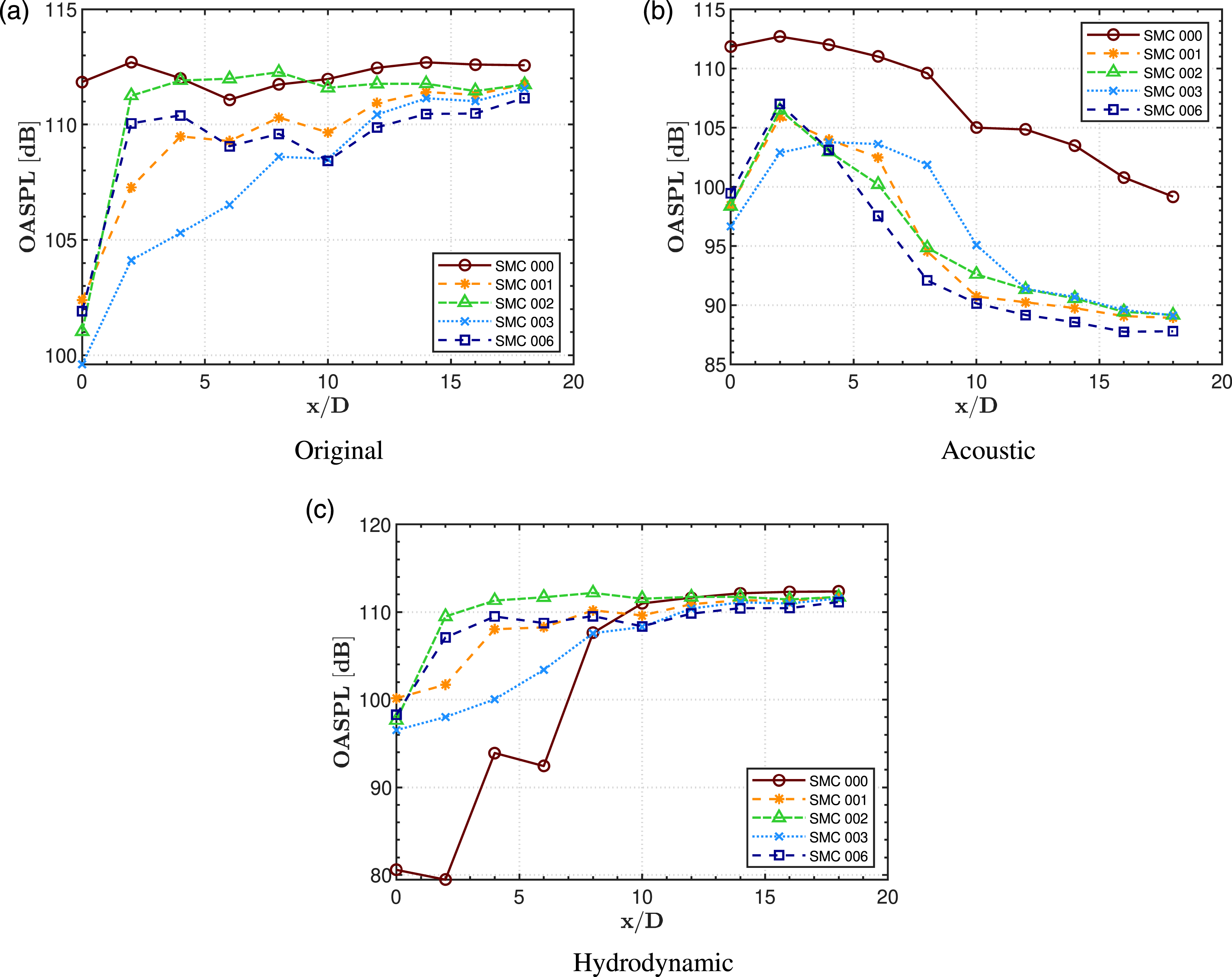
The results for the hydrodynamic noise component show a slight increase for the chevron nozzle compared to the baseline, which can be associated with the shape of the nozzles in the first axial locations. The higher hydrodynamic component observed for the SMC002 and SMC006 configurations could be ascribed to the larger chevron shapes of these two nozzles with increased penetration angle. Generally, these nozzles are expected to induce higher turbulence intensity, however, to confirm this hypothesis further analysis in terms of velocity is required.
Conclusion
Experiments were carried out for cold under-expanded supersonic jet flows at the newly commissioned Bristol Jet Aeroacoustic Research Facility at the University of Bristol. The tests were carried out for one round jet nozzle and four chevron nozzles with varying chevron count and penetration angle for jet flow Mach number M = 1.1, 1.2, 1.3 and 1.4. Near- and far-field acoustic characteristics were thoroughly investigated. Results such as Sound pressure level (SPL), Overall Sound pressure level (OASPL), directivity and wavelet decomposition of the acoustic and hydrodynamic fields were presented. The results for the SPL showed that the round jet configuration SMC000 emits a strong screech tone for all the presented flow conditions. The results for the chevron nozzles are free of screech possibly due to the corrugated nozzle lip disrupting the feedback loop that causes screech. The chevron configurations show noise reduction of up to 10 dB compared to the round jet possibly due to the break down of large-scale structures. SPL of the chevron nozzles follow a similar spectral trend to the round jet, however, the BBSAN peak frequency substantially changes for the chevron configurations compared to the round jet. The frequency spectra for different inlet angles exhibit a hyperbolic curve for peak BBSAN frequency with increasing inlet angle. The turbulent mixing noise was comparatively dominant at higher inlet angles for all the presented configurations. Directivity studies revealed that the chevron nozzles are more directive at θ ≈ 130° as opposed to θ = 150° observed in the case of the round jet. The application of well assessed wavelet decomposition demonstrates the reduction of acoustic noise in the near-field for all the chevron nozzle configurations compared to the baseline. This effect is particularly evident when the jet is fully developed. Furthermore, the increase in the hydrodynamic component closer to the nozzle exhaust is influenced by the shape of the chevron nozzle as a result of the earlier flow development.
Footnotes
Acknowledgment
The first author would like to acknowledge Prof. Mahdi Azarpeyvand for allocating the necessary wind tunnel time for this project.
Declaration of conflicting interests
The author(s) declared no potential conflicts of interest with respect to the research, authorship, and/or publication of this article.
Funding
The authors disclosed receipt of the following financial support for the research, authorship, and/or publication of this article: This study was supported by grants from the Engineering and Physical Sciences Research Council (EP/S000917/1).
