



Abstract
Service-learning can produce timely paradigmatic shifts in the psychology curriculum and in teaching practices. This innovative pedagogy enhances students’ academic learning, personal growth, civic development, and professional development. Service-learning pedagogy also has the potential of enhancing students’ understanding of, and commitment to, “glocal” (global-local) issues as expressed in the United Nations’ Sustainable Development Goals. Service-learning is defined and proffered to transform the undergraduate psychology curriculum by engaging the department faculty to align course outcomes and scaffold community-engaged activities from the introductory to capstone courses. This transformation is illustrated with a major contemporary challenge: climate change.
Despite significant expansion of innovative pedagogies and high-impact practices across higher education (Chittum et al., 2022; Kuh, 2008), Cranney et al. (2022) concluded that there have been no radical changes in psychology education over the past 50 years. Service-learning is an evidence-based pedagogy in wide use in the United States and increasingly around the world. This innovative pedagogy can enhance students’ academic learning, personal growth, civic development, and professional development. It can also enhance students’ understanding of, and commitment to, “glocal” (global-local) issues, as represented in the United Nations’ Sustainable Development Goals (SDGs). The 17 SDGs were adopted by all United Nations member states in 2015 as an urgent universal call to action to end poverty, protect the planet, and ensure peace and prosperity for all (United Nations, n.d.). Cranney et al. (2022) imagined a confident psychology graduate who contributes to society, but they did not reconceptualize the psychology curriculum and pedagogical strategies to incorporate changes necessary to prepare such a graduate, nor did they consider the demonstrated efficacy of service-learning pedagogy in fostering those outcomes. Service-learning has the potential to achieve outcomes associated with psychologically literate citizens (i.e., those who build upon psychological knowledge by committing to socially responsible actions; McGovern et al., 2010).
Aspiring to enhance the psychology curriculum's pedagogy aligns with the current Zeitgeist and is influenced by various factors. These factors include the pressing sociopolitical and environmental challenges, such as the existential crisis of climate change as highlighted by the International Panel on Climate Change (2023). There was an increase in psychological problems during the COVID-19 pandemic, particularly affecting younger adults with increased rates of depression, stress, and anxiety symptoms (Varma et al., 2021). However, a mental health crisis on college campuses already existed prior to the pandemic, with just under 60% of college students with a mental health problem in years leading up to COVID-19. A survey by Amnesty International (2019) found that 41% of Gen Z respondents identified global warming as the most important issue they face. In this context, research has revealed a perceived betrayal by inadequate government responses, dysphoric feelings, and dystopian outlook experienced by many college-age students around climate change (Hickman et al., 2021). A pedagogy (e.g., service-learning) that enriches learning can mitigate some of these trends for individuals, communities, and beyond is warranted. In a description of a new course focused on the interface of psychology and climate change, Maier et al. (2018) recommended service-learning pedagogy in such curriculum developments.
In this article, we define service-learning, advocate for integrating it systematically across the psychology curriculum at the departmental level, and provide guidelines for service-learning practice (e.g., community-campus relationships; learning domains, goals, and competencies; community-engaged activities; reflection and assessment of student learning). Integrating service-learning within an engaged department structure can prepare educators around the world with the tools needed to help students cope with and contribute to contemporary challenges.
Definition of Service-learning and Summary of Empirical Support
We use the following definition of service-learning: Service-learning is both a pedagogy and change strategy that engages students, community members, and instructors/staff in co-creating relationships that integrate academic material, community-engaged activities, and critical reflection to advance public purposes and to achieve clearly articulated academic learning, civic learning, and personal growth goals. (Kniffin et al., 2023)
Empirical support for the efficacy of service-learning is well-documented (Bringle et al., 2016; Bringle & Clayton, 2023). Meta-analyses consistently find positive outcomes in academic, personal, social, and citizenship domains among pre-collegiate, collegiate, and adult students (Celio et al., 2011; Conway et al., 2009; Eyler, 2010; Yorio & Ye, 2012). Hill et al. (2017) summarized findings on post-graduation longitudinal outcomes for service-learning that documented civic leadership and political engagement. Service-learning is a practice that supports students from underrepresented populations in persisting to graduation, developing agency, and becoming engaged leaders (Lockeman & Pelco, 2013).
Curriculum-level Transformation
The typical approach to implementing service-learning in psychology has been for an instructor to integrate community-engaged activities, structured reflection, and community partnerships into an existing course. Bringle et al. (2016) provided examples of service-learning in many psychology courses, and a keyword search of literature databases yields dozens of examples of service-learning at all levels of the psychology curriculum. Such initiatives enhance the educational environments of some students, but they fall short of holistic curricular change. If there is a shared departmental goal to foster civic-minded graduates who have knowledge/skills and purpose to contribute to society (see APA, 2023, Goals 3.3 and 5.3, and below for discussion of the importance of such a goal), then learning objectives and pedagogies should change accordingly. Only then can change lead to departments developing a sense of collective efficacy and hope as they contribute to community challenges through preparation of students.
The unit of change we recommend must move from modifying an individual course to integrating service-learning into all or most undergraduate courses. This would broaden participation from a few to many instructors, making service-learning a commonplace and pervasive feature of the curriculum focused on contemporary issues, including climate change (Kecskes et al., 2017). Scaffolding service-learning experiences across courses should be intentional. Students and community partners would be empowered to participate in the transformation of the curriculum and the pedagogies.
Collective work that aspires to an engaged curriculum rests on five key factors (Zlotkowski & Saltmarsh, 2006) (Table 1; see discussion in Bringle et al., 2016 and Kecskes, 2006):
Factors for Building Engaged Departments.

Kecskes (2009) offered a self-assessment rubric that departments can use for strategic planning concerning where they are currently and what they would like to change to become more engaged. Kecskes (2006) provides many descriptions of the potential challenges and successes when departments engage in unit-level assessment, discussions, planning, and implementation for enhancing service-learning in the curriculum.
Learning Domains, Goals, and Competencies
The type of enrichment envisioned through integrating service-learning across the undergraduate psychology curriculum begins with clearly delineating and articulating learning objectives that encompass not only academic content but also civic learning and personal growth (Figure 1; see Bringle et al., 2016 for examples). Learning goals and objectives within three defining domains can be applied across the curriculum with the explicit goal of producing psychologically literate citizens.
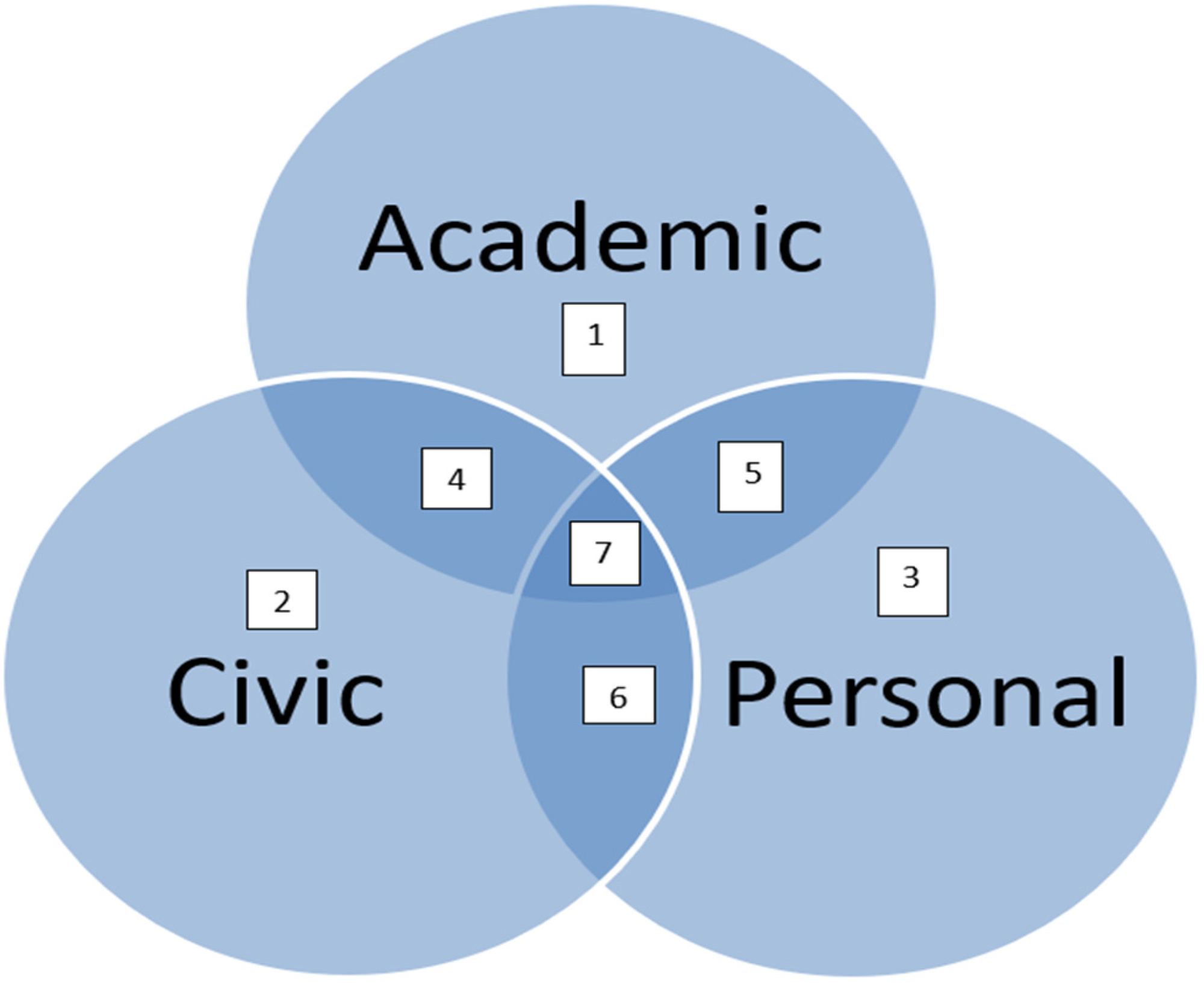
Learning domains of service-learning. 1. Community service informs or illustrates an academic concept, theory, or research finding (e.g., students learn to differentiate the use of positive reinforcement, negative reinforcement, and punishment in an elementary teacher's behavior in the classroom while they are engaged with the students on a module on climate change) 2. Community service contributes to civic growth in addition to the course content (e.g., students increase their knowledge of the nonprofit sector's approaches to mitigating climate change) 3. Community service contributes to personal growth in addition to the course content (e.g., students clarify how their career plans and future civic involvement are focused on climate change) 4. Community service connects academic content to civic learning outcomes (e.g., the course content covers intergroup contact hypothesis, and the students learn better approaches to interacting with diverse groups at a service site focused on climate change) 5. Community service connects academic content to personal growth (e.g., the course presents information on nonverbal communication, and students become more aware of nonverbal cues that they are displaying when active in a neighborhood) 6. Community service contributes to the integration of civic learning and personal growth in addition to the course content (e.g., students compare and contrast their own perspectives with diverse community perspectives on resistance to and acceptance of climate change mitigation strategies) 7. Community service connects academic content to civic learning outcomes and personal growth (e.g., the course content on attitudes and cognitive biases influences how students conduct their service activities and their awareness of their own attitudes, cognitive biases, and prejudices and those of others concerning climate change) Note. Adapted from Bringle et al. (2016). *See Table 3 for examples of course-related service-learning activities and Table 4 for reflection prompts.
Psychology instructors can further select educational goals from several guidelines for undergraduate psychology education. Table 2 compares a few existing guidelines.
Learning Guidelines for the Undergraduate Psychology Curriculum.
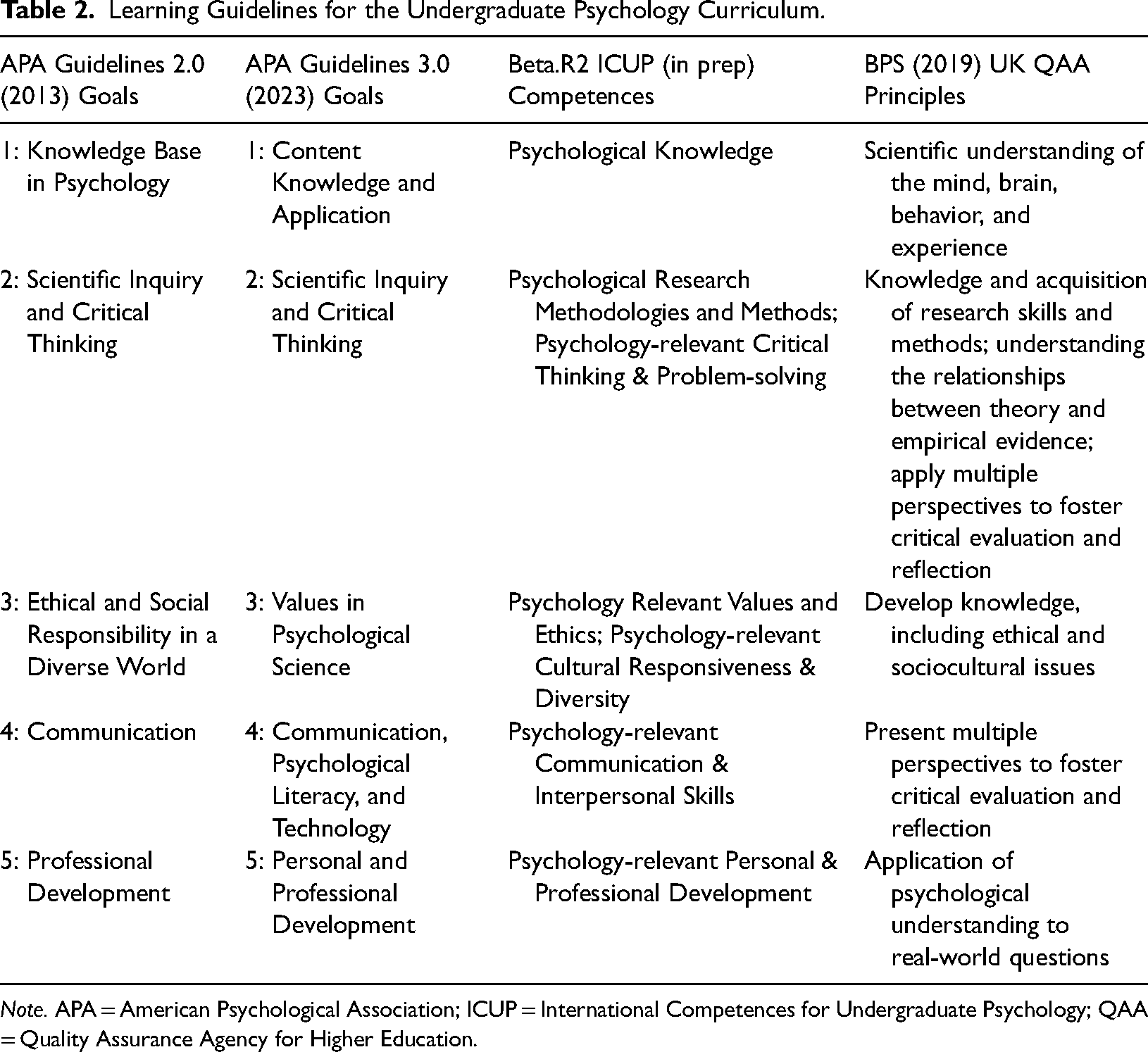
Note. APA = American Psychological Association; ICUP = International Competences for Undergraduate Psychology; QAA = Quality Assurance Agency for Higher Education.
Service-learning in psychology education can also be aligned with SDG competencies. The work on reconceptualizing psychology's undergraduate learning goals in terms of civic learning and public good parallels the competency categories proposed for the SGDs Curriculum Framework (Osman et al., 2017): knowledge and understanding (e.g., multiple literacies; social, environmental, and economic challenges), skills and applications (e.g., empirical methods, planning), and values and attitudes (e.g., sense of hope, justice)—applied to the 17 SDGs.
Service-learning activities and reflection can be designed to foster climate-related knowledge, skills, and attitudes/values and thereby improve agency in students contributing to current and future climate initiatives. Decades of research suggests that self-efficacy—defined as “an expectation of personal mastery” (Bandura, 1977, p. 191), is “the foundation of human agency” (Bandura, 2016, p. 5). Research shows that service-learning enhances community service self-efficacy (Reeb et al., 2010). Because performance accomplishment is a primary informational source influencing self-efficacy (Bandura, 2016), community feedback to instructors and students within the context of the reciprocal community-campus relationship is critical for developing self-efficacy in service-learning endeavors. Fostering self-efficacy for coping with climate-related problems is essential to cultivating hope—on which effective, sustained action in the face of climate change may depend. Hope is “based on a reciprocally-derived sense of successful agency (goal-directed determination) and pathways (planning to meet goals)” (Snyder, 2000, pp. 8–9). Research suggests that “group efficacy beliefs predict collective action, but only when hope is high” (Cohen-Chen & Van Zomeren, 2018, p. 50). Both self-efficacy (Bandura, 2016) and hope (Snyder, 2000) are associated with mental health.
Community-campus Collaboration
Optimal service-learning courses involve instructors collaborating with community partners on the design, implementation, and evaluation of a course. This approach equitably involves all partners in ways that recognize unique strengths that each contribute to the initiative to create social change and improve the community (Kniffin et al., 2020). Saltmarsh et al. (2009) proposed a shift towards conceptualizing partnerships as grounded in democratic values and commitments, which (a) positions everyone involved (i.e., instructors, campus staff and administrators, staff at community entities, residents, and students) as co-educators, co-learners, and co-generators of knowledge and practice and (b) foregrounds an asset-based orientation in which all partners share power and responsibility.
Strand et al. (2003) identified 10 principles of community-campus partnerships, which fall into three categories: principles guiding partnership initiation (sharing a world view, agreeing about goals and strategies, and possessing trust and mutual respect), principles guiding partnership processes (sharing power, communicating clearly and listening carefully, understanding and empathizing with each other, and remaining flexible), and principles guiding partnerships outcomes (satisfying each other's interests and needs, obtaining enhanced organizational capacities, and adopting long-range social change perspectives).
An engaged department works with community partners to determine relevant service-learning activities. Instructors can work with one partner (schools, local museums, community organizations) on one project or many partners with different activities (direct, indirect, research, and advocacy) to produce meaningful community outcomes focused on climate change. These collaborations require attention to ethical considerations (see Chapdelaine et al., 2005, for guidelines for students, faculty and educational institutions).
An ecological (systems) approach (e.g., Reeb et al., 2017) guides evaluation of service-learning projects, including multilevel projects involving multiple psychology courses. Different psychology courses and community partners can provide unique perspectives and contribute to projects in complementary ways. A systems approach incorporates levels of analysis (e.g., individual, family, community, culture, international/global) and thereby guides assessment of community outcomes and multiple perspectives at different levels, guides triangulation (examining convergence and contradiction among multiple perspectives and multiple assessment methods), recognizes reciprocal relationships among outcomes at different levels, captures nuances (e.g., a project may be beneficial at some levels, neutral at other levels, and unintentionally negative at other levels), and identifies readiness for change (Reeb et al., 2017). A systematic consideration of community feedback for service-learning courses and an engaged department can incorporate the multilevel criteria of psychopolitical validity—the evaluation of community activities by two criteria: (a) “demand that psychological and political power be incorporated into… interventions”; and (b) “require that interventions move beyond ameliorative efforts and towards structural change” (Prilleltensky, 2008, p. 116). Consideration of community perspectives and feedback is important as service-learning activities are developed.
Service-learning Activities Related to Climate Change
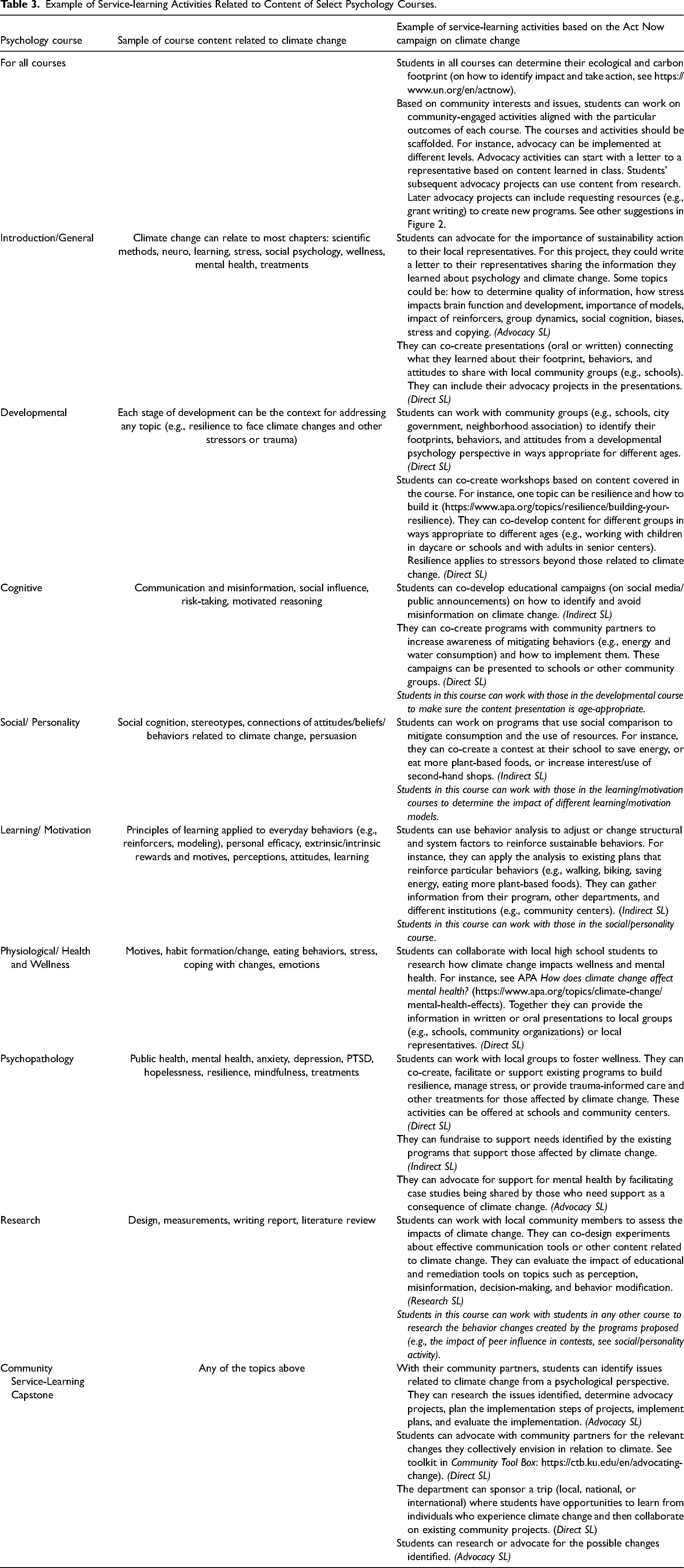
To illustrate how psychology programs can address contemporary challenges with service-learning activities, we selected SDG Goal 13: Climate Change and the United Nations’ program Act Now (https://www.un.org/en/actnow). This program is relevant for psychology because it allows individuals to participate in a global movement that focuses on the climate crisis and has implications across the SDGs. It lists actions to identify and manage one's emissions: behaviors such as energy use, food consumption, transportation, and shopping. Table 3 provides examples of activities for different psychology courses, with suggestions of course content related to students’ learning about their ecological and carbon footprints and taking action accordingly. There are four interrelated types of community-engaged activities: direct service to the community, indirect service to community organizations, participatory community action research, or advocacy/social change. Underlying design choices include community-engaged activities that are short term or long term; occur on campus, locally, internationally, or virtually; and involve partnering with grassroots initiatives, non-profit organizations, for-profit companies, or governmental agencies. These activities can be scaffolded across courses in the curriculum to build upon prior activities and to challenge students with cognitively and civically more complex approaches to learning. All activities are to be co-created by community partners, students, and instructors.
Example of Service-learning Activities Related to Content of Select Psychology Courses.
Reflection and Assessment of Student Learning
In addition to co-determining community-engaged activities with community members, another key curricular component in designing effective service-learning involves providing students with reflection activities through which they make meaning of their educational and community experiences and provide evidence of their learning. Neither community-engaged activities nor academic activities on their own generate learning without the integration of critical reflection on activities designed specifically to facilitate meaning-making based on particular learning objectives.
Critical reflection is the component of service-learning (and any form of experiential learning) that generates, deepens, and documents learning (Ash & Clayton, 2009). Effective reflection should be intentionally designed to embody the characteristics outlined by various scholars: it is contextualized to the situation and challenging (Eyler et al., 1996); is structured, occurs regularly, and is connected to both values and practice (Bringle & Hatcher, 1999); and is designed to generate actionable learning (Zlotkowski & Clayton, 2005). Reflection can occur before, during, and after students participate in community-engaged activities; it can be written, oral, visual, or technology-based; and it can be done individually or collaboratively (e.g., with other students, community members, and instructors). Through structured reflection, students can develop the competencies identified by Osman et al. (2017) in the SDG curriculum framework (e.g., listening, teamwork, links between short- and long-term change, perspective taking) as well as associated values (social justice, civic professionalism, social responsibility) and a sense of hope and self-efficacy.
The DEAL (i.e., describing, examining, articulating learning) framework provides a structure to design critical reflection prompts that are tightly aligned with desired learning objectives within any learning domain in Figure 1 (Ash & Clayton, 2009). This customizable, research-based framework supports learners in describing (D) their experiences, examining (E) their experiences using prompts linked to learning goals, and then articulating (A) learning (L) in a way that leads to enhanced future action and ongoing learning (Ash & Clayton, 2009).
In the Examine stage of DEAL, the prompts for written reflection or group discussion can be grounded in specific learning objectives derived from undergraduate curriculum guidelines for academic learning, civic learning, personal growth, and their combinations (Figure 1). Using Bloom's Taxonomy (1956) to structure Examine prompts from lower to higher order reasoning supports students in making meaning of their experiences up to whatever level of reasoning is desired or appropriate for the level of the course objectives (e.g., introductory vs. capstone), as follows:
Knowledge: identify relevant knowledge (concepts, theories, research findings, personal attributes, community issues) Comprehension: demonstrate understanding of knowledge Application: connect the relevant knowledge to service experiences Analysis: examine components by identifying causes and consequences and by comparing and contrasting components Evaluation: make judgments about the material, defend proposals Synthesis: develop new ways or perspectives, propose alternative solutions
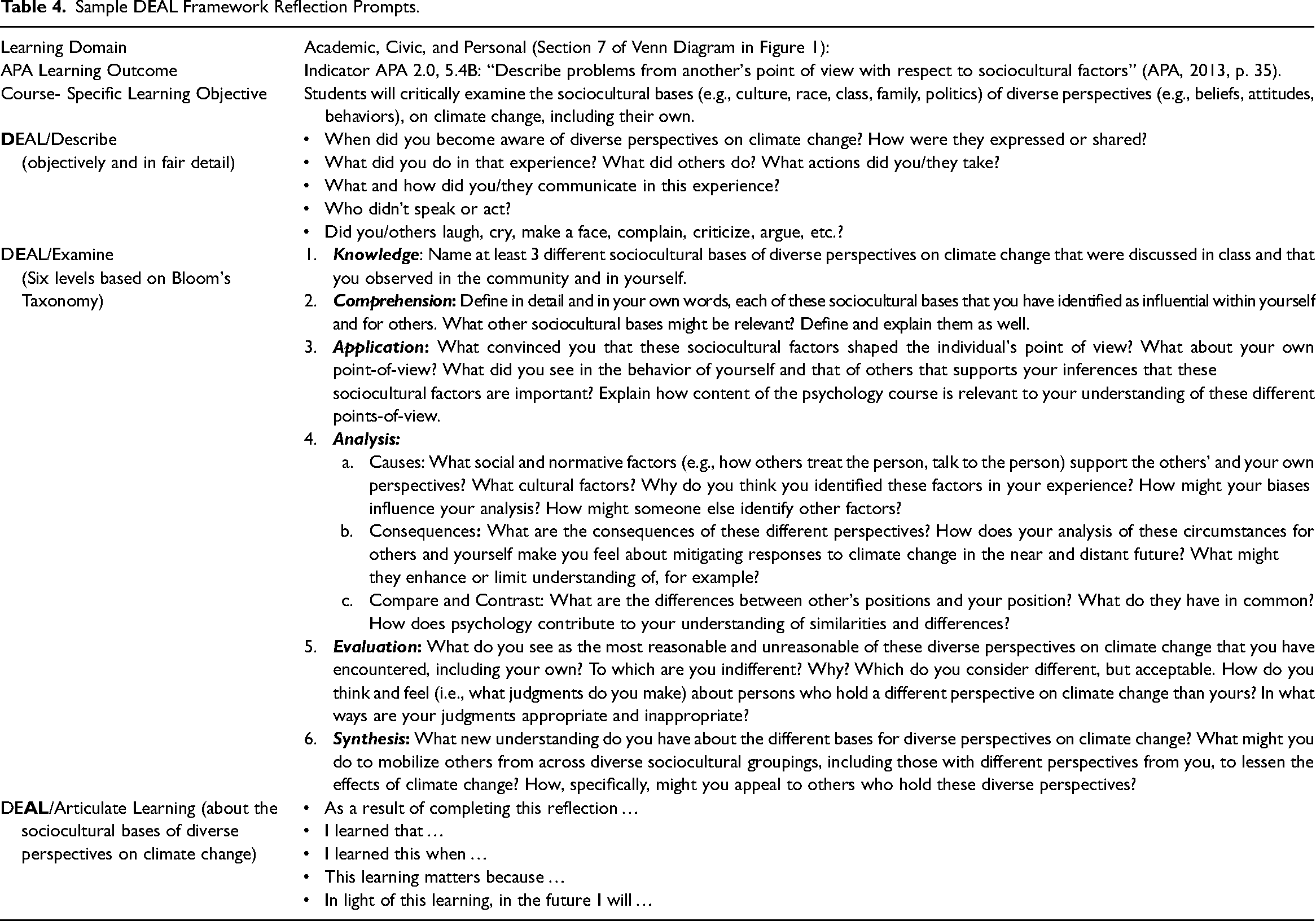
Table 4 provides an example from what might be a suite of DEAL reflection activities used throughout a course. It illustrates all six levels of Bloom's Taxonomy for the intersection of academic learning, civic learning, and personal growth. Instructors will develop their own content learning objective-specific reflection activities.
Sample DEAL Framework Reflection Prompts.
Because service-learning and Articulated Learning in the DEAL framework are focused on change and action, both in individuals and in communities, identifying actionable steps for change is important. Figure 2 provides some types of change behaviors and actions on which students and others could focus in the Articulate Learning section of DEAL with regard to climate change.
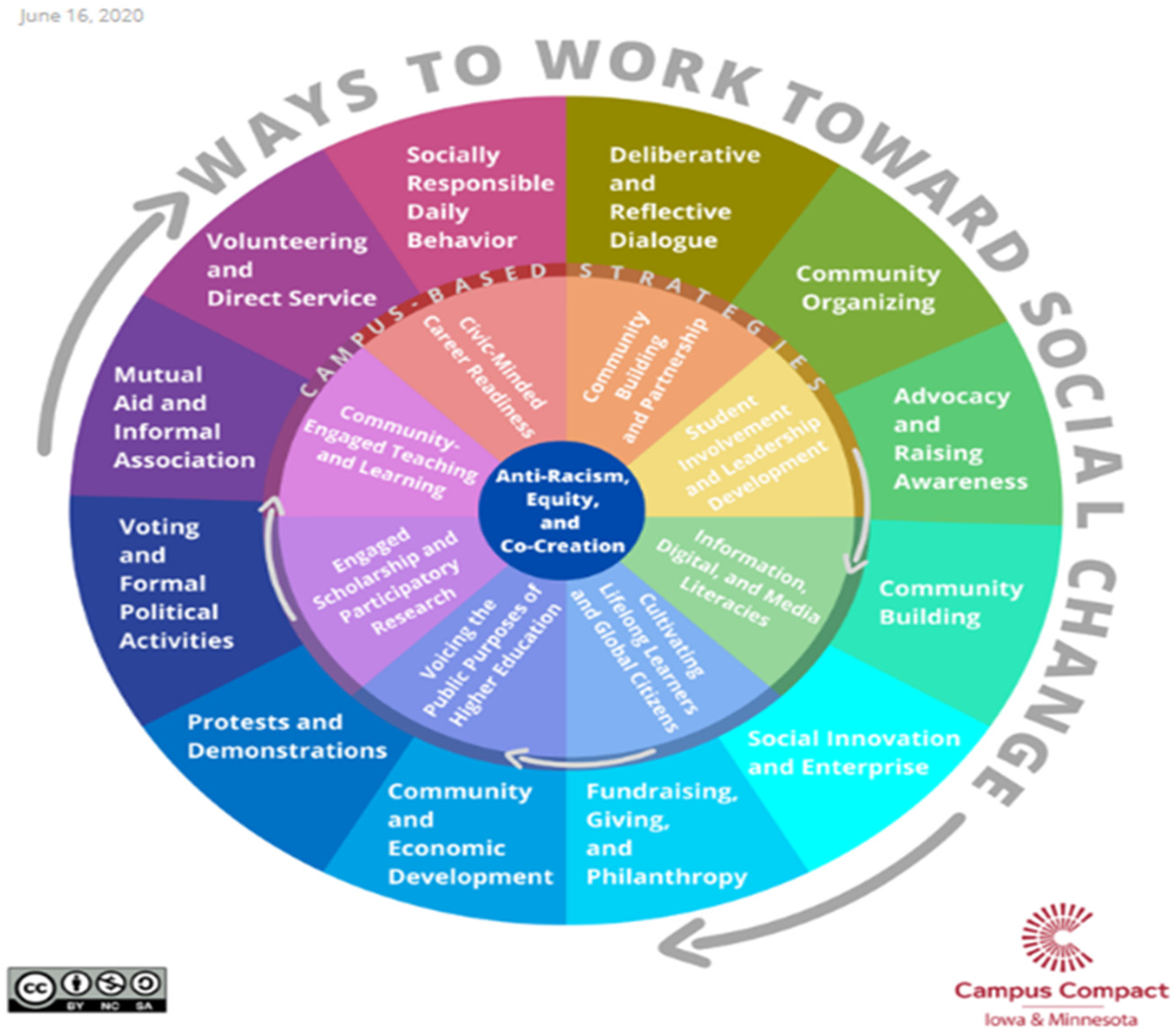
Social change wheel for actionable steps in service-learning (Iowa & Minnesota Campus Compact, 2020).
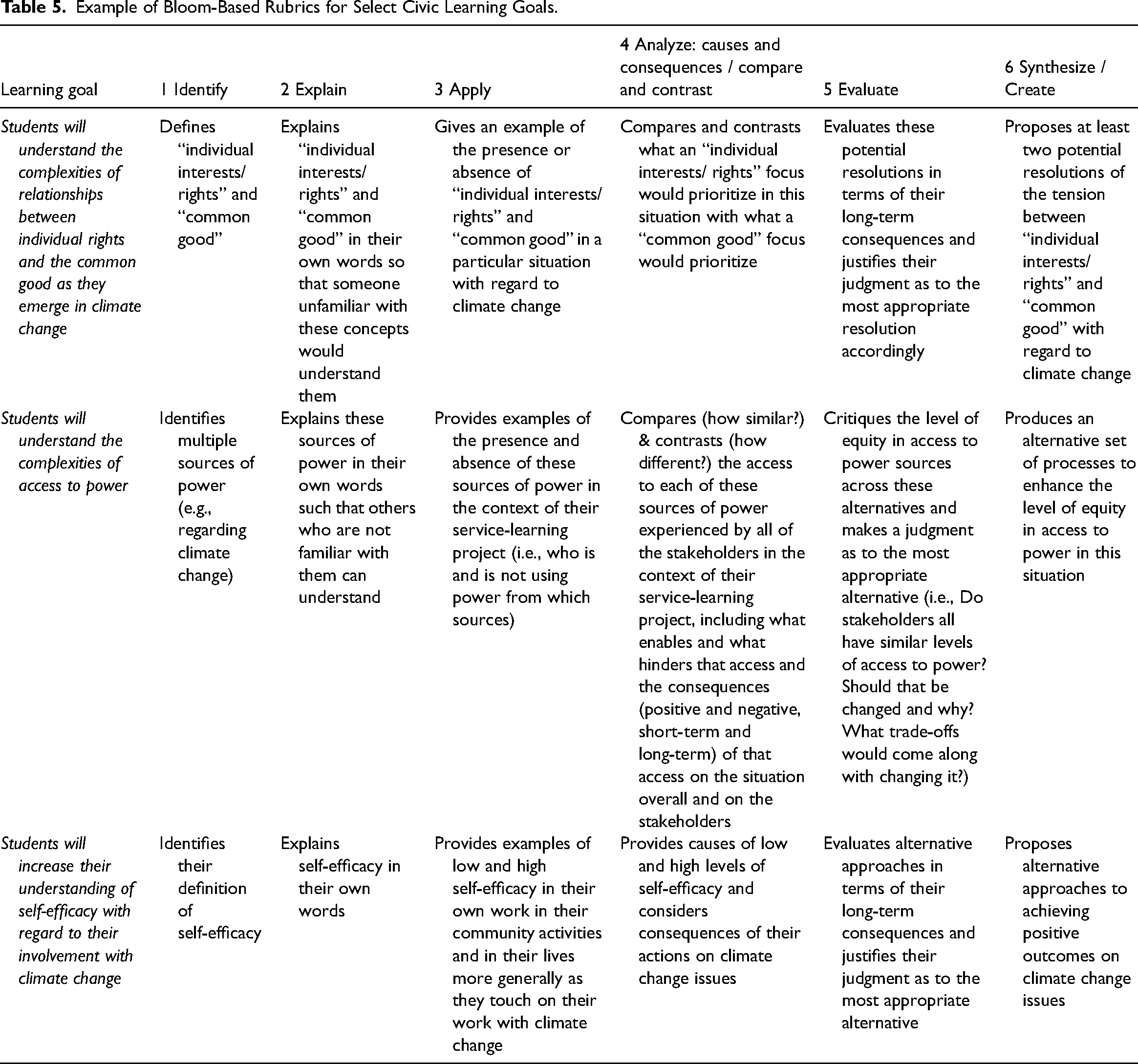
The DEAL framework for critical reflection provides an assessment of authentic (vs. self-reported) learning and growth. Because the prompts are organized around Bloom's Taxonomy (1956), rubrics for learning objectives in any domain (i.e., academic learning, personal growth, civic learning) can be used to evaluate learning for up to six levels (Table 5 provides illustrations).
Example of Bloom-Based Rubrics for Select Civic Learning Goals.
Conclusion
Reich and Nelson (2010) noted that socially responsive knowledge and service-learning pedagogy are important additions to the psychology curriculum. However, they concluded that service-learning remained underutilized. From our perspectives, little has changed since those observations were offered. In the International Handbook of Psychology Learning and Teaching (Zumbach et al., 2021), other than the chapter by Bringle et al. (2021), there are only a few mentions of service-learning and almost no discussion of what it can contribute to undergraduate learning, civic education, civically oriented careers, or community outcomes. The aspiration to prepare students for their civic lives is similarly conspicuous by its absence in discussions of learning goals, pedagogy, and assessment in the psychology literature on teaching and learning. This is despite Cranney and colleagues (2022, p. 3) defining psychological literacy as the “intentional values-driven application of psychology to achieve personal, professional, and community goals” (emphasis added). As a discipline, psychology is overdue for transforming its instructional strategies to achieve learning goals that go beyond solely academic learning.
The rationale for changing the dominant pedagogy of the undergraduate psychology curriculum is to educate not merely psychologically literate graduates but psychologically literate citizens. Service-learning may be unfamiliar to some psychology instructors and may be regarded as counter-normative because it decenters the instructor, shifts responsibility for learning more to the student, moves learning partially outside the classroom, and is constructivist (Clayton & Ash, 2004). The attractiveness of the paradigmatic shift to integrate civic learning into the entire undergraduate curriculum and to reconceptualize pedagogy to incorporate service-learning systematically will depend on engaged department leadership, current service-learning faculty who can be advocates and exemplars, and institutional context (e.g., faith-based, public, private, small, metropolitan, community college). The examination of both contemporary societal challenges that the SDGs are intended to address and how the well-being of students and communities can be enhanced creates opportunities to qualitatively improve the undergraduate psychology curriculum to develop psychologically literate citizens.
Footnotes
Declaration of Conflicting Interests
The authors declared no potential conflicts of interest with respect to the research, authorship, and/or publication of this article.
Funding
The authors received no financial support for the research, authorship, and/or publication of this article.
Author Biographies
 ). She was recently inducted into the Academy of Community Engagement Scholarship.
). Committed to co-inquiry practices, she was co-recipient of Clayton & Colleagues’ Distinguished Career recognition from the International Association for Research on Service-Learning and Community Engagement. Her interests include operationalizing democratic engagement and transformational partnerships; designing SLCE for civic learning; conceptualizing place-engaged SLCE; integrating SLCE and relationships within the more-than-human world; and exploring the power of such “little words” as in, for, with, and of to shape identities and ways of being with one another in SLCE. As one of ICEE's Senior Scholars, she serves as a thought partner and collaborator on work related to engaged graduate education, professional development among all partners in community-campus engagement, community-engaged scholarship, and transformational partnerships. She holds a PhD from the inter-disciplinary Curriculum in Ecology at UNC-Chapel Hill.