



Abstract
Our research contributes to knowledge on strategic organizational responses by addressing a specific type of institutional complexity that has, to date, been rather neglected in scholarly inquiry: conflicting institutional demands that arise within the same institutional order. We suggest referring to such type of complexity as “intra-institutional”—as opposed to “inter-institutional.” Empirically, we examine the consecutive spread of two management concepts—shareholder value and corporate social responsibility—among Austrian listed corporations around the turn of the millennium. Our work presents evidence that in institutionally complex situations, the concepts used by organizations to respond to competing demands and belief systems are interlinked and coupled through multiwave diffusion. We point to the open, chameleon-like character of some concepts that makes them particularly attractive for discursive adoption in such situations and conclude that organizations regularly respond to institutional complexity by resorting to discursive neutralization techniques and strategically producing ambiguity.
Keywords
Introduction
The pressure on organizations to respond to the demands from their social and cultural environments, as well as to be—at least ceremonially—in line with the normative beliefs of key audiences, has long been acknowledged in organizational institutionalism (e.g. DiMaggio and Powell, 1983; Meyer and Rowan, 1977; Suchman, 1995). More recently, scholars have directed our attention to settings where organizations are simultaneously exposed to multiple institutional expectations. These sometimes disparate demands have been analyzed as organizations that are embedded in multiple institutional logics (e.g. Lounsbury and Boxenbaum, 2013; Marquis and Lounsbury, 2007; Reay and Hinings, 2005; Thornton et al., 2012), subjected to different governance models (e.g. Aguilera and Jackson, 2010; Desender et al., 2016; Fiss, 2008; Meyer and Höllerer, 2010), exposed to conflicting stakeholder interests (e.g. Freeman et al., 2010; Humphreys, 2010), or influenced by multiple relational ties (e.g. Raffaelli and Glynn, 2014). Scholarly work suggests summarizing this phenomenon as “institutional pluralism” (Kraatz and Block, 2008; Yu, 2015) or when pluralist institutional demands become incompatible and/or contradictory as “institutional complexity” (Greenwood et al., 2010, 2011).
Yet despite a bourgeoning academic interest in institutional pluralism and complexity (e.g. Dunn and Jones, 2010; McPherson and Sauder, 2013; Pache and Santos, 2010; Raaijmakers et al., 2015; Reay and Hinings, 2009; Smets et al., 2015), there is still modest empirical research on organizational consequences and implications. Greenwood et al. (2010: 521; see also Greenwood et al., 2014) point out that we still “know relatively little about how and why organizations respond to multiple logics.” Similarly, Kraatz and Block (2008) call for further analysis of how organizations deal with being “co-evaluated” by multiple audiences. Our article examines organizations’ discursive efforts to mobilize and manage legitimacy (e.g. Bitektine, 2011; Suchman, 1995) in the face of conflicting demands from the environment.
In particular, we contribute to knowledge on strategic organizational responses by addressing a specific type of institutional complexity that has, to date, been rather neglected in scholarly inquiry, namely conflicting institutional demands that arise within the same institutional order. We suggest referring to such types of complexity as “intra-institutional”—as opposed to “inter-institutional.” We thus describe situations in which the logics of different institutional orders (for instance, economy, bureaucracy, family, democracy, or religion; see Friedland and Alford, 1991; Thornton et al., 2012) are in conflict with each other. Within religion, for instance, intra-institutional complexity arises when actors are confronted with demands from different religious beliefs that have come into conflict with each other (see also Tracey et al., 2014), or within bureaucracy, when divergent conceptions of the state, its roles and tasks and the public interest clash (e.g. Meyer et al., 2014). Within the globalized economic system, again, such intra-institutional complexity is manifested in the different models of organizing capitalism that exist in market economies—most notably the Anglo-American model of a liberal market economy versus the coordinated market economy model of continental Europe, each with their distinct institutional infrastructures and (corporate) governance models (e.g. Aguilera and Jackson, 2010; Djelic and Quack, 2003; Hall and Soskice, 2001; Hall and Thelen, 2009; Hollingsworth and Boyer, 1997; Whitley, 1999). Our main question thus lies on how organizations deal with situations where some audiences demand adherence to one specific model, while others push for the other.
We use the rise of shareholder value orientation (SHV) and corporate social responsibility (CSR) in Austria around the turn of the millennium to explore these questions empirically. Austria has been described as an icon of corporatism—a pattern of governance that has, at its core, intricate and enduring forms of interest representation, with a typically non-conflictual orientation of its representatives (e.g. Crouch and Streeck, 2006; Lehmbruch and Schmitter, 1982; Molina and Rhodes, 2002). Within the “varieties of capitalism” literature, the degree of corporatist arrangements with their inherent stakeholder orientation is regarded as one of the main differentiating characteristics between coordinated and liberal market economies (Gourevitch and Shinn, 2007; Hall and Soskice, 2001; Phelps, 2009; Thelen, 2012). When SHV—a management concept that places shareholders’ interests above the interests of all other constituents of a corporation—started to spread in continental Europe, it was evident that this concept (and related organizational policies, forms, and practices; we will use “concept” to address such an idea-practice bundle) 1 was a manifestation of the liberal model of capitalism (Fiss and Zajac, 2004; Meyer and Höllerer, 2010; Schneper and Guillén, 2004; Streeck and Höpner, 2003). As such, it represented a serious challenge for the incumbent coordinated model that was firmly rooted in the corporatist system. A potential shift toward the liberal model was applauded by some audiences (for instance, financial markets, investors, financial analysts, and some policy advisors), but met with considerable skepticism and outright rejection by others, most notably trade unions, but also a considerable part of established economic, political, and other corporatist elites (Meyer and Höllerer, 2010). For corporations, an institutionally complex situation arose when the debate around the appropriateness of SHV in the Austrian context became heated: An important part of their key constituents expected them to adhere to the liberal model of capitalism by demonstrating commitment to SHV; yet another part of equally key constituents demanded that corporations affirm their support for the existing corporatist model. We therefore ask: How can corporations handle such a situation of intra-institutional complexity?
It was at about the same time that another management concept—CSR—started to gain hold in the Austrian corporate world (Höllerer, 2013). CSR, on the one hand, bears undeniable resemblance to the notion of social/societal responsibility that is deeply ingrained—and thus implicitly present—in the incumbent corporatist model of coordinated market economies (e.g. Brammer et al., 2012; Campbell, 2007; Gjølberg, 2009; Höllerer, 2013; Matten and Moon, 2008; Midttun et al., 2006). On the other hand, CSR also seems to go well with the liberal model and has been found to spread alongside liberal economic policies (e.g. Jackson and Apostolakou, 2010; Kinderman, 2009). Despite the extensive body of accumulated research on CSR, the puzzle of whether “explicit CSR” (Matten and Moon, 2008) is a “mirror” of the continental European coordinated model of market economy (and thus a countermovement to SHV and the liberal model), more of a “substitute” for the formal institutions of a corporatist system (and thus complementary to SHV; Jackson and Apostolakou, 2010; Kinderman, 2009, 2012), or in fact amalgamated into “enlightened” SHV (e.g. Jensen, 2001; Keay, 2013; Lok, 2010; Porter and Kramer, 2011) remains unsolved. We will show that it is exactly this open and chameleon-like character of CSR that makes the concept attractive for corporations in an institutionally complex situation.
In settings where organizations are expected to adhere to multiple sets of institutional expectations, compliance is relatively unproblematic when expectations are seen as compatible, and/or an organization is able to split its audiences and attend to them in turns (e.g. Kraatz and Block, 2008; Pratt and Foreman, 2000; Sinha et al., 2015). However, if such “compartmentalization” of audiences into separate communication arenas is no option, an organization faces a considerable challenge. We show that in the face of competing institutional demands, organizations strive for neutralization—that is, the mitigation of potential conflict—and produce multivocality by sending ambiguous signals.
In addition to enhancing the understanding of organizational response strategies in situations of intra-institutional complexity, our work further contributes to research on interdependencies during the diffusion process. Prior studies on institutional logics have shown how institutional logics replace each others’ key practices (e.g. Lounsbury, 2007; Scott et al., 2000; Thornton and Ocasio, 1999), coexist (e.g. Besharov and Smith, 2014; Dunn and Jones, 2010; Jones et al., 2012; Purdy and Gray, 2009; Reay and Hinings, 2009; Schneiberg, 2007), or give rise to hybrid forms (e.g. Battilana and Dorado, 2010; Battilana and Lee, 2014; Pache and Santos, 2013). Shipilov et al. (2010) find that an extension of institutional logics happens through multiwave diffusion of related practices. They show how prior adoption decisions concerning what they call “logic-defining” practices prime—in a second wave of diffusion—the subsequent adoption of “logic-extending” practices (see also Compagni et al., 2015; Nigam and Ocasio, 2010). We argue that diffusion patterns of concepts are interlocked not only in case of logic extension but also in situations where organizations need to neutralize prior adoption decisions in the light of intra-institutional complexity. Consequently, we suggest calling such second-wave concepts “complexity-neutralizing.”
For our empirical context, we will show how CSR is used by organizations to neutralize prior and continued commitment to SHV, when the latter has become contested but nonetheless remains stipulated by part of the organizations’ environment. This insight is particularly relevant, as it also underscores the fact that organizational and managerial concepts regularly come in interconnected “bundles” (Höllerer et al., 2014), and that the record of prior adoption must be taken into account in order to understand fully the development of institutional logics and the ideas and practices that embody them.
Our article is organized in five sections. Given the relevance of the cultural and political context of our arguments, we first illustrate the empirical setting of our study. Building on prior scholarly work, we then specify our overall research question with a number of hypotheses. Next, we describe our empirical design in more detail. On presenting statistical results, we discuss our findings extensively and finally highlight key contributions of our research.
Models of market economies and the Austrian empirical setting
The differences between the models of capitalism in market economies have been discussed at length in the scholarly literature (e.g. Aguilera and Jackson, 2010; Djelic and Quack, 2003; Hall and Soskice, 2001; Hall and Thelen, 2009; Hollingsworth and Boyer, 1997; Schneper and Guillén, 2004; Whitley, 1999) and have been found to lead to quite diverse institutional infrastructures (for instance, in terms of industrial relations institutions, financial arrangements, systems of vocational education and training, corporate governance, and social policy regimes). Thelen (2012), for instance, notes that each of the models of capitalism “operates on a wholly different logic” (p. 138). There is general consensus that, in coordinated market economies of continental Europe—described as coordinated, insider-, and relationship-oriented business systems—a pronounced shareholder orientation that originated in the liberal, outsider-, and market-oriented Anglo-American version of capitalism is at odds with institutionalized norms and beliefs. The implementation of SHV, in this respect, also entails far-reaching redefinitions of institutionalized expectations and broader governance structures (e.g. Dobbin and Zorn, 2005; Fiss and Zajac, 2004, 2006; Fligstein, 2005; Meyer and Höllerer, 2010). Austria, as an icon of continental Europe’s corporatist tradition 2 whose business community became increasingly exposed to SHV during the 1990s and early 2000s, seems an excellent case to study the encounter of these two models of capitalism and market economy in more detail.
While SHV undisputedly manifests the North American model, social—or, more broadly, societal—responsibility of business has a long tradition in continental Europe (e.g. European Commission, 2001; European Management Forum, 1973; Hiss, 2009; Höllerer, 2013; Steinmann, 1973). Long before the explicit Anglo-Saxon terminology of CSR took hold, it had been an implicit, often taken-for-granted understanding, built on a historically grown “range of embedded relations with a relatively wide set of societal stakeholders” (Matten and Moon, 2008: 408). This understanding of business’ societal responsibility—that is, a responsibility of entrepreneurs, owners, and managers—is not based on an instrumentalized business case notion of CSR (such as in the case of enlightened SHV or shared value creation; e.g. Porter and Kramer, 2011). It is, however, hardly based on what Gioia (1999) criticized as a naïve egalitarian or democratic illusion. Nor is it based on corporate altruism. Rather, it is derived from the notion that the political and economic elite are responsible for the economic architecture of the nation. It thus involves a certain conviction, claim, and even obligation to know better what is good for stakeholders—perhaps more so than they do themselves—and society as a whole. One of the most influential German-speaking management scholars in the 1970s and 1980s summarizes this notion as follows: Executives in all areas of society are, with regard to their role and power, part of the elite that can be expected to recognize better and earlier than others which objectives and types of behavior are appropriate in order to safeguard the future. The fact that corporate management takes on social responsibility thus implies that it makes great efforts not only to pursue the interests of the corporation, but also to do what is best for society at large. (Ulrich, 1980: 16; authors’ translation)
In order to understand the context of our empirical study, it is crucial to pay attention to the close link between the economic and the political elite that ties in with the strong corporatist tradition in post-war Austria. The construct of so-called “social partnership” encompasses a way of policymaking and solving potential social conflicts through institutionalized bargaining and compromise in a complex web of advisory boards, commissions, and task forces that was referred to as a “sublimated class struggle on the green table” by the famous former Austrian federal chancellor Bruno Kreisky. Its outcome was, on the one hand, social peace and the post-war ‘economic miracle,” and, on the other, a democratic legitimacy deficit resulting from the secrecy and informality of political decision-making as well as from the substantial politicization of the economy. The role of the state in the economic sphere was eminent: Financial markets under significant state control (basically all large banks were in the hands of public bodies or the social partners until the mid-1990s) and the key role of nationalized industries (large-scale privatization began in the early 1990s, with the state keeping blockholdings in many of these corporations until the present day) are only two examples. An external market of corporate control—manifested through hostile takeovers or takeover attempts—was practically non-existent, and ownership concentration was among the highest in Europe (e.g. Barca and Becht, 2001). Finally, an obligation to a stakeholder orientation in corporate governance still is inscribed in the Austrian Stock Corporations Act that requires the executive board of a corporation to act, above all, in the best interest of the corporation, thereby taking into consideration the interests of shareholders and employees 3 as well as the public good.
Many observers stressed that for continental European countries such as Germany or Austria, SHV posed a considerable challenge to vested interests (e.g. Fiss, 2008; Meyer and Höllerer, 2010; Schneper and Guillén, 2004; Streeck and Höpner, 2003; Witt and Redding, 2009). Fiss and Zajac (2004) speak of “diffusion over contested terrain” and note that SHV, by placing the interests of shareholders above those of other constituents, represents a clear and highly controversial break with the traditional German stakeholder model of corporations and a major shift in firms’ priorities […] since it involves a paradigm shift that brings into question organizational constituents’ most basic assumptions about the nature of the firm. (Fiss and Zajac, 2006: 1175)
Notwithstanding these potential differences in reception, both SHV and CSR have disseminated in Austria, albeit in different waves. Figure 1 shows the development of the two main dependent variables of our study plus their evaluation in the media (see Table 1 and method section for all details).
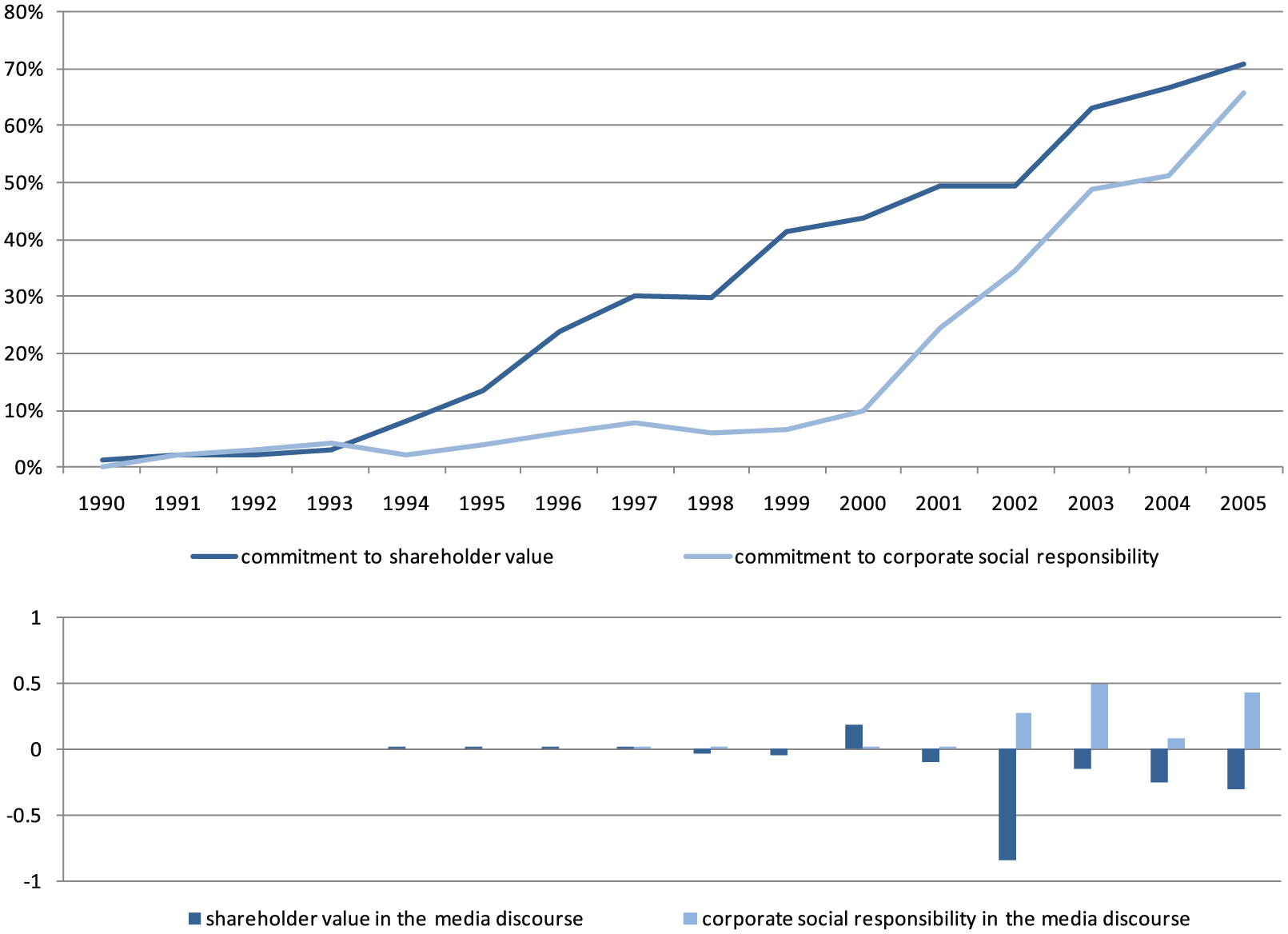
Percentage of corporations indicating commitment to SHV/CSR versus evaluation of SHV/CSR in the media discourse.a
Operationalization of variables.
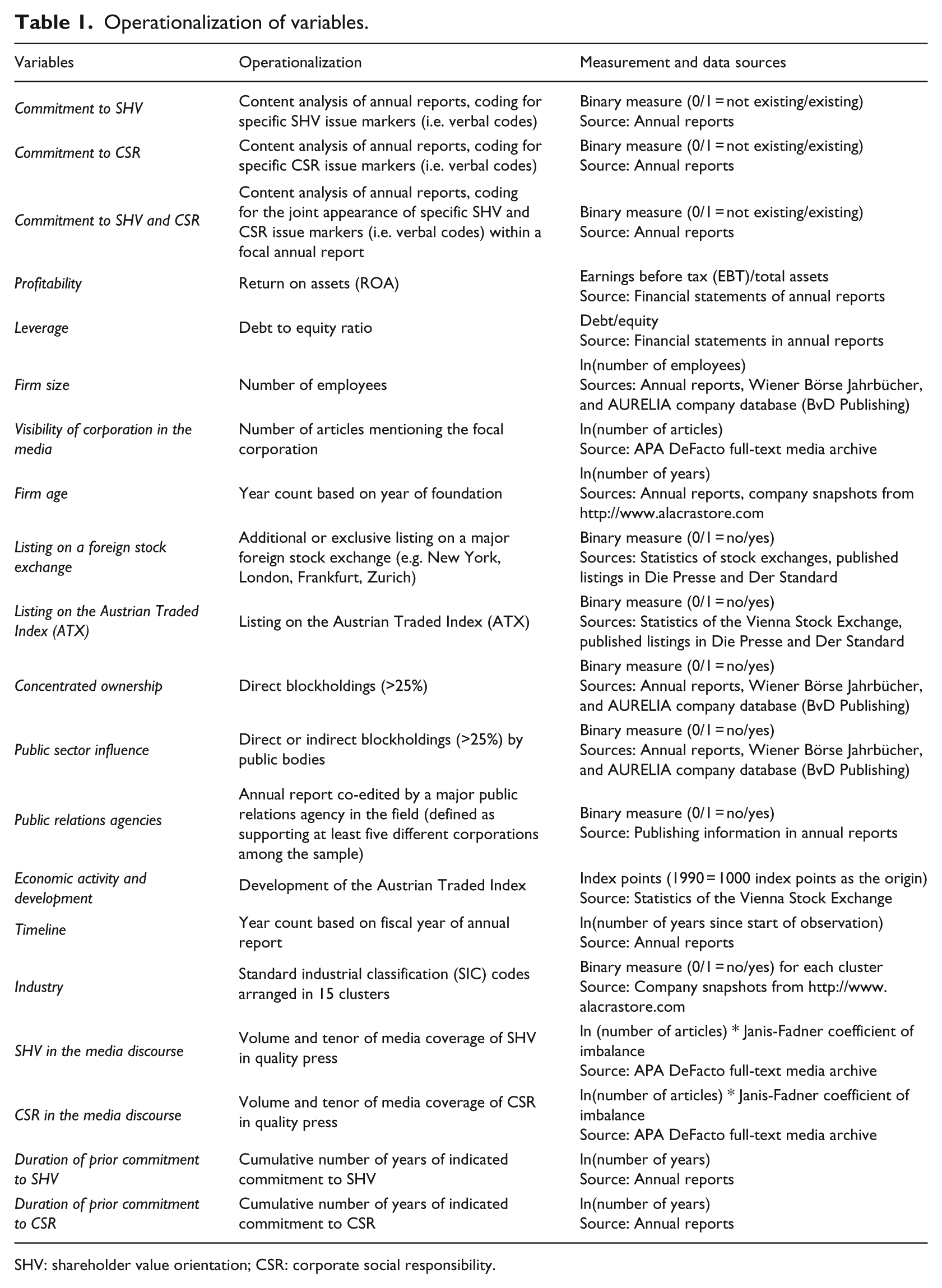
SHV: shareholder value orientation; CSR: corporate social responsibility.
In 1993, neither SHV nor CSR were important issues for Austrian listed corporations, with 3.1% announcing commitment to SHV and 4.2% to CSR in their annual reports (in the following, we will refer to such announcements in annual reports as “discursive commitment,” or commitment in short). From the mid-1990s onward and following a more or less global trend, commitment to SHV dramatically increased (by 1999, 41.5% of corporations in our sample indicated an SHV orientation). This, however, was not the only trace of increasing influence of the North American governance model in Austria. Around the turn of the century, a bundle of legislative measures and incentives were introduced: In January 1999, changes in accounting standards enabled groups to report according to IAS (International Accounting Standards) or US-GAAP (United States Generally Accepted Accounting Principles); subsequently, the number of listed corporations using international accounting standards increased from 1.0% in 1996 to 43.6% in 2000. Other initiatives included new regulations for share buybacks (1999), the abolition of a stock exchange transfer tax (2000), the nomination of a capital market commissioner in the Austrian Federal Ministry of Finance (2000), a privatization initiative by the government (starting in 2000), and a capital market initiative (2001) that, among others, facilitated stock option plans.
Despite its diffusion among listed corporations, SHV has always been controversial in Austria (Meyer and Höllerer, 2010). Strongly supported by financial market players, many business managers, and consultants, while, at the same time, opposed by the social partners (including the representatives of the employers, such as the Federation of Austrian Industrialists or the Chamber of Commerce), most politicians, and a number of non-economic players, the overall tenor in the media was somewhat balanced in the early years (see Figure 1). The divergent assessment can perhaps be best illustrated by the contrasting viewpoints on SHV of two CEO generations within one of the most prominent and traditional Austrian family-owned companies (in: Trend, 12/1997, December 2012; authors’ translation): While the father strongly rejects SHV (“I am convinced that, from a historical point of view, shareholder value philosophy will sooner or later backfire. For similar reasons, this century has first seen a communist and then a national-socialist revolution.”), the son and heir, a London-trained banker, fully endorses it (“A lot is changing. Capital and management have been separated. I am a big fan of that. One simply has to make sure that a company is managed according to profitability and shareholder value criteria.”).
With regard to the public’s evaluation, critical events have been shown to play a crucial role by giving rise to new problem framings, lending voice to new players in the arena, and enhancing the degree of attention among stakeholders and the general public (Benford and Snow, 2000). For SHV, the public’s assessment in continental Europe radically changed in the aftermath of the financial scandals and corporate malfeasance—usually associated with Enron and WorldCom in the United States, or examples such as Parmalat in Europe—for which a rampant SHV orientation was held responsible (Dobbin and Zorn, 2005, plus comments; Fligstein, 2005; Fligstein and Shin, 2005). Public disapproval for SHV has prevailed over approval in Austria since 2001 (see Figure 1). Nonetheless, capital market constituents continued to require listed organizations to subdue to the dominant paradigm of Anglo-American style corporate governance. This held especially true for those in need of attracting international capital. A quote from the media debate stresses this point well: In Austria, shareholder value is still used by a minority [of corporations]. In my opinion, this is a mistake. And I am convinced that this will change: Listed corporations in particular will be confronted with the notion more frequently in the future. […] “Does this also hold true for Austrian investors and analysts?” Well, more for those from the Anglo-Saxon context—who are more demanding and to the point. (CEO of an Austrian high-grade steel producer, interviewed in: Trend 11/98: 78, November 2, 1998; authors’ translation)
All this created a considerable dilemma for business organizations and their decision makers: Abandoning SHV could be an unfavorable signal to the financial markets; staying committed could be an unfavorable signal to the opponents of SHV that see in the concept (and its underlying governance model) the very cause for corporate malfeasance.
Figure 1 also informs about a second development: With the media tenor on SHV turning sour in the early 2000s, CSR—a concept that seemingly resonates with the traditional governance model in place—explicitly surfaces in corporate communication: Eureka! Finally we have another Anglo-Saxon term for something so self-evident: “corporate social responsibility” is the magic word that means nothing but the fact that corporations also have to take into account the public good (something that, by the way, the wise architects of the Austrian Stock Corporations Act formulated decades ago with enduring validity). (Herbert Krecji, former Secretary General of the Austrian Federation of Industrialists, in: Gewinn 12/02, December 2002; authors’ translation)
At the time, it was thought of as a response by the established governance model to the burgeoning SHV orientation: Corporate Social Responsibility […] is an attempt to find an answer to the problems of globalization and the waning trust in corporations—think Enron and Parmalat. After the unbridled Shareholder Value of the 1990s, the pendulum swings back […]. (In: Der Standard, 19 September 2005; authors’ translation)
In a periodical issued by the Austrian Federal Chamber of Labor, this point is further emphasized: Even if there are political initiatives toward corporate social responsibility, CSR is undoubtedly a reaction to publicly perceived excesses of shareholder value and greediness for profit. Reports concerning financial scandals à la Enron, environmental pollution on a massive scale (oil tanker accidents, factories in third-world countries, et cetera), and degrading working conditions in supply chains of European and American multinational corporations result in negative publicity, make consumers, employees, and shareholders feel insecure and uncomfortable, and therefore require counter-strategies. (In: Wirtschaft und Umwelt 04/2007, December 2007; authors’ translation)
Although CSR was received unanimously positively—critique almost exclusively thrives on the admonishment that it is much ado about something that should be self-evident in the Austrian context—,the rise of CSR, however, did not put a hold on SHV commitment (see Figure 1). On the contrary: By 2005, 70.7% of listed corporations in Austria announced their commitment to SHV and 65.9% to CSR. How, therefore, can we conceptually make sense of the commitment to the two concepts, given their simultaneous (and obviously intertwined) emergence and given the institutional complexity that has emerged from the contest of two competing models of capitalism with divergent underlying rationales and belief systems?
Theory and hypotheses
Modern societies have differentiated several value spheres (Weber, 1978; see also Friedland, 2014), each organized around a particular substance (Friedland, 2009, 2013) or Leitidee (Lepsius, 1997) 4 with distinct organizing principles, values, identities, and practices. These institutional logics (Friedland and Alford, 1991; Thornton et al., 2012) account for modern societies being characterized as inter-institutional systems: In such social settings, institutional pluralism (Kraatz and Block, 2008; Yu, 2015) is the norm. The nature and number of actual spheres, however, may differ both historically and culturally: In certain times in history, for instance, economy and family were not differentiated (see, for instance, the Greek oikos); in China, bureaucratic state and capitalism economy have been heavily intertwined over the last years; or, looking to the Middle East, but also elsewhere, not all societies agree that state and religion are separate institutional orders.
While institutional pluralism often remains unproblematic (as different orders evaluate different sets of practices), institutional complexity is more challenging. Greenwood et al. (2011) define institutional complexity as a situation in which organizations are confronted with incompatible prescriptions from multiple institutional logics that are simultaneously endorsed by different audiences. Pache and Santos (2010) emphasize that “organizations facing conflicting institutional demands operate within multiple institutional spheres and are subject to multiple and contradictory regulatory regimes, normative orders, and/or cultural logics” (p. 457). Here, however, we look at a particular type of complexity—intra-institutional complexity (see also Meyer and Höllerer, 2014) —that arises when organizations face conflicting institutional demands that exist within the same institutional order.
In different cultural contexts, each of the institutional spheres, or institutional orders, can be “filled” differently (see the categorical elements on Thornton et al.’s [2012] vertical y-axis). Albeit representing the same institutional order (e.g. economy, bureaucracy, family, democracy, or religion), they materialize different substances or have developed different organizing principles, identities, or practices. This is obvious in the case of religions (even across monotheistic ones, such as Catholicism, Protestantism, Judaism, or Islam). Quite different Leitideen also exist surrounding, for instance, the bureaucratic state, its architecture, role, and the public interest it serves (Meyer et al., 2014). Across market economies, different models of capitalism have been found to develop quite different institutional infrastructures (e.g. Hall and Soskice, 2001; Hollingsworth and Boyer, 1997; Thelen, 2012). Hall and Thelen (2009) note that these models represent different ways of organizing capitalism and “operate according to different logics. In other words, the differences among them are in kind rather than degree” (p. 24). Hence, in a globalized world, intra-institutional pluralism (and/or complexity)—that is, actors exposed to different substances and organizing principles within the same institutional order—is as frequent as exposure to inter-institutional complexity and needs to be addressed in scholarly inquiry.
Kraatz and Block (2008) note that “the organization’s attempts to comply with the demands of one constituency are likely to be observed by others, who may assign very different subjective values to the same displayed symbols” (p. 248). In addition, some communication arenas or genres, especially those targeting a more general public, do not permit segmentation, that is, audiences are non-compartmentalizable. In such non-compartmentalizable communication contexts (such as, for instance, in the mass media, in publicly available annual reports, or on corporations’ websites), it is not possible for organizations to tailor their communication to the expectations of a specific audience (as they would do, for example, in road shows for potential investors, in marketing brochures targeting specific customer segments, or in a face-to-face conversation with unions). Hence, they are required to address a multiplicity of potentially disparate institutional expectations simultaneously. Shipilov et al. (2010) direct our attention to the “multiwave diffusion” of concepts that are interlinked by their adherence to the same institutional logic. They show how the commitment to a logic-defining concept primes the later commitment to a logic-extending concept. We argue that institutional complexity also interlinks concepts: When the logic-defining concept (SHV in our case) becomes entangled in conflicting institutional demands, a second-wave complexity-neutralizing concept (CSR in our case) is added.
We will analyze this by formulating and, subsequently, testing two sets of hypotheses. The first set will investigate the impact of public attention and public evaluation of SHV and CSR on organizations’ discursive commitment to the respective concept. In the second set of hypotheses, we will carry this further and focus on ambiguity as a way of neutralizing prior commitment.
Public endorsement and evaluation
Institutional theory states that corporations must gain legitimacy by signaling compliance with rationalized myths and expectations of relevant audiences in the social context in which they are embedded (DiMaggio and Powell, 1983; Meyer and Rowan, 1977). In order to acquire legitimacy, organizations have been found to primarily select concepts that conform to the dominating rationale within their field and abandon those that run against it (e.g. Davis et al., 1994). Apart from government actors and regulators, research has highlighted the role of the public in endorsing concepts and conferring legitimacy (Deephouse, 1996, 2000; Deephouse and Suchman, 2008). It has been suggested that a good indicator for the general public’s evaluation of the desirability and normativity of a concept is its resonance in the media: More than merely raising the audiences’ attention and increasing the salience of an issue on the public’s agenda, the media record social knowledge and reflect and influence the values and concerns of a community (Hilgartner and Bosk, 1988; Kingdon, 1984; McCombs and Shaw, 1972). They give voice to constituents and promote assessments of an issue by either endorsing or challenging it. The media, as Gamson (1992) points out, are not only a mirror of reality but rather the “site on which various social groups, institutions, and ideologies struggle over the definition and construction of social reality” (p. 71).
The public media constitute a highly influential arena in which the relevance of issues and the legitimacy of innovative concepts are negotiated. This is why not only the level of visibility and salience of an issue in the media, but also the media’s assessment of the issue, is crucial. Thus, while the volume of media coverage is an indicator for the flow of public attention, the tenor of the media coverage influences the perceived level of appropriateness (e.g. Aerts and Cormier, 2009; Bansal and Clelland, 2004; Deephouse, 1996, 2000; Deephouse and Carter, 2005; Fombrun and Shanley, 1990; Lounsbury and Glynn, 2001; Pollock and Rindova, 2003; Sine et al., 2005). Based on prior research along these lines, we expect public approval—high media attention combined with favorable media coverage—to positively influence the extent to which organizations proclaim discursive commitment to a specific concept. Hence, we propose,
Hypothesis 1a. Public (media) endorsement of a concept (i.e. SHV, CSR) is positively related to a focal firm’s likelihood to express discursive commitment to this concept.
If positive assessment in the media spurs commitment, negative assessment could be expected to spur abandonment. However, since (ill-)legitimacy is audience related, appropriateness in the eyes of some audiences and inappropriateness in the eyes of others coexist in institutionally complex situations. What if the abandonment of a particular concept is problematic for the organization as another powerful constituent group, at the same time, demands (continued) commitment? Greenwood et al. (2011: 337; see also Pache and Santos, 2010) underscore that fragmentation resulting from disparate sets of institutional prescriptions per se will increase the complexity confronting an organization and agree with Hudson (2008) that this phenomenon of mutually exclusive evaluations and expectations by multiple audiences has not yet been examined closely enough.
We described in the previous section that, for our empirical context, SHV kindled a controversial debate from the beginning, with the overall public assessment turning overwhelmingly negative after a series of global corporate scandals around the turn of the millennium (see Figure 1). Nonetheless, capital market constituents continued to expect listed organizations to subdue to the rationale of Anglo-American style corporate governance. Thus, abandoning SHV would have been an unfavorable signal to the financial market; at the same time, staying committed was a disadvantageous signal to other constituents that held SHV and the liberal market model it manifests responsible for corporate malfeasance and misconduct. We have also elaborated—building on Kinderman (2009, 2012) and the work of Jackson and Apostolakou (2010; see also Matten and Moon, 2008) —on how CSR can be interpreted as both a mirror and return of the old coordinated, corporatist model and, hence, a counter-concept to SHV, as well as a complementary extension or “enlightenment” of the spreading Anglo-American liberal model. We have pointed out how academia and practice use both interpretations. This chameleon-like character makes CSR attractive in an institutionally complex situation: By expressing commitment to CSR, it remains open as to which model is actually supported. Due to this inherent ambiguity, CSR has a complexity-neutralizing capacity.
More formally, we expect that in situations of non-compartmentalizable intra-institutional complexity, negative public assessment of a focal concept does not necessarily lead to its disappearance. Rather, it may encourage the rise of a complexity-neutralizing concept. Hence, our generalized prediction is as follows:
Hypothesis 1b. In situations of non-compartmentalizable intra-institutional complexity, negative public endorsement of SHV does not engender its abandonment, but is positively related to a focal firm’s likelihood to express discursive commitment to CSR.
Ambiguity as a neutralizing technique
While the hypotheses in the previous section focus more on field-level factors that impact the discursive diffusion of SHV and CSR, we shall now turn to the organizational level. When organizations face pressure by one group to demonstrate adherence to a specific governance model and at the same time are exposed to pressure by yet another group to defect, decoupling and segmentation of audiences are typical responses (e.g. Boxenbaum and Jonsson, 2008; Bromley and Powell, 2012; Meyer and Rowan, 1977). An alternative way out is to try balancing or integrating the disparate demands (e.g. Kraatz and Block, 2008; Oliver, 1991; Pache and Santos, 2010; Pratt and Foreman, 2000), for instance, by creating a more integrative framing of the contested issue. With regard to SHV in continental Europe, Fiss and Zajac (2006) and Meyer and Höllerer (2010) find a substantial degree of balancing and synthesis, in particular, for highly visible organizations and corporate speakers in the public arena. Apart from such “domesticated” framings, Meyer and Höllerer (2010) point to ambiguity concerning category adherence as yet another means by which actors may skillfully maneuver between divergent expectations (on such strategic ambiguity, see also Eisenberg, 1984; Ferraro et al., 2015; Furnari, 2014; Gioia et al., 2012; Jarzabkowski et al., 2010; Sillince et al., 2012; Van Gestel and Hillebrand, 2011). In this article, we expand on their findings and propose that creating ambiguity may, at least temporarily, help in addressing issues that arise from institutional complexity.
Brunsson (1993; see also Bromley and Powell, 2012) has stressed the point that ambiguity facilitates the interpretation of ideas, decisions, and actions as consistent and creates space for differing interpretations at different occasions and points in time. “Ambiguity,” Brunsson (1993) asserts, “implies a reduction in control and the rescue of some consistency” (p. 499). Moreover, ambiguity creates latitude for organizations concerning future actions and provides greater flexibility when retrospectively interpreting an organization’s decisions (e.g. Goodrick and Salancik, 1996; Leifer, 1988; Padgett and Ansell, 1993; Pratt and Foreman, 2000; Stark, 1996; Zuckerman et al., 2003). However, in order to put up a “smoke screen” that makes it difficult for audiences to interpret an organization’s standpoint, it does not suffice to use just any cue, but cues with “multivocal inscription” (Ferraro et al., 2015). In situations of institutional complexity, one way to effectively produce ambiguity is to simultaneously express commitment to a concept that is able to cater to the divergent values and normative beliefs of key constituents. For those who perceive CSR as diffusing together with the Anglo-American capitalist model (whether as substitute or business case and/or enlightenment), it is a logic-extending second-wave concept (Shipilov et al., 2010). For others, it is a counter-concept to SHV, a mirror of the old coordinated model. In any case, however, it provides some remedy for organizations that have been committed to SHV in the past: it neutralizes complexity exactly by creating this ambiguity. Thus, prior commitment to SHV and the Anglo-American model primes an organization to announce commitment to a concept that is able to blur classification (i.e. a complexity-neutralizing concept) when SHV comes under attack.
All governance models are highly normative constructs (e.g. Aguilera and Jackson, 2010; Fiss, 2008); explicit commitment therefore implies an open declaration of values and beliefs. Even if management originally intended the commitment to be merely rhetorical and decoupled, this may have substantial consequences as external and internal audiences take this commitment at face value and categorize the organization accordingly. The longer such commitment has been expressed, the more ingrained the categorization of the organization and the audiences’ expectations toward it becomes; in addition, with increasing duration of commitment, internal constituencies may gain influence and oppose abandonment (e.g. Tilcsik, 2010; Turco, 2012). It is for these reasons that the more deeply an organization has been engaged with a focal concept, the greater the need to avoid a spillover of disapproval onto the organization is. For our empirical context, this entails that organizations that have a long history of expressing commitment to SHV feel particular pressure to affirm responsible conduct of business; in other words, they are more likely to proclaim commitment to CSR. Our arguments lead to the following hypothesis:
Hypothesis 2a. In situations of non-compartmentalizable intra-institutional complexity, the length of time a focal firm has expressed commitment to SHV is positively related to the likelihood that this organization will express commitment to CSR.
Our objective here is to show that organizations do not simply relinquish SHV and switch to CSR, but that it is indeed the one and same organization that adds CSR commitment in a second wave. Such organizations simultaneously announce commitment to both concepts. Looking at simultaneous commitment to SHV and CSR directly tests our prediction,
Hypothesis 2b. In situations of non-compartmentalizable intra-institutional complexity, the length of time a focal firm has expressed commitment to SHV is positively related to the likelihood that this organization will simultaneously express commitment to CSR.
Data and method
Our empirical data set comprises all Austrian corporations listed within the equity segment on either the Vienna Stock Exchange or any foreign stock exchange. We collected data on these corporations over the period of 1990 until 2005. This observation period seems appropriate, given that both SHV and explicit CSR first emerged in the German-speaking corporate world in the early 1990s (Fiss and Zajac, 2004; Matten and Moon, 2008).
Data sources
We drew on corporate annual reports as our primary source of data as they were, at the time, the predominant means of corporate self-presentation, a central vehicle for disclosing corporate information, and key in communicating with relevant stakeholders (De Bakker et al., 2007; Fiss and Zajac, 2004, 2006). Annual reports are directed to the public, but unlike the mass media or business press, they target more qualified audiences—including financial analysts, shareholders, investors, banks and creditors, employee interest groups, non-governmental organizations (NGOs), other media, and governmental institutions—whose interests and backgrounds for reading, nonetheless, may vary greatly. The genre proves especially useful for our analysis, as it addresses these multiple audiences simultaneously, and in this respect, represents non-compartmentalizable communication. Executive management and communication experts—often a team from within the organization supported by a public relations (PR) agency—collectively draft texts and statements in annual reports on behalf of the corporation. As Weber (2005) emphasizes, it is important to note that the actor to which the cultural toolkits in those reports can be attributed is the company and not individual executives. The authors of the text explicitly speak on behalf of an abstract entity, not as their private selves. (p. 230)
Thus, we can expect annual reports to transport “official” positions and evaluations in the face of multiple and possibly contradictory demands. Looking at their basic structure, annual reports are to some extent predetermined by law and conventions, implying a high degree of comparability across firms and years. It is important to note that in Austria, over the observation period, reporting on SHV and CSR was not compulsory.
For variables not covered in annual reports, we used additional data sources such as the official statistics of the Vienna Stock Exchange, the full-text media archive of the Austria Press Agency, or various databases from capital market information providers and also collected data directly from corporations’ websites for the purpose of validating information. Table 1 lists all variables employed in our study, as well as their operationalization, measurement, and data sources used.
Data
The unit of analysis is the firm’s financial year. Variables—with the exception of field-level variables—were measured for each corporation and over a period of up to 16 years: In total, the data set comprises 1636 observations retrieved from 179 different corporations. As a full count, all listed corporations (according to the statistics of the Vienna Stock Exchange and major foreign stock exchanges) are included. Consequently, the number of corporations per year varies over time due to some corporations going public during the observation period and others going private or being delisted due to mergers, takeovers, bankruptcy, or other reasons. The average number of corporations included per year is 102.3, with 30 corporations being observed throughout the entire observation period; on average, the data cover 9.1 reporting years per corporation.
Although relying on previous reporting practices, corporations may however have decided to report commitment in 1 year, drop the subject in the following year’s annual report, and take it up again in the next. Since a corporation has therefore some leeway to shift back and forth between whether or not to declare commitment, change to a competing concept, or indicate simultaneous commitment to several concepts, our data set contains all observations.
Dependent variables
Data on corporations’ commitment to the two concepts (i.e. SHV and CSR) were generated by a comprehensive content analysis of corporate annual reports. In short, in a first step, we developed a hierarchically structured dictionary of phrases that identified the focal concept and indicated the presence of a coding category: For both SHV and CSR we derived, from academic literature, various hyponyms that functioned as issue markers in the form of specific verbal codes and explicit vocabulary. We tested our approach for a random sample and only made minor adjustments. In a second step, with the assistance of trained coders, we worked through the full sample. All coders independently coded for statements indicating the corporations’ discursive commitment of an SHV or CSR orientation 5 according to our dictionary of phrases. For annual reports available in electronic format, the procedure was supported by a full-text search. As we followed a rather conservative approach and provided coders with clear instructions, the coding scheme contained very little ambiguity and resulted in a high inter-rater reliability; differences almost exclusively resulted from passages in the text being overlooked in the manual search. However, all cases of disagreement in coding were reviewed and resolved.
In more detail, our methodology captures specific issue markers in any part of the annual report. SHV is examined using five groups of issue markers, each represented by a set of verbal codes: (a) shareholder value; (b) value (based) management; (c) wertorientiertes Management (“value-oriented management”); (d) Steigerung des Unternehmenswertes (“increasing firm value”); and (e) SHV metrics. Analogously, several groups of issue markers signify CSR, again each specified by various verbal codes: (a) CSR; (b) corporate citizenship; (c) sustainability (however, only if used in a non-economic sense); (d) references to a multiple stakeholder approach; and (e) social performance standards and related indicators. All categories include translations as well as spelling variations. In order to test our hypotheses, we constructed—for both SHV and CSR—the dependent variable as a binary measure that is set to one if an organization proclaims commitment to the focal concept in an annual report (i.e. refers to vocabulary and verbal codes defined), and zero otherwise. Joint appearance of both concepts within one annual report means that an organization expresses commitment to both SHV and CSR in the same annual report (simultaneous commitment to SHV and CSR, Model IV); the variable is constructed as a logical operation employing the binary measures for SHV and CSR.
Independent variables
In order to depict the level of visibility and resonance of the concepts in the public, we use media-related variables as proxies (see also Table 1 for more details). Our data stem from the two most important Austrian quality newspapers: Die Presse, a conservative paper with a long tradition, and Der Standard, as its left-liberal counterpart founded in the 1980s. We expect these two—both published daily and distributed nationwide—to have inter-media agenda-setting functions in the Austrian medial landscape. To operationalize SHV in the media discourse (CSR in the media discourse, respectively), we combined two measures: volume and tenor of media coverage. First, we determined the volume of media coverage as the total number of articles referring to the respective label; we identified 478 articles for SHV and 101 for CSR. Second, to assess the evaluative tenor of the public debate in the media, we followed previous work by Deephouse (1996, 2000), Pollock and Rindova (2003), Bansal and Clelland (2004), and others and computed the Janis-Fadner coefficient of imbalance (Janis and Fadner, 1965). This measure ranges from −1.0 (all negative coverage) to +1.0 (all positive coverage) and uses a specific formula to process the number of positive, neutral, and negative articles on either concept
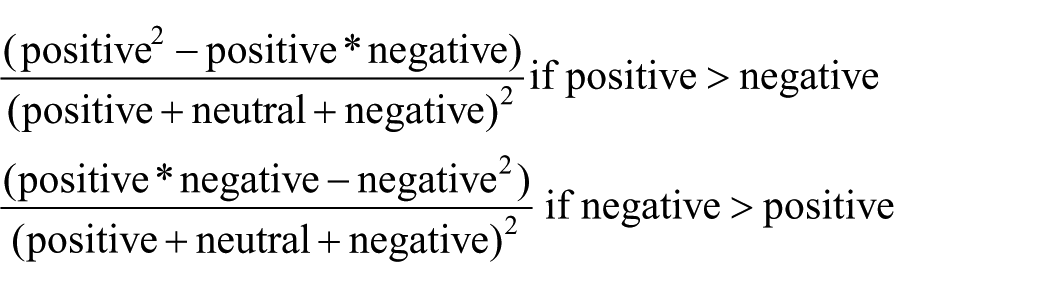
Articles were coded as positive, negative, or neutral by a team of two trained coders; a neutral rating was given when evaluative qualifiers were missing or the positive and negative aspects were in balance. All disagreements within the team were discussed and resolved. An intercoder reliability check was conducted by one of the authors with 10% of randomly selected articles for each concept; results indicated a high level of intercoder agreement (Cohen’s κ = 0.869 for SHV and 0.841 for CSR). Finally, duration of prior commitment to SHV (or duration of prior commitment to CSR, respectively) was developed—for each corporation and year—directly from the dependent variable as the cumulative years of prior commitment.
Control variables
To account for alternative explanations and for a more conservative test of our hypotheses, we included several control variables. We used profitability (return on assets) and leverage (debt to equity ratio) to capture the financial situation of the focal corporation. While profitability is an established indicator for operative performance, its association with SHV, as well as with CSR, is inconclusive. For instance, Zorn (2004) finds that financial performance affects the establishment of a chief financial officer (CFO position, while Fiss and Zajac (2006) find no significant effect on the type of SHV reporting. The evidence for a relationship between social and financial performance is also mixed (e.g. Bansal, 2005; Cormier and Magnan, 2003; Margolis and Walsh, 2003; Orlitzky et al., 2003; for an overview, see Orlitzky, 2008). Leverage, then, was used as an indicator for a corporation’s reliance on capital market financing.
Firm size is an important antecedent of corporate annual reporting behavior. We opted to measure size in terms of staff over sales in order to account for the sociopolitical perspective we employ in this article. Prior research has documented that larger corporations are more visible to external stakeholders and therefore under closer scrutiny than less visible corporations (for a summary of the arguments concerning the effect of size on organization’s responses to institutional complexity, see also Greenwood et al., 2011). However, visibility may not only be tied to firm size but also to media attention. Prior research has argued that visibility of an organization in the media increases responsiveness to institutional pressures. Visibility has been found to affect a firm’s reputation and legitimacy, at the same time making it an object of public attention and scrutiny (e.g. Brown and Deegan, 1998; Deephouse, 1996; Deephouse, 2000; Fombrun and Shanley, 1990; Pollock and Rindova, 2003). For example, Fiss and Zajac (2006) find media visibility a key influencing factor for the likelihood of a company to use a balancing SHV frame. Other empirical studies (e.g. Aerts and Cormier, 2009; Bansal and Clelland, 2004; Branco and Rodrigues, 2008; Cormier et al., 2005) have shown how media exposure enhances the disclosure of social and environmental issues. Following Wartick (1992), we measured visibility of the corporation in the media as the total number of articles mentioning a focal corporation.
We also included a control for firm age, as prior studies suggest that corporations become more inert and develop resistance to change as they age (e.g. Sanders and Tuschke, 2007); we expect this to affect both concepts alike. Research has linked SHV to corporations’ increasing reliance on the stock market for obtaining capital (Davis and Greve, 1997; Dobbin and Zorn, 2005; Fiss and Zajac, 2004, 2006; Fligstein, 2001; Useem, 1993) and theorized it as an instrument directed mainly toward actual or potential shareholders or financial analysts as their “surrogates” or “watchdogs” (e.g. Rao and Sivakumar, 1999; Zuckerman, 2000). We assume that the increasing need to attract international capital is especially important in explaining the rise of SHV. Furthermore, we expect that this effect will be stronger for organizations in central positions, such as those corporations that are regarded as “flagships” on the national stock market in terms of market capitalization and stock exchange turnover; these corporations, in addition, are also under closer scrutiny by international stock market actors than less central corporations are. We gathered data with regard to corporations’ listing on a foreign stock exchange and listing on the Austrian Traded Index (ATX) by examining statistics of the Vienna Stock Exchange and major foreign stock exchanges and by consulting listings issued by capital market information providers.
In addition, several studies have pointed to the role of heterogeneous ownership structures and the corresponding power constellations for an organization’s responses to institutional demands. This should be especially relevant in situations of institutional complexity. Scholars have focused on the role of concentrated ownership for the spread of new governance models in Europe (e.g. Aguilera and Jackson, 2003; Fiss and Zajac, 2004, 2006). Sanders and Tuschke (2007), for instance, found ownership concentration to be negatively associated with stock options. With regard to CSR, Aguilera et al. (2007) have argued that core owners in the European model will push for CSR because they tend to prioritize long-term benefits and therefore include the interests of a broader set of constituents. Cormier et al. (2005), on the other hand, found a negative relation between blockholdings and environmental disclosure in German annual reports. As a high ownership concentration is a common feature of Austrian corporations, we controlled for the existence of a blockholder defined as an individual owner holding more than 25.0% of shares, which according to Austrian law entitles to veto rights in a number of governance issues. Similar to older thus more established corporations, we expect corporations with concentrated ownership to be less inclined to change and to disclose their governance philosophy. In this context, it is important to hold that formerly nationalized—now partly privatized—corporations have played a crucial role in the Austrian economy for decades. During our observation period, a number of these corporations were still directly or indirectly owned by public bodies at federal, state, or municipal level. This implies, via their seat and voice on supervisory boards, considerable influence of politicians and public sector executives on executive appointments and decision-making. We therefore controlled for public sector influence.
Management concepts are reinforced if key actors actively promote them. In particular, the role of professions as carriers of diffusion has been highlighted in various studies (e.g. Greenwood et al., 2002; Sahlin-Andersson and Engwall, 2002). As corporations receive support from external communication experts, PR agencies might play a substantial role in spreading new concepts. We therefore controlled for whether a corporation’s annual report is co-edited by one of the “big players” in Austria’s PR industry. Pressure to comply with multiple and contradictory demands may also be influenced by more general economic cycles (Barley and Kunda, 1992). As we analyzed listed corporations, we used the development of the ATX as a proxy to control for the overall level of economic activity and development. The variable timeline was introduced as a year-count variable to control for a secular trend and an overall shift in the business environment. Finally, with annual reports being issued in the year following the events they report on, there is a natural lag present within the data; we therefore refrained from lagging any variable. All models control for industry dummy variables based on Standard Industrial Classification (SIC) codes.
Analysis
To test our hypotheses, we predicted the likelihood that a corporation proclaims commitment to SHV, CSR, or both, using regression models estimated by maximum likelihood techniques (e.g. Long and Freese, 2006). Our sample resulted in time-series cross-sectional data, with repeated observations on corporations. Consequently, when running logit models in STATA, we clustered data by corporation and used robust variance estimation to take into account within-group dependence and resulting possibilities of heteroscedastic standard errors (Long and Freese, 2006). All variables used in our models were subject to diagnostic procedures, with no issues detected. 6
Results and interpretation
Basic descriptive statistics and correlations for all control and independent variables are provided in Table 2. Table 3 presents the results for the logistic regression models predicting the discursive commitment to SHV or CSR (Models I to III with alternating dependent variables) as well as the joint appearance of both concepts (Model IV with a different dependent variable). Control variables are represented in Model I, while hypotheses on public endorsement (Hypothesis 1a and Hypothesis 1b) are added in Model II. Model III looks at prior commitment to SHV—and ambiguity as a way to neutralize (Hypothesis 2a). Model IV, then, uses the simultaneous commitment to SHV and CSR as the dependent variable for the full set of variables in order to test Hypothesis 2b.
Descriptive statistics.

SD: standard deviation; SHV: shareholder value orientation; CSR: corporate social responsibility.
Regression models.
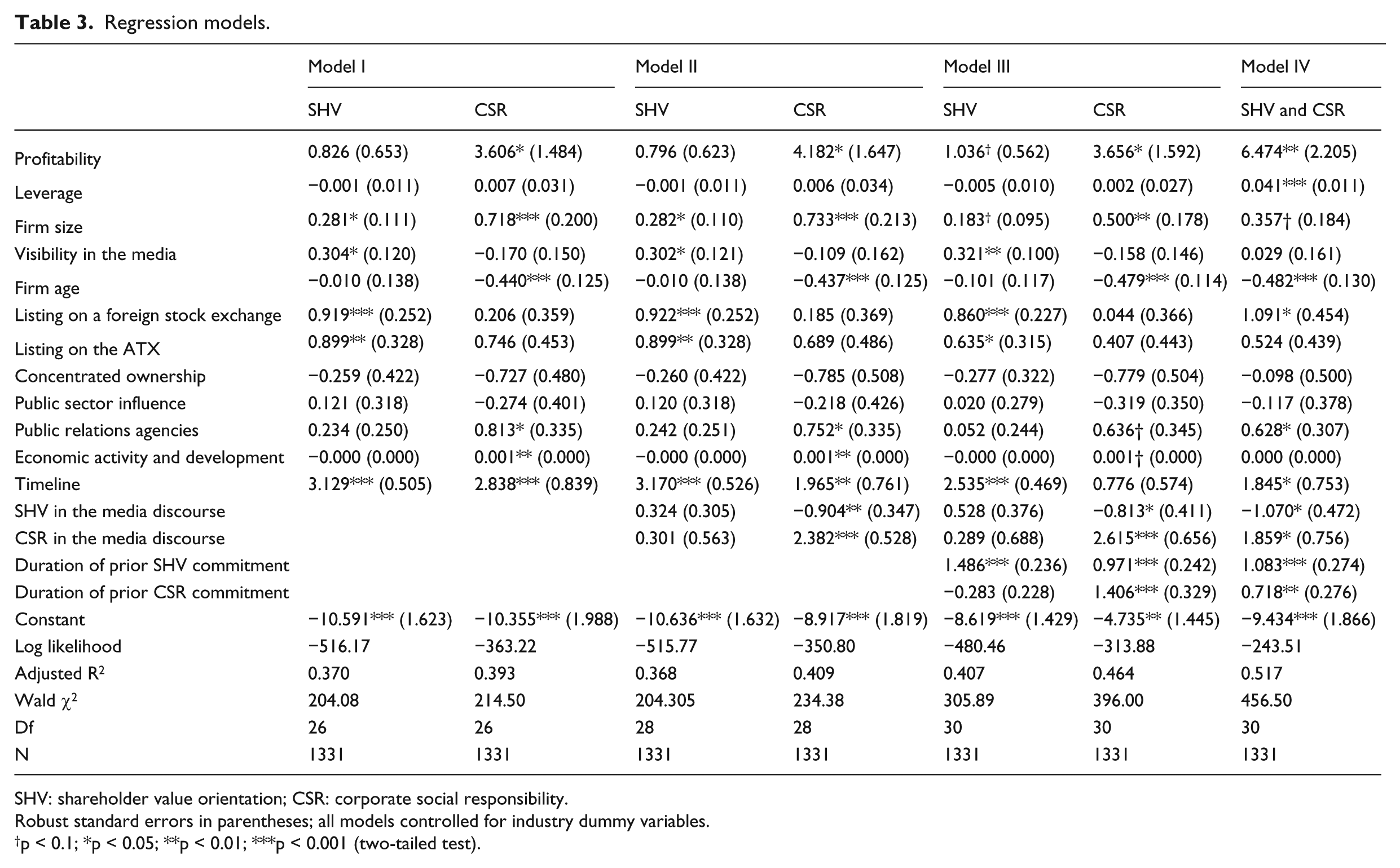
SHV: shareholder value orientation; CSR: corporate social responsibility.
Robust standard errors in parentheses; all models controlled for industry dummy variables.
p < 0.1; *p < 0.05; **p < 0.01; ***p < 0.001 (two-tailed test).
The results for control variables support previous research. As predicted, the role of firm size for both concepts is confirmed throughout all models; moreover, the importance of a linear time trend—already evident in Figure 1—becomes obvious. Profitability is significantly positively associated with CSR (but remains below significance for SHV in most models); for economic activity and development a similar picture emerges, in sum confirming the slack resource availability argument for CSR (e.g. Waddock and Graves, 1997). Listing on a foreign stock exchange and on the ATX are significantly positively associated with SHV commitment, but are not significant predictors for CSR. The role and involvement of PR agencies in communicating CSR activities is also confirmed. In line with previous research, firm age is negatively related to both concepts (although for SHV, the coefficients remain below the significance mark). Interestingly, the visibility of a corporation in the media proves highly relevant for its commitment to SHV, not to CSR commitment. Finally, we find little evidence that leverage (with the exception of the joint appearance of SHV and CSR), concentrated ownership, and public sector influence are associated with either concept.
For the first cluster of hypotheses, we argued that public approval of a concept fuels organizations’ commitment to this concept. We chose media coverage (i.e. volume and tenor) as an indicator of resonance and legitimacy. The proposed role of positive public endorsement (Hypothesis 1a) is supported by our findings on CSR: In line with our assumption, the rising and overwhelmingly favorable media coverage plays a significantly positive role for CSR commitment. Commitment to SHV in annual reports of Austrian corporations, however, does not directly follow media assessment of the concept. We have explained this by the nature of SHV as a concept that is entangled in institutional complexity: Despite negative public endorsement, it is demanded by other powerful audiences, namely the financial market. Thus, instead of abandonment, we proposed the rise of a concept that is able to neutralize through ambiguity (Hypothesis 1b). Our results confirm this assumption: We find that the degree of public contestation of SHV is significantly associated with corporations’ commitment to CSR. 7
The second cluster of hypotheses tests our assumption that ambiguity in the adherence or non-adherence to institutional demands is a viable response to institutional complexity on the organizational level. We proposed that the more ingrained an organization’s association with SHV (i.e. a concept that has become entangled in institutional complexity), the more likely it is that the organization will, in a second wave, resort to creating ambiguity by simultaneously claiming commitment to CSR (i.e. a complexity-neutralizing concept). Model III confirms this assumption. We find that the length of involvement with SHV is positively associated with the likelihood that a firm embraces CSR (Hypothesis 2a). To make our model more robust and account for potential “cut and paste” in annual reports, we control for commitment to CSR in previous years. Hypothesis 2b in Model IV, then, not only tests the association with CSR commitment but directly examines the relationship of previous SHV commitment to current joint commitment to SHV and CSR; consequently, we constructed an alternative dependent variable for this model. In sum, both Models III and IV confirm the contention that the two concepts are interlinked through their entanglement in intra-institutional complexity and therefore develop in tandem. Figure 2 is devoted to this concerted development and shows the increasing percentage of corporations in our sample that announce commitment to both concepts—from 1.9% of all public corporations in 1995 and 7.3% in 2000 to a substantial 56.1% in 2005—compared to those that express commitment to one or the other of the concepts or to neither. While exclusive commitment to CSR is shown to increase only slowly over the years (9.8% in 2005), exclusive commitment to SHV reaches its peak in the last year of positive public endorsement in 2000 (36.4%) and, from then on, decreases (14.6% in 2005) mainly in favor of the concurrent commitment. The percentage of corporations that refrain from reporting either of the concepts in their annual reports dropped from over 90.0% in the early 1990s to 19.5% in 2005.
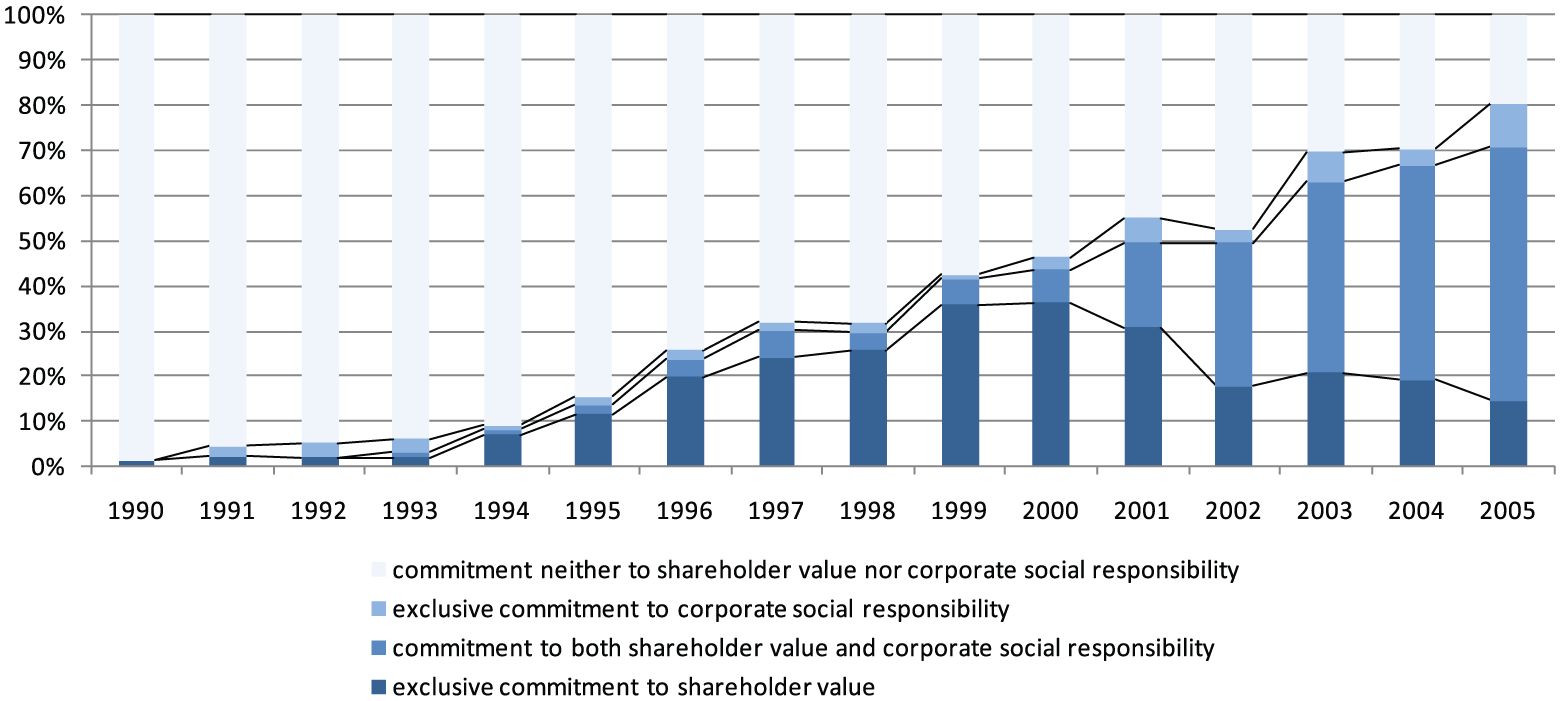
Corporations’ exclusive commitment to one concept versus commitment to both concepts over time.
Discussion and conclusion
For all organizations, with the exception of those operating within “total institutions” (Goffman, 1961), institutional pluralism is the norm. Plurality turns into complexity when institutional demands become incompatible and/or contradictory (Greenwood et al., 2011; Kraatz and Block, 2008). The majority of current research focuses on complexity that arises from the organizations operating in different institutional orders. Following Friedland and Alford’s (1991) and Thornton et al. (2012), society is an inter-institutional system with each of the institutional orders having their own central logic. Although they point to ubiquitous interdependencies and contradictions between and within institutional orders, not enough attention has been paid to the fact that the contents of these orders—“the distinctive categories, beliefs, and motives created by a specific institutional logic” (Friedland and Alford, 1991: 252)—are culturally and historically contingent. Hence, in different cultural contexts, varying Leitideen (Lepsius, 1997) or “substances” (Friedland, 2009) may lie at the heart of, for instance, the institutions of the market economy, the bureaucratic state, or a society organized according to democratic principles.
In our article, we have argued that it is useful to distinguish between inter-institutional and intra-institutional complexity: Antagonistic institutional pressures arise not only through organizations operating across multiple institutional orders, as, for example, in Thornton and Ocasio’s (1999) study, where a market logic replaces a professional logic in higher education publishing; in Greenwood et al.’s (2010) study on the interplay of market, state, and family in Spain; or in studies that analyze how managerialism and market logic come to pervade the public or the health sector (e.g. Meyer and Hammerschmid, 2006; Reay and Hinings, 2005; Ruef and Scott, 1998). Such pressures may equally arise from intra-institutional pluralism when organizations are subject to multiple normative orders or rationalities within one institutional order (e.g. Dunn and Jones, 2010; Fiss and Zajac, 2006; Meyer and Höllerer, 2010). Such intra-institutional complexity is often a result of globalization or other intercultural encounters and entails the collision of divergent Leitideen or substances. Ours is a story of such intra-institutional complexity where different models of the (capitalist) market strive to define which organizing idea, regulatory regime, and norms and values precede in the institutional order of the economy—and where key audiences have divergent expectations toward the organization. Hudson (2008; see also Vergne, 2012) draws on stigma theory to propose courses of action for organizations that, as a whole, suffer from illegitimacy in the eyes of some constituents; we here focus on organizational responses when key audiences come to disagree about the appropriateness of different models and the management concepts that manifest them.
In situations where organizations are expected to adhere to multiple sets of institutionalized expectations, compartmentalization of audiences and tailoring of responses have been suggested as likely strategies (e.g. Kraatz and Block, 2008; Pratt and Foreman, 2000; Sinha et al., 2015). However, our case describes a communication arena in which such compartmentalization is not possible, and organizations have to identify ways to address the divergent expectations simultaneously. We show that in such situations, organizations strive for neutralization and produce multivocality by sending ambiguous signals.
Our empirical study has focused on the consecutive victory marches of SHV and CSR in Austria among publicly listed corporations. In short, we have described the relationship between SHV, a manifestation of the contested liberal model, and CSR, a concept that can be interpreted as both a return of the old corporatist coordinated model and, hence, a counter-concept to SHV, as well as extension or “enlightenment” of the spreading Anglo-American model. We empirically found that the negative public endorsement of SHV after financial scandals and corporate malfeasance did not go hand in hand with the abandonment of SHV but instead with simultaneous CSR commitment. We also demonstrated that the length of engagement with the new Anglo-American market model was positively related to additional commitment to the complexity-neutralizing concept of CSR.
Such findings permit several contributions to existing literature. First and foremost, our study advances research on organizational responses to a specific case of complexity: intra-institutional complexity. With regard to specific responses, we draw attention to ambiguity as a way to neutralize institutional complexity. In their comprehensive framework, Pache and Santos (2010; see also Oliver, 1991) claim that in the event of conflict over goals, organizations are unlikely to employ compromise strategies, and instead opt for avoidance and defiance. Kraatz and Block (2008) propose that organizations may respond in four different ways: For those organizations that can neither resist nor compartmentalize nor become institutions in their own right, reining in the tensions—by balancing the disparate demands, playing constituencies against one another, and/or attempting to find more deeply cooperative solutions to the political and cultural tensions which pluralism creates—is a fourth option. Our findings suggest that in such a particular case of complexity, organizations try to neutralize institutional conflicts by making it difficult for their audiences to categorize their response. At first sight, this seems to run counter to research that has shown how organizations gain legitimacy by placing themselves within established institutional categories or otherwise risk a legitimacy discount as a consequence of confusing audiences with ambiguous category adherence (e.g. Hsu, 2006; Zuckerman, 1999, 2000). As Zuckerman (1999) emphasizes, “defying classification invites penalties” (p. 1399). However, research has also shown that ambiguity increases the latitude for organizations concerning future courses of action and entails greater flexibility when the organization’s decisions are retrospectively interpreted (see, e.g. Brunsson, 1993; Goodrick and Salancik, 1996; Leifer, 1988; Padgett and Ansell, 1993; Pratt and Foreman, 2000; Stark, 1996; Zuckerman et al., 2003).
Greenwood et al. (2011) point out that those organizations that, for various reasons such as smallness or newness, “fly under the institutional radar” have greater discretion over how to respond. Similarly, organizational discretion has been found higher when specificity of logics and the prescriptions derived from them is relatively low (Goodrick and Salancik, 1996). Yet, specificity is not only a characteristic of the logic but also of the response: Unspecific responses also increase organizational discretion. We have found evidence that organizations that are too visible to simply fly under the radar alternatively might put up a discursive “smoke screen” to shield themselves from scrutiny. Kraatz and Block (2008) note that the constituencies of organizations situated in complex contexts are especially attentive to abrupt changes of direction and reprioritizations of values as a sign of lacking authenticity and integrity. In our case, the addition of CSR and, consequently, the simultaneous commitment to both SHV and CSR ensures that all constituencies will find the vocabularies and accounts that appeal to them. It obfuscates which model of market is being endorsed or whether the existence of a fundamental conflict on the level of goals is denied or has been overcome (see also Fiss and Zajac, 2006; Meyer and Höllerer, 2010). This is consistent with Stark’s (2001) finding that “to gain room for maneuver, actors court and even create ambiguity. They measure in multiple units, they speak in many tongues” (p. 99). It equally corresponds with Leifer’s (1988) notion that ambiguity “ex ante, leaves open a range of roles, and ex-post, does not prove inconsistent with any role that might be claimed later” (p. 868). Let us be clear: We are not arguing that ambiguity with regard to category adherence conveys legitimacy, but rather that it may avoid illegitimacy. Thus, in order to maneuver through a multiplicity of conflicting institutional demands and to enlarge their scope of action in times when uncertainty about which belief system will come to prevail is high, organizations may opt for the “high-plurality response” (Pratt and Foreman, 2000): They consequently strive for categorical ambiguity, rather than specificity.
However, although ambiguity increases organizational discretion and limits external control, the difficulties of managing ambiguity often outweigh its advantages (e.g. Hsu, 2006; Zuckerman et al., 2003). The main risk involved is that the organization fails to convince either of its audiences and is penalized for lack of integrity. Constituencies trust with hesitation, as Kraatz and Block (2008) aptly point out: They are particularly concerned about the organization’s reliability, and on the lookout for “second-order cues” that signal opportunistic or arbitrary acts. The obfuscation created by contradicting vocabularies bears risk of being read as such a cue. As a consequence, organizations regularly employ discursive devices to bridge and bring together the different rationales and worldviews they are exposed to from their environment—that is, they search for rhetorical tools “to reframe issues in institutionally consistent terms” (Miller and Guthrie, 2007: 2; see also Suddaby and Greenwood, 2005). We expect organizations in situations of institutional complexity to seize, when available, the opportunity to discursively reconcile disparate demands by resorting to an “umbrella” or “meta-concept” that evokes the image of commensurability of interests and harmony of values—such as “corporate governance.” In their analysis of corporate governance as instantiation of vocabularies of organizing, Ocasio and Joseph (2005; see also Mills, 1940) highlight that the early usage of corporate governance did indeed refer to broader public policy concerns with regard to the role of corporations in society and how corporations were accountable to various constituencies. It was only later that it shifted to become a referent to concerns with corporate control. “This,” Ocasio and Joseph assert (2005), “does not imply that earlier references to CSR disappeared entirely. Instead, we find the usage is at times ambiguous and multivocal, with the term having multiple meanings and referents” (p. 172).
Our study also entails central implications for research on multiwave diffusion (e.g. Compagni et al., 2015; Shipilov et al., 2010)—an area that has not yet received a lot of scholarly attention. Previous studies on the diffusion of concepts, policies, forms, and practices have stressed various factors that mediate how quickly an innovation spreads within a field. Most prior studies, however, investigated the diffusion of a single concept or illustrated how concepts from competing logics replace each other in concert with the values and beliefs that underlie them. However, institutional logics cannot be reduced to a single manifestation; instead, they commonly organize a set of concepts around the particular substance or guiding idea (Friedland, 2009; Thornton et al., 2012). In similar fashion, Lepsius (1997) holds that each manifestation of a Leitidee is only an “exemplar” and never able to exhaustively represent the signified. Such a multiplicity of concepts that evoke the same belief system develops both synchronically, that is, in form of multiple concepts at a time, and diachronically, that is, in several waves. We agree with Shipilov et al. (2010) that it is crucial to take into consideration the interdependencies among different concepts that spread within an organizational field. In their article, they study the multiwave diffusion of concepts that represent the same institutional logic and, in this sense, clearly complement each other. We extend their research by showing that not only concepts embodying the same belief system diffuse via path dependent mechanisms. Such interlocking mechanisms need equally to be in place for concepts that invoke disparate rationales, or for concepts—such as CSR in our case—that are inherently ambiguous when organizations facing conflicting institutional demands attempt to neutralize prior adoption decision. Thus, paradoxically, in our specific case of intra-institutional complexity, the two concepts are complementary because they are potentially contradictory.
Our empirical study of organizational responses to conflicting institutional demands also contributes to theory building insofar as we emphasize that management concepts do not diffuse in isolation, but regularly come in interconnected “bundles” and are embedded in entire “ecologies” of management ideas (Höllerer et al., 2014; see also Wruk et al., 2013). It is therefore crucial to take the history and development of the entire bundle, as well as the record of prior field- and organizational-level adoption into account in order to fully understand why and how organizations respond to evolving institutional complexity.
Like any study, this one also has its limitations, its findings interpreted under certain boundary conditions, and some questions left unanswered. At the same time, this provides ample opportunity for future scholarly work and inquiry. First and foremost, whether our findings are specific to a particular type of complexity (i.e. to instances of intra-institutional complexity and to situations in which key audiences show mutually exclusive expectations and cannot be compartmentalized in organizational responses) or whether they can be extended to other instances of (inter-)institutional complexity, is something that must be addressed by additional research. Moreover, we have discussed a case in which the first-wave concept clearly diffused over “contested terrain.” There may be different mechanisms at work when institutional demands encounter no, or low degrees of, contestation. Equally, issues that receive less public attention may have different trajectories.
In this article, we have particularly emphasized the role of ambiguity. CSR is an excellent example in this respect because it scores high on multivocal inscription (Ferraro et al., 2015), with commentators widely agreeing that there is of yet no consensus as to what it actually means in practice. As Campbell (2007) notes, “the point is that socially responsible corporate behavior may mean different things in different places to different people and at different times” (p. 950). It will be important to develop measures of ambiguity and to investigate whether there is a “minimum” level of ambiguity for a second-wave concept to unfold neutralizing qualities or whether there are limits to ambiguity beyond which multivocality becomes a burden and “backfires” in terms of legitimacy. The latter, obviously, is also important in terms of managerial implications.
Intra-institutional tensions and the use of ambiguity in organizational responses will be more likely when institutionalized models, management ideas and concepts, or organizations forms and practices travel across cultural contexts. This provides an interesting link to future studies in the domain of international business. For instance, Kostova and Roth (2002) have noted that subsidiaries of multinational corporations commonly operate under conditions of “institutional duality”: Such organizations are, on the one hand, pressured by their headquarters to adopt a particular set of practices derived from the home base of a firm; on the other hand, they are expected by their host contexts to follow local practices (see also Morgan and Kristensen, 2006; Walgenbach et al., in press). In their organizational responses, these organizations then face the question of which set of institutional demands (which often come from within the same institutional order) they should adhere to—or how to strategically cater for both.
Responding to conflicting demands from relevant audiences is therefore an important practical challenge for many business organizations and their decision makers. Our study shows that ambiguity may be a powerful means of balancing disparate institutional demands, gaining time to find out how ongoing debates may evolve, or keeping future lines of action open (e.g. Padgett and Powell, 2012). However, ambiguity may prove to be a difficult strategy if internal or external audiences demand that the organizations clearly positions itself, or if the complexity leads to internal tensions as to what the organization’s strategic goals are, or how corporate policies are to be interpreted. Thus, ambiguity bears the risk of confusing audiences with regard to corporations’ values and priorities—or it can become simply too obvious to be credible.
We assume that our conceptual insights are valid for other cultural contexts and different discursive bundles of management concepts. However, this ultimately remains an empirical question. Future studies should examine whether an extrapolation to other contexts and concepts is possible. Nonetheless, in this article, we have argued that the processes we analyze are embedded in, and shaped by, wider cultural fields, and that understanding these contexts is indispensable. For our diagnosis of intra-institutional complexity, it was, for instance, essential that we looked at a corporatist context with a coordinated model of market economy, where stakeholder orientation and societal responsibility of business actors had been firmly institutionalized. From the perspective of a liberal market economy, the spread of CSR may be driven by the liberal logic or by logics from other institutional orders (for instance, by a community logic; see Glynn and Raffaelli, 2013). For a coordinated market economy context, however, the diffusion of “explicit” CSR does not resemble the increase in relevance of non-economic values within the economic sphere; rather, as has been observed by several scholars in the field, it comes as a side effect of a general push toward a more liberal agenda in corporate policies (Höllerer, 2013; Jackson and Apostolakou, 2010; Kinderman, 2009, 2012).
Another limitation concerns the methodology of this study: Drawing on the genre of annual reports has a number of advantages, but also entails some restrictions. For instance, although annual reports are seen as instruments of self-presentation through formal communication (e.g. Fiss and Zajac, 2004), we treat the proclamation of commitment as a discrete phenomenon, neglecting the examination of variation, extent, and actual implementation, as well as material consequences. Accordingly, questions with regard to the decoupling of announcement from implementation (e.g. Westphal and Zajac, 1994, 2001) cannot be answered on this basis. Yet even if the commitment is intended to be merely rhetoric, there will be substantial effects, as various audiences take this at face value and come to expect a certain type of behavior. Tilcsik’s (2010) longitudinal study shows how decoupling serves the goals of powerful organizational actors, but may show reverse effects as internal conditions change. Focusing on lower hierarchical ranks, Turco (2012) has shown that decoupling becomes challenging when employees start to identify more with their company’s external talk than with the decoupled practices they are expected to perform. Hence, Fiss and Zajac (2006) note that “the amount of time that an organization is able to ‘talk the talk’ but not ‘walk the walk’ may be limited not only because outsiders will enforce full compliance, but also because insiders will experience an identity transformation” (p. 1188). Finally, in this article, we have focused on communication genres that do not allow for a tailoring of accounts. It might be fruitful for future research to examine whether corporations, if in fact able to segment their audiences, equally use appeasing means or embracing concepts. And, of course, it will be interesting to investigate how various stakeholder groups interpret these statements, maybe by employing a more qualitative methodology.
In closing, we would like to return to our point of departure and to our initial question: How do organizations deal with intra-institutional complexity? We have argued that, for most organizations, operating under institutional complexity is, in one way or another, the norm, and that their responses are much more multifaceted than is often assumed—including strategies of ambiguity and neutralization techniques. Institutional logics, and different belief systems within them, coexist in all modern societies, and their specific underlying constellation is manifested in a specific configuration of concepts and practices that we can observe on the surface level. In order to fully understand how these constellations and resulting configurations evolve, we must, however, have a better grasp of their interdependencies.
Footnotes
Declaration of Conflicting Interests
The authors declared no potential conflicts of interest with respect to the research, authorship, and/or publication of this article.
Funding
The authors disclosed receipt of the following financial support for the research, authorship, and/or publication of this article: Austrian Science Fund (FWF): I 635-G17.