




Abstract
Several research papers have assessed the long-term benefits of pre-primary education in terms of academic performance and labor market outcomes. This study analyzes data obtained from the Programme for International Student Assessment (PISA) to estimate the effects of preschool enrollment of Thai students on producing long-term benefits in their academic performance. Results show that a mother’s educational attainment has a significant impact on the decision to enroll her child in preschool. Regarding the long-term benefits, our findings show that pre-primary education bears a significant and positive association with cognitive skills in all three areas of literacy tested under PISA, namely, reading, mathematics, and sciences. Regarding the economic status of students’ families, results indicate that the benefits of pre-primary education in cognitive skill improvement tend to be greatest in the case of students from low- to middle-income families. Evidence supports the promotion of long-term benefits of pre-primary education and, thus, the universal early childhood education policy. In particular, support should be given to childhood education programmes that specifically target children from disadvantaged groups and low-income households.
Introduction
Development in an education system has a positive impact on economic growth. To achieve this, improvements in terms of both quality and quantity are crucial. 1 For a long time, Thailand has been a nation that emphasizes educational investment and reform of its educational system. This can be proven by noting the continuing increase in the education budget from 3.8 percent of gross domestic product (GDP) in 2007 to 5.8 percent in 2012. The portion of the national budget allocated for education in Thailand is no less than it is in other countries.
Despite the relatively large portion of the budget allotted to education, education indicators tend to gauge success only in terms of “quantity,” as measured by the increase in the Gross Enrollment Ratio of all school grades. However, quality indicators, including the standard national test called the “Ordinary National Education Test (O-NET)” 2 and international tests such as the Programme for International Student Assessment (PISA), reveal that Thai students, on average, actually have low, declining scores and poorer performance compared to those of students of other countries with similar economic and social conditions. This finding serves as a warning of the potential low quality of human resources, which will constrain Thailand’s competitiveness in the future.
However, public and academic institutions have at least agreed that the quality of the nation’s human resources needs to be able to keep pace with a rapidly changing world and sophisticated labor market. It is thus essential to promote life-long learning, which means that education no longer needs to be provided only through additional formal system. Rather, it should be open and widely accessible. Furthermore, formal education should include specially focused areas at all educational levels from elementary to higher education.
Research in education economics, especially in Thailand, tends to focus on compulsory and higher education, while research on “pre-primary education” or early childhood education receives much less attention, especially in developing countries. Nevertheless, early childhood education is as important as other levels of education. Several studies claim that early childhood education indeed plays the most important role among all levels of education. In recognition of the importance of early childhood education, the World Bank (2012), for example, suggested a five-step model for improving skills and productivity through life-long learning or, in other words, the STEP framework—“Skill Toward Employment and Productivity.” The World Bank (2012) underlined the importance of the first step, called “Getting Children Off to the Right Start,” by suggesting that human skills should be developed from early childhood, from birth to 5 years of age. Moreover, human-capital theory explains that skills that a student acquires in their classes in their pre-primary education have a positive impact on development of those skills in the future. In other words, the skills we have today are actually built upon skills acquired in the past (Heckman, 2006). 3
Pre-primary education refers to educational services for children aged 0–5 years, which, according to medical science, is the most important period for brain development since the human brain expands and learns new things the quickest during this time (Heckman, 2006). In terms of personality, academic performance, and creativity skill, which are significant factors in determining productivity when they enter labor force in the future, children at this age, who receive proper care and nutrition in a conducive environment, tend to develop more rapidly than children who do not have such advantages.
A study by Heckman (2006) concluded that pre-primary education consistently yields the highest annual return on education, both private return and social return, compared to other levels of education. Besides, the annual return of education is found to gradually decrease at the higher levels of education programme. Thus, in addition to serving as an important factor in human development, pre-primary education also has an impact on social and economic development of a country in the long run.
In the context of Thailand, there are three types of pre-primary education depending on the local conditions: preschool classes, kindergartens, and childcare centers. Private schools usually offer a 3-year kindergarten programme. Two-year kindergarten and 1-year preschool classes are available at public primary schools in rural areas. In 2009, to emphasize the importance of pre-primary education (and other levels of education), the Thai government implemented the “15-Year Free Education with Quality” policy providing support to students to help them complete 15 years of compulsory education, instead of only 12 years. The government’s policy on preschool education has strong direction to expand and improve the provision of preschool education in state schools in rural areas on a nationwide scale in order to give better education opportunities for economically disadvantaged children.
The policy aims to support education from the pre-primary level (instead of merely the primary level, as had been the case previously) up to upper-secondary or higher vocational levels. Under this scheme, tuition fees, textbooks, accessories, student uniforms, and extra-curricular activities are to be funded by the government. To further explain, full funding is to be provided to first-year pre-primary students in public schools, while students in private schools will receive a 10 percent increase in funding, covering 70 percent of their educational expenses, in order to help reduce the financial burden of their parents/guardians. This “15-Year Free Education with Quality” policy reflects the adoption of the Universal Early Childhood Education Programme that was implemented in the first semester of the academic year 2009. The higher gross enrollment rate points to the success of the programme in which pre-primary enrollment shows its rising from 73.8 percent in 2012 to 77.1 percent in 2012.
According to the Office of the Permanent Secretary of the Ministry of Education, in the academic year 2011, there were a total of 2.7 million pre-primary students in Thailand, 1.8 million of which were informal school systems and 900,000 of which were involved in non-formal education. Moreover, 67 percent of student’s informal education was enrolled in public schools. In pre-primary education, the enrollment ratio in public schools fluctuates with socioeconomic factors. In Bangkok, for example, only 40 percent of pre-primary students were enrolled in public schools with the remaining 60 percent in private schools. Upcountry, however, up to 70 percent were enrolled in public schools.
It was also reported that the majority of pre-primary education students (90 percent) were enrolled in schools under the supervision of the Ministry of Education, 4 whereas the other 10 percent were enrolled in schools under the supervision of the Ministry of the Interior’s Department of Local Administration (7.7 percent), Bangkok Metropolitan Administration (1.7 percent), Border Patrol Police (0.3 percent), and the Department of Social Development and Welfare’s Ministry of Social Development and Human Security (0.3 percent).
Although the government provides funding for pre-primary education tuition fees, the ratio of the budget for education-related expenses for individual pre-primary students is still lower than the budget for other levels of education in all aspects. Some expenses are thus needed to be covered by students’ families. Furthermore, pre-primary education is not yet included in compulsory education, so the decision whether to enroll a child into a pre-primary education programme is entirely up to the parents. Consequently, low-income families are likely to choose not to have their children enroll at the pre-primary level. Gross enrollment ratio at the pre-primary level was approximately 77.1 percent in 2012 and was lower than the gross enrollment ratio of the primary level which is accessible to all children.
Therefore, this aims to provide analyses and estimations of the impacts of socioeconomic factors on the enrollment possibilities of Thai children. The estimations also include long-term benefits of pre-primary education in terms of cognitive skill improvement. Apart from predicting long-term benefits, the results achieved will be used to make recommendations regarding the development of Thailand’s pre-primary education system.
This article is divided into five main parts. The second part deals with existing empirical studies that have investigated the long-term benefits of pre-primary education. The third part estimates the accessibility to pre-primary education in Thailand. The fourth part analyzes the long-term benefits of pre-primary education on cognitive skill improvement. Conclusion and policy recommendations are presented in the fifth part.
Long-term benefits of pre-primary education
The economic literature focusing on other countries has tended to analyze the cost–benefits of preschool education in an attempt to determine the benefits of investing in education at this level. Findings have shown that the investment in pre-primary makes sense as it yields higher long-term benefits than investment in other educational levels. Heckman (2006) found that the annual individual gain from investment in each education level in life-long education (i.e. from pre-primary education to working age) tends to have an inverse relationship with higher levels of education, implying that the marginal benefit of mental and cognitive development is the highest at the pre-primary level and tends to decrease in higher levels of education.
The estimated benefits include individual benefits (a student’s readiness to continue to the primary level), benefits in cognitive skill and non-cognitive skill development, long-term physical and mental health, and social skills, all of which have an impact on educational achievement and labor market outcomes of that child in the future. 5 Pre-primary education not only enhances basic cognitive skills such as reading and writing but also encourages self-control, curiosity, diligence, and perseverance. These qualities are crucial for both study and employment in the future. 6
There are other studies that attempt to estimate the benefits of another category of early childhood education, namely, “special programmes.” These programmes focus on creating opportunities for children from economically disadvantaged families or from disadvantaged groups. The three most well-known programmes that were referred to in cost–benefit analysis studies (MacEwan, 2013) include (1) the Perry Preschool Project, 7 (2) the Carolina Abecedarian Project, 8 and (3) the Chicago Child-Parent Center Programme. 9 These programmes were intended to create educational opportunities for disadvantaged children up to 5 years of age. The most distinctive points of these programmes are that data collected from a treatment group were used to compare with a control group, and then the data were collected again when the subjects reached their teenage and/or working ages.
Results revealed that children who participated in the special programmes tended to do better in their studies, have lower rates of pre-mature pregnancy, have lower rates of crime involvement, and have occupations with higher incomes than did children who did not participate in the programmes. 10 Moreover, the aforementioned studies have all concluded that, apart from the direct benefits enjoyed by the children when they grow up, efficient preschool education also helps prevent the country from having to spend larger amounts of the national budget on addressing crime problems or public health issues. Thus, in the long run, efficient early childhood education helps produce quality human capital for a country’s economic and social development.
The studies mentioned above focused mainly on the analysis of the data gained from the programme participants. This method suggested that the analysis did not include all control variables, for example, school-level variables and geographical variables. As a consequence, results of the analysis might lack credibility and might not be nationally representative. In response to this limitation, a study conducted by Magnuson et al. (2004) used nationally representative data to investigate the impact of pre-primary education enrollment of students in the United States. Their findings revealed that attending pre-primary education has a significant positive relationship with academic performance in reading and mathematics. 11 Moreover, the Organisation for Economic Co-operation and Development (OECD, 2011) studied the data gained from PISA in its member countries and discovered that students (15 years of age) who completed over 1 year of preschool education tended to score 54 points higher in the PISA reading section than students who did not.
As noted above, not only does pre-primary education provide individual benefits, but it also tends to generate social benefits and external benefits in terms of direct effects of educational development and skill improvement in the long term, which will enhance productivity at work in the future. Pre-primary education also stimulates the economy through promoting higher household spending on pre-primary education and creating more jobs for teaching personnel as well as employment opportunities for parents to better participate in labor market, and then generating more tax revenue. Furthermore, with high-quality pre-primary education, the government will need to spend less to address crime and related social issues (Leibowitz, 1996).
The majority of economic research on this topic concludes that promotion of high-quality pre-primary education leads to long-term benefits and is a high-yield investment. For instance, to determine the long-term benefits of the programme, Reynolds et al. (2011) investigated the assessment of the Chicago Early Childhood Programme. They found that the annual short-term yield of the programme was as high as 18 percent, while the long-term yield of participants was 11 times higher than their initial investment.
Likewise, Karoly et al. (2005) studied the results and economic benefits of the Perry Preschool Project and found that preschool education could help reduce child abuse and accidents, lower exam failures, and reduce grade repetition. Pre-primary education was also found to increase opportunities for children to continue their higher education either in vocational or in higher education, to create employment opportunities or job promotion for parents, and reduce the crime rate, teen pregnancy, and drug abuse. All these benefits can help save money so that it can be spend more productively on public health, education, and social welfare. Additionally, more income tax can be collected as parents will have more time to work. The study asserts that for every US$1 spent on the development of pre-primary education, the long-term yield could be as high as US$16 (16 times higher than investment).
In addition to studies conducted in the United States, the analysis of long-term benefits of pre-primary education received attention from researchers in many other countries. For example, Raine et al. (2003) studied children in Mauritius and discovered that preschool education seemed to reduce crime in the country. Berlinski et al. (2006) studied samples in Latin America and found that pre-primary education tended to reduce school dropout rates, increase class attendance, and lead to higher test scores.
In addition, several studies conducted in England delivered similar findings. A study by Berlinski et al. (2008) asserted that preschool enrollment of a child younger than 5 years could help improve the cognitive skill of that child at the age of 16 years and lead to better employment opportunities at the age of 33 years. Moreover, it was reported that children who had completed pre-primary education were likely to have an income approximately 3 percent higher than that of those who did not (Goodman and Sianesi, 2005; Melhuish et al., 2008).
Similarly, Hogden (2007) looked at students in New Zealand and found that pre-primary education contributed to higher cognitive skills of students at the age of 16 years. Studies conducted in England and New Zealand asserted that pre-primary education in the two countries had an even greater positive effect than it did in the United States.
The recognition that arises from the research cited above is that for Thailand the analysis of the benefits (especially long-term benefits) of pre-primary education is not widely available as it is in other countries. Specifically, there is no statistical analysis of Thailand’s nationally representative data. 12
The accessibility of pre-primary education in Thailand
This study uses secondary nationally representative data obtained from PISA Thailand organized by the OECD. PISA aims to assess how students in the member countries have prepared for living and participating in society. Thailand is one of the countries receiving such assessment. 13 PISA focuses on testing students in three subject areas: reading literacy, mathematical literacy, and scientific literacy. The samples are categorized into two main groups to represent all the students in Thailand. The first group involves randomly selected students aged 15 years in all schools throughout the country, and the second consists of randomly selected students aged 15 years living in different geographical areas. This method is to ensure that the data cover all areas and that the students have an equal chance to be selected. The samples include 230 schools and around 6000 students of different socioeconomic status. 14 The survey includes 21 percent of total sample at village level, 20 percent of small community level, 29 percent of large community level, 22 percent of municipal level, and 8 percent of large city level. The survey contains similar amount of schools in all sizes.
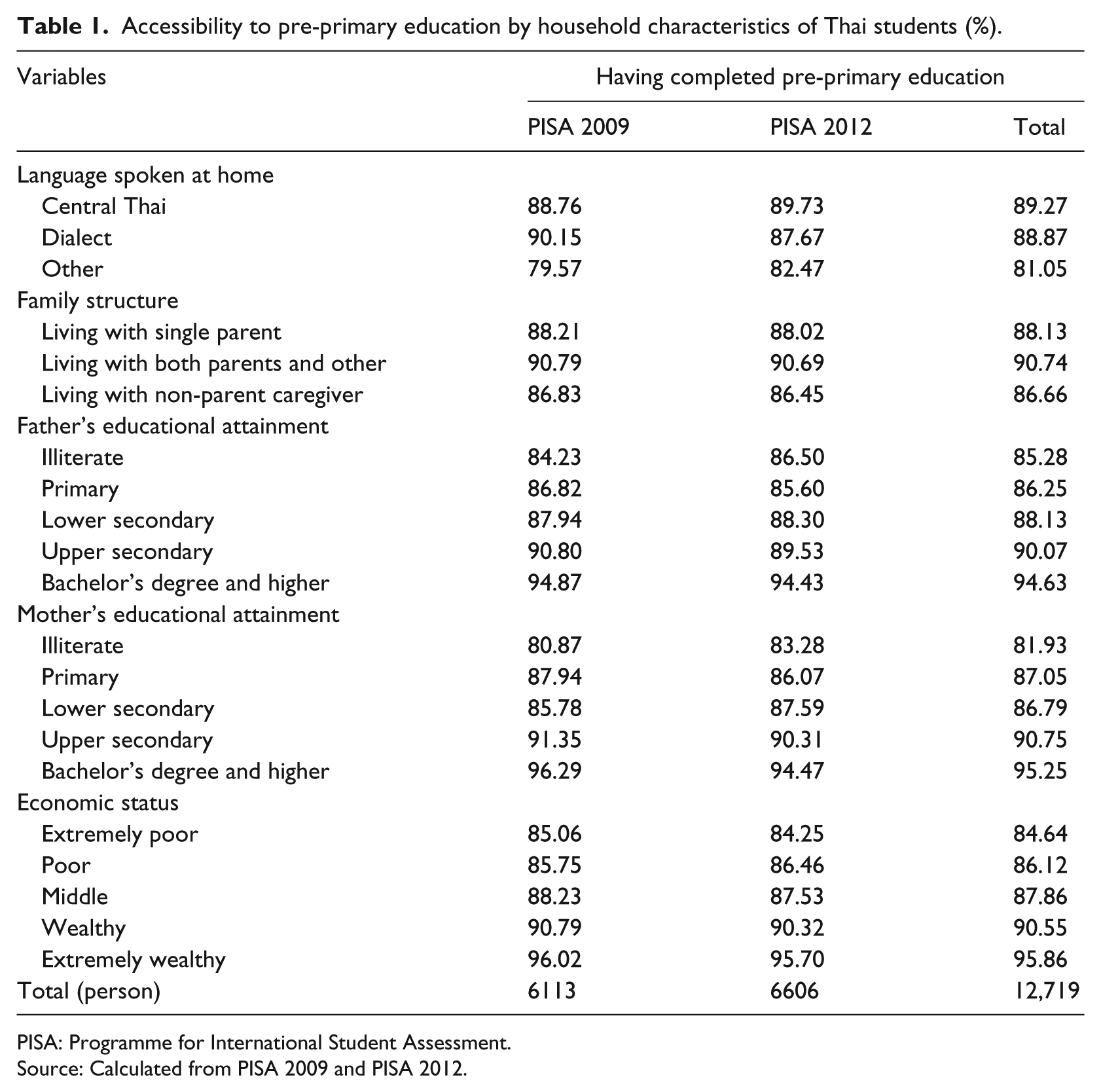
This article examines the student survey data that were part of PISA Thailand in 2009 and 2012 since only the survey of these 2 years contained a question that asked whether a student completed pre-primary education. Fundamental statistical analysis of the data showed that, of all 12,699 students sampled, 11,211 students (88%) had completed pre-primary education. Descriptive statistics of the data from PISA 2009 and PISA 2012 showed that 95–96 percent of students from high-income households had completed pre-primary education, whereas only 84–85 percent of pupils from low-income households had done so (Table 1). 15
Accessibility to pre-primary education by household characteristics of Thai students (%).
PISA: Programme for International Student Assessment.
Source: Calculated from PISA 2009 and PISA 2012.
Furthermore, grouping children according to their parents’ educational attainment indicated that students living with parents who completed higher education tended to be more likely to enroll in pre-primary education. Up to 94.63 percent (95.25%) of children whose fathers (mothers) had at least a bachelor’s degree tended to complete preschool. In addition, the ratio of pre-primary education enrollment of students who lived with both parents was higher than that of children who lived with either only a father or a mother or with non-parent caregivers.
Therefore, it is rational to conclude that accessibility to pre-primary education is greatly dependent on socioeconomic factors of children’s families. However, in the PISA survey, questions concerning early childhood education ask only whether a student had completed pre-primary education. Since it is essential to estimate accessibility or probability in quantitative terms, we applied econometric models to control all influential factors. In this study, a bivariate probit model was used to estimate the probability of completing preschool education. The value of the independent variable equals 1 if a student completed preschool education and 0 if a student did not complete preschool education.
Since the data of independent variables were obtained from samples of children aged 15 years and the dependent variable was gained from a question asking about information in the past (whether a student had completed preschool education), the estimation of probit equation encountered a limitation in selecting independent variables. Hence, it is necessary to identify and select socioeconomic factors of households that had not changed during the previous 10 years, such as language spoken at home, family structures, and educational attainment of parents.
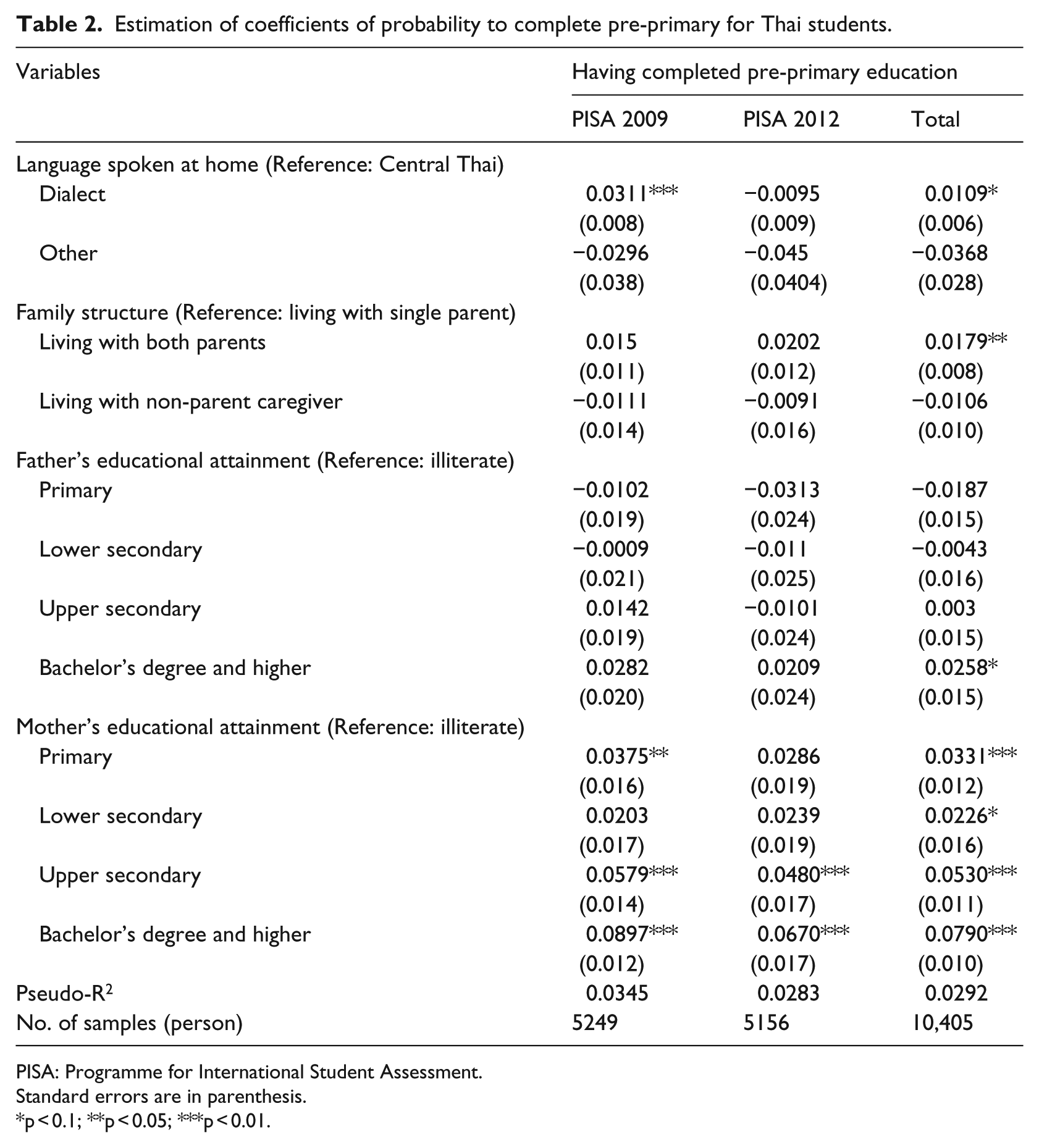
The estimation result suggested that a student living with both parents had a higher probability (by 1.8%) of completing preschool than did a child living with single parent (Table 2). Children in intact families tend to have more supports from family to pursue their pre-primary education. Another factor is that intact families tend to have higher household income than separated family. Higher income of a family is a key factor supporting children to pre-primary education.
Estimation of coefficients of probability to complete pre-primary for Thai students.
PISA: Programme for International Student Assessment.
Standard errors are in parenthesis.
p < 0.1; **p < 0.05; ***p < 0.01.
In addition, results indicate a significantly positive impact of the educational attainment of parents on students’ probability of attending preschool. Students living with parents who had at least a bachelor’s degree tended to have a higher probability of attending preschool than did students living with undereducated parents by 2.6 percent for those with fathers with bachelor’s degrees and 7.9 percent for those with mother’s with bachelor’s degrees compared to fathers or mothers who have no education. An interesting discovery was that mothers’ educational attainment was found to have a higher impact on students’ probability of attending preschool than did fathers’ educational attainment. Each level higher of mothers’ educational attainment had a significant positive impact on the probability of attending preschool for children living with such mothers. Moreover, mothers who had an undergraduate degree, high-school diploma, lower secondary school diploma, or primary school diploma tended to be more likely to enroll their children in preschool than were mothers who had no education (by, respectively, 7.9%, 5.3%, 2.26%, and 3.31%).
This indicates that mothers play an important role in child rearing and education, especially in enrolling their children in preschool. Furthermore, the probability of students attending preschool tended to be higher provided that their fathers were highly educated and that they lived with both parents. 16
Long-term benefits of pre-primary education for academic performance
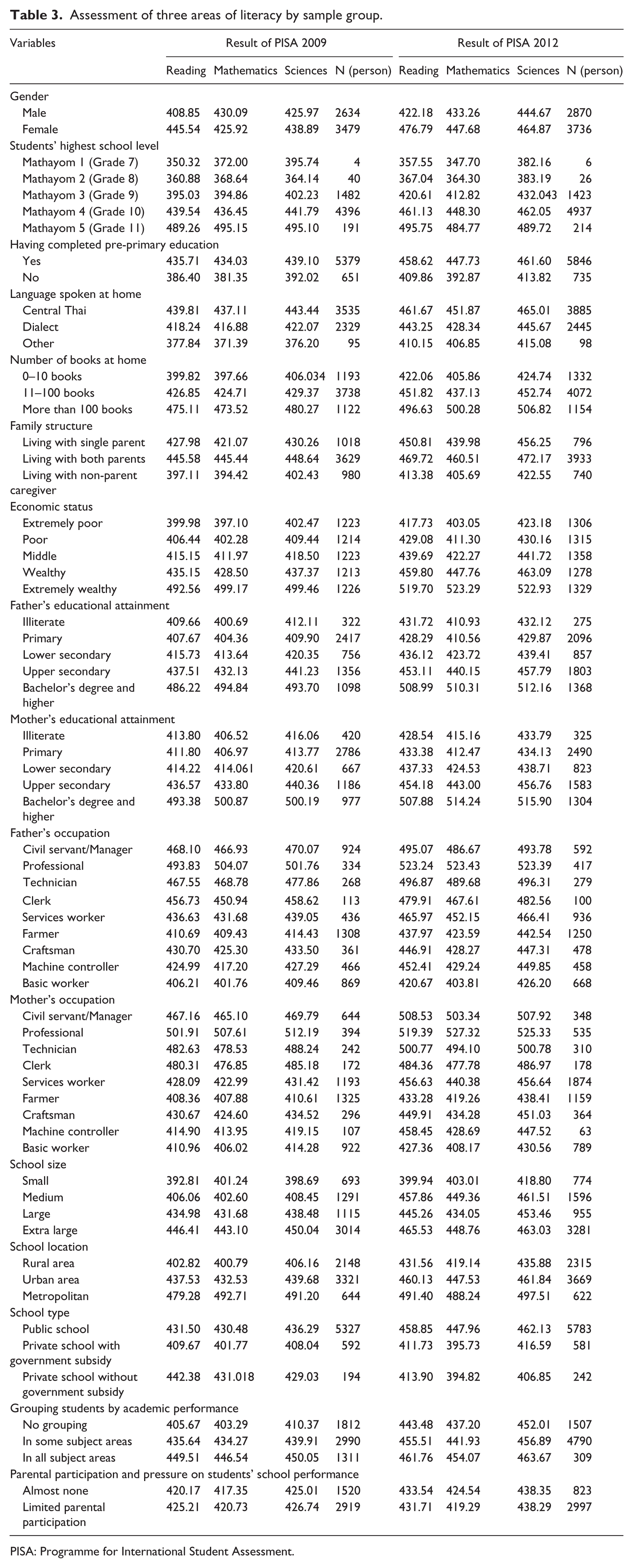
Data gained from PISA 2009 and 2012 were used to measure reading, mathematical, and scientific literacy 17 and including comparisons of individual student, family, and school factors. The results, shown in Table 3, indicate that, on average, female students had higher scores than did male students in all three categories. Students speaking Central Thai in their families were more likely to have higher scores than were students speaking other dialects in their families. Apart from this, it was suggested that the number of books in a household had a positive association with students’ test scores.
Assessment of three areas of literacy by sample group.
PISA: Programme for International Student Assessment.
Regarding family factors, students living with both parents tended to have higher scores than those living only with either a father or a mother or non-parent caregivers. It was also reported that students from high-income families seemed to fare better than those from low-income families. Moreover, pupils living with highly educated parents tended to have higher test scores than students living with undereducated parents.
For school factors, test scores were found to be affected by school size. Students in larger schools were likely to score higher than those from smaller schools. This finding was especially relevant for schools in big cities, where students in public schools seemed to do better than those in private schools.
Concerning the impact of having completed pre-primary education on academic performance, it was found that students who completed pre-primary education tended to score higher than students who did not. On average, students with preschool education scored higher in mathematics, sciences, and reading than did students without completing pre-primary education by 54, 51, and 49 points, respectively.
However, differences in academic performance may be varied by several other factors, including the student family school and curriculum implementation. It is possible that there was bias in measuring performance differences of students with and without pre-primary education.
Thus, for the analysis in this section, we applied an econometrics model controlling for variables described below: 18
Student characteristics: gender, grade, language spoken at home, and number of books at home (Student);
Family characteristics: presence of parents, economic status of family, educational attainment of parents, and occupations of parents (Family);
School characteristics: school size, location, supervising institution, quality and number of teachers, quality assurance, transparency, parents’ participation, independence, and number of minutes of mathematics, sciences, and reading classes per week (School).
The model can be written here

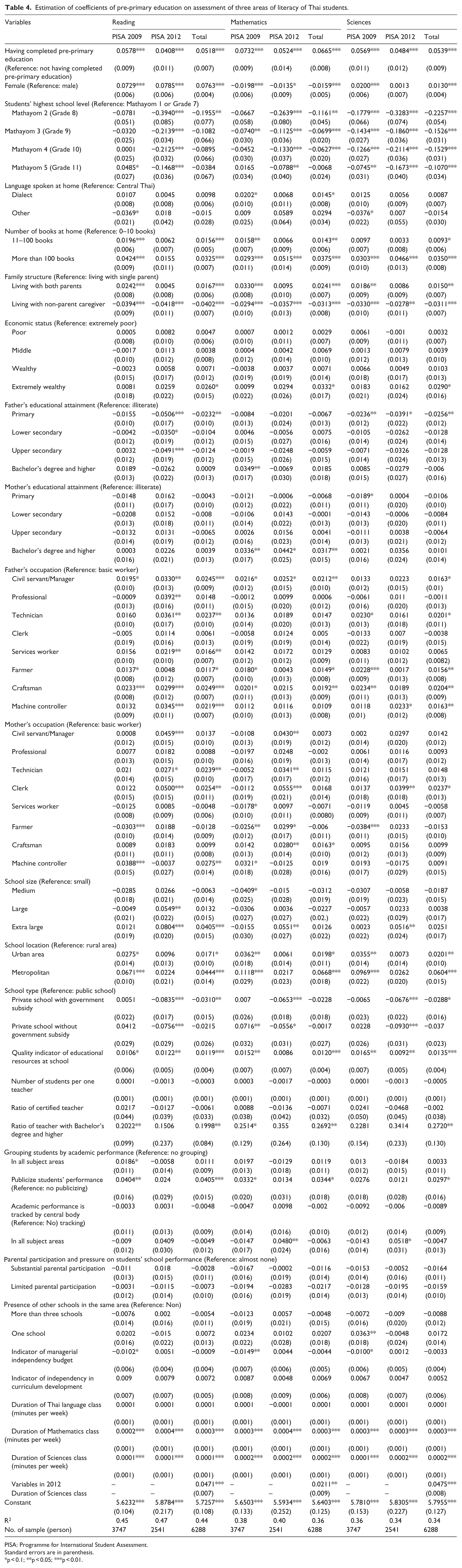
Table 4 presents an econometric model with log-function equation. An analysis indicates that socioeconomic factors of students had a significant impact on their academic performance in the below functional form. For instance, with regard to gender, results show that female students tended to do better in reading and scientific literacy than did male students, by 5.2 and 5.4 percent, respectively. On the other hand, male students seemed to score significantly higher in mathematical literacy than did female students, by 1.6 percent. 19 It was also found that the more books available in the home, the higher the score of a student; a student whose house contained more than 100 books tended (by 3.25%–3.75%) to have higher reading, mathematical, and scientific literacy than did those students who had less than 10 books at home. This discovery supports the concept that reading books significantly improves academic performance in all areas.
Estimation of coefficients of pre-primary education on assessment of three areas of literacy of Thai students.
PISA: Programme for International Student Assessment.
Standard errors are in parenthesis.
p < 0.1; **p < 0.05; ***p < 0.01.
Regarding family characteristics, students living with both parents tended to score higher by approximately 1.5–2.4 percent than those living with either a single parent. Likewise, students from high-income families tended to have significantly higher levels of literacy (by about 2.6%–3.3%), especially mathematical literacy, than did students from low-income families. Other than this, educational attainment, occupations, and skills of parents were also found to have a positive influence on students’ academic performance.
As for school characteristics, results suggest that school size is positively associated with students’ cognitive skill development. Students in large schools were found to have higher scores (by around 4%–5%) than those of students in small schools. Moreover, students in schools located in urban areas were likely to have significantly higher scores in reading, mathematics, and sciences (by 4.4%, 6.7%, and 6%, respectively) than those of students in schools located in rural areas.
Results also suggest that students in public schools had, on average, significantly higher scores in all areas than did students in private schools (both funded and not funded by the government). Quality of learning resources and teachers was also found to have an impact on students’ academic performance.
As indicated by the results, school supply-side characteristics had a stronger impact on cognitive skills (including reading, mathematics, and sciences) than demand characteristics, which included students’ socioeconomic factors. Therefore, improvement in school supply-side factors, such as educational resources, teachers, and curriculum development, should profoundly contribute to students’ academic performance. In addition, student and family characteristics, including living in a low-income household, living in a rural area, lacking available learning resources in a house (books) and at school, living with parents who were not highly educated, and living with a single parent were all the factors that had significant impacts on students’ low academic performance or cognitive skills development.
Regarding long-term benefits of pre-primary education on academic performance, we found that students with preschool education tended to have significantly higher academic performance (indicative of cognitive skills), especially in mathematics, when they reached the age of 15 years. To illustrate, students who had completed pre-primary education had significantly higher scores in reading (by 5.2%), mathematics (by 5.4%), and sciences (by 6.7%) than those without pre-primary education. 20
The results arrived at in this study are consistent with research in other countries showing that pre-primary education not only contributes to skill building for primary education but also yields long-term benefits in terms of cognitive skills. Thus, a policy to promote and provide funding for universal pre-primary education makes good sense as it contributes to the development of students’ cognitive skills, which will in turn increase their educational opportunities when they reach higher levels of education, that is, upper-secondary education/vocational education or higher education. In the long run, high-quality pre-primary education will eventually increase employment opportunities for students in the future. What is more, higher cognitive skills also cause positive externality and thus contribute to economic and social development as well as a nation’s competitiveness in the long run.
Additionally, categorizing students by the socioeconomic status of their families shows that students from low- to middle-income families tended to benefit the most from pre-primary education. Students (15 years of age) living in low- to middle-income households tended to have higher scores in reading (by 5.5%–6.3%), sciences (by 6.7%), and mathematics (by 7%–8.5%) than either of those students living in very low or very high-income households (Table 5 and Figure 1). Since low-income household have less probability to access high quality of pre-primary education, having chance to attend pre-primary education should therefore generate their “marginal benefit” by showing increasing score of their PISA score than students from richer households.
Estimation result of pre-primary education on students’ cognitive skill by economic status of their families.

Standard errors are in parenthesis. Variables of student characteristics, socioeconomic status of families, and school characteristics are included in model.
p < 0.1; **p < 0.05; ***p < 0.01.

Percentage of score in each area increased by having completed pre-primary education by economic status of households.
Based on these results, this study recommends that apart from universal pre-primary education, which has been in place since 2009, the Thai government should promote special programmes that target students from low-income families or disadvantaged groups. Other than the fact that targeting programmes are the most suitable for helping improve the cognitive skills of those students, these programmes are also another efficient way to help reduce drastic education, social, and economic inequalities.
Conclusion and policy recommendations
Studies in the economics of early childhood education have paid great attention to cost–benefit analysis of pre-primary education. Several studies assert that investment in preschool education yields long-term benefits and is thus a high-yield investment when comparing the benefits with expenses or costs. This study aims to analyze the impact of social and economic factors on pre-primary education of Thai students. We also aim to estimate the long-term benefits in terms of cognitive skills improvement of students in the future. We found that a mother’s educational attainment had a significant impact on the probability of preschool enrollment of a child. Our analysis found that mothers who had a bachelor’s degree or higher, a high-school diploma, a lower secondary school diploma, or even a primary school diploma were more likely to enroll their children in preschool than were mothers who did not have any formal education (by, respectively, 7.9%, 5.3%, 2.26%, and 3.31%). Mother’s education was found to have a significant role in child rearing and education. Moreover, students living with both parents who were highly educated tended to have a higher probability of being enrolled in preschool than those living with only one parent.
The investigation of the long-term benefits of pre-primary education on students’ cognitive skills revealed that students who had completed preschool education tended to have significantly higher scores in reading (by 5.2%), sciences (by 5.4%), and mathematics (by 6.7%). The results arrived at in this study are in accordance with other existing studies in other countries. Results also indicate that pre-primary education not only contributes to skill building for Thai students as preparation for primary education but also yields long-term benefits in cognitive skills development. With regard to socioeconomic status, it was found that students from low- to middle-income families tended to benefit the most in the long term from completing a pre-primary education.
This study analyzes the long-term benefits of pre-primary education only in terms of development of cognitive skills and does not examine other possible benefits, such as the fostering of emotional intelligence and providing greater opportunities for study at higher levels of education as well as better employment opportunities. However, it does stress the importance of investing in pre-primary education for the sake of enhancing human capital, which in turn contributes to economic and social development and competitiveness of the country in the long run. Furthermore, we suggest that the Thai government promotes special education for target groups, such as children from impoverished families, children living in rural areas, and left-behind children, so that they have better opportunities to receive pre-primary education. 21 High-quality special programmes can help improve skills of those children and can also serve as efficient long-term solutions for reducing social, economic, and education inequality in Thailand. 22
Regarding implementation, how pre-primary education services should be provided can be adjusted to fit the different contexts of each community. To illustrate, the government can designate the local administration organization as the services provider. Or it can cooperate with non-profit organizations to help provide various types of education services, for example, out-of-school learning and recruiting teaching staff. In addition, cooperation with private organizations can provide need-based specific services, for example, centers for preschool education of children of working parents.
This study has several limitations. Unlike studies in other countries, this study lacked panel data for each individual. In order to obtain such panel data, a survey would need to be carried out over the long term and collect data on children at both the pre-primary education level and again when they reach higher levels of education (e.g. college) and then yet again when they reach working age and start their own families. In addition, data on problem-solving skills and other life skills need to be gathered. Collecting data extensively in this manner would contribute to greater accuracy in determining the specific benefits of pre-primary education, which would in turn help researchers to deliver more effective recommendations for education policy. As the suggested survey programme is long term, a substantial investment in funding, time, and human resources (programme officers) would be required. Therefore, it is advisable that the government establish close collaboration with relevant universities or research institutes for this purpose.
Footnotes
Acknowledgements
The author would like to thank Siwat Tiemtad and Thananut Singhathep for their able research assistance.
Declaration of Conflicting Interests
The author(s) declared no potential conflicts of interest with respect to the research, authorship, and/or publication of this article.
Funding
The author(s) disclosed receipt of the following financial support for the research, authorship, and/or publication of this article: The author would like to thank the International College of National Institute of Development Administration (ICO NIDA) for its financial support.