



Abstract
The objective is to analyse the progress of a 2-year-olds classroom in a school in Cantabria (Spain) towards an inclusive participation project. The research, carried out over three school years, has been based on the qualitative paradigm and ethnographic approach. A variety of research strategies have been employed: participant observation; discussion groups; informal conversations; ambulation and child conferencing using image elicitation. We have analysed the transformation of the educational approach in a classroom for 2-year-olds into a pedagogy of inclusive participation. These transformation process have deployed through three practitioner enquiry cycles with different focuses: materials and proposals; curriculum as progetazzione; decision-making opportunities and child participation. These transformation processes have also allowed educators to move towards a critical ecology of the profession perspective. Finally, the teachers who enquired into their educational reality by listening to children, embarded on a process of transformation towards more participatory education.
Introduction
We present the main results of an ethnographic-oriented research project carried out over 3 years in a school in Cantabria (Spain) that analyses how a classroom with 2-year-old children aligns its educational proposal with democracy and inclusive participation. Early childhood education in our context is recognised as a distinct stage with educational value but of a non-compulsory nature for children from birth to 6 years of age. It is organised in two cycles (0–3 years and 3–6 years) with obvious differences in relation to: organisation, material conditions, and professional composition and training. While the second cycle (3–6 years) is located in primary schools, the first cycle takes place in institutions with various purposes (childcare being the most common), a plurality of management modes (although the private model dominates), and heterogeneous forms of financing (mostly by the families). In Cantabria, since 2004, classrooms for 2-year-olds have been implemented in primary schools. These classrooms host 18 children, supervised by a teacher (university degree) and an educational technician (professional training).
The classroom for 2-year-olds of our research is located in a public school for children from 2 to 12 years old in an industrial city. It is characterised by receiving students from diverse cultural (Arabic, Chinese, Moldovan, Romanian, Russian, Portuguese and Ukrainian), economic and social diversity and because it is a preferred school for children with motor difficulties.
Conceptual framework
Our central purpose is to learn how to move towards an inclusive participation pedagogy in a classroom with children of 2-years-old. We advocate the need to go beyond rhetoric (changing terms but not practices) or symbolic actions (punctual and superficial), to reflect on the challenges of transforming schools into spaces of democracy and inclusive participation that permeate the day-to-day life of the classroom and the school.
We draw on extensive experience with the critical model of ‘student voice’ (Ceballos and Susinos, 2022; Susinos, 2020) and the key principles described by the Portuguese Associação Crianca (Oliveira-Formosinho and Araújo, 2018; Oliveira-Formosinho and Formosinho, 2013) to define what we understand by an inclusive participation pedagogy.
The first key principle (being-feeling) refers to the pedagogy of identities based on the recognition and respect for diversity (Oliveira-Formosinho and Araújo, 2018). The development of identity is anaffective, cognitive (awareness of oneself and the ‘other’ as different people) and active (awareness of doing and deciding in various contexts and in time) need (Thomson, 2007). At the same time, this diversity forms the collective voice (Christensen and Prout, 2002), although this is not homogeneous for the whole young children group (Blaisdell et al., 2019; Ceballos and Susinos, 2022; Fielding and Moss, 2011; Murray, 2019; Wall et al., 2019).
The key principle of belonging-participation focuses on the pedagogy of relationships and the development of linkages. Belonging refers to the degree to which individuals feel accepted, respected, connected, included and supported by others. A sense of belonging is not a static state but rather a dynamic process that can be experienced in various and multiple ways (Shaw et al., 2021). Inclusive participation is conceived as an orderly process that makes it possible to employ the capacity of children (agency) to influence, intervene and provoke changes in the common space (Susinos, 2020). This makes it essential to abandon the adult-centrism of daily life in order to move towards a pedagogy based on dialogue, listening and recognition. Genuine listening must be accompanied by action that is coherent and respectful of children, their needs and meanings (Bourke and Loveridge, 2018; Fielding, 2011; Lundy, 2007). Consequently, the proposals and scenarios must be configured on the basis of the children’s preferences, offering them decision-making possibilities. We define the proposals as learning experiences of a different nature with common characteristics:
- They are based on free play
- Promote autonomy
- Children make decisions about their play: what to play, with whom, what materials, etc.
- They are oriented towards manipulation, experimentation and creation.
- Adults do not intervene, they only accompany.
The third key principle, languages-communication, defines a pedagogy of language based on experience, reflection and communication. Children are able to share their ideas, experiences and meanings through multiple languages: body language, crying, facial expressions, noises and movements (Ceballos and Susinos, 2022; Ceballos et al., 2016; Clark and Moss, 2011). The challenge is to employ genuine listening strategies and processes to access these forms of communication. The use of diverse strategies does not guarantee participation if the listening is not genuine, if adults reject children’s ideas or accommodate our purposes. This is an especially pressing challenge with non-verbal children (Wall, 2017) where adult mediation is constant (Spyrou, 2011).
The last of the key principles, the narration of the experience, refers to the pedagogy of meanings; the interpretation of experiences and the meaning they acquire for the subjects. Sharing these various meanings favours bringing different narratives about education to the community and challenging them. In this process of construction of narratives, pedagogical documentation is a valuable strategy for building a shared narrative that combines the adult and children’s perspective.
These key principles give coherence to a pedagogical project that is intended to be participatory and inclusive, but it is also necessary to pay careful attention to the decision-making that will put these ideas into practice on a day-to-day life in schools. This is the aim of this research, which investigates how a classroom of 2-year-old gives shape to an inclusive participation project focusing on day-to-day activities and the decision-making about the educational environment (spaces, materials and times), relationships, projects and activities.
Methodology
We adopted a qualitative paradigm with an ethnographic orientation to learn about and understand the experiences that took place in 2-year-old classroom (Beach, 2011; Hammersley, 2018). It was characterised by a three-year period of fieldwork, (2017-2020), in which the researcher spent full days with the participants. Each year, the classroom host eighteen 2-year-old children, a teacher and an educational technician. While educators and researcher were involved throughout the three school years, a new group of children joined each year. The researcher has a teaching background in early childhood education and a broad experience in the promotion of participatory processes. Likewise, one academic year before, she conducted a brief study with 3- and 4-year olds in the same school. This provided the researcher with extensive knowledge about the organisation and culture of the school. The fieldwork took place in the natural context of the school, on a day-to-day basis, and we were embedded in the actions and processes taking place in order to study what people did and said (Hammersley, 2006, 2018) and to be able to account of the cultural processes taking place (Beach, 2011). Although the research context was the classroom, we also spent time in other spaces, such as the playground and the entrances and exits. This allowed us to adopt a holistic approach.
The fieldwork involved the following phases:
Access to the field. The researcher negotiated her presence with the management team. The entry into the classroom began with a meeting with the educators in which we presented the purpose of the work, the conditions of access, how it would be carried out, and we requested informed consent.
Understand the pedagogical project. We undertook a process of enquiry that sought to understand the educational project from the different perspectives of the people involved. The researcher attended the school for an extended period of observation (several sessions over 2 months) and took notes, photograph and video records. In addition, she held informal conversations with the different agents. The diverse information gathered takes the form of the feedback reports, which record critical incidents (Douglas et al., 2009). Discussion groups were formed with the educators to discuss these reports with the aim of promoting reflection and defining the issue for improvement (Figure 1).
Process of genuine listening to young children. The diversity of strategies allowed us to access children’s ideas and experiences through multiple languages (body language, facial expressions, noises and movements) (Clark and Moss, 2011), something particularly relevant for young children whose oral language is developing. Listening processes take time if we are to properly understand children’s preferences, meanings and experiences. Participation is not inherent in the strategies, it depends on how they are put into practice and how power is exercised. We must assume a critical and reflexive positioning for ‘authentic listening’ with regard to the listening process and the relationships and interactions (Ceballos and Susinos, 2022; Wall, 2017).
Improvement project phase. The process of genuine listening allowed us to get deeper into the ideas, needs and proposals of children, but a participatory process is reduced to a figurative experience if it is not accompanied by action (Lundy, 2007; Palaiologou, 2014). Moving to action represents a major challenge, involving many uncertainties and revisions so that the design of the proposals converges with the preferences and needs of the children.
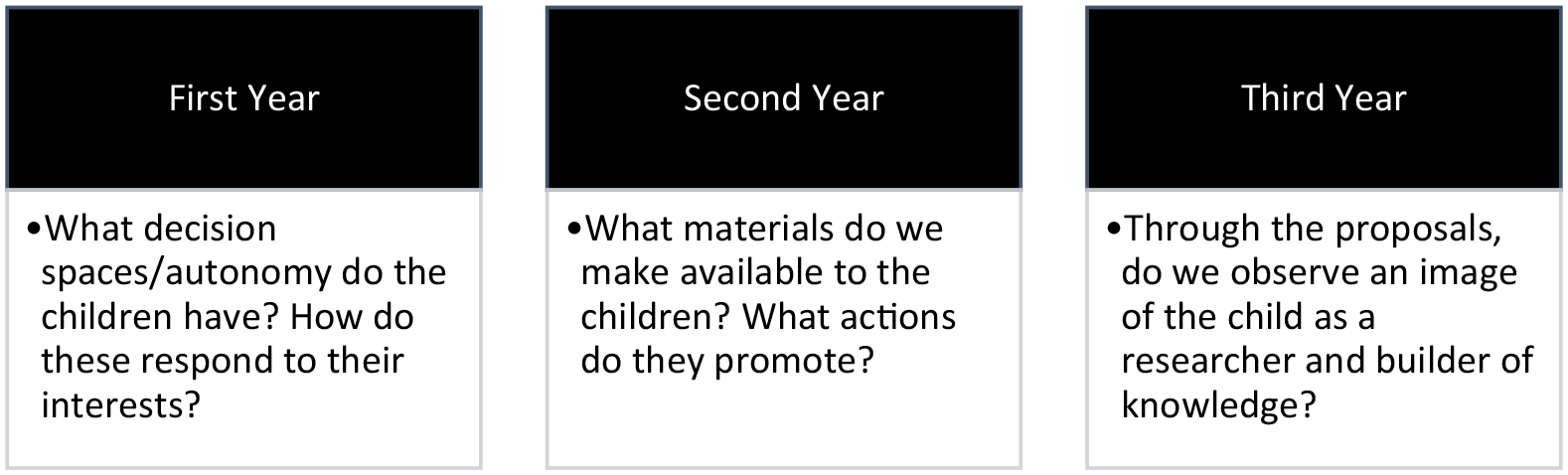
Question-guide of the projects.
The process of making the familiar strange to promote reflection and to reconstruct our ideas and promote changes (Beach and Vigo-Arrazola, 2021), prompted us to adopt different strategies (Figure 2):
Participant observation was carried out by the researcher and the educators. The researcher adopted this strategy throughout the entire process, taking notes, audio recordings and images (photography and video) from the first contact (Raggl, 2018). This information was transformed into in-depth descriptions, questions and impressions in a multimodal research diary. Observation is a central strategy in ethnography (Hammersley, 2018) but it also has a strong tradition in early childhood education as a tool for understanding children’s needs and interests (Clark and Moss, 2011). For this, educators assumed the role of observers at specific moments. In this way, detailed observations allowed us to understand the children’s perceptions and the relationships they experienced (Degotardi, 2011), which is particularly relevant with children whose oral language is still developing.
The focus groups with the educators sought to explore the ideas that emerged from the observations, questioning them and adding details, and offered spaces for deliberative decision-making about the improvement project or the design of the proposals.
Informal conversations with adults took place throughout the process and also allowed for deeper and more precise details to be elicited. Informal conversations with children took place during interaction in small groups and in natural play-time (Blaisdell et al., 2019). There were two premises: not to intervene in the play to modify their action (avoid telling them what to do) and not to ask confirmative questions. These dialogues acquired the complexity of the different levels of development of children’s oral language.
Child conferencing using image elicitation is a particular informal structured interview (Clark and Moss, 2011; Formosinho and Araújo, 2006). The dialogue began with the presentation of photographs about the different activities carried out in the classroom. Educators frequently use them to explain what carried out during the day or the week (Mannay, 2017). Their main strengths were their everyday use and familiarity.
Classroom deambulation. Children led the walks around the classroom, deciding where to go, what to point out and what to explain to educators (Clark, 2010). Adults accompanied them, documented and encouraged the conversation. The conversations were recorded in audio and photographs were taken of the items pointed out by the children.

Strategies employed to listen to the children.
These strategies produced a large volume of multimodal data (written, audio, video and photographs) that were categorised in a recursive process (Miles and Huberman, 1994) (Table 1). These categories resulted from a process of organising fragments of the information that shared patterns (inductive process) that were completed in accordance with the theoretical framework (deductive process). The process of analysing the ideas and experiences of younger children, especially those who do not have a developed oral language, requires an ethical and reflective process of data (Ceballos and Susinos, 2022). Following the proposal of Sommer et al. (2013), we assume an empathetic imagination towards the child’s actions, responses and expressions.
Categories of analysis.

Results
We present the main results for each year, focusing on how improvement proposals promoted a pedagogical project based on inclusive participation.
First year: What decision space do children have in the proposals?
The dialogue about feedback report led us to focus our attention on what characterised the activities that were carried out (Figure 3). These are defined by being task-based (topic-based) and having few opportunities for children to choose. All the children carried out the same activity at the same time and this was defined by the educators (teacher-based). Children did not have the opportunity to decide when to start it or under what conditions.

Feedback report. First year Topic 1.
In the artistic activity described (artistic expression with a single colour), it might seem that the children have the opportunity to choose the colour with to paint with.
However, the choice of colour, a single one, is determined by an activity (the choice of emotion) without any link to the art activity. This previous choice limited the options for artistic expression, since they did not have the option to choose the colour, to change it, or to choose their classmates. A participatory proposal must allow children to iniciate their own play and activity, choosing from diverse options, and to select with whom to play. For this to happen, it is essential that the spaces are defined and the materials are accessible to children at all times so that they can select any resource and use it in the way they want (Ephgrave, 2020).
Similarly, it is important to pay attention to the interaction that takes place between educators and children. Figure 4 shows two critical incidents in this regard. L. decided to leave the table of the assigned colour and change to another space where he shared conversations and glances with A. The teacher, noticing the change, insistently returned L. to his initial position. The protagonist of the other incident is K., who observes the actions of her classmates for long periods of time. Teacher interpreted that K. is not involved in the activity because he was not drawing, and she invited his to join in by moving the arm that is holding the brush. This upsets K., which was noticeable in his gesture and also in the sound he makes (not words).

Feedback report. First year Topic 2.
Through their gestures, sounds and actions, the children expressed their preferences and also their discomfort when they were interrupted by adult’ intervention. Careful observation would have allowed the teacher to understand that L. needed to change materials and start a shared activity with A., because learning and play take place in relation to others. Or that K. was involved in the activity, not by action but by observation, breaking an educational norm that associates involvement with action.
The dialogues related to these critical incidents brought to light the need to reflect on the possibilities of choice (of activity, material, play and relationships) for the children in the proposals, giving rise to a number of questions:
What decision space do children have in the proposal?
Can children make decisions about materials or plays?
Can they decide when to start, change or end an activity?
Can they choose the classmates they want to be with?
What level of involvement in the activity do children have?
These initial reflections were followed by the process of authentic listening to the children through child conferencing using image elicitation, informal dialogues with the children and the observation of the teachers and the researcher.
We found that two activities stood out in the children’s choices: activities geared towards manipulation and experimentation (experimentation trays and installations) and those related to movement (Figure 5). Although the play with sounds was not a majority choice, we decided to incorporate it so that all the children could see their preferences included. We did so on the basis that the exclusively exercise of the majority is not an adequate system for respecting the children’s rights.

Feedback report. First year Topic 3.
In this framework, several meetings took place to design two activities that responded to the preferences expressed by the children. The first was a motor story in which the technician led the activity and the children imitated her gestures, movements and actions (Figure 6).
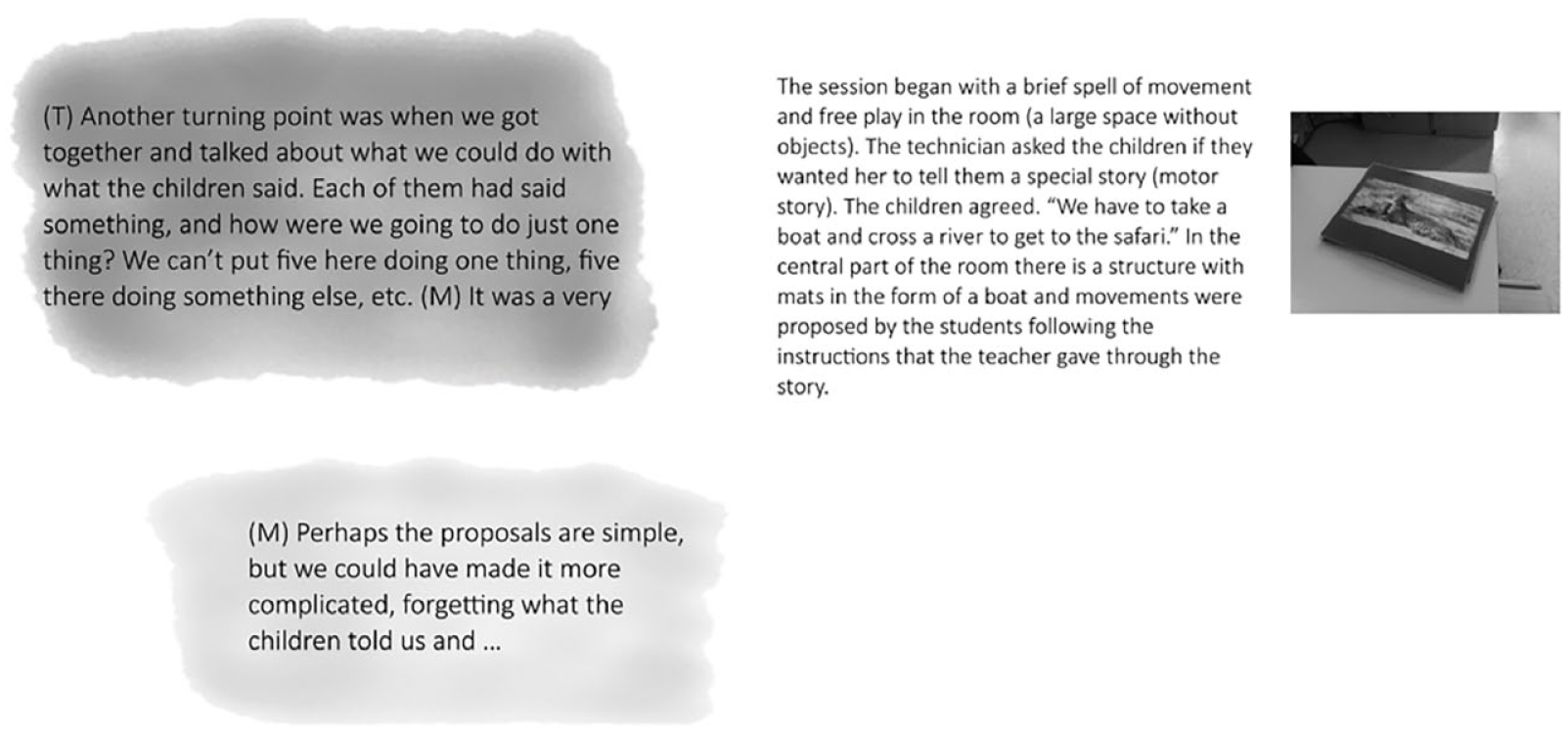
Motor story.
This activity provided a response to the children’s demand for movement. However, it was a directed activity, with only a single possibility, in which the adult defined the action and the children reproduced what they were shown without the possibility of choice.
The second activity was an experimentation with and manipulation of sound. In addition to the objects made by the adults, the children found materials and resources that they could manipulate and combine as they wished (Figure 7). This proposal responded to the interests of the children (manipulation and sound) but it was also presented as an open activity, with possibilities of choice for the children.

Experimentation with sounds.
Comparing the characteristics of the two proposals invites us to reflect on how children’s opportunities for choice are defined by the environments and materials available. This implies making resources available and accessible to children at all times since children should be able to select any resource and use it in any way they want. When an environment is organised in this way, children have the power to influence their activity and learning (Ephgrave, 2020).
Second year: What materials and resources are made available to the children? Are their different interests considered?
The researcher returned to the classroom for an extended period of time to find out more about the pedagogical approach employed and meet the new group of children. Educators were the same as in the previous year, but the group of children was new. Observation and informal conversations contributed to the new feedback report.
During the dialogue about the activities carried out (Figure 8), the technician stated: (T) The materials . . . When someone says, “Play” . . . well, I play, but what at? With all the elaborate material that we have . . . (M) The thing is, we don’t know what materials and objects they like (open materials, structured objects, etc.). (T) Some materials are elaborate and are more aimed at what interests us and others offer more freedom. We have to ask about that. (Educators discussion group)

Feedback report. Second year Topic 1.
The educators carried out a period of observation over 3 weeks and focused on identifying the materials that were available to children.
The dialogue about these materials was intended to broaden this initial restricted view.
What resources are made available to children (single-use, open-ended)? What characteristics do they have? Which ones do they prefer?
Are they adapted to the different types of development of the children?
Are they presented in an aesthetic pleasing way?
Are they accessible?
What games do these materials promote? Are there several materials that allow the same actions to be carried out?
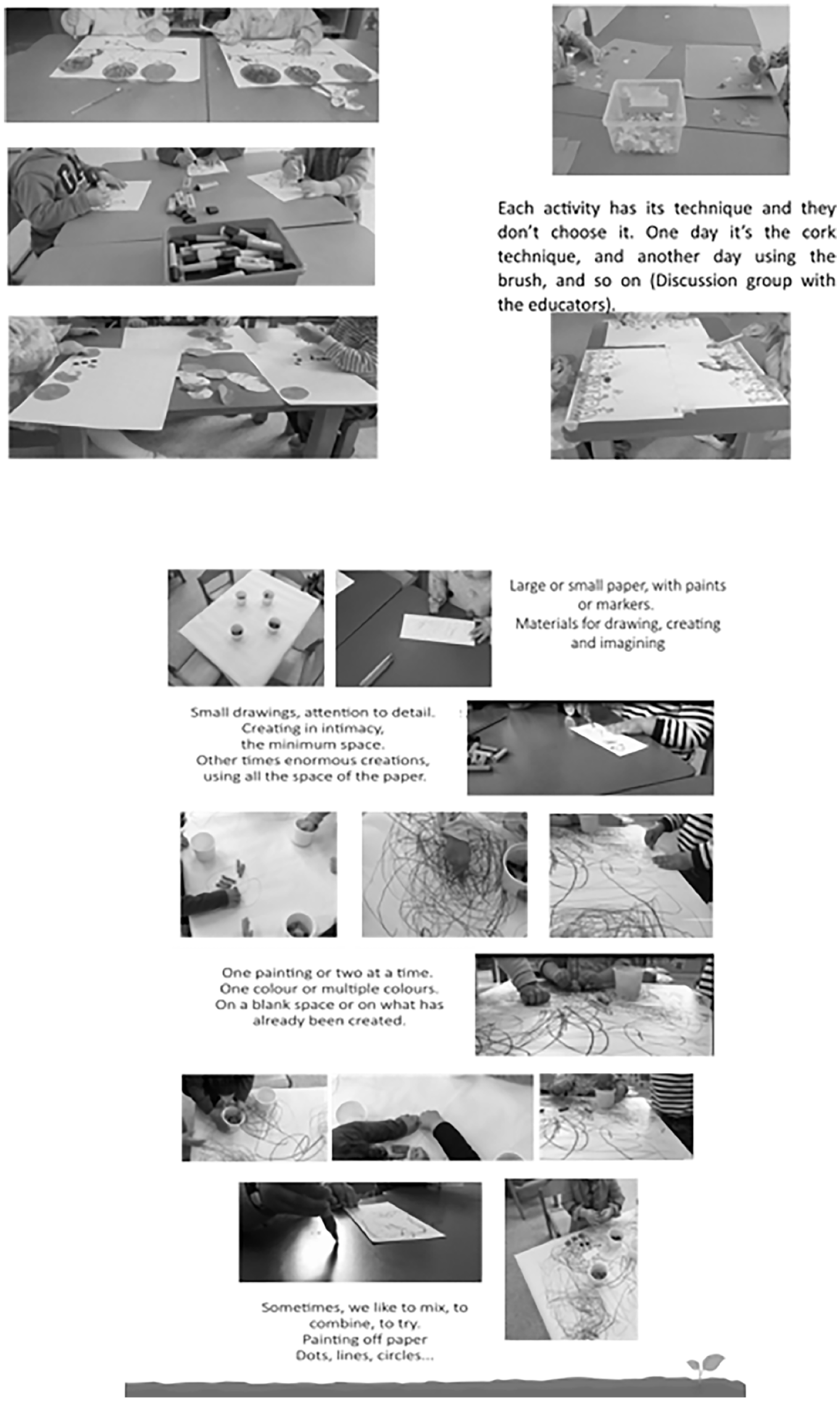
The variety of materials available to the children throughout the sessions was noted, as well as their different sources, showing a preponderance of market materials (puzzles or toys) and those made by the educators. The main characteristic of the latter is that they are designed for single use. Even resources that may suggest an open purpose (buttons, fabrics and boxes) were organised and arranged for a single purpose. An example was the ‘button box’. Two items (a box and buttons) that could generate endless possibilities, were presented as an activity limited to inserting the buttons through the slot in the box. In addition, not all the materials were accessible to the children, especially those related to art and natural items (wood, cork, leaves, nuts, etc.) whose use was restricted to specific moments (Figure 9).

Feedback report. Second year Topic 2.
Within this framework of reflection, the process of listening to the children began. The deambulation strategy was employed using the following question: Which classroom material do you like the most? Among the materials highlighted by the children we found commercial toys (plastic animals, a garage and cars) and, to a lesser extent, materials made by the educators (the button box). They referred to natural, unstructured or artistic materials on only a few occasions. These were not visible in the classroom and, therefore, they could not be identified during their deambulation. For this reason, we accompanied this strategy with observations and informal conversations with the children at different times (free play and proposals designed by teachers), allowing dialogue about materials that were only present in specific activities: B: “With a brush and the colour red.” A: “Stones, a shower of stones.” S: “The yellow brush.” Al: “Crayons and pine cones.” (Informal dialogues with the children)
All the reflections and ideas that arose were organised in order to design proposals that incorporated the children’s preferences regarding materials.
To begin with, we chose the art activity materials as the epitome of an activity where children could only perform the defined action and whose materials were only use with strict rules such as no mixing (brush only, play dough only or markers only, etc.). In order to break these patterns, an art environment was designed in the classroom that sought to offer children a wide range of resources and materials. The artistic environments were designed around four spaces whose materials were placed aesthetic way:
- Offer different materials: drawing surfaces (white or brown paper or chalk board); resources (chalk, paint, markers or play dough); tools (brushes, modelling knives, etc.) and natural-based materials (Figure 10) (pine cones, stones, etc.).
- Present the materials in different ways. Extremely long pieces of paper (at least 2 m in length) were chosen to break with the idea of individual use and remove limitations imposed by size.
- Place the materials according to an aesthetic approach that invites children to take part in a creative play.
Feedback report. Second year Topic 3.
The children chose the space in which they wanted to be in, the materials to be used and the activity to be undertaken, in addition, transferred materials from one environment to another (Figure 11). The only rule was to respect the creative activity of their classmates. This activity was extended beyond the time initially planned as a result of the level of engagement that was observed.
The children were invited to observe how the class was arranged and what material was available to them. Some put words to what they observed. They began to distribute themselves within the space, each one freely choosing where they wanted to be as they played and experimented, creating their drawings, creating rain with the stones, talking with each other to share what was happening, forming spirals with the chalk, and covering the paper. (Teacher’s notes)
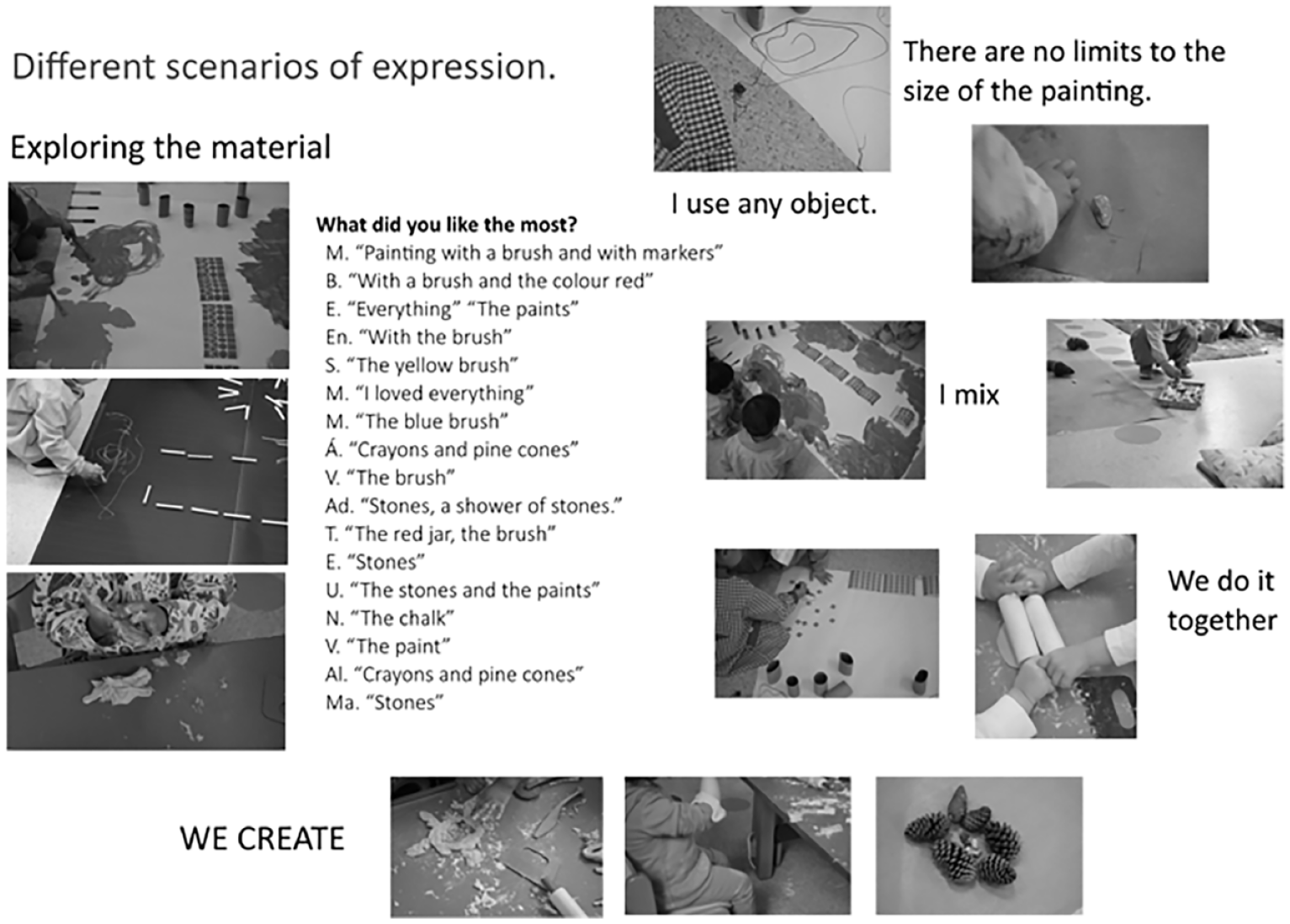
Art proposals. Second year.
Third year: What action do children take when the context offers them opportunities for choice?
The previous transformation processes had permeated the daily basis activity in such a way that, when the researcher returned to the school, the educators had already begun to carefully observe the children’s play and the materials they chose. “We have been observing and we have some ideas.” (Informal Conversation-Teacher). After a few weeks of observation by the researcher, we shared our reflections, impressions and ideas. On this occasion, the children were incorporated from the beginning through informal conversations during play time. Consequently, the feedback report incorporated the three views (educators, researcher and children).
The dialogue focused on three issues. During the previous academic years, activities in which all the children did the same action – previously defined by the educators and geared towards instrumental learning – prevailed. However, in the third year, the children carried out different activities at the same time, being able to choose the activity they wanted to start and when to change their activity. Although the majority of these were defined as open, some structured activity was offered (serialisation of natural elements) (Figure 12). This presence may be an attempt to minimise the tension felt due to the pressure of the curriculum.
Sometimes, pressured by the results-based paradigm and instrumental learning, we forget the richness of experiences that allow us to experiment, create hypotheses, test, etc. (Teacher’s diary)

Feedback report. Third year.
The classroom also had a greater number of unstructured materials. During informal conversations with the children, they highlighted their preference for playing with natural elements in an open-ended way. It should be noted that some acquired single-purpose resources were kept (the garage, puzzles, etc.). However, the children diversified their use (for example, building a tower with the puzzle pieces).
Finally, the dialogue addressed the interventions of the educators during the children play. While the children were creating towers with the puzzle pieces, the technician introduced wooden pieces of different shapes and sizes, offering new alternatives in their construction play. Now the educators sought to act without interfering with the children’s play (Fisher, 2018) through a recursive process of observation, reflection and action.
While in previous years, the improvement projects were about concrete aspects (materials and activities, etc.), this time we talked about the political issues: What role do I assume as an educator? Do I interact and offer help or do I interfere and direct the action? What are children capable of when the context offers them opportunities, when we do not direct the action?
On this occasion, the proposals designed sought to become scenarios that would allow us to answer these questions. It was necessary to reflect on how to establish the conditions to create appropriate contexts, capable of drawing on the potential of the children and also challenging. Bringing everything we had learned into play, we designed a proposal that included the most relevant activities and materials for this new group of children. In this academic year, our aim was to design a play scenario that would provoke, inviting children to investigate, combine elements, create challenges (Oliveira-Formosinho and Formosinho, 2013; Robson and Mastrangelo, 2017) and support them in their process of developing experiences, relationships, knowledge and learning (indirect pedagogical approach).
- Priority was given to materials, objects and pieces of different qualities and origins that allowed the playing of an exploratory play about the qualities of the world using these objects (loose parts).
- They were aesthetically arranged in space presenting provocation, but leaving the control of the play (what to play and how) to the children (Hyndman and Lester, 2015).
- The construction plays were recursive, especially the one of stacking and creating towers, and some materials were therefore provided to simulate their creations.
The documentation of this proposal epitomises the actions and strategies employed by the children in a provocative that offered multiple opportunities for play.
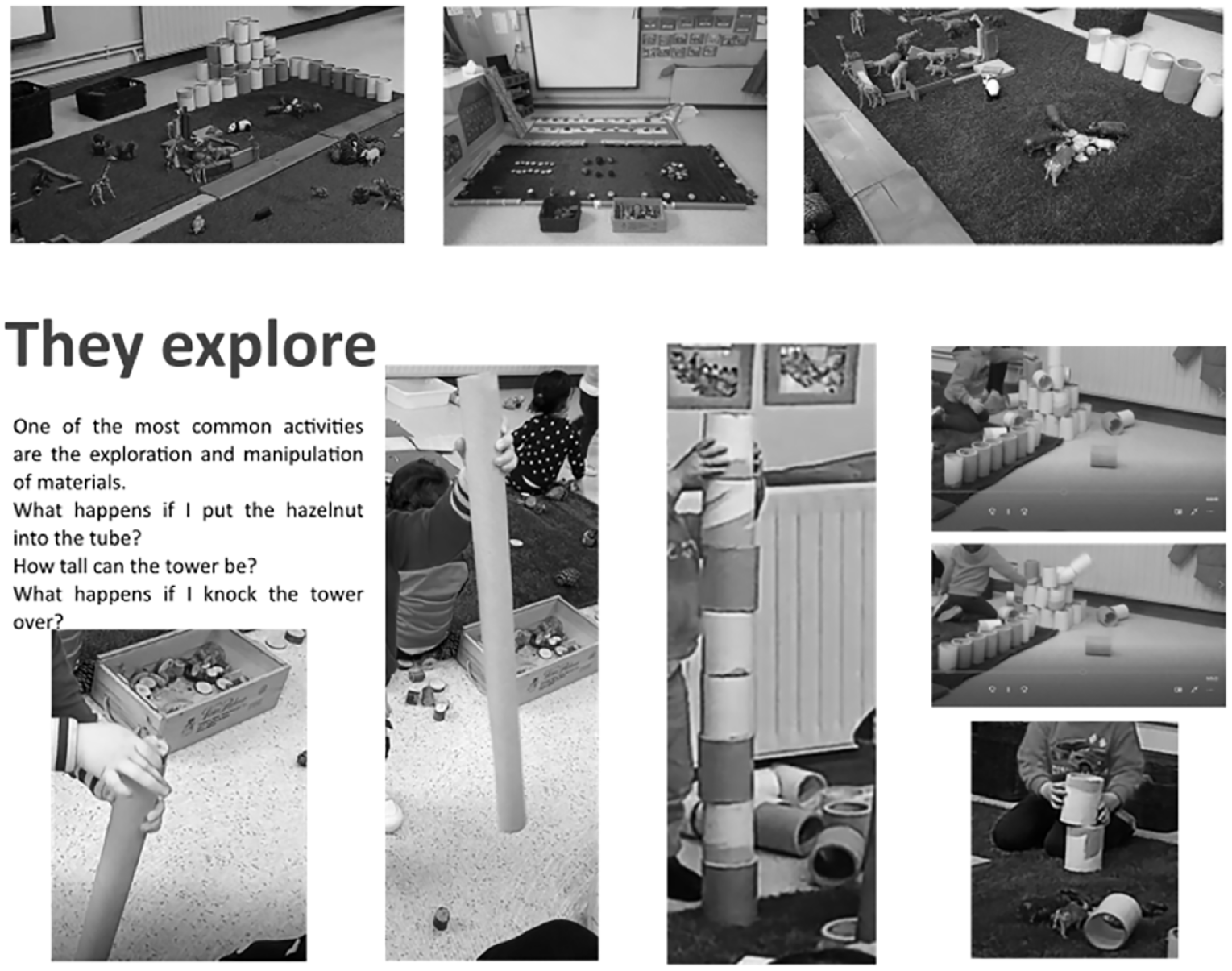
We found that manipulation and exploration are essential actions for 2-year-olds. Children used their hands as tools to investigate the qualities of objects and their possibilities for action.
K. is sitting on the floor and in her hand, she has a small tube, a lion and a walnut. She tries insistently to insert the lion into the tube. It won’t go in. She is concentrating and does not pay attention to the games that her companions are playing next to her. After a while she picks up the walnut. This does go in and slips through, falling to the ground. She looks at the other end of the tube. (Researcher diary)
This activity may appear disorganised and the fact that the walnut enters the hole is a chance discovery. However, the actions that children undertake have an order and a meaning. K. repeats the same process with the lion and the walnut and gets different results. Her recursive process is the following: choice of object-observation-manipulation and discovery.
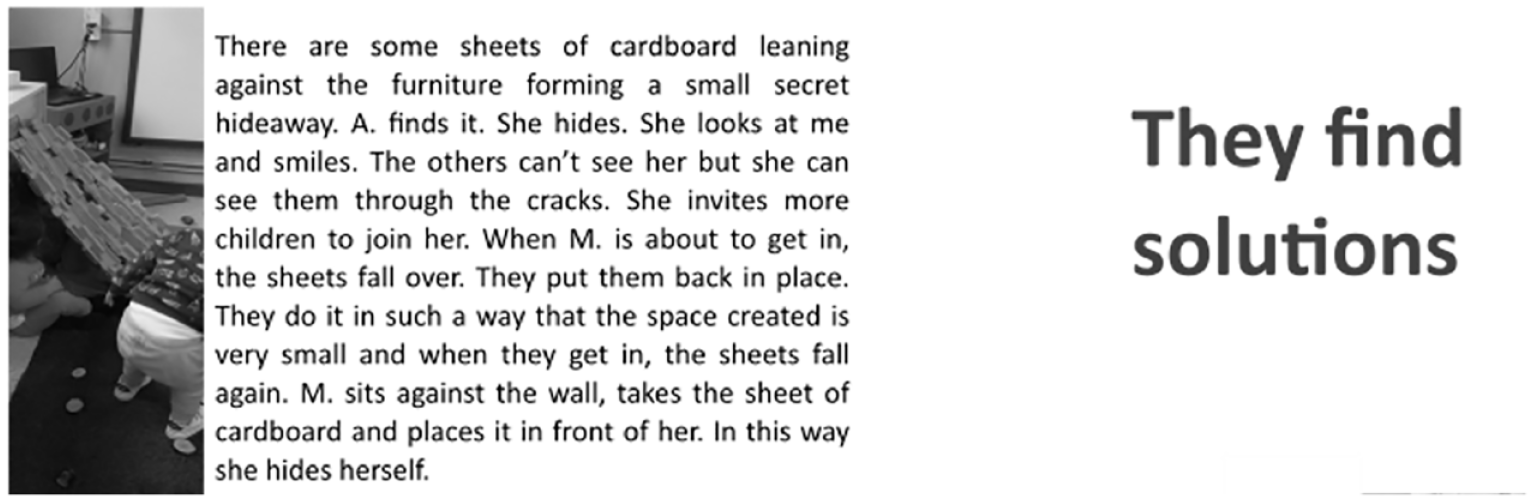
Another activity that takes place is exploration (Figure 13). This involves carefully examining an object or a space to discover the elements that compose it. The educators offered ramps in response to the children’s interest in rolling objects. However, without intending to do so, they created a space that acted as a hiding place.
A. is the first to approach. First, he observes the space and then bends down to look inside. He looks at the sheets of cardboard. This is the first time that there has been a proposal like this in the classroom. After this moment of observation, he hides in the hole. (Research diary)
Children as co-constructor of knowledge-Exploration. Third year.
When the sheets fell off, they considered how to rebuild the shelter. Their actions, and essentially their mistakes, helped them understand that they could not put the sheet vertically because it did not leave space to hide, nor too steep because it fell over. The sheet only worked if it was at an angle. The ultimate purpose of manipulation and exploration is to know and understand how reality works, and to achieve this, children analyse the play scenario and become familiar with the object’s thoughts different actions. In this way, they tested their thoughts and their hypotheses (Murray, 2017).
Sometimes exploration converged with the search for solutions (Figure 14). The children employed multiple alternatives to respond to a problem or situation. Educators did not offer an answer. Instead, they allowed exploration, testing and redefined. Each child set out on a journey.
M. chooses to sit down and cover herself with the sheet. K. tries to place the sheets of wood at different angles. When it falls, she puts it back. And so, on until it stays in place. (Research diary)
Children as co-constructor of knowledge- Find solutions. Third year.
This demonstrated that there were many different ways of doing it, all of them useful for the purpose. Problem solving has a social component (Murray, 2017), and although in 2-year-old children this is still incipient, we saw glimpses of some collective actions, small opportunities to help each other.
Some decisions that the children made, when faced with a challenge, were based on previous experiences (Figure 15). Two children were playing with the animals and the wooden ramps. When the ramp fell down they tried to rebuild it. To do this, they employed the same actions that they had used to remake the cave, but this time they did not insist as much on repeating actions that were not successful the previous time and attempted to try out new options (holding it themselves). From their previous experience they had learned that some actions did not solve the problem and they tried to find new options.
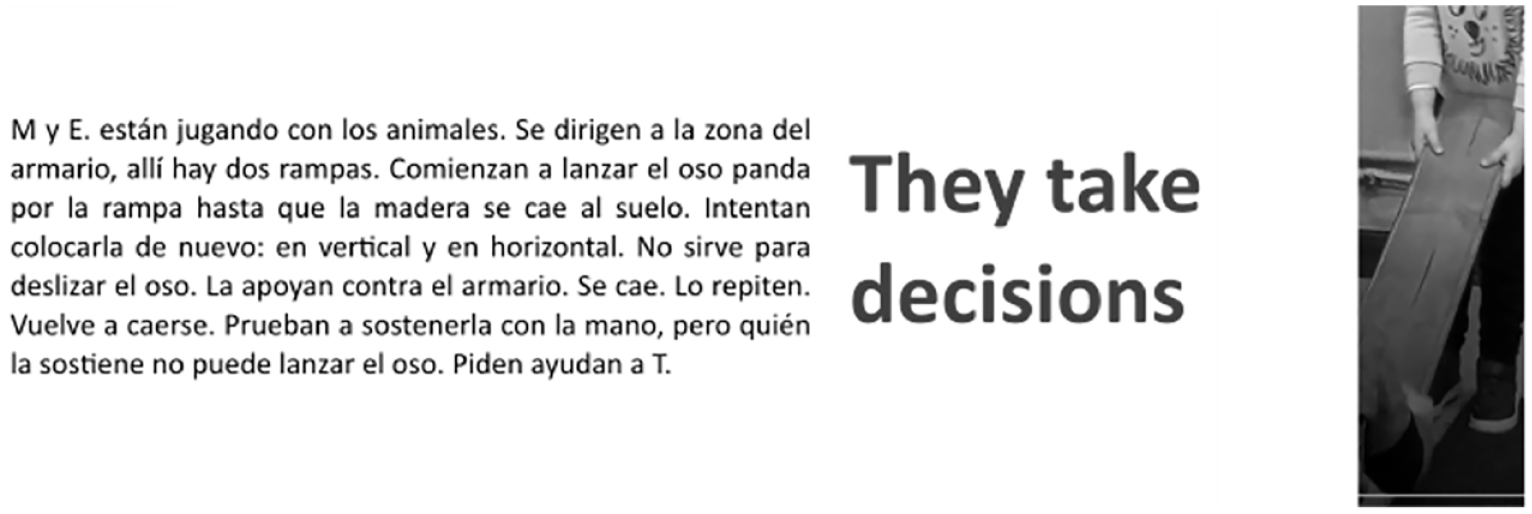
Children as co-constructor of knowledge-Take decisions. Third year.
We also found the representation and creation of invented scenes or characters (conceptualisation) (Figure 16). In the representation, children used objects to make constructions to which they attached meanings: ‘It’s a tower’. During the symbolic game we found creations of scenes. ‘It’s a little house’, says A. while playing with the panda bear.

Children as co-constructor of knowledge-Conceptualise. Third year.
In conclusion, these observations have provided us with an insight into the culture of childhood, the particular way in which children approach reality through objects and relationships with others, and the strategies they employ to think about, conceptualise and interpret it and to make decisions. We have done these by recognising children as agents with the capacity to construct knowledge through processes of inquiry into their environment from an early age (Ephgrave, 2020; Murray, 2017).
Conclusions
We have analysed the transformation of the educational approach in a classroom for 2-year-old children into a pedagogy of inclusive participation. We see how the educational scenario has been in a constant process of reflection and transformation, and that the pedagogy of inclusive participation requires an organisation of the educational environment that offers opportunities for children to explore, give meaning to and express their experiences of the physical, cultural and social worlds (Oliveira-Formosinho and Formosinho, 2013).
Also, worth highlighting is the way the classroom has been conceived as a laboratory for experimentation that encourages us to imagine and try out different ways of doing things, to delve into the unknown, so that we leave behind the security provided by the familiar and the expected. The approach has changed from the design of thematic activities directed by adults and with few opportunities for choice for children and structured materials, to the design of play scenarios in which the ability to make decisions and open-ended materials predominate (Ephgrave, 2020); and a curriculum was defined by the conditions required for encounter, relationships and shared experiences (Fortunati, 2018), and by the opportunities offered to each child according to their needs, interests and actions, in a way that gives meaning to their experiences, relationships, knowledge and learning.
At the same time, we have introduced methods of analysis based on pedagogical planning in action. In this way, the processes of adult planning, predetermined and offering a single option, have given way to planning with children, to the creation of opportunities for children to act in accordance with their own intentions, preferences and decisions (progettazzione) (Rinaldi, 2016). Thus, after designing the scenarios, the teachers observe and listen to what the children do and think and how they relate, factors that determine whether they act, intervene in the action or neither, and in what sense (Ephgrave, 2020). According to Fisher (2018), the most complex challenge is the balance between interacting and not interfering when children are involved in an exploration process.
It is also worth noting that the commitment to an inclusive participatory pedagogy has invited us to reflect on the idea of childhood and the role of the teacher. Throughout these projects have given way to understanding children as subjects of rights, in possession of their own culture and agents with the ability and knowledge to understand, make decisions and give meaning to their experiences. This reconstruction of childhood implies transforming the school and the experiences. In this way, learning is defined as a continuous process, built on the relationship with others and with objects, which is determined by the spaces, times and materials that make up the environment and the opportunities for interaction. The role of the teacher is also realigned to follow a more relational and systemic sociocultural pedagogical model that understands teachers as researchers who create listening spaces and ask themselves questions about their daily tasks in order to improve their teaching practice (Araújo, 2012, 2018; Oliveira-Formosinho and Araújo, 2011) and to organise the environment according to the needs and characteristics observed in childhood.
Finally, this study shows how educators progress towards a ‘critical ecology of the profession’ (Arndt et al., 2018; Ceballos and Susinos, 2022; Dalli et al., 2012; Urban and Dalli, 2012). Teachers thus (re)construct themselves throughout their professional development through relationships between agents – educators, children and researchers, in this case – and the co-construction of knowledge and professional practices is promoted (Urban, 2008).
Footnotes
Funding
The authors disclosed receipt of the following financial support for the research, authorship, and/or publication of this article: Innovation networks for educational and social inclusion. Inclusive participation co-laboratory (EDU2015-68617-C4-4-R) (MINECO/FEDER, EU). Dir. Teresa Susinos. InPar-ES Team. 
Research project: What are we missing in inclusive education: a participatory research in cantabria and the basque country? (PID2019-108775RB-C42/ AEI / 10.13039/501100011033). Teresa Susinos y Susana Rojas