



Abstract
Action research is promoted in the UK as a vehicle for practice development in health and social care, but its application has not been evaluated. This study reviews research designs in published social work studies, 2000–2010. Applying the analytic strategy of Munn-Giddings et al. (2008) also enabled comparison to be made with nursing action research. Action research has a strong presence in social work. Studies were highly collaborative, mainly qualitative and largely focused on practice or educational development, though user-focused change had a presence. Participant groups generally were ‘active’ in the research process, but participation by academics was low. In contrast, authorship was dominated by academics. External funding suggested an attractiveness of action research to funders. Action research in social work shared similarities with nursing. Main differences were involvement of the voluntary sector, the favouring of interactive group working, and a greater likelihood of service users being co-researchers. Of most concern is the lack of authorship (and by implication, ownership) by practitioners or service users. This is contrary to the underpinning inclusive philosophy, and researchers should be more proactive in acknowledging the contribution of individuals, groups or organizations, as appropriate, and so evidence their growth in research capability and capacity.
Introduction
The last 20 years have seen large-scale reform of health and social care policy in the UK, with concepts of evidence-based practice, research, and service user involvement being prominent (Department of Health, 2000, 2006; Social Care Institute for Excellence, 2005). The emergence of initiatives through which ‘researchers are expected to produce evidence for best practice and practitioners are required to implement it’ (Somekh et al., 2005, p. 9) challenges researchers to produce evidence for practice change. In seeking the evidence, a logical presumption therefore might be that ‘professional expertise and the priorities of providers take precedence … [in a] … collaborative partnership with the community of practitioners …’ (Marsh & Fisher, 2005, p. 8) as these stakeholders are best positioned to understand how practice issues might be resolved, and so further practice development. Action research is especially appropriate to promote partnership working (Winter & Munn-Giddings, 2001) and the aims of this article are to review how it is being applied in social work, and to compare this with findings from nursing action research (Munn-Giddings, McVicar, & Smith, 2008) in order to provide an insight into issues for action researchers in health and social care in the UK.
The basic precept of action research is that it ‘… should lead to change and therefore that change should be incorporated into the research process itself’ (Somekh et al., 2005, p. 11). Its attraction is that it bridges the ‘gap’ between theory and practice (Rolfe, 1996), is problem-focused (Hart & Bond, 1995), is grounded in the reality of practice (Walters & East, 2001; Waterman, Webb, & Williamson, 1995), and is empowering (Winter & Munn-Giddings, 2001). It also appears to be an ideal vehicle for service user involvement (Beresford, 2003, 2006; Waterman et al., 2001; Winter & Munn-Giddings, 2001). The promotion of action research might therefore be anticipated within health and social care research but there is a paucity of evidence of its application or of emergent issues.
A bibliometric review of published UK nursing action research studies identified that action research was as prominent as other leading research methodologies (Munn-Giddings et al., 2008), but revealed that just 13 percent of the published action research studies were directly concerned with service users (patients and carers). Also, when service users were involved, they generally had a ‘consultative’ involvement whereas the majority of other participant groups (mainly practitioners) were rated as ‘active’ by their direct contribution to stages of the research process. Additionally, authorship was predominantly by university academics despite participating practitioners and/or users having significant roles in the whole research process.
Research development in nursing in the UK has advanced during the last 20 years or so from what was a limited academic base (Hillier, Caan, & McVicar, 2006; McVicar & Caan, 2005; Traynor, Rafferty, & Lewison, 2001), raising the possibility that its relatively recent history might be a contributory factor in the lack of active user involvement in action research designs, and in the predominance of academic authorship. In contrast, social work research has a longer history, with debates around user involvement in the UK dating from around 40 years ago (Meyer & Timms, 1970). It also has a commitment to a breadth of methods, and is particularly focused on social inclusion and working with stakeholders in the research process (Joint University Council Social Work Education Committee, 2006). Additionally, social work is set apart from many other disciplines by its focus on induced change and strategies for change (Fraser, 2004; Rosen, Proctor, & Staudt, 1999; Rubin, 2000; Schilling, 1997). The inclusive features of action research therefore seem highly appropriate for its application in the development of social work practice and education.
Higher Education Institutions have long recognized social work as an academic and research discipline (Marsh & Fisher, 2005; Shaw, Arksey, & Mullender, 2006). This longer research tradition might suggest that its application of action research could be more developed when compared with that in nursing. However, the majority of social work and nursing departments in the UK are located in post-1992 universities, which are institutions that often have limited research track records in comparison with those established previously. The growth of research capacity in both disciplines was constrained until only relatively recently by failure of major research funders to adequately support them (Bywaters, 2008; Joint University Council Social Work Education Committee, 2006; Marsh & Fisher, 2005; Rafferty, Traynor, Thompson, Ilott, & White, 2003; Traynor et al., 2001). Furthermore, social work academics are more widely dispersed (and fewer) than in nursing, and both social work and healthcare academics have an aging profile with relatively few staff holding doctoral qualifications (Hillier et al., 2006; McVicar & Caan, 2005; Moriarty, Stevens, Manthorpe, & Hussein, 2008). Any assumption that action research might be more advanced in social work than in nursing therefore may not be warranted despite their different histories.
Accordingly, the primary aim of this article is to review published empirical social work studies from 2000–2010 in order to explore the uptake and application of action research. A secondary aim is to compare the findings with those of Munn-Giddings et al. (2008) in their review of nursing action research and so provide insight into issues for action researchers in the broader context of health and social care in the UK.
Methodology
The methods described here are largely reproduced from those of Munn-Giddings et al. (2008) in their bibliometric review of nursing action research, and cross-reference to their design is made where appropriate.
Search
A systematic review was conducted of empirical action research studies in social work in the UK published between 1 January 2000 and 1 September 2010 (last accessed during September 2010) and identified from the databases Assia, Social Care Online or Swetswise, considered to be the most comprehensive databases of published social work research and most likely to be used by academics and practitioners when constructing a contemporary knowledge base in the field. In referring to studies as ‘empirical’, we use this term loosely to make the distinction between those that were detailed descriptions of the application of action research designs with intended research outcomes, and therefore suitable for analysis in the present review, and those that were discursive, or made only passing reference to the study design.
In view of the logistical difficulty of examining every publication to ascertain its value to the study, a decision was taken that the search would be more focused by limiting the search terms to ‘action research’ within the title and abstract, and ‘social work’ anywhere in the document; preliminary searching suggested that this strategy would capture a range of articles appropriate to the review. The search generated 1354 articles, which was refined to produce the sample for review (below).
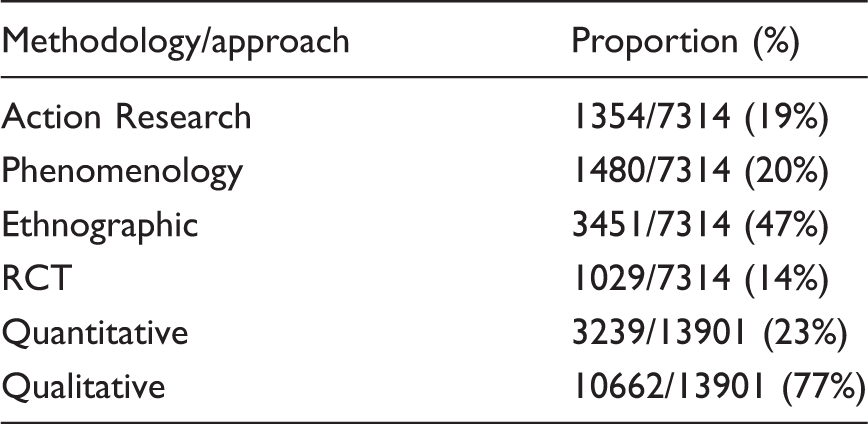
Comparison of action research with other methodological approaches.
To place action research in context alongside other established research approaches, further simple searches were conducted of the same electronic databases, using the same fields and over the same review period, but replacing ‘action research’ as a search term:
Applying the terms ‘qualitative’ or ‘quantitative’ to the search did not differentiate specific methodologies but were applied to provide a broad comparison with these research traditions. The two searches generated a total of 13,891 hits. The terms ‘phenomenology’, ‘phenomenological’, ‘ethnography’, ‘ethnographic’, ‘randomized controlled trial’ and ‘RCT’ were applied to the search to enable an approximate comparison between specific qualitative and quantitative methodologies and action research. In total, those searches generated 5960 hits (i.e. 7314 with inclusion of action research). The ‘hits’ were not filtered other than to limit the date period and UK-focus, and to remove duplicates as far as possible using the database facilities, since at this point detailed, fine review was not the intention, nor was it intended that only empirical studies should be identified at this stage. Rather, the comparison with the superficially filtered results was intended merely to capture a broad overview of the published activities of action researchers relative to other approaches.
Compiling the dataset of action research studies for review
The filtering of 1354 action research papers was as follows:
Duplicates (227) were removed electronically from within or between databases. Despite searching by date period and country, the results still included a number of papers from outside that period (94) and studies that were non-UK based (757); the latter was not entirely surprising as country of origin was not always clear on the database entry. Some sources (103) either were not empirical studies (i.e. books or book reviews, a website, and theoretical/discussion papers) or referred to empirical studies that provided insufficient information for detailed analysis. An example of the latter is the paper by Gould (2001) in which a study is referred to that hints at some of the main features identified in this review but is presented largely as a discursive paper lacking in methodological detail. Filtering at this point left a total of 173 studies. A number of these (149) were not actually about social work practice or education per se (though they had mentioned the term within the document, hence their appearance in the search results), but were primarily focused either on non-social work education or on health care. Whilst the health-related studies at times contained elements of social work practice where the research team was interprofessional, a decision was made to restrict the review to those studies that had a clear single-discipline focus on social work, since the choice of design could not be assumed to be independent of influence by professionals from different research traditions. A consequence was that the sample size was considerably reduced but this was considered preferable in view of the aims of the study.
The final dataset for detailed review therefore was 24 UK empirical social work studies that applied an action research design, and were published in journals during the period of 2000–2010 (Table 1). All met the following principles in the description of their research design:
It was based in practice and not separate from it; It was action, and not description, orientated; It had a research process that aimed to be collaborative, at least in part; It used research data to inform each stage and practical step in the research process. Information provided was sufficient to generate a detailed picture of the delivery of the project. Empirical action research studies in social work selected for review, in order of date of publication. Primary location (sector) and focus of change also shown
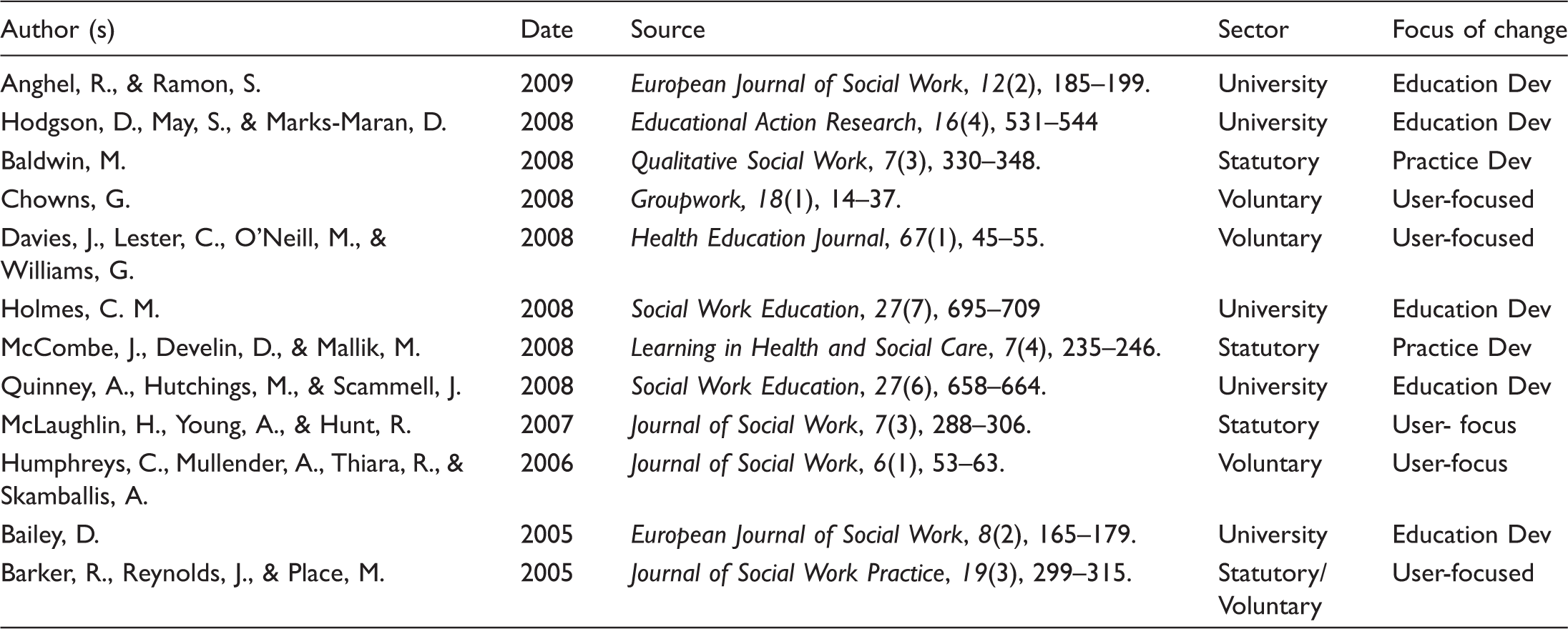
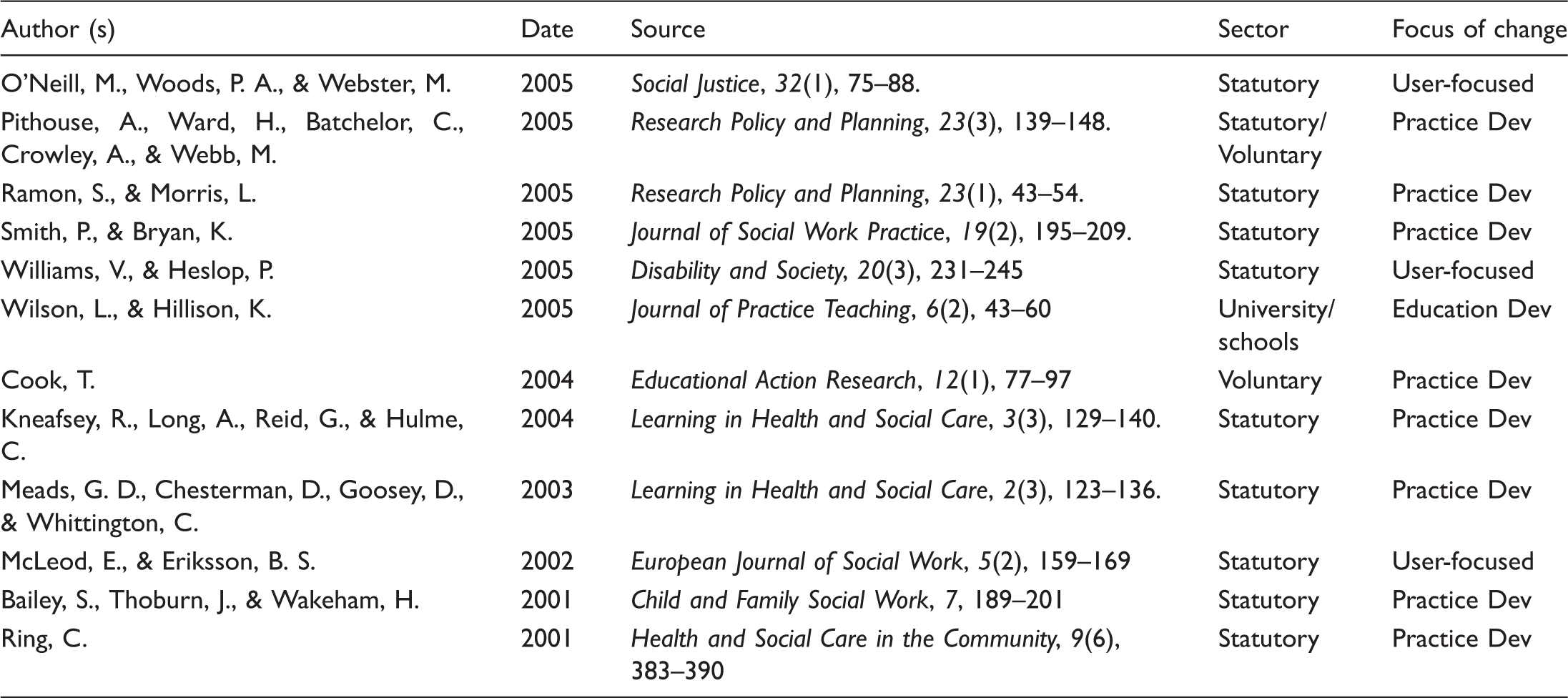
The relatively small sample possibly reflects the low research capacity generally within social work and in particular the relative lack of intervention studies (Bywaters, 2008; Fraser, 2004), though restricting the search terms also made it unlikely that the search comprehensively captured every empirical study involving action research and social work. However, the sample was considered sufficient to provide a ‘snapshot’ of the situation specific to social work, analogous to the bibliometric review of 62 nursing action research studies (Munn-Giddings et al., 2008) that provided an academic comparator for this review. There was no obvious chronological trend in publication of the reviewed studies, although the distribution of articles was uneven with 2005 (eight papers) and 2008 (seven papers) being peak years (see Table 1).
Analysis of action research designs
Analysis was framed by closely following the methods applied in the bibliometric review of nursing action research by Munn-Giddings et al. (2008). This entailed application of conventional critiquing principles, viz. location of the study, setting for the research, authorship, methods, participants and source of funding, but additionally recognized that action research is also characterized by collaboration and participation (Winter & Munn-Giddings, 2001).
Although papers had been selected on the basis of the level of detail they provided, some compromise still had to be made in order to ensure a reasonable sample size, if insight was to be captured. In view of these difficulties, two authors (AM, CM-G) each independently coded six of the selected articles (chosen at random) to confirm inter-rater agreement on the classification of variables, and hence establish validity and reliability of the coding process.
Number of authors and their collaborative position
The number of authors and their locations were recorded. Where based in universities the authors were defined as ‘academics’. In doing so, it is recognized that many university personnel also have professional social work qualifications, and perhaps may even prefer to define themselves as practitioners. That information was not available, but for the purpose of this review the classification was considered useful in providing an indication of the balance between authors employed specifically in academic institutions or elsewhere, and hence in indicating the nature of any collaboration.
Sector, and focus of change (the ‘setting’ identified by Munn-Giddings et al., 2008)
The site at which the research took place was noted, as also was the study’s focus of change. The initial intention was to follow the example set by Munn-Giddings et al. (2008) and identify the focus of change as being ‘organizational’ or ‘professional’ development, ‘educational’, or ‘user-focused (i.e. service user, family or carer)’, but at times it was unclear if the setting was organizational or practice development, and so these settings were not differentiated and are referred to collectively as ‘practice development’; others were recorded as stated.
Methods/tools used for data collection
One of the appeals of action research is that it is not aligned to any one method (Winter & Munn-Giddings, 2001). By documenting the number of methods used in any one study it was considered that this would capture something on the range of skills applied and hence of research capability (McVicar & Caan, 2005).
The participants and the nature of participation
Arguably one of the most significant features of action research is that of participation. Studies therefore were scrutinized for information on the participants, in terms of number and groups (constituencies): practitioners, managers, academics, students, users (and carers). In doing so, it is acknowledged that details were not always obvious and at times decisions had to be taken as to the distinction, particularly between practitioners and managers. Generally, however, identification was straightforward and a reasonable picture was obtained of participants in the studies.
The extent to which participation takes place is an important criterion for validating action research studies (Hope & Waterman, 2003). Assessing ‘participation’ can be problematic; for example, Coad and Evans (2008) identified five levels when engaging children as participants in the data analysis process, from simply eliciting information from the children to full child-led research planning and implementation. None of the selected social work studies elaborated this aspect, and so evaluation of the nature of participation for the groups was simplified according to whether it was:
‘active’; when participants were highly engaged as co-researchers in the research process; ‘partially active’; when they were engaged in only part of the process (for example, in the design, implementation, or evaluation stages), or ‘passive’ where they were predominantly or entirely engaged simply in consultation or to provide data for the study.
Identifying participants who were passive in the process was relatively straightforward but the evaluation of level of ‘active’ engagement was not without difficulty since in some studies that level was not explicit and consequently had to be judged according to less overt expressions. Our classification of level of participation therefore represented a rather crude attempt to clarify the role of participants in the research process; this issue is currently being explored further in another study, to be published as a follow-up. Nevertheless, the evaluation here provided some useful insights into how participation was incorporated into the research designs.
Source of funding
Availability of funding is critical for research capacity building in any discipline. Identification in the papers of sources of project funding is therefore an indicator of general willingness of funders to support action research. Accordingly, the sources of funding were noted, when provided, partly to gauge that willingness but also to identify if support is derived from any particular organization or sector.
Results
This section provides the primary findings from the review of social work studies, but to facilitate direct comparison with the designs of nursing action research also at times makes direct reference to the findings of Munn-Giddings et al. (2008). Where stated, patterns or differences were analysed statistically using chi-square (SPSS, Version 16).
Sources of published social work studies
UK-centred social work articles appeared in a wide range of journals, with no single journal dominating (see Table 1); modal titles were European Journal of Social Work and Learning in Health and Social Care (three articles in each), but six other journals each included two articles, the remainder one. Almost all journal titles had an overt focus with the profession, the exception being Educational Action Research (two articles) which has its roots in the education sector but has widely publicized its diversification a few years ago into health and social care research. Although having a professional focus, the journals were dominated by what might be considered ‘academic’ publications. Dividing journals into ‘academic’ or ‘professional’ foci is potentially problematic as it implies a hierarchy of knowledge, but it seems inevitable that authors based at universities would be mindful of what journals are considered most suitable for the periodic evaluation of UK universities’ research activities (for the period of this review, referred to as the Research Assessment Exercise). Whether or not these journals are likely to be accessed by practitioners or service users is debatable.
Action research in social work compared with other methodological approaches
Action research ‘hits’ from a ‘simple’ database search relative to those of other methodologies
Analysis of social work action research articles
Number of authors and nature of collaboration
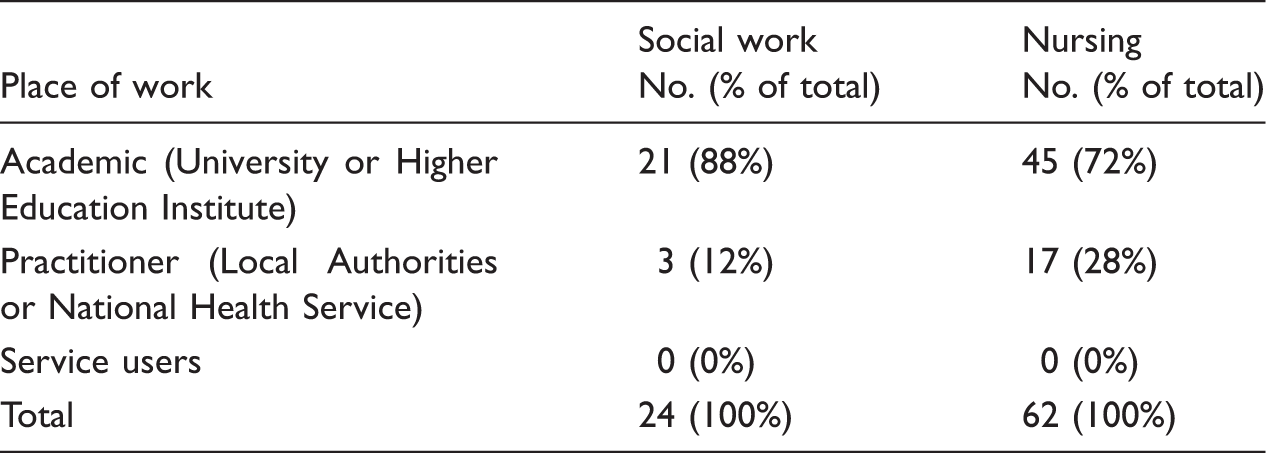
Authorship of social work articles ranged from one to five authors (see Table 1). The modal (and median) value was three (in seven papers) but this was not especially remarkable within the sample as 6/24 papers had one author, and 6/24 had two, while 4/24 had four, and 1/24 had five. Overall the total was 60 authors across the 24 studies, the majority of whom (58) appeared only once; two authors each appeared on two separate papers. Most authors (50/60) were from universities, eight were located in practice organizations, two were independent consultants, and none were acknowledged as service users. Where there was more than one author to the paper then all studies had at least some contribution from academic authors. In these respects the position is similar to that in nursing (Munn-Giddings et al., 2008) and evidences a predominance of collaborative publication, but domination of authorship by academic researchers.
The appearance of the great majority of authors in just one paper in both social work and nursing (=168/182) suggests very few significant leaders in the promotion or undertaking of action research but also evidences a wide academic base. Overall, social work authorship was dispersed across 19 universities in England and Wales, though there was suggestion that it is particularly developed in certain universities which is encouraging in the context of capacity building in this methodological approach. Thus, the University of Warwick featured four times in the authors’ designations, Cardiff University featured three times, and Anglia Ruskin University, Northumbria University, and the University of Salford each featured twice.
Place of work of first author of social work action research studies. Proportions found in nursing by Munn-Giddings et al. (2008) are shown for comparison
Sector and focus of change
Social work action research studies were located across a range of social-care providers. Most (18/24; 75%) took place within the statutory sector and/or voluntary sector, the remainder (six) in universities. The sector in which action research took place looks very different when compared with nursing (Munn-Giddings et al., 2008); for nursing, none took place outside the university or statutory sectors but in social work a third took place in the voluntary sector either alone or in conjunction with the statutory sector. The difference in distribution between the disciplines is statistically significant (p < 0.001).
The focus of change for most studies was ‘practice development’ (10 studies), ‘user-focused’ (eight), and ‘education’ including curriculum development (six). The highest proportion of studies (16/24; 67%) centred on ‘practice development’ or ‘education’ and this is reminiscent of that observed for nursing, though possibly less pronounced as 87 percent of nursing studies had these foci (Munn-Giddings et al., 2008; recalculated from their data to indicate empirical studies only). In social work, those studies focused on practice development were entirely located in the statutory and voluntary sectors, and all education-focused studies took place in the university sector (the association between ‘sector’ and ‘focus of change’ was statistically significant; p < 0.001). User-focused change related to social disability issues, health inequalities, communication between users groups, raising self-esteem, and aspects of community development, and those studies were located in both the statutory and voluntary sectors; none were located in universities.
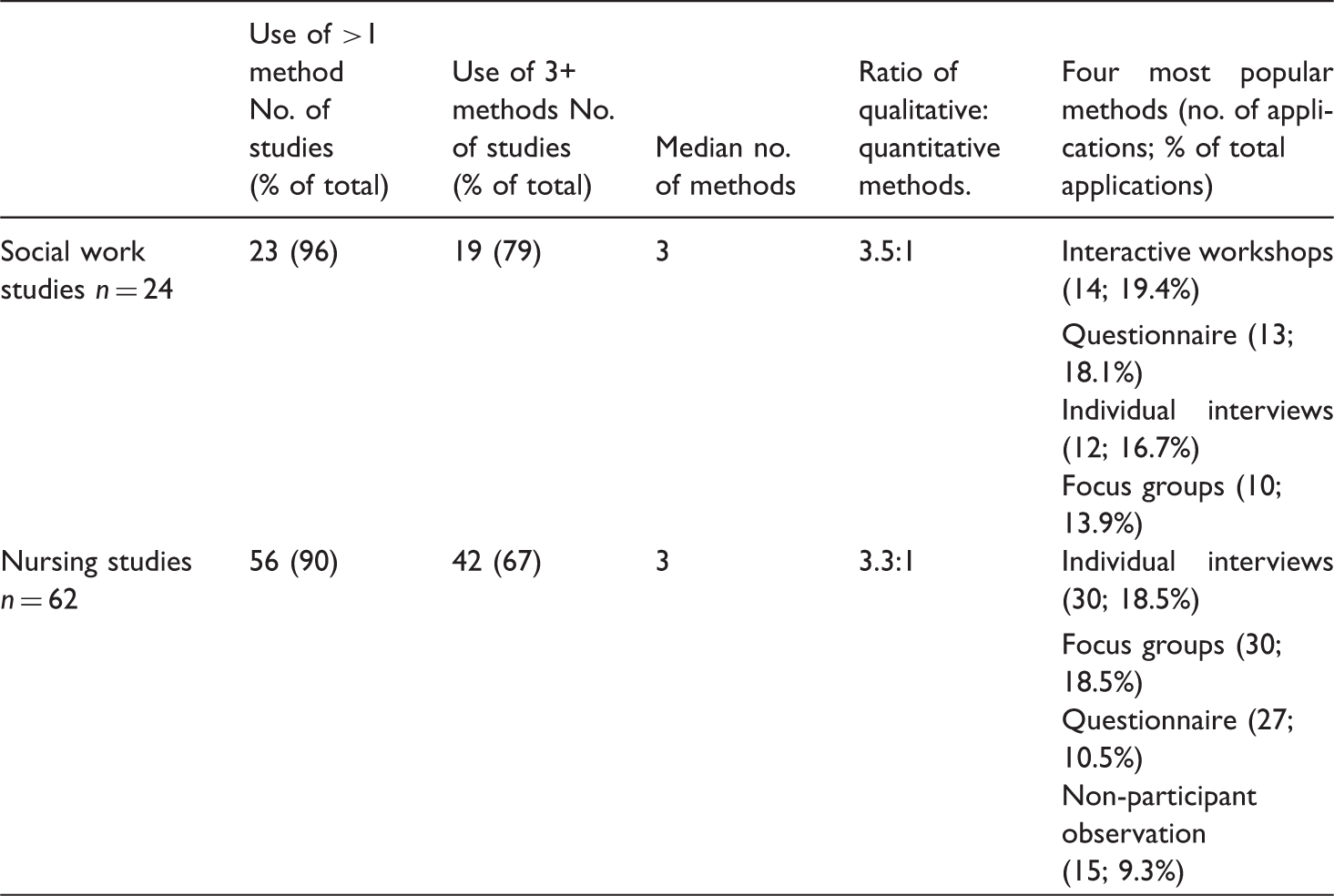
Range of methods used
Methods used in social work action research designs
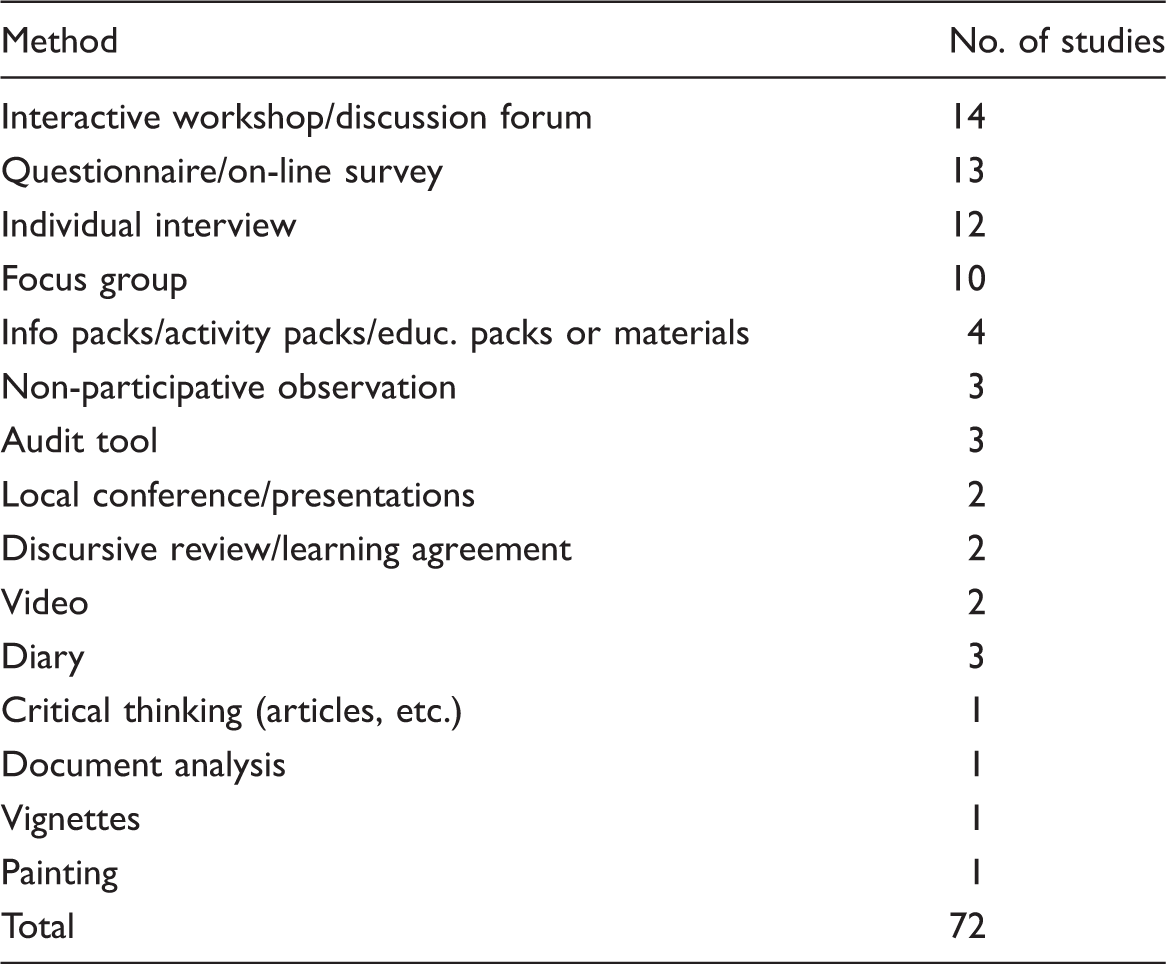
Summary information on methods used in social work action research (current review) and nursing action research (adapted from Munn-Giddings et al., 2008). Percentage shown where appropriate for comparative purposes
The participants and level of participation
Exact numbers of participants were impossible to assess from the information provided. For example, in some cases it is reported that ‘over 60 students’ had access to a course evaluation, whilst another stated that four groups of ‘between 6–12’ participants took part. When the number was stated, the minimum in a study was nine, the maximum 130. Many studies therefore were relatively small, a characteristic of action research particularly where active participation and high uptake of change processes are anticipated (e.g. McVicar, Munn-Giddings, & Seebohm, in press). Participants usually had to remain engaged with the empirical part of the project for a considerable period of time, up to four years in one case, with a median of 15 months.
Most studies (19/24; 79%) involved practitioners/managers as participants, either solely or in conjunction with other groups. This finding is encouraging in terms of the claim that action research can empower practitioners to develop their own knowledge (Walters & East, 2001). Also encouraging in view of an anticipated involvement of service users in social work research was that 14/24 studies (58%) involved at least one participant group of service users and/or carers, and five of those studies involved only service users. In contrast, participation by groups who might be considered ‘academics’ (i.e. university personnel) was relatively low, just 5/24 studies (21%) involved academic staff as participants. In nursing (Munn-Giddings et al., 2008), practitioners were also involved as participants in the great majority of studies (56/62; 90%), service users also had a strong presence participating in 21/62 studies (34%), and participation by academics was again relatively low (8/62 studies; 13% of studies).
Participant constituencies related to sector and focus of change for action research in social work studies (n = 24 a )
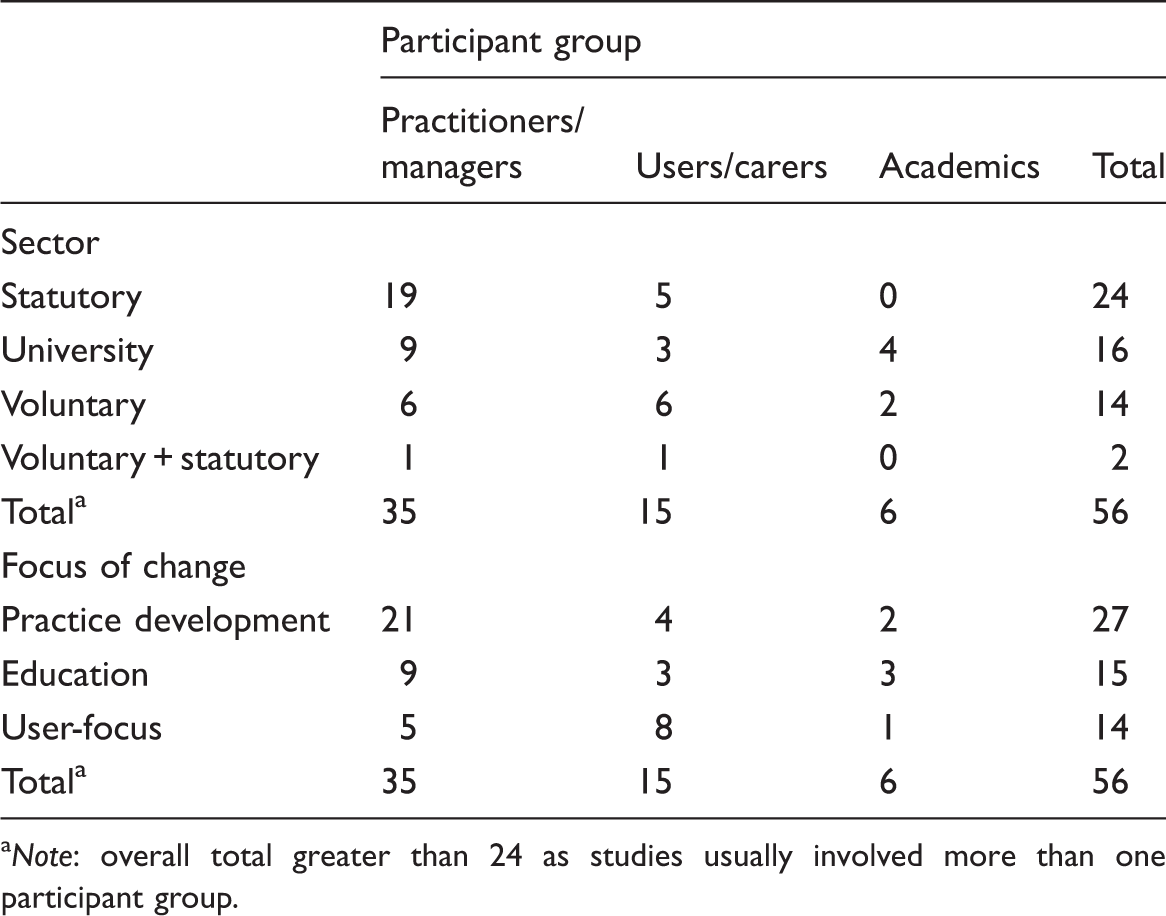
Note: overall total greater than 24 as studies usually involved more than one participant group.
Level of participation. Figures are number of participant groups identified as active/partially active or passive within the reviewed action research studies, together with data for nursing (from Munn-Giddings et al., 2008 a )
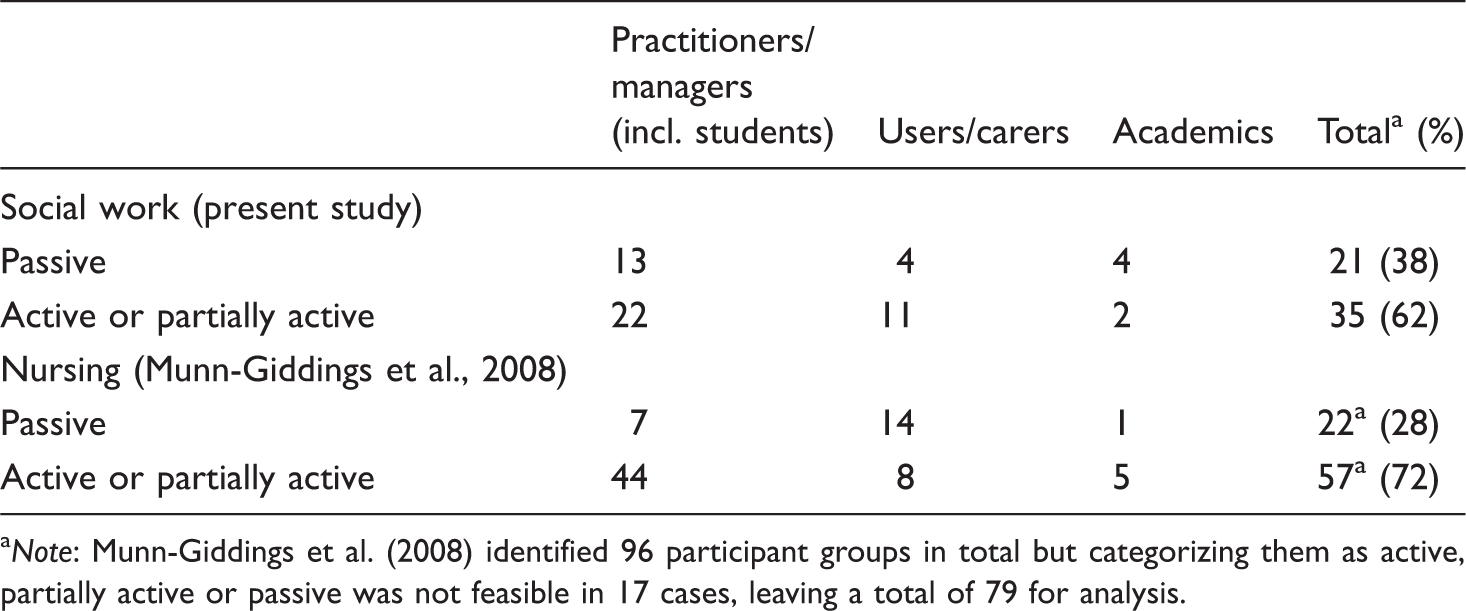
Note: Munn-Giddings et al. (2008) identified 96 participant groups in total but categorizing them as active, partially active or passive was not feasible in 17 cases, leaving a total of 79 for analysis.
Source of funding
Fourteen of the 24 articles identified that the study had been funded, although in two instances this was not explicitly stated but was a strong implication. Lack of acknowledgement in the others may simply reflect omission to mention the funding and so cannot be taken to infer that studies were unfunded. Twelve different funders were identified, lending support to the notion that funding agencies are willing to approve action research designs. Of these, two were internal (i.e. university) and ten external; of the latter, one (the Welsh Assembly) appeared twice, five others were governmental or local authorities, one was multi-agency and two were not specified.
Discussion
Bibliometric analysis presents a number of challenges in generating an appropriate sample. Issues for this study were the quality of the databases searched, the inclusion criteria considered relevant to the aims of the study, the level of detail of material presented within selected publications, and the validity of making assumptions on the interpretation of that material.
Generating the sample through searching electronic databases predominant in the field could be expected to provide access to the majority of published research where action research designs have been highlighted, and the journals identified for this sample include leading sources of action research and/or social work research in the UK. The authors make no claims of absolute comprehensivity, but the prominence of the databases and journals leads us to be confident that this review captured sufficient articles to provide a reasonable picture of the uptake of action research within social work. Studies that were clearly interprofessional were excluded on the basis that their designs may not reflect an action research tradition in social work per se, and only those empirical studies that provided a sufficiently informative account of the design were selected for analysis.
Assumptions made concerning the analysis are identified at points in the previous sections, and it has to be acknowledged that a number of potential limitations had to be considered. The study dataset also possibly included publications of student research (not identifiable as such, but which may bias authorship towards academic supervisors), and it is also possible that practitioners and service users may publish study findings in ‘grey’ literature sources, or be more prominent as authors in other dissemination forums such as conference proceedings. While also acknowledging these potential limitations, in terms of changing practice it is also the case that ownership of published research and its contribution to knowledge is normally accredited to its publication within peer-reviewed journals (the sources in this review came under that category), rather than ‘grey’ literature and conference articles. This review therefore has provided both an overview of action research designs, and of leadership in publishing social work research as evidenced by authorship.
A further objective of this study was to provide a comparison of current findings with action research designs in nursing in the UK by reproducing the analytic strategy of Munn-Giddings et al. (2008). Many similarities are apparent:
Action research holds a relatively strong position in comparison with other methodologies. As an interventional approach, action research also has a higher profile than randomized controlled trials, perhaps emphasizing its closer affinity to social science than natural science philosophy. Empirical studies in the main are published in what might be considered ‘academic’ journals, and therefore of potentially greater appeal to a university audience. Designs are highly collaborative but academic authorship dominates. There is evidence of a wide academic base to action research but no significant ‘leaders’ are apparent, although some universities have a stronger contribution than others. However, relatively few studies were actually located in a university/academic setting, and very few participants were academics. The focus of change was mainly organizational/practice development or education. The methods of choice are usually qualitative, and designs are pluralistic in this respect. A high proportion of participant groups made at least a partially active contribution to the research design and/or process, rather than acting as passive contributors to the research data. Action research is funded by a range of funders, including significant policy-making organizations, which would seem to indicate recognition of the value of action research designs to practice development.
To advocates of action research, its greatest appeal is probably its focus on change, a feature that is pivotal in bridging the theory/practice gap (Meyer, 1993; Waterman et al., 1995). Indications of a significant proportion of action research designs within social work and nursing research could indicate a groundswell of action research within development strategies in the UK in line with recommendations from a number of authorities (Beresford, 2003, 2006; Hart & Bond, 1995; Rolfe, 1996; Walters & East, 2001; Waterman et al., 1995; Winter & Munn-Giddings, 2001). The dispersion of action research across universities is encouraging, but the lack of emergence of strong academic leadership is less so.
Differing interests and needs of researchers are important determinants of the extent of participation, which should be ‘freely and openly negotiated’ with participants (Arieli, Friedman, & Agbaria, 2009), and so the high degree of engagement of participants also is encouraging in view of claims to the contrary across social care research generally (Marsh & Fisher, 2005), and accords with expectations of partnership working between academics, service providers, and service users (Department of Health, 2006; Joint University Council Social Work Education Committee, 2006). However, participants as co-researchers did not translate into the co-authorship of papers, when a more diverse authorship might have been anticipated; authors, including first authors, came almost entirely from academic institutions. Particularly of concern is the almost complete absence of service user/carer involvement in the authorship. Munn-Giddings et al. (2008) suggested that a factor here in nursing action research was the low appearance of the ‘clinical’ setting for the research, but in the current study a third of projects were located in the voluntary sector where a stronger user presence might have been anticipated, though it is possible the individual’s agenda in relation to appearing in a publication may have had an influence.
A source of publication and an authorship profile that predominantly leans towards academia should not be entirely surprising, since UK health and social care institutions have a relatively recent history of research and so are encouraged to collaborate with researchers from Higher Education institutions to help foster their own research development. Also, authorship might be influenced by values arising from politico-academic aspects, as academic personnel often have responsibilities as fund-holders, and have publication of research within their employment remit. However, the situation is disappointing from the point of view of promoting collaborative approaches that constitute the ethos of action research, including shared ownership of the research process and its outcomes. Other media/forums are important in dissemination to a non-academic audience (Sommer, 2009), but a bias towards peer-reviewed, academic publication continues to be the priority for research in the UK. Where appropriate, authors should find ways of acknowledging more overtly those specific individuals, or groups, or organizations who have contributed as co-researchers.
In comparison with nursing, there were also some apparent differences:
A number of social work studies were located within the voluntary sector. Nursing action research did not have a presence there. Interactive workshops and discussion forums were the most popular method applied. These forums aid the development of communication skills and mentoring (for example, see Lunt & Fouché, 2009), but this method did not feature in the four most popular methods in nursing. The reasons for this are unclear, though the social work studies in this review included several that were strategically or policy-oriented and workshops are acknowledged as providing ‘illuminating insight into … policy implementation processes …’ (Gould, 2001, p. 31). Group work as a process is also more prominent in social work, for example in working with family groups. The average number of participant groups taking part in action research studies in social work was higher than in nursing action research (2.3 vs 1.5 per study), and service users are more likely to be actively engaged in social work studies. Reasons are unclear but possibly relate to a longer tradition of group work and user involvement in this discipline.
Both social workers and nurses can have close professional relationships with voluntary sector organizations but the sole appearance of social work action research located in that sector suggests a different level of professional activity, perhaps reflecting a larger responsibility of social workers to community development. Current political direction in the UK is pressing for greater community engagement in society (viz., the ‘Big Society’; policy paper retrieved 17 January 2012, from http://www.cabinetoffice.gov.uk/news/building-big-society) and it seems likely that action research activities in both health and social care will increase in this sector in the future, bringing with it a higher presence of user-focused change.
Conclusions and implications
This review was undertaken to identify the extent of application, and features of implementation and publication, of action research designs in social work in the UK, partly to examine if social work researchers were meeting recommendations that it is a vehicle for practice change, and partly to enable comparison with a related review of nursing action research, which has a shorter history.
Research development within social work has indeed embraced action research, though concerns over the dispersion of academic researchers who support such designs suggest improved infrastructure may be needed to sustain activities. In this respect, the funding of studies by policy-making organizations is encouraging as it indicates recognition of the suitability of action research to produce professional and practice change, and to guide practice development.
Social work action research designs have a number of features in common when compared with nursing: a plurality of mainly qualitative methods, a prominence of practitioners in the delivery of the studies, a strong presence of service users as participants, and a focus of change that was mainly professional/organizational development or education, and not specifically service user issues.
Where the longer-standing tradition of social work research in the UK might be reflected in action research design is the extension into the voluntary sector, and a higher level of engagement of service users as co-researchers in the process. Identification of a stronger application of workshop/discussion forums as research tools in social work might relate to that engagement, although social work practice itself has a tradition of group working. However, much of the evidence suggests that there are more similarities than differences between social work and nursing, suggesting that they have undergone similar development despite different chronological histories. The finding that a significant proportion of empirical ‘social work’ articles initially identified in the search (149/173) were actually interprofessional, and so not included in the final sample, should bode well for future parallel developments.
What also emerged was a broader issue concerning authorship of action research, which was restricted even where the design was highly inclusive. It is sometimes evident within authorship that certain individuals, primarily academics, assume ‘lead’ responsibilities that may include seeking funding, obtaining appropriate ethics and other research governance approvals, budget-holding, project management, as well as facilitating the research. This may help to explain why authorship in journals tends to reside with academics but unfortunately provides little recognition of who delivered the study. An important consideration here relates to individual agendas for research participation. What are the respective interests of the study stakeholders? Is there any conflict of interest?
Why people do or do not volunteer to take part in a study seems likely to be a less significant issue for action research than for many other research approaches as communities of practice might seek beneficial change for colleagues, their organization, and/or service recipients, which becomes tangible through a dynamic co-operation between members of that community of practice. But what of academics within the research partnership? They too of course may apply similar principles, but also are expected to meet professional demands to raise the research profile of their organization. This might includes publishing in sources deemed of academic excellence, which (in the UK) make a significant contribution to their university’s profile in the periodic Research Excellence Framework (REF; formerly Research Assessment Exercise). Universities increasingly look to their academic staff to contribute to their corporate status.
Meeting such personal, professional and organizational agendas risks blurring how ownership of action research is perceived and academic researchers therefore need to be cognizant of where co-ownership begins and ends. We should seek a more convincing means of recognizing and acknowledging co-ownership, otherwise claims of participants acting as ‘co-researchers’ could appear unconvincing.
Footnotes
Acknowledgment
We thank Hilary Bradbury-Huang for leading the review process for the author of this paper. Should you have comments/reactions you wish to share, please bring them to the interactive portion of our website: arj.sagepub.com.
Funding
This research received no specific grant from any funding agency in the public, commercial or not-for-profit sectors. However, author C. A.-H. received a study grant from the University Studentship Fund, allocated to the Faculty of Health and Social Care.