



Abstract
A Sage expression, you make the road by walking, captures the nature of accompaniment in partnership development. The purpose of this action research project was to examine the partnership of a city school and an urban university as one that engaged mutual generation of knowledge from all participants. Action research, where participants are coequals in decision making, enhances the co-construction of knowledge and applied practice when stakeholders work to achieve more practical goals. Two high school co-instructors and a university faculty member examined what initially brought them together—a classroom instructional need. While designing and implementing an investigation of the use of class instructional time, they simultaneously conducted a self-study action research project about the dynamics of their partnership and how to improve it. Critical interviews revealed challenges to integrating research findings into practice as well as convergent benefits of partnership development that may be relevant to partnerships of all kinds.
Keywords
“Se hace camino al andar,” or “you make the road by walking.” (Machado, 1982, p.143)
Partnership development is defined by essential qualities such as a mutually beneficial and well-defined relationship entered into by two or more organizations to achieve results they are more likely to achieve together than alone (Gardner, 2011; Nordgren, 2011). Partnerships, in contrast to disciplinary isolation, develop mutual goals across time, structural arrangements that last from the beginning until the end, and shared commitment and knowledge from multiple directions (Jacoby, 2003; Mattessich, Murray-Close, & Monsey, 2001). Partnerships are a structured sharing of expertise, involving many people at various levels of authority and decision making, each carrying out different functions within the partnership (Leslie, 2011). Such was the case in our make-the-road-by-walking partnership described below, where the commitment to develop a trusting partnership was paramount. Teachers faced a classroom challenge, invited a university faculty member to share the experience, and together they worked to collaboratively design possible solutions.
When the school year began Jamie and Tim, two veteran teachers, started on a journey that was full of promise. To enhance the interdisciplinary nature of classroom instruction in their recently formed science, technology, engineering, and math (STEM) high school they merged their curricula into a double-block class of English and history. Having previous experience of working with each other on cross-curricular projects for many years, they were confident that taking this next step would deepen student learning and create a rich classroom experience that would better prepare students in an urban setting for the challenges of real-world applications of academic learning. The two teachers, along with their preservice student teacher, however, quickly encountered many obstacles that frustrated their efforts.
School records indicated that approximately 85% of the students were economically disadvantaged, and nearly 30% were identified as students with disabilities. Budget cuts forced an increase in student class size to 60 from the originally planned 40 creating an overcrowded classroom that made many aspects of teaching and learning very difficult. The lessons they had prepared failed to engage students. The behavior of the students was also far more of a challenge than they had anticipated. The beginning of class—getting 60 bodies into the room and into seats—was especially difficult, and the close quarters created behavior problems. This transition was taking far too long, and once an appropriate tone was reached, it took very little to break the discipline and student focus (see Figure 1).
Crowded classroom.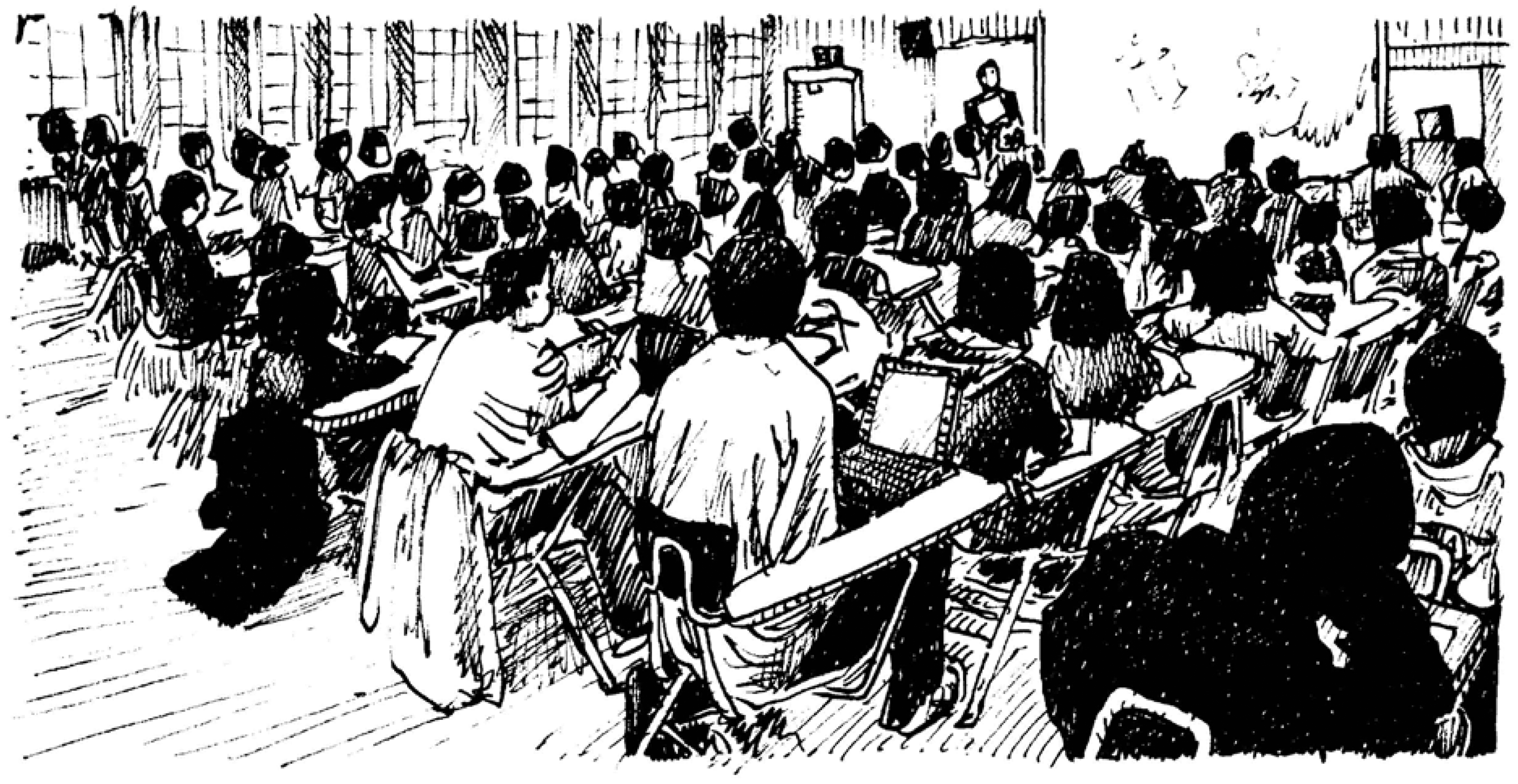
A typical class period began with a writing prompt that focused students on the topic of the day. The teachers expected this to take approximately 5 min, giving time for attendance and minor housekeeping items to be addressed. Getting to that writing prompt, however, involved much confusion and conflict as students struggled to reach their assigned seats in the crowded setting. They often bumped into each other, accidentally and sometimes intentionally, causing a general break down in the orderly start of class. Late arrivals only added to the problem. The atmosphere was ripe for students who struggled with self-discipline and disorganization to turn a 5-min warm-up into a 15–20 min management problem.
Genesis of the project
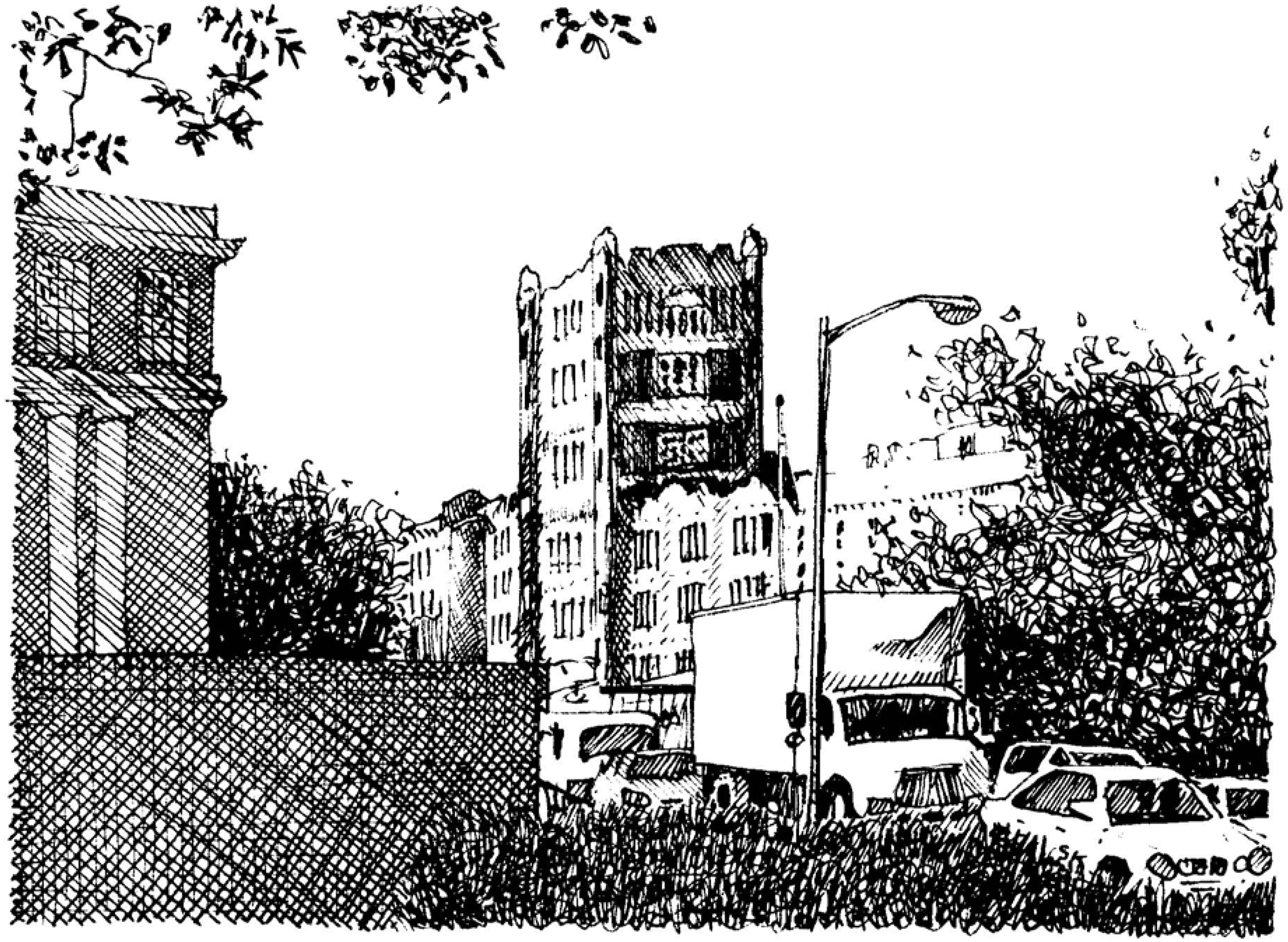
The basis for this action research study developed when Steve, a university supervisor, was conducting observations of the preservice teacher in the high school classroom. He noted that the two cooperating co-teachers leading the class had blended their content areas into effective interdisciplinary lessons. In spite of the instructional practice of co-teaching that was serving as a model for the preservice teacher, Steve witnessed the teachers’ frustration and loss of instructional time (see Figure 2).
Neighborhood and beyond. The high school drew students from 42 geographic zip codes. Many of the students came from the local neighborhood, pictured here looking out from the southern exposure of a third-floor classroom.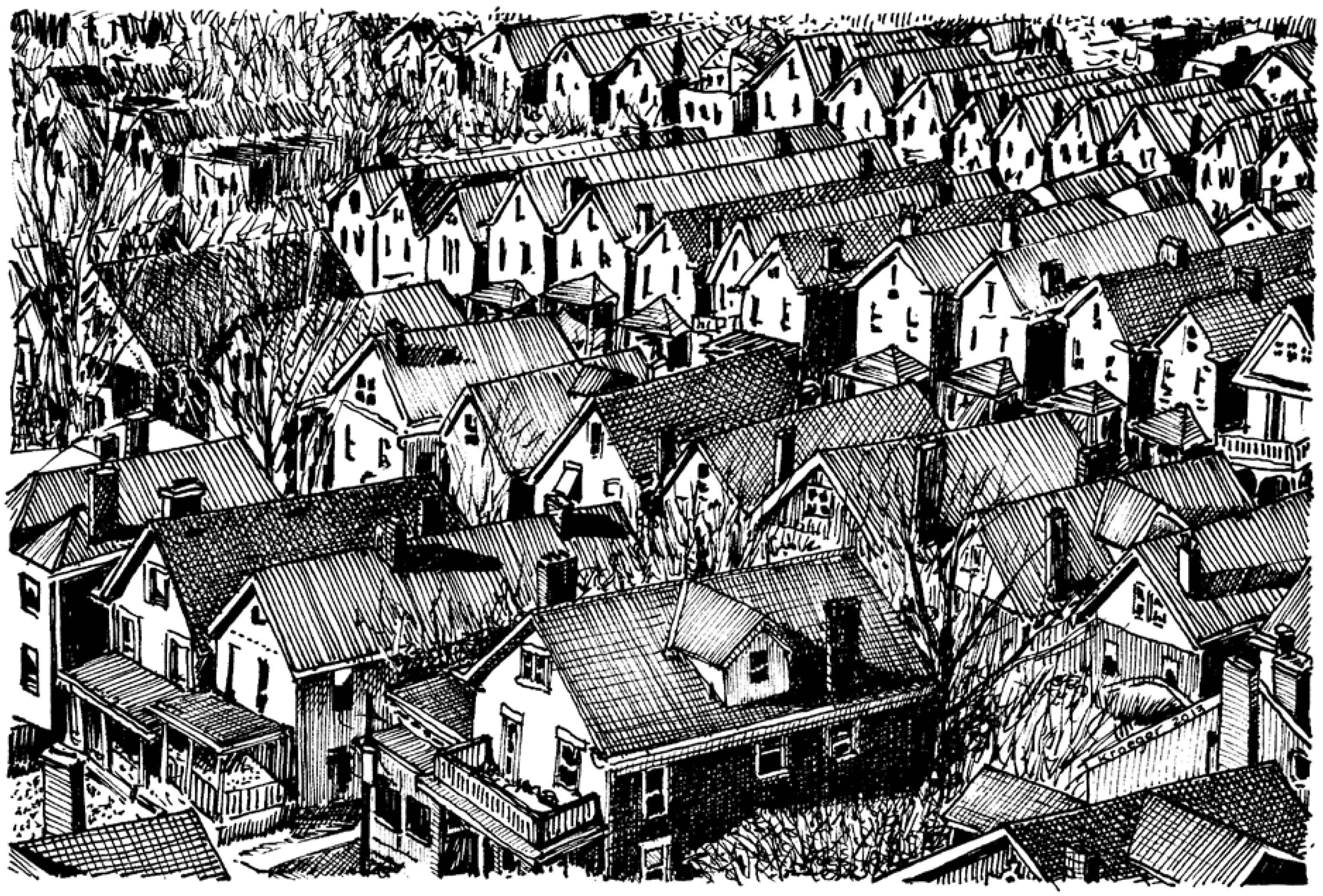
Specific ideas for improvement came to Steve, who had expertise in positive behavioral supports. He was reluctant to share his thinking, however, because he did not yet know these veteran cooperating teachers very well and did not want to offend them. The teachers themselves took the first step. They arranged an after-school meeting with Steve. The teachers shared their frustrations, and Steve reported on what he had observed and his thoughts to improve the situation. As a collaborative relationship began to form, it was clear that all parties would have to stretch. The teachers knew that any working relationship would mean opening up their classroom to scrutiny and forging a new level of vulnerability and trust. Steve understood that he would have to be a partner, a cocreator in this change, not the giver of solutions. From the beginning, the work reflected the action research goals of mutual knowledge construction, using the classroom experience of the teachers, and the research knowledge of the university faculty. Our writing team valued social processes that were collaborative and mutually respectful. We participated together in the same knowledge generation, built on the diversity of experiences of the involved actors, and the questions they generated. The result would be actionable knowledge that evolved from the research process itself and judged as valuable by the stakeholders’ own determination (Levin & Greenwood, 2008).
Partnership at work
Partnership members agreed that an effective, focused 5-min warm-up activity was the key to a successful transition to the other activities of the daily classroom agenda. They agreed to collect data through daily observations around transition time and behaviors of students and teachers. After two weeks of observations, the group identified a number of measurable proactive strategies that they would consider. They decided on the following procedures: (a) as the students entered the classroom, the teachers would announce that their goal was to have everyone working on a warm-up within 4 min; (b) the teachers would remind students to remain seated, to have a pen and their binder on their desks, and to complete the warm-up in silence; and (c) as the students were working, the teachers would acknowledge demonstrations of positive academic and social behaviors. The intervention that the partners developed quickly led to a much more effective start of class and addressed objectives related to increasing student achievement.
As noted above the teachers’ goal was to have everyone at work within the first 4 min of class. Note that at 4 min (4:00) there is a dramatic drop off of sound in the classroom (Figure 3). During this transition, the teachers provided explicit timing, precorrection, and positive feedback to students exhibiting desired behaviors in the classroom and hallway. After the 4-min mark, the only sounds heard are those of the daily warm-up: pencils on paper, an occasional chair movement, or a teacher comment. At the 10-min mark (10:00), the teachers began the lesson for the day. In addition to the audio recordings, the university partners manually recorded accounts of the explicit timing, precorrection, and acknowledgment of expected behaviors in order to assist teachers in the visualization of their progress.
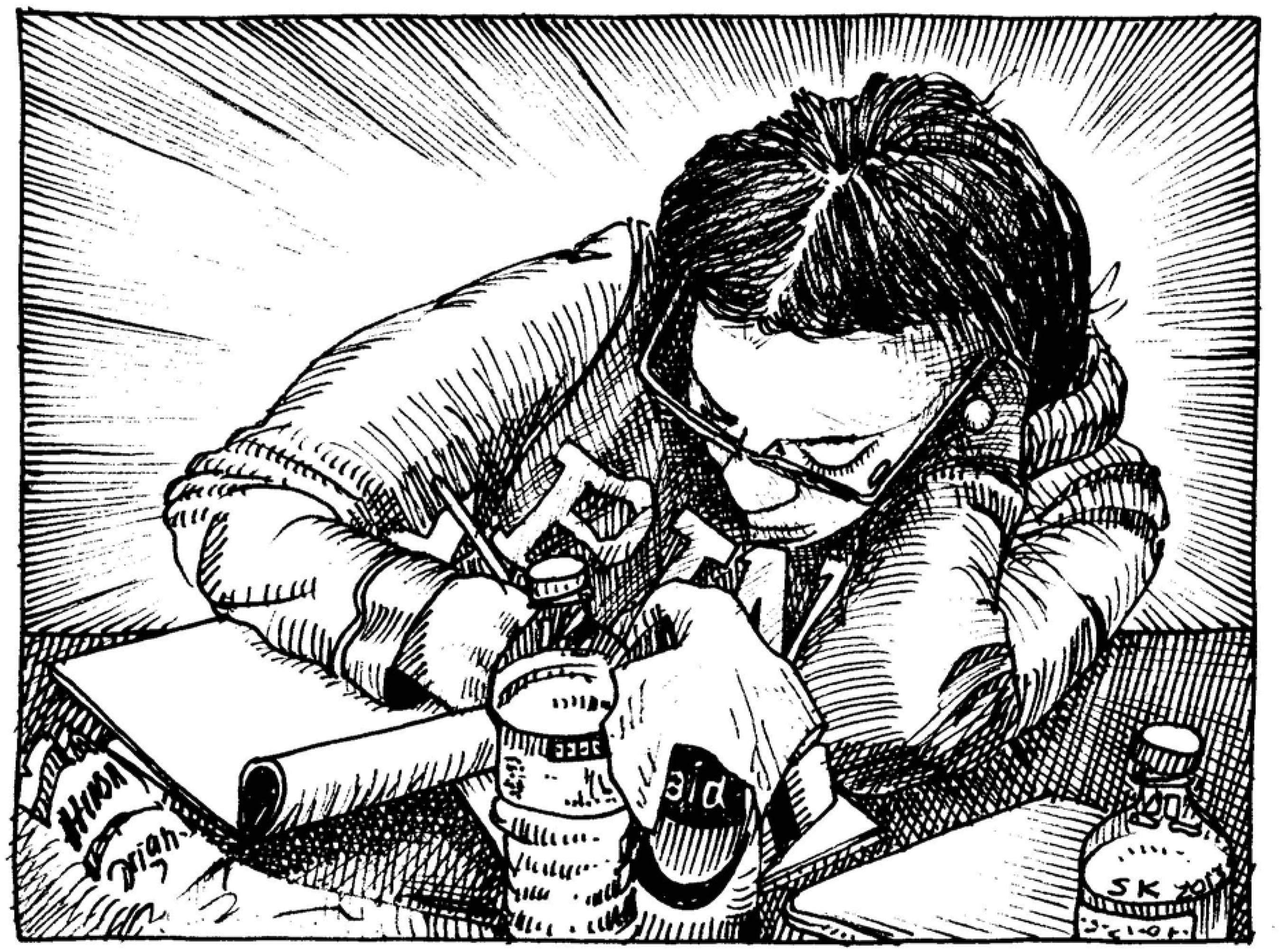
Sound clip image. This visual display of the sound track shows the first 11½ min of approximately 60 ninth graders returning to class from lunch. Female student writing: Students engaged in a writing warm up exercise at the beginning of each class. Here a student is completing a writing journal that incorporates new vocabulary. Two buildings: The school of education building in the foreground and the high school building in the background. Sometimes institutions are far apart even if they are in proximity to one another. Our partnership worked to decrease that distance.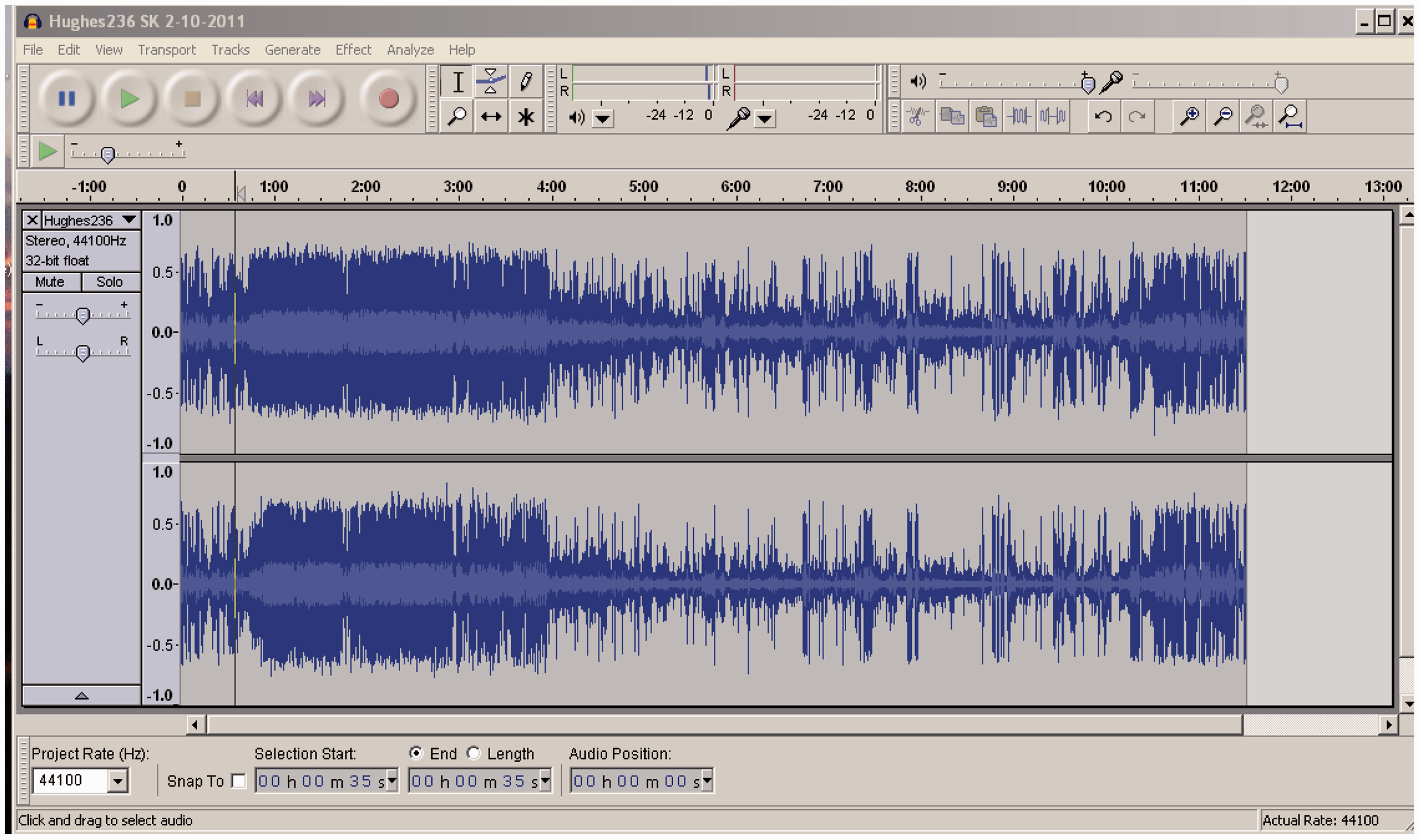
Steps in the relationship
The strategies were an immediate success. The level of student engagement rose, and the frequency of distracting behavior decreased. With time to reflect on their experience, however, the partners realized that they had accomplished something even more valuable than solving an instructional problem. Both teachers at the high school involved in the study had a long history in partnership with the university. Both Jamie and Tim are were alumni of the university’s teacher education program, and both were involved in an initiative in the 1990s where the high school partnered with the university to create an innovative approach to teacher education. Steve began his work with Hughes teaching a university course embedded in the high school that included general education and special education preservice teachers observing and helping in classrooms.
This collaborative project, however, required a new and different level of involvement. Rather than a relationship based on a university expert dispensing research-based information and knowledge flowing in one direction, an open exchange was developed, where mutual understanding and shared needs met, creating a two-way benefit for the faculty and students of the university and the high school. Working together, as a transdisciplinary team, they established genuine trust and crossed significant hurdles to break outside of the traditional model of the university providing knowledge and theory to practitioners (Gibbons et al., 1994; Heckscher & Martin-Rios, 2013).
One of the first hurdles in walking the road together was recognizing the vulnerability inherent in opening up the classroom to the university. The teachers had to give up a great deal of control and comfort. In this situation, the intention and attitude of the observer had to be clear. The teachers explained, “People fear observation and evaluation because they see all these ‘gotchas.’ If the teacher feels like they’re in a gotcha situation, they’re not going to participate” (Jamie on 14th November 2013). From the university perspective, Steve commented, “Coming into another person’s classroom, from outside, there was the lack of personal history and trust was not assumed or expected” (Steve on 12th December 2013). Tim emphasized, “You recognized that we were surrendering our practice to you, warts and all, and that takes a lot of risk” (Tim on 12th December 2013). With that in mind when a university observer wanted to provide feedback, a framework of respect was paramount, and the university partners learned that transparency was critical.
Added to the issue of vulnerability was what the teachers described as an outsider–insider dichotomy. Although the district and school had placed a much greater emphasis on research-based pedagogy and teachers were embracing research like no other time in education, the trenches and ivory tower stereotypes still lived. It may be especially true in urban education where the challenges to teachers are the greatest (Bohanon et al., 2006; McCurdy, Mannella, & Eldridge, 2003). Race and class loom large in this context, yet national education reformers and critics continually deny or ignore these as legitimate factors that impact student achievement, proclaiming that excellent teachers can overcome all obstacles to learning. We are trained not to deal directly with race or class and that only intensifies the sense of teacher isolation and mistrust (Ladson-Billings, 2006; Milner, 2010). Understandably then, Jamie and Tim initially questioned the effectiveness or the applicability of Steve’s suggestions for a positive behavior support approach to management with some of the most challenging behavior they had faced in their careers. Positive behavior support took time, great patience, and was contrary to the teachers’ inclination to confront defiance with direct response and sometimes punitive action.
Jamie, spoke candidly about prior partnership experiences, “Frankly, the politics and self-interest that some of the outside parties brought to the process in the past left me a little jaded and very guarded” (Jamie on 24th October 2013). The initial question the participants asked was whose interest was being served? The high school faculty wanted nothing to do with someone who wanted to “perform an experiment, to gather data for publication, or to impose practices that weren’t a good fit” (Tim on 24th October 2013).
It was through a series of meetings at a local coffee shop where classroom observations were presented to seek validity and determine value that the first steps of accompaniment began to develop. Steve brought observation data such as written narratives of what he was seeing, transcripts from previous meetings, and numerical data about the amount of time used to bring order to the class. Steve would talk about student-to-student interactions and student-to-teacher interactions, and teacher-to-student interactions, and then ask Jamie and Tim to reinterpret the data from their perspective. In this way, they developed larger themes such as recognizing the positive that was already present. The splitting of the data into such themes facilitated discovery of the interaction of the parts of what seemed initially like a disjoined whole, or chaos as we liked to call it.
As co-investigators, seeing from various dimensions, we began to acquire meaning from individual points of data. A teacher not moving around the classroom during the warm-up period might signal that there was a distraction, a note received from the office, and should be set aside for later. By spelling out our reality together, we were taking possession of it. Freire (1968) pointed out that this common striving toward awareness of reality and awareness of self makes the investigation a starting point for the educational process. These individual acts of sharing data about what was happening, seeking an interpretation for that data, and working together to suggest or create alternatives, changed the nature of the relationship. The teachers opened their doors when they could see that this individual from the university “did not have an agenda other than a commitment to a process that involved listening and working together to find solutions” (Jamie on 12th December 2013). The outsider–insider perception dissipated when intentions and dispositions of co-learning emerged. Willingness to learn laid the groundwork for the development of trust, a prerequisite of making change.
Skepticism about the use of data
Throughout the collaboration, the practicing teachers expressed what they thought was a healthy skepticism about the use of data to make important instructional decisions. They understood there was a discrepancy between research articles and experience in the classroom. When contrasting research-based knowledge, the raw material of the university, and pedagogical knowledge, used in day-to-day classroom teaching (McIntyre, 2005; Rowell, 2006), it was important to them to challenge the tension that is said to exist between teachers who supposedly seek practical solutions to real challenges, and researchers generating new but inapplicable knowledge. This study went further by suggesting that together teachers and researchers design and implement the intervention. If students do not benefit from practice and research, its value is extinguished.
One partnership meeting in particular related to how trust and the use of data in the partnership developed. At the beginning of the partnership, Steve agreed to provide daily performance feedback for the teachers. The teachers on their part suggested that Steve send a brief note each day via electronic mail to provide a daily summary report. Performance feedback is defined as ongoing data-based objective feedback on current performance of targeted behaviors (Noell et al., 2005). When the procedures were first introduced, sound recordings were made of the transition period. In addition to email communication, the partnership would meet regularly to review data such as the audio recording and a visual display of the recording for the teachers as an indicator that their plan was making progress or not (see Figure 3). The teachers noted how helpful it was to receive this kind of feedback on their practice. This moment of seeing this data display and recording was recalled as significant. Tim stated, Most teachers are skeptical of data, and this is a way to demonstrate how something worked. The actual live recordings showed how dramatically it shifted. What amazed me was that somehow, through the absolute chaos of the hallway, students came in and within one minute they were working (Tim on 12th December 2014).
The success of the intervention continued. Jamie recalled a moment from the second semester where he saw the manifestation of an evidence-based procedure effectively at work in every day practice. He and Tim split the class of 60 students into two groups and would trade halfway through the bell. Jamie was in a computer lab working on an essay with his half of the class. He realized that he had forgotten editing sheets he needed during the lesson, so he left his student teachers in control and hurried up to their shared room to retrieve the materials. Upon entering, Jamie noticed that students were still restless from the transition. Tim, in a calm voice, was saying, “Thank you for quickly getting prepared, (all student names are pseudonyms) … I like the way Demetrius has followed instructions ….” Tim continued to recognize students who were cooperating and following directions without addressing transgressions. By the time Jamie made his way to the door, the class was quiet and ready to learn.
The simplicity of what he saw struck Jamie: students treated with respect, and the teacher’s focus was on students who were meeting expectations.Tim was neither upset nor agitated by students who were noncompliant.Tim could have issued detentions or asked students to step into the hallway, but what he had done was calmly and respectfully motivated 30 students to engage.
Discussion
Our team operated with a working definition of equity partnership. As Caro-Bruce, Flessner, Klehr, and Zeichner (2007) described it, a working definition reflects how the understanding of equity in partnership evolves throughout the action research experience. As our partnership developed, we increasingly made a commitment to a creative process that included an (a) orientating theory, (b) active intervention, (c) critical reflection, and (d) ongoing experimentation (Reardon, Welsh, Kreiswirth, & Forester, 1993).
Orientating theory
What developed in our work together in this ninth-grade classroom was the simple impulse to accompany each other, to walk together, side by side, toward a common destination. Working in separate institutions, each with its own culture and priorities would offer challenges to this goal, but in the end, our commitment to the partnership was essentially an act of companionship on a common journey. Lynd (2013) distilled his understanding of accompaniment through his work in the labor and civil rights movements, prisoner insurgencies, and by the lived experience of Monseigneur Oscar Romero of El Salvador. Lynd did not generate a formula that illuminated a pathway for us from one place to another; all he was sure about was the first step, accompanying.
Accompanying involves taking the same risks as others and is a process of jointly seeking solutions to problems that result in lasting and meaningful social change (Lynd, 2013). Accompanying provided a way for the teachers to work with students in their own discovery and learning processes. The university faculty member, Steve, confided that the challenge before him was to learn from the teachers and understand their circumstances. The learning was dispositional at the outset because he had to examine how he came to this setting as a companion willing to share time and space in order to bring about different outcomes in the classroom. His goal was to bring the simple ability to observe and provide a nonevaluative perspective on what he was observing. Steve would sit in the classroom and listen to the multitude of sounds emanating from the classroom, watch the action of the teachers and students, try to understand sequences of behaviors and routines. These observations were noted and summarized later in an email and provided fodder for discussion during the coffee house meetings.
Our first step involved a late afternoon meeting where Tim and Jamie honestly laid out what they thought were the key concerns. Steve’s role in this first step was to ask questions to clarify what was being said and to introduce some possible scenarios of collaboration. We knew, for example, that we wanted a partnership that was egalitarian. Flores-Kastanis, Montoya-Vargas, and Suarez, (2009) highlighted the ethical dimensions of egalitarian partnership in political and pedagogical action through the Freirian concept of participation. Freire (1968) stated that “because liberating action is dialogical in nature, dialogue cannot be a posteriori to that action, but must be concomitant with it” (p. 134). From the first impulse to work together, and then throughout the process, we were determined to undermine traditional assumptions about the direction of knowledge generation—it would be bidirectional and constructed together (Bartunek, 2011).
The teachers invited the university faculty into the first meeting. We sat down and asked ourselves, “What is happening here? Why is this happening? What can we do about it?” Each meeting was about listening carefully to one another. We documented and recorded our conversations, transcribed them, and later analyzed the text in our coffee house meetings. Each participant was genuinely interested in the others’ interpretation of what was happening. We encouraged one another to share knowledge and experience. If Steve suggested a strategy, then Jamie and Tim would ask questions, challenge assumptions. One person’s experience in the classroom would stir a story about an experience in another person’s experience. Each conversation expanded our knowledge in the process.
Contrast this starting point with a more traditional research model where university researchers take a more colonial approach. Research in a colonial model views local knowledge as stagnant and unchanging and establishes the dominant group’s knowledge, experience, culture, and language as the universal norm (Battiste, 2005). We wanted an accompaniment approach that viewed stakeholders walking side by side on a common journey, each contributing something vital to the process (Lynd & Grubacic, 2008). Through accompaniment, we found that value was created and something new could be immediately used.
Social accountability—the willingness to enter a process of improvisational and collaborative learning—more than anything else, was the key that unlocked our ability to move forward together (MacLean, MacIntosh, & Grant, 2002). We met regularly, Steve took notes while observing and shared summaries of those observations. One day several students returned from a school suspension, Steve, unaware of why the data for that day was so different, needed Jamie and Tim to provide context for those hidden events in the classroom. Without a working formula, we improvised and built a relationship focused on finding solutions that worked in our particular classroom context.
The action research approach to learning that we wanted would view unexpected barriers as critical incidents that required reexamination of our assumptions and plans (Reardon et al., 1993). Reexamination requires that participants ask new questions or view their reality from another dimension. We looked for examples where teachers in classrooms would do something differently because they asked questions. Teacher Alicia Fitzpatrick asked her students, faced with poor food quality at their school, “How do you see a solution to this problem?” In response, students decided to grow their own food and consequently drew on the deep roots of their own communities (Brydon-Miller, Kral, Maguire, Noffke, & Sabhlok, 2011). We were asking ourselves similar questions about how to see a solution to a perceived problem. Such examples gave us courage to take risks in our own process of understanding our classroom and our students.
Taking risks included our refusal to work in isolation. Institutions must integrate their bodies of knowledge with the goal of solving complex problems (Levin & Greenwood, 2008). Benson, Harkavy, and Puckett (2011), from University of Pennsylvania’s Netter Center, advocated that institutions of higher education (IHE) make a commitment to a problem-solving process with the American schooling system. Implications of such an obligation would mean that at the core of the IHE mission there are actions that supported the development of an effective, integrated, and democratic pre-K though higher education school system. IHE’s must work face to face in the community to problem solve (Jacoby, 2003).
Examples of partnerships based on organizational commitments involve a shared expertise of people at various levels of authority and decision making (Gibbons et al., 1994; Gustavsen, 2003; Leslie, 2011). In such a commitment, stakeholders each carry out different functions within the partnership. Teachers benefit from professional development models that value their expertise and promote teacher-to-teacher sharing and collaboration (Boatright & Gallucci, 2008; Borko, Jacobs, Eiteljorg, & Pittman, 2008; Neufeld & Roper, 2003). Nordgren (2011) pointed out that mutual commitments are essential for partnership success. Given this orientation, we were positioned to engage in active intervention.
Active intervention
A second aspect of our creative process was a commitment to active intervention. Our partnerships required two-way communication—incorporating an integrated mix of collegiality, mutual respect, discussion about one’s practice, and long-term support (Van Kraayenoord, Honan, & Moni, 2011). Mutual learning through accompaniment stands in stark contrast to the banking notion of education, where knowledge is poured from one source into the empty vessel (Freire, 1968). Essential qualities in partnerships include mutual accountability in shared commitments across a continuum from the beginning of the process to its end. Knowledge and shared expertise must come from multiple directions. Such was the case in this partnership, where the commitment to develop a trusting relationship, through our coffeehouse meetings, after school discussions, and daily reports, was paramount and even superseded activities such as the 5-min warm-up, with the combination of clear expectations, explicit timing, and a focus on student competency.
Critical reflection
A third aspect of our creative process was critical reflection. As a self-study action research project, we reflected on our practice and analyzed the nature of the partnership with the intention of building trust and establishing a mutual commitment. We also challenged the inequities of the status quo of information delivery and knowledge generation in our regular meetings where we shared knowledge and lived experiences each from our own perspective. We consciously tried to create something different in the school, and this effort influenced our work with each other. We deliberately attempted to break timeworn structures in order to develop a democratic classroom. Both teachers had a long history in partnership development with the university and worked with the university to create innovative approaches to teacher education and induction. Both teachers participated in the partnership of the teachers union, the school district, and the University to develop this STEM school. Jamie and Tim determined that opening their classroom to an outsider was an intentional act to change the dominant culture. The choice of two teachers merging their curricula was an attempt to challenge the century-old factory model of education. Collaboration and community were embedded in the DNA of this school and we worked to make those two elements central.
Steve stated that university teacher preparation programs employ cooperating teachers and their students while missing the vulnerability they experience when visitors enter their classrooms. “We plop down in a chair and watch, not appreciating the welcome that we receive or the public exposure that teachers face on a regular basis,” noted Steve. “Hearing the teachers describe their sense of vulnerability when outsiders enter their classroom created a deeper commitment and determination on my part to incorporate teacher knowledge and insight into the teacher preparation process” (Steve on 14th November 2013).
The teachers also shared reservations about the new procedures they were being asked to implement. Jamie stated, Initially I feared that we would positively acknowledge a small amount of appropriate behavior while students continued to misbehave. I’ve seen this take place before. Once trust was established, however, I no longer feared being in the fish bowl. This was especially true after the effectiveness of the strategy became apparent (Jamie on 14th November 2013).
Tim confirmed this fear in his statement, “My biggest fear was that this type of intervention would not work and we would be left with a worse situation” (Tim on 12th December 2013). In the end, personal and professional courage allowed these veteran teachers to become vulnerable.Tim admitted, “I could not maintain the status quo and wanted help. When I realized that outside assistance could prove beneficial I swallowed my pride and let the reality of our situation speak for itself” (Tim on 12th December 2013). It is a mistake for a collaborator from outside the classroom to underestimate this risk factor.
Vulnerability, denoting openness to censure or criticism, is a dispositional stance that demonstrates trust. Jamie and Tim talked about the risk associated with having someone from the outside enter their classroom. The teachers willingly took this risk, but also acknowledged a sense of being exposed. When asked about the greatest challenge of the partnership, Jamie said clearly, It was a challenge to let others see us in such a vulnerable situation…. We were making mistakes on a daily basis and, particularly during the first semester, it was the most difficult teaching I had experienced in 20 years (Jamie on 14th November 2013).
Tim echoed Jamie’s response, “I also feared opening our classroom knowing that it could be embarrassing” (Jamie on 14th November 2013). More than just embarrassing, there are larger more serious threats to teachers in terms of job security and promotion at stake. Carving time out of our daily schedules to conduct observations, meeting to review our data, and sharing new ideas was a reflection process that made ongoing experimentation possible.
Ongoing experimentation
The fourth aspect of our creative process was ongoing experimentation. Each participant changed in different ways as a result of working together on this common project. One of the teachers, Jamie, who was more accustomed to a top–down approach to classroom management, explained, I set the rules and expectations and had very clear consequences in place. I was firm, fair, but very much the one in control. My strategy for students who went outside the boundaries that I established was to counsel them using one-on-one hallway conversations, or after school detentions. I wasn’t an unsupportive taskmaster, but most of my positive reinforcement took place somewhat privately (Jamie on 14th November 2013).
In new circumstances, a large class of 60 students, the top–down approach was less effective. Jamie stated he was “pleasantly surprised to see how quickly our students responded to overt, public positive praise of their competence. It was a growth step for me to embrace that approach” (Jamie on 14th November 2013). The other teacher, Tim, emphasized this same dynamic from a different perspective.Tim noted that zero-tolerance approaches to discipline generated backlash and further student resistance. Tim stated, “We began to realize that the same approach of calm reassurance and supportive language the university faculty used in coaching us translated well into our approach with our students” (Tim on 14th November 2013).
There were several times throughout the collaboration where the participants experienced shifts in expectations, coming to the partnership thinking one thing but with experience thinking another. As part of the partnership, Steve agreed to visit the classroom on a daily basis, take notes, and share those notes in a summary form each day. Steve wondered if his daily feedback in the form of data tables was a nuisance to the teachers, yet there were many occasions where Jamie and Tim were eager to see the data. The teachers sensed the shifting classroom climate and noted that it was reassuring to see the numbers verify their suspicions. As university faculty, Steve came to see the value in this feedback as the teachers valued it from their perspective.
Next iteration
Participants agreed they would change three things: involve the students in the design process, involve teachers around the school in the learning process, and include university partners in curriculum planning as well as classroom organization and management. In terms of involving students in the process, Tim stated, “Self-control is far better than externally motivated control. Some students were just as frustrated as the teachers and expressed relief when we instituted the structured warm-up” (Tim on 12th December 2013). The democratic nature of this action research project would have had greater impact with students as co-constructors. Student engagement throughout would has enhanced the learning process. We would offer the identical questions to our students. What is happening here? What are your concerns? What can we do about it? The solution pool would likely be much bigger with student voice included. We would expect more instructional ideas to emerge as a priority rather than mere strategies for time usage.
The fact that the study took place across a single school year in one classroom with two teachers and a university faculty member is another concern. We imagine greater depth of conversation if the discussion had been school-wide with teachers from various content disciplines across several years of action and reflection. Partnerships involve many stakeholders with widely divergent interests. Additional voices to this conversation would provide insight and increase the likelihood that the partnership would be sustained and experience growth.
Jamie emphasized that a school-wide approach would be an important element in the next iteration of the study. “The school needed a common approach to classroom management. Implementing a school-wide beginning-of-class routine, involving all stakeholders would have laid the groundwork for a more unified school culture” (Jamie on 12th December 2013). A future study should certainly include student participation from the beginning and a recruitment process for including all teachers.
Teachers also indicated that inclusion of university partners in curriculum planning as well as classroom organization and management would serve to enhance the relationship and draw on practices grounded in peer-reviewed research. University faculty members would likewise obtain a more grounded perspective of teaching and learning that would inform their student teaching training.
Conclusion
This study demonstrated that in this instance the gap between research-based knowledge that is published in scientific journals and pedagogical knowledge which is used by classroom teachers in their day-to-day teaching (MacLean et al., 2002; McIntyre, 2005; Vanderlinde & van Braak, 2010) does not exist at cross-purposes. The key to blending such knowledge is the development of collaborative trust, which depends on the quality of the relationships that are built and maintained (Adler & Heckscher, 2013). The two teachers in this study agreed to always put their relationship first, believing that everything else would follow accordingly. They extended that commitment to their university partner who eagerly reciprocated in kind. It was with that spirit and effort that they laid the groundwork for continuing collaborative work. Horton and Freire (1990) summed it up by proclaiming with the translated words of the poet Antonio Machado that, “We make the road by walking.”
