



Abstract
Despite the recent advances in participatory research with sex workers, our knowledge regarding how to process and articulate the various steps of participatory action research remains rather limited. This article focuses on a participatory action research case study with street-based female sex workers and an outreach team. This case study was developed in Coimbra, Portugal and lasted for three years, beginning at the end of 2012. This paper has the following three primary purposes: (1) to fill this research gap by describing all the steps of a participatory action research project; (2) to examine the process and results; and (3) to offer a model of research and social practice that involves sex workers. We identified a mutual understanding regarding the priority concerns, but there is little cohesion among sex workers. We concluded that the participatory action research activities may have provided a sense of control and awareness, but the transformation of subjectivity to collective action is still required.
Introduction
Sex work has always been controversial in the academic and social discourses. It has been defined as an exchange of sexual services by adults with mutual consent (Oliveira, 2011), and it may include direct physical contact (e.g., prostitution) or indirect sexual stimulation (e.g., pornography; Weitzer, 2010).
In Portugal, it is not illegal to buy and sell sex; however, prostitutes are generally considered to be impure, morally degenerate, deviants, or victims. Political, social, and hygiene discourses have been largely responsible for the social construction of the prostitute stereotype. These discourses are shaped by hygienic and moral standpoints and by different feminist perspectives. Regarding feminist perspectives, the literature emphasizes two opposite viewpoints. On the one hand, radical feminism regards prostitutes as victims of male oppression and prostitution as violence against women, which should be eradicated (Barry, 1995; Farley, 2005; Jeffreys, 1997). On the other hand, liberal and pro-sex work feminism considers that prostitution is work that can be rationally chosen and that sex workers deserve rights (Chapkis, 1997; McLeod, 1982; Pheterson, 1989). Both discourses are reductionist and biased because there are many different experiences and forms of sex work (Sanders, O’Neill, & Pitcher, 2011; Weitzer, 2010). Usually, prostitutes are excluded from this debate.
The Portuguese Sex Work Network is constituted by nongovernmental organizations (NGOs) that provide services to sex workers, researchers, and sex workers. The organization has been promoting sex workers’ rights through various initiatives, such as requesting changes to the legal framework (Agência Piaget para o Desenvolvimento, Rede sobre Trabalho Sexual, & Peixoto, 2012) and attending events to fight for sex worker rights (e.g., May Day). However, these initiatives are occasional and mainly focused on the cities of Oporto and Lisbon. Despite attempts of collective action (see Lopes & Oliveira, 2006; Oliveira & Mota, 2012), participation is still developing.
To date, several studies (Day, 2007; Lazarus et al., 2012; Scambler, 2007; Weitzer, 2010) have shown a relation between stigma and sex work and the consequences of stigma to the well-being of sex workers. According to Goffman (1963, p. 3), stigma refers to “an attribute that is significantly discrediting.” Stigma is the result of an interactive social process that involves the relation between an attribute and a stereotype. Stigmatization is linked to the reproduction of inequality, discrimination, and exclusion (Scambler, 2007). Moreover, stigma is considered a barrier to access social and health services (Lazarus et al., 2012), which makes sex workers a vulnerable and hidden population.
To deliver social and health services to targets who are difficult to reach, NGOs provide outreach services for drug users, homeless persons, and sex workers. Outreach in the sex work context was first used in the 1980s (Mak, 2004). This outreach focused on safe sex and HIV prevention and currently offers many services in addition to those related to health care (Whowell, 2010). According to Agustín (2007), generally outreach does not meet sex workers’ needs and relies on fake discourses of solidarity, empowerment, self-esteem, and social inclusion. In contrast, Pitcher (2006) and O’Neill (2008) argue that services for sex workers are key collaborators and have a vital role. In fact, non-discriminatory outreach support is requested for people who, because of stigma, rarely feel confident to seek formal health and social services.
In Coimbra, where this study was performed, there are several outreach teams; however, only two have expertise in sex work. One team supports women who want leave sex work behind because this team believes that prostitution is coercive and violent against women. The other team provides harm reduction services and recognizes the heterogeneous features of sex workers’ experiences. We proposed our study to the team that provides harm reduction services because we agree that sex work assumes different forms and that personal experiences are highly diversified (Oliveira, 2011). We recognize prostitution “as an understandable (and reasonable) response to socio-economic need within the context of a consumer culture, and within a social framework that privileges male sexuality” (O’Neill, 2001, pp. 15–16). We respect free will and informed choice and assume a nonjudgmental attitude toward people in the sex industry. However, we are against the trafficking and exploitation of persons for sexual or other purposes. Prostitution may be connected with trafficking, but trafficking is a different issue that should be treated differently. Sex work is a double-edged sword: it may allow leaving a situation of economic exclusion, while it leads to other forms of marginalization.
My motivation to become a participatory action research (PAR) facilitator is related to my experience during my trainee as a social worker. From 1999 to 2001, I worked in harm reduction with sex workers and people who inject drugs. I already knew some of the participants (sex workers and outreach workers) from back then. By that time, I became aware of the lack of participation of sex workers in projects that concern them, and some individuals shared with me the will to improve their lives and to fight for social rights and against discrimination, stigma, and prejudice. Unfortunately, I had to leave the field and I only got back in 2012, when I got a PhD’s scholarship. My return was an attempt to comply with a past commitment to the sex workers.
Thus, from September 2012 to April 2015, I conducted a PAR monitored by my academic supervisors with street-based female sex workers and an outreach team in the city of Coimbra, Portugal. Our purpose was to understand sex workers’ wants and needs and to create safe places for dynamic interaction among all stakeholders (sex workers, outreach workers, and facilitator). We encouraged all stakeholders to participate in the construction of a socio-educational model of intervention through critical thinking, reflection, decision making, responsibility, and co-construction. We adopted the socio-critical paradigm because it seems the most appropriate to produce pragmatic knowledge and because of its ability to generate praxis or action (Denzin & Lincoln, 2006; Freire, 1972).
In recent years, a large body of research has been conducted on sex work and its actors. However, traditional studies still tend to focus on sex workers and little research has been conducted with them (the exceptions are, e.g., Lopes, 2006; Martin, 2013; O’Neill, Campbell, Hubbard, Pitcher, & Scoular, 2008; Pyett, 1998; van der Meulen, 2011; Wahab, 2003). In Portugal, to our knowledge, the situation is similar because only one action research project has been developed with sex workers (Oliveira & Mota, 2012). The aforementioned PAR studies mainly focus on the following: health promotion and HIV prevention (e.g., Cornish, 2006); harm reduction (Martin, 2013); labor and legal changes (Lopes, 2006; van der Meulen, 2011); forming a trade union (Lopes, 2006); the politics of social inclusion (O’Neill, 2008; Pyett, 1998; Wahab, 2003); the resolution of conflicts and the reduction of moral panic and fear of the “otherness” (O’Neill et al., 2008); and peer education (Oliveira & Mota, 2012). Despite these advances, the PAR literature mostly emphasizes the principles and describes less the process (Reason, 1994). Therefore, our knowledge of how to process and articulate the various steps of action research remains rather limited. This limitation may concern the difficulty of explaining the practices of PAR. Actually, writing about participatory research may be difficult because action and reflection dynamics are not easy to capture as a static report (Hall, 1982). Therefore, this paper has the following three primary purposes: (1) to fill this research gap by describing all the steps of a PAR project; (2) to examine the process and results; and (3) to offer a model of research and social practice with sex workers.
Participatory action research
Scholars appear to agree concerning the difficulty in defining action research. In fact, several authors (e.g., Cassell & Johnson, 2006; Kemmis & McTaggart, 2005; Reason & Bradbury, 2001) have described various forms of action research that are connected to different theories and practices. We identify with a fourth generation of PAR, which is associated with social movements, adult education, and critical and emancipatory research (Kemmis & McTaggart, 2005). We are positioned on an emancipatory line, whose objectives are to improve results (technical aspect), raise consciousness (especially in praxis), and encourage participation in the process of becoming more critical (emancipation).
We conducted PAR with sex workers to create safe spaces for communication with people who are usually excluded, and without a participation tradition. By safe spaces we understand nonjudgmental and empathic relationships that enable participants to feel confident to express themselves. Sex workers are rarely involved in matters that concern them; therefore, this project encourages the development of more collaborative initiatives between sex workers and an outreach team. In sex worker Sandra’s words: “People should also hear a little bit from us because there are people who think ‘she is there just to make money and it’s easy’, and it is not easy.”
By promoting consciousness-raising initiatives and by challenging traditional asymmetric relationships, we hope to achieve mutual understanding. This study includes three cycles of planning, action, and reflection, as shown in Figure 1.
Cycles of PAR.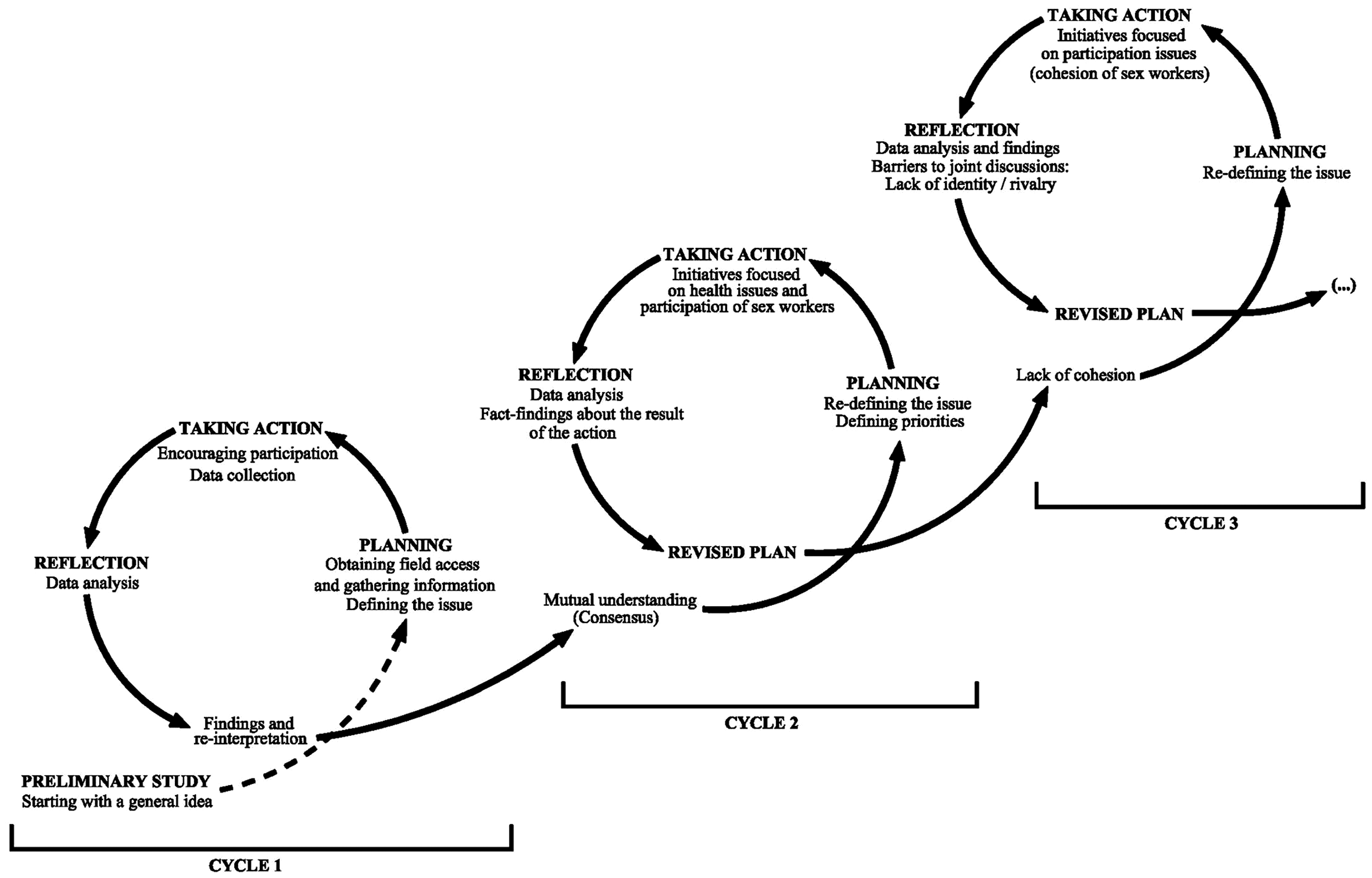
Participants and modes of participation
The group of 28 participants included 19 sex workers, eight outreach workers; and one PAR facilitator.
We identified different modes of participation that range in a continuum from passivity, to interactivity and to mobilization, as several authors pointed out (e.g., Arnstein, 1969; Pretty, Guijt, Thompson, & Scoones, 1995; Tripp, 2005).
Modes of participation, key activities, and participants.

The names are pseudonyms, in order to protect confidentiality and anonymity. bRefers to outreach workers and crefers to sex workers. dThese participants gave contribution, but they did not participate in a formal way.
Some sex work features and the different kinds of relationships established between the participants were responsible for the different modes of participation. Street-based sex work is unpredictable. In one night/day we could reach out between 0 and 12 people working on the street, some of them could be new, others we could meet only a few times, and others have work routines. Sex workers often move to other cities or they are absent for long periods of time, which makes most of the contacts punctual. The sex workers who have routines were those who we met frequently and with whom we had the opportunity to build rapport. Participation is influenced by the quality of relationships (Reason & Bradbury, 2001), therefore we believe that a trustful relationship is an essential ingredient for a joint collaborative work, and building rapport was only possible due to the frequency of contacts with those individuals. In addition to the (unpredictable) meetings on the street, the contact was made easier because we frequently communicated by phone and the internet.
Regarding the participation of the outreach workers, not all of them had an active role. In the first cycle, they seemed more persuaded to participate, and in some situations, they provided support. In negotiating meetings, the outreach workers showed interest in the project but did not take any initiative, and we had to reschedule joint discussions several times. They are not accustomed to participate as researchers, once traditional studies tend to consult them. In addition, the difficulties of financially sustaining the services appeared to interfere with team motivation and a collaborative approach. PAR is time-consuming, and at first, the outreach workers were not completely motivated to become involved, perhaps because they felt that they could be questioned. However, from the end of the first cycle, two outreach workers assumed a collaborative approach and became co-researchers throughout the entire process. We also lost contact with the trainees, when they finished their training and other outreach workers had no willingness to collaborate as co-researchers. The outreach workers got more involved when they realized that this type of research would allow them to know better sex workers’ needs; to improve outreach services; to raise the political power’s awareness of the need for primary prevention; and to produce knowledge concerning an intervention model. In outreach worker Pedro’s words: “[PAR] will give us an insight on the best form of intervention with these individuals, to improve their condition. It will enable us to adapt intervention, at political, macro, and micro levels.”
The facilitator’s relationship with the outreach workers and sex workers also changed over time. At first, participants were suspicions due to my association with the university and because I am a social worker—some saw me as possessing the magic formula to problems, others thought that I knew nothing of field work. Sex workers do not usually describe positive experiences with social workers, often because they are assumed to be control agents and anti-prostitution (Wahab, 2002). Through my consistent posture as a PAR facilitator and constantly feeding the communicational exchanges, I got the recognition as equal. I was accepted as a colleague by the outreach team, and as a sex worker ally, who cares and listens without judgment.
Most authors emphasize that PAR’s success depends on collective action and self-mobilization, however, as Pretty et al. (1995), we recognized that various forms of participation may be valid. Different individuals have different levels of involvement; and the mode of participation depends on the stage of the process, the objectives, the individual motivations, and the quality of the relationship between participants. The participants had different roles according to their skills and interests. For example, as facilitator, I took responsibility for the analyses and the representation of outcomes, and I transcribed interviews, analyzed the data, provided feedback to the stakeholders, and addressed all technological concerns. The sex workers and outreach workers, in general, jointly defined the thematic areas to increase knowledge, identified the priorities, obstacles, resources, strategies, and actions, and mostly reflected individually and less collectively on the process. The facilitator had different responsibilities, such as presenting the results to the scientific community, which cannot be shared with the other participants (Karlsen, 1991). By establishing this typology, we are valuing all the contributions given by the different participants.
Data collection and analysis
Informal interviews, participant observation, semi-structured interviews and joint discussions were conducted with the sex workers and the outreach team to explore mutual concerns. Semi-structured and joint interviews were recorded with the permission of the participants and transcribed. We used content analysis to analyze the data following the principles and procedures that are described in the specialist literature on this technique (Strauss & Corbin, 2007). A thematic analysis identified common issues/priorities on which to take action. We took care to ensure that the respondents were not identified. We also used the WebQDA software. All consent procedures were evaluated and approved by the research center where this study was integrated.
The starting point
My experience as a trainee, a literature review, and a preliminary study were important in defining the initial issue. In this preliminary study, we identified the practical, theoretical, and ideological foundations of the 23 agencies that currently provide services for sex workers in Portugal. We concluded that these agencies are similar and particularly focus on epidemiology and harm reduction, health promotion, and education; they have a significant role in the largest debate regarding prostitution as oppression or as work. These findings lead us to several questions. (1) Do the traditional epidemiological services that are provided unintentionally reinforce sex worker stigma? (2) What are the sex workers’ concerns, wants, and needs? (3) What are their opinions concerning their involvement in the design, implementation, and evaluation of the projects that concern them? In this sense, our first step was the identification of a lack of participation. However, as Glassman and Erdem (2014) emphasized, the starting point of PAR is not an abstract research question, but arises from the experience and observation of human interaction. To their point, we add that by giving voice and stimulating the participation of all stakeholders, we can unite action–research–reflection, theory, and practice for the needed and wanted change. Therefore, researchers, as facilitators, should establish a subject–subject relationship and engage the stakeholders by encouraging the participants’ own capacities to define their priorities and research issues.
Cycle 1
Obtaining field access and gathering information
Access to the field was facilitated by the outreach team, which has a trustful relationship with sex workers. Although the acceptance of the facilitator was easy, we had to negotiate our presence with all stakeholders and gain confidences to encourage individuals to participate. As several authors (Gaventa & Cornwall, 2001; Park, 2001; Reason & Bradbury, 2001) have noticed in the process, the results and the quality of the field work depend on the quality of the relationships that are established with the participants. These relationships must be horizontal, cooperative, respectful, nonjudgmental, and empathic, must attempt to validate subjective knowledge and must be associated with promoting empowerment and mutual learning (Fals-Borda, 1991; Freire, 1972). This process takes time; therefore, planning was the most time-consuming phase.
Thus, we began by interacting, and we recorded the observations and informal interview notes in a field diary. This was a way to find mutual understanding because it stimulates multiple dialogues that enable various viewpoints, and to build rapport with the participants.
From the most mentioned topics, the facilitator defined and discussed with both the sex workers and the outreach workers the thematic areas to collaboratively build two interview scripts. The sex workers’ script concerns the following thematic areas: the redesign and assessment of outreach services; formal service assessment; the narratives of prostitution; the identification of needs; research participation and the expectations. The outreach workers’ script focused on motivation, limitations and work potential, the outreach worker profile, and the research expectations. In the first phase, most of the participants contributed individually by defining the thematic areas that should be explored, but not all of them helped with the construction of the interview script or agreed to be formally interviewed.
Cycles, activities, and participants.

All participants were encouraged to read, comment, and modify their interview transcripts. This review had unexpected consequences because some sex workers were apprehensive concerning confidentiality, although we assured them that we removed all identifying elements.
We tried to ensure that participants were informed and understood all aspects concerning the research, so they can participate in a voluntarily and consciously way. This issue also raised ethical concerns, due to the limitations of the consent. First, lack of equality is an aspect when researching with stigmatized persons, who might not be in possession of all the information to make an informed choice. On the other hand, those differences in the power–knowledge relationship can lead to a consensual action that serves majority interests and unintentionally leads to increase inequality. Second, people do not know or do not trust each other; and cannot foresee the consequences of their actions. Thus, we believe that the only way to ensure a more equality relationship is by promoting communication and metacommunication, and be consistent with PAR principles. The shift from researching on to researching with sex workers is being emphasized as a path to decrease inequalities and power imbalance (Martin, 2015; van der Meulen, 2015).
Findings and re-interpretation
The facilitator analyzed the data and discussed the findings through informal individual interviews with eight sex workers and a joint discussion with four outreach workers.
The sex workers re-defined and synthesized the following four thematic areas that mostly concern them: (1) health (HIV/AIDS prevention and screening); (2) safety (violence against prostitutes and combating pimping and assaults); (3) the regulation of sex work; and (4) stigma. These narratives seem to be related to the harm reduction context, and reflect the fear of illness, death, or disability.
Considering the sex workers’ assessments and the findings of their own interviews, the outreach workers established the following intervention priorities.
Citizenship initiatives—The respondents consider that sex workers only claim rights without showing their commitment to duties. Sex workers request more support on the streets but rarely seek NGO assistance and fail with their commitments. To address the lack of adherence to activities, the respondents suggest a “middle ground”: deliver the requested psychosocial support in places that are designated by sex workers. All the participants consider outreach important; however, they seem to have different ideas regarding it. The sex workers appear to understand outreach as an end in itself (perhaps they prefer receiving support in the street because it is their workplace). In contrast, the outreach workers recognize outreach in a double sense—as an end in itself and as a means to an end (continuous support in other contexts). These differences may explain the lack of adherence that is reported by the outreach workers and the demotivation of their staff. Health promotion initiatives and interventions with drug addicts—At the time of this discussion, the respondents requested financial support for HIV screening and a needle exchange program. Combating pimping—The respondents prefer not to interfere because of the difficulty in distinguishing the relationship that is established between the sex worker and the pimp; reporting to authorities compromises trust. Joint discussions with sex workers—The respondents suggest joint discussions to collaboratively define intervention priorities.
Cycle 2
The first joint discussion included six participants (three sex workers, two outreach workers, and one facilitator). All the participants that missed the discussion gave personal and family reasons for their absence. The location of the meeting was discussed with the participants. Some respondents wanted to meet on the street, others wanted to meet in a café, and others wanted to meet at the NGO’s headquarters. The first two meeting locations were dismissed because the respondents realized that they could not speak freely there. Joana suggested a snack to encourage participation.
In the first session, we used a visual presentation of the reinterpretations. We conducted a photo montage of foreign newspapers with images that were related to the identified themes. This technique was chosen for the following three reasons: (1) it is a validation of the data’s interpretation; (2) images are a universal language that can be interpreted by illiterate and foreign-born people; and (3) some participants often commented on newspaper articles.
First joint discussion
The participants selected newspapers that related to condoms, syringes, and HIV discrimination. The conversation focused on Sexually Transmitted Infections (STI), which led to the consistent and proper use of condoms. This session focused on sexual health education by sharing doubts and demystifying misconceptions.
Some clients offer more money for sex without a condom, and some colleagues are eager to accept it. Although there is ample information regarding HIV transmission, some clients and sex workers have misconceptions. For example, Susana mentioned the use of bleach mixed with scent to disinfect or to insert rolled towels in the vagina to prevent HIV. Carla believes that colleagues take risks because of money, not misinformation.
Additionally, the participants mentioned several reasons for lack of sex worker participation, namely, (i) a lack of interest in solving problems and (ii) the belief that many colleagues have unprotected sex and do not want to be identified or confronted with it in a joint session.
As action suggestions, the participants noted the following two ideas concerning health issues: (1) outreach workers could give a lecture to their clients regarding HIV and (2) sex workers could distribute leaflets to their clients who refuse condom use. All the participants agreed with the second idea, and the sex workers took the leaflets of the National Program for Prevention and Control of HIV/AIDS. Concerning the lack of participation, the sex workers agreed that most of them have the same concerns, but rivalry and competition for money on the street are barriers. They suggested scheduling another session.
Although the session had a limited number of participants (three sex workers, two outreach workers, and one facilitator), it was productive. First, the session included a perspective from a drug addict. Second, the session was focused on health education, which allowed more interaction among all the participants. Third, we came to a concrete proposal for action that was related to both topics of discussion. The outreach workers also found that despite health education initiatives on the street, little is actually known concerning how condoms are used. This session allowed them to reflect on their actions on the street because it found inconsistencies in condom use. The outreach workers played an important role in the discussion regarding safe sex.
Once again, the findings pointed out health as a top priority for sex workers, which may mean that harm reduction policies had an effect on participant’s work and lives. Sex workers have knowledge about HIV prevention and health promotion, and the will to learn more.
Second joint discussion
We scheduled another session attended by four participants (one sex worker, two outreach workers, and one facilitator). The night before the meeting, Raquel was victimized by a client and she wanted to talk to the colleagues about violence against prostitutes. This joint session was focused on violence, report to the police, and self-defense. Once again we identified a lack of adherence and we decided to reschedule a final session.
Third joint discussion
The last session was attended by five participants (two sex workers, two outreach workers, and one facilitator). Participation was discussed several times on the street. Most of the sex workers showed interest and asked about the meetings, which showed a determination for more cohesion but also raised barriers. For example, many potential participants assume that no one will appear; therefore, the session is not worth attending. Joana, who did not attend, considered that a meeting with only four participants is a failure. Some sex workers do not believe in other sex workers, and they think a meeting is a waste of time. In this sense, they fulfill their prophecy. Moreover, some sex workers refuse to meet with other sex workers, which means that they do not consider them equals. It appears that there is an absence of a collective identity, which gives sex workers little organizational capacity. A lack of a professional identity is also associated with a lack of perceived advantages. Usually, sex workers consider prostitution a temporary situation and do not see any benefit in undertaking it (Agustín, 2007).
Meeting with one another is also prevented by the conflictual relationships among sex workers. Tense and conflictual relationships are encouraged by the practice of different prices, lack of condom use, territory, personal rivalry, and the long-standing dispute between drug addicts and people who do not consume drugs (as mentioned by Mckeganey and Barnard, 1996; Porter and Bonilla, 2010). Rivalry and a lack of solidarity are common and a known obstacle to community mobilization (Kongelf, Bandewar, Bharat, & Collumbien, 2015). In sex worker Carla’s words: “On the street, you are all by yourself. Everybody fights for their own … if you let, they will treat you like a dog (…) you think you can make friends, but they talk behind your back and they are always trying to steal your clients.”
On the other hand, female street-based sex work is usually related to poverty (Porter & Bonilla, 2010), and attending to the meetings implies a waste of time and money.
Concerning the first joint suggestions, the sex workers reported that their clients were not interested in the leaflets. Sex worker Fernanda believes that AIDS is no longer a concern. People see it as a chronic disease, and no one discusses it on the news; sex workers are only concerned about money. Therefore, the participants suggested that the outreach team talk with the press to alert the community. In contrast, some sex workers offer unprotected sex in their newspaper and internet advertisements; the participants considered this a risk to public health and unfair competition. The participants argued that these situations should be reported, and sex workers should not be allowed to work in this way. To have an impact, they believe that this issue should be debated in the media. Fernanda offered to take a leading role (later, we lost contact with her), and the other sex workers agreed but did not want to be recognized. Street-based sex workers in Coimbra are not accustomed to express their wants and needs. Some of them believe that their opinion is worthless, mainly because of sex work stigma. As sex worker Carolina pointed out “I feel bad for people passing by and seeing me on the street. I don't know what they are thinking, what they think about us. I suppose they think us as garbage.” Stigmatized persons hold the same beliefs as society regarding themselves; therefore, they manage the information to preserve their spoiled identity (Goffman, 1963). They prefer to maintain anonymous as a way to protect themselves, their family, and friends.
To improve cohesion, the sex workers suggested sending messages to one another, which shows that they have similar concerns. To raise AIDS awareness and to debate sex work issues, they also suggested sending messages to the political power. The sex workers all agreed, and the facilitator was in charge of collecting the information.
Cycle 3
Key activities, thematic issues, and participants’ quotes.

The sex workers also suggested providing a leaflet to all colleagues. They took pictures and chose two for a photo montage. Isabel and Anabela, two Romanian sex workers, translated the quotes; the facilitator assembled the final version of the pamphlet with the approval of all the participants. The pamphlet was distributed by the participants to the other sex workers. Figure 2 shows the front of the pamphlet (the quotes are on the back).
Leaflet’s image.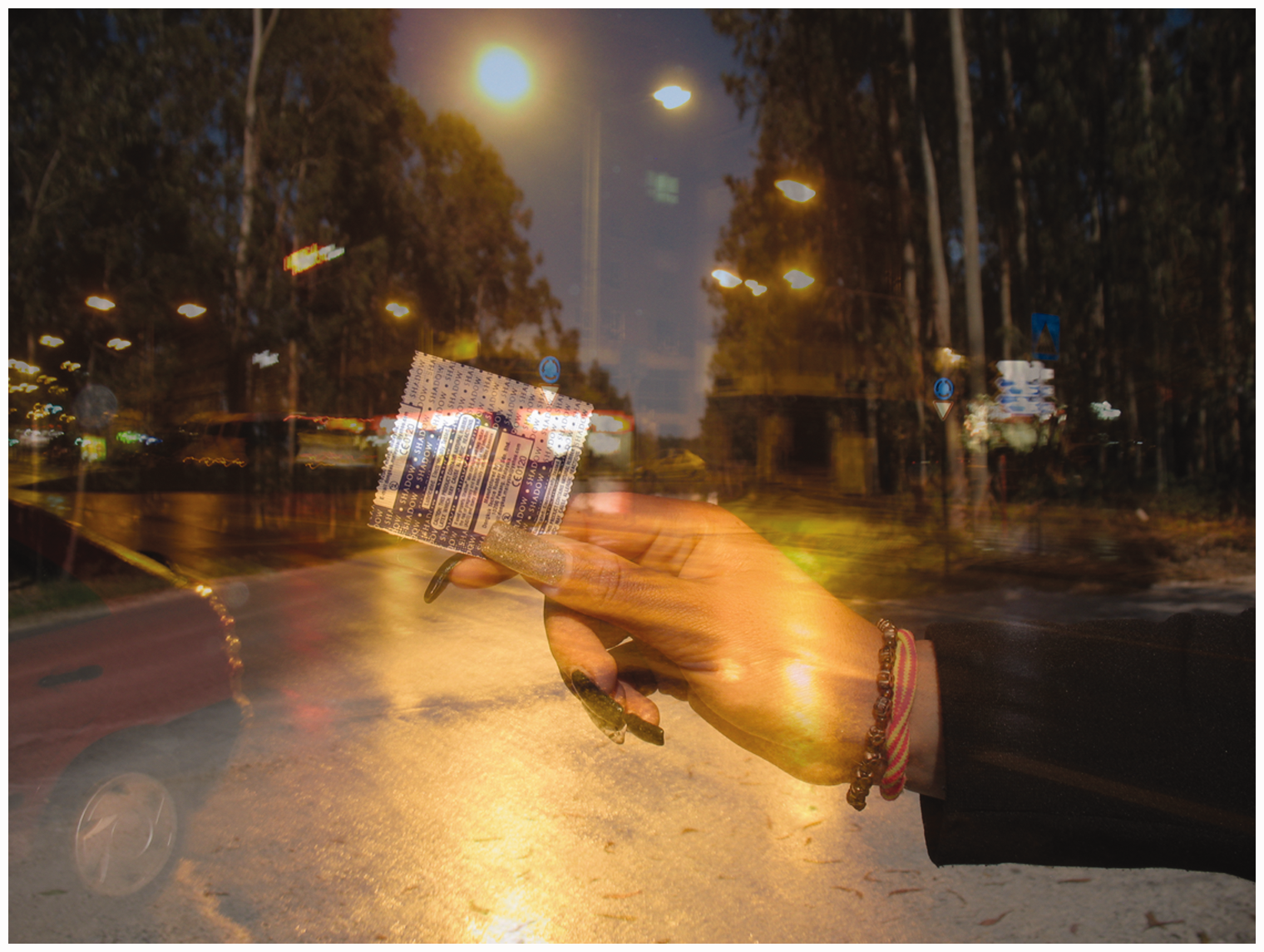
The sex workers provided feedback regarding the pamphlet’s effects. They reported that all of their colleagues that they contacted agreed with the quotes but do not believe that the practices will change concerning condom use. The contacted colleagues believed that the unity among them is an illusion. However, the sex workers talked with one another, which led to the belief that cohesion may be possible as long as we change the strategy. Finally, the participants agreed with the facilitator’s suggestion of sending the leaflet to the Portuguese Sex Work Network to reach more sex workers.
After all, we also found solidarity, concern, and generosity, suggesting that the development of communicative and leadership skills could be a way to reach more people for a common cause, with sex workers taking a lead role as peer-educators.
Concerning that some individuals participated in the first cycle but not on the second or the third, and vice versa, I confronted myself with ethical and methodological dilemmas. I lost contact with some participants and others were engaged in other phases of the project, because they showed interested in making a difference about the mutual concerns. By then, I realized that it was very difficult to maintain a group with the same persons. I thought some persons were actively collaborating from the start and others showed later to be interested in being part of the process. Since they showed the same concerns, I decided, as a facilitator, that we should continue promoting consciousness-raising activities with the people involved. As Martin (2015) noted, participants want to talk and be heard; and taking action to improve their and others lives, so PAR seemed to be the most appropriate to serve participant’s purposes, and to comply with my commitment to develop a research with people, not to conduct a research on them.
Conclusion
The findings suggest that we fulfilled several of our objectives, which involved improving results, raising consciousness, and encouraging participation in the process of becoming more critical. This project allowed spaces and times for communication between outreach workers and sex workers. By including sex workers’ voices, wants, and needs, the outreach workers became more aware of the quality of their services and the ways to improve them. The sex workers, in turn, had the opportunity to share their concerns with the outreach workers and among one another. For individuals who are not accustomed to being heard and taking a leading role, it is a significant step (Wahab, 2003). We believe that by encouraging multiple dialogues, we contribute to raising awareness. Moreover, stimulating participatory habits could contribute to more social equity and justice and to a more democratic society.
We achieved an agreement based on shared concerns and a mutual understanding regarding the top priority to all stakeholders. We find much consensus but less cohesion among sex workers, which affected collective activities. Paradoxically, the participation in joint sessions was low, but the participants always demonstrated interest in individual and joint activities by providing ideas and requesting news. In this sense, this project was a type of Cadavre Exquis (a surrealist technique for collaborative art) where all the participants individually contributed to co-authoring a narrative.
However, there is no sense of community or professional identity among sex workers. Sex workers do not deny what they do, but perhaps they make a clear distinction of what they are, because of stigma, to protect their identity. PAR activities may provide a sense of control and awareness, but the transformation of subjectivity to collective action is still required. In this regard, we advocate for continuous participatory research to improve outreach practices and to raise sex workers’ awareness. Encouraging the participation of sex workers in projects that concern them is the way to ensure quality. We hope that by changing the relationships and dynamics among the participants, they continue the activities that remained pending, even without the facilitator’s presence.
Footnotes
Acknowledgement
The authors would like to acknowledge all the research participants.
Declaration of conflicting interests
The author(s) declared no potential conflicts of interest with respect to the research, authorship, and/or publication of this article.
Funding
The author(s) disclosed receipt of the following financial support for the research, authorship, and/or publication of this article: This research was financed by FEDER Funds through the Competitiveness Factors Operational Program – COMPETE and by National Funds through FCT – Foundation for Science and Technology, within the scope of the project PEst-C/CED/UI0194/2013 – Research Centre “Didactics and Technology in Education of Trainers” (CIDTFF). This study is part of doctoral thesis also funded by FCT (Grant number SFRH/BD/78139/2011).