



Abstract
This article explains my living educational theory in the form of a professional framework that I call PART, which conceptually unites the roles of the artist, researcher and teacher (ART) to foster critical, participatory (P), and socially engaged action. I discuss how I improved my practice over four action research cycles to be more in line with my professed values of creativity, connectedness and care, followed by six learning platforms conducted with pre-service art teachers and community children in a South African context. Evidence of the students’ transformational learning was gathered over six learning platforms. Reflecting on my observations, pedagogical strategies and on students’ visual images and critical reflections on their learning, I found that the professional framework changed pre-service art teachers’ views – they became more learner-centred, using art as a mediating tool to engage learners in thinking about critical social issues and developed collaborative and leadership skills. The fundamental principles of the framework, aimed at developing critically engaged and reflective practitioners, working in diverse learning environments could be applied to almost any discipline within teacher education.
Keywords
Introduction
My living educational theory (Whitehead, 2017) in art education was prompted by three concerns I have about the teaching of art in South African schools, (i) the lack of status attributed to art, and consequently to the role of the art educator, (ii) the view of art as a specialist subject for the talented few and (iii) the teaching of art as a technical subject removed from the social realities and contexts of school learners (Meyer & Wood, 2019). These concerns incited me to inquire into my practice as a university-based teacher educator of pre-service art teachers. As a proponent of Living Educational Theory research (Whitehead, 2017), my aim is to improve my practice so that students may flourish in their own professional spheres, and adopt practices that, in turn, promote the flourishing of their own students. I maintain that unless art teachers define their professional roles, discover and employ the varied possibilities of the subject, and create opportunities for socially-engaged practices, they are missing the opportunity to improve the status of the subject as a medium to enable students to engage with relevant social issues, and to bring about change through their artistic creations. The notion of using art in schools to address important social issues has been widely researched (see Broome et al., 2019), but literature is silent on how to go about developing pre-service art teachers as leaders of such initiatives. I wish to address this knowledge gap by explaining my living educational theory about how to encourage pre-service art teachers to become socially-engaged, reflexive practitioners by providing a framework that enables them to (i) position themselves within a particular theoretical framework to guide decisions about the kinds of lessons to be taught, (ii) articulate their personal values to inform their teaching and development as professionals and (iii) reflect on their own teaching and learning practices (Hickman & Brens, 2015). Designing a professional framework for developing art teachers in South Africa is particularly important in light of the systemic barriers they face in schools, namely, under-resourced, congested classrooms, time constraints and the general negative attitude towards the subject (Mathikithela, 2016).
As an educator of pre-service art teachers, I need to satisfy educational policy requirements of preparing them to teach in ‘diverse and transformational contexts’ (Department of Higher Education and Training, 2015, p.10). Policy ascribes seven roles to the teacher, namely i) specialist in a subject discipline, ii) learning mediator, iii) designer of learning programmes, iv) leader, administrator and manager, v) scholar, researcher, and lifelong learner, vi) assessor, and vii) community, citizenship and pastoral role (Department of Higher Education and Training, 2015, pp. 58–59), but these roles and their applied competencies tend to be discussed theoretically, which means that students enter the profession with little knowledge of how to translate their learning into practice. Of particular concern to me was number (v) – their development as scholars, researchers and lifelong learners – as this role would enable them to critically reflect on their performance in other roles, and hold themselves accountable to the ‘appropriate values’ (Department of Higher Education and Training, 2015, p. 57) of the profession. I also argue that unless pre-service art teachers recognise the pivotal roles they could play in schools and broader society through the development of socially engaged practices, they will not be able to take leadership and influence social transformation.
In the next section I explain how I developed my living educational theory of a professional framework for art education grounded in values of creativity, connectedness and caring. I then present the professional
Developing my living educational theory
My enquiry into my own practice spanned four action research cycles over two academic semesters. In Cycle 1, I conceptualised an ART theory (Thornton, 2012) framework to guide my practice. In Cycle 2, I guided students to establish their own framework, grounded in their own values. In Cycle 3 the students learned to become participatory ART teachers during a socially engaged art (SEA) (Helguera, 2011) and service-learning project (SL). As my aim is to maximise the potential of art teachers to use art to educate about issues that are relevant to learners, in- and out of classrooms, I propose a professional framework to enable them to interrogate the following questions: ‘Who am I as art teacher?’ ‘What are my roles as art teacher?’ and ‘How can I become an effective and transformational art teacher?’
In this article, which reports on Cycle 4, I bring the work together to explain my living educational theory as a professional framework for art education, asking: How can I use my learning from the three previous cycles of action and reflection to generate my living educational theory about the development of a professional framework for pre-service art teachers? (see Figure 1)

The four cycles of developing my living educational theory in art education.
A living educational theory is derived from “the generation and sharing of a valid explanation of [practitioners’] educational influences on their own learning” (Whitehead, 2017, p. 1). I generated my living educational theory from critical reflection on several data sets, including my own reflective diary, student assignments, and various types of artworks, including drawings, collages, assemblages and posters. I thematically analysed the data produced by students’ work and my own observations and reflections and weighed the emerging themes against my concerns (see i-iii in introduction) and my research question (Saldaňa, 2016).
I validated my findings against the principles of ART theory (Thornton, 2012) and SEA pedagogies (Helguera, 2011), as well as against my professional values of creativity, connectedness and caring (see later for more discussion on these). Ethical clearance was granted by the university and the students gave permission to use their work for research purposes. To ensure anonymity in publications, I assign codes according to the learner phase they were training to teach, e.g. Senior Intermediate phase (SI) and Further Education and Training phase (SF). I explain in this last cycle of reflection how I influenced the learning of the students and how they related to the different learning platforms, which in turn informed my understanding and the design of a professional framework for art education (PART) (see Figure 2).
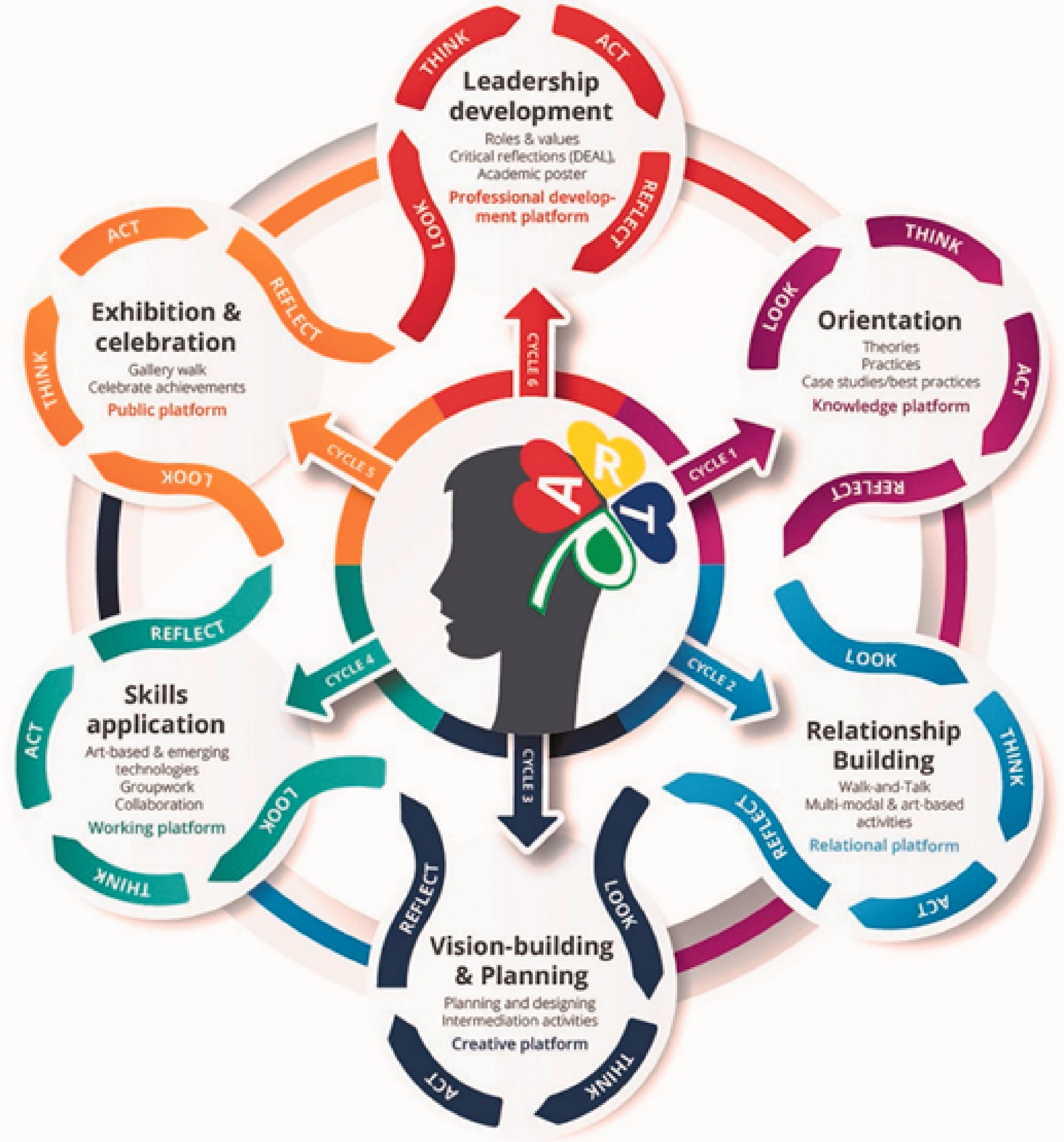
A participatory and socially engaged professional framework for art educators (PART).
Starting with my own thinking at the centre of the figure, my question was: How do I conceptualise my own role as artist, researcher and teacher (ART) and arrive at an understanding of becoming a participatory artist, researcher and teacher (PART)? I grounded my professional identity in the
My original contribution emerging from my living educational theory is the addition of the participatory aspect to ART theory, becoming PART. I changed my Cartesian orientation rooted in Aristotelian ‘either/or’ classification, to a more inclusive Platonic ‘both/and’ viewpoint (Sullivan, 2017). I became a participatory artist and researcher when I started to open art up to all, not only to students specialising in art, and they, in turn engaged with community children, with varying ‘artistic’ talents (Helguera, 2011). I also became a participatory teacher when I shared my knowledge and practice with the students through interactive and socially engaged collaborations and they in turn voiced their views as engaged scholars (Buffington, 2013; Hutzel, 2010). This collaboration of voices – including my own, the students and the school learners helped to form a participatory approach to a professional framework in art education. Thus, adding the “P” to the ART roles helped me to transform my position to become a more
Cycle 1: Orientation and knowledge platform
In this first cycle (see Figure 2), my aim was to find out how the ART framework could enable students to re-imagine their roles as artists, researchers and teachers. To establish baseline knowledge, I first introduced the students to the concept of professional development. I engaged them in discussions about their positional stance, how they viewed the current status and artistic orientation of art education in South Africa and the potential art has as a tool to mediate holistic, transformative learning. I asked them four questions to help deconstruct and re-imagine their roles as art educators.
Question 1: How do you see yourself as art teachers? The students created sketches with short narratives of their perceptions of themselves as future art teachers. It seemed that they viewed themselves as knowledge bearers rather than as facilitators of learning (see Figure 3).
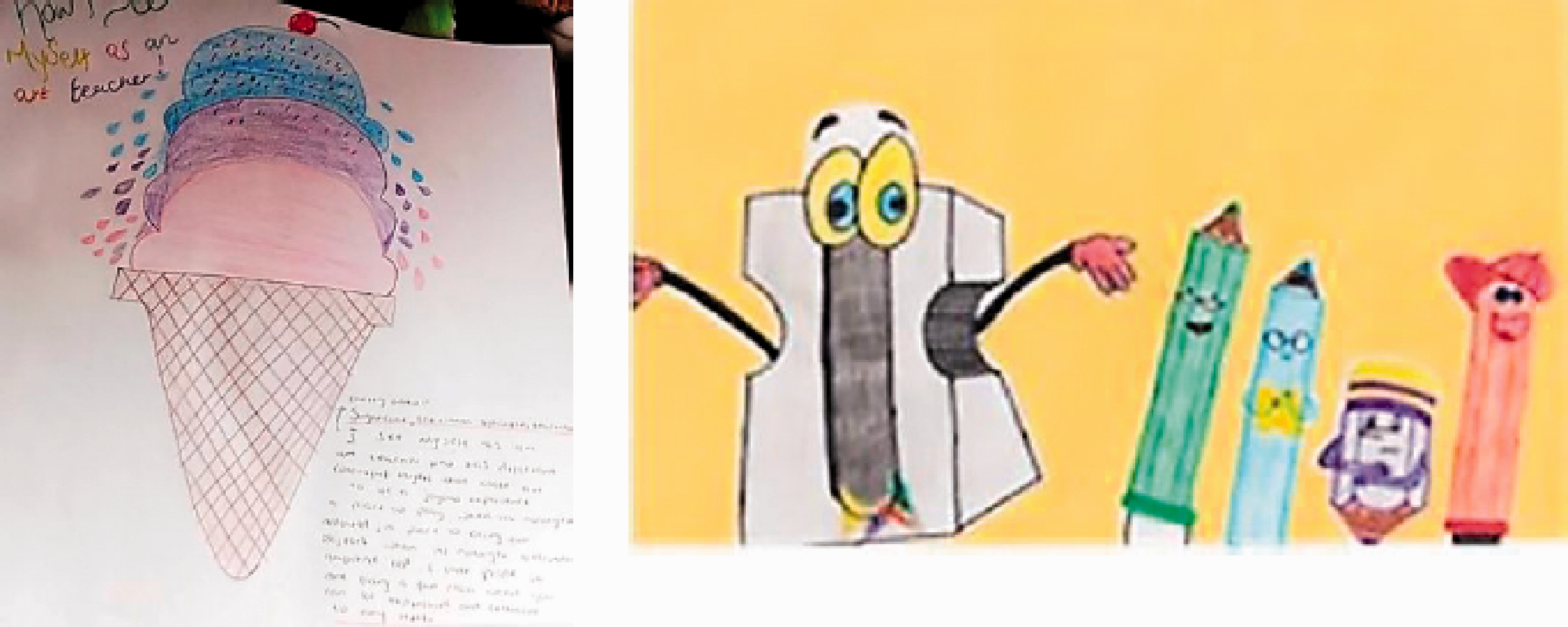
Student imaginings of their future role as art educators.
These views of ‘teachers-as-knowledge bearers’ indicated that students would disregard learners’ ideas, abilities and creativity and make assumptions about what children should learn and how they need to go about it (Englebright Fox & Schirrmacher, 2012). I believe that art pedagogy should teach people to think critically and inclusively, connecting imagination to a ‘plurality of knowledge found in a variety of locations’ (Kindon et al., 2007), and that students should adopt a learner-centered approach, to show they care and value children’s input.
Question 2: What roles are expected of a teacher and specifically of an art teacher? The students knew about the generic teacher roles with associated tasks, such as a subject specialist who oversees content and didactical alignments, but they had no idea how to embed their practices within these roles or other contexts. I showed them a diagram and explained how I amalgamated the seven teacher roles within the three ART roles, embedded with values of creativity, connectedness and care (see Figure 4). I explained how I, as an artist, engaged with aesthetic practices to promote creativity; as a researcher, how I became more connected with social issues in my educational programs; and as a teacher, how I embodied care in my interaction with students and the community. I described how I became more participatory and engaged after my exposure to interdisciplinary and trans-disciplinary projects (Kraak, 2000). I pointed out how I embedded Zuber-Skerritt’s (2011) LOVE theory in my practices (see Figure 4 indicated in red) I became more inclusive in the way I used various art-based methods to accommodate also those who are ‘less talented’ and exercised socially engaged pedagogical strategies to democratise knowledge.
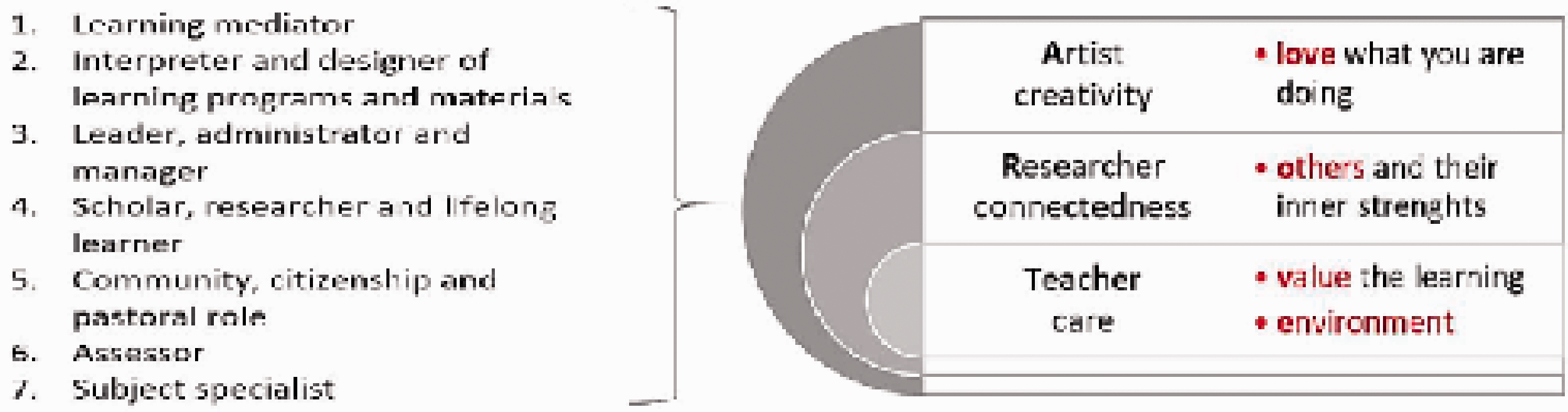
The seven teacher roles amalgamated into the three ART roles (Meyer & Wood, 2019b).
Question 3: How can you link your personal values to the ART roles? I wanted students to realise that personal identity is closely tied to values and belief systems that directs professional practice (Bukor, 2011). These two aspects imply both person and context, as cognitive psychological and sociological perspectives to express people’s perceptions of ‘who they are’ and ‘who they want to become’. It thus requires introspective inquiry into personal beliefs and a social reality shared by others (Pfeiler-Wunder et al., 2017). I asked students to identify their core values and relate that to their ART roles. Through art-based gestalt exercises, students identified core values through word association exercises triggered in relation to their families, recreational and communal activities. Some used a spider diagram to cluster their values and beliefs to their personal symbols (see Figure 5). I then asked the students to rank their most important values and relate them to the ART roles.
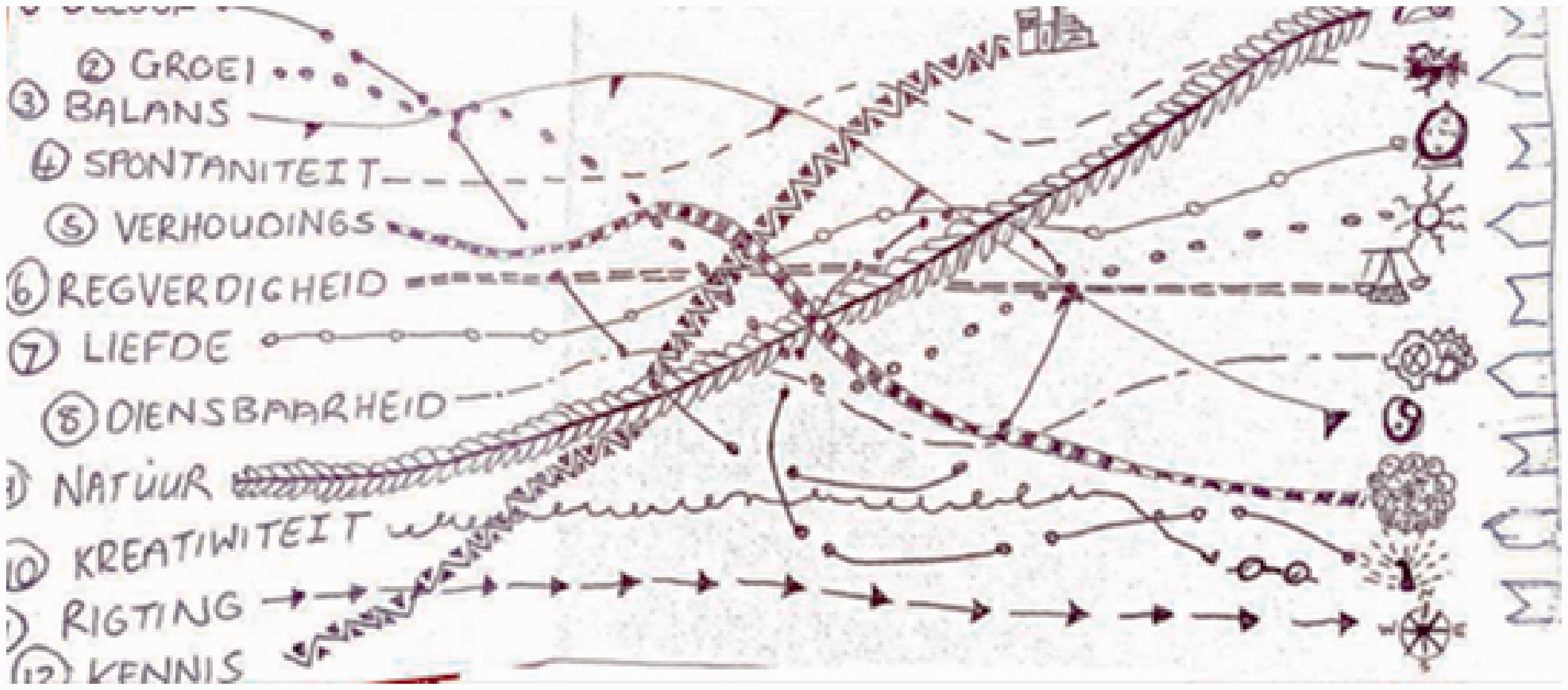
An example of a student’s identity and values captured in a spider diagram (Meyer & Wood, 2019b).
Drawing from their reflections on roles and values, I created three word clouds (Saldaňa, 2016, p. 223), representing the embedded values of the artist, researcher and teacher. The more frequent words used, displayed in a larger font represented the most important values they attached to the roles (see Figure 6).

Pre-service art teachers’ values- embedded in the ART roles.
The analysis indicated that most students ascribed being ‘passionate and creative’ to the artist role, being ‘curious and honest’ to the researcher role and having ‘respect and leading by example’ to the teacher role (SF_18). I wanted them to establish a strong professional identity (self-image with embedded values) to gain agency in their professional roles (as artists, researchers and teachers) so that they can make better decisions based on the situated context of their students. At this point, I realised the narrowness of the students’ ideas. Being passionate, curious and acting respectful are positive attributes for the artist, researcher and teacher roles, but they needed a ‘lived’ understanding of children’s worlds to become truly connected as engaged teachers. Since I wanted them to take ownership of their own professional framework and not just copy mine, I asked them to create their own.
Question 4: How can you create a conceptual framework for art education? Students’ individual designs indicated how they viewed their roles and the values they ascribed to their practice. They began to see themselves as teachers who could facilitate and elicit learning, rather than direct it. For instance, one student who had imagined themselves as a ‘knowledge bearing’ teacher-directed tree now depicted a holistic impression of a tree divided into parts of a whole with the researcher as the tree, growing through inquiry, the artist forming the DNA of the trunk, the teacher seen as the apples, carrying knowledge, and the child being inspired by the teacher (SA_8) (see Figure 7). The ART roles also gave students the confidence to look beyond their own positions to value others and their learning environments:
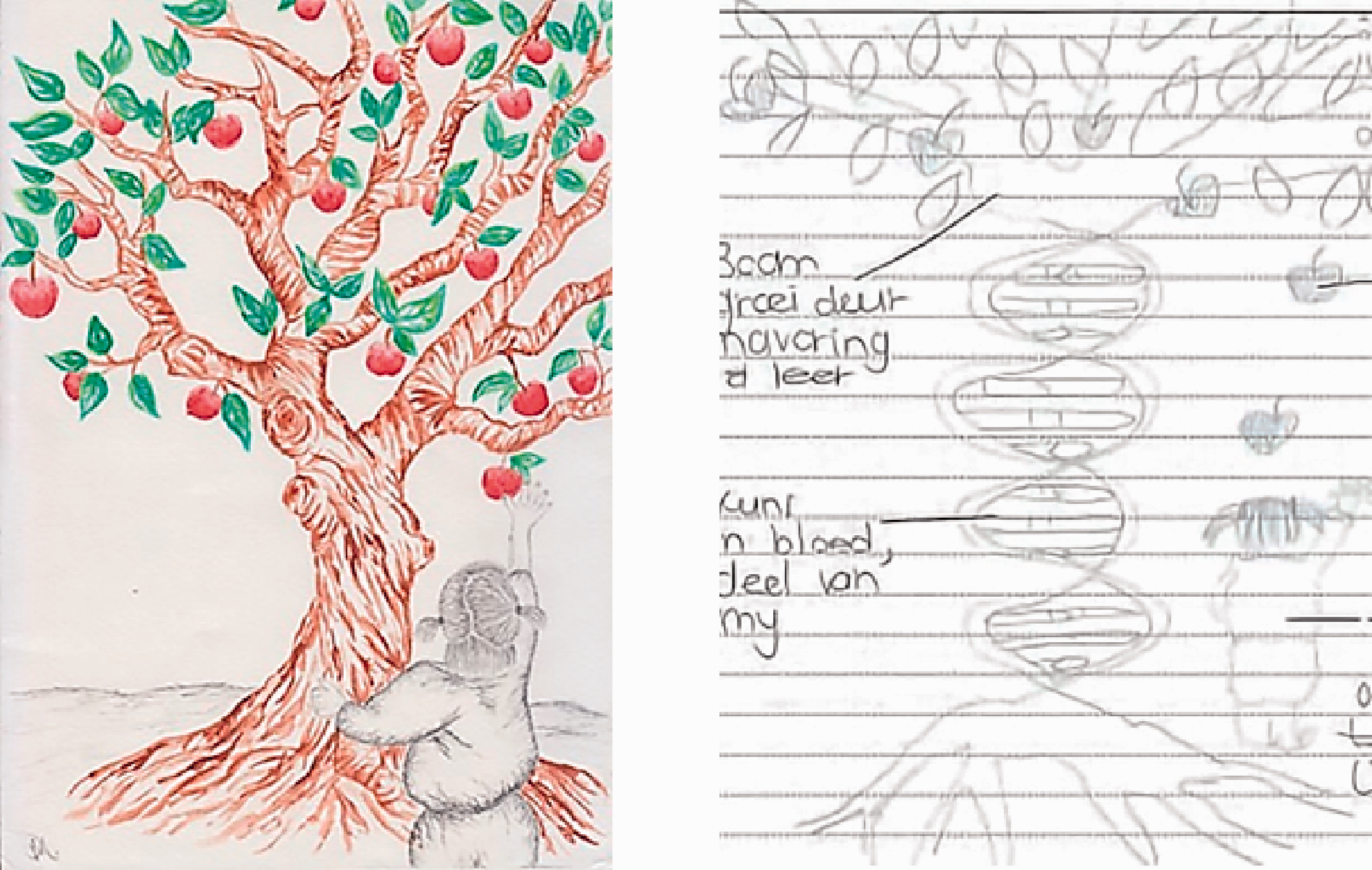
Student views changed from ‘a tree providing fruit to the child ‘(SF_9), to a more holistic conceptual design of a tree indicating the complexity of the teaching process.
‘Thanks to these three roles, I [also see myself] as educator, collaborator, role model, social activist, and somebody with a passion and love for learners’, to ‘help … assist … and guide learners’ (SI_4).
Students started to form their own opinions and some selected alternative theories and chose different ways of representing their identities as teachers. One student reflected that she regarded the ART roles as a guide in a learning process that ‘scaffolds concepts, rather than offer[s] final solutions’ (SF_8). I welcomed the students’ critical inquiry as evidence that they were disrupting knowledge hierarchies by developing their own theories for professional frameworks. They acquired a critical stance about their positions as art educators. But, to address my second and third concerns, students needed to become more aware of the value of art and its multiple possibilities as a medium for expression, mediation and engagement in diverse contexts.
Addressing my second concern, I wanted to prepare the students to engage with art as a medium of expression and communication, accessible to all and not reserved just for the talented few. After establishing their conceptual ART role designs, the students became more learner-orientated and recognised that learners must feel ‘comfortable’ (SI_13) to express themselves through ‘different approaches’ (SI_5) and to ‘experiment’ (SI_16), but these concepts were abstract ideas not embedded in their practices. As action researcher I want to eschew the disparity between theory and practice and create opportunities to become PART. Studies in art education revealed that service-learning addresses issues around “the other” and gives new direction about oppressive situations (Costandius, 2010; Hutzel, 2007, 2010). I showed students posters and sculptures of collaborative campus-community engagements from previous years to orientate and explain how art could serve as a medium for reciprocal partnerships in diverse learning environments (see Figure 8).

Examples of inter- and trans-disciplinary engagements between students, their peers and community members, addressing social issues.
I then introduced students to a service-learning (SL) project, with the theme: ‘Living my leadership in a diverse and healthy environment’, to expose them to the social realities of the children’s contexts. Twenty-five final year pre-service art teachers engaged in four action learning cycles with fifteen multi-cultural learners aged 14 – 17 years, from a local children’s home. The groups met at the university’s botanical garden once a week for two hours over a four-week period. Next, I explain the interactive engagement between the two groups on the different learning platforms depicted in Figure 2.
Cycle 2: Relationship-building platform
Starting off with the relationship-building activity, my aim was to create trusting and mutually supportive relations among the participants from the start to maximise participation (Zuber-Skerritt, 2013). I introduced a site-specific walk-and-talk activity (Doucette, 2004) for both groups to become familiar with each other through informal conversations about shared topics; in this case, critical issues around the environment.
The walk-and-talk activity, conducted in a convivial and joyful way, set the atmosphere for the rest of the engagement. The students were motivated and started to take initiative with the rest of the team-building activities. They ‘sound-boarded’ their ideas with me and created activities that took into consideration the children’s ages, abilities and interests. The arts-based activities were not specialised and exclusive but interdisciplinary and engaged, ranging from sensory (touching and making flowers), natural (being out in the open), linguistic (expressing themselves verbally), visual (observing and painting), and haptic (constructing 3-D objects with organic material), awareness of self, in relation to others (see Figure 8). After these team-building activities, the students’ reflections indicated they had become critical of traditional teaching methods and confined classroom spaces: ‘teaching out of class becomes a truly free and creative exercise as opposed to classroom teaching methods, such as the redrawing of pictures’ (SF_12). Importantly, the students learnt to become affective and more sensitive towards the children, ‘we started engaging differently with the learners, being more cautious of what we say and how we say it’ (SF_16). They realised the way they speak and ‘what [we] say can be harmful’ (SF_3).
I found the relationship-building platform essential in participatory pedagogies. It opened up communicative spaces (Kemmis, 2006) and taught students to minimise power relations between themselves and the children through informal conversations, arts-based activities in outside learning spaces. With ‘conversation regarded as the centre of sociality, of collective understanding and organization’ (Helguera, 2011, p. 40), students engaged with the learners on an affective level, building trust, before they engaged in more task-oriented work processes. I found that students learnt to facilitate cross-cultural understanding which helped them to gain respect and appreciation for children from different cultures (Kang Song & Gammel, 2011). I learnt, also from previous action research projects, that if this learning platform is neglected, participants could become disillusioned and unengaged which impacts the rest of the social engagement process. Relational amiability formed a good foundational platform in preparation for the next vision-building platform.
Cycle 3: Vision-building and planning platform
During this cycle, the students first raised awareness about social issues relevant to the environment, before instigating action towards collective outcomes. They learnt to ‘plan their projects, figure out what to do and how we are going to do it’ (SI_5) (see Figure 9, 10 and 11). The process involved developing a common goal by examining environmental issues, linking these to their contexts and generating ideas ‘to eventually get to a solution that everybody approves of’ (SI_1). Some focused, for instance, on the Western Cape [Province] water crisis (SI_18), or the threatening demise of indigenous art (rock paintings) (SF_12). Others created their own expressive tokens captured in a kindness tree (SF_18). One group of children challenged the ‘healthy living’ theme by identifying aspects that contribute to ‘unhealthy’ living experiences – such as bullying, substance abuse and human trafficking. Another group became micro-environmental activists calling themselves ‘envi-tists’ since they wanted, as artists, to change their school environment (SI_21).
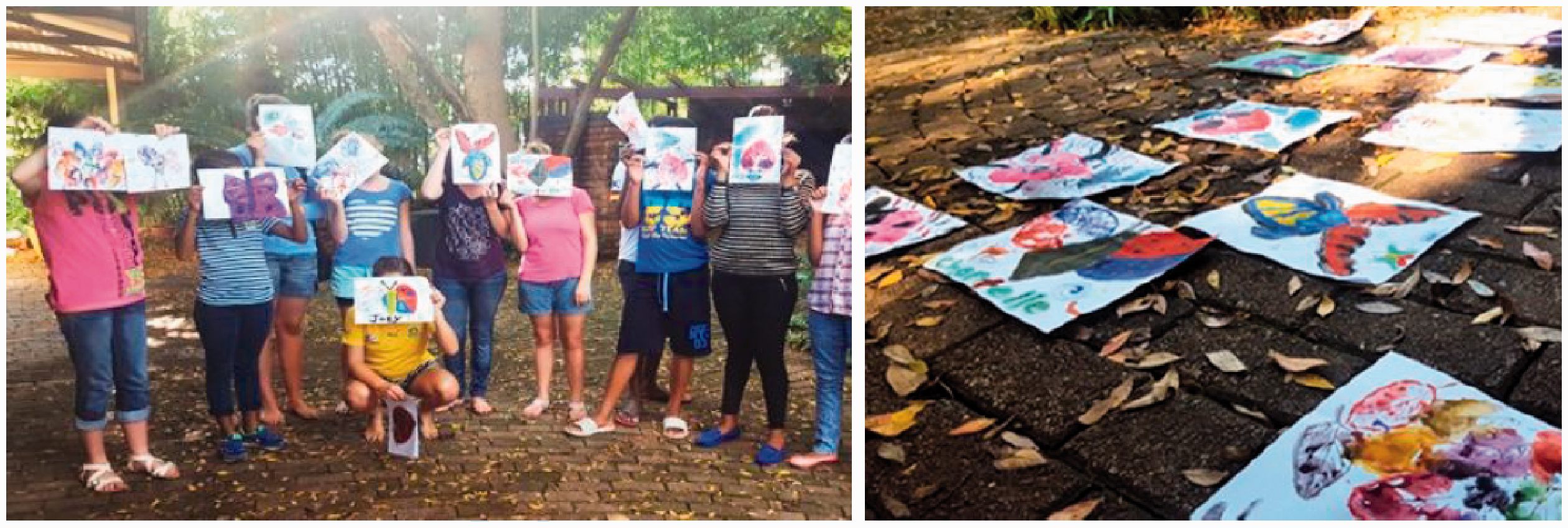
The relationship-building activities encouraged children to experiment with organic materials in various ways (SF_15).

Vision-building: sitting in a circle, visualising, talking and planning collective ideas together.

Using participatory strategies students engaged children in a creative skills application task to complete the kindness tree.
The students then mediated and discussed their concepts before creating something concrete. I noticed how they took initiative and selected their own resource materials, showing the children videos of environmental art or samples of recycled material projects (SF_8/16/18). I saw how these activities helped the groups with the artistic process of creating – they overcame conceptual barriers to transform their ideas into physical art products, they selected appropriate materials for their artwork, and started to determine the format and structures of the final work. The students’ reflections revealed their changed approach to teaching art: ‘instead of having everything planned and predictable, we must become more resilient and consider [others’] needs’ (SF_7). They reflected on the children’s individualities, ‘everybody is unique and shouldn’t be compared with the other’ (SI_4) and started to adjust activities to fit the children’s needs instead of presenting a generalised ‘one size fits all approach’ (SF_4). I was gratified to see that students were beginning to address my second concern – promoting the value of art education for all learners, ‘…every single learner, regardless whether they have the subject art, can do art. [They are] creative in their own manner’(SF_6).
I experienced how students began to understand that socially engaged art practices could become part of their professional pedagogy: ‘The most important aspect that we taught them [the children] is that art could be used to present a powerful message and address [various] issues’ (SF_10). They started to embed socially engaged pedagogies I propagate in my teaching – moderating conversations, compared and critiqued multiple viewpoints (even those of their peers); they negotiated their interests in groups and assessed the complexities of a collective social situation and attempted to change it. They therefore fostered critical consciousness by examining various social challenges before taking action to address these challenges. This resulted in both groups becoming liberated by art, as they began to reveal creativity, critical thinking and problem-solving skills in real life contexts. ‘[T]he most important aspect that we taught them [the children] is that art could be used to present a powerful message and address [various] issues’ (SF_10).
I regard vision-building as a paramount learning platform in art education as it helps to answer the question, “where are we going?’. Embedding vision and planning in my practices I steer students to look at the “bigger picture”. In this case, the groups came up with plans and practical solutions that everybody approved off, they established a common theme, with everybody adding content and thus engaged in a ‘re-enactment of causes to which they personally relate’ (Helguera, 2011, p. 15). The students completed their planning and were ready to participate in the skills application platform, the making process.
Cycle 4: Skills application and making platform
The students applied various environmental themes to create artworks and facilitated skills development with the children. I noticed how they started to work in more flexible and collaborative ways creating a space for making and exploring art-based projects with the children. The introduction of SEA teaching strategies (Helguera, 2011, pp. 14–15), resonated with the students. This is evident in various phases of participation; ranging from nominal participation, where children observed and looked at previous community-engaged projects, contemplating their own ideas, to directed participation where they completed a simple task such as making tokens for the kindness-tree project (see Figure 9), alternated with creative participation where the groups co-created similar themes of artwork which they combined together, such as the indigenous rock garden. This collaborative group work showed how they shared the responsibility of generating their ideas, content and structure through dialogical interactions with each other.
I was surprised to see how students transformed their teaching styles – they changed their strict disciplinary and skills-based attitude to a more interactive and socially engaged approach. They started to work in groups, scaffold processes, and mediate collaborative learning together. These methods steered students and children closer to a democratic process of ‘understanding each other equally, [and] valuing each other’s opinion and statements’ (SF_8). The students were in accord with my teaching pedagogies – they wanted to display the work and give children the opportunity to voice their opinions and share work. This was during the next learning platform.
Cycle 5: Exhibition and celebration platform
In art education, exhibitions serve as an important assessment tool to ensure that quality standards are met in the production of an artwork. It also showcases the artistic accomplishments of the participants. During the exhibition stakeholders saw the results of the partnership between campus and community. The students were applauded for their dedication and inspiring acts of ‘hope through art’ (Yssel, 2018). They celebrated because ‘we achieved our goals [and] the learners reached their learning objectives’ (SI_1). The students noticed how the children gained confidence towards the end of the project, changing from ‘no eye contact’ to being secure enough to exhibit their own work (SF_5). Students started to echo my ethos of LOVE – loving others and value their environment/context, by ‘taking hands with communities to give the children the best experience and to provoke a passion for art through partnerships with the community’ (SI_20). In this sense, art became, ‘a living subject’ (SF_15) and more than a ‘field trip’ linking values such as ‘service, respect and peacefulness’ to collaborative and interdisciplinary engagements (SF_15). The groups shared responsibilities ‘in the creation of something new’ (Helguera, 2011, p. 51), and the students connected their socially engaged art-based practices with the children’s lived realities. They learnt to rethink their patronising assumptions about the less privileged, shifting from statements like learners’ need ‘positive role model(s) when the family cannot provide such a figure’ (SI_6), to ‘I want to educate learners so that they can go into the community and create a better future for themselves, their families, and for their children one day’ (SF_1).
Addressing my third concern, namely teaching art in isolation from the social realities of learners, I learnt that by creating opportunities for interdisciplinary and trans-pedagogical practices help students to develop competencies to deal with diversity and transformation, and to work ‘flexibly and effectively in a variety of contexts’ (Department of Higher Education and Training, 2015, p. 9). Although they addressed my three concerns through the PART process, I wanted to enhance their leadership roles as engaged scholars and therefore introduced them to the next platform.
Cycle 6: Leadership platform
the purpose of this last platform was to pull together students’ learning through all five cycles and make them aware of their potential leadership in art education. i requested they create academic posters to display how they have developed as participatory artists, researchers and teachers (part). the end result reflected their transformed understanding about the role of the teacher, changing from traditional knowledge transmitters to open-minded and socially engaged teachers. they used art as a powerful tool to mediate critical thinking about social issues across disciplines. this is evident, for instance, in the metaphoric use of symbols such as an origami bird to show how a person is formed through much folding and squeezing (si_3), or a crocheted flower that represents learners who are part of a figurative cherry blossom bonsai tree which flexes and bends as it grows to be successful (sf_8). analysing the academic posters of the students, i noticed diverse interpretations of their views on professional development. anchored in their roles and the social issues encountered during the sl process, the students’ posters reflected a critical awareness of their growing social responsibility towards the environment, as titles such as, ‘heal the earth, touch the future, there is no planet b’ emerged and was supplemented by e-learning processes (sf_7)(see https://padlet.com/dienkie10_strydom/ssffxi77htgi

(SF_19, SI_4) Academic posters explain how students became socially aware and PART.
after assessing the students’ posters and critical reflections, i learnt that students had a better understanding of what value-embedded art roles entail: ‘facilitator, motivator and promoter of learning… interact[ing] with the environment through well-managed and organised tasks, dialogue and reflections on learner conceptions’ (si_21) and ‘i would use my deepened values to show people the kind of person i really am, to treat people the same as i wanted to be treated…’ (sf_13). ‘this process had a big impact on my professional framework. it has taught me as an upcoming professional teacher the importance of giving back to the community as well as being creative and working collaboratively. being challenged to think out of the box and working with different groups of people gave me greater passion for art and how it influenced my life. i got the opportunity to be actively involved with these diverse children and it showed me that as a future art teacher that i should be open minded and be able to adapt. it also taught me to: never stop learning because life never stops teaching. my poster shows how everything has come full circle, from where i have started with my icon to where the process ended with the community work’ (si_5).
Conclusion: Reflecting on my living educational theory as a professional framework for art education
My living educational theory, encapsulated in the PART framework, is not a generalised template for all practitioners in art education. It is my explanation of how I learnt to improve my practice to align it more with my stated values of creativity, connectedness and care. I developed it through action and reflection processes and validated my claims to knowledge against students’ learning acquired during six learning platforms. The framework enabled students to transform their understanding of the teacher’s role, from traditional “knowledge transmitter” to a socially engaged, learner-centred, leader in art education. The students initiated activities through participatory engagement and employed art as a powerful tool to mediate critical thinking about social issues, using several arts-based methods.
But, developing a participatory professional framework was not a seamless process. The successful application of the PART model depends largely on the facilitator's personal commitment to educational change and teaching contexts. Most challenges encountered during the action research process relate to pedagogical and organisational matters. Action research entails bridging the gap between theory and practice which meant that I had to brief students on each learning platform about the aims and possible outcomes of the cycle. The strategies I used enabled students to unlearn relying on theories and discipline content and re-learn how to engage and apply their knowledge and art skills in diverse social contexts. Some students surprised me with their agility to cope with resource- and time constraints, taking the lead by engaging with social issues that resonated with their professional training in art education such as substance abuse and environmental matters. They developed self-efficiency and became emancipated, confident to work with learners and identify and address relevant social issues through art. However, I realised that I need to develop improved strategies for students’ reflections on each platform as they lacked depth and rigour. Organisational matters were challenging in setting up the different platforms for campus and community participants. This required me to deepen my relationship-building skills and the ability to work reflexively and flexibly throughout the action research process and to involve more people from the start who could share the responsibilities.
Lastly, although the PART framework is successfully integrated in the current programme for pre-service art teachers at our institution, escalating it to other disciplines, requires careful deliberation. My living educational research theory is embedded in a critical, participatory action research paradigm. The PART roles are engrained in values which serve as standards of living and my findings were substantiated by my practices and students’ reflections. Despite this, I believe PART is a workable model for professional development in other teacher education disciplines, since it provides cyclic learning platforms on how to become participatory and engaged lifelong-learners and scholars. It could encourage any novice teacher to use
Footnotes
Declaration of conflicting interests
The author(s) declared no potential conflicts of interest with respect to the research, authorship, and/or publication of this article.
Funding
The author(s) disclosed receipt of the following financial support for the research, authorship, and/or publication of this article: The research was funded in part by the National Research Foundation of South Africa, Grant no. 116261. The opinions, findings and conclusions are those of the authors and the NRF accept no responsibility thereof. article.
