



Abstract
Violent media consumption is often thought to lead to more aggression and violence, especially in juveniles. Social cognitive theories assume a pivotal role for cognitive functions, such as normative beliefs, in the explanation of human behaviour (including violence) and see violent media as a possible and potent learning environment. Although many studies have analysed the relationship between violent media consumption and violence, only a few are longitudinal and apparently no study has analysed mediator effects of violence-approving normative beliefs with data from a Western country at more than two points in time. Some researchers assume that violent media consumption can only aggravate an already existing disposition for violence due to other experiences such as parental maltreatment (double-dose or intensifier effect, which is methodologically described as a moderator effect). Both assumptions – mediation and moderation – are tested with structural equation models using cross-sectional and longitudinal data from a German panel study. Results show that interaction effects between parental behaviour and violent media consumption are surprisingly weak, whereas both influence the approval of violence to a remarkable extent and mediated by this eventually, to a smaller extent, violent behaviour.
Introduction
Juveniles undisputedly spend much of their time in front of a screen and in many cases one can witness explicit violence on screen – either in killing games on the computer or in horror movies on TV. Do we have to be concerned about that? Apart from possible addictive, socially excluding features of intensive media consumption, the burning question is: does the consumption of violent media lead to more aggression in juveniles? Quite a number of research studies have tried to answer this question. 1
Apparently no recent study has discovered a negative correlation between watching violent films or playing violent video games and aggression, so that a possible cathartic effect – implying a decrease in aggression through the consumption of media violence – is no longer seriously expected by any researcher. Most studies yield small (to moderate), positive relationships between media violence and aggression (approximately r = .20–.25; compare, for example, the Report of the Media Violence Commission of the International Society for Research on Aggression (ISRA) (Media Violence Commission, 2012)). It is still discussed whether these small, albeit positive, correlations and/or path coefficients can in fact be read as proof of an aggression-enhancing impact of violent media. 2 Yet it is commonly agreed that research of high quality is needed to study this relationship properly in order to refrain from turning a scientific question into an ideological one (Elson and Ferguson, 2014: 34; Krahé, 2014). However, only very few methodologically sound longitudinal studies have been conducted and even fewer have analysed mediator and moderator variables: Mößle et al. (2014) analysed mediation effects only with empathy as the mediator variable using three waves of a German panel data set, while Gentile et al. (2014) analysed both mediator and moderator effects with the mediator variable ‘Aggressive Cognitions’ using a three-wave panel of children and adolescents from Singapore. Thus mediation (via violence-approving normative beliefs or aggressive attitudes) and moderation of the effects of violent media consumption have not been analysed with data from Western countries yet. The results might be different from the ones from analyses with data from Singapore because media content and attitudes towards violence might differ between Asian and Western (European) countries.
This article seeks to provide insights into the complex nature of the effects of media violence consumption by assessing mediator and moderator effects at the same time using cross-sectional data from a comparatively large German panel data set. Additionally, the supposed mediator role of violence-approving normative beliefs is – apparently for the first time ever – analysed over a three-year period with four waves of data collection.
Previous research and theoretical considerations
Longitudinal, especially panel studies can be regarded as the most promising type of study in analysing the relationship between media and aggression in a real-life setting. Panel studies collect data on events at two or more points in time from the same people, thus being able to analyse the temporal order of events. In general, the effect sizes in longitudinal studies are smaller than in other research designs, which can be explained by the time lag between data collections. But almost all of the as yet comparatively few panel studies support the thesis that media violence is a causal factor in the explanation of violence. 3 The effect sizes are quite stable but small and range from β = .08 to β = .18 (for example, Krahé and Möller, 2010; Slater et al., 2003), while cross-lagged correlations of r = .28 have also been found (Anderson et al., 2008). 4
The so-called double-dose or intensifier thesis expects only small effects of media violence when analysing a group not differentiated by aggressive potential. It states that if one looked only at people who have a potential for violence due to, for example, parental maltreatment, the effect sizes would be bigger, thereby explaining the overall small effect size for the entire group. 5 The double-dose thesis seeks to determine risk populations for aggression-enhancing effects of an extensive consumption of media violence. It proposes an interaction effect (which may not be mistaken for a selection effect 6 ) between media violence and aggressive dispositions due to, for example, parental maltreatment on aggressive behaviour (see also Lukesch, 2003: 526).
This thesis and the effects of media violence on aggression in general can be explained by social cognitive (or social learning) theory (see Akers, 1998; Bandura, 1977; Sutherland, 1947). According to social learning theory, human behaviour is dependent on what the individual has previously seen, felt and thought in comparable situations and on attitudes towards a certain behaviour in its social environment (which mainly determine the individual’s own behavioural standards). Bandura emphasizes the importance of self-regulative cognitive processes in explaining how behaviour is learned (Bandura, 1973: 207ff; Bandura, 1977: 128ff, 160ff) and the (learned) violence- or delinquency-approving normative beliefs are key factors in explaining violent or delinquent behaviour in all social cognitive theories (for example, Akers, 1998: 54f; Sutherland et al., 1992: 88ff).
Put in the media violence context, it can be said that, if violence on screen (in movies or games) is in conflict with the behavioural standards of an individual’s social environment, media violence can hardly change the behavioural standards of the individual – due to the discrepancy between rewards for aggression in the virtual world and the expected/experienced disapproval of aggression in the real world. However, a person is likely to adopt behaviour seen on TV or in a video game if his or her individual experiences and learned behavioural standards – which include attitudes towards violence – promise a positive outcome (reward) of the modelled behaviour, especially if the latter is positively and constantly rewarded on screen. Adopting this behaviour and experiencing positive rewards of the social environment when acting violently (for example, in the peer group) alters the individual’s normative beliefs even further, which simplifies adopting violence in the future, in part by changing the social environment as well (reciprocal determinism, Bandura, 1977: 197ff). Thus, in social cognitive theories, the attitudes of a person towards the use of violence in certain situations play a decisive (in statistical terms: a mediator) role in explaining the aggressive behaviour of that person.
Only a few studies have analysed this decisive role, but empirical support has been found using different methods. Browne and Pennell’s (1998) experiment yielded support for a mediation of the effects of violent media consumption via violence-approving normative beliefs on violent behaviour. Cross-sectional studies established support for the supposed mediation as well: Gentile et al. (2004) tested mediation via ‘hostility’ as assumed in the General Aggression Model, and Avci and Güçray (2013) found a complete mediation of the effects of violent media consumption on physical violence (measured with the Buss Perry Aggression Questionnaire) via attitudes towards violence. Finally, two longitudinal studies analysed the mediator role of violence-approving normative beliefs in explaining the effects of violent media consumption. Möller (2006) found a mediation on physical violence (again measured with the Buss Perry Aggression Questionnaire) by analysing longitudinal data from two waves with a six-month interval, whereas Gentile et al. (2014) established strong empirical support for a mediation via aggressive cognitions (which included normative beliefs about aggression) in their three-wave panel from Singapore. Thus mediation of the effects of violent media consumption on violent behaviour 7 via violence-approving normative beliefs has not apparently been analysed with panel data from a Western country yet.
Social learning theory can also explain the above-mentioned aggressive disposition due to parental maltreatment and other forms of parental behaviour. According to Sutherland (1947), the relationship with the parents is one of the major socialization factors during childhood and early adolescence in which deviant, also aggressive, behaviour and especially its justifications can be learned. Akers has elaborated on Sutherland’s assumption of learning behaviour in intimate social groups. In addition to copying parental conduct and their normative, also violence-approving, beliefs, Akers stresses the consistency of child rearing as an important socializing factor in the early years of adolescence (Akers, 1998: 165). Different child-rearing methods can not only model deviant actions but also reinforce the child’s deviance (for example by not reacting, consistently, to deviant behaviour) and influence the child’s normative beliefs (Akers and Sellers, 2009: 99f). There is ample empirical support for an aggression-enhancing effect of different forms of non-empathic parenting behaviour (for example, Farrington, 1995: 932, 939f).
The interaction between non-empathic parental behaviour such as violence, indifference or inconsistency and media violence consumption as stated by the double-dose thesis can also be explained in social cognitive terms. If a child experiences violence by his/her parents and a justification of this violence (for example, to reach educational goals), this might alter the child’s violence-approving normative beliefs because he/she witnessed violence as an effective means to reach certain goals. These beliefs serve as behavioural standards that can – according to the double-dose thesis put in social learning theory terms – be reinforced and strengthened if a child/young person consumes media violence that probably models aggressive behaviours more suitable for a young person (hitting/kicking others in a street fight instead of corporal punishment of a child). The double dose of parental violence and media violence is thought to lead eventually to the young person behaving aggressively. This thesis has only recently – and apparently for the first time – been analysed and supported by Fikkers et al. (2013), who used ‘Family Conflict’ as the moderator variable, which included parental violence.
Research questions
The present study seeks to answer some of the still debated questions on the nature of the (long-term) effects of violent media consumption on young people’s aggression and aggressive behaviour. Two main questions are analysed in this paper:
Mediation: Are the effects of media violence consumption mediated by violence-approving normative beliefs?
Moderation: Does media violence consumption enhance aggression only in young people with a disposition for aggression because of non-empathic parental behaviour? Or does media violence influence young people regardless of their prior experiences of corporal punishment and other potentially aggression-enhancing forms of parental behaviour?
In order to analyse the hypothesized relationships between media violence consumption, parental behaviour, violence-approving normative beliefs and violent behaviour, a mediated interaction effect model is introduced (Figure 1). To explain the model it will be split into its mediator and its interaction parts.
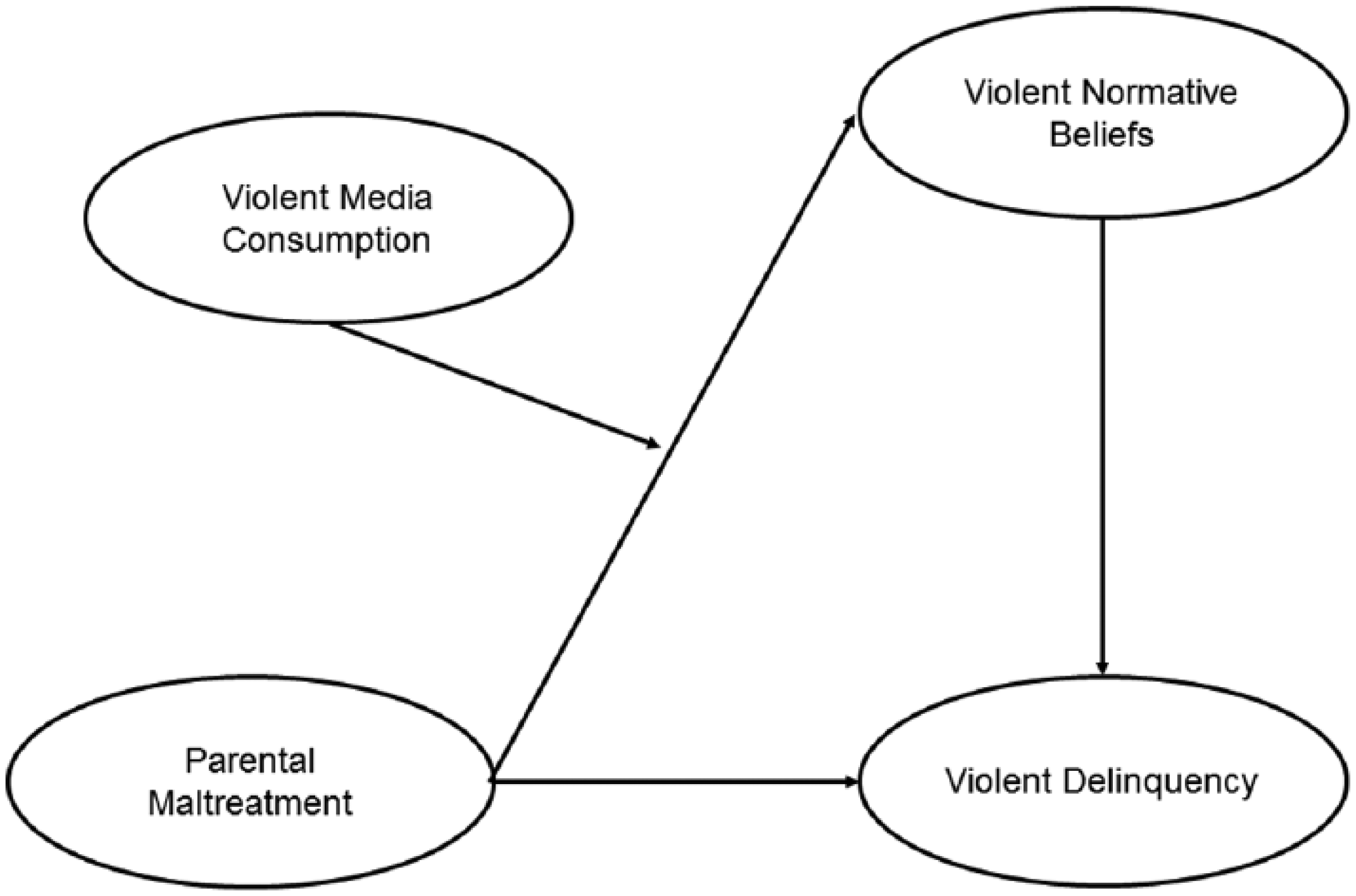
Mediated interaction effect model.
In line with social cognitive theories, the mediator part of the model highlights the importance of violence-approving normative beliefs in explaining the effects of media violence consumption and non-empathic parental behaviour. It is hypothesized that the normative beliefs serve as a mediator for these effects and that there will be no or only a very small direct effect on violent behaviour. The violence-approving normative beliefs are influenced by attitudes expressed in the social environment of the individual and by consequences of certain behaviours that the individual has either witnessed or personally experienced. The perceived attitudes and behavioural consequences enable the individual to, partly unconsciously, form the anticipated consequences of future behaviour that strongly influence the individual’s later actions. Violent media convey violent attitudes and justifications for violent behaviour in the conversations of the protagonists but also, and especially in the case of violent video games, by rewarding violence. Rewarded actions are much more likely to be seen as worth adopting as a behavioural standard (Bandura, 1977: 117). Parental behaviour can also influence violence-approving normative beliefs. If children learn that it is legitimate for their parents to use violence against them to compel them to obey their parents’ rules, they might see violent behaviour as effective and as a justified means to reach certain goals. And if children experience no or very inconsistent reactions to their expression of violence-approving normative beliefs, this lack of a (consistent) negative reaction reinforces the beliefs even further.
The interaction part of the model is based upon the above-mentioned double-dose or intensifier hypothesis that media violence consumption will have a meaningful effect on the violent behaviour only of those young people who have a disposition for violence because of, for example, parental maltreatment. It is hypothesized that these juveniles regard violence as justified and useful to reach certain goals, and therefore their internal appraisal system expects positive consequences of violent behaviour. These expectations will be aggravated if these juveniles watch violent movies or play violent video games, in which violent behaviour is constantly and directly rewarded.
In the mediated interaction effect model, both model parts are combined resulting in the following hypothesis: Violent media consumption will cause more violence-approving normative beliefs only in persons who have experienced non-empathic parental behaviour often and therefore have a disposition towards violence. This interaction effect will lead to more violent behaviour via the mediation of the violence-approving normative beliefs.
The effects of media violence consumption are expected to be different for male and female juveniles. It is assumed that the differential approval of violence by girls and boys in their social environment (for example because violence is still more acceptable for boys) and in the media (most aggressive protagonists are male and their rewards are often more attractive for boys: the hero gets the girl . . . ) will lead to stronger effects among boys (for theoretical reasoning, see, for example, Bandura, 1977: 125; for empirical support, see, for example, for games Beasley and Standley, 2002: 286ff, and for movies Glascock, 2003: 96f). 8 The explanation of the effects of violent media consumption might differ between the sexes as well. Therefore only the effects for male juveniles are analysed in this article. 9
Hypotheses:
Data and method
The mediated interaction effect model is analysed using cross-sectional and longitudinal data from the panel study ‘Crime in the modern city’ (CrimoC), funded by the German Research Foundation (DFG). This study started in 2002 in the city of Duisburg, Germany, with approximately 3400 seventh graders of all school types who were on average 13 years old. These participants were re-interviewed annually, then at two-year intervals from 2009. In this article, the data from the first four waves will be analysed using cross-sectional data from the years 2002 to 2005 plus the four-wave panel data. The four-wave panel consists of 1769 people of whom 772 are male; the number of male participants in the four cross-sectional data sets of the years 2002 to 2005 is 1728, 1703, 1635 and 1717, respectively. 10 The study uses a relatively extensive questionnaire, which was administered as a classroom survey in the first four waves. Participants are asked about various delinquent behaviours, their socio-economic status, attitudes, normative beliefs, leisure time activities, use of drugs, experienced parenting styles, and media consumption.
Instruments
The consumption of violent movies and violent video games is operationalized by the frequency of watching/playing certain film and game genres with a scale ranging from ‘never’ (1) to ‘very often’ (5). These genres have been grouped using the results of exploratory factor analyses with data from a pilot study using the same questionnaire. 11 This grouping of genres into factors such as violent games, adventure games and strategic games has been validated by conducting confirmatory factor analyses with the current data. The factor ‘violent video games’ (VVG) consists of the two game genres Ego-shooters and Military Games, and the factor ‘violent films’ (VF) comprises the film genres Action, Horror, Martial Arts and Military Films.
Exploratory and confirmatory factor analyses have also been conducted to analyse normative beliefs and parental behaviour. The factor ‘violence-approving normative beliefs’ (VNB) consists of six items, including statements such as ‘Without violence the grownups wouldn’t realize that us juveniles exist’. 12 The scale ranges from ‘don’t agree’ (1) to ‘totally agree’ (5). Five different types of potentially problematic parental behaviour have been measured with a scale asking about the frequency of the experienced behaviour, ranging from ‘never’ (1) to ‘very often’ (5): ‘minor violent parenting’ (MVP, characterized by items such as ‘My parents shove me’ and ‘My parents slap me in the face’), ‘serious violent behaviour’ (SVP, consisting of items such as ‘My parents beat me up’ or ‘My parents hit me with an object’), ‘prohibitive parenting’ (PP, when parents sanction the child’s behaviour with prohibitions on, for example, television), ‘inconsistent parenting’ (ICP, consisting of items such as ‘No matter what I do, something is always wrong’) and ‘indifferent parenting’ (IDP, characterized by items such as ‘My parents don’t care about what I do’). The dependent variable is ‘violent delinquency’ (VD) and consists of four items containing the frequency rates of different aggressive behaviours, which are legally defined as assault, assault with a weapon, robbery and bag-snatching.
Method of analysis
The hypotheses are analysed using structural equation modelling (SEM), a group of statistical methods in which confirmatory factor analyses and regression analyses are integrated and extended, and with which one can investigate the correlations between and the effects of latent factors in one model (Hoyle, 2012: 4). The mediator and the moderator part are at first analysed cross-sectionally – because the size of the mediator and moderator effects might be rather small due to their multiplicative nature, they should be more easily detectable in cross-sectional data, in which effects in general are larger than in time-lagged data – before longitudinal analyses of the relationship between media violence consumption and violent delinquency are conducted with the four-wave panel data. The SEM analyses are conducted with the program LISREL (Jöreskog and Sörbom, 1988) using the estimation method of normal theory robust maximum likelihood, which is advisable for non-normal distributed data and small- to medium-sized data sets (Reinecke, 2014: 101ff). To account for the skewness of the dependent variable, the composite index has been transformed using the natural logarithm of the index, leading to acceptable levels of skewness for the robust maximum likelihood method used (see Seddig, 2014: 325ff for details on this transformation). The fit of the models is assessed by evaluating NNFI (non-normed fit index), RMSEA (root mean square error of approximation) and SRMR (standardized root mean square residual), following a suggestion by Hu and Bentler (1999: 27), with the following cut-off values for acceptable fit: NNFI should be higher than 0.95, SRMR should not exceed 0.08 and RMSEA should be lower than 0.05.
Results
The results first show the distribution of media violence consumption, non-empathic parental behaviour, violence-approving normative beliefs and violent delinquency among 13- to 16-year-old male students. The mediator and moderator effects hypothesized in the mediated interaction effect model are then analysed in detail using cross-sectional data before the long-term effects of violent media consumption are considered.
Univariate descriptions
Media (in general, not only those with violent content) play an important role in a young person’s life. The 13- to 16-year-old boys spent on average approximately two hours per day in front of computer games and watched 3.5 hours of TV or DVDs. Two-thirds of the male juveniles watched violent films often or very often, whereas the rate of frequent violent computer game-play is lower, but still quite high, with a maximum of 59 percent at age 15. For boys, violence thus is a prominent topic of both TV and DVDs as well as of computer games.
Regarding the hypothesized moderator variable, parental behaviour, up to 61 percent of the boys experienced an empathic parenting behaviour often and very often, characterized by behaviours such as ‘My parents support me, when I have problems’ or ‘My parents comfort me, when I am sad’. The five types of non-empathic parental behaviour were experienced by up to 10 percent of the respondents. Whereas a maximum of 8 percent of the boys suffered minor forms of violence and 5 percent suffered severe forms of violence, approximately 6 percent were often and very often treated inconsistently by their parents, up to 10 percent of the boys had to deal with indifference in their parents’ behaviour and, lastly, approximately 5 percent of the parents sanctioned their child’s behaviour by prohibiting TV or grounding them (see Table 1).
Percentages of violent media consumption and non-empathic parenting (categories ‘often’ and ‘very often’) and violence-approving normative beliefs (categories ‘agree’ and ‘totally agree’) and prevalence rates of violent delinquency, cross-sectional data, boys, age 13-16, Duisburg, 2002-5.
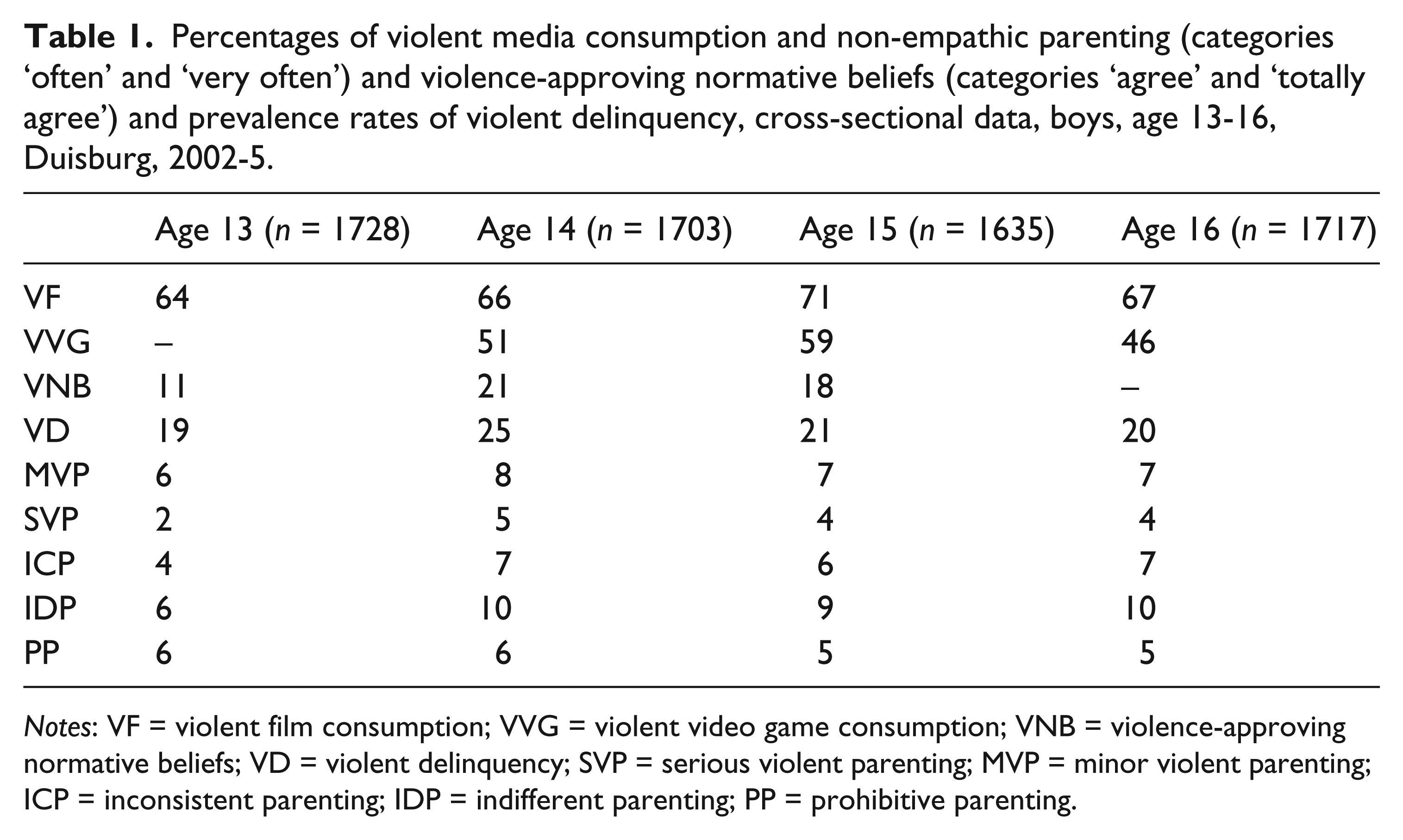
Notes: VF = violent film consumption; VVG = violent video game consumption; VNB = violence-approving normative beliefs; VD = violent delinquency; SVP = serious violent parenting; MVP = minor violent parenting; ICP = inconsistent parenting; IDP = indifferent parenting; PP = prohibitive parenting.
Violence-approving normative beliefs – the potential mediator – were agreed with by up to 21 percent of the boys at age 14 (11 percent at age 13, 18 percent at age 15; VNB were not measured at age 16), and 19-25 percent of the boys aged 13-16 reported having committed acts of violent delinquency.
Cross-sectional analyses
For analytical purposes, the mediated interaction effect model is investigated step by step.
A mediator effect is statistically proven if four conditions are satisfied: (a) the independent variable (for example, VF) has to significantly affect the mediator variable (for example, VNB); (b) the mediator variable has to significantly affect the dependent variable (for example, VD); (c) in a model regressing the dependent variable on both the independent and the mediator variables, the latter has to significantly affect the dependent variable; and (d) the effect of the independent variable on the dependent variable is reduced (Baron and Kenny, 1986: 1177). These conditions can be tested with regression analyses and/or structural equation modelling, which has the advantage of controlling for random measurement error.
When analysing the direct effects of violent film consumption on violent delinquency, these effects are – in consistence with most existing research – significant but rather small (β ≈ .2). 13 Once violence-approving normative beliefs, which themselves significantly and quite strongly affect violent delinquency (β ≈ .4), are introduced into the models of waves 1 to 3 (VNB were not measured at wave 4), the direct effect of violent film consumption on violent delinquency is reduced to insignificance, whereas the effect on violence-approving normative beliefs is surprisingly strong (β = .31–.45, see Table 2). This means that the effect of violent films on violent delinquency is mediated through violence-approving normative beliefs (indirect effect: β = .13–.19). 14
Direct, indirect and total effects of violent media consumption (standardized), β-effects, cross-sectional data, Duisburg 2002-4.
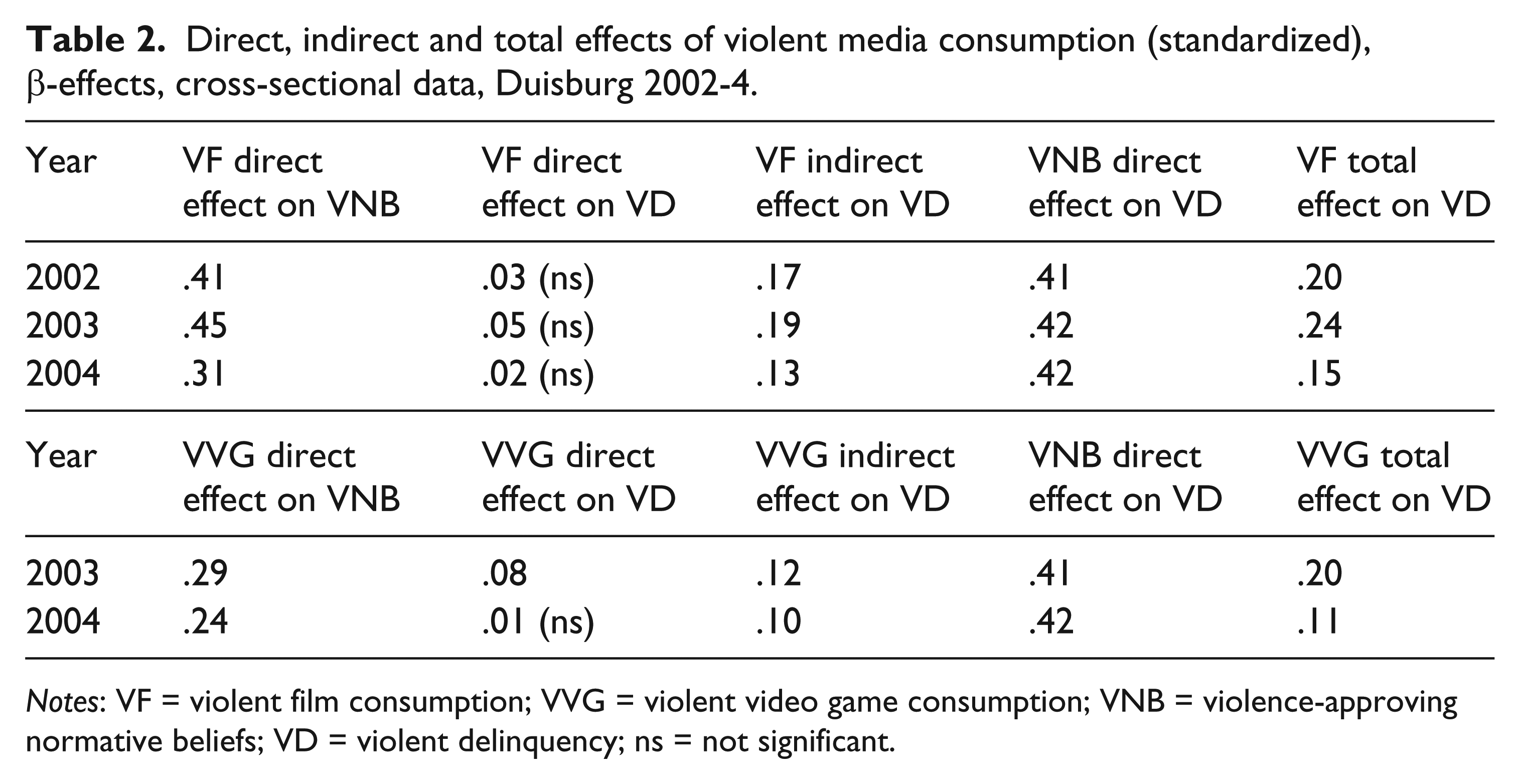
Notes: VF = violent film consumption; VVG = violent video game consumption; VNB = violence-approving normative beliefs; VD = violent delinquency; ns = not significant.
Similarly, the direct effects of violent game consumption on violent delinquency are significant but small (even smaller than the ones for violent films; β = .20 at t2 and β = .11 at t3; the effect could not be analysed at wave 4). 15 These effects are again mediated via violence-approving normative beliefs (see Table 2). The effects of violent game consumption on violence-approving normative beliefs are significant and of considerable strength but smaller than the effects of violent film consumption.
The results of the analysis of mediated relationships show that almost the entire, yet in total still only small, effect of violent media consumption on violent delinquency is mediated through the approval of violence. The effect of violent media consumption on violence-approving normative beliefs itself is rather strong, thereby confirming Hypothesis 1.
The analyses also confirm Hypothesis 2, as violence-approving normative beliefs rather strongly affect violent delinquency, thereby supporting the assumed importance of cognitive processes in the development of violent behaviour.
Similar results were obtained for the assumed mediation of the effect of non-empathic parenting on violent delinquency (Table 3, with results for wave 1). Direct effects of non-empathic parenting could be found for erratic and violent parenting in small to moderate dimensions. However, only the direct effect of erratic parenting on violent delinquency remained significant once the mediator VNB was introduced into the model (that means only a partial mediation was detected for this parenting style). All non-empathic parenting styles showed moderate effects on violence-approving normative beliefs and, via these norms, small but significant indirect effects on violent delinquency.
Direct, indirect and total effects of non-empathic parenting (standardized), β-effects, cross-sectional data, Duisburg, 2002.
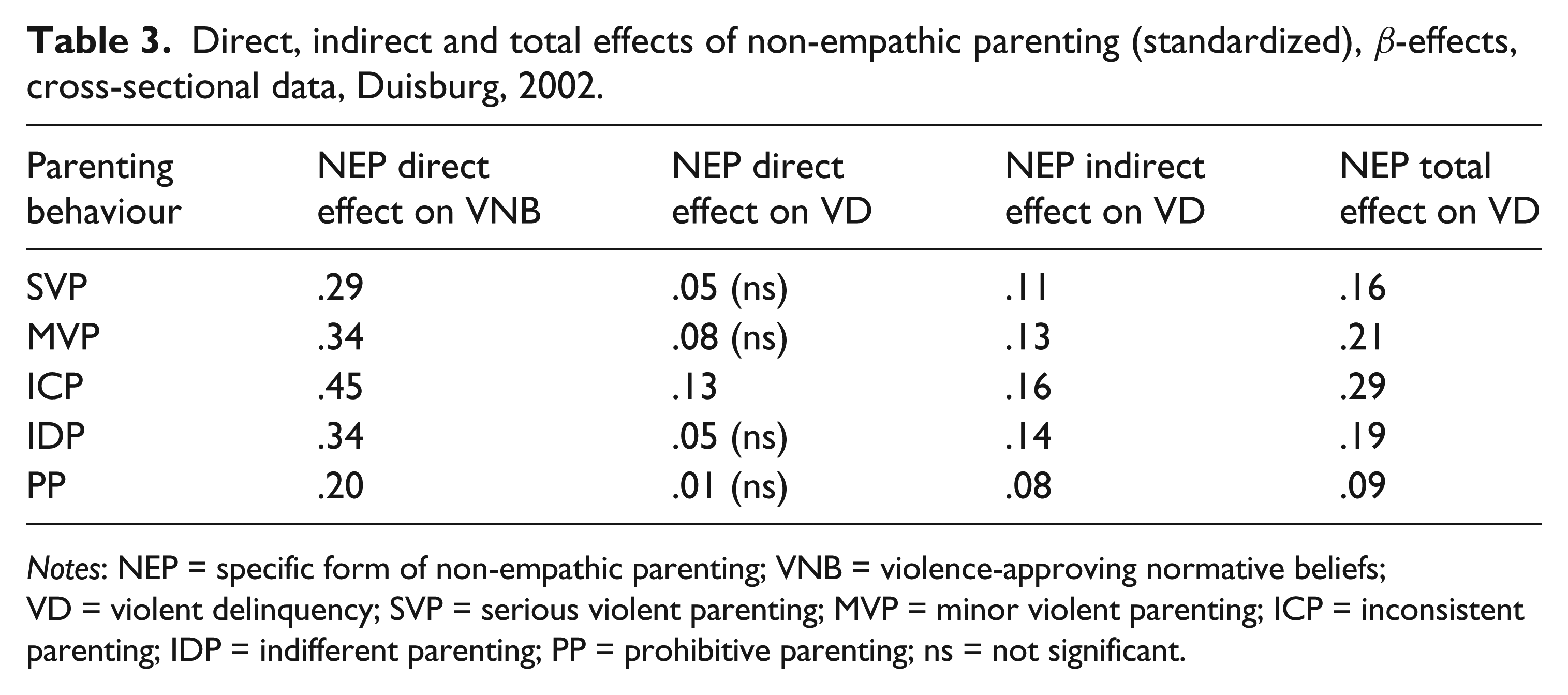
Notes: NEP = specific form of non-empathic parenting; VNB = violence-approving normative beliefs; VD = violent delinquency; SVP = serious violent parenting; MVP = minor violent parenting; ICP = inconsistent parenting; IDP = indifferent parenting; PP = prohibitive parenting; ns = not significant.
To test the interactional part of the model, two analytical methods have been used complementarily. Multiple group analyses have been conducted to assess whether interaction effects between violent media consumption and non-empathic parental behaviour existed in the first place. Product terms of these variables have been introduced into the structural equation models to analyse the strength of the interaction effects. 16
The multiple group analyses indicated interaction effects for boys who were treated indifferently by their parents and watched violent films at the ages of 13 and 14, and for 14-year-old boys who experienced minor and severe forms of violence by their parents and played violent video games. These results are in general supported by the structural equation models with product terms. 17 Significant positive interaction effects could be found only when parents behaved indifferently and the juveniles watched violent films (at the age of 13 and 14, see Table 4). The unexpected and singular negative effect of the interaction between severe forms of violence by the parents and the consumption of violent films for 15-year-old boys is most probably a methodological artefact 18 and does not indicate a violence-reducing effect of the interaction.
Significant interaction effects of violent media consumption and non-empathic parental behaviour, waves 1-3, Duisburg, 2002-4.
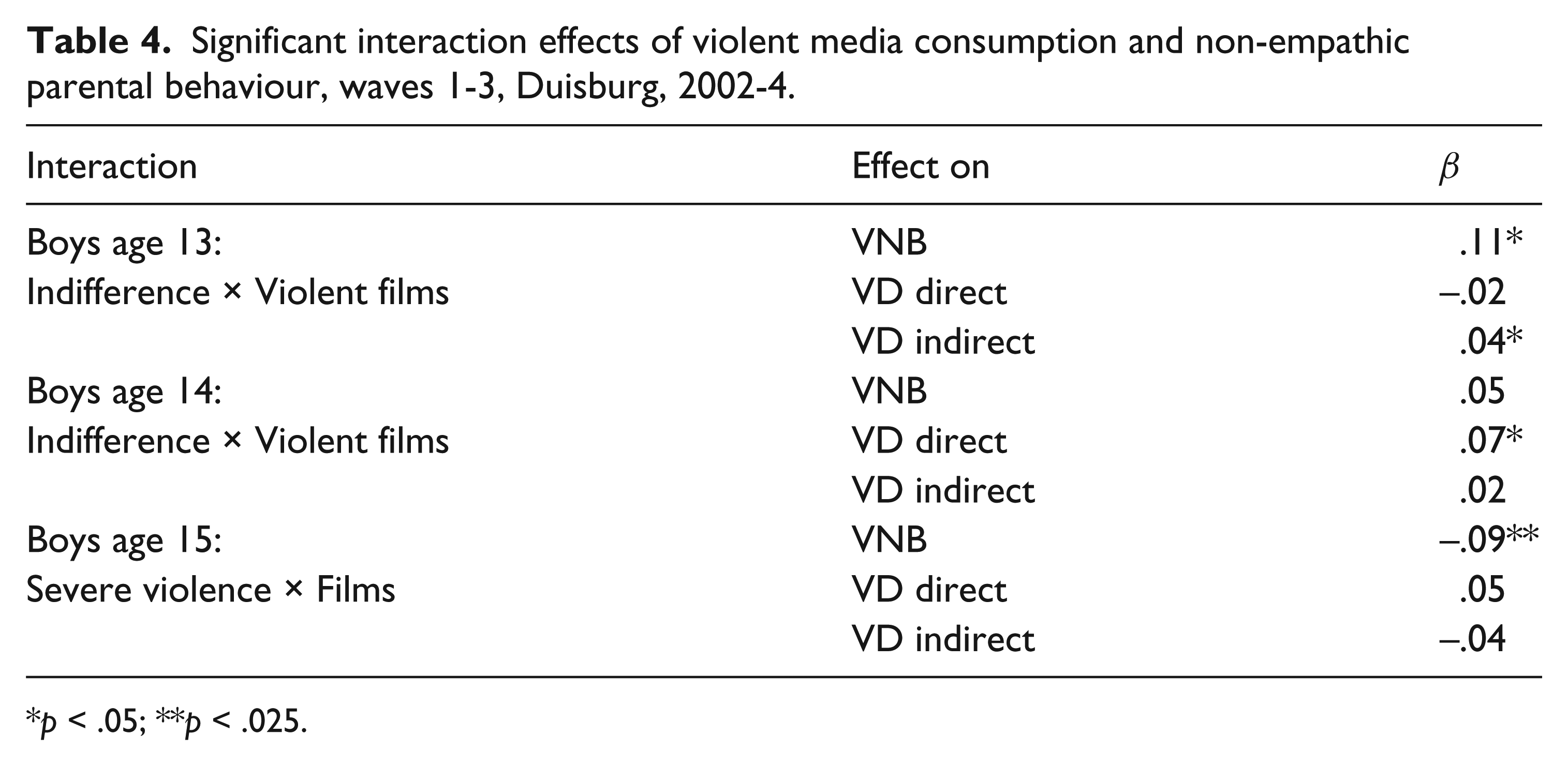
p < .05; **p < .025.
The few significant interaction effects are very weak. A closer look at their size reveals that even the strongest of these effects are considerably smaller than the main effects of the interacting variables on violent norms (for example, β = .32 for indifferent parenting and β = .38 for violent films, compared with β = .11 for the interaction of indifferent parenting with violent films at age 13). The same holds true for the total effects of the main and the interaction effects on violent delinquency (for example, total effects of β = .14 for indifferent parenting and β = .19 for violent films, compared with a total effect of β = .02 for the interaction of indifferent parenting with violent films at age 13). This renders the interaction effects almost negligible. 19 In contrast to the preceding hypotheses, Hypothesis 3 is thus only weakly supported.
Longitudinal analyses
The cross-sectional analyses indicate a causal effect of violent media consumption on violent norms and violent delinquency, which has to be confirmed by analyses with longitudinal data. The longitudinal analyses examine the mediator part of the mediated interaction effect model only, because the interaction effects were already very weak in the cross-sectional data and therefore no significant long-term effects are to be expected. The focus of the analyses is on the relationship between violent media consumption, violence-approving normative beliefs and violent delinquency, which are analysed with structural equation models using the four-wave panel data. 20 Additional analyses including the five kinds of non-empathic parental behaviour mentioned above at t1 as control variables did not alter the effects of violent media consumption considerably (Δβ ⩽ .02), thus implying an independent impact of media violence consumption.
The four-wave model for boys and their consumption of violent films has a good fit index 21 and shows that violent film consumption does cause a stronger approval of violent normative beliefs, and these beliefs lead to more violent delinquency (see Figure 2). The effect of violence-approving normative beliefs at t1 on violent delinquency at t2 is β = .24, which is comparatively strong (considering the time lag between the measurements). Although the effect of violent film consumption at t1 on violence-approving normative beliefs at t2 is considerably weaker (β = .10), it can still be regarded as a meaningful effect. The four-wave model also reveals that both effects (the one of violent film consumption on violence-approving normative beliefs as well as the one of violence-approving normative beliefs on violent delinquency) become less important with age. This might partly be due to the stability effects in a four-wave model, but may also indicate a change in the analysed relationships while growing up. The indirect time-lagged effect of violent film consumption at t1 on violent delinquency at t3 via violence-approving normative beliefs at t2 is significant (β = .06, p < .10). This result does imply – especially in combination with the strong support for the indirect nature of the effects of violent film consumption on violent delinquency in the cross-sectional analyses – a meaningful mediator effect of violence-approving normative beliefs. The direct effect of violent film consumption at t3 on violent delinquency at t4 is significant (p < .10), and with β = .08 worth mentioning, but does not necessarily indicate a non-mediated impact of violent films on delinquency because its direct nature is probably due to the missing measurement of violence-approving normative beliefs at t4.
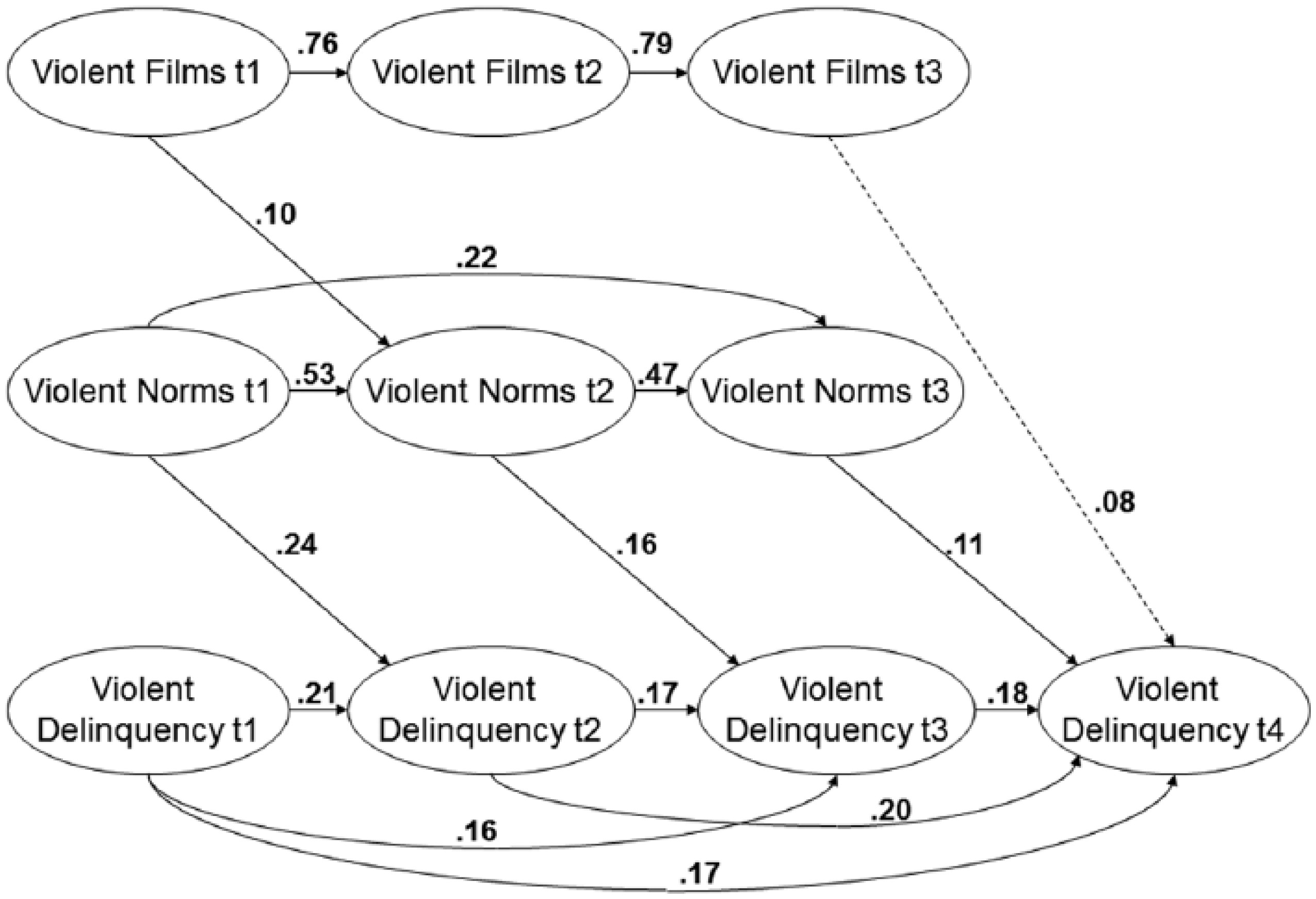
Four-wave model, violent films, boys, Duisburg, 2002–5.
The four-wave model that includes the effects of violent game consumption on violence-approving normative beliefs and violent delinquency has a good fit but does not show any significant mediation at all (see Figure 3). 22 Violent game consumption does not have any time-lagged effects on violence-approving normative beliefs and the only significant, but rather small (β = .09), effect can be found on violent delinquency. This indicates a weak direct effect of violent game consumption at the age of 15 on violent delinquency at the age of 16.
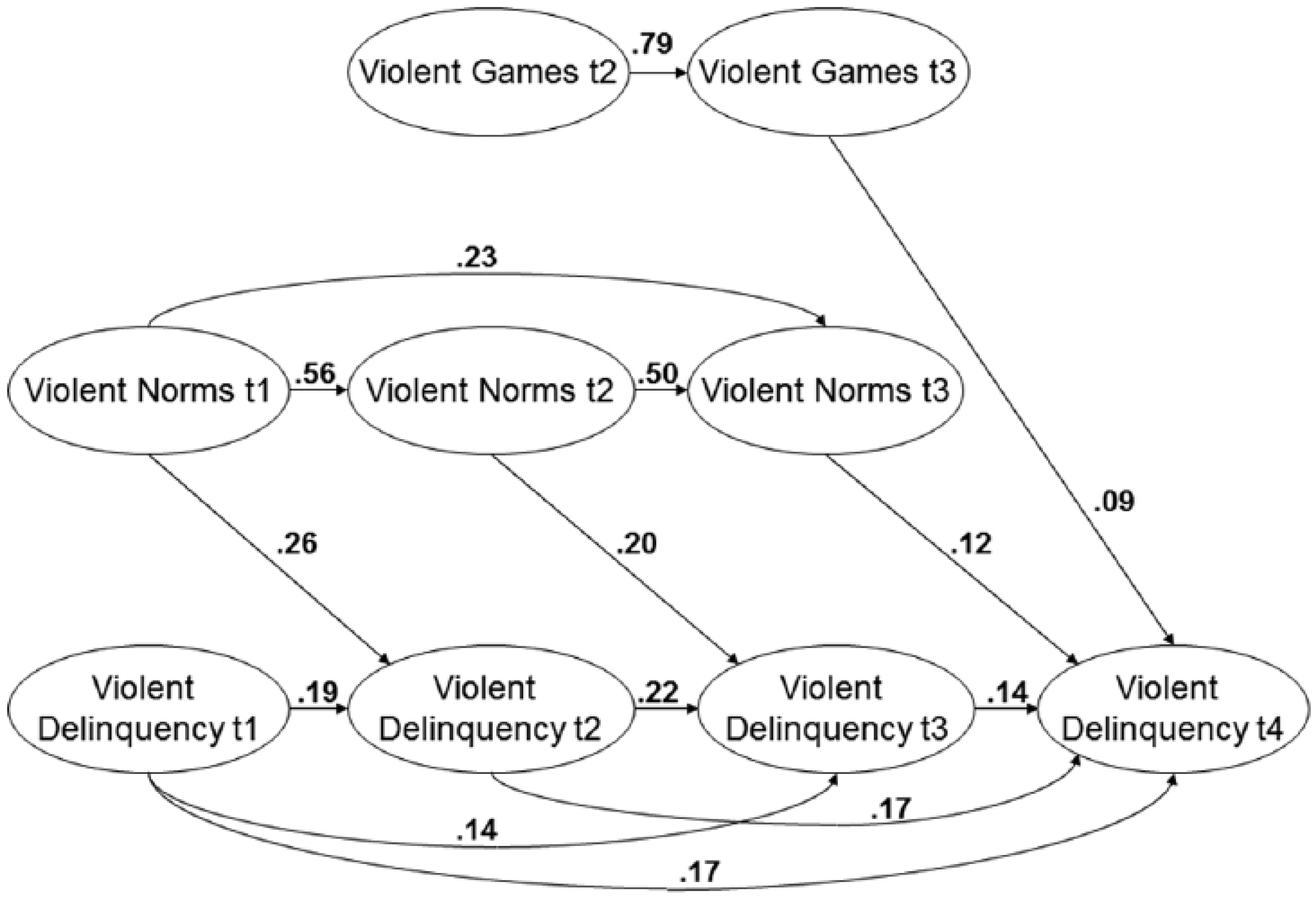
Four-wave model, violent games, boys, Duisburg, 2002–5.
Discussion and conclusion
The current study investigated – apparently as one of only very few longitudinal studies so far – the multi-layered nature of causal relationships between violent media consumption and violent delinquency in juveniles, referring to a mediated interaction effect model in which moderator effects of non-empathic parental behaviour as well as mediator effects of violence-approving normative beliefs are combined.
The analyses showed that violent media consumption as well as various forms of non-empathic parental behaviour led to slightly more violent delinquency (small to moderate effects) and to considerably more violence-approving normative beliefs (moderate to large effects). The assumed mediator role of violence-approving normative beliefs is very well supported by the empirical results of cross-sectional analyses (and also by the results of longitudinal analyses, at least for violent film consumption). Both the effect of violent media consumption and the effect of non-empathic parental behaviour on violent delinquency are in most cases completely mediated through the approval of violent normative beliefs. This study thus adds strong support to the existing (comparably small amount of) literature on mediation of the effects of violent media consumption via normative beliefs or cognitions. The size of the effects of violent media consumption on violence-approving normative beliefs is moderate to large and is thus in line with existing results. The effect sizes found by Avci and Güçray (2013) and Möller (2006) in cross-sectional analyses are almost exactly as high as the ones here (β = .4 for violent media consumption including violent film consumption and β = .24 for violent video game consumption on violence-approving normative beliefs, respectively), but the size of the longitudinal effect of violent video game consumption on violence-approving normative beliefs (β = .18) found by Gentile et al. (2014) is larger than the one found in this study, 23 although still comparable to the one found for violent film consumption.
However, whereas Gentile et al. (2004, 2014) and Möller (2006) analysed violent video game play only and Avci and Güçray (2013) as well as Mößle et al. (2014) used violent media content as an explanatory variable, in this study the effects of violent film and violent video game consumption have been analysed separately, so that a comparison of the two effects is possible. Interestingly, the consumption of violent films showed a bigger impact on violence-approving normative beliefs than the consumption of violent games. The effects were larger in cross-sectional analyses already and longitudinally no significant mediation effect could be found for violent video game consumption, whereas the indirect effect of violent film consumption was significant and thus implied a mediation of the effect via violence-approving normative beliefs. Yet violent video game consumption at t3 had a significant direct effect on violent delinquency at t4. But, because the effect was rather weak, it can be questioned whether it really can be read as proof of a universal causal effect or whether it suggests that violent game play influences only possible risk groups (intensifier or double-dose effect). Although the analyses in the current study showed that the violence-enhancing effect of non-empathic parental behaviour could not be intensified by violent video game consumption in juveniles, other possible dispositional factors (for example, delinquent peers) should be considered in future research.
Yet the differences in the effects on violence-approving normative beliefs for violent film and violent video game consumption revealed in this study should be read with care, because there are numerous reasons why the consumption of violent video games might have greater effects on aggressive cognitions and behaviour than the consumption of violent films (Anderson and Gentile, 2014: 233ff). However, past research on the direct effects of violent video game and violent film consumption on aggression or violent behaviour yielded mixed results. Whereas older studies found weaker effects for violent video game consumption, more recent studies found effect sizes comparable to those of violent film consumption (see various meta analyses, for example Anderson and Bushman, 2001; Anderson et al., 2010; Sherry, 2001). The smaller effects for violent video game consumption found in the current study could thus be due to the fact that the data stem from the years 2003 to 2005. At that time, virtual reality games had not yet been developed and in general the graphical presentation of the games was not even close to the possibilities of TV and movies. This could have hindered the player’s identification with the characters, which is one of the main reasons why greater effects of violent video game consumption are expected (yet studies analysing the effect sizes of violent game consumption on aggression for games with different graphical and technical characteristics yielded mixed results; for example Farrar et al., 2006, and Ivory and Kalyanaraman, 2007: 546). It might also be the case that films convey more violence-approving norms owing to the larger amount of dialogue in comparison with violent games, so that the latter offer fewer opportunities to learn violent norms and cognitive justifications for violence, and/or that the depictions of an approval of violence are more realistic in movies than in games (these are of course only assumptions, which cannot be tested with the data at hand).
The results also imply that violence in films might have a bigger impact on the normative beliefs of younger juveniles. This could be due to a phase of norm orientation at that age, whereas older juveniles are less susceptible. Additionally, younger male juveniles might tend to follow their beliefs more easily whereas older male juveniles are – maybe owing to a greater capacity to control their impulses – better able to differentiate between beliefs and the appropriateness of actual behaviour in a certain situation.
Violent media consumption and non-empathic parental behaviour influenced normative beliefs favouring violence and – via these beliefs – violent delinquency, mainly independently of each other. Only for boys whose parents behaved indifferently did their violent film consumption lead to more approval of violent norms than in boys who did not experience indifference by their parents. This small interaction effect can be explained in social learning terms. Violence-approving normative beliefs conveyed in the movies will be adopted more easily if the juveniles’ social environment, in this case the parents, does not react to violent beliefs articulated by the juveniles or to violent behaviour of the juveniles, because the missing reaction can serve as an affirmation or reward (Bandura 1977: 119). However, the interaction effects were small and not found consistently through all four examined data waves, so that, in sum, only weak support for the hypothesized interactions was found. This might indicate that violent media consumption simply does not aggravate the effects of non-empathic parental behaviour on violent norms and violent delinquency to a meaningful extent. It might also be the case that the juveniles were already too old to detect this interaction, since non-empathic parental behaviour usually starts earlier than at the age of 13 and it might form a disposition for violence that can be intensified by violent media consumption at a younger age. Fikkers et al. (2013) recently found significant interaction effects between family conflict and media violence consumption in a sample of younger juveniles (mean age 11.87), indicating that age does matter in this context.
Noteworthy limitations of the study (additional to the ones described above) include the nature of the data as self-report data, for which the possibility of over- or under-reporting never can be ruled out completely (although our results regarding the distribution of (violent) media usage and violent delinquency of German juveniles are in line with other self-report studies, for example Baier et al., 2010), as well as the attrition in the four-wave panel data. Attrition mainly affected boys of the lowest school type (Hauptschule). These boys watched significantly more violent films and committed more violent delinquency but did not play more violent video games than the boys at the highest school type (Gymnasium). 24 Yet it is unlikely that the effects of violent film consumption would have been considerably smaller without the loss of these boys (on the contrary, their higher rates of delinquency could have even led to bigger effects), because the effects have also been discovered in the cross-sectional data. But it cannot be ruled out that the time-lagged effects of violent video game consumption on violence-approving normative beliefs would have been significant without the attrition (yet this is also unlikely because of the insignificant differences in violent video game consumption).
The results in general confirm the essential role of cognitive functions such as violence-approving normative beliefs in the explanation of human behaviour, including violent delinquency (as assumed in social cognitive theories). Media violence has the potential to heighten the approval of violence in juveniles to a remarkable extent. Although this impact of media violence consumption seems to diminish when consumers grow older, the current study indicates that media violence affects the majority of the consumers and does not aggravate dispositions for violence only in certain risk groups, for example juveniles who experience parental maltreatment. Yet this indication may be proven wrong in future studies with younger subjects and/or when analysing other potential risk groups, such as juveniles with a delinquent peer group. Future research could also analyse the effects of violence-approving normative beliefs on changes in delinquent behaviour by using latent growth curve modelling. Last but not least it has to be emphasized that media violence consumption, parental behaviour and violence-approving normative beliefs are of course not the sole explanatory factors for the violent behaviour of juveniles. Many other variables such as peer delinquency or school achievement could and should be analysed (as moderators and/or mediators) in future research. More methodologically sound longitudinal studies should examine media violence and other potential causes of an approval of violence and of violent behaviour in juveniles by analysing cumulative as well as interacting and mediating effects. But this study makes a strong case for including mediation via normative beliefs or attitudes when seeking to explain the effects of media consumption on aggressive behaviour.
Violent films and violent video games can change the extent to which juveniles see violence as justified, normal or even fun. Via this change, behavioural standards might be altered, eventually leading to more violent behaviour in some, especially younger consumers. One could argue that the results of this study support a demand for a legislative ban on violent media (at least for juveniles). However, in a world where juveniles can basically get any restricted content online, this ban probably would not lead to the expected results of less media violence consumption but only to more juveniles breaking the laws. Instead, the pivotal role of attitudes and normative beliefs in the relationship between violent media consumption and violence offers opportunities for intervention for both society as a whole and (probably more importantly) the direct social environment of juveniles who consume violent media. The influence of media violence on juveniles’ opinions about the appropriateness of violent behaviour could be reduced or even neutralized if the social environment of juveniles offered a model of alternative attitudes towards violence. It should be made clear that, although violence might be extensively rewarded and thus seem acceptable in the media, this does not hold true for real life.
Footnotes
Funding
The author(s) disclosed receipt of the following financial support for the research, authorship, and/or publication of this article: Deutsche Forschungsgemeinschaft (10.13039/501100001659 BO 1234/6-7).