



Abstract
Despite the devastating short- and long-term consequences of resource-related environmental crimes, rampant illegal soil and sand mining continues worldwide. In countries such as India and Italy, organized crime groups have emerged as prominent illegal suppliers of soil and sand. The proposed study focuses on an understudied research area at the intersection between organized crime and environmental crimes, and offers a trans-comparative study of illegal soil and sand mining conducted by Indian and Italian organized crime groups with two main objectives. First, a comparative analysis of the organizational mechanisms, operational practices, threat management, and supporting cultural, regulatory, and policing factors is conducted. Second, a discussion of how these groups reflect mainstream models and theories of organized crime is offered.
Introduction
Environmental crimes, specifically resource-related crimes, include those crimes that illegally harvest the earth’s natural resources, such as flora, fauna, and minerals, thereby negatively impacting the environment. One such natural resource is soil and especially sand, which can be used for manufacturing concrete, brick, and glass, for water filtration, in leisure and sports industries (golf courses and football pitches), in horticulture, in everyday products such as dried food, detergents, cosmetics, hair spray, and toothpaste, and in technology such as computers, mobile phones, and credit cards (Dupont, 2013; NISA, 2011). An average house requires approximately 200 tons of sand, larger buildings require approximately 3,000 tons of sand, and just one kilometer of highway requires 30,000 tons of sand (Delestrac, 2013; Dupont, 2013). The global trade in sand yields US$70 billion every year (Dupont, 2013).
Not surprisingly, soil and sand are hot commodities and, unfortunately, existing regulated supplies are not enough to satisfy the enormous demand. To keep up with this demand, soil and sand are mined illegally and extensively; currently approximately 70 countries are experiencing illegal mining (Coastal Care, 2014; Delestrac, 2013). The problems resulting from excessive and illicit soil and sand mining include the destruction of natural beaches and the ecosystems they protect, habitat loss for globally important species, increased shoreline erosion rates, reduced protection from storms, tsunamis, and wave events, and economic losses resulting from loss of coastal aesthetics and tourism (Young and Griffith, 2009).
Despite these devastating short- and long-term environmental consequences, rampant illegal soil and sand mining continues worldwide. In countries such as India and Italy, organized crime groups have emerged as prominent illegal suppliers of environmental resources that are harvested from within their respective borders. India’s ‘Sand Mafia’ are sophisticated organized crime groups that illegally excavate and sell sand for approximately US$16 million per month (Rege, 2016). In Italy, the involvement of organized crime groups in environmental crimes – so-called ‘ecomafias’ 1 – has attracted largely scholarly attention (see, among others, Caneppele et al., 2013; Martone, 2014; Massari and Monzini, 2004; Peluso, 2015; Pergolizzi, 2012; Ruggiero and South, 2010; Sergi and Lavorgna, 2012; Sergi and South, forthcoming; Walters, 2013). Ecomafias are considered to be active also in the illegal soil mining that occurs to meet the demands of the construction industry (Direzione Investigativa Antimafia, 2013; Lavorgna, 2015; Parliamentary Inquiry committee, 2000; Sciarrone, 2001). This activity is closely related to illegal waste disposal in order to maximize profits, for a turnover of almost US$2 billion per month (Legambiente, 2014a); indeed, resulting holes (as well as pre-existing caves) are illegally filled with waste as dumping sites. As Nunzio Perrella, the first pentito (a former mafia member, now collaborator with justice) of ecomafia, said in 1988 ‘a munnezza è oro’ (‘trash is gold’) (as reported in Marsala and Mura, 2009). Any type of waste can be dumped in this way, from toxic industrial waste and tires to demolition material and even nuclear waste (Massari and Monzini, 2004; Parliamentary Inquiry Committee, 1997, 2012a).
Researchers have examined the intersections of organized crime and environmental crimes worldwide, such as illegal fishing (Osterblom et al., 2011; Petrossian and Clarke, 2014; Sander et al., 2014), illegal wildlife hunting and poaching (Moreto and Lemieux, 2014; Pires, 2015; Rosen and Smith, 2010), illegal harvesting and logging (Bader et al., 2013; Innes, 2010; Tacconi, 2012), and illegal hazardous waste dumping (Block and Scarpitti, 1985; Celeste and Celebrezze, 1986; Massari and Monzini, 2004; Senior and Mazza, 2004). However, the area of illicit soil and sand mining has been generally overlooked (Rege, 2016). Also surprising is the relative dearth of global comparative studies that examine the intersection of organized and environmental crimes. As such, this article offers a trans-comparative study of illegal soil and sand mining conducted by the Italy’s ecomafias and India’s Sand Mafia with two main objectives. First, it provides a comparative analysis of traditional concepts of organized crime, namely structure, modus operandi, threat management strategies, and cultural, regulatory, and policing factors that impact operations. Second, it offers a theoretical discussion of how these groups reflect mainstream models and theories of organized crime.
The choice of India and Italy was purposive. First, these countries serve as good choices for this comparative study because they both are infamous for environmental crimes and experience similar organized crime group involvement: Italy has a sad tradition of organized crime presence, whose involvement in environmental crimes has been long established; India has been experiencing illicit sand mining for several decades, but has only recently been gaining attention in the media. The news coverage received by some environmental activists and law enforcement agents who have experienced threats and violence has made India’s Sand Mafia more well known on a global scale (Beiser, 2015; Lasseter and Katakey, 2014; Paul, 2015; Sugden, 2013). Second, both countries are infamous for corruption and the political–organized crime–law enforcement nexus. Third, this choice allowed us to take into consideration one developed country (Italy) still suffering a deep economic and financial crisis that has also harshly affected the construction sector, and a developing country (India) that is experiencing a real boom in the construction sector. Finally, both countries use the illegally mined sand for construction within their own national borders. Other countries such as Indonesia, Thailand, Vietnam, and Cambodia export sand abroad (UNEP 2014), whereas India and Italy engage in illicit sand mining for their own respective construction sectors.
This article is structured as follows. The next section illustrates briefly the current state of affairs in both India and Italy with regards to organized crime groups’ participation in the illegal soil and sand mining arena. The third section discusses the document analysis methodology employed, possible limitations, and how these are managed. The fourth section details the comparative analysis of how the ecomafias and Sand Mafia organize, operate, and manage threats. The fifth section offers a theoretical dialog of how both groups align with the conventional models of organized crime and environmental crime. The article concludes by outlining potential avenues for further research in this filed.
India and Italy: Venues for illegal sand mining and extraction techniques
Organized crime groups engage in illegal soil and sand mining for the primary purpose of using it in construction sites (Direzione Investigativa Antimafia, 2013; Sugden, 2013). The yearly demand for sand in India is 23 million tons but riverbed supplies offer only 7 million tons (Kumar, 2013). The Sand Mafia emerged to fill this gap between market demand and supply and its (publicly known) operations occur in 12 states: Gujrat, Maharashtra, Karnataka, Kerala, Tamil Nadu, Andhra Pradesh, Odisha, West Bengal, Bihar, Uttarakhand, Nagaland, and Madhya Pradesh (Sambhav et al., 2012). Although discrepancies exist between the various estimates in the open literature, approximately Rs. 500 crore (approximately US$80 million) in sand are stolen every year (Keelor and Aradhak, 2013).
Similarly, in Italy, soil is a highly coveted commodity, with the yearly demand approximating 100 million tons, even if demand is decreasing as an effect of the economic crisis that severely hit the construction sector (Legambiente, 2014b). Unfortunately, there are no reliable estimates of the amount of soil illegally mined in the country, because most research focuses on the related illegal dumping of waste. According to a recent report on the ecomafia (Legambiente, 2014a), ecomafia activities are concentrated in the administrative regions of southern Italy, where Italian mafias originated (Puglia, Campania, Calabria, and Sicilia), but are also increasingly common in other regions in central and northern Italy (such as Lazio, Liguria, Lombardia, Toscana, and Veneto), where organized crime is present even if in different forms (Lavorgna and Sergi, 2014). With regards to Italy, this article mainly focuses on the involvement of Camorra clans in Campania and of ’Ndrangheta groups in Lombardia. These groups are poli-crime groups involved in a wide range of criminal activities, including environmental crimes. This choice allows us to consider the behavior of two different but comparable groups in different parts of the country (Lavorgna and Sergi, 2014), while taking into account cases with enough coverage in media and investigative reports to be studied with sufficient depth. 2
In both countries, sand and soil can be mined from either dry or wet sources. Dry sources include illegal quarries, inland dunes, and beaches using drillers, stone crushers, and excavators (ENVIS, 2013; Legambiente, 2014b). Wet sources include river beds, where sand is extracted through a process called dredging – sand is either scooped or sucked from the river bottom (ENVIS, 2013; Friends of the Kaw, 2014). With regards to Italy, however, there is not much evidence of soil illegally mined from wet sources, which might be explained by the fact that such criminal activity would be more difficult to hide because of the characteristics of Italian city planning and tourist areas.
Methodology
Given that this is exploratory, cross-cultural comparative research, qualitative document analysis is ideal for obtaining an in-depth first understanding of the phenomenon of illicit sand mining (Stake, 1995; Yin, 1994). Document analysis is a systematic procedure for reviewing or evaluating documents; data can be examined, reorganized, and analyzed to gain a different level of understanding and develop new empirical knowledge (Bowen, 2009). Bearing witness to covert, illicit events, documents provide background and a variety of information, which helps researchers understand the inner workings of criminal enterprises and highlight specific issues and conditions that surround the phenomena under investigation. Therefore, documents are the most effective means of gathering data when events cannot be observed, such as illegal sand mining operations, or when criminal members cannot be accessed for study.
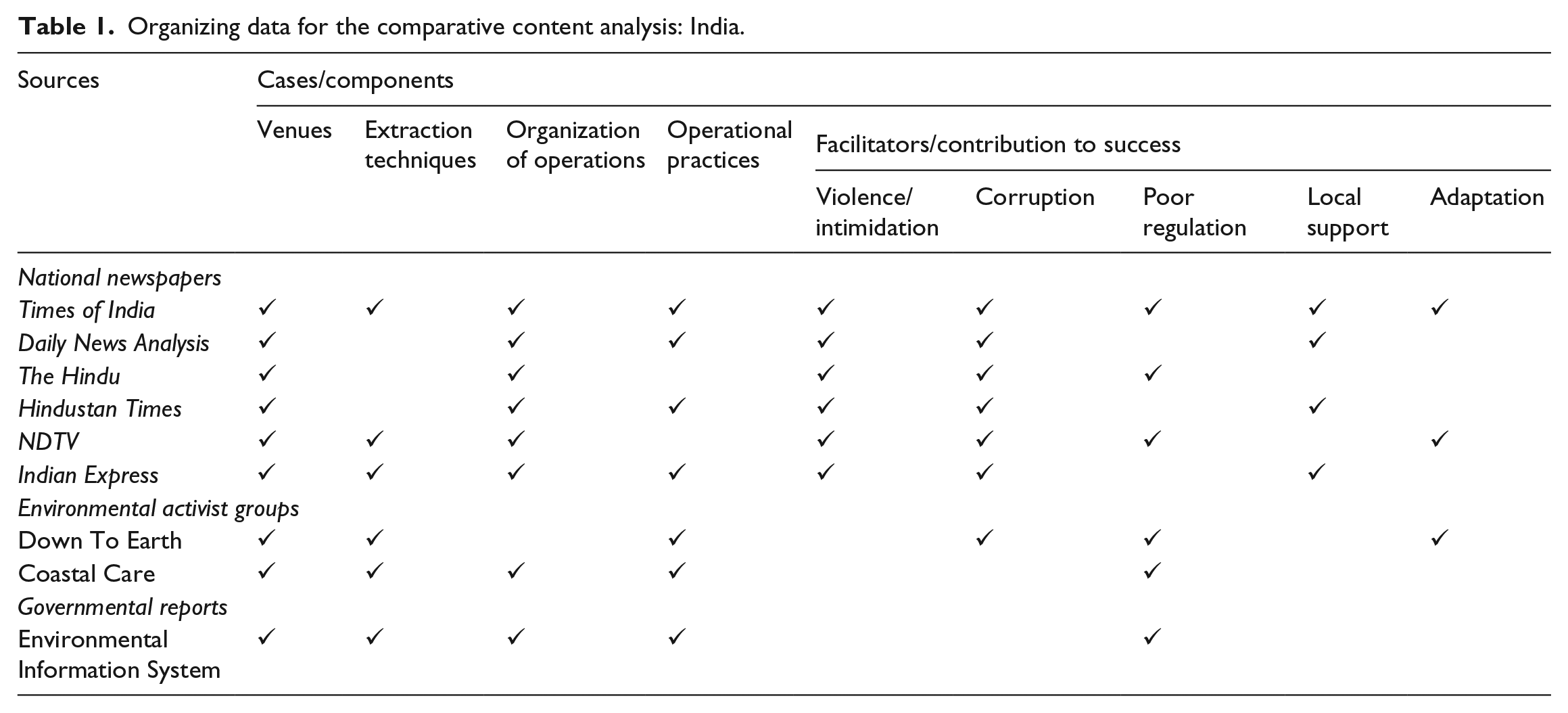
Document analysis is an iterative and data-dependent process. As such, we first organized data along well-known organized crime concepts in the literature: (i) organizational mechanisms (organized crime models of hierarchies and/or networks), (ii) operational practices or modus operandi, (iii) threat management tactics (violence, threats, intimidation, etc.), and (iv) supporting factors, such as corruption and political support, which are collectively related to the central questions of this research (Lyman and Potter, 2015). Furthermore, these categories were used in prior work on illicit sand mining in India, which made these categories a logical framework for comparative analysis (Rege, 2016). Thus, we conducted a first-pass review of the documents and identified meaningful and relevant passages of text as they pertained to these broad categories (Bowen, 2009). Second, we conducted a thematic analysis of our data, which involved a careful, more focused rereading and review of the data. Here, data were sifted using the above-listed broad categories (see Tables 1 and 2 for details). Data for each of these categories were collected for both the Sand Mafia and the ecomafias, which allowed for a thorough comparative analysis of connections, alliances, divisions of labor, threat managing techniques, and sociocultural facilitating factors.
Organizing data for the comparative content analysis: India.
Organizing data for the comparative content analysis: Italy.

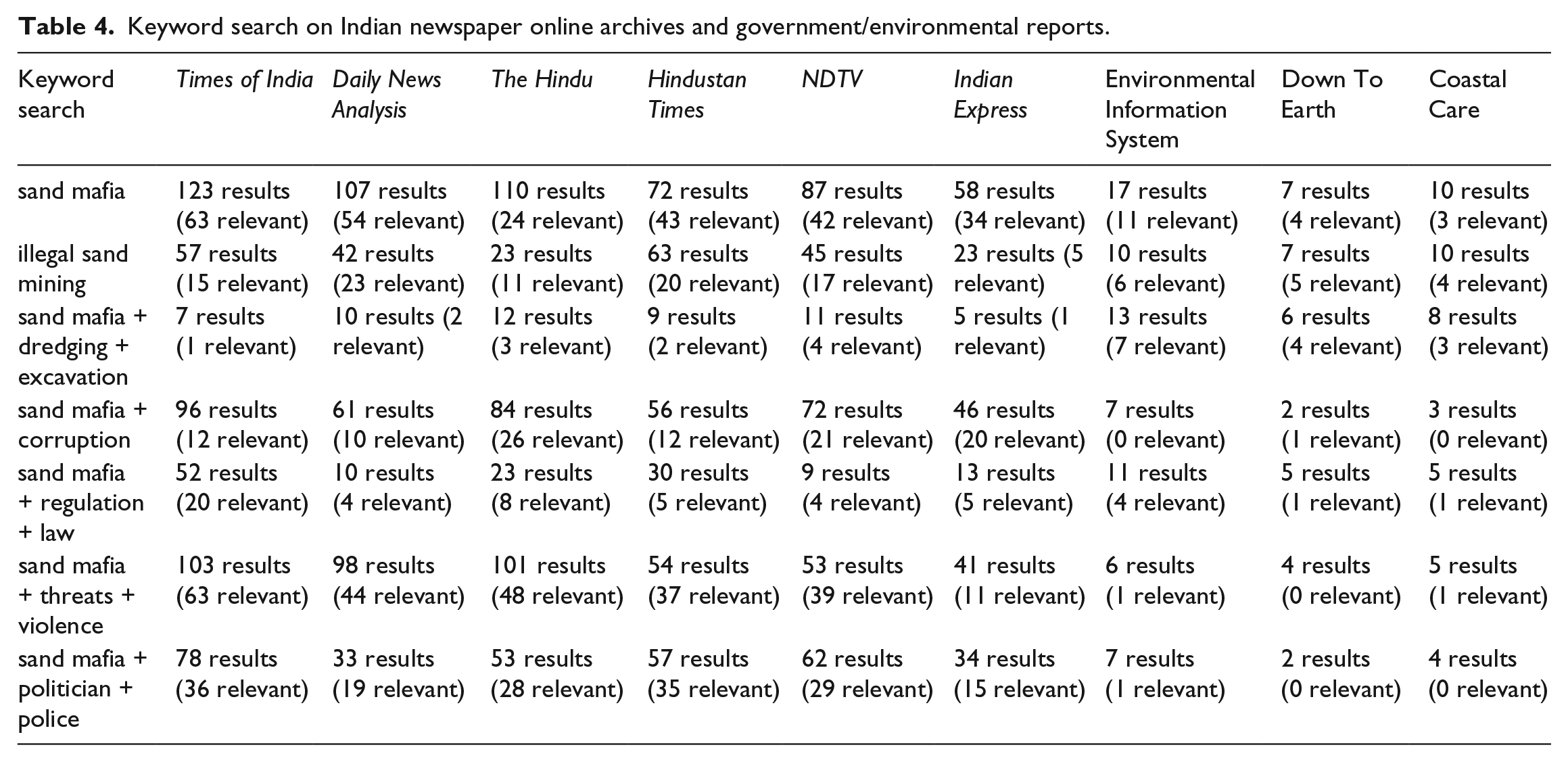
We sampled documents from various sources. Keyword searches were run to identify relevant articles and reports to consider for the analysis (see Appendix A for details). For India, we examined publicly available Indian newspaper articles (such as The Times of India, Daily News Analysis, Hindustan Times) and reports by the government (Environmental Information System) and by environmental activist agencies and magazines (Awaaz Foundation; Down To Earth; Coastal Care) that had been published between 2010 (1 January) to 2014 (30 September). This time period and data sources were chosen because of the extensive media coverage and the paucity of other academic sources (specific to the Sand Mafia), respectively. As noted earlier, although India has been experiencing illegal sand mining for many years, it has only recently started getting attention on the media, environmental, and academic fronts. After checking for quality and redundancy, a total of 157 media news, 10 outputs from the governmental Environmental Information System, and 7 reports from environmental agencies were selected for the analysis.
With regards to Italy, a keyword search was run on the online archives of five Italian newspapers: the three major ones at the national level (Il Corriere della Sera, La Repubblica, and La Stampa) and the two major ones at the regional level for Lombardia and Campania given that some of the news of interest might not have reached the national level (respectively, Il Giorno and Il Mattino). 3 A total of 318 media news were selected for the analysis, most of them focusing on the related illegal waste disposal, probably because of major scandals that hit Campania in this timeframe. Apart from media news, all relevant documents published by the main environmental activist Italian agency (Legambiente, for a total of 10 dossiers and reports on soil consumption and 9 on ecomafias) as well as 8 reports from the Direzione Investigativa Antimafia (National Anti-mafia Directorate) and 15 reports from the parliamentary special commissions on environmental crimes were retrieved online and taken into consideration. To maintain consistency with the data collection period chosen for India, documents published from 2010 (1 January) to 2014 (30 September) were considered.
The sampling strategy used was purposive and information was selected to find different manifestations of the phenomena under investigation illustrated with enough details to generate in-depth understanding (maximum variation sampling) (Patton, 1990). Documents were sampled until data began to repeat themselves and no new/additional information emerged. Collectively, these data offered in-depth insight into illicit mining operations, criminal organization, and the various techniques used by the groups to manage threats.
There are limitations with the methodology chosen. First, regarding the data gathering strategy, media news and reports are secondary sources whose reports may be biased and incomplete. Quantitative data in particular are difficult to ascertain and validate owing to the illegal nature of the activities observed, and the existing estimates are produced by non-governmental organizations (NGOs) that do not always assure methodological rigor in their analyses. However, those estimates are the only ones available at the moment. However, all information gathered was cross verified, corroborated, and enriched by relying on different reputable sources. Second, qualitative document analysis might raise issues of validity. It is worth noting that generalizability is a desirable goal but not the purpose of qualitative research (Corbin and Strauss, 2008), where external and internal validity are gained by being mentally replicable, analytically rigorous, and explicitly systematic (Patton, 1999: 1191). In this study we carefully followed all these requirements: we documented step by step the procedures used for data gathering and data analysis; to prevent biased interpretations, we used multiple sources of data produced by stakeholders in different positions; and all data collected were manually and systematically coded consistently by both researchers.
Organizing illegal mining operations
The organization of illegal mining operations in both India and Italy has some interesting overlaps, yet there are significant differences. First, illegal mining is Italy is managed by already existing organized crime groups such as the Camorra and the ’Ndrangheta. In India, illegal sand mining operations have been attributed to 12 (publicly known) areas in the country that are geographically dispersed and there is no evidence of any connections between these various operations (Sambhav et al., 2012). Various new groups set up shop across the country and are neither connected nor operated by a single overarching Sand Mafia. A second difference regards the nature of the ties between those involved. For instance, the ecomafias are part of existing organized crime groups that rely deeply on kinship ties, personal contacts, and other personal relationships (Parliamentary Inquiry Committee, 1997; Paoli, 2003). India’s Sand Mafias, however, do not exhibit any familial or personal ties; all connections are purely business and profit driven (Keelor and Aradhak, 2013). Another difference is that the Sand Mafia utilize extra laborers as needed, who comprised illegal immigrants, local villagers, and fisherfolk, and even child laborers (Nair, 2013; Sambhav et al., 2012). The ecomafias organization does not indicate any such ad hoc additions that included a similar assortment of participants. Generally, clans operate direct management over the earthmoving sector (movimento terra) by means of public contracts and sub-contracts in a way that the workers involved in these activities are somehow connected to the clan and under its hierarchical control (Parliamentary Inquiry Committee, 2012a).
Despite these larger differences, there are some interesting similarities. There is both vertical and lateral organization within the overall organization of the illegal mining operations. With regards to the hierarchical component, Italy’s mining operations are controlled by well-established organized crime groups, whereas India’s (dispersed) Sand Mafia appears to be managed by varying combinations of existing mining companies, local contractors, and politicians (Sambhav et al., 2012). The next rung of the ladder for ecomafias includes members from the legal economy, such as people managing legal waste disposal companies and the legitimate earthmoving sector (Gluzzi, 2013; Parliamentary Inquiry Committee, 2012a, 2012b; Sciarrone, 2001). The equivalent in India appears to be independent contractors who possess the necessary equipment to extract and transport illegally harvested sand (Keelor and Aradhak, 2013; Pandey, 2013a; Sambhav et al., 2012). Thus it seems that the contractors who are second in line for the ecomafias could be in a similar position within the Sand Mafias but also at the top. Also, both ecomafias and the Sand Mafia are often involved in other illicit operations. The former in particular not only illegally mined soil but also filled the holes with toxic waste, and the latter engaged in illegal coal and mineral mining (Legambiente, 2014a; Pandey, 2013a). Interestingly, in both Italy and India, illegal mining was undertaken on occasion by groups that were not involved with the ecomafias or the Sand Mafia; these independent contractors conducted their own mining operations (Calderoni et al., 2014; Pandey, 2013a; Parliamentary Inquiry Committee, 2012a).
Operational practices
Both Italian and Indian groups are involved in large-scale activities and they adopt specific strategies to divert attention from what they are doing. In Italy, ecomafias generally work under the umbrella of bids for public contracts in the waste management and construction sectors. In order to do this, a system of sub-contracts is created: businesses winning the bid and operating in the legal economy are forced to rely on smaller firms controlled by the clans for specific and necessary stages of the activity, such as the earthmoving, where significant manpower but little expertise is necessary (Laudati, 2013; Sciarrone, 2001). Furthermore, figureheads – trusted persons linked by kinship or business ties – are used for hiding the real ownership of the vehicles and other machinery used (Parliamentary Inquiry Committee, 2012a).
In India, no evidence of this has been found, suggesting that the Sand Mafia is less sophisticated in its capacity to infiltrate the legitimate system. In some cases, however, sand drilling machines are owned and controlled by leaders of major political parties (Rashid, 2013), which indicates that the criminal groups enjoy meaningful connections with the upper world. On the other hand, expensive machinery seized during a raid implies that the Sand Mafia could also easily afford top-of-the-range tools on its own (Mendonca, 2013). Sand excavation, however, can also be done without the use of much technology or skill – if, on the beaches or inland, mechanical excavators can be used, and if, from riverbeds, divers can fill baskets and use ‘tug signals’ to pull up the looted sand and fill boats (Vijapurkar, 2013). There have been instances of legitimate sand mining corporations that are also involved in illicit sand mining. These companies already have mining permits, excavating equipment, and storage and transportation capacities; on occasion, they exceed their allocated mining allowances, and sell the excess to generate extra revenue (Rege, 2016).
Italian groups seem to rely extensively on the falsification of documents. In particular, the log books of truck drivers are systematically falsified with regard to the distance covered, as well as the amount and the nature of the material hauled. Moreover, cheating about the waste or the soil type (for example, by falsifying the relevant code as identified in the European Waste Catalogue) also allows these materials to be re-sold as filling material in the construction sector (Parliamentary Inquiry Committee, 2012a). In India, no evidence of document falsification was found; rather, numerous duplicate mining permits were issued as needed, which indicated alliances between permit issuing offices and the sand mafias (Rege, 2016).
Criminal groups in both countries have to successfully manage unannounced inspections, confiscation of their gritty loot, and unpleasantness with communities that are disturbed by their operations. Trying to avoid public attention, in Italy land to be mined and then filled with waste are bought or rented, or the activities occur so covertly that land owners do not know what is going on on their properties. There is also a constant search for local farmers willing to receive contaminated soil on their land and to cover the operation with the periodic replacement of cultivable land, for which they already have municipal authorizations (Parliamentary Inquiry Committee, 2012a). In India, trucks, boats, and canoes are used to transport sand behind the scenes. Depending on mining site locations, between 20 to 100 trucks leave illicit mining sites every day, and in some instances huge rafts are used to help sand-laden trucks across rivers to avoid official inspections (Seshacharyulu, 2013). Henchmen follow trucks in their vehicles; this chauffeuring is to alert truck drivers of possible raids by mining or policing officials (Seshacharyulu, 2013).
In both countries, mining and dumping generally occur overnight and possibly for a few days only in different areas, so as to avoid attracting too much attention (Parliamentary Inquiry Committee, 2012a; Pandey 2013a, 2013b; Pereira, 2012; Sambhav et al., 2012; Seshacharyulu, 2013), and there is constant concentration on concealing – whenever possible – the criminal activity. In Italy, for instance, the mined ground filled with waste is sometimes covered by a final layer of fine soil – maybe stolen elsewhere – and trucks containing waste to be illegally dumped are covered by a layer of excavated earth to circumvent controls by police officers (Parliamentary Inquiry Committee, 2012a). In India, roads are often laid alongside embankments to exclusively transport sand and the movement of trucks is uninterrupted and often unchecked (Nair, 2013; Sambhav et al., 2012). Rows of empty trucks are parked at the roadside, and drivers and laborers are found nearby discussing the day’s tasks (Pandey, 2013a). One contractor explained how illicit sand mining worked: ‘mining has to be done fast. You never know when the government will stop it. Instead of manual labor, we use excavators which can fill a dumper in four minutes flat’ (Sambhav et al., 2012).
Factors contributing to the success of ecomafias and Sand Mafias
Four main factors contributed to the two groups’ success: (1) intimidation/violence; (2) police, political, and construction corruption; (3) poor regulatory measures; (4) local support.
From 2009 to 2012, more than 130 incendiary attacks and more than 70 intimidating acts with weapons and explosives were registered in Lombardia alone (Parliamentary Inquiry Committee, 2012a). Victims did not file complaints out of fear of retaliation. Also, workers non-affiliated with the clans did not press charges, fearing job loss. Similarly, in India, officers and villagers who challenged the Sand Mafia were suspended, transferred, threatened, physically assaulted, tortured, or even murdered (Keelor, 2013a; Pandey, 2013b; Rege, 2016). Violent measures were also used to manage competition. In Italy, ‘environmental extortion’ sometimes occurred: in areas where the mafia presence was well established, legitimate firms simply avoided competing with mafia-related firms as either they would experience subtle pressure (if they were lucky) or they would be beaten up (Parliamentary Inquiry Committee, 2012a; Zancan, 2014). In India, violence against rivals was used to ensure dominance. In the past few years, several states have experienced ‘sand wars’ over mining rights (Gupta, 2013). Rival groups engaged in extorting their competition during smuggling operations. In one case, for instance, a group carrying illegally mined sand was stopped by its rival demanding ‘royalties’ (extortion money). This confrontation became violent, resulting in the death of the extortionist group (Singh, 2013).
A second factor contributing to their success is the use of corruption and strong political ties. In India, politicians who were once funded by businesses are now being funded by the Sand Mafia (Aiyar, 2013). Similarly, Italian mafias have well-established ties with political power and have generally been very successful in infiltrating the public sphere (Paoli, 2003; Parliamentary Inquiry Committee, 2013). Moreover, the earthmoving sector was used as a source of political influence by mafias (especially in the case of the ’Ndrangheta in Lombardia), which relied on a veritable ‘army’ of owner drivers (‘padroncini’) from their homeland Calabria as potential voters and therefore as a political leverage tool (Parliamentary Inquiry Committee, 2012a). Corruption was used both to obtain access to public bids through structural corruption connections and in one-off cases. For instance, in his deposition, Schiavone said that there was a ‘price list’ to deal with public administration (Parliamentary Inquiry Committee, 1997), and the Parliamentary Inquiry Committee (2012a) reported that law enforcement officers were allegedly bribed not to check trucks containing mined soil and waste. In a similar vein, police officers were often bribed to let trucks full of sand pass through checkpoints and also warned the Sand Mafia of impending raids (Keelor, 2013b; Nair, 2013; Seshacharyulu, 2013). Similarly, law enforcement officers were allegedly bribed not to inspect trucks containing mined soil (Parliamentary Inquiry Committee, 2012a). Corruption was also used to engage in bid rigging practices for obtaining mining permits and licenses in both countries (Parliamentary Inquiry Committee, 2012a; Rashid, 2013).
The third factor that aided illicit sand mining operations in both countries was the presence of poor regulatory measures and poor enforcement. Until recently, with the exception of waste trafficking (Art. 260 of legislative decree 152/2006) and waste burning (Art. 265bis of legislative decree 152/2006 as introduced by Law 6/2014), environmental crimes were generally considered not to be felonies (delitti) in the Italian legal framework but to be only misdemeanors (reati contravvenzionali). Sanctions were fairly low, and prescription limits expired quickly (in about four years) compared with the lengthiness of criminal processes in Italy (Legambiente, 2013; Parliamentary Inquiry Committee, 2012a). However, in May 2015 the Italian legislature approved a new law on the addition of environmental crimes to the Criminal Code, categorizing them as felonies. The passage of the new bill is a positive step forward, but only time will tell whether its implementation will help to counter resource-related crimes (Lavorgna, 2015). There are also specific legal loopholes that are exploited in the sand/waste cycle. For instance, it emerged from law enforcement operations such as Isola (in 2008) and Redux-Caposaldo (in 2011) that it was possible to obtain haulage licenses conto terzi (‘on behalf of a third party’) that allow the clan to figure as supplier and service provider to sub-contractors in public bids. In this way, the clan can circumvent the need for the required certificazione antimafia (certificate of non-involvement in organized crime) (Gluzzi, 2013; Søndergaard, 2013).
India also faces similar regulatory problems. There are some enforcement agents, such as the mining department, that regularly try to confront the mafia. They do not, however, have teeth as they are not equipped with enough manpower and adequate resources, resulting in sloppy, and at times non-existent, regulatory practices (Aiyar, 2013; Aradhak, 2013; Pandey, 2013a). As one environmental activist noted: ‘all terms of licenses are routinely violated, including the amount of sand to be dredged, timings of dredging operations, and number of dredgers permitted to operate in a given area’ (Ghosh et al., 2013). Existing rules also have huge loopholes. For instance, one extraction rule requires environmental clearance only in areas above 5 hectares (EPW, 2013). Contractors easily circumvented this rule by splitting operations into areas less than the allotted amount (EPW, 2013). Furthermore, it might not always be easy to accomplish monitoring – and thereby regulating – illicit activity, given the dispersed geography and the employment of manual extraction, which is not visible compared with the use of excavators and dredgers (EPW, 2013).
The fourth factor contributing to the success of the Sand Mafia and ecomafias was that these criminal phenomena sometimes received support from within their communities and industries. Contractors and people on construction sites in certain circumstances actively supported the modus operandi of the ecomafias. These people were generally well integrated into the legal economy but were not afraid to get their hands dirty in order to increase their share of profits (Parliamentary Inquiry Committee, 2012a). Similarly, the Sand Mafia got support from community members. Farmers along riverbeds were extracting sand themselves and selling it to middlemen for approximately US$96–144, as opposed to getting roughly US$5 for one day’s catch (Nair, 2013). This community backing made enforcement difficult because residents were complicit and thus did not file complaints (Gupta, 2013).
Another important factor that also contributed to the Sand Mafia’s success was adaptation, which was often necessary to continue operations. For instance, in response to repeated raids, the criminal groups operating in a specific area remained dormant for months only to resurface later, or simply displaced their activities to another venue (Mendonca, 2013; Pandey, 2013b; TNN, 2014). Moreover, when even illegally mined sand was not enough to keep up with India’s insatiable construction appetite, the Sand Mafia adapted by using illegal filtering – that is, ‘washing of sandy loam soil and selling it as sand’ (Gupta, 2013). This particular aspect was not observed (or, at least, not to this extent) in relation to Italian ecomafias. This might be because, in Italy, criminal actors running illegal mining and dumping are generally embedded in well-established poli-crime groups for whom these crimes are just one of many sources of profit, and that successfully control the territory in which they operate.
Theorizing environmental organized crime
The criminological literature offers several different theoretical perspectives that account for different aspects of organized crime, namely criminal structures and criminal behaviors. Moreover, in recent years a few attempts have been made to provide a proper theoretical framework for environmental crimes. Although the purpose of this article is to offer a comparative analysis, this section starts the dialog on how these different theoretical frameworks can be used to understand illicit sand/soil mining operations in India and Italy.
Modeling environmental organized crime
Different approaches have been presented over the years to explain the structure of organized crime, with an increasing emphasis on network structures over hierarchies (for an overview, see Lyman and Potter, 2015). Williams (2001) offers a refined and detailed analysis of network structures, focusing on variations in leadership and key actors.
As emerges from the previous sections, it appears that in India there are multiple, independent mafias rather than a single one. These groups are laterally structured and typically follow Williams’ (2001) directed network model. A group of ‘core organizers’ forms the hierarchical component of the organized crime group; it acts as a ‘steering mechanism’ to coordinate the network as a whole (Williams, 2001). Although media reports suggest a hierarchy, it rather appears that the Sand mafias are organized around a core that oversees the complete sand mining operation. Core members could include existing mining companies or independent contractors. These individuals often have close ties with politicians and mining regulatory officials by offering political funding and kickbacks, respectively. The remaining components of the network include small-time contractors, laborers, truck drivers, and community residents who benefit from the employment opportunities, albeit illegally (Rege, 2016). This directed network model allows for flexible operations. On occasion, the Sand Mafias follow Williams’ (2001) mesh network model, where the mafia groups are decentralized and self-organizing. This is evident from the less sophisticated sand mining operations in which villagers and fishermen use their vocational tools to excavate and sell sand to other parties.
As for Italy, the clans considered in this study are all linked to the Camorra in Campania and the ’Ndrangheta in Lombardia. These are both mafia-type groups (respectively, mafia-like organized crime ex 416-bis and migrated mafia groups, according to the typology developed by Lavorgna and Sergi, 2014), and therefore large-scale, stable, and structured organizations (Paoli, 2003). If we focus on the structural elements, the ’Ndrangheta and the Camorra are also best described by Williams’ (2001) directed network model. Besides a managing core – linked to mafia clans and to administrative and political power – and serving as the hierarchical component of the network, there are other various components of the network to facilitate the criminal activities. 5 These range from small-time contractors to entrepreneurs in the waste management or construction sectors, and many of those are not part of the mafia groups. Investigations, for instance, confirmed business relationships between unscrupulous legal firms and the clans (Gluzzi, 2013). Contacts with other criminal groups also emerged, especially with groups from Eastern Europe helping with the vehicles used to transport the waste (Parliamentary Inquiry Committee, 2012a:167).
In the previous sections, meaningful differences between Italian and Indian groups involved in resource-related crimes have been acknowledged. Indeed, under the umbrella term ‘directed networks,’ different types of organized crime groups can coexist, depending on differences in their social and cultural contexts. Williams himself recognized that, within the directed network model we can find both highly structured and well-established groups based on enduring memberships and more fluid and amorphous groups, with members coming in and out according to their particular needs and opportunities (Williams, 2001). Nonetheless, both case studies consistently show that classic bureaucratic and hierarchical models of organized crime are not needed to explain sophisticated crime manifestations operating serious and large-scale illegal activities such as illegal mining. A hierarchical component may (or may not) exist, and even when it exists it could coexist with more fluid elements of the network.
Theories of organized criminal behavior
The organized crime literature offers numerous theoretical explanations for why organized crime occurs, such as social disorganization theory, learning theory, and enterprise theory, to name just a few (Lyman and Potter, 2015). Overall, enterprise theory offers the best explanation for the intersection of organized crime and environmental crimes. This theory’s basic assumptions are that the illegal economy functions much like a legal one, where the laws of supply and demand, changing customer needs, and competition dictate the operations of organized crime groups (Smith, 1980). Indeed, the shortage of legally available sand owing to mining regulations and limitations in India has resulted in an underground economy that is ready to provide illegally mined sand to fill the market void. Community residents also resort to illicit sand mining to quickly generate more revenue than is available through their traditional livelihoods. Furthermore, the numerous and fragmented groups scattered across India and rival groups competing to make money from illicit sand are indicators of the competition that exists between different providers (Rege, 2016). In Italy, ecomafias are considered effective economic players, offering services at a lower price than their legitimate counterparts. In both countries, crossovers from the legitimate sector, such as politicians and the police, generate revenue via kickbacks and bribes, respectively. Thus, all key players involved are profit driven.
To further explain entrepreneurial behavior among organized criminals, Smith (2009) argues that organized crime takes place at the nexus between enterprise, people, and places, and offers a tripartite model focusing on their modus essendi (criminal identity), modus operandi (ways of operating) and modus vivendi (‘way of living’, shared alliances between illicit and licit sectors). These three modes, both individually and collectively, are relevant to understanding the entrepreneurial behavior of organized criminals. Rege (2016) offers a complementary approach, examining the intersection between modus operandi, modus vivendi, and modus coordināti (modes of coordinating between different alliances) to explain how India’s Sand Mafias are symbiotically partnered with politicians, law enforcement, corporations, and community members during the extraction, loading, transportation, and storage phases of the illegal sand mining process (Rege, 2016). Similarly, this approach effectively explains the robustness and resilience of Italian groups, which enjoy a strong connection with the territory, and rely on an extended network of exploitable ties that provide access to specific resources and help them to extend their reach into the legal world.
An environmental criminology perspective: The treadmill of crime
Green criminologists Stretesky, Long, and Lynch (2014) recently debated the implications of Schnaiberg (1980)’s Treadmill Theory of criminology. This approach, based on a political economy of the relationship between economic production and ecological disorganization, can help to explain the structural causes of environmental crime. Also, coming from a radical criminological tradition, it allows criminologists to move beyond the legal definitions of environmental crimes to better explore and understand the ‘gray areas’ that in the field of environmental criminology – as well as in organized crime studies – are so common. This theoretical framework and its categorization of crimes of ecological addition (such as waste dumping) and of ecological withdrawal (such as soil mining) nicely fit the cases of environmental organized crime addressed in this study. Indeed, by focusing ‘on the relationship between the economy and the ecology’ (Stretesky et al., 2014: 147), as recently stressed by Sergi and South (forthcoming), the ‘treadmill of crime’ helps explain the ecological disorganization resulting from the interplay of the various actors involved – including organized crime – in profit-driven activities impacting the environment. This approach could also help research on environmental (organized) crime to focus more on victims and victimization (Stretesky et al., 2014: 152ff).
Conclusions
Illicit sand mining is not unique to Italy and India. Countries such as Jamaica, Nigeria, Morocco, Israel, Indonesia, Vietnam, and Malaysia all have criminal gangs that engage in daily illegal sand mining operations to churn out profits (Beiser, 2015). This unrestrained looting of the earth’s natural resources has resulted in extreme environmental damage. Unfortunately, most countries seem to remain inadequate on the regulatory and enforcement front.
We employed a comparative approach by examining Italian ecomafias and Indian Sand Mafias to initiate dialog on this international environmental crime phenomenon. By identifying similarities and differences in organizational, operational, and threat management dynamics, this article offered some insights into an under-researched connection: organized crime (and specifically ‘mafia’-type organized crime) and environmental crime. Furthermore, this comparative approach was useful in assessing the explanatory power of some key theoretical approaches in the literature. We argue that, despite the geographical, cultural, and economical differences between Italy and India, the large-scale activity of illicit soil and sand mining requires network structures, specifically directed network models with core organizing actors who set tasks performed by peripheral actors. Further research is needed to determine the model’s applicability and generalizability to criminal gangs operating in other countries. A more complete understanding of the existing organized crime models might help law enforcement in their investigative activities and, in a global perspective, facilitate better coordinated responses. The comparative perspective aids our capacity to identify the strengths and weaknesses of each country’s efforts in tackling these criminal phenomena.
Last but not least, our findings also indicate that economic approaches to organized crime are useful in underlining the versatility of organized crime, which reacts and adapts to contingent drivers. This view, however, is not fully adequate to explain organized forms of environmental crime. Social relations and social embeddedness (in line with Kleemans, 2013) remain extremely important in shaping organized crime modus operandi. Although this aspect has been (and still is) the object of analyses in countries with a long tradition of organized crime studies, such as Italy (see, among others, Paoli, 2003), further research along this path is needed in countries with a younger criminological tradition. Also, recent theoretical developments in environmental criminology could effectively integrate the organized crime literature in this respect.
Footnotes
Appendix
Keyword search on Indian newspaper online archives and government/environmental reports.
| Keyword search | Times of India | Daily News Analysis | The Hindu | Hindustan Times | NDTV | Indian Express | Environmental Information System | Down To Earth | Coastal Care |
|---|---|---|---|---|---|---|---|---|---|
| sand mafia | 123 results (63 relevant) | 107 results (54 relevant) | 110 results (24 relevant) | 72 results (43 relevant) | 87 results (42 relevant) | 58 results (34 relevant) | 17 results (11 relevant) | 7 results (4 relevant) | 10 results (3 relevant) |
| illegal sand mining | 57 results (15 relevant) | 42 results (23 relevant) | 23 results (11 relevant) | 63 results (20 relevant) | 45 results (17 relevant) | 23 results (5 relevant) | 10 results (6 relevant) | 7 results (5 relevant) | 10 results (4 relevant) |
| sand mafia + dredging + excavation | 7 results (1 relevant) | 10 results (2 relevant) | 12 results (3 relevant) | 9 results (2 relevant) | 11 results (4 relevant) | 5 results (1 relevant) | 13 results (7 relevant) | 6 results (4 relevant) | 8 results (3 relevant) |
| sand mafia + corruption | 96 results (12 relevant) | 61 results (10 relevant) | 84 results (26 relevant) | 56 results (12 relevant) | 72 results (21 relevant) | 46 results (20 relevant) | 7 results (0 relevant) | 2 results (1 relevant) | 3 results (0 relevant) |
| sand mafia + regulation + law | 52 results (20 relevant) | 10 results (4 relevant) | 23 results (8 relevant) | 30 results (5 relevant) | 9 results (4 relevant) | 13 results (5 relevant) | 11 results (4 relevant) | 5 results (1 relevant) | 5 results (1 relevant) |
| sand mafia + threats + violence | 103 results (63 relevant) | 98 results (44 relevant) | 101 results (48 relevant) | 54 results (37 relevant) | 53 results (39 relevant) | 41 results (11 relevant) | 6 results (1 relevant) | 4 results (0 relevant) | 5 results (1 relevant) |
| sand mafia + politician + police | 78 results (36 relevant) | 33 results (19 relevant) | 53 results (28 relevant) | 57 results (35 relevant) | 62 results (29 relevant) | 34 results (15 relevant) | 7 results (1 relevant) | 2 results (0 relevant) | 4 results (0 relevant) |
Funding
Our research received no specific grant from any funding agency in the public, commercial, or not-for-profit sectors.