




Abstract
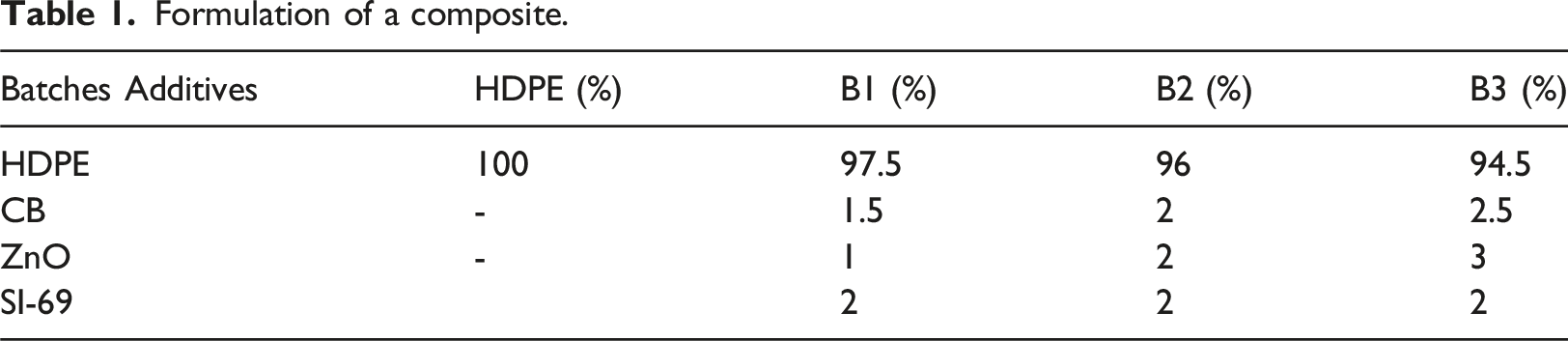
Anti-UV (ultra-violet) hybrid polymer composites were developed for application in floating solar power plants. Virgin high-density polyethylene (HDPE) was mixed with carbon black (CB) in weight percentages of 1.5, 2, and 2.5% with 1, 2, and 3% zinc oxide (ZnO) to prevent the floater from degrading due to UV light. A twin-screw extruder was used to prepare the composite, and four batches were formed. The test sample was prepared by an injection molding machine. After 672, 1413, and 3212 hours of accelerated weathering, the mechanical tests were conducted. After 1413 hours of weathering, pure HDPE loses its tensile strength, impact resistance, and elongation at break. The optimum performance was observed in batch B2, which contains 2% CB and 2% ZnO, with respect to the mechanical properties after UV exposure. The scanning electron microscope (SEM),energy-dispersive X-ray (EDX), Fourier transform infrared spectroscopy (FTIR), and X-ray diffraction (XRD) results also revealed that pure HDPE was more degraded compared to other composites. The strength of the polymer composite will decrease when ZnO and CB concentrations increase further. It was found that HDPE with 2% CB and 2% ZnO is an appropriate composite material for developing floaters used in floating solar power plants.
Keywords
Introduction
The availability of fossil fuels is diminishing as demand for them rises. Due to their endless use and positive environmental effects, renewable energy sources are being given significance as energy demand rises. Due to its availability and sustainability, solar energy is a potential energy source, but it needs a lot of space to be installed. Territorial concerns can be resolved through floating solar power installations. The floating structure material should be anti-UV1,2 They are recyclable and able to withstand temperatures between 60°C and 80°C over a prolonged period without degrading their mechanical properties when used in contact with water.3–6
Plastics are seen as more appealing than stainless steel, which is one of the most commonly used materials. High-density polyethylene is the most widely used material for floating PV systems.7,8 Due to its high density, resistance to chemicals, thermal stability, and tensile strength, HDPE is a thermoplastic polymer utilized for a wide range of purposes. The HDPE material is perfect for building floats for floating solar panel systems since it is light and does not suffer significantly when exposed to the elements for a lengthy period. 9
The mechanical properties of the polymer lattice, such as tensile and flexural strength, are found to be increased when carbon black is incorporated.10–13 Non-stabilized HDPE demonstrated significant oxidative breakdown in the environment, according to L.C. Mendes et al. The stabilized HDPE’s properties during the same exposure duration were practically unaffected, demonstrating the success of the additives utilized in this sample. 14 The impact of HDPE on the mechanical behavior of carbon black composites was examined by Alok K. Sahu et al. The mechanical properties of these composites are optimal at 2% loading in the HDPE matrix, and they start to deteriorate at 3% loading. 15 Parvin et al. examined the results of different weight percentages of carbon black to high-density polyethylene (HDPE). When carbon black and HDPE are combined, the mechanical properties of HDPE increase. 16 Jalal Barzin et al. and Farnaz et al. reported that the addition of carbon black increases tensile strength and elongation at break, as shown by the results and microscopic and spectroscopic analyses.17,18 When examining the mechanical characteristics of HDPE materials mixed with carbon black antistatic composites, Liang et al. chose the following carbon black weight percentages: 0, 3%, 5%, and 8%. The flexural modulus, yield strength, and flexural strength of the composite material were all evaluated at varied carbon black concentrations. All of the properties improved as the carbon black content increased. The value of elongation at break was enhanced when the carbon black content reached 5%. 19
Zinc oxide has been employed to improve the mechanical properties and photocatalytic capacity of polymer composites.20–23 The effects of nano-sized zinc oxide (ZnO) particles on the degradation resistance of wood-high-density polyethylene (HDPE) composites were investigated by Davood Rasouli et al. The results demonstrated a decrease in the development of cracks, tensile strength loss, and contact angle changes, which all contributed to lessened surface deterioration during weathering. UV radiation was also absorbed by ZnO particles, which prevented polymer chains close to the particle borders from degrading 24 HDPE’s tensile and impact strengths were raised by the addition of ZnO. 25 Nurr et al. evaluated that when polylactic acid, ZnO, and palm wax were added to the bioplastic, the ZnO solely increased the tensile strength of the bioplastic, and microscopic and spectroscopic analyses showed that the overall result of the bioplastic improved. 26
After studying several research papers, it was found that floaters for floating solar power plants are made by many manufacturers using pure HDPE polymer. But as we all know, floating solar is always installed for long periods due to its expensive installation cost. However, after its life span, it loses its mechanical properties due to exposure to UV light. The mechanical properties of a material will be improved if additives like ZnO (zinc oxide) and CB (carbon black) are added.
Material and methods
Sample preparation
Formulation of a composite.
Artificial weathering test
The accelerated weathering test was carried out using a UV weatherometer according to the ASTM G53-96.28,30 The weatherometer used for the study has 4 TUV fluorescent tubes (313 nm) at 80W each. The different test samples were exposed for different numbers of hours. The cycle time was considering 8 hours of exposure to radiation at 48°C ± 3 and 16 hours of dark and the temperature was maintained at 23°C ± 2. The irradiance intensity is 0.81 W/m2 with a relative humidity of 15%. 31 The multiple exposure times (672, 1413, and 3212 hours) in accelerated weathering tests that were selected are generally intended to simulate different stages of material degradation under real-world conditions. Each exposure time can represent a different duration, which helps predict the material’s performance over its expected lifetime.14,32–35
Characterization
Fourier-transform infrared spectroscopy (FTIR)
The surface chemistry of the pure HDPE and a different sample was examined before and after exposure by FTIR spectroscopy instrument (PerkinElmer, IR range -4000 to 400 cm−1 ) due to falls of UV light, the cross-linking reaction and chain session occurring during the photooxidation in the polymer composite.
24
The reaction generates multiple products like carboxylic acid, lactone, ketone, and esters but the formation of carboxylic acid indicates that chain session reaction. Chemicals in polymers can be determined by the use of FTIR. As HDPE degrades due to UV light and produces a carboxylic functional group that can be studied by use of FTIR spectroscopy and carbonyl index (CI)
36
can be calculated by using the following equation.
X-ray diffraction (XRD)
The sample’s X-ray diffraction (XRD) was recorded using Rigaku’s premier thin-film XRD solution, Smart Lab. XE. Using the distinctive X-ray emission of a Cu anode (wavelength 1.5406 Å), the device has a solid-state 1D detector, a non-coplanar arm for in-plane measurements, and a eucentric Euler cradle. Which operator at voltage (45 kV) and current (40 mA) with a step width of 0.01deg. For determining the structural parameter of the polymer composite we can calculate the crystallinity index (CrI)
37
Which is a qualitative indicator of crystallinity from the below equation.
38

Am + Ac = Total area of an XRD pattern
SEM/EDX
A scanning electron microscope and energy-dispersive X-ray (JOEL JSM IT 200LV, Japan) was used to assess the samples’ various exterior morphologies and elemental analysis following gold sputter coating (JEOL JEC-550 Twin Coater). At several weathering hours, a number of micrographs of the Pure HDPE, B1, B2, and B3 batches were taken at 100x magnification with 10 kV accelerated voltage; however, only a few of these batches are displayed in Figures 3–6.
Result and discussion
Analysis of mechanical properties
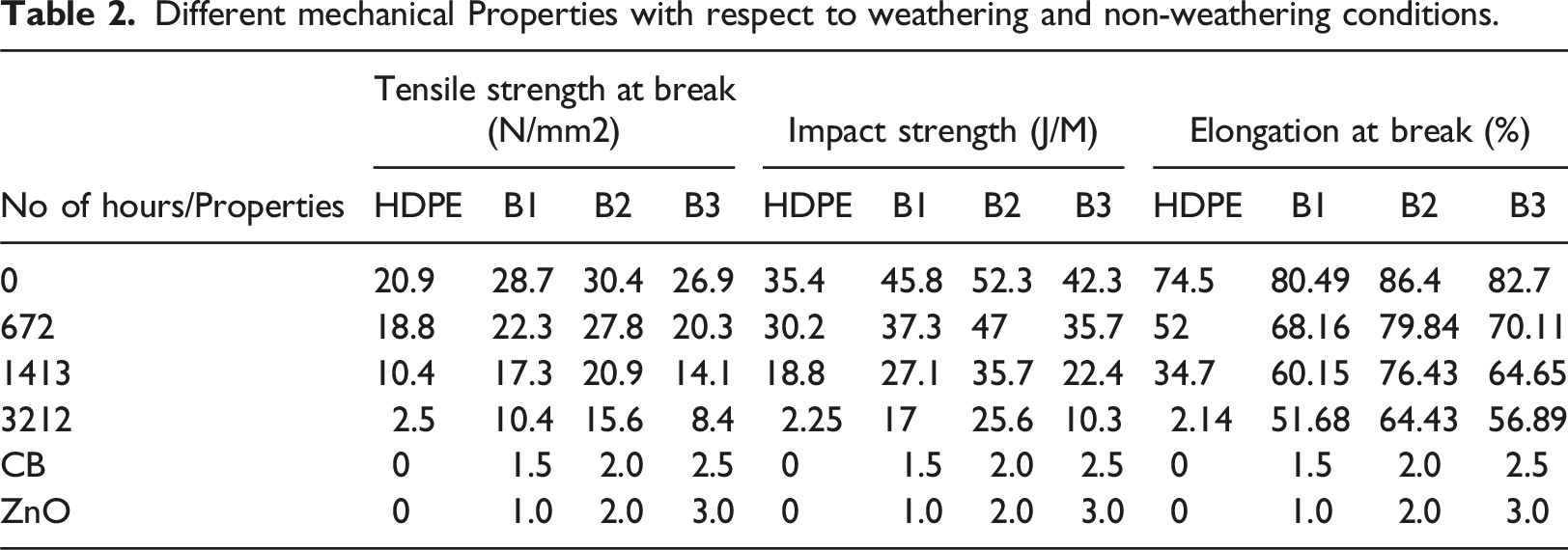
Different mechanical Properties with respect to weathering and non-weathering conditions.
Tensile strength at break
The UV additives have a substantially higher strength value than polymer matrices; applying them to the composite increases its tensile strength.
32
Laboratory tests were performed as per ASTM D0638 on virgin HDPE composite samples in the shape of dumbbells that included 1.5, 2, and 2.5% carbon black and 1, 2, and 3% zinc oxide. Figure 1 shows the result of the tensile strength at the break for the sample kept in the UV weatherometer for a period of 3212 hours and SEM images mapped with degradation stages to show the aging process of HDPE (high-density polyethylene) would typically illustrate progressive physical changes as HDPE and polymer composite deteriorates over time. There were three batches of composite from B1 to B3 and one batch of pure HDPE. It was observed that virgin HDPE has a non-weathering condition of 20.9 N/mm2 of tensile strength at break. Still, after the weathering condition of 3212 hours, which is 2.5 N/mm2 of tensile strength at break, it loses mechanical property by 88% due to the breaking of the covalent bond, which decreases the ductility and increases brittleness. However, we observed that the other formulations of batches like B1, B2, and B3 only lost 63.76%, 48.68%, and 68.7% of their tensile strengths, which were comparatively low compared to pure HDPE, ZnO, and CB indicate that the additives’ and HDPE matrix’s interfacial interaction is strong enough to delay major shear yielding in the direction of tensile loading,16,32,49 which prevents the breaking of the covalent bonds in polymers, which was the cause of erosive aging-related surface material erosion and roughening, resulting in significant degradation after weathering.24,50 This is seen in the SEM images for selected batches (Pure HDPE and B2) in Figure 1. The composite batches also show variation in degradation concerning the formulations. The carbon black and zinc oxide percentages increase by 2% while the tensile strength decreases.11,23 From the graph and Tables 2, it was seen that batch B2 showed the optimum result.
50
Shows Tensile strength at the break for different % CB and % ZnO after, and before UV Exposure.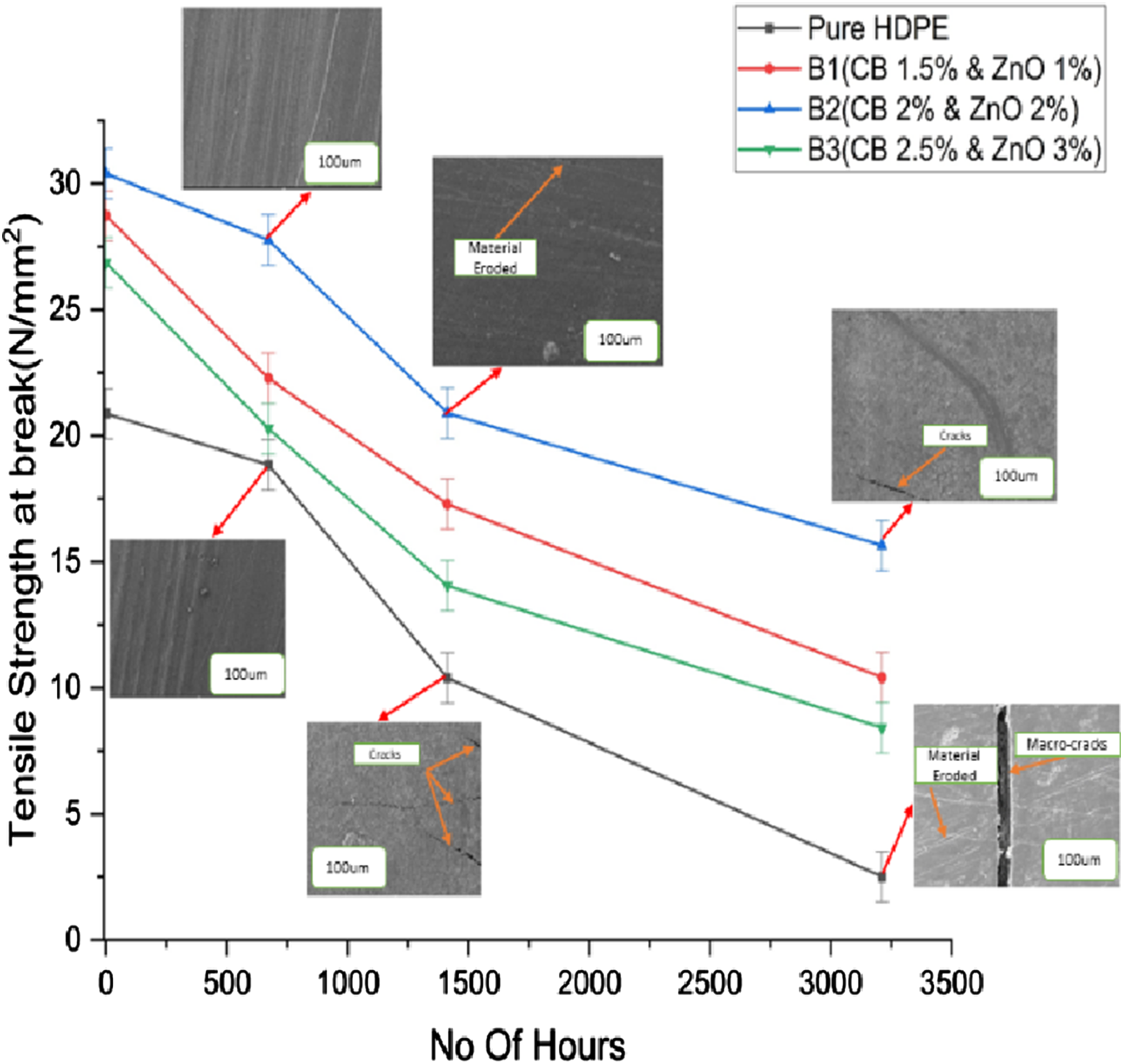
Elongation at break
The elongation at break value has been cited by several researchers as a useful indicator of a composite’s durability.
35
The percentage of elongation at break for all 4 batches of composite is depicted in Figure 2 and Table 2, before and after weathering. The nature of the curve shows that huge reduction in pure HDPE after UV exposure of 1413 hours and its losses the 97% of its properties after weathering of 3212 hours. These results are due to the material’s chain breakage, which degrades its mechanical properties.19,35 Materials that fracture before the yield point are extremely brittle compared to their initial state as seen in SEM images mapped with degradation stages for pure HDPE and polymer composite retains its property due to additive. But for the composite B1 to B3 shows the graph that the property decreases gradually and loses the property 36% in B1,26% of B2 and 31% in B3 due to the presence of carbon black
48
and zinc oxide. From Table 2 and Figure 2, it was observed that as percentage of carbon black and zinc oxide increased by 2% making the material more brittle and making it more likely to break too soon due to higher stress concentration in cracks.11,19 and due which elongation at break decreases. So, the best formulation shows by batch B2 that 2% of carbon and 2% of zinc oxide.
51
Shows elongation at break (%) for different % CB and % ZnO after, and before UV Exposure.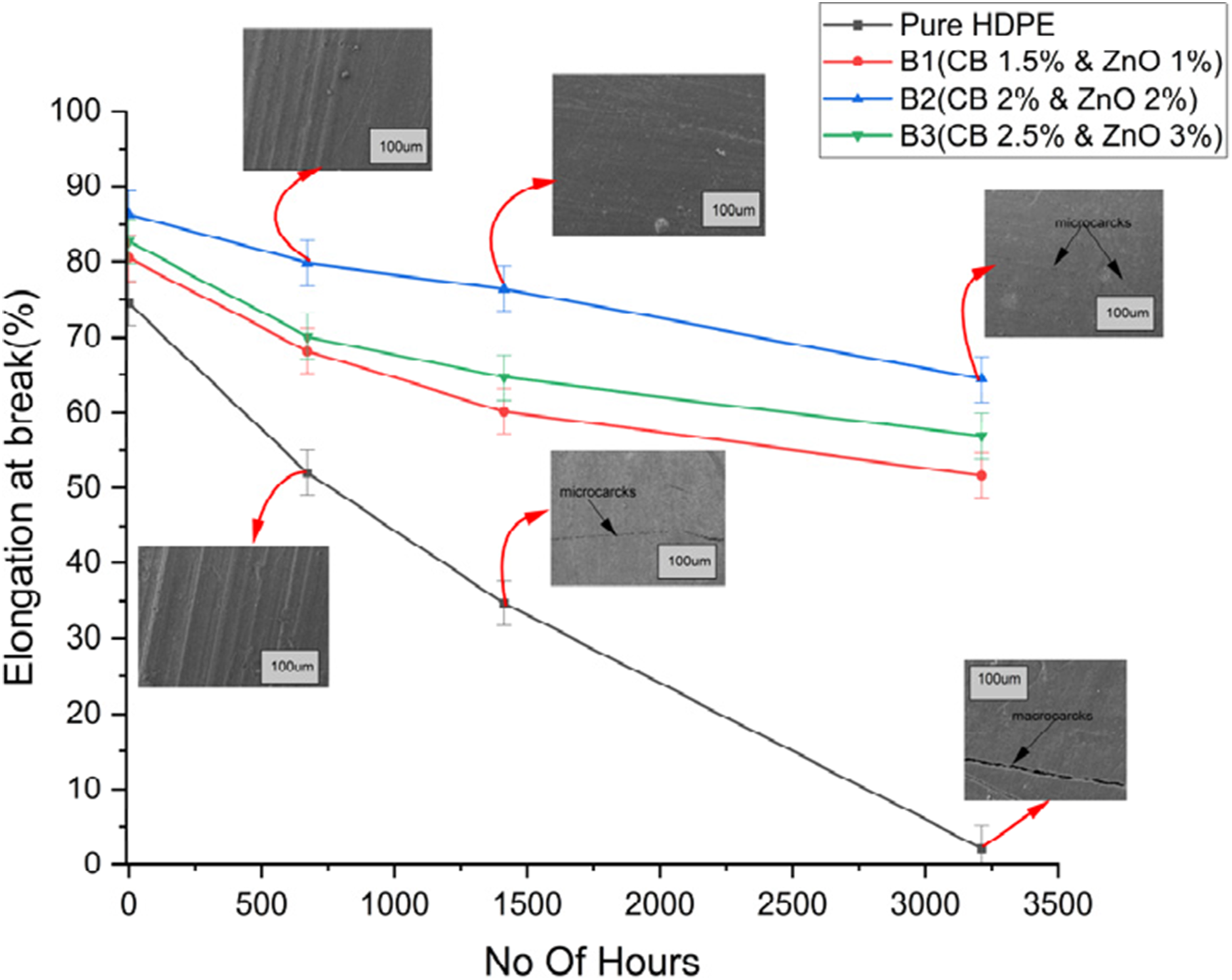
Impact resistance
A material’s ability to withstand an impact load is measured by its impact resistance, a mechanical property.
19
Figure 3 and Table 2 indicate the impact resistance of all 4 batches together with the hours, weathering, and non-weathering conditions. The pure HDPE shows the sudden loss of the impact resistance after weathering of 1413 hours and it loses 94% of initial value after UV exposure of 3212 hours. It happens as a result of photodegradation when UV radiation impacts polymer (HDPE), and it causes macro damage, which begins with micro-cracks shown in SEM images mapped with degradation stages for pure HDPE and polymer composite from Figure 3. The surface becomes more uneven due to material erosion in macro damage such as gloss loss and chalking.42,52,53 but the batches of composite like B1, B2, and B3 show the batter impact resistance and gradually lose their properties in 63% of B1, 51% of B2, and 76% of B3. It is true for the B2 batch with 2% CB and 2% ZnO because this combination shows better interfacial interaction between polymer and additives. The carbon black and zinc oxide increase the crystallinity of the material and slows down the transformation phase of ductility to brittleness, so the resistance energy for impact loads remains available, material life increases, and it is not as easily cracked as pure HDPE.15,19,25 The formulation’s dispersion is also improved and avoids agglomeration in the matrix, which may result in voids in the matrix As can be seen in micrographs from Figure 3 which shorten the service life of the composite.32,42 If we increase the Carbon black and zinc oxide the impact resistance decreases shown in Figure 3 and Table 2. Shows Impact Resistance for different % CB and % ZnO after, and before UV Exposure.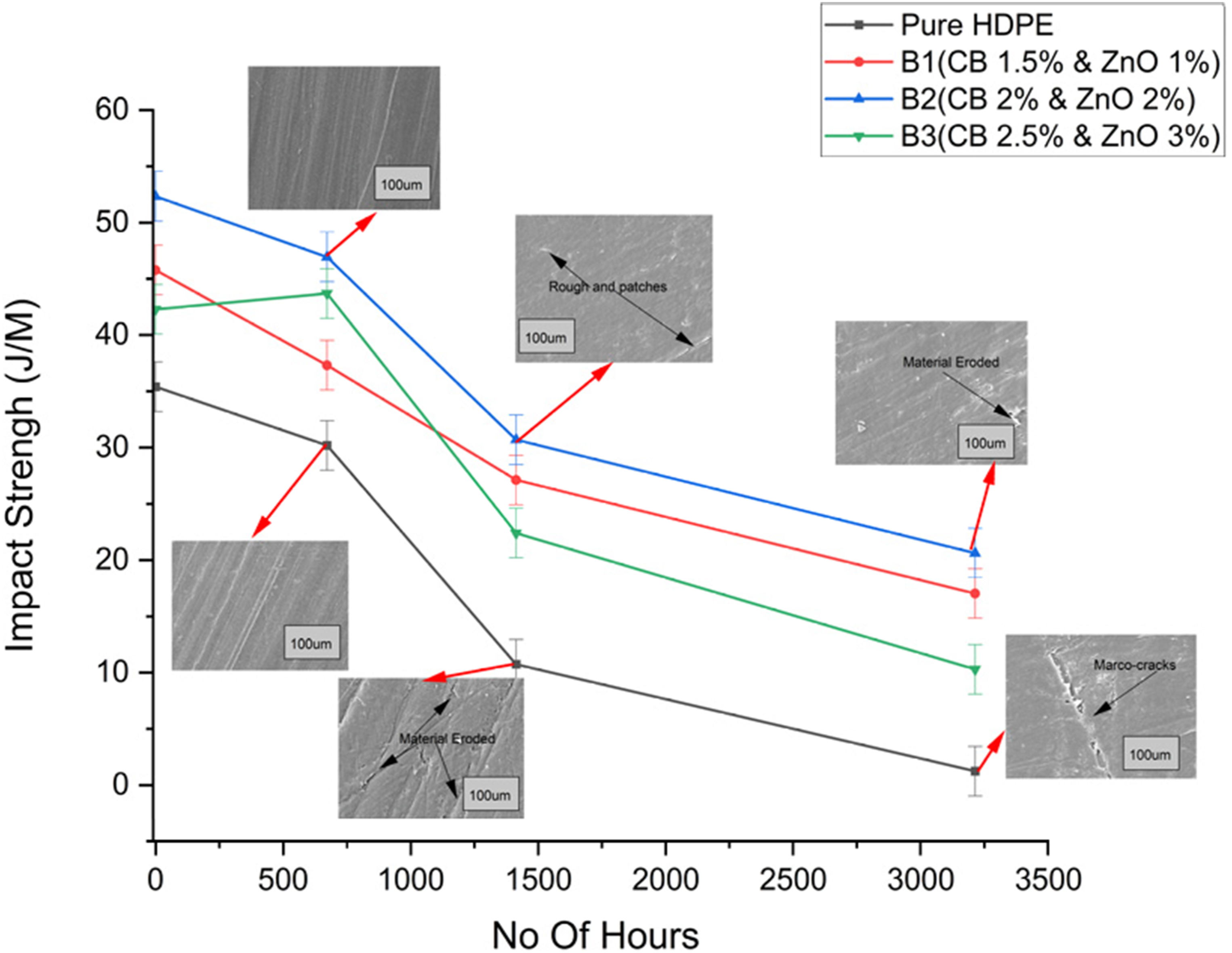
Characterization techniques
Fourier-transform infrared spectroscopy (FTIR) analysis
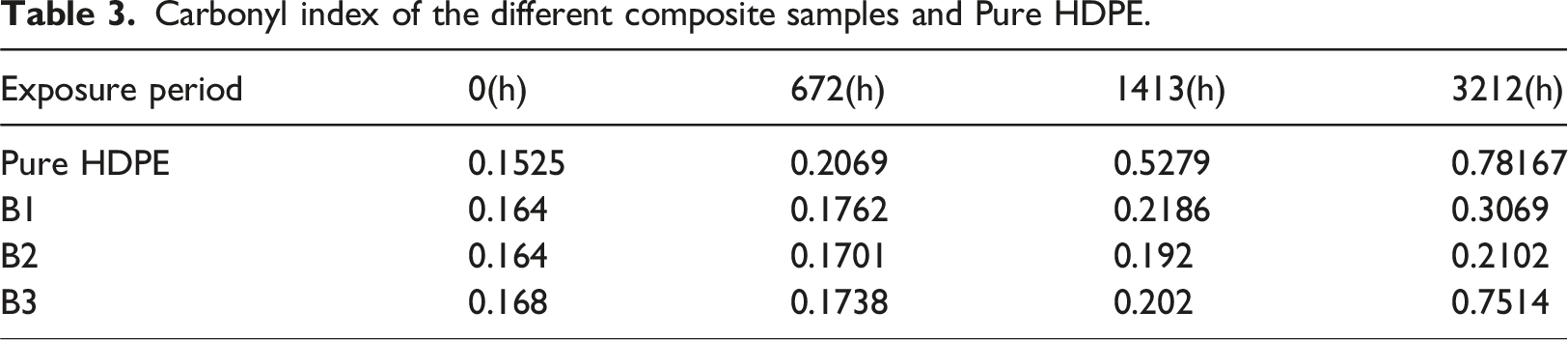
Carbonyl index of the different composite samples and Pure HDPE.
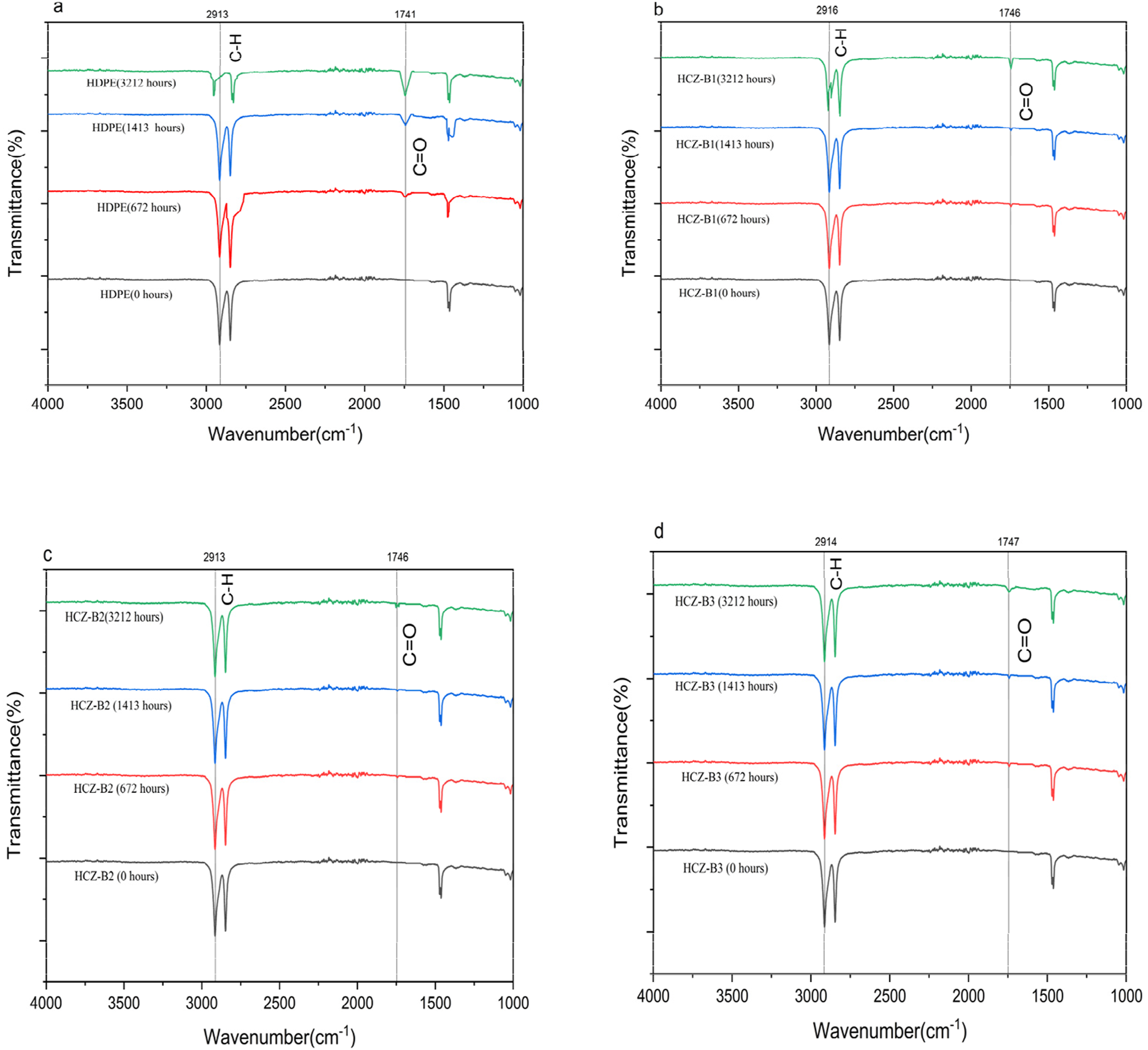
FTIR spectra of the samples: (a) Pure HDPE (b) B1 (1.5%CB & 1% ZnO) (c) B2 (2%CB & 2% ZnO) (d) B3 (2.5%CB & 3% ZnO).
X-ray-diffraction (XRD) analysis
The X-ray diffraction (XRD) method is a powerful technique that can be used to analyze the crystallinity pattern and structure of different composite polymers.
60
The XRD pattern of the pure HDPE polymer and B2 batch (2% CB and 2% ZnO) polymer composite is shown in the Figure 5. The XRD pattern shows the two strong peaks for samples after and before weathering for 2θ = 21.51°,23.96° for pure HDPE and batch B2, respectively, with interplanar spacing (d) of 4.11 Å, 3.70 Å. Some smaller peaks are also seen after the angle of 2θ larger than 23.95° showing crystalline and amorphous regions, respectively. XRD patterns indicate that the HDPE structure was orthorhombic.
37
The crystallinity index was calculated by equation (2) for the XRD pattern before and after exposure. The result shows that the crystallinity index for pure HDPE decreases from 89.25% to 60.47% for 3212 hours of weathering because the pure HDPE starts embrittlement and after recrystallization in polymer takes place, the polymer loses its strength,60–62 but in the case of the B2 batch, the crystallinity index increases from 78.25% to 85.37% for 3212 hours of weathering, respectively.
63
It was reported by A. Martínez-Romo et al, that when UV light falls on a polymer during the first phase of degradation, the crystallinity increases, whereas, for the last stage of degradation, the crystallinity decreases,
64
so we can conclude that HDPE reaches its last stage of degradation, and due to the presence of carbon black and ZnO, the B2 batch sustains its crystallinity.37,38,56,62 XRD spectra of the samples: (a) Pure HDPE (b) B2 (2%CB & 2% ZnO).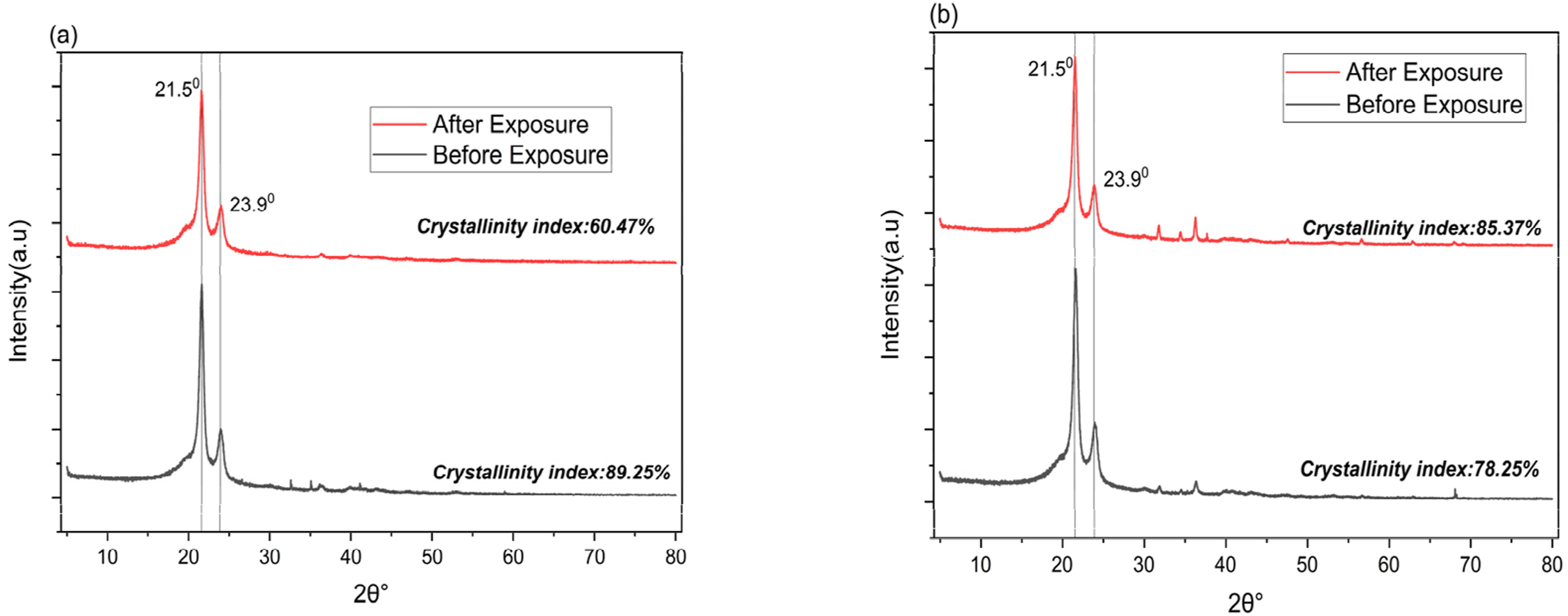
Surface morphology and elemental analysis of samples after and before UV light irradiated
The study offers a comprehensive understanding of the effects of UV weathering on pure HDPE and its composites, supported by SEM and EDX analyses shown in Figure 6. Here’s a summary of the key findings and interpretations given below: SEM mapped with EDX analysis shows the external morphology and elemental analysis of samples before and after weathering.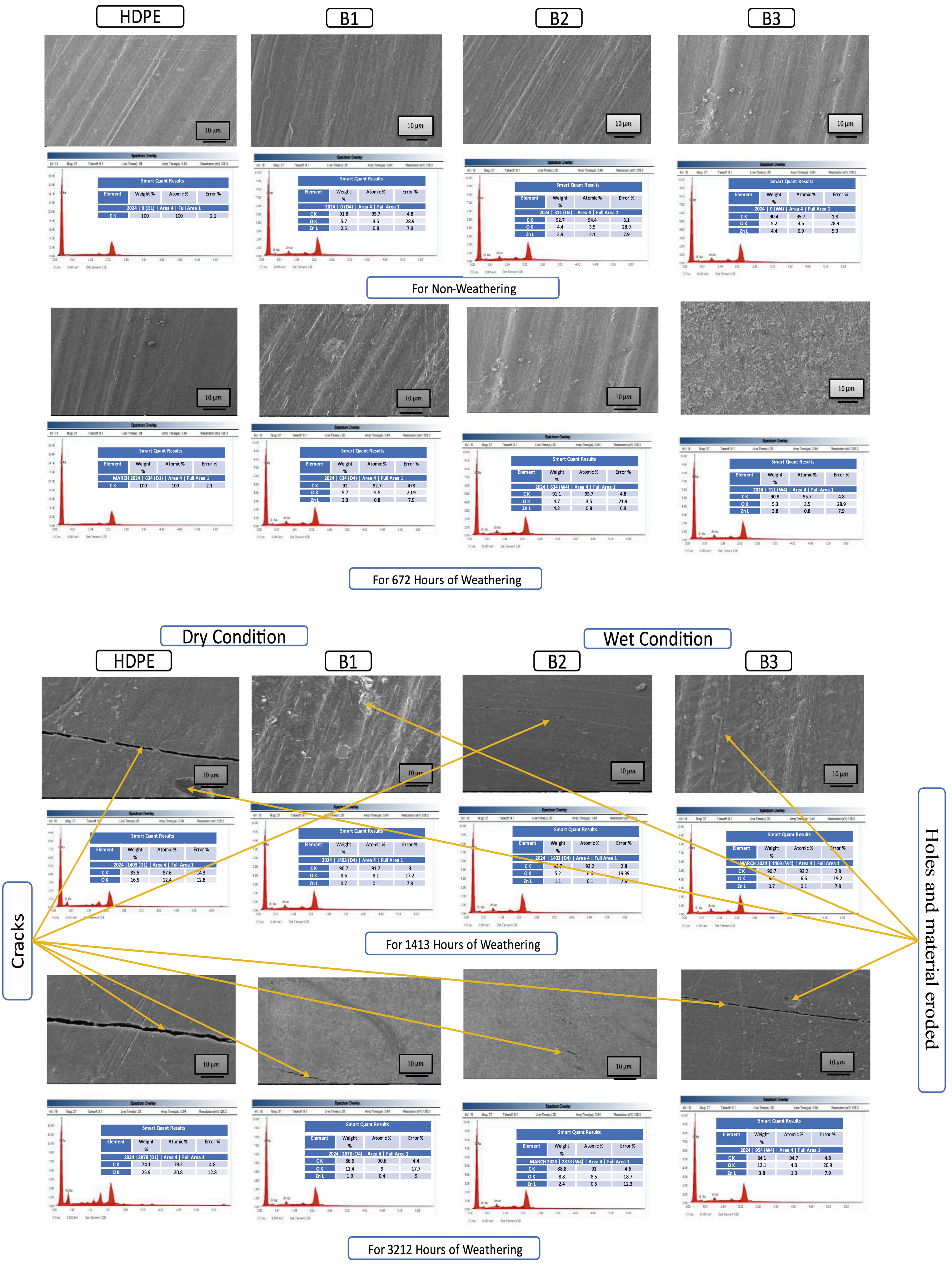
For non-weathered conditions, pure HDPE and polymer composite samples show fairly smooth surfaces. At 634 hours of weathering, minimal surface damage is noted; however, small imperfections may begin to form as the weathering process initiates. Then at 1413 hours of weathering Visible degradation is observed across samples, especially in pure HDPE. The surface exhibits brittleness and cracks, highlighting material fatigue from UV exposure. At 3212 hours of weathering, Virgin HDPE undergoes substantial erosion, with pronounced cracks and holes. This indicates a critical loss of mechanical integrity, likely due to the breakdown of molecular chains under prolonged UV exposure. Comparatively Polymer composites of batches (B1, B2, B3), which are HDPE blends with additives such as carbon black (CB) and ZnO, show improved resistance to UV-induced degradation. Among the composites, B2 exhibits the highest durability under extended weathering. The additives (CB and ZnO) enhance UV stability, reduce crack formation, and help retain mechanical strength, even at 3212 hours of exposure.16,24 The morphology-properties relationship in the study underscores the importance of additives in enhancing the durability of polymers under UV exposure. While pure HDPE suffers severe surface damage and loss of mechanical integrity, composites, particularly the B2 batch, maintain better morphological stability, resulting in superior mechanical performance. 35 This relationship provides valuable insights for designing materials for outdoor applications with critical UV resistance.
The elemental composition of pure HDPE and polymer composites before and after weathering was evaluated by an energy-dispersive X-ray (EDX) analysis. Figure 6 shows the several EDX spectra that were mapped using SEM images. The spectrum indicates that pure HDPE contains carbon (C) for non-weathering conditions, whereas polymer composites contain carbon (C), oxygen (O), and zinc (Zn). After 634 hours of weathering, the spectra did not change substantially; however, after 1413 hours of weathering, the oxygen content of pure HDPE increased quickly due to bond breakage in the polymer but in the polymer composite % of oxygen is low at the same weathering hours due to presence of additive like carbon black and zinc oxide and out it the B2 batch show the best result till 3212 hours of weathering because when UV light falls on the samples it starts forming a carbonyl functional group that breaks down the polymer due to photooxidation, which follows the synthesis of the polymer chain via the free radical chain process. So, carbon black absorbs UV light and evaporates in the environment and ZnO forms a zinc carboxylate after reacting with the carbonyl group in composites, inhibiting the deterioration.65,66
Conclusion
The effect of carbon black and zinc oxide as UV stabilizers on the mechanical properties of high-density polyethylene was studied. It was shown that carbon black and zinc oxide stabilizers can effectively reduce the degradation of composite matrixes. It was seen that both additives have a synergistic effect on high-density polyethylene composites. Pure HDPE significantly loses its impact resistance, tensile strength, elongation at break, and yield strength after 1413 hours of accelerated weathering. The stabilized sample, in which only batch B2 showed a better result compared to other composite batches in both weathering and non-weathering conditions, The B2 batch, which contains 2% carbon black and 2% zinc oxide, showed very good results in mechanical properties like tensile strength, elongation break, and impact resistance concerning Batches B1 and B3. If the percentage of carbon black and zinc oxide increases by 2%, the mechanical properties decrease and degradation also increases. Studying the mechanical properties of the sample revealed that the use of a hybrid filler system would control any change in the mechanical properties of the HDPE matrix and sustain its properties for a longer time under ultra-light exposure. The sample was also characterized by FTIR, XRD, and SEM/EDX analysis, in which the carbonyl index (CI) was calculated in the FTIR analysis, the crystallinity index in the XRD analysis, and the SEM/EDX showed the external morphology, elemental analysis of the samples. In all analyses, the B2 batch shows the optimum results compared to other samples. Hence, this composite is suitable for the development of a floater used in a floating solar power plant.
Footnotes
Acknowledgements
I am thankful to Mr Y. Nadar, Mr Parth Patel, and Mr.Mihir Waghela from Theem Coe for supporting me in preparing samples and conducting experiments.
Declaration of conflicting interests
The author(s) declared no potential conflicts of interest with respect to the research, authorship, and/or publication of this article.
Funding
The author(s) received no financial support for the research, authorship, and/or publication of this article.
