



Abstract
This research offers a pragmatic view on the adoption of Augmented Reality (AR), Virtual Reality (VR), and Mixed Reality (MR) in designing the built environment. Participants from 20 U.S. states and beyond formed a non-probability sample representing small to mid-sized Architecture, Engineering, and Construction (AEC) firms. The author engaged 59 professional participants through a 26-question online questionnaire, informed by existing literature and reviewed by two industry experts. Three additional expert participants provided comprehensive insights via semi-structured interviews. Results highlight design visualization and client presentations as top AR, VR, and MR applications. Key benefits include improved design assessment, early error detection, and heightened client satisfaction. Design collaboration was less prominent than suggested by the literature. Notable challenges persist in first-time user adoption and cost factors of equipment and training. Thus, the cost-benefit balance drives the dominance of older, lower-end devices found in this study despite the availability of advanced, high-fidelity infrastructure.
Introduction
“Architecture is no longer tied to specific geographical places but can instead be present in multiple environments and in multiple ways that extend beyond real-world experience”. 1 Augmented Reality (AR), Virtual Reality (VR), and Mixed Reality (MR) offer architects and designers of the built environment an efficient way to experience designs in the virtual realm before any physical construction occurs. 2 Many studies have explored the immense potential of these technologies in assessing public behaviors via the optical illusion of viewpoints, 3 soliciting design feedback from impaired occupants, 4 evaluating indoor risks for children and special-needs occupants, 5 and reconstructing historic sites. 6 Despite such promises, the adoption of AR, VR, and MR in the Architecture, Engineering, and Construction (AEC) industry still faces multiple challenges and has yet to keep pace with imminent technological advancements.7–9
In the United States, a study revealed a 26% increase in AR and VR adoption in the AEC industry from 2017 to 2018, accompanied by an 18% growth in skilled employee hiring and a 12% rise in client satisfaction. Nevertheless, budget constraints, management uncertainty, and skill gaps impeded further progress. 10 Another study in the United Kingdom showed that AEC experts expressed reservations about AR and VR, primarily due to costs and the learning curve. 11 In the European Union, a survey among small to mid-sized AEC firms indicated a preference for AR (64%) over VR (36%) for tasks like design review and error detection. 12 MR has seen the lowest adoption, with limited awareness and implementation among smaller AEC businesses, while larger firms are more receptive to this technology.1,9,12 These findings call for a more pragmatic view of how AR, VR, and MR technologies manifest in designing the built environment. To mend this gap, the author investigated the practical adoption of AR, VR, and MR in the AEC industry through the lens of Diffusion of Innovations Theory (DOI). 13
Literature review
DOI: A summary
Everett Rogers’ DOI Theory 13 is a pivotal framework for understanding technology adoption in the AEC industry.9,14–16 DOI analyzes how members of a specific domain use and spread an “innovation,” a “technology,” “idea,” or “product” over time under the influences of relative advantage, compatibility, complexity, trialability, and observability . 13 Complexity, however, negatively impacts the diffusion (or adoption) of an innovation (or technology).17,18 Overall, a technology diffuses in one domain via a five-stage process: (I) knowledge, (II) persuasion, (III) decision, (IV) implementation, and (V) confirmation. In (I) knowledge, potential adopters learn about the technology and determine whether it is superior to existing options (i.e., relative advantage) and easy to comprehend (i.e., complexity). For (II) persuasion, these adopters form either positive or negative attitudes toward the technology given its alignment with their priorities (i.e., compatibility) and perceived benefits (i.e., observability). During (III) decision, if the adopters deem the technology as testable with minimal risks (i.e., trialability), they will move to (IV) implementation stage—adopting it into practice. The ease of adoption, dictated by complexity, leads to (V) confirmation stage where adopters revisit their decisions given (continual) perceived benefits or limitations.19,20
Furthermore, “hardware” and “software” or the physical and informational infrastructure of technology are two technical aspects that shape the drivers and barriers for adopting AR, VR, and MR in the AEC industry.13,19 Apparent drivers refer to the benefits of increased efficiency, reduced costs, improved safety, and enhanced collaboration and visualization. General barriers are expensive hardware and limited resources for training, which amplify complexity in the (IV) implementation stage, hindering the full potential of these technologies in the AEC industry.8,16
AR, VR, and MR: An overview
AR, VR, and MR span across the Milgram Reality–Virtuality Continuum that links the physical and virtual worlds.
21
At one end is the real world, observed via our senses or real-time recordings, and at the other is its simulation, represented in computer-generated content. Figure 1 illustrates AR, VR, and MR technologies on the Milgram Reality–Virtuality Continuum. Distribution of AR, VR, and MR on the Milgram Reality-Virtuality Continuum. Device images are licensed from: Gorodenkoff, agencies, Artem Zarubin - stock.adobe.com; Bram Van Oost - shutterstock.com; and retrieved from varjo.com (Virtual and Mixed Reality for Industrial Design eBook).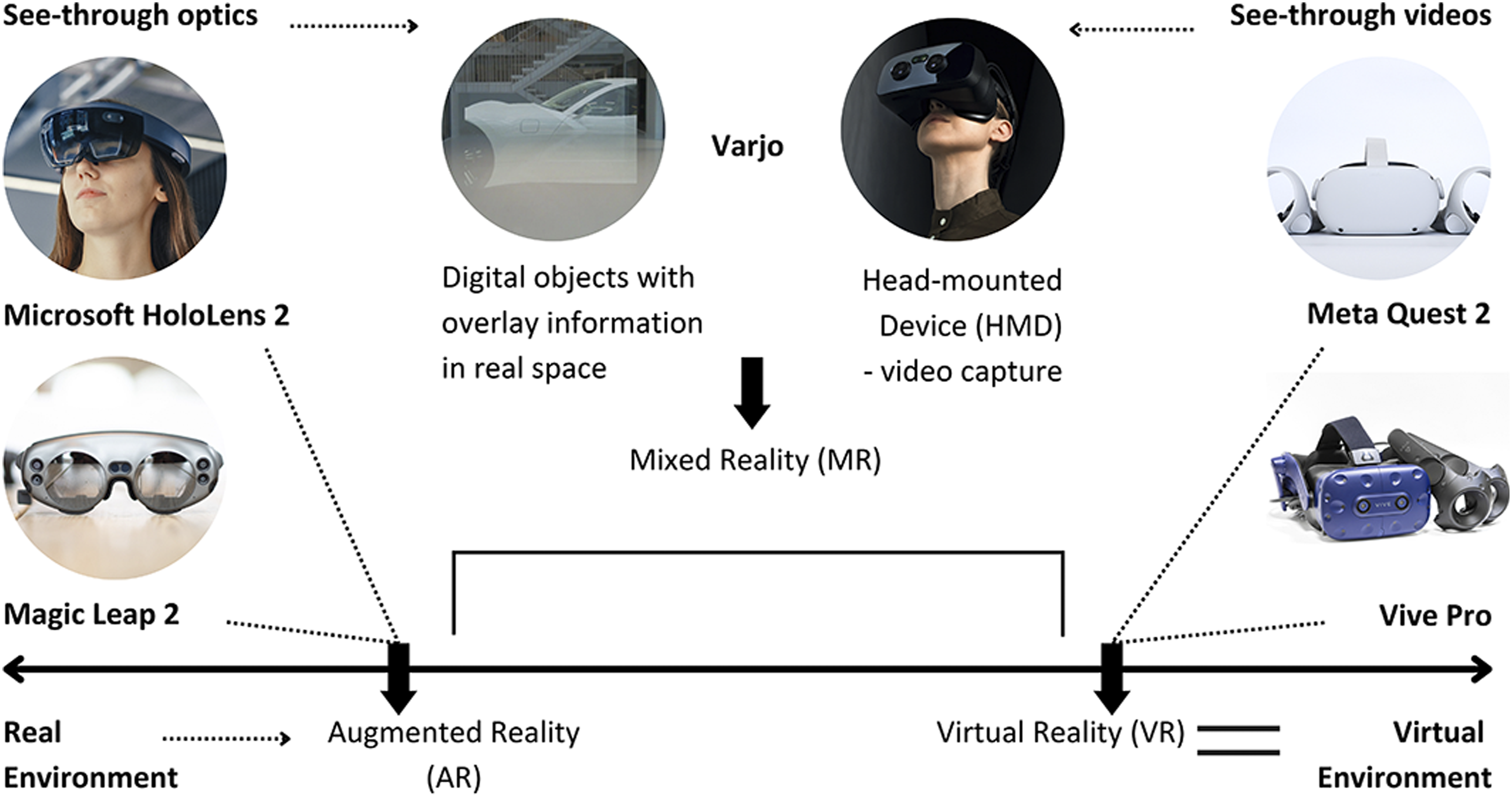
Augmented reality (AR)
In 1990, Boeing scientists introduced AR to improve aircraft wiring by projecting diagrams onto surfaces using see-through displays. 22 This technology, aligning two-dimensional (2D) and three-dimensional (3D) content with the physical world, 23 operates through two main systems: see-through optics and see-through videos (see Figure 1). These systems overlay digital content onto real-world views or merge them with camera-captured imagery, respectively, using head-mounted devices (HMDs) tethered to computers. 22 By 1996, Sony’s TransVision project introduced AR technology on handheld devices. 24 Following this evolution, Columbia University’s Mobile Augmented Reality Systems (MARS) 25 and Vienna University of Technology’s personal digital assistant (PDA) 26 laid the foundation for today’s AR applications on smartphones and tablets, with popular mobile games like Jurassic World: Alive 27 and Pokémon Go. 28 Regardless, the core features of virtual-physical interaction, real-time placement, and finite 3D capability have remained consistent throughout AR’s development.29,30
Early AR applications in designing the built environment included design communication and collaboration,23,29 with architects and designers sketching out 3D spatial forms and structural elements in situ. Chen and Xue 30 analyzed AR research literature and summarized three trends for adoption in the AEC industry: design assessment, construction monitoring, and maintenance management. Examples range from matching different color and material choices to existing spaces 31 to augmenting robotic constructions,32,33 and retrofitting historical sites.34,35 Among those, design assessment has prominent industry examples like IKEA Place, 36 an AR application that allows customers to visualize furniture pieces in their homes before purchasing. Overall, while research literature highlights the significance of AR to the AEC industry, a nuanced understanding of whether experimental applications align with real-world demands and contexts is pivotal.
Virtual reality (VR)
VR is a digital simulation of the physical world that entails three pillars: immersion, presence, and interaction.37,38 As a distinctive pillar of VR, immersion varies depending on the simulation’s detachment (from the physical world), sensory range, view range, and fidelity, resulting in a diverse system of desktop, fish tank, and immersive VR.39–41 Desktop and fish tank VR are monoscopic and stereoscopic displays; neither offer sensory inputs. Immersive VR depicts a high-fidelity, sensory-rich experience detached from the physical world. The other two pillars, presence and interaction, are also prominent in immersive VR, especially when using HMDs.37,38,40 While VR is a saturated technology for industry applications,3,41 the contingency of immersion in VR system complexity determines the extent of its potential in real-life scenarios.
Technological progress has led to a diverse complexity of VR systems, from tethered HMDs like the University of Utah’s Sword of Damocles (1968) and FakeSpace Labs’ BOOM (1989) that require desktop connections, to stand-alone HMDs like HTC Vive and Oculus Quest with embedded processors.42,43 Stand-alone devices balance performance with convenience. For instance, Meta Quest 2 can achieve a rate of 90 frames-per-second (FPS) when tethered to a computer but drops to 72 FPS in stand-alone mode. 44 Tethered devices like HTC Vive Pro 2 offer 120 FPS but, at the cost of mobility and setup intricacy, require a 6′ 6″ x 5′ clear space and two additional movement-tracking devices. 45 In designing the built environment, VR research literature indicates applications such as safety training in hazardous scenarios, 43 design visualization and collaboration between project teams and stakeholders.46,47 In terms of VR’s industry applications, virtual real estate tours, while popular, do not directly align with the core design-construction-management aspects of the AEC industry. 48 After all, a comprehensive examination of real-world VR implementations in designing the built environment remains a relevant and necessary area of inquiry.
Mixed reality (MR)
MR blends interactive digital environments with real-time contexts and is particularly promising for adoption in the AEC industry.21,49 Early adopters deemed this technology the gateway to real-time navigations in dynamic environments that allow concurrent evaluation, interactivity, and simulative lighting for architects and designers. 49 Nevertheless, perceptions of MR among AEC experts still varied, from confusing this technology with AR to associating MR with the use of see-through HMDs. 50 Instead, MR combines AR’s see-through with VR’s interactive capacities51–53 via systems like Microsoft HoloLens, Magic Leap, and Varjo—the latest HMDs with minimal latency and human-eye resolution at 90 FPS. 54
MR began to gain traction after 2012, 55 with early developments like 3D Helping Hands 56 and BeThere 57 showcasing the see-through-interaction nature of this technology. Many studies47,58,59 indicated that MR adoption in the AEC industry occur across stages, from design to construction and maintenance, featuring collaboration between architects, designers, and stakeholders over cloud-based Building Information Modeling (BIM) models. Via high-end HMDs like HTC Vive and Microsoft HoloLens, MR can serve real-time modifications of virtual designs in a physical space 55 and off-site construction supervision by comparing BIM models with drone-captured site footage. 60 Adopters from the University of Liechtenstein and construction manufacturing firm Hilti AG also developed a mobile MR system for on-site supervision, enhancing error detection by mapping BIM models onto physical sites. 59 Such literature demonstrates the immense potential of MR yet underscores the need for a practical view of its utilization by AEC professionals in designing the built environment.
Methodology
While experiment-based implementations of AR, VR, and MR give valuable insights, the voices of architects, designers, and other stakeholders in the AEC industry are also vital as the primary adopters of these technologies. This study, with a mixed-method approach,
61
answered the following questions on the status quo and progression of AR, VR, and MR adoption in the AEC industry: RQ 1: What is the state of AR, VR, and MR adoption in designing the built environment? RQ 2: What are the prerequisites for AR, VR, and MR adoption in designing the built environment? RQ 3: What are the perceived benefits and limitations of AR, VR, and MR adoption in designing the built environment?
Participants and study design
The author conducted this study with the approval numbered H22485 from an internal Institutional Review Board (IRB). Data collection took place from April 2022 to June 2023 with two consecutive parts: a comprehensive online questionnaire administered via Qualtrics completed by 59 AEC professionals and three semi-structured interviews with experts in AR, VR, and MR technologies for the built environment. This sequence solicited first broad insights and then nuanced perspectives into the status quo and progression of AR, VR, and MR adoption. Via a non-probability sampling, 62 the author identified potential participants from AEC firms specializing in architecture and interior design through channels such as the American Society of Interior Designers (ASID), LinkedIn, firm websites, and professional groups. Using emails and LinkedIn messages, the author sent potential participants a brief overview of the study (i.e., its rationale and purposes). Those who agreed to participate received the online questionnaire link or an interview invite on a virtual conference platform. Consent forms were either embedded in the online questionnaire or signed before the interviews.
Current constraint and future direction
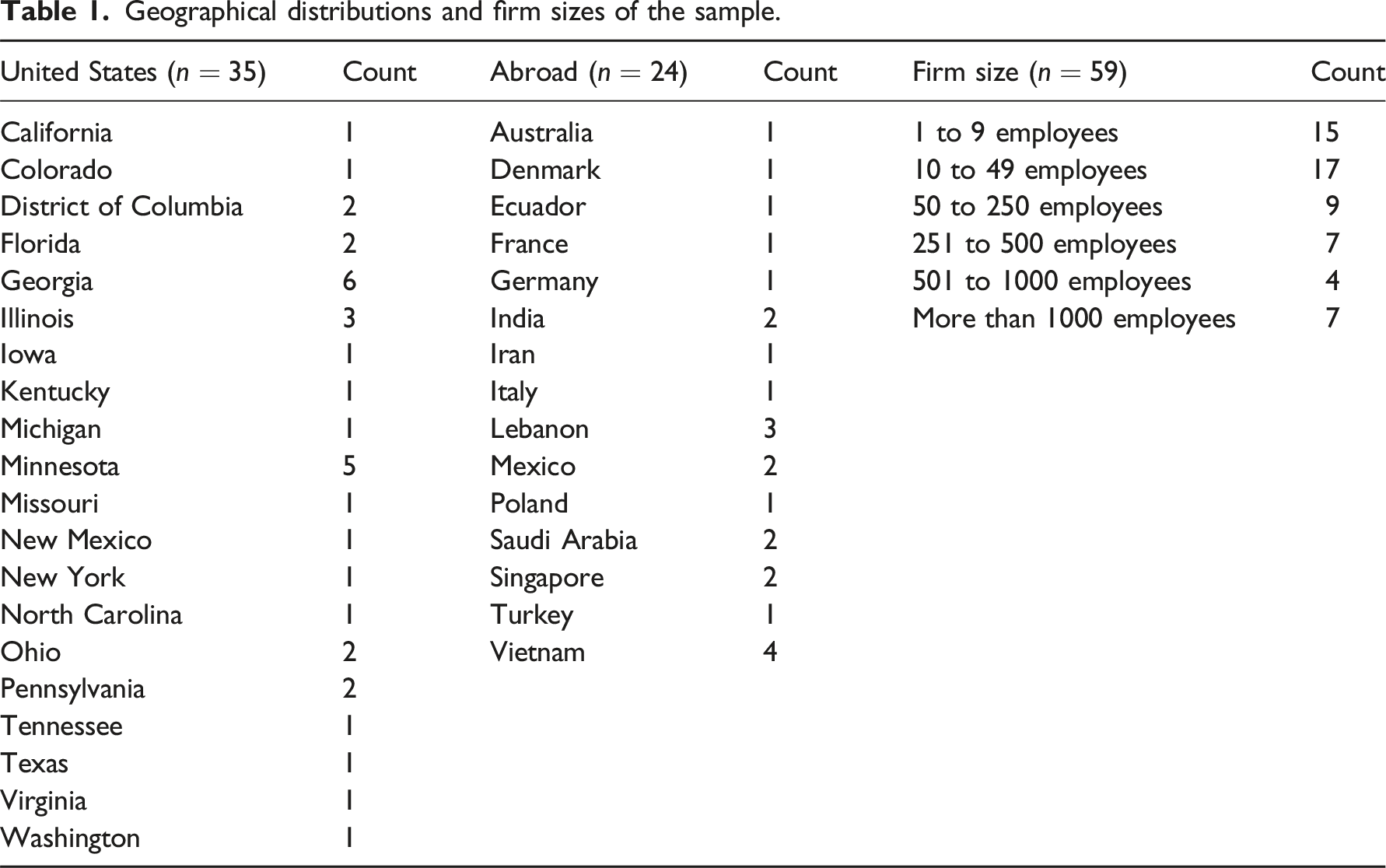
The study’s current constraint is the non-probability sample size of 62 AEC professionals (59 questionnaire participants and three in-depth interviewees). Nevertheless, the diverse participant profiles from 20 U.S. states and 15 nations abroad reflect various clientele, project types, workflows, and resources, thereby offering a holistic perspective of AR, VR, and MR adoption in the AEC industry. Although the subsequent findings are indicative rather than definitive, the use of follow-up in-depth interviews to elucidate the questionnaire responses provides an exciting cross-section analysis. Such findings also lay the foundation for future research with a larger sample to increase the study’s power in providing a generalizable understanding of AR, VR, and MR practices.
Procedure and data analysis
The author conducted a comprehensive review of the existing literature on AR, VR, and MR adoption in the AEC industry7,10,12,51,63–65 and formulated 26 questions aligned with the five-stage DOI process (Figure 2). A research data specialist and two AEC experts evaluated and refined the questionnaire, covering non-identifiable demographics (e.g., gender, age) and AR, VR, and MR adoption (e.g., familiarity, hardware, software, and applications). Eight questions were closed-ended, two were fill-in-the-blank, 13 were multiple-choice, two were 5-point Likert-scale, and one was open-ended. Participation was voluntary; only those who gave consent and passed the screening (whether they worked with AR, VR, and MR) proceeded to later questions. Of 70 responses, 59 were valid for data analysis due to their completeness. The author reported descriptive statistics (e.g., counts, means, and percentages) and graphs to illustrate response trends using Qualtrics and NVivo 12.
66

As design workflows vary across AEC firms with sizes and resources, real-life implementations of AR, VR, and MR also depend on practical nuances which are underdiscussed in experimental literature.
67
Hence, three semi-structured in-depth interviews, containing 18 questions modeled after Pratama and Dossick’s study,
68
provided insights into how architects and designers integrate AR, VR, and MR into their daily practices. The author structured the interview questions around the five-stage DOI process (Figure 3) to link the granular insights from the interviews to the broader trends identified in the questionnaire responses. Items in the in-depth interviews assess AR, VR, and MR diffusion and resonate with the five stages of DOI.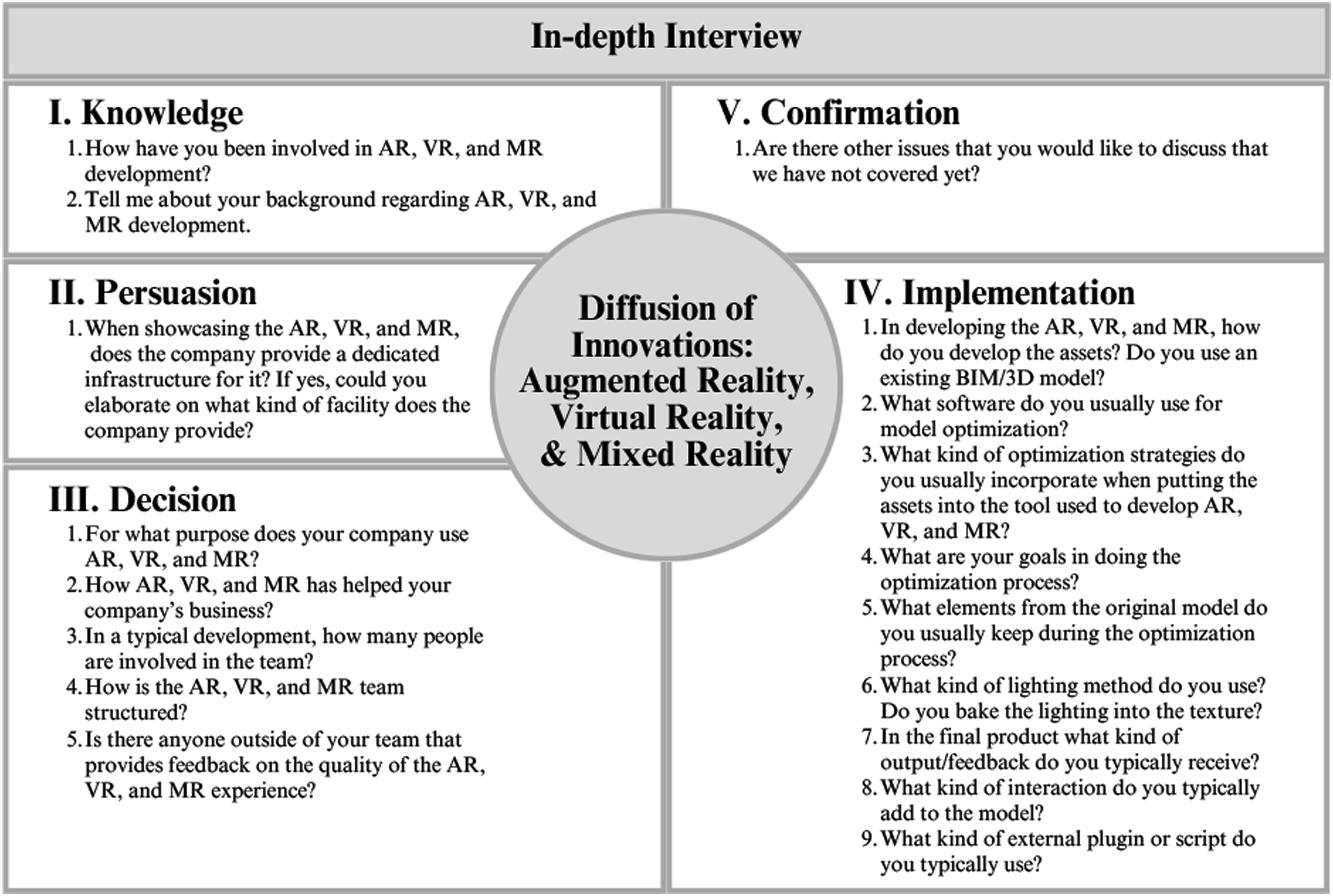
Findings
RQ 1: What is the state of AR, VR, and MR adoption in designing the built environment?
Qualtrics questionnaire
Geographical distributions and firm sizes of the sample.
Industry sectors and project sizes of the sample.

AEC professionals in the sample had extensive knowledge of AR, VR, and MR (59% knew the technologies “very well” and “extremely well”), with 50% having over a decade of experience designing the built environment (Figure 4). Most were fluent in using BIM tools, with the popular ones being Revit, SketchUp, and 3Dsmax. Although the latter two are not specifically BIM tools, professionals use them to create detailed and complex models of buildings and exteriors. Integrations like Trimble FieldLink for SketchUp—bringing topography data to building models
69
and Exposure modules for 3Dsmax—simulating daylight with physical-based accuracy,
70
arguably making them the extended BIM family. The distribution by responses of BIM software for AR, VR, and MR.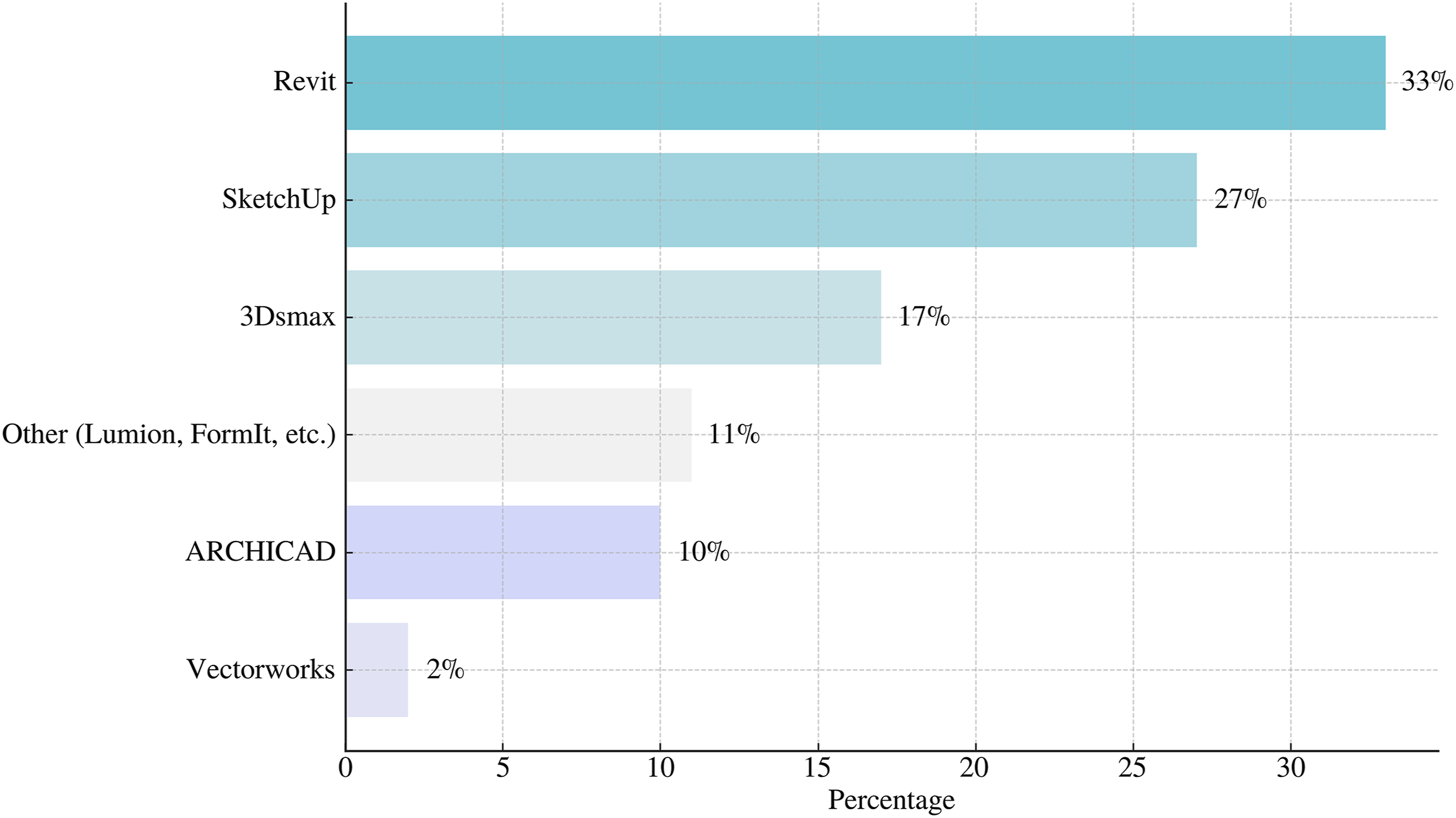
In-depth interviews
The three AEC experts in AR, VR, and MR came from the United Kingdom, the European Union, and the United States, being a computational architect at a large enterprise (P1) and two owners of independent firms (P2, P3), respectively. All interviewees are well-versed in AR, VR, and MR and actively use these technologies in their work, though with different applications. Reported implementations included explaining complex spatial designs to clients (P1), designing interactive exhibitions blending digital and physical spaces (P2), and offering digital twin and virtual production services for urban planning and real estate developments (P3). Unlike the questionnaire results, AR, VR, and MR adoption in the interviewees’ firms has reached the (V) confirmation stage, with divergent decisions. P1 and P3 uphold AR, VR, and MR adoption due to ongoing demand and positive experiences with the technologies. However, P2 has pivoted towards adopting Artificial Intelligence (AI), seeking to maintain a cutting-edge position in the AEC industry. Insights from the interviews and the questionnaire responses showed that while AR, VR, and MR are integral parts of the AEC industry, their adoption rates and stages vary among firms, indicating an ongoing process.
RQ 2: What are the prerequisites for AR, VR, and MR adoption in designing the built environment?
Qualtrics questionnaire
AR, VR, and MR adoption in the AEC industry requires hardware and software infrastructure, which vary in compatibility with existing workflow at each firm. Hardware means new acquisitions of HMDs, while software involves transitions from familiar BIM tools to virtual applications. Prominent software bridging BIM to AR, VR, and MR included Enscape, Twinmotion, Unreal Engine, and Unity, ranging from 28% to 11% (as in Figure 5). Responses emphasized VR and MR software such as Enscape and Twinmotion over AR software like Spark AR and Adobe Aero. Fuzor, a software noted in existing literature,
4
only scored 1%. While such software aligns with existing BIM tools (e.g., Revit, 3Ds max), further training is vital for those working directly with AR, VR, and MR.
16
Dedicated staff for AR, VR, and MR adoption also varied across firms, with the majority having 1 to 3 employees (40%) and 3 to 6 employees (13.3%). Fewer responses indicated larger teams with 10 to 25 employees (9%) and more (9%). As increased usage and familiarity with these technologies typically lead to a favorable (III) decision stage, firms with more employees working on AR, VR, and MR are generally more adept at integrating these technologies into their existing workflow. The distribution by responses of software for translating BIM to AR, VR, and MR.
Regarding hardware, questionnaire responses showcased a full spectrum of HDMs from early developments (e.g., Google Cardboard) to sophisticated advancements (e.g., Microsoft HoloLens 2). Besides frequently-cited devices in existing literature
42
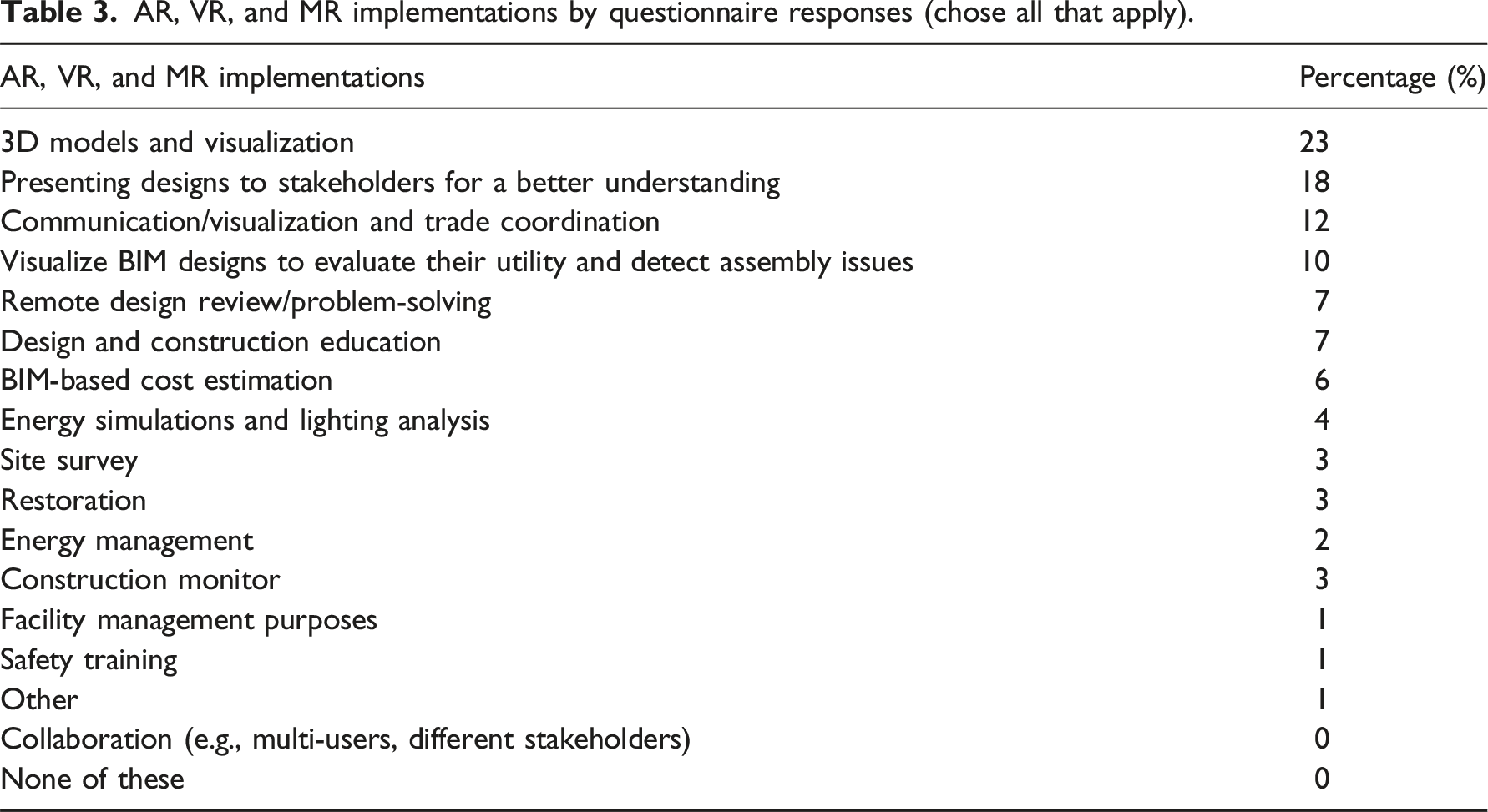
like HTC Vive and Meta/Oculus Quest 2, the questionnaire indicated a prevalence of older and less known systems, for example, Oculus Rift/Rift S, Magic Leap, Valve Index, Acer VR, Samsung Gear VR, and Google Glass (as seen in Figure 6). While the author included the state-of-the-art Varjo in the questionnaire, no AEC professionals reported having this device at their firms. On such infrastructure, responses identified 14 main AR, VR, and MR implementations: 3D modeling and visualization were most prevalent (23%), followed by design presentations to stakeholders (18%), communication and trade coordination (12%), and utility evaluation and error detection in BIM models (10%). Table 3 outlined other implementations found in the questionnaire. Although existing literature underscored collaboration as a prospective AR, VR, and MR implementation,46,47,58,59 no AEC professionals in the sample reported this adoption at their firms. As found in this study, AR, VR, and MR mostly facilitated design visualization and communication. The distribution by responses of hardware for AR, VR, and MR. AR, VR, and MR implementations by questionnaire responses (chose all that apply).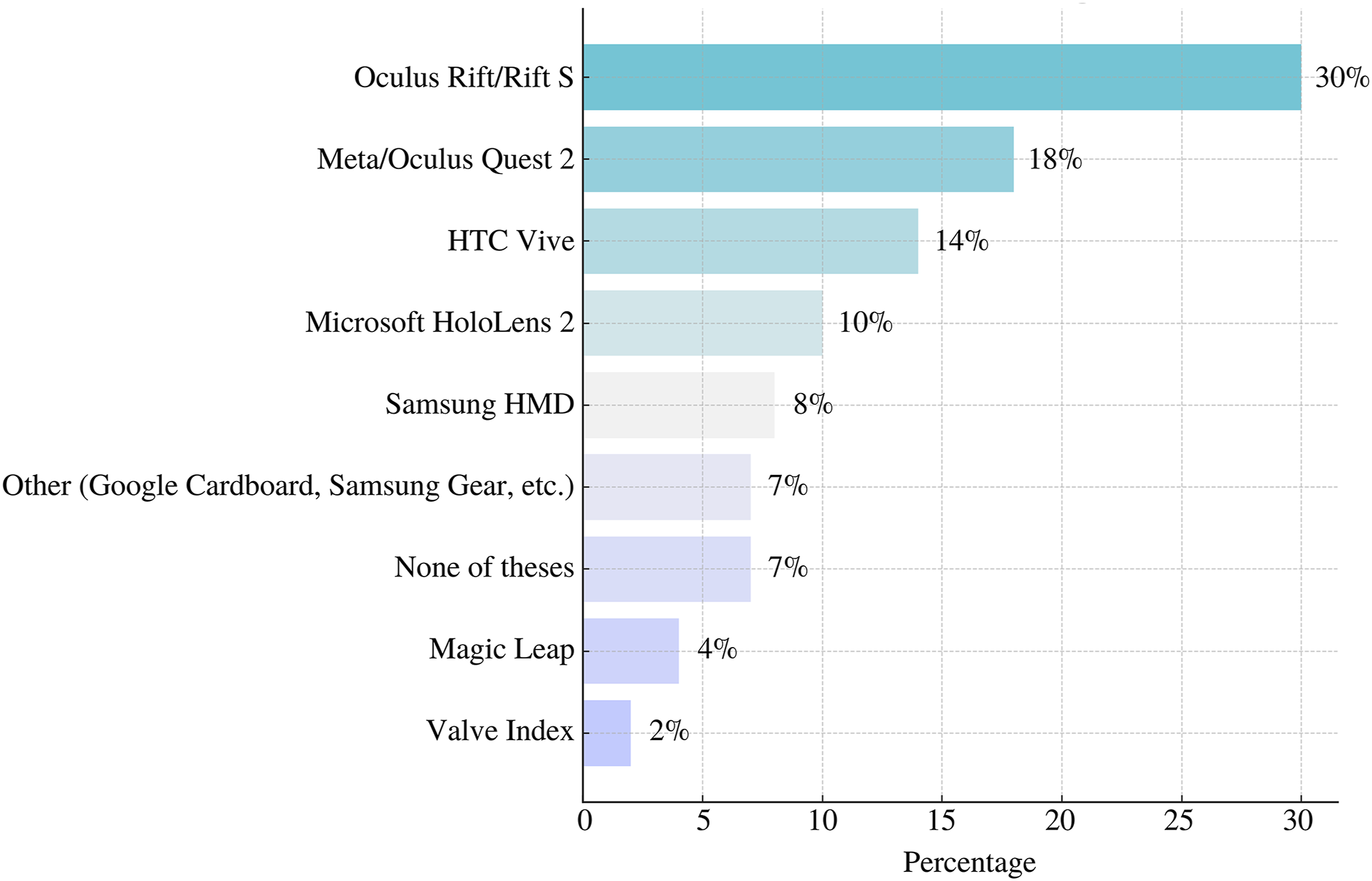
In-depth interviews
Findings emphasized five key nuances in adopting AR, VR, and MR into existing workflow at AEC firms 68 : infrastructure, alignment with existing goals, team specialty, optimization, and stakeholder engagement. All interviewees agreed that a solid infrastructure of both hardware and software is fundamental to AR, VR, and MR adoption. However, they noted that this foundational aspect varies from one firm to another and from project to project. For instance:
P1 deemed robust hardware (for tethered HDMs) indispensable, “hardware will be a quite powerful computer, right? So, like a very good Graphics Processing Unit (GPU), very good.” Their firm acquired multiple devices for different projects but predominantly high-end HDMs like Microsoft HoloLens and HTC Vive (as questionnaire responses reflected in Figure 6). The interviewee also named Grasshopper for Rhino and Iris VR as software to support these technologies (besides what noted in the questionnaire responses in Figure 5). Such infrastructure befitted their projects, primarily large BIM models of parametric building designs.
In contrast, P2 held a flexible view of infrastructure, “I think infrastructure is overrated… actually you know, be nimble enough… these kinds of things are very difficult to maintain...” This interviewee said specific projects worked well with stand-alone HMDs, such as Oculus Quest, whereas others required more complex, tethered devices. Further, the rapid development of HMDs and the substantial overhead costs for such infrastructure raised notable concerns from a business standpoint. Hence, P2 prioritized flexibility over the challenges of maintaining a permanent infrastructure (e.g., storing and setting up devices). P3 reported a similar approach by offloading the hardware infrastructure to clients or business partners. Instead, the interviewee deemed software such as the Environmental Systems Research Institute’s (ESRI) mapping platform and Unreal Engine (as shown in Figure 5) fundamental to their projects, varying from virtual productions to urban designs. Overall, decisions on AR, VR, and MR infrastructure align with firms’ existing goals.
Virtual technologies introduce a learning curve to AEC firms, so having a specialty team is vital. Like the questionnaire results, the interviewees noted a team of two to five people frequently working with AR, VR, and MR. Nevertheless, their team structures varied, from having a team tackle the whole project to assigning each member a specialized role. P2 and P3 also commented that, instead of maintaining a dedicated team, hiring external specialists to meet specific project needs reduces overhead costs. Regardless, all interviewees conveyed positive perceptions about these technologies. As P1 noted, AR, VR, and MR offer designers an unparalleled immersion into their designs with real-world simulations (e.g., lighting changes throughout the day). Such capacity is quintessential to their large-scale and high-cost projects. According to P2, “Without it [virtual technologies], my business would not exist,” emphasizing the firm’s focus on transient experiences between physical and digital spaces. P3 confirmed these technologies’ revolutionary efficiency: “It allows you to have complete control over your environment. Whereas traditionally, you would have to go through a bunch of different logistics,” thus leading to “more creative expressions.”
All interviewees shared a pattern of using AR, VR, and MR to engage stakeholders. As P1 accentuated, since the COVID-19 pandemic, their firm hosted virtual design review meetings to foster collaboration in an MR environment. P2 and P3 highlighted that getting feedback from “the clients and anyone they bring in on the experience” for the designs with virtual technologies is “extremely critical.” Lastly, the interviewees concluded three critical optimizations of integrating AR, VR, and MR into the design workflow: model, lighting, and interaction. As P2 summarized, these optimizations affect “a smooth (virtual) experience… latency means that people get sick.” While detailed models, real-time lighting, and physical interactions are vital for realistic and immersive environments, such heavy-loaded digital content means low FPS or delayed experiences resulting in nausea. Depending on the existing expertise and workflow in their firms, each interviewee tackles the three aspects differently. P1 utilizes software like Grasshopper and Nvidia Omniverse to streamline models and optimize lighting. P2 works with Unity, and P3 conducts the process in Unreal Engine. Whether the firms obtain digital content from third parties or create from scratch also affects the time and resources for streamlining and optimization. Likewise, interactions like switching design options, controlling lighting choices, and simulating physical activities lengthen the process. In short, additional resources, such as time and expertise, are inevitable when integrating AR, VR, and MR into the design workflow at their firms.
RQ3: What are the perceived benefits and limitations of AR, VR, and MR adoption in designing the built environment?
Qualtrics questionnaire
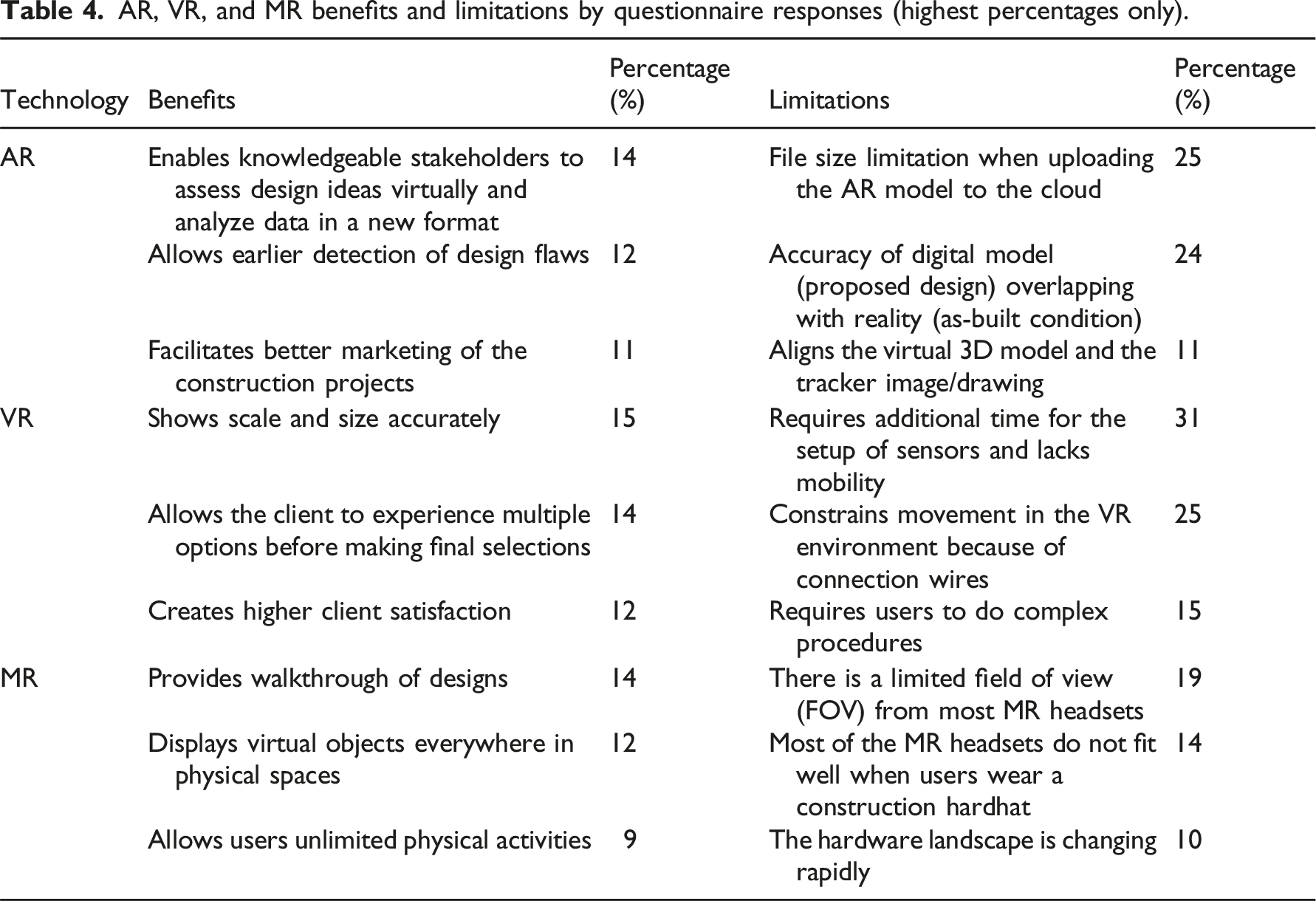
Responses explained the complexity and observability of AR, VR, and MR across the (IV) implementation and (V) confirmation stages of the DOI process. Participants who observed benefits of these technologies validated their choices, whereas those noting limitations reconsidered their adoption. For AR, advantages ranged from design visualization (14%), error detection (13%) to project marketing improvement (11%) and customer engagement (10%). However, limitations included cloud storage size constraints (25%), misalignments between the digital models and real contexts (24%), inadequacies in tracking 2-D drawings (11%), along with issues in texture display, field of view (FOV), and limited mobile computing power.
For VR, key advantages were showing accurate scales and sizes, offering multiple design options, and increasing client satisfaction (15% to 12% of responses). Additional values involved accelerating design decisions, testing feasibility, visualizing architectural drawings, and reducing design changes (12% to 6% of responses). However, limitations stemmed from hardware logistics, including time-consuming setup and mobility constraints (31%), movement restrictions with tethered devices (25%), and complex setup procedures (15%). For MR, benefits highlighted design walkthroughs, dynamic virtual object displays in physical spaces, and free-range activities (14% to 9% of responses). Hardware advancements reduced motion sickness and introduced wireless HDMs (7% to 5% of responses). Challenges of MR remained with limited FOV, poor device fit for specific users (e.g., hard hat wearers), and rapidly evolving hardware leading to high infrastructure costs (19% to 10% of responses).
AR, VR, and MR benefits and limitations by questionnaire responses (highest percentages only).
In-depth interviews
AR, VR, and MR benefits and limitations found in the interviews are synonymous with the questionnaire results, with further insights on future adoption of these technologies in the AEC industry. Overall, interviewees cited immersive design experience and client satisfaction as benefits of these technologies. Reported positive feedback from clients regarding AR, VR, and MR implementations were “everyone enjoys [it],” “always very positive,” and “It’s great, it’s awesome. We love it.” P1 even noted:
“A complex geometry… it's a little bit hard to convey the ideas because architects do most of the communication just based on static images… [clients] want to know more about the invocation of that design in terms of the returned value. So, you know, when you introduce something slightly more complicated, more complex, then obviously, the budget will be higher. [Clients] They want, they need to understand what that really means in terms of the value to buy these different processes.”
Likewise, the interviewees held the fast-changing hardware landscape, setup time, and complex procedures as limitations as P2 clearly stated:
“If you have a high-end [virtual] experience, with a lot of detail, with a lot lighting and effects [that] you need, most of the time VR headset is tethered to a computer… that somebody needs to be there and set it up. And that’s already getting kind of difficult because most of the time, you need the entire company to support it. There are a lot of potential things going wrong, [clients] they put on the headset, and they don't know what to do because there's a controller with a lot of buttons, and they have no idea what to do. And then after they do get it working, then the problem is like, that’s great for some and not for others, like, oh, I get nauseous…”
Afterall, P3 commented that the interactions within the virtual environments make AR, VR, and MR not just exciting but meaningful technologies for the AEC industry, “what is it that you're wanting the people to do in this [virtual] space?... The audience is always the most crucial component for what you're trying to do.” Thus, AR, VR, and MR implementations in designing the built environment are ongoing “and it's going to become much more commonplace as the years go on.”
Discussion
The findings of this study yield two practical considerations for AR, VR, and MR adoption, particularly in small and mid-sized AEC firms (as summarized in Figure 7). The first one denotes the rapidly changing landscape of hardware. While technological advancements such as high-resolution HDMs45,54 and real-time interactive applications51,59 enhance realism and immersion, they come with significant trade-offs. These include costly investments in device maintenance and upgrades, as well as extensive training for employees to execute AR, VR, and MR implementations. Consequently, questionnaire responses (particularly from small and mid-sized AEC firms) in this study revealed trials of these technologies using lower-end HMDs with cited challenges in accessing the latest, more advanced devices. Questionnaire participants were familiar with both foundational (e.g., Oculus Rift, Meta/Oculus Quest) and advanced HMDs (e.g., HTC Vive, Microsoft HoloLens, Magic Leap), favoring tethered devices (52%) over stand-alone options (32%) for better virtual experience. Nevertheless, most reported using Meta/Oculus Quest 2 and its previous version, Oculus Rift/Rift S (48%). Two practical considerations for AR, VR, and MR adoption, particularly in small and mid-sized AEC firms.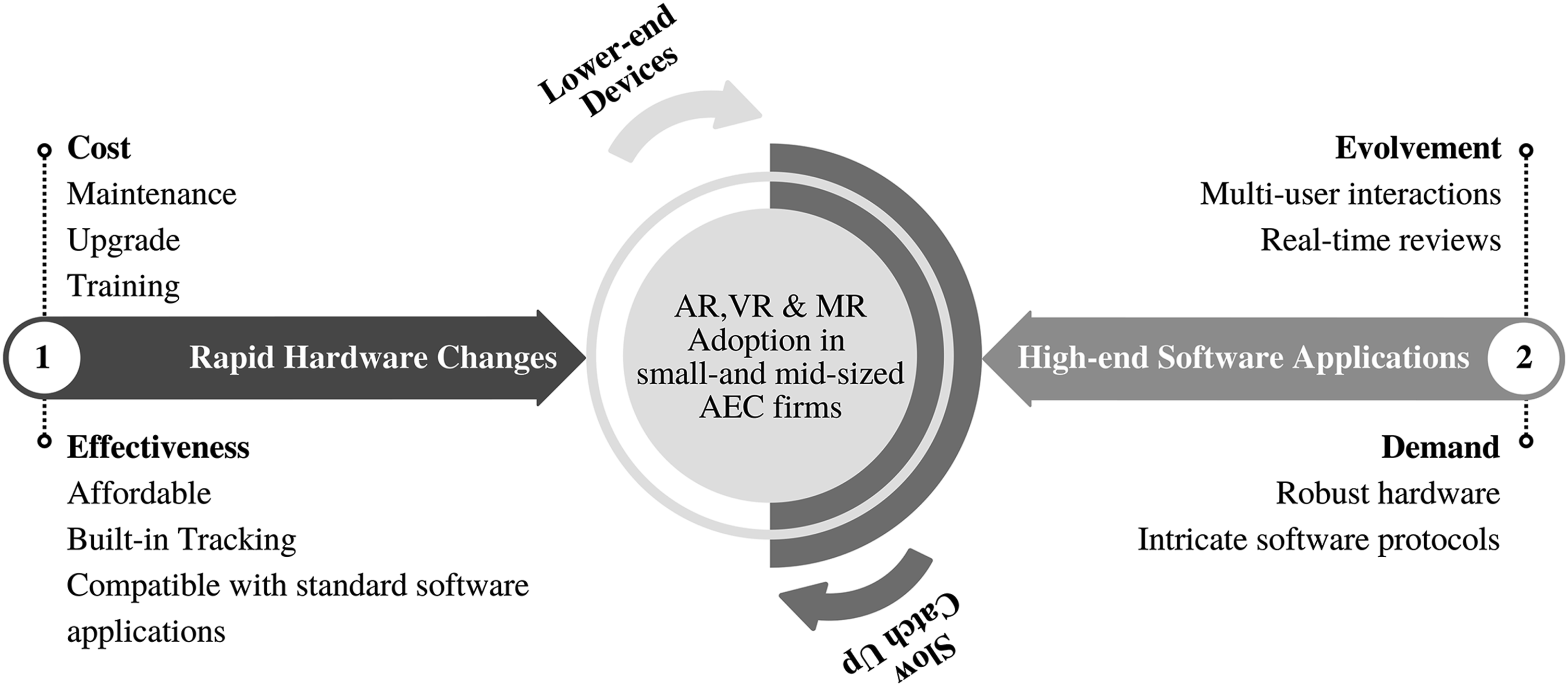
Notably, Oculus Rift/Rift S, launched in 2016, has since been discontinued. Compared to its tethered counterparts, this device featured a lower pixel density pixels per inch of 386 ppi and a narrower FOV at 79°. In contrast, HTC Vive boasts a resolution of 448 ppi and a FOV at 85.6°. 71 Yet Oculus Rift/Rift S triumphs in cost versus efficiency. 72 Oculus Rift S, Valve Index, and HTC Vive Pro come at $399.00, $999.00, and $1,399.00, respectively. However, Oculus Rift S has built-in tracking technology necessary for positioning user movements into the virtual environment, whereas Valve Index and HTC Vive Pro require external tracking devices, increasing cost and space to operate. 72 Further, the built-in tracking of Oculus Rift/Rift S is comparable to the high-end OptiTrack motion capture system for room-scale virtual environments. Moreover, Oculus Rift/Rift S is compatible with numerous virtual software applications like Unity and Steam VR. 73 Hence, this device is a practical choice for small and mid-sized AEC firms in adopting AR, VR, and MR. The problem of latency 74 persisting from early developments to recent advancements of HMDs also raises questions on the value of investing in newer devices.
Nonetheless, the second pragmatic consideration indicates that low-end devices are less likely to catch up when software applications evolve. For instance, software for VR and MR collaborations with multi-user interactions needs high-end systems and devices to operate.46,55,60 Likewise, the in-depth interviews underscored this point, with P1 emphasizing that robust GPUs and HMDs are crucial hardware for advanced software capabilities, such as mixed-reality design reviews with clients. P2 highlighted that even for standard applications like 3D visualization and single-user interaction, challenges like extended setup times, limited mobility, and intricate software protocols are common, particularly with lower-end and tethered HMDs. Above all, MR incurs additional expenses and demands intensive training for employees due to the swift advancement of its technology. As echoed by the questionnaire responses, the initial investment in equipment and employee training for such “novelty” was “too high for smaller businesses,” the majority in the AEC industry.
Conclusion
This study’s pragmatic exploration of AR, VR, and MR adoption in the AEC industry aligns with the existing research literature on professionals’ proficiency with the technologies. Even so, its findings questioned the literature’s extrapolated suggestions for real-world applications, raising awareness of pragmatic considerations in software and hardware capacities of individual AEC firms (as summarized in Figure 8). The questionnaire responses reflect such observations, first in parts that showcased sufficient (I) knowledge, positive (II) persuasion, and favorable (III) decision on AR, VR, and MR adoption. Then, in the mixed opinions on these technologies’ (IV) implementation and (V) confirmation, implying the saturated adoption in some AEC firms and the lagged status in others. The in-depth interviews shed light on AR, VR, and MR’s complexity that impeded their adoption with demanding hardware infrastructure and specialty teams that execute software implementations within the existing workflow. The key takeaways for the practical adoption of AR, VR, and MR in the AEC industry through the lens of Diffusion of Innovations Theory (DOI).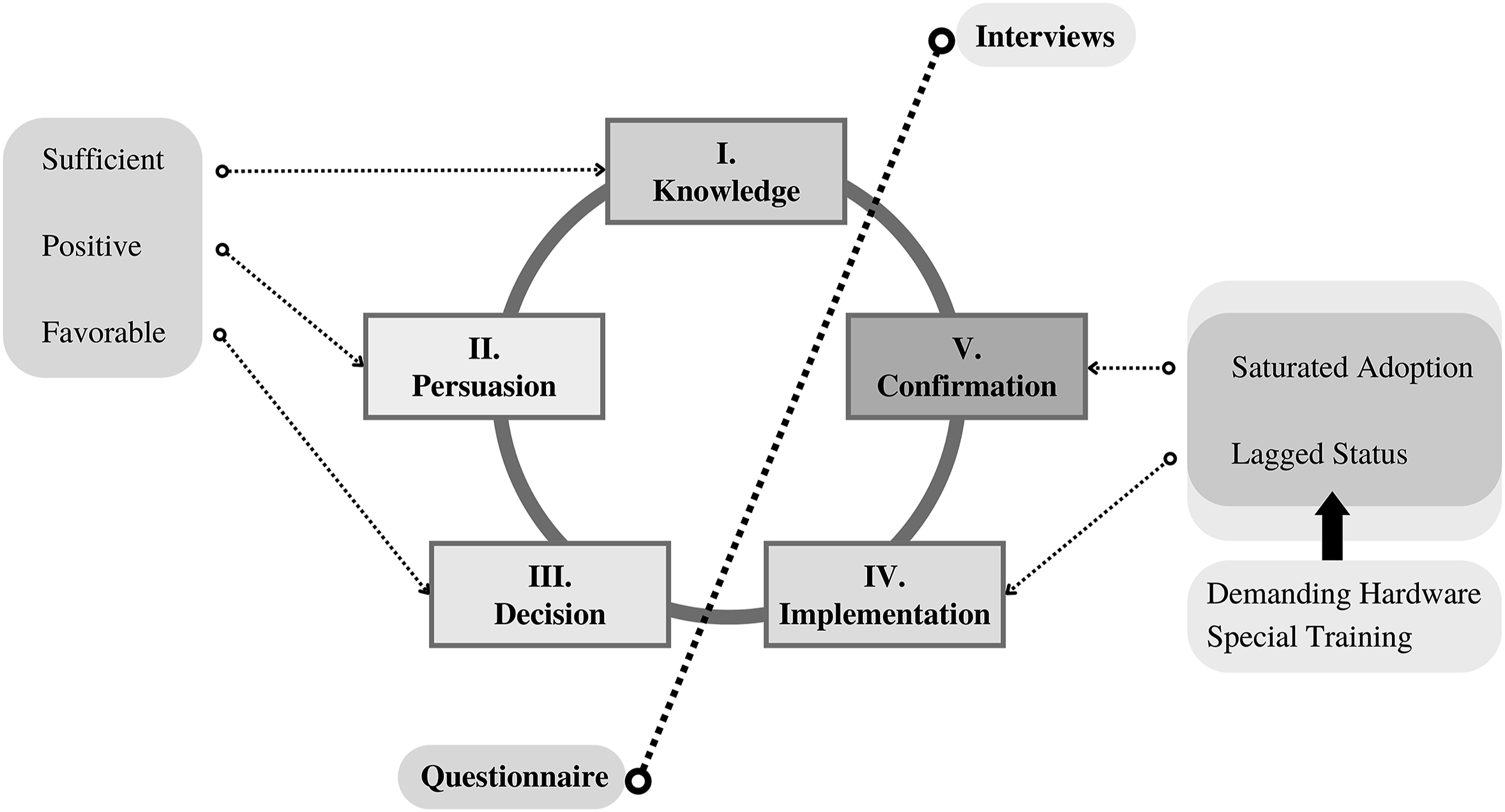
Since this study primarily consisted of small to mid-sized AEC firms (i.e., one to 250 employees), constrained resources regarding hardware infrastructure and software specialty for AR, VR, and MR are plausible. P2 and P3, as proprietors of their firms, even underlined the necessity of outsourcing hardware infrastructure and engaging external specialists for diverse project requirements. This strategic approach mitigates overhead costs and optimizes efficiency. Hence, there is no one-size-fit-all adoption of AR, VR, and MR for different AEC firms. Instead, the DOI rate differs depending on the nature of the firm’s scale, project type, and available budget for such technologies. Thus, the key takeaways from this study for an effective adoption of AR, VR, and MR include developing flexible infrastructures through outsourcing or specialist collaboration, optimizing equipment for project needs, and reducing new device expenses. It is crucial to balance performance and mobility in systems selection, with an awareness regarding the limitations of cost-effective tethered devices. Utilizing streamlined software such as Omniverse, a universal platform compatible with standard BIM applications, is crucial to simplify digital content creation and interactive lighting in virtual experiences. This approach not only optimizes the workload but also ensures high-quality outcomes. After all, the complexity of a technology determines its adoption, as outlined in DOI.
Footnotes
Acknowledgements
The author thanks Daniel Stine, Director of Design Technology at Lake|Flato Architects, Erin Schambureck, Partner, Senior Interior Designer at CRW architecture + design group, Inc, Ping-Hsiang Chen, Lead Creative Design Architect at Dar Al-Handasah, Rudolf Romero, Founder of Metaverse 01X, Rob Sloan, Co-Founder of Orbis Tabula for their advice and all the professionals who participated in this study.
Declaration of conflicting interests
The author(s) declared no potential conflicts of interest with respect to the research, authorship, and/or publication of this article.
Funding
The author(s) received no financial support for the research, authorship, and/or publication of this article.
