



Abstract
In recent years, the impact of artificial intelligence (AI) has brought about a new paradigm shift in performance-based design, which we will call Predictive-Performative Design (PPD). This paper presents an overview of this new paradigm, as well as the inflection point at which interest among urban designers in this type of model began to emerge, resulting in what we will call Predictive-Performative Urban Design (PPUD). Our discussion of Predictive-Performative Urban Design (PPUD) is based on an extensive literature review and observation of experiences at the Massachusetts Institute of Technology (MIT) in Boston and the Austrian Institute of Technology (AIT) in Vienna. Finally, this paper examines how this new paradigm shift in performance-based design can change contemporary urban design and planning practices. We also identify research questions for future development in this field.
Introduction
In the years 2000, Rivka Oxman presented Performative Design (PD) as a new paradigm shift in performance-based design. 1 According to Oxman, this change resulted from advances in digital design theory and technology that occurred from the 1990s onwards, with the development of parametric and generative design processes and associative geometry, in addition to a new interest in topology. 1 Although Oxman’s studies focused more on architectural rather than urban design, they provide a consistent body of knowledge on performative models, which prioritizes performance, from the early stages of design onwards, by integrating generation and simulation. Between 2000 and 2010, the emergence of performative models provoked a series of theoretical reflections published.1–4 These, in turn, gave rise to the proposal of various terms to describe this paradigm and its impact on architecture. They included Performative Architecture 2 defined as the ability of architecture to respond to social, cultural and technological changes, acting as a mediator of emerging cultural patterns; Performalism 3 which is used to design generative approaches to architectural form by way of data and performance simulations, integrating design and analysis tools in such a way as to promote broader collaboration between architects and engineers; and Performance-oriented Architectures 4 defined as a concept that aims to consolidate the synergistic and unequivocal relationship between the “form” and “function”, enabling greater engagement of architecture with the physical environment and greater interaction between the local macro- and microclimate—an idea heavily influenced by the concept of “orientation” originally proposed by David Leatherbarrow to demonstrate the inseparability between “context” and “program” and the way in which buildings operate in such a way as to recognize and enrich these. 5
However, even though PD lay at the epicentre of these reflections within digital design theory, it made little progress in the second half of the 2010s. There are two possible explanations for this delay. First, the fact that the emergence of PD also generated problems of an instrumental nature: (i) the need for truly more agile performative tools capable of, in real-time, enabling the instantaneous and integral exploration of design space that is a crucial requirement, especially in the initial stages of design; (ii) the need for more dynamic performative tools suitable for real-time generation and modification of form as a function of performance, in view of the time required for this limited interaction and optimisation; (iii) the need for more user-friendly tools, since the handling of PD models in parametric environments depended on specific knowledge of programming or computer simulation; and (iv) the need for tools specially developed for urban design, since there was an emphasis on specific performative tools for architectural design. Secondly, there was the fact that, in this period, PD was coming to be seen as a problem of a conceptual nature. Improvement of PD models depended on the development of new types of simulation that were not so heavily dependent on deductive models to the detriment of predictive ones, since computer simulation tasks at this time were predominantly guided by mathematical formulae that consumed calculation and computational processing time, slowing down the simulation.
In recent years, however, advances in artificial intelligence (AI) techniques—such as machine learning (ML) and deep learning (DL)—and their application in computational design have enabled computer simulations to be speeded up significantly through the use of predictive models, thereby making them less dependent on deductive (or mathematical) models. Although simulation models based on mathematical calculations, such as Computational Fluid Dynamics (CFD), provide a higher level of precision, they require greater computational power and more processing time and this limits their use in PD processes. On the other hand, predictive models based on ML and DL have been able to generate simulations in fractions of seconds, with a low percentage of error and the advantage of providing real-time feedback, which is ideal for the initial stages of design. In addition to drastically reducing the time required to obtain simulation results and thereby expanding the performative capabilities of design tools, these innovations illustrate the state-of-the-art of a new paradigm of performance-based design, which we will call here Predictive-Performative Design (PPD). Although there is much evidence of the emergence of this new paradigm, the subject is still rarely addressed in these terms. Furthermore, although this paradigm is not restricted to architectural design and is already exerting a widespread influence on various urban design and planning practices based on predictive and performative approaches, it has not been sufficiently addressed in the context of urbanism.
There is, therefore, a gap in the literature, which this paper seeks to fill by discussing the impact of predictive-performative approaches on urbanism and the emergence of what we will call Predictive-Performative Urban Design (PPUD). The aim is therefore outlining the basis for understanding this new paradigm by presenting an overview and identifying the inflection point at which interest among urban designers for predictive-performative models began to emerge. The article is divided into two parts: (1) the first discusses the emergence of PPD paradigm as a consequence of the transformations that have occurred in computer technologies in recent decades; (2) the second deals with the emergence of PPUD as a result of the historical evolution of performance-based urban design approaches, including predictive-performative approaches to urban design and experiences developed at the Massachusetts Institute of Technology (MIT), in Boston, and the Austrian Institute of Technology (AIT), in Vienna, 1 respectively, through the City Matrix and InFraRed. Finally, we discuss some shortcomings and suggest research questions that might guide future development in this field.
Methodology
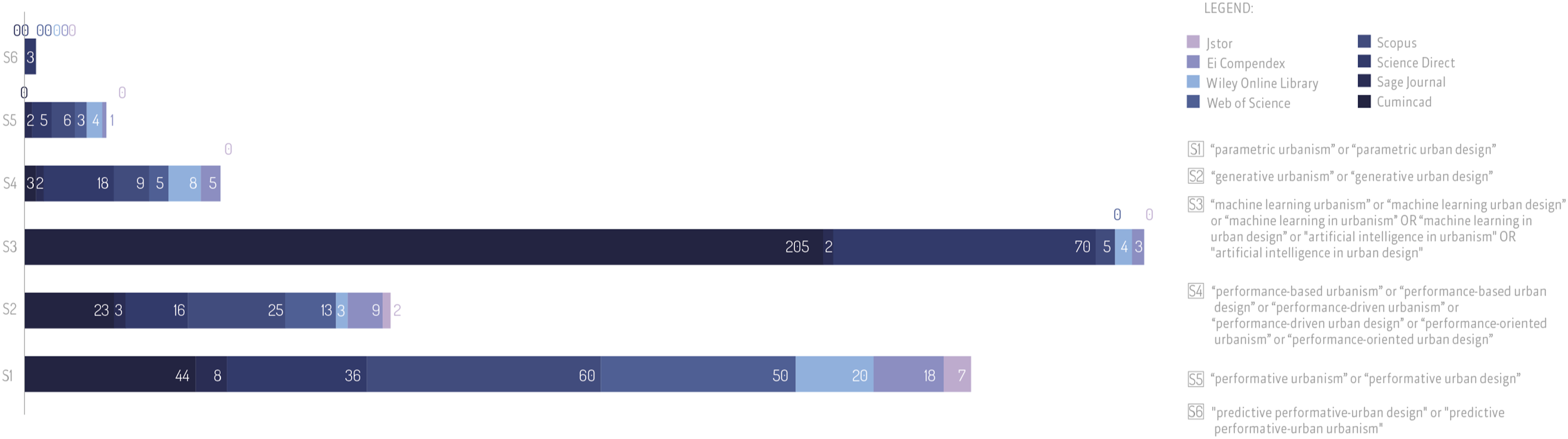
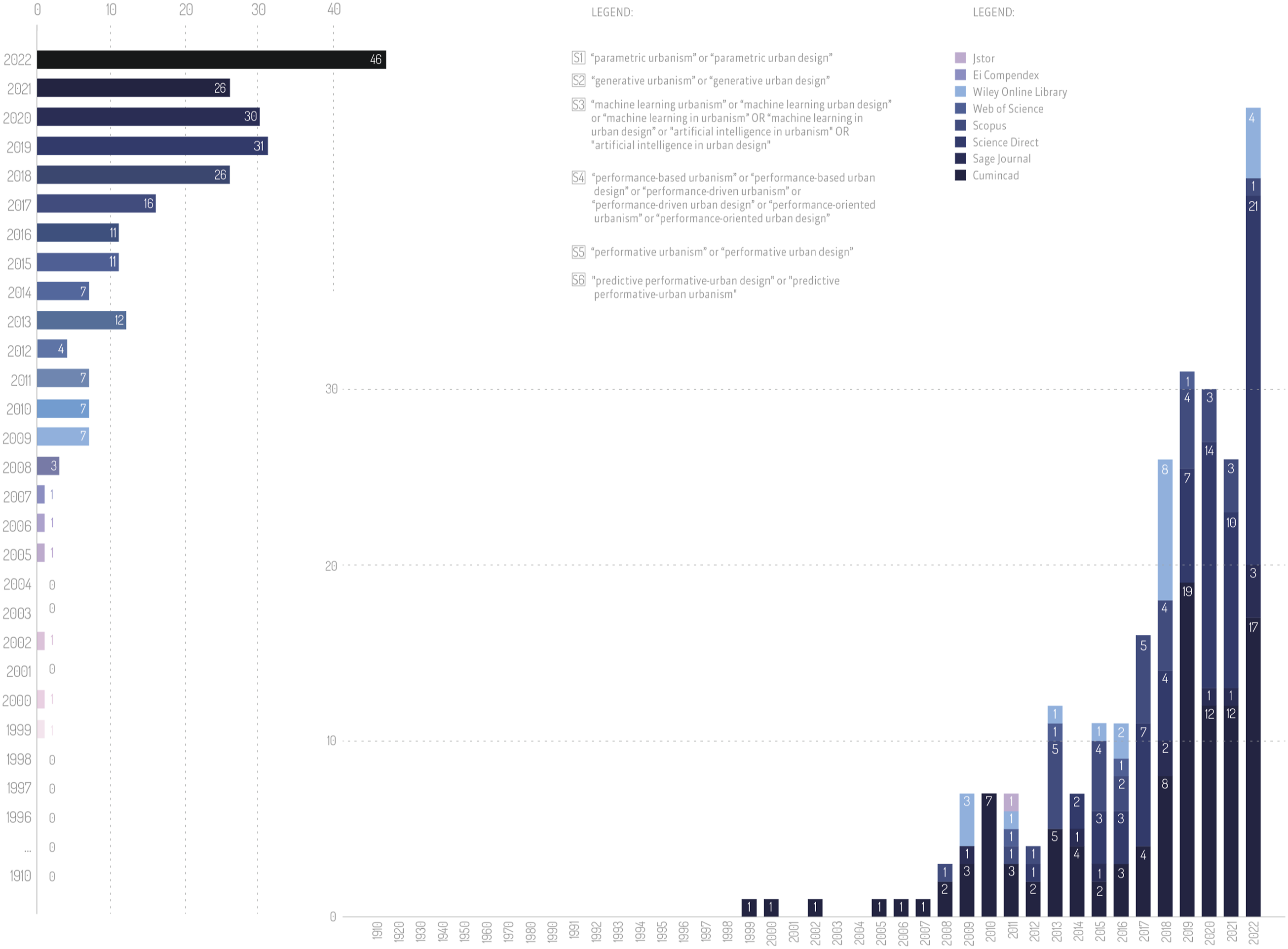
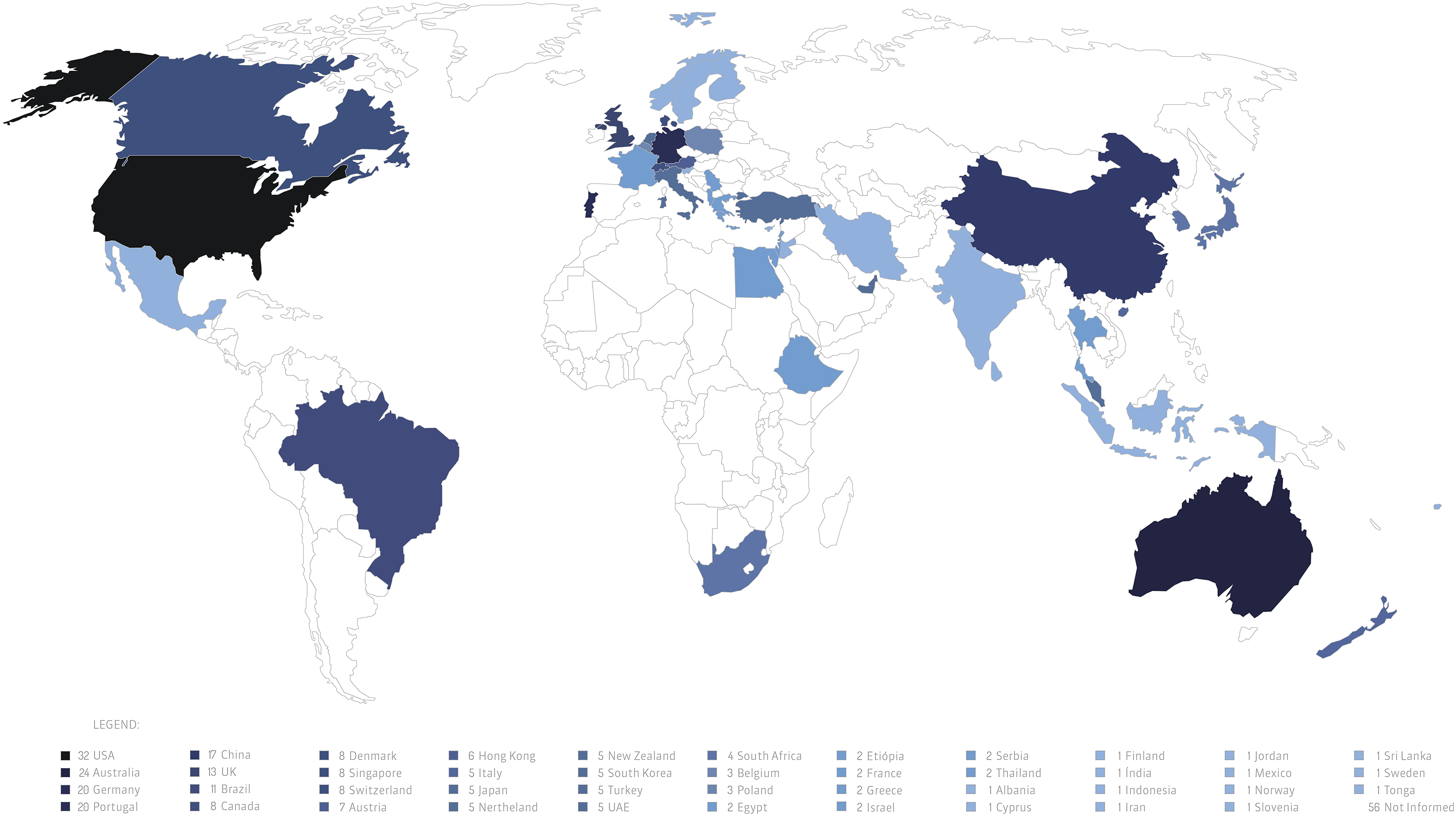
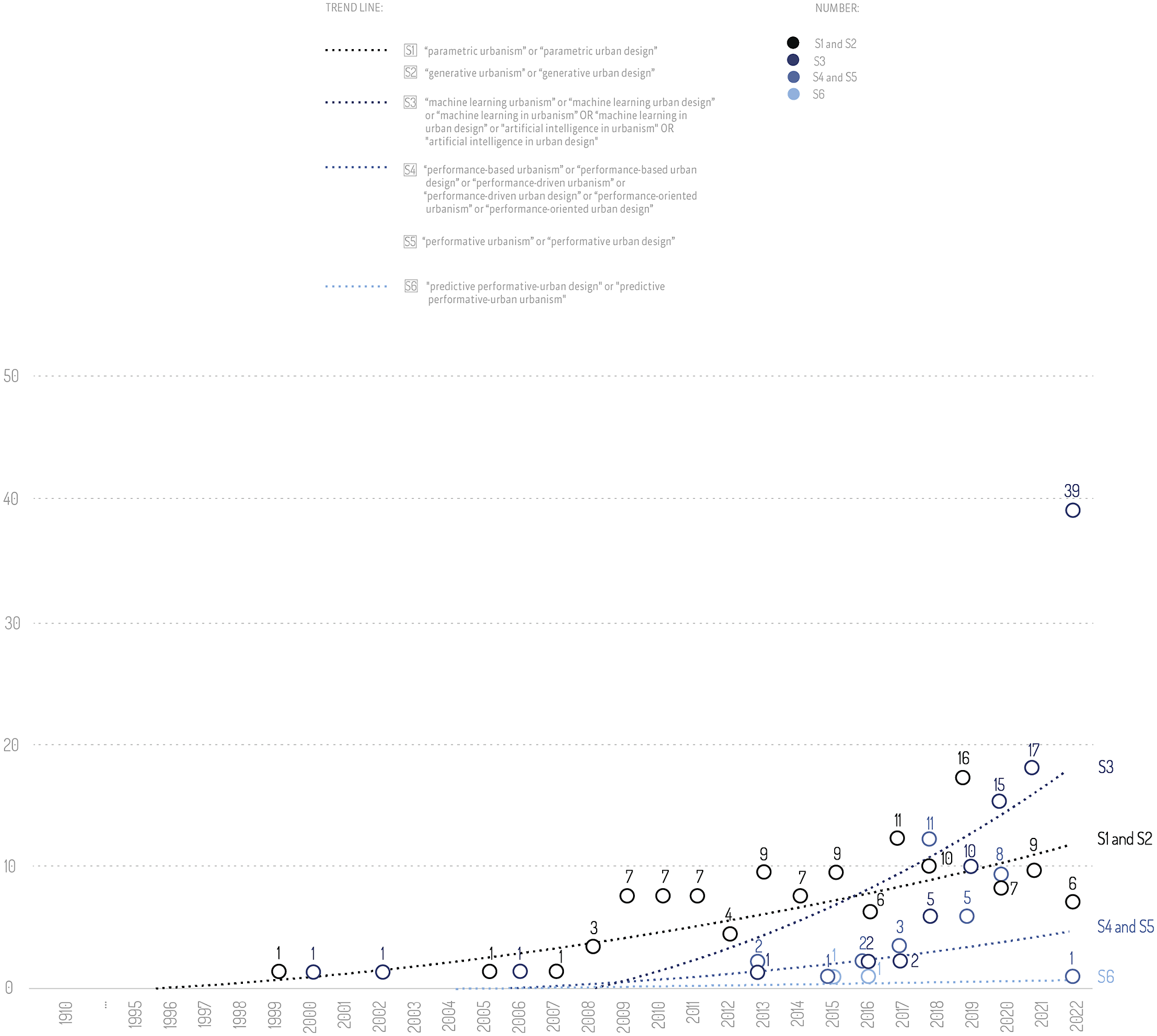
All reflections on the emergence of PPUD presented in this article resulted from an extensive Systematic Literature Review (SLR) and Data Analysis (Figure 1–6). With regard to the SLR, six themes that orbit performance-based urban design were researched: (S1) “parametric urbanism” or “parametric urban design”; (S2) “generative urbanism” or “generative urban design”; (S3) “machine learning urbanism” or “machine learning urban design” or “machine learning in urbanism” or “machine learning in urban design” or “artificial intelligence in urbanism” or “artificial intelligence in urban design” (S4) “performance-based urbanism” or “performance-based urban design” or “performance-driven urbanism” or “performance-driven urban design” or “performance-oriented urbanism” or “performance-oriented urban design”; (S5) “performative urbanism” or “performative urban design”; and (S6) “predictive performative-urban design” or “predictive performative-urban urbanism”. These were searched in titles, abstracts and keywords of review and research papers contained in CumInCAD, Sage Journal, Science Direct, Scopus, Web of Science, Wiley Online Library, Ei Compendex and Jstor. Initially, 700 articles published between 1999 and 2022 were found. These went through two rounds of selection—firstly, excluding repeated articles, and, secondly, excluding those that had no relationship with urban design and planning. This selection resulted in 250 articles that were systematically analysed in terms of their objectives, methods, results and findings. Regarding Data Analysis, quantities and years of the 250 analysed articles were plotted on a graph, from which second-order polynomial trend lines were generated. These trend lines were divided into four groups: (a) S1, S2; (b) S3; (c) S4, S5 and (d) S6. This allowed us to observe the recent steady growth of research on AI in urban design and planning, which also boosted investigations on predictive-performative approaches to urban design that seem to be in their early stages (Figure 7). The SRL on the themes S1, S2, S3, S4, S5 and S6 resulted in 700 articles of which 36% were repeated, 38% were excluded due to little relation to urban design and only 26% were effectively reviewed, comprising 250 articles. Among the 700 articles found in each repository, the vast majority show interest in artificial intelligence. Among the 700 articles found in each repository, the vast majority show interest in artificial intelligence. Among the 250 reviewed articles, a large number show interest in parametric and generative urban design models (48%) and AI-based models (38%). The topics predictive and performative urbanism (S5 and S6) are also present, even if in fewer papers. The interest in the topics S1—S6 is notably global, but the vast majority of articles come from Europe (35%) and Asia (18%). Source: Created by the authors. Geographic spatialization of the highest number of publications on the themes S1—S6. Some countries, notably the USA, Australia, Germany, Portugal, China, the UK, Brazil, Canada, Denmark and Singapore, form a group of the 10 most prolific publishers in the field of computational urban design. Source: Created by the authors. Second-order polynomial trend lines of four thematic groups illustrate the steady growth of AI-based urban design models in recent years, but interest in predictive and performative approaches to urban design is also a current trend which seems to be in its early stages. The chart was developed using application for analysing numerical data. Source: Created by the authors.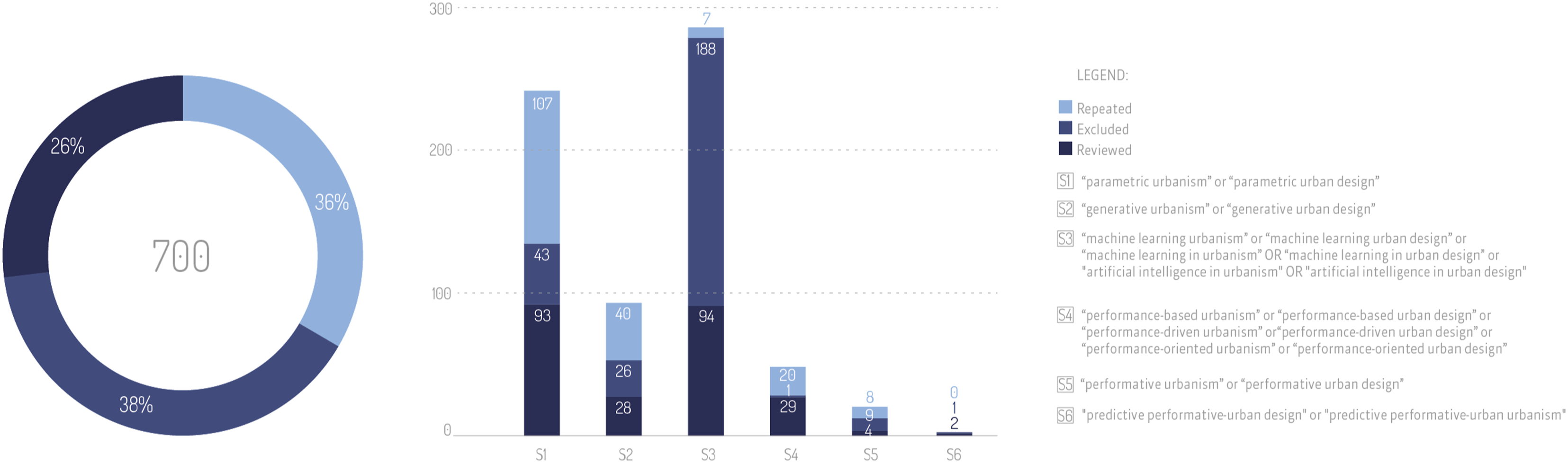


Predictive-performative design
Between the end of the 2010s and the beginning of the 2020s, a new paradigm of performance-based design emerged as a result of the second wave of digital technology in architecture, in which architects adopted digital tools that did not necessarily change the way they produced architecture, but rather the way they thought about it. 6 While, in the first digital turn, in the 1990s, advances in computer-aided design and manufacturing (CAD/CAM) software changed the way architecture was produced through the introduction of mass production and customization,7,8 in the second digital turn, between 2010 and 2020, advances in artificial intelligence techniques enabled the emergence of intelligent design tools, favouring a new type of performance-based design in which form-finding, or rather form-searching,6,9 are based on prediction rather than deduction. Prediction in new performance-based design assumes that, instead of using mathematical formulae to build performative models, it is possible, through artificial intelligence techniques, to train tools to heuristically (rather than mathematically) learn from performance simulation data and find a solution based on this learning experience, making it possible to construct predictive-performative models.
From a semantic point of view, this new paradigm stems from the ability to generate, predict performance, and optimise design alternatives in real-time. For this reason, we propose here the use of the expression Predictive-Performative. Although this term has not been proposed in the existing literature, it would seem to emerge from what Siegel 10 has called “ predictive analytics”, that is, “technology that learns from experience to predict the future behaviour of individuals in order to drive better decisions ”, or from what Carpo 9 subsequently called the “new science of form-searching”, in which “information retrieval (the search for a precedent) is more effective than the traditional, deductive application of scientific formulas or any other law of causation”. 8 Although this new type of performance-based design has been, semantically, confused with Real-time Design or Real-time Performance, real-time processing speed is just one of its features, and not the only one. For this reason, these terms do not adequately cover the full range of concepts conveyed by the expression Predictive-Performative Design (PPD).
From a computational point of view, this new paradigm shift in performance-based design stems from the impact of AI, defined as the study of intelligent agents and devices capable of perceiving their environment and taking action to maximize the likelihood of achieving a certain goal in imitation of human cognitive functions for learning and problem-solving. 11 Although the incorporation of AI in architecture is part of a long and slow process of maturation —starting in the 1970s with the developments pioneered by Nicholas Negroponte and Cedric Price 2 —, it has grown substantially in the last 10 years. 12 New techniques of AI have been developed, such as ML and DL. ML is a subcategory of AI that deals with the ability of a system to learn to perform certain tasks without necessarily being programmed to do so.12–14 According to Burry, 14 “machine learning uses artificial intelligence to allow systems to self-learn, adapt and improve from experience without having been explicitly programmed through previous experiences”. ML models are generally trained to solve classification, regression, clustering or optimisation problems. 3 This is thus based on computational statistics and optimisation for problem-solving. Various authors have compared this to the scientific method, since it involves processes similar to the formulation, validation or rejection of hypotheses, with the advantage of an extremely rapid response speed.15,16 DL is a subset of ML that, to enable learning from large databases, uses at least three layers of neural networks (NNs). 14 These, in turn, are structures with their own architecture composed of inputs, outputs and layers of interconnected nodes that reproduce the intercommunication between neurons in the human brain.12,14 An example of NNs are Generative Adversarial Networks (GANs), structures created to solve generative modelling problems, 17 which have been extensively explored by architects, urban planners and designers for a variety of different purposes. 4 Although the use of ML and DL models in architecture and planning is still in its early stages, substantial progress has been made. 18 These models—in particular those involving GANs—are frequently used for a wide variety of purposes. These include use as a generative method for architectural layouts12,19; as a generative method for urban design20,21; as a descriptive method of urban form attributes 22 ; as an urban texture synthesis method23,24; as a method for graphic expression and representation of urban design proposals 25 ; and as a predictive method.26,27
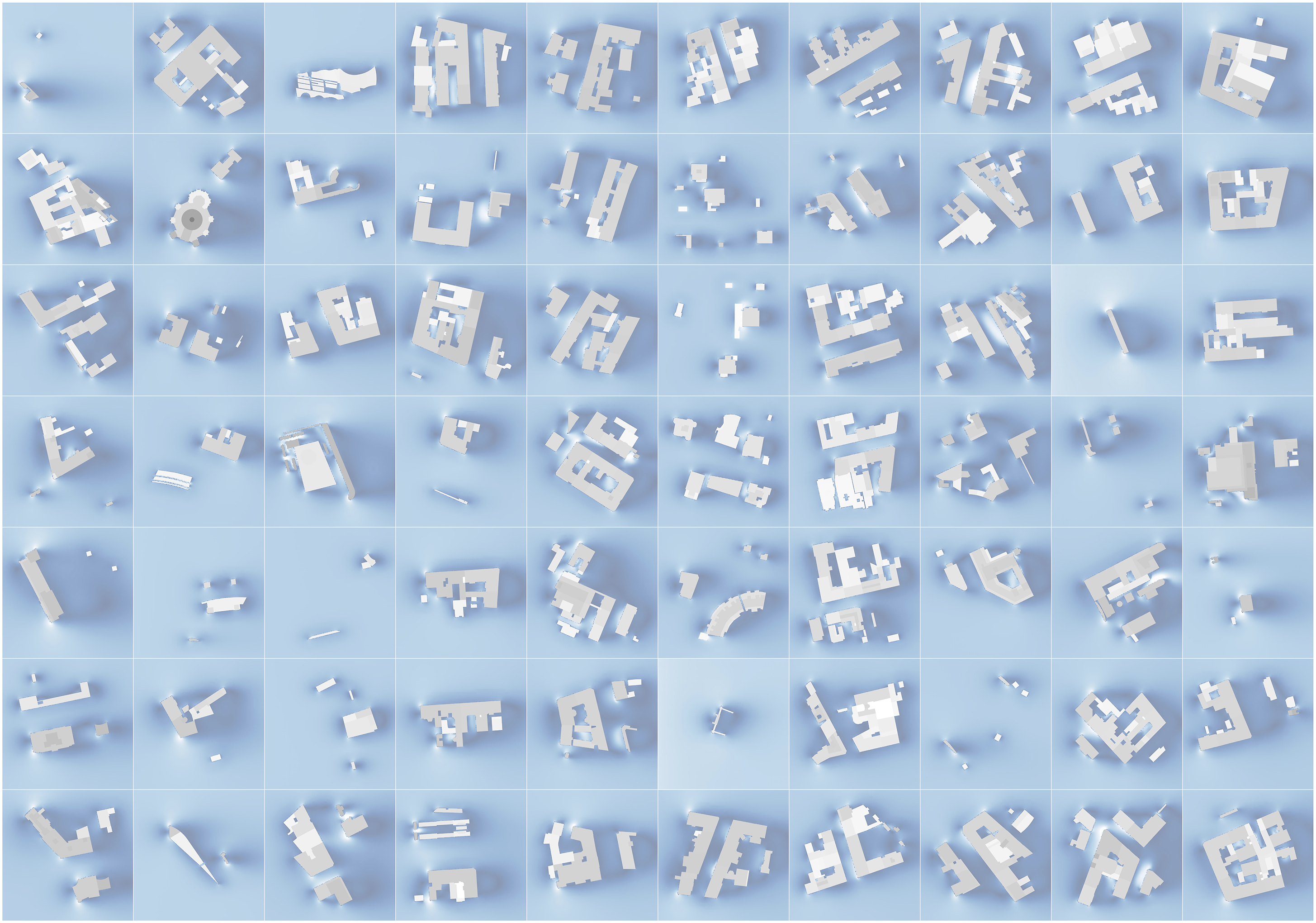
Regarding the use of these models as a predictive method, two recent impacts are the emergence of ML predictions (or, simply, predictions) (Figure 8) and predictive-performative tools. Predictions use ML and DL models trained on large datasets obtained from traditional simulations to predict environmental simulations (Figure 9). These are fast, simple, inexpensive predictive models that are gradually replacing traditional simulations.
12
The workflow of these models varies depending on the purpose of the performance simulation and the architecture of the neural network—whether, for instance, it is a Convolutional Neural Network (CNNs) or a Generative Adversarial Neural Network (GANs). Implementation of these models often involves the use of computational design tools, such as Rhinoceros and Grasshopper, or computational environmental design tools, such as Ladybug, and Python scripting. These tools have been used to develop a number of predictive models in recent years as part of various research projects, involving various types of predictive performance analysis, such as daylighting,28,29 thermal comfort,
30
solar radiation and wind flow.31–33 Although the accuracy of these predictive models is lower than that of deductive models, it is sufficient for evaluating the efficiency of solutions in the early stages of design, when performance decisions have the greatest potential to influence results and reduce the cost of changes, as argued in the MacLeamy diagram.
34
Predictive-performative tools combine predictive and generative-performative models, with a view to exploring or optimising design alternatives as a way of achieving various performance goals. These tools have facilitated access on the part of designers and stakeholders to predictive-performative models, in the form of a growing ecosystem of agile and easy-to-use online platforms.
35
Although many of these platforms still use rule-based and parametric models for generating building forms,
36
the number using GANs as a generative method is also increasing, which is quite promising.
20
While predictions have made it possible to test urban design alternatives almost instantly,26,27 predictive-performative tools have enabled the democratization of these new artificial intelligence-based technologies to reach a larger number of architects by way of online platforms. These technologies, however, are not restricted to architectural design, various focus on urbanism and are moving the practice of urban design in the direction of what we call Predictive-Performative Urban Design (PPUD). Steps of development of predictive simulations, from left to right: (a) heightmap of urban form as an input, (b) simulated result from CFD model used to train ML models, (c) predicted result from ML models. Source: from City Intelligence Lab (CIL/AIT, 2020). Wind flow predictions of various urban forms samples developed using machine learning models. Source: City Intelligence Lab (CIL/AIT, 2020).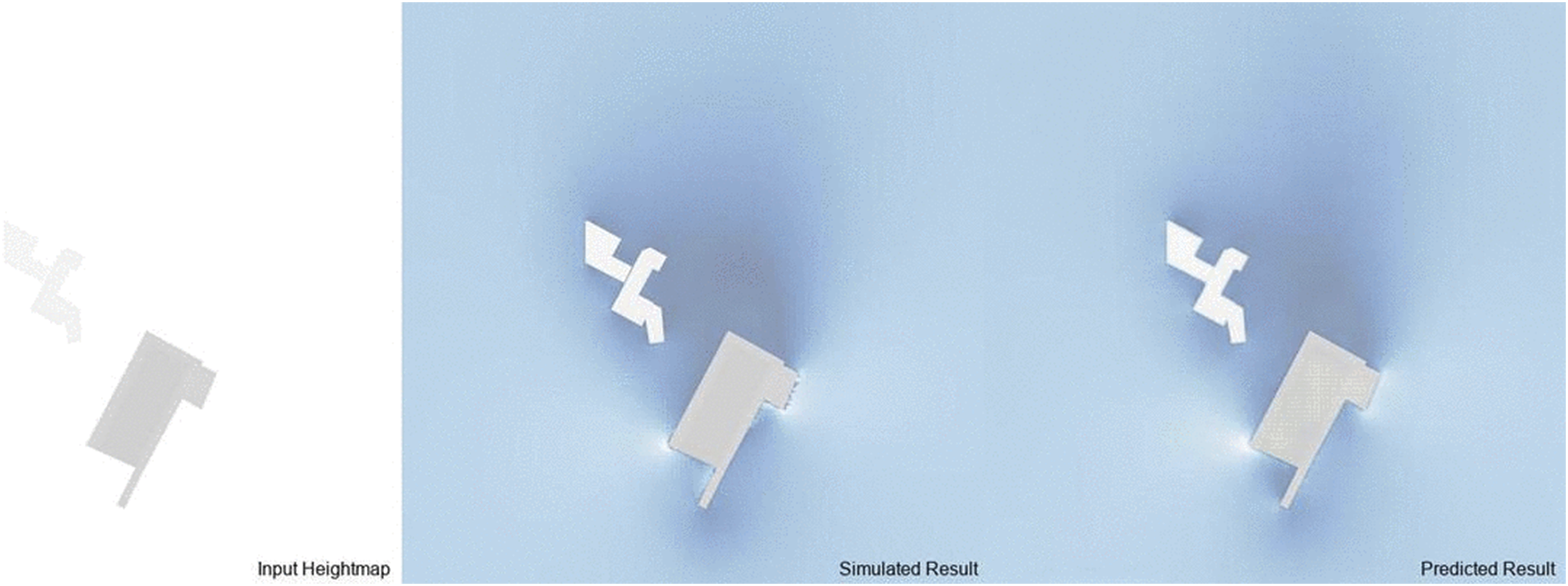
Predictive-performative urban design
Historical evolution
Performance-based urban design has undergone various stages of theoretical and practical development (Figure 10). Although the theoretical foundations of urban design as a discipline have been firmly established since the 1960s, performance-oriented approaches to urban design and planning date back as far as the early 20th century. In the early days, performance-based urban design approaches were essentially non-heuristic, but, in the course of the 20th century, they underwent a number of conceptual and technological transformations, becoming clearly heuristic at the beginning of the 21st century as a result of the introduction of AI into the computational urban design process, giving rise to PPUD. This new paradigm is therefore the result of a long and slow process of maturation of performance-oriented urban design approaches, which have accompanied advances in computer-aided design theory and technology. These can be grouped into four different approaches: the deductive; the performance-based; the performative; and the predictive-performative. Timeline showing important events related to performance-based urban design approaches and (1) climate agreements, (2) CAUD tools, (3) enviromental or climate simulation tools, (4) performance conferences, journals and publications. Source: Created by the authors.
The deductive approach
Deductive approaches to performance-based urban design emerged between the 1900s and 1920s, in particular from the need to guide the urban design and planning process quantitatively, with a view to improving the environmental quality and social life of cities. Although, in this period, urban studies were centred on qualitative aspects, such as those developed by Sitte 37 and Howard, 38 deductive and quantitative approaches were also explored with the aid of geometric and mathematical models. One pioneering example of this was the investigations undertaken by Uwin, 39 which combined analytical studies of urban form and land use to demonstrate relationships between density and cost of urban infrastructures, as well as compactness and travel time through urban fabrics. 40 In the early stages, however, these approaches showed potential as drivers of modern performance-based urban design and planning.
In the 1920s and 1930s, these deductive approaches were explored by a number of modernist architects and urban planners, as presented at the International Congresses of Modern Architecture (1928–1959). 5 Walter Gropius investigated the solar efficiency of tall buildings, using Heiligenthal’s rule 6 and simple geometric models that established relationships between solar angle, building height and distance between blocks to ensure solar access to urban arrangements. 41 Meanwhile, Le Corbusier developed logics of rationalization, modularity and zoning to defend vertically dense garden cities, ensuring the environmental quality of urban areas with the density of the pre-industrial city. 7 Although these approaches have focused on the environmental performance of buildings, they have contributed significantly to establishing performance-oriented deductive approaches as a tool for improving cities. 40 In subsequent decades, these approaches would impact the practice of architects and urban planners, and were converted from geometric principles to the rules-of-thumb still used today, as illustrated by Celani. 42
The performance-based approach
Performance-based urban design approaches first began to emerge in the 1960s, when computation was introduced into architecture and the theoretical foundations of Computer-Aided Design were first formulated. 43 Since then, computation has generated an expanding range of possibilities for representing processes, forms and problems related to buildings and cities. This was quickly recognized by Christopher Alexander 44 who developed an understanding of intrinsic relationships between design problem patterns conditioned by the context and formal solutions responding to them. 45 These were performance patterns that could be computed and used as fitness criteria. 45 Although these ideas were initially received with some scepticism, between 1960 and 1970, they exerted a significant impact on the studies of Leslie Martin and Lionel March. 8 They developed various studies aiming to understand the performance of buildings and cities, especially in relation to land occupation and use.46,47 These studies pioneered ideas regarding the relationship between architecture and computing, 48 as well as between architecture and various other fields, such as economics, engineering, geography, and urban planning. 49 Although these investigations still employed a deductive rationale, they explored various fundamentals of computation, quantifying numerous attributes of architectural and urban structures using archetypal models to demonstrate how built forms perform differently, occupying the ground in different ways, with greater or lesser efficiency in terms of built density. These models went on to inspire the type of performance-based urban design underlying many later developments.
In the 1980s, one important advance in this type of approach was the “alpha syntax”, a generic city model algorithmically programmed by Paul Coates for Bill Hillier and Julienne Hanson. 50 This consisted of a generative system composed of full and empty cellular units that reproduced the logic according to which cities are structured, aggregating buildings linked by a network of linear spaces. 51 Despite its potential, this system was not guided by any specific aspect of performance and was later abandoned by Hillier and Hanson, who focused on analysis of the socio-spatial performance of buildings and urban settlements through Space Syntax 9 — a theory they have been developing since the 1970s. 44 Computer-aided generative systems have, nevertheless, been explored by Philip Steadman, Robin Liggett and William Mitchell for the production of architectural layouts and these also show great potential for applications in urban design through the use of genetic algorithms.52–54 These studies contributed significantly to the further development of performative urban design models.
The performative approach
Although generative systems were already being used in urban studies in the 1980s, 55 their effective application to urban design processes was still in its initial stages in this period. With the development of parametric modelling tools in the 1990s, urban designers began to develop an interest in generative systems, especially in 1999, with practical applications developed by Cristiano Ceccato and Lawrence Liauw. 56 Although this study was never fully presented, it can be seen as a milestone in the emergence of interest on the part of urban designers in parametric and generative design systems. 10 In the following years, the role of parametric design in architecture, its theoretical foundations and elements were discussed and systematized,57,58 and the potential for applying this method to urban design was noted by various scholars.59–63 Effective practical applications of parametric modelling in urban design emerged from Zaha Hadid Architects. These included Zorrozaurre, in 2003, One-North, in 2001, and Kartal-Pendik, in 2006. 64 Such practices, however, laid great emphasis on formal parameters to the detriment of those related to performance65,66 and this initially placed limitations on the development of performative approaches to urban design.
By contrast, from the second half of the 2000s onwards, generative approaches to urban design with an emphasis on performance parameters began to emerge in various academic environments, with the use of shape grammars and cellular automata mostly thanks to the previous work of Stiny 67 and Batty. 68 Generative urban design models using shape grammar emerged from the Computational Design Group (CDG) at the University of Lisbon, as part of the City Induction research project that aimed to develop a generative urban design tool capable of formulating, generating and evaluating urban forms.69–71 Generative urban design models using cellular automata emerged at the Bauhaus-University Weimar, by way of investigation into methods for generating urban structures and explaining the processes underlying the formation of urban settlements on various scales.72,73 These studies subsequently had an impact on the field of performance-based urban design and this can be seen in a series of related articles published thereafter using shape grammar or cellular automata as generative models of urban design.74,75
However, such approaches did not become truly performative until the mid-2010s. Prior to that, they enabled to access certain performance aspects of large-scale urban design proposals but were far from enabling the analysis, generation and optimisation of urban forms interactively. This limitation resulted, in particular, from the lack of integration between urban analysis and synthesis tools, leading to the use of individual software packages in isolation and disconnected workflows. 11 Two approaches that aimed to achieve a greater level of integration between urban analysis and synthesis should be highlighted here. The first was CPlan, a set of components in C# developed by researchers from ETH Zurich to make it possible to optimise spatial configurations based on solar and visibility analysis.76,77 The second was the DecodingSpace ToolBox, 78 another set of analytical and generative components developed using Rhinoceros and Grasshopper 3D79,80 by the Computational Planning Group at Bauhaus-University Weimar. These were essentially performative approaches, in so far as they integrated urban analysis and synthesis on the same digital platform, enabled evolutionary multicriteria optimisation (EMO), and facilitated the reconciliation of multiple performance objectives. 81 However, they still lacked other methods of integration that would increase the engagement of designers and stakeholders in the exploration of design space, in such a way as to enable them to guide performative models by controlling performance parameters in real-time, such as has only been possible using predictive-performative models.
The predictive-performative approach
Three generations of CAUD tools and online platforms for urban design and analytics.
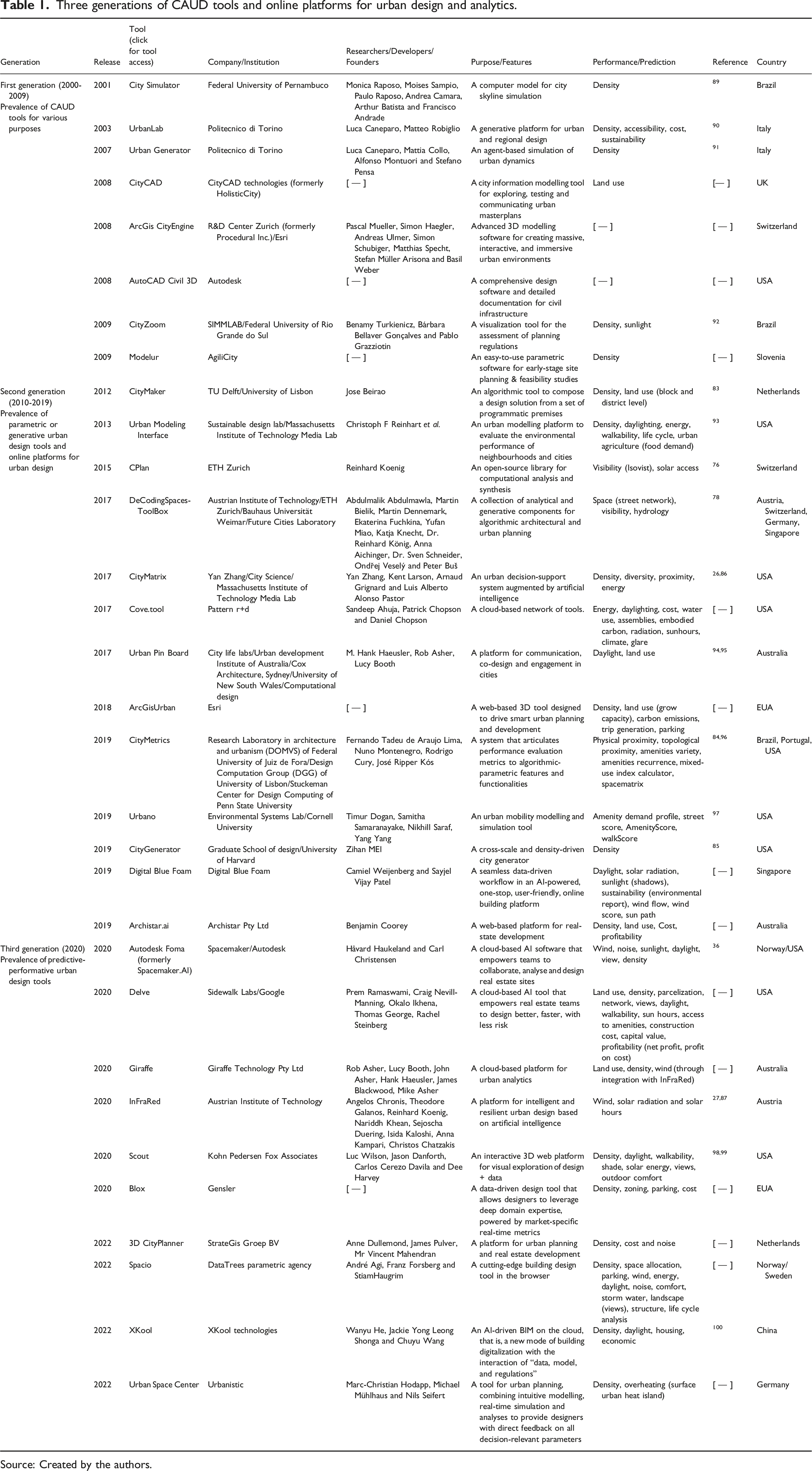
Source: Created by the authors.
In recent years, predictive-performative approaches have emerged as part of research projects carried out at MIT and AIT. In 2017, a thesis defended by Yan Zhang at MIT provided one of the first experiences of PPUD, in the form of the CityMatrix.26,86 This was the point at which interest in predictive-performative models among urban designers began to take off. CityMatrix emerged from the need to integrate performance simulations and AI techniques into decision-making processes. In 2020, researchers from the AIT published a study entitled Intelligent Framework for Resilient Design.87,
13
This research promoted further advances in generation, prediction and visualization modules compared to CityMatrix. This framework overcame the limitations in relation to simplification and abstraction of its predecessor, achieved significantly more agile predictions, and introduced more advanced techniques for data visualization and interaction with urban models (Figure 11). It should be noted that these two experiences illustrate the potential of predictive-performative approaches to shape a new practice of urban design. “Practices are always transforming due to changing needs”, as pointed out by Hensel & Nilsson.
88
Urban design is, thus, adapting to the advance of new technologies. The interactive interface of InFraRed for urban design and analytics. Source: from City Intelligence Lab (CIL/AIT, 2020).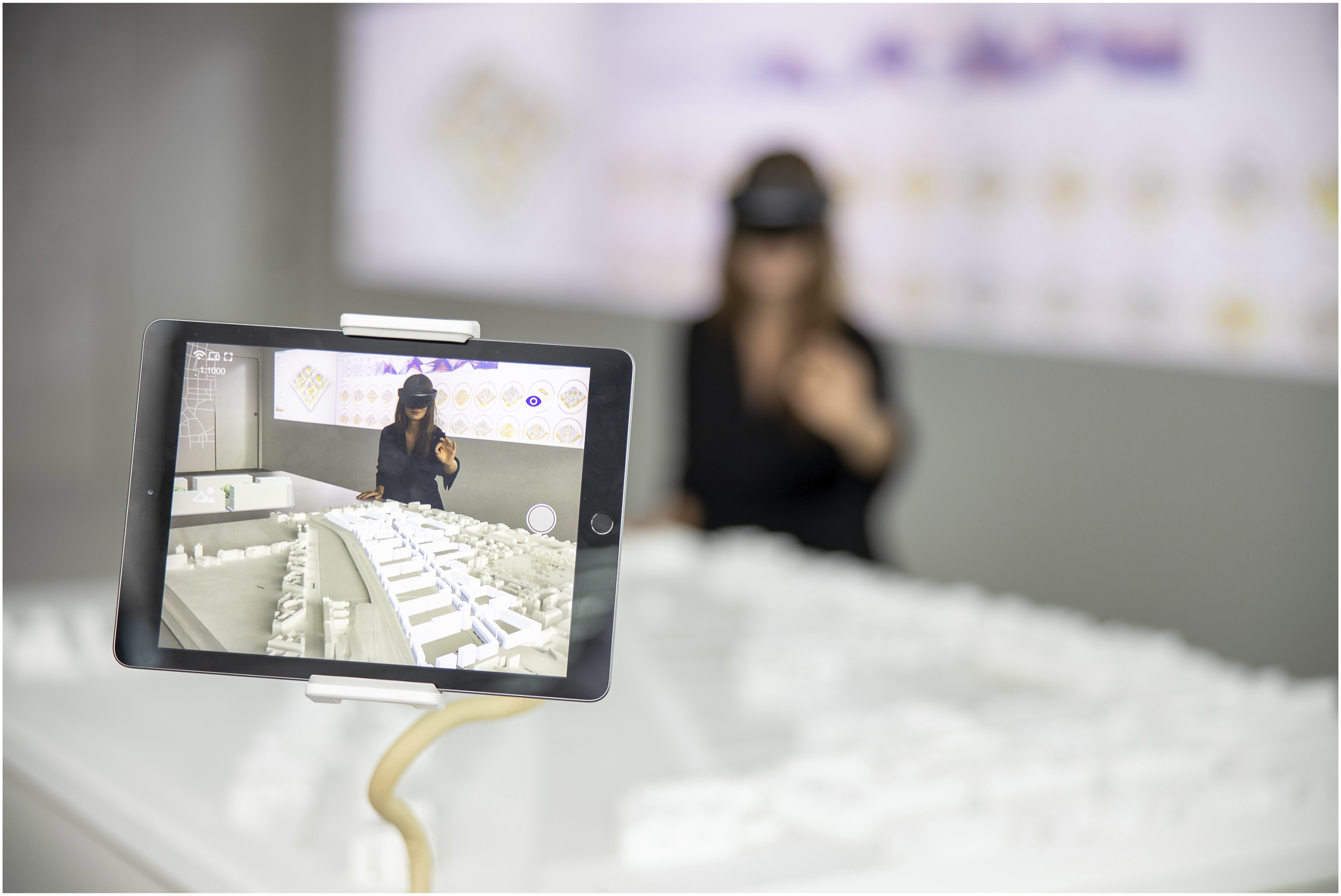
Discussion
Although PPUD has brought numerous advantages to the urban design and planning process, it continues to raise questions for future research and development. Two areas are of particular interest. The first concerns predictions, involving issues such as increasing precision, expanding scope, and validation. Despite gains in terms of the speed of environmental performance simulations, accuracy could still see some improvement, as the proportion of prediction errors continues to be high. One possible way of reducing these errors would be to increase the size of the datasets, even though these models can only predict what they learn from prior datasets — or else, they can “hallucinate”. Another feasible way is to establish new approaches as, for instance, training these models “from additional information obtained by enforcing the physical laws”, what has been known as physics-informed ML. 101 Through one method or another, a wider margin of error is acceptable in the initial design phases but, when solutions are explored in greater depth, the difference between the initial and final urban models is not always significantly different and this would require the use of more accurate tools to validate the final urban design models without compromising the PPD workflow. In terms of scope, various ML predictions include models designed only for the latitudes and longitudes of the cities or climate regions in which they were developed. This clearly limits their use on a global scale. This is therefore a good time to focus on building predictive models for different locations. With regard to validation, some predictions have still not been validated for various contexts. This could be achieved in future as a result of further research using these models to develop the necessary calibrations. There is also a need, in terms of validation, to consider the complexity of the topography, because, although this is a crucial aspect, many of these models do not consider the relief and are based only on height maps of buildings.
The second issue concerns the emphasis of predictive-performative tools. In recent years, as we have seen, there has been an increase in the availability of these tools (Figure 12). However, despite some noteworthy exceptions, many of these tools provide the same types of predictions (noise, wind, solar radiation, solar hours, lighting). There is therefore little point in investing much in the development of new tools for the same purposes. New tools could, for instance, focus on functional, co-presence, bioclimatic, economic, topoceptive, emotional and symbolic aspects, which constitute a set of seven performance aspects of architectural and urban spaces that relate morphic attributes and human expectations102,103; or focus on mitigating heat island effects, adapting to climate change and minimizing the risk of natural disasters (flooding, landslides and heat waves), thereby helping to enhance urban resilience. Circular dendrogram of three generations of CAUD tools, their numbers of performance or prediction assessments and interfaces of old and new tools.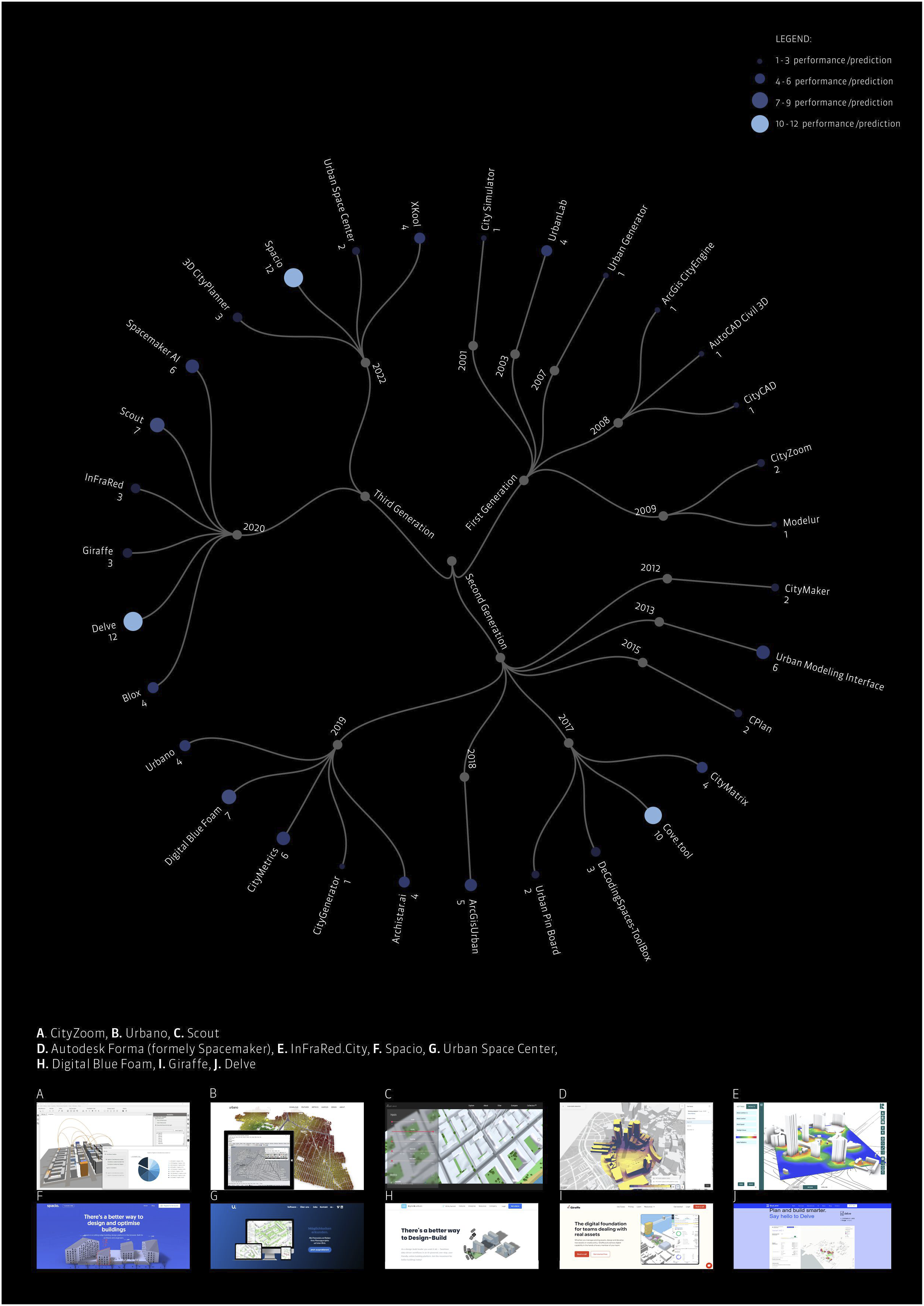
Conclusions
The present paper has outlined the basis for understanding PPD, presented an overview of this new paradigm and identified the point in time when interest in urban design for predictive-performative models began to appear. This interest led to PPUD, which emerged as a result of two aspects. This occurred first by virtue of the second digital tun in architecture, particularly, the introduction of AI techniques into computational design which enabled the integration of generation, simulation, and visualization models in such a way as to provide real-time design feedback. Second, increased global awareness regarding the harmful role played by architecture and the city in determining the climate has reignited the debate on performance-based urban design and driven the development of digital urban design technologies for climate adaptation and mitigation. Although PPUD online platforms have mostly emerged from 2020 onwards, the interest of urban designers in predictive-performative models had already been aroused in 2017, when researchers developed CityMatrix at MIT.26,86 These models were later extended at the AIT, with the development of InFraRed, in 2020, 87 helping to establish PPUD as a contemporary urban design practice.
Despite this paradigm shift, PPUD still raises short- and long-term research issues for future developments, particularly concerning predictions and predictive-performative tools. In the short term, efforts need to be focused on improving predictions to achieve the same (or greater) level of accuracy as traditional simulations. This will allow predictions to be used in the whole design phases and scales, not only in the early stages. However, this depends considerably on increasing traditional simulation datasets to train ML and DL models to make more accurate predictions. In the long term, efforts also need to be made to validate predictions and increase the scope of predictive-performative tools. Increasing validation of predictions for different regions is crucial to avoid results being underestimated or overestimated. Increasing the scope of predictive-performative tools, including more environmental, social and economic factors, is also essential to prevent the prioritization of some factors to the detriment of others. As urban design is a complex activity that involves multiple, quite often conflicting factors, investing only in some aspects and types of simulation is not enough.
In essence, the predictive-performative approach presents numerous advantages to face climate adversities by optimising the performance of urban design and planning solutions from the early phases, but it depends on data or new approaches to train ML models, such as physics-informed ML, as a way of increasing precision of predictions, as well as validation and scope of predictive-performative tools. Looking at the recent developments in AI, it is possible to expect to see a major development in more accurate and faster predictions, as well as more holistic predictive tools in the next decades. These will allow designers and planners to optimise urban forms, mediating multiple objectives and conflicting criteria instantaneously to establish a more responsive urban environment.
Footnotes
Acknowledgments
In 2020, this research was developed at the Austrian Institute of Technology, in Vienna, under the supervision of professors Reinhard Koenig, Angelos Chronis and Thedore Galanos to whom we are immensely grateful.
Declaration of conflicting interests
The author(s) declared no potential conflicts of interest with respect to the research, authorship, and/or publication of this article.
Funding
The author(s) disclosed receipt of the following financial support for the research, authorship, and/or publication of this article: This study was financed by the Coordenação de Aperfeiçoamento de Pessoal de Nível Superior (CAPES) – Finance Code 001 – Process N° 88887.470174/2019-00 and N° 88887.660982/2022-00.
