



Abstract
This paper proposes a computational framework that integrates vernacular architecture knowledge (VAK) into genetic algorithms (GA) to enhance architectural design optimization. First, in addition to the parameters required for the design optimization process, constants derived from VAK are introduced. Secondly, an algorithmic model is presented in which these extracted parameters and constants are incorporated into GA processes. The integration of VAK-based constants has the potential to improve architectural design optimization while preserving the local structural characteristics of the design. This approach emphasizes the designer’s expertise by reducing the number of meaningless variations in GA processes and increasing efficiency. The proposed method is demonstrated through a case study that generates design variations for Karaçadır, a traditional structure used by the Yörüks, a nomadic culture in Anatolia. The study incorporates key design elements: cover modules, load-bearings, and connectors to produce variations that preserve the traditional structure of Karaçadır.
Keywords
Introduction
In architectural design processes, optimization techniques are increasingly integrated to enhance efficiency and generate a greater number and variety of design variations. One of these optimization methods, genetic algorithms (GAs), stands out for its ability to systematically explore vast design spaces inspired by biological evolution processes. However, traditional GA-based optimization processes often fail to incorporate specific architectural knowledge systems, leading to the generation of variations that are disconnected from context, functionally inadequate, or inconsistent with fundamental design principles. The exclusion of architectural knowledge systems from computational methods significantly reduces the effectiveness of optimization processes and limits their integration with practical design applications.
This study aims to address these shortcomings by introducing a computational framework that systematically integrates vernacular architectural knowledge (VAK) into GA-based optimization processes. The main rationale for employing GAs in this study lies in their strong alignment with the inherent characteristics of VAK, which has evolved over time through adaptive responses to environmental, structural, and cultural constraints. Rather than being the result of a single-variable logic, VAK reflects multi-parametric optimization process-making GAs, as evolutionary search methods, particularly well-suited for navigating complex and dynamic design spaces. GAs differ from other generative approaches by enabling population-based search, iterative fitness evaluation, and non-deterministic exploration. They also support regular design assessment, continuous improvement, and the simultaneous generation of multiple alternatives. 1 Accordingly, their use in this study represents a deliberate methodological choice to model the evolutionary, component-based, and context-sensitive nature of VAK within a computational framework.
The proposed approach incorporates architectural constants revealed from VAK into the algorithm, aiming to enhance both the contextual relevance and efficiency of design variations. To operationalize the integration of VAK into GAs, this study introduces Rule-Based Design (RBD) as an intermediary layer. While VAK provides the cultural foundation rooted in traditional making logics, RBD translates this into structured rule sets suitable for algorithmic use. Acting as both a methodological tool and an epistemological bridge, RBD anchors the generative process in culturally embedded knowledge. The resulting VAK–RBD–GA framework enables the transfer of tacit spatial intelligence into computationally operable systems.
VAK has evolved over centuries through adaptation to environmental, cultural, and structural factors, surviving by continuously optimizing against real-world challenges. Therefore, integrating extracted constants based on VAK with GAs through rules is intended not only to guide the optimization process but also to make it more meaningful and contextually coherent. The first phase of this research focuses on introducing the proposed GA framework, identifying and formulating architectural knowledge-based rules and constants within this framework. This phase aims to enhance the optimization process by minimizing suboptimal variations while maintaining structural integrity and functionality.
In the second phase, the validity of the proposed approach is tested through a case study on Karaçadır, a traditional tent of the Yörüks, a nomadic culture in Anatolia that has preserved VAK for centuries. This phase utilizes fundamental architectural elements—cover modules, load-bearing structures, and connectors—to generate optimized configurations that align with traditional construction logic. Considering these contextual attributes, the case study evaluates the scenarios in which genetic algorithms can develop more efficient design solutions. The integration of VAK into the design optimization process provides a systematic methodology that balances algorithmic exploration with intangible architectural cultures. Thus, the design process is not limited to generating variations but becomes a knowledge-driven decision-making mechanism guided by the designer.
This research has three main objectives: (1) to establish a methodological framework for extracting and integrating VAK into GA-based design optimization processes through rules, (2) to evaluate the impact of extracted architectural knowledge-based constants and rules on efficiency and solution relevance, and (3) to investigate the broader implications of VAK-based optimization for architectural design computing. In this context, the study redefines the optimization process not merely as a quantitative variation and evaluation process but as a paradigm supported by contextual, traditional, and cultural data. By synthesizing algorithms with architectural intuition, this study proposes an optimization process that is both context-sensitive and operationally efficient.
This study critically revisits conventional optimization approaches that prioritize formal variation, and instead positions optimization as a knowledge-driven design process grounded in cultural logic. While generative simulations of traditional forms have been widely explored in the literature, the direct integration of architectural constants and culturally embedded rules into optimization algorithms remains notably limited. Addressing this gap, the paper proposes an innovative framework that encodes VAK into GAs—not merely as symbolic reference, but as functional input for both variation generation and solution evaluation.
In particular, this research aligns with and extends the discourse on “digital vernaculars”, which often seeks to connect algorithmic design with local building cultures but tends to remain at the level of geometric representation. 2 In contrast, this study embeds culturally derived rules directly into the operative logic of optimization, offering a more holistic and computationally robust framework. Furthermore, by explicitly situating itself within emerging discussions on culturally aware generative design,3,4 this research contributes to a growing body of work that aims to synthesize tradition with algorithmic design systems. In doing so, the paper introduces both a methodological and conceptual innovation in the field of culturally driven generative design.
Materials and methods
Materials
In the literature, classifications of nomadic cultures include the definition of pastoral nomadism,5,6 which encompasses criteria such as reliance on herd animals as the primary means of subsistence, 7 the social organization of communities engaged in animal husbandry, 8 a pastoral ideology based on herd ownership, 9 and asymmetric economic dependency relationships with sedentary agricultural societies. 10 Within this framework, the Yörüks, the focus of this study, can be classified as pastoral nomads.11,12
As pastoral nomads, the Yörüks undertake seasonal transhumance between summer pastures and winter quarters twice a year to secure adequate grazing for their livestock.13–15 Originating from the steppe empires of Central Asia and continuing through the Seljuk and Ottoman periods, the Yörük culture has persisted into the present day, maintaining a similar way of life in Anatolia.16–18
Throughout this historical trajectory and the transhumance process, a fundamental component representing Yörük culture has been their traditional tent, the Karaçadır (Figure 1). The Karaçadır is a vernacular architectural typology that has adapted to the climatic and spatial needs of nomadic communities. Throughout history, this structure has been characterized by its flexibility and modularity during the practice of transhumance.19,20 Exterior (left) and interior (right) views of the Karaçadır (Source: Authors).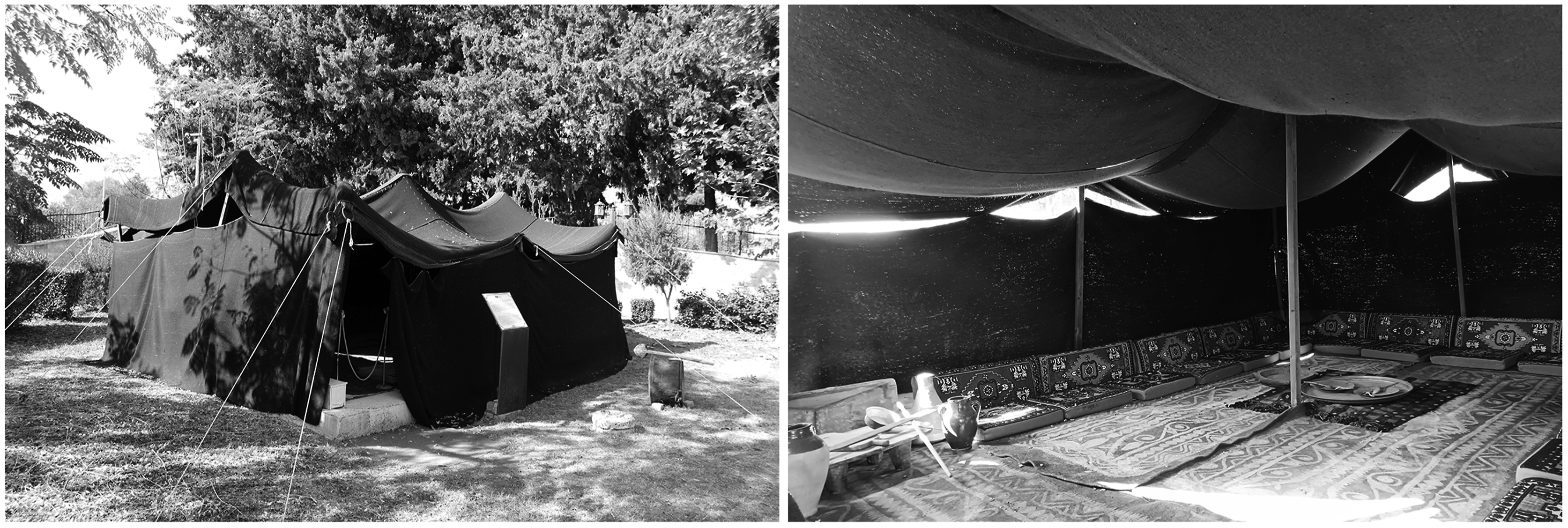
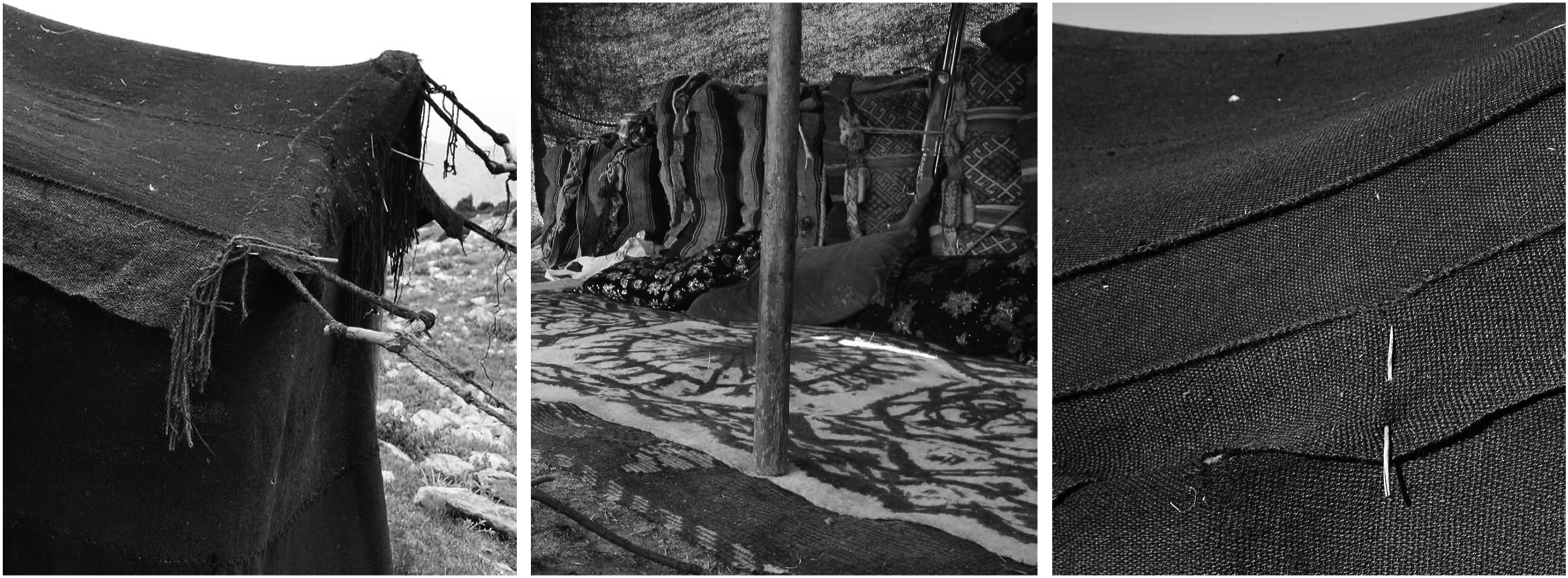
Structurally adapted to pastoral nomadism, Karaçadır is covered with woven covers made from livestock hair and stretched over wooden poles, which are anchored to the ground using connectors. The primary structural system of the Karaçadır consists of vertical load-bearing elements and tension ropes that support the interior space. At the same time, the external cover can be lifted at specific points.19,20 The load-bearing elements are traditionally crafted from hardwood and are stabilized through tension forces during assembly. Internally, the Karaçadır space is subdivided with covers to create distinct functional areas. Consequently, the Karaçadır can be understood as a composition of three primary design components: load-bearings, covering elements, and connectors (Figure 2). The structural variations of the Karaçadır emerge from different dimensional and quantitative repetitions of these components, allowing for a range of configurations. Design elements of Karaçadır: Tension system-Connectors (left), load-bearings (center), and modular covering system (right).
19
Methods and related concepts
This section introduces related concepts and terminology necessary for integrating implicit vernacular architectural knowledge (VAK) into the design optimization process as a rule-based design (RBD) and specifically for incorporating it into genetic algorithms (GAs).
VAK as a naturally optimized design system
Vernacular Architectural Knowledge (VAK) can be defined as an optimized design system shaped by environmental and cultural constants.21,22 This optimization system has emerged as a result of real-life problem-solving over generations, where inefficient or unsustainable solutions have been gradually eliminated through an iterative process of adaptation. As a naturally optimized design system, VAK is governed by empirical knowledge and design intelligence embedded in traditional architectural practices. 23 Learning from this design intelligence rather than merely replicating it is essential for sustainable design, as it allows for the integration of tradition and innovation in a creative process.21,24,25
Vernacular knowledge in architecture often remains implicit, as designers intuitively discover relationships between design elements, frame them through rules, and apply variations without fully articulating their reasoning. 26 Given its embedded nature, the extraction and systematization of design knowledge are necessary for integrating it into computational design. 27 Thus, re-examining vernacular architecture using computational design tools is essential for understanding its potential contributions.28,29
In this regard, VAK, as a naturally optimized system, holds potential knowledge that can be transferred to the design optimization process. By conceptualizing VAK as an optimized system enriched with implicit knowledge, it becomes possible to identify the fundamental architectural parameters and constants that persist due to their functional efficiency and contextual adaptability. These parameters and constants, derived from empirical adaptation, provide a foundation for deeper explorations, offering potential insights into how design optimization can benefit from the VAK approach.
RBD as a foundational model for GAs
This study aims to uncover the implicit knowledge embedded within VAK by identifying parameters and constants that can be utilized within GAs. GA is adopted in this study due to its suitability for addressing multi-parametric, non-linear, and exploratory design processes—characteristics that align closely with the evolutionary nature of VAK. By structuring GA operators around culturally informed rules and performance criteria, the study seeks not only to optimize design outcomes, but also to reveal the architectural logic embedded in vernacular systems. In this context, integrating a mode of thinking that establishes a connection between VAK and GA is essential for defining these parameters and constants. To bridge this link, the study employs RBD as an intermediary layer for formalizing vernacular principles into operable rules.
Rule-based design (RBD) provides a systematic framework wherein rules collectively form a broader set of proportions and conditions, and the encoding of specific facts implies the possibility of encoding others.30–32 The historical foundations of the RBD approach can be observed in Vitruvius’ classical column system, Alberti’s Doric pedestal design, and Palladio’s Doric order. Each of these examples represents systems governed by predefined standards and rules. Every component within these systems possesses a distinct form and name, and the process of assembling these components—i.e., the composition process—occurs within a structured framework of rules.33,34
Beyond its role in revealing embedded design logic, RBD also holds potential as a foundational model for GA, a relationship directly tied to its generative nature. The structured logic of rule-based systems enables the systematic exploration of design variations, making it particularly valuable in computational design and algorithmic processes.35–37 Design rules are described as directives that guide the design process towards the product.38,39 The ability to define these rules in multiple ways or apply the same rules in different forms allows rule-based processes to generate a vast number of potentially complex solutions.40–44
The adaptability of the RBD approach is particularly useful in computational design environments, where variations and iterative refinements play a crucial role in exploring optimal configurations. In conclusion, due to its capacity to reveal implicit knowledge and its generative nature, RBD has been applied in this study as a mode of thinking that can be positioned between VAK and GA.
GAs as an evolutionary method for VAK-based optimization
Traditionally, GAs are potent and effective computational methods developed based on the principle of natural selection, mirroring evolutionary processes in nature.45,46 In architectural design, GAs are implemented for design evaluation and improvement, generating multiple solutions, and facilitating optimization. Notably, their ability to create solution proposals while considering multiple parameters establishes them as an effective method for addressing architectural design challenges.47,48 However, the computational nature of GAs, which requires processing a large number of parameters, makes them time-consuming and computationally demanding. Therefore, advancing design optimization techniques is crucial for designers.49–51 GAs aim to identify optimal solutions within a search space by applying evolutionary operators to a population to maximize a fitness function.52,53 In line with this definition, the fundamental components of GAs include genotypes, phenotypes, population, genetic operations, and the fitness function. The search space, composed of genotypes—character strings of fixed or variable length derived from a given set of alleles—is mapped onto another search space, the phenotype, where the fitness function is evaluated based on the state in the phenotype space.54,55
Building on this foundation, this study adopts GAs due to their demonstrated capacity to address multi-variable, evolutionary design problems—particularly those involving culturally complex optimization criteria, as in the case of digital vernaculars. Their ability to population-based search, iterative fitness evaluation, and non-deterministic exploration renders them especially suitable for engaging with the embedded complexity of VAK. In the context of the Karaçadır case, GAs are leveraged to develop adaptive design proposals rooted in traditional construction logic. Nonetheless, the limitations of GAs in encoding culturally specific rules or constraints necessitate the integration of RBD as an intermediary layer. This hybrid VAK+RBD+GA approach addresses the generative limitations of standalone GA models by embedding culturally derived rules into the optimization structure, thus enhancing both contextual relevance and computational efficiency.
This section has established the conceptual foundation for employing RBD as a methodological framework to transfer the knowledge embedded in VAK into GAs. Accordingly, the tangible implementation of this background in the study is demonstrated through the following stages: defining the components that constitute Karaçadır as the material focus of the study (VAK), establishing the rules governing the assembly of these components to form Karaçadır structures (VAK+RBD), abstracting these components for integrating them into the structured optimization process (VAK+RBD+GAs). A detailed discussion of this implementation is presented in the analysis section.
Analysis
No significant differences are observed among the Karaçadır typologies in terms of fundamental architectural elements; instead, only dimensional variations are present. These dimensional variations are associated with the necessity for the Karaçadır to possess a flexible and modular structure. Since Karaçadır exhibits a system in which a specific proportional relationship is scaled up or down, no significant difference is expected between evaluations conducted on a single example and those based on multiple examples in the analysis process.
The production of two-dimensional plan drawings was based on on-site measurements. However, due to Karaçadırs being examples of vernacular architecture, variations in formal precision were observed, which were considered a limitation of the study. Since parameters such as the tensile angles, distances, interior measurements, interior height, and dimensional characteristics of openings are entirely dependent on the specific setup at a given moment and thus subject to variation, they were excluded from the study. Instead, the research was structured around the number of architectural components used and the spatial configurations they define.
VAK: Architectural elements of Karaçadır
Karaçadır is a vernacular architectural structure designed to protect while maintaining flexibility and adaptability to various environmental conditions. It belongs to a category of shelters known as woven tents due to its unique manufacturing method, in which the fabric is produced by weaving black goat hair. This material is specifically chosen for its durability and insulating properties, making it well-suited for the nomadic lifestyle of the Yörük communities (Figure 3). Diagrammatic plans of typical Karaçadır’s architectural elements: Load-bearing elements (a), connectors (b), and cover modules (c) (Source: Authors).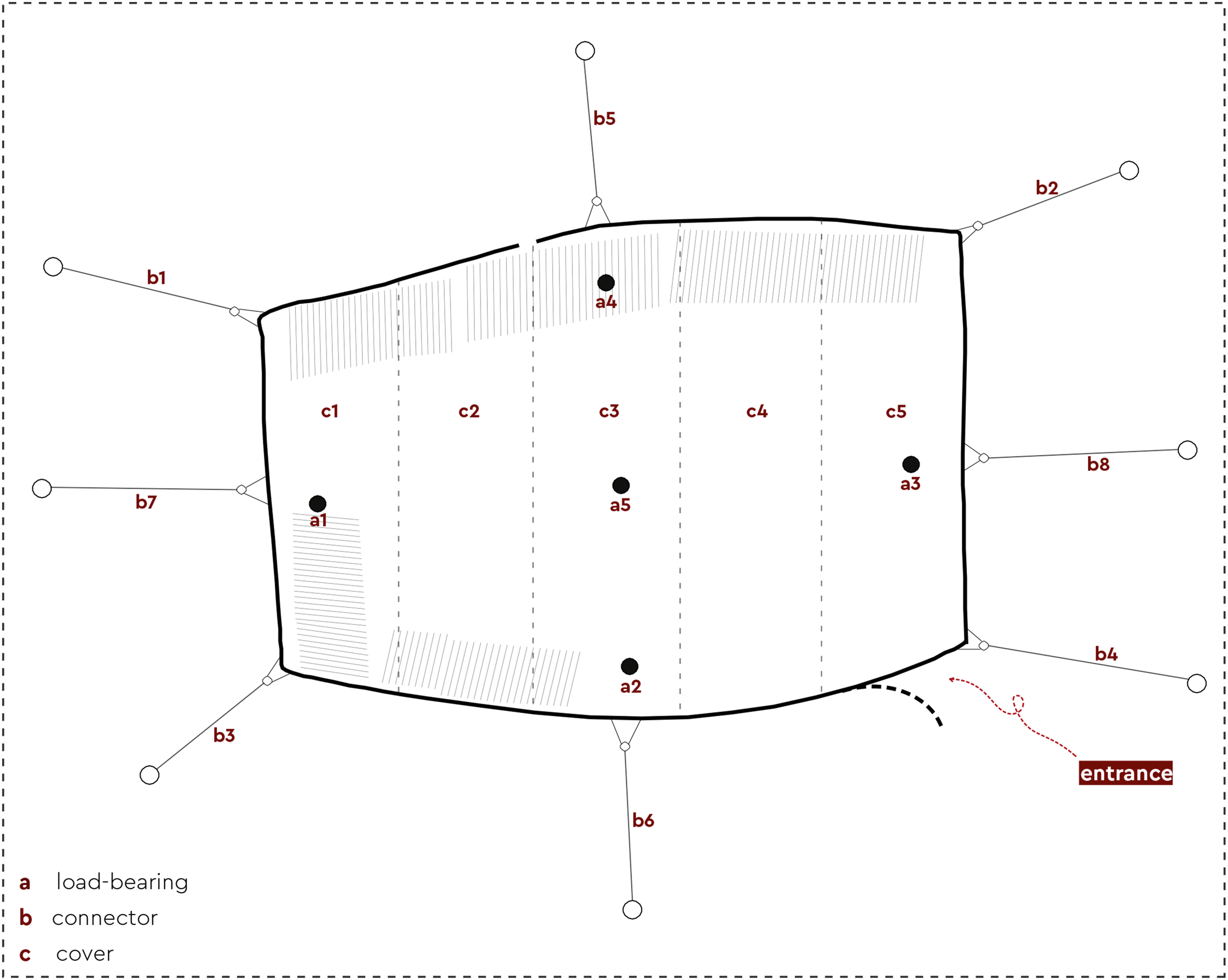
One of the fundamental architectural elements of Karaçadır is its modular covering system. The cover is woven in separate, wing-like modules, which are stitched together along their long edges using a specialized sewing method that involves tent ropes and large needles. Each cover module, made of tightly woven goat hair, measures between 50 cm and 70 cm in width. The modular nature of the Karaçadır allows for adjustments in size and reassembly to meet varying spatial needs. Typically, the structure consists of five or seven cover modules, which determine the overall dimensions and configuration of the tent. To ensure precision in their alignment, the cover sections are laid out on the ground and temporarily secured using wooden stakes before being stitched together. Once the wings are assembled, the tent’s tensioning system is integrated (Figure 3(c)).
Another crucial architectural element of Karaçadır is its load-bearing system, which ensures structural stability and secures the tent to the ground. This system consists of multiple connectors, the number of which varies depending on the tent’s configuration. Five-module Karaçadırs have eight bindings, whereas seven-module versions require 10, corresponding to 10 anchoring points. The primary load-bearing components of the Karaçadır are the vertical poles, typically two and a half meters in height. These poles are inserted into custom-fitted wooden bases positioned at the intersection points of the structural belts, preventing fabric tears at points of direct contact (Figure 3 (a)).
Karaçadır’s structural flexibility, efficient anchoring system, and environmental adaptability make it a refined example of vernacular architecture. The integration of tensioning mechanisms with connectors, protective cover extensions, and specialized load-bearing elements ensures both structural integrity and resilience against environmental conditions (Figure 3(b)). Additionally, the meticulous craftsmanship, from the preparation of goat hair to the modular assembly process, reveals the VAK approach embedded in the intangible cultural heritage of the Yörük people, particularly in the construction of Karaçadır.
VAK+RBD: Revealing VAK through the rules of Karaçadır
The making process of Karaçadır is based on a systematic method that incorporates rules ensuring modularity, flexibility, and the preservation of its traditional form. This process involves arranging components within a defined set of rules, ensuring their integration coherently and functionally. These rules serve as spatial constraints and parametric relationships that govern the modular organization, dimensional alignment, and hierarchical assembly of components. Shaped by the principles of RBD, Karaçadır not only serves as a physical shelter but also facilitates the materialization of the intangible heritage of Yörük culture at both spatial and structural levels. These foundational rule sets are visualized sequentially in Figure 4 (Rules 1–4). Diagrammatic making rules of Karaçadır (Source: Authors).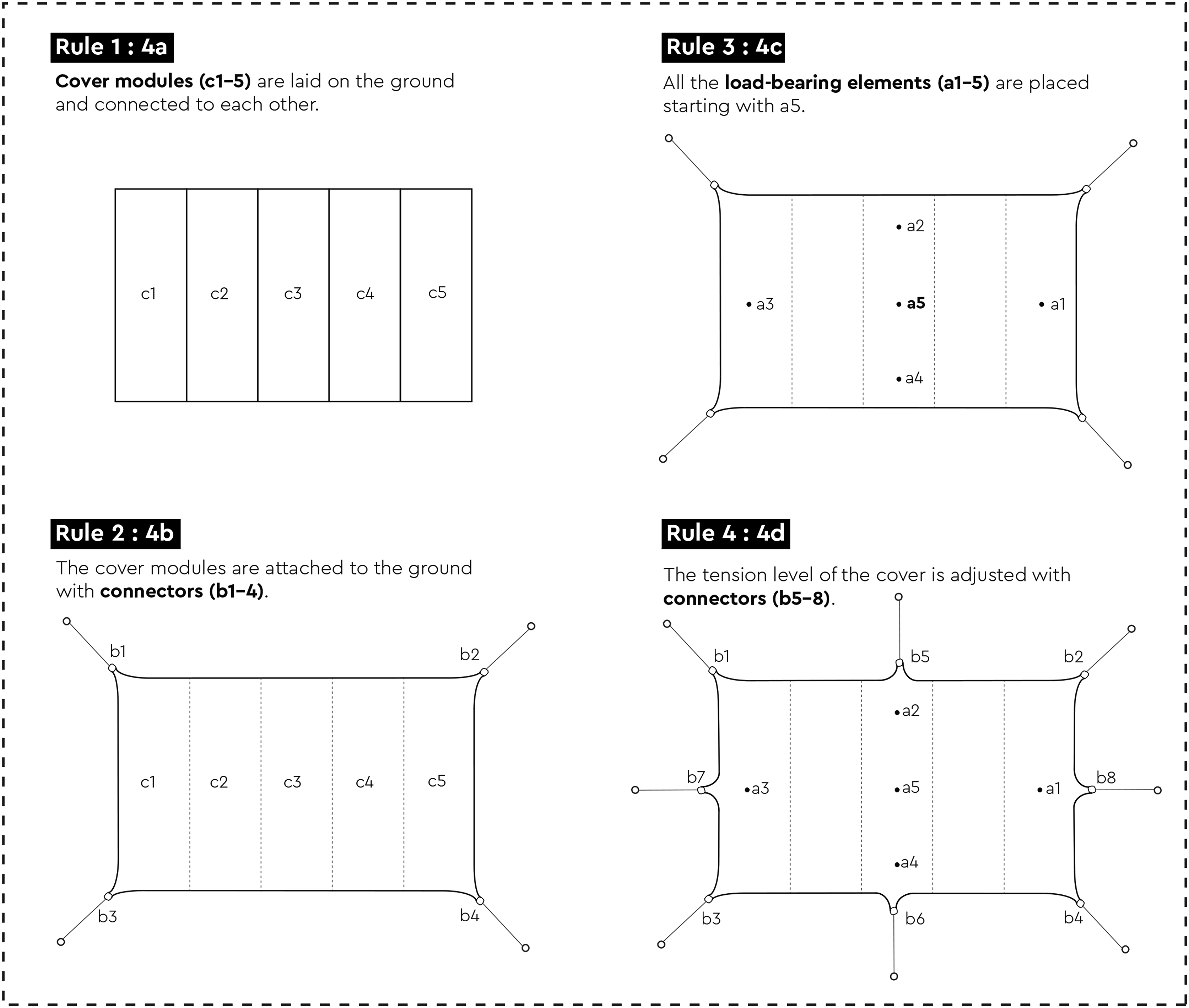
As the first rule, the cover modules (c1–c5) are laid out on the ground to ensure proper alignment. This step is crucial as it enables the correct positioning of modular components, providing structural integrity and surface continuity during the assembly process. Subsequently, the modules are connected to form a homogeneous and continuous cover surface. The quantities and proportions of cover modules adhere to the principles of modularity and hierarchical organization, which are fundamental to the RBD approach. This layout logic corresponds to Rule 1 (Figure 4(a)). It can be interpreted as a form of vernacular production grammar, wherein each module’s role and positioning follows culturally embedded but computationally expressible rules.
As the second rule, the structure is anchored to the ground using connectors b1, b2, b3, and b4. This rule enhances Karaçadır’s resistance to environmental loads and dynamic forces by establishing a secure ground connection. The modular nature of the connection system allows Karaçadır to be both portable and reconfigurable, making it an adaptive design solution capable of meeting diverse spatial needs. This stage corresponds to Rule 2 (Figure 4(b)) and reflects a constraint logic derived from vernacular mobility practices.
As the third rule, the load-bearing elements (a1-5) are positioned. Beginning with a5, this placement process optimizes mass and structural balance, regulates load distribution, and ensures spatial stability. The systematic organization of these components, aligned with rule-based design principles, enables Karaçadır to be constructed and reproduced as a modular structure. This corresponds to Rule 3 (Figure 4(c)), where vernacular design intelligence is formalized into generative positioning logic.
As the fourth rule, b5, b6, b7, and b8 connectors are integrated, and the tension of the cover is carefully adjusted. The even distribution of tensile forces prevents sagging and structural deformations, ensuring the long-term stability of the tent. This process exemplifies the intersection of traditional architectural knowledge with engineering principles, demonstrating how inherited construction techniques align with systematic design methodologies. It is formalized as Rule 4 (Figure 4(d)), completing the operational sequence embedded in the RBD layer.
The making rules of Karaçadır, as presented, allow the implicit VAK of Yörük culture to be materialized through a systematic design principle, RBD. The rules set and organizational principles embedded in rule-based design not only facilitate the construction of a physical structure but also enable the preservation and transmission of a knowledge system across generations. In this context, Karaçadır is not merely a shelter; it functions as spatial memory and a cultural design methodology, embodying both tangible and intangible aspects of Yörük architectural heritage. These rule-based operations are not only descriptive but operationalized as constraints and parameters that inform the genetic algorithm. In this way, RBD serves as a critical bridge between vernacular logic and computational design methodology.
VAK+RBD+GAs: Abstracting rules for integrating VAK into GAs
Building upon the rule sets formalized in Section 3.2, this section introduces the generative design process. The RBD framework provides the foundational design intelligence derived from VAK; however, these rules cannot be transferred into the GA system in their raw form. As such, an intermediate operation of abstraction is introduced, translating culturally embedded construction logic into a notation system. In this way, the generative process remains grounded in the vernacular RBD logic of the Karaçadır while also becoming computable. The abstraction layer thus serves as an operational bridge, allowing for a seamless transition from spatial rules to generative variations without compromising cultural coherence.
Based on this abstraction layer, each component of the Karaçadır is encoded using a notation system that is deliberately simplified to support algorithmic operations. The symbols used in the notation system not only represent architectural components but also reveal the spatial and structural logic of the Karaçadır through their positional arrangement. Cover modules (c1–c5), which define the tensile surfaces, are represented by horizontal continuous lines (–). These lines express the linear and modular organization of the tensile surface, indicating how it unfolds and extends across space. Load-bearing elements (a1–a5), which ensure the structural stability of the Karaçadır and distribute loads within the supporting system, are depicted by circular symbols (O). These symbols mark the main anchoring points where structural forces are transmitted to the ground. Connectors (b1–b8), represented by X-shaped markers, define the joints and relational points between cover and load-bearing components. These intersections correspond to the modular construction logic often observed in vernacular building practices (Figure 5). Abstracting rules for integrating VAK into GAs (Source: Authors).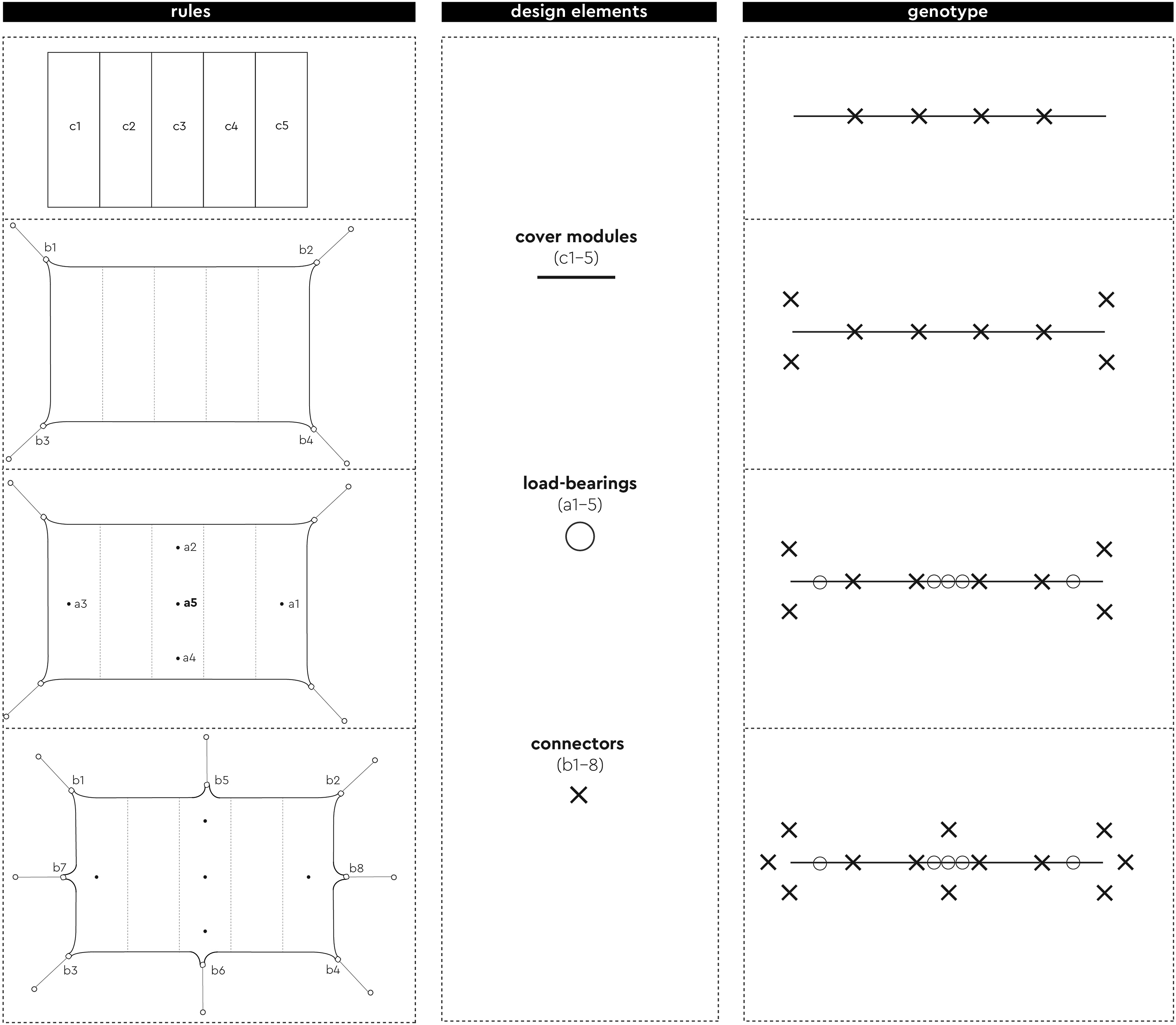
This spatial arrangement plays a significant role in digitally translating the intuitive spatial organization observed in traditional construction logic. Thus, the symbols function not merely as visual codes, but as structural elements that express decisions related to site interaction, construction strategy, and spatial flow. To clarify this translation process, Figure 5 also illustrates how these elements (–), (O), and (X) are abstracted and encoded as genotypic inputs within the GA framework. This step bridges the RBD layer with the computational logic of the algorithm, enabling the generation of culturally coherent variations.
As these rules are abstracted into a notation system, they enable the generation of distinct physical configurations, resulting in variations within the two-dimensional Karaçadır typology. These variations illustrate the adaptive intelligence embedded in the Karaçadır, which has historically evolved in response to environmental constants, material availability, and socio-cultural requirements. By structuring this knowledge within a computational framework, GAs facilitate an evolutionary exploration of architectural variations, enabling the iterative optimization of structural modularity.
The process of revealing the RBD logic embedded in the Karaçadır and subsequently abstracting it into a notation system enables the systematic integration of VAK into GAs. This approach demonstrates the typically implicit nature of VAK through explicit rules, which are then subjected to an abstraction operation that translates them into a notation compatible with genetic algorithms. In doing so, RBD functions as an intermediary layer between vernacular knowledge and algorithmic operations, preserving cultural intelligence while facilitating generative exploration.
Implementation of VAK-based GA model
Flowchart
The study presents the design elements of Karaçadır, the rule-based logic embedded within them, and the abstraction process through which these rules are translated into a computable system, within the context of a case study on the discovery of plan layout variations. In this regard, the aim is to reveal the impact of the VAK and RBD background on the algorithm before generating design variations using Genetic Algorithms (GAs). Therefore, in addition to the design parameters typically found in conventional GAs, the study aims to incorporate the design constants identified through the VAK+RBD approaches (Figure 6). By integrating these design constants into the algorithm, three objectives are pursued: (1) minimizing the number of suboptimum design variations, thereby (2) reducing computational load and processing time, and (3) generating variations that, as a result of all preliminary studies and background research, maximize the character of vernacular architecture. For this case study, the design platform utilizes Rhino/Grasshopper software tools, while the genetic algorithm (GA) tool employed is Galapagos. Genetic algorithm flowchart with VAK-based constants (Source: Authors).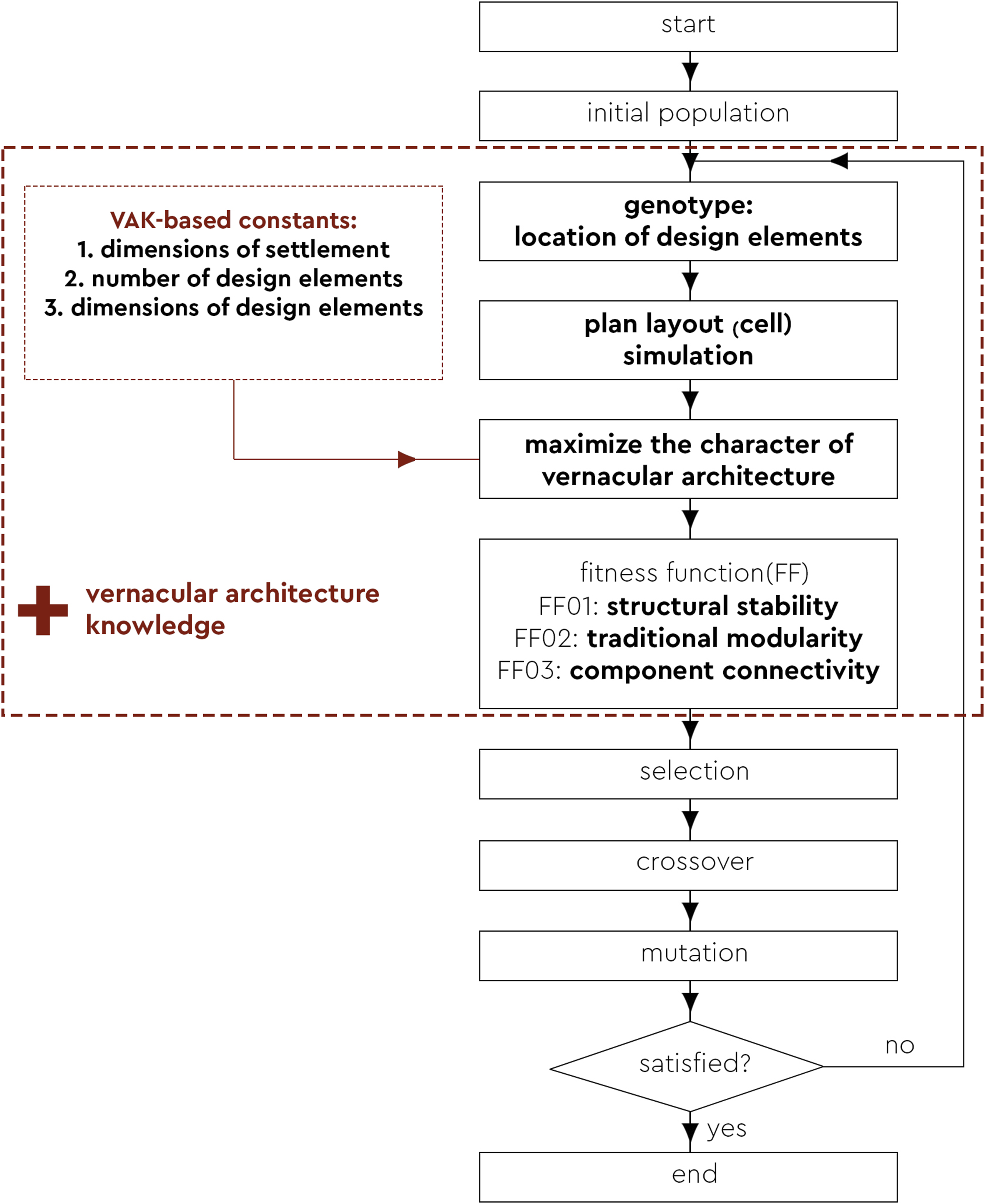
Model setup
In this study, a simplified yet representative case study is conducted to validate the influence of the predefined vernacular architectural knowledge (VAK) constants within the framework of genetic algorithms (GAs). The placement area is structured as a 10×10 grid, consisting of 100 equally spaced cells, each measuring 50 cm × 50 cm. This unit measurement is derived from on-site studies, which identify 50 cm as the minimum modular width of Karaçadır covers. By preserving this measurement, the GA ensures that all generated design variations remain within the traditional dimensional constants of Karaçadır.
Unlike three-dimensional modeling approaches, this study employs a two-dimensional plan-based representation, where structural components are depicted using a notation system. These notations serve as genotypic markers (2D), facilitating the systematic encoding and evolutionary optimization of design configurations. Once generated, each genotype is translated back into its phenotypic (3D) representation, ensuring alignment with vernacular architectural principles. This plan-based representational strategy also draws directly from the embedded vernacular logic of the Karaçadır. In traditional practice, the components of the Karaçadır are first laid out on the ground during the construction process, with the dimensional and positional relationships among elements determining the accuracy and stability of the eventual three-dimensional structure. Thus, working with two-dimensional representations allows the generative system to encode not only the formal characteristics of the Karaçadır but also the culturally embedded spatial reasoning and assembly knowledge inherent in vernacular practices. To further validate this two-dimensional representational strategy, generations are presented together with their corresponding three-dimensional configurations in the figures. These integrated representations demonstrate that the plan-based logic reliably produces spatial outcomes that are both structurally feasible and culturally grounded.
The GA operates within a structured framework of predefined maximum and minimum thresholds for each design element, which are not arbitrarily assigned but are rather extracted through a systematic typological analysis of Karaçadır structures. These constants do not merely regulate the design space; rather, they constitute the explicit codification of VAK, encapsulating the inherent spatial logic and construction principles of Karaçadır.
The number of load-bearing elements, which directly influences structural stability (fitness function 1), is constrained within the range 3 ≤ O ≤ 8, ensuring that the emergent configurations align with the balance between material economy and structural sufficiency observed in traditional Karaçadır setups. The number of cover modules follows a range of 2 ≤ – ≤ 7, a limitation that preserves the conventional modularity (fitness function (2) and assembly techniques of Karaçadır covers, maintaining their adaptability to different spatial requirements. The number of connectors is set within 4 ≤ X ≤ 10, ensuring component connectivity (fitness function (3) so that the structure remains both flexible and resilient, adhering to the principles of dynamic tensioning that allow Karaçadır to respond effectively to environmental forces.
These constants do not merely serve as computational boundaries but rather embody the architectural intelligence embedded in the VAK. By formalizing this knowledge into quantifiable parameters, the GA does not impose external design criteria; instead, it translates the spatial and structural intelligence of Karaçadır into a computationally operable framework. This approach ensures that the optimization process remains rooted in VAK principles, allowing for evolutionary variations that are not only structurally viable but also culturally and typologically consistent with the knowledge system embedded in traditional Karaçadır design.
Figure 7 illustrates a possible spatial distribution of the design elements within the structured 10×10 placement matrix, where the gray grid defines the spatial framework, establishing the parametric boundaries within which the optimization process unfolds (Figure 7). The modular cover elements, represented by blue lines Possible spatial distribution of Karaçadır design elements (Source: Authors).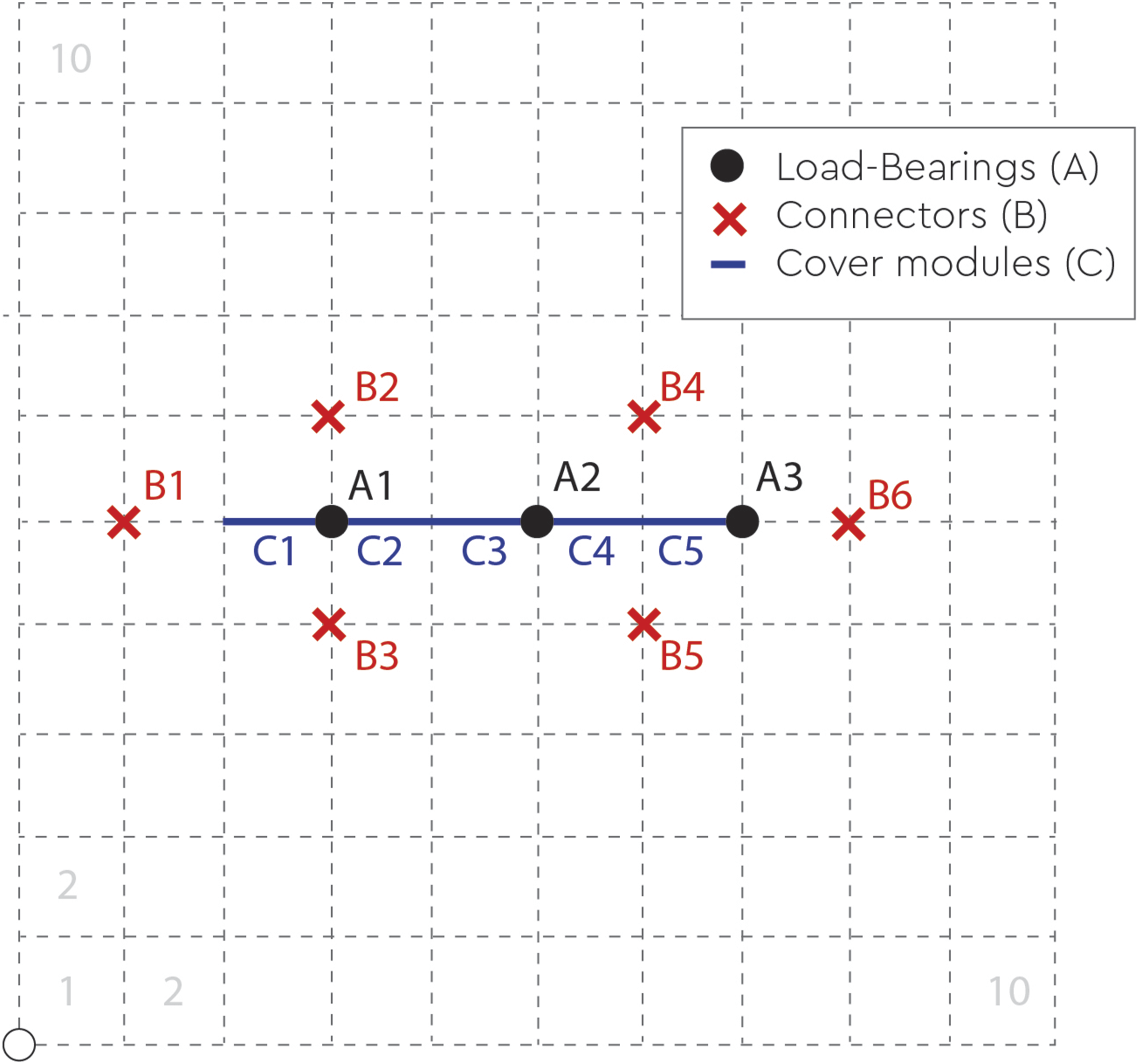
In contrast, the placement of load-bearing elements and connectors follows a structurally strategic differentiation. The load-bearing elements, marked by black circles
Within this spatial setup, positioning of these components emerges as a governing parameter in the optimization process, dictating how VAK principles of Karaçadır are systematically encoded and evolved within the genetic algorithm framework. The explicit adjacency constants of cover modules, the strategic junction-based placement of load-bearing elements, and the offset positioning of connectors collectively shape the computational search space, refining the optimization process by eliminating arbitrary spatial permutations and steering the evolutionary algorithm toward structurally and culturally coherent solutions. The spatial organization depicted in Figure 7 maintains the delicate balance between VAK and algorithmic optimization, embodying the interaction between predefined typological constants and dynamic parameter variations. In this way, the generated configurations are shaped within a system that is structurally stable, prioritizes the connections of components that define the vernacular architectural character, and ensures the preservation of this character.
Fitness functions
The fitness function (FF) in this study is designed to evaluate and optimize the Karaçadır structures using VAK within a GA framework. The primary goal of this FF is to guide the optimization process by integrating predefined architectural constants that ensure structural integrity, modularity, and cultural fidelity. The FF determines the effectiveness of a generated Karaçadır variation based on multiple criteria derived from RBD and VAK principles. These criteria ensure that the generated designs maintain structural stability through load-bearing efficiency, preserve traditional modularity by adhering to the historical making logic of Karaçadır, and establish component connectivity through the proper integration of cover modules, connectors, and load-bearing elements (Figure 8). Schematic explanation of fitness functions (Source: Authors).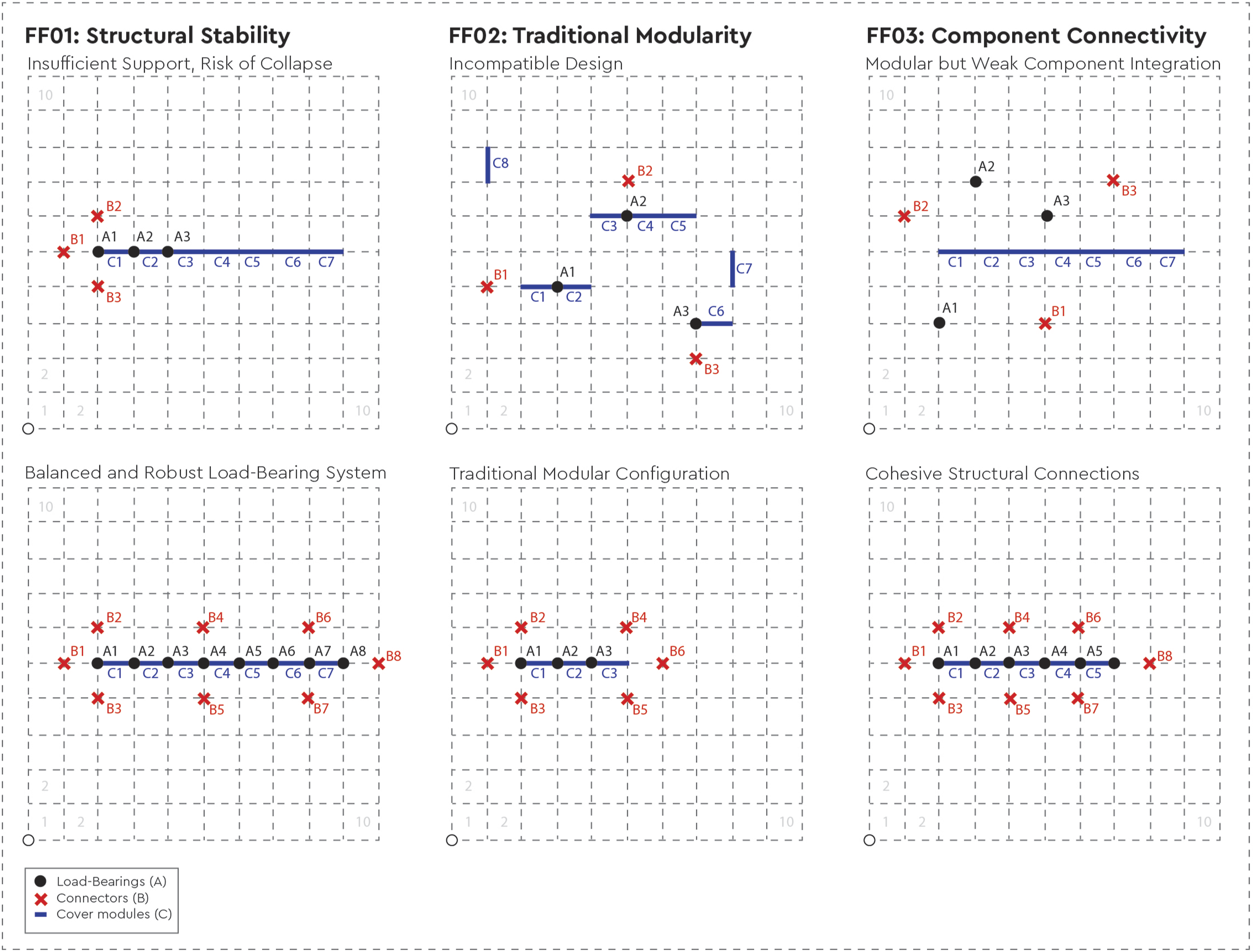
In this study, these operations are performed by a genetic algorithm guided by multiple fitness functions and formulated as follows:

Fitness function 1 (FF01) - The optimized solutions evolved according to a single fitness function (Source: Authors).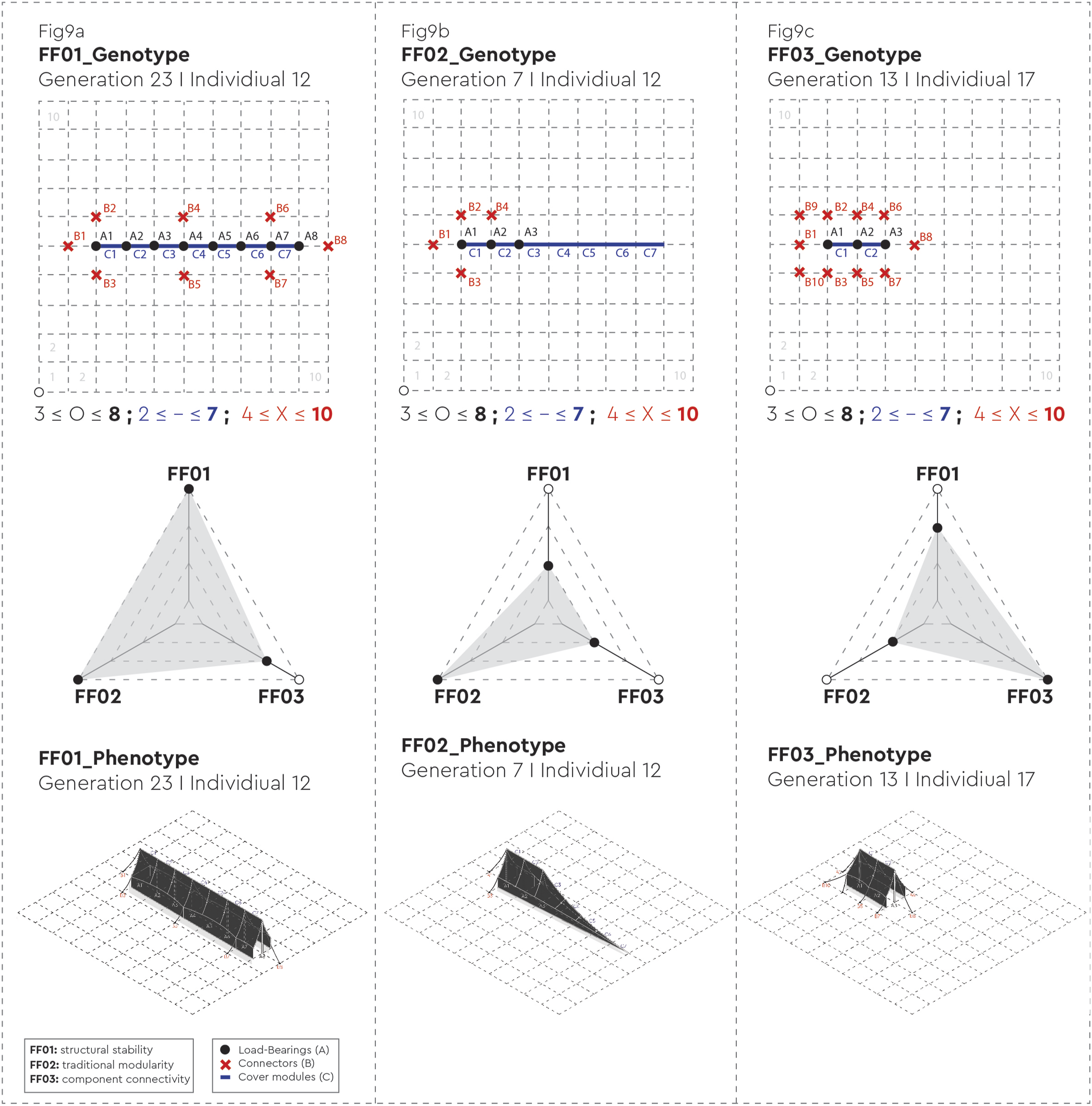
Fitness function 2 (FF02) –
Fitness function 3 (FF03) -
The coefficients
Algorithmic model outcomes
The model employs a GA–based iterative process to generate and refine Karaçadır configurations. This approach prevents premature convergence and ensures the sustainability of a dynamic search space. The evaluation and reproduction cycle proceeds iteratively until a predefined convergence criterion is met. The algorithm terminates when any of the following conditions is satisfied: (1) the average fitness score stabilizes over 10 consecutive generations, (2) no significant structural improvement is observed across iterations, or (3) a maximum of 50 generations is reached. Each design is represented as a 10×10 grid-based genotype composed of cover modules, load-bearing elements, and connectors. This structure allows for genetic variation while maintaining modular consistency. The evaluation process is guided by three predefined fitness functions: structural stability (FF01), traditional modularity (FF02), and component connectivity (FF03) (Figure 9).
The configuration optimized for structural stability (FF01) (Figure 9(a)) shows a dense arrangement of load-bearing elements (A) placed at key structural junctions—primarily the edges and intersections of cover modules (C). This strategy leads to high FF01 scores and, by reinforcing structural logic, also elevates FF02 values. However, FF03 remains lower, suggesting that increased component count alone does not guarantee connectivity or efficiency. The algorithm’s emphasis on load-bearing reinforcement reflects a prioritization of stability over interconnectivity. The resulting form demonstrates how strategic placement, rather than sheer quantity, drives structural optimization.
The configuration optimized for traditional modularity (FF02) (Figure 9(b)) emphasizes a regular, repeatable layout with a linear arrangement of cover modules (C) and minimal use of load-bearing elements (A) and connectors (B). This results in high FF02 scores, reflecting a design strategy rooted in modular self-containment rather than structural reinforcement or dense connectivity. While still an early-stage output, the configuration demonstrates the algorithm’s capacity to explore adaptable, lightweight forms suited to mobile architectural typologies.
The configuration optimized for component connectivity (FF03) (Figure 9(c)) prioritizes interconnectivity over structural or modular logic. A high concentration of connectors (B) ensures that all elements remain linked, yet the sparse placement of load-bearing elements (A) compromises structural stability. This trade-off illustrates the algorithm’s tendency to favor continuous linkage at the expense of architectural coherence. As a result, while FF03 scores are maximized, the configuration lacks the spatial and structural clarity seen in more balanced solutions.
The configurations individually optimized for FF01, FF02, and FF03 reveal the distinct design implications of each fitness criterion, while also exposing the inherent limitations of single-objective approaches. Although each solution performs well in relation to its targeted objective, it exhibits various shortcomings with respect to the other criteria. This indicates that architectural coherence cannot be achieved through a single parameter alone and underscores the need for multi-objective optimization to generate more balanced outcomes. Therefore, optimization processes that simultaneously evaluate multiple criteria gain significance in achieving more holistic and coherent design solutions (Figure 10). The optimum solutions evolved according to all fitness functions (Source: Authors).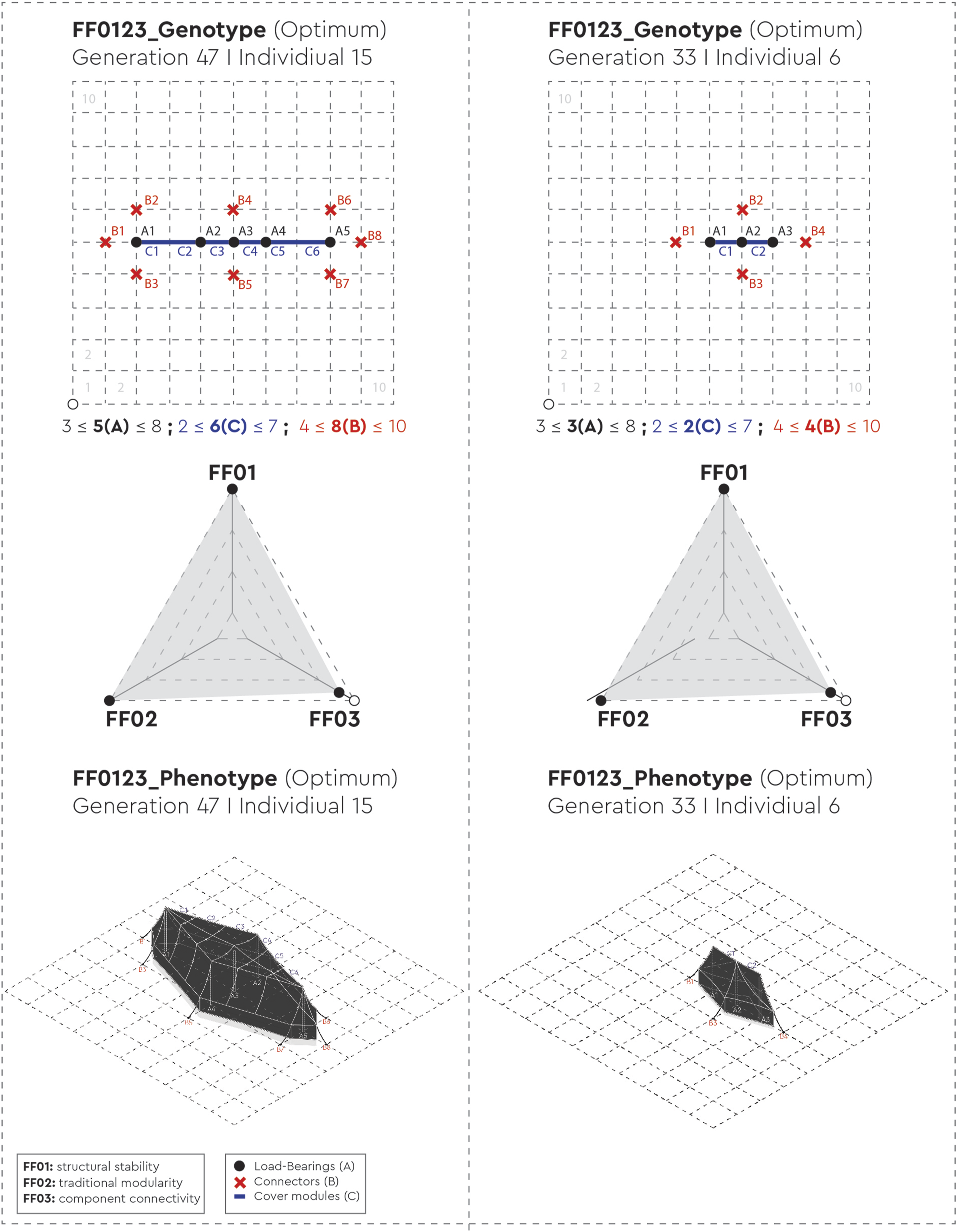
Figure 10 presents two configurations resulting from multi-objective optimization, demonstrating how the algorithm balances structural stability (FF01), modularity (FF02), and connectivity (FF03). Despite differences in generation and component count, both solutions achieve comparable optimization values. Their varied spatial arrangements reveal the algorithm’s capacity to explore structurally diverse yet culturally coherent outcomes, aligning with vernacular architectural principles. The visual comparison highlights how performance can be maintained through either dense or minimal compositions, underscoring the adaptability of the Karaçadır typology. The comparison between dense and minimal configurations underscores the modular logic of the Karaçadır, where similar optimization outcomes can emerge from structurally distinct solutions. This adaptability reflects the scalability and robustness of the typology within the genetic algorithm framework.
Beyond numerical performance, structural arrangements convey cultural meaning. FF01-driven outputs—with densely placed load-bearing elements—align with traditional Karaçadır logics designed for long-term, family-oriented use. In contrast, FF02 outputs reflect lightweight, mobile shelters suited for short-term occupation by smaller groups. FF03 outputs, while maximizing interconnectivity, lack spatial coherence and cultural recognizability, revealing the outer limits of what constitutes a vernacularly valid configuration. Notably, the design that most closely aligns with traditional Karaçadır principles is not necessarily the computationally optimal result. This highlights a critical insight: cultural fidelity and algorithmic efficiency do not always converge.
Building on this insight, there emerges a need to develop generative systems not merely as tools for producing formal variations, but as frameworks capable of integrating local knowledge and cultural continuity into algorithmic processes. Indeed, the integration of vernacular rules into genetic algorithms enables an evolutionary transition from disorganized and inefficient early generations to modular, coherent, and structurally optimized configurations with fewer components (Figure 11). This process not only facilitates variation but also reduces redundancy, reinforcing the modular and scalable nature of the Karaçadır typology. As a result, this approach advances a culturally informed generative design paradigm and offers a transferable, sustainable, and contextually meaningful framework applicable to other vernacular architectural typologies. Optimization process of GAs with VAK-based constants (Source: Authors).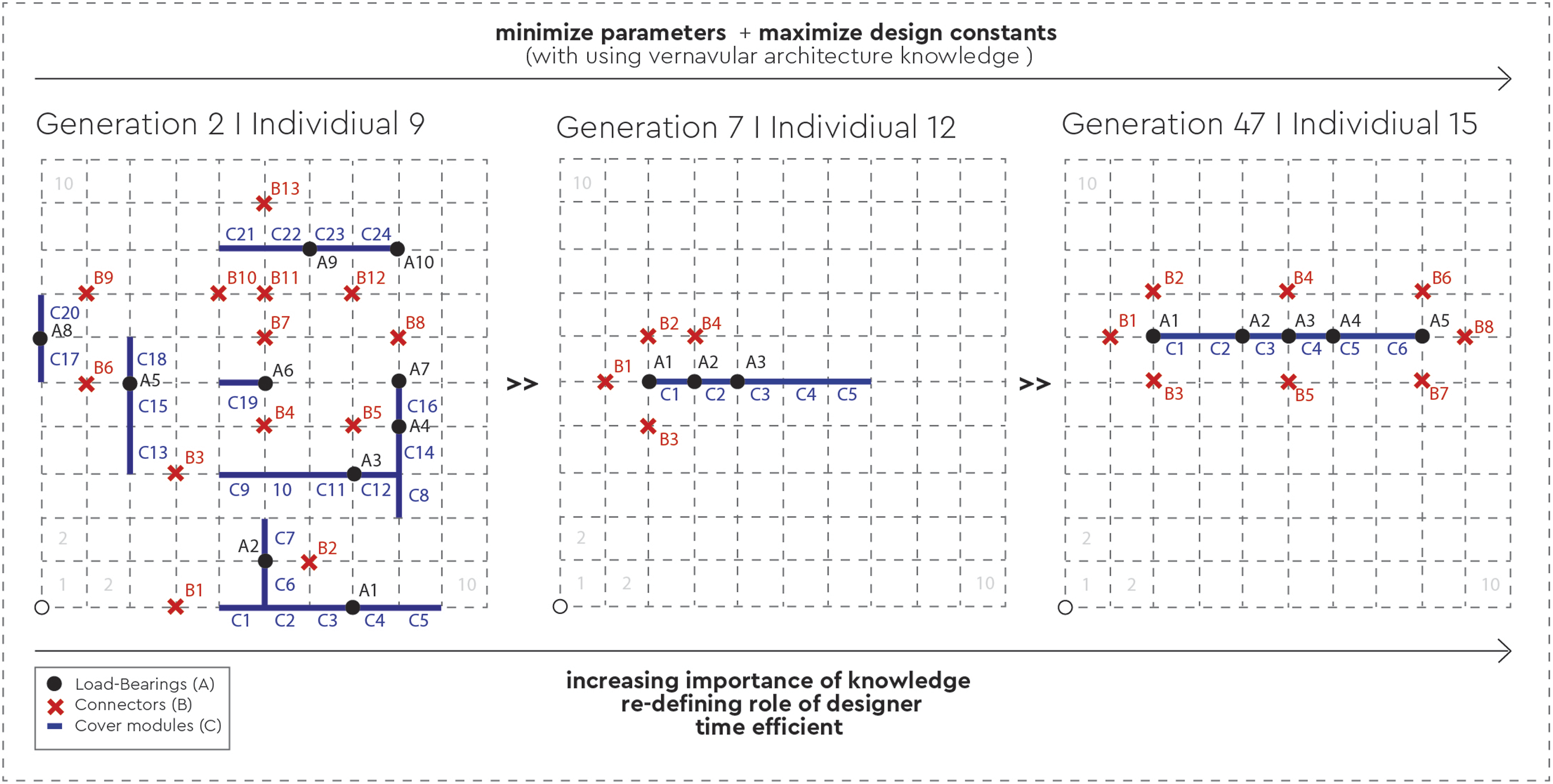
Conclusion and discussion
This study aims to explore how intangible cultural heritage can be integrated into computational design processes through genetic algorithms (GAs). Taking the Karaçadır—an architectural structure belonging to Yörük nomadic culture—as a case study, it investigates how vernacular architectural knowledge (VAK) can be operationalized and embedded within generative algorithms. The findings demonstrate that this integration not only improves formal optimization but also enables the production of contextually consistent design variations that maintain cultural continuity. In addition, they reveal a key insight: cultural coherence in design is not a guaranteed outcome of algorithmic optimization alone; it is made possible through the embedded intelligence of vernacular knowledge.
Accordingly, the results of the VAK-based GA optimization developed within the scope of this study demonstrate that the model is capable of generating multiple Karaçadır variations, effectively enhancing structural stability, traditional modularity, and component connectivity. By minimizing suboptimal design variations and reducing computational load, the computational process offers a more efficient optimization framework and yields configurations that align with traditional Karaçadır typologies. This confirms that embedding vernacular logic within the optimization process not only improves performance but also safeguards typological identity throughout generative iterations.
In addition, a comprehensive set of parameters was established to generate a diverse range of design variations. However, when these variations were produced without incorporating VAK constants, the results significantly deviated from optimal solutions, rendering complete optimization impractical—even in this simplified case study. The integration of VAK constants into the design optimization process substantially reduced both computational time and the number of redundant variations. This suggests that cultural knowledge, when formalized as design constants, serves not only as a memory of tradition but as an active filter guiding the generative process toward coherence and efficiency. Within this context, the VAK parameters— identified as design constants by the designer—were pre-established as vernacular knowledge prior to the execution of the GA optimization process. Consequently, even when the generated solutions may be considered part of intangible cultural heritage, they remained anchored within their historical and contextual framework. These findings produced by the algorithmic model also reinforce the contributions of the proposed VAK–RBD–GA triadic methodological approach.
The methodological approach adopted in the study demonstrates how vernacular design intelligence can be translated into a generative system through the Karaçadır case study. A clear contrast is established between the method constructed through rules derived from preliminary research on VAK and a context-independent approach to generating design variations. This contrast is formalized through a three-stage framework: the extraction of rule-based design (RBD) logic from VAK, its abstraction into a notation system, and its integration into GAs. Within this structure, RBD functions as a critical intermediary that translates culturally embedded spatial principles into a computable format without detaching them from their original context. By positioning RBD as both a methodological and epistemological bridge, the study offers a transferable approach between vernacular and computational domains, revealing the methodological adaptability of the proposed framework across different design contexts.
In addition to its conceptual and methodological contributions, the study also highlights a representational strategy for encoding vernacular knowledge. Within the scope of the research, the use of a two-dimensional, plan-based representation is not merely a pragmatic modeling decision, but a deliberate alignment with the spatial logic inherent in the Karaçadır. In vernacular practice, the components of the Karaçadır are laid out on the ground prior to assembly, and their dimensional and positional relationships guide the accuracy and success of the final structure. This process reflects a cultural model of spatial reasoning that is inherently planar in nature. This insight reinforces that computational representations can—and should—mirror vernacular construction logic, not overwrite it. Accordingly, the generative system developed in this study adopts a representational logic that is not only computationally tractable, but also epistemologically consistent with the vernacular system it seeks to encode. In this case, it is not the computational model that shapes the structure, but rather the vernacular logic itself. To further validate this approach, the two-dimensional variations are presented alongside their corresponding three-dimensional configurations, demonstrating that the planar logic reliably produces spatial outcomes that are structurally feasible, contextually grounded, and culturally coherent. This formal alignment sets the stage for a deeper insight: the interpretive role of the designer.
This study emphasizes that cultural coherence is not an automatic consequence of computational optimization. The solution that most reflects traditional Karaçadır principles is not the one that is mathematically the fittest, but the one that emerges through the careful framing of constraints grounded in vernacular knowledge. This observation highlights the importance of the designer’s interpretive agency—not merely in configuring parameters, but also in preserving the cultural significance embedded within spatial systems. In this light, the generative model becomes more than a mechanism for producing variation; it transforms into a reflective interface where architectural memory, design intuition, and algorithmic reasoning converge. Such a framework does not replace vernacular logic with computation; on the contrary, it channels it—reconfiguring tradition as a living, computationally operable design intelligence.
In this regard, the contribution of the study goes beyond merely proposing a new model; it also reveals how this model resonates with core theoretical discussions in contemporary computational design discourse. Specifically, the study frames the design space not as an abstract field of formal permutations, but as a culturally situated domain shaped by vernacular logic. Through the integration of VAK constants with rules, the generative system optimizes a meaningful and bounded design space in which variations emerge not from arbitrary combinations, but from culturally structured parameters. This approach aligns with current debates on cultural encoding in algorithms, as the model embeds vernacular knowledge not as symbolic references, but as operational rules that govern the system’s behavior.
Ultimately, the algorithmic model developed in this study produces outputs that are typologically coherent, contextually grounded, and architecturally meaningful. Furthermore, the model exemplifies a constraint-driven creativity framework, where constraints derived from cultural logics are not limitations but productive drivers of design emergence. Within this framework, vernacular knowledge functions not as a static referent, but as an active and effective source of variation, adaptation, and optimization. In this regard, the study not only positions vernacular knowledge as both a conceptual and computational foundation, but also develops an original approach that mediates between inherited spatial intelligence and evolving algorithmic paradigms—redefining generative design as a reflective and future-oriented practice that critically engages with culturally embedded design knowledge.
Footnotes
Acknowledgments
This study is derived from the doctoral dissertation currently being conducted by Uğur Efe Uçar under the supervision of Assoc. Prof. Dr. Ethem Gürer within the Architecture Design Computing PhD Program at Istanbul Technical University.

Funding
The authors received no financial support for the research, authorship, and/or publication of this article.
Declaration of conflicting interests
The authors declared no potential conflicts of interest with respect to the research, authorship, and/or publication of this article.