



Abstract
This study proposes a studio pedagogy that integrates knitting techniques with digital design and fabrication in architectural education. Grounded in Kolb’s Experiential Learning Theory, the workflow spans hands-on material trials, AI-assisted variation, parametric modeling, and computer-aided manufacturing (3D printing). Using a rubric-based assessment with third-year students (N = 10), we observed the largest gains in material experimentation (mean 3.1 → 4.5/5) and 3D printing optimization (3.0 → 4.3/5); 80% of projects improved after structured feedback and iteration. These results indicate that knitting, coupled with CAD/CAM, supports a transparent, measurable learning environment that links craft-based exploration to computational reasoning. Findings are preliminary due to the small elective cohort and warrant replication with larger samples and controlled variables.
Keywords
Introduction
Knitting techniques have emerged as a significant design strategy in architecture, driven by advancements in digital fabrication and material innovation. While traditionally rooted in the textile industry, knitting offers novel architectural possibilities due to its inherent flexibility, capacity for complex form generation, and adaptability to diverse geometries. With the evolution of computer-aided design (CAD) and computer-aided manufacturing (CAM) technologies, knitted structures can now be digitally modeled and physically fabricated, expanding the scope of experimental architectural design.1–3 These developments open new pedagogical avenues, particularly for students engaged in design education, by enabling hands-on exploration of material behavior and structural expression through knitting.
This study investigates how knitting techniques, integrated with parametric modeling and fabrication tools, influence students’ design outcomes, by analyzing rubric score improvements, learning style distributions, and design outputs across material, digital, and fabrication stages.
Background: Integration of knitting techniques in architectural design
The reinterpretation of traditional construction methods through digital technologies has become a critical area of focus in contemporary architectural research, encompassing both theoretical inquiry and practical application. Within this context, knitting techniques are being re-examined as a means of developing alternative architectural strategies, owing to their intrinsic properties—such as flexibility, lightness, formal variability, and production efficiency. The architectural discourse has increasingly recognized the potential of knitting, not only as a structural and aesthetic system, but also as a medium conducive to innovation in digital fabrication and material experimentation. The existing body of literature addresses the evolution of knitting techniques in architecture from a multidimensional perspective, including their integration with computational tools, their pedagogical implementation in design education. However, in many cases, studies have not provided detailed documentation of material types, performance characteristics, or limitations, -elements that are systematically recorded in the present study. This study categorizes the relevant literature into four thematic domains: (1) the evolution of knitting techniques in architecture and design, (2) their interaction with digital design and fabrication technologies, (3) their pedagogical contributions within architectural education.
Evolution of knitting techniques in architecture and design
While knitting techniques have long been associated with the textile industry, recent developments have led to their exploration within architectural design as a means of generating flexible spatial solutions. The incorporation of knitting into architectural practice contributes significantly to both the aesthetic and functional dimensions of design. Wintermantel et al. 4 investigated the application of knitted materials in the field of biotechnology, emphasizing their potential to enhance architectural performance through optimized properties such as tensile strength and flexibility. Zheng et al. 5 explored how minimal surface geometries can improve the mechanical performance of knitted structures, while Knittel et al. 1 and Oghazian et al. 3 examined the integration of knitting techniques into digital modeling and fabrication workflows. Collectively, these studies demonstrate that knitted systems offer unique advantages in architectural applications, including lightweight construction, adaptability, and resilience, positioning them as valuable tools for innovation in contemporary design.
The role of digital design and fabrication technologies in advancing knitting techniques
The advent of computer-aided design (CAD) and computer-aided manufacturing (CAM) technologies has enabled the transformation of knitting techniques from conceptual digital models into precise physical prototypes. This digital-to-physical workflow enhances the fidelity and flexibility of knitted architectural systems. Baranovskaya and Prado, for instance, investigated the integration of knitted textiles with pneumatic systems to explore the potential for lightweight, deployable structures. 6 Similarly, Ahlquist et al. analyzed the behavioral interaction between pneumatic mechanisms and knitted assemblies to understand their spatial dynamics. 7
Novak (2020) and Tamke et al. (2021) further advanced this discourse by illustrating how parametric modeling and CNC-based fabrication, including 3D printing, can be utilized to produce customizable knitted forms.2,8 These digital tools not only support the production of complex geometries with high precision but also expand the material and structural capabilities of knitted systems in architectural contexts. In the present study, CAD/CAM processes were also used to test fabrication parameters—such as filament type, infill density, and layer height—in relation to the physical performance of knitted-inspired geometries.
Integration of knitting techniques and digital tools in architectural education
Incorporating knitting techniques into architectural education provides students with an opportunity to engage in creative, material-driven design processes enhanced by digital technologies. Chaturvedi et al. (2011) and Lindsay (2015) evaluated the aesthetic and functional capacities of knitted systems and addressed their pedagogical adaptation for architectural learning environments.9,10 Ahlquist et al. demonstrated how digital simulations and knitted forms could be integrated into architectural projects to encourage spatial experimentation. 7 Scott et al. emphasized that the fusion of digital tools with textile-based techniques fosters students’ creative problem-solving skills and supports the development of design thinking. 11
Methodology
This study adopts a qualitative research methodology conducted within a practice-based architectural design studio, grounded in the principles of experiential learning. The primary objective is to investigate how knitting techniques, when integrated with digital design and fabrication technologies, can contribute to the creative and technical development of architecture students. The study framework is informed by Kolb’s Experiential Learning Theory, and student performance was systematically assessed using a rubric-based evaluation system. Kolb’s model demonstrates a particular affinity with knitting-based pedagogy. The act of knitting inherently involves cycles of repetition, observation, conceptual adjustment, and practical testing, which directly correspond to Kolb’s experiential modes. This alignment makes Kolb’s framework especially suitable for structuring a design studio where material trials, reflection on failures, conceptual reinterpretation, and iterative fabrication are central to the learning process.
The research was conducted during the Spring 2024 semester in an elective third-year architecture studio, involving 10 voluntary participants. Students were not selected based on pre-tests or prior qualifications; rather, they were provided with preliminary information about the studio and engaged in the process on a voluntary basis. Due to the small scale of the studio, which was structured around intensive one-to-one engagement, the course was limited to 10 students in total. All participants were third-year architecture students who had previously completed the mandatory Computer-Aided Design (CAD) courses in both semesters of their first year. This prerequisite established a consistent baseline of digital modeling and fabrication skills, thereby enhancing the validity and comparability of the observed learning outcomes. To further address potential disparities in digital proficiency, the studio commenced with introductory workshops on Rhino, Grasshopper, and digital fabrication techniques. These sessions covered a comprehensive range of topics—from fundamental command structures and parametric modeling principles to simulations of 3D printing processes—ensuring that all students acquired the minimum level of digital competence required to realize their projects effectively. The restricted cohort size enabled close observation and detailed documentation of each student’s design progression. Participation was voluntary and anonymized, and students provided informed consent for the use of their coursework artifacts and rubric data in research and publication.
Individual learning trajectories were examined through the lens of Kolb’s (1984) experiential learning cycle and documented using structured performance rubrics. 12 The methodology was carefully designed to foster creativity through knitting-based experimentation. The process began with the exploration of knitting techniques in architecture and the introduction of precedent works by artists and researchers such as Lindsay (2015), Glazzard (2022), and Underwood (2009).10,13,14 Students engaged in hands-on exercises to understand material properties, spatial potential, and digital translation of knitted forms.
Each stage of the design process was explicitly mapped to Kolb’s four learning modes—Concrete Experience, Reflective Observation, Abstract Conceptualization, and Active Experimentation—and systematically documented to ensure active application of the framework. The rubric was restructured to align with these stages, with clearly defined deliverables and assessment criteria. At the end of each stage, structured feedback sessions based on rubric benchmarks allowed students to evaluate their own and peers’ work, revise their designs, and integrate adaptive strategies. This approach transformed the process into a cyclical model where each phase was informed by prior experiences and reflections, reinforcing continuous improvement and measurable learning progression. In subsequent phases, each activity was explicitly aligned with Kolb’s four learning modes, ensuring that material exploration, digital modeling, AI-assisted variation, and fabrication stages all corresponded to defined points in the experiential cycle. This alignment maintained methodological consistency and reinforced the reflective and iterative nature of the process.
Building on these physical explorations, students incorporated their studies into artificial intelligence (AI) platforms to generate design variations and enrich form-finding processes. Subsequently, parametric modeling tools such as Rhino and Grasshopper were employed to develop digital design iterations. These digital models were then translated into physical prototypes via 3D printing technologies, which served as the basis for material and form analysis. A schematic representation of the methodological flow is provided in Figure 1. Methodological framework based on Kolb’s experiential learning cycle.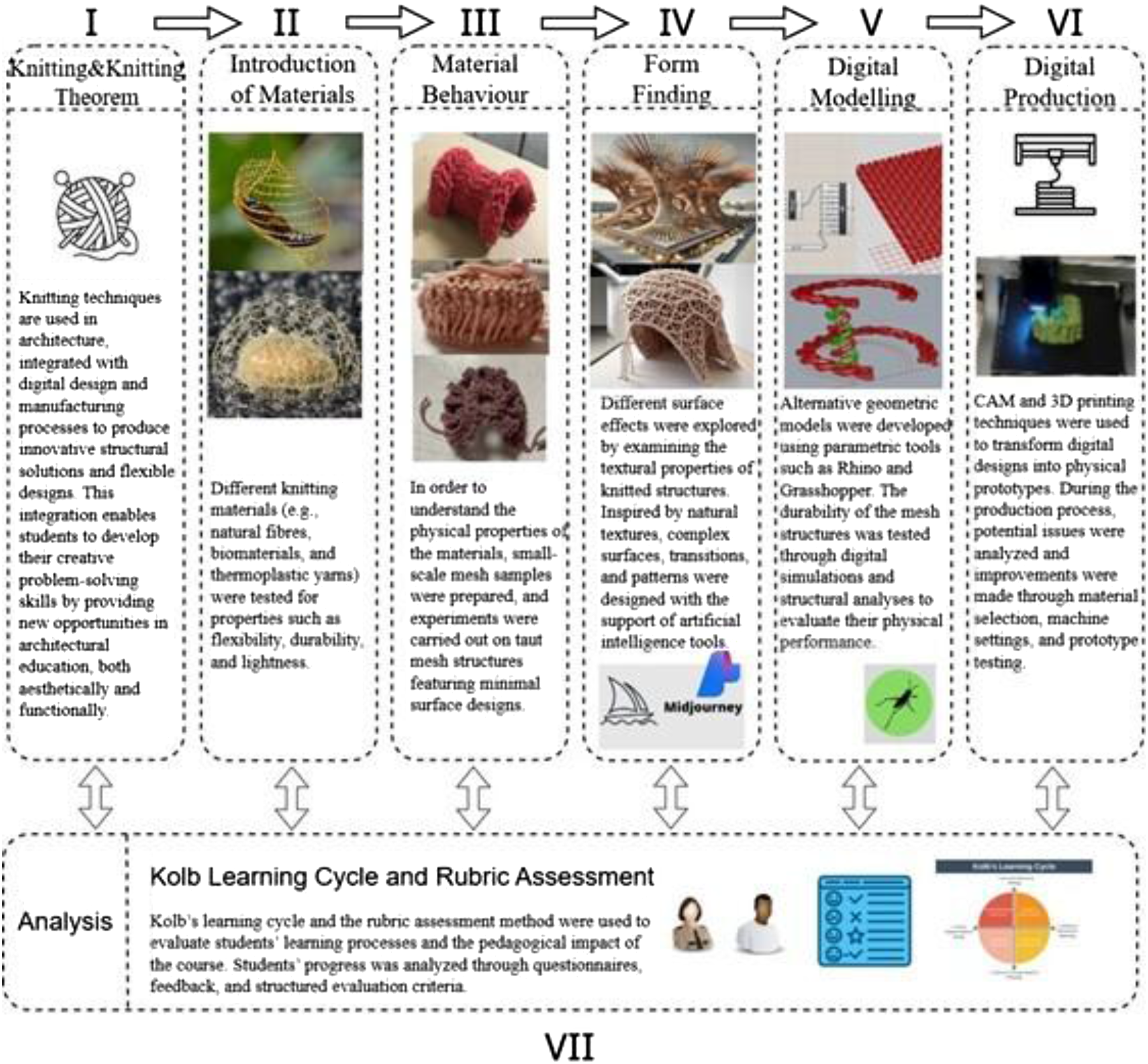
Throughout the process, students conducted aesthetic and textural explorations, resulting in the development of original surface compositions and spatial forms. At multiple stages, these outputs were presented in structured feedback sessions, where peer and instructor critiques informed revisions and encouraged the re-application of ideas, thereby reinforcing the cyclical nature of the process. Critique, documentation, and iteration kept the process aligned with experiential learning and produced traceable evidence of student progress. The projects were evaluated through critique sessions involving peer and instructor feedback, culminating in formal presentations and a complete experiential learning cycle.
Introduction of knitting techniques and artistic applications
The design process was initiated with an emphasis on knitting as both an artistic and architectural expression, aiming to merge aesthetic intent with spatial functionality. At this stage, students drew inspiration from Lindsay’s exploration of artistic knitting techniques, which emphasize textile-based aesthetics, and from Glazzard’s experimental formal studies that demonstrated the expressive potential of knitted geometries.10,13 In addition, Underwood’s (2009) work on 3D knitted shaping methods was introduced, illustrating the transformative capacity of knitting in design. 14 His research focused on the architectural potential of industrial flatbed knitting machines, such as those developed by Shima Seiki, highlighting their ability to produce complex three-dimensional forms with high efficiency and structural flexibility.
Visual references of prominent knitting and 3D knitting examples from the literature were presented during studio sessions to guide students in their design explorations and material choices (Figure 2). Precedent studies in artistic and architectural knitting introduced to students.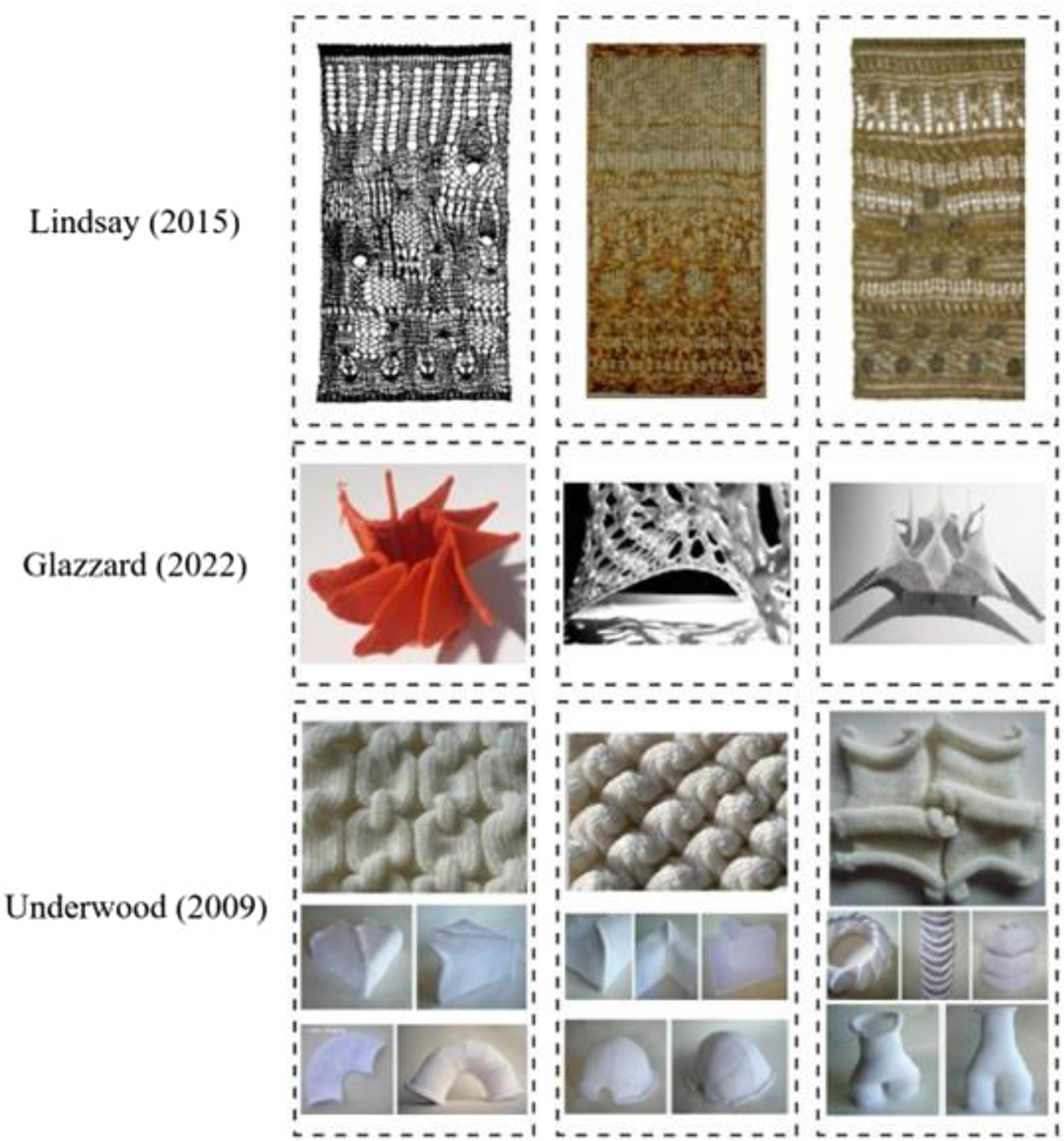
Material exploration: Creative form-finding and textural research
In the early phases of the studio, students conducted exploratory studies to investigate the surface potential of knitted structures. Drawing inspiration from natural textures, they developed multi-layered surfaces, transitional patterns, and complex textural compositions. These studies enabled a deeper understanding of how knitted materials could evoke spatial and aesthetic complexity. Representative samples of these textural explorations are illustrated in Figure 3. Multi-layered knitted textures inspired by natural forms.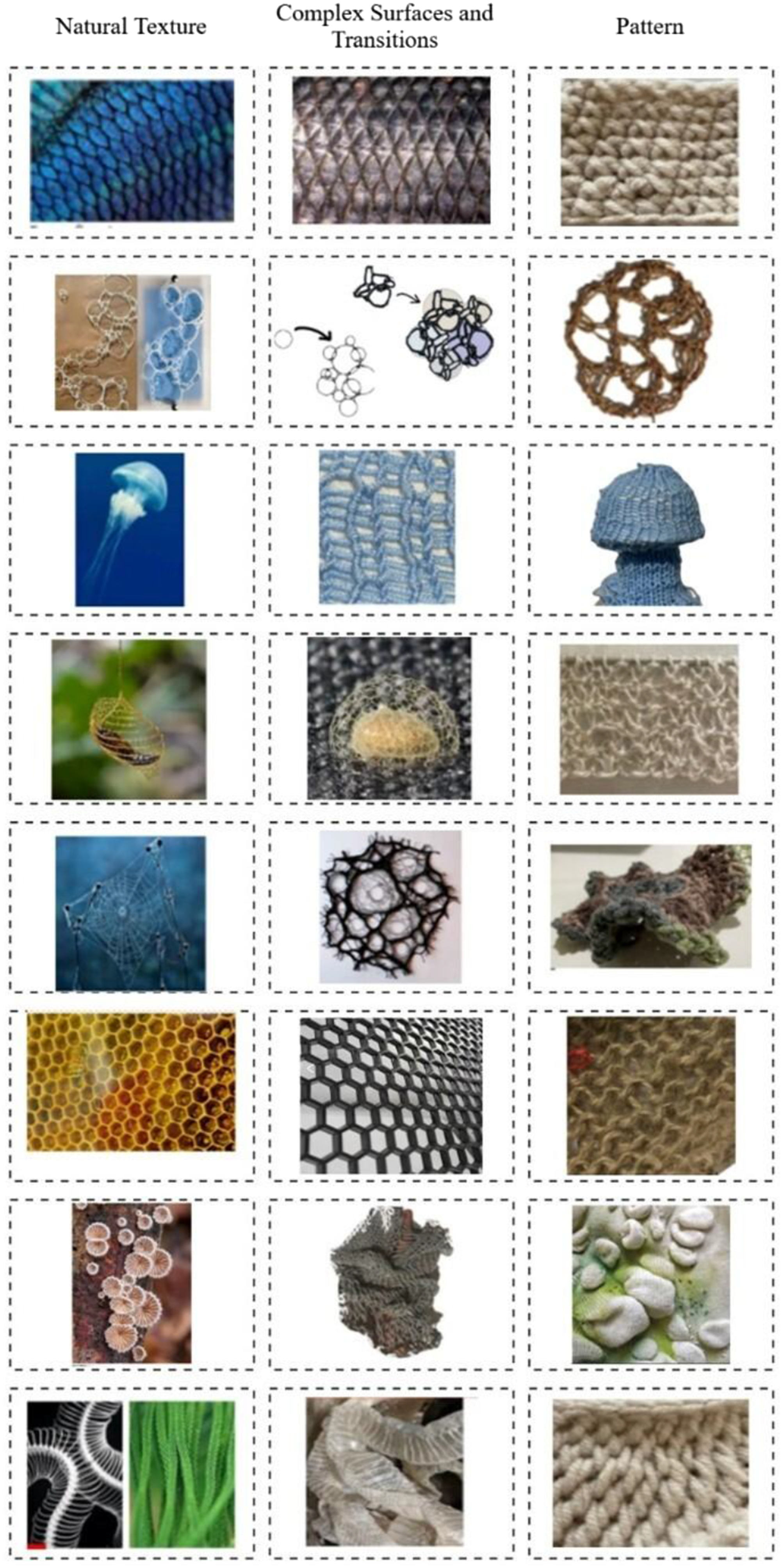
Experimentation with material types: Understanding material behavior
In this study, a range of yarn types with varying fiber compositions and thicknesses was employed to explore the integration of knitting techniques into architectural design education. The material selection prioritized diversity in fiber content and yarn density to facilitate different tactile and visual outcomes. The specifications of the yarns used are as follows: (1) Content: 100% Cotton - Density: 500.0 tex/4500.0 denier - Thickness: 2.0 Nm (2) Content: 100% Acrylic - Density: 476.2 tex/4285.7 denier - Thickness: 2.1 Nm (3) Content: 90% Acrylic, 10% Cotton - Density: 370.4 tex/3333.3 denier - Thickness: 2.7 Nm (4) Content: 100% Acrylic - Density: 1666.67 tex/15,000.0 denier - Thickness: 0.6 Nm (5) Content: 51% Acrylic, 49% Cotton - Density: 400.0 tex/3600.0 denier - Thickness: 2.5 Nm (6) Content: 100% Cotton - Density: 181.82 tex/1636.36 denier - Thickness: 5.5 Nm
Beyond their compositional and dimensional differences, these yarn types exhibited distinct tendencies to assume specific knitted forms, indicating that fiber structure and density influenced not only tactile qualities but also the morphological behavior of the resulting geometries.
To evaluate the properties of different yarn types, students performed knitting experiments using a Sentro 48-Needle Smart Circular Knitting Machine, a device commonly used in textile prototyping. Yarns with varying levels of flexibility, durability, and weight were tested. Through hands-on experimentation, the students gained insight into the limitations and potential of different yarn materials. Detailed outcomes of these trials are presented in Figure 4. Knitting experiments with different yarn types (materials listed below in the same order).
Subsequently, students were encouraged to expand their material repertoire by identifying and testing alternative, non-traditional materials that could be knitted. These included unconventional substances capable of deformation and interlocking, offering new design possibilities. Examples of these material-based explorations are shown in Figure 5. Knitting applications using alternative materials.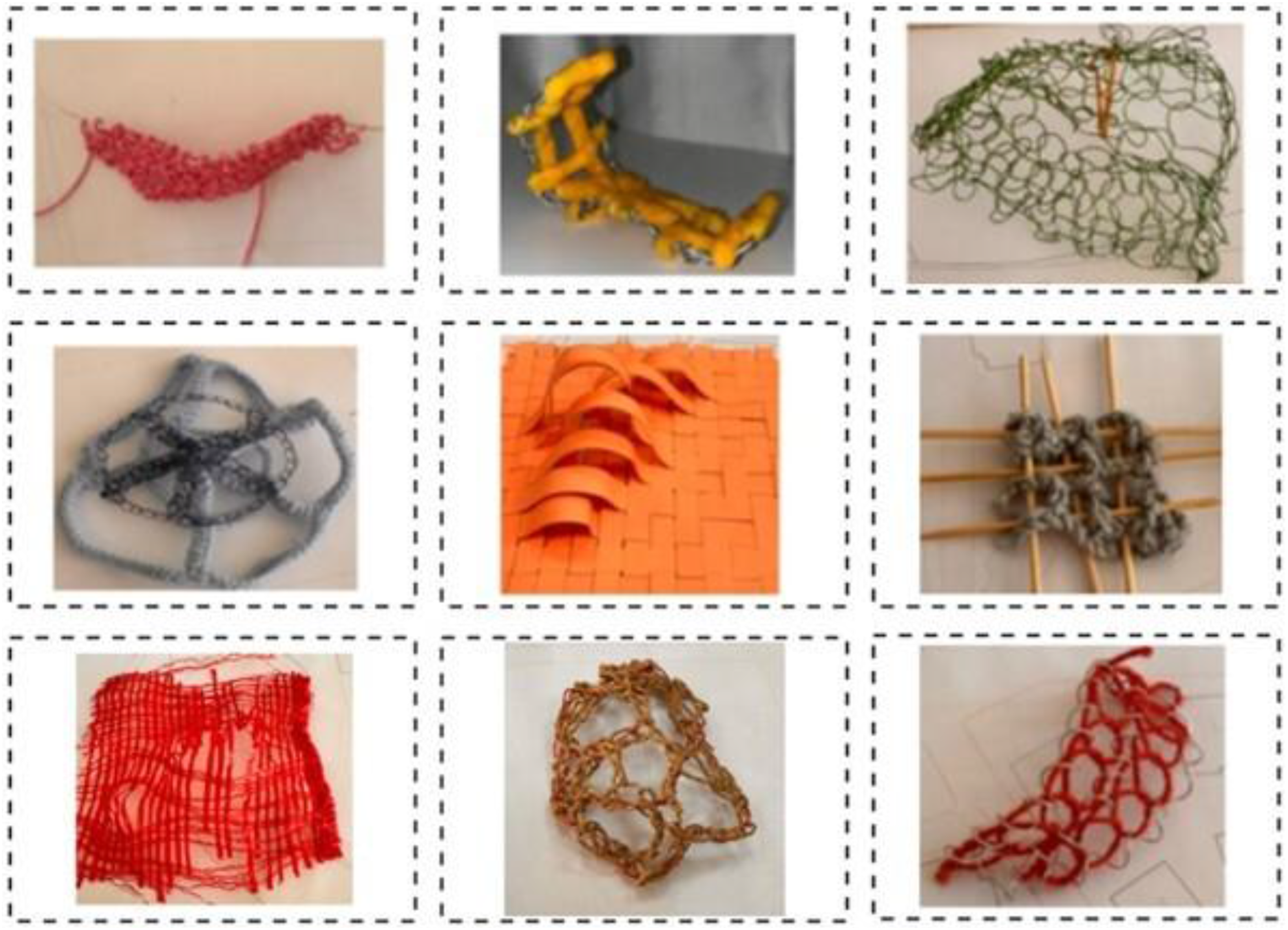
Comparative analysis indicated that yarns with higher cotton content exhibited greater dimensional stability under tension, producing knitted geometries with reduced deformation. Conversely, acrylic-dominant blends provided higher elasticity, which facilitated more complex curvature but required additional structural support in physical prototypes. These material–structural correlations informed subsequent parametric modeling decisions, such as adjusting aperture ratios to match the tensile performance of each material.
Physical prototyping: From 2D surfaces to 3D forms
Beyond digital simulations, students produced small-scale physical models to gain a deeper understanding of the mechanical and spatial behavior of knitted materials. These prototypes were used to investigate, surface geometries, and dynamic deformations. Figure 6 presents selected examples of these exploratory knitting models developed during the course. Small-scale knitted prototypes produced by students during material testing.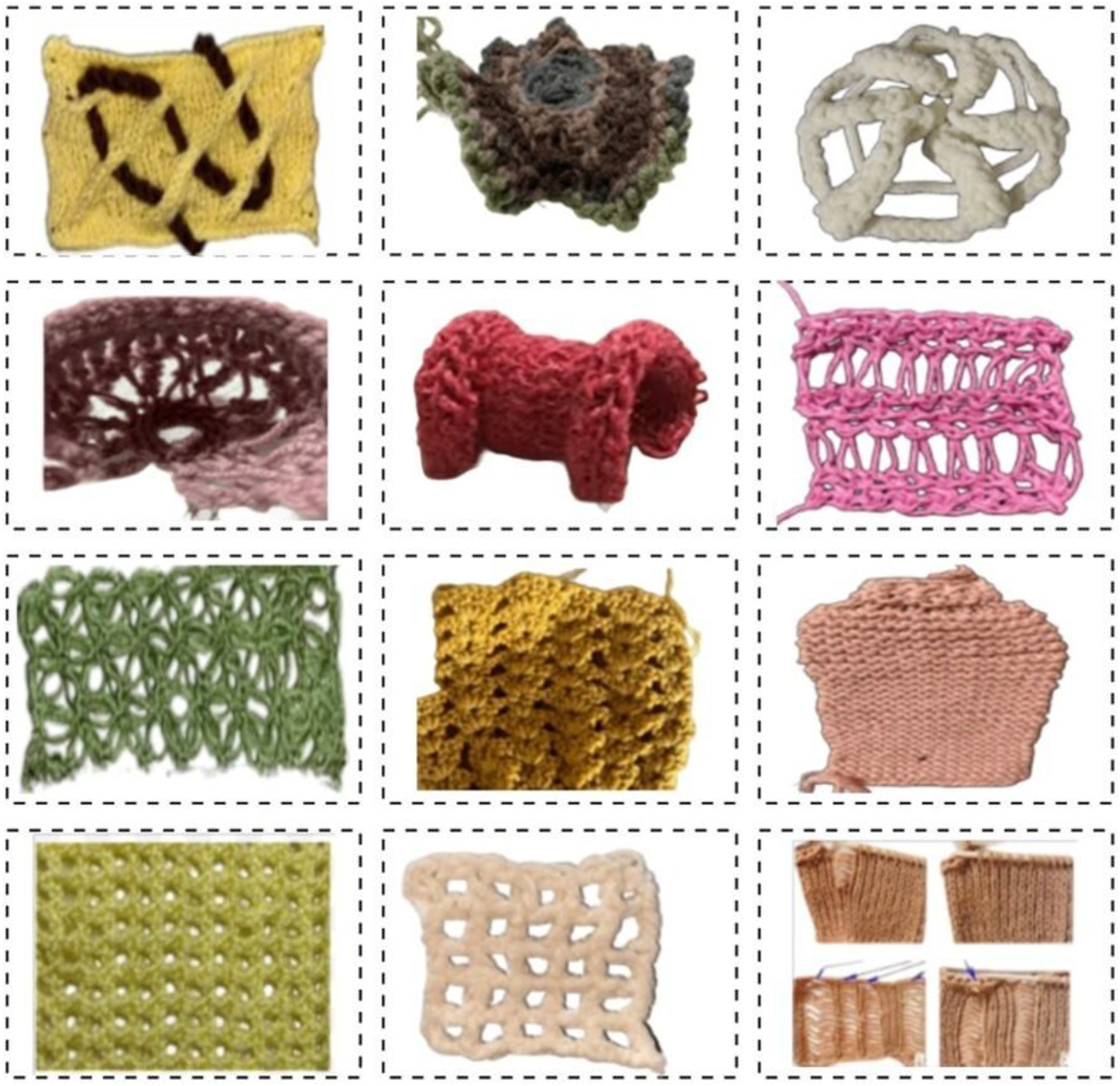
To extend this work into volumetric spatial inquiry, students tested how two-dimensional knitted surfaces could be transformed into three-dimensional architectural forms. By incorporating tension-based systems and supportive structural frameworks, they examined the potential of knitted surfaces to assume self-supporting and complex geometries. These applications formed a critical part of the learning process, as they enhanced students’ comprehension of the material–space relationship. Figure 7 illustrates examples of the initial three-dimensional physical transformations generated by students. Early transformations of 2D knitted surfaces into 3D spatial forms.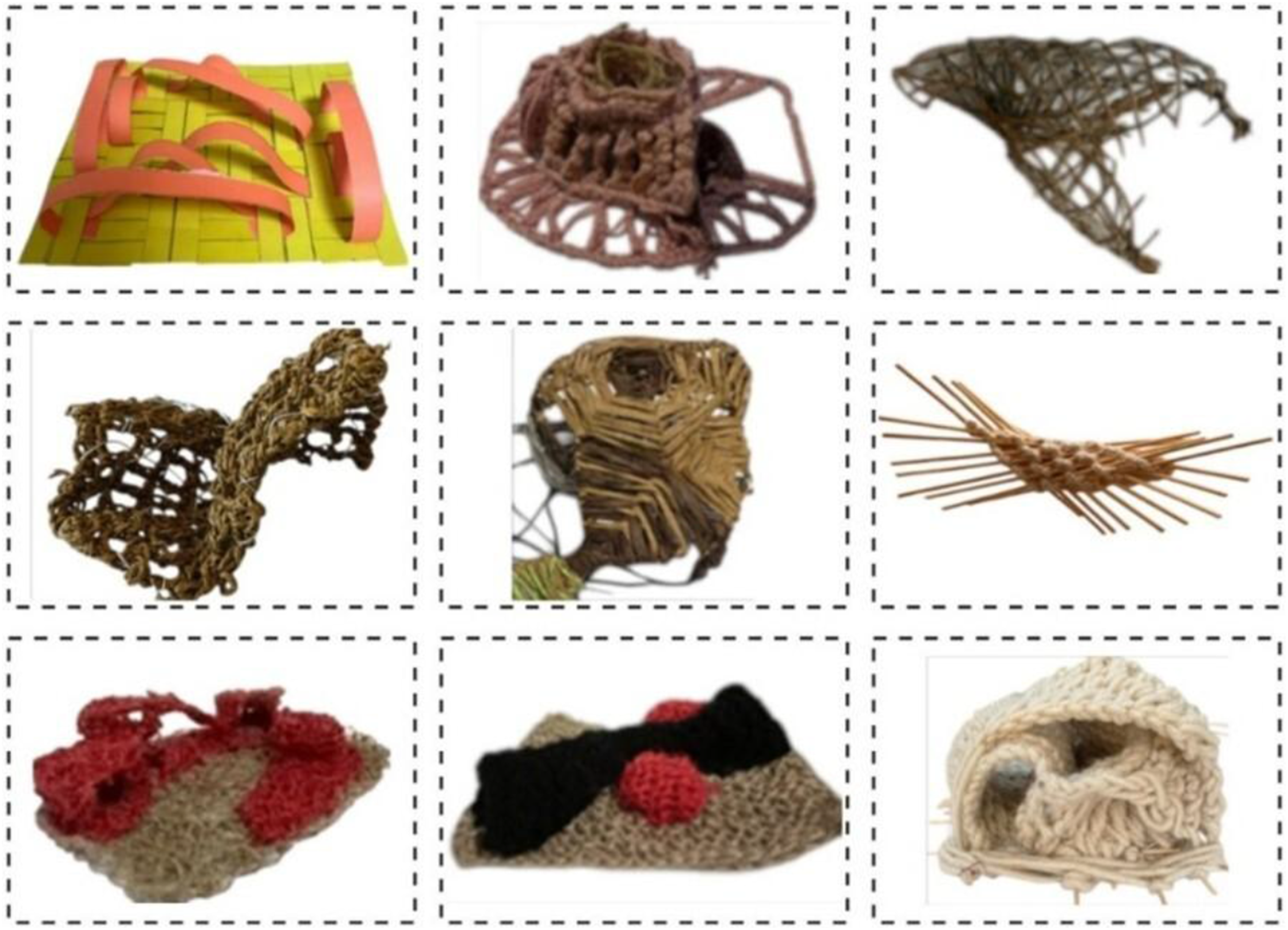
Artificial intelligence–assisted form-finding
Building upon their physical prototypes, students were asked to transfer their initial knitted models into digital environments and generate alternative design iterations using artificial intelligence–based platforms. Tools such as Midjourney, DALL·E, RunwayML, and Artbreeder were utilized to explore visual and morphological possibilities beyond conventional form-generation techniques.
These AI tools enabled students to broaden their visual language, reinforce intuitive decision-making, and transcend standard architectural typologies. By leveraging algorithmic variation and image-based transformation capabilities, students envisioned spatial manifestations of knitted logic and expanded the scope of speculative architectural design. Selected outputs from these AI-driven studies are presented in Figure 8, showcasing a range of architectural forms that reinterpret knitting as a spatial, generative strategy. AI-generated architectural forms based on knitting logic and physical prototypes.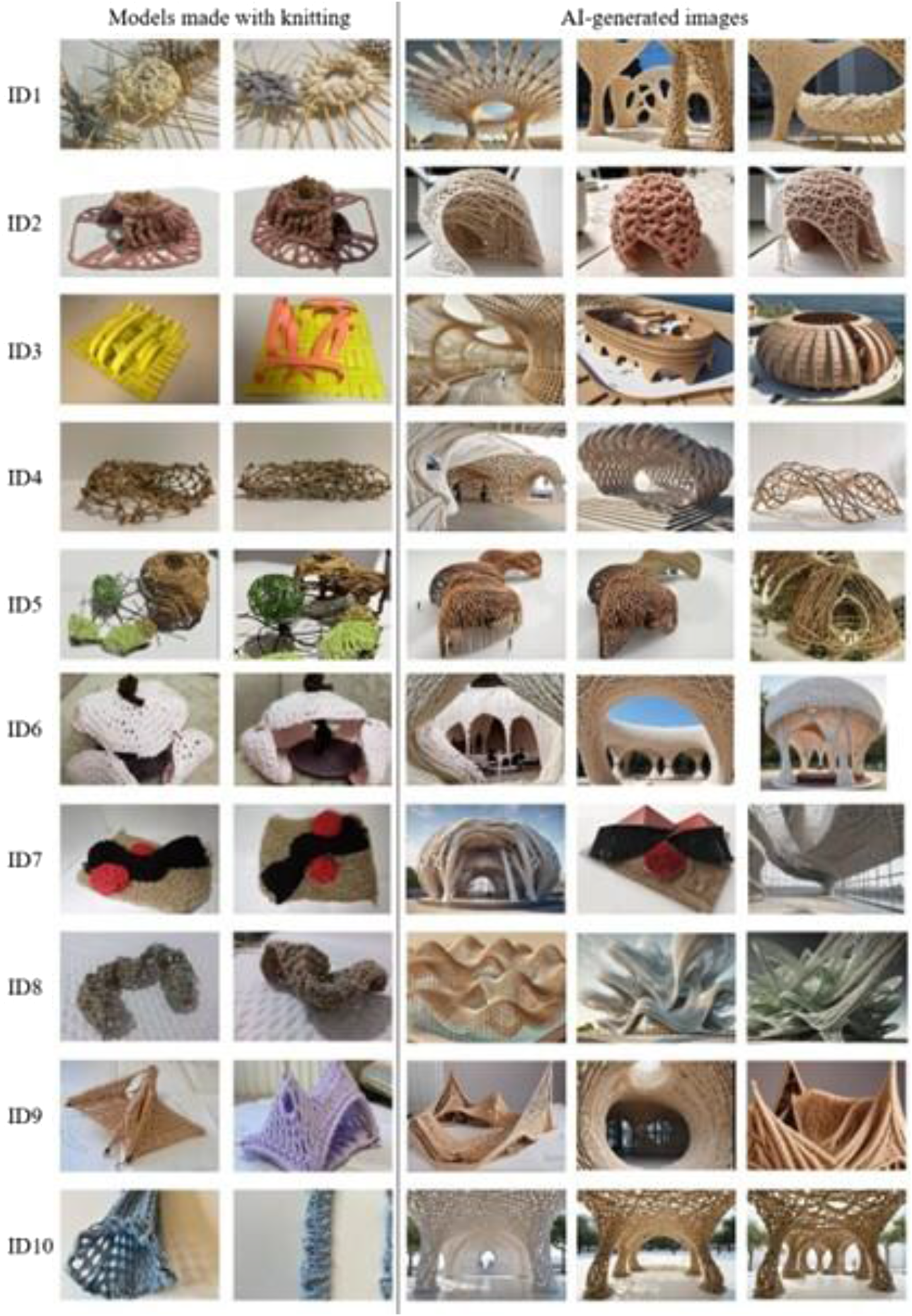
Digital simulation and parametric design applications
Development of alternative models using parametric tools
In this phase, students translated their physically knitted prototypes into digital models and further developed them using parametric design tools. Through software platforms such as Rhino and Grasshopper, parametric relationships were defined on basic knitted geometries, enabling the creation of multiple design variations. By manipulating parameters such as scale, curvature, and aperture ratio, students were able to assess the aesthetic and structural performance of each variation.
This stage promoted exploration of multiple alternatives instead of converging on a single solution. Each variation was analyzed using objective performance criteria, fostering a synthesis of creative exploration and technical rigor. Additionally, students constructed the parametric framework of their individual designs, leading to the development of solutions with a particular emphasis on material efficiency.
Figure 9 presents a selection of parametric knitting design variations generated by students. These examples clearly illustrate how the adaptability of parametric design tools—when combined with digital fabrication—can unlock new spatial potentials for knitting-based architectural forms. Parametric knitting design variations developed using Rhino and Grasshopper by students.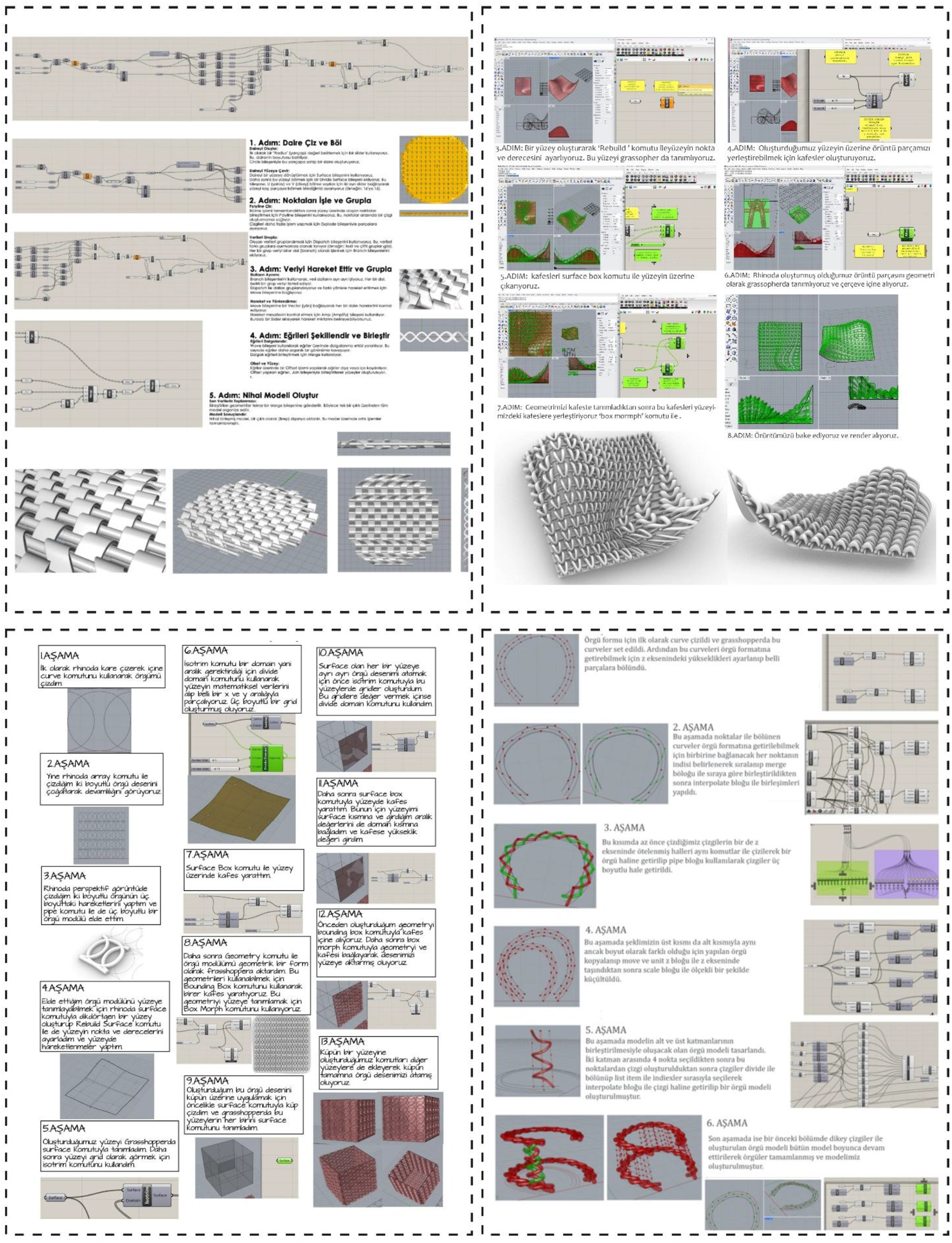
Computer-aided manufacturing (3D printing)
Detailed planning of the production workflow
Following the completion of the digital design stage, students meticulously planned the production parameters prior to 3D printing. Key variables were optimized, including material type (e.g., PLA, ABS, or flexible filament), bed temperature, extrusion speed, layer height, and infill density. Estimated printing durations were calculated in advance, and production schedules were prepared to account for possible interruptions such as machine downtime or filament replacement. This planning phase minimized production-related disruptions and reduced the risk of deformation or failure during printing.
Systematic prototyping and iterative refinement
Based on the defined parameters, each student fabricated a 5 × 5 × 5 cm prototype cube incorporating their designed lattice pattern. These prototypes were evaluated for manufacturability through metrics such as dimensional accuracy, surface resolution, and interlayer mechanical integrity. Post-print inspection included measurements and visual analysis to detect structural inconsistencies caused by layer misalignment, insufficient support structures, or discontinuous extrusion.
Feedback from these evaluations informed refinements to printing parameters, leading to iterative cycles of prototyping. As shown in Figure 10, this improvement loop reduced discrepancies between digital simulations and physical outputs, resulting in prototypes that were optimized both aesthetically and functionally. 5 × 5 × 5 cm lattice cubes produced via 3D printing.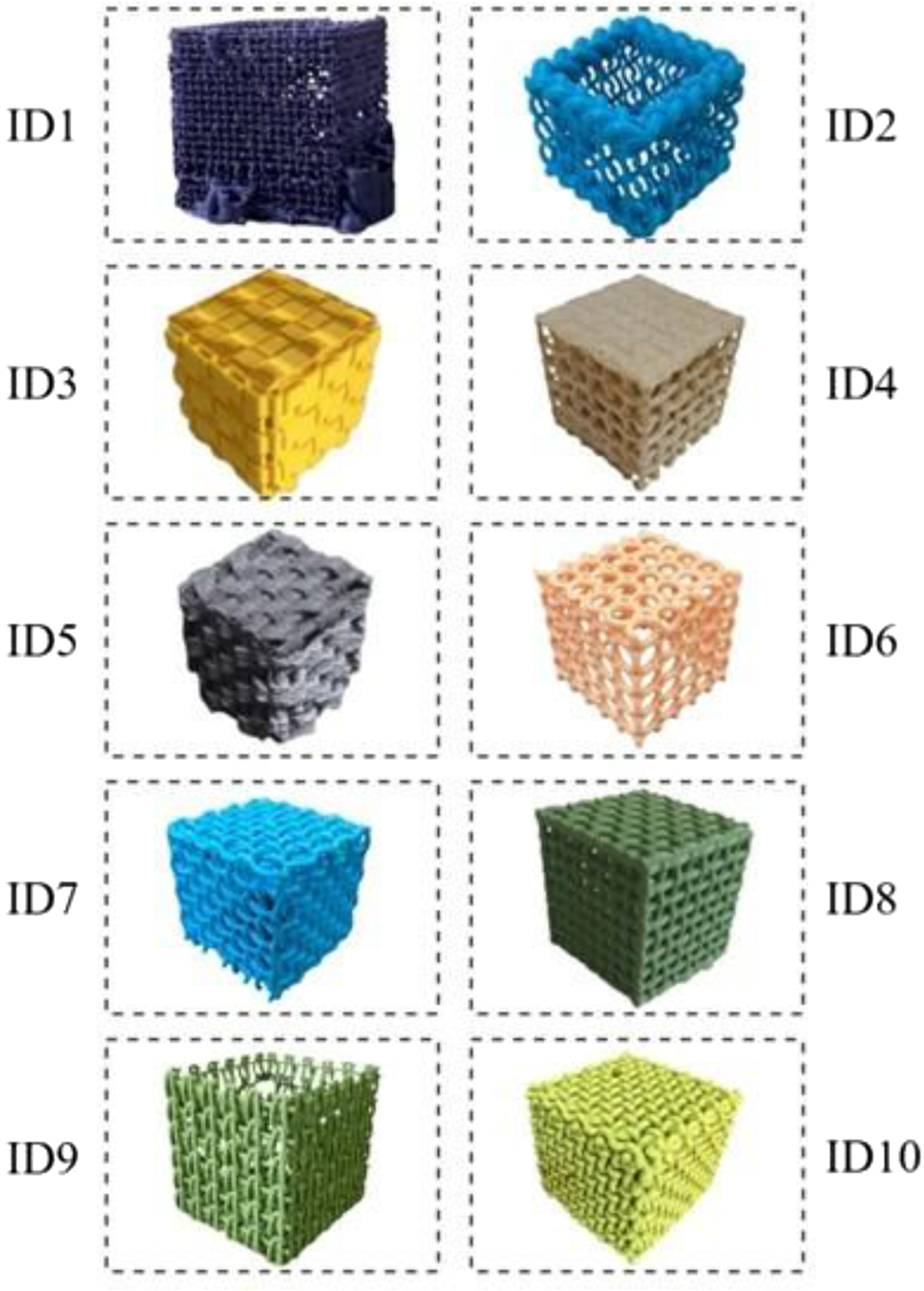
Final design outcomes
The diverse knitting techniques explored throughout the studio were synthesized into original spatial systems, with each student constructing a surface-based design that functioned as a structural shell. These final outputs reflected cumulative learning outcomes from earlier phases, including material exploration, digital modeling, and fabrication.
Students critically reflected on their process-based knowledge and produced three-dimensional architectural designs that were original, functional, feasible, resilient, and aesthetically sophisticated. These results demonstrate how knitting, when coupled with digital technologies, can serve as a pedagogical framework that fosters material-based exploration and iterative learning in architectural education (Figure 11). Final three-dimensional designs developed by students based on knitted surface logic.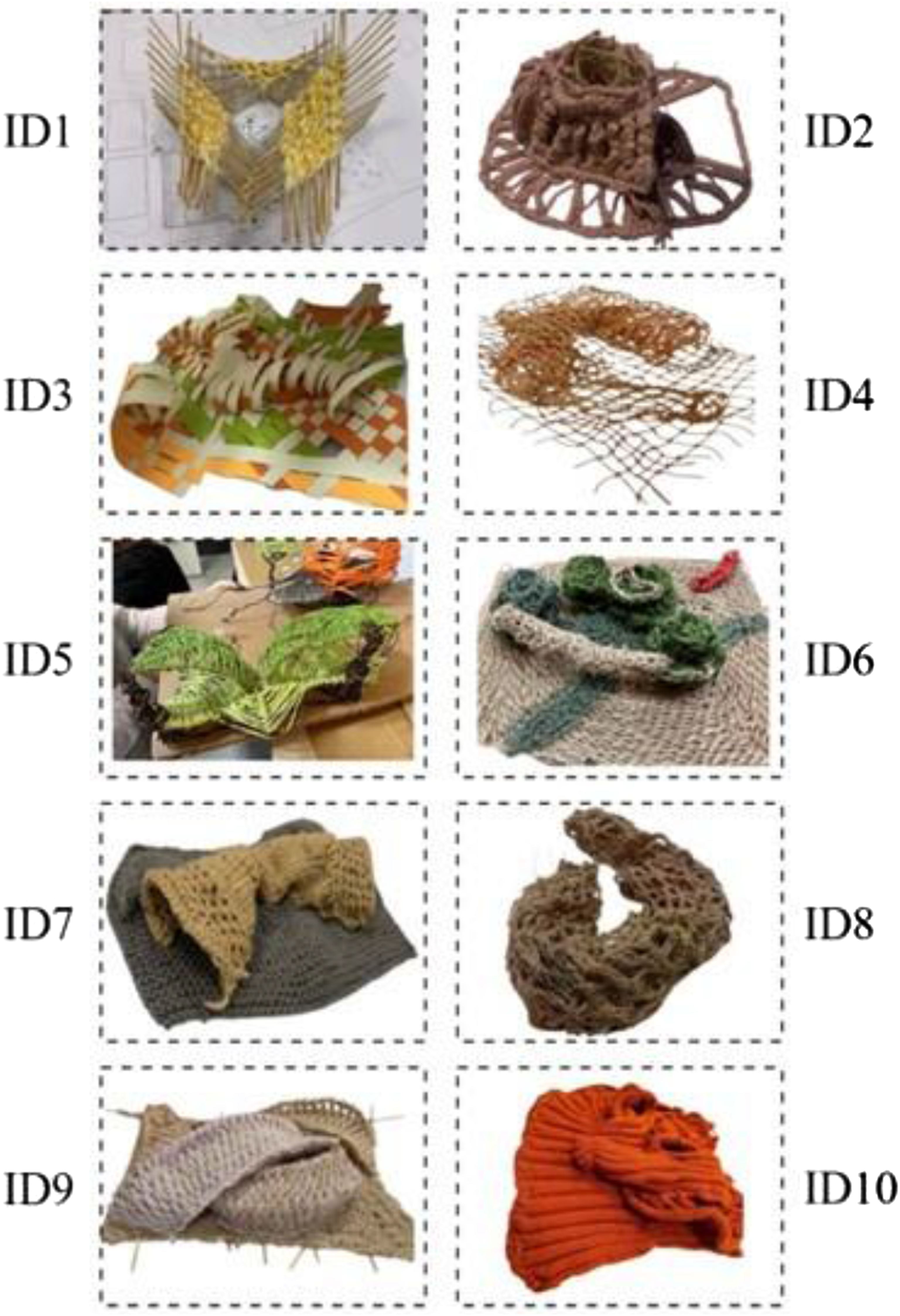
Methods and models for evaluating pedagogical impact during the learning process
Learning styles are commonly defined as relatively stable cognitive, affective, and physiological traits that indicate how individuals perceive, interact with, and respond to learning environments.15,16 Within this broad construct, Gregorc conceptualized learning styles along a continuum from “concrete–sequential” to “abstract–random”. 17 James and Galbraith proposed a sensory-modality-based classification distinguishing visual, auditory, tactile, and kinesthetic preferences, 18 while Barsch articulated a closely related set of perceptual dimensions. 19 Building on Jung’s theory of psychological types, Myers and Myers formulated a typology comprising eight characteristic learning styles. 20 In parallel, Ehrman and Oxford developed a model grounded in cognitive functions to account for individual differences in learning behavior. 21
Among these, Kolb’s Experiential Learning Theory (1984) has become one of the most widely utilized frameworks, defining learning as a four-stage cyclical process: concrete experience (CE), reflective observation (RO), abstract conceptualization (AC), and active experimentation (AE). Based on this cycle, Kolb proposed four dominant learning styles—accommodating, converging, assimilating, and diverging—that reflect individuals’ preferences for acquiring and processing knowledge. In practice-based disciplines such as architecture, this model is particularly effective, as it aligns well with pedagogical activities such as model-making and digital prototyping (CE), critical reflection (RO), conceptual development (AC), and fabrication or design testing (AE). As such, Kolb’s model provides a robust pedagogical foundation that supports both the creative and analytical dimensions of architectural education. We focus on Kolb’s Experiential Learning Theory, as it maps directly onto our studio sequence—knitted material trials (CE), critique-led reflection (RO), parametric reasoning (AC), and fabrication tests (AE).
12
(Figure 12). Kolb’s experiential learning theory: Four-stage cycle and learning.
12
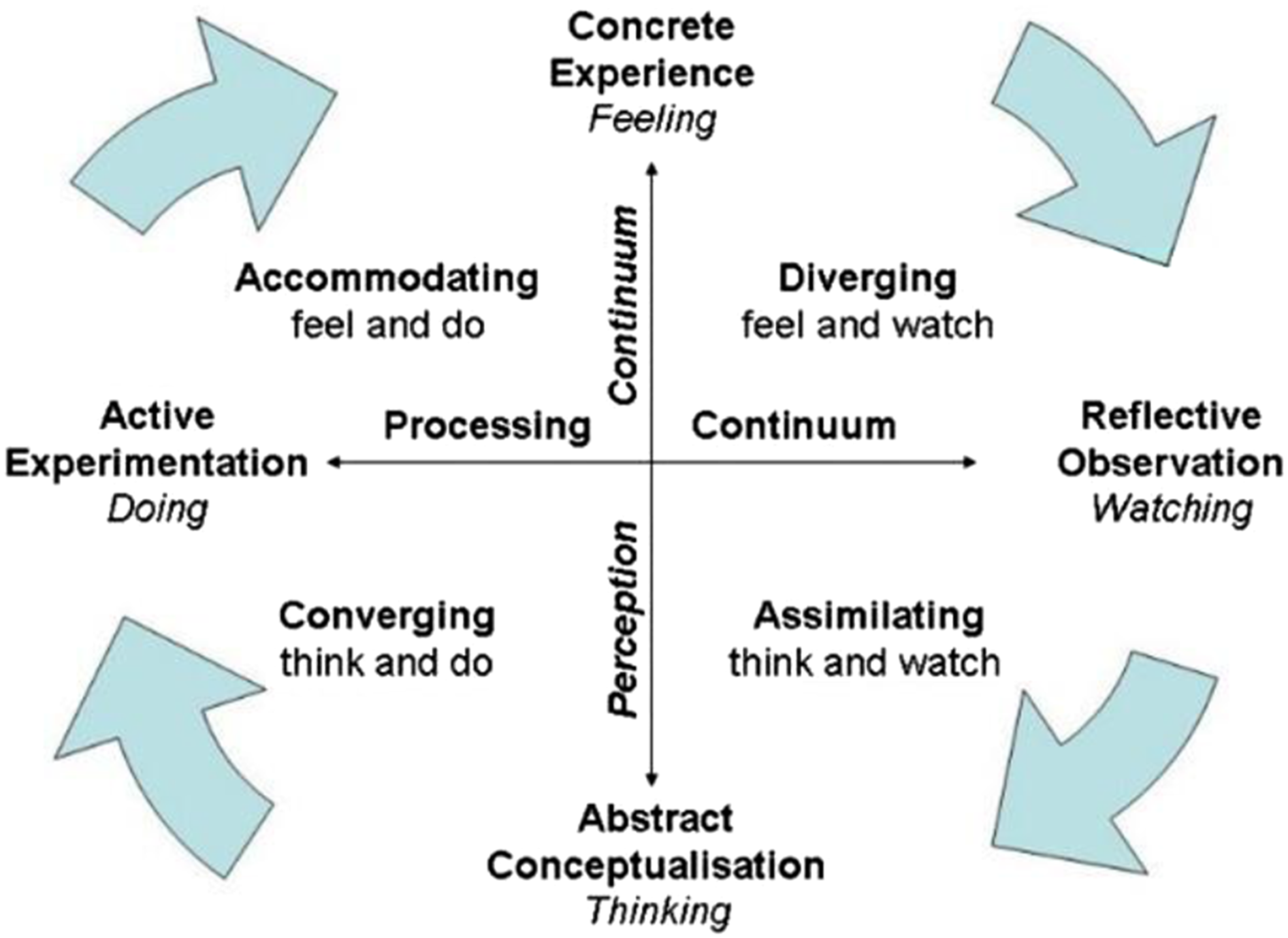
Kolb’s learning cycle served as a core pedagogical framework in this study, enabling students to experience knitting techniques through hands-on engagement and to reinforce those experiences via digital design tools. The cyclical structure of the model allowed students to move between experimentation, observation, theoretical understanding, and iterative design practice—thus fostering deep and reflective learning in a design studio setting.
Assessment through rubric-based evaluation
The rubric-based evaluation model has progressively evolved as a key tool for standardizing and objectifying performance assessment in educational contexts. One of the earliest documented examples is Hillegas’s scale for evaluating written expression. 22 This work was subsequently extended into a more systematic structure with the introduction of analytical rubrics by Diederich et al. 23 Since the 1990s, rubrics have become widely adopted in educational practice, particularly with the rise of standards-based assessment frameworks, and are now commonly employed to evaluate complex, multi-criteria student outputs.
Rubrics provide students with clear performance criteria and actionable feedback for improvement, while offering educators a transparent and consistent framework for judgment. In design-based disciplines, rubrics are essential for evaluating creative outputs in a structured and accountable manner. Kasap and Kaptan emphasized the role of rubrics in ensuring objectivity and accountability in performance-based evaluation. 24 Similarly, Utaberta et al. noted that the integration of rubrics into critique sessions in architectural education promotes more equitable and learning-focused environments. 25
Ragheb argued that rubric-based assessments aligned with “assessment for learning” strategies foster deep learning by encouraging students to engage critically with their own work. 26 Criterion-based evaluation models have been shown to enhance students’ creative problem-solving abilities and to support more effective management of the design process. 26 Wolf and Komara further suggested that rubrics function not only as assessment instruments but also as tools for self-assessment, enabling students to understand and reflect upon their own learning trajectories. 27
These studies collectively suggest that rubrics serve not merely as evaluative tools, but as pedagogical mechanisms that promote self-regulated learning, interdisciplinary integration, and iterative design thinking. Rubrics establish a common evaluative language between instructors and students, rendering assessment processes more interactive, transparent, and pedagogically aligned. When coupled with emerging technologies such as digital design platforms or augmented reality, rubrics can further enhance students’ ability to assess and refine their creative outputs, even in self-directed or hybrid learning environments.
These studies indicate that rubrics can be employed not only as evaluative instruments in architecture and interior architecture education but also as pedagogical mechanisms that support sustainability, foster innovative learning practices, and promote critical engagement with interdisciplinary design processes.
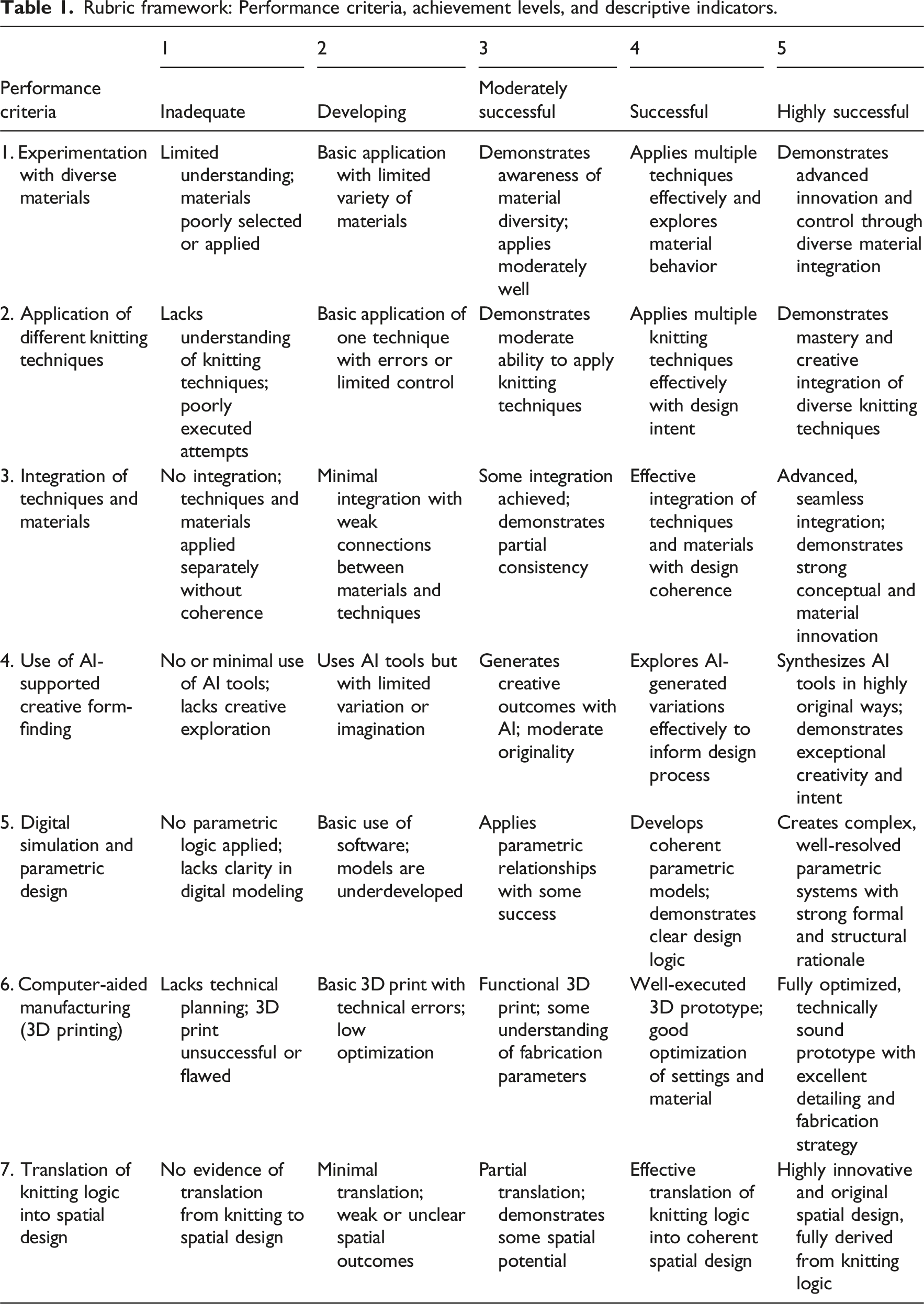
Rubric-based assessment typically consists of three core components: (1) Performance Criteria – the specific knowledge, skills, or competencies being assessed, (2) Performance Levels – the degree to which these criteria are achieved, and (3) Descriptive Indicators – qualitative explanations that define each performance level.
In this study, rubric-based evaluation was conducted based on the following performance dimensions: • the effective application of various knitting techniques and material explorations, • creative form development supported by artificial intelligence, • digital simulation and parametric design strategies, and • the integration of computer-aided manufacturing -3D printing-technologies.
Performance levels were categorized on a five-point scale: (1) – Inadequate, (2) – Developing, (3) – Moderately Successful, (4) – Successful, (5) – Highly Successful.
Rubric framework: Performance criteria, achievement levels, and descriptive indicators.
Combined use of Kolb’s experiential learning cycle and rubric-based assessment
In this study, Kolb’s Experiential Learning Cycle and rubric-based evaluation were employed in tandem to systematically structure and assess the pedagogical process. Kolb’s model provided a conceptual framework that allowed students to engage with knitting techniques through a four-stage learning progression: concrete experience, reflective observation, abstract conceptualization, and active experimentation. This cyclical process enabled students to acquire knowledge, internalize it through reflection, develop conceptual understanding, and test ideas through practical application.
The integration of theoretical reflection and hands-on experimentation made Kolb’s framework particularly well-suited to the applied context of architectural design education—especially in the fusion of knitting techniques with digital design and fabrication tools. Furthermore, its adaptability to different learning preferences supported the individual learning trajectories of each student.
The rubric evaluation method complemented this model by providing a structured and measurable system for assessing student performance. Rubrics offered both process-oriented and outcome-oriented evaluation, allowing for objective analysis of students’ creative problem-solving skills, technical proficiency, and ability to use digital tools effectively. Additionally, the rubric provided concrete, personalized feedback, contributing to students’ self-awareness and individual growth.
The combined use of Kolb’s learning cycle and rubric-based assessment created a holistic pedagogical framework, allowing instructors to evaluate not only student outputs, but also the learning journey itself. This dual-model approach ensured that both the pedagogical design of the course and students’ learning outcomes were critically assessed.
Kolb’s cycle emphasized the students’ experiential engagement with content and their reflective understanding of learning stages. In parallel, the rubric method ensured that each of these stages could be evaluated against transparent and consistent performance indicators. For example, each stage of Kolb’s cycle was mapped onto specific rubric criteria to monitor how well students navigated the learning process. This alignment allowed for a comprehensive understanding of student development, ensuring that learning was not only experienced but also assessed through objective and pedagogically sound measures.
Scope and limitation
This study adopted a reflective and inclusive approach to pedagogical evaluation by documenting each phase of the learning process and acknowledging the iterative nature of design learning. • Documentation of Process: Photographs, instructor notes, and student observations were systematically recorded throughout the project timeline. This documentation served as a valuable reference for analyzing student development and as a resource for future implementations of similar design pedagogies. • Learning Through Failure: Experimental failures and unsuccessful prototypes were deliberately integrated into the learning process. Rather than being perceived as setbacks, these instances were reframed as pedagogical opportunities, consistent with the iterative logic of design thinking. In practice, challenges encountered during the early prototyping stages served as catalysts for deeper material exploration. Through iterative trial-and-error cycles, students developed a more nuanced understanding of material behavior, and the insights gained from these explorations were systematically embedded into the rubric under the criterion of “adaptation to the learning process.” • Feedback Integration: Continuous feedback loops were established through instructor critiques and peer reviews. This dialogic process facilitated project development and encouraged the adoption of more experimental, and creative strategies. • Scope Limitations: Due to institutional constraints and limited time, explorations related to biofabrication, biomaterials. • Sample Size and Generalizability: The study was conducted with a limited cohort of ten third-year architecture students enrolled in an elective design studio. As the course quota was capped at 10 participants, the findings may not be generalizable to larger or more diverse student populations. However, the focused sample allowed for detailed, individualized analysis. • Operationalization of Limitations: The identified limitations, such as varying skill levels and time constraints, were integrated into the rubric through criteria rewarding improvement and iterative development. These adjustments ensured that constraints were acknowledged not only conceptually but also operationalized within the assessment process.
Findings
The analysis draws upon Kolb’s Experiential Learning Theory and rubric-driven performance assessments. At the outset, students were introduced to the pedagogical framework, the rubric criteria, and their individual Kolb learning profiles, thereby establishing transparency in both expectations and assessment procedures. The most substantial improvements were observed in material experimentation and in computer-aided manufacturing (3D printing) tasks, while gains in digital simulation and parametric design were moderate. Performance in AI-assisted form generation showed high variability across individuals, reflecting differences in digital literacy and conceptual engagement.
As the studio progressed, each phase of the design process was explicitly linked to Kolb’s four learning modes. For instance, digital simulation activities emphasized Abstract Conceptualization (AC) through systematic analysis of parametric relationships, whereas the final fabrication stages highlighted Active Experimentation (AE) through iterative 3D printing trials. Accordingly, every student output—whether a digital model, AI-generated variation, or physical prototype—was systematically associated with a specific stage of the experiential learning cycle, ensuring methodological coherence and pedagogical traceability.
Learning styles based on student self-assessments
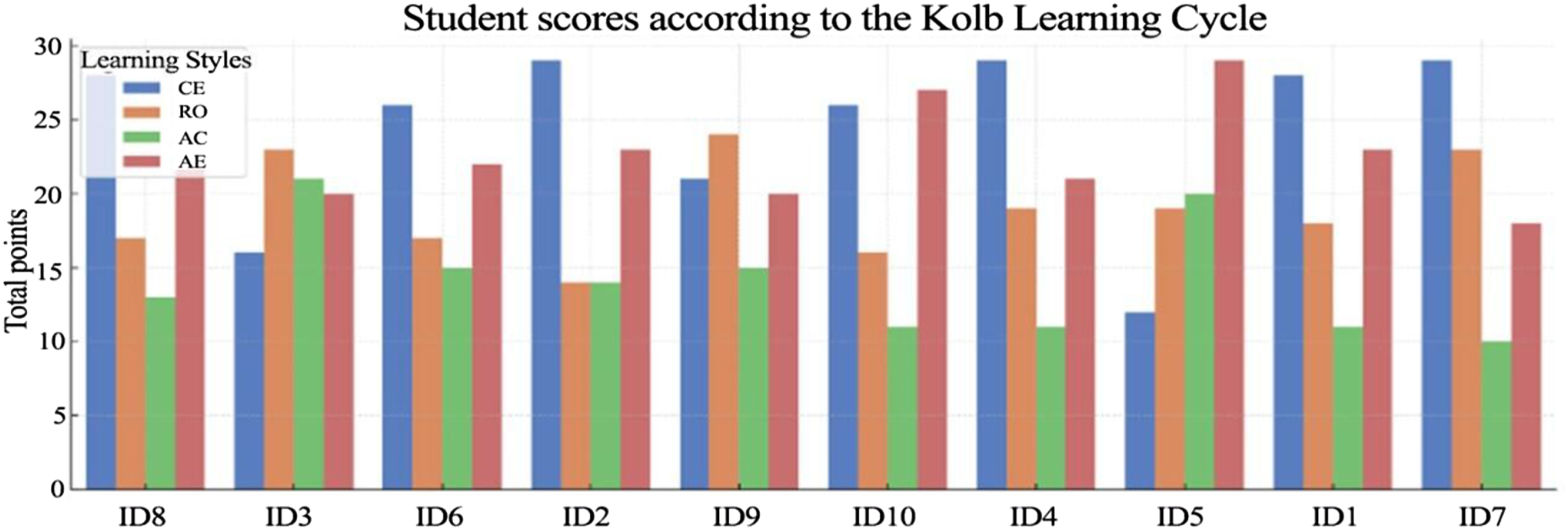
To determine students’ preferred learning styles, a structured self-assessment survey was administered in accordance with the four stages of Kolb’s experiential learning cycle: Concrete Experience (CE), Reflective Observation (RO), Abstract Conceptualization (AC), and Active Experimentation (AE). Each student evaluated their own skills in relation to the studio—particularly concerning the use of knitting techniques and digital tools—by rating themselves on eight sub-criteria using a 1–4 scale. The learning style associated with the highest cumulative score was identified as the dominant learning preference for that student.
The graph in Figure 13 illustrates the distribution of total scores for each student across the four learning stages. Key findings from the analysis are as follows: • The Concrete Experience (CE) and Active Experimentation (AE) stages received the highest average scores across the cohort. This suggests that the studio, which emphasized hands-on making and iterative production, successfully supported practice-based and action-oriented learning. • The Abstract Conceptualization (AC) stage consistently received the lowest scores. This indicates that students may require further guidance in theoretically framing or abstracting their design experiences. • While no statistically significant gender-based differences were identified, it was noted that female students tended to place greater emphasis on CE and AE stages. • Based on Kolb’s model, students were classified into three primary learning style groups: ◦ Concrete Experience (CE): ID1, ID2, ID4, ID6, ID7, ID8 ◦ Active Experimentation (AE): ID5, ID10 ◦ Reflective Observation (RO): ID3, ID9 • The average performance across the four learning stages was also analyzed across all students and compared across the seven performance criteria used in the rubric (see next section). Student scores by stage in Kolb’s experiential learning cycle.
Rubric-based performance analysis
Students’ performance throughout the studio was evaluated using a rubric-based framework aligned with the following seven performance criteria: (1) Experimentation with Diverse Materials (2) Application of Different Knitting Techniques (3) Integration of Techniques and Materials (4) Use of AI-Supported Creative Form-Finding (5) Digital Simulation and Parametric Design (6) Computer-Aided Manufacturing (3D Printing) (7) Translation of Knitting Logic into Spatial Design
Each student’s performance was scored based on these criteria using the five-point rubric scale previously defined. The average scores were calculated and visualized in Figure 14 to provide a comparative overview of individual strengths and areas needing improvement. Individual rubric-based performance scores across evaluation criteria.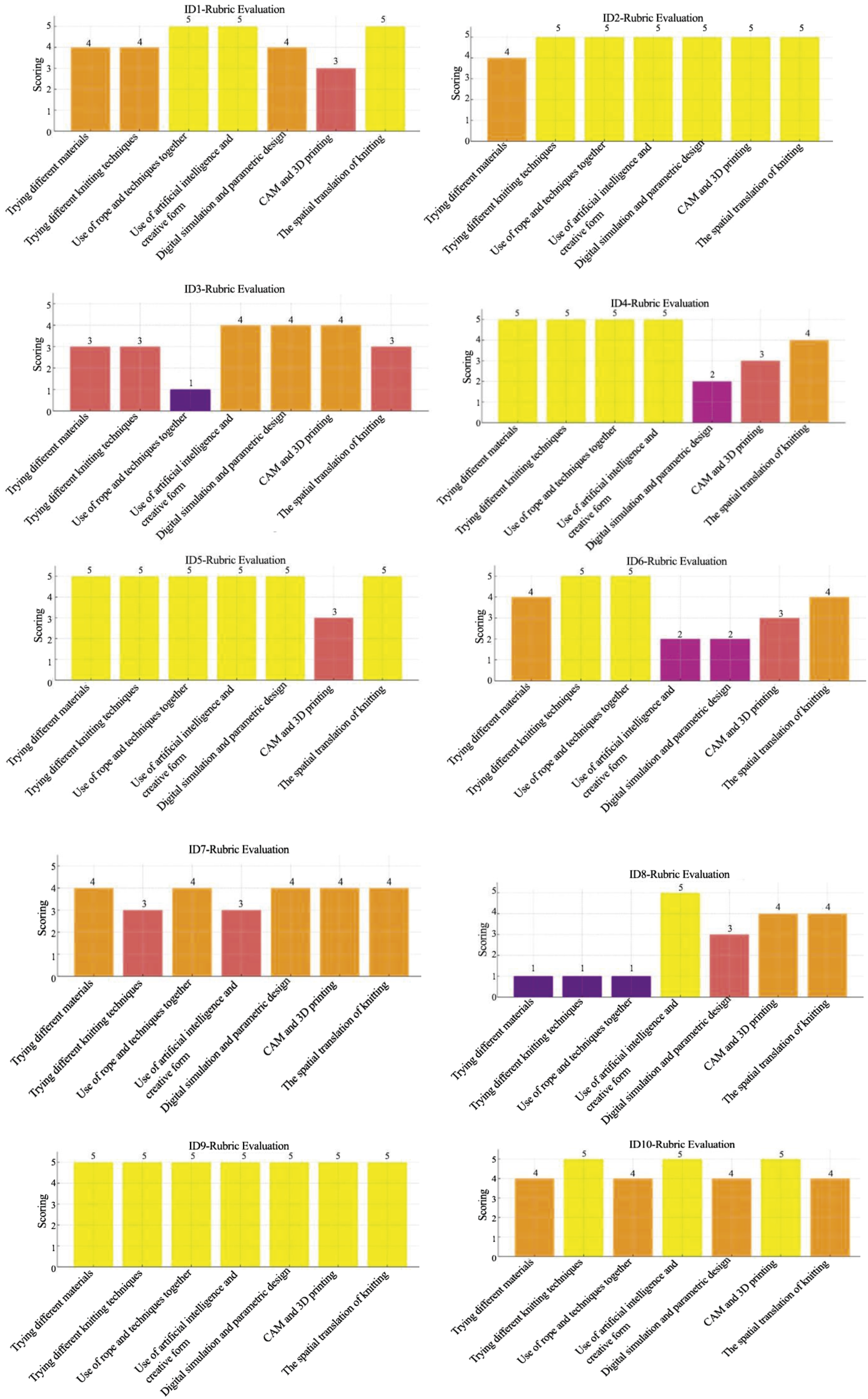
The data visualization reveals nuanced differences in performance, enabling educators to identify where each student excelled and where further support may be beneficial. This level of individualized analysis demonstrates the utility of the rubric not only as a grading tool but also as a diagnostic instrument to enhance pedagogical responsiveness and support personalized learning trajectories.
Student performance was assessed based on specific evaluation criteria, including the use of diverse materials, application of digital tools, technical innovation, and creative output. • Students ID2, ID5, and ID9 demonstrated the most balanced and consistently successful outcomes across all criteria. • Conversely, ID4 and ID6 exhibited lower performance in digital domains, indicating a potential misalignment between learning style and the technological demands of the design process.
The key findings derived from the rubric-based analysis are summarized below: • High levels of performance were recorded in material experimentation and 3D printing applications. Students showcased both technical proficiency and creative exploration in these areas, suggesting strong engagement with hands-on fabrication and digital production tools. • Notable individual variability was observed in the criterion related to form generation using artificial intelligence. While some students utilized AI-driven tools effectively to explore novel design possibilities, others demonstrated limited engagement or outcomes, reflecting differing levels of digital literacy and conceptual abstraction. • Parametric modeling and the spatial transformation of knitted structures required students to integrate conceptual thinking with advanced technical application. In these categories, performance was moderate overall, yet showed potential for growth—indicating that students were beginning to bridge the gap between abstract design logic and computational execution.
Overall, the rubric-based performance analysis provided a transparent and structured framework to reveal both the strengths and developmental areas of individual students. This level of diagnostic insight underscores the value of rubric systems not only in assessing outcomes but also in shaping personalized and reflective learning processes within design education. Material-specific limitations also played a significant role in shaping student outcomes. For instance, cotton-dominant yarns provided dimensional stability but frequently led to brittle failures in 3D printing when scaled to larger lattice forms, whereas acrylic-based blends allowed greater curvature yet required additional support structures to prevent collapse. Several prototypes produced during the studio were unsuccessful due to filament breakage, excessive deformation, or incompatibility between knitted geometries and 3D printing tolerances. These failed attempts, however, were incorporated into the iterative learning process, enabling students to critically evaluate the constraints of material–structural translation. By explicitly addressing these limitations, the study demonstrates that the integration of knitting techniques was not merely conceptual but materially grounded and pedagogically valuable in highlighting both the potentials and boundaries of textile-informed design.
Group comparisons according to learning styles
After classifying the participants into three main groups (CE, RO, AE) according to their dominant learning styles, the average performances of each group were analyzed in terms of rubric criteria. Figure 15 graphically presents the comparative performance levels between these groups and makes the effects of learning style reflected on the design process visible. Average performance comparison according to learning styles. According to learning styles (1: CE, 2: RO, 3: AE).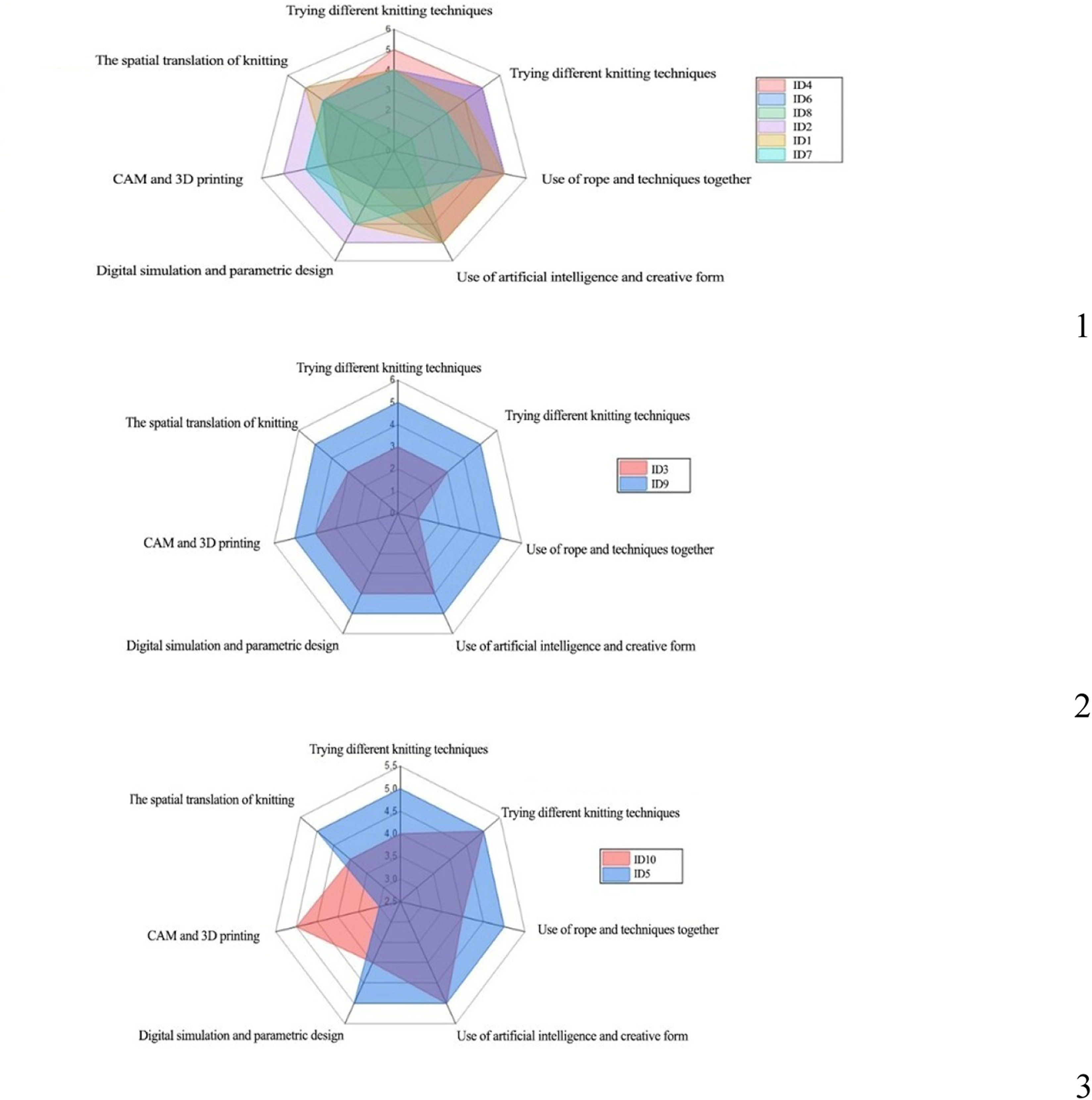
The findings suggest a meaningful correlation between Kolb’s learning styles and rubric-based performance outcomes. Specifically: • Students categorized under the Concrete Experience (CE) group demonstrated strong performance in physical material experimentation, yet showed relatively limited engagement in digital simulation tasks. • The Active Experimentation (AE) group excelled in production-oriented tasks and in the development of AI-assisted creative forms, reflecting an action-driven and exploratory approach to learning. • The Reflective Observation (RO) group exhibited a more balanced performance, particularly in the use of digital tools and form generation, indicating their ability to synthesize observation with digital design practices.
These distinctions highlight the importance of designing diversified learning environments that accommodate a range of cognitive styles, particularly within pedagogical models that integrate analog and digital methods.
The average scores achieved by students across the rubric’s performance criteria were visualized using a radar chart, as shown in Figure 16. This visualization clearly illustrates that students who performed strongly in areas such as parametric design, 3D printing, and material experimentation emerged as leading performers. Conversely, the criterion related to AI-based design generation revealed more pronounced individual differences, suggesting that the integration of emerging technologies elicits varied levels of proficiency and comfort among learners. Radar chart showing the average performance levels of students according to rubric criteria.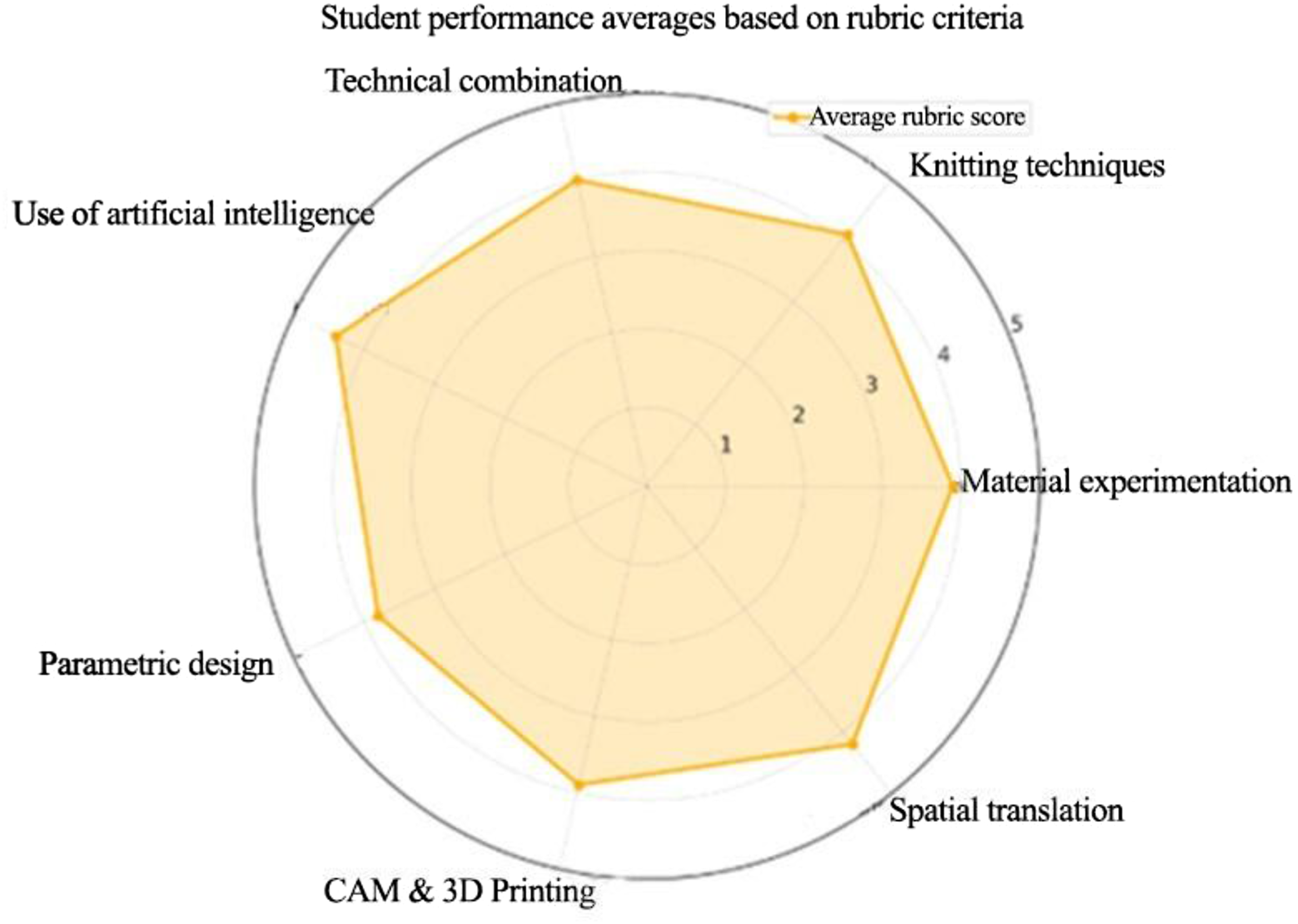
The radar chart visualizes students’ average performance across each rubric criterion. The data reveal that students such as ID2, ID5 and ID9 consistently demonstrated high and stable performance across all evaluation categories. An analysis of overall averages indicates that parametric design and 3D printing processes were among the most effectively executed components of the studio, while performance in the AI-assisted design criterion showed more variability, with some students underperforming in this area. These disparities may be attributed to differences in technical proficiency as well as varying levels of prior experience with digital tools. The radar visualization also made visible certain imbalances between assessment criteria and helped identify students’ strengths from a pedagogical perspective.
This study demonstrates that the integration of knitting techniques into architectural education offers multidimensional pedagogical and design-based contributions. The process was structured around embedding a traditional craft method—knitting—within a studio-based learning model through the use of digital design and fabrication technologies. Students engaged with knitting techniques both intuitively and analytically, using tools such as material prototyping, parametric modeling, AI-assisted variation generation, and 3D printing.
Key findings from the pedagogical analysis include: • Pronounced individual differences were observed among students across multiple evaluation criteria. • The highest levels of achievement were associated with the Concrete Experience (CE) and Active Experimentation (AE) phases of Kolb’s learning model, aligning with the hands-on and production-oriented nature of the studio. • The relatively lower scores in the Reflective Observation (RO) and especially the Abstract Conceptualization (AC) stages suggest that students may require more structured guidance to effectively analyze and theoretically contextualize their design experiences. • In areas such as creativity, digital design, and AI-assisted form generation, performance levels varied significantly, indicating a broad spectrum of individual competencies and prior knowledge. • With a small cohort (N = 10), we did not conduct inferential statistics. Descriptively, female students tended to rate themselves higher on CE and AE stages.
Instead of general references to “innovation” or “creativity,” the study evidenced concrete learning gains. For example, rubric scores in Material Experimentation increased from an average of 3.1 to 4.5, while 3D Printing rose from 3.0 to 4.3. Similarly, 80% of students revised their initial prototypes after structured feedback sessions, demonstrating measurable improvement in iterative design ability. These results confirm that the pedagogical value of the studio was not merely aspirational but reflected in quantifiable progress.
Conclusion
This study implemented and evaluated a knitting-based design studio that systematically integrated digital design and fabrication technologies within the framework of Kolb’s experiential learning cycle. Students advanced through sequential stages of material exploration, reflective critique, parametric reasoning, and iterative fabrication, allowing the entire process to be mapped onto concrete experience, reflective observation, abstract conceptualization, and active experimentation.
Learning outcomes were measured through a rubric-based assessment that provided transparent and traceable feedback. The results demonstrated significant improvements in material experimentation (average scores rising from 3.1 to 4.5/5) and 3D printing optimization (3.0 to 4.3/5), while 80% of projects showed measurable progress after structured critique and iterative refinement. These findings highlight that knitting, when coupled with CAD/CAM tools, can effectively link craft-based intuition with computational reasoning in a rigorous and assessable pedagogical environment.
Beyond immediate results, the integration of a rubric as a dynamic feedback tool—rather than a static grading mechanism—proved essential in operationalizing Kolb’s cycle. It enabled students to translate critique into concrete design changes, reinforcing the reflective and iterative character of the studio. The approach also created a pedagogical framework in which experimentation, failure, and revision were not incidental but central to the learning process.
Given the small elective cohort (N = 10), the findings should be regarded as preliminary. Future studies should validate these outcomes with larger and more diverse student groups, while also assessing manufacturability and structural performance at architectural scales. Additionally, the integration of rubric-based evaluation within immersive AR/VR environments could create interactive assessment systems that strengthen the connection between material practice, digital technologies, and contemporary design education. Such developments would expand the scope of knitting-based pedagogy and further consolidate its role as a bridge between physical making and computational design thinking.
Footnotes
Acknowledgements
I would like to express my sincere gratitude to the architecture students who participated in this study. The contributors—Ahmet SANDALCILAR, Feyza Nur ERTEMUR, Ilayda TEKIN, Isra Yağmur KURAN, Nazile MAHMUT, Nazli ÇELIK, Salih Mert ERSEN, Sevval CIHAN, Muhammed Şehmuz EREN and Sibel APAYDIN—enriched the research process with their creative, analytical, and disciplined approaches. Their involvement played a significant role in shaping both the pedagogical and design outcomes of this investigation into the integration of knitting techniques with digital design and fabrication tools.

Funding
The authors received no financial support for the research, authorship, and/or publication of this article.
Declaration of conflicting interests
The authors declared no potential conflicts of interest with respect to the research, authorship, and/or publication of this article.