




Abstract
Financial literacy is an essential component of human capital to help enhance financial wellbeing. However, systemic oppression can create significant barriers for many LGBTQI + individuals accessing financial education. Consequently, they may have insufficient financial literacy, causing financial exclusion and vulnerabilities to financial fraud and scams. Data availability and advice, and specifically qualitative data regarding financial literacy education of LGBTQI + people in Vietnam, is very limited. Drawing on concepts of financial literacy, critical pedagogy, intersectionality, and Thich’s teachings about diversity, transformation, and emancipation, this critical ethnography, using data gathered through surveys and focus groups, examines the problematic nature of financial literacy education and its impact on LGBTQI + young adults (aged 18–35) in Vietnam, a Global South context impacted by pedagogical paradigms rooted in the Global North. The analysis includes overarching themes: (1) discrimination and exclusion of LGBTQI + individuals’ access to financial literacy education; (2) the impacts of laws on LGBTQI + individuals’ sense of insecurity and insufficient financial literacy; and (3) resiliency and transformation. This small, mixed-methods study shares the counter-stories of participants with limited generalizability of results.
Keywords
Introduction
Financial literacy is “a combination of awareness, knowledge, skill, attitude, and behavior necessary to make sound financial decisions and ultimately achieve individual financial wellbeing” (Atkinson and Messy, 2012: 3). Huston (2010) conceptualizes financial literacy in two dimensions—understanding (personal finance knowledge) and use (personal finance application). As an essential component of human capital, financial literacy can be employed in endeavors to increase lifetime utility from consumption to enhance financial wellbeing (Huston, 2010). Financially literate people possess the knowledge and skills to reach their financial goals through budgeting, retirement plans, and wealth accumulation (Huston, 2010). They can also realize how their social standpoint affects their opportunities and challenges, and how existing financial systems may benefit or marginalize other communities (Arthur, 2012). Previous research indicates that financial literacy education, when approached through a critical and emancipatory lens, can function as a transformative practice that nurtures and stimulates justice, increases collective agency, and creates a sense of critical consciousness across nations and communities (Akbaş and Seedsman, 2024; Arthur, 2012). Financial literacy can also be a source of emancipation for marginalized communities such as LGBTQI + individuals (Tran, 2024).
Although financial literacy is crucial, systemic oppression creates significant barriers for many LGBTQI + individuals in accessing financial education (Wei et al., 2021). It is not that financial literacy and information are unavailable; rather, the programs, materials, access, and tools about financial education are often shaped by a certain mainstream mindset that often presupposes a heteronormative and traditional life pathway such as heterosexual couples and traditional families, which implicitly reproduce dominant economic ideologies and social norms (Seda, 2013). Consequently, LGBTQI + members may experience these structures as exclusionary, potentially hindering their engagement with financial education. This reason may contribute to comparatively lower levels of financial literacy and confidence in financial decisions among LGBTQI + individuals relative to their heterosexuals (Tran, 2024).
Discriminatory practices impact LGBTQI + members who may not fully understand the concepts of finance, basic rights as financial consumers, and proper banking services for their needs. Inadequate financial literacy leads LGBTQI + people to make poor life choices and is attributed to financial anxieties with negative consequences (Steen and Mackenzie, 2013) and vulnerabilities to financial fraud and scams (Wei et al., 2021). Financial literacy deficiency therefore jeopardizes LGBTQI + individuals’ development, radically eliminating the benefits of financial inclusion such as assisting susceptible individuals to eradicate poverty, economic injustice, the gender gap, and further millennium development goals (Chibba, 2009).
Because of diverse family formations and capital accumulation, some LGBTQI + individuals can encounter unique financial issues and require specific financial advice with knowledge to tackle their goals (Tran, 2024). While there is a growing amount of literature on financial education for women and other marginalized people, data availability and advice, and specifically qualitative data about financial literacy and exclusion of the LGBTQI + community is very limited (Tran, 2024). This critical ethnography therefore seeks to understand the issues of financial literacy education and its impact on LGBTQI + young adults within the public sphere in Vietnam. Our work also aims to address the gap in academic scholarship regarding the entanglement of financial literacy and inclusion, and social categories which affect LGBTQI + people’s financial capabilities and exclusion. This paper further provides insights into financial knowledge the LGBTQI + community expects to acquire.
Based on insights from surveys and two focus groups with LGBTQI + young adults, this study also shares Vietnamese counter-stories (Solórzano and Yosso, 2002). As “a method of telling the stories of those people whose experiences are often not told (i.e., those on the margins of society), the counter-story is a tool for exposing, analyzing, and challenging the majoritarian stories of racial privilege” (p. 32). In contrast, majoritarian stories “privilege Whites, men, the middle and/or upper class, and heterosexuals by naming these social locations as natural or normative points of reference” (p. 28). Majoritarian stories may include the stereotypical ways in which people who are Othered are constructed in the dominant discourse. A story may also be a majoritarian story because of what is omitted and what is misunderstood. Due to the lack of accessible financial education tailored to their needs, many LGBQTI + individuals can face inadequate financial skills, causing financial exclusion and exacerbating vulnerabilities (Tran, 2024). As such, we will share the counter-stories of these LGBTQI + participants. Further we will explore the impact of Global North philosophies and histories on educational practices in the Global South, particularly through the enduring impacts of colonialism in which European-centric knowledge, standards, and worldviews are imposed to manage and prepare colonized populations for subordination within the colonial order (Trinh, 2018).
We draw from critical pedagogy (Darder et al., 2003; Freire, 1970) which emphasizes justice, critical consciousness, and the liberation of marginalized voices, advocating for transformative educational practices that challenge traditional hierarchies and power dynamics. Hooks (1994) highlights the importance of intersectionality in understanding identity and diversity. Thầy Thich Nhat Hanh’s teaching invites us to understand the interbeing and the beauty of diversity and individuality, while fostering awareness of our shared humanity and the interconnectedness of diverse communities (Thich, 2010). Critical pedagogy, intersectionality, and Thich’s teachings, together, emphasize the importance of justice, transformation, liberation, and work to raise awareness about the solidarity, love, and mutual support shared between marginalized populations and the dominant groups. In combination, these perspectives can serve to provide a critical lens to holistically examine issues and factors affecting participants’ financial literacy and inclusion. The research questions are as follows: (1) What do Vietnamese LGBTQI + young adults in Vietnam say about their experiences in accessing financial literacy education? (2) What factors are particularly essential to improving financial literacy and justice for LGBTQI + young adults in Vietnam?
There are three themes in paper: discrimination and exclusion; impacts of laws; and, resiliency and transformation.
A review of the literature
There is a long-lasting history of the LGBTQI + community being systematically exploited, in the Global South contexts such as Vietnam, where the social hierarchy is natural and normalized (Le et al., 2021). Many Vietnamese people still perceive LGBTQI + as a sickness and hold a belief that LGBTQI + people need to be treated (Le, 2023). Regarding LGBTQI + rights, in Vietnam, there is no official Safe Act or legislation for the LGBTQI + Community (Equaldex, 2023). This absence has a substantial impact on fostering a sense of belonging, social connectedness, and safety (Hatzenbuehler and Keyes, 2013). A lack of systemic structures may increase discrimination and oppression at home, school, and the workplace, escalating vulnerabilities, and injustices many LGBTQI + people have historically faced.
LGBTQI + rights in the Global North have progressed significantly since the 1960s, culminating in legalized same-sex marriage first in the Netherlands in 2001, 2005 in Canada, and 2015 in the United States. The legalization of same-sex marriage is heralded as a beacon of human rights and an indicator of an inclusive society, which may be seen as a Global North influence. This impact on countries in the Global South, such as Vietnam, is undeniable. Numerous campaigns have been conducted, urging the Vietnamese government to legalize same-sex marriage (Horton and Rydstrom, 2019). As Nguyen and Doan (2022) write, with respect to same-sex marriage in Vietnam, “opponents claim that this behavior is morally incorrect in Eastern culture where only heterosexual marriages are traditionally acceptable” (p. 347). Same-sex marriage is permitted in Vietnam since 2014; however, until today, couples are not able to register their marriage and therefore are not afforded legal protections, possibly putting them in a precarious and perhaps dangerous position. As Nguyen and Doan (2022) indicate, One thing that same-sex couples have in common when they are ready to come out is that they are ready to accept conflicting opinions (mostly objections) and take the responsibility to represent the voice of the community: LGBT couples can get married like any other normal heterosexual couples in society (p. 348).
Thich Nhat Hanh is a renowned Vietnamese Buddhist monk and peace activist. Thich (2012) highlights the beauty of individuality and of embracing one’s true self and others. His teachings contribute a transformative, critical, and ethical lens to the understanding of diversity, solidarity, and emancipation. Thich (2010) teaches that by letting go of negativity, we can make space to cultivate the “flowers”—power and resiliency, within ourselves and others. Thich’s concept of interbeing (2020)—the interconnectedness of all beings—encourages the awareness of the shared humanity and interconnectedness among Vietnam’s diverse groups, identities, classes, and regions, which helps create the collective empowerment. The concept of interbeing also helps marginalized people, such as LGBTQI+, realize that financial exclusion is not an individual failure but is socially constructed through intersecting forces such as injustice, family rejection, and labor inequity (Tran, 2024; Trinh et al., 2022). Thich’s work centers on ideas that align strongly with emancipatory and inclusive education. Drawing from Thich’s (2020) work, we see the essential role of love and compassion in encouraging individuals to understand the struggles of others such as LGBTQI + populations, creating spaces where empathy, non-violence, and active listening are practiced.
We also draw from Freire’s notion of “conscientização” (consciousness-raising). Freire (1970) maintains that to challenge dominant discourses in schools, dialogue and critical social consciousness or conscientizaçáo are essential components. As Darder et al. (2003) explain, Conscientization is defined as the process by which students, as empowered subjects, achieve a deepening awareness of the social realities that shape their lives and discover their own capacities to re-create them (p. 15).
In Vietnam, consciousness-raising involves recognizing the diverse cultural, social, and sexual identities and encouraging a shift in attitudes and critical thinking about the country’s history, including the legacies of war, colonialism, and rapid modernization. Freire (1970) also calls for the elimination of economic inequity and persecution associated with race, sexuality, and gender. The centering of society on the interests, beliefs, and perspectives of gender-conforming individuals and those in the dominant majority is the main cause of oppression and economic injustice towards LGBTQI + individuals (Tran, 2024). They are those who can directly speak about, and address, the realities of oppression and power regarding their identity. Their financial narratives and interpretation of the world can enhance our understanding of LGBTQI + financial challenges, fostering empathy and solidarity, which in turn contributes to societal progress.
We also engage with the work of Hooks (1994) who underlines the significance of gaining agency and voice for individuals on the margins who have suffered exploitation and felt doubtful about their existence. Hooks highlights the importance of intersectionality in understanding identity and diversity. She emphasizes that diversity is about the intersections of gender, class, and other social identities. As we look to the Vietnamese participants, we consider how gender, class, living location, etc., can create layered experiences of privilege and oppression. Hooks’ (1994) focus on love, community, and solidarity as a transformative force aligns with our vision of a more inclusive approach to education and social spaces, where the voices of marginalized groups such as LGBTQI + community are central. Critical pedagogy, intersectionality, and Thich’s teachings center on the ideas to promote emancipatory and inclusive education. Together, they offer a holistically critical lens for understanding narratives and factors affecting participants’ financial literacy education and exclusion while also providing a transformative framework for financial literacy education towards this community, centering diversity, equity, critical awareness, and collective empowerment.
Financial literacy in the Global South and Vietnam
Educational financial practices and pedagogical approaches in the Global South are heavily influenced by the educational philosophies and histories of the Global North, with significant manifestations of post-colonialism (Gulson and Pedroni, 2011). These influences persist through various mechanisms, from financial systems and institutional structures to curriculum development and educational policies. One of the most prominent ways that Global North philosophies shape educational financial practices in the Global South is through the spread of neoliberal educational policies (Guilherme and Picoli, 2021). Neoliberalism, which emerged in the Global North in the late 20th century, emphasizes market-driven approaches to education, such as privatization, competition, and the commodification of education (Bonal, 2003). These principles have been exported to the Global South through international organizations like the World Bank, International Monetary Fund (IMF), and UNESCO.
The Vietnamese educational systems have been impacted through Chinese and Japanese occupation and then French colonization, ultimately pushing Euro-centric knowledge, standards, languages, and worldviews upon its citizens. Like countries in the Global North, many parts of the Global South emphasize international rankings and global competition, shaping how education is financed, structured, and managed. For example, countries may divert funds from public education to higher education institutions, aiming to increase their global rankings, often at the expense of more immediate local educational needs (Garritzmann, 2024; Varghese, 2009). The Higher Education Across the Globe report highlights how performance-based funding and competitive grants are increasingly used to allocate resources, favoring institutions that contribute to international rankings rather than local access or equity. Garritzmann indicates that countries and institutions are reallocating funds toward higher education—especially elite and research-focused institutions—to enhance global rankings. This often comes at the expense of primary and secondary education, particularly in underserved communities. The trend reflects a strategic prioritization of international prestige over equitable access and local educational development. Many Vietnamese universities nowadays reallocate funds to participate in the publication race to enhance their reputation and standing on the global educational map (Lai, 2024).
Looking closely at the history of financial literacy, the concept first emerged in the United States and developed primarily in two key areas: workplace financial literacy and higher education (Khan and Surisetti, 2023). Countries from the Global North reach the highest financial literacy rates, such as Australia, Canada, and Denmark, where at least 65% of adults are financially literate (Klappern et al., 2014; OECD, 2023). Financial literacy from the Global North has a significant impact on the curriculum development of financial programs in the Global South (Khan and Surisetti, 2023) whose countries such as Mexico and Vietnam have some of the lowest financial literacy rates, with only a quarter or fewer of adults being considered financially literate (Klappern et al., 2014; OECD, 2023).
Financial literacy rates in Vietnam are low, and numerous people are unable to make informed financial decisions because there are no compulsory financial literacy programs in secondary schools (Nguyen, 2017; Tran, 2024). For the limited financial programs, the materials—designed based on financial literacy curricula from the Global North—along with access and tools, are totally contingent on a mainstream mindset, making LGBTQI + individuals feel irrelevant. Financial literacy tailored to the specific needs of the LGBTQI + community, which can enhance financial wellbeing, sustainable growth, and inclusion (Krechovská, 2015), are largely overlooked; these factors, combined with discrimination against their identity, contribute to their inadequate financial literacy. Consequently, it exacerbates the financial inequities across this community, leading to a less inclusive society for LGBTQI + members. Examining financial literacy levels reveals how social, cultural, and institutional structures can privilege some groups and marginalize others.
The study integrates critical pedagogy which challenges oppression, power, and promotes transformation. Intersectionality explores how gender, sexuality, class, and other social identities shape LGBTQI + people’s layered experiences of privilege, oppression, and access to resources. Finally, Thich’s teachings on interconnectedness, diversity, resiliency, and compassion provide an ethical and critical dimension for understanding educational and social contexts. Financial literacy is understood not only as a set of practical skills but also a conceptual lens which can help analyze systemic injustices and empowerment related to LGBTQI + people. These interrelated frameworks serve to form the theoretical grounding and guide the interpretation of findings, allowing a holistic exploration of social identities, systemic forces, and factors that impact participants’ experiences regarding financial literacy and inclusion.
Methodology
For years, we, researchers, have immersed ourselves in the lives and experiences of the LGBTQI + community in both professional and deeply personal ways. One of us is a gay scholar who studied finance, worked in the financial industry, and directly encountered and witnessed obstacles LGBTQI + people experienced when accessing financial literacy education and services. The other is a professor who has conducted studies to promote equity for marginalized communities. She has worked closely with many LGBTQI + populations and constantly attempted to support and understand their lives in a variety of fields, including financial literacy education. As an autonomous approach, critical ethnography hence allows us to show our tremendous respect for, and connection with participants, their vulnerabilities, narratives, and interests (Cho, 2011). Critical ethnography “adopts a perspective of social and cultural relations which highlights the role of ideology in sustaining and perpetuating inequality within particular settings” (May, 1997: 197). This approach serves to critique hegemony, oppression, unequal power systems, and the normalization of the structures into society to promote social transformations for disadvantaged people (Cho, 2013). Critical ethnography allows us to engage LGBTQI + participants, partaking in participatory study and ongoing dialogue with those being researched (Madison, 2011).
According to Simon and Dippo (1986), “critical” ethnographic research must meet three principles: (1) “an organizing problematic that defines one’s data and analytical procedures”; (2) “the work is positioned in the public sphere that encourages the critique and transformation”; and (3) “the work must attend to its limits” (p.197). Our research has addressed all three conditions. First, we investigated participants’ interpretations of the world and their struggles with systemic oppression (Kivunja and Kuyini, 2017). Through surveys and focus groups, our work provided a platform for participants to share their financial issues related to their sexual orientation. Hegemonic practices constitute long-lasting forms of financial challenges, stemming from asymmetrical power dynamics, lack of economic resources, and injustices of many LGBTQI + individuals. We explore instances of oppression through our analysis of multifaceted narratives, words, and personal responses from the participants. The second condition is met through situating the research in the public spheres of Vietnam. Our project disrupts the existing status quo about the LGBTQI + community and critically challenges inequitable structures produced/reproduced to form the limited fundamental rights and power of several LGBTQI + individuals when they obtain financial education. For the third principle, our knowledge and findings are limited by our positionalities, and contexts within which we work and live in. There may be unseen practices and unquestioned/unrecognized problems regarding financial education and the LGBTQI + community this study could not address. We acknowledge that we have very little influence over the social practices, and the dominant discourses of the environments, laws, and policies set forth by government in Vietnam about financial education.
This work creates an interactive and collaborative process among participants to allow the researchers to explore emerging themes and findings (Cho, 2011). The explored scholarship can be a beginning to reduce the risks of poverty and financial missteps for LGBTQI + people. We drew from the data themes regarding financial literacy education of LGBTQI + participants. Critical ethnography is also consistent with notions of critical pedagogy, intersectionality, Thich’s teachings, and financial literacy from which we draw from in our theoretical framework.
Research phases
We situate this study in Vietnam. The project includes two stages for different levels of consideration and analysis. First, we conducted online surveys to obtain general ideas from participants about their financial experiences and expectations about financial education. In the second stage, we managed two focus groups to examine their financial narratives and factors which impact their financial literacy. We contacted LGBTQI + organizations and associations such as Vietnam Youth Alliance and Vietnamese Humanities and Social Sciences Association to ask for their support to find participants. We employed a convenience sampling method to recruit participants. Participants are individuals who identify themselves as LGBTQI + young adults and face issues about financial literacy linked to their identity.
Survey phase
Data collection
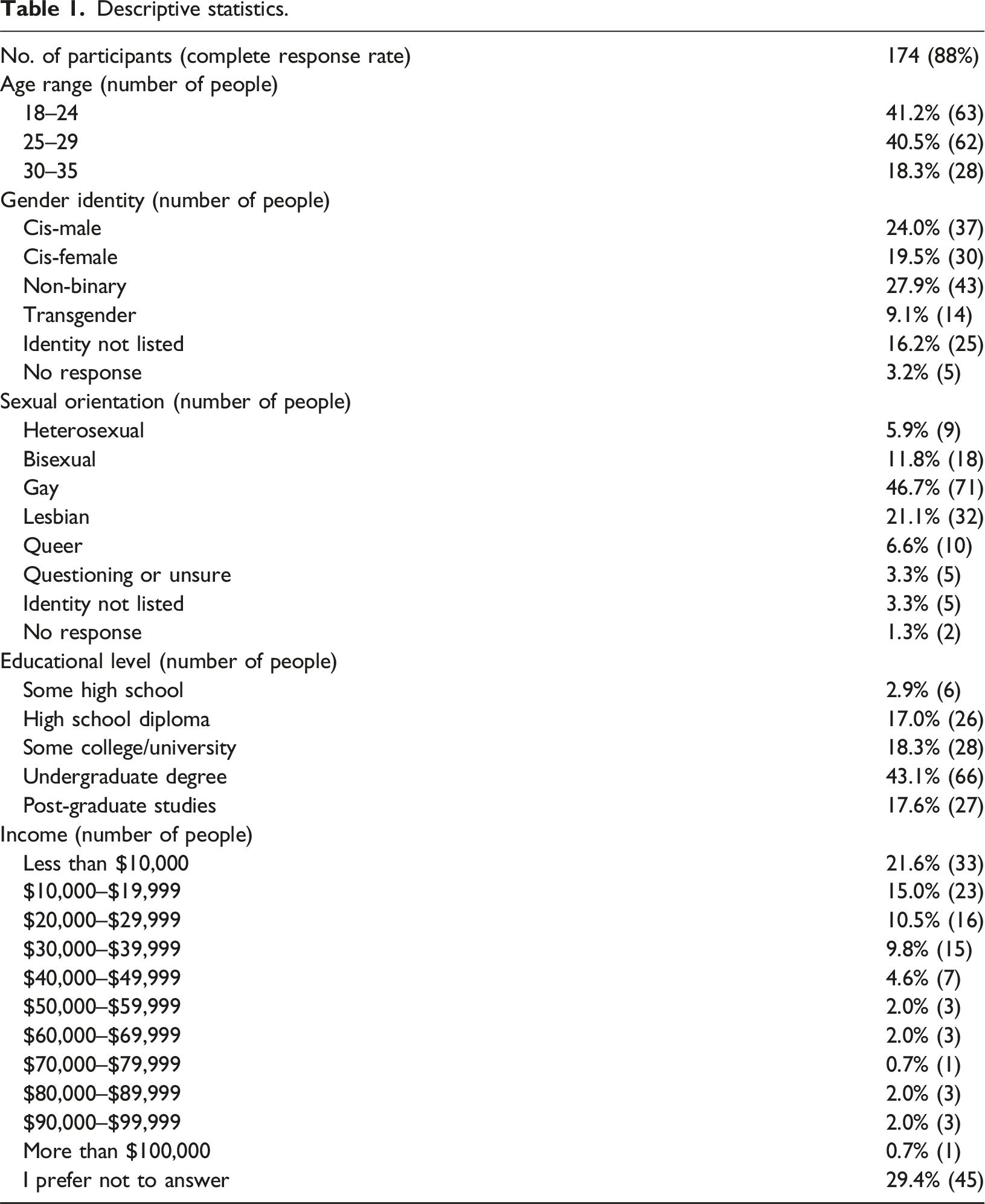
Descriptive statistics.
Data analysis
We utilized the SPSS (Statistical Package for the Social Sciences) version 28.0 to assess the descriptive statistics. Second, one-way ANOVA was performed to determine the relationships between age, gender identity, educational level, income, and sexual orientation in terms of our participants’ experiences regarding financial literacy and inclusion (Stockemer, 2019). The results provide us with an overview of the participants, their opinions, and practices regarding financial literacy. From there, we determined potential themes, questions, and guiding ideas that were used in the focus group.
Focus group stage
Data collection
From the contact list obtained in the first stage, we identified 15 potential respondents. Eight of them agreed to participate. Due to geography and participant availability, we organized two online focus groups via Zoom. We chose these participants because they “represent common perspectives or a range of different philosophies or viewpoints associated with the research questions” (Ennis and Chen, 2012: 3). The participants have diverse backgrounds: geographic location, education, occupation, sexual orientation, etc. The sample size from 4 to 12 participants is sufficient to understand varied thoughts and experiences of interviewees about a given topic (Carlsen and Glenton, 2011). The eight participants therefore provide ample data to reach coverage and explore historical, cultural, and socio-political conditions and structures which affect their financial literacy and experiences.
First focus group participants.

Note. *To maintain confidentiality, respondents’ names are pseudonyms.
Second focus group participants.

Note. *To maintain confidentiality, respondents’ names are pseudonyms.
Data analysis
To ensure accuracy, we utilized member-checking. After manually transcribing the responses from participants, we prepared a file emailed to them for their feedback on additions, removals, or modifications needed. For coding, we employed a constant comparison approach using N-Vivo 12 computer software to facilitate the process. Thematic coding enabled us to identify text passages from participants’ answers that we categorized into common themes (Gibbs, 2007). With emerging themes, we established a framework of thematic ideas to investigate representative and indicative patterns delivered by participants. The thematic analysis helped us identify, analyze, and report potential themes within the collected data as well as categorize and present data in detail (Braun and Clarke, 2006). Analyzing the focus group allowed us to realize and understand the meaningfulness of the themes and refine the themes (Charmaz, 2000). For the purposes of this paper, three themes will be presented: discrimination and exclusion; the impact of laws; and resiliency and transformation.
Findings and discussion
Discrimination and exclusion
Many participants, in both phases, revealed how they encounter injustices, resulting in educational exclusion. The prevailing negative attitude towards LGBTQI + individuals can be seen clearly in the focus group. Len, for example, shared his experience: I often encounter discrimination and isolation in my university. Some classmates isolate me and use bullying words to refer to me. Prejudice and discrimination against sexual orientation can prevent me and Vietnamese LGBTQI + individuals from accessing education, including financial literacy.
Jason also revealed his story emotionally: Although I try to act out like other male students in my Commercial Banking class, they do not like me. Whenever I asked to join to conduct group projects, they found reasons to exclude me. My life is like a broken roller coaster. I feel discouraged in that environment.
The quotes reveal that, even at prestigious universities in big cities, discrimination against LGBTQI + people still manifests itself through discriminatory words and actions. Len’s and Jason’s stories sustain the findings about the biases, and barriers to education, including financial education, through such atrocities as homophobia, transphobia, or harassment in Vietnam (Tran, 2024). Like Jason, Tracy said, “My family does not accept my gender performance. My school mates exclude me and do not let me join their male team.” Even when she does not really care about possible punishment by not performing gender in traditional ways, such as trying to “wear male outfits, cut [her] short hair, lower [her] voice, and perform as a young male student,” her peers still categorize her as a girl based on her assigned sex at birth. Irrespective of Tracy’s efforts to be herself, the traditional image of a girl in school is still reinforced. What Tracy or Jason experiences suggest the fixed concepts of gender and sexuality imposed by dominant cultural groups to sustain the domination of compulsory heterosexuality. To avoid isolation, a possible way, as Min mentioned, is to choose limited friendship circles with LGBTQI + members and/or those who are not against LGBQTI + identity.
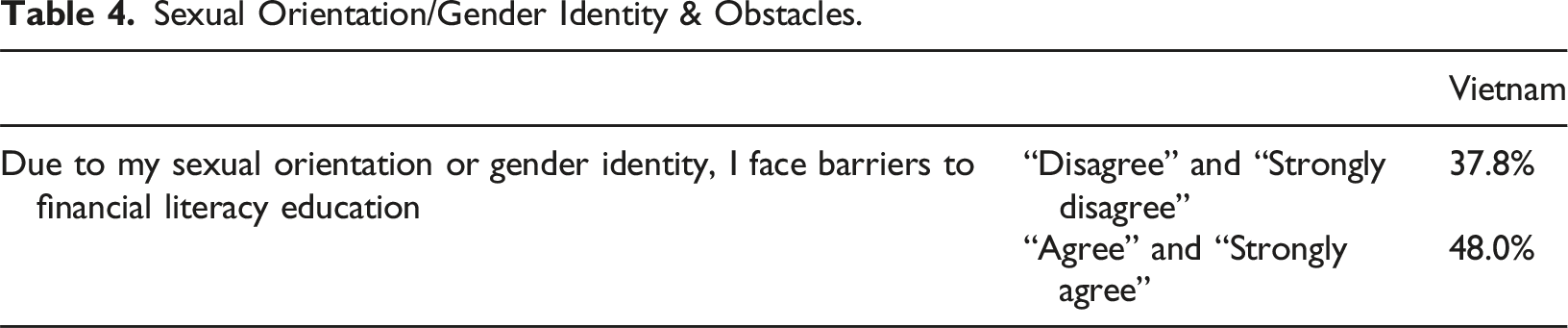
Sexual Orientation/Gender Identity & Obstacles.
One-way ANOVA, effect of sexual orientation.

Note: *p < 0.05; **p < 0.01.
Obstacles may lead some LGBTQI + students to have insufficient financial knowledge. A central issue, however, is that the marginalization is backed by historical, ideological, cultural, and institutional power in societal institutions such as schools set by a dominant cultural majority (Sensoy and DiAngelo, 2017). Len, for example, described his frustration, “When I am in classes, professors often ask me weird questions, such as ‘Are you a boy or a girl?’” Ken also shared: I am not happy at my college. A few professors commented that I looked so feminine and told me to “man up.” I have no power. I am just a boy from the countryside. I have to stay silent to continue my studies.
Instead of embracing differences through solidarity (Hooks, 1994) and diversity in education (Thich, 2010), the teachers’ questions, expectations, and at times rude remarks or microaggressions in Ken and Len’s situations represent a typical example of how heterosexual educators may inadvertently undermine a student’s self-esteem and sense of happiness at school by enforcing what is considered culturally “normal.” Cultural education is the process of gender socialization, and the systematic training started at birth and maintained throughout life (Sensoy and DiAngelo, 2017). Cultural education establishes beliefs about traditional gender identity and biological sex, reinforcing norms that serve as examples of “the historical and structural mechanisms of domination” that cause oppressive manifestations (Gopaldas, 2013: 93). Although there are efforts to move toward a more interactive and student-centered approach, the banking model of education influenced by the Global North (Freire, 1970) continues to prevail across Vietnam. Teachers have ultimate authority, holding knowledge and power in the classroom, leaving little room for student-led discussions. Therefore, uninformed educators in Len’s or Ken’s cases, who should be advocating justice and caring for students (Hooks, 1994; Thich, 2010), become those who use given power to oppress students and create barriers that can hinder them from obtaining financial literacy and critical awareness. Len, Jason, Ken, and multiple LGBTQI + students, in similar situations, must often remain silent and endure injustices, aware that their teachers hold authority over them and that they are not empowered to be themselves at schools. Also, the educational system is structured to uphold control and prepare a subjugated population for a role within the colonial framework (Trinh, 2018); LGBTQI + students therefore are often viewed as inferior, leading to their voices being marginalized and experiences overlooked (Le et al., 2025). These barricades can prevent them from reaching their potential, stripping away their means of resistance against negative social forces and their ability to transform the world (Freire, 1970). If such systemic oppression remains unchallenged, LGBTQI + people continue to be adversely impacted academically and mentally. As Len claimed, “Some may be forced to withdraw from financial education, just as their vulnerable counterparts of the past ceased their academic journey.”
Teachers play a pivotal role in their student’s lives and as such, it would be beneficial if educators rethink the roles of education and advance greater equity and caring about students’ backgrounds and feelings (Trinh et al., 2022). To achieve this progress, pre-service teaching programs could place greater emphasis on equity and diversity curricula before educators gain their first teaching experience. Teachers should receive more scholarship about the role of their social perspectives, biases, and experiences and how their positionality impacts their pedagogy and praxis. Teachers would become knowledgeable on how to use dialogic and participatory methods, encouraging students from diverse backgrounds to express their viewpoints and challenge societal norms. Through tools and activities, such as classroom conversations, photos, stories, or retelling, they would actively promote equity (Cho, 2019). Emphasis would be placed on understanding the othered’ struggles and creating an inclusive environment for marginalized groups (Hooks, 1994). By doing this, holistic education can be reached and LGBTQI + students can feel included in financial education.
Impacts of laws
The legal framework has a substantial influence on fostering a sense of belonging and security (Hatzenbuehler and Keyes, 2013). The absence of an official Act protecting the LGBTQI + community explains why survey respondents expressed a strong desire for legal protections. In focus groups, we also realize that participants’ experiences of injustice and insecurity in accessing financial education are influenced by legal structures. Dat detailed his grievances: The first reason many LGBTQI + members’ financial literacy is lower comes from our identity. Also, LGBTQI + are not protected by official laws/acts for themselves. They can feel insecure. Several LGBTQI + people want to access financial literacy education but are frightened and demotivated because of being excluded.
Dat’s sharing reinforces a reality that several LGBTQI + students defenseless about protecting their identity at educational settings (Le, 2023). Nobody wants to feel left out in a place like school, where they have been told they would be safe. However, insecurity of Dat, Ken, or Nhan and survey participants mirror the long-standing, intolerable circumstances for many LGBTQI + youth, which causes them to be anxious, lonely, terrified, and exhausted, reducing their academic engagement and success. The absence of legal recognition of the LGBTQI + community also means that they do not know where and how to reach out for legal substantiation when facing exploitation at schools (Tran, 2024). The legislative structures established by socially dominant groups, infused throughout societal institutions, have a tremendous impact on LGBTQI + individuals’ beliefs and perceptions about events happening in their lives. If they witness their community members being legally rejected and facing negative results caused by their identity without official legal policies existing for them to lean on, those individuals will, naturally and instinctively, seek out the most effective methods to protect their safety. They can feel more inferior and scared of punishment because this is how society treats them. If the insecurity is continually reinforced, it can result in a lack of confidence, certainty, and adequacy (Le et al., 2023). For many LGBTQI + members, the experience feels like a never-ending cycle.
From an outsider’s perspective, to be fully engaged in life may appear to be a simple personal choice made by LGBTQI + members. Upon deeper and contextual study, however, rather than blaming people for concealing their identity, it is essential to actively listen to the voice of insiders. Nhan shared his opinion: Contemplatively thinking, it is unjust to blame everything on us. We were born this way. We want to develop like everyone. With more equitable and non-discriminatory treatment and protection, we can learn, grow and realize our potential like any other straight people.
Nhan’s observation reminds everyone to embrace a more holistic perspective, resonating with the notion of the deep interconnectedness of all lives and circumstances (Thich, 2010). This understanding helps better understand the broader social conditions at play that can oppress this community and force them to make some tough life decisions such as leaving school. The lower financial literacy level among Vietnamese LGBTQI + young adults can stem from not knowing “where and how to start to learn financial literacy” (Len, focus group) as the programs popularly stay focused on the heteronormative community, making LGBTQI + young people feel irrelevant. Or as Dat, Nhan, and Len astutely observed and carefully contemplated, it seems that financial literacy inadequacy of several participants may come from the combination of the fears and insecurity caused by insufficient legislation. Therefore, policymakers should attempt to better meet the needs of the LGBTQI + community concerning legislation, support services, infrastructure, and resources for enforcement into future programs. In the context of Vietnam’s regulatory landscape, policymakers should develop an official legislation that is consistent with human rights to provide protection for LGBTQI + individuals. Non-LGBTQI + populations should also be informed about the legislation to better understand LGBTQI + rights. Doing this helps build a strong society where understanding, collaboration, and community-building among diverse social groups are respected and nurtured. It celebrates the spirit of solidarity between different communities (Hooks, 1994; Thich, 2010). Also, as the participants suggested, it would currently be prudent for local and central governments to consider legislating more pertinent assistance to engage vulnerable LGBTQI + individuals in education. The support services and guidance should be provided for them in the wake of oppression. LGBTQI + organizations are critical to increase inclusion and resiliency among LGBTQI + individuals (Abreu et al., 2023); these services should receive greater attention and priority by the government.
Resiliency and transformation
Resiliency is the capacity for a person to survive stress by staying well in the wake of tough conditions such as adversity, trauma, or threats and recovering from these experiences (Southwick et al., 2011). Facing hardships, our participants endeavor to overcome their oppression and look for their joy. Tracy claims that, despite facing shame and isolation, she is still proud of her coming-out decision. She “feels free and fulfilled to express” her real self. Tracy is a typical example of LGBTQI + individuals who build on challenges to explore themselves and foster resiliency and pride in their identity (Schmitz and Tyler, 2019). Len discriminated against by professors’ questions, such as “Are you a boy or a girl?” yet still chooses a short hairstyle that is gender-affirming to give himself emotional self-confidence. Len’s choice challenges traditional gender and sexuality beliefs. Min whose feminine voice evoked negative feelings towards him and resulted in exclusion at his previous schools, said, “I learn to get used to [discrimination and unfairness] and overcome.” Min’s perspective indicates that he, and other LGBTQI + students, acknowledge that experiences of shame, and stigmatization will continue. With few avenues for assistance, Min uses his positive resiliency to manage the problems, accepting that he cannot change his voice and learning to suppress uneasy feelings triggered by others’ remarks about his voice. Resiliency helps Min move on with his life to attain his financial education and goals. The choice of expressing themselves brings our participants joy and allows them to flourish authentically.
Focusing on acquiring essential skills serves as a way for participants to cultivate resiliency. Most participants in both phases emphasize the importance of financial literacy and expressed aspirations to fulfill their financial goals and strive for financial stability. They subscribe to a belief that financial education can be a bridge to gain necessary skills, and opportunities to fully participate in society, and the economy and to persevere through challenging experiences. Participants anticipate acquiring three scopes: basic financial knowledge, financial skills, and investment. The yearning to learn these areas partly stem from a shared awareness that being LGBTQI + means that they face lower pay, fewer stable jobs, and greater financial insecurity (Tran, 2024). For example, Lynda revealed, “I am mindful that my identity (lesbian) creates challenges about job opportunities and pay. Choosing to study finance and banking is a way for me to build financial security.” These structural barriers can increase the likelihood of financial vulnerability—a status of financial fragility (Poh and Sabri, 2017), thereby endangering LGBTQI + individuals’ present and laying an insecure groundwork for their future. Echoing this concern, Min shared: I have one main source of income generated by my job. However, my identity impacts my job and income negatively. Therefore, I have looked for investment opportunities to ensure that in the future I can have a better sustainable financial situation… I will learn about the stock market to look for more financial opportunities and mitigate risks of this market.
Min is aware of financial vulnerabilities caused by his identity; but instead of submitting to fear, he aims to gain financial literacy and apply his understanding to make informed decisions in the hopes that he can reach his goals and avoid financial fragility (Huston, 2010). Like Min, many survey respondents expressed a yearning for learning about the stock, bond, Bitcoin, or entrepreneurship to start LGBTQI + enterprises. The participants are in their 20s, the stage of life when they begin working, and amassing assets; access to financial skills, particularly investment experience, is a key factor in empowering them to achieve financial milestones. The increased financial literacy can inspire them to critically believe in their voice and abilities and support them to bounce back and persevere through difficulties.
The way Min, Nhan, Dat, and Lynda think and take action and the aspirations of survey respondents for financial literacy training proves that despite systemic oppression, they are moving forward, seizing potential opportunities and finding paths to ensuring financial wellbeing. What they have done in the face of adversity also embodies Thich’s philosophy of transformation, that is, turning trash into flowers (2010). Thich emphasizes that in the practice of Buddhism, inequity, sorrows, vulnerability, etc.—all kinds of garbage—are organic in nature. Frequently, people try to stay away from garbage because they view it as disgusting. Regardless of their efforts, garbage is still a part of their lives; therefore, if they try to discard it completely, they may have nothing left from which to make flowers grow (Thich, 2010). LGBTQI + individuals experience a variety of garbage, and many recognize that the issues are an undeniable aspect of their identity. On their journey, they attempt to transform the unjust issues—garbage—into healthier financial circumstances—flowers. Hardships and vulnerabilities can be painful, but they can be the heart of joy, creativity, and resiliency.
Given the significant demand for financial literacy among LGBQTI + participants, the Ministry of Education of Vietnam should consider incorporating financial literacy into its education programs. Such programs should provide LGBTQI + individuals with knowledge to help them make sound financial choices, and construct long-term plans and financial wellbeing. Regarding this expectation, Nhan, who is pursuing finance, emphasized: There is no financial literacy program for us. In my business program, there is no representation of LGBTQI + community. I hope future programs will be more inclusive so that we can feel related. LGBTQI + people are very capable and can contribute to this country’s development.
Nhan’s comments emphasize the role and unquestionable potential impact of this community to Vietnam’s development. The quote also underscores the prominence of customizing financial programs to local contexts to support LGBTQI + people rather than only relying on models rooted in mainstream assumptions and shaped by Global North perspectives, as remains common today. Vietnamese LGBTQI + individuals nowadays want to be included and need programs to which they can relate. The programs only become effective, and sustainable, and foster the intrinsic motivation to study when they meet this community’s needs by providing opportunities to discuss their unique economic demands or concerns regarding their positionality such as discrimination and insufficient laws. In other words, education and financial literacy education would move away from a homogenized view of Vietnamese identity, focusing instead on a pluralistic, inclusive narrative. Critical pedagogy advocates press for a curriculum that reflects the diversity of Vietnam, including counter-stories, histories, and contributions of minorities, addressing justice issues regarding economy, gender identity, and sexual orientation. The suggestions represent the goals implementing financial literacy education should strive to achieve. The combination of appropriate curriculum and approaches is the care, respect, and inclusion these students deserve.
Conclusion
This work contributes to the limited scholarship on the challenges surrounding financial literacy and equity towards LGBTQI + young adults in Vietnam, a country in the Global South contexts. LGBTQI + young adults called for greater justice and support in accessing financial literacy education. Policymakers, administrators, and teachers should engage in a multi-stakeholder approach to develop effective strategies for equity. Financial literacy education should be responsive to LGBTQI + individuals’ specific needs, challenges, and aspirations. Comprehensive legislation, support systems, and infrastructure for enforcement should be developed to promote greater protection and inclusion of this community. The educational system, and teachers, should work toward greater equity by promoting solidarity, mutual understanding, and empathy among students and develop platforms where their students, especially marginalized LGBTQI + students, can discuss their existing issues and question norms which are restricting their growth. Being afforded greater equity when it comes to financial literacy education can yield powerful social and financial benefits to help them reach full potential and inspire them to make contributions to social and economic development, and the advancement of civilization.
This work however contains a few limitations. First, in the focus groups, participants refrained from turning on their cameras to protect their identity. While we respected their choice, it limited our ability in observing non-verbal communication such as facial expressions and disagreement/agreement by nods and smiles. Consequently, we were unable to notice shifts in participants’ mindsets or ask probing questions. Also, the aim of this study is to offer an in-depth understanding of a particular phenomenon; it is difficult to generalize the results (Yin, 2003). Rather, we sought to capture the counter-stories of individuals whose narratives have not been told or heard. For future research, expanding the pool of participants for phases can enhance data richness, allowing for deeper exploration of the factors and themes explored in this research.
Footnotes

Ethical considerations
The NUREB Ethics Review Committee at Nipissing University approved our surveys and focus group interviews (approval: 103029) on August 19, 2022.
Consent to participate
Respondents gave written consent for review and signature before starting the focus group interviews.
Funding
The authors disclosed receipt of the following financial support for the research, authorship, and/or publication of this article: This work was supported by the Ontario Graduate Scholarship program (grant received 2020-2024); the Nipissing University International Graduate Student Support Fund; and Nipissing University.
In addition, this research is funded by Vietnam National University Ho Chi Minh City (VNU-HCM) under a project within the framework of the Program titled “Strengthening the capacity for education and basic scientific research integrated with strategic technologies at VNU-HCM, aiming to achieve advanced standards comparable to regional and global levels during the 2025–2030 period, with a vision toward 2045”.
Declaration of conflicting interests
The authors declared no potential conflicts of interest with respect to the research, authorship, and/or publication of this article.
Data Availability Statement
The datasets generated during and/or analyzed during the current study are available in the University of Toronto Tspace Repository. https://utoronto.scholaris.ca/items/9879a9d5-0f15-4d64-9c82-2a9739f56ff7 (Tran, 2024).