



Abstract
Objective:
To compare maternal glucose metrics and pregnancy outcomes of three advanced hybrid closed-loop (aHCL) systems (MiniMed 780G®, CamAPS® FX, and Tandem Control-IQ) in a real-world, multicenter cohort of pregnant women with type 1 diabetes.
Research Design and Methods:
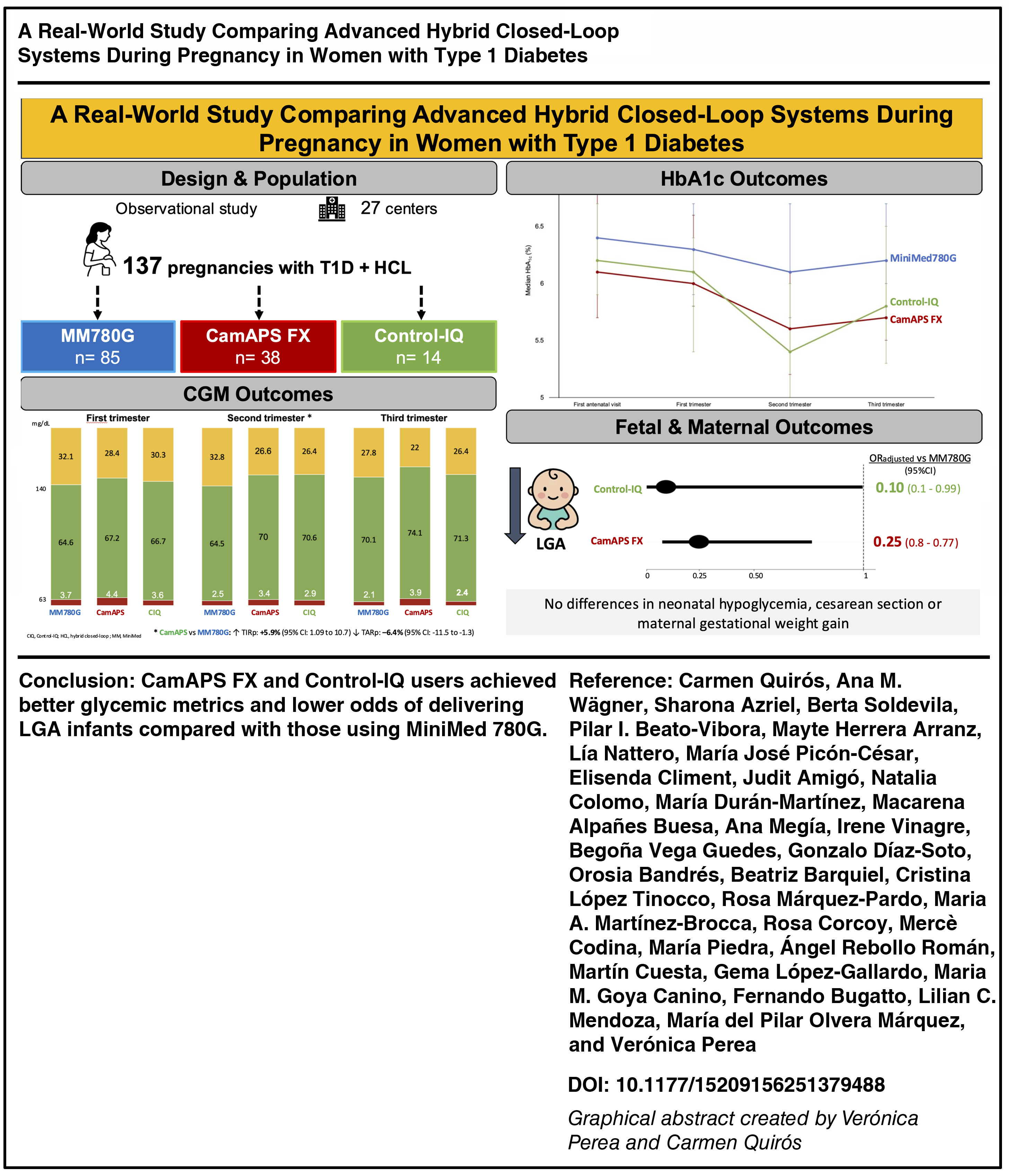
Cohort study including 137 pregnant women with type 1 diabetes using aHCL from 27 hospitals in Spain. Participants were grouped according to the aHCL system used: 85 MiniMed 780G (62%), 38 CamAPS FX (27.7%), and 14 Control-IQ (10.2%). Maternal glucose metrics (HbA1c and time spent within [TIRp], below [TBRp], and above [TARp] the pregnancy-specific glucose range 3.5–7.8 mmol/L), as well as pregnancy outcomes, were analyzed. Adjusted models were applied to account for potential confounding factors.
Results:
No between-group differences in HbA1c levels were observed at baseline. By the third trimester, CamAPS FX and Control-IQ users had significantly lower HbA1c levels compared with the MiniMed 780G group (βadjusted –4.77 mmol/mol, 95% confidence interval [CI] –7.40 to –2.13; and βadjusted –4.79, 95% CI –8.53 to –1.06; respectively). In the second trimester, CamAPS FX was associated with a higher percentage of time in range (βadjusted +5.88%, 95% CI 1.09 to 10.67) and a lower percentage of time above range (βadjusted –6.36%, 95% CI –11.46 to –1.26) compared with MiniMed 780G, with no other significant differences observed in other trimesters. Both CamAPS FX and Control-IQ were associated with lower odds of large-for-gestational-age (LGA) infants (CamAPS FX: ORadjusted 0.25, 95% CI 0.08 to 0.77; Control-IQ: ORadjusted 0.10, 95% CI 0.01 to 0.99) compared with MiniMed 780G.
Conclusions:
In this multicenter observational study, CamAPS FX and Control-IQ users achieved better glycemic metrics and lower odds of delivering LGA infants compared with those using MiniMed 780G. These findings warrant investigation to confirm associations and inform individualized clinical decision-making in pregnant women with type 1 diabetes.
Keywords
Introduction
Advanced hybrid closed-loop (aHCL) systems have demonstrated significant benefits in both glucose management and quality of life for individuals with type 1 diabetes outside of pregnancy. 1 These systems have become the treatment of choice for this population, as recommended by various clinical guidelines. 2 However, despite their use during pregnancy, women with type 1 diabetes continue to face a higher risk of adverse perinatal and obstetric outcomes compared with the general population. 3 Moreover, changes in insulin requirements throughout pregnancy represent an additional challenge in maintaining the stringent glucose targets necessary to reduce adverse pregnancy outcomes while avoiding hypoglycemia, even with aHCL systems.4,5
The largest randomized clinical trials (RCTs) evaluating the use of aHCL systems during pregnancy have reported heterogenous results, with time in range for pregnancy (TIRp; 3.5–7.8 mmol/L, 63–140 mg/dL) as the primary outcome.6–8 The AiDAPT trial (baseline HbA1c 7.7% ± 1.2%, baseline TIRp 47.8%) and preliminary findings from the CIRCUIT study (baseline HbA1c 7.4% ± 1.0%, baseline TIRp not reported) showed that initiation of the CamAPS® FX or Tandem Control-IQ systems during the first trimester was associated with a mean difference in TIRp of +10.5% and +12.6%, respectively, compared with the standard care group.6,8 In contrast, the CRISTAL trial (baseline HbA1c 6.5% ± 0.6%, baseline TIRp 60.5%) found that use of the MiniMed 780G® did not result in significant differences in TIRp compared with standard of care, although a significant mean reduction in time below range for pregnancy (TBRp) of 1.34% was reported. 7 Despite these baseline differences, the third-trimester TIRp achieved in AIDAPT (68.2%) and CRISTAL (66.5%) trials appeared broadly comparable (no data reported in preliminary findings from CIRCUIT trial), suggesting that glycemic control during pregnancy may reach a plateau beyond which further improvements are difficult to achieve. On the contrary, while findings from these trials suggest that such systems may influence maternal and neonatal outcomes, these results should be interpreted with caution, as the studies were not sufficiently powered to robustly assess differences in pregnancy outcomes.
Real-world evidence on the use of aHCL systems during pregnancy adds further complexity to the discussion. Our group previously evaluated the use of MiniMed 780G, Control-IQ, and Diabeloop during pregnancy (off-label use) with multiple daily injections (MDIs) plus continuous glucose monitoring (CGM). In that cohort, aHCL systems were associated with reduced TBRp and lower glucose variability (coefficient of variation, CV) across all three trimesters, although no significant differences in TIRp were observed. However, aHCL users exhibited greater gestational weight gain and had newborns with higher birth weights and a higher prevalence of macrosomia. 9 Notably, the CamAPS FX system was not included in that study as it was not yet available in Europe. Furthermore, no real-world data on the use of CamAPS FX during pregnancy have been published to date.
Comparisons across studies are challenging due to differences in baseline characteristics (such as HbA1c at the first antenatal visit, diabetes duration, and prevalence of diabetes complications), timing of aHCL initiation, and variations in diabetes management during pregnancy. For these reasons, head-to-head studies evaluating the available aHCL systems are essential. The present study aimed to compare maternal glucose metrics and pregnancy outcomes in women with type 1 diabetes using different aHCL systems available in Europe.
Materials and Methods
Study population
We performed an observational, prospective, multicenter cohort study in women with type 1 diabetes who attended 27 tertiary university hospitals in Spain between 2020 and 2024. The inclusion criteria were as follows: (1) age ≥18 years; (2) type 1 diabetes; (3) singleton pregnancy; and (4) use of a commercially available aHCL system during pregnancy. Women with pregnancy loss before 20 weeks or initiation of aHCL after 20 weeks of gestation were excluded. Since the Diabeloop system was discontinued during the study, users of this system were not included in the analysis. Of the women included in the present study, 48 MiniMed 780G users and 5 Control-IQ users had also participated in our previous publication. 9 The average number of births per participating hospital was approximately 2207 per year, with an estimated 19 pregnant women with type 1 diabetes followed annually, of whom around 50% used an aHCL system. The study was approved by the ethics committee at each participating center. All the participants received information about the protocol and signed a consent form. This observational study was reported in accordance with the STROBE (Strengthening the Reporting of Observational Studies in Epidemiology) guidelines. The STROBE checklist is provided as Supplementary Data.
Management of diabetes in pregnancy
All women received routine clinical care according to current national guidelines 10 with antenatal visits every 2–4 weeks and the following glycemic targets: HbA1c <48 mmol/mol (6.5%), fasting glucose 3.9–5.3 mmol/L, and postprandial glucose values 6.1–7.8 mmol/L, 1 h postprandial, and 5.6–6.7 mmol/L, 2 h postprandial. In addition, in accordance with the International Consensus on Time in Range, 11 TIRp, TBRp, and time above range for pregnancy (TARp) were recommended for pregnant women with type 1 diabetes. HbA1c was measured every 4–8 weeks during pregnancy and a value was registered for each trimester (first trimester: 10–14 weeks of gestation; second trimester: 24–28 weeks of gestation; and third trimester: 32–36 weeks of gestation). HbA1c analysis was performed in each local laboratory according to standard procedures, standardized against the National Glycohemoglobin Standardization Program (NGSP).
Insulin delivery system
The indications for the use of aHCL in Spain were the same as those for CSII therapy, mainly not meeting recommended glucose targets (defined as HbA1c >53 mmol/mol [7.0%]) on MDI, high risk of severe hypoglycemia or pregnancy/pregnancy planning. 12 The aHCL systems available during the study were the MiniMed 780G (Medtronic Inc., Northridge, CA, USA), Tandem t:slim X2 Control IQ® (Tandem Diabetes Care Inc., San Diego, CA, USA), and CamAPS® FX (CamDiab Ltd., Cambridge, UK). The selection of one system over another depended on shared decision-making between women and health care professionals, influenced by several factors: (i) market availability and regulatory status. MiniMed 780G and Control-IQ were introduced in Spain in 2020 and used during pregnancy as off-label systems, whereas CamAPS FX became available in November 2022 and was the only system formally approved for pregnancy during the study period; (ii) institutional or regional procurement agreements, which could restrict access to a single system in certain hospitals; (iii) practical considerations, such as the perceived technological burden of adjustable settings, lack of smartphone compatibility, or adverse reactions to sensors or infusion sets; and (iv) patient preference, after receiving counseling on the characteristics of each available system.
The MiniMed 780G system integrates the Guardian sensor (Guardian 3 or Guardian 4) with the MiniMed 780G insulin pump. It uses the SmartGuard algorithm to adjust basal insulin delivery every 5 min and allows for customizable glucose targets (5.5–6.7 mmol/L) and active insulin time (AIT) settings (2:00–5:00 h). The CamAPS FX system algorithm is available as a mobile app that runs exclusively on Android devices during the study period, working with the YpsoPump with mylife loop (Ypsomed AG, Burgdorf, Switzerland) and the Dexcom G6 (Dexcom, San Diego, CA, USA) or FreeStyle Libre 3 sensors (Abbott, Abbott Park, IL, USA). It adjusts basal insulin delivery every 10–12 min using an advanced algorithm-based total daily insulin dose and body weight, and offers fully customizable glucose targets (4.4–11 mmol/L) across multiple time blocks. The Tandem Control-IQ system pairs with the Dexcom G6/G7 sensor and the Tandem t:slim X2 insulin pump, automating basal insulin delivery and correction boluses. It features fixed glucose target ranges (6.3–8.9 mmol/L in regular mode, 6.25–6.7 mmol in sleep mode, and 7.8–8.9 mmol/l in exercise mode), while allowing users to modify basal rates and insulin sensitivity.
The configuration of the aHCL systems was recorded throughout pregnancy, including time in automatic mode, the glucose target, and AIT. The use of temporary settings for each system, such as the sleep mode for Control-IQ or ease-off/boost for CamAPS FX, was not recorded. The initial settings and the adjustments during pregnancy were decided by the physician according to routine clinical practice, aiming to recommend glucose targets according to national guidelines. 10 These guidelines do not offer specific recommendations based on the aHCL system used. In addition, no specific advice was provided in the context of this study and there was no specific centralized training provided for all devices, as their implementation followed standard clinical practice at each center.
The CGM-related data were obtained from the ambulatory glucose profile (AGP) generated by the CareLink™ system (MiniMed 780G) and Glooko™ system (CamAPS FX and Control-IQ). The CGM data derived included mean glucose, percentage of sensor use, CV, and the percentage of TIRp, TBRp, and TARp of each trimester of gestation. One AGP report was recorded per trimester, capturing data from the 14 days before the HbA1c measurement for that trimester (first trimester: 10–14 weeks of gestation; second trimester: 24–28 weeks of gestation; and third trimester: 32–36 weeks of gestation). If the HbA1c measurement was not available in that period, investigators were instructed to select the 14-day AGP report closest to the trimesterly laboratory assessments performed by obstetricians. If no such laboratory assessment was available, the AGP report closest to the midpoint of the trimester period was used: 12–13 weeks of gestation for the first trimester, 26–27 weeks for the second, and 33 to 34 weeks for the third. The selection of 14 days was based on international guideline recommendations, as well as the recommended follow-up schedule for pregnancies complicated by type 1 diabetes. Lastly, carbohydrate intake and insulin doses were obtained from each aHCL platform.
Maternal and neonatal data
We assessed baseline demographic characteristics (age at time of booking, parity, prepregnancy weight, and body mass index [BMI]), diabetes-related characteristics (diabetes duration at booking, presence of microvascular/macrovascular complications), smoking habit, attendance to a prepregnancy care program, and folic acid supplementation at the first antenatal visit.
Obstetric and neonatal data were obtained from the medical records. The outcomes recorded were severe maternal hypoglycemia (events requiring third-party assistance) and acute ketoacidosis during pregnancy, preeclampsia, cesarean section, preterm delivery (defined as delivery before 37 weeks), large-for-gestational-age (LGA) infants (birth weight >90th percentile according to Spanish fetal growth charts), adjusted for sex and gestational age, 13 macrosomia (birth weight >4000 g), neonatal hypoglycemia (blood glucose <2.2 mmol/L requiring treatment within the first 24 h after delivery, 14 respiratory distress (requiring treatment), neonatal intensive care unit (NICU) admission, and congenital anomalies classified according to EUROCAT. 15 Gestational age at delivery was defined as the number of completed weeks based on the last menstrual period or on the earliest ultrasound assessment if discordant.
Statistical analysis
All clinical data were deposited in the Research Electronic Data Capture (REDCap) database. 16 Data are presented as mean ± standard deviation, median (25th and 75th percentiles) or number (percentage) unless otherwise indicated. Participants were grouped according to the system used during pregnancy. Thirteen participants switched from one aHCL system to another early in pregnancy, at a gestational age similar to previous RCTs.6–8 Therefore, to ensure consistency in the analysis, in the present study, participants were assigned to the system used after the switch. The McNemar–Bowker test was used to assess the symmetry of the distribution of transitions between aHCL systems. The Kruskal–Wallis, Pearson’s chi‐squared test, and ANOVA were performed, as appropriate, for baseline comparisons between the aHCL systems.
The primary outcome of interest was the difference in third-trimester HbA1c between the three aHCL systems. For glucose metrics, crude effect estimates and 95% confidence intervals (CIs) were reported. In addition, adjusted multiple linear regression analysis was performed, including HbA1c at the first antenatal visit as a covariate. A subanalysis was also conducted to compare glycemic outcomes between MiniMed 780G users with and without optimal settings (defined as glucose target 100 mg/dL and AIT of 2 h) in both the second and third trimesters, using Student’s t test or the Mann–Whitney U test, as appropriate.
For pregnancy outcomes, logistic regression analysis was fitted to characterize the strength of association between pregnancy outcomes and the aHCL system, adjusting for maternal age, pregestational BMI, center, diabetes duration, diabetes-related complications, smoking status, and HbA1c at the first antenatal visit. The low number of events reported in some groups for preeclampsia, prematurity, macrosomia, respiratory distress, NICU admission, and congenital anomaly precluded further adjusted analysis.
Detailed information on missing glucose data is provided in Supplementary Table S1. To address potential bias due to the high rate of missing HbA1c values in the first and third trimesters, multiple imputations were applied to these variables in the regression models as a sensitivity analysis. In the logistic regression models, listwise deletion was applied (i.e., complete case analysis). All analyses were performed using STATA version 14.0 (Stata Corp., College Station, TX, USA). A two-sided P value <0.05 was considered statistically significant.
Results
Participant characteristics
A total of 172 subjects met the inclusion and exclusion criteria; of these, 27 were excluded due to incomplete follow-up and 8 were using the Diabeloop system. Therefore, 137 participants were included in the final analysis, 32 of whom (23.4%) initiated aHCL therapy during gestation at a mean gestational age of 17.5 ± 5.7 weeks. Among pregestational aHCL users, 13 (12.4%) switched to a different aHCL system during gestation at 12.8 ± 8.2 weeks of gestation: 4 switched to MiniMed 780G (1 from the MiniMed 670G to upgrade the technology, and 3 from Control-IQ due to prior positive experiences with MiniMed 780G during pregnancy and the unavailability of CamAPS FX), and 9 to CamAPS FX due to its specific approval for use during pregnancy (P = 0.009; Supplementary Table S2). The aHCL systems used during pregnancy were as follows: 85 (62.0%) MiniMed 780G, 38 (27.7%) CamAPS FX, and 14 (10.2%) Control-IQ.
The women included in the study had a mean age of 34.2 ± 4.8 years, a diabetes duration of 19.1 ± 8.3 years, and 100 (73.5%) women attended a prepregnancy program and had a mean pregestational HbA1c 47.5 mmol/mol (44.3–53.0) (6.5% [6.2–7]) without significant differences between groups (Table 1). Notably, 14 (36.8%) of the CamAPS FX users had used the system before pregnancy, compared with 68 (80.0%) of MiniMed 780G users and 9 (64.3%) of Control-IQ users. In addition, Control-IQ users had higher rates of diabetes-related complications.
Maternal Baseline Characteristics According to the System Used
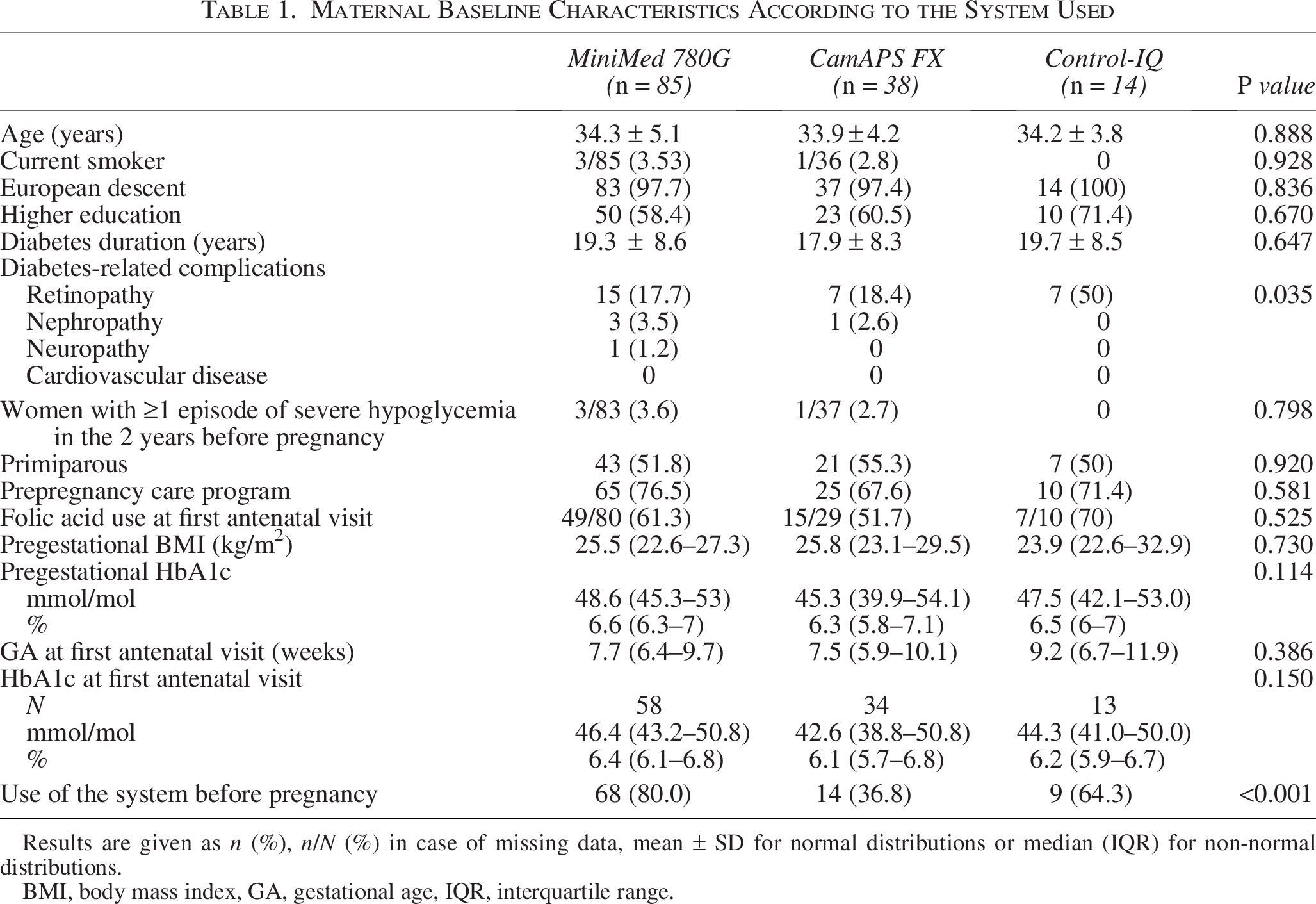
Results are given as n (%), n/N (%) in case of missing data, mean ± SD for normal distributions or median (IQR) for non-normal distributions.
BMI, body mass index, GA, gestational age, IQR, interquartile range.
System usability
Most users spent most of the day in automatic mode (>90%), with significant between-group differences observed in the third trimester (Supplementary Table S3). Regarding glucose target, lower glucose levels were set in the CamAPS FX group in the three trimesters (first trimester: 96.3 mg/dL [5.3 mmol/L]; second trimester: 90.9 mg/dL [5.0 mmol/L]; and third trimester: 86.7 mg/dL [4.8 mmol/L]) (Supplementary Table S3).
Among MiniMed 780G users, optimal settings (glucose target = 100 mg/dL [5.6 mmol/L] and AIT = 2 h) were applied in 70.1%, 88.5%, and 89.7% of women in the first, second, and third trimesters, respectively. Sixty-seven women (84.8%) had these optimal settings in both the second and third trimesters. Compared with those without optimal settings in both trimesters, no differences in TIRp or HbA1c were observed. However, women without optimal settings throughout pregnancy showed a higher percentage of TBR in the first and second trimesters, and a higher CV in the third trimester (Supplementary Table S4).
Maternal glucose metrics
No between-group differences in HbA1c were observed at the first antenatal visit (Table 1). In the second trimester, HbA1c levels were lower in the Control-IQ group compared with the MiniMed 780G group (median HbA1c of 35.0 mmol/mmol [5.4%] vs. 43.2 mmol/mmol [6.1%], respectively; βadjusted −5.82 mmol/mol, 95% CI −10.22 to −2.93 [βadjusted −0.57%, 95% CI −0.94 to −0.21]. By the third trimester, the CamAPS FX and Control-IQ group demonstrated significantly lower HbA1c compared with the MiniMed 780G group (βadjusted −4.77 mmol/mol, 95% CI −7.40 to −2.13 [βadjusted −0.44%, 95% CI −0.68 to −0.20]; βadjusted −4.79 mmol/mol, 95% CI −8.53 to −1.06 [βadjusted −0.44%, 95% CI −0.78 to −0.10]; respectively) (Table 2, Fig. 1). The median change in HbA1c from the first to the third trimester differed between systems. After adjusting for baseline HbA1c levels and center, the CamAPS FX group showed a higher change in HbA1c from the first to the third trimester compared with the MiniMed 780G group (βadjusted −0.39%; 95% CI −0.61 to −0.17). In addition, a sensitivity analysis was performed including the whole cohort with multiple imputation in missing data (Supplementary Table S5). After imputation, the results remained largely unchanged. One woman experienced severe hypoglycemia during pregnancy, and another developed ketoacidosis, both in the MiniMed 780G group.

HbA1c values across pregnancy trimesters in women using MiniMed 780G, CamAPS FX, and Control-IQ systems. Data are presented as medians with interquartile ranges.
Maternal Glucose Metrics in Each Trimester of Pregnancy According to the Advanced Hybrid Closed-Loop System Used
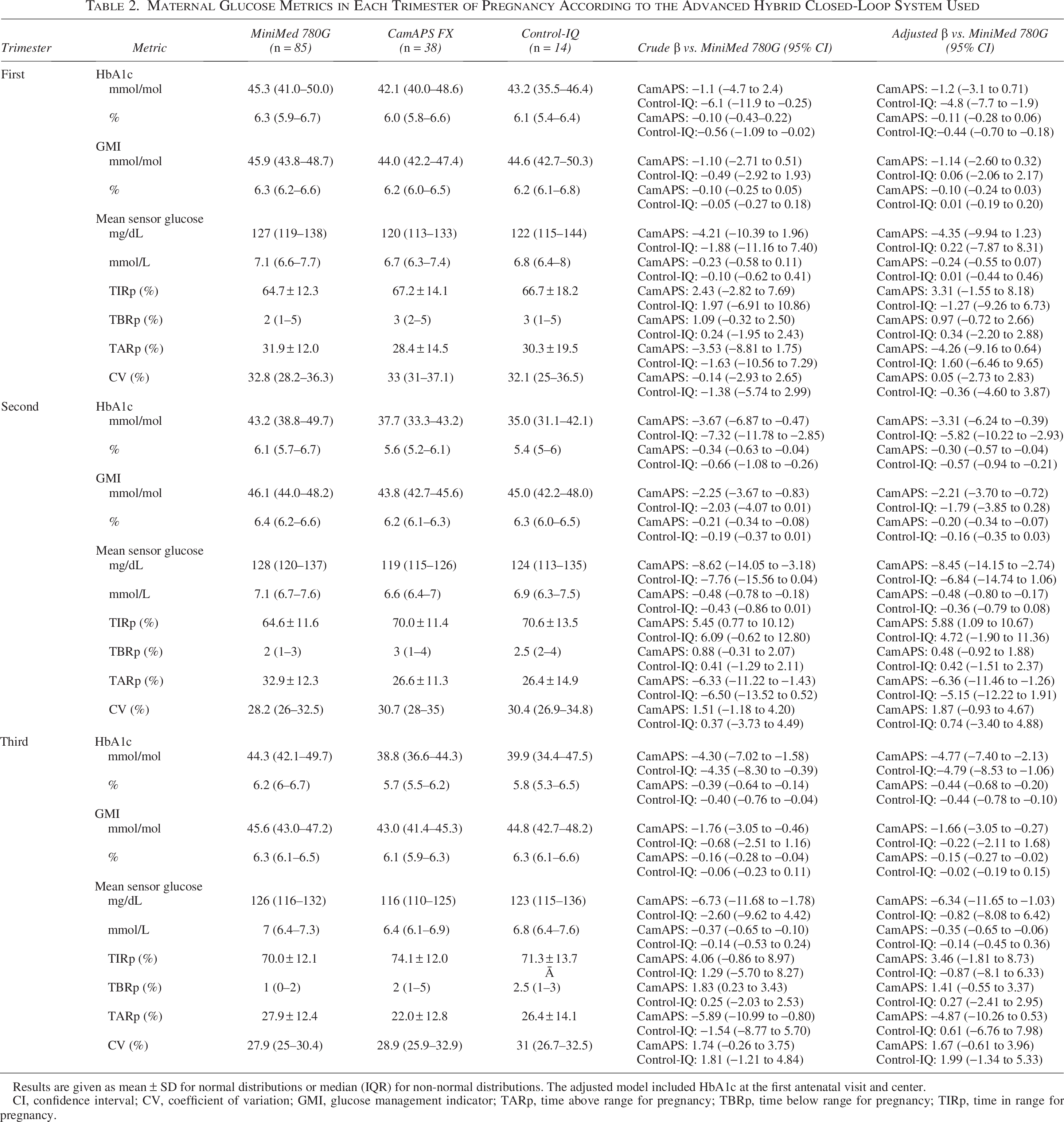
Results are given as mean ± SD for normal distributions or median (IQR) for non-normal distributions. The adjusted model included HbA1c at the first antenatal visit and center.
CI, confidence interval; CV, coefficient of variation; GMI, glucose management indicator; TARp, time above range for pregnancy; TBRp, time below range for pregnancy; TIRp, time in range for pregnancy.
There were between-group differences in CGM metrics during the second trimester (Table 2, Fig. 2). In the second trimester, use of the CamAPS FX system was associated with a higher TIRp (βadjusted +5.88%, 95% CI 1.09 to 10.67) and lower TARp (βadjusted −6.36%, 95% CI −11.46 to −1.26) compared with the MiniMed 780G group. In the third trimester, CamAPS users showed higher TBR compared with MiniMed 780G (βcrude 1.83, 95% CI 0.23 to 3.43), but this association was no longer significant after adjustment for baseline HbA1c and study center (βadjusted 1.41%, 95% CI −0.55 to 3.37). The median CV values in the first, second, and third trimesters were 33% (28.5–36.3), 29.2% (26.1–33.8), and 28.2% (25.5–31.9), respectively, with no significant differences between systems (Table 2, Fig. 2).
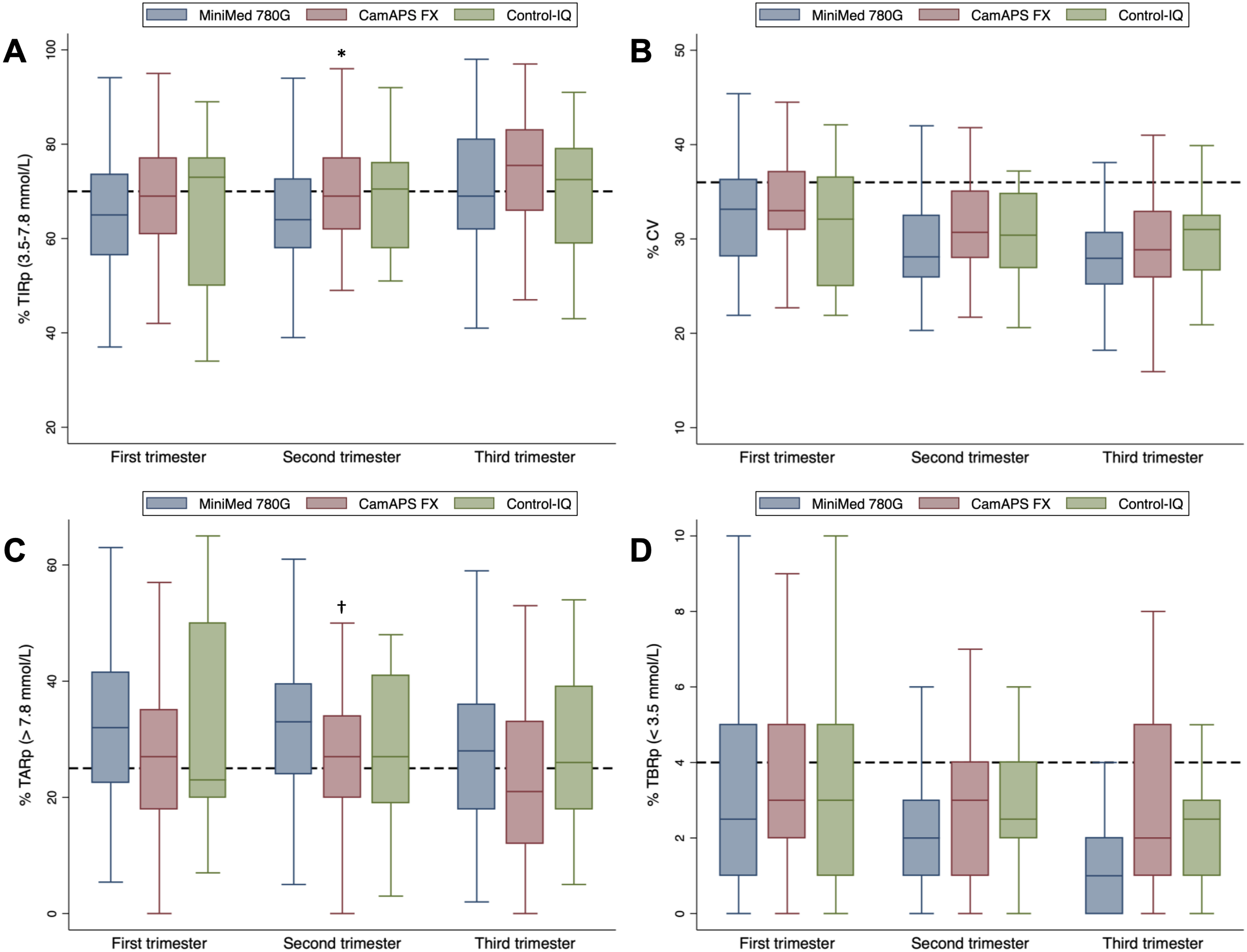
Box plots of continuous glucose monitoring metrics during pregnancy by advanced hybrid closed-loop (aHCL) systems: MiniMed 780G (blue), CamAPS FX (red), and Control-IQ (green). Panels show:
Registered carbohydrate intake was higher in the Control-IQ group during the second trimester (213 ± 108 g) compared with the MiniMed 780G (164 ± 51 g) and CamAPS FX (156 ± 49 g) groups. No significant differences were observed in the other trimesters. The median insulin doses in the first, second, and third trimesters were 0.54 IU/kg*day (0.44–0.65), 0.64 IU/kg*day (0.56–0.88), and 0.81 IU/kg*day (0.62–0.98), respectively, with no significant differences between systems.
Pregnancy outcomes
Table 3 depicts pregnancy outcomes according to the aHCL system used. There were no significant differences between groups in maternal outcomes, such as gestational weight gain, preeclampsia, and cesarean delivery rates. Among the 79 cesarean deliveries, 22 (27.9%) were planned procedures, with no significant differences between groups (13 [24.5%] in the MiniMed 780G group, 7 [38.9%] in the CamAPS FX group, and 2 [25.0%] in the Control-IQ group).
Pregnancy Outcomes According to the Advanced Hybrid Closed-Loop System Used
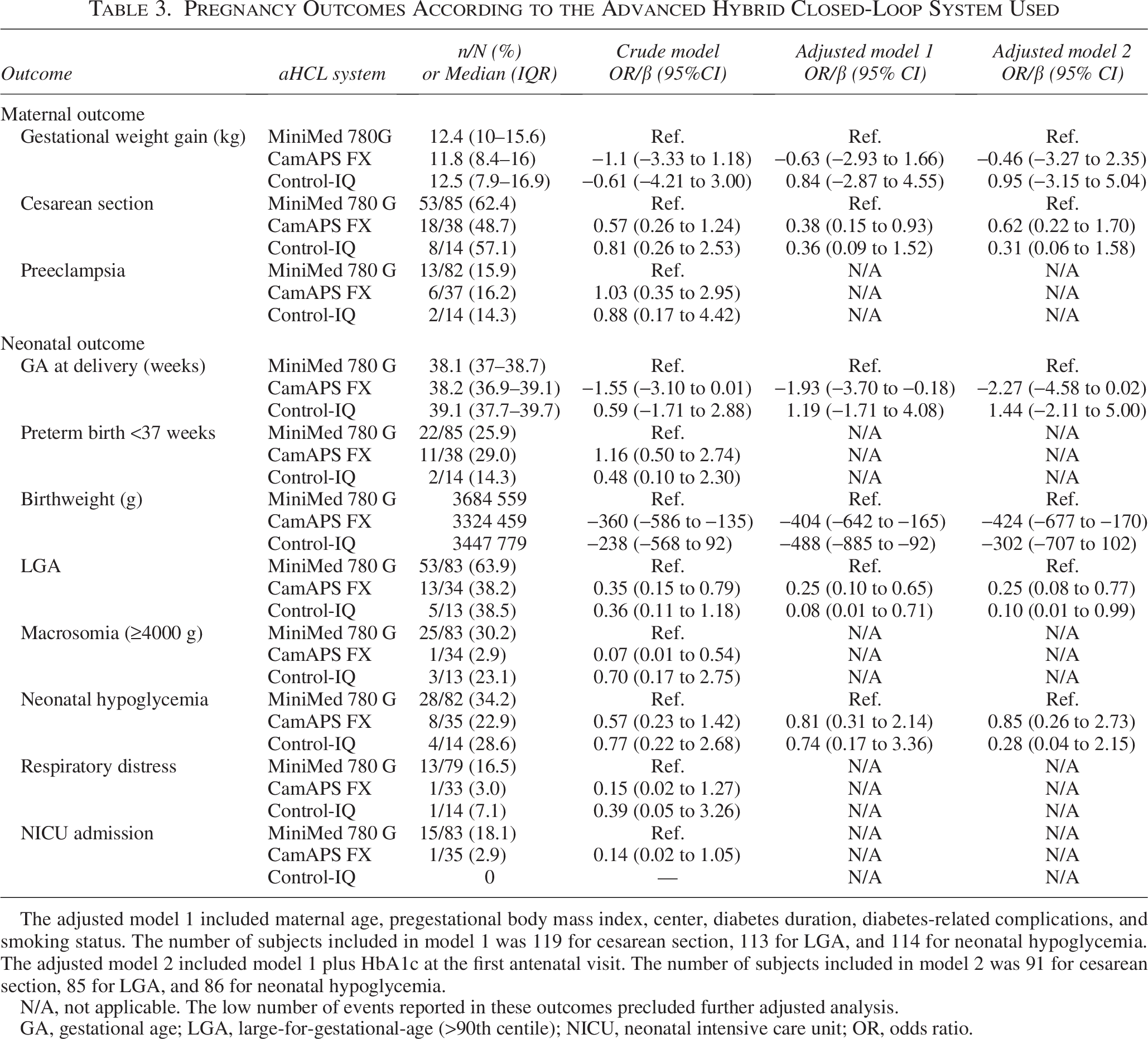
The adjusted model 1 included maternal age, pregestational body mass index, center, diabetes duration, diabetes-related complications, and smoking status. The number of subjects included in model 1 was 119 for cesarean section, 113 for LGA, and 114 for neonatal hypoglycemia. The adjusted model 2 included model 1 plus HbA1c at the first antenatal visit. The number of subjects included in model 2 was 91 for cesarean section, 85 for LGA, and 86 for neonatal hypoglycemia.
N/A, not applicable. The low number of events reported in these outcomes precluded further adjusted analysis.
GA, gestational age; LGA, large-for-gestational-age (>90th centile); NICU, neonatal intensive care unit; OR, odds ratio.
In the unadjusted analysis, significant between-group differences were observed in birth weight (grams, LGA, and macrosomia) and NICU admission rates. After adjusting for confounders, lower odds of LGA were observed in the CamAPS FX group (ORadjusted 0.25; 95% CI 0.08 to 0.77) and Control-IQ group (ORadjusted 0.10; 95% CI 0.01–0.99) compared with the MiniMed 780G (Table 3). While no significant differences in birth weight (grams) were observed between the MiniMed 780G and Control-IQ groups in the adjusted model (β −302; 95% CI −677 to 170), the use of CamAPS FX was associated with a lower neonatal birth weight compared with MiniMed 780G (adjusted β −424 g; 95% CI −677 to −170). The low number of events for macrosomia and NICU admissions precluded further adjusted analysis. No significant between-group differences were observed in neonatal hypoglycemia, in either unadjusted or adjusted models (Table 3).
A total of three congenital anomalies were reported in the MiniMed 780G group, one in the CamAPS FX group, and two in the Control-IQ group.
Discussion
This multicenter, real-world study provides novel insights into the use of aHCL systems during pregnancy in women with type 1 diabetes. The CamAPS FX and Control-IQ systems were associated with lower HbA1c levels throughout pregnancy and lower rates of neonatal complications compared with MiniMed 780G, particularly regarding a reduced likelihood of LGA infants. These findings underscore that not all aHCL systems may perform similarly in pregnancy, and their clinical impact could be system-specific.
The results of the present study align with prior studies in aHCL while offering new insights. In the present cohort, the CamAPS FX system use is associated with significantly lower HbA1c levels than the MiniMed 780G, despite similar baseline levels and less prior experience with the system. These findings support the effectiveness of CamAPS FX in improving metabolic control even among women with HbA1c <6.5%, who represented 71.8% of our cohort and were not included in the AiDAPT trial. The stricter glucose targets of the CamAPS FX system may explain these results, allowing for better accommodation to the metabolic demands of later trimesters. Interestingly, the Control-IQ system also achieved lower HbA1c levels than the MiniMed 780G, contrary to findings in nonpregnant populations. 1 In pregnant populations, case series and preliminary findings from the CIRCUIT study have reported an increase in TIR throughout pregnancy with the use of this system.8,17–19 This could be attributed to its adjustable basal rates and insulin sensitivity, enabling users to adapt to the changing insulin requirements during pregnancy, as well as the option to select stricter glucose targets through the use of sleep mode or the introduction of manual correction bolus. However, unlike the CamAPS FX group, the differences observed in HbA1c between Control-IQ and MiniMed 780G users were not reflected in CGM metrics. One possible explanation is the use of 14-day AGP data, which may not fully capture longer term glycemia as reflected by HbA1c. Nevertheless, our group has previously reported a good correlation between 14-day TIR and HbA1c, 20 comparable with cohorts using longer periods.21,22 Alternatively, these discrepancies might reflect the relatively small number of women using Control-IQ in our cohort, limiting the ability to detect consistent differences. It is also known that HbA1c trajectories during pregnancy do not always parallel TIR evolution, as HbA1c may transiently rise in the third trimester despite progressive improvements in TIR.9,20,23 Finally, potential differences in sensor accuracy across systems could also have contributed.24,25
Regarding maternal and neonatal outcomes, our findings showed that the use of CamAPS FX was associated with the lowest odds of LGA, followed by Control-IQ, when compared with MiniMed 780G. A recent meta-analysis failed to demonstrate a significant benefit in maternal or fetal outcomes with the use of aHCL systems, despite reductions in maternal glucose levels. 26 However, the studies included in the meta-analysis evaluated very different systems (with MiniMed 780G being the most commonly studied) and did not include direct comparisons between systems. When comparing LGA rates observed with MiniMed 780G to those reported in contemporary cohorts using MDI plus CGM or sensor-augmented pump therapy (SAPT), the rates with MiniMed 780G appear higher (52%–53% with MDI plus CGM and 25.7%–39% with SAPT).5,9,27–29 However, these comparisons should be interpreted with caution, as differences in LGA definitions, using different growth charts across studies, may influence the reported rates, 30 as well as baseline characteristics of MDI cohorts differed from aHCL users. 9 The stricter glucose targets, as well as the algorithm’s ability to adjust based on changes in body weight in both, CamAPS FX and Control-IQ, may better accommodate the dynamic insulin requirements during pregnancy, reducing the risk of fetal overgrowth. In contrast, the higher TARp and mean sensor glucose observed with MiniMed 780G during the second trimester may have contributed to increased fetal glucose exposure, potentially explaining the higher rates of macrosomia seen in this group. 31
This study has several strengths. First, it was conducted in a real-world, multicenter setting, including 137 pregnancies, which enhances the generalizability of the findings to routine clinical practice. Real-world evidence is particularly valuable in this context, as aHCL systems are becoming the standard of care for people with type 1 diabetes. Second, this is the first study to compare all three commercially available aHCL systems in Europe during pregnancy, including the recently introduced CamAPS FX. Third, data were collected from university hospitals with expertise in both aHCL technology and obstetric care for women with diabetes, which ensures data quality and consistency. The statistical models were adjusted for maternal risk factors and intercenter differences in clinical practice. Finally, the comprehensive assessment of glycemic metrics across all trimesters strengthens the reliability of the results.
However, several limitations must be considered. First, the observational design precludes ensuring that there is no selection bias limiting causal inferences. Second, the lack of diversity in the population (97.8% of European descent) limits the generalizability of the results. Third, CGM metrics were derived from different sensors (Guardian 3 or 4, Dexcom G6, and FreeStyle Libre 3), which have distinct calibration requirements, accuracy profiles, and data reporting methods. Several previous publications have demonstrated that these variations may introduce bias and complicate comparisons; therefore, the results should be interpreted with caution.24,25,32 Fourth, CGM metrics were derived from 14-day AGP reports based on real-world clinical practice. While this approach reflects how differences would typically be assessed in clinical settings, access to raw CGM data over longer periods could have enabled a more detailed analysis of glycemic variability and time-specific glycemic patterns. Fifth, as is inherent in real-world studies, 33 there were missing data for some variables due to misrecording or because they were not initially included in the database (e.g., missing HbA1c values and CGM metrics). Although multiple imputation is a validated method for addressing this limitation,34,35 the possibility of residual confounding cannot be excluded. In the same line, HbA1c was not measured in a central laboratory. Although each hospital used an NGSP-qualified instrument and center was included in all adjusted models, residual bias cannot be ruled out. Sixth, the absence of information on temporary system settings, such as sleep mode in Control-IQ or Boost in CamAPS FX, may have limited our understanding of how these systems were actually used in the present cohort. Previous data from Spanish cohorts outside of pregnancy have shown widespread use of sleep mode, averaging 7–7.4 h per day.1,36 We could hypothesize that its use might be even more frequent during pregnancy, as suggested by the consistent adjustment to lower glucose targets in both MiniMed 780G and CamAPS FX users. However, although continuous use of sleep mode was recommended in the CIRCUIT trial, 8 there is currently no robust evidence on how to optimize the use of these features in this specific context. Moreover, carbohydrate intake was obtained from each system platform (Glooko or CareLink). Due to the limitations of manual correction in the MiniMed 780G, these values may not reflect true intake, but rather a mix of “fake carbs” and reduced carbohydrate consumption to avoid hyperglycemia. Knowing how many patients were advised to use such strategies would have provided additional insight into system use beyond glucose targets and AIT. On the contrary, the lack of data on patient-reported outcomes, such as quality of life and satisfaction with the systems, limits a holistic evaluation of these technologies. Finally, multiple comparisons were performed in this study, and no global adjustment for multiplicity was applied. This could increase the risk of type I error; therefore, the results should be interpreted with caution. 37
Conclusions
In conclusion, this multicenter real-world study identified differences in the performance of aHCL systems during pregnancy in women with type 1 diabetes. The use of CamAPS FX and Control-IQ was associated with lower HbA1c levels and reduced odds of delivering LGA infants compared with MiniMed 780G. These findings highlight the potential clinical relevance of selecting aHCL systems based on their specific performance profiles during pregnancy. Further studies, including randomized controlled trials, are warranted to confirm these associations and guide individualized treatment strategies.
Authors’ Contributions
C.Q. and V.P. design the study, researched data, and wrote the first draft of the article. A.M.W., S.A., B.S., P.I.B.-V., M.H.A., L.N., M.J.P.-C., E.C., J.A., N.C., M.D.-M., M.A., A.M., I.V., B.V., G.D.-S., O.B., B.B., C.L.T., R.M.-P., M.A.M.-B., R.C., M.C.(Merce Codina), M.P., A.R.R., M.C.(Martin Cuesta), G.L.-G., M.M.G.C., F.B., P.O., and L.C.M. researched data and reviewed the article. All authors approved the final version of the article. C.Q. and V.P. are the guarantors of this work and, as such, had full access to all the data in the study and take responsibility for the integrity of the data and the accuracy of the data analysis.
Footnotes
Acknowledgment
The authors are very grateful to the Spanish Diabetes Association (SED) for support (no involvement in study design, collection, analysis, and interpretation of data, or writing the report; and the decision to submit was implied).
Author Disclosure Statement
A.M.W., S.A., B.S., M.H.A., L.N., E.C., J.A., N.C., M.D.-M., M.A., A.M., I.V., B.V., G.D.-S., O.B., B.B., C.L.T., R.M.-P., R.C., M.C.(Merce Codina), M.P., A.R.R., M.C.(Martin Cuesta), G.L.-G., M.M.G.C., F.B., L.C.M., P.O., and V.P. have no relevant financial or nonfinancial interests to disclose. C.Q. has received speaking/consulting honoraria from Medtronic, and Novalab. P.I.B.-V. has received speaking/consulting honoraria from Abbott, Novo Nordisk, Medtronic, Ypsomed, Roche, Novalab, and Lilly. M.J.P.-C. has received speaking/consulting honoraria from Medtronic and Ypsomed. M.A.M.-B. has received research support (to University Hospital Virgen Macarena through Foundation for Health Research Management of Seville) from Abbott and Ascensia.
Funding Information
This research received no specific grant from any funding agency in the public, commercial, or not-for-profit sectors.
Supplemental Material
References
Supplementary Material
Please find the following supplemental material available below.
For Open Access articles published under a Creative Commons License, all supplemental material carries the same license as the article it is associated with.
For non-Open Access articles published, all supplemental material carries a non-exclusive license, and permission requests for re-use of supplemental material or any part of supplemental material shall be sent directly to the copyright owner as specified in the copyright notice associated with the article.
