



Abstract
Using intrusive advising principles and the four Cs framework, the Strong-Start Program was developed and implemented to improve student outcomes in developmental math, reading, and writing courses. An intrusive advising protocol was used to help students recognize, adopt, and engage in the behaviors needed to complete instructor-assigned outside-of-class work. The intervention focused on two aspects of intrusive advising: (a) the objective to increase student academic success and (b) a set of predetermined goals to be accomplished in each academic advising session. The proportion of students who passed Strong-Start supported developmental math courses was significantly (z = 2.0, p = .02) greater than the proportion who passed Instructor-Matched comparison developmental math courses (49.33% vs. 33.67%), with a percentage difference of 15.66%, a 46.5% increase relative to the comparison group. The odds ratio (OR = 1.91, 95% confidence interval: 1.01–3.64) of students passing a Strong-Start supported developmental math course were 1.9 times (p = .03) that of students in unsupported Instructor-Matched Comparison courses.
Keywords
One in three first-year college students places into developmental math, reading, or writing courses (Gonzalez, 2011). At community colleges, developmental courses are a necessity, because by mandate community colleges are open to all students, including students who are underprepared (Perin, 2005). More than 50% of all community college students take at least one developmental college course (Bailey, Jeong, & Cho, 2010). However, the majority of students who take developmental courses at community colleges do not reach college-level competency in the developmental courses in which they enroll (Bahr, 2012).
To increase the performance of at-risk students completing developmental courses at community colleges, a variety of methods and support services have been utilized by community colleges. These methods and support services include academic tutoring at learning centers by professional tutors (Wurtz, 2015), holding study groups led by peer tutors who have earned high marks in the course, supplemental group instruction by developmental course instructors, the writing-across-the-curriculum instructional approach (Perin, 2002), specialized skill labs (Perin, 2004), and learning communities (Booth et al., 2014). Despite employing these methods and support services, many community colleges continue to have low course pass rates for developmental college courses.
Faculty members at community colleges dedicate themselves to working with one of our most challenging populations, students completing developmental courses. Faculty members expect students to complete a minimum of 2 hours of work outside of class, for every hour of in-class instruction with 6 hours of outside-of-class work expected for each 3-credit class taught in a traditional 15-week semester (Arum & Roska, 2011). Although faculty members provide specific instructions and guidelines for outside-of-class work, students do not always follow these instructions and sometimes spend very little time in instructor-assigned outside-of-classroom work (Arum & Roska, 2011; Nonis & Hudson, 2006). Research (McCormick, 2011) demonstrates that how much time college students give to outside-of-class study has declined in recent years, and most students spend on average only half the number of hours expected relative to the Carnegie hour, which dictates that students should spend 2 hours on outside-of-class study for every 1 hour of in-class instruction. Further exacerbating an already complex problem is that some students fail to take advantage of support services (e.g., optional tutoring at tutoring labs) recommended by their course instructors.
Frequently, higher education institutions expect college students, even students taking developmental courses, to be proactive in establishing and maintaining a relationship with a college advisor or counselor and to make use of the counselor or advisor as a resource for successful navigation of college resources. However, researchers (Donaldson, McKinney, Lee, & Pino, 2016) who have studied student success at community colleges suggest that community college administrators should not expect students to approach the advising office but instead consider ways to increase the outreach of advisors to students. Intrusive advising is a framework that can be used to increase the outreach of counselors and advisors to students taking developmental college courses.
Theoretical and Conceptual Frameworks
Intrusive Advising
There are professionals typically employed by colleges who can help students to recognize and adopt the outside-of-class behaviors associated with success in college courses, including completing instructor-assigned outside-of-class work. Academic counselors and advisors are uniquely qualified and positioned to work with students on outside-of-class behaviors as intrusive advisors. Intrusive advising is an effective strategy to help challenged and at-risk students (Schwebel, Walburn, Jacobsen, Jerrolds, & Klyce, 2008), such as students taking developmental college courses. Earl’s theoretical framework for intrusive advising suggests that advising should be based on students' needs and proactive on the part of advisors (Earl as cited in Donaldson et al., 2016).
The Four Cs Framework
Research findings (Levin, Cox, Cerven, & Haberler, 2010) suggest that substantive student outcomes for developmental courses at community colleges are the result of programs that have four characteristics: cohesion, cooperation, connection, and consistency. The Strong-Start Program was developed for use at a large public 2-year community college using the four Cs (cohesion–cooperation–connection–consistency) framework (Levin et al., 2010) as a foundation.
Cohesion
In our collaboration and implementation efforts, we focused on achieving cohesion, personnel operating with behaviors and actions that ideally mesh but minimally are consistently rational (Levin et al., 2010).
Cooperation
To facilitate cooperation, what happens when personnel establish good working relationships among themselves and with students, the lead Strong-Start counselor with the backing of the campus chair of the department of counseling and advising, focused on obtaining buy-in, enthusiasm, and agreement at multiple levels (department chair, course coordinator, and course instructor).
Connection
We aimed for connection, what happens when personnel maintain interdependent relationships with other departments within the college, by having the lead Strong-Start counselor work intensively with other department chairs, course coordinators, and course instructors in the math and English departments. In addition, connection was developed by having the Strong-Start counselors work consistently with each course instructor of a Strong-Start supported course.
Consistency
With significant effort, which we recognized as a requirement for completion of this program, we strove toward consistency, which is the presence of stable program goals and program behaviors.
Advisor-Designed Faculty-Directed Intrusive Advising
In the department of counseling and advising at a large public community college, the author of this study developed the Strong-Start Program, with the support of the campus department chair of counseling and advising, as an advisor-designed faculty-directed intrusive advising intervention to help students recognize, adopt, and engage in the behaviors needed to complete instructor-assigned outside-of-class course work. This intervention did not focus on student motivation, as seminal work on the intrusive advising framework indicates that to achieve a successful transition to college for new students, there should be a focus on proactive advising based on student needs, rather than reliance on student motivation (Earl, as cited in Donaldson et al., 2016). This made sense to us, because some students lack motivation to seek out assistance and will therefore not participate in academic advising (Donaldson et al., 2016).
In contrast to other advising interventions (e.g., Schwebel, Walburn, Klyce, & Jerrolds, 2012), this intervention did not aim to increase student–advisor contact, although we believe that student–advisor contact is beneficial. The Strong-Start Program aimed to improve student outcomes as measured by course pass rates. Typically, intrusive advising involves advising sessions for students on a regular basis; a predetermined set of goals to be accomplished in each advising session; the overarching goal to reduce college attrition; as well as the objectives to increase student motivation and increase student academic success (Schwebel et al., 2008). In this study, we limited our focus to only two of these typical aspects of intrusive advising: (a) the objective to increase student academic success and (b) a set of predetermined goals to be accomplished in each academic advising session, which was in this study, primarily a singular goal to get students to complete instructor-assigned outside-of-class work. A secondary goal was to make sure that students who missed class for any reason quickly resumed participation in the course by the next class session.
The Strong-Start Program aimed to leverage the expertise and time of counseling faculty members by providing each teaching faculty member teaching a targeted developmental course with a Strong-Start counselor who would support the course, making it a Strong-Start supported course. Although only the intervention developer, the lead Strong-Start counselor, and the campus chair of the department of counseling and advising were aware of the design of this study, including why particular courses were targeted, all of the collaborating personnel were aware of and supported the explicitly stated goal “To help students to recognize, adopt, and engage in the behaviors needed to complete instructor-assigned course work outside of class,” which was the language consistently used to explain the purpose of the Strong-Start Program. We hoped that the Strong-Start Program would be positively impactful on the primary student outcome of interest, whether a student passed or failed a developmental course, as well as the overall course pass rates of developmental courses.
Research Question
Is the Strong-Start Program an effective intervention for improving student outcomes as measured by course pass rates in developmental math courses, developmental reading courses, or developmental writing courses?
Hypothesis
It was hypothesized that the Strong-Start Program would be an effective intervention for significantly improving student outcomes as measured by course pass rates of developmental math, developmental reading, and developmental writing courses.
Method
Participants
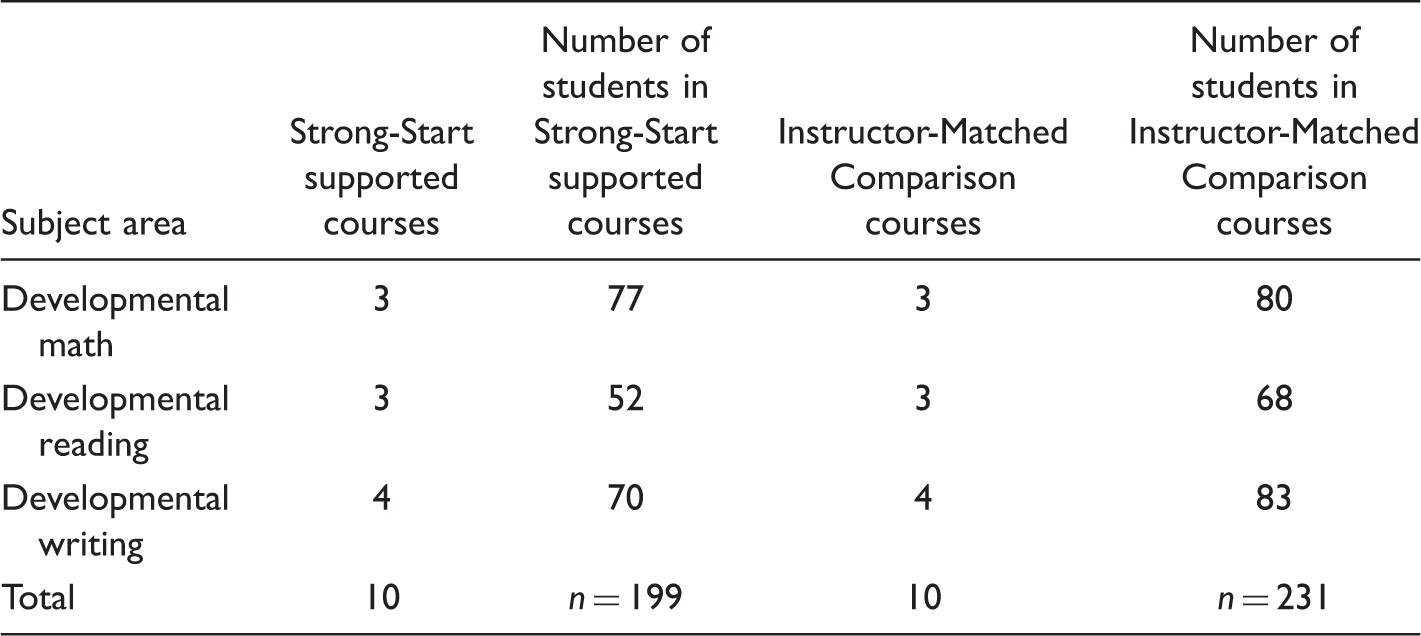
Strong-Start Supported Courses by Subject Area and Number of Students.
Inclusivity and Interdepartmental Collaboration
Collaboration between college personnel was not limited to work with instructors and academic counselors but included collaboration with department chairs, course coordinators, in addition to learning lab and tutoring center directors and staff. Once conceptualization and development of the program was completed, prior to implementation of the program, the math and English department chairs were presented with the opportunity to participate in the Strong-Start Program.
Collaborating College Personnel for Strong-Start Program.
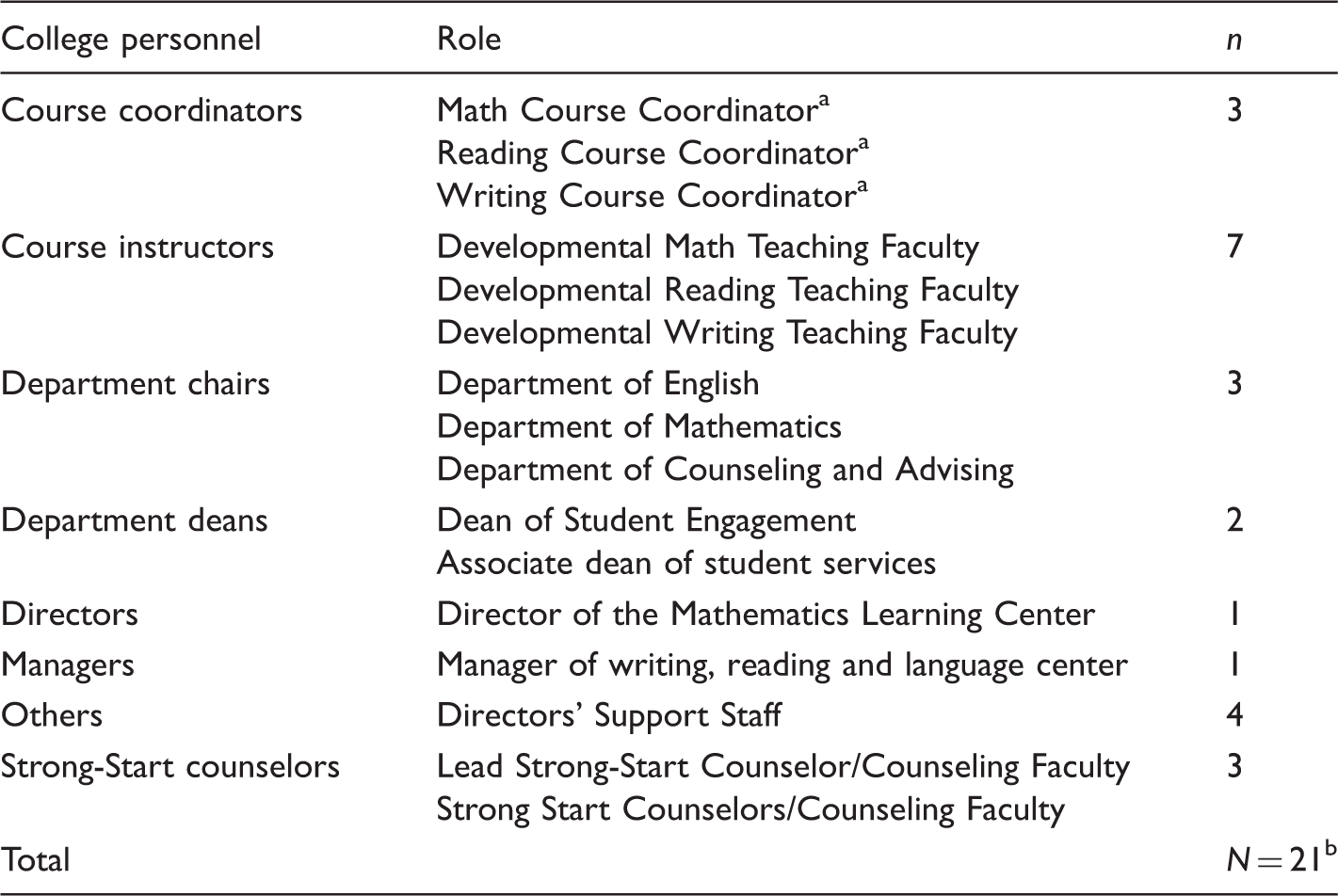
aEach of the course coordinators served as an instructor of at least one targeted course.
bThe total number is decreased by three, as three personnel served in two roles.
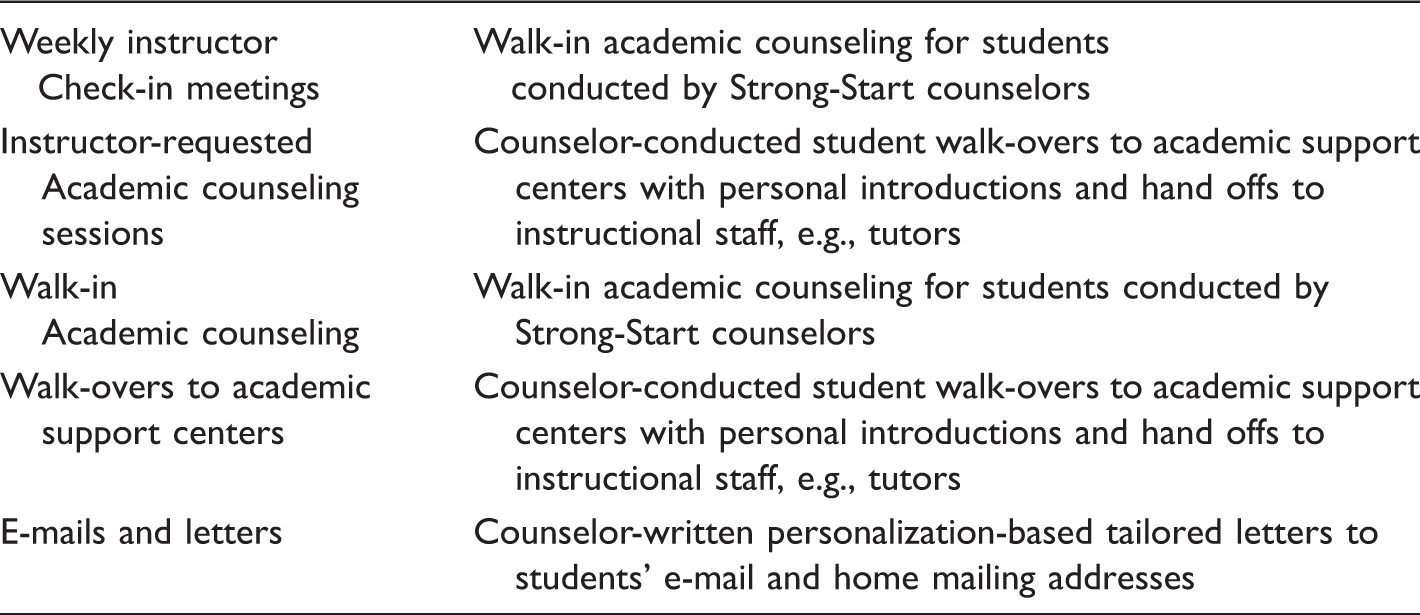
Strong-Start Program Components
Five Components of the Strong-Start Program.
Course Pass Rates by Type of Course and Subject Area.
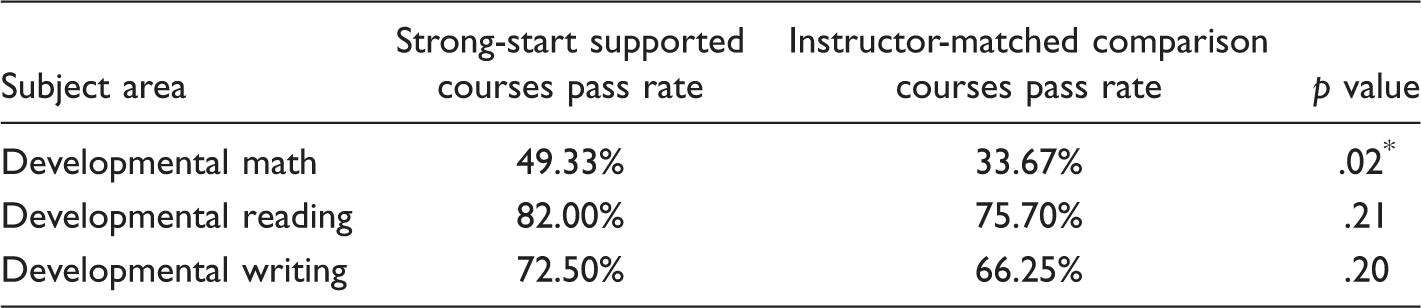
*p < .05.
Intervention Procedure
Each Strong-Start course was assigned a Strong-Start counselor. Three Strong-Start counselors supported 10 courses across the Fall 2012 and Spring 2013 semesters. Each Strong-Start counselor met with the Strong-Start course instructor once a week immediately following a class session in the classroom, for an instructor-check-in meeting. Instructor check-in meetings spanned 5 minutes to 45 minutes and typically lasted 15 minutes. During the instructor check-in meeting, the Strong-Start counselor inquired whether there were any students who needed (a) follow-up due to absence, (b) a walk over to support services, or (c) for any other reason. This meant that the Strong-Start counselor arrived prior to each class session ending and was available to receive any immediate follow-up action items (e.g., a student walk-over to the tutoring center).
For each student referred, the student was contacted first by phone for follow-up. When the student was reached by phone, an academic counseling session was conducted via telephone to address the issues identified by the course instructor. When a student was not reached by phone, a personalization-based tailored (PB-T) communication (Thomas & Thomas, 2017) was composed to address all issues identified by the instructor. In this instance, the PB-T communication was sent via e-mail to the student’s e-mail address, and a printed version of the PB-T communication, a PB-T letter, was mailed to the student’s home address. In these instances, counselors were asked to meet with students following class or to meet with students for a face-to-face session in the counseling center. A summary of counselor follow-up activities was provided to course instructors via e-mail.
PB-T mid-term letters were sent to students in each course at the midpoint of each semester. The mid-term letter encouraged students to make sure to attend each class session and to increase the amount of time spent engaged in course preparation and assignments each week. PB-T mid-term letters also invited students to come in for a face-to-face academic counseling session.
Results
Overall Results
The course pass rates for each subject area appear in Table 4. The results of a two-sample z test of proportions revealed that there was a statistically significant difference (z = 1.9, p = .027) between the proportion of students who passed Strong-Start supported developmental courses (68.43%, n = 199) and students who passed Traditional Instructor-Matched Comparison developmental courses (59.46%, n = 231).
Developmental Math Courses
Further analysis indicated that the significant overall difference was largely accounted for by the difference in Strong-Start supported developmental courses in math. There was a significant positive difference (z = 2.0, p = .02) in the proportion of students (49.33%, n = 77) who passed Strong-Start supported developmental math courses and the proportion of students (33.67%, n = 80) who passed Instructor-Matched Comparison developmental math courses (see Figure 1).
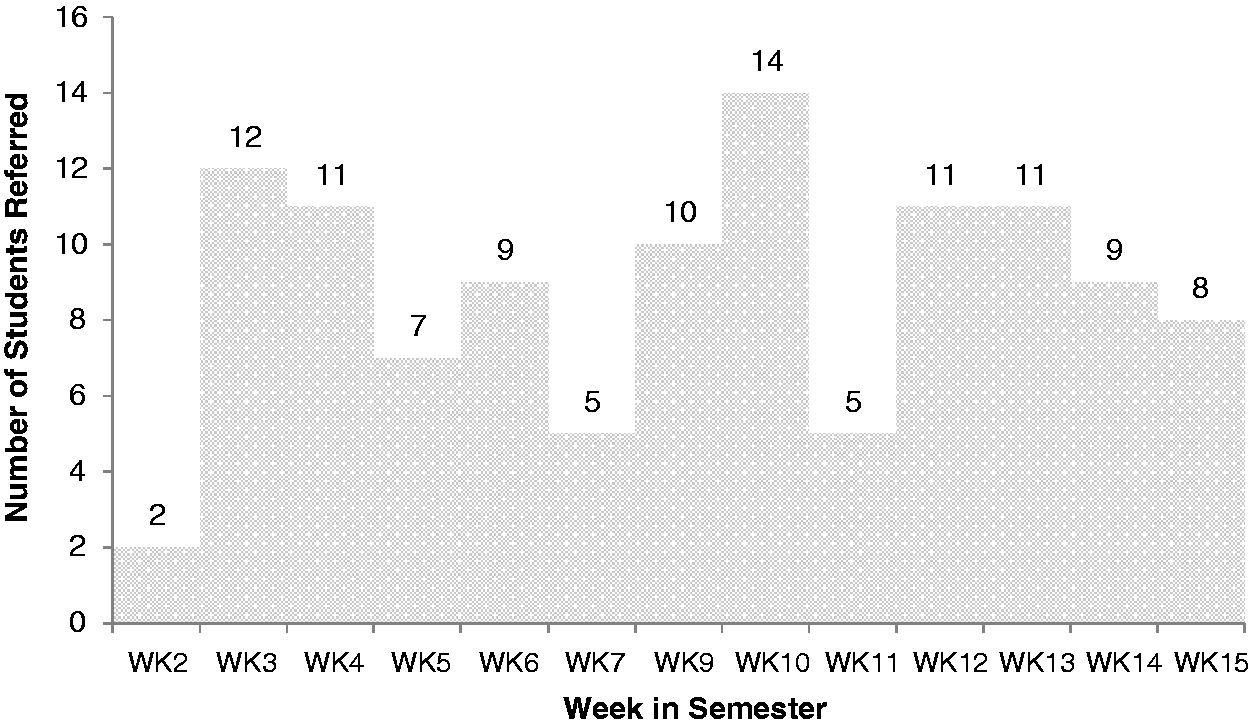
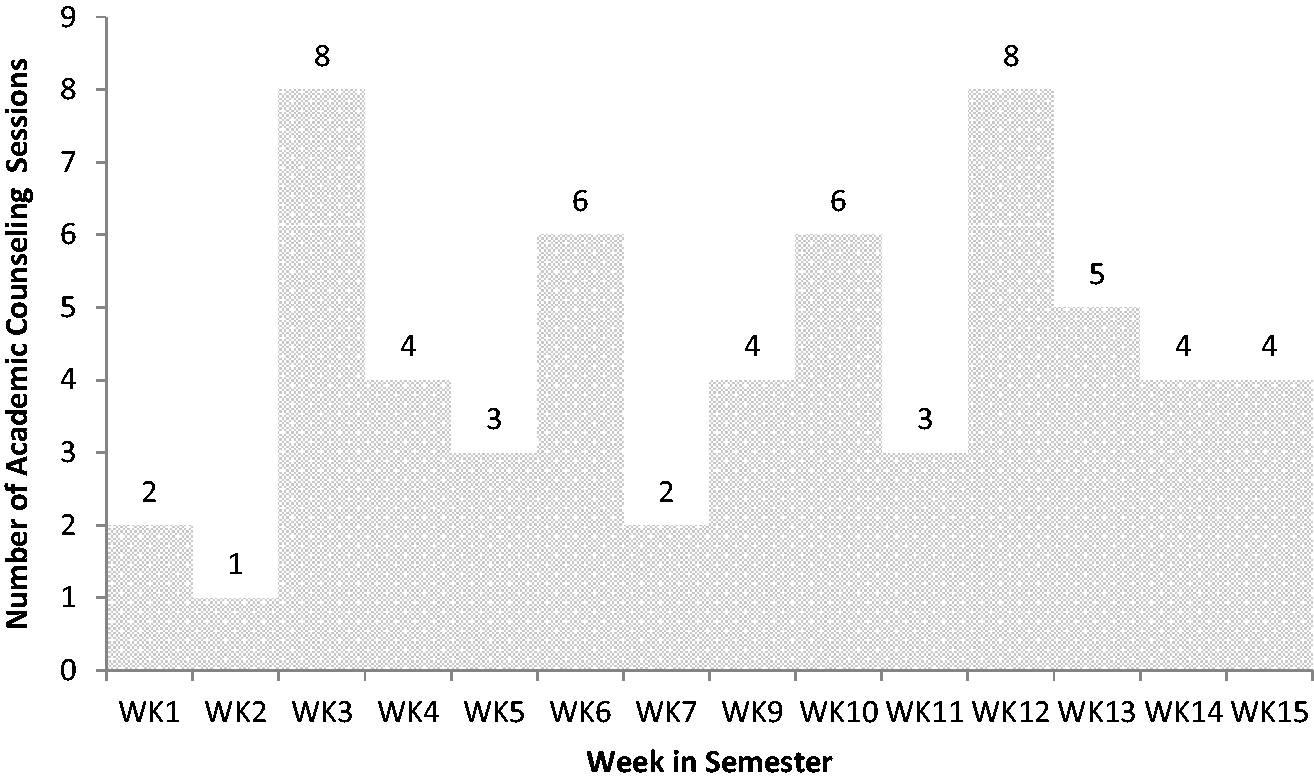
Many students in developmental math courses were referred for follow-up academic counseling services. Course instructors determined that referral to the course Strong-Start counselor was useful or necessary, and across three courses the number of referrals ranged between 2 and 14 each week following the first week of the academic semester. One hundred seventeen referrals were made across the 16-week semester (see Figure 2). Sixty academic counseling sessions were conducted via telephone (see Figure 3), and 51 personalized letters addressing the student-specific concerns identified by the instructor were sent to both student e-mail and home mailing addresses (see Figure 4).
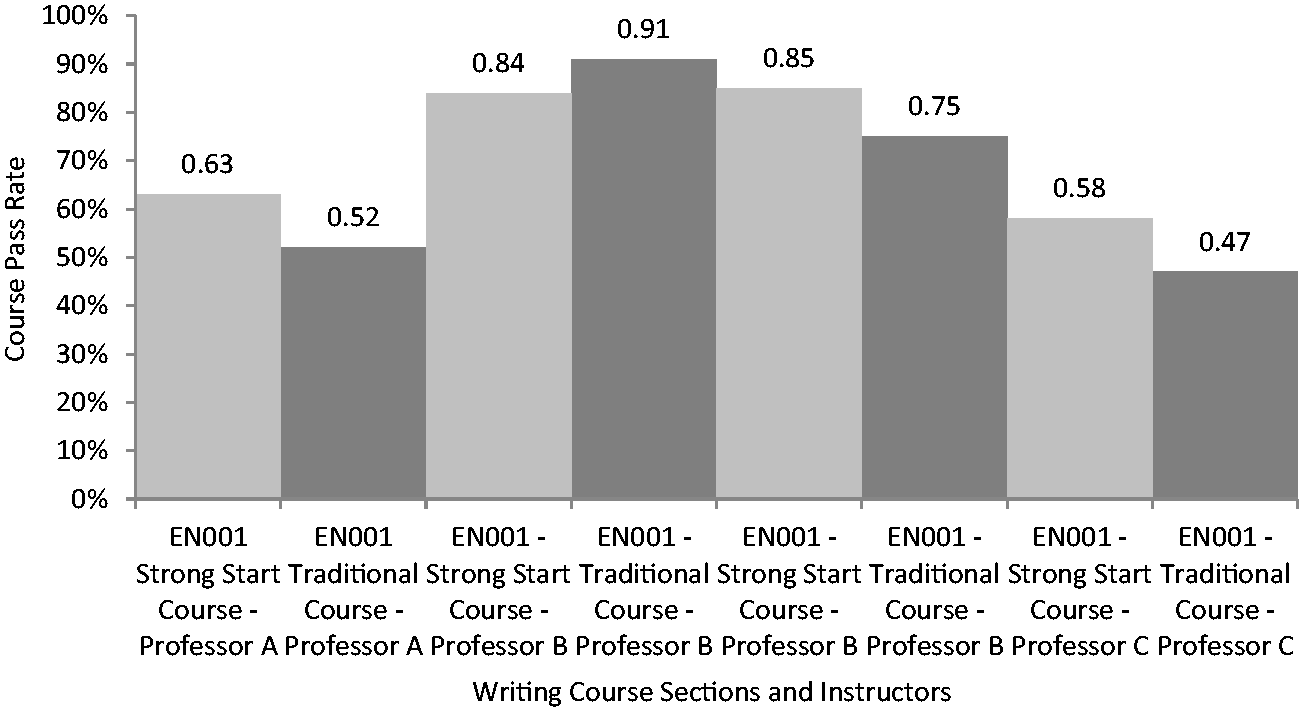
Course pass rates for developmental math courses by section and instructor. Number of developmental math students referred by week. Academic counseling sessions with developmental math students conducted via phone by week. Personalized e-mails sent to developmental math students by week. Course pass rates for developmental reading courses by section and instructor. Course pass rates for developmental writing courses by section and instructor.


The odds ratio (OR) statistic was used to measure the effect of the Strong-Start Program on the odds of a student passing a developmental math course. The odds of passing a developmental math course (OR: 1.91, 95% confidence interval [CI]: 1.01–3.64) were 1.9 times higher for students who took Strong-Start supported developmental math courses compared to students who took Traditional Instructor-Matched Comparison courses and was statistically significant (p = .03).
Developmental Reading Courses
Although there was improvement in the percentage of students who passed Strong-Start supported developmental reading courses (82.00%, n = 52) relative to Traditional Instructor-Matched Comparison courses (76.00%, n = 68), the course pass rate was not significantly improved (z = .8, p = .21) over these courses (see Figure 5).
Developmental Writing Courses
Similarly, the proportion of students (72.50%, n = 70) who passed Strong-Start supported developmental writing courses was greater than the proportion of students (66.25%, n = 83) who passed Instructor-Matched Comparison courses (see Figure 6) but was not statistically significant (z = .8, p = .20).
Discussion
The results of the pilot year of the Strong-Start Program suggest that the program had a positive effect on the student outcome of interest, whether a student passed or failed a developmental course, as well as the course pass rates of developmental math, developmental reading, and developmental writing courses. The positive effect was statistically significant (z = 2.0, p = .02) for developmental math courses. The faculty members who designed the developmental math courses had already taken into account recommendations from the peer-reviewed literature and required mandatory student participation in learning labs, which has been linked to effective education of students completing developmental courses (Roueche, Ely, & Roueche, 2001), and optional group-based supplemental instruction by a professor. In addition, the college also employed at a learning center professional math tutors that offered optional math tutoring.
Multiple Intervention Strategy
The Strong-Start Program was a significantly impactful program for developmental math courses, and it should be viewed as one component of a multiple-intervention strategy that included (a) the use of computer-based math courses facilitated by faculty members, which allowed students to work at their own pace; (b) mandatory student participation at learning labs, which required students to complete outside-of-class computer-based math problems, quizzes, and tests; (c) optional tutoring at learning centers, which allowed students to work one-on-one with a tutor; (d) optional group-based instruction by math faculty members, which allowed students to receive instruction in a traditional face-to-face format; and (e) the Strong-Start Program, which supported student adoption of behaviors needed to complete instructor-assigned outside-of-class work.
Despite the fact that students in the Traditional Instructor-Matched Comparison developmental math courses had all of these interventions, except participation in a Strong-Start Supported course, the odds (OR, 1.91, 95% CI: 1.01–3.64) of students passing a Strong-Start supported developmental math course were 1.9 times (p = .03) that of students who took Traditional Instructor-Matched Comparison courses. These results are compelling evidence that improvement in student outcomes as measured by course pass rates is likely due to the impact of the Strong-Start Program.
Researchers have lamented that many researchers do not determine whether a statistically nonsignificant result is the result of insufficient statistical power (Onwuegbuzie & Leech, 2004). In this study, neither the results for developmental reading (z = .8, p = .21) nor developmental writing (z = .8, p = .20) courses were statistically significant. A post hoc power analysis was conducted to determine if the statistically insignificant results may be the result of insufficient statistical power. The results of a post hoc power analysis revealed that the statistical power achieved in this study was far below the .80 de facto standard (Aberson, 2011) with the statistical power achieved being .148 for developmental reading and .128 for developmental writing. The statistical power achieved for developmental math was .513. The low observed statistical power suggests that it is possible that the conclusion that there is no statistical difference between the Strong-Start supported and Instructor-Matched Comparison groups for developmental reading and developmental writing may be incorrect. This post hoc power analysis allows the nonsignificant results to be placed in a more appropriate context, which is an understanding that the nonsignificant findings were not necessarily due to the absence of a real difference in the pass rates of the courses but due at least in part to the lack of statistical power. Lower power suggests that replication of a study is necessary to determine if a Type II error existed (Onwuegbuzie & Leech, 2004). The sample sizes for this study were relatively low, which negatively impacted the observed statistical power for each group.
Despite the lack of statistical significance, one of the three Strong-Start supported developmental reading courses had a course pass rate 10% higher than its Instructor-Matched Comparison course (83% vs. 73%) and a second had a course pass rate 9% higher than its Instructor-Matched Comparison course (91% vs. 82%). The third reading course had results that were essentially the same with 1% point difference (72% vs. 73%) between the courses. For developmental reading, although the course pass rate for one developmental reading course was 6% lower than its Instructor-Matched Comparison course (85% vs. 91%), the results revealed positive differences for three of the four courses, with two of four Strong-Start supported developmental reading courses having a course pass rate 11% higher than their Instructor-Matched Comparison courses (63% vs. 52%) and (58% vs. 47%), and one having a course pass rate 10% higher than is its Instructor-Matched Comparison course (85% vs. 75%).
Counseling Focus on Completion of Instructor-Assigned Outside-of-Class Work
The positive impact of the Strong-Start Program is largely explained by the Strong-Start Program’s focus on student adoption of behaviors to complete instructor-assigned outside-of-class work, for example, homework, online quizzes, online tests, and studying. Strong-Start counselors were instructed to avoid minorly productive advising sessions, for example, advising sessions focused on registration logistics. Unfortunately, nonproductive advising sessions are common, when there is a reliance on students to seek out advising (Schwebel et al., 2008), because the scope of the discussion may not be enlarged to focus on behavior and strategies needed to successfully complete instructor-assigned outside-of-class work. Although it may be useful for students to discuss a range of issues with counselors and advisors, the results of this study suggest that an explicit and deep focus on student completion of instructor-assigned outside-of-class work is beneficial. To effect change in student outcomes in developmental college courses, counselors and advisors should ensure that advising sessions are productive, which means that focus and discussion on how, when, and where students will complete instructor-assigned outside-of-class work occurs.
Inclusive Approach and Inter-Departmental Collaboration
Other contributing factors to the program’s positive impactfulness include its inclusive approach with interdepartmental collaboration and possibly individualized attention provided to students by academic counselors. The Strong-Start Program was inclusive in terms of its use of faculty, including both teaching faculty as well as counseling and advising faculty who typically handle academic counseling and advising for students at the college counseling and advising center. Teaching faculty, who were instrtuctors of Strong-Start supported developmental courses, worked closely with the Strong-Start supported course’s Strong-Start counselor. Researchers (Capt, 2011) have suggested that an inclusive approach involving faculty and departments should be a part of the developmental mission of community colleges, and we found the inclusive approach involving faculty and other departments beneficial and positively impactful.
Individualized Attention and Personalizing the College Environment
Another reason that may partially explain why the Strong-Start Program was positively impactful is that it addressed the issue of “feeling lost” in a college environment perceived as impersonal. It has been suggested that students completing developmental courses “feel lost”and perceive the college environment as impersonal (Perin, 2002). The type of attention provided by the Strong-Start Program, individualized attention, has been cited (Perin, 2002) as a key source of support for students completing developmental courses. In addition, it is possible that one explanation for the success of the program may lie in its focus on student integration into the college community, specifically the use of college resources, which has also been noted (Capt, 2011) as a necessary component for successful developmental education at community colleges.
Implications for Practice
In a recent study (Schwebel et al., 2012) on academic progress and achievement in a randomized trial of over 500 students, researchers concluded that students at greatest risk for poor student outcomes may not have the unction to seek out an academic advisor or respond to exhortation to make an advising appointment. Further, these researchers (Schwebel et al., 2012) concluded that while they used intrusive advising, the intrusiveness may not have been sufficient in magnitude, although it resulted in some positive gains. Based on the results of this study, and the results of recent research (Schwebel et al., 2012), it makes sense to exhort teaching faculty, counseling faculty, academic advisors, and college administrators focused on the success of students in developmental college courses to lean toward heavy use of intrusive advising, rather than brief or intermittent use of intrusive advising strategies and programs. Although some of us may be reluctant to embrace intrusive advising strategies, this study is compelling evidence that intrusive advising is an effective strategy to significantly improve student outcomes in developmental college courses.
Faculty Reflections
Faculty Feedback on Strong-Start Program.
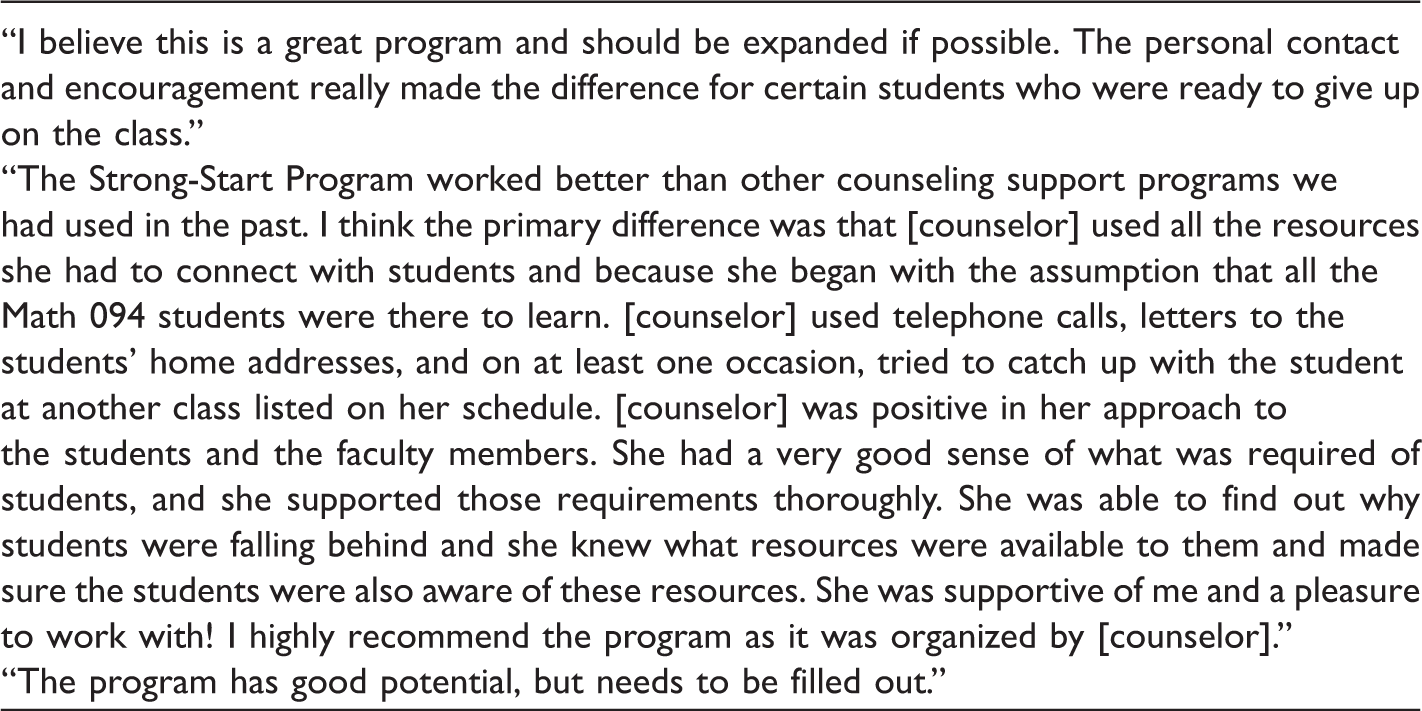
Feedback from instructors of Strong-Start Supported courses was largely positive, and instructors provided helpful recommendations to strengthen the program in future academic years that included “Work more closely with faculty,” “Work to be flexible to meet individual student needs,” and “Include counselors who have experience with developmental students.” Another instructor asked “Is it possible for the counselor to have a face-to-face conference with every student in the early part of the semester?” along with and followed by “That would encourage student engagement and better performance in the class.”
Limitations of the Study
This study utilized a relatively robust research design relative to educational intervention research, but the quasi-experimental research design lacks randomization and therefore is not optimally robust. Although the results of this study are likely due to the impact of the Strong-Start Program, it is possible that other variables explain these results. Without random assignment of all students to either the Strong-Start supported or Traditional Comparison courses, which would be scientifically perfect but practically imperfect, causality cannot be definitively determined.
Further, differences in the student outcomes in the Strong-Start supported courses and the Traditional Instructor-Matched Comparison courses could be explained by several factors, including differences in the attribute variables of students in the courses, enhanced instructor teaching as a result of the passage of time and professional development from one year to the next academic year, as well as differences in the efficacy of the Strong-Start counselors supporting each developmental course, among other possibilities. Despite these possibilities, the results of this study suggest that a causal relationship likely exists and that student course outcomes were significantly improved in developmental math courses, because of the advisor-designed faculty-directed intrusive advising intervention.
The Value of Intrusive Advising
Because some students taking developmental courses report feeling lost and experiencing the college environment as impersonal (Perin, 2002), it is valuable and effective for academic counselors and advisors to partner with teaching faculty members who can identify and refer those students in need of individualized attention to the academic counselor. When academic counselors provide students with individualized attention by meeting with a student after class to walk a student to a tutoring center, contacting a student by phone, writing a student a PB-T (Thomas & Thomas, 2017) e-mail, sending a student a PB-T (Thomas & Thomas, 2017) letter at the student’s home address, or meeting with a student for an in-office academic counseling session, these efforts may personalize the college environment for the student and decrease or minimize student experiences of feeling lost in the college environment.
A student’s orientation to the college experience is theorized to be improved through intrusive advising (Earl, as cited in Donaldson et al., 2016). Academic counselors who use intrusive advising strategies, for example, meeting with students immediately after class to walk them over to the tutoring center, can help students to successfully integrate into the college community by introducing students to the use of college resources, which is critical for the success of students taking developmental courses (Capt, 2011). Researchers (Schwebel et al., 2008) using intrusive advising found that a series of e-mails and telephone calls significantly increased the probability that students would schedule an advising appointment. In this study, we used PB-T e-mails and phone calls for academic counseling as key components of the Strong-Start Program, to see if academic counselors could facilitate student adoption of behaviors needed to complete instructor-assigned outside-of-class, and the result was significantly increased course pass rates for developmental math courses, along with higher course pass rates for developmental reading and developmental writing courses.
Although collaboration between academic counselors and teaching faculty in an advisor-designed faculty-directed intervention is labor intensive, the rewards in measurable improvement in student outcomes, specifically course pass rates, make such efforts worthile. The results of this study strongly suggest that an inclusive approach involving teaching faculty and academic counselors at the center of developmental education efforts can contribute to significant improvement in student outcomes and course pass rates in developmental college courses.
Conclusion
The results of this study provide evidence of the utility and value of using an advisor-designed faculty-directed intrusive advising intervention. The Strong-Start Program utilized two key aspects of intrusive advising: (a) the objective to increase student academic success and (b) a set of predetermined goals to be accomplished in each academic advising session. This study is compelling evidence that higher educational professionals focused on the success of students in developmental college courses should lean toward heavy use of intrusive advising, rather than brief or intermittent use of intrusive advising strategies and programs. To elicit similarly positive and impactful results in developmental courses, it is recommended that colleges replicate the Strong-Start Program in the context of a multiple-intervention strategy.
Footnotes
Appendix: Strong-Start Supported Courses and Instructor-Matched Comparison Courses
Acknowledgments
As the Lead Strong Start Counselor, I would like to acknowledge the valuable efforts of the Takoma Park/Silver Spring team who participated in and supported the pilot year of the Strong-Start Program. Thank you to Mr. David Jean-Julien, Chair (former) and Associate Professor of Counseling and Advising, for the opportunity to develop, lead, and implement the Strong-Start Program. Without your support, the program would not have been possible.
Thank you to the faculty members who participated in this program. I am grateful for your excellence in teaching and your willingness to allow us to support your courses. Thank you to Ms. Erica Hepworth, Strong Start Counselor (former), Chair (current) of Counseling and Advising, Instructor of Counseling; and Ms. Keena Howell, Strong Start Counselor. I acknowledge and appreciate your counseling and advising work, which was vital to the success of the pilot year of the program.
Thank you for the earnest support of Ms. Nancy Lawrence Hill, Associate Professor of Mathematics and Coordinator for Mathematics. Thank you to Mr. Robert Giron, Chair of the Department of English, Reading, World Languages, AELP, and Women's & Gender Studies Program & Professor of American English Language Program, English; Dr. Sharon Hauge, Professor of Mathematics and Chair (Former) of the Mathematics Department; Ms. Lynn Roessner-Ankney, Associate Professor of English & Coordinator of Developmental Writing; Dr. Deborah Sewell, Professor of Reading & Coordinator of Developmental Reading Program; and Dr. Gregory Wahl, Associate Professor of English & Coordinator of Developmental Writing Program.
Additional thanks to the members of the president's leadership team, Dr. Clemmie Solomon, Collegewide Dean of Student Engagement and Takoma Park/Silver Spring Dean of Student Affairs (current), Dean of Student Services (former); and Dr. Tonya Mason, Collegewide Dean for Student Success and Rockville Student Affairs (current), Associate Dean of Student Services (former), who supported the pilot year of the Strong-Start Program.
Declaration of Conflicting Interests
The author(s) declared no potential conflicts of interest with respect to the research, authorship, and/or publication of this article.
Funding
The author(s) received no financial support for the research, authorship, and/or publication of this article.