



Abstract
Drawing on Tinto's integration framework, Bean's attrition model, and culturally inclusive perspectives on belonging and campus environments, this study tests whether increases in holistic support intensity were associated with student retention and completion recovery after the pandemic-era 2020 break. Using a national Integrated Postsecondary Education Data System (IPEDS) institution-year panel of U.S. four-year colleges (2015–2024), we estimate fixed-effects models linking student-services spending per full-time-equivalent student (FTE) to full-time retention and six-year completion. We triangulate institutional findings with Healthy Minds Study (HMS) aggregate trends (2019–2025). Support intensity rose across sectors; retention improved modestly; completion declined. Lagged support was positively associated with retention in the weighted primary model, but sensitivity checks support cautious interpretation. Results suggest that support expansion mitigated attrition pressure while recovery remained incomplete under sustained demand.
Introduction
Retention scholarship has long argued that persistence reflects an interaction between academic performance, social integration, institutional fit, and external pressures (Astin, 1984; Bean, 1980; Tinto, 1975, 1993). Since 2020, those relationships have unfolded in a pandemic-era environment marked by disrupted delivery, elevated mental health need, basic-needs strain, and expanded support expectations (Lee et al., 2021; Pottschmidt et al., 2023). Colleges responded through advising, counseling, emergency aid, care coordination, and other student-services functions. The key empirical question for retention research is whether this support expansion translates into measurable recovery in outcomes that matter most for persistence.
The post-2020 marker is used deliberately. It captures the pandemic-era shift in student need, service delivery, and institutional response rather than a generic calendar break. Tinto's framework emphasizes institutional commitment and integration processes; Bean's model emphasizes behavioral intention and external pull factors. Both frameworks imply that support infrastructure should matter when students face increased strain, but both also imply that effects may be attenuated when external pressures increase faster than institutional capacity. Healthy Minds evidence and related COVID-era studies show that distress, treatment engagement, and access barriers intensified around this period (Lee et al., 2021; Lipson et al., 2022; Pottschmidt et al., 2023).
Prior work supports the expectation that student support can influence retention. Expenditure studies show that noninstructional investments, including student services, are associated with persistence and graduation in many contexts (Odle & Monday, 2021; Webber & Ehrenberg, 2010; Zong & Davis, 2024). Student-level literature shows that distress, belonging, psychosocial functioning, and discrimination shape continuation decisions (Eisenberg et al., 2009; Freire & Hurd, 2023; Roberts et al., 2023; Swanson et al., 2021). Basic-needs research shows that food and housing insecurity are linked with weaker academic outcomes and increased discontinuity risk (Balzer Carr & London, 2020; Broton & Goldrick-Rab, 2016; Leung et al., 2021; Olfert et al., 2023; Wolfson et al., 2022). What remains less clear is whether post-2020 support expansion corresponded with broad retention and completion recovery at the national scale.
This gap matters for both theory and practice. From a theory standpoint, post-2020 conditions provide a high-demand test of whether integration, belonging, and external-pressure mechanisms remain visible in national data. From a practice standpoint, colleges need evidence about whether support growth is best understood as recovery, mitigation, or a longer pathway investment.
This study addresses that gap by asking: Does holistic support intensity predict retention and completion recovery post-2020? We operationalize holistic support intensity as student-services spending per full-time-equivalent student (FTE) using national IPEDS institution-year data (2015–2024) for U.S. four-year institutions. We estimate within-institution fixed-effects models for full-time retention and six-year completion outcomes and test whether the support-retention relationship changes after 2020. We treat retention as the proximal outcome and completion as a distal pathway outcome.
To improve interpretability, we incorporate Healthy Minds aggregate trends as demand-side context. Healthy Minds public waves provide consistent evidence on student burden and treatment engagement, which is not directly, measured in IPEDS finance-outcome files. Because this project does not include validated institution-level crosswalk linkage between Healthy Minds and IPEDS, Healthy Minds is used as triangulation for retention context rather than primary causal estimation.
The manuscript contributes to the Journal of College Student Retention: Research, Theory & Practice (CSR) in three ways. First, it re-centers the post-2020 support question in retention theory by testing whether expected integration mechanisms appear at scale under high demand. Second, it links national institutional finance patterns with retention and completion outcomes rather than relying on broad narratives about support expansion. Third, it translates the evidence into practice implications for advising integration, early alert alignment, culturally responsive support, and support targeting while maintaining clear limits on causal interpretation.
The study is designed to be practically legible for retention administrators who often make decisions under data constraints. By focusing on national institution-year patterns and a transparent model structure, the manuscript provides a benchmark that institutions can compare against their own local dashboards.
A final framing point concerns interpretation discipline. Retention is sensitive to period shocks, enrollment composition, and external economic pressure. The objective is therefore to estimate whether support intensity was associated with recovery movement under observed conditions, then interpret that movement through established and culturally responsive retention theory.
Literature Review
Retention Theory and Institutional Mechanisms
Retention theory provides the primary conceptual architecture for this study. Tinto's student integration model proposes that persistence depends on ongoing academic and social integration processes, which are shaped by institutional commitment and student experiences over time (Tinto, 1975, 1993, 2012, 2023). Bean's student attrition model emphasizes behavioral intention, organizational fit, and external environmental factors that can interrupt continuity even when academic ability is adequate (Bean, 1980; Bean & Metzner, 1985). Astin's involvement perspective similarly highlights how institutional opportunities for engagement and support are linked to persistence via participation intensity and perceived belonging (Astin, 1984).
Taken together, these frameworks suggest that support services are relevant retention levers because they can improve integration quality, reduce friction in help-seeking, and increase continuity during personal or financial disruption. Advising access, counseling, case management, emergency aid routing, and referral closure are each plausible institutional mechanisms. However, Tinto and Bean do not fully capture how culturally minoritized, first-generation, low-income, or otherwise marginalized students experience institutional support. Culturally engaging campus environment scholarship emphasizes cultural validation, humanized environments, and culturally responsive support as conditions that shape belonging and motivation (Museus & Shiroma, 2022). Multicontextual model for diverse learning environments (MMDLE)-informed work similarly centers how institutional structures, student identities, external demands, and belonging interact to shape time-to-degree and completion (Simpfenderfer & Mitic, 2026).
Post-2020 conditions make these theoretical tensions more visible. If institutions expand support intensity while students experience a higher demand burden, the expected observable pattern may be modest retention movement rather than sharp recovery. This does not necessarily imply support failure; it may indicate that the support system is working against a stronger attrition current.
Retention theory also implies heterogeneity in pathways that aggregate models may only partially detect. Institutions with strong onboarding, intrusive advising, culturally responsive outreach, and seamless referral systems may convert support spending into measurable retention gains faster than institutions with similar budgets but fragmented delivery architecture. A modest aggregate gain can therefore mask larger gains in high-implementation settings and flat movement where operational integration is weaker.
Persistence models also emphasize temporal accumulation. Students form continuation decisions through repeated experiences with institutional responsiveness, not through one-time support contacts. Even when campuses expanded staffing and support quickly after 2020, newly scaled systems may have needed multiple terms to reach stable throughput, referral completion, and cross-unit coordination.
Support Services as Retention Levers
Empirical literature on spending and retention supports cautious optimism regarding student-services investment. Webber and Ehrenberg (2010) showed that expenditure categories beyond instruction can be associated with persistence and graduation outcomes. Titus (2006a, 2006b) demonstrated that institutional and contextual factors jointly shape graduation and persistence performance. Recent expenditure and IPEDS-based studies reinforce that noninstructional spending, staffing, and institutional environment variables can matter, though effects vary by sector, resource level, and model design (Dahlvig et al., 2020; Odle & Monday, 2021; Zong & Davis, 2024).
Student-centered intervention literature aligns with this perspective. Retention gains are often strongest when supports are coordinated, timely, and linked to academic pathways rather than delivered as isolated services. Recent belonging research also shows that the social meaning of support matters: students are more likely to persist when they experience institutional environments as responsive, inclusive, and connected to their goals (Crawford et al., 2023; Kelly et al., 2024; Museus & Shiroma, 2022).
Measurement limitations remain central in this literature. Finance categories, including student services, are broad and do not directly reveal implementation quality, wait times, targeting precision, or continuity of care. As a result, spending coefficients are best interpreted as intensity signals rather than mechanistic estimates. This is especially relevant for national panel analysis, where harmonization is feasible, but program-level operational granularity is limited.
The literature therefore supports two working expectations for this manuscript. First, higher support intensity should be associated with better retention outcomes through integration-support channels. Second, the magnitude of association may vary by period and context, particularly in high-demand environments.
These implementation features are difficult to infer from finance data alone, yet they help explain why national spending coefficients can be positive, moderate, or unstable across specifications.
Another relevant point is that retention gains often appear before completion gains. Proximal metrics such as fall-to-fall continuation, second-year return, and reenrollment after interruption can respond quickly to improved support infrastructure. Completion metrics usually require multi-year cumulative pathway stability. Therefore, a pattern of modest retention improvement with weak completion recovery over the same window can still be consistent with meaningful progress in underlying persistence systems.
Post-2020 Retention Challenges: Mental Health and Basic Needs
A large body of student-level research documents burden patterns likely to affect retention. Mental health studies show sustained high prevalence of distress, increased treatment use, and COVID-era strain among college students (Eisenberg et al., 2009; Lee et al., 2021; Lipson et al., 2022; Lipson & Eisenberg, 2018; Pottschmidt et al., 2023; Roberts et al., 2023; Trusty et al., 2025). Basic-needs research demonstrates that food insecurity, housing instability, and financial stress are associated with weaker academic outcomes and lower educational continuity (Balzer Carr & London, 2020; Broton & Goldrick-Rab, 2016; Leung et al., 2021; Olfert et al., 2023; Raskind et al., 2019; Wolfson et al., 2022). These risk domains often co-occur, creating compounded attrition exposure.
Recent findings also show that wellbeing burden is unevenly distributed. Healthy Minds analyses identify racial/ethnic differences in mental health and help-seeking trends (Lipson et al., 2022), and first-generation students show distinctive mental health and service-use needs (Lipson, Diaz, Davis & Eisenberg, 2023). Discrimination and diminished belonging can further connect campus climate to mental health outcomes among underrepresented students (Freire & Hurd, 2023). Joint associations among mental health, food security, and grade point average further reinforce the academic relevance of wellbeing burden (Marmolejo et al., 2024).
This post-2020 context creates a direct theoretical and empirical gap for CSR-relevant research: whether the support-retention association expected by integration and belonging models remains observable at the national scale under sustained high burden. The present study uses national institutional data to test that relationship while using HMS trends to locate the institutional estimates within a broader student-burden environment.
The retention hypothesis tested in this manuscript is therefore explicit: higher support intensity should be associated with improved retention through stronger institutional integration pathways, with potential attenuation after 2020 under elevated demand and service capacity pressure. Completion hypotheses are more cautious because completion reflects longer pathways that may not fully register recent support expansion.
The post-2020 challenge also includes institutional labor capacity and service delivery. Many campuses expanded telehealth, advising, and case-management infrastructure while also facing higher acuity, wait-time pressure, and disrupted in-person connection. Under these conditions, institutions can increase spending and still encounter throughput bottlenecks that limit immediate retention gains.
Finally, the period introduced substantial uncertainty in student planning behavior, including stop-out considerations, transfer choices, labor-market decisions, and delayed use of support. These dynamics are central in Bean-type external environment channels and help explain why the translation from support expansion to observed retention recovery may be positive but attenuated.
Conceptual Framework
Figure 1 summarizes the study's revised framework. The post-2020 demand context is treated as a period condition that heightened student burden and shaped institutional response. Support intensity is modeled as an institutional capacity signal, while implementation quality and culturally responsive delivery influence whether that capacity becomes accessible support. The proximal mechanisms are belonging, service access, referral closure, and continuity of care. Retention is the near-horizon outcome; completion is the slower-moving pathway outcome.
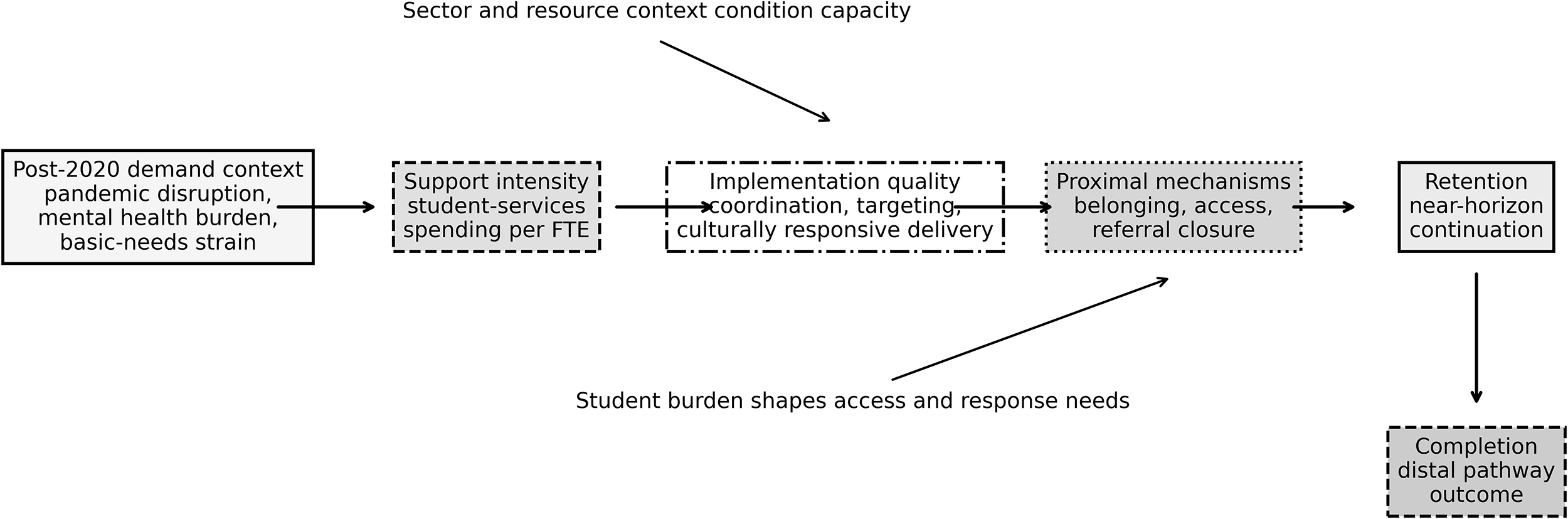
Conceptual framework for support intensity, student burden, retention, and completion.
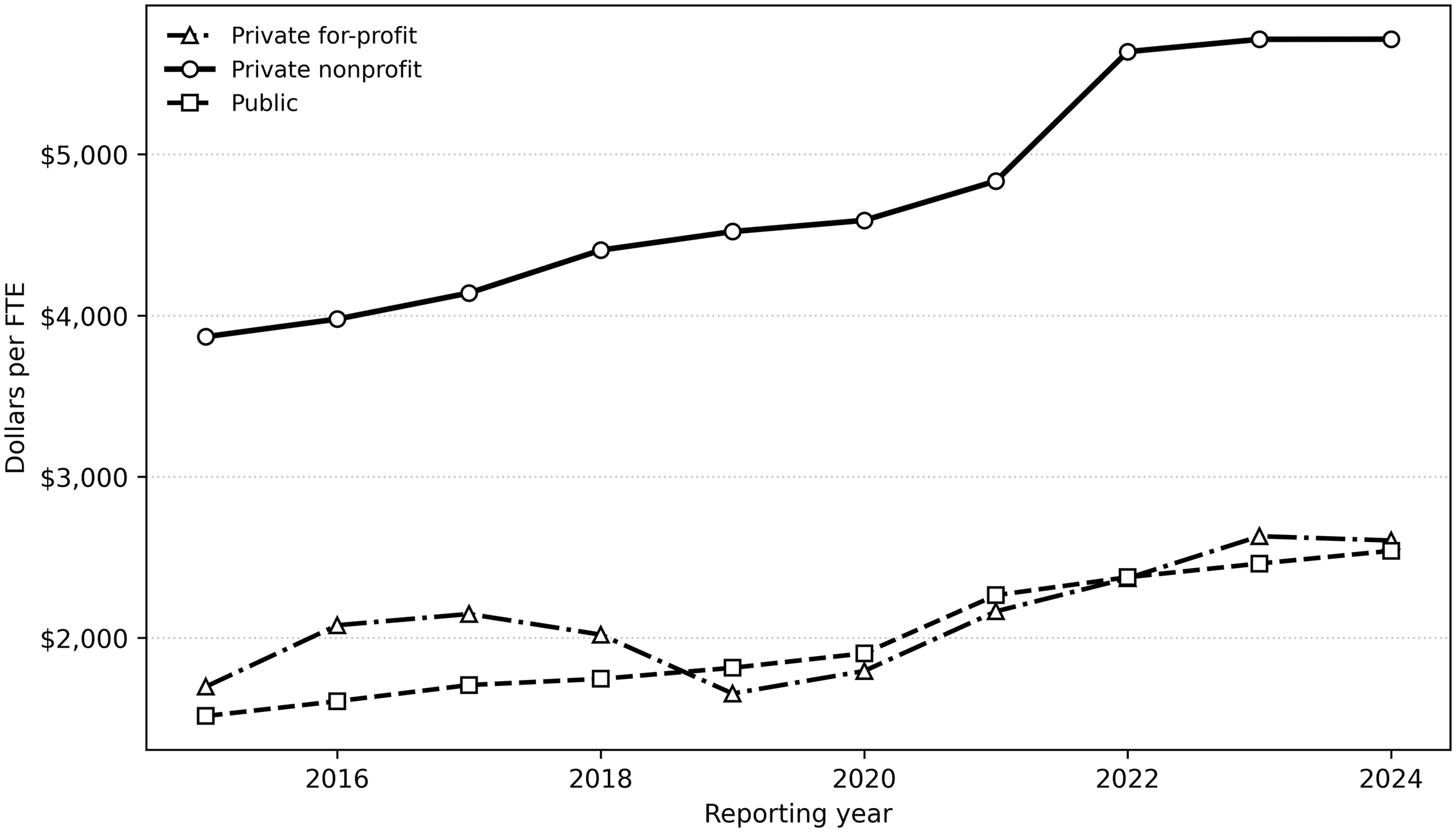
Median student-services spending per full-time-equivalent student by institutional sector, 2015–2024.
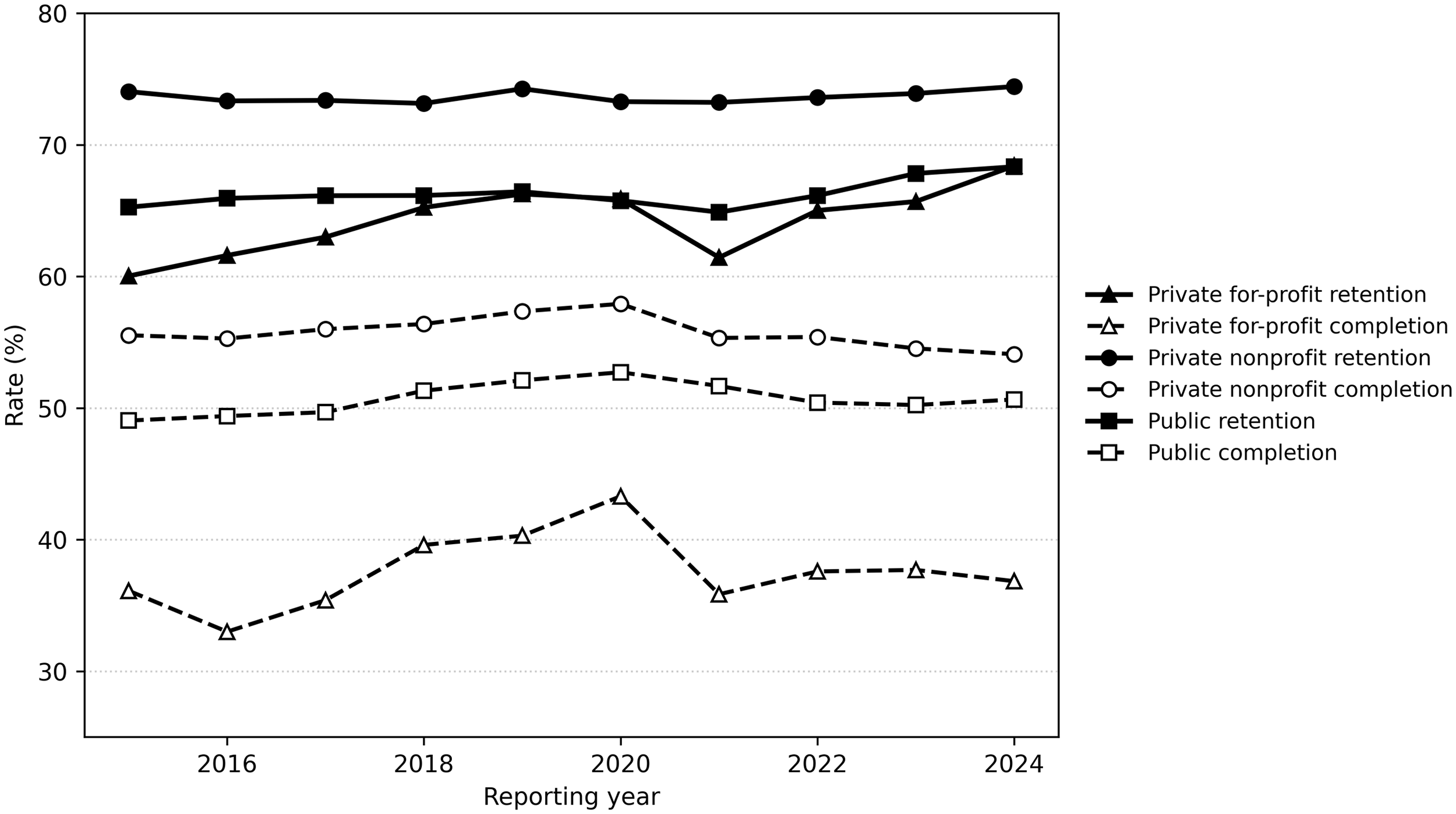
Mean retention and mean six-year bachelor completion by institutional sector, 2015–2024.
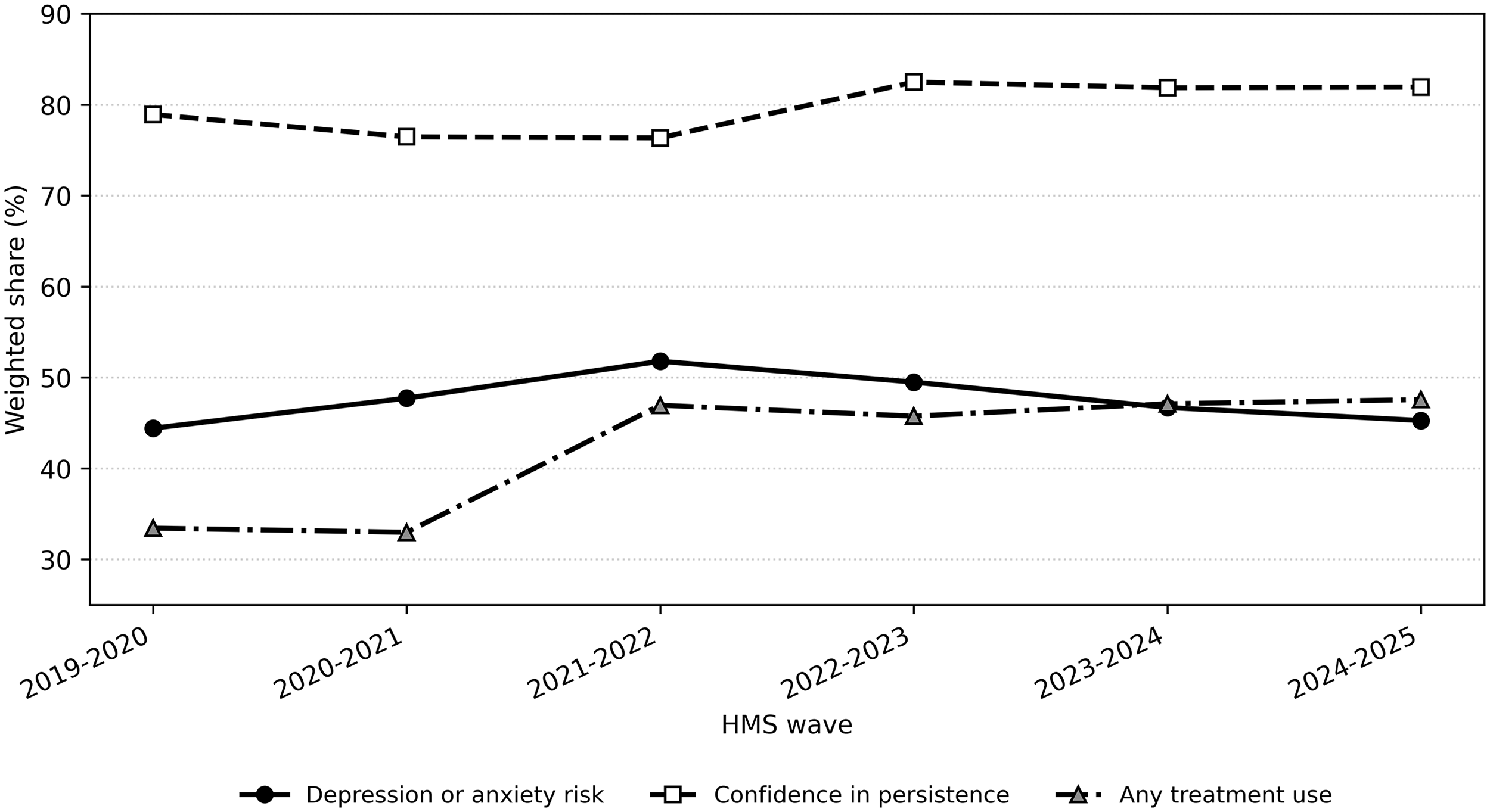
Healthy minds study aggregate trends for distress, persistence confidence, and treatment use, 2019–2025.
Methods
This study uses a longitudinal institution-year design focused on retention mechanisms and outcomes at U.S. four-year institutions. The primary data source is the public Integrated Postsecondary Education Data System (IPEDS) for reporting years 2015–2024. Institutional characteristics were taken from institutional header (HD) files; enrollment denominators from derived enrollment full-time-equivalent (DRVEF) files or legacy enrollment full-time-equivalent (EF) activity files where required; retention outcomes from enrollment first-time degree/certificate-seeking (EFD/EF) retention files; graduation outcomes from derived graduation-rate (DRVGR) files with legacy fallback continuity checks; and finance variables from sector-specific forms harmonized across public, private nonprofit, and private for-profit institutions.
The analytic sample includes active, degree-granting institutions in the 50 states and Washington, D.C., filtered using standard operational flags (PSET4FLG == 1, DEGGRANT == 1, CYACTIVE == 1) and state inclusion rules. The harmonized panel contains 41,316 institution-year observations across 5,058 institutions before model-specific missing-data restrictions.
The main exposure is student-services spending per FTE, interpreted as holistic support intensity. In IPEDS finance reporting, student-services expenditures capture a broad category of noninstructional student-facing functions, including admissions, registrar activities, counseling and advising-related services, student activities, student health, and other services that support students’ academic and personal development. The measure is therefore not a direct counseling or mental-health spending variable. It is used as a defensible national proxy for overall support intensity because it is consistently reported across sectors and captures the institutional resource category most closely aligned with broad persistence-support infrastructure.
Retention Model Specification
The retention model estimates within-institution variation using institution and year fixed effects, lagged exposure and controls, retention-cohort weights, and institution-clustered standard errors. The analytic retention model includes 28,939 observations across 3,871 institutions. The specification includes lagged instruction spending per FTE and lagged institutional size by log FTE. Fixed effects isolate within-institution change over time and reduce bias from time-invariant institutional differences such as mission profile and baseline selectivity.
Completion models use prior six-year means of support and controls to match longer outcome horizon timing. These estimates are interpreted as distal retention-pathway evidence rather than immediate intervention-response estimates.
Model selection prioritized interpretability for retention decision-making. Year fixed effects absorb common shocks, including pandemic-era and macroeconomic conditions. Lag structures reduce simultaneity concerns by aligning support intensity with subsequent retention windows; completion models use prior six-year means because six-year graduation reflects longer cohort pathways.
Data quality checks included range validation for outcome variables, denominator consistency checks for per-FTE measures, and continuity checks across legacy and corrected files. Observations with structurally invalid denominators or missing model variables were excluded from the relevant model rather than imputed. Sector harmonization was performed before normalization to avoid category mismatch in combined models.
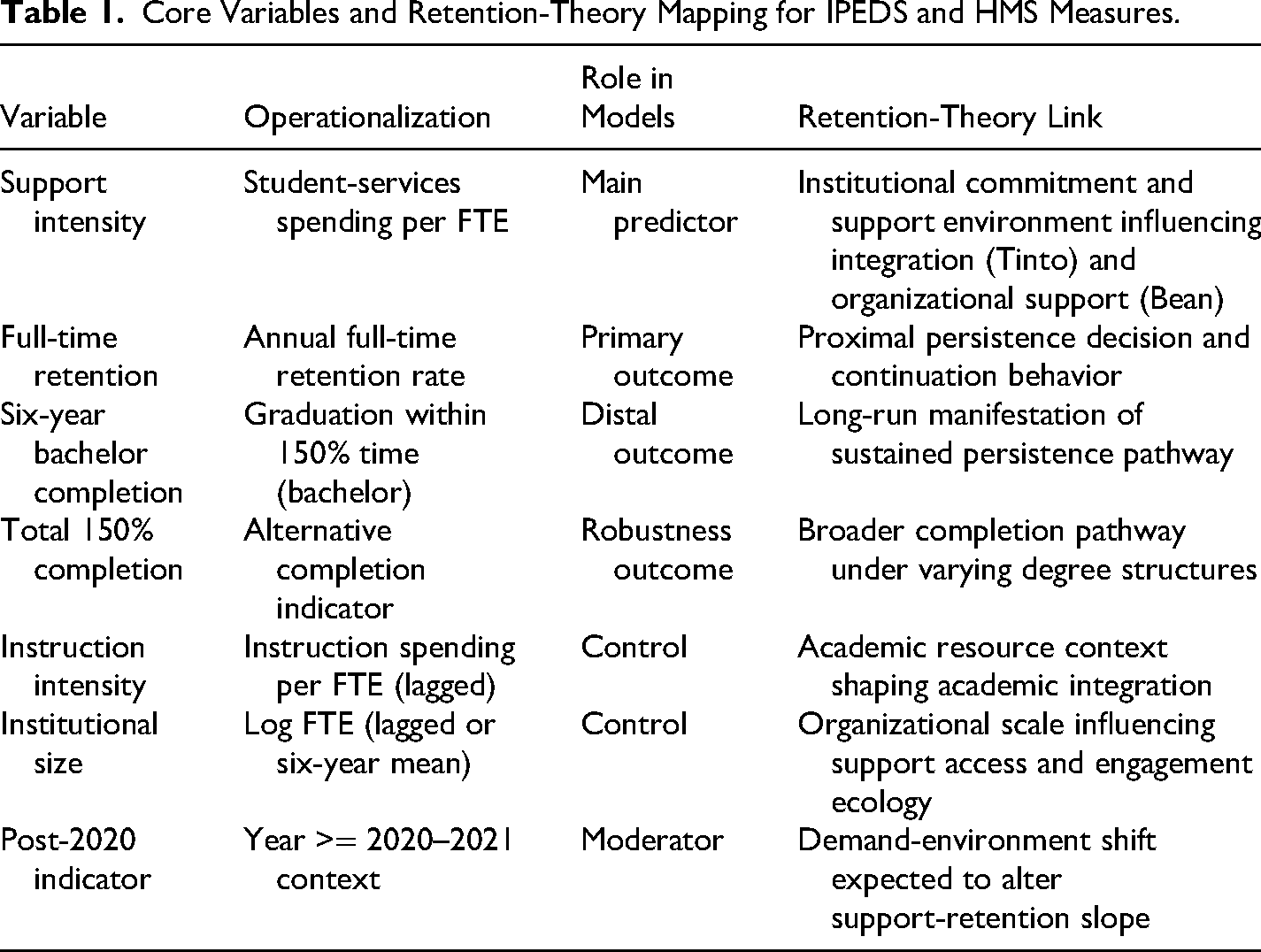
Sensitivity checks were conducted to address reviewer concerns about model dependence. These included unweighted two-way fixed-effects checks, a specification excluding private for-profit institutions, a support-to-instruction ratio alternative, sector-split interpretation checks, and the total 150% completion outcome. These checks were used to evaluate whether the interpretation depended on weighting, sector composition, exposure scaling, or completion definition. Table 1 summarizes the operational definitions, model roles, and theoretical relationships of the study variables
Variable Definitions and Theory Linkage
Healthy minds study (HMS) public data were used as aggregate context for student burden and service demand (Healthy Minds Network, 2025). Public waves from 2019–2020 through 2024–2025 were processed for weighted aggregate trends on depression or anxiety risk (dep_or_anx), persistence confidence (ret_confid_y), and any treatment use (tx_any). Wave estimates use nrweight and valid binary responses.
Healthy Minds is treated as triangulation for retention context rather than as a merged institutional micro-linkage dataset because validated public crosswalk linkage to IPEDS was not available in this workflow. This preserves interpretation quality and prevents cross-dataset over-claiming.
The inferential strategy is observational. Coefficients indicate associations under fixed-effects assumptions and available controls. Endogeneity risk remains plausible because institutions may increase support intensity in response to deteriorating outcomes or rising student burden. Results are therefore interpreted as empirical evidence on whether support expansion coincided with recovery patterns, with emphasis on retention-theory interpretation rather than causal claims about specific programs.
To keep reporting aligned with CSR expectations for empirical transparency, tables present coefficient magnitude, standard errors, and p-values, and narrative interpretation emphasizes effect direction, period moderation, and practical retention relevance. The manuscript also distinguishes direct model evidence from triangulated context evidence to preserve analytic clarity.
Results
Support Intensity Increased Substantially in All Sectors
From 2019 to 2024, median support intensity rose in every sector. Public institutions increased from $1,814.17 to $2,539.98 per FTE. Private nonprofit institutions increased from $4,520.92 to $5,714.48 per FTE. Private for-profit institutions increased from $1,654.51 to $2,604.17 per FTE. This broad increase indicates that institutions expanded support-oriented investment at scale during the period evaluated.
The magnitude of growth is meaningful in both absolute and relative terms. Public and private for-profit sectors show especially large relative increases, while private nonprofits remained the highest in absolute support intensity in both years. From a retention perspective, the descriptive pattern confirms that institutions increased a central support lever expected to strengthen persistence pathways.
Sector differences provide additional context for interpreting model averages. Private nonprofit institutions operated at higher absolute support intensity in both years, while public and private for-profit sectors showed larger relative change from lower baselines. This suggests that marginal returns may differ across sectors depending on baseline capacity, student need profiles, and operational maturity of support systems. The fixed-effects framework captures within-institution variation and therefore estimates average within-campus association rather than between-sector performance hierarchy. Figure 2 displays these sector-specific trajectories in median student-services spending per FTE.
Retention Improved Modestly but Did Not Fully Recover
Retention moved upward from 2019 to 2024 in two sectors and was nearly flat in one. Public institutions improved by 1.90 percentage points. Private nonprofits improved by 0.17 points. Private for-profits improved by 2.14 points. These are directionally favorable results for persistence, yet they remain modest relative to support growth magnitude.
Fixed-effects retention models show that lagged log support per FTE is positively associated with retention in the weighted primary specification (coefficient = 0.474, p = .023; R-squared = .929). Because the predictor is log transformed, the practical magnitude is modest: a 10% increase in support intensity corresponds to roughly 0.045 percentage points higher retention before 2020, all else equal. The post-2020 interaction is negative (coefficient = -0.269, p = .037), implying a smaller post-2020 support slope of approximately 0.204, or about 0.019 percentage points for a 10% increase.
This pattern suggests mitigation rather than full recovery. Support intensity is associated with higher retention in the weighted primary model, yet demand-period attenuation indicates that comparable spending increases generated smaller continuation gains in the later context. The post-2020 main effect is statistically imprecise (coefficient = 1.243, p = .167), indicating that average period shifts do not independently explain within-institution retention movement once controls and fixed effects are included.
For nontechnical readers, the key point is that support expansion appears directionally useful for persistence, but the estimated annual gain is small and context-dependent.
Completion Outcomes Declined Across Sectors
Six-year bachelor completion declined between 2019 and 2024 in all sectors shown in Table 2. Public institutions declined by 1.46 percentage points. Private nonprofits declined by 3.25 points. Private for-profits declined by 3.46 points. These declines reinforce the distinction between proximal retention response and distal completion recovery.
Core Variables and Retention-Theory Mapping for IPEDS and HMS Measures.
Descriptive Changes in Support Intensity, Retention, and Six-Year Bachelor Completion by Sector (2019 and 2024).
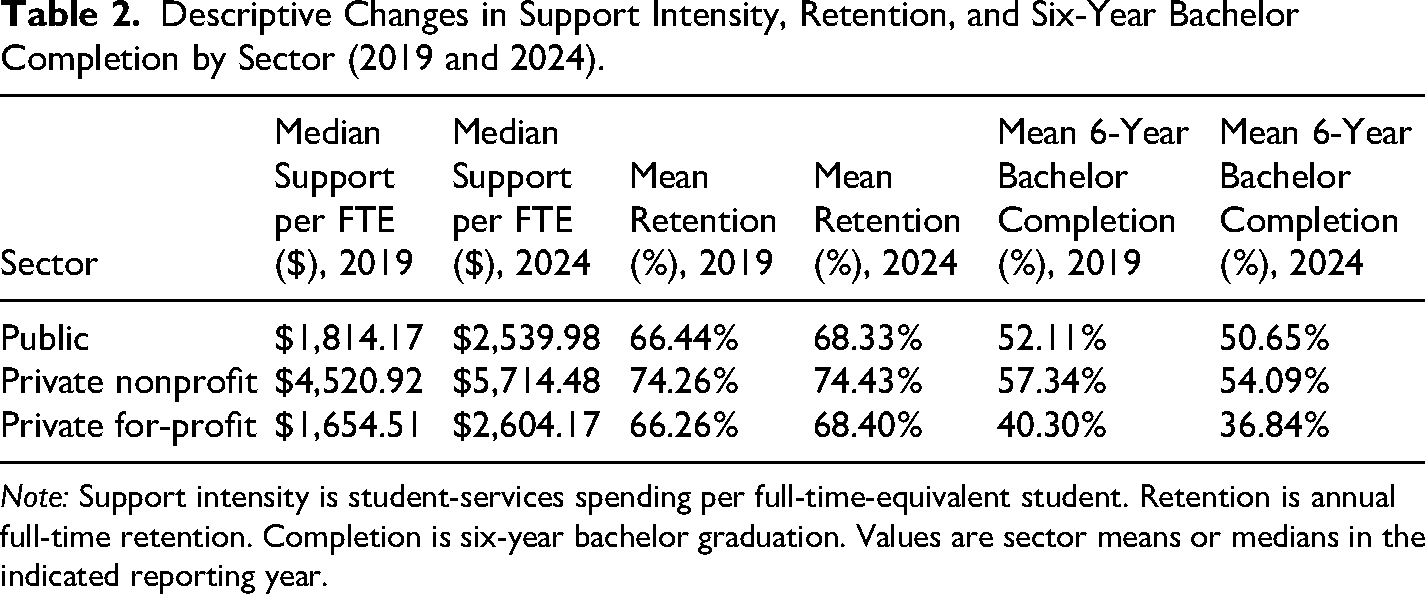
Note: Support intensity is student-services spending per full-time-equivalent student. Retention is annual full-time retention. Completion is six-year bachelor graduation. Values are sector means or medians in the indicated reporting year.
Fixed-Effects Completion Models.
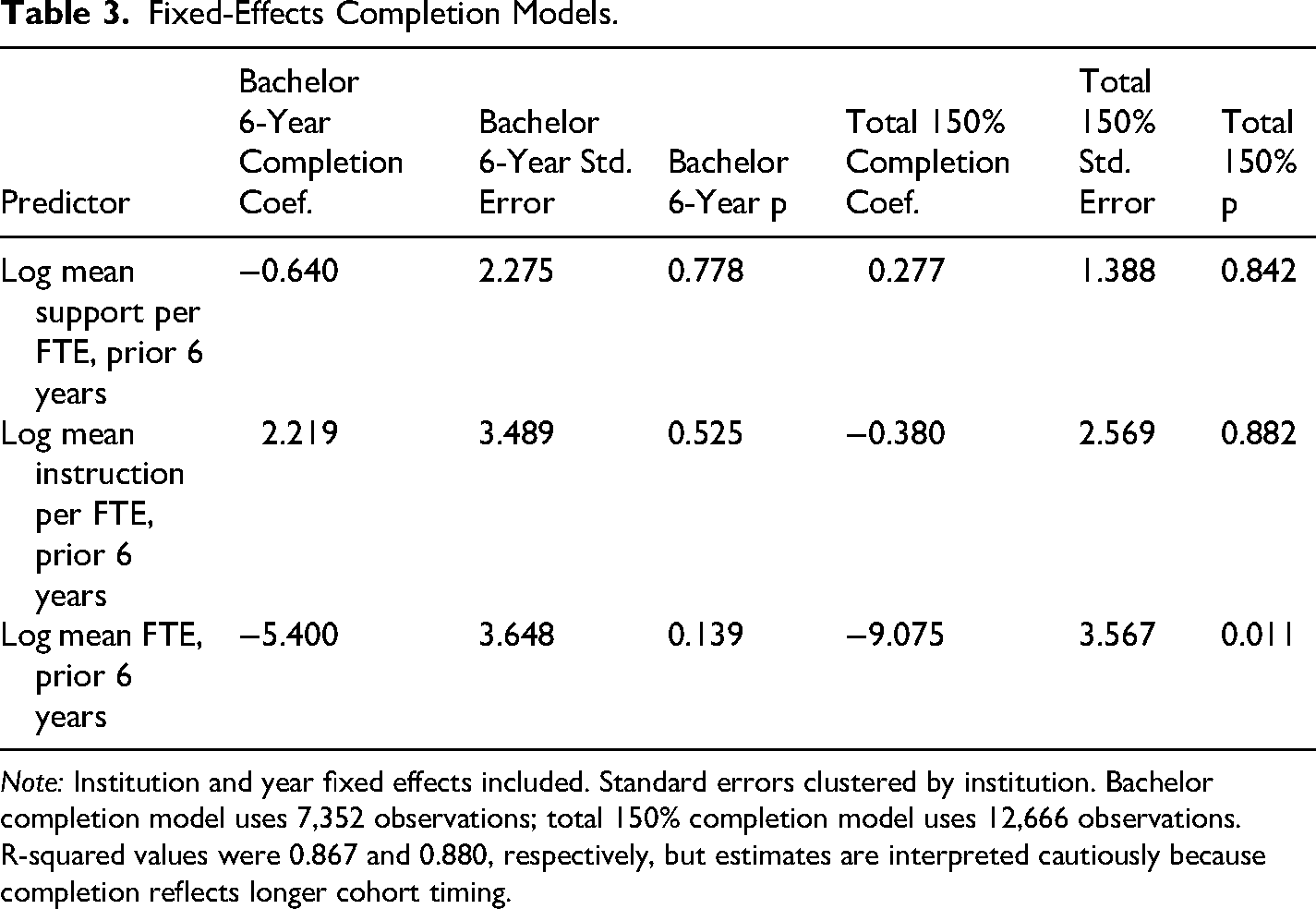
Note: Institution and year fixed effects included. Standard errors clustered by institution. Bachelor completion model uses 7,352 observations; total 150% completion model uses 12,666 observations. R-squared values were 0.867 and 0.880, respectively, but estimates are interpreted cautiously because completion reflects longer cohort timing.
Healthy Minds Public Aggregate Trends (Weighted), 2019–2025.
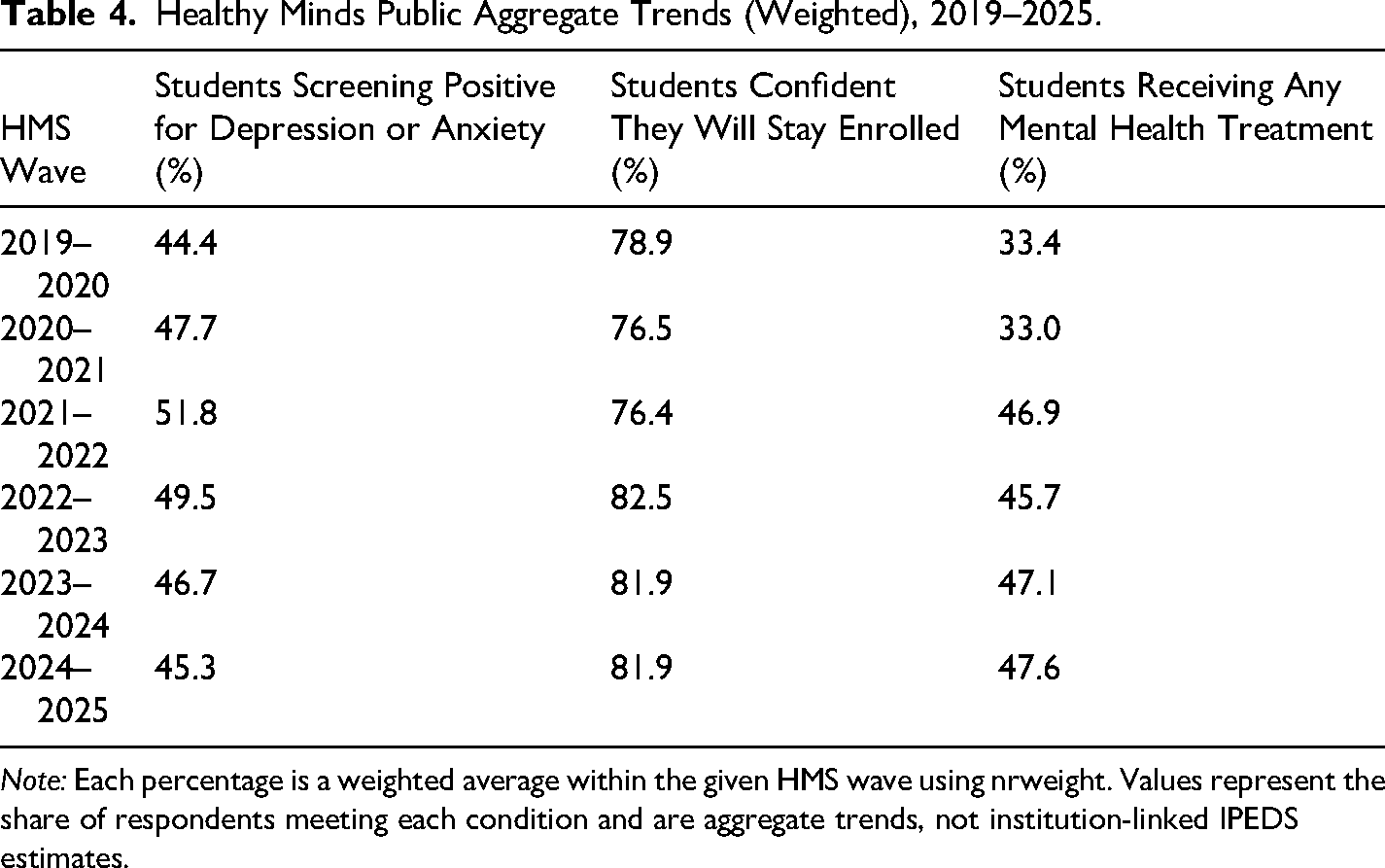
Note: Each percentage is a weighted average within the given HMS wave using nrweight. Values represent the share of respondents meeting each condition and are aggregate trends, not institution-linked IPEDS estimates.
Completion model estimates remain statistically weak in the current observation window. In fixed-effects models using prior six-year mean support intensity, support coefficients are imprecise for both bachelor-only completion and total 150% completion alternatives. This pattern is consistent with a timing interpretation in which retention movement appears earlier, while completion recovery requires longer exposure and sustained pathway continuity. The complete fixed-effects estimates for both completion outcomes are reported in Table 3
A significant negative size coefficient appears in the alternative completion model. Because completion models aggregate long-horizon pathway dynamics and remain observational, this estimate is interpreted as descriptive context rather than mechanism-specific causal evidence.
The completion findings are still informative for the retention strategy. Figure 3 illustrates the divergence between retention and six-year bachelor completion across sectors. They indicate that short-window evaluation can overstate disappointment if institutions expect completion recovery to track retention in parallel. A staged interpretation is more appropriate: support expansion may first protect reenrollment and continuation, then influence completion through accumulated pathway stability over multiple cohorts. This reinforces the need for mixed-horizon dashboards in retention management.
Student Burden Context for Retention
Healthy Minds weighted aggregate trends provide context for interpreting attenuated post-2020 retention association strength. Weighted depression or anxiety risk rose from 44.4% in 2019–2020 to 51.8% in 2021–2022 and remained elevated at 45.3% in 2024–2025. Confidence in persistence declined early and later recovered to 81.9%. Any treatment use rose from 33.4% to 47.6% across the observed waves. Table 4 reports the corresponding weighted estimates for each HMS wave, and Figure 4 illustrates the trends in student distress, persistence confidence, and treatment use.
For retention interpretation, this pattern indicates simultaneous high burden and high engagement with care resources. Institutions appear to have expanded support while students continued to report substantial need. This context is consistent with a scenario in which support investment reduced attrition pressure, yet faced high concurrent demand, producing modest aggregate retention gains and delayed completion recovery.
The burden trend is also relevant to subgroup sensitivity. When aggregate distress remains elevated, specific populations may require higher-touch support to achieve equivalent persistence outcomes. National aggregate models cannot resolve all subgroup pathways, yet the observed attenuation pattern underscores why future retention analyses should incorporate subgroup-targeted support indicators and disaggregated continuation outcomes.
Practical Magnitude and Robustness Interpretation
The core retention coefficient pattern is therefore practically meaningful as directional policy evidence, not deterministic prediction. It suggests that institutions can strengthen persistence through support expansion while needing stronger implementation precision to sustain gains under high-need conditions.
Robustness evidence supports a cautious interpretation. The weighted primary retention model produced the clearest positive support-retention association. Unweighted two-way fixed-effects checks, the specification excluding private for-profit institutions, and the support-to-instruction ratio alternative attenuated the support coefficients and did not produce the same level of statistical precision. Completion alternatives remained imprecise. These checks do not overturn the descriptive pattern of support growth, modest retention movement, and weak completion recovery, but they do reinforce that the findings should be read as limited-recovery evidence rather than causal proof of program effectiveness.
In applied terms, the evidence supports three operational inferences: support intensity remains a relevant institutional lever; post-2020 baselines should be interpreted under higher demand conditions; and institutions likely need targeted coordination, culturally responsive delivery, and continuity tracking to convert resource growth into stronger continuation outcomes.
The robustness value of triangulation should also be emphasized. Healthy Minds trends do not estimate institution-level effects in this manuscript, yet they provide an independent burden and engagement context that helps interpret attenuation in the institutional models. Elevated distress prevalence and rising treatment use across waves align with a high-demand environment where support systems can produce mitigation effects without immediate broad recovery in all outcomes.
Finally, the results indicate that annual retention evaluation should include both outcome and process evidence. Outcome metrics identify whether continuation improved. Process metrics explain whether support operations were delivered in ways likely to sustain improvement. This dual-evidence approach is more informative for retention decision cycles than single-metric performance review.
Integrated Findings
Across evidence layers, the retention-focused conclusion is consistent. Support intensity rose substantially; retention improved modestly; support-retention association remained positive but weaker post-2020; completion did not show broad recovery over the same horizon; and student burden indicators remained elevated while treatment uptake rose. Together, the findings support an interpretation in which support expansion functioned as an important retention stabilizer under high-demand conditions.
This integrated pattern offers a useful decision frame for institutions: support intensity appears to be a necessary component of retention strategy, and the realized gains depend on demand environment, implementation quality, and pathway timing. In practical terms, institutions should evaluate support systems as part of coordinated persistence infrastructure rather than as stand-alone expenditure categories.
Discussion
This study examined whether support expansion translated into retention and completion recovery in the post-2020 period using national institution-year evidence. Results show a pattern that aligns with retention theory under demand stress: institutions increased support intensity, retention improved modestly, completion did not yet recover, and the support-retention association weakened after 2020.
Considerations on Why Support Expansion Did Not Translate Into Broad Recovery
The attenuation finding is theoretically meaningful. Tinto's integration model predicts stronger persistence when institutions increase support and connection opportunities, and the positive lagged support coefficient in the weighted primary model is consistent with that expectation. Bean's attrition model predicts greater sensitivity to external pressures, and the weaker post-2020 slope aligns with this mechanism. Culturally inclusive perspectives add that support must be accessible, validating, and responsive to different student experiences for spending to become felt support.
The results also highlight implementation variation as a likely contributor to heterogeneous returns. Student-services budgets include multiple intervention types with different timelines and pathways to impact. Retention movement can emerge from timely advising referral and crisis stabilization within a year, while completion movement depends on sustained reenrollment and credit progression across multiple years. This timing structure helps explain why retention shows modest positive movement while completion remains weaker in the same period.
Another consideration is denominator dynamics in national retention metrics. Changes in entering cohort composition, transfer patterns, and reenrollment behavior can alter aggregate rates even when institutions improve support quality. Theory and evidence both suggest that support systems interact with who is being served and when support is activated in the student lifecycle. This reinforces the value of targeted deployment and phased evaluation.
Implications for Institutional Strategy and Policy
For practitioners, the main implication is to treat support intensity as necessary retention infrastructure and to manage that infrastructure with implementation metrics tied to persistence behavior. Institutions benefit from tracking response times, referral completion, advising handoff quality, culturally responsive outreach, and continuity of care across terms. These indicators help convert broad spending categories into measurable retention operations.
Sector-level differences matter for this interpretation. Private nonprofits had higher absolute support intensity, while public and private for-profit institutions showed larger relative growth from lower baselines. Similar dollar increases may therefore represent different capacity changes across sectors. Resource availability alone is unlikely to maximize retention gains if advising, mental health, basic needs, and faculty referral systems remain fragmented.
Retention strategy also benefits from integration across student affairs, advising, financial aid, and enrollment teams. Early alert systems are most effective when they trigger coordinated support pathways and closed-loop follow-up. Under high-demand conditions, campuses can improve continuation by targeting high-risk transition points, including first-year milestones, financial disruption points, and post-leave return windows.
State and system policy can strengthen retention outcomes by pairing long-horizon completion metrics with near-horizon continuation indicators. Term-to-term reenrollment, momentum credits, and stop-out recovery rates provide earlier signals of whether support investments are improving persistence pathways before full cohort completion data mature.
Theory Integration for CSR
The evidence can be read as theory-convergent rather than theory-competing. Tinto-oriented mechanisms are visible in the positive weighted support-retention association; Bean-oriented mechanisms are visible in period moderation; and culturally responsive frameworks clarify why implementation quality, belonging, and validation are central to whether support becomes usable for diverse students. This combined reading is valuable for CSR because it frames retention as institutionally malleable yet context-conditioned.
A second integrative point concerns effect timing. Retention theory has long recognized that institutional change affects student trajectories unevenly across the enrollment lifecycle. The current pattern aligns with that expectation: near-term continuation indicators moved modestly, while long-horizon completion outcomes remained weaker. This sequence supports a staged evaluation model in which institutions monitor immediate continuation, intermediate momentum, and long-horizon completion without expecting synchronized movement across all metrics in short windows.
Practice Translation for Retention Offices
Retention offices can translate these findings into operational routines without waiting for new data systems. A practical starting framework includes three steps: identify high-risk transition points, define expected response times across support units, and track whether referred students receive closed-loop follow-up before the next enrollment decision point. These steps convert broad support investment into measurable retention process indicators.
Institutions can pair annual retention targets with operational throughput targets. Examples include median days to first support appointment, percentage of high-priority referrals closed within a term, advising follow-up completion among students with support contact, and reenrollment rates for students returning from short interruptions. When these metrics are reviewed together, institutions can diagnose whether limited retention movement reflects scale constraints, targeting gaps, or coordination bottlenecks.
For policy offices and system-level analysts, the present pattern suggests that performance frameworks should include continuation and momentum indicators in addition to completion outcomes. This approach improves decision speed and supports timely adjustment of support strategy when demand conditions change.
Applied Retention Synthesis
Support expansion appears to mitigate attrition pressure, but campuses should monitor operational delivery quality alongside spending levels. Post-2020 attenuation also indicates that support systems need stronger cross-unit coordination and targeted deployment for high-burden student groups.
Interpreting Healthy Minds in an Institutional Outcome Paper
Healthy Minds strengthens interpretation by providing an independent demand-side context for retention analysis. The survey trends show elevated burden and increased treatment uptake during the same period in which institutions expanded support and observed attenuated retention association strength after 2020. This coherence across data layers increases confidence in the limited-recovery interpretation.
Methodologically, the manuscript maintains a clear boundary by using Healthy Minds for aggregate triangulation rather than institution-level merged estimation. That choice supports validity and keeps inference aligned with available linkage quality. Future linked datasets can test campus-specific moderation directly.
For CSR readers, this triangulation structure is especially relevant. It demonstrates how institutional retention analyses can incorporate student burden context responsibly, even when direct data linkage is limited. The approach is transportable to other settings where institutions have robust administrative outcomes data but rely on external survey systems for wellbeing and need signals.
Subgroup and Equity Implications
The institutional data used here cannot estimate subgroup-specific treatment pathways, but the literature indicates that support demand and support access are not evenly distributed. First-generation students, low-income students, students from racially minoritized groups, and students experiencing discrimination or mental health needs may require different forms of outreach, trust-building, and continuity of care (Freire & Hurd, 2023; Lipson et al., 2022; Lipson, Diaz, Davis & Eisenberg, 2023).
For practice, this means that institutions should not only expand services but also examine who receives timely help, who completes referrals, and who experiences support as culturally responsive. Subgroup-sensitive process metrics can help institutions identify whether broad support growth is reaching students whose persistence risks are most acute.
Limitations
Several limitations shape interpretation. Student-services spending per FTE is a broad proxy and does not isolate specific retention-support operations such as wait times, referral completion, advising integration, culturally responsive delivery, or counseling continuity. The design is observational, and institutions may increase support in response to worsening outcomes, so endogeneity risk remains even with lags and fixed effects. Completion models are inherently less responsive in short windows and sensitive to cohort composition, transfer patterns, and reporting continuity.
Healthy Minds trends are used as aggregate context rather than institution-level linked outcomes, which constrains campus-specific moderation tests in the present manuscript. Variable harmonization across waves is strongest for selected binary indicators, and this study intentionally prioritized those variables for trend consistency. These constraints support a conservative interpretation focused on retention-pattern evidence and theory-consistent inference.
These limits also indicate where interpretation confidence is highest in the current manuscript. Confidence is strongest for directional within-institution retention association patterns and period attenuation evidence. Confidence is more limited for mechanism-specific claims and campus-level effect heterogeneity because finance categories are broad and direct linkage to student-level burden data is not available in this design. This confidence map is useful for applying findings responsibly in policy and practice contexts.
Future Research
Future retention research should prioritize linked multi-source designs that connect institutional support operations, student burden indicators, and continuation outcomes under secure governance agreements. Such designs can directly test mediation pathways implied by retention theory, including whether improvements in support access and integration quality explain observed persistence gains under varying demand conditions.
Additional progress will come from richer operational measurement and finer-grained outcome timing. Models that incorporate wait times, advising handoffs, case closure quality, and subgroup targeting can improve mechanism precision. Term-level continuation, stop-out return, and transfer-adjusted progression outcomes can improve policy responsiveness and reveal whether support expansion influences persistence earlier than six-year completion metrics.
Comparative multi-site research is another high-value direction. Institutions with similar spending growth can show different retention trajectories, and those differences provide a strong basis for identifying effective implementation architectures. Mixed-method designs are especially useful here because quantitative models can identify divergence patterns while qualitative evidence explains process differences in referral integration, advising coordination, and support continuity.
Future work should also test nonlinear and threshold relationships between support intensity and retention outcomes. It is plausible that institutions realize larger gains after reaching baseline capacity thresholds and then shift to diminishing marginal returns unless targeting precision improves. Testing these patterns over longer panels can improve policy calibration and strengthen the external validity of retention guidance.
Replication across state systems with different policy environments would further improve generalizability. State variation in aid policy, transfer infrastructure, and accountability design may influence how quickly support expansion translates into continuation gains. Cross-system comparative panels can clarify which policy contexts amplify institutional support effects and which contexts require additional structural interventions to improve retention trajectories. This line of work can also help institutions benchmark realistic year-over-year improvement ranges under different demand environments. It can further inform resource allocation by identifying where incremental support investments have the highest persistence return. These insights can improve retention planning precision.
Conclusion
This study provides national evidence relevant to retention theory and practice in the post-2020 period. U.S. four-year institutions expanded support intensity, retention improved modestly, and completion recovery remained limited in the observed horizon. The weighted primary fixed-effects retention model indicates a positive lagged support association with weaker post-2020 slope, while sensitivity checks reinforce cautious interpretation. Healthy Minds aggregate trends show concurrent elevated burden and rising treatment engagement.
The findings support a retention interpretation in which support expansion contributed to attrition mitigation while high-demand conditions reduced average marginal gains. For institutional practice, the evidence supports sustained support investment paired with stronger implementation design, cross-unit coordination, culturally responsive delivery, and retention-focused operational monitoring.
For colleges preparing annual retention plans, the practical implication is to organize strategy around staged evidence: near-term continuation and referral completion, medium-term momentum and reenrollment after interruption, and long-term cohort completion with transparent lag expectations.
These findings also support clear communication with campus stakeholders about the expected timing of change. Retention systems can demonstrate meaningful progress through improved continuation and momentum before full completion recovery appears in cohort endpoints.
Footnotes

Funding
The author received no financial support for the research, authorship, and/or publication of this article.
Declaration of Conflicting Interests
The author declared no potential conflicts of interest with respect to the research, authorship, and/or publication of this article.