



Abstract
The Problem
Participation in internships may provide undergraduate human resource development (HRD) students with practical experience necessary to be successful in the field. However, research is lacking which examines the impact of HRD internship experiences on professional development and career trajectories. Research is also limited which provides guidance on how to distinguish which undergraduate internships may be most valuable. The features which make internships most effective in preparing students for their chosen careers warrant further examination, specifically within HRD. Relatedly, it is important to understand which internship experiences are most likely to develop HRD competencies for undergraduate students.
The Solution
Qualitative and quantitative data were collected from HRD professionals who had participated in an HRD internship while they were undergraduate students. These data were analyzed, using qualitative and quantitative methods, to better understand the structure and focus of student HRD internships. Specifically, while the data are preliminary, this study generated insights regarding the extent to which effective internships were able to promote the development of key HRD skillsets, and which skillsets were most likely to be enhanced.
The Stakeholders
Using the results of this analysis, educational institutions can better understand how to locate effective internships for students. In addition, students can utilize these data to better recognize valuable internship experiences in the future.
Introduction
It is commonly believed that internships contribute to students’ capabilities by growing their real-world experience and by providing valuable insights into what it is like to be a working professional. Thus, it is possible that participating in human resource development (HRD) internships more specifically may provide undergraduate HRD students with practical experience necessary to be successful in the field of HRD. However, while almost 75% of college students have held an internship (Coco, 2000), research is lacking which examines the impact of internships on student success. Taylor (1988) defined internships as “structured and career relevant work experiences obtained by students prior to graduation from an academic program” (p. 393). Gault, Redington, and Schlager (2000) stated that internships “generally refer to part-time field experiences and encompass a wide variety of academic disciplines and organizational settings” (p. 46).
Despite the large number of students seeking and holding internships and the vast number of companies that offer internship programs, when it comes to understanding the key components of what drives a successful internship experience, the literature is largely silent. Even scarcer is research that specifically examines the impact of HRD internship experiences on professional development and career trajectories of HRD professionals. Furthermore, and in alignment with the larger internship literature, research is also limited which provides guidance on how to distinguish which undergraduate HRD internships may be most valuable in contributing to future success in the field. Thus, because internships are generally held by students from a variety of backgrounds and span a wide range of industries, the literature on internships is largely disjointed, creating takeaways which may or may not pertain to internship experiences in HRD specifically.
Given the time and energy that students invest in obtaining and completing internship experiences and the costs that universities incur in facilitating internship programs, further research aimed at understanding how to enhance the value of these experiences is warranted. Even more importantly, conducting field-specific internship research within HRD alleviates issues related to generalizability for HRD professionals who are looking to the extant literature on internships from other fields for guidance. Thus, the current work serves two important purposes. First, the current work aims to provide a better understanding of the present state of HRD internship experiences by examining qualitative data describing competency-building experiences (or a lack thereof) available to HRD interns. Second, the current work quantitatively explores the skills that interns were able to enhance during their internships, as well as which they found most valuable. Overall, this article leverages qualitative and quantitative data regarding the internship experiences of 14 successful HRD professionals, to gain understanding about how universities can identify internship experiences to best develop students for careers in HRD.
Background and Literature Review
What do we know about internships broadly?
As stated before, internships are experiences garnered prior to graduation from an academic program that have some structure and relevance to one’s career path (Taylor, 1988). Research has highlighted some of the positive psychological and practical benefits that holding an internship may have on the intern themselves. For example, early research on internships demonstrated that interns felt more efficacious (Bernstein, 1976) and had a greater sense of responsibility for their own career development (Eyler, 1992; Hursch & Borzak, 1979; Williams, 1990). Student interns have also reported that they built better networks and gained a greater knowledge of the job market (Groves, Howland, Headly, & Jamison, 1977) through internships. More recent work has demonstrated the positive impact of internship experiences on job offers, compensation, and job satisfaction (Gault et al., 2000; Knouse, Tanner, & Harris, 1999, in a marketing context). Furthermore, students who participate in internships have been reported to have improved on several key competencies by their internship supervisors, including ethical behavior and integrity, professionalism, and statistical analysis (Shoenfelt, Kottke, & Stone, 2012; in an industrial/organizational (I/O) psychology context). Many employers believe that internships are intended to increase students’ market value, so they focus on building broad skills such as critical thinking and written and oral communication skills—expertise that employers may find valuable (Maertz, Stoeberl, & Marks, 2014). Not surprisingly then, students who have completed internships in business more broadly have been found to report improved communication skills (Knemeyer & Murphy, 2002) and improved job-related skills overall (Divine, Linrud, Miller, & Wilson, 2007). Thus, internships have the capacity to impart valuable, job critical skills onto interns, which enhance their attractiveness to organizations.
Universities with HRD programs may also benefit from placing students within meaningful HRD internships. In fact, universities may realize a connection between their students’ internship experiences and increased success for the institution overall. Weible (2009) found that a majority of universities reported that student internship placement enhanced their connection to the community overall and increased their reputation with prospective students. Thus, student internships stand to have a positive impact on many stakeholders: the students themselves, the institutions they represent, and the companies that hire them (Gault et al., 2000). However, to reap the positive benefits of an internship, there are some contextual factors that must be in place to support intern success. For example, recent research has called upon employers to create clear objectives for skill attainment for interns, so that psychological contracts between employers and interns are agreed upon and focused on strategic, mutually beneficial experiences (Negrut, Mihartescu, & Mocan, 2015). Furthermore, initial studies have suggested that quality onboarding, engaged supervisors, and meaningful work contribute to higher quality internship experiences within HRD (Maertz, Stoeberl, & Magnusson, 2014). Indeed, while willingness to learn is a strong predictor of intern success, it must be combined with supervisor support for learning to positively affect intern outcomes (Holyoak, 2013). In addition, within internships where students reported learning in a cohesive fashion (allowing for recognition of context playing a role in the application of theory), deeper level understanding was more likely to be achieved and enacted within a professional context (Matthew, Taylor, & Ellis, 2012). Similarly, students who perceived goal clarity and enhanced learning in internships were more likely to accept job offers from the interning organization (Beenen & Rousseau, 2010). Thus, the way in which internships are structured and the specific experiences that students have within these internships determine their perceived value.
Increasing the value of HRD internships
Although, across fields, many stakeholders may benefit from an effectively structured internship which emphasizes broad competencies necessary for success in a variety of roles, it remains unclear within the literature what constitutes the key components of a positive internship experience within HRD. As a result, the specific competency-building experiences that make HRD internships most effective in preparing students for their future careers warrant further examination. Within the field of HRD, there is evidence that employers may find HRD internships to be effective in increasing employee capability, with companies finding internship experience to be more indicative of potential in an HR-related profession than passing a professional examination (Sincoff & Owen, 2004). Thus, employers at large seem to believe that HRD internships hold value for those who have completed them. However the questions still remains—how do HRD internships build capabilities for interns? What, specifically, should HRD internships focus on if they want to prepare interns for future success in HRD-related career paths? While these pressing questions are yet to be answered within the HRD literature with regard to internships, the work of determining key necessary competencies for HRD professionals more broadly has been an ongoing effort of the Association for Talent Development (ATD). Thus, to begin to understand the extent to which HRD internships are positively preparing interns for their future careers, I center the current work on the competency framework offered by ATD. I will describe this competency model below.
ATD competency model: An overview
The ATD competency model offers a comprehensive set of knowledge, skills, abilities, and other attributes necessary for success in HRD. However, this model focuses more specifically on the population of interest within the current work—those working specifically within talent development functions within organizations. Specifically, the ATD competency model is rooted in six foundational competencies: Business Skills, Global Mindset, Industry Knowledge, Interpersonal skills, Personal Skills, and Technology Literacy (Association of Talent Development, 2016). These foundational competencies provide a basis for the areas of expertise (which will be focus of the current work). These areas of expertise are Instructional Design, Training Delivery, Learning Technologies, Evaluating Learning Impact, Managing Learning Programs, Integrated Talent Management, Coaching, Knowledge Management, Change Management, and Performance Improvement (Association of Talent Development, 2016). Thus, ATD’s areas of expertise are more focused and tailored toward talent development and, therefore, HRD, than other competency models relevant to HR more broadly (i.e., the Society for Human Resource Management [SHRM] competency model).
The current study
To achieve the objectives outlined above, this article will utilize qualitative and quantitative data, gathered from HRD professionals, who participated in HRD internships as undergraduate students. Based on the Association of Talent Development Competency Model, participants reported which developmental experiences within their undergraduate HRD internships enhanced these competencies and the perceived impact that these experiences had on their career path. Highlighting student voices in the creation and evaluation of internship programs is a best practice for inclusivity in research methods and in practice (Hoyle & Deschaine, 2016). Focusing on former student feedback regarding internship experiences may allow future HRD internships to contain a greater number of developmental or training opportunities (Lain et al., 2013). By ensuring that employers will focus on student needs when deriving internship experiences (Toohey, Ryan, & Hughes, 1996), universities may also increase their ability to place top HRD talent into meaningful internship programs. Overall, harnessing the feedback of current HRD professionals who have held past HRD internships may positively affect internship satisfaction and related career outcomes for future interns within the field of HRD (Narayanan, Olk, & Fukami, 2010; Toohey et al., 1996) and may increase return on investment for universities with HRD internship programs.
Method
Sample and Procedure
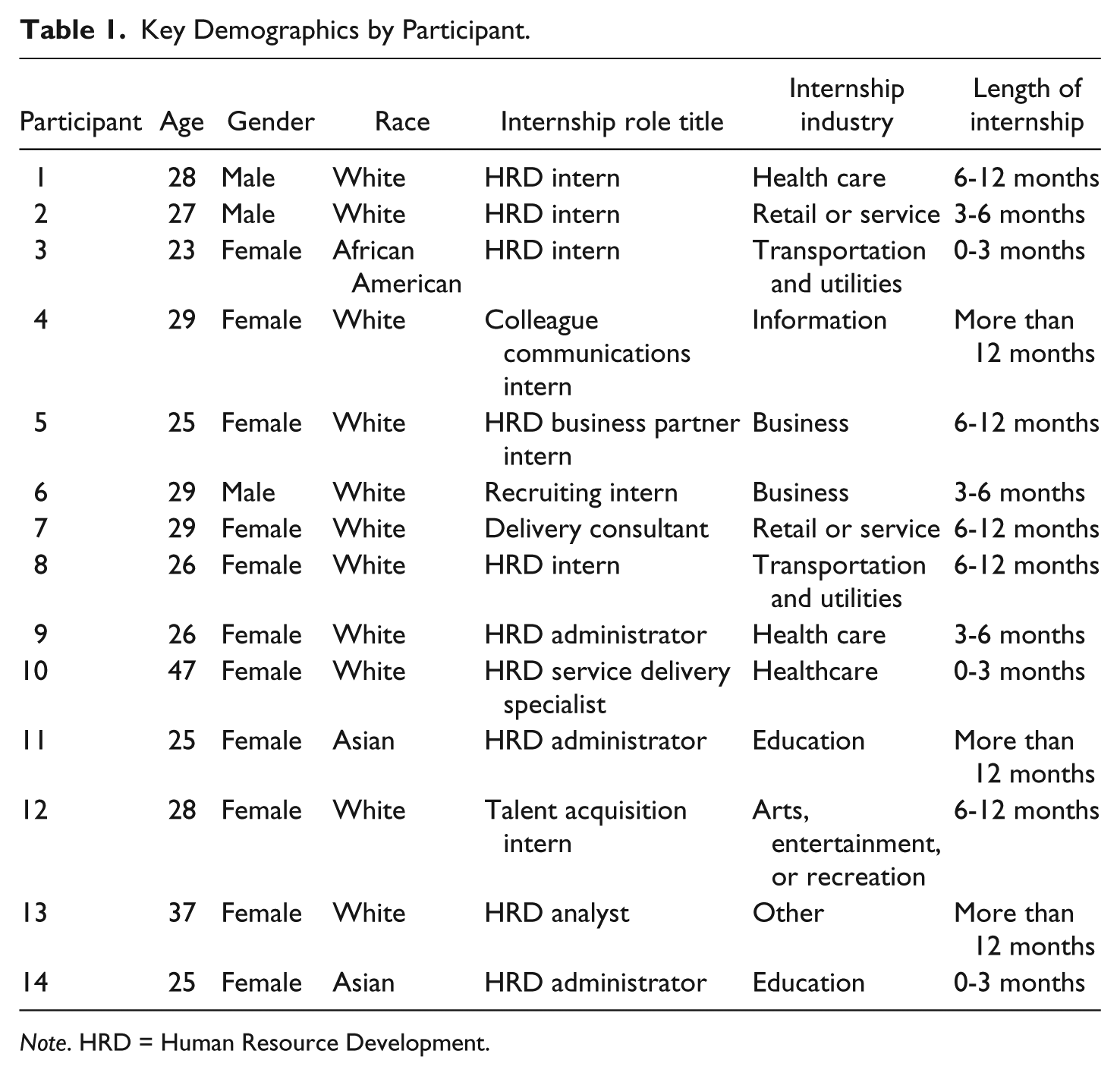
The sample included 14 former students of a combined undergraduate/graduate program in Human Resource Development. All participants held an HRD internship while they were an undergraduate student, graduated with a combined BA/MS in HRD, and were HRD professionals at the time they participated in the study. Key demographics for each participant are listed in Table 1. A listserv from a midsized northeastern university’s HRD program was utilized to solicit participation in an online internship survey.
Key Demographics by Participant.
Note. HRD = Human Resource Development.
Within the survey, demographic data were collected first, followed by one quantitative and one qualitative question for each of the ATD competencies, as they related to student internship experiences. Prior to each set of questions, participants were provided with the definition of the competency (as defined by ATD). Following the definition of the competency, each quantitative question asked participants to rate the extent to which they felt their internship was effective in increasing their skill level, within that particular competency, on a 5-point rating scale, using the scale anchors of not effective at all, slightly effective, moderately effective, very effective, and extremely effective. The next question asked participants to describe, in as much detail as possible, the rationale for why their internship was effective or ineffective in increasing that particular competency. Participants were also asked to rate how effective and important their internship experiences were in preparing them for a career in HRD, using one item for effectiveness and one item for importance, using the same 5-point rating scale as outlined above, ranging from not at all effective/important to extremely effective/important, respectively. Participants were also asked to respond qualitatively about the general impact their HR internship had on their career and on any particularly meaningful experiences they had during their time as an intern.
Despite the small sample size, we believe that the quality of our data allows for a preliminary examination of HRD internships. While the findings that are reported below should be viewed as exploratory, they provide a starting point for researchers interested in better understanding the content and impact of HRD students’ internship experiences.
Analysis
To analyze the qualitative responses, data were coded by the current author and a trained research assistant, who holds a master’s degree in organizational management and has over 10 years of practical HRD experience. Using Auerbach and Silverstein’s (2003) procedures for coding and analyzing qualitative data, both the author and the research assistant completed their codings following these procedures. Qualitative data were examined for quotes that indicated either effective or ineffective experiences that participants had within their internships. First, coders identified relevant text related to internship behaviors or experiences. Specifically, they identified any cases in which respondents cited their internships as having a positive or negative impact on their skill set in some way. Second, chunks of relevant text were placed into groupings of repeating ideas, such that similar pieces of interview data were grouped together. This was completed both within each competency domain and more broadly regarding internship effectiveness overall, to extract overarching ideas regarding positive internship experiences and negative internship experiences. Next, coders placed all redundant groupings of text into larger categories, or themes. A final set of themes, repeating ideas, and relevant text were derived in a consensus meeting. The findings from our analysis are presented below. For the quantitative data derived in the study, means and standard deviations regarding the extent to which various competencies were enhanced as the result of internship experiences were calculated.
Findings
Qualitative Findings
To structure the qualitative findings, I will discuss the overarching themes for each competency, in addition to examining broader themes highlighted by those who believed that they held internships that were very effective in enhancing competencies versus those who believed that they held internships that were very ineffective in enhancing ATD competencies. In all, participants provided a total of 119 qualitative responses to survey items regarding internship experiences relevant to the ATD Competency Model for analysis.
ATD competencies
Overall, participants tended to report less exposure to the ATD competencies within their internships than expected. This could be because internships may provide more broad-based experiences which might resonate more strongly with less-specific competency frameworks (i.e., the SHRM competency framework). In any event, there was still variability in feedback regarding effectiveness in increasing the ATD competencies through internships. First, for Change Management, most participants felt that their internship did not provide exposure to this competency. Performance Improvement was also unlikely to be endorsed among the group of participants. While most participants stated that they did not have much exposure to this area, one participant noted, “I gained experience having one-on-ones with my manager and taking that feedback to make systematic improvements in my performance. I set small, achievable goals week by week that I was able to track with my manager” (Participant 5).
For the learning-related competencies present in the ATD model, participants tended to note that these competencies were severely lacking in their development within their internship experiences. For example, within Instructional Design, responses ranged from ineffective (“I created a couple of slide decks for training purposes”; Participant 12) to very effective (“I had to participate in [and help deliver] a couple of trainings around I9s and Visa and Immigration practices during M&A activity”; Participant 2), but skewed heavily toward the former. Similarly, within Training Delivery, responses ranged from ineffective (“I never performed any trainings”; Participant 2) to moderately effective (“In administering management training courses, I was able to listen in on a number of trainings and learned how to best facilitate courses in a virtual environment”; Participant 4). However, most participants reported having very little exposure to training, other than participating in training themselves. Learning Technology was inconsistently enhanced across internships. Those who reported positive experiences noted that they had been trained to learn a popular HR learning system (“I worked at [a large HRIS vendor] so I had a lot of experience with different technology and systems—for example, Success Factors”; Participant 5). Others reported having no exposure to learning technology, even stating that learning technologies were “not applicable to interns” (Participant 6). In the same vein, Managing Learning Programs was not heavily endorsed as being enhanced through internships within our sample. Finally, Evaluating Learning Impact displayed similar patterns to the other learning-related competencies, in that most participants reported no exposure to this competency.
Participants’ ratings of Knowledge Management seemed directly linked to the interns’ own motivation to grow and learn as a result of their experience. Highlighting this, one participant who felt her internship was effective in this area stated,
I learned a lot during this internship and kept several notebooks and folders on my computer that held all of the knowledge I gained. These were great references during my internship and also as I developed my career outside [of my internship experiences]. (Participant 5)
On the lower end, participants relayed such statements as, “I only worked with my manager, so other than using a SharePoint site we did not share intellectual capital much” (Participant 4), demonstrating a more passive and less proactive approach to knowledge management.
For the competency of Integrating Talent Management, participants seemed to rate their internship as being very effective in enhancing this competency, if they had the ability to be present and observe specific areas of work and the opportunity to discuss these observations with their manager. Highlighting this distinction, a participant relayed,
I had some experience interacting with managers and HR Business Partners during the annual performance review. I sat in on calibration sessions as managers worked through Success Factors, which provided insight into how employees are rated on performance and what is important to managers. (Participant 5)
Comparatively, another employee simply noted, “We really were not advanced enough in this area as a company at all at the time of my internship [so I was not exposed to it]” (Participant 2). Finally, participants did not feel that they were exposed to Coaching overall. They mostly felt that this competency was not relevant to interns in general, given their inability to influence others at work.
Quantitative Results
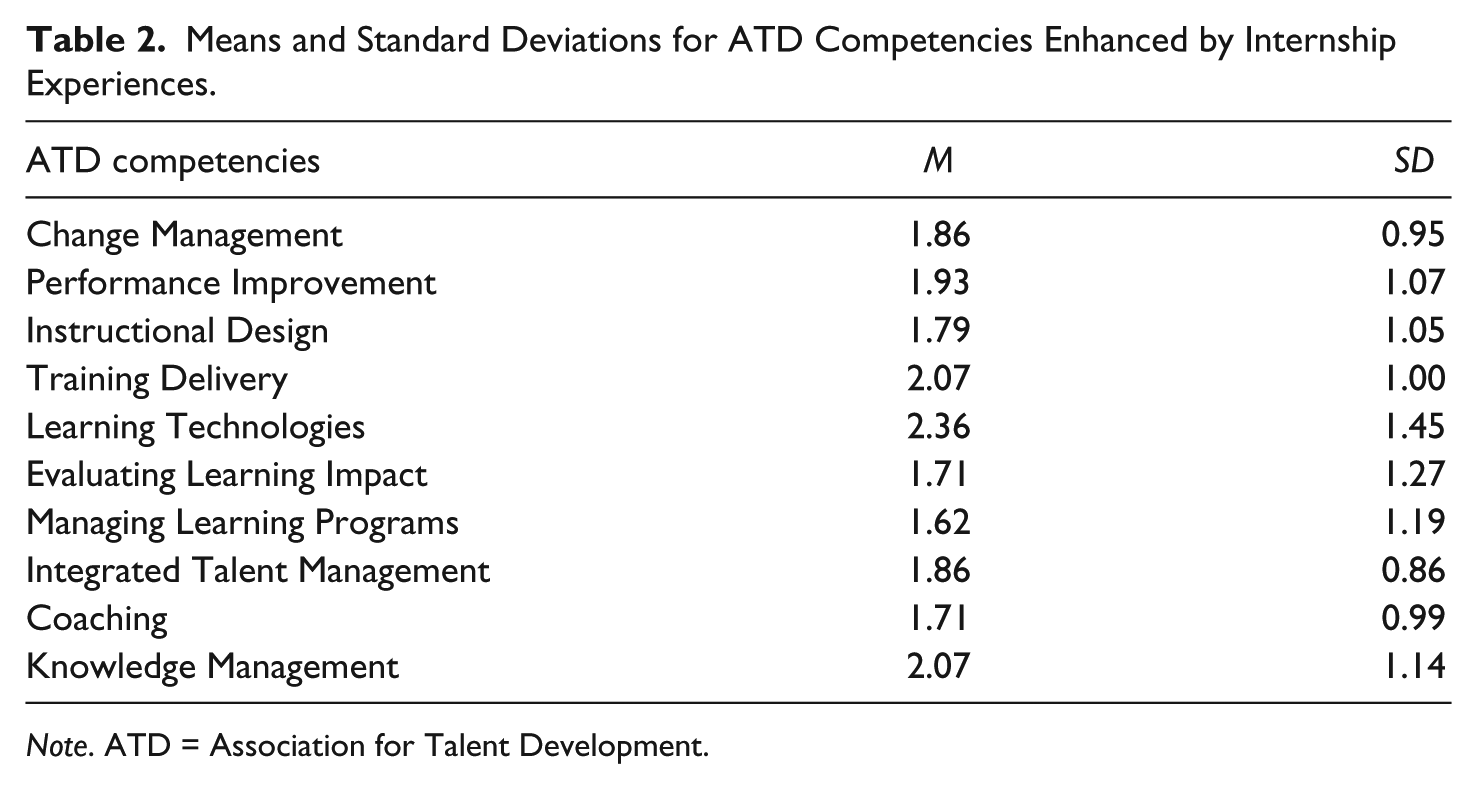
Within the quantitative results, patterns emerged regarding which competencies were more or less likely to be developed through HRD internships. All means and standard deviations for ATD competencies can be found in Table 2. Overall, for the ATD competency model, participants did not rate any of the competencies as having been enhanced moderately effectively or more as a result of their internship experience.
Means and Standard Deviations for ATD Competencies Enhanced by Internship Experiences.
Note. ATD = Association for Talent Development.
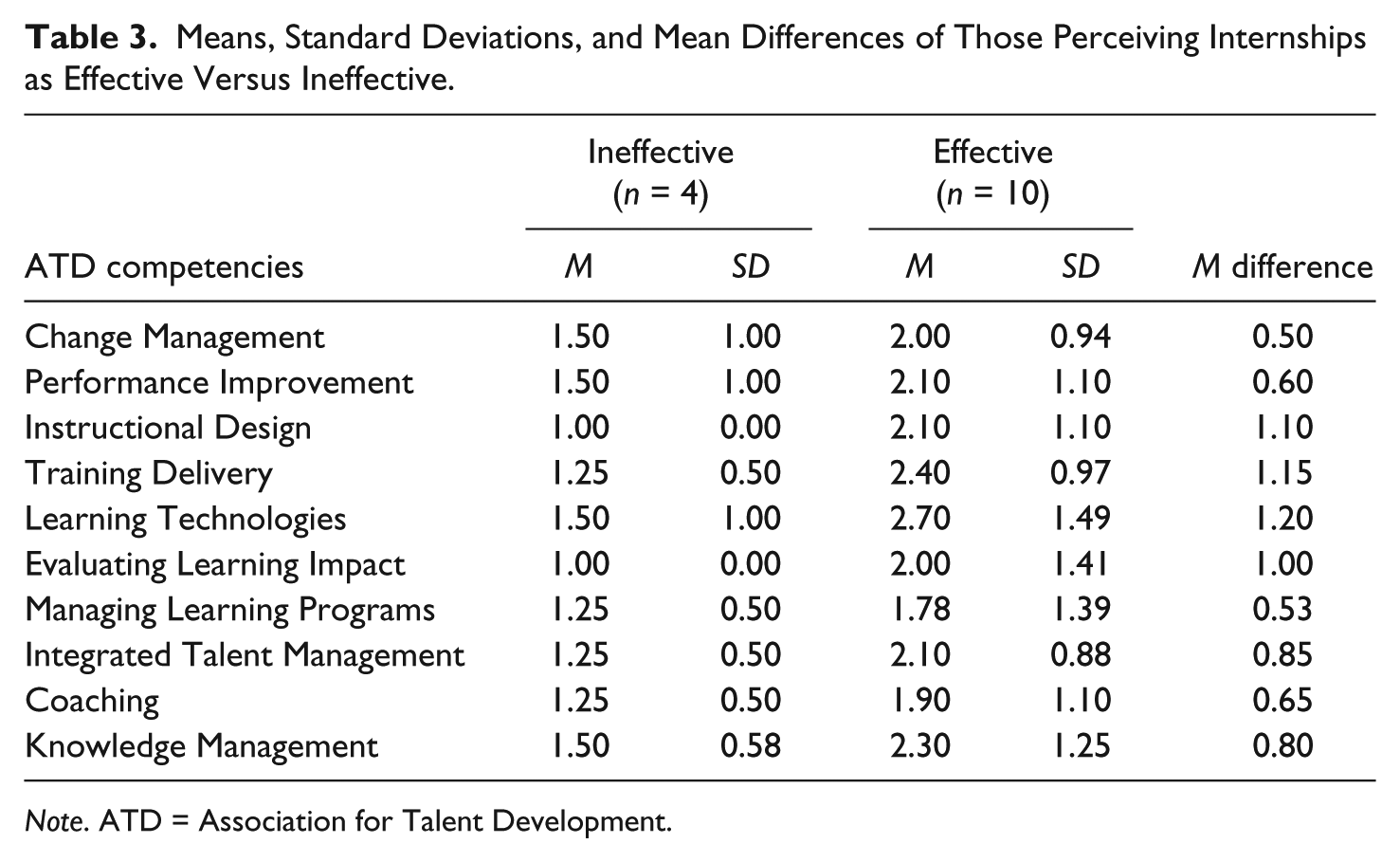
Comparing HRD internships that were viewed as effective versus those that were not (those internships for which the effectiveness item within the survey was rated as “moderately effective” or above [a 3, 4, or 5 on the rating scale] were considered effective), within the ATD competency model, participants with effective internships rated their experiences on average as being 1.10 points higher on Instructional Design, 1.15 points higher on Training Delivery, 1.20 points higher on Learning Technologies, and 1.0 point higher on Evaluating Learning Impact. These results are presented in Table 3. Overall, these results might provide some preliminary support for determining which competencies might drive perceptions of internship effectiveness, such that competencies with the largest mean gaps may be particularly meaningful to HRD interns’ experiences.
Means, Standard Deviations, and Mean Differences of Those Perceiving Internships as Effective Versus Ineffective.
Note. ATD = Association for Talent Development.
Discussion
In general, participants reported some competency enhancement as a result of their internship experiences. However, the ATD Competency Model was not rated as being effectively enhanced overall as a result of internship experiences. However, those who held internships that were perceived as effective did tend to rate some competencies as being more central to their role (Instructional Design, Training Delivery, Learning Technologies, Evaluating Learning Impact). Thus, it may be the case that internships which allow students to work on projects which enhance training and learning development skills, in addition to broadening more general business and HRD-specific competencies, better prepare students for future early career HRD roles. Universities overall and faculty members individually would be well-suited to locate and create connections for students to internships which cover as many of these key competencies as possible.
Overall, universities and individual HRD faculty should be in tune with those organizations known for offering developmental internship experiences and encourage students to apply. In general, our participants felt that their internships had a positive influence on their ability to grow their HRD skillsets. However, the emergent gaps between effective and ineffective internships, both qualitatively and quantitatively, provide important initial insights about which competencies to focus on when forging relationships with corporate partners offering internships and when advising students who are seeking internships, particularly for universities seeking to leverage meaningful HRD student internship experiences as a differentiator for current and potential students.
Implications for Research and Practice
Prior research on internships has found that interns improve upon competencies as a result of their internships, including ethical behavior and integrity and professionalism (Shoenfelt et al., 2012), critical thinking, written communication and oral communication skills (Knemeyer & Murphy, 2002; Maertz, Stoeberl, & Marks, 2014), and improved job-related skills overall (Divine et al., 2007). However, when given the opportunity to rate themselves as having exhibited improvement in more specific areas related to HRD, participants reported improving in other more HRD-specific areas that may be important for their future development as HRD leaders. Understanding the key competencies that drive perceptions of effectiveness within HRD internships may be important for universities interested in placing interns and, ultimately, full-time employees in the long-term (Coco, 2000; Knemeyer & Murphy, 2002; Thiel & Hartley, 1997). Certainly, the current work dovetails with prior work which has examined internships in general, noting that interns benefit from quality onboarding, engaged supervisors, and meaningful work (Maertz, Stoeberl, & Magnusson, 2014), as well as supervisor support for learning (Holyoak, 2013), discovery of self in work, and reflection into internship opportunities (Matthew et al., 2012). Furthermore, prior work has also highlighted the importance of goal clarity in predicting interns’ future intentions to remain with the company (Beenen & Rousseau, 2010). Many of our participants highlighted similar positive qualities when describing their internships within HRD. However, uniquely, the current study answers the call for the creation of more clear objectives for skill attainment for interns, to create greater congruency between internship requirements and student goals, to ensure that internship experiences are mutually beneficial (Negrut et al., 2015). By highlighting competencies that are of particular importance within HRD internships, the current work allows universities to understand the ways in which HRD internships might require a different structure and content than other student internships to be viewed as effective.
Given the small sample size utilized within the current article, this study should be considered a very preliminary, pilot study about the experiences that students may have within HRD internships. Future researchers should attempt to replicate and extend these findings in a larger sample of HRD interns. If quantitative data are gathered on a broader scale, researchers may be able to conduct tests of statistical significance when determining differences between effective and ineffective internship experiences. A larger sample size would also allow for an examination of potential control variables (e.g., length of internship, demographic variables, industry, etc.) which may affect whether or not HRD competencies are effectively enhanced for HRD student interns. In addition, having stronger qualitative data would also provide further information about the content of HRD internships, particularly if this information was gathered through more in-depth interview methodologies. Because our methodology did not allow for us to probe for further information within the qualitative responses, an interview methodology may allow for a more nuanced exploration of student HRD internship experiences.
In all, the current study provides insights into the perspectives of those who have held HRD internships in the past, to enrich the existing literature on internships in general and to contribute to an emerging literature examining the attributes of effective HRD internships specifically. Future research might examine the extent to which the presence of various ATD competencies offered within internships, as well as organizational and personal characteristics, links to quantitative outcomes for students (salary, job level, job satisfaction, etc.) on a larger scale. Studies which aim to predict the future career success of interns based on the competencies developed within their internships will allow researchers and practitioners alike to better understand the complex interplay of organizational characteristics, personal characteristics, and job characteristics in determining workplace outcomes for HRD professionals. Furthermore, it may be the case that specific internship competencies are more strongly linked to performance outcomes longitudinally, creating more nuanced roadmaps for developing effective internships in HRD.
The current work provides initial guidelines for universities that are working to create new HRD internship programs or to update and improve existing internship programs. Specifically, our findings suggest that universities might pay extra attention to aligning internships with the ATD Competency Model, as it may be less likely that these competencies are being reinforced, even within HRD-specific internship. Because HRD interns may need the specific HRD skillsets offered by the ATD Competency Model over the course of their career in HRD, universities that are actively connected with these competency-building internships may become known for crafting particularly beneficial student experiences. Furthermore, universities might encourage employers to think critically about the internship experiences they are providing, by creating resources that allow employers to have access to the ATD Competency Model and by incentivizing them to tailor internship experiences to the framework. It may even be possible for universities to hold employers accountable for creating internship experiences that are in alignment with the ATD Competency Model, by only allowing employers who can demonstrate that their internships cover pieces of the model to partner with them or by asking employers to appraise student performance on ATD Competency dimensions (keeping these competencies top of mind for employers who hire interns). Having a reputation for providing truly beneficial HRD internships may increase universities’ ability to attract and retain top future HRD leaders.
Conclusion
Overall, the current work provides preliminary evidence supporting the importance of developing particular HRD competencies within internships. In particular, this study highlights which competencies are most important for increasing perceived effectiveness of internships. By better understanding the ways in which HRD interns perceive their internship experiences, universities are better able to seek and locate internships that are useful and meaningful for the students who complete them. Furthermore, by creating more effective HRD internships, universities may be more likely to realize related benefits, through successful placement and promotion of graduates within the field of HRD. Finally, both universities offering HRD internships and interns themselves stand to benefit from a more comprehensive understanding of how to best prepare future HRD practitioners for successful careers, creating a stronger and more impactful HRD workforce overall.
Footnotes
Declaration of Conflicting Interests
The authors declared no potential conflicts of interest with respect to the research, authorship, and/or publication of this article.
Funding
The authors received no financial support for the research, authorship, and/or publication of this article.