



Abstract
This article describes the development of a social marketing intervention, called “the vegetable box,” aimed at increasing the number of days per week that toddlers in the city of Rotterdam (the Netherlands) eat vegetables. The vegetable box tempts parents to offer vegetables as snacks and provides parents valuable insights on how to tempt their toddlers to give vegetables a try. This article presents the development of the vegetable box through a process of scoping, developing, implementing, evaluating, and follow-up. The vegetable box was evaluated by studying the effect, program, and process. The effect was evaluated by an experimental study with a pre- and posttest design and control group. Main results showed an increase in the number of days per week on which parents served vegetables and children ate them; surprisingly, though, the same result was found in the control condition. This was the first time that the present project team embarked on a social marketing journey. The article concludes with a description of the lessons learned.
Introduction
The actor John Golden (1931) knew vegetables were a tough sell when he said, “An onion can make people cry, but there has never been a vegetable invented to make them laugh.”
Vegetables are not very popular among toddlers. During infancy, children tend to eat greens in the form of pureed baby food. However, as the child gets older and starts to partake in family meals, the intake of vegetables diminishes rapidly. For example, fewer than 1% of the Dutch preschoolers (5-year-olds) consume the recommended daily servings of vegetables (Ocké et al., 2008).
The “Enjoy Being Fit!” program, commissioned by the municipality of Rotterdam, seeks to foster a healthy balance in energy intake (nutrition) and energy expenditure (physical activity) in children (as described in Jansen et al., 2011). The program was initially school based but was later expanded to include preschool, day care, and playgroups. Additional interventions are currently being developed using social marketing strategies, for example, the successful “Water Campaign” to promote water drinking in schoolchildren (Van de Gaar et al., 2014).
The Enjoy Being Fit! program is part of the department of social development of the municipality of Rotterdam. This department has embraced social marketing as a method to influence behavior. Social marketing workshops are taught in company, and civil servants are encouraged to apply the social marketing theories. Many projects have started since, with a focus on costumer orientation and behavioral goals (as described in French, Blair-Stevens, McVey, & Merritt, 2009).
Enjoy Being Fit! seeks to encourage vegetable consumption among toddlers to improve diet quality and to instill healthy behavior patterns at a young age. Unhealthy and healthy food preferences develop at a young age and serve as a starting point for food preferences later in life (Ventura & Worobey, 2013). Vegetable intake might offer added protection against cardiovascular diseases (Voedingscentrum, 2015), and intake of fruit and vegetables has been linked to a healthy weight status (Boeing et al., 2012); the fiber in vegetables possibly amplifies satiety and reduces the intake of fatty and sugary foods (National Center for Chronic Disease Prevention and Health Promotion, 2012; World Health Organization, 2003). With these findings in mind, a project team set out to increase the appeal of vegetables among the most difficult audience of all: picky toddlers and their caretakers.
The project team combined quantitative data and child development theories with information supplied by parents, professional caretakers, and experts, within the social marketing frameworks (as described in French et al., 2009; Grier & Bryant, 2005). This led to the development of the vegetable box: a box that tempts parents to offer vegetables as snacks, at home or on the go, and provides them with valuable insights on how to tempt their toddlers to give vegetables a try or perhaps even seven tries.
Scoping
The project team conducted its desk research in PubMed, Eric, and Google Scholar and analyzed existing data from the city’s Public Health Department. The team commissioned a series of interviews and group meetings with experts, such as dietitians and family nurses, and organized five focus group meetings to gather further information. We also drew insights from the scoping report of the earlier Water Campaign (Van de Gaar et al., 2014).
Dutch Toddlers
The Netherlands Nutrition Centre (Voedingscentrum) recommends that toddlers (2- to 4-year-olds) consume 50–100 g of vegetables each day (Voedingscentrum, 2015). At least 79% of Dutch toddlers do not meet this standard (Ocké et al., 2008). On average, Dutch toddlers consume only 38.5 g of vegetables per day (Ocké et al., 2008). The Dutch National Food Consumption Survey (Ocké et al., 2008) reported on the nutritional intake of children between the ages of 2 and 6. Children of highly educated parents consume more vegetables per day (46 g) than children of parents with moderate (39 g) or lower levels of education (37 g). Similar data are found in the United States where vegetable consumption in children has been consistently low for a decade (Kim et al., 2014). The vegetables eaten most frequently were spinach, cucumber, French beans, tomatoes, carrots, and onions. The authors of the survey specifically recommend developing interventions, “Encouraging consumption of vegetables, also at times other than at dinner, might help to increase consumption of these foods” (Ocké et al., 2008, p. 54).
Furthermore, 94% of the vegetable intake (even in these reduced quantities) is eaten at dinnertime: No vegetables are eaten for breakfast, 4% of the vegetable intake comes at lunchtime, and only 3% is eaten in the form of snacks. Most vegetables (78%) are eaten at home. Fruit (64%), confectionary (55%), and cakes (78%) are the preferred snacks between meals, often accompanied by a beverage (71%; Ocké et al., 2008). These food items are the competition: They are more popular with children, have a very appealing taste, and often come in attractive packaging. Many of these items require little to no preparation and generally leave no mess. Lastly, an innate preference for fatty and sugary foods means that these types of snack tend to please the children, who then need no persuasion to eat them.
Toddlers Living in Rotterdam
The municipality of Rotterdam has access to specific data about the eating habits of toddlers in the city. Based on the data of 3,799 two-year-olds, we possess information on the number of days per week that children eat vegetables, the behavior characteristics of children, and the demographics of their parents. These data do not include the grams of vegetable intake. The data were self-reported by the parents in questionnaires.
We found that among children of parents with lower educated backgrounds, 15% of the children consume vegetables 3 days per week or less. The percentage of children who consume vegetables each day was lower among children of parents with a lower level of education compared to children of parents with an intermediate or higher education level (Figure 1). Also, we noted great differences in vegetable consumption between the children of different cultural backgrounds (Figure 2). We divided the children into three groups based on how often they eat vegetables. This yielded the segmentation described further on.
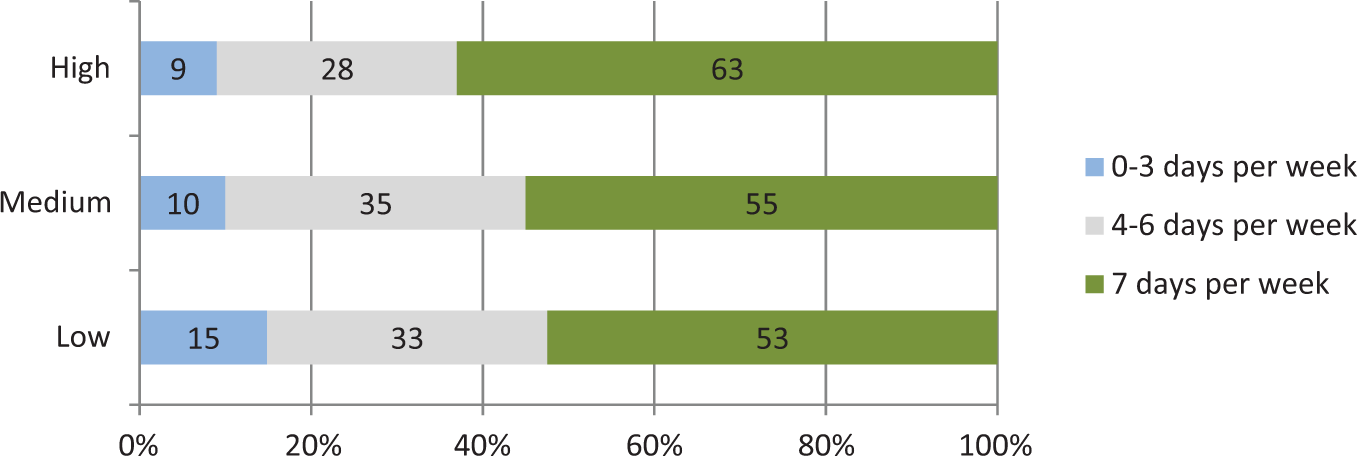
Percentage of 2-year-olds in Rotterdam, who eat vegetables 0–3, 4–6, or 7 days per week divided by parent educational level.
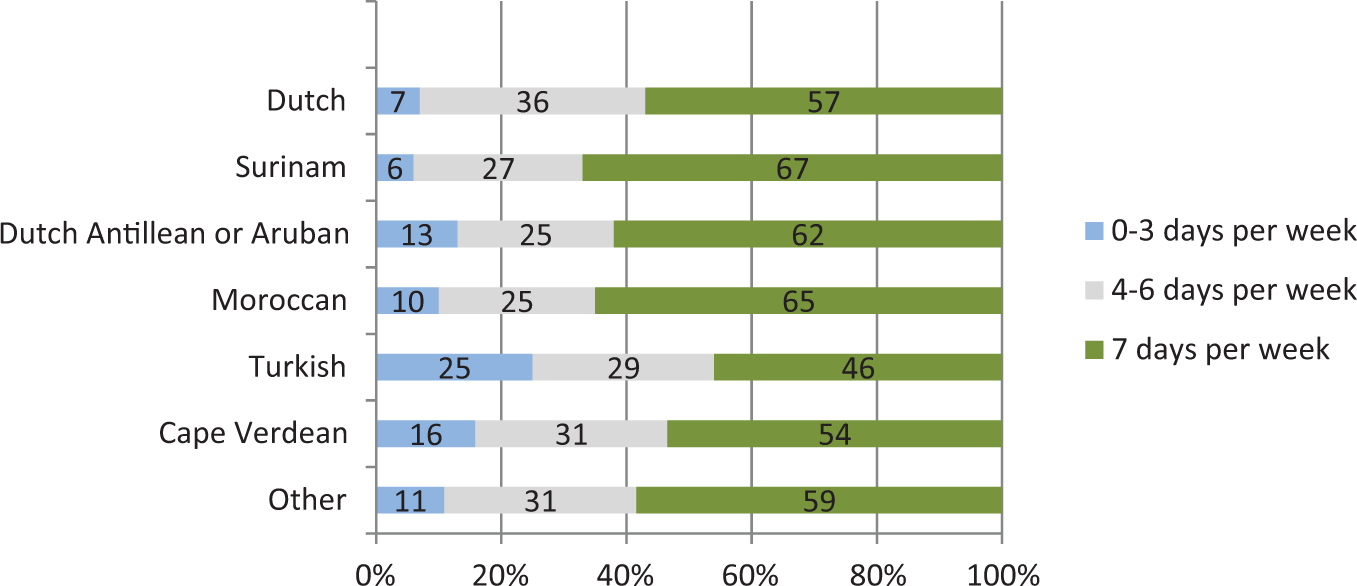
Percentage of 2-year-olds in Rotterdam, who eat vegetables 0–3, 4–6, or 7 days per week divided by parent cultural background.
Interventions
Although various authors have stressed the importance of increasing vegetable intake among young children (Ocké et al., 2008), most interventions target primary and secondary school-aged children (Knai, Pomerleau, Lock, & McKee, 2006). We found two interventions that target the youngest age bracket (“Food Dudes for the Nursery” and “VeggieFruities”) and two interventions that target their parents or caretakers (“Go for 2 and 5” and “Fruits and Veggies—More Matters”). “Go for 2 and 5” is a national Australian campaign aimed at parents of children aged 0–17 (Woolcott Research Pty Ltd, 2007) and Fruits and Veggies—More Matters is a national American campaign aimed at mothers of children aged 10 years and below (Produce for Better Health Foundation, 2013). Food Dudes for the Nursery is an adaptation of the successful and well-documented “Food Dudes for Primary Schools” project (Food Dudes, 2015), which is not yet available in Dutch. VeggieFruities is an interactive reading intervention (De Droog, Buijzen, & Valkenburg, 2014) aimed at preschoolers. Both Food dudes and Veggiefruities are carried out in a group setting. Some research has been done into ways to promote vegetable consumption among toddlers (e.g., repeated tastings as in Mennella, Nicklaus, Jagolino, & Yourshaw, 2008), yet this research often lacks a rewarding exchange for the behavior that is expected from parents.
The data were then analyzed, and the following target behavior was selected:
Increase the number of days on which mothers offer their children vegetables.
Specifically, we sought to foster the following behavior among mothers:
Offer vegetables on a daily basis.
Offer vegetables as snacks, aside from dinnertime.
In order for the children to
Experience repeated exposure to vegetables.
Experience the exposure to vegetables in a fun and enjoyable context.
Audience
Analyzing the data, we found that vegetable intake is a problem across all ethnicities and in the whole population. This is perceived to be a developmental problem in which 1-, 2- and 3-year-olds start to take control of their eating habits and object to unfamiliar flavors. This is called neophobia (Hofman, 2006; Nicklas et al., 2001). To counter this effect, parents are advised to offer the vegetables to their children repeatedly, so they become used to the taste and start to accept them (Mennella et al., 2008).
Several studies demonstrated that parental child-feeding strategies influence the acceptance of fruit and vegetables (Blissett, 2011; Mitchell, Farrow, Haycraft, & Meyer, 2013; Zeinstra, Koelen, Kok, & De Graaf, 2007). We hypothesize that some groups of parents are more successful than others in feeding their children vegetables.
Our initial target audience was mothers of 1-, 2- and 3-year-olds who eat vegetables 3 days per week or less. Based on the attachment theory (Ainsworth, Blehar, Waters, & Wall, 1978; Bowlby, 1988) and the social learning theory (Bandura, 1986), we reasoned that children and parents both play a part in bringing about the desired behavior. We then focused our efforts on the behavior of the children. The intervention mix was tailored to parents with picky eaters, though it will be available to all parents of 1-, 2- and 3-year-olds at the intended distribution sites.
The toddlers were segmented into three groups based on the data of the municipality of Rotterdam (N = 3,799 two-year-olds): 1. Children with model eating habits
The child with the model eating habits is generally easygoing and interested in the food that his or her parents offer. Most of these children (51%) usually do not argue about their food. Forty-three percent of these children are Dutch. Almost all of these children (99%) eat a hot meal everyday at dinnertime. Most of these children (67%) are likely to eat the recommended 1.5 pieces of fruit per day. Most parents (98%) perceive this as healthy and over half of these children (54%) have parents with a higher level of education. The parents appear confident about their parenting skills: 80% of the parents (almost) never worry about parenting. The child with the model eating habits eats some vegetables everyday. The quantities could be improved.
Objective: Increase quantities of vegetables. Offer them as snacks.
2. Children with average eating habits
The child with the average eating habits is average all around. Most of these children are Dutch (52%) and have parents with a higher level of education (44%). Over half of these children (55%) do not eat the daily recommended amount of fruit and 20% of these children do not have a daily hot meal at dinnertime. Almost all of these children (98%) eat their breakfasts. Some of these children (57%) may put up a fight around dinnertime but others do not. The child with the average eating habits eats some vegetables 4 to 6 days per week. The quantities could be improved.
Objective: Increase the number of days on which the child eats vegetables. Offer them as snacks.
3. Picky eaters
The picky eater gives parents more cause for worry; 17% of these parents worry that their child is underweight. Nevertheless, 92% of the parents perceive this child as being healthy. Over half of these children (45%) do not eat the daily recommended amount of fruit and 23% do not have a daily hot meal at dinnertime. According to their parents, most of these children (73%) sometimes or often throw tantrums during meals and they are not yet able to understand (37%) or follow (27%) rules. This child might be of Turkish ethnicity (18%), Dutch (27%), or one of the wide array of other nationalities clustered in “Other” (32%). Most picky eaters (44%) have parents with higher educational levels. The picky eater eats some vegetables 1 to 3 days per week or never.
Objective: Increase the number of days on which the child eats vegetables. Offer them as snacks. Explain to the parents that vegetables help their children grow. This is our prime target group.
Theory
We used a series of behavioral theories to understand behavior change among children and parents: the mere exposure theory (Zajonc, 1968), the cognitive reframing or restructuring theory (as used in Azar, Reitz, & Goslin, 2008), the social learning theory (Bandura, 1986), and the stages of change model (Prochaska & DiClemente, 1983).
According to the mere exposure theory, if a person is more frequently exposed to a stimulus in a positive context, he or she is more likely to develop a positive attitude toward that stimulus. This “mere exposure” effect has been demonstrated by a number of studies (De Wild, De Graaf, & Jager, 2013; Hausner, Olsen, & Møller, 2012; Zeinstra et al., 2007). By asking parents to offer the vegetables as snacks, without pressure, we aim to increase the exposure and tastings of the vegetables.
For children and their consumption of vegetables, research shows that young children who are repeatedly served a vegetable will generally eat the vegetable after 7 to 10 tries (Mennella et al., 2008).
The cognitive reframing theory advocates attaching a more positive label to situations that were previously undesirable (Azar, Reitz, & Goslin, 2008). We use it to explain to parents that playing with food is an important developmental step to help their children learn to accept new foods. Additionally, we inform parents that vegetables are a key ingredient for their child’s growth. We refrained from making any reference to weight or obesity, as the parents of this demographic frequently worry that their child is underweight.
The social learning theory argues that all humans learn by observing others (Bandura, 1986). This can be applied both to parents, who might see other parents offering vegetables as snacks, and to children, who will enjoy the time spent with their parents exploring vegetables together and copy their parents’ behavior.
The stages of change model (Prochaska & DiClemente, 1983) is helpful in guiding people to the next possible step in behavior change. Taking the stage of change of an audience into account helps to determine the right message and service. During the focus group meetings, we found that most mothers were in the contemplating or planning stages. They were aware of the limited vegetable intake of their children, were worried about it, yet often did not feel capable of influencing their children’s eating habits.
Development
To develop a suitable intervention, the project team consulted childcare, child health services, and communication professionals. The result was “the vegetable box” and for children and their parents based this concept on the social marketing notion of creating value for our audience (French et al., 2009) and creating something “fun, easy, and popular” (Smith, 1999). The project group defined 4 Ps:
Products
Core product: Improvements in toddlers’ vegetable consumption Improvements in toddlers’ health outcomes, such as reduced risk of obesity and cardiovascular diseases A sense of parental efficacy (“I know how to help my child eating his or her vegetables”)
Actual product: The vegetable box and its contents
Augmented product: The vegetable box: an attractive packaging for other products, which can also be used for carrying snack vegetables and which serves as a reminder for the message at home (Image 1) Cutout shapes (cookie cutters) that can be used with carrots and cucumbers for having fun with your toddler (Image 2) A growth chart to monitor the child’s growth with appealing and practical tips for parents to offer vegetables as snacks A booklet with stickers to help mothers track the number of vegetable tastings

The vegetable box copyright 2014 by Michel van Heijningen. Reprinted with permission.

The cutout shape shapes copyright 2014 by Michel van Heijningen. Reprinted with permission.
Price
Vegetables have to be bought. As these goods are perishable, we decided not to distribute vegetables among the audience. During the focus group sessions, mothers stated that they have tomatoes, cucumbers, and similar vegetables at home for salads at dinnertime.
We encouraged mothers to show their children how to use the cutout shapes and to play with their food. This might take time or require cleanup.
Toddlers may resist to eat the vegetables their mothers offer, as the vegetables might be new and unfamiliar to them. This takes some energy and struggle from their mothers.
Place
We encouraged mothers to offer their children vegetables at home and “on the road.”
The vegetable boxes were distributed at public playgroups and the Child Health Center (CHC) in Rotterdam.
Promotion
Key message: Vegetables will make children grow tall and strong.
Key message: Have fun with your child as you play with food.
Photo competition: a monthly contest looking for funny pictures of children eating vegetables and growing tall and strong.
Posters communicating the photo competition and the message “vegetables make your child grow tall and strong!”
The family nurses and professional caretakers briefly engage in conversations about vegetables as they distribute the boxes.
Implementation
Before distributing the vegetable boxes, the vegetable box and its contents were pretested by showing it to parents and asking for their opinions. Based on parents’ opinions, we made the necessary adjustments on the vegetable boxes.
In March 2014, 442 vegetable boxes were distributed at 15 preschools in Rotterdam. The professional caretakers were responsible for the distribution of the boxes and for helping parents to fill out the questionnaire for monitoring the effects.
In March and April 2014, 200 vegetable boxes were distributed at the CHC. Parents were offered the boxes after their child’s checkup by their family nurse. The children (14 months old) also received their immunizations during this checkup. After filling out the questionnaire, parents received the vegetable box from a playgroup consultant, who also instructed the parents about vegetable consumption and offered the child a piece of tomato or cucumber to taste.
Evaluation
The aim of the evaluation was to evaluate (a) the effect of the vegetable box, (b) the program, and (c) the process.
Effect of the Vegetable Box
To evaluate the effect of the vegetable box project, an experimental study with a pre- and posttest design and controlgroup was conducted to answer the following questions:
Does the vegetable box influence: The number of days per week that the child eats vegetables? The number of days per week that the parent serves their child vegetables? The number of parents who serve their child vegetables as snacks?
We hypothesized that children of parents who received the vegetable box would show a significant increase in the number of days per week that they eat vegetables. Parents who received the vegetable box were expected to show a significant increase in the number of days per week that they serve their child vegetables. We also hypothesized that the number of parents who offer their children vegetables as snacks would significantly increase among parents who received the vegetable box. Lastly, we hypothesized interaction effects, where the increases in eating and serving vegetables would be significantly higher among parents and children who received the vegetable box compared to parents and children who received no treatment (control).
Participants
At the start of the study, 440 parent–child pairs were recruited to participate (Table 1). Only the 170 pairs that completed the whole trial, that indicated (in intervention conditions) that they had received the vegetable box, and that included a child aged 1 or up (39%) were included in this study. The parent–child pairs were split into two groups: a “playgroup” group and a “CHC” group. The playgroup group consisted of parents with a child aged 2 to 4 attending playgroup. The CHC group consisted of parents who received the vegetable box at the CHC after the parent and child attended the checkup by the family nurse at 14 months.
Study Design Characteristics.

Note. CHC = Child Health Center.
The child participants were 92 boys and 72 girls (Table 2). Children who attended playgroups were aged 2–4 (M intervention group = 38 months, SD = 5.73; M control group = 36 months, SD = 6.17) and almost all children in the CHC group were 1 year old (M = 14 months, SD = 2.57). The percentage of “picky eaters” was higher in the playgroup intervention condition (31%) compared to the control condition (21%). In the CHC group, none of the children were picky eaters.
Differences Between the Segments Concerning Parent and Child Characteristics at Pretest in Playgroup and CHC group.
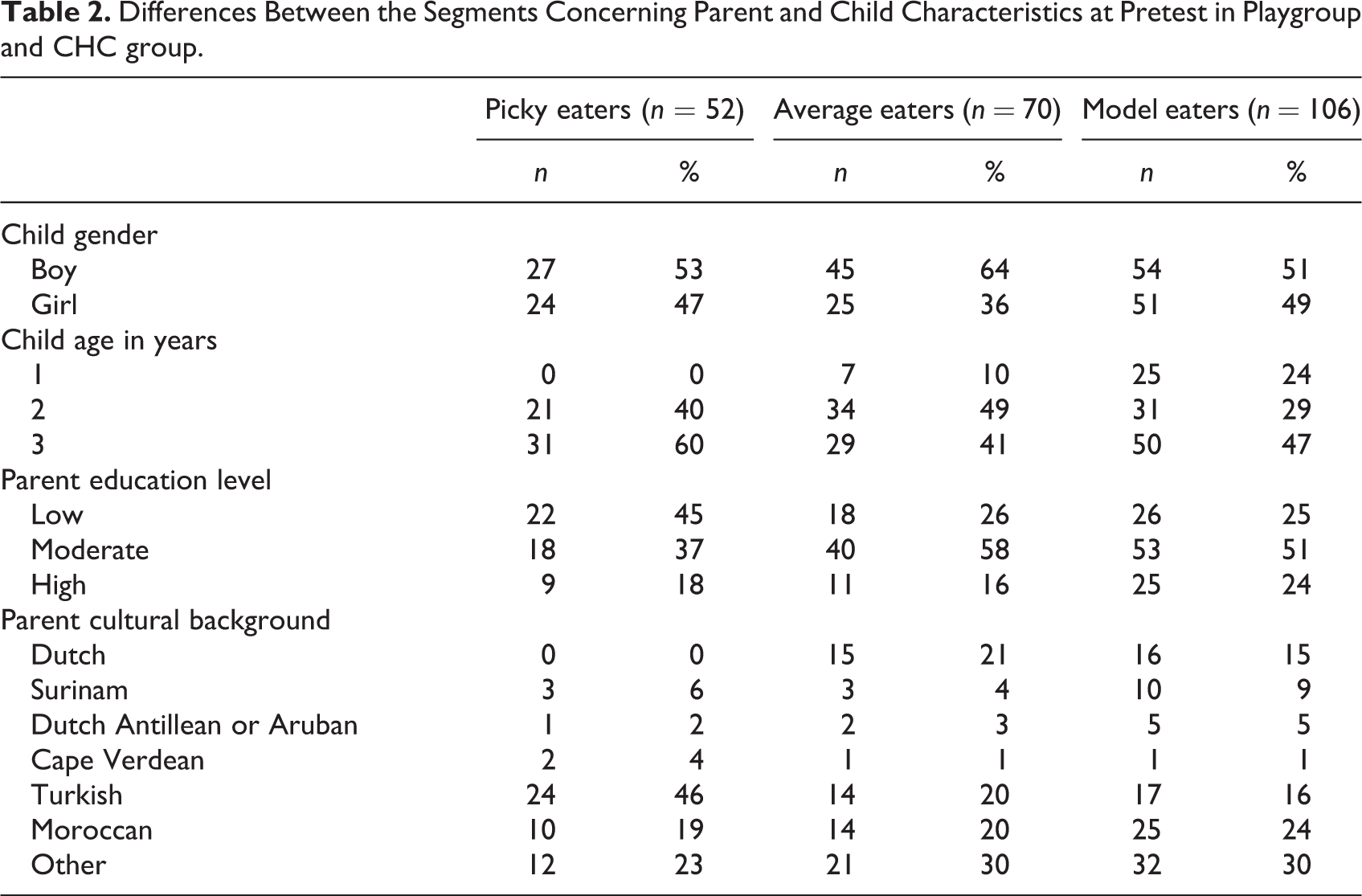
In the playgroup intervention condition, the largest group of parents had a lower (43%) or intermediate (43%) education level (Table 2). In the playgroup control condition (59%) and in the CHC group (64%), most parents had an intermediate education level. In the playgroup intervention condition, the largest parent groups were of Turkish (33%) descent. In the playgroup control condition, the largest parent groups were of Moroccan (22%) descent, while in the CHC group the largest parent groups were of Turkish (21%) or Moroccan (21%) descent.
The picky eaters segment included slightly more boys (53%) than girls (47%; Table 2). Most picky eaters (60%) were 3 years old and none of the picky eaters were 1 year old. Most picky eaters also had parents with a lower education background (60%) and the largest group had parents of Turkish descent (46%).
Procedure
The playgroup group was split into an intervention group, in which parents received the vegetable box, and a control group, in which parents received no treatment. No control group was available for the CHC group, as the CHC deemed it impractical to allocate some parents to an intervention and others to a control condition. In consequence, the results in the CHC group are only based on differences between pre- and posttests.
Measures
At pretest, all parents filled out the same questionnaire about vegetables and child and parent characteristics. We asked parents: The number of days per week their child eats vegetables, The number of days per week they offer their child vegetables, At which meal(s) (breakfast, lunch, and dinner) or snack time(s) (morning, afternoon, and evening) they offer their child vegetables, Their child’s date of birth and gender, and Their education level and cultural background.
Parents in the intervention group and the CHC group received the vegetable box after they had filled out the questionnaire.
At posttest, parents in the intervention group and the control group filled out a second questionnaire with the same measures for vegetables and child (not parent) characteristics. In these groups, pre- and posttest questionnaires were matched based on the child’s gender and date of birth. Parents in the CHC group were interviewed by telephone. They were only asked the questions about vegetables, as we already knew the parent and child characteristics. The mean time between pre- and posttests was 7 weeks (Table 1).
Statistical Analysis
Statistical analysis was conducted using SPSS version 20. Two-tailed tests were used for this analysis. The number of days per week that children eat vegetables was recoded into the three segments: children who ate vegetables every day (model eating habits), children who ate vegetables 4–6 days per week (average eating habits), and children who ate vegetables 3 or fewer days per week (picky eaters). Parent education level was recoded into higher, moderate, and lower. Preliminary analysis showed that the data were not normally distributed. As such, nonparametric tests were used. All statistical tests were two-tailed.
Differences between the playgroup intervention condition and control condition were tested using χ2tests (for child gender, parent education, and parent cultural background) and Mann-Whitney U tests (for child age, number of days per week that the children eat vegetables, and number of days per week that the parents serve their child vegetables). Relations between parent and child demographics and offering or eating vegetables were tested using Mann-Whitney U tests (for child gender), Pearson’s correlation coefficient (for child age) and the Kruskall-Wallis test (for parent education and parent cultural background).
The influence of the vegetable box on the number of days per week that children eat vegetables, and the number of days per week that parents offer their child vegetables, was tested using the Wilcoxon-signed rank test. Where significant effects were found, mixed design analysis of variance (ANOVA) was used to test for interaction effects. As mixed design ANOVA is a parametric test, it is important to interpret the results with care. The influence of the vegetable box on the number of parents who give their child vegetables as snacks was tested using the McNemar test.
Results
Descriptive Statistics
At pretest, no significant differences were found between playgroup intervention condition and control condition for child gender, χ2 (1) = 1.79, p = .181, child age (U = 2,088, z = −1.56, p = .118), or parent cultural background, χ2 (6) = 11.02, p = .088. The conditions did, however, differ for parent education level (χ2 = 13.97, p = .001): Lower education levels were more prevalent in the intervention condition and higher education levels were more prevalent in the control condition.
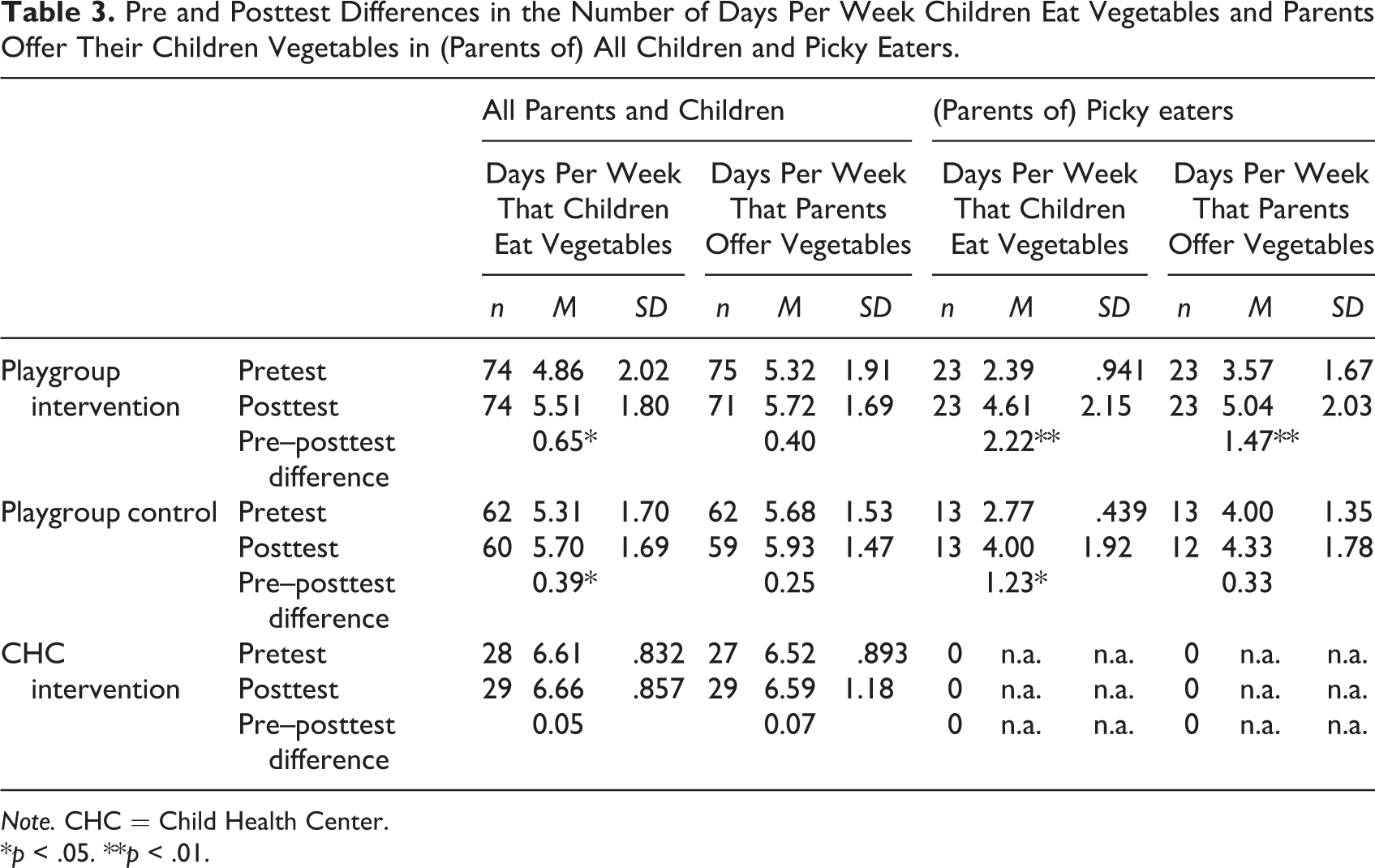
In the playgroup control condition, the mean number of days per week that parents offer vegetables (M = 5.68, SD = 1.53) and the mean number of days per week that children eat vegetables (M = 5.31, SD = 1.70) were higher compared to the intervention condition (M = 5.32, SD = 1.91 and M = 4.86, SD = 2.02, respectively). However, the mean number of days per week that parents offer vegetables (U = 2,171, z = −.712, p = .477) and children eat vegetables (U = 2,049, z = −1.11, p = .267) did not differ significantly between the playgroup intervention and control conditions. The mean number of days per week that parents offer vegetables (M = 6.52, SD = .893) and the mean number of days per week that children eat vegetables (M = 6.61, SD = .832) were highest in the CHC group. In all groups and conditions, more than 40% of the parents offered their children vegetables as snacks and over three quarters of the parents offered vegetables at dinner.
Relationships Between Parent and Child Demographics and Offering or Eating Vegetables
A significant relationship was visible between child age and the number of days that children eat vegetables, r(228) = −.195, p = .003: The older the children are, the fewer days per week the children eat vegetables. No relationship was found between child gender and the number of days that children eat vegetables (U = 6,084, z = −.469, p = .639).
Parent cultural background was related to both the number of days that children eat vegetables, H (6) = 20.63, p = .002, and the number of days that parents offer their children vegetables, H (6) = 16.86, p = .010. We analyzed how children with parents of Turkish descent differ from parents from other cultural backgrounds. Results showed that children with parents of Turkish descent ate vegetables significantly fewer days per week than children with parents of Dutch (U = 440, z = −3.84, p < .001, r = .41) or Moroccan (U = 952, z = −2.68, p = .007, r = .26) descent, and also compared with children with parents from other cultural backgrounds (U = 1,257, z = −2.91, p = .004, r = .27). Parents of Turkish descent offer their children vegetables significantly fewer days per week than parents of Dutch descent (U = 555, z = −2.95, p = .003, r = .32) and parents from other cultural backgrounds (U = 1,294, z = −2.82, p = .005, r = .31).
Parent education was found to be related to the number of days per week that the parents offer their child vegetables, H (2) = 9.91, p < .01. Parents with higher levels of education give their child vegetables significantly more days per week than those with lower education levels (U = 1,039, z = −3.04, p = .002, r = .29). No relation was found between parent education and the number of days per week that children eat vegetables, H (2) = 4.02, p = .134.
Intervention Effects
In both the playgroup intervention (z = −2.11, p = .034, r = .17) and control conditions (z = −2.28, p = .023, r = .21), there was a significant increase in the number of days per week children eat vegetables (Table 3). The highest significant increase was found among the segment picky eaters in both the playgroup intervention (z = −3.28, p = .001, r = .48) and control condition (z = −2.15, p = .032, r = .42). Although the increase was higher in the playgroup intervention condition than in the control condition, no interaction effect was found, F(1) = .184, p = .67 (Figure 3). The only significant increase in the number of days per week that parents offer their children vegetables was found among parents of picky eaters in the playgroup intervention condition (z = −2.73, p = .006, r = .18).
Pre and Posttest Differences in the Number of Days Per Week Children Eat Vegetables and Parents Offer Their Children Vegetables in (Parents of) All Children and Picky Eaters.
Note. CHC = Child Health Center.
*p < .05. **p < .01.
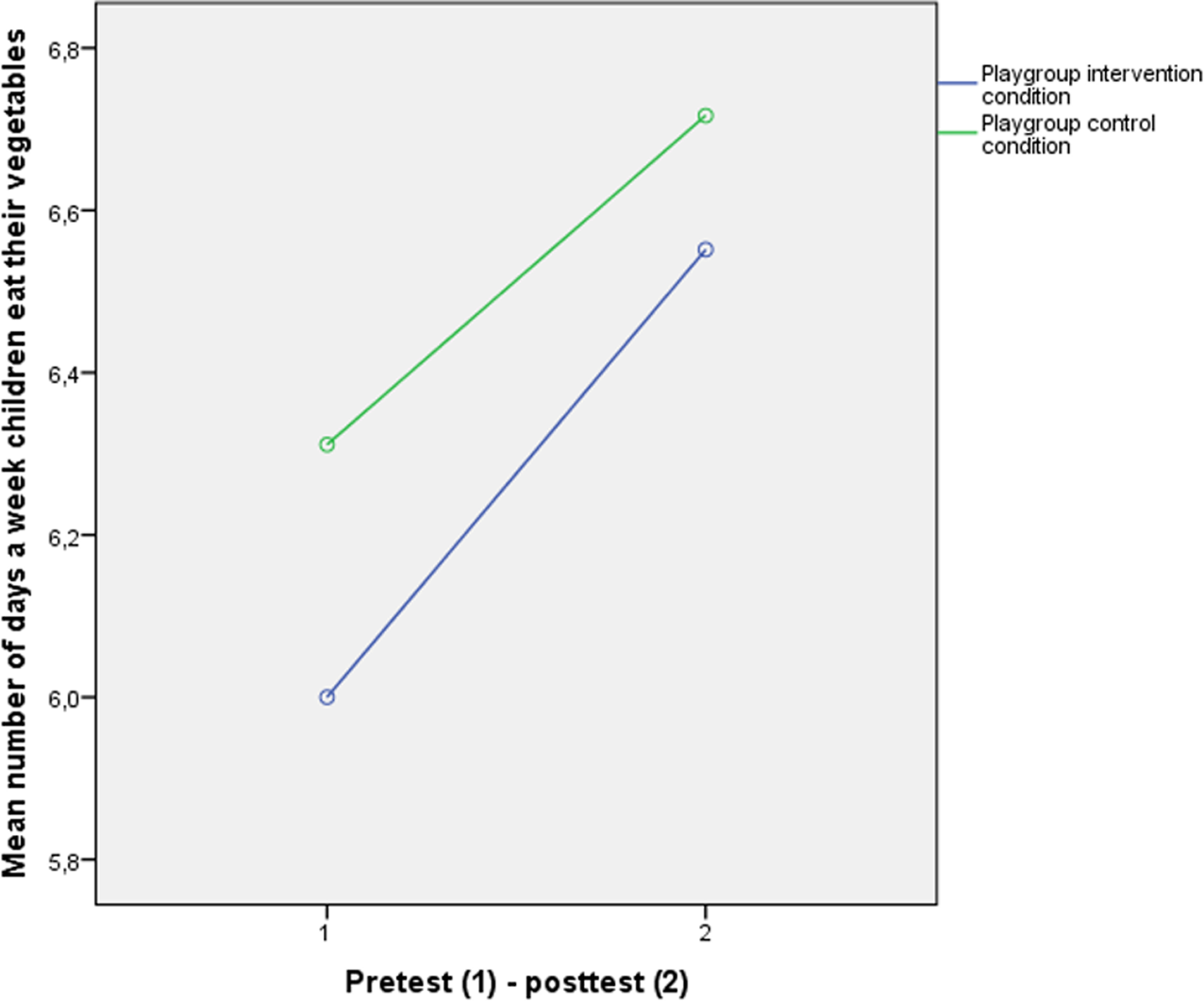
Increase in the number of days per week children eat vegetables in playgroup intervention and control condition.
In the CHC group, no significant increases were found in the number of days per week that children eat vegetables and the number of days per week that parents offer their children vegetables (Table 3). This group did not include any picky eaters. In the CHC group, a significant increase was found in the number of parents who give their children vegetables as snacks (p = .021; Table 4). No significant differences were found in the playgroup intervention condition (p = .281) or control condition (p = 1.00).
Pre–Posttest difference in the number of parents who offer vegetables as snacks.
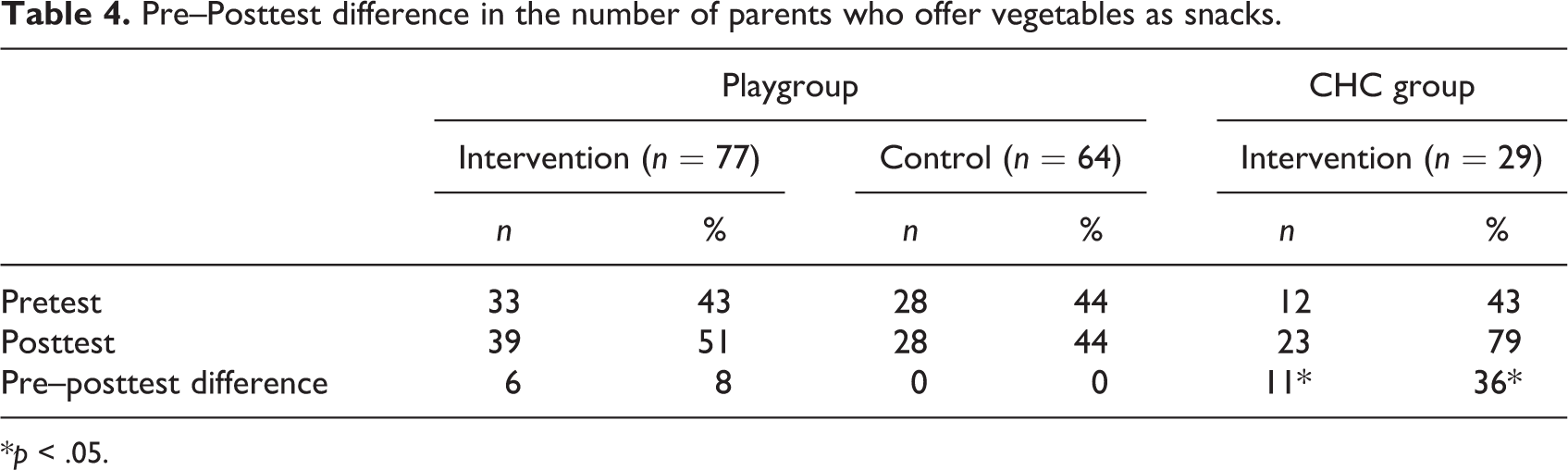
*p < .05.
Program Evaluation
Method
At posttest of the effect evaluation, parents who had been given a vegetable box were asked additional questions about the vegetable box. They were asked: If they used the vegetable box and its contents and About their opinion of the vegetable box and its contents.
The interview questions for parents in the CHC group differed slightly from the questionnaire for parents in the playgroup. For example, parents who filled out the questionnaire were asked if they were positive or negative about the vegetable box using a 7-point smiley scale, whereas during the interviews parents were asked to grade the vegetable box on a scale from 1 to 10.
Results
Results show that most parents used the vegetable box products (Table 5). The vegetable box itself (84%) and the cutout shapes (68%) were used most often. According to posttest results, 10 parents participated in the photo competition, though the project team received only one photograph.
Number and Percentage of Parents That Used the Vegetable Box.

The percentage of parents who used the products was lower among parents of 1-year-olds than parents of 2- and 3-year-olds (Figure 4). This difference was clearest with the stickers, cutout shapes, and growth chart: At least 25% (range 25–32%) fewer parents of 1-year-olds used these products compared with parents of 2- and 3-year-olds. Most parents were positive about the vegetable box. On a scale from 1 (negative) to 10 (positive), parents in the CHC group rated the products between 7.3 and 8. In the playgroup intervention condition, almost every parent (range 88–96%) who used a product from the vegetable box was positive about that particular product.
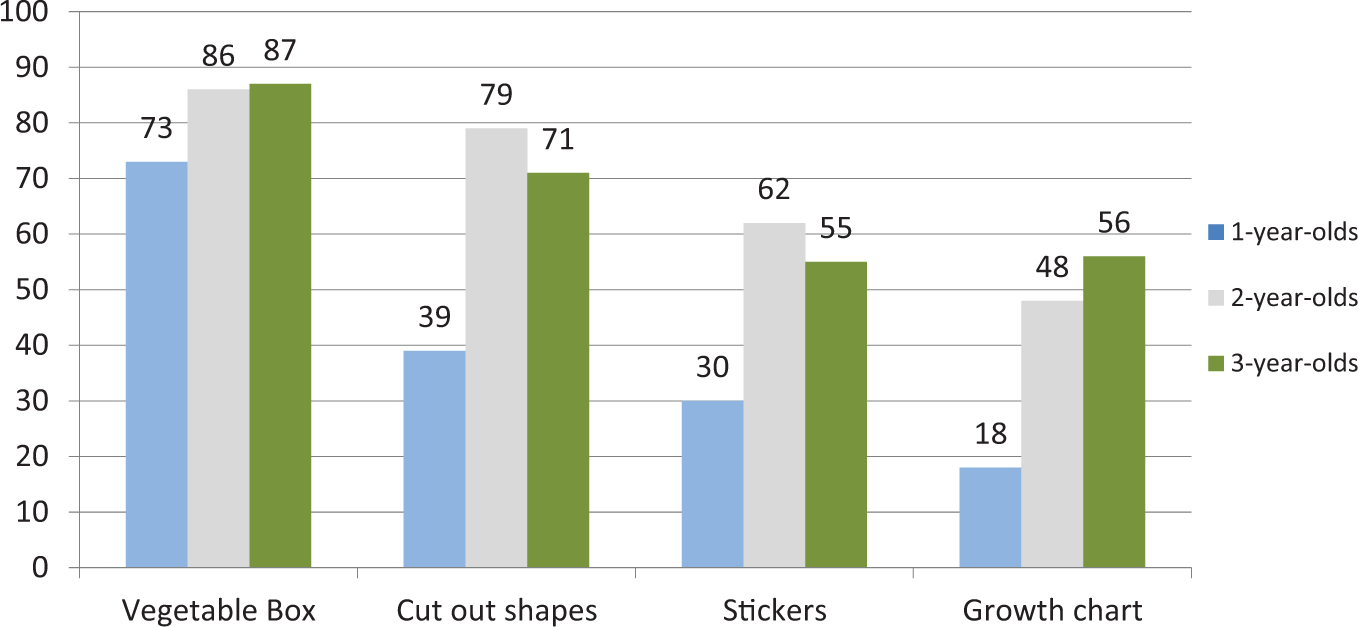
Percentage of parents of 1-, 2-, and 3-year-olds who used the vegetable box.
Process Evaluation
Method
To evaluate the process, the following professionals were semistructurally interviewed: two professional caretakers working at one of the participating playgroups, two family nurses, and four playgroup consultants working at the CHC. The professional caretakers were interviewed by telephone. The professionals who work at the CHC were interviewed in a group during an employer meeting.
Results
According to the professionals, the implementation process of the vegetable box went well. The professional caretakers were positive about the vegetable box and enjoyed distributing the boxes to parents. It did not take up much of their time and they were able to see the parents’ enthusiasm upon receiving the vegetable box.
The professionals at the CHC were also positive about the vegetable box. The distribution of the boxes and the cooperation between the family nurses and playgroup consultants went smoothly. According to the playgroup consultants, offering the children the vegetables to taste was a key factor for success: It showed parents that their child would actually eat and perhaps even like the vegetables. Both the professional caretakers and the professionals at the CHC believe the vegetable box can encourage parents to offer vegetables to their child.
Conclusion
A positive behavior change was found in parents and their children after receiving the vegetable box and/or participating in this study. We found that the number of days per week that children eat vegetables significantly increased in both playgroup conditions. The highest increases were found among the picky eaters segment. This was the segment to which the vegetable box was specifically geared. The number of days per week that parents offer their children vegetables only significantly increased among parents of picky eaters in the playgroup intervention condition.
Because the increases in the number of days that children eat vegetables were found in both the playgroup intervention condition and the control condition, we cannot conclude that the behavior change is an intervention effect. However, the increase is noteworthy, as research shows that vegetable intake diminishes with maturation (Ocké et al., 2008). We hypothesize that the explicit questions about vegetable consumption and its timing inspired those parents already aware of the limited vegetable intake of their toddlers to take action and move into the next stage of change (Prochaska & DiClemente, 1983).
Also, a large significant increase was found in the number of parents who serve their toddlers vegetables as snacks, though only in the CHC group. These parents might not have been aware that they could offer vegetables as snacks to their young children. We hypothesize that their conversations with the playgroup consultants about vegetables and/or seeing their child eating a vegetable as snacks during that meeting made parents aware of the fact their child was old enough to be offered vegetables as snacks. This modeling might have influenced them to start offering vegetables as snacks at home too.
Most of the parents who received the vegetable box used the products. The percentage of parents who used the stickers, growth chart, or cutout shapes was at least 25% lower among parents of 1-year-olds than among parents of 2- and 3-year-olds. Some parents of 1-year-olds stated that they found their children too young to use the products of the vegetable box. We assume that parents of 1-year-olds used the growth chart less often because not all 14-month-old children are able to stand up straight. We also assume that their reason for not using the stickers is that their young children might not understand how to use them and that they did not use the cutout shapes out of concern that the sharp edges might injure their child. The assumption that parents might not use the cutout shapes because of the sharp edges was also made by the CHC professionals.
Lastly, parents, professional caretakers, and CHC professionals were all positive about the vegetable box. Professional caretakers and CHC professionals believe that the vegetable box may help encourage parents to offer their children vegetables.
Were the product and process fun, easy, and popular (Smith, 1999)? The vegetable box seems to fit to parents’ needs to feel capable of the desired behavior. They are rewarded with their toddlers’ positive response and they see other parents at the public playgroups or at the CHC also offering their children vegetables and using the vegetable box. The popularity of the boxes was more difficult to determine, though all participants declared that they would like to be part of the follow-up.
Follow-Up
We found behavior change in both groups. This leads us to conclude that we have developed a powerful message that resonates with parents, although we still need to fine-tune the products and their promotion.
As a result of the evaluation study, the project team decided that the next vegetable box will specifically target the 2- and 3-year-olds in the playgroups. These children are old enough to use cutout shapes and stand up straight enough to use the growth chart. A workshop to be carried out by professional caretakers is being developed to help them organize parent meetings to discuss the key messages and distribute the vegetable boxes. This will be executed in partnership with the public playgroups in the city.
Whereas we initially chose messages and pictures to appeal to the mothers, we have now formed a partnership with VeggieFruities (http://www.groentefroetels.com/). It has been demonstrated with preschoolers that the connection forged between a child and a character can improve the likability with its associated vegetables (De Droog et al., 2014). Even though this mechanism is still under research for toddlers, we have used the characters on the lids of the new boxes.
For the younger children (14 months), a new product might be developed based on the same insights but better suited to this specific age-group. For example, recent research has found that the use of picture books to expose toddlers to unfamiliar vegetables increases their willingness to try the food (Heath, Houston-Price, & Kennedy, 2014), and De Droog, Buijzen, and Valkenburg (2012) have already demonstrated the effect of interactive reading and characters on preschoolers’ willingness to taste. Children who are enrolled in a public playgroup will also receive the vegetable box at a later age. This will allow us to include various reminders to offer vegetables as snacks at different ages.
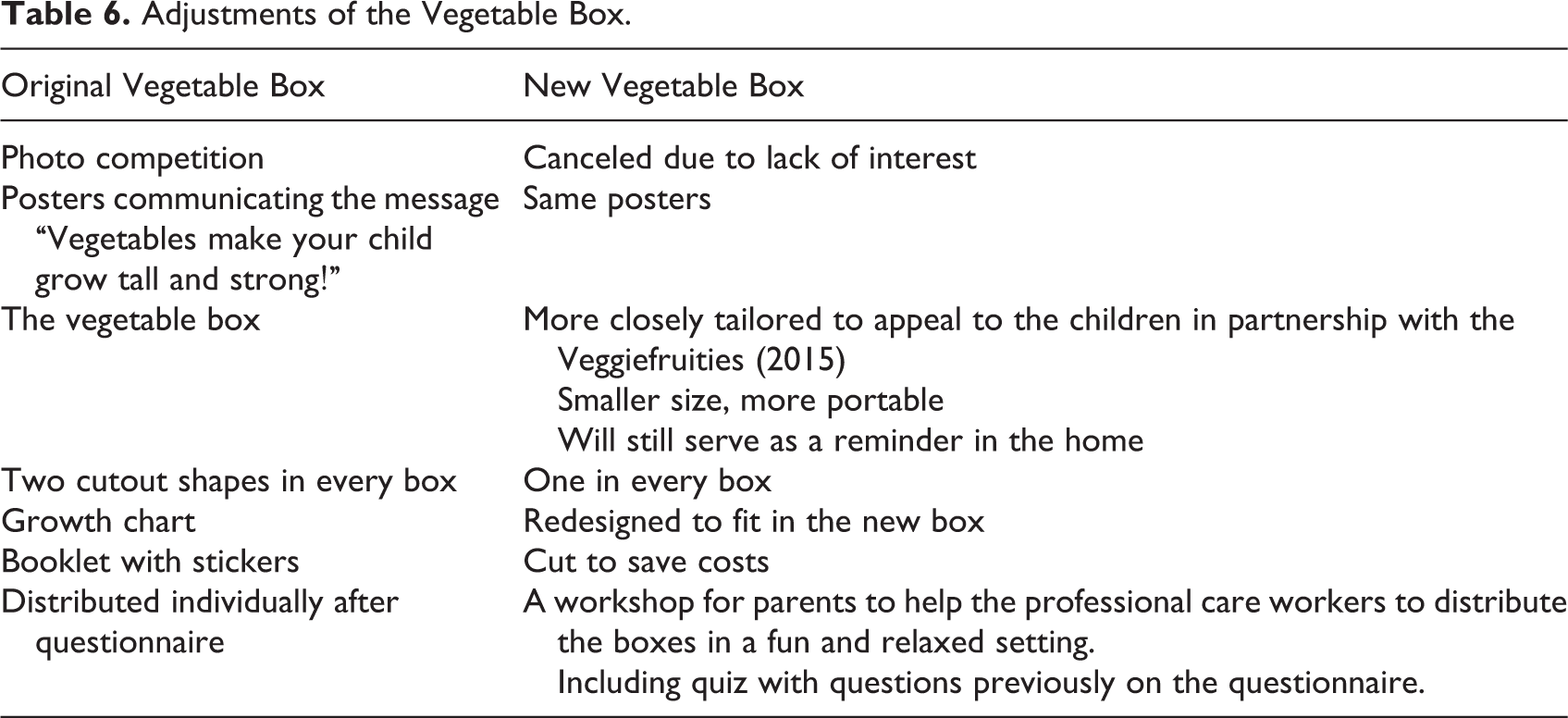
In Table 6, we have summarized the changes we have made to the product and promotion. We aim to embed the two main messages of the vegetable box: (1) offer vegetables as snacks and (2) vegetables make children grow tall and strong, in our partnerships with playgroups, the CHC, day cares, and preschools.
Adjustments of the Vegetable Box.
Lessons Learned
The vegetable box was created by a project group new to social marketing. The scoping process was valuable, and our insights from this project have been carried over to other elements of the Enjoy Being Fit! program. Time constraints meant that it was challenging to develop and document the intervention: Especially during the evaluation period, we often felt pressed for time. The pretest went smoothly, yet the posttest was much more difficult, and we were both excited and surprised to see how well our key message was received by the target groups.
We often struggled to decide who our primary target was: the child or the mother? Child development experts focus on the interaction between parent and child and do not seek to isolate them (Ainsworth et al., 1978). Durão et al. (2015) recently found that maternal child-feeding practices are very influential on the consumption of fruits and vegetables in 4-year-olds. We therefore chose not to separate them, but design for both of them.
Applying social marketing has made our team stronger, we were able to build partnerships with professionals and parents; and we succeeded in selling a message that proved to be popular: Toddlers will eat their greens if these are served at alternative times and if a little fun is added. Furthermore, 3,000 new boxes were ordered to follow-up our testing phase and to be distributed to parents and their children.
Footnotes
Acknowledgments
The authors would like to thank all their colleagues at Enjoy Being Fit! Program manager Annemarie Wulffraat for her support and especially Lonneke Leenaars, Edith Luijsterburg, and Roos van Harten. Also, we thank our colleagues at the Department of Social Development at the Municipality of Rotterdam for their support. We are grateful to Vuurrood for the creative work, the Department of Education of the Municipality of Rotterdam for giving us the time to write this article, and to Rob Bradley of Turnaround Translations. Most importantly, we thank the public playgroups and the Child Health Centre Rotterdam-Rijnmond and all the parents for participating in the study.
Declaration of Conflicting Interests
The author(s) declared no potential conflicts of interest with respect to the research, authorship, and/or publication of this article.
Funding
The author(s) disclosed receipt of the following financial support for the research, authorship, and/or publication of this article: This research was supported by The Municipality of Rotterdam.