



Abstract
The author of this article presents a review of the published empirical and theoretical literature to date on similarities and differences in intimate partner violence (IPV) in rural locales compared to urban and suburban locales. A review of 63 studies indicates that (1) the rates of IPV are generally similar across rural, urban, and suburban locales, although some groups of rural women (e.g., multiracial and separated/divorced) may be at increased risk for IPV compared to similar groups of urban women, and rates of intimate partner homicide may be higher in rural locales than urban and suburban locales; (2) IPV perpetrator and victim characteristics in rural locales are generally similar to IPV perpetrator and victim characteristics in other locales with the exception of some demographic characteristics that can generally be accounted for by broader rural–urban–suburban demographic differences; (3) IPV perpetrators in rural locales, compared with perpetrators in urban locales, may perpetrate more chronic and severe IPV, which could be due to the higher rates of substance abuse and unemployment documented among rural perpetrators; (4) IPV victims in rural locales may have worse psychosocial and physical health outcomes due to the lack of availability, accessibility, and quality of IPV services; and (5) attitudes about IPV vary to some extent across locales, with individuals in rural locales generally supporting less governmental involvement in IPV issues than in urban locales. Limitations of the literature are reviewed and suggestions for research are provided as well as implications for practice and policy efforts, which primarily center on improving availability, accessibility, and quality of IPV services in rural locales.
Keywords
Key Points of the Research Review
The rates of intimate partner violence (IPV) are generally similar across rural, urban, and suburban locales, although some types of IPV (e.g., sexual IPV and IPV perpetrated by a spouse/ex-spouse) and intimate partner homicide may be higher in rural locales than urban and suburban locales.
IPV perpetrator and victim characteristics are generally similar with the exception of some demographic characteristics that can generally be accounted for by broader rural–urban–suburban demographic differences.
IPV perpetrators in rural locales, compared with those in urban locales, may perpetrate more chronic and severe IPV, which could be due to the higher rates of substance abuse and unemployment documented among rural perpetrators as well as more compromised community responses to IPV in rural locales.
IPV victims in rural locales may have worse psychosocial and physical health outcomes due to the lack of services in rural locales and difficulty in accessing services that are available; research also demonstrates that IPV services in rural locales are generally less well funded and comprehensive than in urban locales.
Attitudes about IPV vary to some extent across locales, with individuals in rural locales generally supporting less governmental involvement in IPV issues than in urban locales.
Implications for Practice, Policy, and Research
Recommendations for future research include: More nuanced and dimensional measures of locale, including variability within types of locale. Greater use of control variables when conducting analyses comparing victims and perpetrators across locales. Inclusion of explanatory variables to help contextualize differences detected in IPV across locale as well as more comprehensive assessment of community-level variables. Utilization of prospective methodologies that extend beyond the male perpetrator–female victim typology.
Recommendations for practice and policy include: Efforts that improve accessibility of services (e.g., increased transportation and decreasing social and geographic isolation) in rural locales. Explore alternative ways to report IPV given concerns over confidentiality. Improve service rates of protection orders. Increase resources and funding for IPV intervention and prevention efforts. Implement public education efforts to raise awareness about IPV and transform community climate. Across locales, greater attention to IPV primary prevention efforts is needed, along with community-specific risk and protective factors.
Decades of research have documented the alarming incidence and prevalence of intimate partner violence (IPV) in U.S. society as well as the myriad negative outcomes associated with IPV in both victims and society. There is also a growing body of research demonstrating variability in IPV across locales, 1 and a number of findings have emerged that highlight the similarities and differences in IPV in rural locales compared to urban and suburban locales. Based on a combination of theories, studies with rural-only samples, and at times, studies with rural and urban and/or suburban comparison samples, researchers have argued that characteristics of rural environments are associated with (1) higher rates of IPV (or some types of IPV) in rural compared to urban/suburban locales (e.g., DeKeseredy & Schwartz, 2009; McDonell, Ott, & Mitchell, 2010); although some researchers have argued the rates are similar (e.g., Bachman & Saltzman, 1995; Brownridge, 2009); (2) different perpetrator characteristics in rural locales compared with urban and suburban locales (e.g., Averill, Padilla, & Clements, 2007; Pruitt, 2008); (3) more negative outcomes for IPV victims in rural locales compared with urban and suburban locales (Averill et al., 2007; Grama, 2000; Pruitt, 2008; Sandberg, 2013); (4) less helping and bystander intervention behaviors in rural locales compared to urban and suburban locales (DeKeseredy & Schwartz, 2009); and (5) poorer community responses to IPV in rural locales compared with urban and suburban locales (Averill et al., 2007; Fitzsimons, Hagemeister, & Braun, 2011; Pruitt, 2008; Sandberg, 2013).
In order to shed light on the validity of the assertions outlined above, the purpose of this article is to provide a comprehensive, systematic, and critical review of studies that have directly compared IPV in rural locales with IPV in urban and/or suburban locales, which no known review article has done to date. Accordingly, the article is divided into the following sections: (1) definitions of IPV and rural, urban, and suburban locales; (2) theoretical underpinning of why and how IPV may differ across the rural–urban–suburban divide; (3) a review of all empirical studies conducted to date on similarities and differences in IPV across rural, urban, and/or suburban locales; (4) limitations of the extant literature and directions for future research; and (5) implications of this body of research for prevention, intervention, and policy efforts.
Definitions
IPV, often used in the literature interchangeably with domestic violence, partner abuse, and dating violence, is defined by the Centers for Diseases Control and Prevention (CDC) as physical, sexual, and psychological harm inflicted by a current or former partner (Centers for Disease Control and Prevention, 2013; Saltzman, Fanslow, McMahon, & Shelley, 2002). Although most researchers agree that IPV includes physical, sexual, and psychological acts, there is less consensuses on the specific acts that constitute each of these types of violence. Moreover, there has been a great deal of disagreement and controversy regarding the measurement of IPV (see Straus, 2012; Woodin, Sotskova, & O’Leary, 2013 for reviews), gender symmetry and IPV (see Archer, 2000; Hamby, 2005 for reviews), and the exclusion of lesbian, gay, bisexual, transgender, queer, and other nonheterosexual identity persons from IPV research (see Baker, Buick, Kim, Moniz, & Nava, 2013 for a review). Although discussion of these controversies is beyond the scope of this review, the way in which the studies reviewed measured and conceptualized IPV is important for consideration.
Similar to the issues regarding the definitions and measurement of IPV, there is no clear consensus on defining and measuring rural, urban, and geographic locales and related constructs of rurality (the state or quality of being rural) and urbanicity (the state or quality of being urban; Dahly & Adair, 2007). Various definitions for rural, urban, and suburban are provided by the U.S. Census Bureau, Office of Management and Budget (OMB) core-based statistical areas, Economic Research Services (ERS) Rural Urban Continuum Codes, National Center for Education (NCES) Urban-centric Locale Codes, Rural Urban Commuting Area (RUCA) codes, Rural-Urban Density Typology (Isserman, 2005), Index of Relative Rurality (Waldorf, 2006), and National Center for Frontier Communities (NCFC; see Davis & Lohse, n.d. for a review).
Studies in the IPV literature where geographic locale is a variable of interest most frequently use the U.S. Census and OMB definitions of urban and nonurban areas. The Census Bureau defines urban as an adjoining area of census blocks or block groups with a population density of at least 1,000 people per square mile and surrounding census blocks that have an overall density of 500 people per square mile. Urbanized areas are those with a population of 50,000 or more, and urban clusters are areas that have populations between 2,500 and 50,000. All areas that are not urbanized areas or urban clusters are considered rural. Using the U.S. Census definitions of rurality, 20.78% of the U.S. population resided in areas classified as rural (i.e., nonurban) in 2010. The OMB definitions of urban and rural are similar to the U.S Census data, yet divide locales into three categories: metropolitan statistical area (i.e., urban), micropolitan statistical area (e.g., suburban), and noncore county (i.e., rural). Even more, the ERS Rural Urban Continuum Codes provides a dimensional approach, which some argue is a more appropriate measure of place (e.g., Conger, 1997; Patton, 1989). The ERS Rural Urban Continuum Codes divide metropolitan, micropolitan, and noncore areas into a total of nine categories according to their size and proximity to metropolitan areas. Research in the IPV literature in which locale is a unit of analysis has relied on a variety of these indices, often times inconsistently.
Theoretical Underpinnings of IPV Differences Across the Rural–Urban Divide
The density–pathology hypothesis (i.e., locales with greater population densities suffer from increased pathologies including crimes; Choldin, 1978; Milgram, 1970), subculture theory of urbanism (i.e., residents of more populated areas behave in more unconventional and more violent manners than residents of less populated areas; Fischer, 1995), and social disorganization theory (i.e., locales characterized by high levels of poverty, low levels of collective efficacy, ethnic heterogeneity, and residential instability will have higher crime rates; Sampson & Groves, 1989; Sampson & Wilson, 1995; Shaw & McKay, 1942) would suggest that crime rates, including IPV, would be higher in urban compared to rural areas. However, aspects of these theories, namely poverty and collective efficacy, have been used to explain how IPV may actually be worse (e.g., higher prevalence, poorer victim outcomes) in rural locales compared to urban and suburban locales.
Specifically, a number of researchers (e.g., Annan, 2006; Averill et al., 2007; DeKeseredy & Schwartz, 2006, 2009; Gallup-Black, 2005; Logan, Cole, Shannon, & Walker, 2007; Logan, Shannon, & Walker, 2005; Logan, Walker, Cole, Ratliff, & Leukefeld, 2003; Olimb, Brownlee, & Tranter, 2002; Pruitt, 2008; Thornton, Alwin, & Cambum, 1983; Websdale, 1998; Willetts-Bloom & Nock, 1994) have argued that poverty, fewer community resources, sparse distribution of law enforcement, substance abuse, “good ol’ boys” networks, geographic and social isolation, patriarchal family structures, privacy norms, strong identification with one’s land, fundamentalist religiosity, lack of anonymity, autonomy, distrust of social agencies/government/law enforcement, and lack of public transportation, all of which are more common in some rural locales compared to some urban and suburban locales, may lead to higher rates of IPV, differences in perpetrator characteristics, worse outcomes for IPV victims, and compromised community responses to IPV in rural locales, compared to urban and suburban locales. Further DeKeseredy and Schwartz (2009) argued that high levels of collective efficacy typically found in rural communities may function to prevent some violent crimes (e.g., vandalism), but not others, like IPV, and that collective efficacy may function to ignore or even encourage IPV and discourage victims from coming forward, especially when perpetrators hold high levels of social capital in a close-knit community.
Review of Existing Studies
Method
For the current review, the author identified all published articles that compared any aspect (e.g., rates and correlates) of IPV between rural locales and urban and/or suburban locales (see Figure 1). Key terms used in the search included all possible and relevant combinations of the following: “intimate partner violence,” “domestic violence,” “dating violence,” “rural,” “urban,” and “suburban.” Databases searched included Academic Search Premier, Psych Info, Psych Articles, Criminal Justice Abstracts, Family Studies Abstracts, Violence and Abuse, Women’s Studies International, Urban Studies, Social Work, and Medline. Article inclusion/exclusion criteria were as follows: (1) studies in which there were no direct comparisons between rural locales and at least one other locale type were excluded; in other words, articles that included rural and urban or rural and suburban individuals 2 in their sample, but only conducted aggregated analyses, studies that compared only suburban and urban locales on IPV variables, or studies that included only rural, urban, or suburban individuals were excluded; (2) only studies that included samples from the United States were included; (3) studies in which IPV, called domestic or family violence in these specific studies, was broadly defined to include any type of interfamilial violence (e.g., adult abusing elderly parent and sibling to sibling abuse) were excluded; and (4) studies in which IPV was collapsed in analyses with other crimes (e.g., sexual assault by a non-intimate or burglary) were excluded.
Additionally, given that a number of studies have focused on variability in intimate partner homicide (IPH) across locale, and that IPH can be considered perhaps the severest form of IPV, studies examining IPH across locale were included. The reference lists of the initial set of articles obtained from the author’s search of the previously listed databases were reviewed, and additional articles that were consistent with the previously delineated inclusion/exclusion criteria were included in the review. A total of 63 studies published between 1982 and 2013 were included in the review (summary tables of studies available upon request from the author). The author read all the articles and summarized the methodologies and results that were checked for accuracy by a doctoral student in social psychology.
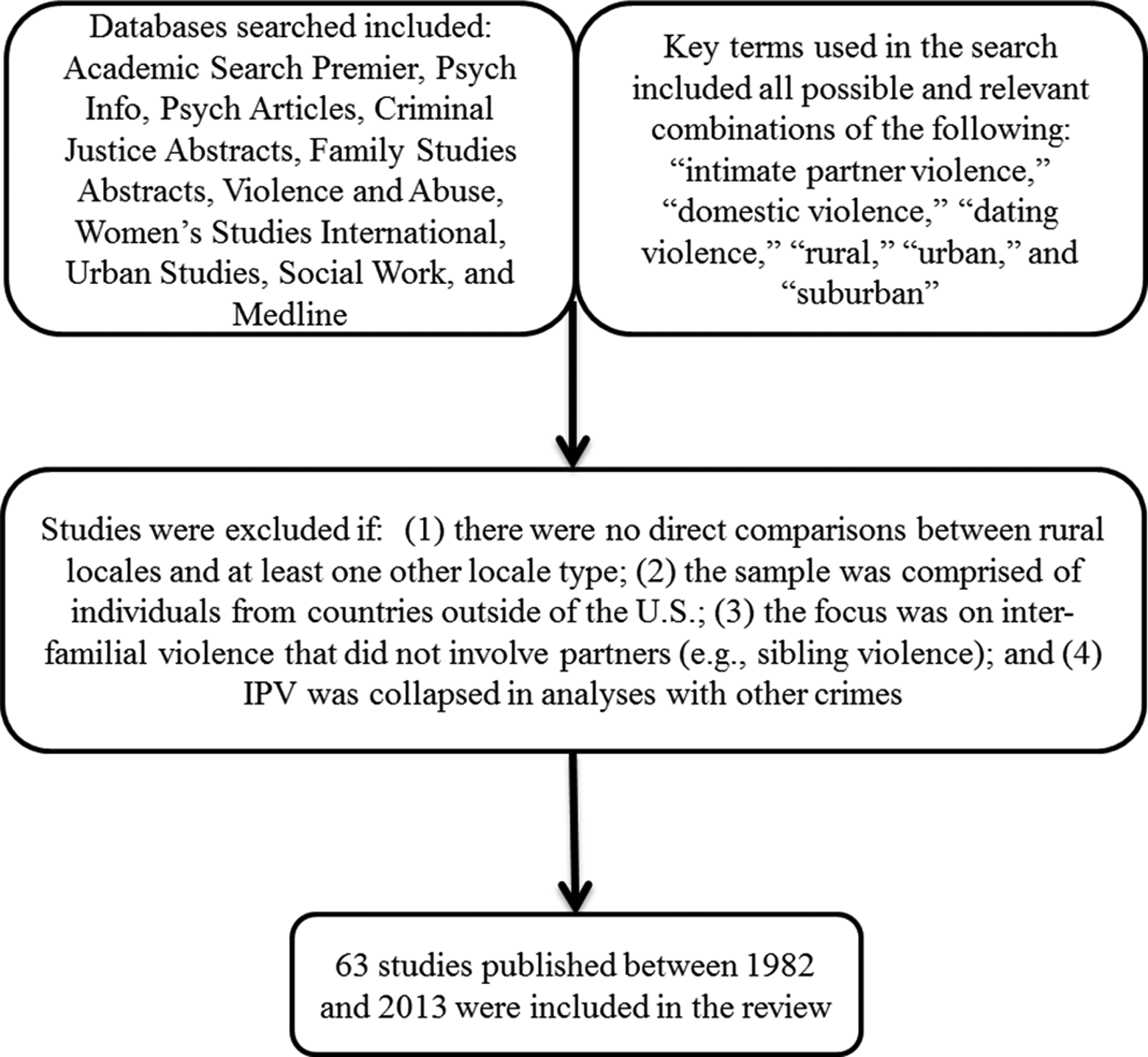
Process for identification of articles.
Do Rates of IPV, as Well as Frequency and Severity of IPV, Differ by Locale?
Overview
Thirty-one studies have been conducted to examine the rates of IPV/IPH in rural locales compared with urban and/or suburban locales. Most of these studies have relied on nonrandom, convenience samples, although a few data sets that include large, nationally representative samples have been used to examine locale differences in the rates of IPV and IPH.
Studies with nationally representative samples
The most commonly used nationally representative database to examine the rates of IPV across locale is the National Crime Victimization Survey (NCVS). Five studies have used the NCVS data to examine the overall rates of IPV, finding that the prevalence rates of IPV are similar or greater for urban women compared to rural and suburban women; rates for men are generally similar across locales (Bachman, 2000; Bachman & Saltzman, 1995; Greenfeld et al., 1998; Rennison, DeKeseredy, & Dragiewicz, 2013; Rennison & Welchans, 2000). Three studies examining subgroups within the NCVS data have painted a somewhat different picture. DeKeseredy, Dragiewicz, and Rennison (2012) used the NCVS data and found that the risk of IPV for various racial/ethnic groups varied as a function of locale (e.g., multiracial, rural women had higher rates of IPV than multiracial, urban women). Further, Rennison, DeKeseredy, and Dragiewicz (2012) used the NCVS data and found that lifetime prevalence of sexual IPV occurred at higher rates among rural divorced/separated women than urban divorced/separated women but at similar rates to suburban divorced/separated women. In another study using NCVS data, Rennison, DeKeseredy, and Dragiewicz (2013) found that women in rural areas were victims of IPV by a spouse/ex-spouse at rates greater than women in urban areas; there were similar rates of IPV victimization by a spouse/ex-spouse in rural and suburban areas. There were also similar rates of women experiencing IPV victimization by a boyfriend/girlfriend across rural, urban, and suburban locales.
In addition to the NCVS data, three other representative surveys have been conducted with mixed results. Lanier and Maume (2009) documented that there were no significant differences in IPV frequency between rural and urban women at Wave 2, but IPV frequencies were higher for rural women than urban women at Wave 1. Conversely, Moore, Probst, Tompkins, Cuffee, and Martin (2007) found that there were higher rates of IPV in urban locales compared to rural locales. In another representative sample across 16 U.S. states, Breiding, Ziembroski, and Black (2009) found that 1-year incidence and lifetime prevalence rates of IPV for men and women are similar across rural, urban, and suburban locales.
Studies with convenience samples
The findings from the six studies that used convenience samples are mixed; five studies found differences (although in varying directions) in rates across locales, and one study found no differences in rates of IPV across locale. Specifically, whereas Bergman (1992) found the highest rates of IPV among suburban adolescent boys and girls followed by urban and rural adolescent boys and girls, Spencer and Bryant (2000) found that rural adolescent boys and girls had higher rates of IPV than urban and suburban adolescent boys and girls. Haberyan and Kibler (2008) found no difference in rates of IPV experienced during high school between college students from rural locales compared to college students from urban locales. In addition to high school and college student convenience samples, three studies have been conducted with samples recruited from family practice and medical clinics. These studies have also found mixed results. Johnson and Elliott (1997) found that rural women were more likely to report having a currently abusive/violent partner than women from midsized locales, but there were no differences in lifetime IPV prevalence across locales. Kramer, Lorenzon, and Mueller (2004) and Van Dis, Mahmoodian, Goddik, and Dimitrievich (2002) generally found higher IPV rates among urban women compared with rural women, and Kramer et al. (2004) documented higher IPV rates among rural women compared with suburban women. These mixed results are likely due to reliance on convenience samples in which there was demographic variability as well as methodological differences regarding defining and measuring IPV and locale.
IPV type, frequency, and severity
In addition to studies comparing the overall incidence and prevalence rates of IPV, nine studies have examined how the type, frequency, and severity of IPV varies among female victims across locale; all but one study detected differences. Specifically, Grossman, Hinkley, Kawalski, and Mangrave (2005) found that urban victims were more likely to be physically abused, whereas rural victims were more likely to be sexually abused. Bonomi (2004) found that urban women reported more controlling behaviors than rural women. Some studies (Logan et al., 2003, 2005, 2007; Peek-Asa et al., 2011; Shannon, Logan, Cole, & Medley, 2006) with female IPV victims have found that rural victims report greater IPV frequency and severity than urban victims and suburban victims. However, Goodrum, Wiese, and Leukefeld (2004) found that rural and urban perpetrators were similar in terms of frequency and severity of IPV perpetrated.
Intimate partner homicide
Five studies have examined variability in the rates of IPH across locales with all but one study detecting differences. Studies that included an examination of IPH within only one state found no significant differences between rural and urban counties and the rates of IPH (Madkour, Martin, Halpern, & Schoenbach 2010); that rural counties have higher rates of IPH than urban counties (Kentucky Attorney General’s Task Force on Domestic Violence Crime, 1993); or that small towns have the highest rates of IPH followed by metropolitan, rural, and micropolitan locales (Beyer, Layde, Hamberger, & Laud, 2013). In a cross-state, national examination of IPH using Federal Bureau of Investigation supplementary homicide report data from 1980 to 1999, Gallup-Black (2005) found that the rates of IPH were highest in rural locales compared to urban and metropolitan locales. Further, Gallup-Black (2005) found that the rates of IPH declined for all except rural locales over the 20-year study period; in rural locales, rates of IPH increased.
Do Perpetrators of IPV, as Well as Risk Factors for IPV Perpetration, Differ by Locale?
Nine studies, seven of which were based on victims’ reports and two of which were based on perpetrators’ self-reports, have compared the characteristics of perpetrators across locale. Favor and Strand (2003) found rural perpetrators were more likely than urban perpetrators to threaten or actually harm IPV victims’ pets, as reported by IPV victims. Other studies with rural victims (Logan et al., 2003, 2005, 2007; Peek-Asa et al. 2011; Shannon et al., 2006) suggest that rural perpetrators may perpetrate more frequent and severe IPV, although the only study that included actual perpetrator self-reports found no difference between rural and urban perpetrators (Goodrum, Wiese, & Leukefeld, 2004). Further, Goodrum et al. (2004) also found that the relationship between substance use variables and IPV perpetration frequency and severity was similar across locales with the exception of perpetrators in extremely rural areas where there was no significant association between IPV and alcohol use. However, Websdale and Johnson’s (1998) data suggested that rural perpetrators may seek out rural locales to keep their victims isolated, based on reports from rural and urban IPV victims.
Logan and colleagues (Logan, Walker, & Leukefeld, 2001; Logan et al., 2005, 2007) have conducted three studies (one based on perpetrators’ reports and two based on victims’ reports) that compare rural IPV perpetrators with urban IPV perpetrators. Logan, Walker, and Leukefeld (2001) conducted a review of pretrial records of men arrested for IPV and found that urban male arrestees differed on a number of factors from rural male arrestees. Specifically, compared with urban male arrestees, rural male arrestees demonstrated lower employment rates, lower educational attainment, greater use of psychoactive medications, greater use of comorbid psychoactive drug and alcohol use, more prior and post IPV arrests, a greater likelihood to have been court ordered to marital therapy, and a lower likelihood to have been court ordered to anger management therapy. Additional demographic differences (e.g., home ownership) were found between rural and urban arrestees. However, Logan et al. (2001) found no significant differences between urban and rural male arrestees in terms of other demographic (e.g., age and average number of years employed), relational (e.g., average number of years lived with the victim), legal (e.g., pending charges), and substance-related (e.g., drink daily) variables. In another study conducted by Logan and colleagues (2007), there were no significant differences between rural and urban perpetrators regarding incarceration history and perpetrator violation of protective order, as determined by the reports of female IPV victims with protective orders. However, Logan and colleagues (2005) found a higher frequency of protective order violations among rural IPV perpetrators compared to urban IPV perpetrators.
Do Victims of IPV, as Well as Risk Factors for IPV Victimization, Differ by Locale?
Fourteen studies have focused on IPV victimization across locales, whereas only one study to date has compared IPV victims and nonvictims across locales, and most research to date has focused on similarities and differences in IPV victimization and IPH across locales. In these 14 studies, both similarities and differences in IPV victimization across locales have emerged.
Comparing IPV victims and nonvictims
Only one study (i.e., Lanier & Maume, 2009) to date has compared risk factors for victimization with a no victimization control group across locales. Lanier and Maume found that social support was a protective factor against IPV victimization among rural women but unrelated to IPV victimization among urban women. Further, Lanier and Maume found that having a male partner who was unemployed was a risk factor for IPV victimization among rural women only, whereas the number of children under the age of 18 predicted IPV victimization among urban women. Lanier and Maume also identified a number of overlapping risk factors (e.g., male partner who drank, younger age) for IPV victimization among both rural and urban women as well as other factors (e.g., male partner education, county disadvantage) that were not related to IPV victimization among both rural and urban women.
Victim only studies
Nine studies have compared rural IPV victims to urban IPV victims and/or suburban IPV victims on a number of variables, and the results are mixed. Whereas a number of studies have documented demographic differences (e.g., age, race, marital status, and employment status) between rural IPV victims and urban IPV victims and suburban IPV victims (e.g., DeKeseredy & Rennison, 2013; Logan et al., 2007), other studies have found no demographic differences (e.g., Johnson & Elliott, 1997). Logan et al. (2007) found that rural, White victims reported longer involvement in the violent relationship, worse economic circumstances, more victimization, and less relationship satisfaction with the perpetrator; Logan et al. found no significant differences between rural and urban victims regarding financial dependency on the perpetrator. Additionally, research has found that female rural victims, compared with female urban victims, experience greater levels of childhood physical and sexual abuse (Logan et al., 2003), demonstrate worse overall physical and mental health (Ferreira, Batista, Ferreira, Ramos-Jorge, & Marques, 2013; Logan et al., 2003), utilize less adaptive coping strategies (Shannon et al., 2006), demonstrate greater service needs (Grossman, Hinkley, Kawalski, & Mangrave, 2005), and are more likely to abuse substances (Logan et al., 2003). However, some research has found no significant differences in substance abuse between rural and urban IPV victims (Cole & Logan, 2010) or that urban IPV victims are more likely to use alcohol than rural IPV victims (Shannon, Logan, Cole, & Walker, 2008).
Intimate partner homicide
Four studies have examined similarities and differences in IPH across locales. Vittes and Sorenson (2008) found that victims of IPH in rural locales were more likely to have orders of protection than victims of IPH in urban locales. Further, Madkour, Martin, Halpern, and Schoenbach (2010) found that county disadvantage was associated with female victim homicide only in urban locales but not in rural locales, whereas area disadvantage was associated with male victim IPH in both urban and rural locales. Beyer, Layde, Hamberger, and Laud (2013) examined differences in IPH cases in rural and urban areas and found they did not differ in terms of the number of victim (e.g., age and recent pregnancy) and perpetrator (e.g., age) characteristics as well as homicide characteristics and neighborhood disadvantage. Beyer et al., however, found that victims of IPHs in rural locales, compared with victims in urban locales, were more likely to be married, White, born in the United States, and living in neighborhoods with greater residential stability, above and beyond what would be expected based on overall patterns of rural–urban demographic differences. Van Horne (2010) found that in rural counties IPH was related to population density, size, and lack of religious participation, whereas IPH in all types of locales (across all rural, urban, and suburban counties in the United States) was related to concentrated disadvantage, population density and size, population instability, percentage divorced, lack of voter participation, and region of the country but not religious participation.
Do Help-Seeking Behaviors Among IPV Victims and IPV Services Vary Across Locale?
Overview
The most comprehensive area of research on IPV across locale has centered on help-seeking behaviors among IPV victims and IPV services. In what follows, I summarize the 35 studies on locale similarities and differences regarding IPV victim disclosure and help-seeking behaviors, barriers to accessing IPV services, IPV service availability, IPV service delivery, and outcomes associated with IPV service provision.
Victim disclosure and help-seeking behaviors
Six studies have examined patterns of disclosure and help-seeking behaviors among IPV victims across locales, documenting a number of differences and some similarities. Several studies have found that rural victims are less likely to disclose IPV or seek help than urban victims (Van Dis, Mahmoodian, Goddik, & Dimitrievich 2002; Websdale & Johnson, 1998). However, using the NCVS data, Bachman and Coker (1995) found no differences in police reporting between urban victims and rural/suburban victims.
Shannon, Logan, Cole, and Medley (2006), in a study of women with protective orders, found that urban IPV victims used more resources than rural IPV victims and that more rural victims reported using a lawyer, whereas more of the urban IPV victims reporting using the police, Alcoholics Anonymous/Narcotics Anonymous, a victim advocate, and friends; there were no significant differences in utilization of other formal or informal supports. Research with help-seeking women in Illinois found that, compared to urban IPV victims, rural IPV victims were less likely to be referred to services through police or social service; rural victims were more likely to be self-referred or referred by friends, family, or a legal service provider and that rural IPV victims had greater service needs (e.g., transportation or legal service) than urban IPV victims (Grossman et al., 2005).
Barriers to and motivations for accessing services
Four studies have examined barriers to accessing services among IPV victims, with all documenting, at least to some extent, greater barriers in rural locales compared to urban locales. In a study with female victims of IPV with and without orders of protection, Logan et al. (2005) found similar qualitative themes across rural and urban women regarding barriers to help-seeking (i.e., limited knowledge about protective orders, problems with system bureaucracy, perceptions of the lack of efficiency, fear of perpetrator retaliation, embarrassment, attitudes, and gender role stereotypes in criminal justice system). However, there were some unique themes regarding barriers to help seeking that emerged for the rural IPV victims only, for example, lack of resources (which make leaving an abuser very difficult), costs associated with the protective order process, concern over confidentiality, and local politics. Additionally, Eastman and Bunch (2007) found that rural service providers reported that IPV victims’ personal belief system, feelings of support from family, and cultural norms had a greater impact on help-seeking behaviors than urban service providers. Not all research, however, suggests differences; Logan et al. (2005) found no significant differences in barriers to obtaining protective orders between rural IPV victims and urban IPV victims.
Transportation difficulties and social isolation are more salient barriers to accessing IPV services in rural locales compared to urban and suburban locales (Peek-Asa et al., 2011; Zielewski & Macomber, 2007). Peek-Asa et al. (2011) found that the mean distance to the nearest IPV resource was 3 times greater for rural women than for urban women and that over 25% of women in small rural and isolated areas lived over 40 miles from the closest program, compared to no women living in urban areas. Logan et al. (2005) found that some motives for seeking orders of protection differed for rural and urban IPV victims (i.e., children witnessing the incident and fear as being what led rural women to seek the protection orders more commonly and physical violence during the incident that led urban women to seek the protection orders more commonly).
Service availability
Beyond barriers to accessing services is the issue of whether services are even available, which has been the focus of seven studies. Research consistently finds that IPV services are few and far between in rural locales compared to urban and suburban locales (Eastman & Bunch, 2007; Iyengar & Sabik, 2009; Peek-Asa et al., 2011; Vintonet al., 2007; Yun, Swindell, & Kercher, 2009; Zielewski & Macomber, 2007). For example, Peek-Asa et al. (2011) found that rural IPV programs served more counties and had fewer on-site shelters than urban IPV programs. Iyengar and Sabik (2009) found that in nonurban areas, victims were more likely to be unserved due to lack of funds, compared to the national average. Furthermore, research suggests that in rural locales, compared with urban locales, IPV programs have fewer services, less trained staff, shorter length of operation, less funding and grants, higher demand for services than there are resources, fewer bilingual interpreters, and less shelter, case management, counseling/crisis intervention, and hotline services (Eastman & Bunch, 2007; Vinton et al., 2007; Yun et al., 2009). However, Turell, Herrmann, Hollander, and Galletly (2012) found that rural and urban locales scored similarly in their lack of readiness to address IPV among sexual minorities (e.g., lesbian, gay, and bisexual).
Delivery of services
Thirteen studies have examined locale differences in how formal providers actually deliver services to IPV victims. Four studies have focused on law enforcement responses to IPV. Bell (1986) found across all locales a tendency for police not to take action in situations that involved an IPV criminal complaint, similar to Bachman and Coker’s (1995) findings using the NCVS data that there were differences in the likelihood that the perpetrator was arrested across locales. Further, Bell (1986) found that urban and suburban police were more likely to arrest under one legal code (i.e., Ohio Domestic Violence Program, specific to offenses against family/household member) and rural police under a different legal code (i.e., Ohio Revised Code, inclusive of offenses ranging from disorderly conduct to assault but not specific to domestic violence) and that when arrests were not made, suburban and urban police were more likely than rural police to refer to auxiliary services (e.g., counseling and shelter). Further, Websdale and Johnson (1997) found that urban police are more likely to remove the perpetrator from the home than rural police. On the other hand, Dahl (2011) found through phenomenological qualitative analyses of interviews that rural and urban police, as well as rural and urban mental health workers, treated IPV victims similarly.
Four studies have specifically focused on rural and urban similarities and differences in IPV orders of protection. Logan et al. (2007) found that rural, White victims reported more protective order stipulations (e.g., mandated counseling) compared to both urban White and urban Black women. Wilcox, Jordan, Pritchard, and Randa (2008) found that rurality was positively associated with the rates of protective order nonservice; in other words, more rural counties had higher rates of nonservice than less rural counties (Logan et al., 2005 also found this). This relationship was strongly influenced by county disadvantage/resource deprivation and to a lesser extent population heterogeneity (non-White) and instability (renters). Logan et al. (2005) found that although there were some nonsignificant differences between rural and urban key informants’ perspectives on protective orders (e.g., problems with protection orders), rural key informants were more likely than urban key informants to report barriers to delivering protective orders and that criminal justice attitudes were a barrier to enforcing protective orders. Urban key informants were more likely than rural key informants to state that the protective order was “just a piece of paper,” statute or evidentiary issues were reasons for not receiving the order, statute requirements not being met as reason for dismissal, and lack of knowledge about the criminal justice system as reason for not obtaining a protective order (Logan et al., 2005). In another study by Logan, Walker, and Allen (2006), results demonstrated that there was a greater discrepancy between victim service and justice system representatives in rural locales than urban locales. Rural justice representatives reported that victims of IPV stalking should use the criminal justice system, whereas rural victim services noted there were “political barriers” to handling IPV stalking cases in the criminal justice system. There was also evidence that rural justice system representatives were less familiar than victim service representatives with the provision of protective order law, which could lead to misadvising victims (Logan, Walker, & Allen, 2006).
Two studies have examined IPV service providers (e.g., advocates and IPV agency directors), specifically. Eastman and Bunch (2007) reported that whereas rural and urban service providers reported similar levels of difficulty helping IPV victims obtain affordable housing, employment, and transportation, there were a number of barriers (e.g., familial and cultural pressure to remain with the abuser) to service provision that rural providers endorsed at greater levels than urban providers. Macy, Rizo, Johnson, and Ermentrout (2013) found that compared to urban IPV agency directors, rural IPV agency directors were more likely to agree (or agree more strongly) that (1) victims should receive immediate response when seeking crisis services, (2) survivors are best helped when support group services are open and ongoing, and (3) legal advocacy should be offered and available to survivors 24 hr a day/365 days a year. Rural and urban IPV agency directors’ ratings of legal and medical availability, specific violence counseling groups, and who provides counseling services were not significantly different (Macy, Rizo, Johnson, & Ermentrout, 2013).
Three studies have examined IPV service delivery within medical settings (Choo, Newgard, Lowe, Hall, & McConnell, 2011; Crandall, Schwab, Sheehan, & Eposito, 2010; Skelton, Herren, Cunningham, & West, 2007). Choo, Newgard, Lowe, Hall, and McConnell (2011) found that rural emergency departments, compared with urban emergency departments, reported fewer official IPV screening policies, less use of standardized IPV screening instruments, less clinician IPV education, and less on-site IPV advocacy. Choo et al. also found that small, remote rural hospitals had fewer resources than large, less remote rural or urban hospitals. However, Crandall, Schwab, Sheehan, and Eposito (2010) found that rural locations were more likely than urban centers to have an IPV team, have higher standard IPV screening rates, and track IPV. Further, the most common policy at both urban and rural centers was screening all patients for IPV. At rural centers, the second most common policy was screening all women, and the third most common policy was screening those with a “suspicious history.” At urban centers, the second most common policy was screening those with a “suspicious history”, and the third most common policy was screening all women. More rural than urban trauma centers responded that outside funding would be useful in improving IPV services and also that coordinated educational programs would be useful. However, rural and urban responses were similar with regard to adequacy of IPV services (Choo et al., 2011). Skelton, Herren, Cunningham, and West (2007) found that urban dentists were more likely than rural dentists to have received training to recognize IPV, screen patients for IPV, express concern to patients they suspected may be victims of IPV, and consider a patient whose first language was not English as a barrier to reporting IPV. Rural dentists were more likely than urban and suburban dentists to report that they did not think patients would follow-up on a referral as an obstacle to reporting IPV and to report frustration with outcomes of referrals as an obstacle to reporting IPV (Skelton et al., 2007).
Effectiveness
Five studies have examined the effectiveness of IPV services. Research generally suggests that urban IPV victims rate criminal justice agents as more helpful and effective than rural IPV victims (Shannon et al., 2006; Websdale & Johnson, 1997) and that rural IPV victims rate shelter services as more helpful than urban IPV victims (Shannon et al., 2006). However, using NCVS data, Bachman and Coker (1995) found no difference between urban IPV victims and rural/suburban IPV victims on perceptions of police effectiveness (also found by Logan et al., 2007). However, Logan et al. (2007) found that rural, White victims reported feeling less safe compared to both urban White and Black urban women, whereas there were no significant differences regarding the extent to which IPV victims felt free from the perpetrator as a result of the protective order.
Only one study was found that systematically evaluated the effectiveness of service outcomes differentially for rural and urban women. Gennetian (2003) found that women in urban counties who participated in the welfare program, compared with women who did not (control group), evidenced decreases in reports of IPV victimization and that this decrease was related to increased employment and income. In rural counties, although women who participated in the program, compared with women who did not, reported increases in employment and income, women in the program group reported greater rates of IPV victimization than women in the control group (i.e., women not receiving the program).
Is There Less Helping and Bystander Intervention Behavior Related to IPV in Rural Locales Compared to Urban and Suburban Locales?
Although several studies have examined IPV helping and bystander intervention behaviors in rural-only (DeKeseredy & Schwartz, 2009; Edwards, Mattingly, Dixon, & Banyard, 2014) and urban-only (Frye, 2007) samples, which are not reviewed herein, no studies to date have directly compared IPV helping and bystander intervention behaviors in rural locales with those in urban and suburban locales. However, Schumm, Bollman, Jurich, and Martin (1982) conducted a factor analysis of the Conflict Tactics Scale (Straus, 1979) in which adolescents reported on their parents’ use of IPV and found that the item “brought someone else to help settle things” was related to the verbal conflict scale for rural adolescents but related to the physical violence scale for urban adolescents. Schumm et al. speculated that this could be due to different helping behaviors around IPV across rural and urban locales, with rural individuals more likely to bring individuals in to help earlier in conflict and urban individuals more likely to bring individuals in to help only after conflict has escalated to include physical violence. No other published study has provided any other type of comparative data on IPV helping and bystander intervention behaviors across locales.
Do Attitudes About IPV Differ Across Locales?
Seven studies have examined similarities and differences in IPV attitudes across locales documenting both similarities and differences. Whereas some IPV attitudes are similar across locales (e.g., awareness of IPV services, belief that IPV is a private matter, and effect of IPV on children; Irving-Crespi and Associates, 1987), research has documented some differences, for example, rural individuals blamed IPV victims more than urban individuals (Eastman & Bunch, 2007); individuals from urban locales, compared to individuals in rural locales, perceived IPV as more of a problem and were more likely to favor arrests and jail for perpetrators and provision of help to IPV victim (Carlson & Worden, 2002; Irving-Crespi and Associates, 1987); and rural individuals were more likely to favor counseling for IPV perpetrators than urban individuals (Irving-Crespi and Associates, 1987).
In addition to more general laypersons’ attitudes, four studies have focused on attitudes among specific professionals (e.g., police, legislators, and trauma center employees). Hamm (1989) found that urban and suburban legislators were more likely to support a statewide IPV policy than rural legislators. Research also suggests that law enforcement and trauma center employees in rural locales report more concern about IPV as a problem for their communities than individuals in similar positions in urban locales (Crandall et al., 2010; Kuhns, Maguire, & Cox, 2007). However, Chapin (2007), in a study of urban and rural hospital personnel, found that rural and suburban individuals reported greater optimistic bias (i.e., belief that they would be less likely than others to be victims of IPV) than urban individuals.
Limitations and Future Directions
Although the reviewed studies have greatly increased our understandings of the similarities and differences in IPV across locales, there are a number of methodological shortcomings of studies that comprise the extant literature, which future research should address. Across studies there are inconsistent definitions and measurements of IPV and locale. Future research should strive to use more consistent definitions and measurements of IPV and locale so that comparisons across studies can be more easily made. Suggestions for more consistent definitions and measurements of IPV are discussed in more detail elsewhere (e.g., see Straus, 2012; Woodin et al., 2013 for reviews). Regarding definition and measurements of locale, although locale is often classified categorically (e.g., rural, urban, and suburban), researchers have argued that a dimensional approach (e.g., ERS Rural Urban Continuum Codes) may be most appropriate in order to capture more locale nuances and variability (Conger, 1997; Dahly & Adair, 2007; Patton, 1989). Along these lines, there is likely variability in IPV variables across rural communities, something that has only more recently been examined by researchers (e.g., Carlson & Worden, 2002; Edwards, Mattingly, et al., 2014). For example, in a recent pilot study, Edwards, Mattingly, Dixon, and Banyard (2014) found suggestive evidence that IPV occurred more frequently in rural communities characterized by high levels of poverty and low levels of collective efficacy and less frequently in rural communities characterized by low levels of poverty and high levels of collective efficacy. This variability in rural communities may help explain some of the inconsistent findings across studies comparing rural, urban, and suburban locales. For example, some studies relying on convenience samples have found higher rates of IPV in urban locales, whereas other studies relying on convenience samples have found higher rates of IPV in rural locales. These discrepant findings may simply be due to variability among urban and rural communities in rates of IPV and which specific communities were included in the studies. Future research that includes more nuanced and dimensional measures of locale, including variability within types of locale, would greatly aid in our understanding of how IPV is similar and different across place.
What is more, focusing solely on rural, urban, and suburban differences likely obscures a number of important contextual features, and future research would benefit from moving away from examining rurality or urbanicity as undifferentiated categories. More specifically, future work would benefit from the inclusion of explanatory variables to help contextualize differences detected in IPV across and within locales. For example, to date studies finding that rural IPV victims have worse psychosocial and physical health outcomes have speculated this may be due to deficient IPV service availability in rural locales compared to urban locales, but this has not been empirically examined. Furthermore, although there is research documenting the presence of factors such as good ol’ boys networks, geographic and social isolation, privacy norms, lack of anonymity, and lack of public transportation in rural communities (Annan, 2006; Averill et al., 2007; DeKeseredy & Schwarts, 2006, 2009; Gallup-Black, 2005; Logan et al., 2007, 2005, 2003; Olimb et al., 2002; Pruitt, 2008; Thornton et al., 1983; Websdale, 1998; Willetts-Bloom & Nock, 1994), the extent to which these variables are differentially related to IPV in rural locales compared to other locales and/or explain locale differences in IPV is yet to be empirically examined. Research that includes a representative sample of individuals from various locales, assessment of IPV variables (e.g., victimization and perpetration incidence/prevalence, victim disclosure/help-seeking and outcomes), and assessment of potential explanatory variables (e.g., privacy norms, patriarchal family structures and values, quality and availability of IPV services) is sorely needed to better understand variability in IPV both within and across locale types.
There are also some additional conceptual issues characterizing existing studies on IPV across locale. For example, studies examining demographic differences among rural IPV victims and urban and suburban IPV victims are often confounded with demographic differences that would be expected based on broader locale demographic differences; oftentimes, these expected differences are not controlled for in analyses to determine whether differences are above and beyond what would be expected. Thus, future research would benefit from a greater use of control variables when conducting analyses comparing victims and perpetrators across locale.
Future research would also benefit from assessment of community-level variables. To date, most research on locale similarities and differences in IPV focus on individual-level (e.g., substance use) and relational-level (e.g., relationship satisfaction) correlates of IPV. Consistent with the CDC’s social ecological model of violence, community- and societal-level factors should also be considered. Interestingly, although studies examining similarities and differences across locales are indeed focused on differences across communities, community-level variables are rarely included. When community-level variables are included, they are often IPV victims’ perceptions of community-level variables. Although IPV victims’ perceptions of community-level variables are of critical importance, also needed are more objective measures of community-level variables, such as concentrated disadvantage and population density, law enforcement responses to IPV situations, and IPV service availability and quality.
Furthermore, most research to date is based on cross-sectional studies, which is problematic especially when trying to disentangle risk and protective factors from outcomes associated with IPV perpetration and victimization. Future research that includes prospective and longitudinal methodologies would allow for a better understanding of risk and protective factors as well as outcomes associated with IPV victimization and perpetration and how these are similar and different across locales. Also, almost all of the research to date examining IPV across locales has focused on IPV perpetrated by men against women. This is problematic, given that men can be victims of IPV (Straus, 2008, 2009), IPV is often mutual (Straus, 2008, 2009), and sexual minority individuals experience IPV at similar or higher rates than heterosexual individuals (e.g., Centers for Disease Control and Prevention, 2013). Future research is needed to examine how men’s and sexual minority individuals’ experiences as victims of IPV are similar and different across locale, especially in light of research that gender role norms and heterosexism are generally more pronounced in rural locales compared to urban locales (Dillon & Savage, 2006; Pruitt, 2007). Similarly, there are only a handful of studies that have actually focused on IPV perpetration across locale, and all of these studies include men who were arrested for IPV. No study to date has examined similarities and differences in risk and protective factors for IPV perpetration across locale that includes a nonperpetrating or nonarrested comparison group. Along these lines, no studies to date have directly compared IPV bystander and helping behaviors across locale, despite theoretical speculation that they may be different (DeKeseredy & Schwartz, 2009). Examining incidence and prevalence rates of IPV that extend beyond the male perpetrator–female victim typology as well as risk and protective factors for IPV perpetration and IPV bystander intervention are critical areas for future research.
Implications for Practice and Policy
Given evidence that rural IPV victims have difficulty accessing services and worse psychosocial and physical health outcomes, the following efforts in rural locales are especially needed and consistent with other recommendations in the literature (e.g., DeKeseredy & Schwartz, 2009; Eastman & Bunch, 2007; Vinton et al., 2007; Websdale & Johnson, 1997): (1) improving knowledge and accessibility of services (e.g., increased transportation, decreasing social and geographic isolation, establishment of satellite offices, use of local media [public service announcements via radio in extreme rural locales] to promote awareness of services), (2) exploring alternative ways to report and seek help for IPV given concerns over confidentiality and anonymity (e.g., community health aides in Alaska), (3) improving service rates of protection orders, (4) increasing resources and funding for IPV intervention and prevention efforts that would allow for more and better trained staff, bilingual interpreters, and more comprehensive IPV services (inclusive of advocates, health-care providers, and criminal justice officials), and (5) public education efforts that raise awareness about IPV and engage community members and leaders (e.g., clergy) to become involved in shifting community climates.
Clearly, addressing IPV in rural locales is a complex and multifaceted process that requires a coordinated community responses (i.e., collaboration between various stakeholders such as law enforcement, advocacies, religious leaders, etc.), as well as programs, policies, and efforts that are specific to the unique characteristics and needs of each community and the community’s readiness to address IPV. This is especially important in light of the fact that some rural communities may be resistant to address IPV (Pruitt, 2008). Thus, a one-size-fits-all approach to addressing IPV in rural locales will likely be unsuccessful and underscores the need for intervention and prevention efforts that are tailored to the community’s stage of readiness to address IPV (see Edwards, Jumper-Thurman, Plested, Oetting, & Swanson, 2000 for a review of community readiness model).
In an effort to better address IPV in rural locales, the Office on Violence Against Women (OVW) has administered rural grants since 1994 under the program Rural Domestic Violence, Dating Violence, Sexual Assault, and Stalking Assistance Program. This grant program is designed to support efforts in rural locales aimed at preventing and responding to IPV largely through increased trainings and coordinated community responses (i.e., collaboration between various stakeholders such as law enforcement, advocacies, religious leaders, etc.). Evaluation of the effectiveness of these grants has shown promising results, such as increases in coordinated community responses to IPV, IPV services (including increase in transportation services for victims), and police and prosecutor training leading to increases in IPV conviction rates (Dutton, Worrell, Terrell, Denaro, & Thompson, 2002; Klein et al., 2009; see also Pruitt, 2008 for a review). However, no evaluation efforts to date have included assessments to determine whether these grants lead to reductions in incidence/prevalence of IPV as well as improved victim outcomes. Further, funding is scarce, and many rural locales do not receive the funding they need or receive funding that is then subsequently lost (Pruitt, 2008). For example, in 2012, OVW received 93 proposals requesting nearly US$70 million; however, only US$34 million were appropriated for the rural grants program, which meant that a number of proposals were unfunded. Thus, while current OVW grant funds for IPV in rural locales are a critical component toward improving community responses to IPV in rural locales, these grants are only one piece of the puzzle. Additional and consistent funding is needed so that all rural locales, as well as urban and suburban locales, can have services that are available, accessible, and high quality (i.e., evidence based).
Moreover, there is a need in rural locales, as well as urban and suburban locales, for greater attention to IPV primary prevention efforts; that is, to prevent IPV from happening in the first place. Although elements of effective IPV prevention programming (e.g., assertiveness communication skills training) are likely important across locale, preliminary research indicates that there may be some unique risk (e.g., male unemployment) and protective (e.g., religiosity) factors for IPV perpetration and IPH in rural locales. The CDC’s DELTA and EMPOWER programs have been used in several states to promote primary prevention of IPV in rural locales (Cook-Craig, Lane, & Seibold, 2010). However, as discussed in the preceding section, more research is needed on risk and protective factors for IPV perpetration across locales, as this information could provide crucial information to implementing effective, multilevel IPV prevention efforts in various communities.
Conclusion
Within the past three decades, over 60 published studies have compared IPV in rural locales to IPV in urban and suburban locales, highlighting both similarities and differences. Implications of the research reviewed in this article underscore the importance of improving community responses to IPV across locales, but especially in rural communities where services are oftentimes nonexistent or inaccessible. Furthermore, there are a number of identified areas for future research that will help provide a more nuanced understanding of similarities and differences in IPV across locale. This type of research, combined with comprehensive and coordinated community responses to IPV across locales, will aid in our ability to prevent and better respond to IPV, ultimately making our communities safer for all people.
Footnotes
Acknowledgment
The author would like to thank Angela Neal, David Finkelhor, Kateryna Sylaska, Kara Anne Rodenhizer-Stämpfli, Kristiana Dixon, Emily Douglas, Grace Mattern, Heather Turner, Kaitlin Loundsbury, Kristin Lindermann, Lisa Jones, Mary Moynihan, Marybeth Mattingly, Murray Straus, Peggy Brown, and Wendy Walsh for their review and feedback on drafts of this article.
Declaration of Conflicting Interests
The author(s) declared no potential conflicts of interest with respect to the research, authorship, and/or publication of this article.
Funding
The author(s) received no financial support for the research, authorship, and/or publication of this article.