



Abstract
The objective of this study is to evaluate the effectiveness of parenting programs in reducing child maltreatment and modifying associated factors as well as to examine the moderator variables that are linked to program effects. For this meta-analysis, we searched nine electronic databases to identify randomized controlled trials published before September 2013. The effect sizes of various outcomes at different time points were computed. From the 3,578 studies identified, we selected 37 studies for further analysis. The total random effect size was 0.296. Our results showed that parenting programs successfully reduced substantiated and self-reported child maltreatment reports and reduced the potential for child maltreatment. The programs also reduced risk factors and enhanced protective factors associated with child maltreatment. However, the effects of the parenting programs on reducing parental depression and stress were limited. Parenting programs produced positive effects in low-, middle-, and high-income countries and were effective in reducing child maltreatment when applied as primary, secondary, or tertiary child maltreatment intervention. In conclusion, parenting programs are effective public health approaches to reduce child maltreatment. The evidence-based service of parenting programs could be widely adopted in future practice.
Introduction
The prevention of child maltreatment has become a global health priority because child maltreatment violates children’s rights (Mikton & Butchart, 2009). The impacts of child maltreatment on physical, mental, sexual, and social functioning are profound, long term, and often lifelong with enormous social and economic costs (Fang, Brown, Florence, & Mercy, 2012). Because parents are most frequently the perpetrators of child maltreatment, poor parenting is a critical risk factor (Knerr, Gardner, & Cluver, 2013). Children are more likely to be maltreated if their parents perceive them as problems, have poor parent–child relationships, have insufficient knowledge of child development, have high level of stress and depression, and believe in the superiority of corporal punishment (Stith et al., 2009).
Parenting is shaped by parents’ personal psychological resources and the child’s characteristics and also influenced by contextual factors like social support (Belsky, 1984). Evidence has shown that many parenting programs are effective in reducing the prevalence of reports of child maltreatment, preventing child maltreatment recurrence, and reducing risk factors (Chaffin, Hecht, Bard, Silovsky, & Beasley, 2012; Mikton & Butchart, 2009). However, there has been no comprehensive quantitative synthesis of such evidence.
Parenting programs offer a combined service of parenting knowledge, skill building, competency enhancement, and support to parents (Cowen, 2001). The programs have positive effects on parenting behavior, including increasing positive parent–child interactions, teaching parents effective parenting skills, and improving parents’ problem-solving ability, thus benefiting the children and the whole family (Kaminski, Valle, Filene, & Boyle, 2008). As a key component of delivering services to children and parents, parenting programs are widely used in the promotion of infant mental health, interventions for children with emotional and behavioral difficulties, and the prevention of child maltreatment (Law, Plunkett, Taylor, & Gunning, 2009). Parenting programs usually take the shape of individual or group-based parenting support. Home visiting and parent education are the two major types of parenting programs (Holzer, Higgins, Bromfield, Richardson, & Higgins, 2006). Home visiting (or home visitation) is a typical example of individual parenting support in which home visitors implement one-on-one service at homes, especially for prenatal women and mothers of young children. Parents also acquire support through group training, such as parent education (or parent training), which promotes caring and positive parenting practices by increasing parental knowledge and developing parenting skills.
According to a systematic review of studies on the effectiveness of child maltreatment prevention interventions, home visiting and parent education appear to be effective in reducing risk factors among seven main types of interventions and preventing actual child physical abuse and neglect (Mikton & Butchart, 2009). This shows that parenting programs are promising in preventing child maltreatment. Compared to no-treatment or treatment-as-usual, parenting programs enhance parent–child interaction, reduce negative, harsh, or abusive parenting, and increase positive parenting attitude (Knerr, Gardner, & Cluver, 2011). Although parenting is a critical factor in child sexual abuse, parenting programs are seldom used to prevent child sexual abuse. This is because the targeted parenting behaviors linked to child physical, psychological abuse, and neglect (example.g., harsh parenting and poor knowledge of child development) are not the same risky parenting behaviors that are linked to child sexual abuse (Black, Heyman, & Smith Slep, 2001). In addition, prevention of child sexual abuse is usually school based and involves the children themselves (Davis & Gidycz, 2000).
A comprehensive quantitative synthesis of the effectiveness of parenting programs is needed for four reasons. First, previous meta-analyses have focused on one type of parenting program. For example, Lundahl, Nimer, and Parsons (2006) evaluated the ability of parent training programs to reduce child abuse, and Sweet and Appelbaum (2004) tested the effectiveness of home visiting programs to reduce child abuse and potential abuse. These two pioneering studies quantitatively synthesized the programs’ effects with a number of trials and found a moderate effect in preventing child abuse. However, these previous studies did not consider parent education and home visiting as a whole, and the effects of parenting programs to prevent child maltreatment are still unknown.
Second, previous reviews failed to include some outcomes that could demonstrate the effects of parenting programs. The program outcomes in these reviews were roughly (or even not) categorized, and some important indicators of program effects (e.g., the reduction of risk factors and the enhancement of protective factors) were not included (Lundahl, Nimer, & Parsons, 2006; MacLeod & Nelson, 2000; Pinquart & Teubert, 2010; Sweet & Appelbaum, 2004).
Third, previous studies reported uncertainty in the determinants of program success and did not consider this issue rigorously (Segal, Opie, & Dalziel, 2012). The characteristics related to the effectiveness of parenting programs were insufficiently analyzed. For example, Filene, Kaminski, Valle, and Cachat (2013) studied the components associated with home visiting program outcomes and found that teaching parents how to select alternative caregivers for children was associated with better outcomes of child maltreatment. However, they did not analyze other program variables or the profile of participants that contribute to different effect sizes.
Finally, previous reviews synthesized the evidence of program effectiveness with various qualities. As a result, effect sizes may be inflated. For example, MacLeod and Nelson (2000) calculated the effect sizes of several types of child maltreatment interventions (home visiting, multicomponent programs, social support/mutual aid, media interventions, intensive family preservation services, and parent training). However, there was no criterion for the methodological quality of the studies included. This also applies to the study of Geeraert, Van den Noortgate, Grietens, and Onghena (2004). The increasing number of evidence-based studies using randomized controlled trials (RCT) in the last 10 years has made it feasible for this study to avoid the use of lower quality evidence.
This meta-analysis of the effectiveness of parenting programs in preventing child maltreatment aims to (1) provide an up-to-date synthesis of high-quality evidence, (2) test the effect sizes of various outcomes of parenting programs, (3) explore factors associated with program effectiveness, and (4) discuss how to apply the research contributions to practice and research of child maltreatment prevention.
Method
Search Strategy
We searched ERIC, MEDLINE, PsycINFO, Sociological Abstracts, Social Service Abstracts, Criminal Justice Abstracts, PubMed, EMBASE, and the Cochrane Library databases to identify studies published on or before September 2013. The studies were searched through titles, key words (identifiers), and abstracts. The terms used for search included child maltreatment (example.g., “child maltreatment,” “child abuse,” and “child neglect”) and parenting programs (example.g., “parent education,” “parent training,” “home visiting,” and “home visitation”). Only articles written in English were included in the search results. As an additional search strategy, we manually searched the references of review articles and contacted authors of published articles to acquire gray literature, including unpublished studies and program reports from research groups (Conn, Valentine, Cooper, & Rantz, 2003).
We used EndNote bibliographic management software to organize the studies. The electronic database search yielded 3,578 studies after removing duplicate studies (due to the overlap between databases). Also, scholars in the field of family violence recommended five studies. Electronic sorting using EndNote revealed 664 studies with key nonrelevant terms in their titles (such as drug, alcohol, tobacco and substance abuse, HIV, sexual abuse, and neuro), and these studies—along with 71 studies with non-English titles—were eliminated.
Twenty-nine studies were not available from the authors. Titles, abstracts, and full texts of the remaining 2,819 studies were scanned by the two reviewers according to inclusion and exclusion criteria. The inclusion criteria were (1) RCT designs with at least one control group and one intervention group; (2) primary, secondary, or tertiary prevention programs that particularly focused on child maltreatment; (3) the intervention group received home visiting service or parent training, while the control group received standard service from the agency, center, community, or hospital that referred the participants; (4) the availability of data to calculate effect sizes; and (5) the studies should be based on different trials (studies based on the same trial were combined into one). Studies were excluded if (1) the parenting program was not applied as an intervention, (2) the program specifically targeted nonparents (e.g., children, school teachers, nurses, police, and college students), and (3) the study specifically dealt with child sexual abuse. A majority (n = 1,969) were excluded after a scan of titles because the studies did not focus on child maltreatment or the prevention of child maltreatment. A total of 739 studies were excluded after abstract screening, and the full text of the remaining 111 studies were inspected more closely.
Data Extraction and Quality Assessment
We developed a coding sheet in order to define the variables clearly. The variables were coded into four major categories, namely, (1) publication information, (2) methodological variables, (3) intervention characteristics, and (4) participant profiles. The two reviewers extracted variables from studies independently. Interrater reliability was computed using Cohen’s κ, and a high level of agreement was reached initially (weighted κ =.88). Disagreements were resolved by consensus until full agreement reached.
In order to assess the validity of the studies, two reviewers assessed the quality of each study independently. We calculated the methodology quality score using a modified CONSORT checklist (Schulz, Altman, & Moher, 2010). The checklist contained 10 items pertaining to the research method (example.g., trial design, participants, interventions, randomization, and outcome measures). The highest score was 12, which meant a study satisfied all criteria.
Outcome Measures
The research outcomes were extracted at posttest and follow-up periods and included three main parts, namely, the reduction in child maltreatment, the reduction in parental risk factors, and the enhancement of parental protective factors. The measurement of child maltreatment included substantiated child maltreatment rate (example.g., official rates and recidivism) and reported child maltreatment (example.g., reported by parents). Because many studies used the Child Abuse Potential (CAP) Inventory, we also examined the probability of child maltreatment (Milner, 1986).
The reduction in risk factors and the enhancement of protective factors were important indicators of program effects. Some parental factors were believed to be changeable through parenting programs, such as parents’ attitudes toward child rearing, parenting behaviors, parenting skills, knowledge about child development, and parental satisfaction and sensitivity. Risk factors were associated with an increased risk of child maltreatment, whereas protective factors were associated with prevention and resilience. The included studies used a variety of scales to assess the modification of risk and protective factors. Because the same concept may be measured by different scales or inventories, we included all the measurements and calculated the mean effect size of these measurements.
Data Analysis
We first summarized the studies through descriptive analyses. The publication information (including the author and publication year) was tabulated. In addition, we coded methodological quality score, sample size, time point, outcome measurements, and attrition rates as methodological variables. As intervention characteristics, the country in which the program was conducted, program dosage (the number of sessions), qualification of interveners, the use of home visitors, delivery method, and whether the program started on or before pregnancy were included. At last, we tabulated participants’ profiles, including age, percentage of single parents, education level, income, risk status, and father’s participation.
We calculated effect sizes as a standardized mean difference using Cohen’s d (Borenstein, Hedges, Higgins, & Rothstein, 2009). Random effects models were used for combining studies. Forest plots were used to show the effect size of each study with 95% confidence intervals. To test the effects of moderator variables, studies were grouped by available study characteristics. We used Q statistic to test the heterogeneity and I2 statistic to calculate the proportion of the observed variance of included studies.
Publication bias was visually examined using a funnel plot and quantitatively tested by Egger’s regression and Begg–Mazumdar rank correlation (Begg & Mazumdar, 1994; Sterne, Egger, & Smith, 2001). We estimated the unbiased effect size using the Trim and Fill test (Duval & Tweedie, 2000). The effects of small studies were assessed using sensitivity analysis. Effect size calculations, the test of heterogeneity, and moderator analyses were completed using the Comprehensive Meta-Analysis program.
Results
Study Characteristics and Participants
We identified 37 studies that met inclusion and exclusion criteria. Figure 1 describes the process of selecting these studies. The impacts of 31 programs in preventing child maltreatment were evaluated. All of the programs used parenting components as the main intervention approach; however, they were delivered to various families in different forms. Several countries used parenting programs to prevent child maltreatment, including America, Canada, Australia, New Zealand, England, Thailand, and Iran. These programs were designed for families selected at random from the community, families at risk for child maltreatment, and families in which the problem had already happened. As a result, in this study, we included all three levels of intervention, that is, primary intervention, secondary intervention, and tertiary intervention.

Flow diagram of study selection.
Across 31 programs, sample sizes ranged from 30 to 1,173. The total number of participants was 7,142, constituting a large sample. The participants were recruited from different sources, such as hospitals, clinics, health centers, child protection agencies, and children and family service centers. Among all the participants, 2,293 (32.1%) were recruited without any observation or detection of child abuse, 4,382 (61.36%) were parents at risk for child maltreatment, and 467 (6.54%) parents had substantiated abuse behaviors.
The participants in the United States, Canadian, Australian, and New Zealand and British studies were from a range of ethnicities, including Hispanic, White, African American, Native American, Asian, and so forth. In Thailand and Iran, the participants were predominantly local citizens. A total of 13 programs involved both mothers and fathers as participants, and 18 programs only had mothers as participants. The majority of participants in the parenting programs were under the age of 30, with young children below the age of 5. Most participants had lower income or were unemployed, with low levels of education. Single parents constituted a considerable percentage of the sample population, ranging from 12% to 100%.
Methodological Variables
All 31 parenting programs included were evaluated using RCTs. However, their methodological quality varied significantly. None of the studies achieved the maximum quality score. The scores ranged from 6 to 11. All of the programs designed clear criteria for participants, provided detailed description of interventions, and defined prespecified outcome measures. Only nine parenting programs reported the entire implementation process of randomization, including how the random allocation sequence was generated, the random allocation mechanism, who implemented the randomization, and who was blinded (Armstrong, Fraser, Dadds, & Morris, 1999; Barlow et al., 2007; Duggan et al., 2007; Duggan et al., 1999; DuMont et al., 2008; Guterman et al., 2013; Jouriles et al., 2010; Olds, Henderson, Chamberlin, & Tatelbaum, 1986; Oveisi et al., 2010). All studies were included because the studies provided sufficient data to compute effect sizes with satisfactory methodological quality scores (example.g., mean, SD, p, events rate, odds ratio, and sample sizes).
Nine of the studies had small sample sizes (n < 100; Akai, Guttentag, Baggett, & Noria, 2008; Bamba, 2000; Bugental et al., 2002; Chaffin et al., 2004; Jouriles et al., 2010; Moss et al., 2011; Sanders et al., 2004; Scholer, Hamilton, Johnson, & Scott, 2010; Wolfe, Edwards, Manion, & Koverola, 1988). The percentage of attrition at posttest within parenting programs ranged widely from 0% to 48%. So the results of studies with participants dropping out were not based on intention-to-treat analysis. Various instruments were used to evaluate the effectiveness of the parenting programs. In addition to evaluating the effectiveness of parenting programs at posttest, follow-up effects were evaluated in 13 parenting programs. The follow-up times ranged from 3 months to 15 years.
Effect Sizes of Parenting Programs
Specific information about program characteristics and outcomes can be found in Table 1. Intervention characteristics and participant profiles were coded as moderator variables. The included studies used various scales to test the effectiveness of parenting programs. We categorized these outcome measurements into three types, namely, child maltreatment reduction, risk factor reduction, and protective factor enhancement.
Program Characteristics and Effect Size.

Note. SCM = substantiated child maltreatment; CTSPC = The Parent-Child Conflict Tactics Scale; CAP = The Child Abuse Potential Inventory; BDI = The Beck Depression Inventory; BSI = The Brief Symptom Inventory; CES-D = The Center for Epidemiological Studies Depression Scale; CIDI = The Composite International Diagnostic Inventory; DASS = The Depression-Anxiety-Stress Scales; SCL-90-R = Maternal Distress in Symptom Checklist-90-Revised; PS = The Parenting Scale; IP = Ineffective parenting; HP = Harsh parenting; ATS = The Attitude Toward Spanking Scale; POQ = The Parent Opinion Questionnaire; PSI = The Parenting Stress Index; PCRI = Parental-Child Relationship Inventory; PPC = The Parent Problem Checklist; AAPI = The Adult-Adolescent Parenting Inventory, MIO = The Mother-Infant Observation; PBC = Parent Behavior Checklist; HOME = The Home Observation for the Measurement of the Environment; PS = Parental Sensitivity; PSM = The Pearlin-Schooler Mastery Scale; PSOC = The Parenting Sense of Competence Scale; PP = Positive Parenting. For study characteristics, i/c is the number of participants in the intervention/control group. Nine moderators analyzed in this study are listed. The codes are as follows: (a) country type, 1 = high-income country, 2 = low- and middle-income country; (b) sample type, 1 = universal, 2 = selected, 3 = indicated; (c) sample size, 1 = small sample (n < 100), 2 = middle sample (100 < n < 500), 3 = big sample (n > 500); (d) delivery method, 1 = individual, 2 = group, 3 = combination; (e) involvement of home visitor, 1 = yes, 2 = no; (f) the qualification of direct service provider, 1 = professional, 2 = para-professional, 3 = mixed; (g) program dosage, 1 = less than or equal to 12 sessions, 2 = more than 12 sessions; (h) start time point, 1 = start on or before pregnancy (early start), 2 = start after the child was born; (i) parental involvement, 1 = only mother involved, 2 = father and mother involved. A dash means the study did not report such information.
Figure 2 shows the random effect sizes pooled by all the outcomes and time points for each study. The wide variance in the effect sizes of different RCTs was observed. About 75% of total variation across studies was due to heterogeneity (I2 = 75.39). Twenty-nine programs demonstrated positive impacts on child maltreatment prevention and only two reported negative impacts (Nair, Schuler, Black, Kettinger, & Harrington, 2003; Silovsky et al., 2011). According to Cohen’s criteria for effect size interpretation (1992), the positive program effects of included parenting programs ranged from small to large. Two studies showed very large effect sizes—greater than 1 (Bugental et al., 2002; LeCroy & Krysik, 2011). The total weighted effect size was 0.296 under the random effects model. The random effect size pooled by all 31 parenting programs at posttest is 0.288. At follow-up periods, the effectiveness varied greatly but remained positive (Figure 3).

Random effect size for each study pooled by outcomes and time points.
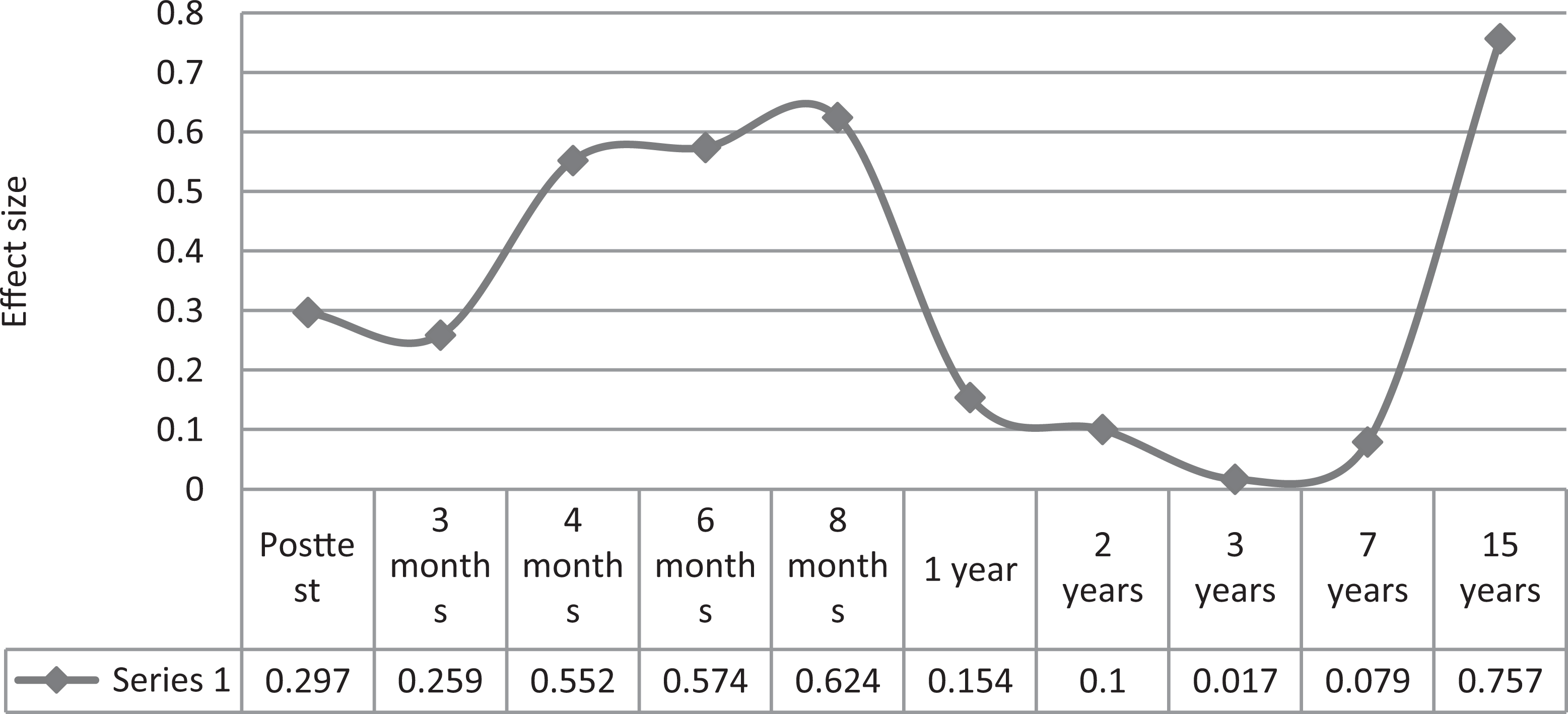
Effect size at different time points.
Measurements and Effectiveness
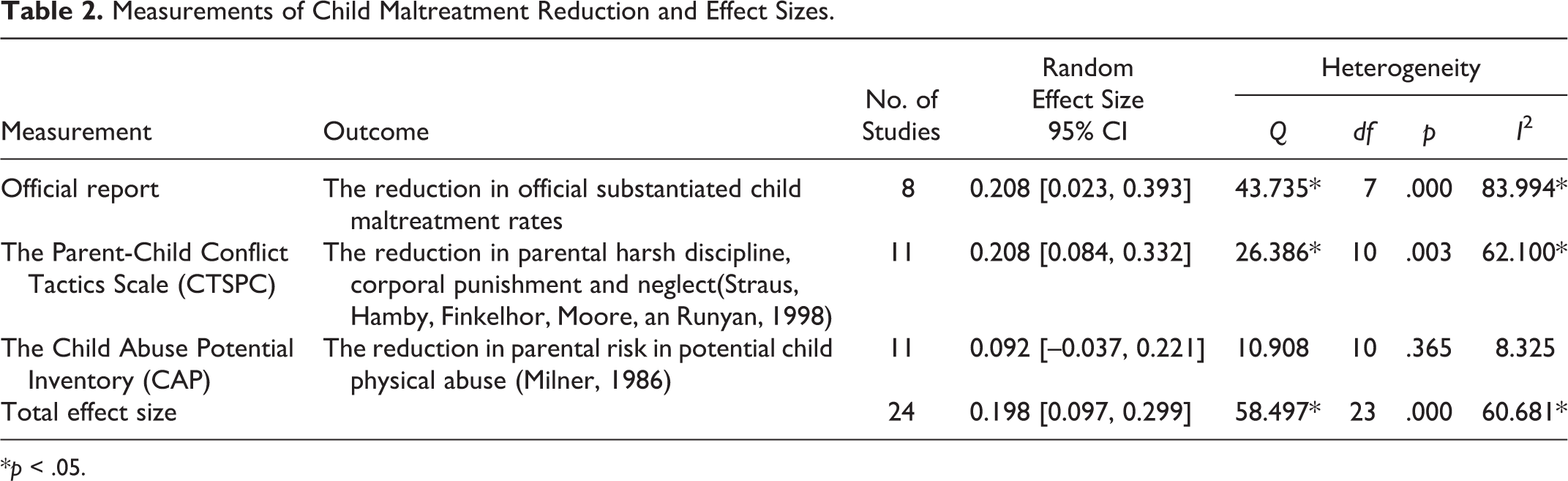
Various instruments were used to evaluate program effects. Table 2 demonstrates the effect sizes of reducing substantiated child maltreatment cases, self-reported child maltreatment, and the potential for child maltreatment. The official substantiated child maltreatment rate is the most direct way to test the reduction in child maltreatment cases. Eight programs used this measurement, with a random effect size of 0.208. The self-reported child maltreatment was measured using Parent-Child Conflict Tactics Scale (CTSPC; Straus, Hamby, Finkelhor, Moore, & Runyan, 1998). Eleven programs used the subscales of psychological aggression, physical assault, and neglect in CTSPC to measure the reduction of parental harsh discipline, corporal punishment, and neglect, with an effect size of 0.208. Due to the relative low incidence of child maltreatment and the difficulty in measuring this phenomenon, 11 programs used the CAP Inventory (Milner, 1986) to measure parental risk in potential child physical abuse, with an effect size of 0.092.
Measurements of Child Maltreatment Reduction and Effect Sizes.
*p < .05.
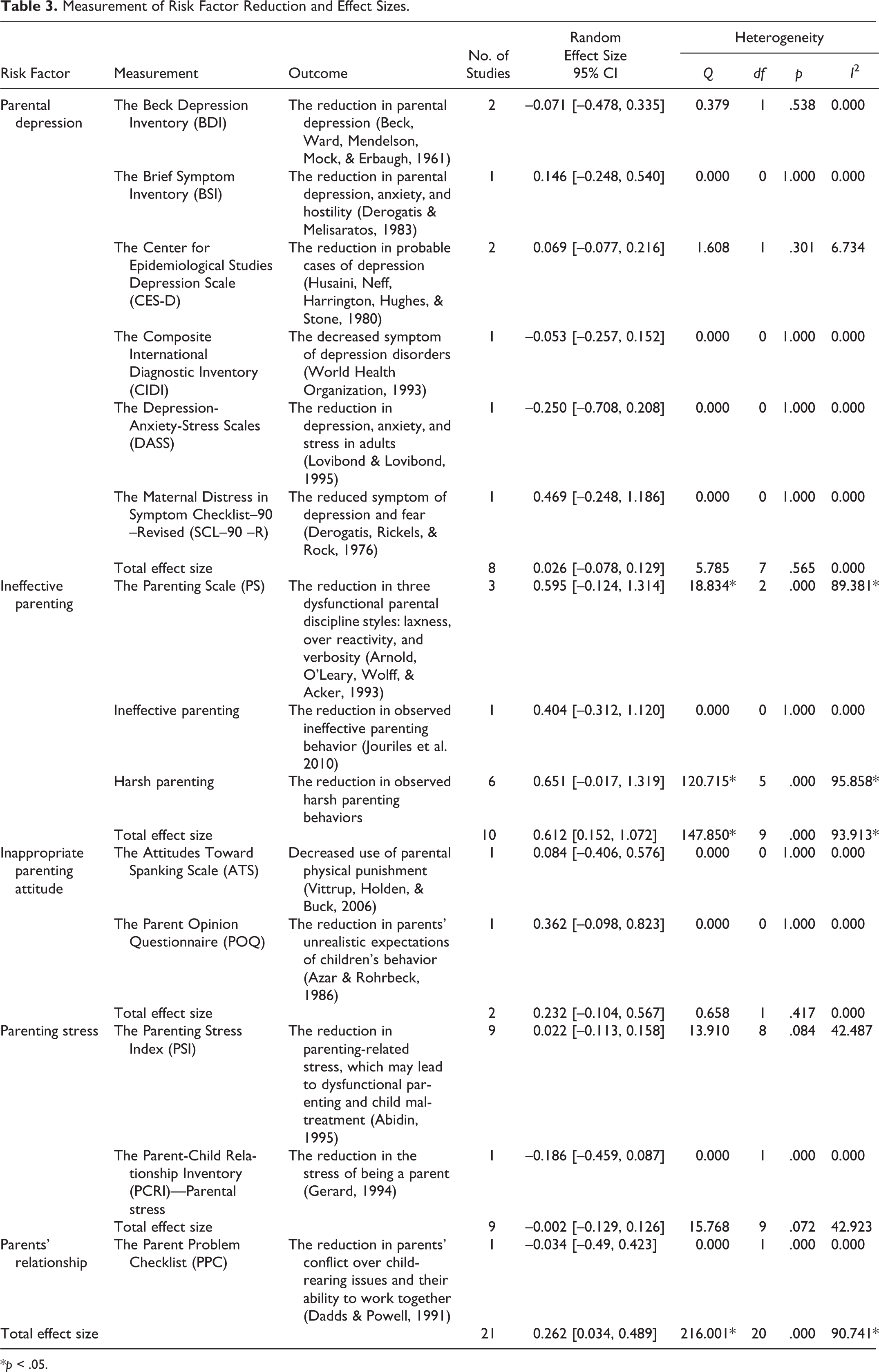
Several parental risk factors were evaluated, including ineffective parenting, parental depression, parental stress, inappropriate parenting attitude, and poor relationship between parents (Table 3). The risk factor “ineffective parenting” was tested in 10 studies using the Parenting Scale (PS; Arnold, O'Leary, Wolff, & Acker, 1993) and by observing negative parenting behaviors. There was a moderate effect on the reduction in ineffective parenting (d = .612).
Measurement of Risk Factor Reduction and Effect Sizes.
*p < .05.
Parental depression was tested in eight studies using various measurements, including the Beck Depression Inventory (Beck, Ward, Mendelson, Mock, & Erbaugh, 1961), the Brief Symptom Inventory (Derogatis & Melisaratos, 1983), the Center for Epidemiological Studies Depression Scale (Husaini, Neff, Harrington, Hughes, & Stone, 1980), the Composite International Diagnostic Inventory (World Health Organization, 1993), the Depression-Anxiety-Stress Scales (Lovibond & Lovibond, 1995), and the Maternal Distress in Symptom Checklist–90–Revised (Derogatis, Rickels, & Rock, 1976). The effect size on the reduction of parental depression was very small (d = .026), and the test of heterogeneity demonstrated that there was little variance between the tests of parental depression (I2 = 0).
Two studies evaluated the reduction of inappropriate parenting attitude using the Attitudes Towards Spanking Scale (Vittrup, Holden, & Buck, 2006) and the Parent Opinion Questionnaire (Azar & Rohrbeck, 1986). There was a small effect size (d = .232) and little variance between the two measures (I2 = 0).
Parenting programs demonstrated minor negative effects on the reduction in parental stress (d = –.002). There was nonsignificant variance between the tests of parental stress (I2 = 0) using the Parenting Stress Index (Abidin, 1995) and the stress scale in Parent-Child Relationship Inventory (PCRI; Gerard, 1994). The effect on poor parents’ relationship was also minor and negative (d = –.034); however, there was only one study evaluating this outcome using the Parent Problem Checklist (Dadds & Powell, 1991).
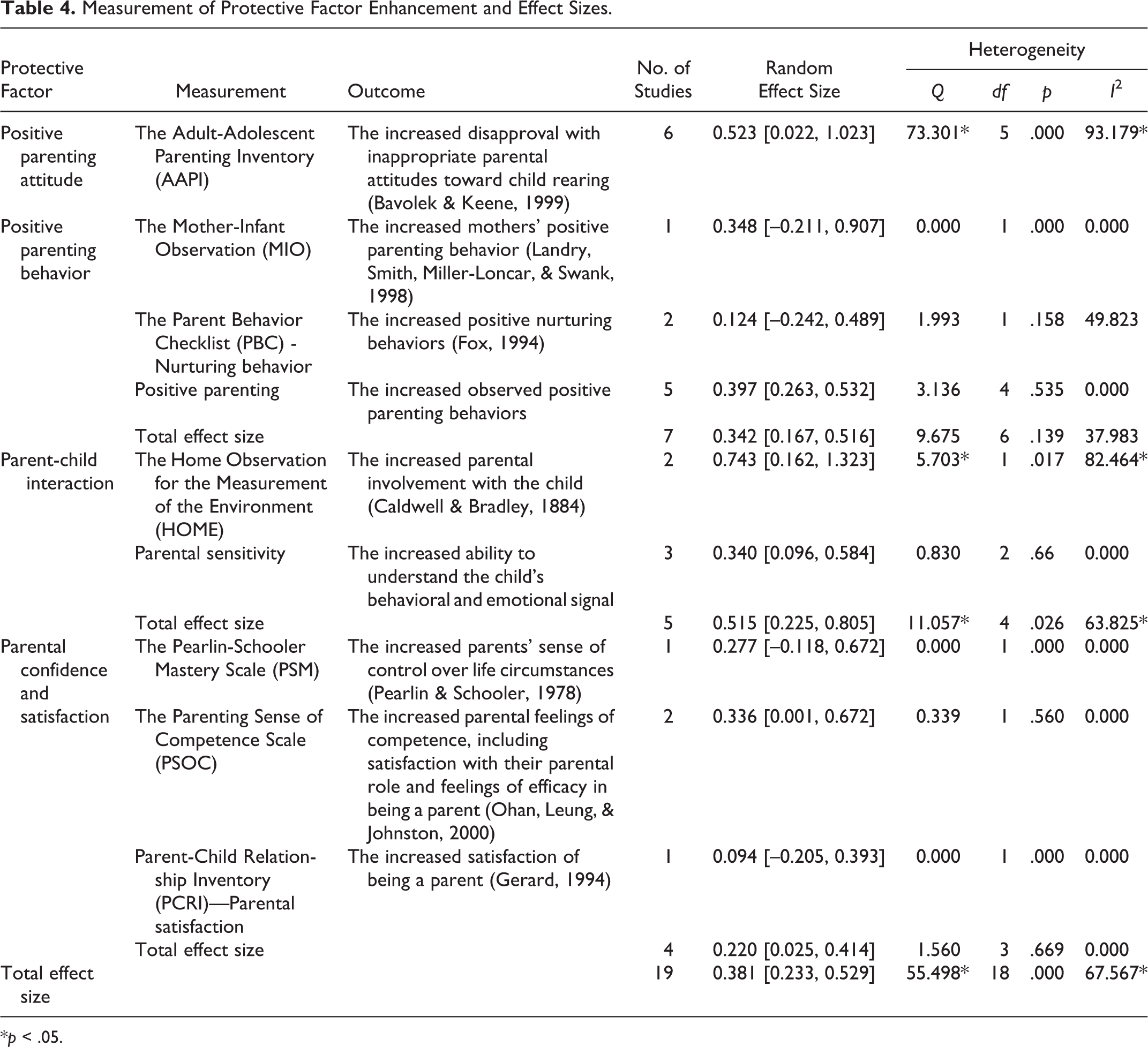
More than half of the studies evaluated the enhancement of parental protective factors, including positive parenting attitudes, parent–child interaction, positive parenting behavior, and parental confidence and satisfaction (Table 4). Six studies used the Adult-Adolescent Parenting Inventory (AAPI; Bavolek & Keene, 1999) and demonstrated increased disagreement with inappropriate child-rearing attitudes (d = .523). Positive parenting behavior was tested in seven studies with the observation method or Mother-Infant Observation (Landry, Smith, Miller-Loncar, & Swank, 1998) and the Parent Behavior Checklist (Fox, 1994). There was also a positive effect on the enhancement of positive parenting (d = .342). Using the Home Observation for the Measurement of the Environment (HOME; Caldwell & Bradley, 1984) and by observing parental sensitivity, parenting programs also found a moderate effect on the enhancement of parent–child interaction (d = .515). The tests of the Pearlin-Schooler Mastery Scale (Pearlin & Schooler, 1978), the Parenting Sense of Competence Scale (Ohan, Leung, & Johnston, 2000), and parental satisfaction in the PCRI demonstrated that parents were more satisfied with their parental role and felt more confident about being a parent (d = 0.22).
Measurement of Protective Factor Enhancement and Effect Sizes.
*p < .05.
The effects of parenting programs in preventing child maltreatment were positive in most outcomes. However, the wide variance in types of measurements used within the studies should be noted. For example, the heterogeneity was highly significant in the group of studies using official child maltreatment reports as an outcome measure (Q = 43.735, p < .05), indicating that the studies did not evaluate the same effect. A possible reason is that child protection services substantiate child abuse reports based on different criteria or experiences. The heterogeneity was also significant within the group of studies using the following measurements: CTSPC (Q = 26.386, p < .05), PS (Q = 18.834, p < .05), AAPI (Q = 73.301, p < .05), HOME (Q = 5.703, p < .05), and observation of harsh parenting (Q = 120.715, p < .05). Significant heterogeneity indicates that there was bias in the studies using these measurements to evaluate the effects of parenting programs.
Program Characteristics as Moderator Variables
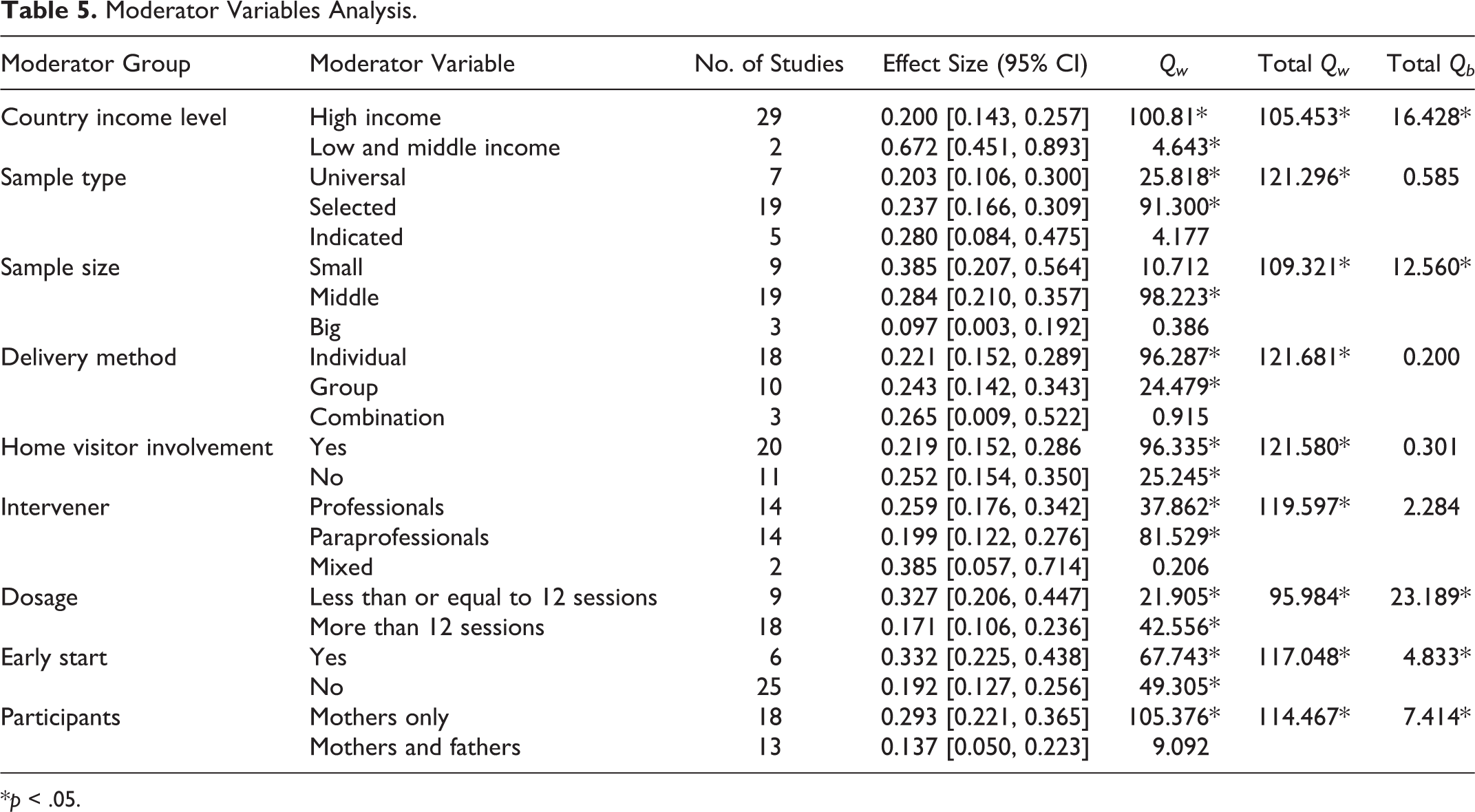
Because there was significant heterogeneity in the effect sizes of the studies, we further examined the influence of probable moderator variables. The studies were divided into groups according to the study and intervention characteristics. Based on the information provided in the studies, nine variables were analyzed for their impact as moderator variables. As shown in Table 5, five moderator variables contributed to between-group variance, namely, country income level (Qb = 16.428, p < .05), study sample size (Qb = 12.56, p < .05), program dosage (Qb = 23.189, p < .05), early start (Qb = 4.833, p < .05), and participant type (Qb = 7.414, p < .05). Other moderator variables, including sample type, service delivery method, the involvement of home visitors, and the qualification of the intervener, did not contribute to significant between-group variance.
Moderator Variables Analysis.
*p < .05.
Publication Bias
For the most part, the studies were distributed symmetrically around the combined effect size (Figure 4). Twenty-eight studies appeared toward the top of the funnel graph and only two studies appeared toward the bottom of the graph. There were only two small studies that published larger effects. A few studies concentrated on the left side of the mean effect size, making the effect size smaller than the unbiased effect size.
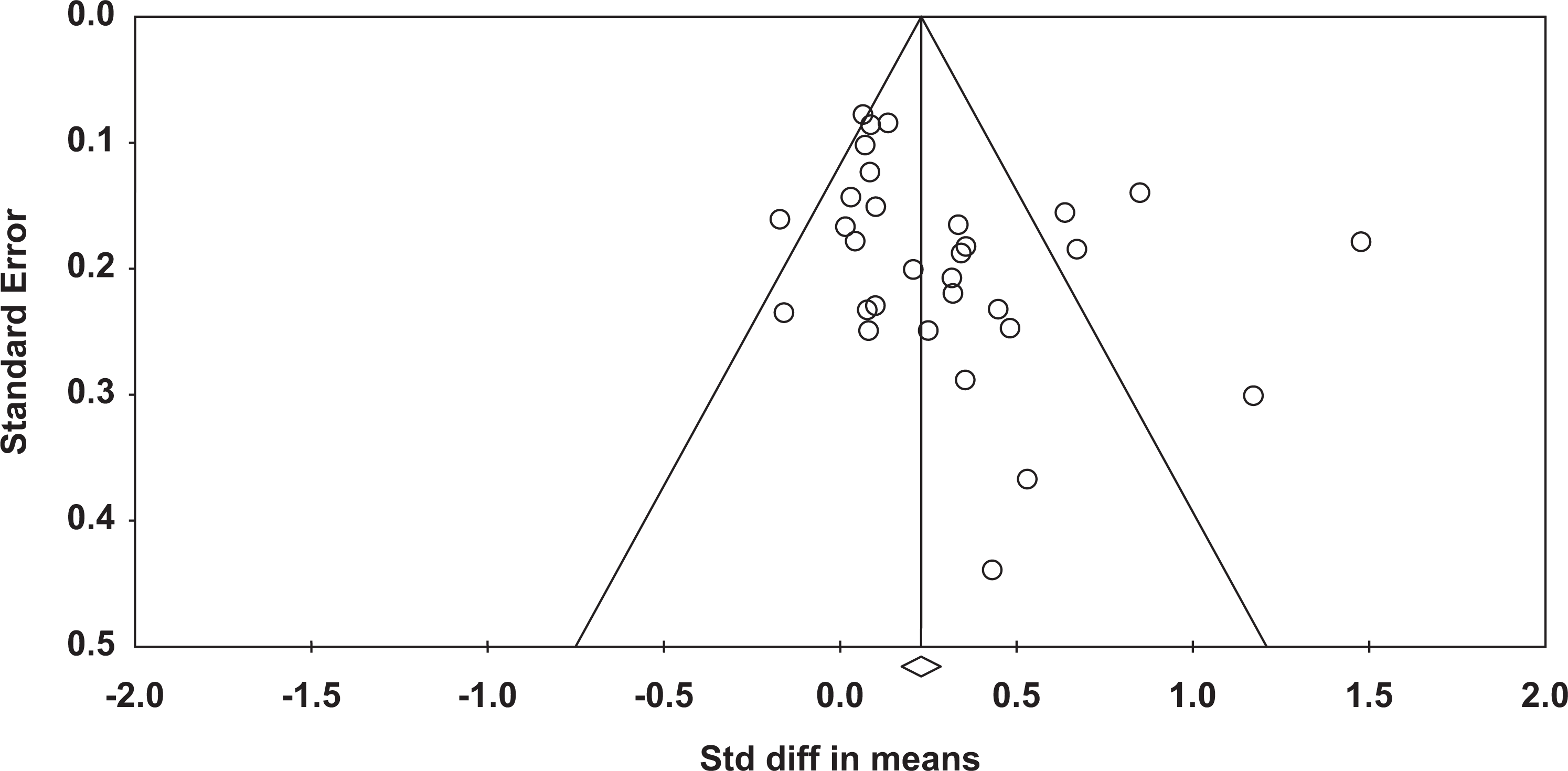
Publication bias.
The test of Egger’s regression and Begg–Mazumdar rank correlation, as the assessments of bias, showed obscure asymmetry in the funnel plot. Trim and Fill was used to estimate the unbiased effect size. Under the random effects model, the unbiased effect size was slightly larger than 0.296, which indicates that there is a tiny gap between the real effectiveness and the calculated effectiveness. The sensitivity analysis showed that after removing one study, the combined effect size ranged from 0.245 to 0.313, indicating that the effects of small studies were rather small.
Discussion
Findings from this meta-analysis demonstrate that parenting programs are effective intervention approaches for preventing child maltreatment. The majority of the studies in the review reporting positive effects demonstrates that parenting programs favor the participants on a set of measures associated with child maltreatment. Although the positive effects of programs with parenting intervention methods have been recognized for over a decade, the field lacked a quantitative integration of the magnitude of the effects. Moreover, due to methodological limitations of previous reviews, which included non-RCTs, the internal validity was weak (Mikton & Butchart, 2009), making conclusions about the effects of parenting programs tentative. However, the present meta-analysis examined the effectiveness of parenting programs based on reliable and valid data from RCTs. Our review is the first to evaluate the effectiveness of parenting programs on a range of outcomes associated with the prevention of child maltreatment. This review also explored the characteristics of studies that might impact program effects.
The results of this study demonstrate that parenting programs may have a long-term positive effect in preventing child maltreatment from posttest to follow-up periods. However, only 13 studies conducted follow-up evaluations, and these program effects were evaluated at 9 different time points. We cannot draw conclusions about variation in program effect over time. In addition, several factors can influence parents’ attitudes and behaviors in the years following the interventions, such as the change of economic status, family structure and size, and social networks, thereby affecting the persistence of program effect.
The effect sizes of different program outcomes varied greatly, and there was also wide variation within the group of studies using the same measurement. The effects were positive for studies using most outcome measures, although there was bias in the use of these measurements. The official child maltreatment reports, CTSPC, and CAP, are the most direct means to measure program effects, and a total of 24 parenting programs employed these measurements. The results of our analysis demonstrate a small but positive effect in reducing the number of substantiated child maltreatment reports, psychological aggression, harsh discipline, corporal punishment, and neglect. The effect size of CAP was particularly consistent (I2 = 8.325). Parents were found to be less likely to maltreat their children after intervention. However, given that the decrease in CAP score might not guarantee the reduction in the probability of future abuse, we should be cautious when applying this finding into practice (Chaffin & Valle, 2003).
Parenting programs are believed to work by reducing changeable parental risk factors associated with child maltreatment, such as parental depression and stress, parents’ inappropriate attitudes toward child rearing, abusive parenting behaviors, insufficient parenting skills, minimal knowledge about child development, and insensitivity. The study further explored the program effects on parental risk factors. In this study, parents demonstrated a reduction in ineffective parenting, including harsh parenting and dysfunctional parenting, which are often viewed as the start of child maltreatment. Harsh parenting is a typical negative parenting strategy that usually leads to serious consequences, such as physical injuries to the child (Gershoff, 2002). Dysfunctions in parenting can have negative effects on child growth and development (Socolar, Winsor, Hunter, Catellier, & Kotch, 1999). Inappropriate parenting attitudes, including attitudes toward the use of corporal punishment and unrealistic expectations of the child’s behavior, also decreased after parenting intervention.
The inability of parents to manage depression and stress is also a factor linked to child maltreatment (Azar & Twentyman, 1986). However, only a small positive effect was found in parenting programs to reduce parental depression, and parents still failed to deal with parental stress after participation. Because there was high homogeneity within the measurements for parental depression and parenting stress, this indicates the limitations of parenting programs—they have almost no effect on parents’ depression and stress. The reason may be that the programs focused on parenting skills rather than how to manage and reduce parental stress. After the intervention, when parents were under more stress, they may have felt more obligations to the child. Thus, parenting programs may be unable to address all parental risk factors related to child maltreatment.
This study finds that parental protective factors were enhanced after participation in parenting programs. Focusing on the resilience factors of individuals, including their potentials, strengths, knowledge and capacities, parenting program is a strengths-based approach to preventing child maltreatment (Saleebey, 1996). Parents were more likely to disagree with inappropriate parenting attitudes and to use positive parenting methods. Parents also became more confident and satisfied in their parental role. The deficits in parenting skills in interacting with children may contribute to several problems of violence (such as child neglect) directed toward children (Palusci, Crum, Bliss, & Bavolek, 2008). After attending parenting programs, the parents learned how to use positive discipline and positively engage in child rearing. These findings demonstrate that parenting programs that incorporate strengths-based approaches to improve parenting achieve effective results (Holzer et al., 2006).
An additional finding worth noting is the moderator variables that contribute to the variance in program effects. We identified 2 developing countries and 28 developed countries that used parenting programs according to the World Bank’s definition of low- and middle-income countries (World Bank, 2014). We determined that the country income level had an impact on the varied effects of parenting programs. Parenting programs effectively prevented child maltreatment in both developed and developing countries, and in this study, it was found that parents in developing countries benefitted more. However, large samples and high dosage of parenting programs may not guarantee favorable effects for the participants.
The starting time of parenting programs influences program effects. Parenting programs that started on or before the prenatal period were helpful in preventing child maltreatment from ever occurring. Compared to programs with mother as the sole participants, the programs involving fathers achieved lower effect size. The finding may indicate that fathers did not gain as much as mothers from parenting program, although fathers play an important role in parenting and the parent–child relationship. Modification of parenting programs to suit fathers may require more attention.
The study finds that parenting programs benefited parents at different levels of risk for child maltreatment. As an effective primary intervention, parenting programs can reach the entire group of parents in the community and prevent the very occurrence of child maltreatment (Chan, 2012). The parenting programs targeted parents that were recognized as being at risk for child maltreatment, and their risk for child maltreatment was reduced after intervention. Parents with a history of child abuse could also get help from parenting programs and see a reduced reoccurrence of child maltreatment.
Parenting programs provided services to parents individually through a home visitor and also provided group training to parents in clinics or service centers. There were 3 parenting programs that combined the two forms of service delivery—the services included both individual home visiting and group parent training (Akai et al., 2008; Sanders et al., 2004; Sawasdipanich, Srisuphan, Yenbut, Tiansawad, & Humphreys, 2010). However, the program effects were not significantly associated with the service delivery method or the use of home visitors. Parents’ risk of child maltreatment decreased after the interventions, regardless of the qualification of the direct service providers of the parenting programs.
The results of this meta-analysis demonstrate that both parent education and home visiting are effective in preventing child maltreatment. However, the limitation of these two kinds of parenting programs should be noted. Home visiting provides services to families within the context of the home, and home visitors help strengthen the attachment between parents and the child. However, the presence of home visitors may lead to surveillance bias and even provide evidence against the hypothesis that home visiting programs prevent child maltreatment (Bilukha et al., 2005; Mikton & Butchart, 2009). In practice, home visiting programs are more costly and labor intensive than parent education programs (Lundahl et al., 2006). Parent education programs can reach a larger population by providing training to a group of parents together. However, we cannot say that parent education programs are more cost effective. Because the effects rely on parents’ self-reports, the actual child maltreatment rate may be underestimated.
Strengths and Limitations
There are several strengths of this meta-analysis. Since there is an increasing demand for “evidence-based” services, we excluded non-RCT studies in order to collect reliable evidence and improve internal validity. We reviewed a sufficient number of studies that used randomized designs to examine parenting programs, and then we confirmed the effectiveness through quantitative synthesis. We specifically focused on parenting interventions instead of providing a general summary of intervention programs (Geeraert, Van den Noortgate, Grietens, & Onghena, 2004; MacLeod & Nelson, 2000) or limiting reviewed studies to those involving home visitation (Sweet & Appelbaum, 2004) or parent training (Lundahl et al., 2006). Our results suggest parenting programs are effective in preventing child maltreatment.
This study measured a range of outcomes, including direct and proxy measures of child maltreatment, and changeable risk factors associated with parenting. We investigated the impact of protective factors from a strength perspective, a novel technique for investigating the effectiveness of intervention programs. Our meta-analysis adds to the understanding of how successful programs work through credible statistical analyses.
There are several limitations of this meta-analysis. One methodological concern is that meta-analyses depend on detailed information that studies report, but we could only obtain a limited amount of information. Most of the studies we included failed to provide all the necessary study or intervention information, and only a few variables were reported. For example, we could not test how socioeconomic status affects the parents’ gains from parenting programs because we could not collect all the necessary data. Most of the studies did not provide information about subgroups within participants, such as the number of parents with disabilities or the number of single parents, preventing more nuanced analyses. Another concern is that this study may not cover all outcomes of parenting programs. The effects on parenting risk factors or protective factors that the included programs did not target are still unknown (Klevens & Whitaker, 2007). Thus, in accord with the test of publication bias, the actual effect sizes may be slightly higher than those reported in this study.
Implications for Practice
The findings of this study demonstrate that parenting programs were not very effective in reducing parental depression and stress, which are risk factors for child maltreatment. We suggest that future programs pay more attention to parents’ mental health. Two parenting programs included in this meta-analysis were conducted in developing countries and proved to be effective. In future research, we suggest that parenting programs be adopted in more low- and middle-income countries because child maltreatment is recognized as a severe and growing social problem in these areas (Knerr et al., 2013). We also suggest that more manpower and material resources be devoted to programs in developing countries.
In this meta-analysis, we confirmed that parenting programs offer an effective strength-based approach to reinforce positive parenting and prevent child maltreatment. Because some risk factors are not easily modified, we suggest trying to solve the problem through strength perspective techniques (example.g., to improve parental skills and sensitivity).
Implications for Research
Researchers should examine what works (and how it works) in the intervention process (for example, the theory that programs are based on), thereby clarifying the mechanisms underlying successful programs. In the future, it will also be important to investigate whether parenting programs reduce the long-term negative impacts of child maltreatment as a kind of tertiary intervention. More studies are needed to study program effectiveness at follow-up periods and discuss how the positive effects may be sustained.
When there is enough data, further moderator analyses are needed because there is still wide variance within single moderator variable groups. It would also be meaningful to explore whether focusing on a special group of people increases the efficacy of intervention programs. For example, because parents with disabilities are at a greater risk of maltreating children (Hughes et al., 2012), effective and evidence-based interventions for that population are needed.
Conclusion
Child maltreatment is a serious public health problem. The current meta-analysis integrated evidence and demonstrated that parenting programs effectively prevent child maltreatment by reducing risk factors and enhancing protective factors. Specifically, parenting programs can be used as effective primary, secondary, and tertiary interventions for child maltreatment. Moreover, parental interventions were accessible in high-income countries and in low- and middle-income countries. However, more research is needed to evaluate follow-up effects and the impact of moderator variables. Finally, it is necessary to explore the application of parenting programs for special groups of people by collecting more data.
Footnotes
Declaration of Conflicting Interests
The author(s) declared no potential conflicts of interest with respect to the research, authorship, and/or publication of this article.
Funding
The author(s) received no financial support for the research, authorship, and/or publication of this article.