



Abstract
Objective:
To explore aftercare services provided to child victims of sex trafficking globally based on the results of a systematic review of published and unpublished research, organizational policy, and current practice. This systematic review serves as a first step toward developing best practices for aftercare service providers.
Method:
A systematic search was conducted of four English language databases, two human trafficking resource libraries, and one Internet search engine for journal articles and “grey” literature published between January 2000 and May 2013 on the services offered to child sex trafficking victims globally. The search yielded 15 documents for inclusion in the review.
Results:
The 15 documents emphasized the need for aftercare service provision to be founded on children’s rights and trauma-informed service provision. They recommended delivery practices such as case management and multidisciplinary, multiagency and multinational coordination to ensure the child victims benefit fully from the services. The systematic review revealed that there are three phases to aftercare service provision: rescue, recover, and reintegration. Each of these phases is characterized by different needs and types of services provided. The recovery phase received the most attention compared to recovery and reintegration phases.
Conclusion:
The literature highlighted that aftercare service provision for child sex trafficking victims is a new area that needs an evidence base from which policy and practice can be formed. There is great need for further research and better documentation of service provision. While this research provides insight into this area, the gap in literature remains wide. The area of aftercare service provision for children who have been trafficked has experienced phenomenal growth within the last 10 years, and with more research and resources being directed to the area, the achievement of international minimum standards of care provision is possible.
Key Points of the Research Review
There is a small evidence base highlighting the negative outcomes of commercial sex trafficking on child victims globally such as negative mental health, physical health, sexual health, and behavioral outcomes.
This systematic review highlights that in order to treat these outcomes, a combination of aftercare services should be provided which cater to the child victim’s psychosocial, legal, medical, and basic needs.
The review highlighted that aftercare services are offered within three stages beginning with rescue then recovery and ending in successful reintegration of the children.
These services need to be trauma informed and children’s rights centered. Furthermore, in order to ensure the children benefit fully from the services, aftercare services need to have comprehensive case management systems as well as multidisciplinary, multiagency, and, where necessary, multinational coordination of efforts.
Introduction
Human Trafficking is a multi-billion dollar industry that profits from the enslavement and commoditization of approximately 20.9 million people all over the world, and many of them are children (United Nations Office on Drugs and Crime [UNODC], 2012). The International Labor Organization (ILO) estimates that every year 1.8 million children are trafficked, with girls representing approximately two-thirds of victims (ILO, 2004; UNODC, 2012). The United Nations Convention on the Rights of the Child defines child as “a human being below the age of 18 years unless under the law applicable to the child, majority is attained earlier” (UN, 1989, Article 1). The largest percentages of child trafficking victims (CTVs) come from Africa and the Middle East (UNODC, 2012). Research has shown that children are trafficked for various reasons including commercial sexual exploitation (Centre for Social Justice [CSJ], 2013; Bastia, 2005; Shannon, 1999; UNODC, 2012), forced labor (ILO, 2004), domestic labor (UNICEF, 2012), illegal adoptions (UNICEF, 2001), and organ removal (Ray, 2007) as examples. The most common form of trafficking is commercial sexual exploitation of children (CSEC) or child sex trafficking which accounts for up to 58% of all trafficking cases (UNODC, 2012) and includes child pornography (End Child Prostitution, Child Pornography and Trafficking of Children for Sexual Purposes [ECPAT], 2001; Flowers, 2001; Reid & Jones, 2011), prostitution of children (CSJ, 2013), child marriage (Rafferty, 2007a), begging (USA State Department, 2012), use of children in live sex shows (ILO, 2004), and the exchange of sex with teenagers for gifts (Ho, 2003). The ILO categorizes CSEC as among the worst forms of child labor (ILO, 2004). Key acronyms are presented in Table 1.
Key Acronyms.

International Policies on Trafficking
Trafficking policy varies from country to country at local, national, and international levels. At the international level, policies on child trafficking are found in The Protocol to Prevent, Suppress and Punish Trafficking in Persons, Especially Women and Children (The Palermo Protocol) (UN, 2000); The Stockholm Agenda for Action against CSEC (United Nations Children’s Fund [UNICEF], 1996); The African Charter on the Rights of the Child (African Member States of the Organization of African Unity, 1999); and the Council of Europe Convention Against Trafficking in Human beings (Council of Europe, 2005). The Palermo Protocol is legally binding for the countries that have ratified it. Additionally, national policies on human trafficking are based on the Palermo Protocol.
The Palermo Protocol was adopted by countries in 2003, and to date it has been signed by 155 countries (UN, 2013) of which only 15 have ratified it (UNODC, 2013). Despite the low ratification status of the Palermo Protocol, currently 134 countries and territories have enacted the criminalization of trafficking in persons (UNODC, 2013). It is the first international treaty that has a legally agreed upon definition of trafficking in human beings. “Trafficking in persons’ shall mean the recruitment, transportation, transfer, harboring, or receipt of persons, by means of the threat or use of force or other forms of coercion, of abduction, of fraud, of deception, of the abuse of power, or of a position of vulnerability or of the giving or receiving of payments or benefits to achieve the consent of a person having control over another person, for the purpose of exploitation. Exploitation shall include, at a minimum, the exploitation of the prostitution of others or other forms of sexual exploitation, forced labor or services, slavery or practices similar to slavery, servitude or the removal of organs” (UN, 2000 p. 1).
Consequences of Trafficking for Child Victims
The conditions under which CSTVs are kept expose them to many dangers, and there are often significant health and well-being outcomes for these children. As a result of the physical abuse and the constant rapes, CSTVs may have untreated wounds, scars, and bruises on their bodies involving sexual organs (ECPAT, 2006). They sometimes present with complex physical health problems that are dermatological, neurological, musculoskeletal, gastrointestinal, and/or gynecological (Oram, Ostrovschi et al., 2012). These include chronic pain in the head, stomach, back, and pelvis; fatigue; dizzy spells; skin conditions; dental problems; sensory problems; heart disturbances; and weakened immunity (Banovic & Bjelajac, 2012; Kleinschmidt, 2009; Oram, Stöckl, Busza, Howard, & Zimmerman, 2012; Oram, Ostrovschi et al., 2012; Zimmerman et al., 2008; Zimmerman, Hossain, & Watts, 2011).
The reluctance of abusers to use condoms and, in fact, sometimes pay more not to use one leaves CSTVs exposed to sexually transmitted disease and infections including HIV/AIDs, Chlamydia, genital warts, genital herpes, urinary tract infections, scabies, gonorrhea, syphilis, human papillomavirus which causes cervical cancer, and Hepatitis A, B, and C (Banovic & Bjelajac, 2012; ECPAT, 2001; Flowers, 2001). The odds of HIV infection were found to be higher among children and women trafficked as children, whereas longer periods of exploitation were associated with higher odds of HIV infection (Oram, Stöckl et al., 2012). Sexually transmitted infections (STIs) will often go undetected and untreated, or they may be treated using crude methods or outdated drugs (ECPAT, 2006). Lack of condom use also leads to pregnancy, and many child survivors experience the risks and complications caused by illegal abortions (Flowers, 2001). In addition, little is known about children who may be born to trafficked child mothers.
CSTVs may exhibit multiple psychological symptoms as a result of the constant physical, emotional, and sexual abuse that they experience. The most reported symptoms are depression, anxiety, and post traumatic stress disorder (PTSD; Banovic & Bjelajac, 2012; Cecchet, 2012; ECPAT, 2001; Flowers, 2001; Kleinschmidt, 2009; Oram, Stöckl et al., 2012; Rafferty, 2007b; Zimmerman et al., 2011). Research on trafficking victims in Moldova found that 16.7% were clinically diagnosed with depression, while 35.8% were diagnosed with PTSD (Oram, Stöckl et al., 2012). A systematic review of trafficking psychological outcomes revealed that 48–97.7% of trafficking victims exhibited anxiety symptoms, 54.9–100% exhibited depression symptoms, and 19.5–77.7% exhibited PTSD symptoms (Oram, Stöckl et al., 2012). Higher depression and anxiety levels were associated with longer periods of exploitation, while violence and injuries sustained during trafficking were associated with an increased risk of higher levels of PTSD, depression, and anxiety (Oram, Stöckl et al., 2012). PTSD symptoms reported by CSTVs include nightmares, flashbacks, hypersensitivity, and dissociation (Banovic & Bjelajac, 2012; Rafferty, 2007b).
Other psychological outcomes of CSEC are feelings of shame, guilt, fear, shock, distress, disorientation, confusion, panic, helplessness, anger, hopelessness, and worthlessness (Banovic & Bjelajac, 2012; ECPAT, 2001; Flowers, 2001; Kleinschmidt, 2009; Rafferty, 2007b; Williams, 2008). This is sometimes accompanied by suicidal ideation (Flowers, 2001). Furthermore, as a result of the use of drugs and alcohol to control them, CSTVs often develop addictions to drugs and alcohol as both a coping and a self-harming mechanism to deal with the trauma of their exploitation (ECPAT, 2001; Flowers, 2001; Fong & Berger Cardoso, 2010; Macy & Johns, 2011). Research in East Africa found that a fifth of trafficking victims reported drug abuse (Zimmerman et al., 2008).
Additionally, CSTVs can experience cognitive problems such as memory loss, difficulty planning, and difficulty overcoming daily problems (Banovic & Bjelajac, 2012; Oram, Stöckl et al., 2012; Oram, Ostrovschi et al., 2012; Zimmerman et al., 2008).
The consequences of sex trafficking for children also extend into interpersonal relationships. Research has shown that CSTVs can experience difficulties in interpersonal interaction such as mistrust of others and attachment problems (Banovic & Bjelajac, 2012; Rafferty, 2007b). In a study with aftercare service providers (Williams, 2008), many described victims as being very mistrusting and unable to form relationships, while others reported that the victims formed attachments very easily. The former leads to social isolation and difficulty adjusting to life in society, and the latter places the victim at a higher risk of retrafficking or abuse (Williams, 2008). CSTVs can also sometimes exhibit increased sexualized behaviors that may also put them at risk for further abuse (Rafferty, 2007b).
Research has shown that many CSTVs also exhibit antisocial behavior with high levels of aggression and hostility (Banovic & Bjelajac, 2012; Rafferty, 2007b). Aggression and hostility are often underreported in case files and research (Zimmerman et al., 2011). The aggression is sometimes turned inward through self-harm acts such as heavy cutting, extinguishing cigarettes on the skin, self-hitting, banging the head, and abuse of drugs and alcohol among other forms of self-harm (Banovic & Bjelajac, 2012; Kleinschmidt, 2009; Rafferty, 2007b). Children who have experienced abuse also have a higher risk of becoming abusers themselves or entering into abusive relationships (Holt, Buckley, & Whelan, 2008) and also of engaging in trafficking of other people including children (United Nations Voluntary Trust Fund for Victims of HumanTrafficking, 2012).
As a result of them bonding with their traffickers, CSTVs may sometimes return to their traffickers even after they have been rescued (Bokhari, 2008; ECPAT, 2006). Cecchet (2012) found that, despite all the abuse they had suffered at the hands of their traffickers, 80% of her participants were still in touch with their traffickers years after their escape from sex trafficking. Research revealed that children and adolescents are at a higher risk for retrafficking, especially within the first 2 years of their escape/rescue (Zimmerman et al., 2011).
Although there is a growing body of research documenting the far-reaching negative consequences of sex trafficking on children, very little research exists documenting the provision of aftercare services. Macy and Johns (2011) identified a need for more comprehensive guidelines based on a systematic review of aftercare services for victims of human trafficking in United States. While their research yielded results that have helped fill the gap in the literature they identified, there is a need for further similar studies specifically for children. This study is the first to systematically document and analyze the existing evidence base on aftercare services for children who have been trafficked for commercial sexual exploitation.
Method
This systematic review examined peer-reviewed journal articles and unpublished gray literature produced from January 2000 to May 2013 on aftercare services for CSTVs. A comprehensive search of four databases including PubMed/Medline, PsycINFO, SocINDEX, and Social Services Abstracts (SSA) was undertaken using the key words and synonyms for “child,” “trafficking,” and “aftercare.” In addition, key websites and online resource libraries including Google Scholar, childtrafficking.com (CT.com), and humantraffickingsearch.net (HTS.net) were searched. A manual search of the references in each included document was also conducted to identify additional articles and reports that met the inclusion criteria. Finally, organizations that provide aftercare services were contacted to identify additional grey literature material.
The inclusion criteria are presented in Table 2. As the information in this field is limited, the inclusion criteria and search terms (Table 3) were kept broad to incorporate as many documents as possible. Moreover, due to the scarcity of literature on the topic, the review included documents that discuss services for victims of internal trafficking or both internal and international trafficking. In addition, since there was a limited amount of information that focused solely on child victims, the review included documents discussing aftercare services for both adult and minor victims.
Inclusion Criteria.

Search Terms.

Figure 1 represents a flow diagram of the document selection process. If the abstracts seemed to meet the inclusion criteria, the full article or document was retrieved and reviewed to determine if it continued to meet the inclusion criteria. Reasons for exclusion included irrelevant documents, full-text unavailable, non-English language documents, conference proceedings, and dissertations.

Flow diagram of document selection process.
Methodological Limitations
Every effort has been made to reduce the risk of bias in this systematic review. Despite this, several limitations exist. First, the articles were assessed against the inclusion criteria, included or excluded, and reviewed by one author. Second, this review did not include documents written in languages other than English. Even greater limitations may exist on the comprehensiveness of the grey literature research included in the review. Key organizational websites and international and local non-governmental organizations (NGOs) were accessed to identify literature, but gaps in grey literature most certainly exist. Finally, since many of the included documents are policies and guidelines, it is difficult to determine the quality of existing services. No systematic quality assessment was undertaken of the included publications. More detailed empirical work is needed in this field to determine the key components or active ingredients to quality service provision across cultures and contexts compared with what is happening in practice and the impact of services on survivors, families, and communities.
Results
Overall
The systematic review yielded 15 viable documents. A summary of these is available in Table 4. Four of these documents are journal articles in peer-reviewed journals (Kaufman & Crawford, 2011; Macy & Johns, 2011; Simeunovic-Patic & Copic, 2010; Wirsing, 2012). The other 11 are reports/guidelines; two are documents from government institutions (Blue BlindFold, 2012; Wölte & Tautz, 2007); three are from local/regional nonprofits (Asquith & Turner, 2008; Rigby, Malloch, & Smith, 2012; South Asia Regional Initiative [SARI], n.d.); and the remaining six are by international nonprofit organizations (Frederick, 2005; ILO, 2006; International Organization for Migration [IOM], 2004; Thompson, G. n.d.; UNODC, 2007; Van der Keur, 2013). Eleven of the included publications were country level (Switzerland, Ireland, Nepal, USA, Serbia, Cambodia, and Germany), one was regional (Asia), and the remaining three had an international focus. Of the included publications, seven were specific to child victims (Asquith & Turner, 2008; Blue BlindFold, 2012; ILO, 2006; Rigby et al., 2012; Thompson, G. n.d.; Van der Keur, 2013; Wölte & Tautz, 2007), one addressed the needs of female victims (Frederick, 2005), and the remainder addressed all victims. Six of the documents were specific to sex trafficking victims (Asquith & Turner, 2008; Kaufman & Crawford, 2011; Macy & Johns, 2011; Thompson, G. n.d.; UNODC, 2007; Van der Keur, 2013; Wölte & Tautz, 2007), while the rest included other forms of abuse or trafficking.
Overview of Included Documents.

Note. MoSAVY = Ministry of Social Affairs, Veterans, and Youth Rehabilitation; VCT = Voluntary Counselling and Testing; IJM = International Justice Mission; GED = General Educational Development; NGO = non-governmental organization; INGO = international nonprofit organizations; IOM = International Organization for Migration; STI = sexually transmitted infection; ILO = International Labor Organization; UNODC = United Nations Office on Drugs and Crime.
Findings on aftercare for child victims of trafficking are grouped into five main categories: (1) guiding principles for aftercare services, (2) comprehensive and coordinated case management, (3) rescue, (4) recovery, and (5) reintegration.
Guiding Principles for Aftercare Services
Trauma-informed care
Most of the literature was in agreement that trauma-informed service provision is necessary for all aftercare services for CSTVs (Asquith & Turner, 2008; Blue BlindFold, 2012; Frederick, 2005; ILO, 2006; IOM, 2004; Macy & Johns, 2011; Rigby et al., 2012; SARI, n.d.; Simeunovic-Patic & Copic, 2010; Thompson, G. n.d.; UNODC, 2007; Van der Keur, 2013; Wirsing, 2012; Wölte & Tautz, 2007). Macy and Johns (2011) stated that trauma-informed care is a new but necessary development in caring for victims of various forms of violence. This is based on the premise that all care systems and practices should be adapted to account for the violent experiences of victims of violence resulting in victims engaging better with the services. Two publications recommended that all service providers should be trained in, and regularly renew their knowledge of, physical and mental health effects of trauma and should develop skills to foster sensitivity to CSTVs’ needs (IOM, 2004; Wölte & Tautz, 2007). Service providers were urged to ensure that their partner agencies are also trained in trauma-informed services. STOP-IT Chicago ensures this by providing trainings for their staff and their partner organizations (Wirsing, 2012). Trauma-informed practices are also aimed at avoiding revictimization of CSTVs (Frederick, 2005; Simeunovic-Patic & Copic, 2010; UNODC, 2007; Wölte & Tautz, 2007). For example, having trained psychologists and social workers perform any assessments involving disclosure of the abuse and exploitation reduces chances of revictimization suggesting that revictimization rate may increase when assessors are untrained (Frederick, 2005). There are five elements of trauma-informed services identified by Macy and Johns (2011): (i) priority to victim’s physical and psychological safety, (ii) simultaneously addressing cooccurring problems, (iii) empowerment philosophy in service delivery, (iv) building resilience, (v) placing as much control and choice on CSTVs as possible, and (vi) minimizing potential for revictimization
Rights-based care
The need for human rights to be at the core of all service provision of aftercare services is emphasized in all the documents included in this systematic review (Asquith & Turner, 2008; Blue BlindFold, 2012; Frederick, 2005; ILO, 2006; IOM, 2004; Kaufman & Crawford, 2011; Macy & Johns, 2011; Rigby et al., 2012; SARI, n.d.; Simeunovic-Patic & Copic, 2010; Thompson, G. n.d.; UNODC, 2007; Wirsing, 2012; Wölte & Tautz, 2007) building upon article 3 of the United Nations Convention on the Rights of the Child (UNCRC; UNICEF, 2005) which states that at all times the child’s best interests should be considered (Asquith & Turner, 2008; Blue BlindFold, 2012; Frederick, 2005; IOM, 2004; Wölte & Tautz, 2007). For example, when considering repatriation of the child, Blue BlindFold (2012) recommended that an assessment of the child’s country be made to ensure that the child is returning to a safe environment.
The documents highlighted that children in care should be made aware of their rights (Asquith & Turner, 2008; Frederick, 2005; ILO, 2006; Simeunovic-Patic & Copic, 2010; UNODC, 2007). This validates that the child is a victim of exploitation and not a criminal or an accomplice (UNODC, 2007). Simeunovic-Patic and Copic (2010) explain that CSTVs have been placed in a position of vulnerability, and being made aware of their rights and assisting them to access these rights puts some form of control back in the child’s hands. ILO (2006) recommends that this awareness of rights be paired with being informed of their responsibilities as well.
Four publications emphasized that all service providers, doctors, social workers, police, lawyers, psychologists, and members of staff in care providing organizations, should have knowledge and full understanding of children’s rights (Asquith & Turner, 2008; Frederick, 2005; ILO, 2006; Simeunovic-Patic & Copic, 2010; UNODC, 2007). This enables them to communicate the children’s rights to CSTVs. ILO (2006) provides an illustration of how not knowing CSTVs’ rights can be detrimental to their healing and can cause harm. For example, a shelter may keep a child confined in the shelter in the name of “child protection” without knowing that they are violating the child’s right to freedom of movement and the right to access community and family (ILO, 2006).
Five publications were in agreement that CSTVs have a right to receive care without being discriminated against (Blue BlindFold, 2012; ILO, 2006; IOM, 2004; UNODC, 2007; Wölte & Tautz, 2007). Service providers should endeavor to provide the best possible assistance to victims of trafficking without discrimination on the basis of gender, age, disability, colour, social class, race, religion, language, political beliefs or status (IOM, 2004, p. 48). This is in line with article 2 of the UNCRC (UN, 1989)
Citing article 6 of the UNCRC (UN, 1989), four of the documents included in the review stressed that CSTVs’ right to privacy should be respected by all service providers (Frederick, 2005; IOM, 2004; Macy & Johns, 2011; Wölte & Tautz, 2007). As Frederick (2005) explains, CSTVs have experienced intense violence, and having information of their experience and exploitation can not only aggravate their psychological and social problems thus affecting their healing process but it can also cause them to experience stigmatization or rejection in society or may place them in danger of being found by their traffickers. IOM (2004) expound that the confidentiality of the victim’s information must be kept from the first point of encounter to the end/reintegration, with information only being shared on a “need to know” basis and with the victim’s consent.
Comprehensive and Coordinated Case Management
Case management and interagency cooperation should take place throughout the variety of aftercare services provided to CSTVs, but for the purposes of drawing out key findings from the review, it is presented as a separate section here.
Needs Assessment
There is consensus among the publications included in this review that upon intake, a needs assessment should be conducted as soon as possible (Frederick, 2005; UNODC, 2007; Van der Keur, 2013). Three publications recommended that it should be conducted in a sensitive manner by a trained professional, taking great care to get as much detail as possible without pushing the child and with consideration of their psychological and physical state (Frederick, 2005; ILO, 2006; Macy & Johns, 2011). Macy and Johns (2011) advised that the assessment should include information on the exploitation as well as the history of the child (such as background, family structure, and life before exploitation). Where possible, the needs assessment should be conducted in the child’s preferred language (UNODC, 2007). It should begin during intake and should be constantly updated and revised until the end of service provision (ILO, 2006). It is an assessment of the child’s physical, psychological, social, legal, literacy, and protection needs (Frederick, 2005; ILO, 2006). This information is useful in helping to determine the best interests of the child and formulation of care plans (UNODC, 2007). Several of the reviewed documents strongly advised that care plans should be individualized, and their planning should involve the victims’ participation as much as possible while also considering the developmental capabilities of the child (Asquith & Turner, 2008; Blue BlindFold, 2012; ILO, 2006; Van der Keur, 2013). This respects the child’s participation rights as outlined by article 4 of the UNCRC (UN, 1989). ILO (2006) recommended that in case of any transfers of the child to another facility, the information from the needs assessment should accompany the child to the new care facility.
Case management
A key finding from the literature is that comprehensive case management is a crucial component in the provision of aftercare services to CSTVs (Frederick, 2005; ILO, 2006; Macy & Johns, 2011; SARI, n.d.; Van der Keur, 2013; Wirsing, 2012; Wölte & Tautz, 2007). It is a system of managing each individual child’s recovery and integration process (ILO, 2006). Usually, case management begins upon intake at which point a case file should be opened for each child (Frederick, 2005; SARI, n.d.). In these instances, the case manager, who is assigned to each case file, is in charge of data gathering, record keeping, reporting, and the sharing of information where relevant. The case manager coordinates service provision based on the needs identified in the needs assessment (IOM, 2004; Macy & Johns, 2011). The case manager can be a source of continuity and emotional support for the child. Additionally, the case manager leads the case management team which is a small group of professionals involved meeting the psychological, legal, physical health, social welfare, educational, and economic needs of the child (ILO, 2006; Wölte & Tautz, 2007). It is a multidisciplinary team, with representatives from within the shelter/care organization and partner agencies. To facilitate the operation of the case management team, regular case meetings/case conferences are necessary (Frederick, 2005; ILO, 2006; IOM, 2004). Case meetings should ensure that the care plan is regularly considered and updated (Frederick, 2005). Effective case management should contribute to successful recovery and reintegration of CSTVs. An example of the use of a case management system is STOP-IT Chicago’s Trafficking Information Management System (TIMS). This system enables STOP-IT Chicago to document and track services offered to their clients using the service provision units designated by the US Department of Justice, Office for Victims of Crime (Wirsing, 2012). Research found that poor case management was associated with a higher risk of retrafficking (Van der Keur, 2013).
Multidisciplinary, multiagency, and multinational work for holistic healing
The literature consistently showed that meeting the needs of CSTVs is a multidisciplinary, multiagency, and at times multinational effort (Asquith & Turner, 2008; Blue BlindFold, 2012; Frederick, 2005; ILO, 2006; IOM, 2004; Kaufman & Crawford, 2011; Macy & Johns, 2011; Rigby et al., 2012; SARI, n.d.; Simeunovic-Patic & Copic, 2010; UNODC, 2007; Wirsing, 2012; Wölte & Tautz, 2007). It is the best way of ensuring that recovery and reintegration services are successful and sustainable and result in comprehensive, flexible, and effective service provision (Asquith & Turner, 2008; Van der Keur, 2013). Examples of NGO-government cooperation in the literature are NGO officials accompanying police officers on raids and rescue missions to ensure the victims are protected (UNODC, 2007), IOM offering voluntary repatriation services for victims identified through national referral mechanisms (Blue BlindFold, 2012; Simeunovic-Patic & Copic, 2010; Van der Keur, 2013), and Cambodian government’s Ministry of Social Affairs, Veterans, and Youth Rehabilitation working as a referral system and overseeing the work of NGOs providing aftercare services for CSTVs (Van der Keur, 2013). Two publications disclosed that NGOs also play a vital role in building up national protection systems where there were previously none (Simeunovic-Patic & Copic, 2010; Van der Keur, 2013). According to the literature sharing of knowledge, cooperation and networking among organizations are necessary in order to provide holistic services for CSTVs (IOM, 2004; Van der Keur, 2013; Wirsing, 2012). The literature showed that some organizations may provide a wide range of services, while others specialize in meeting one type of need such as shelter or legal aid. Regardless of the scope of the organization, no one service provider is fully self-sufficient. STOP-IT Chicago explains their role as being one of provision of services and service connections. In doing so, the client’s best interests are at the forefront of their work. Thus, networking should be a key element of service provision, as organizations make new contacts to meet each client’s unique needs (Wirsing, 2012).
Monitoring and evaluation
The literature was clear regarding the need for rigorous and constant monitoring and evaluation of aftercare programs (Asquith & Turner, 2008; Crusto et al., 2010; Frederick, 2005; ILO, 2006; IOM, 2004; Macy & Johns, 2011; Rigby et al., 2012; Simeunovic-Patic & Copic, 2010; Thompson, G. n.d.; Van der Keur, 2013; Wölte & Tautz, 2007). Under article 25 of the UNCRC, children have the right to have treatment offered to them by care providers and institutions regularly reviewed (UNICEF, 2005). Monitoring aids in identifying abuse of CSTVs by care providers (Frederick, 2005) and evaluation is used to inform policy and practice (Asquith & Turner, 2008). Systems of self-regulation should be in place in all care organizations (Frederick, 2005; IOM, 2004). According to Thompson, G. n.d. this is not adequate for ensuring that quality care standards are maintained. He recommended that a system of independent or external monitoring and evaluation should be developed. The literature indicated that in some countries governments monitor NGOs providing aftercare services (ILO, 2006; Simeunovic-Patic & Copic, 2010; Van der Keur, 2013), while in other situations NGOs monitor the government’s service provision (Van der Keur, 2013). Additionally, donors can play a key role in monitoring and evaluating care providing organizations (ILO, 2006).
Recommended Aftercare Services
There is a wide range of aftercare services that are offered and recommended for CSTVs. Based on findings from the review, we can place these recommended services into three phases, rescue, recovery, and reintegration. A summary of these is available in Figure 2 and Table 5. The three phases are not exclusive and may sometimes overlap. Rescue begins the aftercare process, and it ends when CSTVs are fully integrated into society. Depending on organizational policies and types of service provision, it may last anywhere between a few days and 10 years or more.
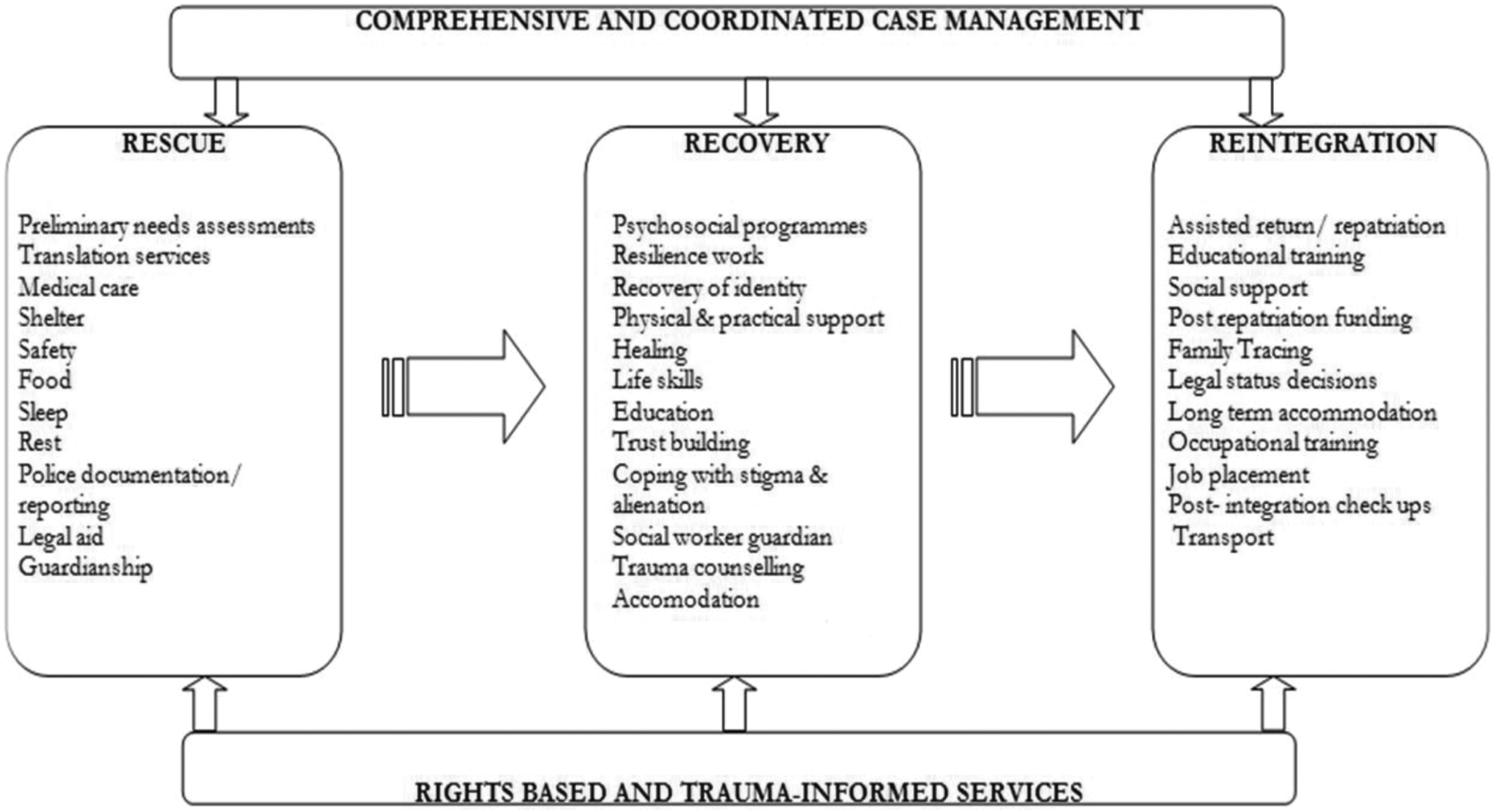
Summary of aftercare services.
Summary of Key Themes.

Note. IOM = International Organization for Migration; UNODC = United Nations Office on Drugs and Crime.
Rescue
The literature conveyed that rescue occurs in varying ways, police and NGO raids on brothels (UNODC, 2007), escape by the victim, or calling a crisis hotline (Wirsing, 2012). Upon encountering a CSTV, the first response of a care organization should be aimed at meeting the basic/crisis needs of the child. These are food, clothing, medical attention if necessary, rest, and safe shelter (Frederick, 2005; ILO, 2006; Macy & Johns, 2011; Rigby et al., 2012; SARI, n.d.; UNODC, 2007; Wölte & Tautz, 2007). In some countries such as Ireland, the child is allowed a 60-day period of rest for them to recover, after which point their immigration status is decided (Blue BlindFold, 2012). Usually, the recovery phase begins in emergency shelters that offer these services for a few days until more adequate shelter is available.
Recovery
This phase is characterized by intense person-centered service provision aimed at restoring the physical and mental health of the child and building their resilience while his or her legal status is determined. Key services provided in this phase are legal aid, medical care, psychosocial care, and accommodation.
Legal aid
Consistently throughout the literature, legal aid is highly recommended as a necessary service for CSTVs (Blue BlindFold, 2012; ILO, 2006; Kaufman & Crawford, 2011; Macy & Johns, 2011; Rigby et al., 2012; Simeunovic-Patic & Copic, 2010; UNODC, 2007; Van der Keur, 2013; Wölte & Tautz, 2007). Macy and Johns (2011) advise that legal representation for the CSTV should be provided as soon after the discovery of the CSTV as possible. This ensures that the privileges between the legal counsel and the child are in place before the child discloses any information that may affect their immigration status (Macy & Johns, 2011). Legal aid is provided to help the CSTV navigate immigration proceedings, claim compensation where possible, and testify in court proceedings against the traffickers (Blue BlindFold, 2012; ILO, 2006; Macy & Johns, 2011; Rigby et al., 2012; Simeunovic-Patic & Copic, 2010; UNODC, 2007; Van der Keur, 2013; Wölte & Tautz, 2007). Several publications emphasized that the child should neither be pressured into pressing charges against the traffickers nor should the legal aid offered be contingent on their cooperation with authorities in the persecution of traffickers (Blue BlindFold, 2012; ILO, 2006; Rigby et al., 2012). ILO (2006) conveyed the importance of legal counseling being in words and language that are appropriate to the development, literacy, and ethnicity of the child. It was recommended that the child be provided with all the information necessary for him or her to make an informed decision on repatriation and participating in court proceedings (Blue BlindFold, 2012; ILO, 2006). Should the child wish to claim compensation or participate in court proceedings against the trafficker, the legal counsel should ensure the CSTV is prepared for court and that the court proceedings are conducted in a child friendly manner (ILO, 2006). UNODC (2007) noted the importance of having a lawyer who is sensitive and aware of matters concerning trafficking. According to research, lack of legal counsel is associated with long trial periods and acquittals of traffickers in Cambodia (Van der Keur, 2013).
Safe and secure accommodation
The literature indicated that as a component of aftercare service provision, safe and secure shelter is a high priority need (Asquith & Turner, 2008; Blue BlindFold, 2012; Frederick, 2005; ILO, 2006; IOM, 2004; Kaufman & Crawford, 2011; Rigby et al., 2012; SARI, n.d.; Simeunovic-Patic & Copic, 2010; Thompson, G. n.d.; UNODC, 2007; Van der Keur, 2013; Wirsing, 2012; Wölte & Tautz, 2007). There are various types of accommodation available to CSTVs including emergency shelters, transit homes, rehabilitation centers, long-term shelters, foster care, children’s residential homes, supported lodgings, and hostels. The type of accommodation provided for a CSTV is determined by availability, needs of the CSTV, safety, age, and gender.
Several of the documents reviewed strongly encouraged shelters to maintain the minimum quality of care standards required by local and international laws and regulations (Frederick, 2005; ILO, 2006; IOM, 2004; SARI, n.d.; Thompson, G. n.d.; Wölte & Tautz, 2007). Four documents recommended that shelters should have explicit child protection policies and rights-based regulations (SARI, n.d.; Simeunovic-Patic & Copic, 2010; Wölte & Tautz, 2007). A few documents noted that shelters should be safe and secure, protecting the children from abuse from traffickers, media, and the community but without being confining or having a prison-like appearance (ILO, 2006; Simeunovic-Patic & Copic, 2010; Wölte & Tautz, 2007). The shelters should have clearly laid out rules and regulations on responsibilities of children, daily activities and menus, and these should be formed with the participation of staff and resident children (Frederick, 2005; SARI, n.d.). They were urged to have a complaint mechanism for the resident children (Frederick, 2005; Van der Keur, 2013; Wölte & Tautz, 2007). The need for staff of shelters to be gender appropriate, child friendly, well trained, and qualified if providing specialized duties (such as counseling) was emphasized, and they should have knowledge and understanding of children’s rights and sex trafficking (Frederick, 2005; ILO, 2006; SARI, n.d.; Wölte & Tautz, 2007). Three publications firmly stressed that shelters should not violate the children’s right to safety, participation, privacy, freedom of movement, access to family, access to community and freedom from abuse, harassment, and discrimination (ILO, 2006; SARI, n.d.; Wölte & Tautz, 2007). The literature also stressed that shelters should not exceed capacity; they should have separate facilities for boys and girls; and they should be clean, well ventilated, have adequate lighting, and separate areas for sleeping, eating, washing, recreation, and study (Frederick, 2005; ILO, 2006; SARI, n.d.; Wölte & Tautz, 2007). A few documents advised that shelters should provide nutritious food stored and prepared in a hygienic manner and the menu should be sensitive to culture, religion, age, and special dietary needs (ILO, 2006; SARI, n.d.; Wölte & Tautz, 2007).
Medical care
All the documents reviewed conveyed the need for provision of physical health services for CSTVs (Asquith & Turner, 2008; Blue BlindFold, 2012; Frederick, 2005; ILO, 2006; IOM, 2004; Kaufman & Crawford, 2011; Macy & Johns, 2011; Rigby et al., 2012; SARI, n.d.; Simeunovic-Patic & Copic, 2010; Thompson, G. n.d.; UNODC, 2007; Van der Keur, 2013; Wirsing, 2012; Wölte & Tautz, 2007). CSTVs should be provided with access to medical care professionals such as a general practitioner, dentist, sight and hearing professionals, to name a few to meet their needs specific needs (Frederick, 2005; ILO, 2006; Macy & Johns, 2011; SARI, n.d.). There was emphasis on the need for medical professionals to be trained on CSEC and its effects, and they should be gender appropriate and able to maintain confidentiality (ILO, 2006; SARI, n.d.). The literature stressed that CSTVs should not be forced to test for diseases including STIs and HIV/AIDS (Frederick, 2005; ILO, 2006; Macy & Johns, 2011). They recommended that in an age-appropriate, literacy-sensitive language and culture-sensitive manner, CSTVs should be educated on health care issues such as reproductive health, sex education, alcohol and drug abuse, smoking, HIV/AIDS, hygiene, and sanitation (ILO, 2006; Macy & Johns, 2011). Where necessary, CSTVs should have access to palliative care (SARI, n.d.).
Psychosocial care
The need for comprehensive psychosocial care was conveyed in most of the documents reviewed (Asquith & Turner, 2008; Blue BlindFold, 2012; Frederick, 2005; ILO, 2006; IOM, 2004; Kaufman & Crawford, 2011; Macy & Johns, 2011; Rigby et al., 2012; SARI, n.d.; Simeunovic-Patic & Copic, 2010; UNODC, 2007; Van der Keur, 2013; Wirsing, 2012; Wölte & Tautz, 2007). According to Wölte and Tautz (2007), psychosocial care is aimed at creating a secure, respectful environment in which the child is empowered and heals psychologically. Several documents in the review urged that it should be provided explicitly within stated child protection and rights-based policy, in a child-friendly environment by professionally trained counselors/ psychologists/psychiatrists (Frederick, 2005; ILO, 2006; IOM, 2004; SARI, n.d.; Wölte & Tautz, 2007). While informal counseling should be available in shelters, serious mental health issues such as addiction, trauma, and suicide should be dealt with by professionals (Frederick, 2005; ILO, 2006; Wölte & Tautz, 2007). Forms of psychosocial care found in the publications include individual counseling, group sessions, creative therapies, psychotherapy, psychiatric care and peer counseling (Frederick, 2005; ILO, 2006; IOM, 2004; Macy & Johns, 2011; SARI, n.d.; Van der Keur, 2013; Wölte & Tautz, 2007). Two authors (Macy & Johns, 2011; Van der Keur, 2013) endorsed the use of Trauma Focused Cognitive Behavior Therapy which is highly commended and currently widely used to treat PTSD (Cary & McMillen, 2012; Cohen, Mannarino, Berliner, & Deblinger, 2000; Deblinger, Mannarino, Cohen, Runyon, & Steer, 2011). It was advised that psychosocial care should begin as soon as possible after the needs assessment, following an individualized treatment plan that is formulated with the input of the child (Frederick, 2005; IOM, 2004; SARI, n.d.). The sessions should not be too long (ILO, 2006) and where necessary should be conducted in the child’s language of preference by a counselor or using the aid of a trained interpreter (SARI, n.d.; Wölte & Tautz, 2007).
Reintegration and Repatriation
While reintegration occurs at the end of the aftercare process, repatriation occurs any time within the aftercare process, even after the rescue. The literature was clear that repatriation should be voluntary and should occur after an assessment on the child’s family and community while ensuring that the child’s opinion and best interests are considered (Asquith & Turner, 2008; Blue BlindFold, 2012; SARI, n.d.; Wölte & Tautz, 2007).
Reintegration can be defined as a “holistic process involving practical, emotional, education/training and social support of the individual with the aim of ‘the safe, dignified and sustainable reinsertion into society and a normalized life’” (Asquith & Turner, 2008 p. 7). SARI (n.d.) proposes that before reintegration begins, an assessment should be performed to ensure that the child has the necessary skills and confidence to rejoin society. Some useful life skills recommended for aftercare services are finance management, transportation use, safety planning, life planning, decision making, conflict resolution, problem solving, emotional management, and interpersonal communication (Frederick, 2005; Macy & Johns, 2011; Wirsing, 2012). For economic independence and stability, children may also be provided with vocational training, education enrollment, CV writing, and job searching skills (Kaufman & Crawford, 2011; Macy & Johns, 2011; Wirsing, 2012). Research found that the quality of vocational training and education is a large determinant in whether or not the child reintegrates well or returns to a trafficking situation (Van der Keur, 2013).
A few documents advised that a community assessment is necessary to determine if reintegration into a certain community will be at the best interests of the child (Frederick, 2005; SARI, n.d.). Linking children with support systems within the community assists in smooth transitioning (ILO, 2006; SARI, n.d.). Long-term housing options should also be considered such as foster care for younger children and assisted lodging for adolescents (SARI, n.d.; Wölte & Tautz, 2007). Upon leaving a shelter or a care organization, the child should have all their belongings, money, documents, and records (SARI, n.d.). While postintegration monitoring and evaluation is important to ensure that the child is safe, it was recommended that it should be done carefully and with the child’s consent so as to avoid revealing the child’s past exploitation (Frederick, 2005; ILO, 2006; SARI, n.d.).
Discussion
Identification and Referral Mechanisms
A prominent need echoed in the review is the need for child trafficking to be viewed from a human rights point of view as opposed to an immigration perspective during identification. While it is commendable that some countries have national referral mechanisms for the identification of trafficking victims, in some countries such as the United Kingdom, these mechanisms are under the authority of immigration services (CSJ, 2013; Rigby et al., 2012). This is a potential cause of conflict of interest for these organizations like the UK Border Agency where asylum matters may sometimes take precedence over trafficking concerns (Rigby, 2011). This results in child trafficking often occurring within the context of illegal immigration. However, the exploitation of children that occurs during trafficking should take precedence over the immigration concerns. Placing child trafficking referral mechanisms within the areas of child protection or children’s rights would enable the state to ensure that the child’s best interests always come first (as they are required to in the UNCRC). In countries where there are strong structures in place to ensure children’s rights, these systems can be incorporated in the identification of CSTVs. Multi-agency work between children’s services and immigration can be a solution to this problem.
Another problem identified within the literature is the failure to discuss the identification of CSTVs. There is a need for proactive efforts to identify CSTVs. Furthermore, there is a need for the education of health service workers, police officers, social workers, and other service providers who are in constant contact with children, on identification and referral procedures. The CSJ report revealed that a lot of these services providers are unaware of how to spot the symptoms of trafficking and as a result some feel they have failed to identify CTVs (CSJ, 2013). As people who come into contact with many potential CTVs, knowing how to recognize symptoms of trafficking can potentially lead to faster identification of CSTVs.
Generic Services Versus Specialized Services
Taking into consideration the special needs of CSTVs revealed in the literature review, one argument that presented in the systematic review is that of generic services versus specialized services. Should CSTVs be placed within the general child protection systems (where available) or should they be placed within specialized programs? In support of generic services, Rigby, Malloch, and Smith (2012) indicate that having specialized services may label the child as a CSTV. The literature revealed that in some communities and cultures the revelation of the child as a victim may lead to the child’s stigmatization, isolation, revictimization, or may endanger them. However, a counterargument against generic services offered by Rigby et al. (2012) is that children may be unable to access and navigate generic service systems. One worrying problem that is presented by having CTVs placed within the generic child protection systems is that these vulnerable children may get lost within the system. This is a problem reported by CSJ (2013) who revealed that an estimated 60% of CTVs go missing from local authority care in the United Kingdom. CSTVs are especially vulnerable to retrafficking and further exploitation and thus in need of special safety, which may be hard to ensure within large generic services.
While there are benefits and limitations of both specialized and generic services, there is insufficient evidence to merit the preference of one over another in part due to the lack of studies, which explore the therapeutic value of children being examined by child abuse pediatricians who have specialized training on the needs of child victims. Further research should be conducted to explore the impact of these specialized providers on outcomes for children. What is clear from other violence-related fields, such as sexual violence, is that when specialized health services are available, they should be the provider of choice due to the improved outcomes for patients (Campbell, Patterson, & Lichty, 2005; Fry, 2007). Additionally, inadequacy of resources in the state and the third sector eliminates the luxury of the opportunity to choose between the generic and the specialized services in many countries. Regardless of the type of services, it is important to ensure that CSTVs’ special needs are being fully met and that the child’s rights and best interests are at the core of all service provision and that professionals are trained in providing child-centered care and have a thorough understanding of victimization in general and the impacts of trafficking specifically on children and young people. In the case of generic services, having a guardian assigned to help the child navigate the mainstream service system is advisable. Additionally, ensuring that shelter options are secure should be a key element of service provision. In Scotland, a guardianship scheme for unaccompanied minor asylum seekers is being tested to reduce cases of missing children (Scotland’s Commissioner for Children and Young People, 2011). Specialized services should ensure that the child’s identity and privacy is protected (ILO, 2006). This may be by having shelter locations kept secret or not revealing the nature of exploitation of the CSTVs in shelters and service providing organizations. Where generic services are provided, the care providers should be trained in and aware of the special needs of CSTVs.
Complex Trauma
A major finding of the systematic review was the need to have trauma-informed service provision. Discussions on the trauma outcomes of trafficking on CSTVs focused on PTSD and recommended psychological support based on the treatment of PTSD. However, PTSD research and treatment has been found to be inadequate as a diagnosis and treatment for the trauma experienced by victims of child abuse. The outcomes of the prolonged trauma experienced by CSTVs are better diagnosed as complex trauma disorder (CTD), complex PTSD (CPTSD), or disorders of extreme stress not otherwise specified (DESNOS; Aideuis, 2007; Courtois, 2004; Herman, 1992). Clinicians have found that trauma resulting from accumulative repeated trauma presents as a more pervasive and complicated form than PTSD (Courtois, 2004). It is distinguished from PTSD in the three ways: (i) the trauma presents as being more complex, persistent, and diffuse than PTSD, (ii) the trauma presents with characteristic personality changes that include deformations of relatedness and identity, and (iii) the patient has heightened vulnerability to revictimization through self-harm or repeated abuse from others (Herman, 1992). Children who display complex trauma symptoms present with significant pathology in several domains including relational, affective, somatic, behavioral and cognitive domains (Herman, 1992). There is a need for further research on complex trauma in CSTVs in order to provide an evidence base for policy and practice.
Reintegration
Research on service provision for CSTVs in Cambodia revealed that reintegration is hard to define (Van der Keur, 2013). Zimmerman, Hossain, and Watts (2011 p4) define reintegration as having been achieved when “ … the individual becomes an active member of the economic, cultural, civil, and political life of a country and perceives that he or she has oriented and is accepted.” A point worth stressing is that the children need to be (and feel) well equipped in all facets to cope with daily life upon reintegration into society. According to research in Cambodia, successful reintegration, where CSTVs have viable economical, social, and psychological long term solutions, is not yet normative (Van der Keur, 2013). There is an apparent need for an operational definition of successful reintegration that can be used by organizations to determine when a case should be closed. It is understandable that reintegration can take a widely varying amount of time, where over time the organizational involvement reduces as the child reintegrates into the community. A way of helping the child’s transition is through the involvement of the community and/or faith-based organizations. Asquith and Turner (2008) suggest that the community should be involved in reintegration services through grass roots organizations or local faith-based organizations. The benefits of this are that it reduces stigmatization, reduces chances of retrafficking, and frees up resources.
Repatriation
Repatriation can be quite a complicated process due to the conflict between children’s rights and immigration laws. It is complex as it can involve multiple nations and multiple organizations. As is outlined in the literature, IOM plays a key role in the repatriation of victims in many countries. They also offer victims access to reintegration funds and are able to connect the victims to other community-based projects within their country. Repatriation in this case is voluntary. During repatriation, an assessment of the child’s family, community, and country is conducted in order to determine whether it will be in the child’s best interests to be repatriated. At times the CSTV is asked to make a decision on repatriation within the first few days of rescue. This is a problem because it does not take into account the mental health effects of CSEC on CSTVs. As Zimmerman et al. (2008) explain, these effects, which include problems with memory and cognitive functioning, may hamper the victim’s ability to make rapid and important decisions. Within the European Union, this has been corrected by having a reflection period in which the CSTV is allowed to rest before any repatriation and immigration issues can be discussed (Blue BlindFold, 2012).
Conclusion
This systematic review revealed the needs of child victims of sex trafficking and described how these needs are met in various countries through different types of aftercare services. What has been evident throughout the research is that there is a scarcity of literature on the area of trafficking as a whole with even less literature focusing on child sex trafficking. Until recently, trafficking dialogue mostly took place within immigration and law discourse. While social sciences have now joined the conversation, there is a need for increased input from the social sciences and public health. There is a great need for an evidence base on which policies and guidelines can be founded. This requires comprehensive case management and tracking tools and cooperation among organizations. It also requires agreed upon definitions of rescue, recovery, and reintegration. Constant monitoring and evaluation contribute to this evidence base. Moreover, there is a great need for research on aftercare services for CSTVs. Aftercare service provision is an area that is not well documented and has a small evidence base; regardless of this, the achievements of aftercare service providers are quite commendable, as the field has experienced phenomenal progress within the last 10 years. However, there is much more room for growth in order to provide CSTVs with the quality of care that will help them recover and become active members of society.
Implications for Practice, Policy, and Research
A policy implication of this systematic review is the need for development of minimum quality of care standards in countries where they are lacking and the development of a program evaluation toolkit for organizations already delivering aftercare services.
There is a need for trafficking identification and referral systems to be removed from the jurisdiction of immigration authorities and placed within multiorganizational systems that incorporate child protection and immigration policies.
There is a further need to train and educate social workers, police officers, medical practitioners, and other relevant personnel, in the identification of child trafficking symptoms and the referral process.
Aftercare service providers need to document their efforts in order to share the information and build an evidence base for practice. In addition to documentation, monitoring and evaluation of aftercare service provision programs is needed to advance the field.
There is a great need for all aftercare service providing personnel to be well trained and educated in their area specialization as well as children’s rights and trauma outcomes of CSEC and for coordinated efforts and cooperation among service providers. In line with this, there is a gap in research on complex trauma as experienced by CSTVs and the most effective forms of treatment.
Footnotes
Declaration of Conflicting Interests
The author(s) declared no potential conflicts of interest with respect to the research, authorship, and/or publication of this article.
Funding
The author(s) received no financial support for the research, authorship, and/or publication of this article.