



Abstract
What happens when family caregivers experience violence and abuse from the older person for whom they care? Although this issue has received little global attention, it is relevant to researchers, practitioners, and policy makers working across the intersecting fields of older age care and medicine, adult protection and safeguarding, and domestic and intimate partner violence. To date, these fields have generated diverse explanations of violence and abuse in older age illness and how best to respond to it. This article reports the findings of a systematic literature review of 18 quantitative, qualitative, and mixed-methods studies that investigated violent and abusive behavior by older people toward their family caregivers. The review identified three central themes in the literature: (1) There are inconsistent definitions and measurements used in research about harmful, violent, and abusive behavior toward family caregivers. (2) Violent and abusive behavior toward caregivers is a sensitive and hidden topic that poses practical and methodological challenges for researchers. (3) There is some evidence to suggest that people who were violent and abusive in their earlier life—or who had a poor relationship with their family member in the past—are more likely to continue to experience violence and abusive behavior in later life. There were two central ways in which violence and abuse were conceptualized and investigated: as a “symptom of illness” or as an “act of abuse” and we present a visual map of the relationship between these two conceptualizations drawn from our analysis of the literature. We conclude by discussing the implications of the findings and recommend future directions for practice, research, and policy to support affected families.
In the last 50 years, the age of mortality has risen steadily and the proportion of older people relative to younger adults and children continues to increase year on year (World Health Organization, 2015). Within these aging populations, many people are experiencing chronic and complex health conditions in later life and living at home (Pin & Spini, 2016). Families are the single largest group of caregivers for older people, with elder spouses and adult children being the family members most likely to take on the role of caregiver (Pinquart & Sörensen, 2011). For some families, the challenges of illness and caregiving are particularly intense and complex and may result in a state of cumulative and prolonged stress, commonly referred to as “caregiver burden”. This, in turn, may increase the risk of carers not coping or caring well and, in some cases, lead to the abuse or exploitation of the older person in their care (Momtaz, Hamid, & Ibrahim, 2013). This could involve caregivers acting in an abusive, neglectful manner toward older family members, exploiting their position of vulnerability and/or failing (by omission or commission) to meet the health and welfare needs of someone who is dependent on them in a significant if not total way (Cooper, Seelwood, & Livingston, 2008). Research has played a critical role in mapping the prevalence and impact of elder abuse. This has highlighted a need in health and social care practice to identify, prevent, and intervene in cases of elder abuse in families (Pillemer, Burnes, Riffin, & Lachs, 2016).
To date, however, there has been much less consideration of what happens when it is the family caregiver who is adversely affected by the violent or abusive behavior of the older person for whom they care. This can arise when caregivers experience frequent and extreme verbal, physical, and sexual violence; when caregivers feel manipulated and controlled by their family member; and when families live in unpredictable, often chaotic circumstances in which the dynamics of power, love, and duty are complex and closely intertwined (Daniel & Bowes, 2010). These examples touch upon a number of key questions: How do caregivers respond to violent and abusive behavior and how do they make sense of it? What is the impact of such behavior on both the caregiver and older person? To what extent is it an extension of caregiver burden and is it a form of domestic abuse or harm? These questions highlight the importance of giving careful consideration to how we talk about and identify harmful behavior when issues of vulnerability, need, and risk are blurred. Examination of these issues is important for practitioners working in adult protection, health, and domestic abuse services and to researchers in applied and theoretical fields. To address these questions, we set out to explore the research landscape by conducting a systematic literature review. The focus was on studies that investigated the phenomenon of informal, family caregivers of older people experiencing violence and/or abusive behavior by the person for whom they care.
Background
Older Age Violence and Abuse in the Context of the Context of Illness and Disease
One of the most prevalent and disabling diseases affecting older people is dementia. Prince et al. (2013) estimated that the number of people affected by dementia would double every 20 years, reaching a total of 115.4 million by 2050 (Prince et al., 2013). There is an association between increased rates of violent and abusive behavior—often referred to as “behavioral disturbance” or “challenging behavior”—and dementia-type illnesses. The intensity and frequency of somatic symptoms (such as pain, tiredness, and hunger) can result, for example, in a person experiencing personal, intimate, care as invasive and distressing. This, in turn, can make some caregiving situations sites of tension and conflict (Enmarker, Olsen, & Hellen, 2011). Additionally, day-to-day social activities and conversations can lead to feelings of stress, anxiety, and frustration if the ability to communicate and remember are impaired. For some people, physical and verbal violence may become an alternative way of communicating their needs and feelings (Duxbury, Pulsford, Hadi, & Sykes, 2013). People with dementia can also experience emotional dysregulation, which is manifested in limited impulse control and an impaired ability to anticipate and address emotional cues (Gormley, Lyons, & Howard, 2001). This can increase the risk of aggressive behavior, physical and verbal violence, and sexual disinhibition (Rosen, Lachs, & Pillemer, 2010).
However, most of the research about violence toward caregivers by dementia patients investigates the experiences of formal caregivers working in nursing home and hospital settings, rather than those of family caregivers (Wharton & Ford, 2014). There may be some common elements found in formal and informal caregiving situations; however, there are also significant differences. A review of studies that had investigated violence by adults with a serious mental illness (SMI) toward their family members identified that one of the central reasons may be hesitancy on the part of researchers and practitioners to further stigmatize a population with complex needs (Solomon, Cavanaugh, & Gelles, 2005). They also found prevalence rates of violence toward family members by people with SMI between 10% and 40% and concluded that there are multiple and complex reasons why people may become violent, including how their caregivers recognize and respond to signs of illness and distress (Solomon et al., 2005). Family caregivers are likely to have less training and education in recognizing and responding to distress than professional caregivers. This may increase the likelihood of violence and/ or inhibit opportunities for prevention and de-escalation. Research with families affected by violence in adults with mental ill-health has also found that the emotional impact of such harm is particularly acute for family caregivers (Hsu & Tu, 2014).
Coming to terms with the loss of physical and cognitive function is often a difficult and emotionally demanding experience for both older adults with dementia and for their families (Desai, Schawrtz, & Grossberg, 2012). Illness can also bring with it loss of role, status, and, sometimes, profound changes to a person’s identity and relationships with others. In dementia, as with other illnesses, such existential challenges may cause some people to find new ways of exerting power or influence within their intimate relationships by taking on new roles and responsibilities or by requiring high levels of attention and emotional support (McDonald & Thomas, 2013). The dynamics of care and dependency are often complex in intimate relationships in later life and the nature of violence or “dysfunctional” behavior can take on new meanings (Roberto, 2016). In extreme cases, lethal violence is a way of alleviating suffering, as in the case of mercy killing or homicide suicide “pacts” between couples when one or both people are affected by a terminal disease (Cohen, 2004). More commonly, patterns or incidents of difficult and abusive behavior are shaped by expectations and obligations to care and to tolerate changes in behavior and to changing circumstances of a long-term relationship infused with personal meaning and social implications.
Older Age Intimate Partner Violence (IPV) and Long-Term Patterns of Conflict and Abuse
One of the most developed areas of research and practice with regard to violent and abusive behavior in older age is the field of IPV. In a seminal study, Bonomi et al. (2007) questioned 370 older women about their experiences of IPV and found that incidents of severe (e.g., forced sexual contact) and moderate (e.g., threats) behavior were similar between older adult and younger adult groups (Bonomi et al., 2007). Older age IPV is characterized by a decrease in episodes of physical and sexual violence, relative to noncontact psychological forms of control and coercion (Roberto, McPherson, & Brossoie, 2014). However, such abuse is associated with complex and enduring negative health outcomes for those affected (Beaulaurier, Seff, Newman, & Dunlop, 2006). IPV in older age is a particularly sensitive and mainly “hidden” issue. In a qualitative literature review of studies investigating IPV toward older women, Fingfeld-Connet (2014) found that generational and gendered norms about the privacy and sanctity of family life inhibited disclosure and help-seeking by older women and normalized patterns of abuse and violence (Finfgeld-Connett, 2014). In addition, feelings of moral obligation, social shame, and concerns about the emotional and practical upheaval of rebuilding a life after decades of married and family life affect decisions about remaining in abusive relationships (Policastro & Finn, 2015). The limited visibility and lack of awareness of the needs of older victims of IPV and the paucity of tailored domestic abuse services for this population are also areas of concern (Lundy & Grossman, 2004; McGarry & Simpson, 2011).
Method
A Review of Mixed-Methods Research
We conducted a literature review of papers reporting the findings of qualitative, quantitative, and mixed-methods studies that investigated violent and abusive behavior by older people toward their family caregivers. The aim of the review was to identify, synthesize, and examine critically the available empirical and theoretical literature relating to family caregivers’ experiences of violent and abusive behavior from the older person for whom they care. A literature review is a useful exercise in the initial stages of developing knowledge about a topic. By systematically identifying literature from a wide range of sources, the review process can map areas of consensus and difference in the field and identify areas of limited development that need further work. This can direct and focus future research activity. We used a mixed-methods research synthesis approach for this review (Joanna Briggs Institute, 2014). The term “mixed methods” has different definitions in the context of reviewing literature (Harden, 2010), so for the purpose of this article, we use the term to reflect that the review encompassed studies which used a range of methodological designs. This approach is increasingly used in the study of complex topic areas that are multidimensional and difficult to capture using only one theoretical or technical approach (Grant & Booth, 2009). It has also been used to explore new or developing areas of study, particularly those where there is limited empirical evidence or a lack of clarity concerning the central concepts and definitions of the phenomena in question (Pluye & Hong, 2014), which may require the comparison, contrast, and integration of different types of evidence. In this review, the mixed-methods approach enabled us to explore and critically engage with the range of literature necessary to examine a sensitive and underresearched issue.
Identification of Studies
The first phase took place between October and November 2015 and involved a systematic search for relevant papers. Following this, in December 2015, we carried out additional “hand-searching” of journals. We used four electronic databases: Web of Science, ProQuest Nursing and Allied Health, Medline, and CINAHL Plus. The databases covered a range of clinical, practice, and research interests and specialisms, which gave the review breadth. However, for the most part, these databases include medical, health, and social science studies. As a result, studies from the psychological and philosophical disciplines may have been underrepresented in the review. During the stage of identifying papers, we did not set a time period for publication as a criterion for inclusion. The studies included in our final sample were published between the years 1992 and 2014. We only included papers published in the English language as we did not have the resources (or linguistic skills) to review papers in other languages. This may have limited the number of studies included in our review and the range of cultural and social perspectives encompassed in the analysis.
Table 1 shows the inclusion criteria used to identify papers for review. In order to identify the maximum number of potential papers, we used a range of paired search terms in conjunction with Boolean operators in the search strategy. To identify literature relating to family caregivers, the terms “caregivers,” “informal caregivers,” “family members,” and “caregiver burden” were used. These synonyms were combined with a group of terms to identify older people. The phrases “older people,” “elderly,” and “geriatric” were used to identify studies relating to this population. For some databases, it was appropriate to select the relevant “population” group (people aged over 65 years old) if this option was available. In order to capture papers relating to violence and abuse, the terms “violence,” “patient aggression,” “patient initiated assault,” “family violence,” “IPV,” “patient-initiated violence,” and “caregiver assault” were used as synonyms.
Inclusion/Exclusion Criteria.

Quality Appraisal and Methods of Analysis
We used three tools to assess the quality of the different papers. We did not use a scoring system but rather made detailed assessments of each paper as appropriate to the standards and expectations of the methodological approach. For the observational quantitative research, we used the National Institute for Clinical Excellence assessment tool (National Institute of Clinical Excellence, 2012); for the qualitative studies, we used the Critical Appraisal Study Program tool (Critical Appraisal Skills Programme 2013a, 2013b); and for the mixed-methods papers, we used guidance set out by Pluye, Gagon, Griffiths, and Johnson-Lafleur (2009). Following this, the findings from each study were synthesized using a thematic approach. This is a common feature of literature reviews incorporating papers which have used different methods because the quantitative data being reviewed cannot be aggregated and analyzed using statistical methods. This is often because the studies employ different measurement tools and/or the study populations are too dissimilar and therefore results cannot be compared on a “like-for-like” basis (Thomas & Harden, 2008). Because this review included studies of varying design and quality, a thematic approach was considered the most appropriate.
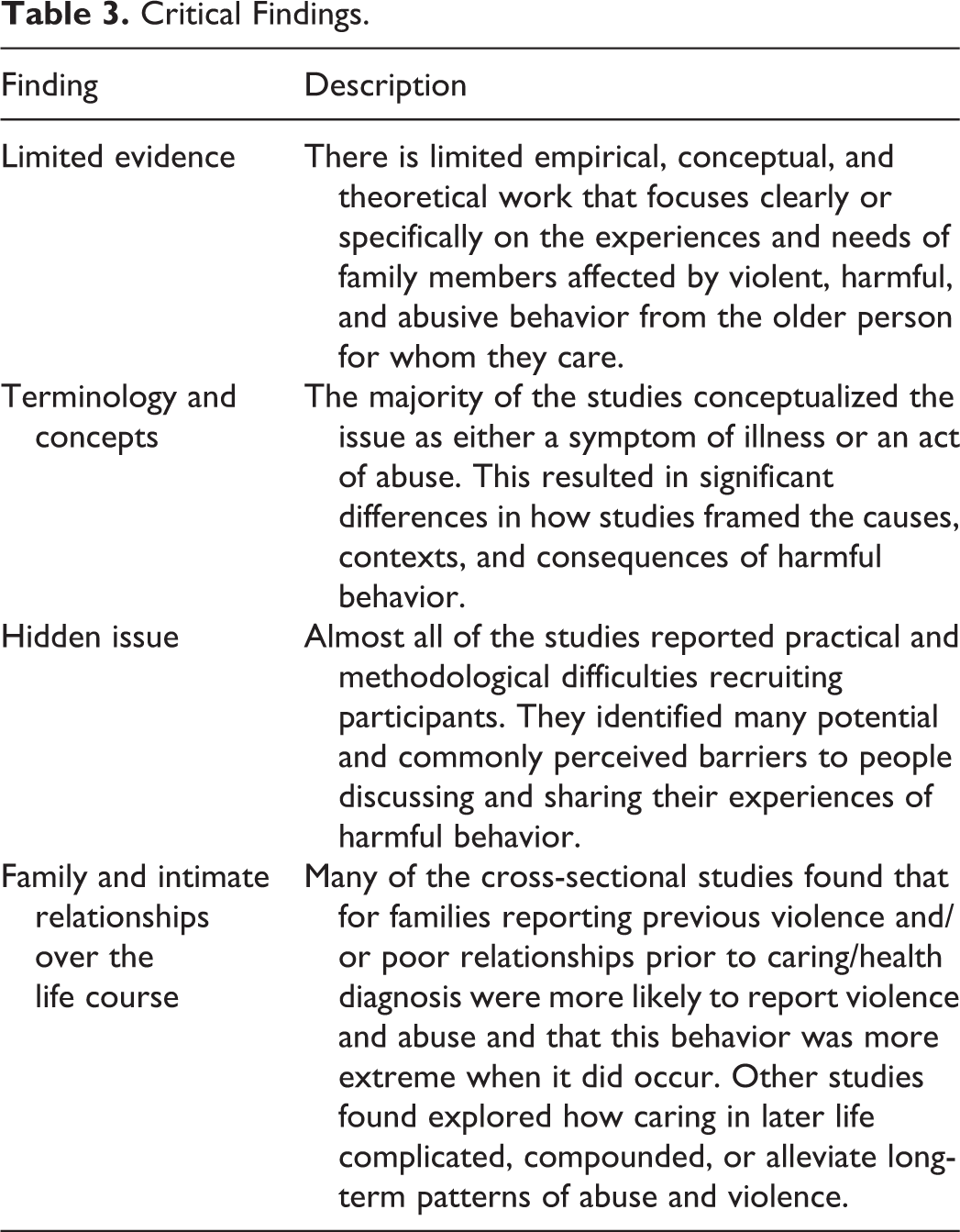
Carrying out thematic analysis involved three central steps which we set out in a systematic protocol before reviewing the included papers. Initially, the texts (in this case, the papers) were read and coded in small text segments. At this stage, codes reflecting the descriptive meaning of the text were assigned. The second step involved grouping the codes and interpreting how they related to one another. Finally, the overarching themes were drawn out and a “narrative” or framework for understanding was developed (Hannes & Macaitis, 2012). This process was carried out by the primary researcher, whose coding and thematic categories were then checked and discussed with the other two members of the team. Codes were refined and developed through a process of discussion and reflection. We developed three central themes in the course of the analysis: (1) There are inconsistent definitions and measurements used to research harmful, violent, and abusive behavior toward family caregivers. (2) Violent and abusive behavior toward caregivers is a sensitive and hidden topic across the different studies. (3) There is some evidence to suggest that people who were violent and abusive in their earlier life are more likely to continue to be so in older age and that family members with poor relationship quality are more likely to experience violence and abusive behavior in later life. These three themes are discussed in detail in the following section.
Findings
Eighteen studies were reviewed (Table 2) and their findings and methods are summarized in Tables 3 and 4. The review was international in scope with the studies spanning North America, Europe, Australia, and Asian countries. Nine employed cross-sectional study designs, six qualitative, and three adopted a mixed-methods approach. Most of the studies reflected a largely health and medical science perspective, although several (mainly qualitative) papers adopted a sociological perspective. The studies employing a cross-sectional design (and two of the mixed-methods papers) reported, in the main, investigations of the experience of caregivers of older people with dementia. Most, although not all, of the qualitative studies did not specify the illness or health condition that gave rise to the need for care and caregiving. Instead, they focused on women affected by violence throughout their lives, either from their partners or parents. These papers explored how past experience and relationship histories affected the nature of harm they experienced as caregivers as well as their responses to continuing and changing violence. The analysis of the papers revealed three central themes (see below).
1. Inconsistent definitions and measurements
Included Studies.

Abbreviations: CR = care recipient, CG = caregiver.
Critical Findings.
Findings and Recommendations for Practice, Policy, and Research.

The studies used different terms to describe violent and abusive behavior. Furthermore, among the nine cross-sectional and three mixed-methods studies, investigators adopted different models to measure the nature, severity, and extent of violent or abusive behavior. At times, this made it difficult to be clear whether different studies meant the same thing when employing these terms and to make like-for-like comparisons. Estimates of the extent and nature of violence toward caregivers reported in some of the cross-sectional and mixed-methods studies varied. For example, in a study of 220 family caregivers of people diagnosed with dementia in the previous three months, Cooper, Selwood, Blanchard, and Livingston (2010) found that 82 caregivers (37.3%) reported abuse from their family member “at least sometimes” (Cooper, Selwood, Blanchard, & Livingston, 2010). Similarly, in a study of 198 caregivers of people with Alzheimer’s disease, O’Leary, Jyringi, and Sedler (2005) found that 25% of this caregiver population had also experienced violence from their family member (O’Leary, Jyringi, & Sedler, 2005). In another study, 33.1% of caregivers reported abusive behavior from the person with dementia they cared for, and 33 caregivers (11.9% of the total population) reported that they had “retaliated” toward the older person and acted in a violent or abusive manner (Coyne, Reichman, & Berbig, 1993). Taken together, these studies indicate there is broad spectrum of harmful behavior that affects family caregivers. However, estimating the extent, nature, and impact of this behavior accurately is not yet possible in part because of the limited and diverse nature of current empirical research.
The majority of the cross-sectional studies (and survey data from the mixed-methods studies) examined the patient and caregiver factors that may be associated with violence toward caregivers. In these studies, data were collected using a series of structured questionnaires and psychometric measures which required yes/no (dichotomous) responses and the completion of rating scales (e.g. Likert scales). Many of these measures were drawn from the medical and psychiatric fields and operationalized definitions of violence, health, and relationships that reflected these disciplinary perspectives. However, despite this common approach, there are some significant differences in the findings of the reviewed studies. For example, some found that the greater the level of cognitive impairment, the greater the severity and duration of violence toward the caregiver (Pillemor & Suitor, 1992), whereas others found no evidence for such an association (Hamel et al., 1990; O’Leary et al., 2005; Phillips, de Ardon, & Briones, 2001). The studies also report different findings concerning the extent to which people’s physical impairments and intensity of care needs affected levels of violence. Cooper et al. (2010) found an association between higher levels of violence and higher physical impairment (and care needs), although this association was less clear in other cross-sectional studies. In addition, several studies reported that higher levels of depression in caregivers and care recipients correlated with more frequent reports of violence toward caregivers (Hughes, 1997; Paveza et al., 1992; VandeWeerd & Paveza, 2006).
In the majority of the qualitative studies (and qualitative data from the mixed-methods studies), violence and abuse were conceptualized primarily as patterns of behavior that could include physical, psychological, emotional, and sexual dimensions of harm. This incorporated patterns of interaction and behavior that play out over time, often across the “life course” of the family relationship. The qualitative studies tended to focus on psychological and emotional harm and the importance of recognizing the ways that violence and abuse affect different people. There was a lack of discussion in these papers about how and in what ways different types of physical, psychological, and cognitive illness might affect the nature of abuse, violence, and care in families. As with the cross-sectional studies, there was a lack of specific terminology to delineate what was different about the context of violence toward caregivers from other types of violence and abuse. In addition, the term caregiver was not always used or used consistently throughout the studies in question. Instead, people were referred to according to their status as family members or intimate partners. Nevertheless, they did describe relationships between family members, in which care, caring, and ill-health played a significant role.
2. A hidden and sensitive topic to research
All the papers reported the considerable methodological challenges involved in recruiting and engaging with caregivers and families. In many of the qualitative and mixed-methods studies, the sensitive and complex nature of the topic—and its potential social taboos and emotive nature—was identified as a central rationale for using in-depth exploratory techniques and analysis methods. Several studies suggested that caregivers would be reluctant to speak out against their family member for fear this would place the individual at risk of being taken into state care or that the caregiver would be seen in a negative light (Cahill & Shaprio, 1993; Pillemer & Suitor, 1992). Hughes (1997) and Coyne et al. (1993) suggested that some caregivers worried that violent or abusive behavior could be interpreted as a “failure” to protect and care for their family member and this inhibited discussion of the issue (Coyne et al., 1993; Hughes, 1997).
Several of the qualitative studies also identified that caregivers may not recognize their situation as one of violence or abuse. Instead, they may regard challenging behavior or unequal power relationships as part of the normal practice of care (and love) in their relationship (Band-Winterstein, 2012). This may be more common for women habituated to living in long-term relationships involving IPV (Zink, Regan, Jacobson, & Pabst, 2003). Whereas in other studies, it was suggested that caregivers may overestimate and misattribute violence and harm because they do not properly understand its etiological causes and/or lack the skills to de-escalate and prevent conflict. For example, in two of the cross-sectional studies, it was found that caregivers often “overestimated” the severity and level of violence they experienced (Cooper et al., 2010; O’Leary et al., 2005). This was considered an issue of (subjective) bias when using self-report measures that complicated attempts to estimate the prevalence and type of violence and abuse experienced by caregivers. Bias was not identified as a concern in the qualitative studies, which did not question the veracity of participants’ accounts but rather sought to explore individuals’ experiences, views, and beliefs.
The sensitivity of language and its role in maintaining secrecy and inducing feelings of shame about unusual or distressing experiences was evident in many of the qualitative studies. For example, Band-Winterstien (2012) and Band-Winterstein and Eisikovits (2009) found that the process of creating narratives about care and illness was central to how couples accepted the challenge of old age and in some cases the end-of-life. For some couples, caring and illness provided an opportunity to become closer and to reframe their relationship, minimizing the significance of past violence in the context of newly found respect or appreciation of care and vulnerability. In other cases, one partner being identified as a victim of violence offered a way of making sense of difficult experiences and conflicting, often painful feelings. In this way, a “narrative of suffering” provided a coherent way of codifying and explaining feelings of powerlessness brought about by long-term IPV (Band-Winterstein, 2012; Band-Winterstein & Eisikovits, 2009). Reflection and talk were also important for female survivors of IPV to reclaim power in the context of caregiving in older age (Koeing, Rinfrette, & Lutz, 2006). This was demonstrated in two case studies of women who were better able to engage with the ethical dilemmas and complex life choices they faced as caregivers and victims of domestic abuse following therapy and rehabilitation (Koenig et al., 2006).
Although some of the studies highlighted the potential overlap of IPV and abuse/violence to caregivers (Copper et al., 2010; Pillemor & Suitor, 1992), only one paper engaged critically with the vocabulary and concepts of “abuse” by means of a systematic concept analysis (Ayres & Woodtli, 2001). One of its central findings was that caregivers were unlikely to identify with the terms “abuse” and “victim,” as they were too emotive, simple, and associated with perceptions of IPV. As a result, Ayres and Woodtli (2001) suggested that researchers and practitioners need to be sensitive to this and develop nuanced ways of discussing the issue with families. In turn, this could help families disclose and discuss the issue in a more timely and meaningful way (Ayres & Woodtli, 2001).
3. Relationships and interactions
The nature, quality, and life-course trajectory of family relationships were identified as significant in understanding the nature of violence and abuse toward caregivers. This was a finding in all of the studies irrespective of design or disciplinary perspective. Within several of the cross-sectional studies, low quality or dysfunctional relationships were consistently associated with more severe and more frequent aggression toward caregivers (Cooper et al., 2010; Hamel et al., 1992; Paveza et al., 1992). Those caregivers reporting exposure to, and experience of, violence prior to diagnosis of dementia were also found, in some studies, to be exposed to more severe forms of violence following its onset (Cahill & Shapiro, 1993; O’Leary et al., 2005). In addition, how caregivers “coped with” and responded to their family member’s violence correlated with the quality and stability of their relationship prior to illness and care (Coyne et al., 1993; Hamel et al., 1990; Phillips et al., 2001). Those caregivers found to be less emotionally-responsive in their care and who identified the causes of aggression as a personality trait or deliberate act of challenging or disruptive behavior on the part of the family member were also found to have histories of poor quality relationships (Huang, Shyu, Chen, & Hsu, 2009; Vande Weerd et al., 2006; Wilks, Little, Gough, & Spurlock, 2011). However, there was limited evidence that this group of caregivers reported experiencing higher levels of violence from their family member (Cooper et al., 2010; Hughes, 1997).
Collectively, these findings highlight that people’s understanding of and responses to their family member’s illness and behavior were shaped by their experiences with them over their life course. This was particularly the case in long-term relationships between spouses who married decades earlier or between adult children and elderly parents. For some family relationships, there appeared to be a risk that caregivers would become less caring and potentially violent in retaliation toward their family member, leading to a situation of “bidirectional” or mutual harm. O’Leary et al. (2005) suggest this could lead to the premature ending or “relinquishing” of the care relationship, if people with dementia were placed in institutional care. However, although this seems a plausible consequence of violence toward caregivers, Hamel et al. (1990) found that this scenario was not supported by their findings.
In the qualitative studies, understanding the relationships of family members was central to interpreting people’s experiences of care and violence. Individuals with a history of conflict, violence, or abuse with their parent or spouse found different ways to cope and find meaning from becoming their caregiver later in life. For example, turning away and relinquishing of the caregiver role and it and its expectations and demands, because relationships were the primary context in which power (and its abuse) played out and in which decisions and responses to violence were understood. It was identified that relationships shaped by violence and abuse in childhood and adulthood shaped how people responded to experiences of being cared for and providing care later in life (Phillips et al., 2001; Pickering, Moon, Pieters, Mentes, & Phillips, 2014). Illness appeared to complicate and compound dysfunctional and harmful dynamics already present in some, already conflicted, relationships. This was the case, for example, in Pickering et al.’s (2014) study of daughters who engaged in “spiteful aggression” and retaliatory violence toward older mothers who were neglectful or abusive toward them in childhood. Caring needs and caring roles could also heighten feelings of obligation and duty to family members. This was more often an issue for older women caring for husbands and partners who had strong views about the unconditional nature of family duty and marriage in particular (Band-Winterstien, 2012; Zink et al., 2003). In some cases, caregiving for a physically ill or disabled partner altered the status and increased the power of the carer in a long-term intimate and often difficult relationship (Band-Winterstein & Eisikovits, 2009; Koenig et al., 2006).
Discussion
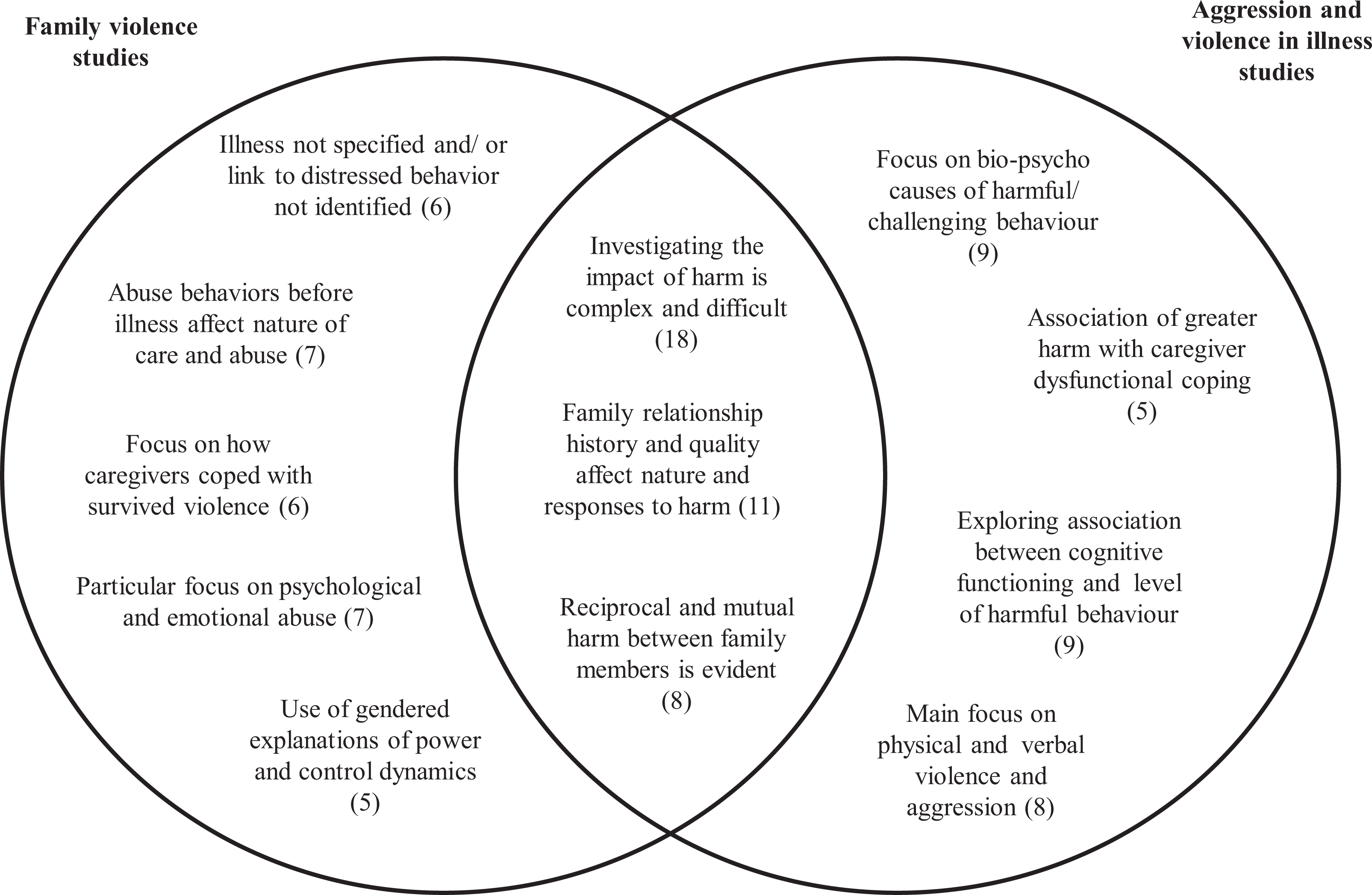
There is limited research examining violence and abuse toward family caregivers of older people and the research that does exist is fragmented and lacks interdisciplinary perspectives. There is a body of research that focuses on family caregivers of people with dementia illnesses which, in the main, adopted cross-sectional or mixed-method designs and sought to establish the nature and prevalence of violence and abuse toward caregivers. There was a smaller body of qualitative studies (and mixed-methods studies using qualitative methods) that focused, most commonly, on the experiences of families involved in violent and abusive relationships prior to the onset of older age and illness. Figure 1 presents a map that characterizes some of the central conceptual differences and areas of overlap between the different study-types.
Conceptual map of the review literature.
The aim in developing this map is to highlight the importance of thinking carefully about how we talk and think about violence and abusive behavior toward family carergivers. This is necessary not only for the purpose of definitional clarity and research measurements but also for practice in this area. We suggest that it would be helpful to explore in greater detail how aspects of current legal, medical, and social practice are (unintentionally) creating the circumstances in which the issue is hidden from view. Developing theory and analyzing evidence about the nature of violence and harm toward caregivers will help practitioners from a range of disciplines identify and support affected families. This is important because we know that discussing violence and abuse is something that many practitioners find difficult (Bradbury-Jones, 2015; Tower, 2006), and developing more opportunities for reflection and education, practitioners may develop the confidence to ask difficult but important questions of caregivers and the cared-for and to do so before situations escalate or become entrenched. Raising the profile of the issue and suggesting new ways to talk about it sensitively and honestly many also address some of the shame, fear, and ethical tension that may be currently preventing some affected caregivers from speaking out about their experiences.
Another line of inquiry is to explore some of the reasons that illness has been the primary and central lens through which violence and abuse toward caregivers has been examined in health- and medical-focused studies. Reflecting on our findings and drawing on work in the field of elder abuse and adult protection there is a clear relationship between the concept of illness and patient hood and a state of vulnerability (Dixon, Biggs, Stevens, Manthrope, & Tinker, 2013). With this association comes a release from responsibility for individual action in most legal or moral understandings of these terms. This shifts attention from the person carrying out the violent or abusive behavior and toward a critical focus on the caregiver. For example, are they caring in the best or right way, do they understand the illness well enough, and how will this affect the way they care in the future? These questions reflect how in focusing on the caregiver, the issue of their potential harm from the person being cared for can be overlooked. We suggest that for several studies within this review, the issue of violence and abusive behavior toward caregivers was “lost” in concerns about medication regimes, the adequacy of training and education of caregivers, and the potential need for tailored emotional and social support for affected families. The focus was on the risks to the older person of receiving poor care or being the future “recipient of violence,” rather than the needs of the caregiver.
In light of our synthesis, we question whether it is appropriate to assume that behavior on the part of an ill or disabled older person should be automatically considered to be without intention or meaning. Similarly, we question assumptions that the older person/ill person is in a static and constant state of vulnerability in relation to the person caring for them (Daniel & Bowes, 2010). Practices of power in adult relationships are complex and subtle and people do not necessarily hold power “over” or “against” another person in an absolute way. More often, power is developed through action and inaction and is constantly negotiated and mediated. Disrupted power relationships are more likely during times of loss, crisis, and change in long-term intimate and family adult relationship (Biggs & Haapala, 2010). Moreover, even when illness appears to be an appropriate and valid way of understanding violent and abusive behavior, the impact on the family caregiver should not be obscured or minimized, as is the case in several of the studies included in this review. There is evidence to suggest that some caregivers experience extreme, regular violence and life with their family member is characterized by its unpredictable and volatile nature. Moreover, some caregivers may not feel able to change this situation, often feeling that “leaving” is not an option and that learning to “cope with” violence and/ or distress is the only central moral and pragmatic option. We suggest there is a need to explore the overlap between harmful behavior as a “symptom of illness” and as an “act of abuse” in a more critical and sustained way. Examining caregiver responses to violence and illness through the lens of trauma—as responses to IPV often are—could be helpful in understanding the different ways in which caregivers cope and why some families may be at much greater risk of increased violence and/or a deterioration of the caring relationship than others.
Turning to the qualitative literature, we reflect on further future directions for empirical and theoretical work. This small group of studies has made an important contribution in developing knowledge about this complex and hidden subject, but the field would benefit considerably from further empirical study. For example, there is minimal reference to, or engagement with, the (neuro)biological nature of illness and how this may shape what violence and abuse “look like and “feel like” as compared to behavior taking place when illness is not a dominant dimension of an intimate relationship. In addition, most of the sample populations were made up exclusively of women and there is limited discussion of the particular or different needs of men experiencing violence and abuse as caregivers. More starkly, perhaps, there is little qualitative research either with families in which violence and abuse did not precede illness or with families where violence and abuse is more fluid, complex, and ambiguous when it does occur.
The qualitative literature is also limited in terms of its theoretical and conceptual scope. As noted earlier, structural models of violence and power (and the attendant division of roles into “perpetrator” and “abuser”) are central to the analysis and discussion of findings in many studies. This reflects dominant paradigms in IPV and gender violence work over the past 30 (and more) years as well as the more recent shift to conceptualizing these issues as being of public health and legal concern. However, there may be other factors that are helpful in explaining people’s understanding of care and violence, such as how and when they set limits and when they feel this is not possible.
Limitations
This review has four principal methodological limitations. Firstly, studies were included based on specific inclusion criteria (see Table 1) and none were excluded on the grounds of methodological quality. Consequently, the quality of evidence reviewed is not consistent or sufficiently robust to underpin a definitive explanatory conceptual or theoretical model. However, the review was guided by decisions about how best to examine an area in which there is limited empirical work and little conceptual development, so inclusion of studies irrespective of quality was deemed appropriate. Moreover, given that we reviewed studies using a variety of methods, we were able to draw evidence from different paradigms thus ensuring the breadth, if not quality of the included studies. Secondly, the concepts and evidence discussed in the background literature and discussion sections of the paper reflect the professional and personal worldviews of our research group. Arguably, it would be equally legitimate to synthesize the studies with reference to alternative literature and concepts given the “underdeveloped” nature of theorizing and research concerning this phenomenon. However, by adopting a systematic approach to the identification, appraisal, and analysis of the studies, we have sought to make clear how and why we carried out the review in the way described in this paper. Thirdly, the review included only English-language papers and so did not engage with all the available international literature. This reduces the scope of the paper as well as the transferability of its findings. It is also likely to minimize or obscure comparison of how cultural and geographical differences shape the rate and nature of violent and harmful behavior toward family caregivers. A further significant limitation of this review is that we searched for studies using predominately social science, applied health, and clinical databases. The gaps in the literature that we have identified will, of course, reflect gaps specifically within these disciplinary areas and their associated methodological fields. However, the review does set out some key questions and identify important lines of inquiry in this area.
Conclusions
This article is the first systematic literature review that focuses specifically on identifying and integrating knowledge about family caregivers who experience violent, abusive, or harmful behavior from the older person for whom they care. It is a complex and multidimensional phenomenon and defining when difficult and harmful behavior is and is not abusive is problematic. Identifying what causes it and in what ways it affects individuals and families is also empirically and conceptually challenging. The topic raises uncomfortable questions about how culpability, interdependency, and psychological abuse are understood in family relationships. We suggest that developing a clearer and more sophisticated understanding of what harmful behavior toward family caregivers looks like, feels like, and means is the cornerstone of any future work in developing knowledge and increasing understanding. Exploring how it differs in a range of social and cultural contexts is also necessary. Approaching the issue using recommendations of the review as a basis for exploration has the potential to uncover dimensions of the phenomena that have been hidden in research and social terms until now. This review is a critical and initial first step in working out how to identify and help affected families.
Footnotes
Declaration of Conflicting Interests
The author(s) declared no potential conflicts of interest with respect to the research, authorship, and/or publication of this article.
Funding
The author(s) received the following financial support for the research, authorship, and/or publication of this article: This work was undertaken as part of an endowment-funded PhD studentship in the College of Medical and Dental Sciences at the University of Birmingham.