



Abstract
This article presents the first systematic review of family-only intimate partner violence (IPV) perpetrators (as originally proposed by Holtzworth-Munroe & Stuart). The aims of the present review were to summarize and describe the prevalence of the family-only perpetrator subtype, as well as to investigate what characteristics were associated with perpetrators within this subtype. Electronic literature searches in several databases (e.g., PsychINFO, Web of Science, and PubMed) were carried out. Of the 3,434 studies identified, 30 studies met the inclusion criteria as well as the methodological quality criteria. Thematic analyses were conducted, where several themes and subthemes were identified. The proportion of family-only perpetrators, averaged across sample types, was 47.5%. Drawing on the thematic analyses of the reviewed studies, family-only perpetrators presented as a less violent subtype, displaying several pro-social personality traits, as well as a lower degree of psychopathology. The findings were in line with Holtzworth-Munroe and Stuart’s predictions. The findings also demonstrated the utility of a 2-fold typology, consisting of a family-only and a generally violent (GV) subtype, as well as the need to reconsider the one-size-fits-all approach to IPV treatment. We also included a discussion of the terminology of the subtypes and propose an adoption of the terms “partner only violent” and “generally violent” subtypes.
Given a time span of more than 20 years for validating Holtzworth-Munroe and Stuart’s (1994) proposed subtypes of male intimate partner violence (IPV) perpetrators, it is important and timely appropriate to summarize the research findings. Surprisingly, no systematic review has previously been conducted seeking to compile the evidence for the validity of Holtzworth-Munroe and Stuart’s (1994) trifold typology consisting of a family-only, a dysphoric/borderline, and a generally violent (GV)/antisocial subtype. Moreover, prior research has mainly focused on the high-risk subtypes (i.e., the dysphoric/borderline and the GV perpetrators: e.g., Rock, Sellbom, Ben-Porath, & Salekin, 2013). Hence, little attention has been directed to the largest group of IPV perpetrators, namely, the family-only subtype. Thus, summarizing the findings of family-only perpetrator characteristics (e.g., behavioral and psychological traits) would help improve the understanding of the correlates of IPV among such perpetrators, as well as facilitate the difficult task of distinguishing between IPV perpetrators subtypes. In turn, such knowledge is essential in tailoring effective interventions that could prevent or minimize the risk of future IPV among perpetrators in this subtype. For example, the ability to identify and distinguish perpetrator subtypes is vital since recent research demonstrated that family-only perpetrators were more responsive to treatment than GV perpetrators (Mach, Cantos, Weber, & Kosson, 2017). This finding further questions the utility of a one-size-fits-all approach regarding IPV perpetrator treatment (Cantos & O’Leary, 2014).
Despite a long-term inclination to treat male IPV perpetrators as a homogeneous group, a growing body of research has demonstrated that such perpetrators differ from one another on a range of variables (e.g., Cavanaugh & Gelles, 2005; Dixon & Browne, 2003; Holtzworth-Munroe & Stuart, 1994). The research field of male IPV perpetrator typologies gained increased attention following Holtzworth-Munroe and Stuart’s (1994) influential review of this topic. They argued that male IPV perpetrators should be in focus when studying the etiology of such violence and proceeded with the proposal of a trifold typology consisting of the family-only perpetrator, the dysphoric/borderline perpetrator, and the GV perpetrator subtypes. These subtypes were suggested to differ on three dimensions (i.e., severity and frequency of violence, generality of violence and criminal behavior, and psychopathology or personality disorders), and Holtzworth-Munroe and Stuart (1994) encouraged researchers to use measures of these three dimensions in order to validate the typology.
Studies attempting to validate Holtzworth-Munroe and Stuart’s (1994) typology have, however, varied in terms of number of dimensions measured, measurement instruments used, and sample type studied (Holtzworth-Munroe & Meehan, 2004). Subsequently, the use of different methods and models for identifying IPV perpetrator subtypes also means that researchers have ended up with different subtype profiles (Brasfield, 2015; Holtzworth-Munroe & Meehan, 2004). Furthermore, researchers generally use the widely accepted terminology proposed by Holtzworth-Munroe and Stuart (1994) for labeling their subtypes. Thus, researchers may present subtypes that share the same name (e.g., family-only) but not the same characteristics. As such, it was recommended that future research should examine this issue in a systematic fashion (Holtzworth-Munroe & Meehan, 2004).
According to Holtzworth-Munroe and Stuart’s (1994) estimates, the majority of IPV perpetrators would be categorized as family-only perpetrators, where approximately 50% of all perpetrators could be classified into this subtype if samples were to be recruited from clinical and community samples. This estimate was confirmed in a subsequent review where Dixon and Browne (2003) concluded that, averaged across court-referred and volunteer samples, 49.7% of all perpetrators in the reviewed studies could be classified as family-only. The family-only perpetrator was originally hypothesized to be the least deviant subtype, sharing many characteristics with nonviolent men (Holtzworth-Munroe & Stuart, 1994). In relation to the three dimensions suggested by Holtzworth-Munroe and Stuart (1994), family-only perpetrators were proposed to use violence infrequently as well as using the least severe types of violence. As such, family-only perpetrators would rarely be sexually abusive toward their partner. Moreover, these perpetrators were hypothesized to be the least likely to be violent toward others outside of the family context (i.e., non-generally violent) as well as having little or no legal problems (e.g., few or no prior arrests). They were also suggested to have little psychopathology (i.e., low to moderate levels of anger, depression, and alcohol or drug abuse) and either no personality disorder or possibly a passive-dependent personality disorder.
Despite comprising the largest subtype of perpetrators, studies focusing on specific subtypes have directed attention toward the high-risk subtypes (i.e., the dysphoric/borderline perpetrators and the GV perpetrators: e.g., Echeburúa & Fernández-Montalvo, 2007; Huss, Covell, & Langhinrichsen-Rohling, 2006; Rock et al., 2013) rather than toward the family-only subtype. This unbalanced attention is unsurprising considering the more adverse physical and mental health consequences afflicting victims of severely violent IPV perpetrators. At the same time, however, 50% of IPV perpetrators in general are considered to be family-only perpetrators (Dixon & Browne, 2003; Holtzworth-Munroe & Stuart, 1994). As such, they make up the majority of IPV perpetrators. Although not as violent as other subtypes, it is important to remember that family-only perpetrators also use violence and the harm and suffering caused by these perpetrators should not be neglected.
To our knowledge, the most recent review of the literature on the Holtzworth-Munroe and Stuart’s (1994) IPV perpetrator subtypes was carried out more than 10 years ago (Dixon & Browne, 2003). However, the main objective of Dixon and Browne’s (2003) review was to demonstrate that the prevalence of each subtype would vary depending on the type of sample studied. It is our ambition that a systematic review of the literature on family-only perpetrators will clarify the characteristics associated with this subtype. This is especially important considering that issues have been raised regarding what characteristics differentiate between subtypes of IPV perpetrators (e.g., Sartin, Hansen, & Huss, 2006).
The aim of the present review was 2-fold, namely, to (a) compare the distribution of the family-only subtype across different types of samples and (b) examine how family-only perpetrators have been defined and characterized in previous studies.
Method
Literature Search
The present article was a systematic review of peer-reviewed scientific studies. As such, an electronic literature search was carried out in the following databases: Web of Science, Arts and Humanities Citation Index, Science Citation Index Expanded, Social Science Citation Index, Google Scholar, PsycINFO, PsycArticles, PubMed, JSTOR, Sociological Abstracts, and SAGE Premier. Various combinations of the following search terms were used to identify studies: intimate partner violence, domestic violence, spousal assault, perpetrator, batterer, offender, assaulter, typology, subtype, and family-only. In order to broaden the search, the following key words were truncated: perpetrator*, batterer*, offender*, assaulter*, typolog*, and subtyp*. We applied restraints on the search terms and their various combinations in order to limit the vast amount of hits generated in the databases. The terms intimate partner violence, domestic violence, spousal assault, perpetrator*, batterer*, offender*, and assaulter* were limited to article title only. In turn, typolog*, subtyp*, and family-only were searched for anywhere in the article (i.e., set as “full text,” “anywhere,” or “topic”).
Study Selection
Studies had to meet the following criteria to be included in the present review: (a) published between January 1, 1995, and August 29, 2016 (this time limit was set as to retrieve studies published after Holtzworth-Munroe and Stuart’s [1994] review of batterer subtypes), (b) published in a peer-reviewed journal, (c) written in English, (d) conducting or reporting on original empirical research, and (e) comparing subtypes of male IPV perpetrators. Studies that involved samples with both male and female IPV perpetrators were included if the samples were analyzed separately.
The database searches generated a total of 3,434 studies. As a first step, the titles were reviewed in order to screen for relevant studies. This procedure resulted in the exclusion of 3,267 studies that were irrelevant or duplicates. Secondly, reviewing the abstracts of the remaining 167 studies resulted in the exclusion of another 85 studies that did not meet the inclusion criteria. Thus, the remaining 82 studies were read in its entirety. Fifty-two studies were excluded due to not meeting the inclusion criteria, whereas one additional study was identified through inspection of reference lists and hence included in this review. As such, 31 studies were selected for a quality review. Figure 1 illustrates the study selection procedure. In general, studies were excluded due to being reviews, not studying subtypes (i.e., only mentioning the search words), or only studying the high-risk subtypes (e.g., the GV perpetrator).
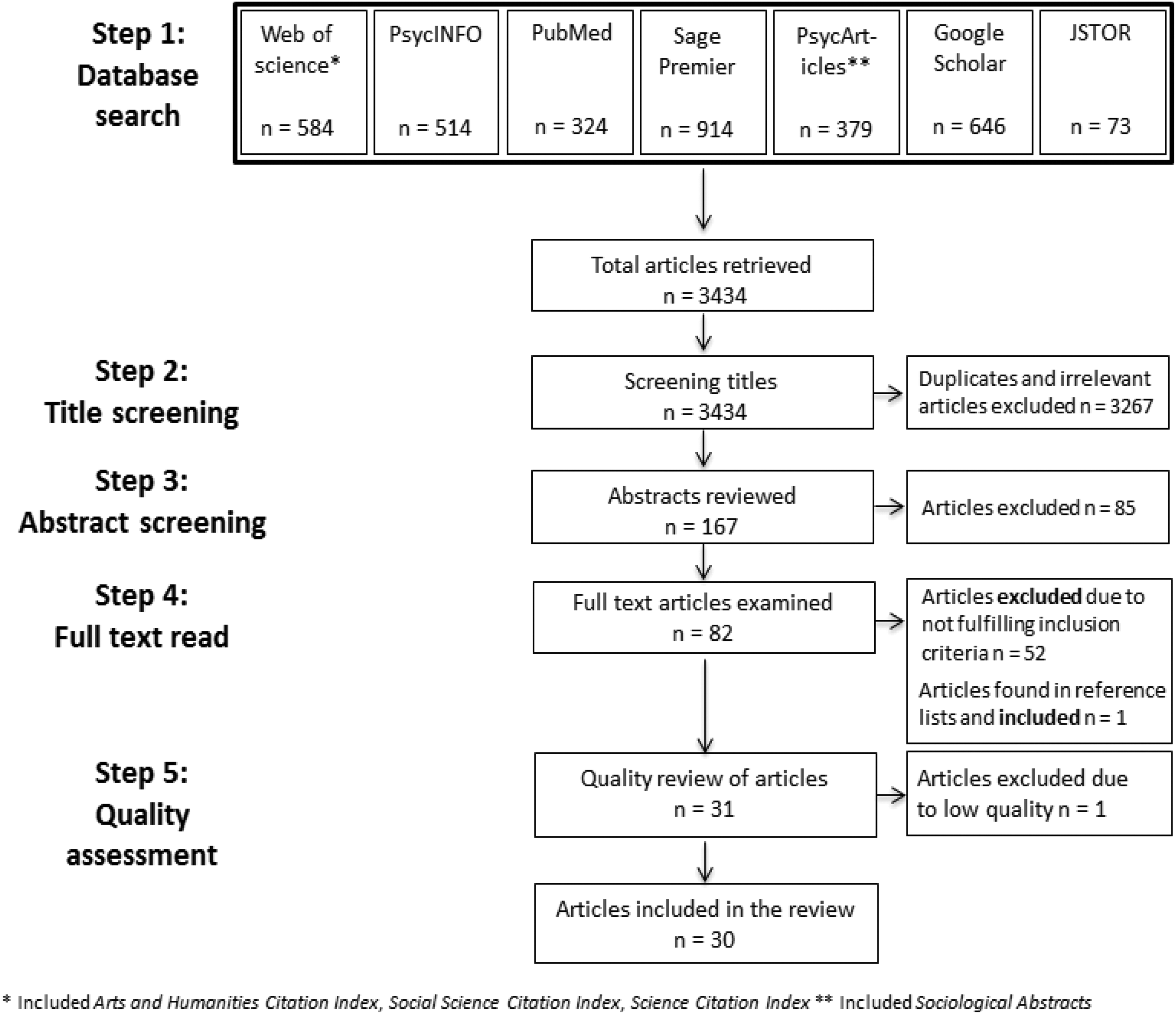
Search strategy and selection procedure.
Methodological Quality Assessment of Studies
In the final step of the article selection procedure, the methodological quality (i.e., the risk of bias) of the selected studies was reviewed. This is a crucial aspect when conducting a systematic review (Harden & Gough, 2012). The inclusion of studies that are methodologically weak or flawed will make the conclusions of the review less reliable. Thus, we created a checklist specifically for this systematic review in order to rank the studies according to their methodological quality. This checklist was mainly influenced by the evaluation guidelines for sampling, measurement, and analysis suggested by Boyle (1998) and adopted in previous review studies (e.g., Fry, McCoy, & Swales, 2012; Sooryanarayana, Choo, & Hairi, 2013). This checklist was also influenced by the quality criteria used by Rodrigues, Funderburk, Keating, and Maisto (2015).
Checklist for methodological quality
The checklist consisted of 11 criteria used to rank the studies according to methodological quality. Nine criteria were rated on a scale of 0–1, and two criteria were rated on a scale of 0–2. Sample size was scored as 0 (N < 50), 1 (N = 50–100), or 2 (N > 100), and source of IPV information was scored as 0 (perpetrator self-report), 1 (victim report, or victim report and perpetrator self-report), or 2 (official records). The remaining criteria of representativeness, standardized assessment of IPV, standardized assessment (of at least 50%) of additional constructs, subtypes based on Holtzworth-Munroe and Stuart’s (1994) dimensions, explicit comparisons to Holtzworth-Munroe and Stuart’s (1994) family-only subtype, appropriate statistical analysis (e.g., not using statistical analyses rendering a significant proportion of perpetrators as unclassifiable), relevant methodological discussion, and inclusion of a nonviolent control group were scored as 0 (criteria did not apply) or 1 (criteria applied). Finally, study design was scored as 0 (cross-sectional design) or 1 (experimental or longitudinal design).
Using our constructed checklist, a study could receive a maximum score of 13 points, with the following cutoffs for methodological quality set as: low (0–4), moderate (5–9), or high (> 9). The authors of this article determined these cutoffs arbitrarily. Of the 31 studies subjected to a quality review, 17 were deemed as having high quality, 13 studies as having moderate quality, and one study (Rhodes & Iwashyna, 2009) was deemed to be of low quality and was thereby excluded from this review. Altogether, a total of 30 studies were included in this review.
Thematic Analysis
Thematic analyses were conducted in order to analyze and organize the research findings. The thematic analysis provides a systematic framework for identifying codes and generating themes in data (Clarke & Braun, 2017). Codes are described as the smallest units of analysis and are identified on the basis of their relevancy for the specific research question. The codes are subsequently subsumed into themes. In the following words by Clarke and Braun (2017), “codes are the building blocks for themes, (larger) patterns of meaning, underpinned by a central organizing concept—a shared core idea. Themes provide a framework for organizing and reporting the researcher’s analytic observations” (p. 297).
We used thematic analysis to analyze and report the definitions and characteristics associated with family-only perpetrators. We were unable to carry out a thematic analysis for all included studies (N = 30) altogether, due to their different approaches (i.e., inductive and deductive [n = 18] 1 or only deductive [n = 12]). For the first analysis, we extracted all variables used to create family-only perpetrators from the inductive part of studies using an inductive and deductive approach (i.e., studies using cluster analytic approaches to create typologies). When analyzing the deductive studies (i.e., studies where family-only perpetrators were defined in advance), we initially identified 13 studies using such an approach. However, three of these studies (Berns, Jacobson, & Gottman, 1999; Gottman et al., 1995; Meehan, Holtzworth-Munroe, & Herron, 2001) based their typology on heart rate reactivity, which made them ineligible for the analyses due to that (1) several of the examined variables were psychophysiological, meaning that those studies would be in one category for themselves and, more importantly, (2) they found that this way of subtyping perpetrators was not useful. Of the 10 remaining deductive studies, 9 compared family-only and GV perpetrators, whereas one study (Holtzworth-Munroe, Meehan, Herron, Rehman, & Stuart, 2003) compared several different subtypes. This study was therefore grouped together with the studies using an inductive–deductive approach (i.e., inductive studies that also validated their subtypes on external variables) as they also compared several subtypes. Thus, for the thematic analysis of deductive studies, we analyzed all outcome variables used to compare family-only and GV perpetrators. Finally, we carried out a separate thematic analysis for the studies using both an inductive and a deductive approach. 2 For all analyses, variables were treated as codes and subsequently organized into themes and subthemes. Both authors of this review carried out the analyses independently, and any disagreements (e.g., placement of codes in subthemes) were solved through a joint discussion.
The content of the themes and subthemes (i.e., the specific traits defining and characterizing family-only perpetrators) was described in terms of low, moderate, or high level. Such an approach was deemed most appropriate given the variability across studies to describe the levels of various traits pertaining to the family-only perpetrator. For example, several studies used measurement instruments of traits that did not specify any cutoffs for what should be regarded as low, moderate, or high levels of a specific trait. In comparison, other studies used standardized instruments where base rates were used as cutoffs to determine traits of clinical relevance. In studies lacking such cutoffs or guidance for trait levels, the level of traits associated with family-only perpetrators was mainly determined by comparing this subtype on the specific trait with other IPV perpetrator subtypes in the specific study. Only six studies (Babcock, Green, & Webb, 2008; Chiffriller & Hennessy, 2006; Delsol, Margolin, & John, 2003; Holtzworth-Munroe, Meehan, Herron, Rehman, & Stuart, 2000; Theobald, Farrington, Coid, & Piquero, 2016; Waltz, Babcock, Jacobson, & Gottman, 2000) allowed for comparisons to be made with a nonviolent control group. This is clearly a methodological weakness in the research field studying IPV perpetrator subtypes that is further discussed in the discussion section of this review.
Results
The distribution of family-only perpetrators across the different sample types was on average 47.5% (SD = 16.5), with a median score of 49.6% (Q1 = 35.4%, Q3 = 59.6%, R = 12.2–80.0%). See Table 1 for the prevalence of family-only perpetrators and sample characteristics for the included studies.
Prevalence of family-only perpetrators in the reviewed literature and sample characteristics.
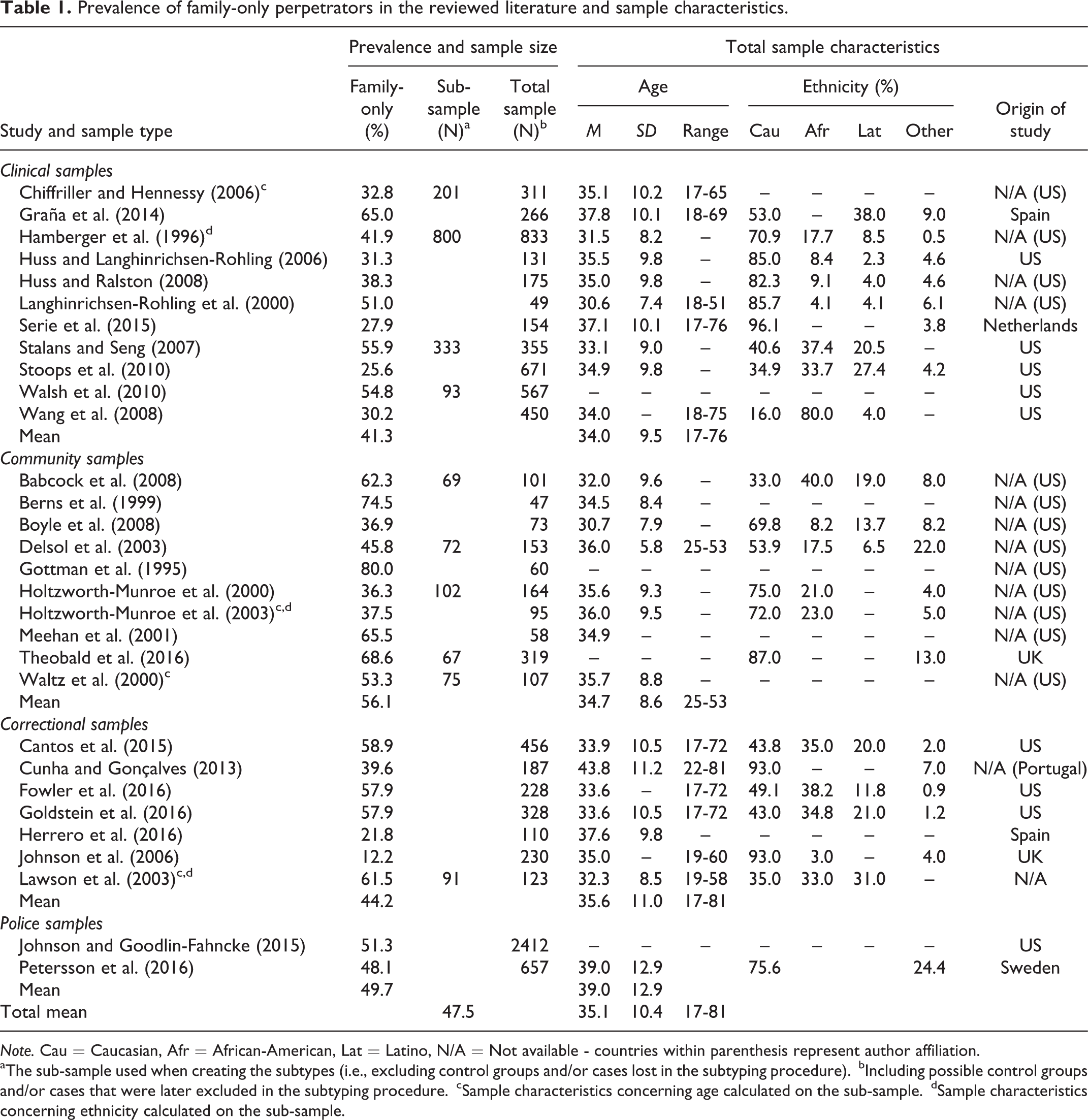
Note. Cau = Caucasian, Afr = African-American, Lat = Latino, N/A = Not available - countries within parenthesis represent author affiliation.
aThe sub-sample used when creating the subtypes (i.e., excluding control groups and/or cases lost in the subtyping procedure).
bIncluding possible control groups and/or cases that were later excluded in the subtyping procedure.
cSample characteristics concerning age calculated on the sub-sample.
dSample characteristics concerning ethnicity calculated on the sub-sample.
Definitions of Family-Only Perpetrators in Studies Using an Inductive Approach
As can be seen in Figure 2, the themes found for the characteristics of family-only perpetrators in the inductive studies were personality traits, violent and aggressive behavior, and psychopathological traits.
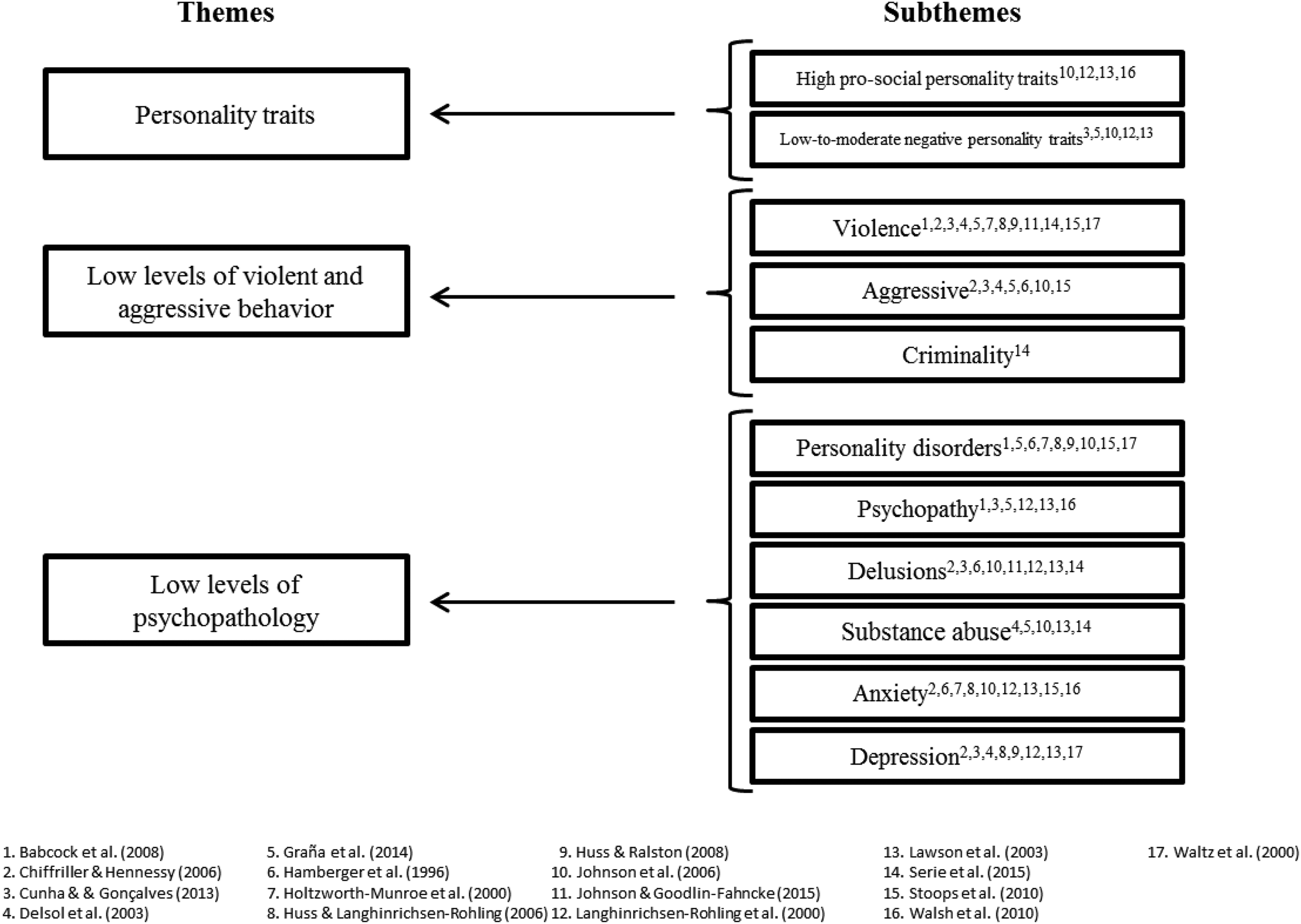
Themes and subthemes of variables used to create and define family-only perpetrators in the inductive part of studies using an inductive–deductive approach (n = 17).
Personality traits
High pro-social personality traits
Family-only perpetrators were defined as demonstrating moderate-to-high levels of several pro-social personality traits, such as agreeableness, extraversion, and conscientiousness (Walsh et al., 2010). Such perpetrators also evidenced moderate levels of perspective taking and having healthy and adaptive views of marital relationships (Johnson et al., 2006). Finally, family-only perpetrators also scored moderate-to-high levels of traits related to self-esteem (Johnson et al., 2006) and presenting oneself in overly positive terms (Johnson et al., 2006; Langhinrichsen-Rohling, Huss, & Ramsey, 2000; Lawson et al., 2003).
Low-to-moderate negative personality traits
Overall, family-only perpetrators were described as presenting low levels of stereotypical masculine behaviors (Langhinrichsen-Rohling et al., 2000; Lawson et al., 2003), low levels of hostility in general (Cunha & Gonçalves, 2013; Graña, Redondo, Muñoz-Rivas, & Cantos, 2014), and low levels of social introversion (Langhinrichsen-Rohling et al., 2000; Lawson et al., 2003). However, Johnson et al. (2006) reported that such perpetrators displayed moderate levels of traits related to a macho personality such as acceptance of interpersonal violence, hostility toward women, sex role stereotyping, and hypermasculinity.
Low Levels of Violent and Aggressive Behavior
Violence
Overall, the reviewed studies consistently demonstrated that family-only perpetrators used low levels of physical and psychological IPV (Babcock et al., 2008; Chiffriller & Hennessy, 2006; Cunha & Gonçalves, 2013; Delsol et al., 2003; Huss & Langhinrichsen-Rohling, 2006; Huss & Ralston, 2008; Johnson & Goodlin-Fahncke, 2015; Serie, van Tilburg, van Dam, & de Ruiter, 2015; Stoops, Bennett, & Vincent, 2010; Waltz et al., 2000). Such perpetrators also demonstrated low levels of sexual coercion toward their partners (Chiffriller & Hennessy, 2006; Graña et al., 2014). Furthermore, family-only perpetrators rarely inflicted injury to their partner (Graña et al., 2014). These perpetrators were also described as evidencing low levels of general violence (Babcock et al., 2008; Chiffriller & Hennessy, 2006; Delsol et al., 2003; Holtzworth-Munroe et al., 2000; Huss & Langhinrichsen-Rohling, 2006; Huss & Ralston, 2008; Johnson & Goodlin-Fahncke, 2015; Serie et al., 2015; Waltz et al., 2000).
Aggression
In line with previous results of levels of violence, family-only perpetrators were described as low-level aggressive. This held true for both physical aggression (Graña et al., 2014) and psychological aggression (Chiffriller & Hennessy, 2006; Graña et al., 2014) toward a partner. Furthermore, family-only perpetrators were also reported to demonstrate low levels of both general physical aggression (Cunha & Gonçalves, 2013; Delsol et al., 2003; Graña et al., 2014) and general verbal aggression (Delsol et al., 2003; Graña et al., 2014). Relatedly, such perpetrators displayed low levels of anger (Graña et al., 2014; Johnson et al., 2006; Stoops et al., 2010), anger expression and control (Graña et al., 2014), and passive aggressive-negativistic traits (Hamberger, Lohr, Bonge, & Tolin, 1996).
Criminality
Serie et al. (2015) reported that family-only perpetrators demonstrated low levels of general criminality.
Low Levels of Psychopathology
Personality disorder
Family-only perpetrators demonstrated low levels of traits related to personality disorders across the reviewed studies, including mainly cluster B personality disorders (Babcock et al., 2008; Graña et al., 2014; Hamberger et al., 1996; Holtzworth-Munroe et al., 2000; Huss & Langhinrichsen-Rohling, 2006; Huss & Ralston, 2008; Johnson et al., 2006; Stoops et al., 2010; Waltz et al., 2000), sadistic personality disorder (Johnson et al., 2006), and impulsiveness (Graña et al., 2014).
Psychopathy
Overall, family-only perpetrators showed low levels (i.e., not reaching clinically relevant scores) of psychopathy on several different measures (Babcock et al., 2008; Cunha & Gonçalves, 2013; Graña et al., 2014; Langhinrichsen-Rohling et al., 2000; Lawson et al., 2003; Walsh et al., 2010).
Delusions
Family-only perpetrators reportedly displayed low levels of paranoia and paranoid ideation (Cunha & Gonçalves, 2013; Johnson et al., 2006; Langhinrichsen-Rohling et al., 2000; Lawson et al., 2003), schizophrenia (Langhinrichsen-Rohling et al., 2000; Lawson et al., 2003), schizoidal–asocial traits (Hamberger et al., 1996), hypomania (Langhinrichsen-Rohling et al., 2000; Lawson et al., 2003), and low levels of psychopathology (including delusional traits) in general (Chiffriller & Hennessy, 2006; Johnson & Goodlin-Fahncke, 2015; Serie et al., 2015).
Substance abuse
Across the reviewed studies, family-only perpetrators were found to display low levels of alcohol and drug abuse (Delsol et al., 2003; Graña et al., 2014; Johnson et al., 2006; Lawson et al., 2003; Serie et al., 2015).
Anxiety
Family-only perpetrators demonstrated low levels of anxiety (Johnson et al., 2006), neuroticism (Chiffriller & Hennessy, 2006; Walsh et al., 2010), dependent-submissive traits (Hamberger et al., 1996; Huss & Langhinrichsen-Rohling, 2006), avoidant (Hamberger et al., 1996), trauma (Stoops et al., 2010), hysteria (Langhinrichsen-Rohling et al., 2000; Lawson et al., 2003), hypochondriasis (Langhinrichsen-Rohling et al., 2000; Lawson et al., 2003), psychasthenia (Langhinrichsen-Rohling et al., 2000; Lawson et al., 2003), fear of abandonment (Holtzworth-Munroe et al., 2000), and fearful attachment (Johnson et al., 2006). However, family-only perpetrators demonstrated moderate levels on preoccupied attachment (Johnson et al., 2006).
Depression
Overall, family-only perpetrators evidenced low levels of depression (Cunha & Gonçalves, 2013; Delsol et al., 2003; Huss & Langhinrichsen-Rohling, 2006; Huss & Ralston, 2008; Langhinrichsen-Rohling et al., 2000; Lawson et al., 2003) and dysthymia (Waltz et al., 2000). However, Chiffriller and Hennessy (2006) reported that such perpetrators had moderate levels of denying mood and interpersonal problems.
Characteristics Associated With Family-Only Perpetrators
Deductive studies were categorized into two groups: deductive studies comparing family-only with GV/criminal perpetrators (n = 9) and studies using both an inductive and a deductive approach when validating created typologies (n = 16).
Studies comparing family-only and generally violent/criminal perpetrators (n = 9)
As can be seen in Figure 3, the latent thematic analysis revealed five themes on which family-only and GV/criminal perpetrators have been compared: violent, aggressive, and antisocial behavior; attitudes and values; treatment; psychopathology; and sociodemographic characteristics. Additionally, several subthemes were identified where the results were contradictory and could not accurately characterize the family-only perpetrators. As such, no clear results were reported in terms of violence exposure in the family of origin (Boyle, O’Leary, Rosenbaum, & Hassett-Walker, 2008; Fowler, Cantos, & Miller, 2016; Herrero, Torres, Fernández-Suárez, & Rodríguez-Díaz, 2016; Wang, Horne, Holdford, & Henning, 2008), family of origin functioning (Herrero et al., 2016), or ethnicity (Cantos, Goldstein, Brenner, O’Leary, & Verborg, 2015; Goldstein, Cantos, Brenner, Verborg, & Kosson, 2016; Petersson, Strand, & Selenius, 2016).
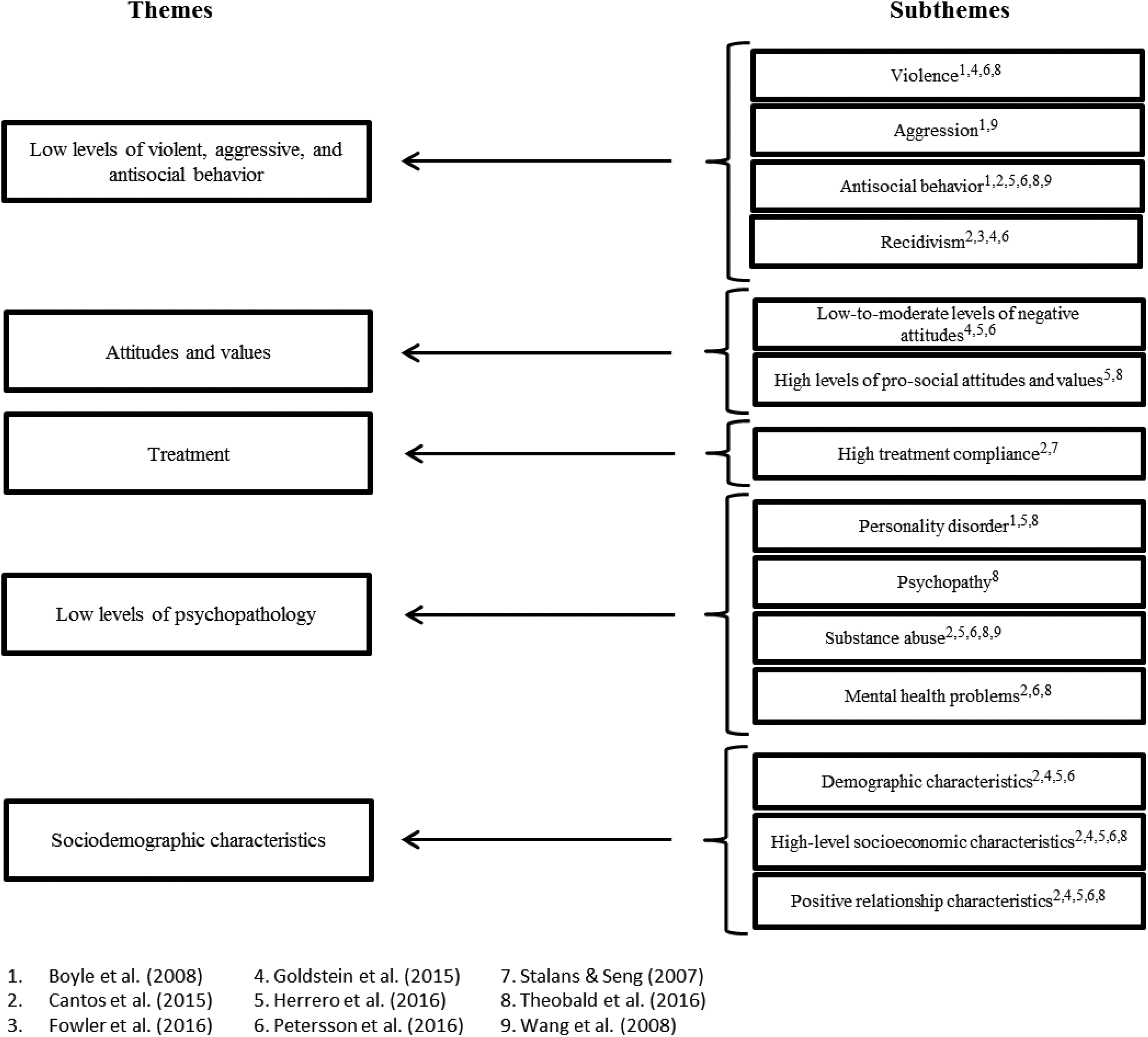
Themes and subthemes of characteristics related to family-only perpetrators in the studies using a deductive approach (n = 9).
Low Levels of Violent, Aggressive, and Antisocial Behavior
Violence
In terms of physical IPV, several studies have reported nonsignificant differences between family-only perpetrators and GV perpetrators (Boyle et al., 2008; Goldstein et al., 2016; Petersson et al., 2016). However, family-only perpetrators evidenced lower levels of psychological IPV (e.g., threats: Boyle et al., 2008; Petersson et al., 2016). Family-only perpetrators have further demonstrated being less likely to escalate their violent behavior (Petersson et al., 2016). Moreover, such perpetrators have also displayed lower levels of abuse toward family members (Boyle et al., 2008) as well as outside of the family (Theobald et al., 2016).
Aggression
Family-only perpetrators demonstrated lower levels of aggression toward a partner (Wang et al., 2008), as well as aggression in general (Boyle et al., 2008).
Antisocial behavior
Family-only perpetrators displayed lower levels of general antisocial and criminal behavior (Boyle et al., 2008; Petersson et al., 2016). They were also older by the time of the first arrest and imprisonment (Cantos et al., 2015; Herrero et al., 2016) and received shorter sentence time (Cantos et al., 2015). Family-only perpetrators also had a fewer number of previous convictions and self-reported offences (Cantos et al., 2015; Theobald et al., 2016).
Recidivism
Studies generally found that family-only perpetrators had a lower risk, assessed as well as actual, for IPV recidivism (Cantos et al., 2015; Goldstein et al., 2016; Petersson et al., 2016). However, Fowler et al. (2016) found no significant differences between family-only and GV/criminal perpetrators.
Attitudes and Values
Low-to-moderate negative attitudes
Studies showed that family-only perpetrators demonstrated lower levels of violent attitudes (Petersson et al., 2016) and sexism (Herrero et al., 2016). However, Goldstein et al. (2016) reported that nearly 60% of the family-only perpetrators in their sample denied engaging in IPV.
High levels of pro-social attitudes and values
Family-only perpetrators demonstrated several pro-social attitudes and values such as higher levels of community participation and integration (Herrero et al., 2016) and scoring high on the “life success score” (e.g., satisfactory employment and cohabitation history) measured by Theobald et al. (2016).
Treatment
High treatment compliance
Family-only perpetrators displayed higher levels of treatment completion and compliance (Cantos et al., 2015; Stalans & Seng, 2007).
Low Levels of Psychopathology
Personality disorders
Family-only perpetrators demonstrated lower levels of personality disorders such as cluster B personality disorders (e.g., antisocial and borderline personality disorders: Herrero et al., 2016; Theobald et al., 2016). They also demonstrated lower levels of temperament disinhibition (e.g., being less likely to act impulsively: Boyle et al., 2008).
Psychopathy
Theobald et al. (2016) found family-only perpetrators to score lower on all facets (i.e., interpersonal, impulsive/antisocial, lifestyle, and antisocial), as well as on total score, of the Psychopathy Checklist Screening Version (PCL:SV).
Substance abuse
In general, family-only perpetrators displayed lower levels of both alcohol and drug abuse (Cantos et al., 2015; Herrero et al., 2016; Petersson et al., 2016; Theobald et al., 2016; Wang et al., 2008).
Mental health problems
In general, among studies using a wider measure of mental health problems, family-only perpetrators were found to have lower levels of such problems (Petersson et al., 2016; Theobald et al., 2016). Cantos et al. (2015), however, did not find any significant differences between family-only and GV/criminal perpetrators.
Sociodemographic Characteristics
Demographic characteristics
Family-only perpetrators were consistently reported to be older than GV perpetrators (Cantos et al., 2015; Goldstein et al., 2016; Herrero et al., 2016; Petersson et al., 2016).
High-level socioeconomic characteristics
Overall, family-only perpetrators displayed higher levels of education (Cantos et al., 2015; Goldstein et al., 2016) as well as employment status (Cantos et al., 2015; Goldstein et al., 2016; Petersson et al., 2016; Theobald et al., 2016). Such perpetrators were also reported to, to a higher extent, have a satisfactory accommodation history (Theobald et al., 2016), a higher income (Cantos et al., 2015), and to come from more socially stable communities (Herrero et al., 2016).
Positive relationship characteristics
Family-only perpetrators were reported to have a higher level of satisfactory cohabitation history (Theobald et al., 2016), less intimate relationship problems (Petersson et al., 2016), more likely to be married (Cantos et al., 2015; Goldstein et al., 2016), and less likely to be single (Cantos et al., 2015). Herrero et al. (2016), however, found that family-only perpetrators were more likely to be divorced compared to GV/criminal perpetrators.
Inductive-deductive studies validating their typologies (n = 16)
Figure 4 illustrates the themes and subthemes that emerged from the thematic analysis of the deductive parts of the inductive–deductive studies. Several different subtypes were identified in these studies including family-only, GV/antisocial, borderline/dysphoric (BD), low-level antisocial (LLA), narcissistic, psychologically violent, pathological, and sexually violent. However, the family-only and GV subtypes were consistently identified in all 16 studies. As such, the comparisons below are mainly focusing on these two subtypes. Differences between the family-only subtype and other subtypes is explicitly stated. Additionally, subthemes with contradictory results were identified. As such, mixed results were found for denial of personal problems (Chiffriller & Hennessy, 2006; Lawson et al., 2003) and sociodemographic characteristics (Delsol et al., 2003; Hamberger et al., 1996; Holtzworth-Munroe et al., 2000).

Themes and subthemes of characteristics related to family-only perpetrators from the deductive parts (i.e., validation) of studies using an inductive–deductive approach (n = 16).
Low Psychopathology
Personality disorders
Family-only perpetrators displayed lower levels of cluster B personality disorders (Holtzworth-Munroe et al., 2003; Walsh et al., 2010; Waltz et al., 2000). Moreover, family-only perpetrators were less likely than the BD subtype to display borderline (Hamberger et al., 1996; Holtzworth-Munroe et al., 2000; Walsh et al., 2010); obsession compulsion (Cunha & Gonçalves, 2013); and depressive, passive-aggressive, or self-defeating personality disorders (Holtzworth-Munroe et al., 2000).
Substance abuse
Family-only perpetrators consistently displayed lower levels of alcohol and drug abuse (Cunha & Gonçalves, 2013; Graña et al., 2014; Holtzworth-Munroe et al., 2000, 2003; Huss & Langhinrichsen-Rohling, 2006; Stoops et al., 2010; Waltz et al., 2000). Only one study reported findings in the opposite direction (Lawson et al., 2003), and one study (Walsh et al., 2010) found no significant differences. Family-only perpetrators also had lower levels of alcohol and drug abuse than the BD (Graña et al., 2014; Hamberger et al., 1996; Holtzworth-Munroe et al., 2000, 2003; Stoops et al., 2010; Waltz et al., 2000) and the LLA subtypes (Holtzworth-Munroe et al., 2003). Finally, Langhinrichsen-Rohling et al. (2000) reported higher levels of substance abuse among family-only perpetrators than BD perpetrators.
Psychopathy
Family-only perpetrators consistently showed lower levels of psychopathy (Cunha & Gonçalves, 2013; Holtzworth-Munroe et al., 2000, 2003; Huss & Langhinrichsen-Rohling, 2006; Lawson et al., 2003). This difference also held true for comparisons with the BD (Cunha & Gonçalves, 2013; Holtzworth-Munroe et al., 2003; Huss & Langhinrichsen-Rohling, 2006; Lawson et al., 2003) and the LLA subtypes (Holtzworth-Munroe et al., 2003; Huss & Langhinrichsen-Rohling, 2006).
Delusions
Family-only perpetrators evidenced lower levels of delusions including schizotypal (Waltz et al., 2000), schizophrenia, and familial alienation (Lawson et al., 2003). Such perpetrators also displayed lower levels of the following traits compared to the BD subtype: schizophrenia (Lawson et al., 2003), schizotypal (Hamberger et al., 1996; Waltz et al., 2000), thought disorder (Holtzworth-Munroe et al., 2000), psychotic delusions, psychotic thinking, and psychotic depression (Hamberger et al., 1996), as well as paranoia and hypomania (Hamberger et al., 1996; Lawson et al., 2003).
Anxiety
Overall, family-only perpetrators showed lower levels of traits related to anxiety (Delsol et al., 2003; Lawson et al., 2003; Walsh et al., 2010). This was also true compared to the BD (Cunha & Gonçalves, 2013; Hamberger et al., 1996; Holtzworth-Munroe et al., 2000; Lawson et al., 2003; Walsh et al., 2010) and the psychologically violent subtypes (Chiffriller & Hennessy, 2006).
Depression and suicide
Lawson et al. (2003) found that family-only perpetrators displayed less depression. This was also true compared to the BD (Hamberger et al., 1996; Holtzworth-Munroe et al., 2000; Huss & Langhinrichsen-Rohling, 2006; Walsh et al., 2010) and the LLA subtypes (Huss & Langhinrichsen-Rohling, 2006). However, Waltz et al. (2000) found no significant differences between subtypes and a control group in terms of major depression. Related to major depression, family-only perpetrators were reported as less likely than the GV, LLA, narcissistic, and the BD subtypes to have attempted suicide (Johnson et al., 2006) and less likely to have displayed suicidal ideation than the BD subtype (Lawson et al., 2003). However, Langhinrichsen-Rohling et al. (2000) found no significant differences in suicide ideation between family-only, GV, and BD perpetrators.
General mental health problems
Family-only perpetrators evidenced lower levels of general mental health problems compared to the BD subtype (Cunha & Gonçalves, 2013; Hamberger et al., 1996) and lower levels of pathology than the sexually and the psychologically violent subtype (Chiffriller & Hennessy, 2006). However, they displayed higher levels of psychopathology than the psychologically violent subtype (Chiffriller & Hennessy, 2006).
Personality Traits
Less problematic attachment
Family-only perpetrators showed lower levels of fear of abandonment (Holtzworth-Munroe et al., 2003). This relationship held true also for the BD subtype, along with several other attachment traits, such as angry withdrawal (Waltz et al., 2000), fearful attachment (Holtzworth-Munroe et al., 2003), preoccupied attachment, and spouse-specific dependence (Holtzworth-Munroe et al., 2000, 2003). However, the family-only perpetrators displayed higher levels of compulsive care seeking than a nonviolent control group (Waltz et al., 2000).
Less violent attitudes
In general, family-only perpetrators had lower levels of attitudes condoning IPV (Delsol et al., 2003; Holtzworth-Munroe et al., 2000, 2003) and lower levels of hostility toward women in general (Holtzworth-Munroe et al., 2003). The same relationship held true compared to the BD and the LLA subtypes (Holtzworth-Munroe et al., 2003). However, such attitudes were still more frequent among family-only perpetrators than among a nonviolent control group (Holtzworth-Munroe et al., 2000).
Higher emotion recognition
Overall, family-only perpetrators displayed higher levels of accuracy in labeling a spouse’s expressed emotions (e.g., happiness and anger,) as well as making less mistakes in identifying such emotions (Babcock et al., 2008).
Pro-social personality traits
Family-only perpetrators showed lower levels of interpersonal sensitivity than the BD subtype (Cunha & Gonçalves, 2013). Other studies found no significant differences between subtypes in terms of likeability and frustration tolerance (Langhinrichsen-Rohling et al., 2000; Lawson et al., 2003).
Low negative personality traits
Overall, family-only perpetrators displayed lower levels of negative personality traits such as anger (Hamberger et al., 1996; Huss & Langhinrichsen-Rohling, 2006; Huss & Ralston, 2008), jealousy and impulsivity (Holtzworth-Munroe et al., 2000, 2003; Waltz et al., 2000), and social introversion (Lawson et al., 2003), than the GV and BD subtypes. They also evidenced lower levels of hostility compared to the BD subtype (Cunha & Gonçalves, 2013). However, the family-only perpetrators displayed higher levels of social desirability than both the GV and the BD subtypes (Hamberger et al., 1996; Holtzworth-Munroe et al., 2000).
IPV
General IPV
Family-only perpetrators consistently demonstrated lower levels of general IPV than the GV (Delsol et al., 2003; Hamberger et al., 1996; Holtzworth-Munroe et al., 2000, 2003; Huss & Langhinrichsen-Rohling, 2006; Huss & Ralston, 2008; Lawson et al., 2003; Stoops et al., 2010), the BD (Delsol et al., 2003; Hamberger et al., 1996; Holtzworth-Munroe et al., 2000, 2003; Lawson et al., 2003; Stoops et al., 2010), the LLA (Huss & Langhinrichsen-Rohling, 2006), and the sexually violent, the psychologically violent, and the pathological subtypes (Chiffriller & Hennessy, 2006). However, Walsh et al. (2010) reported higher levels of IPV among family-only perpetrators compared to a nonviolent control group.
Low psychological violence
Family-only perpetrators displayed lower levels of psychological violence compared to the GV (Delsol et al., 2003; Holtzworth-Munroe et al., 2000, 2003; Huss & Langhinrichsen-Rohling, 2006; Waltz et al., 2000), the BD (Delsol et al., 2003; Holtzworth-Munroe et al., 2000; Huss & Langhinrichsen-Rohling, 2006; Waltz et al., 2000), the LLA (Huss & Langhinrichsen-Rohling, 2006), and the psychologically violent and the pathological subtypes (Chiffriller & Hennessy, 2006).
Low sexual violence
In line with the results of general and psychological IPV, family-only perpetrators were in general less likely to be sexually violent with a partner (Holtzworth-Munroe et al., 2000, 2003; Huss & Langhinrichsen-Rohling, 2006).
Low risk of recidivism
In general, family-only perpetrators evidenced lower IPV recidivism rates and took longer time to recidivate (Huss & Ralston, 2008), as well as being assessed with a lower risk of such recidivism (Langhinrichsen-Rohling et al., 2000). However, studies found such perpetrators to be more (Stoops et al., 2010) and less likely (Huss & Ralston, 2008) to recidivate in IPV compared to the BD subtype.
General Criminality
Low general criminality
In terms of criminal behavior (e.g., previous criminal records), family-only perpetrators showed lower levels than the GV (Cunha & Gonçalves, 2013; Graña et al., 2014; Hamberger et al., 1996; Holtzworth-Munroe et al., 2000, 2003; Stoops et al., 2010; Walsh et al., 2010), the BD (Cunha & Gonçalves, 2013; Graña et al., 2014; Hamberger et al., 1996; Holtzworth-Munroe et al., 2000), and the LLA subtypes (Holtzworth-Munroe et al., 2000).
Low antisocial behavior
Several studies reported family-only perpetrators as displaying lower levels of antisocial behavior, such as general violence and associating with delinquent peers, compared to the GV, the BD, and the LLA subtypes (Graña et al., 2014; Hamberger et al., 1996; Holtzworth-Munroe et al., 2000, 2003; Huss & Langhinrichsen-Rohling, 2006; Johnson et al., 2006; Walsh et al., 2010). Family-only perpetrators also demonstrated lower levels of conduct disorder compared to the BD and GV subtypes (Stoops et al., 2010).
Victimization
Witness IPV as a child
Several reviewed studies demonstrated that family-only perpetrators were less likely than the GV and the BD subtypes to have witnessed parental IPV during childhood (Cunha & Gonçalves, 2013; Graña et al., 2014; Hamberger et al., 1996; Stoops et al., 2010; Waltz et al., 2000). However, several other studies found no significant differences between subtypes (Delsol et al., 2003; Holtzworth-Munroe et al., 2000; Johnson et al., 2006; Lawson et al., 2003) in witnessing such violence.
Physical victimization
Several studies showed that family-only perpetrators experienced lower levels of physical victimization during childhood than other subtypes (Cunha & Gonçalves, 2013; Hamberger et al., 1996; Johnson et al., 2006). However, other results demonstrated no significant differences (Delsol et al., 2003; Holtzworth-Munroe et al., 2000; Waltz et al., 2000) or that family-only perpetrators experienced higher levels of childhood abuse than the GV subtype (Langhinrichsen-Rohling et al., 2000).
Relationship Characteristics
Marital stability and skills
Family-only perpetrators displayed higher levels of marital satisfaction as reported by both the perpetrator (Delsol et al., 2003) and the partner (Holtzworth-Munroe et al., 2003). Family-only perpetrators also had more stable relationships and lower divorce rates than both the GV and the BD subtypes (Holtzworth-Munroe et al., 2003). Finally, family-only perpetrators were also found to display lower levels of response incompetency in both marital and nonmarital situations than the GV and BD subtypes (Holtzworth-Munroe et al., 2000; Waltz et al., 2000).
Treatment
Treatment compliance
Overall, family-only perpetrators showed higher levels of both treatment attendance and treatment completion than the GV and the BD subtypes (Huss & Ralston, 2008; Stoops et al., 2010), as well as being less likely to have received psychiatric or psychological help in the past (Holtzworth-Munroe et al., 2003). Langhinrichsen-Rohling et al. (2000) found no significant differences between subtypes in terms of treatment program success.
Discussion
The aim of this systematic review was to examine the distribution of family-only IPV perpetrators across different sample types and to synthesize the characteristics associated with this subtype in the research literature. In line with Holtzworth-Munroe and Stuart’s (1994) initial suggestions, as well as Dixon and Browne’s (2003) findings, family-only perpetrators constituted, on average, nearly 50% of IPV perpetrators across the reviewed studies. However, this cannot be said to be valid for the general population until studies with an epidemiological design are carried out.
Drawing on the results of this review, the characteristics of the family-only perpetrator that emerged generally confirmed Holtzworth-Munroe and Stuart’s (1994) initial predictions. As such, these perpetrators generally demonstrated low levels of violence (including low levels of psychological and sexual violence), low levels of general violence and criminality, and low levels of various forms of psychopathology (see Figure 4). This included low levels of anger, depression, impulsivity, substance abuse, and family of origin violence exposure, as well as moderate levels of preoccupied attachment.
We also found support for the notion of family-only perpetrators as well functioning compared to other IPV perpetrators subtypes (Holtzworth-Munroe & Stuart, 1994). As such, the characteristics associated with family-only perpetrators reported in this review paint a clear picture of an IPV perpetrator who is socially more well-adjusted outside of the relationship than other subtypes (mainly the GV subtype: e.g., Holtzworth-Munroe et al., 2000; Johnson et al., 2006; Walsh et al., 2010). For example, while still being violent toward their partner (e.g., Boyle et al., 2008; Petersson et al., 2016), family-only perpetrators were generally found to display low levels of hostility in general (e.g., Cunha & Gonçalves, 2013; Graña et al., 2014), exhibiting several prosocial traits (e.g., agreeableness, conscientiousness, pro-social attitudes and values, and community participation: e.g., Herrero et al., 2016; Walsh et al., 2010), and high-level sociodemographic characteristics (e.g., Cantos et al., 2015; Theobald et al., 2016). These results also favors the notion of family-only perpetrators as having a higher stake in conformity (Goldstein et al., 2016; Mach et al., 2017), using violence primarily as a mean to resolve marital conflicts, however, not as part of an overall antisocial lifestyle.
Limitations of the Review
Perhaps the most obvious limitation of this review concerns the ability to accurately describe the level of traits that family-only perpetrators presented. The majority of reviewed studies did not specify cutoffs for what should be regarded as low, moderate, or high levels of a specific trait. Hence, any judgements on such levels of traits were made in comparisons with other IPV perpetrators subtypes. The same issue was actualized in the majority of studies that did not include a nonviolent control group. As such, low levels of a certain trait in a batterer population might constitute a high level in a nonviolent population. This emphasizes the need to include nonviolent control groups where possible, in order to further clarify the actual levels of traits evidenced by the family-only perpetrator. However, although the comparisons of trait levels were mostly relative, these were in line with Holtzworth-Munroe and Stuart’s (1994) suggestions. As such, family-only perpetrators evidenced lower levels of various violence-related traits compared to other subtypes. Additionally, this review demonstrated that the family-only subtype rarely differed from a nonviolent control group, at least not to the same extent as other IPV subtypes (Tables 2 and 3).
Key Points of the Research Review.

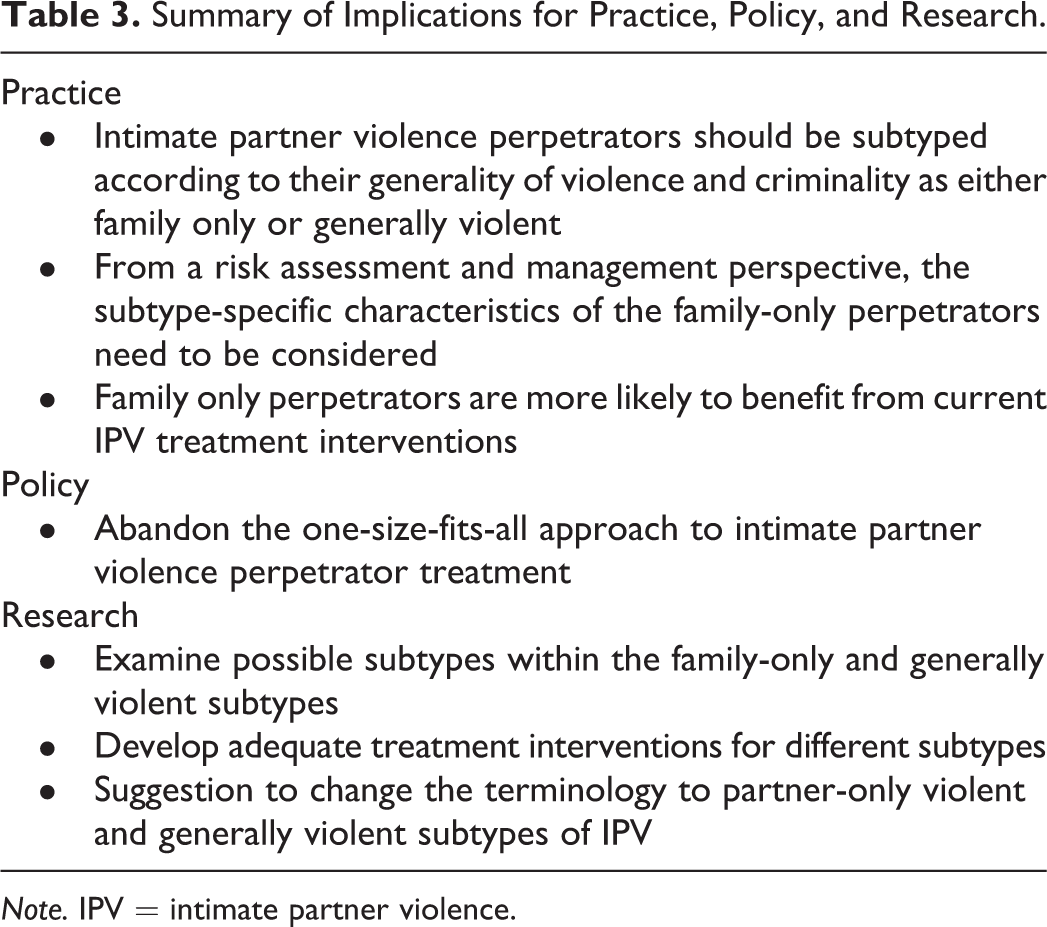
Summary of Implications for Practice, Policy, and Research.
Note. IPV = intimate partner violence.
Conclusion
Implications for Practice
An unresolved issue concerns how to accurately identify IPV perpetrator subtypes (e.g., Mach et al., 2017). This review demonstrated two findings central to this end. First, without exception, all studies demonstrated the existence of a family-only and a GV perpetrator. Second, these subtypes differed exclusively from each other in terms of their generality of violence and criminality. Therefore, categorizing IPV perpetrator subtypes based on their generality of violence/criminality (e.g., using official records or self-reports) into non-GV/criminal (i.e., family-only) and GV/criminal subtypes is deemed the most fruitful approach. This categorization holds several important practical implications. Given that these perpetrators differed in terms of risk for recidivism (e.g., Huss & Ralston, 2008), the first step in any risk assessment for future violence should be to identify the perpetrator as either family-only or GV. This could help guide decisions of the level of interventions necessary to prevent IPV. Also, family-only perpetrators showed higher levels of treatment compliance and completion than GV perpetrators (e.g., Cantos et al., 2015). Thus, identification of perpetrator subtype should be mandatory at a pretreatment assessment stage as it can increase the likelihood of treatment success. Finally, subtyping IPV perpetrators according to generality of violence and criminality is practically useful for non-clinically trained criminal justice professionals working with such perpetrators.
Implications for Policy
The results in this review have strong implications for the IPV treatment policy. As demonstrated in this review, the heterogeneity among IPV perpetrators is not compatible with a one-size-fits-all approach to IPV treatment. The current state of affairs requires a more sophisticated treatment–patient matching based on the characteristics of the specific perpetrator subtype. Given that GV perpetrators show significantly lower levels of treatment compliance and completion, they might require pretreatment motivational interventions (e.g., targeting their higher levels of substance abuse or unemployment) before being enrolled to IPV treatment.
Implications for Research
A key finding of this review was that all included studies consistently identified both the family-only and the GV subtypes. However, although the identified subtypes were compared and paralleled to Holtzworth-Munroe and Stuart’s (1994) family-only and GV/antisocial subtypes, the terminology differed in some studies (see, e.g., Boyle et al., 2008; Graña et al., 2014). Moreover, the term “family-only” has been criticized as misleading as Holtzworth-Munroe and Stuart’s (1994) definition of such perpetrators also included those who used general violence (see Brasfield, 2015 for a discussion). Thus, we suggest the following revisions to current IPV perpetrator typology research. First, a typology of IPV perpetrators should emanate from the dichotomization of general violence and criminality. Thus, such subtypes should be mutually exclusive in terms of perpetrators using general violence and/or criminality. Second, the terminology of such a typology should consist of a partner-only (PO) violent and a GV subtype (adopted from Boyle et al., 2008). In terms of IPV, the suggested PO subtype would be more accurate than the term “family-only,” as the latter seems more indicative for the broader phenomenon of family violence. Importantly, we recommend future research to investigate the existence of additional perpetrator subtypes within the PO violent and the GV subtypes, in order to acquire a more detailed understanding of IPV perpetrator subtypes.
Footnotes
Declaration of Conflicting Interests
The author(s) declared no potential conflict of interest with respect to the research, authorship, and/or publication of this article.
Funding
The author(s) received no financial support for the research, authorship, and/or publication of this article.