



Abstract
Behavioral parenting interventions can enhance positive parenting practice, which is crucial in preventing maltreatment and promoting child well-being. Primary care has been increasingly recognized as an underutilized platform to widely disseminate evidence-based parenting interventions, given parents’ ongoing access to primary care without stigma and the perceptions toward health-care providers as a trustworthy source of information about positive parenting. This study sought to explore the effects of primary care–based parenting interventions on parenting practice and child behavioral outcomes while examining the types of and the theories of change underlying these interventions. The review followed the Preferred Reporting Items for Systematic Reviews and Meta-Analyses guideline. Randomized controlled trials or quasi-experimental studies of interventions targeting caregivers of children aged between 1 and 17 were included in the review. Information sources included electronic databases, relevant government and private organizational websites, and expert consultations. The final sample included 17 studies focusing on 10 interventions. Positive results were found in knowledge gain, locus of control, monitoring, parent–child interactions, and negative discipline. Child behavior outcomes were inconsistent as most studies reported nonsignificant changes while one study reported significant intervention effects on various externalizing behaviors. A limited number of studies described the process of adapting, installing, and implementing the interventions in primary care. Future studies should examine the types, dosages, and delivery formats that are most suitable and sustainable in the context of primary care to maximize its utility in promoting child well-being while preventing maltreatment through integrated behavioral parenting interventions.
Keywords
It was estimated that 683,000 children in the United States were victims of maltreatment in 2015, including 1,670 fatal cases (U.S. Department of Health & Human Services, Children’s Bureau, Administration for Children and Families, Administration on Children, Youth and Families, 2016). Maltreatment exposure is associated with myriad consequences including academic underachievement, an increased likelihood of receiving special education services, and a higher risk of developing internalizing and externalizing behavioral problems as well as childhood obesity, eating disorders, and an array of other health problem (Leenarts, Diehle, Doreleijers, Jansma, & Lindauer, 2013; Norman et al., 2012).
In 2008 alone, the cost to address a nonfatal child maltreatment case was reported to be as large as US$210,000, including medical costs, productivity losses, welfare costs, criminal justice costs, and special education costs (Fang, Brown, Florence, & Mercy, 2012). The impact of maltreatment reaches far beyond the individual level, creating substantial burdens to the entire society. Given the serious impact of maltreatment at the micro- and macrolevel, the Centers for Disease Control and Prevention (CDC) recognized child maltreatment as an important public health issue in late 1990s and has made consistent efforts to prevent maltreatment.
Two of the CDC’s major strategies for maltreatment prevention involve supporting parents and enhancing positive parenting. The focus on parents is a logical direction, given that a majority of maltreatment cases are known to involve at least one parent as a perpetrator (Fortson, Klevens, Merrick, Gilbert, & Alexander, 2016). It is widely known that harsh or ineffective discipline, involving verbal, emotional, and physical aggression is associated with maltreatment and poor developmental outcomes (Bender et al., 2007; Weiss, Dodge, Bates, & Pettit, 1992). On the other hand, parents’ ability to create a nurturing environment through positive parent–child relationships early in a child’s life represents an important protective factor that can mitigate the effects of children’s exposure to various adversities (Shonkoff, 2012). A solid body of evidence suggests that positive parenting practice can be learned through participation in behavioral parenting interventions (Shaffer, Kotchick, Dorsey, & Forehand, 2001).
Despite accumulated evidence of the benefits of behavioral parenting interventions, most of them focus on parents and children with identified needs, thus creating stigma toward participants (Barth & Liggett-Creel, 2014; Leslie et al., 2016). Access to these interventions for parents without identified needs continues to be limited despite expressed needs (Zero to Three, 2016). Moreover, parenting interventions have been consistently related with low participation and high attrition rates due to parents’ competing priorities, scheduling, and transportation issues (Heinrichs, Bertram, Kuschel, & Hahlweg, 2005; Leslie et al., 2016; Marshall, Green, & Spiby, 2014; Nix, Bierman, & McMahon, 2009; Zero to Three, 2016).
Recognizing these concerns, alternative strategies have been explored for disseminating parenting interventions to a wider audience by targeting parents with and without identified needs. An array of approaches has been explored, including universal or early intervention parenting programs as well as multilevel population-based parenting interventions (Altafim & Linhares, 2016; Barth, 2009). Amid this exploration, primary care has been increasingly identified as a “potential home” for parenting interventions (Leslie et al., 2016, p. s106).
Several factors contribute to the value of primary care as a potential home for parenting interventions. Most importantly, the target audience (i.e., parents) typically has ongoing access to primary care in the context of sick and well-child care, providing a natural access point to the interventions without stigma (Leslie et al., 2016). Additionally, child-rearing guidance has long been recognized as an important part of a pediatrician’s job. As early as the 1990s, the American Academy of Pediatrics (AAP) Committee on Psychosocial Aspects of Child and Family published a statement regarding effective discipline strategies, based upon which pediatricians’ anticipatory guidance has been developed (Regalado, Sareen, Inkelas, Wissow, & Halfon, 2004). Parents also perceive physicians as a trustworthy source of information related to parenting and want to receive support from health-care professionals in broad developmental areas of parenting including sleeping, feeding, and toileting as well as discipline strategies, behavior management, schooling, sibling rivalry, shyness, and sex education (Long, 1998; Marshall et al., 2014). Thus, parenting guidance in primary care is not entirely new to providers or parents, increasing the acceptability of these interventions.
However, analysis of data from the National Survey of Early Childhood Health indicated that less than a half of participants received discipline support from their pediatricians. The unmet need was much higher for Spanish-speaking parents (43%) compared to English-speaking mothers (20%; Regalado et al., 2004). Recognizing this gap, increased efforts have been made to systematically and strategically integrate parenting interventions into primary care. Intervention strategies vary from parent education programs facilitated by physicians or other health-care professionals to more intensive evidence-based parenting interventions led by licensed behavioral health professionals (Kanoy & Schroeder, 1985; Mendelsohn et al., 2007; Petrowski, 1981; Webster-Stratton, Reid, & Hammond, 2001). Previous studies have shown that these interventions hold promise for promoting positive parent–child relationships and reducing child’s behavioral problems (Perrin, Sheldrick, McMenamy, Henson, & Carter, 2014). To date, only one meta-analysis has been conducted on the topic of primary care–based parenting interventions (Shah, Kennedy, Clark, Bauer, & Schwartz, 2016). The results indicated significant intervention effects on parent–child interaction (summary standard mean difference (SMD): 0.29, 95% confidence interval [CI] = [0.06, 0.52], p < .0001) and child reading ability (summary SMD: 0.34, 95% CI [0.03, 0.54], p < .001). The analysis was limited to the primary care–based parenting interventions targeting parents of children from birth to 3 years of age and the primary outcome of interest was parenting behaviors that promote early child development.
Present Study
Promising results reported by previous studies of primary care–based parenting interventions and ever-increasing volume of recent works point to the need for a more comprehensive review, examining a wide array of parenting dimensions and outcomes for children in various age groups. As such, the current systematic review was set out to explore (1) what evidence exists regarding the effectiveness of behavioral parenting interventions delivered in primary care settings on enhancing positive parenting and (2) what evidence exists regarding the effectiveness of behavioral parenting interventions delivered in primary care settings on reducing child’s behavioral problems.
For the purpose of this review, parenting interventions are loosely defined as interventions seeking to enhance positive parenting in multiple dimensions discussed in previous parenting literature. The historical paradigm in understanding the roles of parents and parenting practices has changed substantially, and definition of parenting remains elusive (O’Conner, 2002). Therefore, the operationalization of parenting and related interventions is purposefully broad, given the exploratory nature of this review. Accordingly, the review encompassed a wide range of parent outcomes including parenting knowledge, parenting behaviors, parenting skills and techniques, parenting styles, attitudes and beliefs toward parenting, parent affect toward child, parental competence or self-efficacy, and parental stress.
Method
The current systematic review was conducted following the Preferred Reporting Items for Systematic Reviews and Meta-Analysis guidelines. The review protocol was published in the International Prospective Register of Systematic Reviews (PROSPERO) on the February 15, 2017 (registration number: CRD42017056129).
Eligibility Criteria
Randomized controlled trials (RCTs) or quasi-experimental studies with control or contrast groups were included in the review. Interventions had to target caregivers of children between 1 and 17 years of age. Studies had to take place in primary care facilities in the United States, such as pediatrics, family practice, general practice, and obstetrics and gynecology, which are utilized as primary care for some women. Multiple comparison groups, including wait-list groups, delayed participation, treatment as usual, or no participation in the intervention were included.
The primary outcomes of interest were (1) parenting outcomes in multiple domains, including parenting knowledge, parenting behavior, parenting skills and techniques, parenting style, parenting attitudes and beliefs, parent affect toward child, parental competence or self-efficacy, and other outcomes that have been shown to be closely associated with parenting ability such as parental stress or locus of control and (2) child behavioral outcomes. No restriction was established with regard to the timing of data collection, thus including studies that measured outcomes at postintervention as well as follow-up points. Studies were considered eligible regardless of the publication type. Only studies written in English were included.
Information Sources
Literature searches were conducted using electronic databases covering a variety of topics related to health, behavioral health, and social sciences, including Medline, PubMed, CINAHL, Nursing & Allied Health Database, PsycINFO, Web of Science, and Proquest Dissertation and Thesis. Additionally, the Campbell Collaboration Library, Cochrane Library, and PROSPERO databases were searched to identify systematic reviews and meta-analyses to be used for forward and backward searching to enhance comprehensiveness. Gray literature was searched through the websites and the databases of the relevant government and private associations including American Academy of Pediatricians, American Academy of Family Physicians, Zero to Three, and Blueprints for Healthy Youth Development. Finally, experts in relevant fields were consulted for additional sources of gray literature.
Study Records
Data management
Data were downloaded into the citation manager software EndNote Version X7 for organization and deduplication. The citations were then imported for screening into the Web-based systematic review software Covidence, which is one of their commended tools for systematic reviews by Cochrane Community (2017).
Selection process
The corresponding author screened the entire list of references, while the second and third authors divided the references for screening, full-text review, extraction, and the risk of bias assessment. The reviewers independently engaged in the title and abstract screening against the eligibility criteria. The percent agreement was approximately 87% in the beginning of the screening. Any disagreement was resolved through team discussion. The third reviewer served as an arbitrator for unresolved disagreement among the first two reviewers. When the screening process was completed for about a half of all imported references, the percent agreement reached 95%, which was maintained until the end of the entire screening process.
Data extraction
Data extraction was conducted using Microsoft Excel spreadsheets developed based on the template provided by the Cochrane Collaboration. The data extraction process was an iterative process as new items were added during the extraction process.
Risk of bias assessment
The Cochrane Risk of Bias tool was used to assess the risk of bias of RCT studies included in the review. The first author conducted the risk of bias assessment for the entire list of included studies while the second and the third authors equally divided the number of included studies for the assessment. The risk of bias was as “high,” “low,” and “unclear” for all studies as suggested by Higgins et al. (2011). For nonrandomized studies included in the review, the “Risk of Bias in Nonrandomized Studies of Interventions” was used. The assessment was conducted using the prepopulated template feature in Covidence for consistency among the reviewers and efficient management of the data. The first author made a final judgment based on the assessment and rationale provided by the second and third reviewer.
Confidence in cumulative estimate
The quality of body of evidence was examined and critiqued based on the grades of recommendation, assessment, development, and evaluation approach, focusing on methodological quality, directness of evidence, heterogeneity, precision of effect estimates, and publication bias of the included studies as recommended by the Cochrane Collaboration (2011).
Results
Included Studies
The initial search produced 1,174 studies, which were reduced to 1,009 records after deduplication using the reference managing software, Endnote Version 7.4. After the title and abstract screening, 896 studies were excluded, resulting in 113 studies to be included in the full-text review. After the full-text review, 97 additional studies were excluded, resulting in 17 studies to be included as the final sample. Reason for the exclusion and the process of screening and review process is summarized in Figure 1.
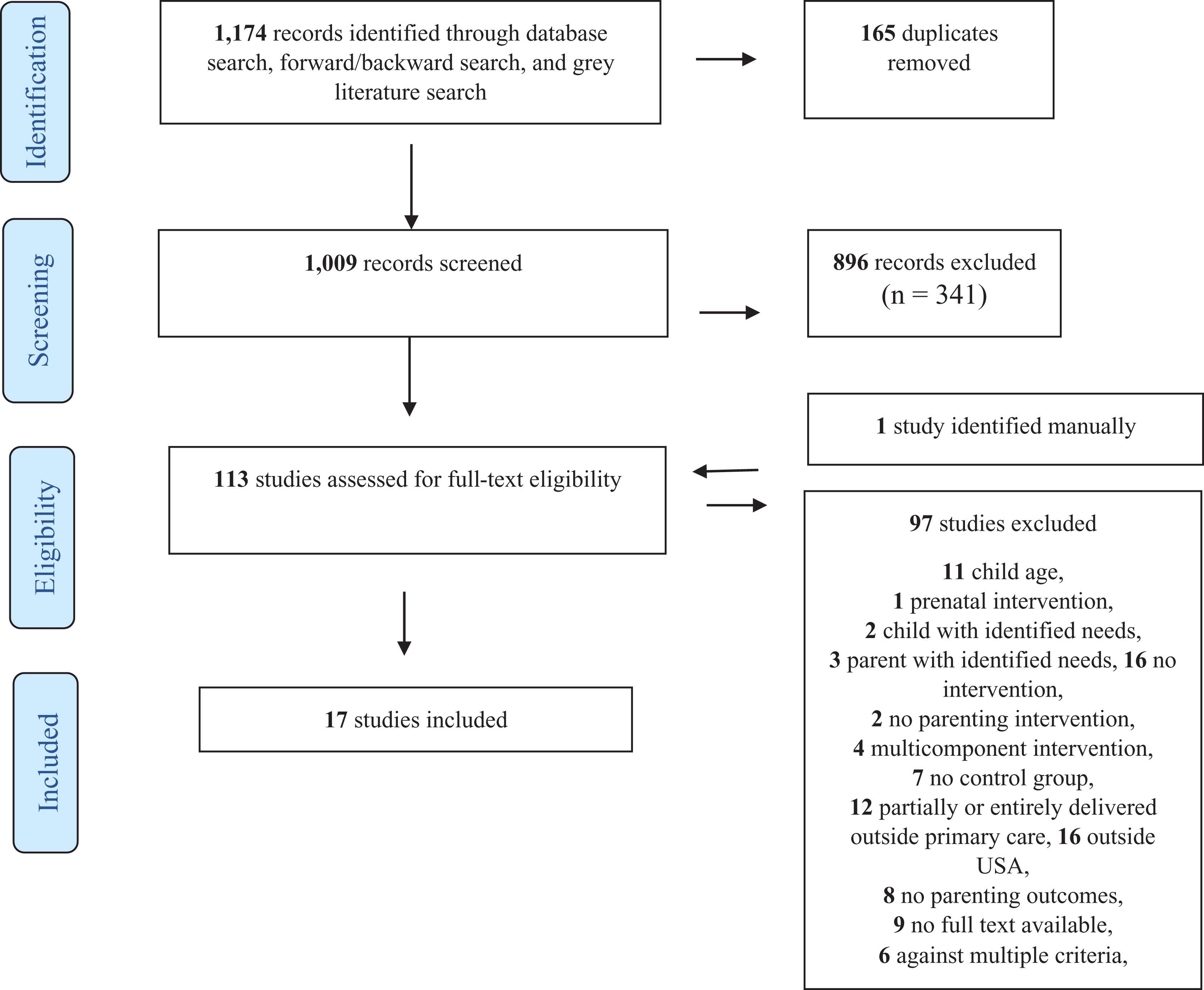
Preferred Reporting Items for Systematic Reviews and Meta-Analyses (PRISMA) flow diagram.
Study Characteristics
All studies were published articles in peer-reviewed journals between the Years 1979 and 2016. All studies except two studies (Chamberlin, 1979; Chamberlin & Szumowski, 1980) were RCTs with one or more comparison groups. Nine of the 17 studies conducted power analysis to calculate adequate sample size for the expected effect size, with power ranging from 80% to 90% with a two-tailed test of statistical significant with an α of .05.
Settings and Participants
Most studies took place in pediatric units within the public or university-affiliated hospitals located in urban areas. Participants were mostly mothers of children under 7 years of age except the two studies that included parents of children up to the age of 12 (Aragon et al., 2013) and 15 (Borowsky, Mozayeny, Stuenkel, & Ireland, 2004). With a few exceptions, most studies focused on participants of low-income, low-education, and ethnic minority immigrants.
Interventions
Ten interventions including two comparison group interventions were examined in 17 studies. Five interventions were adaptions of existing parenting interventions (e.g., Incredible Years [IY], Primary Care Parent–Child Interaction Therapy [PC-PCIT], Child–Adult Relationship Enhancement in Primary Care [PriCARE], ezParent program), while others were specifically designed to be delivered in primary care settings.
With regard to the delivery format, five interventions required in-person contact, three of which utilized the group delivery format while the other two was delivered to individual parents (Berkovits, O’Brien, Carter, & Eyberg, 2010; Perrin et al., 2014; Schilling et al., 2016). Two interventions were delivered through multimedia such as a CD rom, tablet app, or website (Play Nicely and ezParent program). Two interventions were delivered through written materials such as monthly newsletters, pamphlets, and handouts (Parent–Child Interaction Therapy–Anticipatory Guidance and Building Block), which were both comparison interventions. Table 1 presents the summary of the characteristics of the interventions.
Intervention Characteristics.
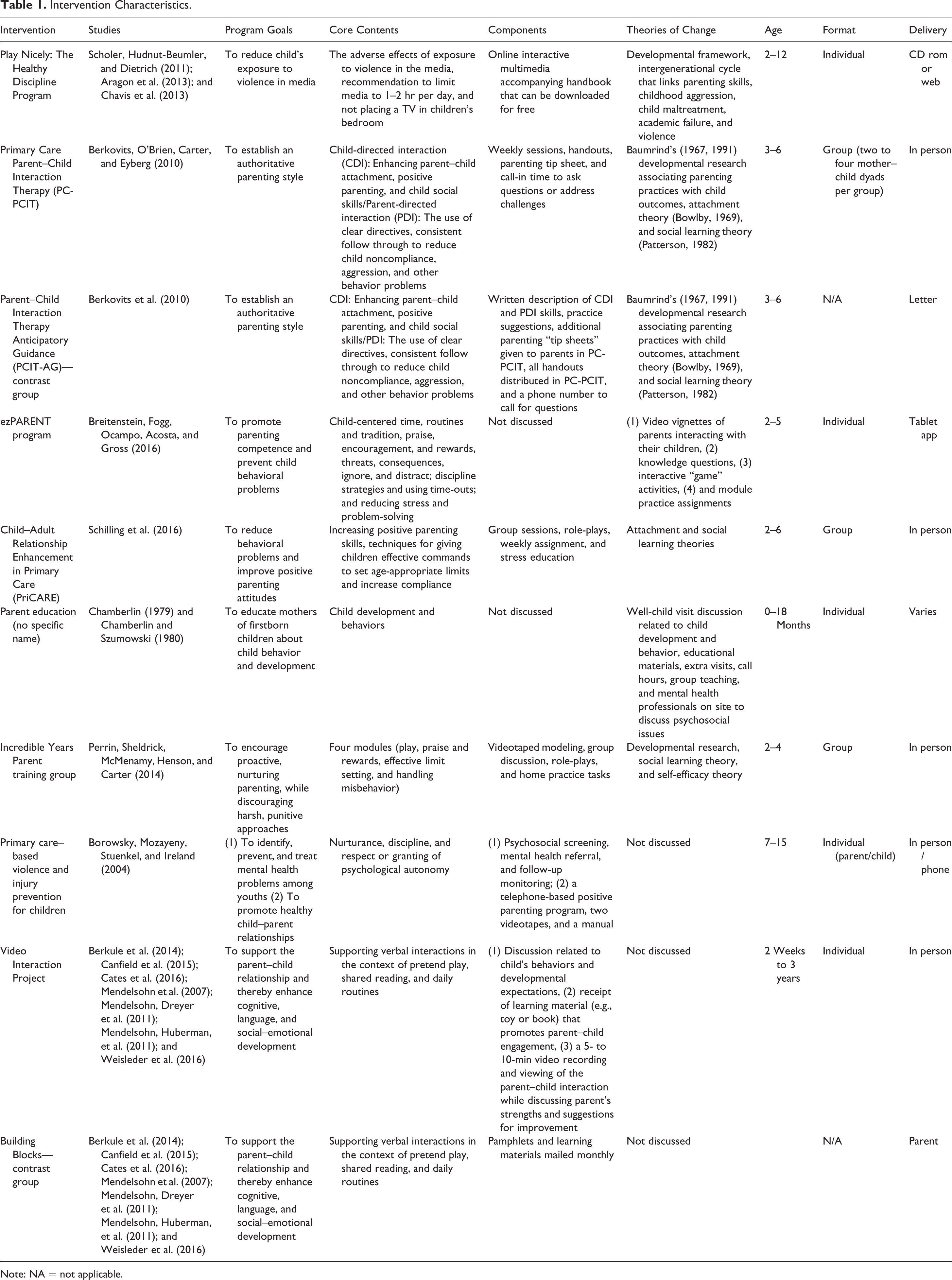
Note: NA = not applicable.
Theories of Change
Five interventions were developed based on theories or developed by applying previous theory-based scholarly works. Three major theories of change mentioned were attachment theory (Bowlby, 1969), social learning and self-efficacy theory (Bandura & Walters, 1977), and coercion theory (Patterson, 1982). Attachment theory posits that a primary caregiver’s sensitivity toward their child’s needs, and the reciprocal interchange of warmth and positive affect, is fundamental for the child in developing secure attachment with the caregiver (Bretherton, 1992). Thus, attachment theory–based parenting interventions contained specific components or techniques that are designed to enhance parents’ ability to build positive parent–child interaction such as responsive parenting. For example, PCIT teaches parents child-directed interaction skills in which parents are encouraged to praise, reflect, imitate, and describe appropriate talk and behaviors with enthusiasm while ignoring inappropriate behaviors (Berkovits et al., 2010). Similarly, PriCARE encourages parents to attend to positive behaviors and IY seeks to promote proactive and nurturing parenting (Perrin et al., 2014; Schilling et al., 2016). Video Interaction Project (VIP) also contains the teaching component where parents are taught skills to positively interact with the child through the use of developmentally appropriate books and toys (Mendelsohn et al., 2007).
On the other hand, social learning principles provide a theoretical basis for content related to effective and consistent limit setting. Bandura (1971) postulated that behaviors are shaped through observing others’ behaviors and the consequences resulting from those behaviors. Thus, he believed that behaviors can be shaped by externally manipulating the consequences through rewards, punishments, and other behavioral techniques. Parenting interventions based on social learning theory, therefore, view parents as the primary change agents in shaping children’s behaviors using behavioral techniques and seek to equip parents with evidence-based skills to manage child behavior. For example, the third segment of the PC-PCIT focuses on teaching parents about parent-directed interaction skills including giving child effective and clear commands that are developmentally appropriate with consistent follow through to reduce noncompliance, aggression, and other behavioral problems (Berkovits et al., 2010). Similarly, IY addresses topics related to effective limit setting and handling misbehaviors (Perrin et al., 2014).
Play Nicely, IY, and PCIT also discuss the coercion theory developed by Patterson (1982) as the theoretical foundation of the interventions. The coercion theory describes the process of the development of a child’s conduct problems, antisocial behaviors and aggression, which may be established and maintained by poor parenting practices and negative parent–child interactions. The theory posits that parents’ negative reactions toward child for being noncompliant to the developmentally inappropriate, ineffective, and/or unclear commands given by parents may contribute to the initial activation of child’s problem behaviors. As a child’s behaviors escalate, parents give in or do not follow through, which signal child that the escalation of their problem behaviors having contributed to the elimination of parental negative reactions. This cycle of coercion is believed to be perpetuated through the mechanism of negative reinforcement within the family, which with repetition, deprives the child of the opportunity to develop prosocial skills that are necessary to build healthy relationship with peers and other adults (Thomas, 2011).
Almost all of the parenting interventions examined in the studies, including the ones that did not explicitly state the theoretical framework, had some components dedicated to teaching the parent to build positive parent–child interactions as well as effective behavior management skills to reduce the child’s problematic behaviors. Additionally, many interventions drew on multiple theories at the same time rather than a single theory.
Parent and Child Behavior Outcomes
The studies reported various outcomes within the parenting and child behavioral domains. Whenever available, total scores instead of subscale scores were reported unless the authors specifically mentioned particular subscales. Parent outcomes included parental knowledge of child development, parental perceptions, and attitudes such as locus of control, parenting self-efficacy, or parent perception of the difficulty raising children. Additionally, outcomes related to parental control and monitoring, positive and negative parenting and/or discipline skills, and parent–child interaction were reported. Parent affect measures such as parental depressive symptoms and parenting stress were also reported. Child behavior outcomes included the intensity and the frequency of problematic behaviors such as aggression, physical fighting, inattention, hyperactivity, anxiety, depression, separation distress, and social skills.
With regard to the informant, almost all studies exclusively used parent reports, except the study of Borowsky, Mozayeny, Stuenkel, and Ireland (2004), which presented outcomes reported by both parents and youth (10 years or older) and the study of Perrin et al. (2014), in which the results from analysis of the videotaped parent–child interaction using the Coder Impression Inventory were reported for a portion of presented outcomes. Most studies used validated measures to assess the outcomes. A complete list of parent and child behavior outcomes is summarized in Tables 2 and 3, respectively.
Parent Outcomes.
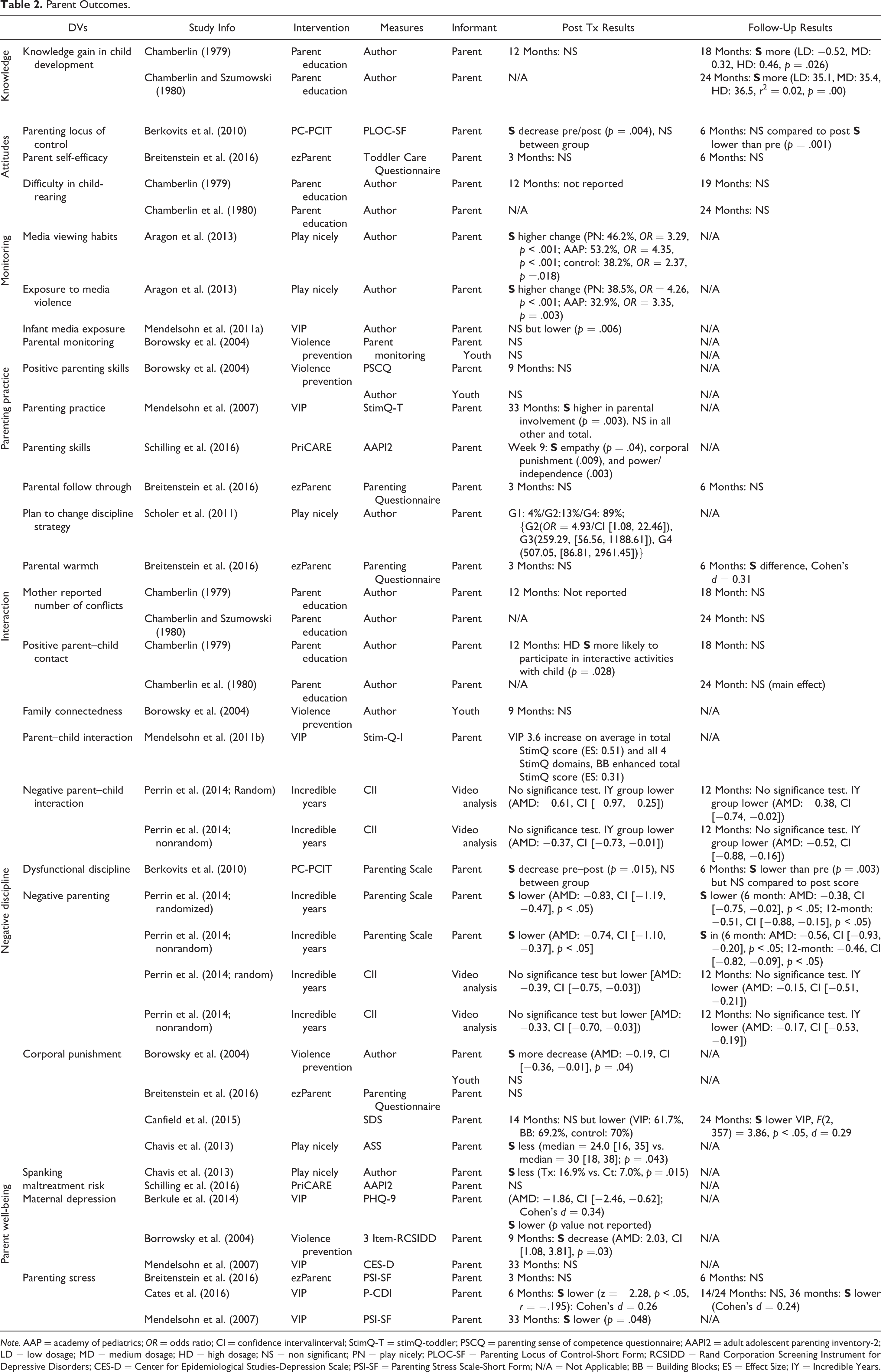
Note. AAP = academy of pediatrics; OR = odds ratio; CI = confidence intervalinterval; StimQ-T = stimQ-toddler; PSCQ = parenting sense of competence questionnaire; AAPI2 = adult adolescent parenting inventory-2; LD = low dosage; MD = medium dosage; HD = high dosage; NS = non significant; PN = play nicely; PLOC-SF = Parenting Locus of Control-Short Form; RCSIDD = Rand Corporation Screening Instrument for Depressive Disorders; CES-D = Center for Epidemiological Studies-Depression Scale; PSI-SF = Parenting Stress Scale-Short Form; N/A = Not Applicable; BB = Building Blocks; ES = Effect Size; IY = Incredible Years.
Child Behavior Outcomes.
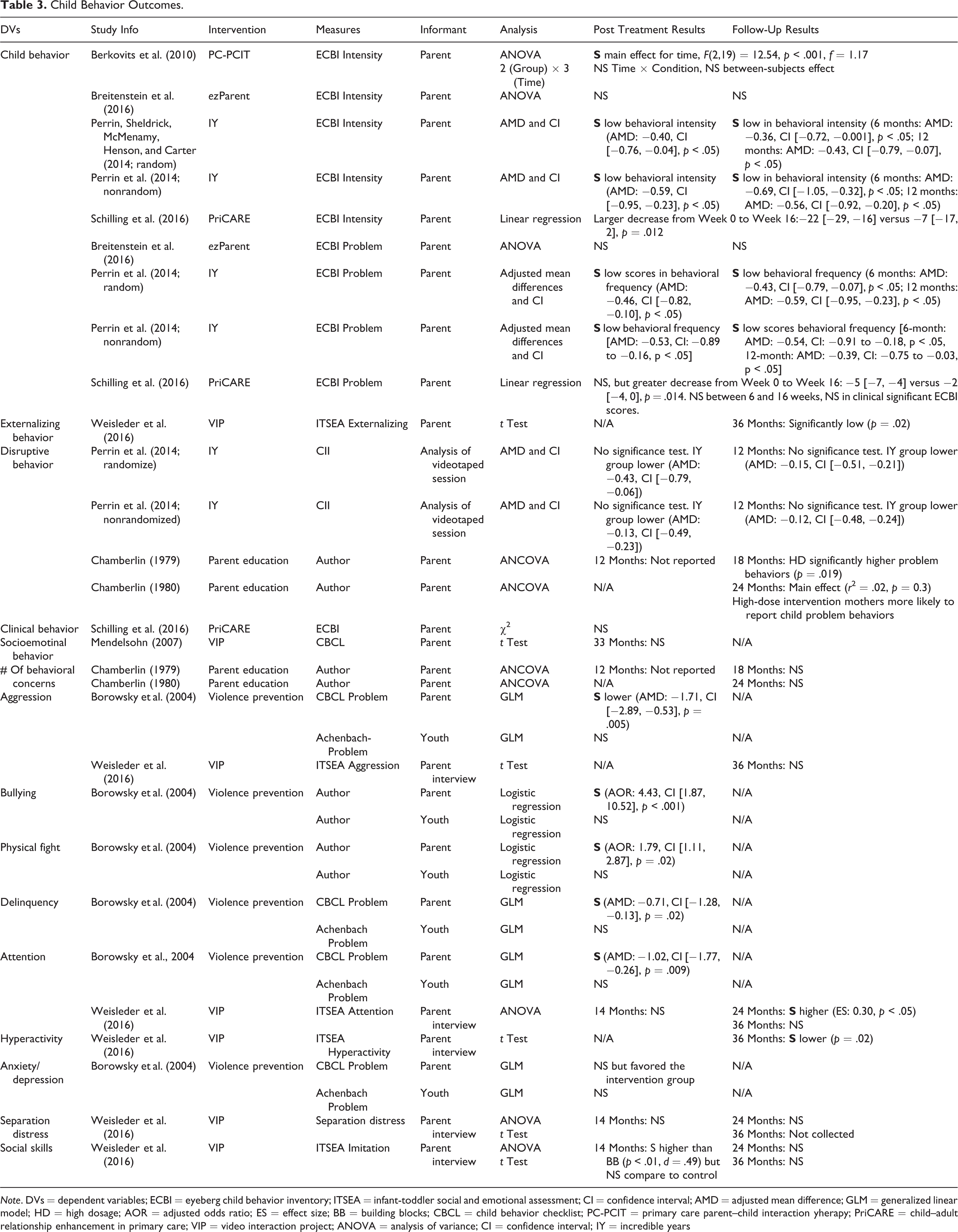
Note. DVs = dependent variables; ECBI = eyeberg child behavior inventory; ITSEA = infant-toddler social and emotional assessment; CI = confidence interval; AMD = adjusted mean difference; GLM = generalized linear model; HD = high dosage; AOR = adjusted odds ratio; ES = effect size; BB = building blocks; CBCL = child behavior checklist; PC-PCIT = primary care parent–child interaction yherapy; PriCARE = child–adult relationship enhancement in primary care; VIP = video interaction project; ANOVA = analysis of variance; CI = confidence interval; IY = incredible years
Mediators
Several studies examined mediating effects of a number of variables on the relationship between intervention exposure and parent/child outcome measures. For example, the study of Berkule et al. (2014) reported that responsive parenting (measured by StimQ-Infant) partially mediated the relationship between intervention and maternal depressive symptoms for VIP as evidenced by the reduced association between VIP and depressive symptoms after adjustment for parental responsiveness (indirect effect = −.17, 95% CI [−0.36, −0.03])
On the other hand, Canfield et al. (2015) found that maternal depression and responsive parenting mediated the relationship between participation in VIP intervention and physical punishment. The direct effect of VIP on physical punishment at 24 months remained significant (direct effect = −.51, 95% CI [−0.90, −0.11]) but decreased when responsive parenting (indirect effect = −.09, 95% CI [−0.22, −0.02]) and maternal psychosocial risk (indirect effect = −.17, 95% CI [−0.36, −0.03]) were added to the model. Maternal psychosocial risk was a single factor yielded by a principal components analysis including maternal depressive symptoms and parenting stress. Responsive parenting showed a direct negative association with physical punishment while maternal psychosocial risk had a direct positive association. Additionally, Mendelsohn, Dreyer, et al. (2011) found that parent–child interaction measured mediated the relationship between intervention and media exposure for mothers educated ninth grade or higher (Sobel statistic = 2.49, p = .01) but not for the entire sample (Sobel statistic = 1.62, p = .10).
Moderators
Multiple studies examined moderating effects of child age but did not find interaction effects of age with group assignment (Borowsky et al., 2004; Canfield et al., 2015; Cates et al., 2016). However, in the study of Weisleder et al. (2016), significant positive interactions between group assignment (VIP, control) and age (14–24 months) was shown on child attention, indicating that VIP children made greater gains in attention than control. Positive interaction between the group assignment and age was also found for building blocks (BB). Lastly, Chamberlin and Szumowski (1980) found that knowledge of child development of mothers who received services from physicians or nurse practitioners with a low dose of parent education decreased with time while the mothers who received services from providers with a high dose of parent education improved with time with regard to their developmental knowledge.
With respect to child gender, Borowsky et al. (2004) found that positive parenting intervention had a significant effect on parent-reported aggressive behavior for boys (adjusted difference: −2.75, 95% CI [−1.21, −4.29], p < .001) but not for girls (adjusted difference: −0.23, 95% CI [−2.08, 1.62], p = .80).
Conflicting results were reported with regard to parents’ level of education or literacy. While Cates et al. (2016) found no moderating effects of parent literacy level (ninth grader or higher literacy, p = .11), Mendelsohn, Huberman, et al. (2011) found that mothers with a literacy level of ninth or higher in VIP group showed an increase in total StimQ score (effect size (ES) = 0.68) as well as in all other subscales (ES = 0.36–0.72). On the other hand, mothers with a less than ninth-grade literacy level showed a statistically significant increase only related to provision of toys in BB group. In an earlier study of the same author (Mendelsohn et al., 2007), maternal education had no moderating effects on primary outcomes (parent or child behavior).
Two studies examined the moderating effects of families’ psychosocial risk (Cates et al., 2016; Weisleder et al., 2016). In both studies, psychosocial risk was determined by mother’s endorsement of at least one of the following: being a victim of violence, homelessness, child protective services (CPS) involvement, significant financial hardship, food insecurity, smoking or alcohol use during pregnancy, or history of previous mental illness. Cates et al. (2016) found no moderating effects of social risk on parental stress (p = .51). On the other hand, in the study of Weisleder et al. (2016), VIP effects on the entire sample did not reach significance while VIP children from the families with increased psychosocial risk did show a significantly lower aggression (ES = 0.48, p < .05) than the control group.
Risk of Bias Assessment Within Studies
Most of the included studies utilized adequate methods of generating random sequence such as the use of software or tossing a coin. Several studies did not provide details regarding how the random sequences were generated and, therefore, were rated as unclear. Regarding the blinding, although the majority of studies blinded study personnel to the group assignment, in most studies, participants were known to their allocation. Although this is commonly found in behavioral intervention studies, unblinding of study participants creates the issue of performance bias; therefore, the risk of bias for these studies were rated as high. In most of the studies, outcome assessors were blinded to participants’ group assignment, reducing the issue of detection bias.
Although the majority of the included studies used an intent-to-treat analysis, some studies with a small sample size and substantial loss of participants at follow-up were downgraded due to incomplete reporting. All studies but one clearly specified outcomes of interest in the Method section and reported all outcomes including nonsignificant results as intended. The results of risk of bias assessment within and across the included studies are summarized in Figures 2 and 3, respectively.
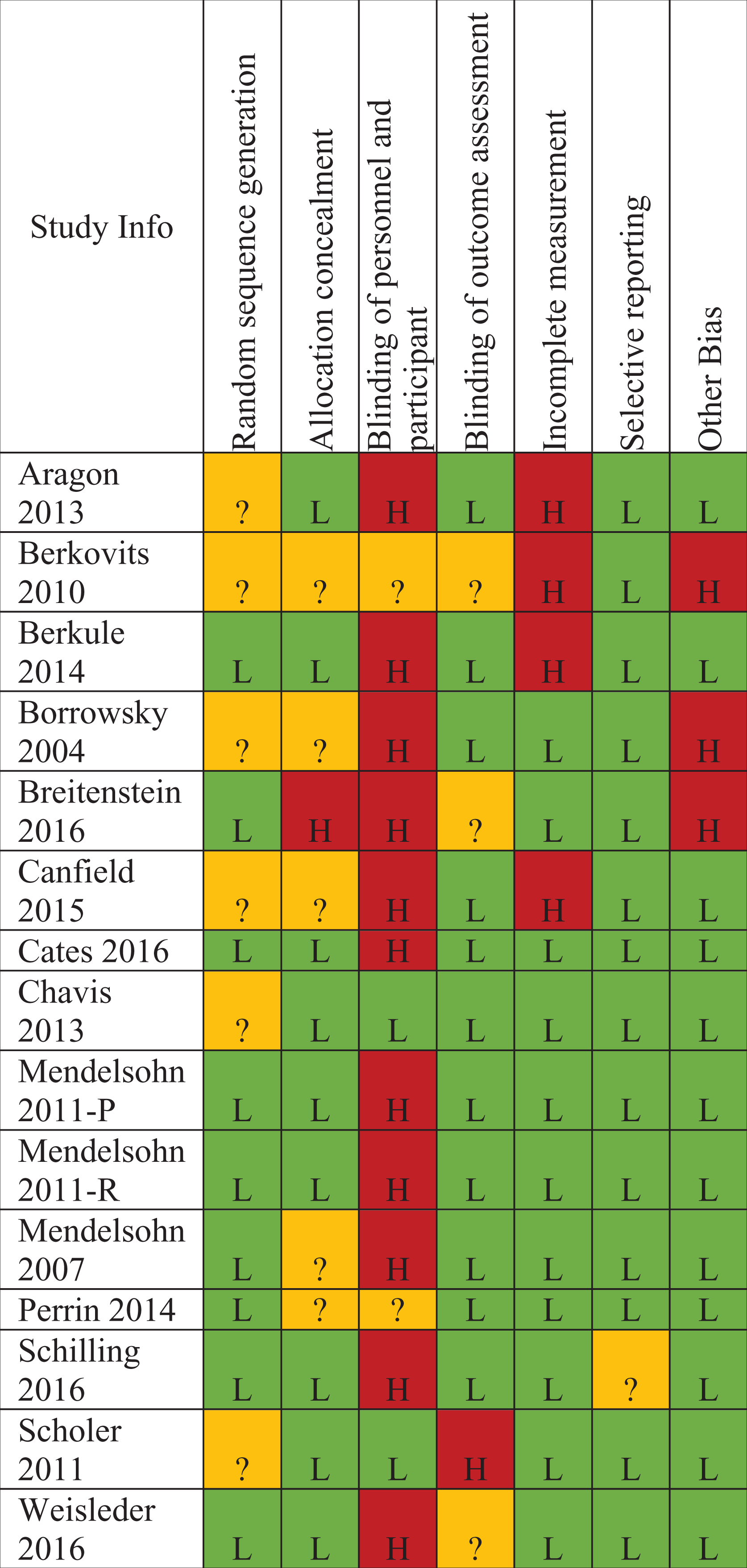
Risk of bias assessment of randomized control trial studies.
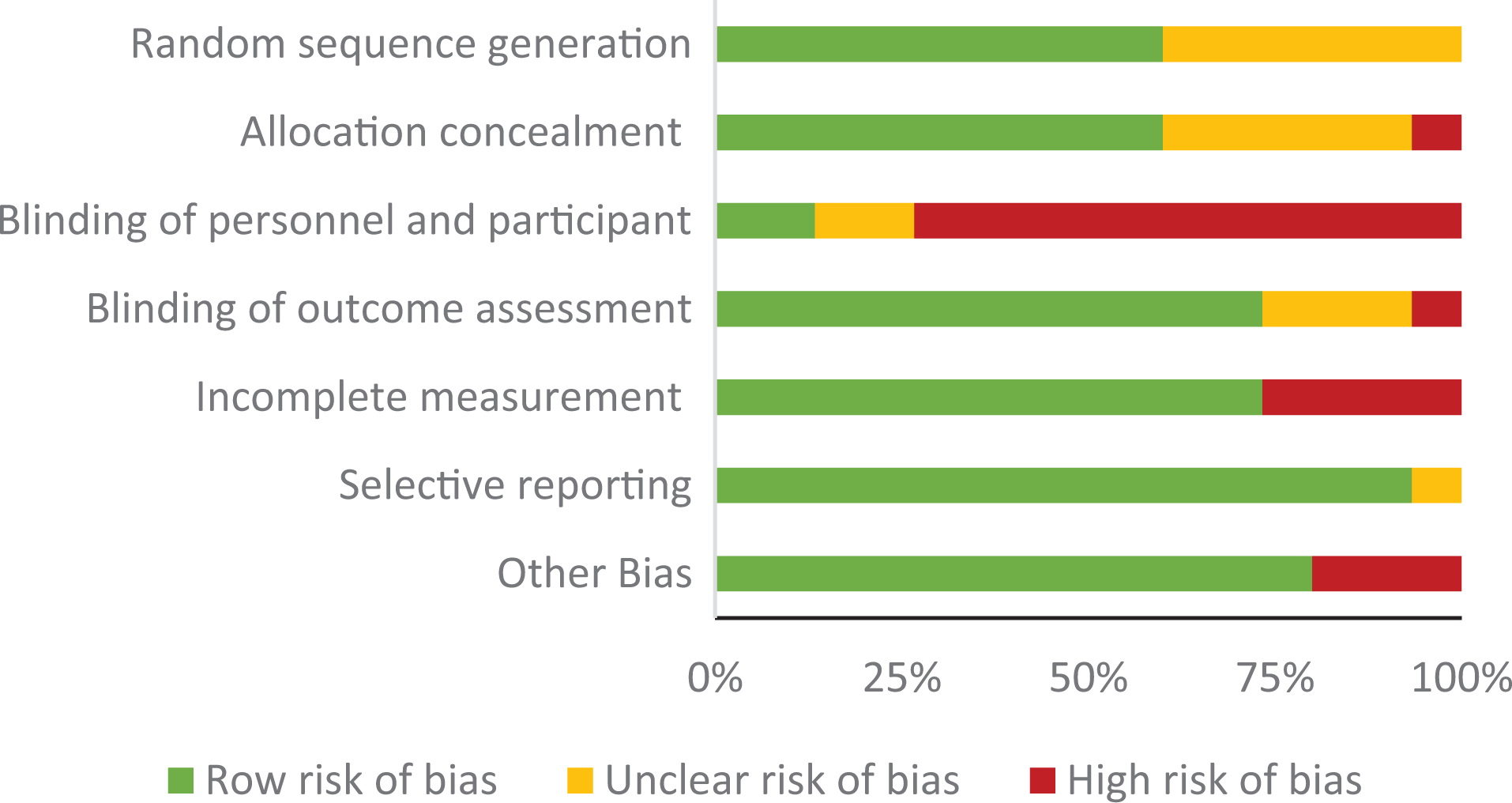
Risk of bias assessment of randomized control trials (across studies).
Confidence in Cumulative Estimates
All studies but two utilized relatively rigorous RCT designs. The risk of bias assessment indicated that 60–93% of the studies were rated as having a low risk in all domains except the blinding of participants and personnel, in which over 73% of the included studies were rated as having a high risk of performance bias. Considering that unblinding of participants is a common practice in the studies of psychosocial interventions due to the ethical responsibilities of researchers, one can conclude that the quality of body of evidence reported in this review is not seriously influenced by systematic biases.
Heterogeneity of the intervention types, dosage, outcome measures, and methods of adjustment for various demographic variables create challenges in interpreting results. Subgroup analysis was conducted in a limited number of studies, and generalization is limited since most studies enrolled low-income, ethnic, and racial minority populations.
Disproportionate representation of low-income, minority participants negatively affects the directness of evidence as well. Directness refers to “the extent to which the people, interventions, and outcome measures are similar to those of interest” (Atkins et al., 2004, p. 1491).Given the expected nature of primary care–based parenting interventions as universal interventions, findings from the studies included in this review may not be directly applicable to the original population of interests. However, the reviewers used very specific exclusion criteria in selecting studies of parenting interventions to ensure the interventions examined were directly applicable to the research question. For example, interventions where the parenting intervention makes up only a minor programmatic component such as interventions provided through home visits or interventions that contain other components that could influence the outcomes of interest (such as parent support groups and marital counseling) were not included in the review. In several studies, outcomes were compared between intervention and contrast groups instead of a true control group, which should also be considered in interpreting the results.
Despite the effort to collect unpublished manuscripts, all studies that met the inclusion criteria were studies published in peer-reviewed journals, which may raise the issue of publication bias. However, all studies but one reported outcomes specified in the purpose statement and Method section and, therefore, were rated low risk in selective reporting bias.
Discussion
The purpose of this systematic review was to examine the types of parenting interventions that have been developed and implemented in primary care and to generate overall knowledge of the effectiveness of primary care–based parenting interventions in light of implementation factors.
Theories of Change
Of particular interest to this review were the theories of change underlying each parenting intervention delivered in primary care. The majority of interventions were based on attachment and social learning theories, and each provided a conceptual foundation for intervention components seeking to enhance positive parent–child intervention and effective behavior management, respectively. Attachment- and social learning–based parenting interventions have been implemented in a wide range of human services fields over the past 60 years and have accumulated a solid body of evidence that supports their benefits (Barth & Liggett-Creel, 2014; Shaffer et al., 2001). It is encouraging that many practice settings are choosing to adopt evidence-based interventions based on theories of change, although no systematic differences were found based on the existence of a theoretical basis or lack thereof.
The findings may support the idea of the common component approach in parenting interventions suggested by Barth and Liggett-Creel (2014). The common component approach advocates the development and implementation of parenting interventions that incorporate components that are common across existing evidence-based parenting interventions, which are essential to produce desired outcomes. Certainly, the effort to secure resources required to adopt high-quality parenting interventions with strong evidence into primary care should be continued. At the same time, the common component approach could provide alternative routes to introduce behavioral parenting interventions into local primary care practices with limited resources. Future studies should examine essential components that are specific to the universal or early intervention parenting programs in primary care. A good place to start is to examine the components that enhance the mediating variables shown to influence the intervention effects such as responsive parenting (Berkule et al., 2014; Canfield et al., 2015) or positive parent–child interaction (Mendelsohn, Dreyer, et al., 2011) as summarized in the current article.
Another important insight is generated by examining theories of change underlying primary care–based parenting interventions. Many evidence-based parenting interventions were originally developed to address a child’s behavioral issues of clinical intensity, which inevitably places the emphasis on child well-being with limited attention paid to parent well-being. Theories of parenting endorse the idea of parenting as a multidimensional concept, recognizing multiple determinants of parenting behaviors rooted in the contextual environment (Belsky, 1984). The mediator analysis conducted in the studies reviewed showed that parent well-being measures such as parental depression and parenting stress not only mediated the relationship between intervention and physical punishment but also had a direct positive association with physical punishment (Canfield et al., 2015).
Given the focus of universal, primary care–based parenting interventions on prevention, it is worth exploring the possibility of incorporating intervention components targeting various dimensions of parental well-being. These effects could be assessed through measures of proximal or intermediate outcomes, which have a demonstrated link with distal outcomes such as maltreatment or problem behaviors of children. Additionally, parenting interventions seeking to improve parental well-being may increase our ability to detect intervention effects that are small in magnitude but meaningful in the context of universal parenting interventions.
The Effectiveness of Primary Care–Based Parenting Interventions
Drawing conclusive knowledge of overall effectiveness of primary care–based parenting interventions was challenging due to the heterogeneity of the intervention types, delivery format, dosage, and the fidelity measures used. Despite the decreased dosage of interventions, several interventions demonstrated significant or nonsignificant but positive effects on various parent and child behavior outcomes both at posttest and follow-up, which suggest that low-dosage adapted forms of evidence-based parenting interventions delivered in primary care may have lasting positive effects in parent as well as child outcome domains.
On the other hand, no positive effects on child behavioral outcomes were found in PriCARE although the intervention dosage was actually increased from a 6-hr 2-day training to 6 weekly 90-min group sessions (Schilling et al., 2016). The original intervention, child-adult relationship enhancement (CARE), was developed to prevent childhood trauma and maltreatment by enhancing adults’ ability to positively interact with children in an agency setting rather than to address intensive behavioral problems in children (Gurwitch et al., 2016). Thus, limited PriCARE effects shown in child behavioral outcomes could be attributed to the original goal of intervention, which is to educate ordinary adults who interact with children with or without clinical issues while PCIT and IY, which showed positive effects in a wider range of child behavioral outcomes, were developed with a specific focus on treating intensive behavioral issues.
When an adaptation process involves a shift of focus or goals, careful consideration needs to be given with regard to (a) the theories of change built into the original interventions, (b) essential components intended to produce desired outcomes based on the theories of change, and (c) the types of outcomes that can accurately reflect intervention effects. However, limited details were provided in the studies reviewed with regard to the processes that may have been involved in shifting the intervention focus from a targeted to a universal population. Consideration of these topics will better guide the process of developing knowledge of the effectiveness of primary care–based parenting interventions.
In addition to the dosage and intervention goals, other implementation factors such as delivery format, providers, and fidelity measures may affect the effectiveness of an intervention. For example, unlike other adapted parenting interventions, ezParent program showed no intervention effects on parent self-efficacy, parental follow-through, corporal punishment, and parenting stress and child behaviors at posttest as well as at 6-month follow-up except on parental warmth at 6-month follow-up. As the authors noted, the results could be attributed to a small sample size, floor effects, and the limited time for parents to absorb intervention effects. However, it is also important to note that ezParent program was a parent self-guided program without extensive fidelity measures while the other three interventions that showed positive effects required weekly in-person contact with licensed therapists and live skills training components. Although no intervention effects were shown on outcome domains, ezParent showed high completion and satisfaction rates among parent participants, perhaps due to brevity and the use of media. Thus, an important next step to advance the field is to determine the appropriate level of dosage and resource input that is acceptable to participants and providers while producing meaningful effects.
The fidelity measures utilized by the adapted programs (e.g., PC-PCIT, PriCARE, and IY) required intensive resources such as documentation and videotaping of each session, review of the cases with experienced therapists who have expertise in each intervention during weekly supervisions, and reliability checks by research assistants. While fidelity measures are important, the resource intensive nature of such efforts might create challenges in sustaining interventions in primary care settings with limited resources. Additionally, these interventions were provided by licensed clinicians or other mental health professionals with required training. Although benefits could be substantial, colocation of behavioral health services requires substantial restructuring at the organizational level as well as the payment system to ensure sustainability. As demonstrated in the study of Perrin et al. (2014), which described the IY program being coled by research clinicians and a pediatric staff member (e.g., a nurse, a nurse practitioner, social worker, or a pediatrician), alternative strategies may present an opportunity to utilize existing human resources in primary care along with external expert support. Such efforts should be pursued at the same time while seeking changes at the organizational and policy level to build infrastructure and funding mechanisms necessary to sustain behavioral parenting interventions in primary care.
Other alternatives to adapting existing parenting interventions that are evidence-based were seen in interventions such as VIP, BB, and Play Nicely, which were originally developed to be delivered in primary care. These interventions were either provided by an interventionist with a bachelor’s degree and experience in working with children (VIP) or were parent self-guided interventions using written materials or interactive media instead of using licensed therapists (BB and Play Nicely, respectively). Although these interventions utilized fewer resources compared to primary care–adapted evidence-based parenting interventions, still demonstrated positive effects across multiple parent domains, including maternal depression, physical punishment, parenting stress, and parent–child interaction. The results may support that a primary care–developed brief parenting intervention could represent an alternative to more intensive and costly evidence-based parenting interventions for organizations with limited resources. However, a consideration needs to be made with regard to the types of interventions that can best achieve the goals that specific to the organizational context.
Additionally, the results from this review suggest that low-dosage interventions with handouts could produce small but positive effects, though interventions that require in-person participation seem to be superior to written interventions. Therefore, a written intervention could be considered a supplementary option to augment in-person interventions or as an independent intervention in the clinic settings where the implementation of an in-person intervention is not a feasible option. Although the magnitude of the effects could be small, repeated intervention exposure, possibly through integrated delivery into well-child care, may augment the intervention effects, which warrant further studies.
Directions for Future Research
The success of the effort to integrate behavioral parenting interventions into primary care will depend on multiple factors including core leadership involvement and the availability of resources to attain adequate training and ongoing consultation from trusted sources. Thus, implementation science can provide important pieces of information for future efforts to integrate psychosocial interventions with the least disruption in routine primary care by identifying facilitators and barriers to efficient delivery and maintenance of parenting interventions in primary care.
Another area of future research is to generate insights into the task of reconciling the two conflicting goals of high intervention fidelity and sustainability. This can be achieved through an increased number of pilot studies examining various types of interventions delivered through a variety of formats. Such efforts may foster innovations among organizational leaders, community members, and researchers to develop interventions with the universal and preventive goals that are suitable in the context of primary care. Increased number of studies will also contribute to the accumulation of a body of evidence that can be synthesized through quantitative analyses and subgroup analyses to generate more conclusive knowledge of the overall effectiveness of primary care–based parenting interventions to guide the decision-making processes of practice settings. Future studies should also seek to increase the generalizability of their findings by engaging geographically and socioeconomically diverse populations.
Limitations
This review was limited to the studies published in the United States. Although the decision was made intentionally with the awareness that outcomes are likely to be influenced by the organizational and policy context specific to health-care practices in the United States, a high volume of relevant studies might have been excluded, given that many evidence-based parenting interventions have been originally developed in international locations. Additionally, studies examined in this review were mostly conducted in urban primary care practices serving a large number of low-income, ethnic minority parents and, therefore, may not accurately capture intervention effects on prevention, targeting all parents at the population level as intended.
Another important limitation of this study is that although the study was inspired by maltreatment prevention efforts, many of the outcomes examined in the systematic review are not direct indicators of maltreatment. Some of the parenting outcomes included in this study such as corporal punishment and maltreatment risk are more closely associated with maltreatment outcomes. On the other hand, other outcomes such as parental stress and maternal depression are known to be associated with an increased risk of maltreatment as indirect indicators. Further studies are needed to better understand the effects of preventive behavioral parenting interventions delivered in primary care on maltreatment prevention efforts. Other types of primary care–based interventions such as the Safe Environment for Every Kid (SEEK) model (Dubowitz, 2014) have demonstrated direct effects on decreasing maltreatment through RCTs as indicated by fewer number of abuse and neglect cases reported on medical records and CPS reports (Dubowitz, Feigelman, Lane, & Kim, 2009). Considering that the SEEK model targets more comprehensive family psychosocial risks such as parental depression, substance abuse, food insecurity, and more, a longitudinal analysis may be necessary to detect similar impact on maltreatment for interventions focused on parenting practice only.
Conclusions
The topic of primary care–based parenting interventions is gaining new momentum due to changes in the sociopolitical context in the United States (Leslie et al., 2016). The increased awareness of the impact of adverse childhood experiences on long-term health outcomes, the advancement of prevention science, increased emphasis on integrative health care, and an accumulated body of evidence that supports the benefits of behavioral parenting interventions have all opened a new window of opportunity to advance the old idea of integrating parenting interventions into primary care in a new fashion. Further studies will contribute to the effort to take full advantage of this new window of opportunity to produce sustainable changes in primary health-care systems.
Critical Findings
Most studies of primary care–based parenting interventions have been conducted in urban primary care facilities mainly enrolling low-income ethnic and racial minority participants. Primary care–based parenting interventions vary with regard to the types, dosages, and delivery formats. Some require weekly in-person attendance while others are parent self-guided interventions that can be completed online or using electronic devices. Many primary care–based parenting interventions have been adapted from interventions originally targeting parents of children with behavioral and emotional disorders. No consistent outcome differences were found between these interventions and interventions developed specifically to be delivered in primary care settings. Primary care–based parenting interventions have been developed mainly based on attachment theory, social learning theory, and coercion theory. Interventions that are not based on explicit theories of change also contain components commonly found across various evidence-based parenting interventions. Primary care–based parenting interventions can be effective in enhancing parenting knowledge, locus of control, monitoring, positive parent–child interactions, and in reducing negative discipline strategies. The effects of primary care–based parenting interventions on child behavior outcomes are inconsistent across studies. The effects of primary care–based parenting interventions can be moderated by child gender, age, maternal literacy, and depression as well as by family psychosocial risk although the inconsistent results across studies create challenges in drawing conclusive knowledge. A limited number of studies paid attention to the process of adapting, installing, and implementing behavioral parenting interventions into the specific organizational context of primary care.
Implications for Policy, Practice, and Research
Primary care–based parenting interventions have the potential to make positive contributions to the effort to prevent maltreatment and promote family well-being at the population level. Health-care leaders and policy makers should be informed of latest developments in the field to maximize the utility of primary care in preventing family violence. Primary care practices seeking to adopt innovation through the integration of behavioral parenting interventions into routine care should consider various options available and select interventions that best fit their specific organizational context. Implementation science can provide important insights into the process of developing and delivering primary care–based parenting interventions. More studies are needed to further advance the knowledge of facilitators and barriers in integrating behavioral parenting interventions into primary care. Future studies should explore the goals and underlying theories of change that are the most suitable and attainable in the context of primary care considering the universal nature of such interventions delivered in primary care. Future studies should seek to increase the generalizability of their findings by engaging geographically and socioeconomically diverse populations to maximize the value of primary care as a platform to deliver universal parenting interventions.
Footnotes
Declaration of Conflicting Interests
The author(s) declared no potential conflicts of interest with respect to the research, authorship, and/or publication of this article.
Funding
The author(s) received no financial support for the research, authorship, and/or publication of this article.