



Abstract
Objective:
The aims of this study are to (a) provide reliable estimates of prevalence rates of family polyvictimization by synthesizing the findings from the existing literature, (b) examine the effect sizes of the impact of one type of family victimization on other types of family victimization, and (c) investigate the correlates of family polyvictimization.
Method:
Databases of literature published on or before April 2018 were searched. A total of 59 publications met the inclusion criteria and were included in the analysis for the combined odds ratios (ORs) to estimate the associations among different types of family victimization; 38 of them (99,956 participants) were used for the calculation of the combined prevalence rates of family polyvictimization.
Findings:
The overall co-occurrence rates of family victimization were 9.7% among the general population and 36.0% among the clinical population. The combined OR of other type(s) of victimization when one was present was 6.01 (p < .001). Longitudinal studies show that, when a family reported intimate partner violence, the odds of child abuse and neglect within the same family at a later stage was 3.64 (p < .001). Depression and post-traumatic stress disorder were two significant correlates associated with family polyvictimization.
Conclusion:
Family polyvictimization is prevalent across the world. The high co-occurrence rates and strong associations between different types of victimization on different family members warrant the need for the early detection of victims and effective preventions and interventions using a family approach, instead of treating victims from the same family individually.
Family members share common experiences from their immediate settings (World Health Organization [WHO], 2005). Characteristics of one family member may interact with or moderate the influence of certain correlates of violence (Slep & O’Leary, 2001) and in turn increase the risk or likelihood of violence among members within the same family. Different types of violence victimization within a family have been examined independently in the past few decades, and there have been a vast number of findings on the prevalence and relevant issues of individual family victimization (Chan, 2017; Edleson et al., 2007). Starting in the 1970s, international organizations including the WHO, United Nations, and United Nations Children’s Fund have placed emphasis on the importance of the associations between interpersonal violence and family victimization (Bidarra, Lessard, & Dumont, 2016). However, it was not until the 1990s that researchers began to report the co-occurrence of intimate partner violence (IPV) and child abuse and neglect (CAN), the two most common types of family victimization (e.g., Fantuzzo, Boruch, Beriama, Atkins, & Marcus, 1997; Goddard & Hiller, 1993; Shipman, Rossman, & West, 1999). Since the beginning of the 21st century, researchers have extended their efforts to investigate the co-occurrence of other types of family victimization including elder abuse (EA) and in-law abuse (ILA, i.e., violence or conflicts among in-law members; e.g., Chan et al., 2009; Raj, Livramento, Santana, Gupta, & Silverman, 2006; Silverman et al., 2016).
The Concepts of Child Polyvictimization and Family Polyvictimization
Polyvictimization is a concept that refers to two or more types of victimization rather than repeatedly occurring episodes of one single type of victimization (Bidarra et al., 2016; Turner, Finkelhor, & Ormrod, 2010). This concept first appeared about a decade ago, when researchers made a successful attempt to study children exposed to multiple types of victimization within a certain period of time (Finkelhor, Ormrod, & Turner, 2007). In that study, the researchers also evaluated 34 specific types of violence against children and demonstrated that one in every five children was a victim of more than four types of victimization. These child victims were referred to as “polyvictims,” and the phenomenon of the co-occurring of multiple types of victimization against children was referred to as “child polyvictimization” (Finkelhor et al., 2007). Later, the same group of researchers showed that children exposed to polyvictimization tended to have more serious trauma symptoms and behavioral problems, both in the current year and in their lifetime, than children repeatedly exposed to one single type of victimization (Finkelhor et al., 2007; Finkelhor, Turner, Ormrod, & Hamby, 2009). Since then, different researchers have extended the studies on child polyvictimization and have reached a consensus on its deleterious effects, in that polyvictims often demonstrate poorer physical and mental health status and perception, and more psychopathological and psychosomatic symptoms than other children (Chan, Chen, Chen, & Ip, 2017; Hesketh et al., 2010).
Yet, when compared to research on the co-occurrence of two types of victimization, studies on polyvictimization are still scarce and concrete evidence on the impacts and correlates of the problem is still lacking. The prevalence and impacts of two types of co-occurring victimization (e.g., IPV and CAN, IPV and EA) have gained widespread recognition in recent decades; however, progress of investigations into the interconnections and co-occurrence of more than two types of victimization remain slow (e.g., Beeman, Hagemeister, & Edleson, 2001; Cannon, Anderson, Rivara, & Thompson, 2010; Grossman & Lundy, 2003; Hamby & Grych, 2013; Pritchard, 2007; White & Smith, 2009). Current efforts in regard to explorations of violence co-occurrence have been split into several major areas (Hamby et al., 2018). Given that different forms of victimization may share the same factors within a family, there is no reason to overlook the importance of studying the co-occurrence of multiple forms of family victimization. Studying co-occurrences of various forms of victimization within a family unit may reveal the cumulative burden of this victimization and provide implications for further prevention and intervention on family victimization.
Building on the concept of child polyvictimization (Finkelhor et al., 2007) and the profound importance of the family approach in violence (i.e., viewing family as a unit in which members share numerous features and characteristics associated with victimization) highlighted by the WHO (2005), researchers have recently proposed the concept of family polyvictimization, the co-occurrence of more than two types of family victimization among members of the same family (Chan, 2017). Similar to child polyvictimization, family polyvictimization refers to the co-occurrence of more than two different types of victimization on different members within a family. Rather than studying different family victimization on individual members separately, family polyvictimization takes a family approach that views family as a unit. In other words, it emphasizes the co-occurrence of different types of violence on different family members rather than the re-occurrence of one single type of victimization or different types of victimization on the same family member. In a national study in China, Chan (2014) found a lifetime prevalence of 14–18% for child polyvictimization and later demonstrated that the mere witnessing of parental IPV, EA, and in-law conflict also increased the likelihood of child victimization and child polyvictimization (Chan et al., 2017). The significant associations between different types of family victimization have led to researchers becoming interested in investigating the co-occurrence of multiple types of victimization within a family. Chan (2017) operationalized family polyvictimization as the co-occurrence of IPV, CAN, and EA within a family and found a lifetime prevalence of about 3% and a past-year prevalence of 1%. In that study, members of polyvictimized families were more likely to report poorer mental health and more addictive behaviors, such as smoking and gambling, than those in families with no victimization or only one type of victimization. The potential harm caused by family polyvictimization on individual family members warrant more scientific evidence in the future study.
Diversity of the Co-Occurrence of Polyvictimization Prevalence Rates
The extant literature shows a wide range of co-occurrence rates of family victimization due to the differences in the definition of victimization and the methodology employed. For example, the co-occurrence rates of IPV and CAN range from 6% to 55% (Cannon et al., 2010; Chan, 2017), those of IPV and EA range from 1% to 71% (e.g., Grossman & Lundy, 2003; Zink & Fisher, 2007), and those of CAN and EA range from 10% to 66% (e.g., Chan, 2017; Pritchard, 2007). A significant association was also found between IPV and emotional ILA (Raj et al., 2006), and ILA was found to be most significantly associated with preceding-year IPV against pregnant women, with 49% reporting one or more forms of perinatal gender-based forms of victimization (e.g., Chan et al., 2009; Silverman et al., 2016). The diversity of these prevalence rates of co-occurrence might stem from the differences in the definition and operationalization of the victimization investigated. On the other hand, it might also be rooted in the differences in study procedures and methodologies.
Part of the wide range of co-occurrence rates may be contributed by the use of different samples and sampling procedures across studies (Stoltenborgh, van Ijzendoorn, Euser, & Bakermans-Kranenburg, 2011). Existing studies often use either community samples, which are mainly selected with random or probability sampling procedures from the general population, or clinical samples, which are mainly selected using convenience sampling in settings such as clinical service centers and police records. In studies on the co-occurrence of family victimization, the latter of the two often consists of victims who have reported at least one type of victimization. It could therefore be expected that the co-occurrence rates between these two types of samples could show a great deal of variance due to the heterogeneity of the samples and methodologies used. To differentiate the co-occurrence rates of victimization between these two types of samples, Appel and Holden (1998) have suggested the use of co-occurrence rates and percentage of overlap (Appel & Holden, 1998). Overall, co-occurrence rate refers to the rate of co-occurrence of at least two types of family victimization among the community samples in which respondents might or might not report any victimization, while percentage of overlap refers to the rate of co-occurrence of family victimization among clinical samples in which respondents have reported at least one type of victimization. Taking into consideration the strong evidence for the associations among different types of victimization within a family, one could expect the percentages of overlap of family victimization to be higher than the co-occurrence rates of family victimization or polyvictimization. Unfortunately, the literature does not clearly differentiate these two rates and most existing studies tend to use the term “co-occurrence rate” regardless of the type of sample used, making it hard to obtain a clear picture of the issue.
Individual or Family Correlates of Co-Occurring Family Victimization
In addition to the efforts made to provide reliable estimates of the prevalence rates of co-occurring family victimization or family polyvictimization, researchers have made numerous successful attempts to explore the correlates of the problem at the individual or family level. For example, the co-occurrence of IPV and CAN has often been found to be associated with individual correlates such as chronic illness, depression, loneliness, psychopathology and adjustment problems, suicide attempts, educational level, criminal history, and alcohol and drug abuse (Hartley, 2002; Tajima, 2004; Stover, Urdahl, & Easton, 2012; Turner, Finkelhor, Hamby, & Shattuck, 2013). Violent parents may neglect their children when the disruption of victimization weakens their ability to supervise and protect their children, which often results in insecure attachment and is in turn associated with subsequent CAN (Chan, 2014; Coohey & Zhang, 2006).
Family disruption and adversity may stand out even more when it comes to grounds for the co-occurrence of family victimization (Chan, 2017). Family disadvantages, such as marital dissatisfaction, low socioeconomic status (SES), financial hardship, single parenthood, neighborhood violence, and social isolation as a result of migration, have been found to be significantly associated with victimization (Gewirtz & Edleson, 2007; Slep & O’Leary, 2001; Turner et al., 2013). Parental stress, which usually results from economic difficulties, could lead to harsh parenting practices and transform into child maltreatment (Chan, 2014; Turner, 2005). Majority of elderly people aged 65 years or above often live with their children and grandchildren in some Asian countries (Hong et al., 2016), where married women can receive help from these co-residing elders in regard to chores and child-rearing issues. These intensive interactions might not only provide more opportunities for enriching intergenerational relationships but also provide more insights on abusive interactions in some cases. Conflicts between partners or in-laws over child-rearing may escalate to aggression. Similarly, stress caused by violent partners or in-laws may reduce caregivers’ ability to deal with children’s misbehavior properly, which may contribute to overreacting and abusive behaviors toward the children (Slep & O’Leary, 2001). Attention has recently turned to the community-level mechanisms through which economic disadvantage may lead to higher rates of family victimization and polyvictimization. Social support is demonstrated to be able to mitigate the harmful health effects associated with victimization (Bosch & Bergen, 2006; Chan et al., 2017). On the other hand, social norms may sometimes prevent victims or polyvictims from breaking the silence and seeking help (Colucci et al., 2014).
Existing Meta-Analytic Studies and Reviews
In summary, family victimization co-occurrence and polyvictimization are serious global issues that could lead to irreversible deleterious effects on their victims. One of the essential steps to combating and preventing these issues is the provision of reliable estimates and figures. Yet, given the wide degree of method and sample variance in the existing research on family victimization co-occurrence and polyvictimization, the estimation of effect sizes across studies presents a challenge. To the best of our knowledge, current meta-analytic studies and systematic reviews all focus on the co-occurrence of IPV and CAN, while no family-oriented approach has been used to examine the co-occurrence of more than two forms of victimization within the same family (Appel & Holden, 1998; Bidarra et al., 2016; Slep & O’Leary, 2001; Wolfe, Crooks, Lee, McIntyre-Smith, & Jaffe, 2003). These studies have demonstrated that the impact of exposure to violence may play a complex role in the factors related to living environment, family, and demographic characteristics (Appel & Holden, 1998; Wolfe et al., 2003). They also provide preliminary evidence that CAN might have long-term impacts on children’s development and the witnessing of parental violence in an abusive family may be positively associated with violent marital relationships in adulthood (Stith et al., 2000; Wood & Sommers, 2011).
Despite the current efforts related to the co-occurrence of IPV and CAN, meta-analyses or systematic reviews of the co-occurrence of other types of family victimization, as well as those of family polyvictimization, remain scarce. One reason for the scarcity of relevant reviews and meta-analyses may be the limited number of research on family polyvictimization or co-occurrence of victimization other than IPV and CAN. Yet, there is no reason to overlook the significance of the findings by looking at the overlapping of two types of victimization. Obtaining reliable estimates of the effect sizes of the associations between multiple types of family victimization could be of tremendous importance in facilitating the detection and evaluation of the presence of abusive and violent events in a family context (Bidarra et al., 2016; Wolfe et al., 2003). It is also important to explore the shared etiological process regarding co-occurrences of family victimization; this cannot be achieved until reliable estimates can be obtained across studies on other combinations of family victimization.
The present meta-analytic study aims to fill this research gap by (a) providing reliable estimates of the prevalence rates and percentages of the overlaps of co-occurrences of different types of family victimization, as well as family polyvictimization, synthesized from the existing literature and (b) examining the effect sizes of the impact of one type of family victimization on other types of family victimization. The major types of violence within a family (IPV, CAN, EA, and ILA) are included. To facilitate the effective identification of correlates of family victimization and polyvictimization for the development of the effective prevention and intervention of family polyvictimization in the future, this study also investigates individual and family factors as correlates of the problem.
Method
Definitions of Family Victimization
Based on the definitions used by the WHO and conceptualizations from previous research on family victimization, individual victimization is defined as follows:
Family polyvictimization: Family polyvictimization is defined as the experience of multiple types of victimization reported by different members within the same family (Chan, 2017). The types of family victimization may include IPV between parents, child polyvictimization including CAN, EA against grandparents, and ILA between in-laws.
IPV: IPV is defined as the behavior in an intimate relationship (i.e., between the parents in a family) that causes physically, psychologically, and/or sexually harmful impacts on one’s health. These may include acts of physical aggression, sexual coercion, psychological abuse, and controlling behaviors (Krug, Dahlberg, Mercy, Zwi, & Lozano, 2002).
CAN: According to the WHO (Krug et al., 2002), CAN in this study refers to all types of physical and/or emotional ill-treatment, sexual violence, neglect, or other exploitation that result in actual or potential harm to a child’s health, survival, development, and/or dignity in the context of a relationship of trust, power, and responsibility.
EA: In this study, EA against the grandparents of the family is defined as a single or repeated violent act, or a lack of appropriate action, to an elderly person that causes harm or distress within a relationship where there is an expectation of trust.
ILA: ILA refers to ILA or conflict, which may include a serious disagreement or argument, a state of opposition or hostility, a fight or struggle, or an incompatibility between opinions, all occurring among relatives by marriage (Chan et al., 2009). In this study, ILA mainly refers to violence between in-law parents and children (i.e., the grandparents and the parents of the family).
Inclusion and Exclusion Criteria
There are four primary criteria for inclusion of articles in this meta-analysis: The studies must have been published in a peer-reviewed journal, report, book, or dissertation before April 2018 (i.e., the time when the search ended). The studies must report the co-occurrence of at least two types of victimization, including CAN or child victimization, IPV, EA, and ILA. The studies must report the co-occurrence of victimization among members in the same household. The family samples of the studies must include three generations including children, parents, and grandparents.
Articles were excluded when: they reported a single type of victimization only, they reported victimization that occurred in the different stages of life of the same person (e.g., CAN in childhood and IPV in adulthood), they did not provide sufficient information for the computation of effect sizes (e.g., they lack means and standard deviations, group sizes, test statistics), and they focused on the evaluation of an intervention or the review of topics not related to family victimization.
Literature Search Strategy
Studies included in this meta-analysis were identified with several search strategies. First, six databases of literature in the English language were searched. They include the Applied Social Sciences Index and Abstracts, ERIC, MEDLINE, PsycINFO, Sociological Abstracts, and Social Service Abstracts. The search was performed using multiple combinations of the key words, which included child abuse, child victim, child neglect, violence against child, child maltreatment, bully, partner violence, partner abuse, spouse abuse, partner aggression, couple violence, couple abuse, couple aggression, domestic violence, elder neglect, elder abuse, and in-law. Second, the reference lists of the eligible articles were reviewed for potentially relevant articles and reports. Third, the references of the review articles were also searched to locate studies that were not covered in the previous database and reference search.
The present search identified 11,579 records. After the removal of duplicate entries, 11,345 articles remained; 1,212 of them met the inclusion criteria. However, 1,107 articles were excluded because they were reporting case studies or descriptive reviews, and 46 were excluded as they did not provide sufficient data for the calculation of the effect sizes. The final pool included 59 articles for the meta-analysis. Details about the search and article selection procedures are shown Figure 1.

Summary of the search results and article selection procedures.
Data Extraction
Two well-trained coders performed all of the data extraction and carried out the evaluation process. Prior to the coding process, the two coders independently assessed and evaluated the quality of the 59 studies using a checklist covering five aspects, rated on a “1/0” scale. The articles were assessed by (a) whether or not they reported sample recruitment procedures, (b) whether or not they reported the profiles or characteristics of the sample, (c) whether or not they used validated measures or scales, (d) whether or not they performed appropriate statistical analyses, and (e) whether or not they provided sufficient data for analysis. The score ranged from 0 to 5, with higher scores indicating a better quality for use in the meta-analysis. The average score of the included articles was 4.73, reflecting the way in which they were of a high quality. No study was excluded due to unsatisfactory quality.
Coders then extracted data from the articles using a structured coding sheet that assessed the following aspects of the studies: publication information including article title, author(s), year of publication, and study site; sample characteristics including sample feature (e.g., clinical sample, community sample), sample size, sampling method or setting (e.g., random sampling, convenience sampling), age, gender ratio, and informants or reporters; violence-related factors including the types of victimization measured, the measures or scales used, the time frame of the measurement (e.g., lifetime, the year preceding the study), and the gender ratio of the perpetrators and victims; and individual and family factors including family structure (e.g., single parent, two parents), parents’ employment status, parents’ marital status (e.g., married, cohabiting, separated), addictive behaviors (gambling, smoking, etc.), and health correlates (e.g., post-traumatic stress disorder [PTSD], depression, health-related quality of life).
The 59 studies were distributed randomly to the two reviewers for dual independent assessment. We calculated the Cohen’s κ statistic to assess the interrater reliability. Interrater agreement for all of the 59 articles included in the meta-analysis was high, with a weighted Cohen’s κ of 0.96.
Computation of Effect Sizes
First, pooled prevalence estimates of the co-occurrence rates of different types of family victimization and family polyvictimization were calculated. A forest plot was used to demonstrate the prevalence rate, with 95% confidence intervals (CIs) in each study. Second, pooled odds ratios (ORs) with 95% CI of the impacts of one type of family victimization on the presence of another type of victimization were calculated. In the last step, ORs with 95% CI of the effects of specific individual and family factors were also calculated. Random effects models were used to combine studies. Q statistics were used to estimate the heterogeneity, while I 2 statistics were used to calculate the proportions of observed variance of the included studies. Publication bias was examined with the aid of a funnel plot. The Comprehensive Meta-Analysis (third version) was used to conduct all statistical analyses.
Results
Study Characteristics
As shown in Figure 1, the final pool for this meta-analysis consisted of 59 articles and provided ORs on occurrence of victimization or associated factors. Of these 59 articles, 38 provided co-occurrence rates of family victimization for the general synthesis of the prevalence rates.
The summary of the 38 articles used for the calculation of the prevalence rates provided in Table 1 demonstrates the wide variability of the characteristics across studies. One of the most obvious differences was in the types of sample used in the studies. Overall, there were two major types of samples: (a) community samples, which were mainly selected using a probability sampling procedure, and (b) clinical samples, which were mainly selected using convenience sampling in settings such as clinical service centers and with police records. It was observed that the co-occurrence rates between these two types of samples could lead to a wide variance in the effect sizes due to the heterogeneity of the samples and methodology (as shown in Figure 2); therefore, the analysis adopted the conceptualization of co-occurrence rates and percentage of overlap to differentiate between the two co-occurrence rates (Appel & Holden, 1998).
Characteristics of the Studies Included in the Overall Prevalence Synthesis.
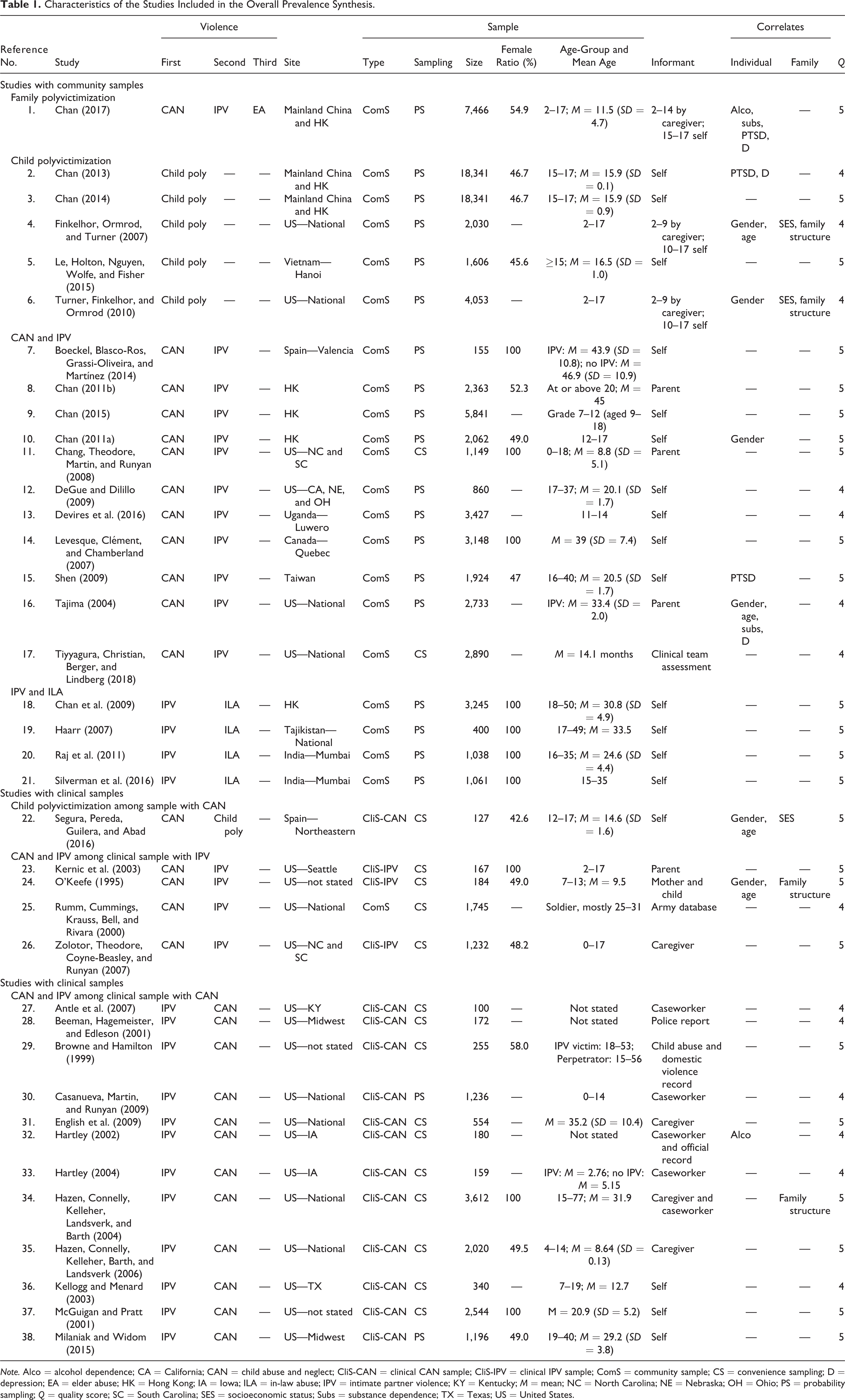
Note. Alco = alcohol dependence; CA = California; CAN = child abuse and neglect; CliS-CAN = clinical CAN sample; CliS-IPV = clinical IPV sample; ComS = community sample; CS = convenience sampling; D = depression; EA = elder abuse; HK = Hong Kong; IA = Iowa; ILA = in-law abuse; IPV = intimate partner violence; KY = Kentucky; M = mean; NC = North Carolina; NE = Nebraska; OH = Ohio; PS = probability sampling; Q = quality score; SC = South Carolina; SES = socioeconomic status; Subs = substance dependence; TX = Texas; US = United States.
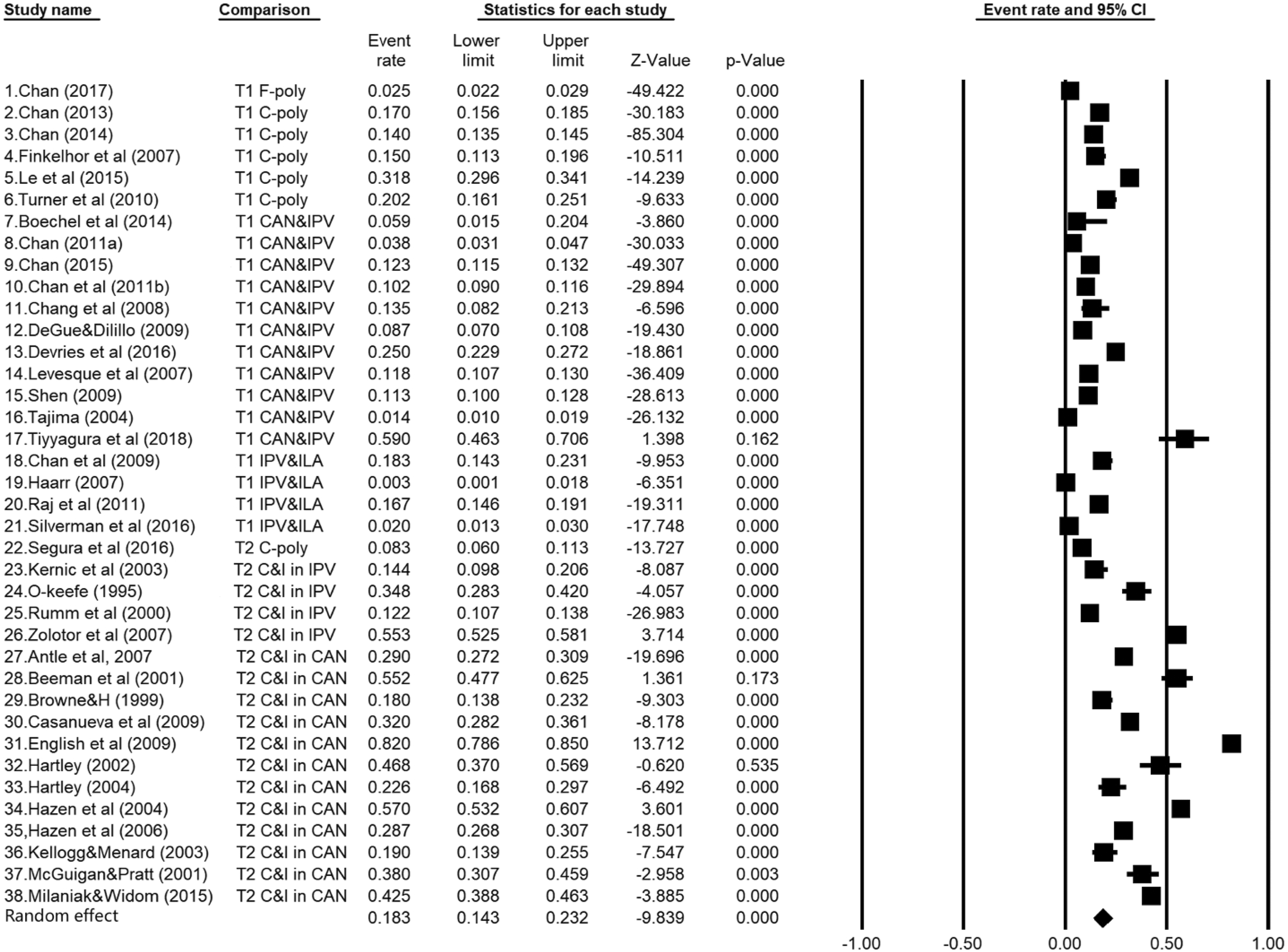
Co-occurrence rates of family violence among the included studies. Heterogeneity: Q = 5,561.195, df = 37, p = .000, I 2= 99.335. CAN = child abuse and neglect; ILA = in-law abuse; IPV = intimate partner violence; T1 = polyvictim among total sample; T2 = one type of victim in the other sample.
In this analysis, co-occurrence rate refers to the rate of the co-occurrence of at least two types of family victimization among community samples, of which respondents might or might not report any victimization. Percentage of overlap refers to the rate of the co-occurrence of family victimization among clinical samples, in which respondents reported at least one type of victimization. Using this definition, 21 of the 38 studies (55.3%) used community samples and provided data for the calculation of the effect size of the co-occurrence rate, while the remaining 17 studies (44.7%) used clinical samples and provided data for that of the percentage of overlap of family victimization.
The sample sizes of these studies ranged from 100 to 18,341, together providing a considerable sample size of 99,956 for the general synthesis of effect sizes. Among the studies using community samples (n = 21), only one (4.8%) examined the co-occurrence of three types of victimization (CAN, IPV, and EA). Five studies (23.8%) investigated the co-occurrence of various types of child victimization (i.e., child polyvictimization), 11 studies (52.4%) examined the co-occurrence of CAN and IPV, and 4 studies (19.0%) tested for the co-occurrence of IPV and ILA. Among the clinical studies using clinical samples (n = 17), 1 (5.9%) studied the percentage of overlap of child polyvictimization among samples with CAN, 4 (23.5%) studied that of CAN and IPV among samples with IPV, and 12 (70.6%) studied that of CAN and IPV among samples with CAN.
Overall Co-Occurrence Rates and Percentages of Overlap
Table 2 shows the co-occurrence rates and percentages of overlap of family victimization in the meta-analysis. Overall, the co-occurrence rate synthesized from the 21 studies with community samples was 9.7% (95% CI [7.4%, 12.7%], p < .001), while the percentage of the overlap of victimization in the clinical samples was 36.0% (95% CI [28.8%, 43.9%], p < .001), showing that the percentage of overlap in clinical samples could be 4 times as high as the co-occurrence rate in community samples. Wide variances could be observed in both types of studies; over 98% of the total variations might be due to heterogeneity in the samples and types of victimization investigated, as well as the differences in the conceptualizations of co-occurrence (Qw
1 = 1,785.45, df
1 = 20, p < .001,
Event Rates of Different Types of Polyvictimization.
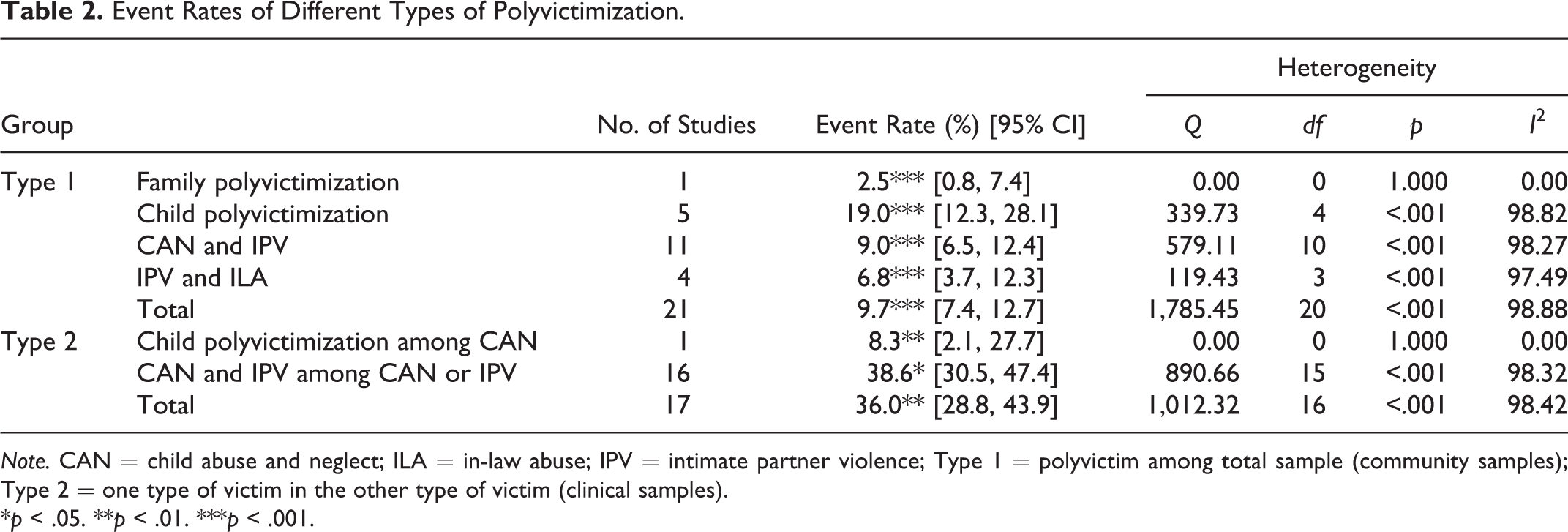
Note. CAN = child abuse and neglect; ILA = in-law abuse; IPV = intimate partner violence; Type 1 = polyvictim among total sample (community samples); Type 2 = one type of victim in the other type of victim (clinical samples).
*p < .05. **p < .01. ***p < .001.
To further test for the individual effect sizes, analyses of the different combinations of the types of co-occurring victimization were conducted. As presented in Table 2, the findings showed a co-occurrence rate of 19.0% (95% CI [12.3%, 28.1%], p < .001) for child polyvictimization, 9.0% (95% CI [6.5%, 12.4%], p < .001) for CAN and IPV, and 6.8% (95% CI [3.7%, 12.3%], p < .001) for IPV and ILA among the community samples. There was a percentage of overlap of 38.6% (95% CI [30.5%, 47.4%], p < .05) for CAN and IPV for the clinical samples.
ORs of Violence Victimization as the Associated Factor of the Other Forms of Victimization
The effect sizes of any one type of violence victimization as the associated factor of the occurrence of the other type(s) of victimization were also evaluated; details of the findings are summarized in Table 3. Of the 59 studies, 21 cross-sectional studies provided sufficient data on the relevant associations. Overall, the findings demonstrated that the OR of another type(s) of victimization being present when one type was present, a situation referred to as polyvictimization, was 6.01 (p < .001). When breaking down the specific combinations of co-occurring victimization, it was found that the OR for the co-occurrence of IPV and CAN was 3.91 (p < .001). Similarly, the OR for the co-occurrence of IPV and ILA was 5.02 (p < .01), while that of CAN and ILA was 3.94 (p < .001). Another five longitudinal studies included in this meta-analysis provided data for the computation of the overall OR for the risks of CAN being present when IPV was reported. The results show that the OR was 3.64 (p < .001), indicating that, when a family reports IPV, the odds of CAN occurring within the same family could be greater than 3-fold.
Odds Ratios of the Associations Between Different Types of Violence Victimization.
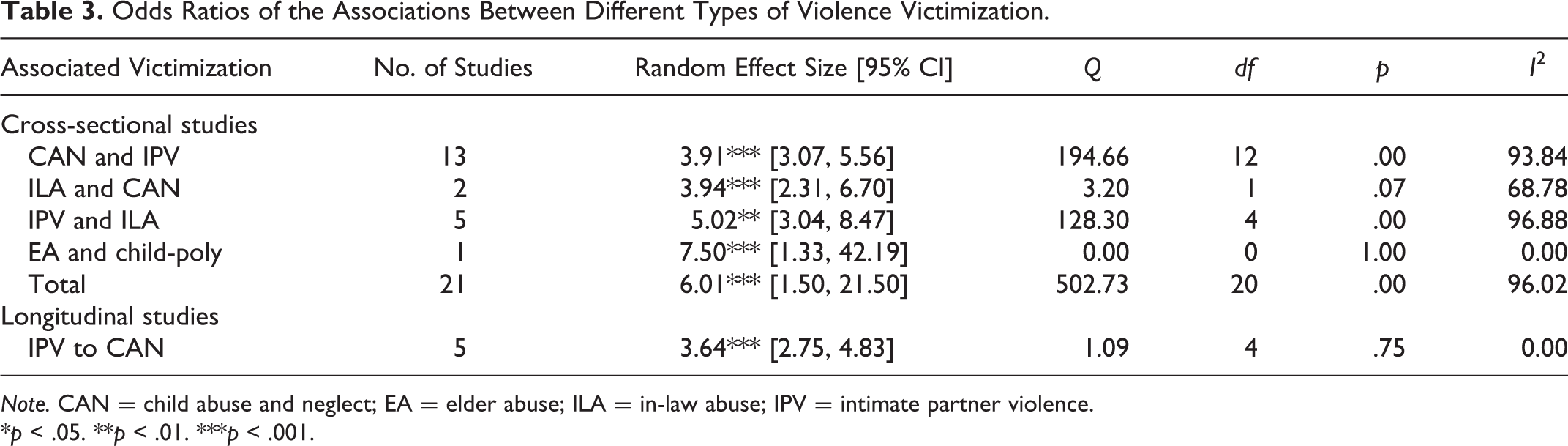
Note. CAN = child abuse and neglect; EA = elder abuse; ILA = in-law abuse; IPV = intimate partner violence.
*p < .05. **p < .01. ***p < .001.
ORs of Individual and Family Factors Associated With Family Polyvictimization
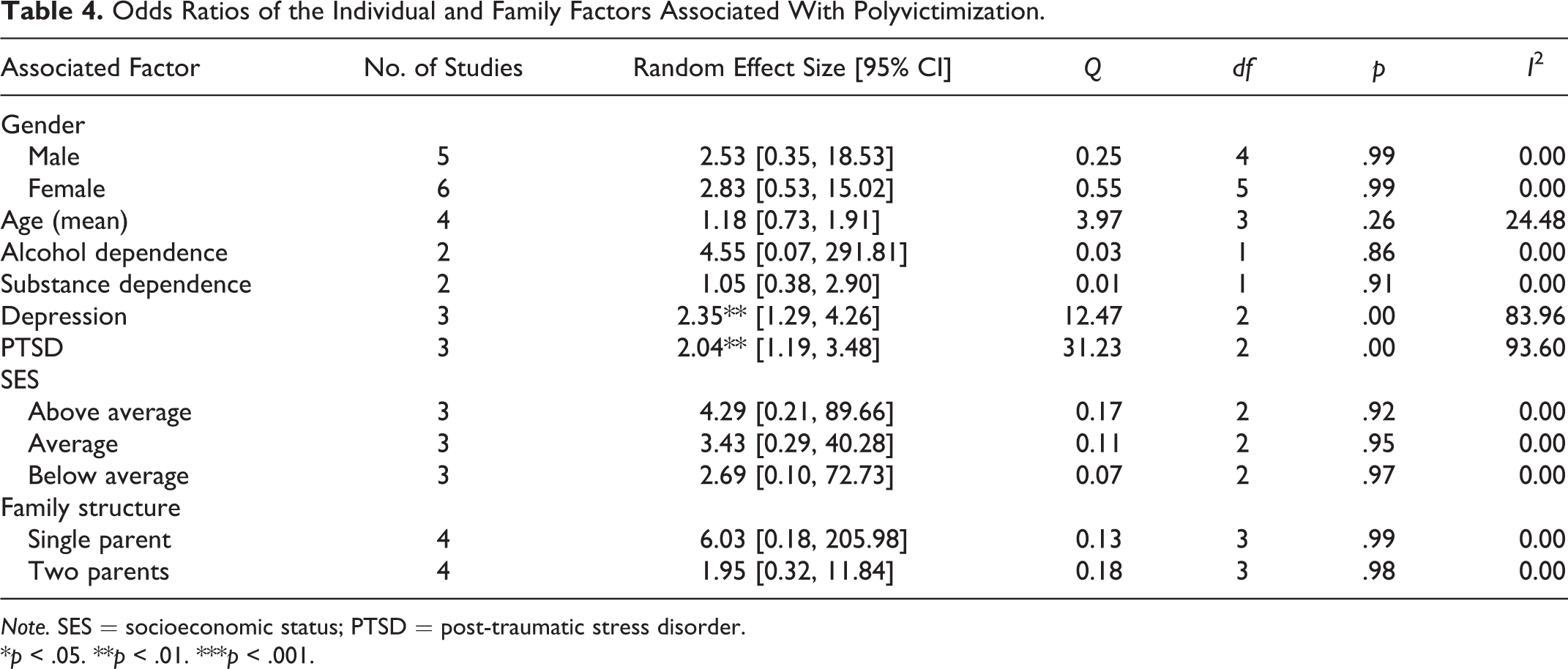
Several studies examined whether or not individual characteristics or family factors are associated with family polyvictimization. Table 4 summarizes the ORs and other relevant findings of these. The results show that family polyvictimization is significantly associated with higher odds of a victim experiencing depression (OR = 2.35, p < .01) and symptoms of PTSD (OR = 2.04, p < .01). However, other factors, such as the victim’s age, gender, SES, and addictive behaviors, were not found to be significantly associated with polyvictimization in this analysis (all p > .05).
Odds Ratios of the Individual and Family Factors Associated With Polyvictimization.
Note. SES = socioeconomic status; PTSD = post-traumatic stress disorder.
*p < .05. **p < .01. ***p < .001.
Publication Bias
In the funnel plot shown in Figure 3, the x-axis shows the logit rate of co-occurrences of family victimization and the y-axis depicts the standard errors. Because the studies included in the current meta-analysis generally used a very large sample size, most of them were spread symmetrically at the top, around the combined result. Only two studies (Boeckel, Blasco-Ros, Grassi-Oliveira, & Martínez, 2014; Haarr, 2007) with smaller sample sizes and showing low co-occurrence rates fell at the bottom of the graph. Considering the high statistical power of the studies included and the symmetrical shape of the graph, the possibility of publication bias is low.
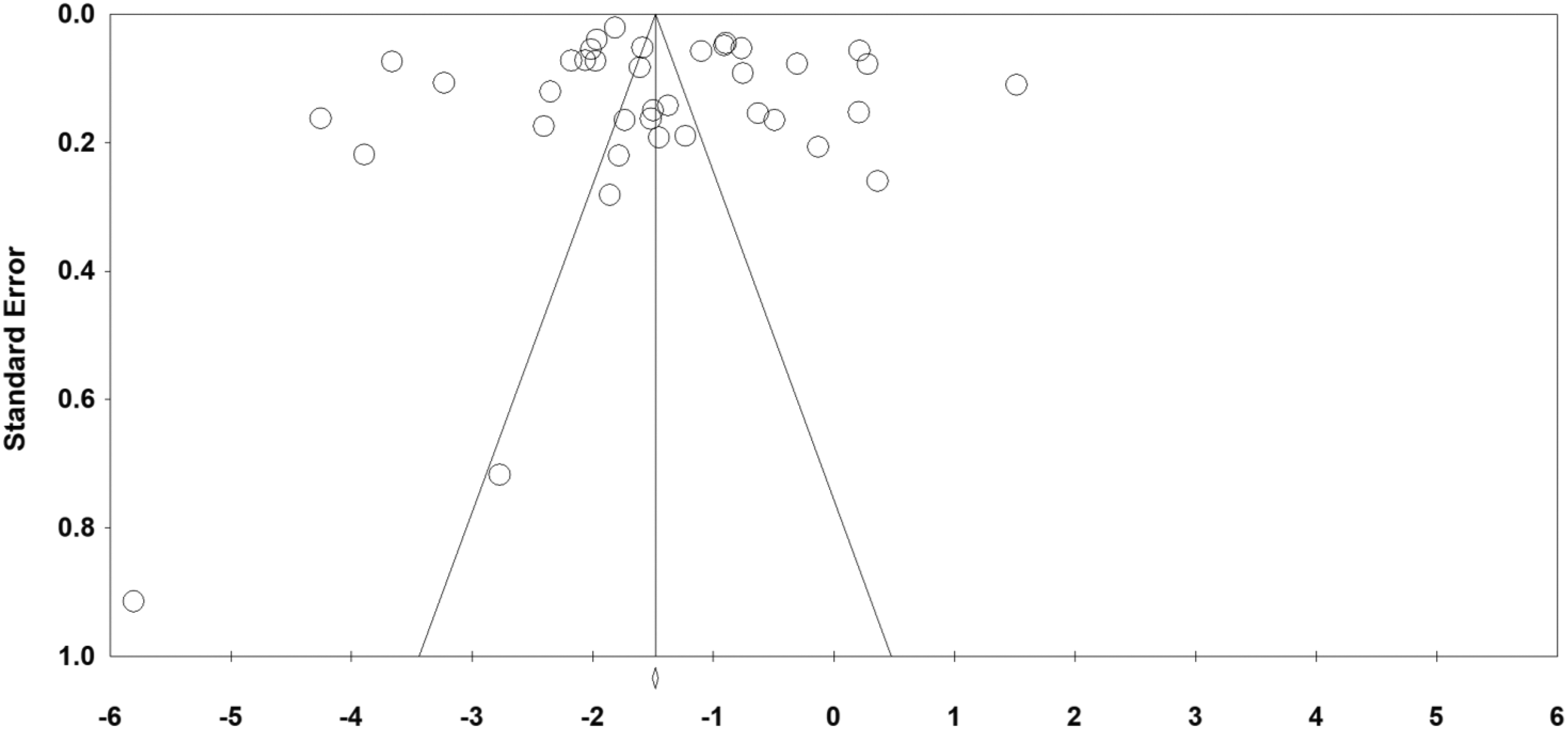
Funnel plot of standard error by logit event rate.
Discussion
Our findings show that the prevalence of overlapping family victimization among the clinical sample could be almost 4 times greater than that among the general population (36.0% vs. 9.7%). This result highlights the possibility that one type of family victimization could be a significantly associated factor or indicator of other types of victimization among members of the same family. Further results from the analyses of the ORs of polyvictimization show that, when one reports the experience of one type of victimization, the likelihood of reporting other type(s) of victimization could be 6 times higher, compared to individuals who do not report victimization. This is consistent with findings from previous research that suggest that the presence of one type of victimization could be predictive of other types of victimization (Chan, 2014; Tajima, 2004). There are many possible mechanisms underlying the strong associations between different types of family victimization, one of which could be the spillover effect from one family member to another. For example, the strong association between IPV and CAN may be rooted in the weakened ability and lower energy level among violent or victimized parents in regard to protecting, supervising, and taking care of their children and in turn might result in immediate CAN or subsequent CAN via insecure attachment to parents, hampered parent–child relationships, and a lack of parent supervision (Chan, 2014).
Aside from the well-studied association between IPV and CAN, this study also revealed an increased likelihood of ILA when IPV or CAN is reported (about 5 times higher and 4 times higher than nonvictims, respectively). It was observed that the majority of elderly people live with their children in China and other Asian countries, where they are expected to help the married children in regard to chores and childcare (Chen et al., 2018). The caregiving for the co-resided elderly is found to be associated with lower marital quality between the adult couples, and more conflicts between children and elders in the same house (Chen et al., 2018). It was suggested in a past study that IPV and ILA might form a vicious cycle (McKay, 1994). For example, ILA between in-laws over child-rearing issues may increase the likelihood of worsened partner relationships, further leading to partner conflicts and subsequent IPV. In worse situations, IPV may then escalate to more severe in-law violence (McKay, 1994). The distress resulting from violent in-law relationships may then reduce the caregivers’ ability to take care of the children in the family, and the negative emotions may also contribute to overreacting and abusive behaviors toward children, leading to a heightened risk of CAN (Slep & O’Leary, 2001).
Another possible mechanism for the high co-occurrence rate and strong association between different types of family victimization may be the shared features, backgrounds, and surrounding environments of members of the same family. Results in this meta-analysis showed that depression and PTSD were more likely to appear in polyvictimized families than in other families, which is in line with past findings that posit that more depressive and PTSD symptoms were found among polyvictims than victims of any single type of victimization (Stover et al., 2012). The associations between family polyvictimization and these mental health problems could be bidirectional; victims may show more depressive and/or PTSD symptoms after the violent incidents, whereas depression and/or PTSD may increase the risk of being victimized by violence. In addition, the shared experiences of family disruption and dysfunction may moderate the positive associations between negative health consequences and problematic parental practices and interpersonal communications (Slep & O’Leary, 2001), leading to a greater risk of victimization within the same family. The demographic factors, including age, gender, or addictive behaviors, were found to have no significant association with family polyvictimization. The nonsignificant results may possibly be related to the wide variance of research methods and samples across the studies examined, as well as the relatively low number of studies that provided sufficient data for the analyses (n = 2–6). Therefore, one should be cautious before drawing a conclusion that demographic factors are not related to family polyvictimization just because of the present findings. Clearly, future empirical research should include the exploration of different individual and family characteristics when studying the co-occurrence of family victimization or family polyvictimization in order to provide more scientific evidence.
Concerning the wide variance in the co-occurrence rates and ORs found in the present study, it was observed that, apart from the differences in study samples and procedures, one of the most likely contributors of this variance might be the lack of clear definition and operationalization of victimization in many studies. Studies using community samples often employ self-reported retrospective measures to capture victimization, and there is no reason to overlook the influence of reporting biases that could lead to both underreporting and overreporting (Stoltenborgh et al., 2011). On the other hand, professional reports or informant observations are not free of problems. Although they do not rely on potentially biased respondent memories, a possible weakness may appear when some forms of victimization are relatively less “visible” to outsiders and more difficult for professionals to detect (e.g., sexual violence; Stoltenborgh et al., 2011).
Apart from the variance in definitions and operationalization of family victimization and polyvictimization, an issue concerning the informants of the victimization incidents was also observed in this study. When studying multiple types of victimization on different members within the same family, it would be optimal to inquire all potential victims and assess their experiences individually. Yet, given the time and manpower limitations, it may not always be possible, especially when involving a large sample size or respondents with difficulties report (e.g., small children and elderly people). In such cases, adult proxy reports might be a feasible choice. Indeed, past research has demonstrated proxy reports could achieve good agreement with self-reports, and proxy reports may serve as a reliable alternative for reporting violence (Chan, 2011a, 2012a, 2012b, 2015b). Future studies may consider the use of adult proxy reports when studying family victimization and polyvictimization, especially when individual assessments on all family members are not feasible.
Findings of this study provide critical implications for health professionals. Child protection services, IPV shelters, and elderly care centers may screen the service users with more types of family victimization as possible to detect at-risk families. Also, the significant relations between family polyvictimization and depression and PTSD symptoms of the polyvictims provide insight to the potential effectiveness of identifying at-risk families and victims in mental health clinics or services. The findings also provide evidence on supporting the holistic family-oriented approach to facilitate the delivery of whole-family interventions.
Limitations and Future Research
The relatively small number of informant studies (especially in regard to analyses of family polyvictimization with more than two types of co-occurring victimization) and the heterogeneity in the studies may lead to the inability of this meta-analysis to fully explain the wide variance in the co-occurrence of family victimization. Among the 59 eligible studies, only 38 provided sufficient data for the combination of co-occurrence rates. Some of the present analyses could only be based on fewer than five informant studies, and it is obvious that more research on family polyvictimization is urgently needed before researchers can reach a reliable conclusion in regard to this issue. Another limitation concerns about the failure to include more studies focusing on the co-occurrence of more than two types of family victimization, which was due to the limited number (only one) of existing study in the literature. With regard to this limitation, we adopted the definition from previous studies that polyvictimization was two or more types of violence rather than repeatedly episodes of one single violence (e.g., Turner et al., 2010) and included studies on two types of victimization in our meta-analysis. Yet, we believe the use of the stricter definition of polyvictimization (i.e., the co-occurrence of three types of more victimization in the family) would provide more insights to the violence field and urge future research to consider including more than two types of family victimization. Besides, there may exist other confounding factors that have not been included in the present meta-analysis. These possible factors may include personality characteristics, relationship factors among family members, and community or neighborhood factors. There may also be other types of family victimization that have not been included, such as sibling victimization and grandparent–grandchild violence. However, research on the co-occurrence of other forms of family victimization was not available during the current literature search process. Future research may further explore these different types of victimization and extend this study to include more possible correlates and associated factors. This meta-analysis included only English publications. It is also possible that relevant studies may be published in other languages, such as French, Chinese, and Japanese, and were excluded from the literature search process. The study should have included journals or databases in languages other than English. However, after a thorough consideration of the time and manpower resources available when this study was conducted, a balance had to be found between completeness and effectiveness. Thus, only English publications were included in this initial meta-analysis of family polyvictimization. Future reviews and meta-analytic studies may consider the inclusion of informant studies in other languages. Almost all informant studies included in this meta-analysis failed to investigate the dose effect of victimization. Instead, they only used an approach to capture either the presence or the absence of the specific types of victimization examined. The investigation of influences of the frequency and severity of victimization is one of the fastest growing trends in the field. It is of great importance to conduct more co-occurrence studies with a focus on the dose effect of family victimization in the future.
Supplemental Material
Supplemental - Prevalence and Correlates of the Co-Occurrence of Family Violence: A Meta-Analysis on Family Polyvictimization
Supplemental for Prevalence and Correlates of the Co-Occurrence of Family Violence: A Meta-Analysis on Family Polyvictimization by Ko Ling Chan, Qiqi Chen and Mengtong Chen in Trauma, Violence, & Abuse
Footnotes
Declaration of Conflicting Interests
The author(s) declared no potential conflicts of interest with respect to the research, authorship, and/or publication of this article.
Funding
The author(s) disclosed receipt of the following financial support for the research and/or authorship of this article: The work described in this article was fully supported by a grant from the Research Grants Council of the Hong Kong Special Administrative Region, China (Project No. PolyU37000316; RGC Humanities and Social Sciences Prestigious Fellowship Scheme).

Supplemental Material
Supplemental material for this article is available online.
References
Supplementary Material
Please find the following supplemental material available below.
For Open Access articles published under a Creative Commons License, all supplemental material carries the same license as the article it is associated with.
For non-Open Access articles published, all supplemental material carries a non-exclusive license, and permission requests for re-use of supplemental material or any part of supplemental material shall be sent directly to the copyright owner as specified in the copyright notice associated with the article.
