



Abstract
Sexual relations between adolescents or young persons and considerably older persons are considered illegal or deviant in many countries. Yet legal and social definitions and constructions do not capture the complexity of such relations and the various perspectives surrounding them, including that of those involved and other members in the community. In a previous publication, the author examined perspectives on sexual relationships between minors and older persons in Western societies. The current review broadens the perspective on this phenomenon by examining perceptions of sexual relationships between minors, young adults and older persons in African societies, using a similar approach informed by and adapted according to the unique sociocultural context of the articles reviewed. All samples were located in Africa. All studies were published in English. In the current review, the ages of the adolescents or young adults were higher than in the review of Western societies, up to 25, and the age gaps were higher as well. Three main themes emerged from the meta-analysis: adolescents and young adults’ motivations to be involved in sexual relations with an older person, relationship characteristics as perceived by both partners, and the negative consequences of such relationships for the younger partner. The findings are discussed and implications for future studies and practices are suggested, highlighting the important role of sociocultural perceptions and calling for a more nuanced and intellectually modest understanding of the complexity of these relationships.
Keywords
Introduction
Sexual relations between adults and minors are illegal in many countries. The age and age gaps that determine its illegality may vary, but the official and public consensus is that it is a crime, regardless of whether the minors involved have experienced such relations as consensual (Bierie & Budd, 2018; Hodgkinson, Lewin, Chang, Beers, & Silber, 2014). The age of consent in most Western countries is 16, and a minimum age difference between the older and younger parties to the relationship is required for it to qualify as statutory rape (Glosser, Gardiner, & Fishman, 2004). Even given consent, such relationships are usually considered as leading to negative consequences including physical and emotional victimization, sexually transmitted infections (STIs), pregnancy, problem behaviors, and drug and alcohol abuse (see Hines & Finkelhor, 2007 for a review; see also Oudekerk, Guarnera, & Reppucci, 2014).
The current review follows upon a previous review of sexual relations between adults and minors from the subjective perspectives of those involved and that of the public in Western societies (Tener, 2018). The previous review included studies on perceptions of youths or adults who had experienced sexual relations with a person at least 2 years older during their adolescence and perceptions of students and other adult members of the public of statutory rape relations. All studies were conducted in Western countries. Four main themes emerged from the review including adolescent motives for sexual relations with older persons; characteristics of such sexual relations; contextual factors affecting their perception, including ages and genders; and perspectives on their legal framing of such relations.
Originally, the purpose of the current review had been to apply the same criteria used in the previous review and explore perspectives of sexual relationships between minors and older persons as arising from studies on African societies. Yet, as the review progressed, it became clear that this approach was inappropriate and that reviewing the material at hand required using a different terminology to define and describe those relationships, the ages and age gaps between those involved, and their consequences. Consequently, the purpose of the current review was reframed, and it currently focuses on perceptions of sexual relations between minors or young adults and older persons in African societies, using the unique terms and definitions used in the African literature, as detailed below.
First, the definitions of age range for adolescence, which in the previous review were 12–16, turned out to be irrelevant to most of the studies conducted in African societies, which sometimes defined it as continuing until age of 25. Second, the Western legal term “statutory rape” (and its equivalents) was grossly inappropriate: Almost none of the papers reviewed included any consideration of statutory rape laws or other legal aspects (exceptions to that rule include Ahumada, 2009 and Tesfaye, 2017).
In order to understand these relationships in African countries, I used terms that appeared more relevant. The term “sugar daddy” was particularly common (e.g., Leach & Machakanja, 2001; Toska, Cluver, Boyes, Pantelic, & Kuo, 2015). Another term common in the empirical literature on Africa was “transactional sex,” referring to sexual relationship based on informal exchange of money or material goods (Hawkins, Price, & Mussá, 2009). This term was originally excluded from the review for resembling prostitution, which was beyond the scope of the previous review. Yet it was eventually reincluded as papers using it reflected a much more complex understanding of the phenomenon. For example, in their fascinating review, Stoebenau, Heise, Wamoyi, and Bobrova (2016) described three “transactional sex” paradigms: the vulnerable victim and sex for basic needs, the powerful agent and sex for improved social status, and sex and material expressions of love.
Finally, a major cultural and societal factor that differentiated this phenomenon in African countries and was irrelevant in the review of Western literature was HIV and other STIs (e.g., Maughan-Brown, Kenyon, & Lurie, 2014; Schaefer et al., 2017; Wyrod et al., 2011). Condom use and HIV infection were discussed by participants in most of the studies reviewed. Over 95% of HIV cases worldwide are in developing countries (World Health Organization [WHO], 2016). In Africa, most HIV transmissions occur among heterosexuals during unprotected sex (Austin, Choi, & Berndt, 2017). Studies present sexual relationships with older persons as placing adolescents and young women (15–24) at HIV risk, particularly given early age of onset, inconsistent condom use, and multiple partners (see Ranganathan et al., 2017, for a review). Unprotected sex is particularly prevalent in relationships between adolescent or young females and older males, given the power and economic asymmetry that in practice prevent the former from negotiating condom use (Wyrod et al., 2011).
Accordingly, the approach adopted in this review departs from the first in that the preliminary research process led to the adoption of a context-informed perspective out of the realization that Western concepts and norms could not be applied to African societies (Nadan, Spilsbury, & Korbin, 2015; Shalhoub-Kevorkian & Roer-Strier, 2016). Different cultures understand sexuality, including sexual abuse, in different ways (Fontes, Cruz, & Tabachnick, 2001; Fontes & Plummer, 2010; Reid, Reddock, & Nickenig, 2014; Thoburn, Chand, & Procter, 2005).
Since the literature is nevertheless dominated by models informed by Western theories, research, and practice (Fontes, 2005; Henrich, Heine, & Norenzayan, 2010; Joshanloo, 2014; Korbin, 1981), this systematic review contributes to it by analyzing how sexual relations between adolescents or young adults and older persons are perceived by those involved and the general population of African societies, in order to guide policy makers and practitioners concerning interventions for those involved. I find that gaining such knowledge is particularly urgent in the current globalization era, which provides effortless access to media as well as material goods that were inaccessible to African societies in the past, exacerbating inequality in poor African societies and potentially contributing to youngsters’ desire to narrow the gap through relations with older persons (Zembe, Townsend, Thorson, & Ekström, 2013). Together with the growing scope of immigration and intercultural encounters, this requires professionals to gain unique cultural knowledge to design well-informed and sensitive interventions.
Method
Inclusion Criteria
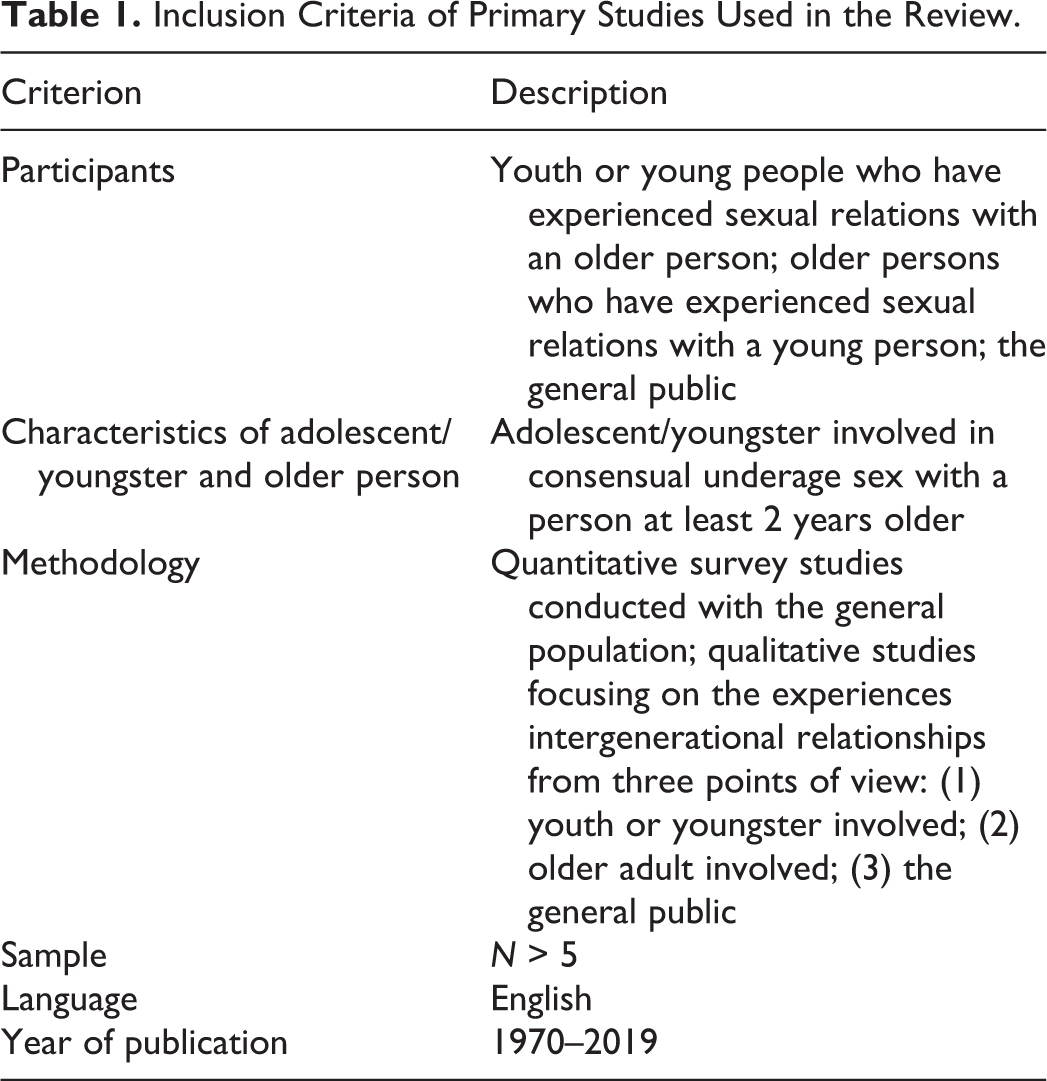
According to this review’s strict inclusion criteria, studies had to add relevant information about and discuss sexual relations between adolescents or young adults and older persons from the point of view of (1) an individual of any age who had experienced sexual relations with a person at least 2 years older during their adolescence or with a much older person during young adulthood, (2) older individuals who had experienced sexual relations with adolescents or younger persons, and (3) students and other members of the community or the general public. Another basic inclusion criterion was that studies had to be conducted in African countries. After an initial review of the literature, it was also decided to further limit them to heterosexual relations, since lesbian, gay, bisexual, transgender, and queer/questioning relations appear to have unique characteristics that should be examined in a dedicated review. Papers where the sexual relations were defined as commercial prostitution or as rape, and included clear violence and threats, were also excluded.
With regard to the age criterion, because of the limited amount of available studies and cultural differences, I used a broad definition for adolescence. According to World Health Organization [WHO], 2019 WHO (2018), adolescence is usually considered to refer to the ages of 10–19. Yet Sawyer, Azzopardi, Wickremarathne & Patton (2018) argue that an expanded and more inclusive definition of adolescence is essential and that the age range of 10–24 years corresponds more closely to current understandings of this life phase. I therefore included studies that referred to adolescents or younger persons between the ages of 10 and 25 years. Studies were excluded if there was no way to differentiate between adolescents and younger participants (under 25) and older adults who participated in the studies.
As mentioned, statutory rape laws usually refer not only to the absolute age but also to the age gap between the relationship partners. In this review, it was decided to focus on an age gap of at least 2 years—the same criterion applied in the previous review (Tener, 2018). Note, however, that in this review, unlike the previous one, in most studies the age gap reported was much wider. Studies were excluded if it was impossible to differentiate sexual relations with an older person from sexual relations with others close in age.
Given the relative dearth of studies, research design was not used as a limiting factor and the search included both qualitative, quantitative, and mix methods designs. Nevertheless, only peer-reviewed studies and those identifiable and accessible through an electronic database were included. Moreover, purely theoretical studies, or those reporting fewer than five participants were excluded, as were studies on physical and psychological correlates or consequences of the sexual relations other than from the respondents’ perspectives. Finally, only studies in English were included—a significant limiting factor when it comes to studies conducted in African societies. See Table 1 for an overview.
Inclusion Criteria of Primary Studies Used in the Review.
Initial Selection and Extraction
The following electronic databases were searched: JSTOR, PsycNET, PubMed (Medline), Sage Journals, Science Direct, SocINDEX (EBSCO), Springer Link, Web of Science, and Wiley Online Library. Initially, the nine search terms used in the previous review were included: “statutory rape,” “statutory relations,” “compliant victim,” “age of consent,” “partner age gap,” “older partner,” “underage sex,” and “sexual victimization in adolescence”. In the course of the initial search, five additional terms—“age-disparate sex,” “sugar daddy,” “intergenerational sex,” “cross-generational sex,” and “transactional sex” —appeared to be the most commonly used in articles about African societies, and thus I repeated the entire search while including them as well.
In all, 7,737 potential studies were initially identified. Next, their titles and abstracts were reviewed, which left 103 articles that were subjected to a full-text review. Their reference lists were also searched, yielding an additional 43 papers. The articles were reviewed with a research assistant, a doctoral student of social work to evaluate their design and methodological rigor, objectives, sample characteristics, and findings, as well as their discussion and implications for theory and practice. Each article was reviewed independently by the research assistant and author. All articles on which there was no complete interrater agreement were reexamined and discussed until consensus was reached by the author and research assistant. At the end of the rereview, 21 articles met the inclusion criteria. See Table 2 for an overview.
Description of Reviewed Articles.
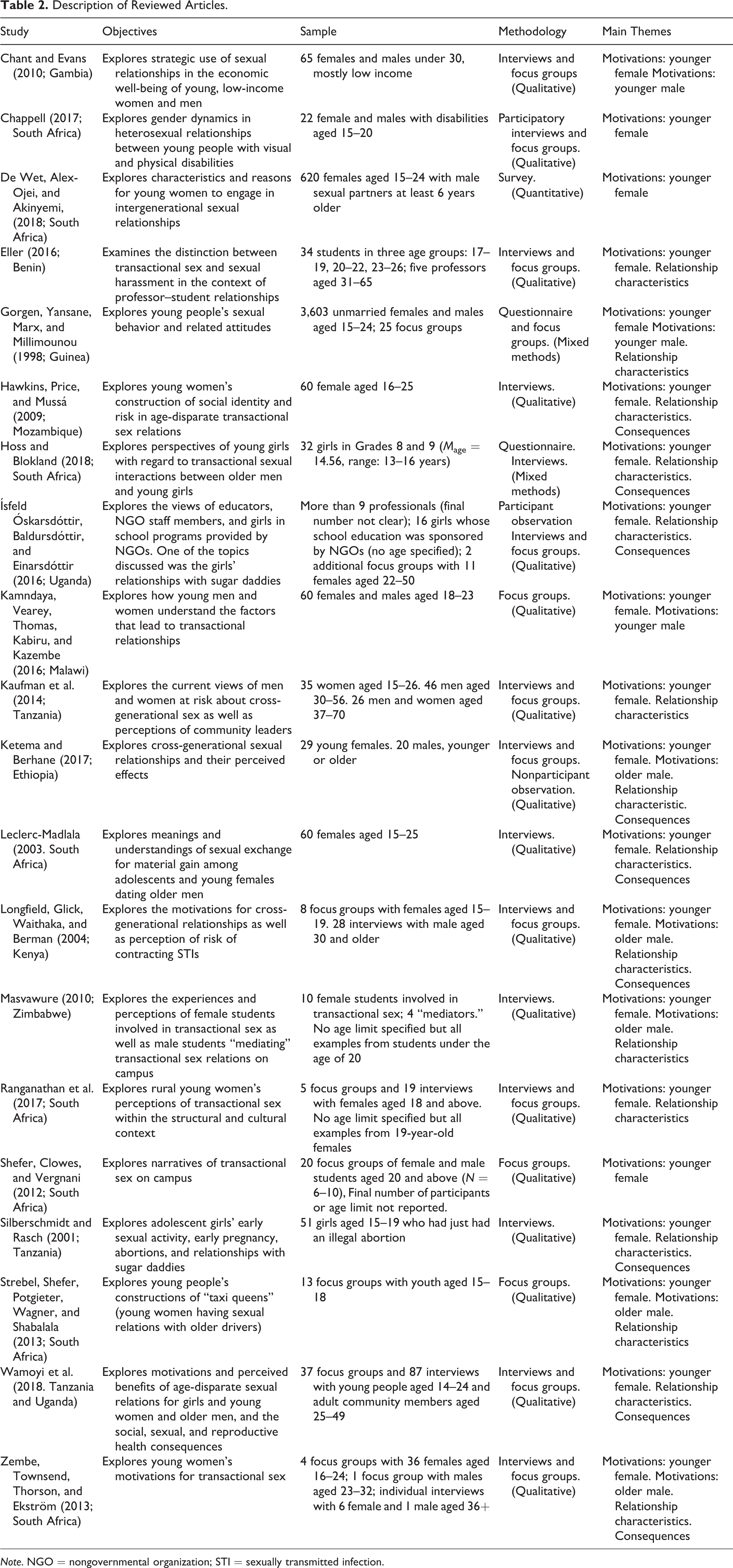
Note. NGO = nongovernmental organization; STI = sexually transmitted infection.
Critical Findings.

Note. STI = sexually transmitted infections.
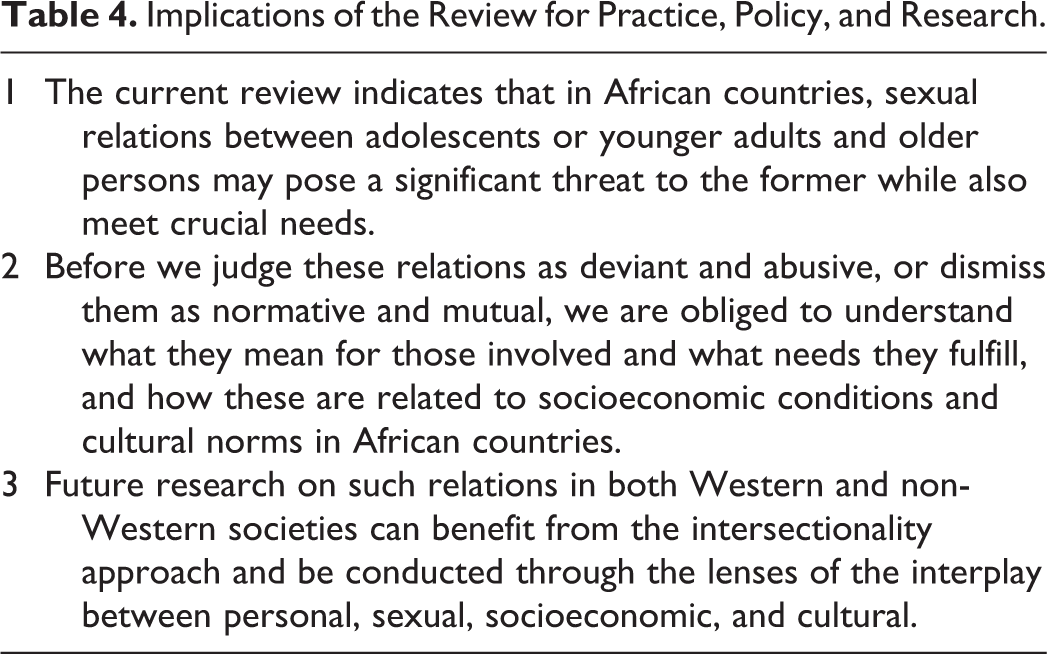
Implications of the Review for Practice, Policy, and Research.
Data Analysis
A thematic analysis was then conducted based on Braun and Clarke’s (2006) stages. The articles were first read several times to familiarize the author with the data and identify initial ideas. In the first stage, each article was entered into the
At that point, it was clear that three main themes—motives, characteristics, and consequences—were central in most of the papers. Following Strauss and Corbin (1998), the next stage therefore involved reviewing and classifying these themes and their subthemes by dimensions and properties; this involved referring back to the articles to gather additional information to further develop the categories (Maykut & Morehouse, 1994). The final set of 21 articles was assigned themes by the research assistant to establish coder interreliability. Emerging disagreements were jointly discussed, and the final assignment was determined by the author.
Findings
Descriptive Overview
Eighteen of the 21 articles were based on qualitative design; 1 employed a quantitative and 2 a mix methods design. All studies were conducted in Africa (Benin, Ethiopia, Gambia, Guinea, Kenya, Liberia Malawi, Mozambique, South Africa, Tanzania, Uganda, and Zimbabwe). Each included at least one group of respondents: (1) adolescents or young adults specifically selected for being or having been sexually involved with an older person (five articles, four dealing with adolescent or young females and one with both male and female adolescents and young adults involved with an older male); (2) older persons sexually involved with adolescents or young adults (two articles); (3) the general population (including students, community members, or professionals working with those involved in such relationships; 17).
In some of the articles, the sample did not purposefully include only adolescents or young adults involved with an older person, but at least some participants reported being involved in such relationships during interviews or focus groups. This was aptly described by Hoss and Blokland (2018), who explained that in their sample, “All the girls were asked specifically about the sugar daddy phenomenon, and their responses reflected their experiences of this phenomenon” (p. 311). In the same manner, Ketema and Berhane (2017) described their sample as including “Individuals who […] had personal experience of cross-generational sexual relationships were considered in this study. Besides, those who did not […] but who were familiar with the practices did also participate in the study” (p. 229). In some of the papers, participants referred to relationships with persons of various ages, including same age peers (e.g., Ranganathan et al., 2017). In these cases, only the parts in the study that specifically referred to relationships with older man were analyzed.
The articles selected were characterized by diversity concerning terms used to define the sexual relationships as well as age range. Ten studies used the term “transactional sex.” Five studies described the term through the identity of the older person referred to as “older sexual partner” or “sugar daddy.” In three studies, the term used was “cross-generational relationships.” One study used “intergenerational sexual relationships” and another used “age-disparate sexual relationship.” One defined the term through the adolescents or younger persons, referred to as a “taxi queens” (young girls having sexual relations with older taxi drivers). One study referred to “age-disparate transactional sexual relationships.” In all the studies reviewed, these terms described relationships that included exchange of material benefits between adolescent or young adult and older person, and usually included sexual acts, which were not defined as forcible and were differentiated from prostitution.
Finally, some diversity was found in the ages of the adolescents and young people involved in the relationship: 3 studies defined it within the range of 12–18 years, 11 studies from 15 to 25, and 4 included also participants older than 25. Only cases under 25 were used in the current review. Two studies did not specify age but referred to young people within the context of cross-generational relationships. In most papers, the specific age for the older person or age gap between the younger and older person were not mentioned, but the papers used the term cross-generational relationships as well as emphasized the older age by referring to “older, wealthier men,” or most commonly “sugar daddies” (e.g., Chappell, 2017, p. 593).
Main Findings
The following three themes were identified: (1) motivations for being sexually involved with an older or younger person (20 studies), (2) relationship characteristics (15), and (3) negative consequences for the younger partner (9). All articles referred to at least one of these themes. Note that I mostly used the general term “have sexual relations.” When the context called for it, however, I also used the original terms used in the papers such as “dating” (specifically in the context of peer group attitudes) or “having relations” (when participants differentiated between sexual and other motivations) in order to maintain accuracy in understanding the nature of the relationship.
Theme 1: Motivations for sexual relations with an older or younger person
Twenty papers (17 qualitative, 2 mixed methods, and 1 quantitative) addressed reasons for the adolescent or young adult to have sexual relations with an older person. All studies addressed the motivations of a female adolescent or younger person for having sexual relations with an older man, while three also related to young males’ motivations for having sexual relations with an older female, and five to older men’s motivations to have sexual relations with a younger female.
The motivations of adolescent or younger women included financial–social and emotional motivations, which usually could not easily disentangled. The financial–social motivations were the most commonly described. “Clear-cut” financial motivations, in which the younger person has sex with the older person in return for basic survival support (at times including their entire family of origin), were described in relatively few studies and referred to housing, food, and access to health care (Kamndaya, Vearey, Thomas, Kabiru, & Kazembe, 2016; Kaufman et al., 2014). As emphasized by one of the participants in Kamndaya, Vearey, Thomas, Kabiru, and Kazembe’s study (2016), You cannot sleep on an empty stomach when you have a “business” (meaning vagina) that does not need capital. We think that, “when you have sex with a particular man then we will at least have a “visa” for eating that particular day.” (p. 302).
Some papers used the terms consumerism (Kamndaya et al., 2016; Zembe et al., 2013) or prestige (Masvawure, 2010). Hawkins, Price, and Mussá (2009) suggested that This strategy is referred in all the narratives through the term “to sengue” which means “to extract money from older men through sex”. The term derives from the verb sengar, which appears to be a Portuguese adaptation of a local term meaning “to milk the cow.” (p. 173) When you are in need, he will provide for you. The reason is comparison, especially when you don’t have money in the family and the girls want to fit in, so she will date an older guy so that she can have what her friends have. Money and clothes (p. 314)
Thirteen of the studies reviewed described adolescent or younger persons having sexual relations with more than one partner, usually for financial reasons. As a participant in Shefer, Clowes, and Vergnani (2012) described it, “the poverty that we are talking about, this allows some girls to get more money out of them. […] And once you’ve got five of them, they give you R500 times five” (p. 438). A participant in another study differentiated between sexual partners according to age: “The young man is for love and the old man is for money” (Ketema & Berhane, 2017, p. 233). In Leclerc-Madlala’s study (2003), having sexual relations with more than one partner was described as satisfying a “modern woman’s needs: “It’ s very hard with one boyfriend today…a modem woman needs three or at least two boyfriends to satisfy her these days” (p. 221).
Conversely, based on a survey with six hundred and twenty 15–24-year-old females who had sexual relationship with a man at least 6 years their senior, De Wet, Alex-Ojei, and Akinyemi (2018) reported that most participants considered age a relatively unimportant consideration and ranked financial support only fourth in the list of motivations for having older partners. Financial reasons were more prevalent among women aged 20 and above or divorced, separated, or widowed women who were also students. The most common reasons for having sexual relations with an older person as described by the authors were perceiving age as a nonimportant factor and feelings of security.
Several studies described financial–social motivations in the context of the peer group. Peers were described as pressuring on the adolescent or young adult female to prove that she was dating wealthy men in order to improve their social status, and dating older man was a status marker in these groups (Longfield et al., 2004; Zembe et al., 2013). For example, the quote placed in the title of Masvawure’s study (2010) on young female students dating older men in Zimbabwe reads: “I just need to be flashy on campus.”
In Zembe, Townsend, Thorson, and Ekström’s study (2013), participants even described a common norm of peers acting as a system motivating transactional sexual relationships: “Maybe today you are the one who’s being sold so you must seduce men…they give each other turns if this week it was Lindiwe, the following week its somebody else’s turn…” (p. 10). The female participants described weekend rituals where young women “sell” each other to wealthy men for alcohol in bars. Participants in this study also described social sanctions on those who did not meet these norms, such as shaming in social media.
Conversely, in Hoss and Blokland’s study (2018), peer attitudes concerning dating an older person were ambivalent if not completely negative. On the one hand, dating an older person was considered trendy by peers, giving the young female a position of power; on the other, girls dating older men were judged and even scorned and isolated.
Another motivation, described in one study, was emotional, including attention from the older person as well as replacement for an absent father figure or lack of emotional support from caregivers (Longfield et al., 2004). In Kaufman et al. (2014), girls described relations with older persons that lasted several years, and how they planned to marry their older partners but found out that they actually had a wife or other girlfriends. In Wamoyi et al. (2018), participants emphasized that older men took care of them better than peer lovers. Yet in Zembe et al.’s study (2013), participants claimed that having sexual relations with an older man only for love was available only to women with financial stability: “sometimes it is alright to date someone who is that old…because you love him, you do not care about his assets, because at home you are financially stable, you see” (p. 8).
In Chant and Evans’ study (2010), young females were reluctant to define their motives for having sexual rations with an older man as financial but indicated that gifts were considered a demonstration of love. One of their interviewees, a 28-year-old male teacher, described working hard to make enough money to support his fiancée and thereby marry her: “Pride will not allow you to be seeing your girlfriend every day or every time […] she needs something and that you cannot at least solve one or two problems of hers” (p. 360). In solving their partners’ daily “problems,” men demonstrate their ability to provide for their future wives and at the same time their commitment to do so.
Finally, Ranganathan and colleagues (2017) emphasize the inability to differentiate financial, social, and emotional motivations. They describe how there is a nuanced relationship between sex, love and gifts: money […] when framed as gifts, indicates a young woman’s value and commitment from the man. This illustrates the complexity of transactional sex; […] “exchanges” serve as fulcrums around which romantic relationships are organized (p. 1).
Motivation to fulfill sexual needs was rarely mentioned. Participants in De Wet et al. (2018) who had relations with partners at least 6 years their senior ranked sexual needs as the fifth out of six motivations. In Masvawure (2010), all participants but one described how they were involved with older men for social–financial/prestige reasons and made every effort to escape “any perceived obligation to reciprocate sexually” (p. 865). Satisfying sexual needs was also discussed in Shefer et al.’s study (2012) on transactional relationships in campus but the authors actually emphasized how female desire was absent from their focus group discussions, with a tendency for a dichotomous view on such relationships, perceiving them as motivated by either love or money.
Three studies described motivations of young males to have sexual relations with an older female, mostly financial. In Chant and Evans’ study (2010), some described their relations with older female tourists, motivated by the need to provide for their families of origin, wives, and girlfriends, and “use sex as a basis of economic gain” (p. 366). Importantly, however, they also described the older tourists as more loyal and loving than local women, who were described as mostly motivated by money.
Several studies also described the older men’s motivations for having relations with a younger female and focused mainly on sexual gratification (Silberschmidt & Rasch, 2001). One of the older participants in Ketema and Berhane’s study (2017) described the relationship as a way “to up-date my sexual skill and feel young inside again” and further described it as “compensation for my sexual dissatisfaction at home” (p. 231). Some of the participants also described the lack of condoms use in relations initiated by the older partner (Hawkins et al., 2009). Though this can be discussed in the context of motivation for greater sexual gratification, following the authors, I will further discuss this issue in the last theme, dealing with the consequences of the relationships for the adolescent/younger person.
Some of the older men in that study differentiated, however, between relations with an adolescent or younger partner and a prostitute: You could have a longer romantic time other than sex. From the moral aspect you do not feel like you are buying a girl; rather you consider her as your girlfriend. This minimizes your feeling of guilt especially if you are cheating on your wife. (Ketema & Berhane, 2017, p. 232)
Another phenomenon described in Zembe et al. (2013) was young women having sexual relations with adolescents for reasons of status and prestige, resembling those of older men: “an important accessory for modern young women to possess” (p. 9). The participants described how these relations coexisted with the relations with older men, with the economic support received from the latter used to financially support the adolescent partner.
Theme 2: Relations’ characteristics
Fifteen articles (14 qualitative and 1 mixed methods) focused on perceptions concerning the types and characteristics of relations between adolescent or young persons and older persons. These are reflected in the terminology used by participants. Older persons were referred to by many names, most commonly “sugar daddy.” Similar terms included “ministers of finance” and “friends with benefits” (Shefer, Clowes, & Vergnani, 2012), “blessers” (Hoss & Blokland, 2018), or “Wo-Me-Sh” (a portmanteau meaning an old man pretending to look young; Ketema & Berhane, 2017).
The terminology used to describe the nature of the relationship reflected more clearly its multifaceted nature and was evident in the papers titles, usually including participant quotes: “Eat and you will be eaten” (Wamoyi et al., 2018); “She’s a slut…and it’s wrong” (Strebel et al., 2013); “I’m in love with an older man” (De Wet et al., 2018); “Looking for the one(s)” (Chant & Evans, 2010); “Money talks, bullshit walks” (Zembe et al., 2013).
During the analysis, it appeared some of the studies described one-sided constructions of these relationships, such as abusive relationships only, with the older partner perceived as taking advantage of the adolescent or younger partner (Hoss & Blokland, 2018). Others described relations of mutual benefit or abuse (Eller, 2016; Ísfeld Óskarsdóttir et al., 2016). In another study (Kaufman et al., 2014), participants described adolescents or young females involved in relations with older persons as either the “innocent and naive schoolgirl, deceived by false promises” or the “ill-disciplined, promiscuous seductress” (p. 818; see also Strebel et al., 2013). Interestingly, some of Zembe et al.’s (2013) participants criticized such simplicity, and one of their focus group female participants (age group 16–24) indicated that Obviously, he will still give you money, that is fine but what I am saying is that we should not stereotype this sugar daddy thing; we should not make it [only] about age […] let it not be said that every young woman who is dating an older man is dating a sugar daddy. (p. 7)
In one study, this complexity was reflected in the ways female participants referred to their older partner. While most of the girls interviewed by Silberschmidt and Rasch (2001) called their partners “mshikaji wa muda as a buzi” (a goat to milk), others used the term “mpenzi,” meaning a lover or even potential fiancée. In both cases, the relationship included pocket money, small “luxuries” such as soap or underwear, and schoolbooks.
A typology of transactional relationships is also suggested by Hawkins et al. (2009). First, the aforementioned “sengue” are considered a resource into which female partners can tap for as long as they can without expecting affection or permanency—accordingly, a woman may have several sengues. Second, the “amante” (lover) is usually a married man—who could have previously been a “sengue” —who supports the younger partner like a second wife. This includes renting her an apartment or house, providing an allowance, and paying the bills. In this case, the older man expects to control the young woman as he would his wife and could stop supporting her if he finds out she has other partners. Neither type is considered prostitution.
The participants of Ketema and Berhane (2017) presented three types of relations with older persons. The first were mutual loving relations, at times ending in marriage. The second included only one side who was in love (one of the participants described how not falling in love was important in order to protect oneself). The last type of relations was described as transactional/sugar daddy relations, which included the older partner providing material necessities and gifts; these were considered short lasting and most common.
The studies reviewed above highlight the gap between the way participants conceptualized and constructed these relations, emphasizing the degree of control a young person has in them, and their actual physical and psychological consequences, as discussed in the next subsection.
Theme 3: Negative consequences of sexual relations with an older person
These were addressed in nine studies (eight qualitative and one mixed methods. Hawkins et al. (2009) noted that at first glance, the adolescent or young women appear to be powerful in these relations and able to control them. Their participants described how the adolescent or young woman is usually the initiator, targeting older wealthy men. At the same time, they described that in order to maintain a relation with the older person they were forced to have unprotected sex. Indeed, contracting HIV and other STIs in general was the most common negative consequences described. Other consequences described included violence, sanctions, and abandonment as well as pregnancy and abortions. All will be further described below.
HIV and other STIs
Several studies described participants’ views and experiences regarding the use of condoms and the risk of STIs, primarily HIV. In Hawkins et al. (2009), participants were fully aware of the need to use condoms, having been exposed to health education and HIV prevention messages. In other studies, however, both adolescent/young women and older men perceived their partners to be at low risk of infection (Longfield et al., 2004) or were not concerned about STIs (Silberschmidt & Rasch, 2001). In Ketema & Berhane (2017), one of the older participants described the adolescent/young female as “most likely free from STIs/HIV. They are young and new comers to sexual life, especially if they are found virgin” (p. 232). Similarly, female participants believed that older men were unlikely to be infected as they were more educated and responsible.
In Zembe et al. (2013), health risks were hardly discussed by participants, and were relegated to the background, while the material gains occupied center stage. A girl aged 16–21 had this to say: “As long as he satisfies your needs for money and alcohol you don’t really care. […]. That’s what the slogan says, ‘Money Talks, Bullshit Walks.’” And when asked by the moderator to explain “bullshit,” she replied: “Bullshit is the HIV” (Zembe et al., 2013, p. 8). Similar perceptions also appeared in Wamoyi et al. (2018) when participants described lack of awareness of health risks: She loves him because of his money, now you find that this man has already been infected for a long time […]. She gets those viruses […] thinking about the amount of Tsh 50,000 [$23], but it is not even enough to treat her of STIs. (p. 5)
Violence, sanctions, and abandonment
Participants described the adolescent or younger female as unable to resist sexual relations with the older person and as likely to be beaten (Longfield et al., 2004) or raped (Wamoyi et al., 2018). Another source of violence was described as disapproving parents (Longfield et al., 2004) as well as the wives of the older person. When a wife becomes jealous of her husband’s emotional involvement with a younger woman or has financial worries when her husband gives money to his partner, she may become violent toward the younger woman. Several female participants told stories of wives stalking, threatening, and attacking their husbands’ younger partners, ruining their reputation, or denying them economic support (Hawkins et al., 2009; Longfield et al., 2004).
The peer group can also apply sanctions. Participants in Wamoyi and colleagues (2018) reported that having sexual relations with an older person was liable to tarnish a girl’s reputation to the point of being called a prostitute. Participants in Hoss and Blokland (2018) also reported that girls who had sexual relations with an older person might become socially isolated: “Some kids come to school and sit alone. They don’t talk to anyone, they can’t even concentrate [on] what” (p. 312).
Educators in a nongovernmental organization (NGO) program for girls at risk interviewed in Ísfeld Óskarsdóttir, Baldursdóttir, and Einarsdóttir (2016) indicated that girls who had sexual relations with older men are often abandoned, as the latter usually terminate the relationships after a while: “It is not sustainable, sugar daddy runs out. They start suffering when sugar daddy runs out” (p. 415). Indeed, female participants in Longfield et al. (2004) described adolescent young women’s fear of being abandoned by older persons as they grow financially dependent on them and suffer severe hardship when such relationships end. This often occurs after pregnancy.
Pregnancy and abortion
Both the educators and the girls in the program studied by Ísfeld Óskarsdóttir et al. (2016) indicated these relations were likely to end up in pregnancy, following which they will usually be expelled from school, stop receiving NGO support, and fail to return to the program after the birth. Similarly, most female participants in Longfield et al. (2004) referred to the risk of becoming pregnant and noted that when this happens, adolescent or young unmarried women can be expelled from school and even thrown out of their parents’ homes, and that the resulting loss of reputation affects their marriage prospects. Some female participants in that study believed that many older men deny their responsibility for pregnancies, so that the girls receive no support when they need it most. Many male participants agreed, arguing that the women should bear the burden of pregnancy because in most cases the men already have “legitimate” children they need to support.
Discussion
This study reviewed empirical studies from African societies on how sexual relations between adolescents or younger adults and older persons are perceived by those involved as well as members of the community and public. Three themes emerged from our analysis: motivations for having sexual relations with an older or younger person, relations characteristics, and negative consequences for the younger partner.
Main Findings
Interestingly, in the current review, there was almost no reference to legal aspects, although some of the participants were minors during the relationship, and African countries certainly have the equivalents of Western statutory rape laws (e.g., Ahumada, 2009; Tesfaye, 2017). It is possible that in contrast to Western countries, African countries do not enforce such laws, which raises the question of social attitudes toward this phenomenon. Thus, in the present review, the legal age definition seemed inappropriate, and it included a wide range of ages, from adolescence to young adulthood and covered mainly adolescent girls and young women involved with older males, with only a few papers addressing young men and older women. The age gaps between the adolescent or young person and the older person were usually large, sometimes decades. The current review also shed light on the phenomenon of multiple partners.
The main themes of this review illustrate the unique contexts of African countries. In the current review, motivations for sexual relations with an older person were mostly financial–social: The female partners were usually from low socioeconomic background. At the same time, their perceptions show that the relationships were usually not designed only to satisfy basic economic needs but rather to enable them to have social visibility and status.
The characteristics of these relations were nuanced and complex, far from the simplistic definition of “sugar daddy” or straightforward prostitution but rather presenting a fascinating multifaceted phenomenon. Note that almost all of the articles reviewed above were qualitative, and thus focused on the lived experience of those involved and describing it in a rich and complex manner. The relations could not be treated dichotomously as nonconsensual. Such complexity is also expressed in the empirical definitions and measuring of the phenomenon. A broad definition of nonconsensual sexual relations includes not only physical violence or coercion but also sexual relations into which the younger partner enters due to poverty, which forces young girls and women in particular to engage in transactional sex (Jejeebhoy, Shah, & Thapa, 2005). Note, however, that the exchange of money or gifts for sex does not necessarily imply coercion or prostitution but is widely seen in African societies as ordinary aspects of dating (Moore, Biddlecom, & Zulu, 2007). Furthermore, studies dealing with transactional sexual relations encounter measurement difficulties as many respondents simply do not perceive themselves as partners to such relations and will definitely not associate themselves with prostitution. Questions about receiving money or gifts “in exchange for sex” out of purely materialistic motives imply formal prostitution, which is socially frowned upon. The gray area between prostitution and transactional relations often makes it difficult for respondents to place themselves in either category (Luke, 2005). Indeed, in her review on age and economic asymmetries in sexual relations of adolescent girls in Africa south of the Sahara, Luke (2003) concludes that while they may not be considered entirely as victims, they are also not in total control of their relations as these occur in a setting of significant gender, age, and economic asymmetries.
Finally, the theme of consequences for the younger person was especially notable in its divergence from the literature on Western countries. Although the implications of these relations have received attention in that literature (as reviewed in the Introduction section), most of the studies examined correlations rather than perceptions. In the current review, perceptions of consequences were central. These were mainly negative, including violence, loss of social status, unwanted pregnancies, and particularly inconsistent use of condoms and the real danger of contracting HIV and other STIs. As for the latter, the poverty and related limited ability of African women, particularly younger ones, to negotiate the terms of their relations have resulted in increased STI incidence (Mills, 2010). The title of the current review, “Money, Status, Love, and Death,” alludes to this complexity.
Limitations
One set of limitations in the present review was information gaps and inconsistencies within and across the articles reviewed. The definition of the relationships varied across articles and included several terms that were similar but not synonymous. The papers reviewed here also contained multiple definitions of the ages of the adolescent or young adult: Some included only adolescents while others combined adolescents and young adults. Beyond that, certain articles defined certain ages as belonging to adolescence while others referred to the same ages as young adulthood. In few of the articles, it was impossible to understand the final number of participants. In some of the articles, it was difficult to distinguish between participants who had experienced such relationships themselves and participants who spoke of such relationships as outsiders.
Furthermore, a variety of important themes was not covered, preventing a fuller understanding of the phenomenon. First, there was hardly any documentation of males having sexual relations with older females. Second, the perspectives of the older person received very little attention. Third, same-sex relationships were not discussed and need to be considered in a further review. Finally, child marriage was also not discussed, but some of its aspects are related to the phenomenon under study, such as the context of poverty or HIV risk (Nour, 2006).
Another essential issue that could be considered a limitation was the difficulty in defining the nature of the sexual relations in some of the articles. This review sought to deal with sexual relations that are nominally consensual and free of coercion and violence. Yet in some papers, such a clear-cut definition was impossible to apply, and the distinction between statutory and consensual sexual relations and forcible rape was multidimensional and complex. It appears that a continuum of relationships would be a better way to capture the reality on the ground than a single dichotomous definition. Another important element is the dynamic of the relationships, which can change over time and situation with varying degrees of consent at different times. For example, our review discusses how the relationships can have a consensual nature at the beginning, but this consent vanishes when the younger person becomes pregnant and the older person finds out about it, or when the younger person tries to end the relationships, or wants to use birth control. In such cases, the degree of consent that may have existed prior to the event vanishes.
Furthermore, although this review covered articles with very rich descriptions and multifaceted perspectives, it still lacks essential understanding of cultural aspects. We need more knowledge concerning general attitudes toward sexuality, as well as cultural norms that may influence such relationships, specifically since all the studies reviewed, were conducted in Africa. One example in this context is represented in Kolbe’s article (2015) on transactional sex between United Nations peacekeepers and Haitian citizens (excluded from the review for methodological reasons). In this study, about a quarter of the respondents reported they suffered from emotional or sexual assault by the peacekeepers. The author stated that Traditional gender roles in Haitian culture influence a woman’s perception of being obligated to have sex even when it is not desired. The perception of force or obligation reflected by study participants may have, at times, been created by a lack of communication or by cultural barriers, leaving a peacekeeper with the impression that sex was freely given. (Kolbe, 2015, p. 20)
Last, articles included in the review examined such relations in countries living under conflict and poverty. Indeed, it is not clear from this review whether cultural issues are sufficient to interpret sexual relations between older and younger persons in African societies. The intersectionality approach addresses the multiple ways in which culture influences and at the same time is influenced by individual characteristics, including socioeconomic status, gender roles, and sexuality, all of which feature large in the present review. These characteristics do not only play together, but are mutually constitutive, and this is partly why cultural identity is insufficient as a single-variable explanation (Ceperiano, Alonzo, Santos, & Ofreneo, 2016; Nadan et al., 2015; Taylor, Hines, & Casey, 2011). Thus, future research on sexual relationships between adolescents or younger adults and older persons in both Western and non-Western societies should be conducted through the lenses of the interplay between the personal, economic, societal, sexual, and cultural issues.
Implications for Practice and Policy
How can we approach practical and policy implications for African cultures without risking paternalism? Without sufficient understanding of the deeper aspects of the social and economic context of these societies as well as attitudes toward sexuality and abuse? Before we judge such relationships as deviant and abusive or dismiss them as normative and mutual, we are obliged to understand what they mean for those who experience them and what needs they fulfill and how these are related to conditions on the ground.
The current review indicates that these relationships in African countries may pose a significant threat while also providing for crucial needs. All programs should start from professionals gaining deep understanding concerning sexual behaviors including choices and strategies the partners use (Leclerc-Madlala, 2008). Relatedly, sexual script theory could inform interventions (Gagnon & Simon, 1973). By highlighting the sociocultural dimensions of lived sexuality, this approach helps understand the phenomenon at hand while avoiding reductionist approaches (Johnsdotter & Essén, 2015), such as assuming relationships with older person necessarily involve perpetrators and victims or are otherwise unidimensional.
The intersectionality approach may also be relevant to interventions (Gouws, 2017; May, 2015) by constructing the lived experiences of adolescents and young adults involved in sexual relations with older person. Interventions should consider the interactions of these identities from a holistic perspective. Thus, in their review of sexual and reproductive health and rights of adolescent girls in low- and middle-income countries, Santhya and Jejeebhoy (2015) discussed safe spaces for vulnerable girls that provided information, skills, and networks as well as the need for safe and supportive families, schools, and peers and the importance of involving parents and community leaders. In both arenas, they emphasized that much work still needed to be done.
Another approach that may be suitable for therapeutic interventions with adolescents or young adults is narrative therapy that suggests experiences are mapped into stories that constitute reality (White, White, Wijaya, & Epston, 1990). It focuses on people’s unique as opposed to hegemonic social stories in order to understand what people value and to help them develop alternative narratives (White, 2004) and become liberated from the constraints of the story authored by others (Baird, 1996). For example, the “Tree of Life” narrative intervention, originally developed for Southern African children emphasizing personal values and cultural heritage to cope with loss and risk related to HIV, abuse, and neglect (Denborough, 2008).
In sum, in order to improve the psychological, physical, and social health of adolescents and young adults involved in relations with older persons, one must first understand what they have lost in terms of unmet personal, interpersonal, or sociocultural needs and what they need in order to live. What are their stories? What are their values? What are their desires and dreams? How can they be helped?
Footnotes
Declaration of Conflicting Interests
The author(s) declared no potential conflicts of interest with respect to the research, authorship, and/or publication of this article.
Funding
The author(s) received no financial support for the research, authorship, and/or publication of this article.
