



Abstract
In Australia and internationally, Indigenous children are seriously overrepresented in the child welfare system. This article provides an overview of literature investigating the needs of Indigenous children in residential care facilities. The provision of culturally safe and trauma-informed therapeutic care to Indigenous children and young people in residential care recognizes that the trauma and violence that they have experienced is exacerbated by their Indigeneity due to the colonial histories presenting. Utilizing a systematic scoping review methodology, the study returned a total of 637 peer-reviewed articles that were identified and reviewed for inclusion. The process of exclusion resulted in the inclusion of eight peer-reviewed studies and 51 reports and discussion papers sourced from gray literature. Findings from this study, though dearth, indicate that trauma-informed and culturally safe interventions play a significant role in Indigenous children’s health and well-being while in care. Their experiences of abuse and neglect transcend individual trauma and include intergenerational pain and suffering resulting from long-lasting impacts of colonization, displacement from culture and country, genocidal policies, racism, and the overall systemic disadvantage. As such, a therapeutic response, embedded within Indigenous cultural frameworks and knowledges of trauma, is not only important but absolutely necessary and aims to acknowledge the intersectionality between the needs of Indigenous children in care and the complex systemic disadvantage impacting them.
Keywords
In Australia, where this study was conducted, the submission to the Senate Inquiry into out-of-home care (OOHC) by Secretariat National Aboriginal and Islander Child Care (SNAICC, 2004) highlights the array of composite factors that have led to the current overrepresentation of Aboriginal and Torres Strait Islander1 children and young people in OOHC. This includes intergenerational trauma caused by assimilatory policies and the dominance of Westernized policies in child protection practice. The most recent national data suggest that, overall, Aboriginal and Torres Strait Islander children were 11 times more likely than non-Aboriginal and Torres Strait Islander children to be placed in OOHC during 2017–2018 (Australian Institute of Health on Welfare [AIHW], 2019). Numerous studies have highlighted that the violent, colonial history, and the intergenerational trauma evident in Aboriginal and Torres Strait Islander communities has had profound impact on their families and communities (Atkinson, 2013; Bamblett & Lewis, 2007; Bamblett, Long, Frederico, & Salamone, 2014; Human Rights and Equal Opportunity Commission, 1997). In his seminal book, Stolen Generation Education, Sheehan (2012, p. 87) stated that “through the institutions of colonialism, Aboriginal identity [becomes] an enforced embodiment of shame…” adding that, “processes that dehumanise and force abject shameful images on [Aboriginal] generations have a deeply negative and enduring impact on social and emotional wellbeing” (p. 87). Atkinson (2002, 2013) also argued that traumatic historical events have continued to influence life experiences of Aboriginal and Torres Strait Islander families in Australia. The challenges thus far remain many and extensive, but there are emerging practices and frameworks that have demonstrated the effectiveness of trauma-informed interventions implemented by skilled, culturally competent practioners (Atkinson, Nelson, Brooks, Atkinson, & Ryan, 2014, p. 16). In Canada, the Mental Wellness framework advocates for a similar approach that recognizes the history of trauma in First Nation communities and the development of healing and wellness practices that are centered on compassion, and prioritization of trauma survivor’s safety, choice, and control (Health Canada, 2015). Acknowledgment of trauma within Indigenous contexts enables a recognition of the complex interaction between intergenerational trauma and adverse childhood experiences and facilitates an integration into policies and procedures that inform everyday practice (Klinic Community Health Centre, 2013).
This article provides a discussion of published and grey literature investigating the needs of Indigenous children in OOHC. This is a timely review given Indigenous children across the world face unique challenges in the child welfare system, and the specific dimensions of this problem are challenging, complex, and multifaceted. It also considers “what works” literature, highlighting promising frameworks and practices in Australia where this study was conducted.
Research Design and Methodology
A Systematic Scoping Review
This scoping review was conducted systematically to assess the quantity and scope of research on the topic of Indigenous children in residential care in Australia and internationally. The method of inquiry employed techniques that are used in systematic evidence reviews, analyzing not the quality but rather the quantity of the research available. These techniques are about identifying a clear question, employing a transparent approach to the search criteria in the databases—using clearly defined and consistent key words and inclusion and exclusion criteria—and then coding and analyzing the final results (Pham et al., 2014 as cited in Pickering & Byrne, 2014; Tilbury & Ramsay, 2018). As an approach and a methodology, systematic scoping reviews are employed to investigate the quantity and the scope of research, as an exercise to identify research gaps and a form of knowledge synthesis that aims to inform future research priorities (Tilbury & Ramsay, 2018, p. 142).
This study’s review was informed by the methodological framework established by Arksey and O’Malley (2003) and more recently applied by Daudt, van Mossel, and Scott (2013). From the overarching research question, “What is the evidence base for therapeutic residential care?” four domains/subquestions were identified to comprehensively guide the inquiry. These questions were as follows: What are the backgrounds of children and young people in group care and the implications of their backgrounds for their care needs? What are the needs of Indigenous children and young people in care? What are the needs of children of diverse backgrounds? What is known about effective “therapeutic” models of residential or group care?
This article focuses on the research findings of the second domain, which seeks to establish the needs of Indigenous children and young people in residential care.
Inclusion and Exclusion Criteria
In September 2019, the research team, supported by the university librarian, brainstormed the inclusion and exclusion criteria guiding this study. The key inclusion criteria for database searches (which we refer to as Search 1) included peer-reviewed academic journal articles only, published between 2008 and 2018, and written in English. The time frame was selected to focus on more recent research, particularly because the dynamics and the statistics involving children in care are always changing. An examination of gray literature was conducted simultaneously with the systematic review of academic, peer-reviewed literature, and was assessed separately. The gray literature contained information that was unpublished or that which that has been published in nonacademic form or noncommercially. This includes literature found in government documents, research reports, policy statements, issue papers, webpages, fact sheets, and dissertations.
To locate articles exploring the specific needs of Indigenous children in care, we searched eight electronic databases, namely, Academic Search Premier, CINAHL, Expanded Academic Complete, InformIT, Medline, ProQuest, PsycINFO, and Scopus. The following search terms were used to search for relevant titles and abstracts: “Therapeutic residential care” OR “Residential care” OR “group homes” OR “out of home care” AND “child*” OR “youth” OR “young people” OR “looked after children” AND “Aboriginal” OR “Indigenous” OR “First Nations” OR “Torres Strait.” The second part of the search involved exploring gray literature. Reports from key organization websites on Indigenous child and family welfare services were explored. Significant consideration was paid to the Australian, New Zealand, and Canadian and American contexts as those are the jurisdictions that seemed to produce results on Indigenous children in care in Search 1.
In Search 1, we returned a total of 637 articles after the initial scope in all eight databases. All the duplicates across and within the databases were removed, leaving a total of 138 articles. Three researchers screened these titles and abstracts, and interrater reliability checks were performed. We further eliminated more articles after considering the exclusion and inclusion criteria following title and abstract screening, leaving 42 articles. We then read the full texts of the remaining 42 articles and eliminated the ones that did not adequately address fit the context of the study. At this phase, most articles were removed because their focus was Indigenous children and young people in foster care (rather than in residential care). Others were removed as they focused on children and young people placed in residential care due to severe disability and others did not clearly address the experience of Indigenous children and young people. We ultimately retained eight peer-reviewed articles, and the data were entered into EndNote.
Search 2, which included an examination from the gray literature, returned a total of 51 reports, policy briefs, and discussion papers. Some of the key organizations that were searched for gray literature in Australia included Victorian Aboriginal Child Care Agency (VACCA)—Victoria, Child Protection Peak—Queensland, Aboriginal Family Services, South Australia, National Voice for Our Children (SNAICC), the (AIHW), the Healing Foundation, and the Centre for Aboriginal Economic Policy Research. Internationally, particularly in Canada, we looked at the Aboriginal Children in Care Working Groups, First Nations Child and Family Services, and the Canadian Council of Child and Youth Advocates. In the United States, we examined resources from the National Indian Child Welfare Association and the Indian Child Welfare Act. Google was the primary search engine that was used in Search 2 to source key reports, policy briefs, and discussion papers, which might have been missed in Search 1. In addition, the reference lists of key reports and identified articles were manually searched for relevant content. Please refer to the PRISMA chart.
Collating Data
We then carefully reviewed the data, looking for and coding emerging and recurring themes. The overall themes were reread by the different researchers in the team to account for accuracy. The themes with significant commonalities were clustered together. All the articles and reports discussed the overrepresentation of Indigenous children in the child welfare system, the need to develop culturally safe models of therapeutic residential care, the importance of cultural connections and trauma-informed care (Bamblett et al., 2014; Krakouer, Wise, & Connolly, 2018; McDowall, 2016; Raman et al., 2017), the structural and systemic inequalities that affect Indigenous children placed in care (deFinney, Dean, Loiselle, & Saraceno, 2011), and policy, practice, and gaps in OOHC affecting Indigenous children and young people (Douglas & Walsh, 2013; Fernandez & Atwool, 2013). Data also showed some promising practice frameworks and promising policies that are employed within Australia. In total, four dominant themes were identified. These include (1) historical contextualization of removing Indigenous children, (2) the overrepresentation of Indigenous children in care, (3) systemic complexities and challenges, and (4) culturally appropriate and trauma-informed interventions.
Charting the Data
Data were charted through the PRISMA (see Figure 1).
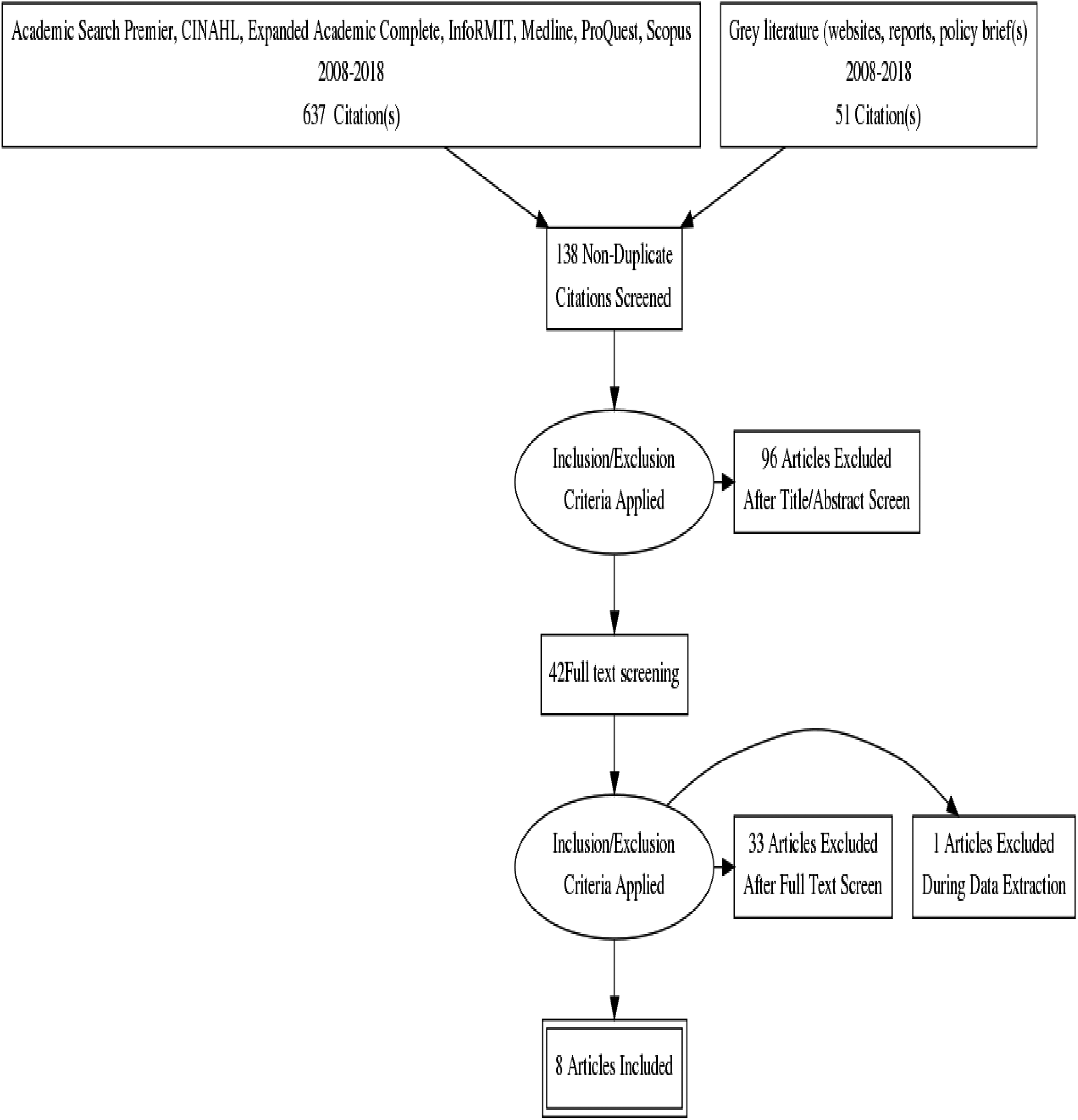
PRISMA chart.
Results
The search returned a total of eight peer-reviewed articles, while the gray literature search returned a total of 51 reports and discussion papers. Of the eight peer-reviewed articles that specifically explored the needs of Indigenous children and young people in OOHC, six studies provided an Australian context, one provided a Canadian context (deFinney et al., 2011), while the final one provided both an Australian and a New Zealand perspective (Fernandez & Atwool, 2013). Our search criteria included the terminologies “First Nations,” “Indigenous,” and “Aboriginal” hoping to capture more data across the world, but only one study from Canada was returned in our search. Two articles utilized a mixed-method approach (McDowall, 2016; Raman et al., 2017), three utilized a qualitative approach (Bamblett et al., 2014; deFinney et al., 2011; Douglas & Walsh, 2013), and the other three were conceptual arguments and literature reviews (Fernandez & Nicola, 2013; Krakouer et al., 2018; Tilbury, 2009). The discussion of the methodologies used in the papers ranged from minimal to very detailed information. See Table 1 to illustrate the summary of Search 1.
Search 1 (Peer-Reviewed) Results Summary.

Limitations of the Study
There were several methodological limitations. It is likely that the review has not identified all relevant research applying to this study due to our database searches and our search criteria and terminologies. There is also a possibility that research from Australia has been overrepresented due to the search terms such as “Aboriginal” and “Torres Strait” which tend to be very specific to the Australian context. There might be search terms that were not used that could have provided more scope. A third limitation was that only publications in English and only those within 2008–2018 were analyzed.
Presentation of Thematic Findings
That there is such an overrepresentation of Indigenous children and young people globally in the OOHC system is an indication that something in the design and delivery of OOHC interventions does not address critical issues affecting Indigenous families and communities and is very possibly contributing to reproducing their very marginalization and minoritization. Here, we present and discuss the four dominant themes that emerged from the research findings. The key message that is clear from the available literature is that the experiences of Indigenous children and young people are layered with complex historical and cultural nuances. These include (1) historical and structural racism, including the positioning of Indigenous social norms as inferior; (2) forceful removal of children from Indigenous communities and cultural context; (3) persistent structural and system inequity/entrenched systemic disadvantage; and (4) ongoing removal of children linked to aforementioned systemic issues (poverty, domestic violence, unstable housing) leading to overrepresentation in OOHC system and as such the need for appropriate culturally safe interventions.
Historical contextualization of removing Indigenous children
To understand the needs of Indigenous children in the child welfare system, one must consider history and the context in which this discussion is placed. Historical and structural racism, including the positioning of Indigenous social norms as inferior, are just but some of the complex and pervasive colonial histories that still resonate and inform the present experiences of Indigenous people across the world (Human Rights and Equal Opportunity Commission, 1997). The overwhelming message in all the literature located is that the imposition of colonial and foreign laws and policies which forced the separation of children from their families and culture have had a direct significance to the intergenerational trauma experienced in Indigenous families and communities to date. The Bringing Them Home report was the first and most groundbreaking report which clearly exposed the perverseness of the Stolen Generations and the extent of the resulting trauma and damage this had on Indigenous families and communities. Other numerous studies and reports in this review highlighted that the violent, colonial history, and the intergenerational trauma evident in Indigenous communities has had profound impact on their families and communities (Atkinson, 2013; Bamblett & Lewis, 2007; Bamblett et al., 2014).
While theorizing the impact of colonization on Indigenous families in Australia, Bamblett and Lewis (2007) describe Australia as an unsafe and “toxic” environment for Aboriginal people due to the colonial undertones and the domination of Western policies and structures, which are punctuated by racism. The Family Matters report by Lewis et al. (2017) states that the legacies of the Stolen Generation, compounded with ongoing social inequity, political marginalization, and underinvestment in Aboriginal and Torres Strait Islander community “have made things worse, not better.” The Healing Foundation (2017) also reiterates that the displacement and disconnection from culture, language, family, community, and country has caused grief, loss, and sadness which persists to date. The extensiveness and the pervasiveness of the individual and collective loss, grief, and trauma within Indigenous families and communities expose Indigenous children and young people to the likelihood of reexperiencing complex trauma in even more repeated, multiple, and interactive ways (Bamblett et al., 2014). To amend these historical injustices, the Family Matters report by Lewis et al. (2018) has emphasized that for cultural and generational healing to occur, the traumas of colonization, forced removal of children, the historical and structural racism, entrenched poverty, and systemic disadvantage must be addressed. In the Canadian context, deFinney, Dean, Loiselle, and Saraceno (2011) provides a similar theorization. They argue that Canada is “dominated by normative social values and practices that have systematically, over many generations, positioned Indigenous cultural and social norms as inferior” (p. 369). Similar to the Australian history, colonial policies in Canada have previously enabled the forceful removal of children from their families (Downe, 2005). At the present, the historically racist ideologies of the Indian Act inform the contemporary context in which Indigenous children in Canada continue to be grossly overrepresented in child welfare cases and out-of-home placements.
The overrepresentation of Indigenous children in care
Research shows that the rates of overrepresentation of Indigenous children continue to increase across countries and in different jurisdictions. The overwhelming removal of Indigenous children across many developed countries in the West remains well-documented in literature (Fernandez & Atwool, 2013; Keddell & Davie, 2018; McDowall, 2016; Mosher, 2018; National Indian Child Welfare Association, 2007; Valerie & Regina, 2010; Whitesaid et al., 2014). In Australia, the Family Matters report (2018), which measured the trends on the overrepresentation of Aboriginal and Torres Strait Islander children in OOHC in Australia, projected that “the population of Aboriginal and Torres Strait Islander children living in OOHC will more than triple by 2037, and the level of overrepresentation will also increase” if a significant and radical measure to redress this problem is not actualized (p. 6). This means that not only is there a failure to close the gap between Indigenous and non-Indigenous children and young people entering the care system, there is also a failure to arrest the widening of the gap. In Australia, Indigenous children and young people are 11 times more likely to be represented in child welfare, and these numbers are particularly concerning because, despite the fact that the Indigenous population constitute on 3% of the total population, they represent 24% of the children placed in OOHC systems. Krakouer, Wise, and Connolly (2018, p. 265) argued that “the high numbers of Indigenous children currently being observed in out of home care are symbolic and similar to the number of Aboriginal children that were removed during the stolen generation” era.
Looking at the international context, the trends of overrepresentation for Indigenous children in care remain similar. In Canada, Indigenous children and young people are 4.2 times more likely than non-Indigenous children to be placed in care. The study by deFinney et al. (2011) discusses how the minoritization of Indigenous children and young people contributes to their overrepresentation in child welfare cases and out-of-home placements, with Sinclair (2007) describing the high rate at which Canadian Indigenous children are removed as the “Millennium Scoop.” This overrepresentation is often linked to systemic issues including poverty, poor housing, and domestic violence (Canadian Human Rights Tribunal, 2016; Mosher, 2018; Valerie & Regina, 2010). Similar patterns are observed in the United States, with the National Indian Child Welfare Association (2007), reporting that American Indian and Alaskan Native children are overrepresented in the nation’s foster care system at more than 1.6 times the rate of other children. This also remains the case for New Zealand (Keddell & Davie, 2018).
Structural and system inequity: Systemic issues, challenges, and complexities
The overrepresenting of Indigenous children and young people in child welfare systems is not accidental but a result of a complex structural interrelationship between “historical and contemporary macro, meso, individual, and systemic factors” (Krakouer et al., 2018, p. 266). Available literature establishes that there are systemic issues, challenges, and complexities that facilitate the reproduction of the overrepresentation of Indigenous children and young people in care. deFinney et al. (2011) argue that it is necessary to “problematize the systemic minoritization of certain groups of children and youth to understand their over-representation in residential care” (p. 362). Superficial efforts that do not seek to address systemic issues of colonization, marginalization, racism, and structural disadvantage only fall short of any optimum results and instead contribute in reproducing disadvantage and inequality for the most vulnerable communities. The fact that Indigenous children in some countries like Australia are 11 times more likely to be removed from their family is an indication that the problem is not about “problematic individuals” but about a problematic system (McDowall, 2016). Speaking to the systemic nature of the problem in Canada, deFinney et al. (2011, p. 364) state that thinking about the issues affecting Indigenous families and communities simply at an individual level is shortsighted. deFinney et al. (2011) state that structural and systemic inequities have a deep-seated impact on the social reality of Indigenous people. Due to the complexity of marginalization, Indigenous people are more likely to become the outliers to the dominant (White) structures, where they are systemically and systematically excluded socially, politically, and economically. This exclusion results in diminished access to opportunities, employment, education, social services, and child and health-care support services, among other amenities.
The entrenched intergenerational socioeconomic problems; dire poverty; social, economic, and political marginalization; and lack of political goodwill in addressing historical injustices lead to structural inequity. Additionally, the mostly White child–rearing structures that dominate child welfare systems and the unwillingness to accept the diversity of parenting and family structures from Indigenous societies have made a significant contribution to the overrepresentation of Indigenous children in care (Fernandez & Atwool, 2013). As such, acknowledging that the approach toward protecting Indigenous children and young people needs a multipronged approach—one that aims to acknowledge the intersectionality between the overrepresentation in care and the complex systemic disadvantage that is punctuated by both historical and current contexts.
There is an important point made by Tilbury (2009) who argues that sometimes during the framing and naming of the issues, there is often an oversimplification of the problem—also layered with pathologization of Indigenous cultures. Past government policies have attempted to employ strategies to “intervene” on what it views as “bad” culture. Some of the punitive measures employed in Indigenous communities are geared to motivate a move away from the “cultural practices” that are seen to cause harm to children or to “save” Indigenous children from their “problematic” contexts. However, the limitations of this “child saving” approach are palpable, particularly when the connection between higher levels of socioeconomic disadvantage and related problems and the overrepresentation of minority racial groups in the child welfare system is made. Tilbury (2009) urges governments to look beyond the criminalization and pathologization of Indigenous families and communities and instead focus on improving outcomes in health, education, employment, cultural connections, and mental health, in Indigenous communities as a way to ensure a holistic response for families and communities. As Douglas and Walsh (2013, p. 32) argue systemic responses, particularly those that will vastly improve access to culturally appropriate services, will result in more long-lasting solutions that can keep Indigenous children and young in their communities and culture.
Looking at the international context, different countries have moved at different paces due to the laws and policies they have put into place to redress the issues of overrepresentation in OOHC. Countries such as Canada and New Zealand, which are making significant progress (though a lot of work is still needed to bridge the gap between Indigenous and non-Indigenous children), “have been much more willing to consider models involving Indigenous participation and authority in decision making” (Tilbury, 2009, p. 63). Policy redefining and redevelopment is good start, but it needs to be followed by clear implementation plans and should be done in consultation with Indigenous communities in order to address the aforementioned structural and systemic issues.
The importance of culturally appropriate/safe and trauma-informed interventions
Following the systemic challenges and complexities of overrepresentation in child welfare systems, SNAICC (2011) reported that there is a need to provide culturally relevant and safe interventions to curb the overrepresentation in the system. They state that one of the most effective ways to keep Indigenous children at home is to provide cultural care and to support and build the capacity of Indigenous families through a trauma-informed approach, so that they can effectively care for their children in their families and communities. The rationale for developing for culturally appropriate, culturally safe, and culturally informed interventions when working with children from Indigenous backgrounds is documented through literature we sourced with an aim to address the issues of overrepresentation of Indigenous children in care (Aboriginal Child Family and Community Care State Secretariat [AbSec], 2018; Atkinson, 2013; Australian Institute of Family Studies, 2015; Bamblett et al., 2014; Banblett & Lewis, 2007; Healing Foundation, 2017; Klinic Community Health Centre, 2013; Krakouer et al., 2018; SNAICC, 2016; Raman et al., 2017).
The UN Convention on the Rights of the Child (1989) states that an Indigenous child shall not be denied the right, in community with other members of his or her group, to enjoy his or her own culture, to profess and practise his or her own religion, or to use his or her own language. (p. 9)
Culturally safe and culturally informed practices and interventions are seen as not only key but also necessary. Culturally informed practice therefore moves beyond competence or even awareness—it is the deliberate deconstruction and reconstruction of societal attitudes, and the development of policies that acknowledge, respect, and enable child welfare agencies to practice effectively and safely within different cultural contexts. Bamblett et al (2014) argue that a culturally informed practice should not just be an add-on to the best interests of the child in care but one that understands that denying an Indigenous child their cultural identity is damaging “to their attachment needs, their emotional development, their education and their health.” This means that merely removing an Indigenous child from harm is not enough and that spiritual and cultural safety should be considered as they are intrinsically linked to the overall well-being of Indigenous children. William (1999) defined cultural safety as: An environment which is spiritually, socially and emotionally safe, as well as physically safe for people: where there is no assault, challenge or denial of their identity, of who they are and what they need. It is about shared respect, shared meaning, shared knowledge and experience, of learning, of learning together with dignity and truly listening. (p. 213)
Critical Findings From the Systematic Scoping Review.

Recommendations for Policy and Practice
The literature identified above establishes that the forced removal of Indigenous children and young from country and from their families and institutionalization and abuse have caused significant trauma to Indigenous families and communities (Healing Foundation, 2017a; Human Rights and Equal Opportunity Commission, 1997; SNAICC, 2015). Although trauma research in relation to Indigenous children and young people children, their families and communities is in its infancy (Atkinson, 2013), some promising practice focused on cultural healing and recovery are gaining momentum. Based on available, published information, 13 approaches were found by this review to be promising but only 3 of these approaches were uniquely designed to respond to the cultural needs of Aboriginal and Torres Strait Islander Children and young people. Given this significant gap in literature, we offer the following recommendations: Address systemic disadvantage: There should be a systemic response acknowledging that the complex issues impacting on Indigenous families and communities, including domestic violence, poverty, and substance misuse, are connected to intergenerational trauma and from ongoing colonization. Research has already established the link between higher levels of socioeconomic disadvantage and related problems in Indigenous communities and the overrepresentation of Indigenous children and young people in the child welfare system. It is recommended that a systemic change that addresses the underpinning gaps between indigenous and non-Indigenous Children and young people entering the care system is essential. Although this might be challenging, it is a long-term solution, and it is encouraging to observe the emerging promising approaches, practices, and frameworks that offer alternatives and solutions. This gives us a collective sense of hope and appreciation for the efforts that are being made to rectify the issues raised in this review and provides a vision for the future. Promote cultural safety: Given the centrality of connectedness to culture as part of children and young people’s developing identity, it is recommended that particular care be taken to develop and design therapeutic programs that are strongly culturally contextualized. This may include but is not limited to local indigenous consultancy and governance, local indigenous staffing of programs and explicit opportunities for young people to connect to their culture and community as opportunities for healing and growth. Any practice in child welfare that involves Indigenous children and young people should be centered on and grounded in the acknowledgment of the trauma that has been experienced by Indigenous peoples, as well as the respect and the deep recognition of culture, and Indigenous ways of knowing, being, and doing. Address trauma (past and present) through healing: As established in this review, historical and ongoing dispossession, systemic marginalization, and racism experienced by Indigenous peoples contribute to collective personal and intergenerational trauma and grief (HREOC, 1997). Atkinson (2013) states that developing trauma-informed services to support Indigenous peoples is an important way to foster healing. She further explains that within these services, knowledge of trauma must set the foundation for service delivery, with core values guiding intervention and support. In addition, when providing trauma-informed care, culturally specific factors must be considered—being most powerful when led, designed, and developed by Indigenous-specific approaches (Atkinson, 2013). Address racism and discrimination: Historically and currently, the treatment of Indigenous children and young people across many developed countries in the West has been layered with racism and discrimination. Consistent with what AbSec (2018, p. 8) reports, the overrepresentation of Aboriginal and Torres Strait Islander children and families within the child protection system in Australia, and the underrepresentation of early intervention supports is not accidental but a reflection of Eurocentric White-dominated practice that marginalizes Indigenous ways of knowing, being, and doing. The institutionalized racism that informed policies and practices and advocated for the removal of Indigenous children from their families and communities has led to the ongoing fear and suspicion of “the system.” This includes fear of police, justice system, government agencies, social workers, and the media. It is recommended that people working with Indigenous families have a rigorous understanding of how racism impacts the mental and emotional well-being of Indigenous peoples and actively seek to decolonize their knowledge and practice.
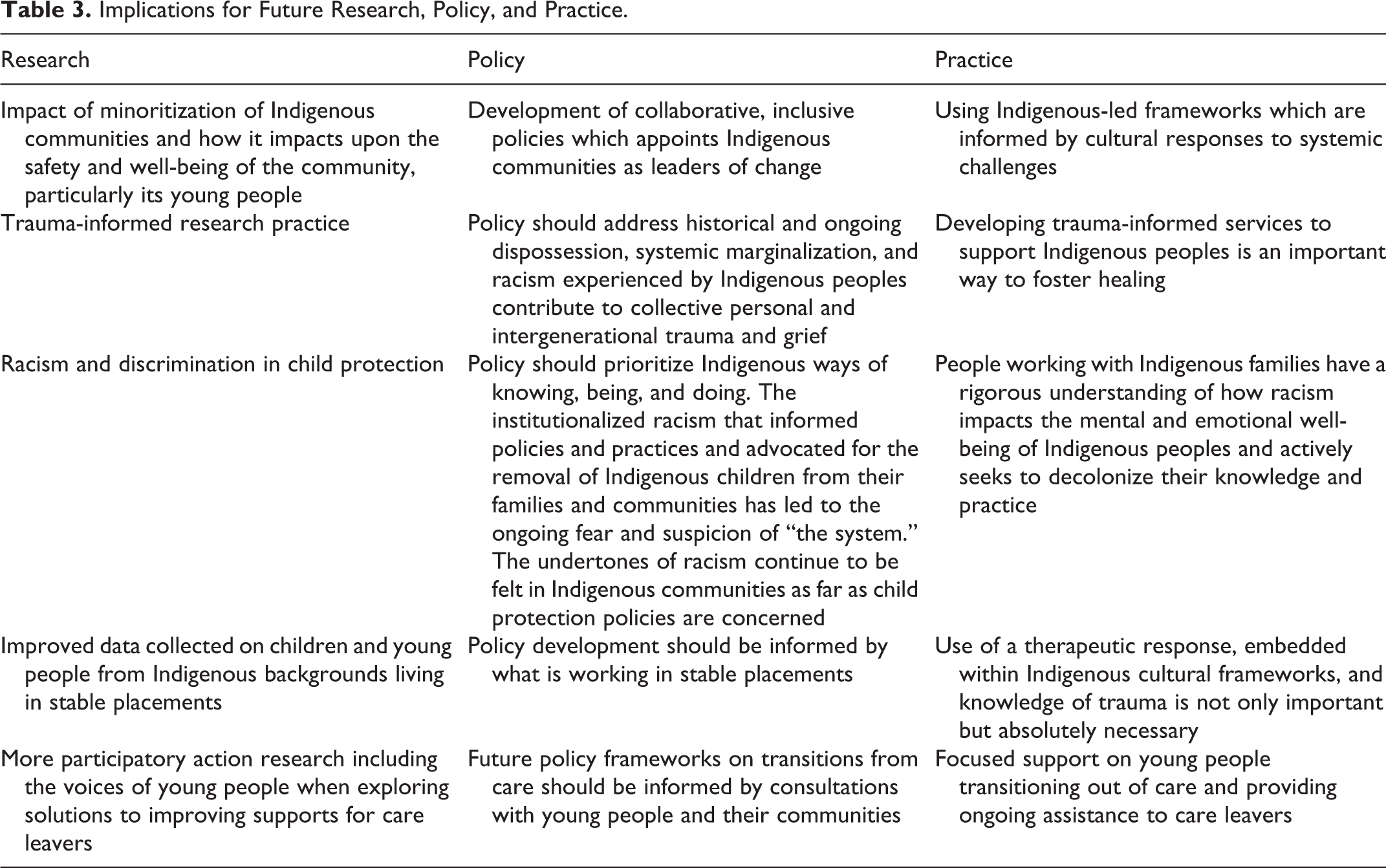
Table 3 provides a summary for the implications for future research in this area.
Implications for Future Research, Policy, and Practice.
Concluding Comments
The findings from this systematic scoping review which considered eight peer-reviewed articles and 51 reports, statements, and discussion papers from gray literature has established that this is a grossly underresearched area that has been largely ignored by academia and that is of significant concern. The findings, though dearth, highlight that in Australia and internationally, Indigenous children are overrepresented in the child welfare system. It has shown that the provision of culturally safe and trauma-informed therapeutic care to Indigenous children and young people in residential care recognizes that the trauma and violence they have experienced is moved beyond “the personal.” It’s systemic and generational. For Indigenous children and young people in care, their experiences of abuse and neglect transcend individual trauma and include intergenerational pain and suffering resulting from long-lasting impacts of colonization, displacement from culture and country, genocidal policies, racism, and overall systemic disadvantage. Although more research is required, findings from this study indicate that trauma-informed and culturally safe interventions play a role in Indigenous children’s health and well-being while in care. For Indigenous children and young people, therefore, a therapeutic response, embedded within Indigenous cultural frameworks and knowledges of trauma, is signposted as not only important but necessary. The approach toward protecting Indigenous children and young people needs a multipronged approach—one that aims to acknowledge the intersectionality between the needs of Indigenous children in care and their complex systemic disadvantage.
To conclude this article, we highlight the importance of using Indigenous-led frameworks, which have been reported to be useful in the efforts to mitigate the current issues that affect Indigenous children in care. A key message from literature, and in particular from Aboriginal and Torres Strait Islander-led organizations in Australia such as SNAICC, is that efforts that do not seek to address systemic issues of colonization, marginalization, racism, and structural disadvantage, and do not promote connection to culture and country, only fall short of any optimum results and may instead contribute to reproducing disadvantage and inequality for the most vulnerable children placed in care. This means that emerging frameworks and policies need to consistently review and reflect on their practice to ensure that Aboriginal and Torres Strait Islander children, and other minoritized children, receive the best and most relevant support while in care. The underpinning message in the majority of the literature sourced (including the gray literature) is that the best and most effective practice in child welfare that involves Indigenous children and young people should be centered on and grounded in the acknowledgment of the trauma that has been experienced by Indigenous people, as well as the respect and the deep recognition of culture, and Indigenous ways of knowing, being, and doing.
Supplemental Material
Supplemental Material, TVA-19-029.R1_Appendix_Table_2-_Summary_of_Search_2-_Grey_Literature_(4) - Indigenous Children and Young People in Residential Care: A Systematic Scoping Review
Supplemental Material, TVA-19-029.R1_Appendix_Table_2-_Summary_of_Search_2-_Grey_Literature_(4) for Indigenous Children and Young People in Residential Care: A Systematic Scoping Review by Kathomi Gatwiri, Lynne McPherson, Natalie Parmenter, Nadine Cameron and Darlene Rotumah in Trauma, Violence, & Abuse
Footnotes
Acknowledgments
We acknowledge that terminologies defining Aboriginality and Indigeneity vary in space and context. In Australia, the commonly accepted term is “Aboriginal and Torres Strait Islander,” while “First Nation” is used in Canada, and “Native” is used in America. This exemplifies the array of diversity in discussion. In this article, some of these terms will be used unambiguously to reflect specific context but generally, the term “Indigenous” will be used broadly to reflect the diversity across different contexts. This systematic scoping review was commissioned by Family and Community Services (FACS), New South Wales, Australia, and undertaken by the Centre for Excellence in Therapeutic Care in January 2019.
Declaration of Conflicting Interests
The author(s) declared no potential conflicts of interest with respect to the research, authorship, and/or publication of this article.
Funding
The author(s) disclosed receipt of the following financial support for the research, authorship, and/or publication of this article: This research was funded by ACF through FACs.

Supplemental Material
Supplemental material for this article is available online.
References
Supplementary Material
Please find the following supplemental material available below.
For Open Access articles published under a Creative Commons License, all supplemental material carries the same license as the article it is associated with.
For non-Open Access articles published, all supplemental material carries a non-exclusive license, and permission requests for re-use of supplemental material or any part of supplemental material shall be sent directly to the copyright owner as specified in the copyright notice associated with the article.
