



Abstract
Several hundred U.S. conflict resolution and restorative justice programs are addressing community violence using neutral facilitation to help people in conflict, or those who have experienced a crime, to talk things out face-to-face and come up with self-determined solutions. Very little quantitative intervention research has been conducted on the capacity of these programs to reduce violence, violent crime, and criminal recidivism. The scientific literature pertaining to the association of conflict resolution interventions with violence prevention are identified, screened, and sorted. Study design, sampling, measurement, and analyses are assessed using objective standards. Individual criminal recidivism outcomes and neighborhood gun violence rates are charted. In the 10 included studies, disparate conflict resolution and restorative justice interventions each appears to be related to modest reductions in individual criminal recidivism for participants, when compared with standard criminal justice system treatment. Conflict interruption interventions show a decrease in neighborhood gun violence in most districts. Future studies of conflict resolution and violence should mitigate selection bias, control for possibly confounding factors, operationalize all intervention components, select the correct units of analyses, and link “what works” outcome data to “how it works” intervention data. Four key gaps include measuring self-reported violence, including victimization, studying adults, and examining “upstream” interventions.
Background
Urban Community Violence and Violence Prevention
Although much of the research, policy, and practice interest in violence centers on its threat to human life through murder, war, and suicide, violence by all offender types and at all severity levels has far-reaching consequences for individuals, families, and communities. This study will focus attention on prevention of the most common form of violence: interpersonal community violence between nonintimates.
Violence typologies by offender
The World Health Organization (WHO) calls violence a major public health concern and outlined three types of violence: collective violence like war and genocide, which claimed 310,000 lives (18.6%); self-directed violence like suicide, which claimed 815,000 lives (49.1%); and interpersonal violence like homicide, which claimed 520,000 lives (31.3%) in 2000. They go on to define two subtypes of interpersonal violence: (1) family and intimate partner violence in the home and (2) community violence between strangers or those known to each other outside the home (Krug et al., 2002). Within the WHO interpersonal violence typology, the final type, community violence between those known to each other is the most common in the United States (Morgan & Kena, 2017).
Interpersonal violence
Although violence is a declining problem on a historic and global scale (see Pinker, 2011), in America’s low-income urban centers, rates of interpersonal violence remain high. Rates also vary by type of violence. Research shows that U.S. gun violence in general has been declining since 1993 (Krogstad, 2015), but firearm victimizations rose from 1.3 to 1.7 per 1,000 people over 12 years of age from 2013 to 2014, according to the Bureau of Justice Statistics (BJS, 2005; Truman & Langton, 2015), and the Federal Bureau of Investigation reports that 68% of homicides are committed with guns (Planty & Truman, 2013).
Nonstranger nonfamily interpersonal community violence
The U.S. Department of Justice surveys survivors of violent victimization. Of the 5.7 million violent victimizations in 2016, 597,740 (10%) were domestic violence (including intimate partner violence, child and elder abuse) and 2.2 million (39%) were acts committed by strangers. This leaves 51% that were committed by known offenders other than an intimate partner or close family member (Morgan & Kena, 2017). This slight majority is consistent with previous BJS (2005) reports from 1993 to 2005 as well as a decade-long study of felony arrests in New York Court caseloads (Hessick 2007; Vera Institute of Justice, 1981). The implications of the problem of intimate partner violence generally, and its targeted solutions are not part of the research surveyed here, having been deliberately excluded, with community-based conflict resolution programs often screening out domestic violence situations while the field as a whole grapples with the ethics of serving this population (Neilson, 2014; Paranica, 2012).
Community violence victims and offenders
Strikingly, community violence victims and offenders not only share the same demographics, risk factors, and impacts but are often the exact same people, in what’s known as the victim–offender overlap (Berg, 2012; Gottfredson, 1981; Hindelang, 1976; Jennings et al., 2012; Lauritsen & Laub, 2007; Lauritsen et al., 1991). The overlap has been shown to be large, with one study showing that a one unit increase in offending is related to a 47.5% increase in victimization risk (Berg & Loeber, 2011). Victims and offenders have shared risk factors, but controlling for all of them, there is still a strong correlation between victimization and offending (Silver et al., 2011).
Conflict Resolution and Restorative Justice Interventions
Since the 1970s, U.S. conflict resolution programs have been a promising cluster of violence reduction interventions in communities (see a 3,400-study review by Matjasko et al., 2012). The interventions reviewed in the present study fall into three categories: community mediation, restorative justice circles, and street conflict “interruption.” First, in community mediation, whose programs number over 400 in the United States (Charkoudian & Billick, 2015; Corbett & Corbett, 2013), neighbors, family members, coworkers, or business associates in conflict sit-down face-to-face with one or two neutral professionally trained volunteer mediators to talk through the conflict, including stages for listening, naming issues to be resolved, brainstorming solutions, and writing an agreement (American Arbitration Association, American Bar Association, & Association for Conflict Resolution, 2005). In restorative justice programs (estimated at over 700 domestically; Umbreit & Greenwood, 2000), people experiencing conflict or a crime, as well as those affected by it, come together to discuss what happened, what they were thinking at the time, who else was affected, and how to repair the harm (Zehr, 1990; Zehr, 2015). These programs generally target reduction in violence between participant pairs or groups. Conflict interruption is the on the spot deescalation of street conflict between youth at risk of serious violence, usually by former offenders or gang members in the Cure Violence model, which can range from a longer face-to-face conversation to a quick “talking down” of each side (Butts et al., 2015; Whitehill, Webster & Vernick, 2013). These models target a reduction in neighborhood gun violence in clearly bounded high-crime neighborhoods or police districts. All of these interventions are varied in length and structure but share key elements that make them worthy of grouping and comparison, including being neutral, confidential, and voluntary, with a goal of reducing through communication the harm caused by interpersonal conflict.
In addition, a growing literature shows that conflict resolution and restorative justice services for adults can satisfy disputants (Alberts et al., 2005), build community and understanding (Kaufer et al., 2015; Ohmer et al., 2010), improve coparenting (Charkoudian et al., 2018; Emery et al., 2001), decrease return to family court (Charkoudian et al., 2018), decrease return to small claims court (Charkoudian et al., 2017), increase neighborhood collective efficacy (Ohmer, 2016), and build capacity and skills of volunteer community mediators (Pincock, 2013).
Most of the literature on restorative justice services effects on crime pertains to services for youth, and a wealth of research, including some random control trial studies, show that restorative justice conferencing for criminal diversion can reduce repeat offending (Sherman et al., 2015; Strang et al., 2013). Studies of conflict resolution interventions for adults have identified impacts on an array of criminal justice outcome variables, including reducing: prosecutor caseloads (Polkinghorn et al., 2010), return to court (Charkoudian, 2010; Maryland Judiciary Court Operations, 2016), calls to police (Charkoudian, 2005), and fear of crime (Umbreit et al., 2001). While these questions are critically important to policy makers and funders, a driving social justice goal of the conflict resolution and restorative justice movements was for communities to resolve conflicts on their own (Christie, 1977), going to the root of the problem and resolving social problems without reliance on the criminal justice system (Shonholtz, 2000; Wahrhaftig, 2004). To date, very little of the extant literature has examined the question of the association between conflict resolution and restorative justice interventions with violence reduction.
Objectives of the Review
The key research question guiding this review is: what is known about whether conflict resolution and restorative justice interventions can prevent or reduce interpersonal nonintimate violence among urban adults? Five objectives guide this review. First, the scientific literature pertaining to the association of conflict resolution interventions with violence prevention are identified, screened, and sorted. Second, study design, sampling, measurement, and analyses are assessed using objective standards (Miller et al., 1995; Vaughn & Howard, 2004). Third, particular focus is placed on cataloging and critically appraising the measurement of adult, nonintimate violence. Fourth, individual participant-level (e.g., age, gender, race) and joint conflict-level variables (e.g., type and length of relationship, type of conflict) used as covariates in the literature are cataloged. Fifth, study findings are presented. And finally, implications and research gaps in the scholarly literature on adult conflict resolution and restorative justice services and violence are discussed.
Method
Definitions
To focus this review on its purpose and research questions, the following definitions were used. Samples including adults were included, defined as those over 18 years old, because adult participants in conflict resolution interventions are a less-studied population than youth samples. Since empirical studies of conflict resolution–based violence prevention initiatives for adults are rare, the intervention was defined very broadly as any face-to-face intervention labeled mediation, conflict resolution, restorative justice, conferencing, or dispute resolution. Participants were sitting together face-to-face and discussing the conflict, problem, or crime, as well as solutions. The target recipients of these services needed to be individuals, not nations, towns, ethnic groups, or factions, as in many types of international mediation and dispute resolution. International samples of individual conflict resolution services, however, were included in this definition. Violence was defined as physical or sexual violence of any severity, but not including solely psychological violence, or witnessing violence. The review was inclusive of any measure of violence, whether self-reported, or a government report of violent crime, and any unit of analysis, including individuals, pairs or groups in conflict, or neighborhood measures of violent crime.
Search Strategy
The comprehensive electronic search strategy detailed here attempted to manage the opportunities represented by both an independent variable (conflict resolution services) and a dependent variable (nonintimate violence) that straddle academic disciplines including social work, psychology, public health, conflict resolution, law, sociology, criminal justice, and more.
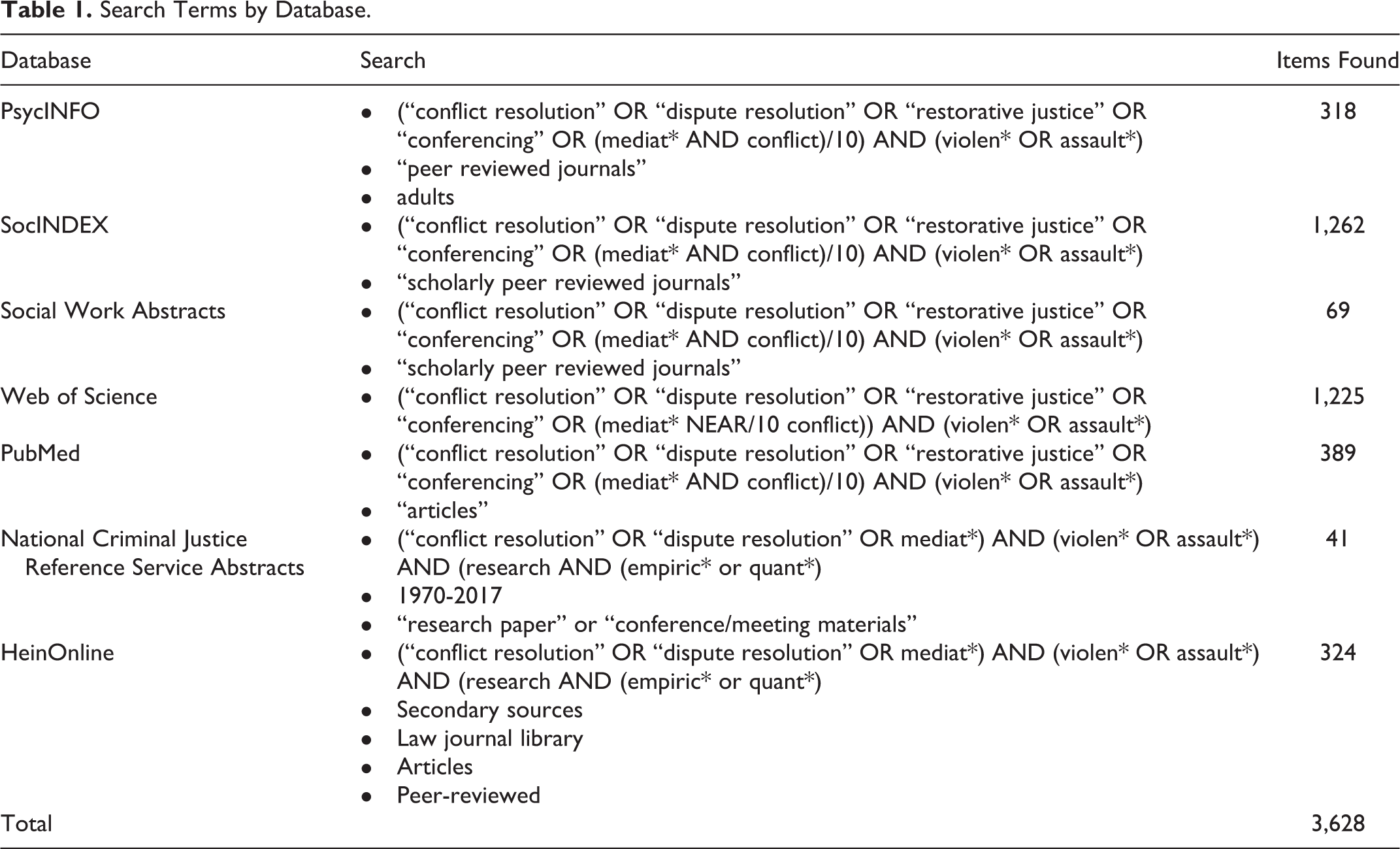
The review relied on use of seven bibliographic databases as the most reliable way to draw work from the several disciplines listed above, including Web of Science (social science and science), PsycINFO, SocINDEX, PubMed, Social Work Abstracts, HeinOnline, and the National Criminal Justice Reference Service (NCJRS) Abstracts. For each search, keywords include (“conflict resolution” OR “dispute resolution” OR “restorative justice” OR “conferencing” OR (mediat* AND conflict)) AND (violen* OR assault*). For HeinOnline and National Criminal Justice Reference Service, the additional terms AND (empiric* or quant*) were added. While searching PsycINFO and PubMed, the sample was limited to adults (which is not possible in the other databases). Publication types were limited to peer-reviewed journal articles. For databases that predated 1970, results were limited to 1970 and after, since the conflict resolution field generally, and the community mediation specifically, took root in the 1970s (Shonholtz, 1984; Wahrhaftig, 2004). Table 1 details search terms by database.
Search Terms by Database.
Given past experiences with literature reviews in this understudied topic area, if an article being reviewed via full text had an eligible population, intervention, and hoped-for outcome, but was a descriptive article rather than an empirical research study, the article was checked to see whether it referred to a research study underway. In three cases, this method produced five additional reports, documenting empirical evaluation studies. A theoretical article by Butts and colleagues (2015) referenced studies of a Cure Violence pilot known as CeaseFire Chicago (Skogan et al., 2009), and its replications (Picard-Fritsche & Cerniglia, 2013; Wilson & Chermak, 2011). A program description about prisoner reentry mediation’s capacity for reducing recidivism (Charkoudian et al., 2012) referred to an evaluation report (Flower, 2014). And, similarly, a descriptive article on restorative justice interventions for sexual assault offenders and victims (Koss et al., 2004) described a study underway that was later published (Koss, 2014).
Inclusion and Exclusion Criteria
Inclusion criteria comprise (1) empirical research studies; (2) samples that include adults in urban settings; (3) an independent variable of face-to-face conflict resolution interventions labeled mediation, conflict resolution, restorative justice, conferencing, or dispute resolution; and (4) a dependent variable of violence or violent crime between nonintimates, which may include criminal recidivism of various types.
Exclusion criteria include (1) samples of all nonurban people or all youth; (2) uses of the word “mediation” that refer to statistical mediation models, computer-mediated interventions, or parent mediation of children’s use of technology; (3) interventions based in educational strategies, such as conflict resolution trainings in school settings; and (4) dependent variables that include intimate partner violence, child maltreatment, or other family violence only.
Data Extraction
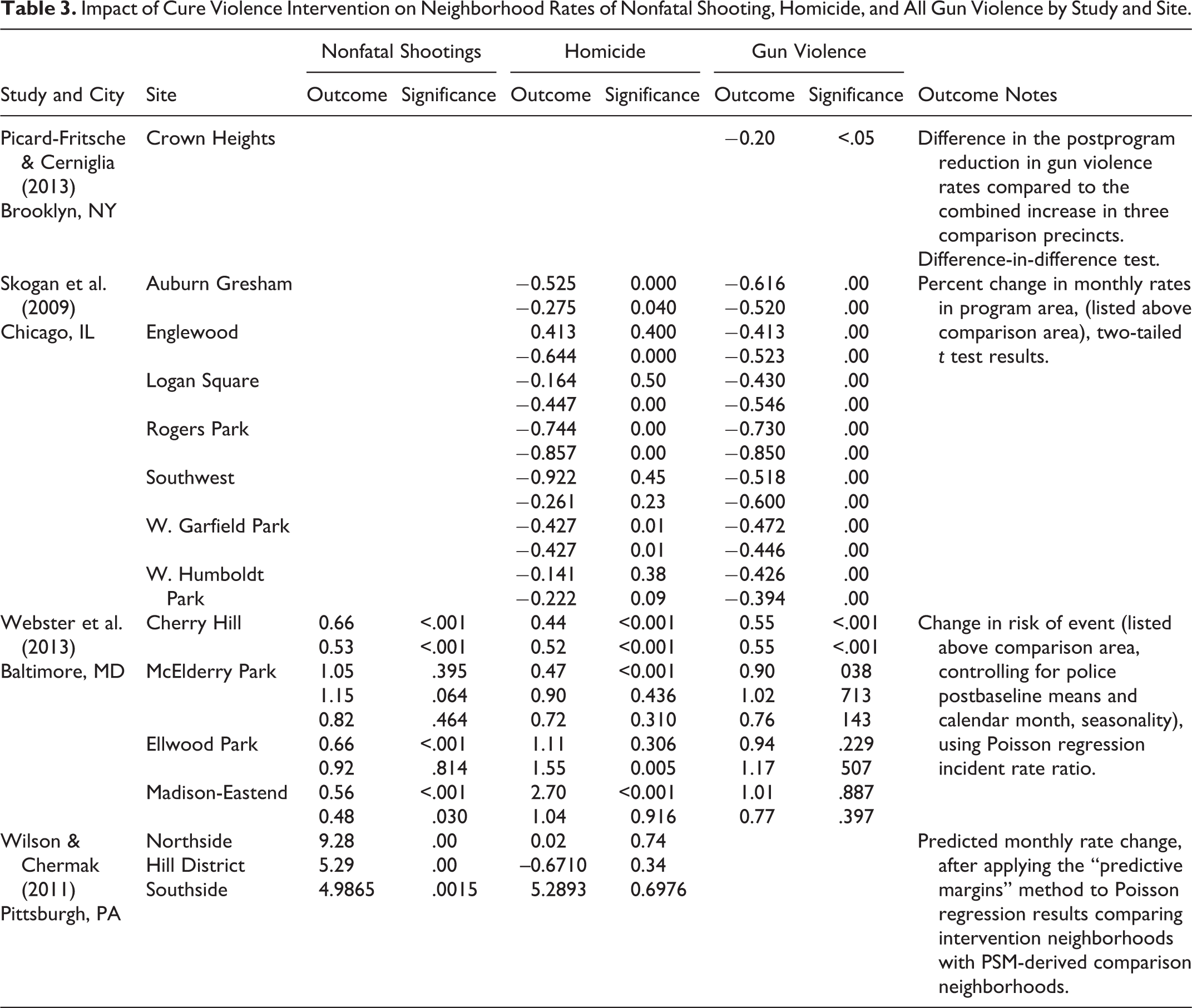
To understand and compare findings, summary, measurement, and outcome data were extracted from each article. First, studies were summarized, recording the author, publication date, research design, theoretical basis, independent and dependent variables, sample characteristics, data analysis method, key findings, and strengths and limitations (see Table 2). Secondly, several aspects of the measurement of the dependent variable of violence or violent crime were recorded including crime types, time frame, severity weighting, categorical or continuous variables, comparison group determination processes, mediators and moderating variables considered, geographic measures, network analyses, seasonality controls, and displacement or spillover measures. Third, measurement issues related to the independent variable, the conflict resolution intervention, were recorded, including intent-to-treat models, fidelity measures, and measures of or controls for clustering by practitioner. (For measurement details, see Online Appendix 2.) Fourth, outcome data were extracted and summarized. For the first group, those with a dependent variable of individuals’ criminal recidivism, both rearrest and reincarceration data were examined and presented. The second group of four studies, examining the effect of the Cure Violence model of violence prevention in four cities, used an array of different metrics to examine change in neighborhood rates of violent crime. A summary chart was prepared (see Table 3) to compare the intervention’s impact on neighborhood rates of nonfatal shootings, homicide, and all gun violence across 15 sites in four cities.
Overview of Included Studies.

Note. BDP = Baltimore Police Department; DOC = Division of Corrections; GEE = gneralized estimating equation; PTSD = post-traumatic stress disorder; GV = Gun violence; Did = Difference-in-difference; PCA = principal components analysis; ITT = Intention to Treat; IRRs = incidence rate ratios; MEE = Madison-Eastend; OLS = ordinary least squares; PP = Per Protocol; RJ = restorative justice; ss = statistically significant; TG = treatment group; VOP = Violation of Probation.
Impact of Cure Violence Intervention on Neighborhood Rates of Nonfatal Shooting, Homicide, and All Gun Violence by Study and Site.
Results
Search Results
An initial search of seven bibliographic databases in June 2017 produced 3,628 records. Following removal of duplicates through the reference management software, RefWorks 2.0, 2,969 were screened by title and abstract. Most of the 2,952 exclusions at this stage were due to a youth population, an independent variable of educational interventions (e.g., high school conflict resolution training), or intergroup mediation (e.g., mediation between warring factions in developing countries), or a dependent variable of intimate partner violence. Eighteen full-text studies were reviewed against the inclusion and exclusion criteria, and 12 were excluded because they (a) did not describe an empirical research study (n = 6), (b) had no independent variable of face-to-face conflict resolution (n = 3), (c) did not focus on an urban population (n = 1), or (d) used an all-youth sample (n = 2). Those records that were excluded following a full-text review are listed in Online Appendix A, with reasons for their exclusion.
Three of the six otherwise eligible descriptive studies which had been excluded referred to empirical studies underway, and those four new studies were found and included, as described above. Three of those four (Flower, 2014; Picard-Fritsche, 2013; Skogan et al., 2009) were in-depth evaluation reports not published in the peer-reviewed literature, and one was a peer-reviewed journal article missed in the initial search (Koss, 2014). Ten studies were included and are listed in Table 2, a data matrix summarizing their contents. This process is charted in Figure 1, a Preferred Reporting Items for Systematic Reviews and Meta-Analyses (PRISMA) flow diagram (adapted from Moher et al., 2009).
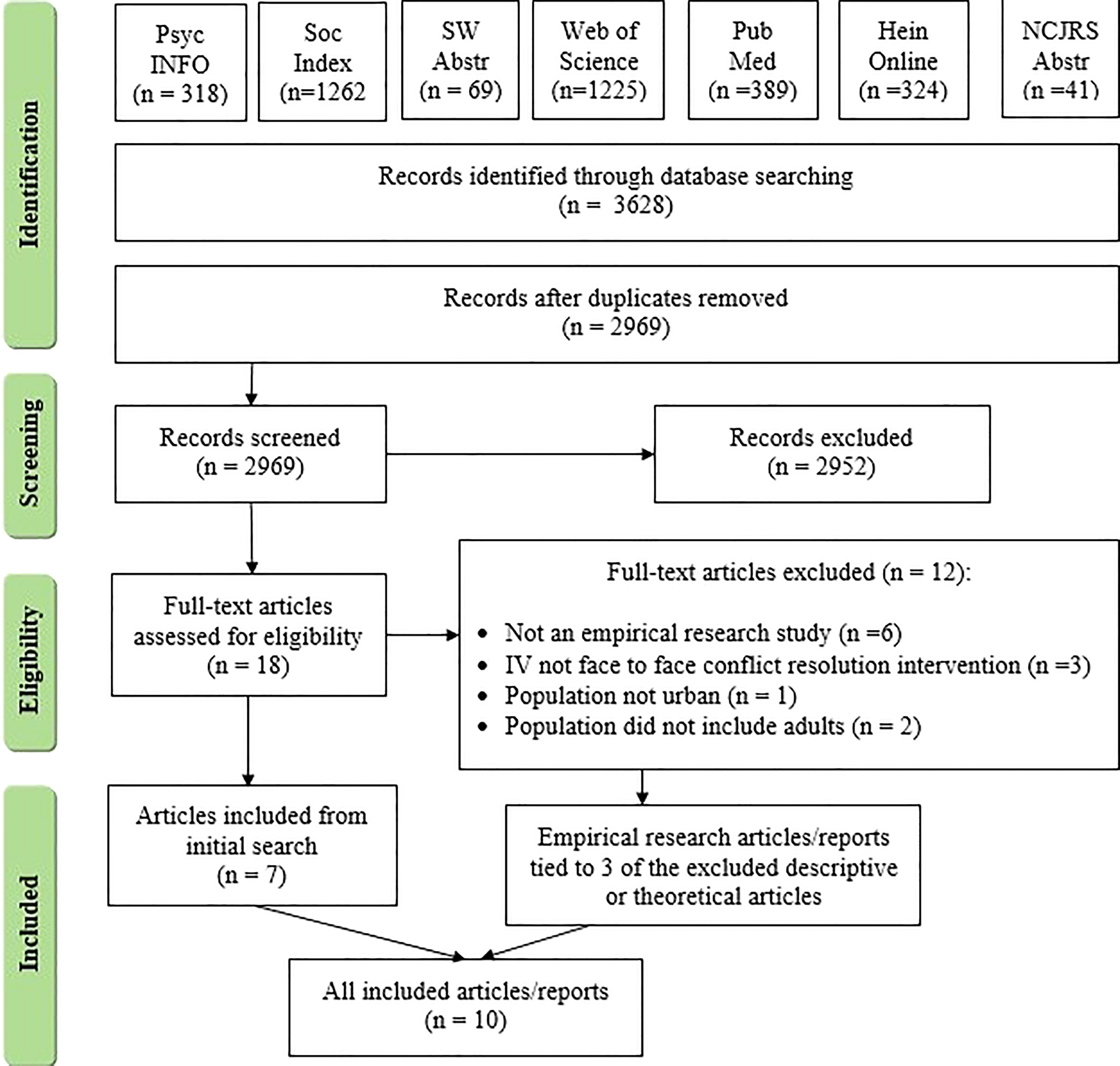
PRISMA flow diagram of systematic literature review inclusion and exclusion.
Description of Included Studies
Authors from diverse disciplines wrote the 10 eligible studies including social work (Armour et al., 2005; Gilligan & Lee, 2005), criminology (Flower, 2014; Gilligan & Lee, 2005; Wilson & Chermak, 2011), psychiatry (Gilligan & Lee, 2005), law (Gilligan & Lee, 2005), and public health (Webster et al., 2013; Whitehill et al., 2013). Three of the 10 intervention studies are evaluation reports (Flower, 2014; Picard-Fritsche & Cerniglia, 2013; Skogan et al., 2009), and the remainder are peer-reviewed journal articles. The eligible studies were all written after 2005, with 7 of the 10 written since 2010. In general, the studies comprise two types of violence reduction intervention studies: conflict resolution and restorative justice interventions targeting a reduction in individuals’ criminal recidivism (Armour et al., 2005; Davis, 2009; Flower, 2014; Gilligan & Lee, 2005; Koss, 2014) and conflict interruption interventions targeting a reduction in neighborhood gun violence (Picard-Fritsche & Cerniglia, 2013; Skogan, 2009; Webster et al., 2013; Whitehill et al., 2013; Wilson & Chermak, 2011).
Theory
The theoretical bases for the included studies fall into three general categories. First, studies of victim–offender interventions (Armour et al., 2005; Gilligan & Lee, 2005; Koss, 2014) were grounded in restorative justice theory, which holds that communities and individual victims and offenders can deal with crime and harm better than the state can, by talking things out face-to-face to repair the harm rather than meting out an impersonal punishment (Braithewaite, 1989; Christie, 1977). Similarly, two interventions (criminal court mediation, Davis, 2009, and prisoner reentry mediation, Flower, 2014) were from a community mediation tradition, grounded in notions of community justice and neighborhood self-determination (Christie, 1977; Shonholtz, 1984; Wahrhaftig, 2004). One study (Flower, 2014, along with companion article Charkoudian et al., 2012) also cited life-course theories of crime (Sampson & Laub, 1993), which hold prosocial family and neighborhood relationships as central to desistance from crime.
The five studies on conflict interruption interventions to reduce neighborhood gun violence were all variations of the Cure Violence public health model, first piloted as CeaseFire Chicago. Cure Violence, as designed by Dr. Gary Slutkin (see Butts et al., 2015), is based on the contagion theory of gun violence that violence spreads through neighborhoods like a contagion from retaliation by victims, increased perpetration by previous witnesses, and increased access to weapons (Berkowitz & MacCaulay 1971; Pitcher et al., 1978).
Design
Criteria for inclusion and exclusion specified empirical studies of the effects of conflict resolution programs on violence reduction; therefore, all included studies are evaluations of interventions. Included studies are also all quantitative in nature, although this was not a selection criterion, with two containing a significant qualitative component (Armour et al., 2005; Whitehill et al., 2013). From these key similarities, the study designs diverge, with diverse units of analysis and comparison groups.
Units of analysis
For half of the included studies (Armour et al., 2005; Davis, 2009; Flower, 2014; Gilligan & Lee, 2005; Koss, 2014), the unit of analysis was an individual program participant. Within two of those studies (Davis, 2009; Koss, 2014), a minority of analyses pertained to the case as a whole, not individuals. The other half of the included studies were concerned with program neighborhoods, or more specifically, police beats or precincts (Picard-Fritsche & Cerniglia, 2013; Skogan et al., 2009; Webster et al., 2013; Wilson & Chermak, 2011).
Comparison group structures
Basic research design structures vary among the studies, with one randomized control trial in criminal court mediation (Davis, 2009), a cross-sectional retrospective survey of program workers (Whitehill et al., 2013), a pre-/postlongitudinal survey of participants (Koss, 2014), and seven longitudinal quasi-experimental designs with one or more comparison groups (Armour et al., 2005; Flower, 2014; Gilligan & Lee, 2005; Picard-Fritsche & Cerniglia, 2013; Skogan et al., 2009; Webster et al., 2013; Wilson & Chermak, 2011). One of these simply compared the program participant outcome measures (individual criminal recidivism) to statewide total numbers (Armour et al., 2005).
Comparison group selection
The method through which comparison groups were selected or constructed varied among the quasi-experimental studies. One of the two quasi-experimental studies of individual criminal recidivism (Flower, 2014) examined two control groups: first, a group of released inmates who chose to use the conflict resolution service but did not have a session successfully prepared, and second, a group of inmates released at the same time who were matched on several key variables through propensity score matching. The second quasi-experimental study of individual criminal recidivism (Gilligan & Lee, 2005) included an identically sized control group randomly selected from inmates serving the same time. The four quasi-experimental studies of neighborhood gun violence impacts (Picard-Fritsche & Cerniglia, 2013; Skogan et al., 2009; Webster et al., 2013; Wilson & Chermak, 2011) used comparison neighborhoods selected in a variety of ways including neighboring precincts with similar crime trends and demographics (Picard-Fritsche & Cerniglia, 2013), neighboring police beats with matching demographics (Skogan et al., 2009), nonadjacent posts with similar baseline crime rates to avoid spillover effects (Webster et al., 2013), and neighborhoods identified through propensity score matching, and those selected by staff (Wilson & Chermak, 2011).
Sample
For the recidivism studies (Armour et al., 2005; Davis, 2009; Flower, 2014; Gilligan & Lee, 2005; Koss, 2014), the samples included inmates participating in in-prison restorative justice programs (1,021 in Armour et al., 2005; 202 in Gilligan & Lee, 2005), inmates reentering society (6,704 in Flower, 2014), and criminal court cases (465 in Davis, 2009; 22 in Koss, 2014). None of the studies made any reference to having conducted a power analysis. In four of the gun violence studies (Picard-Fritsche & Cerniglia, 2013; Skogan, 2009; Webster et al., 2013; Wilson & Chermak, 2011), the sample was between one and seven police precincts, where a Cure Violence program was sited.
Measurement
Each study defined its independent, control, and dependent variables in different ways and showed a diversity of attention to the finer points of measurement, including issues of dosage of and fidelity to the intervention, as well as outcome variable time frames. Online Appendix B summarizes a variety of measurement issues in each study.
Independent variables
For the studies of individual criminal recidivism, the independent variables were the interventions themselves: multiweek restorative justice programs for inmates including victim–offender dialogues (Armour et al., 2005; Gilligan & Lee, 2005), victim–offender restorative justice conferencing for sexual assault cases (Koss, 2014), prisoner reentry mediation for returning citizens and their families (Flower, 2014), and court-referred mediation of criminal misdemeanors (Davis, 2009). Of note was the routine (Armour et al., 2005) or occasional (Koss, 2014) use of surrogate victims or “volunteer victims” who were assault survivors now advocating and educating but were not the victim of the offender they were meeting with. Two of these studies also took matters of dosage into account, comparing a categorical measure of the length of stay (8, 12, or 16 weeks) in an in-prison restorative justice program to the recidivism rates of inmates (Gilligan & Lee, 2005), or number of mediation sessions received in a prisoner reentry mediation (Flower, 2014).
In the studies of neighborhood gun violence, the intervention was the Cure Violence public health violence prevention initiative first piloted as Chicago CeaseFire (Skogan et al., 2009) then replicated in Brooklyn, NY (Picard-Fritsche & Cerniglia, 2013), Baltimore, MD (Webster et al., 2013; Whitehill et al., 2013) and Pittsburgh, PA (Wilson & Chermak, 2011). In addition to public awareness campaigns, street outreach, and shooting responses (such as vigils), the model centralizes the work of “conflict interrupters” who are former gang members that mediate between people at risk of violence when a conflict erupts. These were a dichotomous yes/no variable, indicating whether the program was operating in a given month. Issues of dosage and program fidelity were addressed only in Baltimore, where certain months were designated as early program introduction months, and compared against full implementation months by site, and where the number of monthly conflict interruptions was compared with outcome data to determine the degree to which fidelity to the model mattered in violence reduction (Webster et al., 2013).
The studies represent a range of stages and settings in which the intervention is administered: prevention in the community (Picard-Fritsche & Cerniglia, 2013, p. 10), court diversion from prosecution (Davis, 2009; Koss, 2014), in prison (Armour et al., 2005; Gilligan & Lee, 2005), and at the point of reentry from prison (Flower, 2014).
Outcome variables
The dependent variables fell into two groups: studies of individual criminal recidivism (Armour et al., 2005; Davis, 2009; Flower, 2014; Gilligan & Lee, 2005; Koss, 2014) and of neighborhood gun violence (Picard-Fritsche & Cerniglia, 2013; Skogan et al., 2009; Webster et al., 2013; Whitehill et al., 2013; Wilson & Chermak, 2011). Within those groups, each study operationalized the variables differently. Recidivism studies zeroed in on dichotomous variables of rearrest (Davis, 2009; Flower, 2014; Koss, 2014), reconviction (Flower, 2014), reincarceration (Armour et al., 2005; Flower, 2014), return to prison on technical violations (Flower, 2014). One study specified violent rearrest or reincarceration (Gilligan & Lee, 2005), and all but two (Armour et al., 2005; Flower, 2014) made some delineation in the type of arrest/charge. Neighborhood gun violence was measured as nonfatal shootings (Webster et al., 2013; Wilson & Chermak, 2011), homicide (Skogan et al., 2009; Webster et al., 2013; Wilson & Chermak, 2011), and both together, sometimes called gun violence, or all shootings (Picard-Fritsche & Cerniglia, 2013; Skogan et al., 2009; Webster et al., 2013). These figures were operationalized as a monthly rate per 10,000 residents (Picard-Fritsche & Cerniglia, 2013; Skogan et al., 2009; Webster et al., 2013) or per 100,000 (Wilson & Chermak, 2011) because the districts varied in size. In all four cases, the variable was shooting incidents, not victims.
Control variables
For the studies of neighborhood gun violence, control variables included crime trends by precinct and city-wide (Skogan et al., 2009; Webster et al., 2013; Wilson & Chermak, 2011), seasonality (because violence increases in hotter months; Skogan et al., 2009; Webster et al., 2013; Wilson & Chermak, 2011), and simultaneous local and federal police–led crime prevention efforts (Webster et al., 2013). All of these studies controlled for precinct population by using a rate measure of violence (Picard-Fritsche & Cerniglia, 2013; Skogan et al., 2009; Webster et al., 2013; Wilson & Chermak, 2011), and two (Skogan et al., 2009; Wilson & Chermak, 2011) controlled for other neighborhood factors. Studies of recidivism controlled for participants’ diverse individual and case characteristics (Flower, 2014; Davis, 2009; see Online Appendix B).
Analysis
In the studies of recidivism, two restorative justice programs reported frequencies of program completion without rearrest (Koss, 2014) and of reincarceration postrelease (Armour et al., 2005). An in-prison restorative justice program (Gilligan & Lee, 2005) ran (1) descriptive frequencies, (2) bivariate t tests and χ2s to test comparability of comparison group, (3) t tests to compare recidivism rates across treatment and control group, and (4) log-rank tests for days to first violent or any arrest after release. A prisoner reentry mediation evaluation (Flower, 2014) analyzed (1) frequencies about each group, (2) logistic regression of treatment versus four dichotomous measures of recidivism, and (3) survival analysis of time to recidivism. Each gun violence study used a combination of tests to ensure that their intervention’s success or failure was not an artifact of declining violence in cities across the country, including ordinary least squares regression, to difference-in-difference tests, gneralized estimating equations, Poisson regression, negative binomial regression, and Box–Jenkins–Tiao auto-regressive integrated moving average (ARIMA) regressions (Box & Tiao, 1975). See Table 2 for more details by study.
Primary Outcome Findings
Effect on individual criminal recidivism
Restorative justice interventions and mediation reduced rearrest and reincarceration versus comparison groups. One of the in-prison restorative justice programs (Armour et al., 2005) had a 3-year recidivism rate for program graduates of 12.4%, compared to 31.4% for inmates in Texas released in the same year. The second in-prison restorative justice intervention showed that treatment group inmates had lower rearrest rates for violent crimes (−46%, p < .05) and spent less time in custody (−42.6%, p < .05). The decline in violent rearrests increased with greater lengths of stay (−53.1%, p < .05 for 12 weeks or more; −82.6%, p < .05 for 16 weeks or more). In the criminal court diversion mediation study (Davis, 2009), 3% of participants whose cases were mediated were rearrested within 4 months, compared to 5% of those whose cases were prosecuted, with a nonsignificant difference in both the intent-to-treat analysis (all those referred for mediation) and the per-protocol analysis (those who went to mediation). Recidivism was lowest by all measures for those who did not attend either mediation or trial but stayed home. In the sexual assault restorative justice program, 67% of felony cases were completed with no recidivism, and 91% of misdemeanor cases were completed with no recidivism. For prisoner reentry mediation, the treatment group was 13% less likely to be rearrested, with each additional mediation session reducing predicted probability by another 8%. Reconviction was 15% less likely, plus 9% for each additional session. Reincarceration was 10% less likely, with a 7% further reduction for each additional session. Treated inmates were 12% less likely to return to prison on a technical violation, but additional sessions had no statistically significant effect. Survival analysis showed mediation users survived 28% longer before rearrest. For two studies (Flower, 2014; Gilligan & Lee, 2005), the odds ratios were produced by the authors through logistic regression and represent a theory-based effort at controlling for possibly confounding variables like age, race, gender, and prior criminal history. In the other two, odds ratios were simply generated for the sake of comparison, using frequency data from the articles.
Effect on neighborhood gun violence
Cure Violence initiatives were associated with a decrease in gun violence in Brooklyn, Chicago, and some sites in Baltimore, while it was associated with increased violence in Pittsburgh. In Crown Heights, Brooklyn (Picard-Fritsche & Cerniglia, 2013), there was a 6% decrease in Cure Violence precincts, while a 20% increase happened in comparison precincts, and there was an 18% increase in all of Brooklyn. The rate was 20% lower than what it would have been had its change from the pre- to the postprogram periods mirrored the average change in the comparison precincts. Through ARIMA analyses, shootings in Chicago’s intervention neighborhoods (Skogan et al., 2009) were shown to have declined by 15.7%–34.5% versus comparison districts while controlling for crime trends, and homicide showed significant declines versus comparisons in three of the seven intervention neighborhoods, with no significant change in the other four. In Baltimore (Webster et al., 2013), two neighborhoods decreased homicide by 26% and 56%, one made no change, and one showed a nearly 3-fold increase. Nonfatal shootings decreased from 22% to 44% in three districts and increased in one. Sites with most mediations per month also had greatest reductions in violence. In Pittsburgh, each of three intervention areas showed no statistically significant change in homicide when compared to propensity score matching (PSM)- or staff-selected comparison neighborhoods, and aggravated assault and gun assault increased in each area versus comparison areas. Spillover effects were identical to the results above, except that one bordering district saw a decrease in aggravated assault. These divergent Cure Violence results are charted for comparison in Table 3.
Discussion
Conflict resolution and restorative justice interventions appear to be related to modest reductions in individual criminal recidivism for participants, when compared with standard criminal justice system treatment (Armour et al., 2005; Davis, 2009; Flower, 2014; Gilligan & Lee, 2005; Koss, 2014). Conflict interruption shows mixed results in its association with reductions in neighborhood gun violence, with most districts measured showing a decrease, even when holding constant for area crime trends (Picard-Fritsche & Cerniglia, 2013; Skogan et al., 2009; Webster et al., 2013; Wilson & Chermak, 2011), neighborhood factors (Wilson & Chermak, 2011), and other police interventions (Webster et al., 2013). Some iatrogenic effects were found in one city where conflict interruptions were least often performed (Wilson & Chermak, 2011), and the most striking reductions were found where the most interruptions occurred (Webster et al., 2013). When intervention variables like higher dosage (Flower, 2014; Gilligan & Lee, 2005) or better fidelity (Webster et al., 2013) are included in the analysis, they are shown to further reduce individual criminal recidivism and neighborhood gun violence. Application of conflict resolution or restorative justice interventions at the stage of community prevention (Picard-Fritsche & Cerniglia, 2013; Skogan et al., 2009; Webster et al., 2013; Whitehill et al., 2013; Wilson & Chermak, 2011), court diversion (Davis, 2009; Koss, 2014), in prison (Armour et al., 2005; Gilligan & Lee, 2005), or at reentry (Flower, 2014) appears to be similarly promising in reducing negative outcomes, when compared with standard criminal justice interventions like policing, prosecution, and corrections, although odds ratios for two (Armour et al., 2005; Gilligan & Lee, 2005) were not statistically significant. These findings are consistent with reviews of similar services for youth, which show that restorative justice services are effective in reducing violence and violent recidivism, with some exceptions (Sherman et al., 2015; Strang et al., 2013).
Limitations of This Review
This review is limited by its broadly defined independent and dependent variables, exclusion of youth-focused interventions, and neglect of unpublished reports. First, due to the dearth of research on the ability of conflict resolution interventions for adults to reduce violence, both the intervention variable and the outcome variable were broadly drawn. Comparing programs as diverse as a 24-hr a day 16-week in-prison restorative justice training with a 2-hr mediation intervention limits comparisons of outcomes. In addition, comparing violence constructs as diverse as a neighborhood homicide rates and individual rearrest weakens the ability to compare outcomes across interventions. Further, a wealth of tightly defined and rigorous studies of conflict interventions targeting violence were neglected by excluding youth-targeted interventions. Although this exclusion was warranted, because it is already a well-studied area, it led to a small number of high-quality studies with comparable outcomes. Finally, by limiting to peer-reviewed journal articles in the original search, several important and applicable studies were missed. Clear evidence about these programs’ effectiveness is needed. Despite the above limitations, the review provides new insight into what works in reducing individual criminal recidivism and neighborhood violence and offers guidance for future research, practice, and policy.
Conclusion
The goal of this review was to examine what is known about whether conflict resolution and restorative justice interventions can prevent or reduce interpersonal nonintimate violence among urban adults. Both program types reviewed are moderately effective at reducing further community violence either through a decrease in participants’ recidivism or through a decrease in incidents of gun violence in a high-crime target neighborhood.
Implications for Practice and Policy
Practice and policy implications include further encouragement to implement evidence-based conflict resolution and restorative justice interventions with urban adults to reduce individual criminal recidivism and neighborhood gun violence. It appears from this review that implementation at any stage (community prevention, court diversion, in prison, and at reentry) can have a modest impact and that higher fidelity to the model and higher dosage of mediation sessions reduces criminal recidivism and neighborhood violence further.
As community violence has increased in urgency, interest in conflict resolution and restorative justice has grown, both in concert with the criminal justice system and as a method for decarceration and reform. Restorative justice, which has been largely applied with youth, could be considered for broader application among adults, with successful programs funded for expansion, replication, and dissemination. Promising community mediation interventions may be further expanded as part of nonprofit, quasi-governmental, and government initiatives. The intervention seems to have a modest effect on reducing recidivism when applied as community prevention, as police officer–initiated diversion prearrest, as pretrial or day of trial or court diversion (as in Davis, 2009), inside correctional facilities (Gilligan & Lee, 2005; Koss 2014), or to reunite loved ones or support people with returning citizens, as they are released (as in Flower, 2014). In successful programs, police departments (Charkoudian, 2005), state’s attorney’s offices (Polkinghorn et al., 2010), and courts (Davis, 2009) support actively and often fund the partnership with a mediation center, which sometimes frees them up to focus on their most serious cases and relieve overloaded dockets. In some states, these restorative justice and community mediation models have been funded and expanded as part of state-level legislation under Justice Reinvestment Act efforts (see Rosenthal, 2016).
Cure violence conflict interruption interventions continue to be expanded around the country (Butts et al., 2015), a trend that is well supported by high-quality research (Picard-Fritsche & Cerniglia, 2013; Skogan, 2009; Webster et al., 2013; Whitehill et al., 2013; Wilson & Chermak, 2011). The existing evidence merits further provision of these services as part of a variety of violence prevention and reduction strategies, while more and better research on the interventions is conducted. In addition to the outcome of reduced gun violence, a critical issue in many American localities, the research indicates that service model has the significant benefit of providing employment at decent pay to returning citizens who typically face numerous barriers to employment (Butts et al., 2015; Skogan, 2009). Local and state executive and legislative efforts can all expand provision of the service through health department funding, criminal justice funding, and state law (e.g., HB113, 2018).
Implications for Research
Since there are initial indications that conflict resolution and restorative justice interventions can reduce recidivism and neighborhood violence, this review highlights the need for better and more research in this area. Research challenges and gaps, as well as their possible solutions, are compiled in Table 4.
Recommendations to Address Research Challenges and Gaps.

CR = conflict resolution; RJ = restorative justice; Source: Adapted from Maynard et al. (2013).
Five key tasks are needed to address the challenges inherent in research on conflict resolution and violence: mitigate selection bias, consistently control for possibly confounding individual and neighborhood factors, carefully operationalize all intervention components, select the correct units of analyses, and link “what works” outcome data to “how it works” intervention data. First, to compensate for the built-in challenge of selection bias when testing a voluntary intervention, quasi-experimental designs with PSM-constructed matched comparison groups are needed. Second, consistent application of control variables for individual and neighborhood factors is needed to isolate the impact of the intervention to the degree possible and clarify if it works across diverse groups. For studies of individuals, factors such as age, race, gender, and criminal history should be included in the analysis. For research on neighborhood violence, research controlling for poverty, crime trends, vacancy, employment, public aid, and tenure is needed. (And when measuring neighborhood violence, this would also mean separating the bordering districts from the comparison districts to measure spillover effects meaningfully.) In addition, intervention components should be separated out, so that their differing impacts can be measured against outcomes. More investigation of intervention variables like dosage (how long were sessions and how many of them), fidelity (to what degree did practitioners meet basic standards), and case conversion (how many referrals became mediations) also need to be compared against the violence outcome. Here, it is also worth repeating others’ calls (Sherman et al., 2015; Strang et al., 2016) for more intention to treat studies since any intervention that may be applied in a mandatory fashion in the future must be measured against what it can produce for all cases referred, not just all service adopters or completers. More research is needed which correctly ties the service unit to the unit of analyses. Finally, it is important to tie the array of intervention data already being collected in many cases from staff and participants to the outcome data in meaningful ways, using moderator and mediator analyses (ranging from interaction terms to structural equation modeling and path analysis) to connect questions of what works to questions of how it works.
Further, four key gaps need to be filled: measuring self-reported violence, including victimization, studying adults, and examining “upstream” interventions. First, the literature would benefit from research with multiple types of report in a single study, for example, combining tested measures of self-reported violence (such as those cataloged by Dahlberg et al., 2005; Ronan et al., 2014) with government data on violent crime or violent criminal recidivism for the individuals served. Also, since victimization experiences are often left out of these studies, reporting on both violent offending and violent victimization would be useful. In addition, adult-focused interventions need to be the subject of as much examination as youth interventions. Finally, more research is needed into the ability of “upstream” intervention settings, such as community-based dispute resolution and restorative practices, rather than court- or prison-based interventions, on violence.
Supplemental Material
Supplemental Material, Appendices_--_Conflict_resolution_interventions_and_tertiary_violence_prevention - Conflict Resolution Interventions and Tertiary Violence Prevention Among Urban Nonintimate Adults: A Review of the Literature
Supplemental Material, Appendices_--_Conflict_resolution_interventions_and_tertiary_violence_prevention for Conflict Resolution Interventions and Tertiary Violence Prevention Among Urban Nonintimate Adults: A Review of the Literature by Caroline Harmon-Darrow in Trauma, Violence, & Abuse
Footnotes
Acknowledgments
The author acknowledges the significant contributions of Drs. Tanya Sharpe, Charlotte Bright, and Bruce DeForge of University of Maryland School of Social Work, as well as librarians Jason Hawkins, MLS, JD, of the Thurgood Marshall Law Library at the University of Maryland’s Francis King Carey School of Law, and Andrea Shipper, MSLIS, of the University of Maryland Baltimore Health Sciences and Human Service Library. Earlier advice on a similar review from Scott Hertzberg, MLS, of the National Criminal Justice Reference Service was also put to use in this current review.
Declaration of Conflicting Interests
The author(s) declared no potential conflicts of interest with respect to the research, authorship, and/or publication of this article.
Funding
The author(s) received no financial support for the research, authorship, and/or publication of this article.

Supplemental Material
Supplemental Material for this article is available online.
References
Supplementary Material
Please find the following supplemental material available below.
For Open Access articles published under a Creative Commons License, all supplemental material carries the same license as the article it is associated with.
For non-Open Access articles published, all supplemental material carries a non-exclusive license, and permission requests for re-use of supplemental material or any part of supplemental material shall be sent directly to the copyright owner as specified in the copyright notice associated with the article.
