



Abstract
Objectives:
This article summarizes the rate of mental health disorders of foster children, the specific types of disorders faced by this population, and how factors such as type of abuse or placement variables can affect mental health outcomes.
Method:
A search in PsycInfo Ovid, EMBASE Elsevier, and Cochrane Library Wiley resulted in 5,042 manuscripts that were independently reviewed by two authors, yielding 25 articles.
Inclusion criteria:
Published in or after 2000, written in English, and having a population sample of foster children (ages 0–18) in Western countries including the United States, Norway, Australia, and Canada.
Results:
Foster children have higher rates of mental health disorders than those of the general population. The most common diagnoses include oppositional defiant disorder/conduct disorder, major depressive disorder, post-traumatic stress disorder, and reactive attachment disorder. Variables such as type of maltreatment and type of placement predicted mental health outcomes.
Conclusions and implications of key findings:
Children in foster care experience more mental health disorders, as a response to either the circumstances that led to being removed from their homes or the experience of being placed in foster care. These results demonstrate the necessity for providers to consider mental health issues when caring for children in foster care and to perform appropriate screenings and assessments. With adequate trauma-informed training, providers can quickly become comfortable and competent in identifying mental health needs of children in foster care who have experienced trauma.
According to the Child Welfare Information Gateway (2019), more than 425,000 children are in foster care in the United States on any given day. The most updated Report to Congress of Child Welfare Outcomes was published in 2014, when approximately 415,000 children were in foster care nationwide (U.S. Department of Health and Human Services, 2017). A child is placed in foster care when that child is no longer able to live safely at home. A court grants the state temporary legal guardianship for the child, and Child Protective Services is subsequently granted temporary legal possession to place the child in foster care. There are various types of foster care settings, including family homes, group homes, and residential group care facilities.
Numerous studies have demonstrated that children in foster care have higher rates of various mental health disorders, including attention deficit hyperactivity disorder (ADHD), depression, anxiety, oppositional defiant disorder (ODD), conduct disorder, post-traumatic stress disorder (PTSD), reactive attachment disorder, and behavioral problems, as compared with the general population (Greiner & Beal, 2017; Havlicek et al., 2013; Lohr & Jones, 2016; McMillen et al., 2005; Tarren-Sweeney, 2008). Children in foster care transitioning to adulthood are up to 4 times as likely to have mental health disorders as children not in foster care (Havlicek et al., 2013; Lohr & Jones, 2016). Even when compared to children not in foster care in similar socioeconomic situations, children in foster care are 3–4 times more likely to be diagnosed with a mental health disorder (Greiner & Beal, 2017). Numerous studies have also demonstrated that approximately 60% of children who have been in foster care have a lifetime prevalence of mental health disorders, with as many as half of children in foster care having clinically significant mental health difficulties while in care (Havlicek et al., 2013; McMillen et al., 2005; Tarren-Sweeney, 2008).
The purpose of this literature review is to examine the current data investigating the mental health problems faced by children in foster care. This article summarizes the rate of mental health disorders of children in foster care, the specific types of disorders experienced by this population, and how factors such as type of abuse or placement variables can affect mental health outcomes. To our knowledge, the most recent review summarizing specific mental health diagnoses included literature from 1998 to 2009 (Oswald et al., 2010). Previous reviews have found higher rates of mental health diagnoses in this population, including conduct disorder and ODD, adjustment disorder, and ADHD. However, these reviews were published over a decade ago. Understanding the current mental health need of foster children will help providers better understand and screen for the specific needs of this at-risk population.
Method
Literature Search
An initial search in Ovid Medline was done using terms harvested from relevant documents and discussions. These terms were then mapped to subject headings in addition to title, abstract, and keyword searches. The terms were tested for relevancy, and the main search was finalized. The search in Medline Ovid was limited to emphasize the subject heading “Foster Home Care” in order to retrieve relevant information on foster care. The search strategy was then translated to PsycInfo Ovid, EMBASE Elsevier, and Cochrane Library Wiley from inception through July 29, 2019, for studies on children in foster care’s health-related problems such as behavior, mental disorders, and educational challenges. The complete search strategy can be found in Online Appendix A.
The search was limited to children who have been in foster care. The search was not limited by language, year of publication, or type of publication. The majority of Medline duplicate records were eliminated from Embase from within the database using the limit [embase]/lim. The remaining external duplicates were removed using EndNote X7.71. Additional studies that were not published but available in the Grey literature were not included. Citation results were imported into EndNote X7.71 and Rayyan, a web application for reviewers and authors of systematic reviews.
Inclusion and Exclusion Criteria
Two authors independently reviewed 5,042 manuscripts based on title and abstract, eventually yielding 25 articles that were identified as meeting the inclusion criteria (Figure 1). Research focused on robust analyses of health problems of children in foster care. The inclusion criteria included the following: published in or after 2000, written in English text, and having a population sample of children in foster care in the Western countries, including the United States, Norway, Australia, and Canada. Exclusion criteria included a population sample that did not evaluate children younger than 18 years old in foster care and methods that did not assess the mental health disorders of this population.
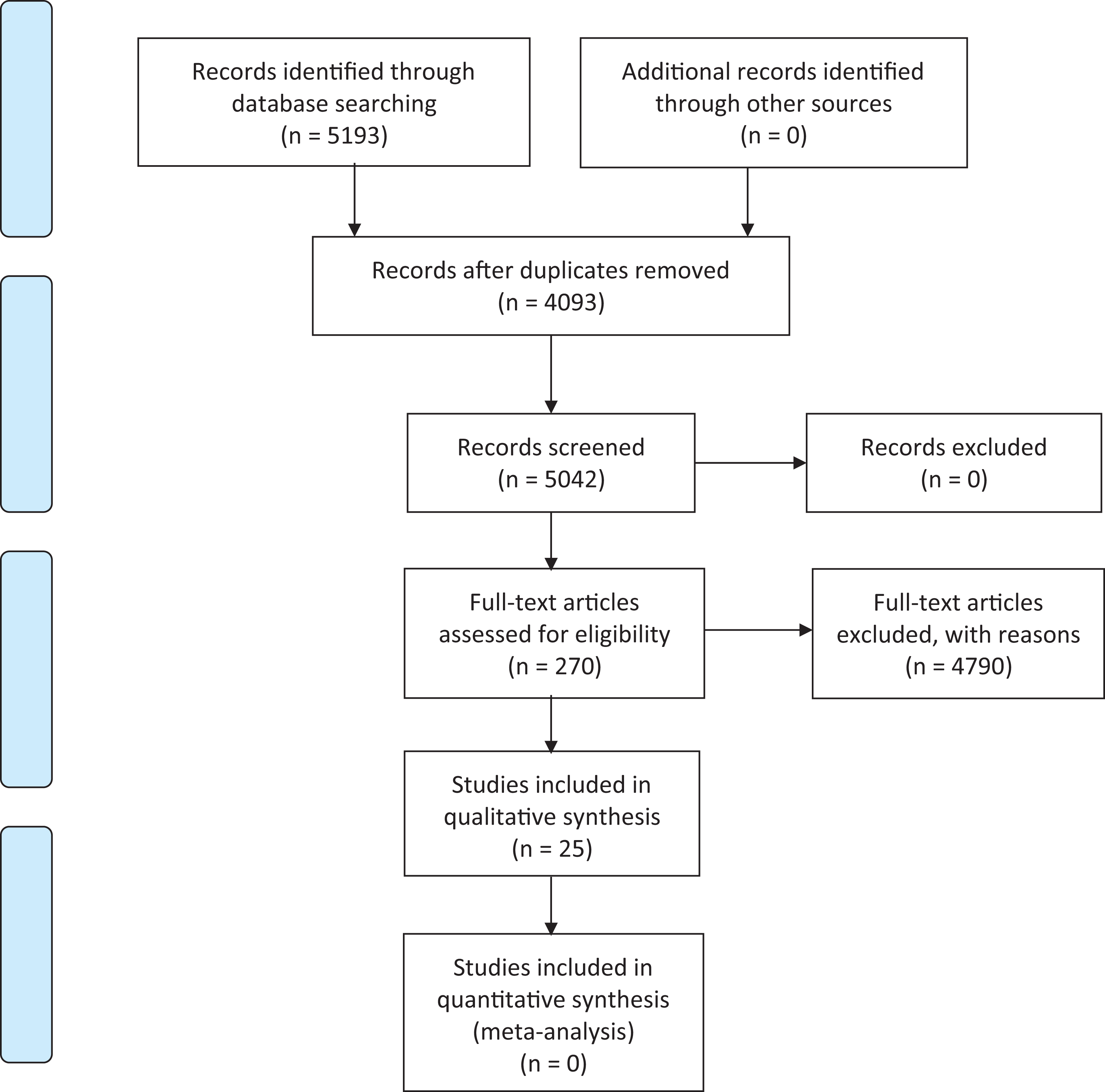
PRISMA 2009 flow diagram.
As the purpose of this study was to report on behavioral and mental health conditions in children in foster care, studies describing therapeutic strategies (i.e., randomized clinical trials) or risk factors (i.e., case-control studies) were not included. The resulting articles (n = 25) were all descriptive in nature, with all using standardized diagnostic criteria for assessing mental health conditions. Seventeen of the articles presented original research, and eight of the articles were literature reviews. A meta-analysis was not intended; thus, a formal literature appraisal tool was not utilized to asses for study quality.
Results
The search strategy resulted in 25 articles for final review. Seventeen of the selected articles presented new data, whereas eight articles were literature reviews of the prior studies regarding the mental health of children in foster care (Table 1). The literature reviews cited in this article presented data that varied in terms of how mental health diagnoses were identified, what diagnoses were reported, and what sample of foster children were evaluated. This article attempts to clarify the demographics of children sampled (including age and race/ethnicity) and outline the reported rates of diagnoses within this population in order to help providers have a clearer understanding of the common diagnoses in foster children.
Included Articles.

Thirteen of the articles included information about race and ethnicity of participants. Only one evaluated the relationship between these demographic factors and mental health outcomes, finding that White race was associated with increased mental health diagnoses (Beal et al., 2018).
In reviewing the 25 manuscripts, three main themes regarding children in foster care were identified: (1) Children in foster care have higher rates of mental health disorders than children not in foster care. Based on the data gathered in this systematic review, the most common diagnoses across articles are ODD/conduct disorder, major depressive disorder, PTSD, and reactive attachment disorder (Table 2). (2) Children in foster care have higher rates of suicidality, including suicidal ideation and suicide attempt, compared to children in the general population. (3) The rate and types of mental health disorders in children in foster care can vary based on numerous factors such as the type of maltreatment experienced, placement variables, and other factors unique to children in foster care.
Lifetime Prevalence of Mental Health Disorders Experienced by Children in Foster Care.

Higher Rates of Disorders
Eighteen of the 25 articles included in this systematic review assessed the rate of mental health disorders of children in foster care and the specific types of disorders most commonly faced by this population (Baker et al., 2007; Beal et al., 2018; Greiner & Beal, 2017; Havlicek et al., 2013; Holtan et al., 2005; Jacobsen et al., 2013; Lawrence et al., 2006; Lehmann et al., 2013; Lohr & Jones, 2016; McMillen et al., 2005; Okpych & Courtney, 2018; Oswald et al., 2010; Persi & Sesson, 2008; Staudt, 2003; Tarren-Sweeney, 2008; Thompson & Hasin, 2012; Turney & Wildeman, 2016; Vasileva & Petermann, 2018). The studies reported that as few as 32% (Oswald et al., 2010) and up to 80% (Lohr & Jones, 2016) of children in foster care were diagnosed with mental illness. See Table 2.
In nine of the studies that assessed the rate of disorders of children in foster care, the authors compared this rate of mental illness in children in foster care to the rate of children not in care. All nine of these studies found that children in foster care have higher rates of mental health disorders compared to children in the general population (Greiner & Beal, 2017; Havlicek et al., 2013; Lawrence et al., 2006; Lohr & Jones, 2016; Oswald et al., 2010; Persi & Sesson, 2008; Staudt, 2003; Thompson & Hasin, 2012; Turney et al., 2016). For example, in one study, the rate of mental health disorders was higher compared to a robust control group of children not in foster care with similar socioeconomic status and education levels, and living in similar neighborhoods. The children in foster care were found to be 3–4 times more likely to be diagnosed with a range of mental health illnesses, including attention-deficit disorder/ADHD (OR = 3.00, 95% CI [1.91,4.71]), depression (OR = 4.92, 95% CI [2.63,9.18]), anxiety (OR = 3.94, 95% CI [2.36,6.60]), and behavioral problems (OR = 4.22, 95% CI [2.59,6.88]; Greiner & Beal, 2017).
Along with the high rate of diagnosis of mental illness compared to the general population, this population had a high rate of comorbidity. Of children in foster care diagnosed with depression, anxiety, ADHD, or behavioral disorders (including conduct disorder and ODD), 30.4% had diagnoses in two of these three categories of disorders. In this sample, 13% were also found to have diagnoses in all three categories (Lehmann et al., 2013).
Common psychiatric diagnoses
The most common diagnoses of children in foster care include ODD/conduct disorder, major depressive disorder, PTSD, and reactive attachment disorder. The data of rates of specific disorders from each article are summarized in Table 2.
In general, children in foster care tend to experience more externalizing than internalizing symptoms (Jacobsen et al., 2013; Lohr & Jones, 2016; Persi & Sesson, 2008). One study found that 43% of children in foster care experienced externalizing disorders, compared to 30% of the comparison group not in foster care (Persi & Sesson, 2008). Externalizing disorders include disruptive impulse control, conduct disorders, and substance-related and addictive disorders. Internalizing disorders include depressive disorders, anxiety disorders, obsessive-compulsive and related disorders, trauma and stressor-related disorders, and dissociative disorders (Regier et al., 2013).
Suicidality
Five of the 25 articles included in this systematic review discussed the topic of suicidality, including suicidal ideation and suicide attempt (Anderson, 2011; Lohr & Jones, 2016; Okpych & Courtney, 2018; Tarren-Sweeney, 2008; Taussig et al., 2014). Children in foster care were found to have a higher rate of suicidality than that of children in the general population. One study reported that children in foster care were found to experience suicidality at 5 times the rate of suicidality of the general population of 9- to 11-year-olds, and 26.4% of children in foster care had a history of suicidality by self-report or caregiver report (Taussig et al., 2014). Specifically, 16.6% of the children in foster care experienced suicidal ideation, 3.9% had plans to die by suicide, and 3.7% had attempted suicide (Taussig et al., 2014). One study found that children in foster care are 4 times more likely to have attempted suicide than are children not in foster care (Lohr & Jones, 2016). Children in foster care were also found to have higher rates of self-injury, though there was little data addressing this topic specifically in the articles reviewed (Tarren-Sweeney, 2008).
The risk factors for suicidality were evaluated by three of the articles included in this review (Anderson, 2011; Okpych & Courtney, 2018; Taussig et al., 2014). Children were at higher risk of suicidal ideation with younger age, non-Hispanic ethnicity, abuse, multiple types of maltreatment, more referrals to child welfare, more transitions, and longer time in foster care (Taussig et al., 2014). The most robust predictors of suicidality included physical abuse and chronicity of maltreatment (Taussig et al., 2014). Another study found that placement instability was associated with increased suicidality (Okpych & Courtney, 2018). The likelihood of suicidal ideation increased by 68% each time a child experienced a placement in out-of-home care (Anderson, 2011). The mediating factor between suicidal ideation and the number of times a child was relocated to an out-of-home placement within the foster care system in this study was found to be clinically significant depressive symptoms (Anderson, 2011). These data convey the importance of screening for and accurately diagnosing psychiatric disorders such as depression in this vulnerable population.
Effects of Types of Maltreatment
Six of the 25 articles addressed the effects of different types of maltreatment on mental health outcomes in children who have been in foster care (Bruskas, 2010; Gonzalez, 2014; Lawrence et al., 2006; McMillen et al., 2005; Okpych & Courtney, 2018; Oswald et al., 2010). Neglect, physical abuse, and sexual abuse were the most common types of maltreatment experienced by children in foster care (Oswald et al., 2010). These three types of maltreatment were also found to be the largest predictors of mental illness in this population (Bruskas, 2010). Specifically, sexual abuse was associated with higher levels of depression in maltreated youth (Okpych & Courtney, 2018).
Compared to a nonmaltreated control group, one study found that children placed in foster care after maltreatment and maltreated children who remained at home had poorer adaptation, more behavior problems, and more externalizing symptoms (Lawrence et al., 2006). The authors of this article noted that these findings were difficult to specifically attribute to either placement in foster care or maltreatment itself as the specific cause of poorer outcomes.
Further, in a literature review examining the effects of different maltreatment types on the risk of mental illness of those in foster care, children who were physically abused were more at risk for conduct disorder, ODD, major depressive disorder, anxiety, and PTSD (Gonzalez, 2014). Neglected children were more likely to express internalizing behaviors, depression, anxiety, and insecure attachments (Gonzalez, 2014). Finally, sexually abused children were more likely to experience suicidal ideation, depression, anxiety, dissociative identity disorder, PTSD, and substance abuse disorders (Gonzalez, 2014). Another study found that emotional abuse was associated with increased suicidality (Okpych & Courtney, 2018).
The number of maltreatment types experienced by a child was found to be the strongest predictor of a mental health disorder, implying a potential additive effect of maltreatment (McMillen et al., 2005). Another study found that the type of maltreatment was the most important factor affecting diagnostic rates, with a higher percentage of children with a diagnosis of PTSD after experiencing sexual abuse (64%) compared to a history of physical abuse (42%) or no abuse (18%; Oswald et al., 2010). However, a difference in the rate of diagnosis was not found for other disorders such as major depressive disorder (Oswald et al., 2010).
Effects of Placement Variables
Ten of the 25 articles discussed the effects of placement variables such as number of placements and type of placement on mental health outcomes for children in foster care (Anderson, 2011; Beal et al., 2018; Holtan et al., 2005; Jacobsen et al., 2013; Lawrence et al., 2006; Lehmann et al., 2013; Okpych & Courtney, 2018; Stanley et al., 2005; Tarren-Sweeney, 2008; Taussig et al., 2001). In four of the studies, the authors found that a higher number of placements within the foster care system was correlated with increased risk of poor mental health outcomes (Lehmann et al., 2013; Okpych & Courtney, 2018; Stanley et al., 2005; Tarren-Sweeney, 2008). However, two studies found that there was no effect of the number of placements on mental health disorders suggesting that this relationship may be undetermined (Jacobsen et al., 2013; Lawrence et al., 2006).
Type of placement was found to have an effect on mental health outcomes. For example, children in foster care in a group home were found to have clinically significant depressive symptoms at 4.6 times the rate of children who were living with a relative in kinship care (Anderson, 2011). Further, the children in a group home experienced suicidal ideation at 7.25 times the rate of those in kinship care (Anderson, 2011). Similarly, in a cross-sectional sample of Norwegian children in kinship (living with a relative or family friend) and nonkinship foster care, 35.8% of kinship children in foster care and 51.8% of those in nonkinship care experienced a total borderline or clinical problem level measured by the child behavior checklist (Holtan et al., 2005). However, these data do not necessarily indicate that maintaining a relationship with family promotes better outcomes. In a prospective study of children in foster care who reunited with biological parents after placement, researchers found that reunified youth had more self-destructive behaviors, internalizing behaviors, substance use, total risk behaviors, and delinquent behaviors (Taussig et al., 2001).
Discussion
This systematic review confirms findings from prior reviews that children in foster care have higher rates of mental health disorders compared to children not in foster care, and also highlights recent studies that include assessments of substance use and suicidality, both of which are national topics of discussion due to increased rates in the general child/adolescent populations. Similar to prior reviews, we found that children in foster care experience a broad range of mental health disorders (Havlicek et al., 2013; Lohr & Jones, 2016; Oswald et al., 2010; Tarren-Sweeney, 2008) and that the prevalence of specific conditions could vary widely depending on the specific population and methods used (e.g., parent report, electronic medical records, validated instruments). The most common diagnoses found in this review include ODD/conduct disorder, substance use disorder, suicidality, major depressive disorder, and reactive attachment disorder (Table 2).
Table 3 summarizes our findings and provides implications of the review for practice, policy, and research. Specifically, those who are providing care to foster children ought to obtain a thorough social history of placement variables such as type of foster care and number of placements within the foster care system, along with types of maltreatment experienced, if applicable. Along with a thorough social history, providers ought to screen this vulnerable population for psychiatric diagnoses and suicidality.
Implications of the Review for Practice, Policy, and Research.

Numerous explanations account for the higher rate of mental health disorders in children in foster care compared to children in the general population. Most likely, children in foster care truly do have higher rates of psychiatric disorders than do children not in foster care. A precautionary note is that surveillance bias may partially explain the higher rate of diagnosis in children in foster care, as this population is more likely to be identified as having mental health needs and subsequently assessed by professionals.
Another explanation for the high rate of disorders is that the most common disorders faced by children in foster care, including ODD, conduct disorder, and major depressive disorder, may actually be manifestations of PTSD. Children in foster care often experience trauma before placement into foster care, which is what initially led to their placement into the foster care system. Further, the trauma of being in foster care itself may also lead to severe stress for these children. The explanation that many of the mental health disorders diagnosed are actually manifestations of PTSD is possible because historically, trauma-informed care has not been available to children in foster care. Trauma-informed care developed in response to the experience of veterans in the Vietnam War, and it has expanded only within the last 30 years to apply to civilian traumas such as maltreatment and violence, as well. A trauma-informed care practice is one that emphasizes safety, collaboration, trust, choice, empowerment, and an understanding of the many ways that trauma affects the lives of people seeking services (Wilson et al., 2013).
The social history of children in foster care was also found to affect mental health outcomes. Specifically, the data indicate that the type of abuse experienced and the type of foster care placement can predict mental health outcomes of children in foster care. There was support for improved outcomes for children in kinship care compared to nonkinship care, implying that closer familial relationships could be protective for children in foster care. However, data also indicated that being reunited with biological parents led to worse outcomes for children in foster care. Therefore, the effect of the types of placement (kinship or nonkinship care) on mental health outcomes for children in foster care may depend on the individual’s relationship with their family and what led to that child’s removal from the home.
Data are conflicting about the predictive value of the number of placements on the diagnoses of mental health disorders. Some of the data reviewed in this article suggest that an increased number of placements is associated with higher rates of mental illnesses in children in foster care, likely indicating the importance of stability in a child’s home life.
One of the considerations for a practicing clinician is the increased interest in broad screening of pediatric populations for adversity and social determinants of health (Council on Community Pediatrics, 2016; Shankoff et al., 2012; Sokol et al., 2019). Given the profound impact of childhood adversity, initially reported by Felitti et al. (1998), the desire to identify children at risk of future potential health and well-being threats is a logical desire. Broad screening often takes the form of adverse childhood experiences (ACE) screens. While the intention behind broad screening is understandable, there are a number of significant cautions, particularly as it applies to children in foster care (McLennan et al., 2020; Racine et al., 2019). First, the initial ACEs study by Felitti et al. (1998) utilized a narrow set of specific historic occurrences but were not a comprehensive screen of adversities many children encounter (Cronholm et al., 2015). A history of being in foster care is not included as an original ACE and thus would not be identified on a routine screen. Growing up in a household where physical abuse, sexual abuse, or neglect had occurred is an ACE, but these do not readily imply that the child is currently in foster care. Second, the value of screening for an ACE without a clear response or therapeutic strategy would have no value to the patient. While there may be epidemiologic value, there would be limited clinical value. Simply applying a number to a child or family (i.e. “Your ACE score is 4”) would stigmatize and potentially disincentivize them from further care. Third, given the profound emotional and physical burden many children in foster care have suffered, there is a great risk of triggering the patient by having them recount and relive their prior experiences, if they are not adequately prepared to manage the accompanying emotional or psychological burden.
Limitations
One limitation of this review is that the data were not readily comparable between studies due to widely variable methods of assessing mental health outcomes. For example, some studies relied on self-report of children in foster care or their foster parents to gather information about diagnoses of mental health disorders, whereas others used a standardized evaluation by licensed clinicians for each participant. Therefore, performing a multivariate analysis or meta-analysis of the articles was not possible. A comparison of data in the articles also was difficult because the methods were so variable. Study design along with measures could additionally influence the findings. Further research should incorporate a more standardized mechanism of assessing mental illness in this population of children who clearly have an increased need for mental health services.
A second limitation includes differences in reporting the demographic factors associated with mental health outcomes for foster children. Only half of the articles included in this article reported racial and ethnic identities of the foster children, making it difficult to evaluate any differences in outcome based on these demographics. Of note, the articles that did report racial and ethnic demographic data found that minorities are disproportionately represented in this sample of foster children compared to the general population. It is important to recognize that racism and bias on the part of providers may affect the diagnoses given to children in foster care, especially in the setting of behavioral issues that affect mental health diagnoses. While providers ought to be aware of the rates of psychiatric diagnoses in this population, they must also be prudent about labeling and medicating this vulnerable population.
Conclusion
Children in foster care experience more mental health disorders as a response to either the experiences that led to them being removed from their homes or the experiences of being in foster care. These results demonstrate the necessity for providers to consider the possibility of mental health diagnoses in children in foster care and to perform appropriate screening and assessments. With adequate trauma-informed training, providers can quickly become comfortable and competent in identifying mental health needs in children in foster care who have experienced trauma (Kerns et al., 2016).
Untreated mental health disorders have both immediate and long-term consequences for children in foster care. Children who have experienced trauma are more likely to demonstrate externalizing behaviors, including disruptive behaviors, impulse control, and conduct disorders, and children in foster care are more likely to demonstrate these behaviors upon placement (Lohr & Jones, 2016). If left unaddressed, externalizing behaviors are a risk factor of increased number of changes of foster home placements, which further leads to increased internalizing and externalizing behaviors, as well as long-term negative outcomes for the child, including decreased likelihood of reunification (Newton et al., 2000). Additionally, research has revealed that children in foster care without symptomatic behavior at the time of placement could experience even more severe mental health consequences for multiple placements than their peers with symptoms at time of placement, emphasizing the need for appropriate screening for all children in foster care entering the system (Newton et al., 2000). Addressing even subclinical internalizing and externalizing behaviors through adequate mental health care can facilitate the stability of the placements and reduce further disruption to the lives of children in foster care. Placement instability has been shown to be a risk factor of continued mental health problems into adulthood (Gypen et al., 2017; Villegas & Pecora, 2012).
Thus, it is imperative that those who provide care for children in foster care consider the possibility of mental health disorders and perform appropriate screening. It is essential that providers understand the unique mental health needs of children in foster care in order to appropriately screen this at-risk population and provide them with trauma-informed care and the mental health resources needed. Obtaining appropriate mental health care services for children in foster care quickly after placement can help mitigate long-term mental health effects of neglect and abuse (Zlotnick et al., 2012).
Supplemental Material
Supplemental Material, mh_APPENDIX - A Systematic Review of Mental Health Disorders of Children in Foster Care
Supplemental Material, mh_APPENDIX for A Systematic Review of Mental Health Disorders of Children in Foster Care by Amy D. Engler, Kwabena O. Sarpong, Bethanie S. Van Horne, Christopher S. Greeley and Rachael J. Keefe in Trauma, Violence, & Abuse
Footnotes
Declaration of Conflicting Interests
The author(s) declared no potential conflicts of interest with respect to the research, authorship, and/or publication of this article.
Funding
The author(s) disclosed receipt of the following financial support for the research and/or authorship of this article: This systematic review was possible through the generous funding of a Texas Medical Center Health Policy Institute grant titled “Policies and Practices Addressing Medical and Mental Health Needs for Children in Foster Care.”

Supplemental Material
Supplemental material for this article is available online.
References
Supplementary Material
Please find the following supplemental material available below.
For Open Access articles published under a Creative Commons License, all supplemental material carries the same license as the article it is associated with.
For non-Open Access articles published, all supplemental material carries a non-exclusive license, and permission requests for re-use of supplemental material or any part of supplemental material shall be sent directly to the copyright owner as specified in the copyright notice associated with the article.
