



Abstract
Digital technologies are increasingly used in health-care delivery and are being introduced into work to prevent unintentional injury, violence, and suicide to reduce mortality. To understand the potential of digital health interventions (DHIs) to prevent and reduce these problems, we conduct a meta-analysis and provide an overview of their effectiveness and characteristics related to the effects. We searched electronic databases and reference lists of relevant reviews to identify randomized controlled trials (RCTs) published in or before March 2020 evaluating DHIs on injury, violence, or suicide reduction. Based on the 34 RCT studies included in the meta-analysis, the overall random effect size was 0.21, and the effect sizes for reducing suicidal ideation, interpersonal violence, and unintentional injury were 0.17, 0.24, and 0.31, respectively, which can be regarded as comparable to the effect sizes of traditional face-to-face interventions. However, there was considerable heterogeneity between the studies. In conclusion, DHIs have great potential to reduce unintentional injury, violence, and suicide. Future research should explore DHIs’ successful components to facilitate future implementation and wider access.
External causes of injury, including unintentional injuries, homicide and injuries inflicted by others, and suicide and self-inflicted injuries, are a leading cause of mortality worldwide. More than 5 million people worldwide die from unintentional or intentional injuries each year, accounting for 9% of deaths (World Health Organization [WHO], 2014). Thus, the WHO has identified the prevention of violence and injury is an important global public health strategy. Unintentional injuries include those sustained from road traffic accidents, falls, drowning, fire-related burns, and poisonings. In the United States, unintentional injuries were the third leading cause of death and the overall annual incidence rate was 5.2 per 1 million in 2017 (Kochanek et al., 2019). They remain the leading cause of death among children and teens, even though the death rate has declined dramatically in the last two decades (Dellinger & Gilchrist, 2017). Intentional injuries, caused by interpersonal acts of violence (homicide) or self-inflicted violence (suicide), also make significant contributions to death rates. It is estimated that over 1.6 million people die every year from violence, including homicide, suicide, and war-related violence (Krug et al., 2002). Unintentional injuries, homicide, and suicide are the first three biggest causes of death for people aged 15–34 in the United States (Grinshteyn & Hemenway, 2016). Besides the most serious consequence of unintentional and violent injuries—death—there are also a number of nonfatal short- and long-term health consequences that lead to diminished quality of life for victims and to high medical expenditure and productivity loss for both individuals and society (Sattin & Corso, 2007).
Injuries and violence are preventable. The development of information and communication technologies (ICT) has created new possibilities to reduce unintentional injury, violence, and suicide and provided more opportunities for accessing the intervention services. Digital health interventions (DHIs) have been increasingly used and can have considerable potentials. Developing and testing interventions are an important stage of the public health approach. Thus, it is a priority to examine whether the DHIs are effective in comparison with other treatment statuses or methods and explore what components contribute to the effectiveness. In the present article, after a brief review of traditional face-to-face interventions, we introduce DHIs in reducing unintentional injuries, violence, and suicide. Then, we present a meta-analysis to synthesize evidence regarding the effectiveness of DHIs and discuss the implications for research, practice, and policy.
Traditional Intervention Approaches
In addition to traditional legislative and regulatory methods used to change the physical environment and individuals’ behaviors, many public health strategies have been implemented to prevent injuries and violence and to provide treatment and rehabilitation (Doll et al., 2007). According to meta-analyses, face-to-face interventions aiming at knowledge enhancement, cognition, and behavioral change to reduce the risk of unintentional injuries are effective. For example, parenting programs (e.g., home visitation) are effective in reducing child injury relative risk (RR = .82; Kendrick et al., 2008), and home safety interventions provided to children or families are effective in enhancing thermal injury prevention practices (odds ratios [ORs] ranging from 1.35 to 1.83; Kendrick et al., 2009). Multiple interventions targeting different participants are also used to prevent violence of different types and provide robust evidence of effectiveness. Cognitive behavioral therapy (CBT) and advocacy interventions have been found effective in reducing physical (d = .13) and psychological (d = .19) intimate partner violence (IPV) against women (Tirado-Muñoz et al., 2014). Parenting programs, including home visitation and parent education, have been found to be effective in preventing child maltreatment, reducing related risk factors, and enhancing protective factors (d = .3; Chen & Chan, 2016). School-based antibullying programs effectively reduce bullying perpetration (OR = 1.31) and victimization (OR = 1.24; Gaffney et al., 2019) and increase bystanders’ intervention (Hedge’s g = 0.2; Polanin et al., 2012). With regard to suicide prevention, CBT has an overall positive effect on reducing suicidal ideation with effect sizes ranging from 0.24 (Leavey & Hawkins, 2017) to 0.39 (Tarrier et al., 2008). Interventions to prevent repeat suicidal behavior are also effective but with a smaller effect size (RR = .83; Inagaki et al., 2015). Although the above effective interventions have characteristics that could contribute to potential positive impacts (e.g., theory-driven, sufficient dosage, well-trained staff, varied teaching methods, build positive relationships), the mechanisms of risk reduction remain to be explored.
Digital Health Approaches
The use of digital health technologies in violence and injury prevention has the potential to produce effects comparable to traditional face-to-face interventions on risk reduction, as several successful characteristics can be maintained or enhanced. For example, these novel solutions can also be theory driven. Web-based or computerized CBT has been widely used to improve psychological well-being and reduce internalizing problems (Davies et al., 2014; Reyes-Portillo et al., 2014). In addition, multiple methods can be used to provide instruction and skills training, including email, text messages, video clips, and online modules, and these teaching methods can be either interactive or noninteractive. DHIs can also offer an inexpensive alternative to face-to-face interventions. Online resources can often be accessed repeatedly during intervention intervals or even after intervention at flexible times. Furthermore, some specific characteristics enable interventions to meet the increasing demand of public health services. For example, using virtual reality (VR) technology, interventions can create a more realistic and immersive risky situation so that participants can “experience” it for themselves (Rowe et al., 2015). Service users can receive personalized information and services tailored by computer algorithms (Omaki et al., 2017). Confidential access to internet-based resources can ensure the anonymity and privacy of users who are at risk of violence or mental health problems and encourage them to use services (Anderson et al., 2019; Hollis et al., 2017). Another advantage is that DHI users can access these health services anytime and anywhere to avoid disruption of ongoing interventions caused by pandemics or other crisis scenarios and also to benefit people who are unable to come to the clinic or service sites. In particular, during the COVID-19 outbreak, the provision of online services is safe and can facilitate the delivery of emergency interventions (Liu et al., 2020).
However, the differences in internet and digital use can lead to the unequal access to DHIs. Scholars use the term digital divide to describe “inequalities in access to and the use of ICT” (Scheerder et al., 2017, p. 1608). The digital divide exists across many countries, which is highly associated with the unequal economic development (Park et al., 2015). The limited funding for DHIs and poor infrastructure for maintaining the technology can severely limit the application of DHIs in low- to middle-income countries (LMICs). There is also an individual-level digital divide and sociodemographic and socioeconomic (SES) factors are common determinants of ICT use (Scheerder et al., 2017). In addition to the limited access to ICT, people of low SES may not have the proficiency with using ICT (Baker et al., 2017). Technical and computer literacy issues can affect the likelihood of the use of DHIs among older adults and people of low SES status (Watkins & Xie, 2014). Privacy and security are another concern using DHIs. Some medical apps can compromise user safety and can pose a significant risk for users’ privacy (Lewis & Wyatt, 2014). The hacker may intentionally acquire private or sensible information and figure out users’ identities, which account for security threats (Arora et al., 2014).
Nevertheless, given their obvious strengths, DHIs focusing on conveying tailored information and behavioral change are increasingly applied in the prevention of violence and injury. For example, parents receiving tailored safe information from a computer kiosk at the pediatric emergency department reported greater knowledge gain and positive behavioral changes regarding the prevention of dog bites and using child safety seats, compared with those receiving generic information from the kiosk (Shields et al., 2012, 2013). Multiple approaches have also been developed to screen and prevent problems of violence. The findings of RCTs suggest that women using computer-assisted self-administered screening (Klevens et al., 2012) or video doctors are more likely to disclose their exposure to partner violence (Humphreys et al., 2011). Thus, DHIs can be a promising approach to involving the victims of violence in interventions. In suicide prevention, innovative approaches have also been applied to predicting and reducing suicidal behavior (Torous et al., 2018). Despite some key methodological limitations of the evaluation of programs (e.g., small sample size, lack of a control group, subjective measurements of effectiveness), previous systematic reviews have summarized the evidence of the feasibility, acceptability, and usability of DHIs (Anderson et al., 2019; Franco-Martín et al., 2018; Omaki et al., 2017). A meta-analysis has shown evidence that digital interventions can reduce suicidal ideation, in particular interventions directly targeting suicidality (Torok et al., 2020). Although a growing body of evidence suggests that DHIs are effective in reducing suicide, it is important to provide a holistic picture of the overall usefulness of DHIs in reducing external causes of injury. Thus, the scope of such review should be wide, which is not limited to the reduction of suicide and self-inflicted injuries but also include unintentional injuries and injuries inflicted by others.
Study Objectives
Digital technologies, such as computers, the internet, mobile devices, and VR, are increasingly being used to develop and deliver preventive interventions to reduce violence and injury. To ensure the widespread adoption of DHIs, it is important to provide evidence of their effectiveness. Therefore, based on rigorous evaluations using RCTs, the first objective of the present meta-analysis is to examine the effectiveness of DHIs in preventing unintentional injuries, violence, and suicide. The second objective was to investigate factors related to program effectiveness, including method of delivery, method of evaluation, and user characteristics. This review aims to develop recommendations for future applications of DHIs in reducing suicide, injury, and violence and have implications for practice and policy.
Method
Search Method
This meta-analysis was conducted following the Preferred Reporting Items for Systematic Reviews and Meta-Analyses (PRISMA) guidelines. Electronic databases were systematically searched for all relevant studies published in or before March 2020. The databases were Sociological Abstracts, Social Services Abstracts, PsycINFO, PsycARTICLES, ERIC, CINAHL, and PubMed. We used the following search term combinations for titles, key words, and abstracts of articles: (a) internet-based, web-based, computer-based, computerized, technology-based, use of technology, m-Health, e-Health, social network, social media, smartphone, mobile phone, mobile device, VR, Twitter, Facebook, WhatsApp, WeChat; (b) violence, bully*, abuse, self-harm, suicide, suicidal ideation, injury, burn, bite, sting, cut, fell, pedestrian, suffocate; (c) intervention, treatment, prevention, therapy, education, program; and (d) experiment, trial. In addition to electronic searches, we manually searched through the reference lists of relevant recent review articles to identify other potentially relevant studies.
Inclusion and Exclusion Criteria
We included studies that met the following criteria: (a) evaluated interventions on injury, violence, or suicide; (b) used a digital health method to deliver services, such as computer- or web-based interventions and smartphone apps; (c) aimed at direct health outcomes, such as the reduction of suicidal ideation or the enhancement of knowledge or skills; (d) used an RCT design to evaluate intervention programs’ effectiveness; (e) reported sufficient posttest data to calculate effect size; and (f) published in English. Studies were excluded if they (a) were aimed at training health workers to identify problems, (b) used qualitative evaluation methods or evaluated client satisfaction only, (c) the control group also received technology-based services that aimed to reduce the same problem, or (d) provided insufficient or duplicate data.
Coding of Studies and Data Extraction
The selected articles and their protocols were reviewed for systematic coding based on a standardized coding form. In each study, publication information (author(s), year, and country), methodological characteristics (study design, recruitment method, sample size, subgroup, control group intervention, use of clinical or community sample, and quality score), participant characteristics (gender, age, major inclusion criteria, at-risk status, and type of informants), intervention characteristics (name, type of technology, content, number of sessions, and duration), and outcomes and measurements were coded. For each outcome, the descriptive pretest–posttest data (e.g., mean, SD, SE, event rate, sample size) and effect size data (e.g., standard mean difference and odds ratio) were extracted. Each outcome was classified into one of the three types: suicide reduction, violence reduction, or injury reduction. In addition to the above major types, intervention characteristics (types of outcomes; type of intervention; whether the DHI directly addressed suicide, violence, or injury reduction; type of technology used in the intervention; and intervention length), methodology characteristics (sample size, type of sample, and any intervention provided to control group), and participant age group(s) were used as moderator variables. To ensure reliability, each study was coded by two raters independently. The raters typically achieved high interrater agreement on coding. Discrepant codes were discussed until issues were resolved.
Quality Assessment
To ensure that the meta-analysis was based on high-quality evidence, we appraised the methodological quality of each included study. A methodological quality checklist was devised, comprising nine items from the CONSORT checklist (Moher, 1998): trial design, participant eligibility, settings and locations, description of interventions, outcome descriptions, sample size calculation, randomization method, blindness, and statistical methods. In addition, we added three items specifically related to the current review: whether the objective was examined in the primary outcomes, whether the measures were reliable, and whether the technology was used as the main service delivery method. The highest possible total score of the 12-item checklist was 12, and a cutoff score of 8 was considered satisfactory. The two raters also evaluated the methodological quality of each study independently. In cases of disagreement, consensus was reached through discussion with all the authors.
Statistical Analysis
We performed statistical analyses using the Comprehensive Meta-Analysis Version 3.0 program. The effect size of each intervention was represented by the Cohen’s d statistic, which was calculated as the difference in the change between intervention and control conditions divided by the pooled standard deviation. When the descriptive data (i.e., mean and SD) were not available, Cohen’s d was calculated based on event rate (or number of events) at posttest or the existing effect size data (e.g., OR, d) from the studies. A positive effect size indicated a lower risk of the target problems (e.g., suicidal ideation and violence) and improvement in safety knowledge of the participants in the intervention group relative to the control group. An effect size of zero or negative value indicated that the intervention had no effect or produced worse outcomes in the intervention group.
In the first step, we calculated the effect size of each study. For the studies producing more than one outcome score, or using subgroups, in order to handle dependency between these effect sizes, we assumed a correlation of 1 between outcomes within a study and used the average of the multiple effect sizes. For Doss et al. (2020), Franklin et al. (2016), and Schwebel and McClure (2014), which used a multiarm RCT or involved several studies evaluating the effects of different interventions, we assumed that effect sizes were independent. In the second step, because of the different participant profiles, intervention targets, and types of technologies used, we used the random-effects model to calculate the overall size of the pooled effect of the selected studies. In addition to overall effectiveness, we specifically analyzed the effectiveness of three major outcomes: the reduction of suicidal ideation and related behaviors, the reduction of interpersonal violence, and the reduction of the risk of unintentional injury. A forest plot was used to present the pooled effect sizes with 95% confidence intervals.
The Q statistic was used to examine heterogeneity between studies. In addition, the I2 statistic was calculated based on the Q statistic to measure the proportion of observed variance across studies. Moderator analyses were performed to examine the effects of categorical moderator variables by grouping studies and calculating between-group Q scores. Furthermore, to examine the relationship between effect size and continuous covariates, univariate meta-regression analyses were performed. We investigated the potential for publication bias by visually assessing funnel plot asymmetry. Sensitivity analysis was also performed to explore the source of heterogeneity or publication bias.
Results
Study Selection and Methodological Characteristics
Figure 1 presents the process for selecting studies in accordance with the PRISMA guidelines. The electronic search yielded a total of 3,144 studies. In addition, we retrieved 62 studies through manual searches of the references of relevant reviews. After removing duplicates, a total of 1,522 studies were screened using titles and abstracts. Ultimately, 211 full articles were retrieved and accessed for eligibility. Following the application of the selection criteria, 34 articles were included in this meta-analysis. Reasons for exclusion are shown in Figure 1.

Flow diagram of study selection.
All of the studies were published after 2012, demonstrating the rapid development and wider application of technology-based intervention for suicide, violence, and injury prevention in recent years. Of the 34 selected studies, 17 (50%) were conducted in the United States, 14 (41%) were conducted in developed countries (Australia, Belgium, Canada, Germany, New Zealand, Sweden, Switzerland, the Netherlands, and the United Kingdom), and three (9%) studies were developed and implemented in developing countries (China and Sri Lanka). Sample sizes varied greatly between studies, from 38 (Di Simplicio et al., 2020) to 3,901 (Levesque et al., 2016). The mean sample size was 509 participants.
The main characteristics of each included study are summarized in Table 1. All of the studies were RCTs. They reported most methodological characteristics and their quality scores ranged from 8 to 12 points, indicating satisfactory to high methodological quality and low risk of bias. Therefore, none of the studies were excluded on the basis of methodological quality.
Study Characteristics and Moderator Variables.
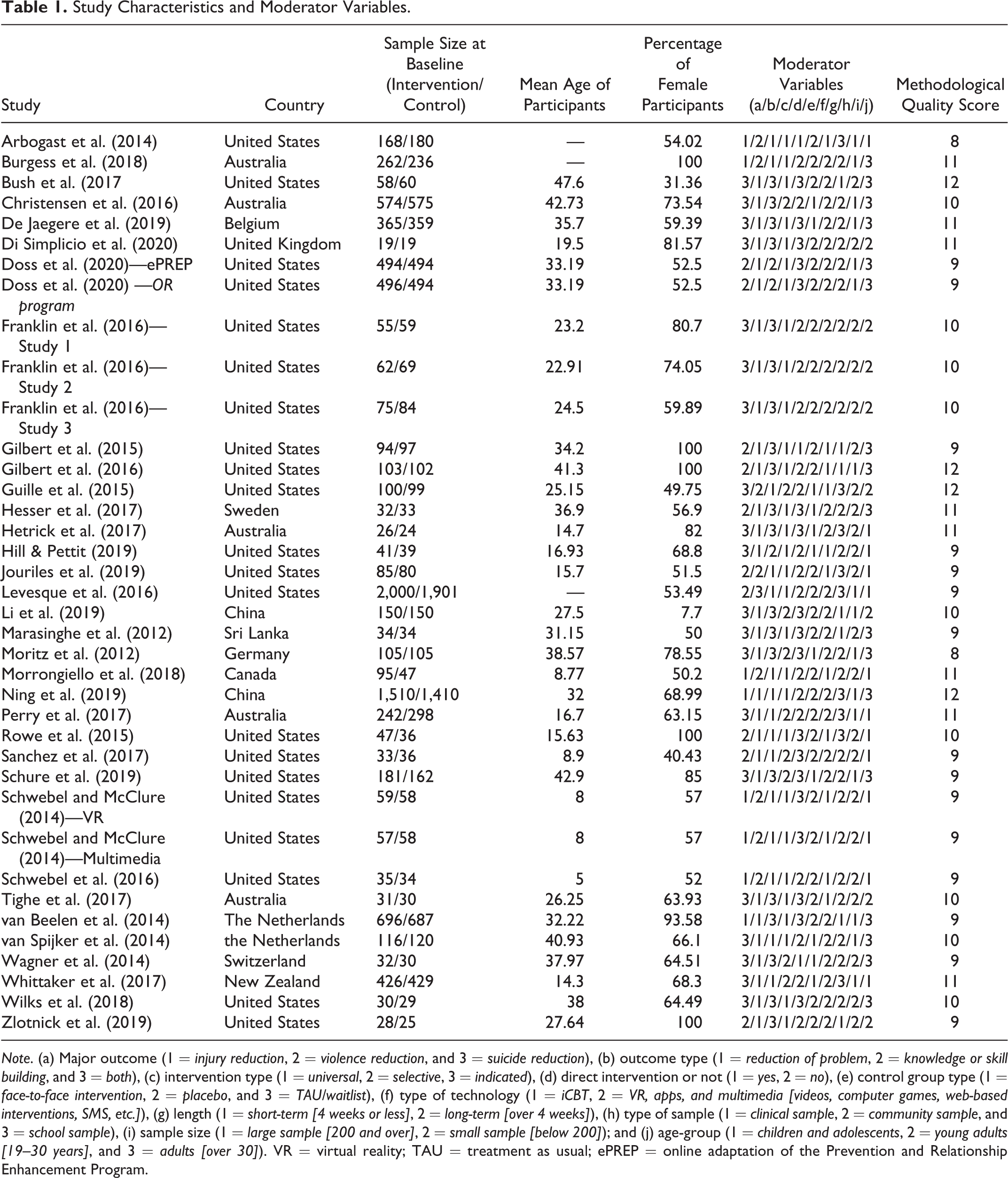
Note. (a) Major outcome (1 = injury reduction, 2 = violence reduction, and 3 = suicide reduction), (b) outcome type (1 = reduction of problem, 2 = knowledge or skill building, and 3 = both), (c) intervention type (1 = universal, 2 = selective, 3 = indicated), (d) direct intervention or not (1 = yes, 2 = no), (e) control group type (1 = face-to-face intervention, 2 = placebo, and 3 = TAU/waitlist), (f) type of technology (1 = iCBT, 2 = VR, apps, and multimedia [videos, computer games, web-based interventions, SMS, etc.]), (g) length (1 = short-term [4 weeks or less], 2 = long-term [over 4 weeks]), (h) type of sample (1 = clinical sample, 2 = community sample, and 3 = school sample), (i) sample size (1 = large sample [200 and over], 2 = small sample [below 200]); and (j) age-group (1 = children and adolescents, 2 = young adults [19–30 years], and 3 = adults [over 30]). VR = virtual reality; TAU = treatment as usual; ePREP = online adaptation of the Prevention and Relationship Enhancement Program.
Intervention Characteristics
The selected studies used a range of interventions: universal interventions aimed at the general population, selective interventions targeted at those who were at risk, and indicated interventions targeted at those presenting symptoms of suicide (e.g., depression and anxiety) or victims of violence and abuse. Different technological approaches were applied in the interventions, including Internet-based Cognitive Behavioral Therapy (iCBT), VR, smartphone apps, and other multimedia technologies (e.g., videos, computer games, web-based intervention, SMS). Eighteen studies examined the effectiveness of direct or indirect DHIs for reducing suicide and 10 were online interventions based on modules for CBT. However, seven were indirect interventions for suicide prevention which primarily focused on depression.
Seven studies examined the effectiveness in preventing penetration, burn, and other unintentional injuries, and improving parents’ safety behavior and knowledge, based on different interventions using video games (Arbogast et al., 2014), VR or video training (Morrongiello et al., 2018; Schwebel & McClure, 2014), web-based interventions (Schwebel et al., 2016; van Beelen et al., 2014), and app-based interventions (Burgess et al., 2018; Ning et al., 2019). One study (Schwebel & McClure, 2014) included both VR and video treatment conditions.
Nine studies examined effectiveness in preventing intimate partner and dating violence (Doss et al., 2020; Gilbert et al., 2016, 2015; Hesser et al., 2017; Levesque et al., 2016; Zlotnick et al., 2019), sexual victimization (Jouriles et al., 2019; Rowe et al., 2015), and bullying (Sanchez et al., 2017). Among the nine studies, one used iCBT (Hesser et al., 2017), one used VR (Rowe et al., 2015), one used a computerized game (Sanchez et al., 2017), one used an intervention video (Jouriles et al., 2019), and the rest used computerized interventions to provide information and training.
The lengths of other interventions varied from a single session of under an hour to online resources and mobile apps that can be accessible for months. The iCBT programs generally followed modules and lasted 4–8 weeks. The participants in the control groups were mostly in the waitlist condition, received information and treatment as usual (TAU) or placebo intervention. In addition, three studies used dialectical, face-to-face interventions with control groups (Arbogast et al., 2014; Gilbert et al., 2015; Wagner et al., 2014).
Participant Characteristics
The participants were recruited using multiple methods, including through websites, social media, and the distribution of flyers, and via clinics, schools, and community correction sites and other resources. However, none of the sampling was representative. Of the 34 selected studies, eight (23.5%) recruited participants from schools, 19 (55.9%) recruited from community settings, and seven (20.6%) from clinical settings. Participants in the suicide intervention programs were mostly adults with depressive symptoms and suicidal ideation, followed by people who were admitted to clinical settings after attempting self-harm or experiencing suicidal thoughts (Di Simplicio et al., 2020; Franklin et al., 2016; Kennard et al., 2018; Marasinghe et al., 2012) and medical interns and high school students receiving universal interventions (Guille et al., 2015; Whittaker et al., 2017). Participants of violence prevention programs included women at risk (Gilbert et al., 2016, 2015), pregnant women (Zlotnick et al., 2019), low-income couples (Doss et al., 2020), and students and children (Jouriles et al., 2019; Levesque et al., 2016; Rowe et al., 2015; Sanchez et al., 2017). Participants of injury prevention programs were mostly children (Arbogast et al., 2014; Morrongiello et al., 2018; Schwebel & McClure, 2014), and also included their parents, who were proxy informants (Burgess et al., 2018; van Beelen et al., 2014).
Because of the different purposes of the intervention programs, the mean age of the participants also varied. Twelve (35.3%) studies involved children and adolescents only, six (17.6%) focused on young adults under 30, and 16 (47.1%) focused on adults over 30. With regard to gender, five violence prevention programs (Burgess et al., 2018; Gilbert et al., 2016, 2015; Rowe et al., 2015; Zlotnick et al., 2019) were provided exclusively for females.
Program Effectiveness
The forest plot in Figure 2 demonstrates the pooled effect sizes for individual studies at postintervention or the shortest follow-up. Most of the selected studies had positive effects, with seven exceptions (Arbogast et al., 2014; Bush et al., 2017; Franklin et al., 2016, Study 2; Gilbert et al., 2016; Ning et al., 2019; Perry et al., 2017; Wagner et al., 2014). In addition, Gilbert et al. (2015), Franklin et al. (2016) Study 1, and Whittaker et al. (2017) demonstrated that the effect sizes were very small for some interventions. The overall random effect size was 0.21 (p < .001), which is considered small (Cohen, 1992). This overall effect size means that about 58% of the participants in the intervention group benefited more than the participants in the control group. Because the studies involved participants with different characteristics and aimed at different outcomes, there was great heterogeneity among them (Q = 111.36, I2 = 66.77, p < .001). It was estimated that approximately 67% of the variance was due to this heterogeneity. Therefore, the factors accounting for heterogeneity need further analyses.
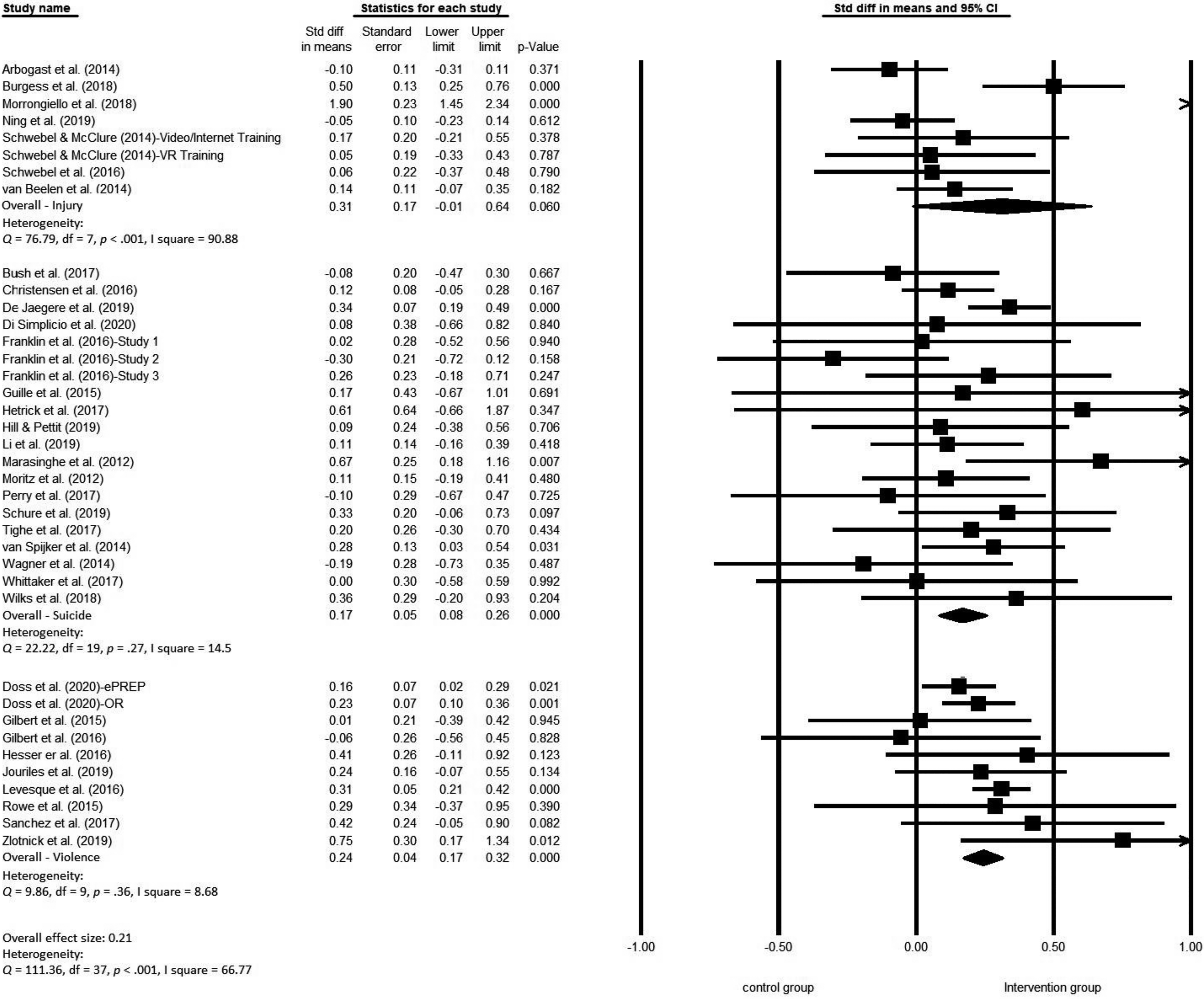
Effect sizes of each study and overall effect size at posttest.
Thirteen studies evaluated the effects at multiple follow-ups (including postintervention). The longest follow-up was 12 months from the baseline test. The overall effect size pooled by different time points, subgroups, and the outcomes of each study was also 0.21 (p < .001), indicating that the effect was generally maintained throughout the follow-ups (Online Appendix A). There was also a significant heterogeneity among the studies (Q = 111.1, I2 = 66.7, p < .001).
The effect size of the 18 studies that evaluated the effectiveness of DHIs in reducing suicide, based on 20 interventions, was 0.17 (p < .001, Q = 22.22, I2 = 14.5, p = .27). Although the effect size is regarded as small, as indicated by the insignificant Q value and small I2 value, there was no significant heterogeneity between the interventions. The effect size of the nine studies that examined the effectiveness of DHIs in reducing violence, based on 10 interventions, was 0.24 (p < .001, Q = 9.86, I2 = 8.68, p = .36). As with the studies on suicide reduction, there was no significant heterogeneity between the interventions on violence. The effect size of the seven studies that examined the effectiveness of DHIs in reducing unintentional injury, based on eight interventions, was 0.31 (p = .06, Q = 76.79, I2 = 90.88, p < .001). However, the significant Q value and large I2 value indicate that there was significant heterogeneity between the studies on unintentional injury.
Associations Between Effect Sizes and Categorical and Continuous Variables
We examined factors that could be associated with intervention effectiveness. Moderator analyses were first performed for categorical variables, including the main outcome of the intervention, methodological, intervention, and participant characteristics. However, as shown in Table 2, only the type of control group was a significant moderator of the effect size (Qb = 10.5, p = .005). According to the subgroup analysis, the interventions did not report significant reduction compared with control groups receiving face-to-face services (d = −.09, p = .34), but there were positive effects when comparing with control groups receiving placebo treatment (d = .25, p = .07) and control groups wait-listed or receiving TAU (d = .22, p = .16). Types of outcomes (Qb = 5.66, p = .06) and whether the intervention directly aimed at reduction of the problems (Qb = 1.97, p = .16) also tended to moderate the effect size. Given heterogeneity was not remarkable in the studies on suicide reduction or violence reduction, we did not conduct subgroup analyses but calculated the effect sizes after grouping studies (Online Appendices B and C). As significant heterogeneity between studies on injury reduction was found, we tested the moderator effects of the outcome of injury reduction. However, we did not identify any significant moderator (Online Appendix D).
Moderator Variable Analyses.
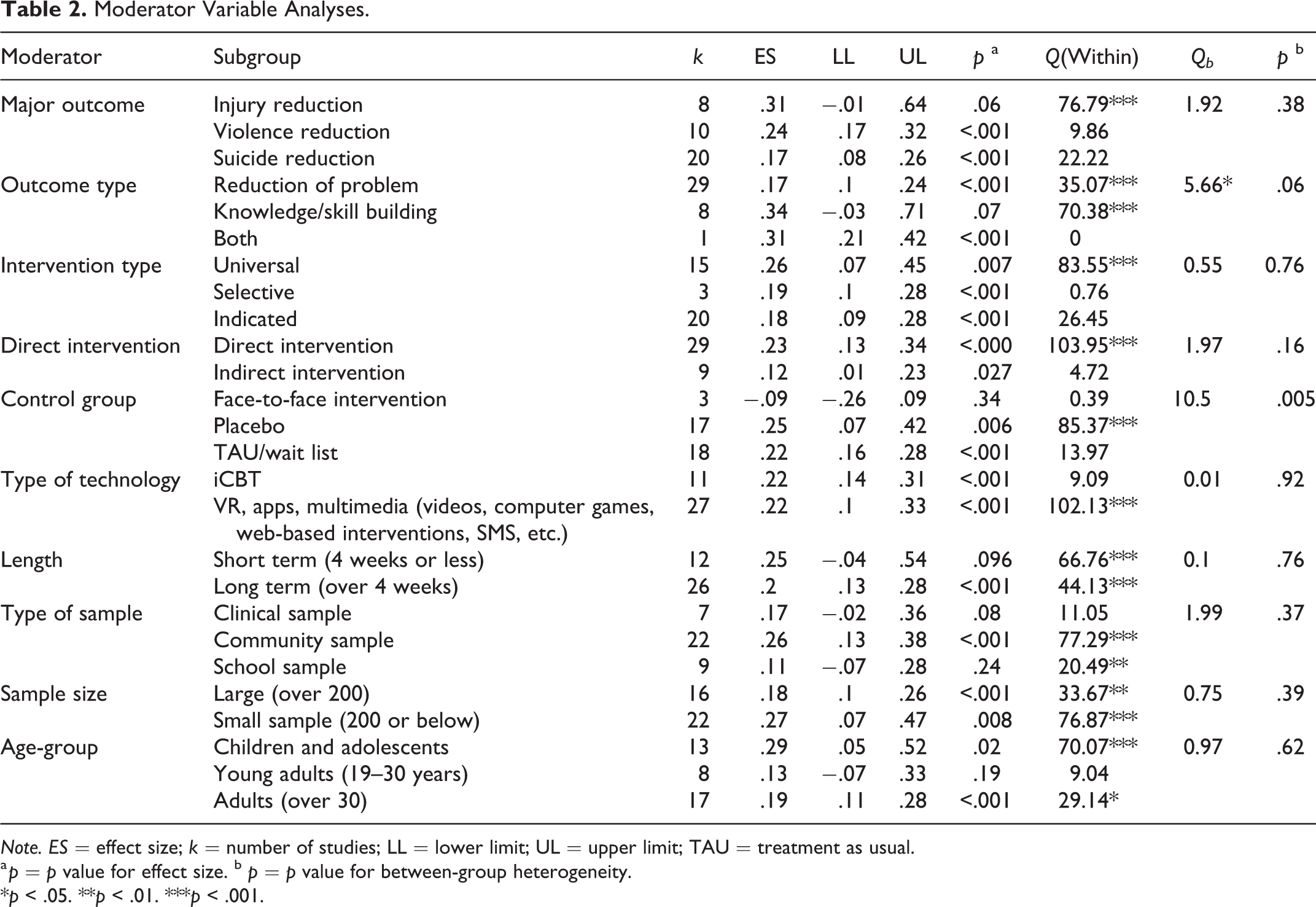
Note. ES = effect size; k = number of studies; LL = lower limit; UL = upper limit; TAU = treatment as usual.
a p = p value for effect size. b p = p value for between-group heterogeneity.
*p < .05. **p < .01. ***p < .001.
Meta-regression analyses were performed to examine the impacts of participants’ mean age and the percentage of female participants. However, the relationships between effect size, participants’ mean age, and the percentage of female participants were not statistically significant (Online Appendix E). Significant relationships were not found in the three major outcomes either. A summary of research findings can be found in Table 3.
Summary of Critical Findings.
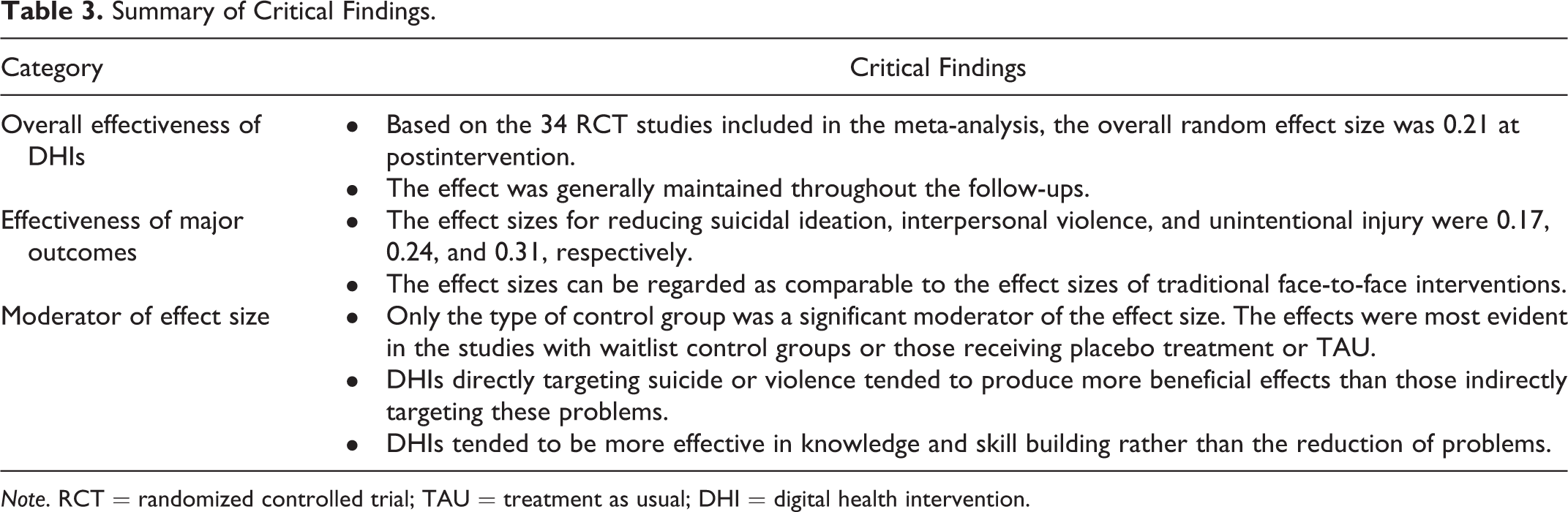
Note. RCT = randomized controlled trial; TAU = treatment as usual; DHI = digital health intervention.
Examination of Publication Bias
As shown in Figure 3, the funnel plot was asymmetric, which indicates that there could be publication bias. An outlier was the study of Morrongiello et al. (2018), in which children received intensive training in the intervention group, including instant tailored feedback and were given more elaborations and immersive experiences if they made a mistake in the trials throughout the VR training; in comparison, the comparison group received no pedestrian training. In an additional sensitivity analysis, we removed each study one at a time and calculated the effect size based on the remaining studies. The effect sizes ranged from 0.17 to 0.22, which demonstrate that the single outlier did not have a significant influence on the overall effect size. However, for injury reduction, the pooled effect sizes ranged from 0.11 to 0.38, which indicates a publication bias for studies on injury reduction.

Funnel plot of effect sizes.
Discussion
The public health approaches to preventing unintentional injury, violence, and suicide are undergoing massive expansion and improvement with the rapid development of ICT. This exploratory meta-analysis discussing the potential of DHIs in reducing suicide, violence, and injury found a small overall effect size (d = .21) for reducing these public health problems based on the evidence from 34 RCT studies, which demonstrates that digital technology–based approaches are promising.
For injury reduction, the overall effect size was 0.31, comparable to the effect sizes identified in previous meta-analyses of traditional interventions (Kendrick et al., 2008, 2009). Individual effect sizes of the selected studies ranged from −0.1 (Arbogast et al., 2014) to 1.9 (Morrongiello et al., 2018), with significant heterogeneity found between studies. The heterogeneity could be due to differences in program components, delivery methods, program durations, comparison groups, and so on. However, no significant moderators of the effect size were found due to the small number of studies included. Our meta-analysis showed evidence that DHIs are a promising approach to preventing unintentional injuries—the leading cause of unintentional injury-related deaths among children.
In terms of injuries from interpersonal violence, the selected studies demonstrated small but positive effect sizes at posttest or the shortest follow-ups—except for the study by Gilbert et al. (2016), which demonstrated that computerized self-paced prevention modules had a very small effect (d = −.06) at 6 months postintervention but a small to moderate positive effect (d = .37) at 12 months postintervention when compared with a normal health-promoting intervention. In another study by Gilbert et al. (2015), when compared with a control group receiving the same service delivered by a case manager, the effect was almost zero. There was insignificant heterogeneity between the selected studies. However, children and adolescents and younger adults (under 30) tended to benefit more from the interventions. Generally speaking, the positive overall effect size highlights the promise of interventions aimed at preventing IPV, sexual victimization, and bullying. The effect size is not substantially different from those identified in previous meta-analyses on traditional face-to-face interventions (Gaffney et al., 2019; Polanin et al., 2012; Tirado-Muñoz et al., 2014).
As the leading cause of death in high-income countries (WHO, 2014), suicide prevention is the aim of a number of technology-based intervention programs. Based on 20 RCTs, the present study found that there was a small overall effect size favoring DHIs. The effect size was smaller, but not substantially different from the effect sizes of traditional interventions identified in previous meta-analyses (Inagaki et al., 2015; Leavey & Hawkins, 2017; Tarrier et al., 2008). In addition, we found that only a very small percentage of variation in effect sizes across the selected studies was due to heterogeneity, which indicates that the performance of DHIs was relatively stable for reducing suicidal ideation and behaviors.
While DHIs can meet the increasing demand for injury prevention and have enormous potential to reduce unintentional injury, violence, and suicide, the characteristics that contributed to their effects remains unclear based on the moderator analyses under the different major outcome categories. In addition, the major outcome category was not significantly associated with the overall effect size. We further examined the moderator effects of methodological factors, intervention characteristics, and participant profiles. We found that the type of service received by the control groups contributed to the effect difference between the studies. The effects were most evident in the studies with waitlist control groups or those receiving placebo treatment or TAU. The interventions did not report a significant reduction when compared with face-to-face services. This indicates that the effect of DHIs was not substantially different from face-to-face interventions, but more research is needed to confirm this preliminary finding. We also found that DHIs tended to be more effective in knowledge and skill building rather than the reduction of problems. DHIs directly targeting suicide or violence tended to produce more beneficial effects than those indirectly targeting these problems and this finding is consistent with Torok et al. (2020). Meta-regression analyses did not show any significant correlation between participants’ mean age, the percentage of female involvement, and DHI effectiveness, which indicates that DHIs have the potential to be widely applicable to different populations.
Limitations
This meta-analysis has several limitations. First, it is possible that some relevant studies meeting the included criteria were not included, notably those not published in English. Articles that are not abstracted with the search key words could have been missed during the initial search, even though we also reviewed the references of related review studies. Second, though multiple types of technology-based approaches have been used in prevention programs, we did not include studies using technology-based methods to screen for problems and victims. Nor did we include studies where the comparison group also used DHIs to prevent the same problems. With this meta-analysis, we aimed to provide evidence regarding the effectiveness of DHIs on reducing suicide, injury, or violence in comparison with other approaches.
Implications for Research
First, even though multiple technological-based approaches have been used in public health prevention programs, from basic screening to providing tailored services with promising effects, they can vary widely in terms of design, delivery method, content, and mechanisms (Hollis et al., 2017). Therefore, the reasons for the significant heterogeneity between the studies warrant further exploration. A better understanding of the underlying mechanisms and what worked in the prevention programs are needed to facilitate future implementation.
Second, DHIs can be sustainable and cost-effective in terms of time, resources, and manpower. Future research may consider working on the cost-benefit of using DHIs compared to face-to-face interventions. DHIs have the potential for wider application if more evidence on cost-effectiveness can be provided.
Third, though DHIs have the potential to reduce health disparities, computer literacy may affect the likelihood of use and/or adherence to DHIs. The extent to which the effectiveness of DHIs is affected by computer literacy is unknown. Future research should examine the influence of computer literacy and the minimum level of eHealth literacy that is needed for interventions.
Implications for Practice
The studies included in this meta-analysis were mainly conducted in developed countries, which reflects the wide digital divide among countries. Although DHIs can be cost-effective and more accessible than traditional prevention programs to reduce unintentional injury, violence, and suicide, it can be still difficult to integrate these promising approaches into the services in LMICs. However, with available supporting resources and internet infrastructure, it would be meaningful to implement DHIs in LMICs and collect and accumulate evidence about the feasibility and effectiveness of the interventions. While maintaining the benefits of using DHIs, developers, practitioners, and users should pay more attention to the security of DHIs. Developing a priori practices and principles is very important before using DHIs (Arora et al., 2014). Although most DHIs allow users to continue to use anytime and anywhere, adherence to the programs is still very important. It is important for practitioners to explore ways to improve participants’ adherence in large-scale interventions.
Implications for Policy
Despite the growing awareness of the deleterious consequences of unintentional and intentional injury and all the progress that has been made, new strategies for preventing these public health problems are still needed. As public health aims to benefit the largest number of people, programs that can reach and engage a wide segment of the population are needed. The findings of this meta-analysis highlight the potential benefit of developing and using DHIs in future prevention programs. There could be a significant population impact with the widespread adoption of DHIs, despite their small effects (Torok et al., 2020). As suggested by WHO (2018), DHIs can be used in different ways to support health system needs, as they not only benefit clients but also facilitate healthcare providers and resource managers in service delivery and support a wide range of activities related to data collection and use.
Because of the widening digital divide among the countries, it is important to mitigate the gap and establish a supporting infrastructure for the implementation of DHIs. Scholars have suggested that higher tertiary education enrollment and public expenditure on education can reduce the digital gap (Park et al., 2015). To increase the accessibility of DHIs, policy makers should also make more efforts to improve people’s digital literacy. A summary of the implications of the review for practice, policy, and research can be found in Table 4.
Implications for Practice, Policy, and Research.

Note. DHIs = digital health interventions; LMICs = low to middle income countries.
Conclusion
This meta-analysis examined the effectiveness of DHIs by synthesizing the findings of 34 RCTs studies. Although they use different designs, technologies, and delivery methods, DHIs have the potential to reduce unintentional injury, violence, and suicide among at-risk populations. However, more work is needed to gain a better understanding of what works, and how it works, in a successful intervention.
Supplemental Material
Supplemental Material, sj-pdf-1-tva-10.1177_1524838020967346 - Effectiveness of Digital Health Interventions on Unintentional Injury, Violence, and Suicide: Meta-Analysis
Supplemental Material, sj-pdf-1-tva-10.1177_1524838020967346 for Effectiveness of Digital Health Interventions on Unintentional Injury, Violence, and Suicide: Meta-Analysis by Mengtong Chen and Ko Ling Chan in Trauma, Violence, & Abuse
Footnotes
Declaration of Conflicting Interests
The author(s) declared no potential conflicts of interest with respect to the research, authorship, and/or publication of this article.
Funding
The author(s) received no financial support for the research, authorship, and/or publication of this article.

Supplemental Material
Supplemental material for this article is available online.
References
Supplementary Material
Please find the following supplemental material available below.
For Open Access articles published under a Creative Commons License, all supplemental material carries the same license as the article it is associated with.
For non-Open Access articles published, all supplemental material carries a non-exclusive license, and permission requests for re-use of supplemental material or any part of supplemental material shall be sent directly to the copyright owner as specified in the copyright notice associated with the article.
