



Abstract
Gender inequity, including low sexual relationship power (SRP), is an important determinant of intimate partner violence (IPV) and negative sexual, reproductive, and mental health. Different versions of the Sexual Relationship Power Scale (SRPS) are commonly used within youth studies to examine how gender inequities, including controlling behaviors, in heterosexual relationships impact the lives of young people in sub-Saharan Africa. This review aims to (1) describe definitions and measures of SRP within sub-Saharan African youth studies and (2) review and summarize associations between SRP equity, IPV, and sexual, reproductive, and mental health. After searching Pubmed, Ovid Med, Psych info, Web of Science, Google Scholar, and relevant research forums, 304 papers were identified, of which 29 papers based on 15 distinct studies (published 2004–2019) met our criteria for being youth-specific, conducted in sub-Saharan Africa, and including a quantitative measure of SRP. Details of each SRPS are described, including any adaptations and psychometric properties, as well as associations with IPV, sexual, reproductive, and mental health behaviors and outcomes. Results indicate that there are variations to the SRPS, and a paucity of evidence has detailed the psychometric properties of such measures within sub-Saharan African youth studies. Measures of SRP equity are associated with experiences (among women) and perpetration of (among men) IPV as numerous pathways to HIV risk; however, the evidence remains mixed. In order to address overlapping epidemics of violence against women and HIV, efforts are needed to ensure that measures, including the SRPS, are valid and reliable among highly affected populations.
Keywords
Violence against women and girls (VAWG) is an important public health concern. Globally, one in three women will experience physical and/or sexual intimate partner violence (IPV) in their lives (World Health Organization [WHO], 2013). Gender inequities play a central role in experiences of violence, sexual and reproductive health outcomes, and the overall well-being of young women and men (Gupta et al., 2019; United Nations Development Programme, 2017; World Bank, 2012; WHO, 2017). Beyond the impact of IPV on sexual and reproductive health outcomes, including HIV acquisition, the traumatic nature of IPV negatively impacts women’s mental health including increased likelihood of experiencing posttraumatic stress (Hansrod et al., 2015; Rurangirwa et al., 2018), depression (Peltzer et al., 2018; Wong et al., 2017), and substance use disorders (Argento et al., 2017; Illangasekare et al., 2013). In sub-Saharan Africa, women experience disproportionate rates of IPV. One study found that reporting of lifetime IPV was 36.6% among sub-Saharan African women, which is nearly 7% higher than the global prevalence of 30% (Devries et al., 2013; Garcia-Moreno et al., 2013). This is particularly concerning as a number of studies have found that experiences of violence, particularly by an intimate partner, are associated with increased HIV risk among young women in sub-Saharan Africa (Jewkes et al., 2010).
Many studies on gender inequity, VAWG, and sexual health are grounded in Connell’s (1987) theory of gender and power, which recognizes that there are persistent power differentials within women’s intimate relationships, which, through men’s controlling behaviors, affect important decisions about the timing of sex, sexual refusal, and contraception use (Nduna, 2020). As posited by Connell, men’s desire to exert power and control as a way to maintain pervasive gender inequities has been attributed to the perpetration of VAWG (Amaro, 1995; Connell, 1987, 2005; Jewkes et al., 2003; Morrell et al., 2013; Shannon et al., 2012).
In order to examine the effects of power differentials on sexual health outcomes for women, Pulerwitz and colleagues developed and validated a Sexual Relationship Power Scale (SRPS) among 388 young, mainly Latina, women in the United States (Pulerwitz et al., 2000, 2002). Scale items were informed by the theory of gender and power as well as the social exchange theory—the latter of which is based on the premise that power resides not in an individual but in the relationship between two individuals (Emerson, 1972). Based on these theories, the authors elicited a pool of 40 items. Focus group discussions were then conducted with women to critique and edit the pool of items and devise new items, resulting in a final pool of 50 items. An exploratory factor analysis was then conducted among the 388 women, and after removing all items with a factor loading of less than .30, 36 items remained with a four-factor structure. However, two of the four factors had Cronbach’s αs less than .60, indicating low internal consistency, and thus were dropped resulting in 25 items. Using these items, another exploratory factor analysis was performed resulting in two additional items being dropped, resulting in a final two-factor scale of 23 items. The two subscales were relationship control and decision-making dominance (Pulerwitz et al., 2000). Although the original scale was developed and validated among women, studies have used the SRPS to understand and measure men’s own practices of controlling behaviors and decision-making dominance (Closson, Dietrich, et al., 2019; Khidir et al., 2019; McMahon et al., 2015; Neilands et al., 2018). To a lesser extent, the scale has also been used to measure men’s perceptions of their primary female partners’ controlling behaviors (Naidoo et al., 2015; Sayles et al., 2006; Steffenson et al., 2011; Teitelman et al., 2016).
Although the SRPS has been adapted and used within a number of different contexts globally, few studies provide details of the adaptation process, modifications made to the scale, or details on motivations for adaptations (Jewkes et al., 2002; McMahon et al., 2015). For programs to transform gender equity among young people in sub-Saharan Africa, there is a pressing need to identify appropriate indicators of gender equity (Heckert & Fabic, 2013). Further, if violence prevention programs are to improve pervasive gender inequities for young women, it is critical that indicators of program evaluations, including sexual relationship power (SRP) equity, are valid, reliable, contextual, and reflective of women’s lives. Moreover, because young men play an essential role in shaping experiences of violence and the sexual and reproductive health outcomes of young women, it is important to understand and measure perceived SRP inequities experienced and perpetrated by young men (Morrell, 2002; Morrell et al., 2013). Although a systematic review was conducted in 2015 to examine the psychometric properties of the SRPS globally (McMahon et al., 2015), there has been no review that has critically assessed SRP measures among populations of young men and women in sub-Saharan Africa.
Exploring power differentials between men and women in relationships has become a dominant discourse in understanding gender-based violence and HIV risk, particularly within sub-Saharan Africa (Bhana & Anderson, 2013; Harrington et al., 2016; Wood & Jewkes, 1997). Given the importance of gender inequity and power differentials in relationships that influence experiences of IPV and other important health outcomes, such as elevated rates of HIV affecting young women in sub-Saharan Africa, the objectives of this systematic review are to examine how SRP is defined and measured among youth aged 10–30 in sub-Saharan African settings and to review and summarize associations between SRP equity and IPV and sexual, reproductive and mental health behaviors and outcomes overall, and by gender.
Method
A systematic review was conducted to summarize the use of the SRPS within youth sexual health studies in sub-Saharan Africa. The aim was to determine how the SRPS has been adapted and used within youth sexual health studies and describe gender differences in associations with SRP equity.
Selection Criteria
Our review follows Preferred Reporting Items for Systematic Reviews and Meta-Analyses (PRISMA) reporting guidelines for systematic reviews (Liberati et al., 2009). In order to meet the objectives of this review, studies were included (1) if they were conducted within sub-Saharan Africa, (2) if the study was specific to youth and young people (eligible age ranged from 10 to 30), (3) if they were related to SRP, and (4) if they included a quantitative SRP equity measure or a measure of relationship control. The age range of 10–30 was used in order to capture individuals that met the United Nations, WHO, and Commonwealth definitions of youth (The Commonwealth, 2018; United Nations Population Fund, 2014; WHO, 2014).
Search Methods
University library electronic searches were conducted in March 2019 using the following databases: Pubmed, Ovid Med, Psych info, and Web of Science for manuscripts meeting the selection criteria. We further reviewed the gray literature using Google Scholar, reviewed the reference lists of manuscripts in the topic area, consulted with topic experts, and reviewed databases of a topic-specific forum provided by the Sexual Violence Research Initiative (SVRI; 2019). The search was updated to include any additional papers in November 2019. The search was open-ended; however, since the original SRPS was developed in 2000 (Pulerwitz et al., 2000), publication dates for papers ranged from 2004 to 2019.
SRP search strategies conceptualized SRP by including search strategies including power [psychological], controlling behavior, and relationship control. Examples of search strategies used within this review can be found in Supplementary Material S1.
Study Selection
All titles and abstracts found through the search strategy were inputted into EndNote (2017), and any duplicated titles or abstracts were removed. Abstracts were reviewed by KC and JN independently for eligibility, if there was a discrepancy, the full text article was reviewed, and additional co-authors were consulted on eligibility. Following abstract selection, the same authors independently reviewed full-text articles detailing any further reasons for exclusion. Abstracts and full-text articles not meeting the eligibility were excluded, and the reason for exclusion was noted. Studies were excluded if they were qualitative, they did not include a measure of SRP, were not focused specifically on youth, or were conducted outside of sub-Saharan Africa.
Data Extraction
Detailed notes were made by KC and JN regarding each manuscript including author, year of publication, country, the aim of each study, study design, analysis, details on the SRP equity measure, and relevant findings in relation to the SRP equity measure. Where available, notes were made on the underlying theoretical framework, any validation process for the SRP equity scale measure, and the original source of the scale. After notes were made, we summarized study characteristics, definitions, and descriptions of the SRP equity measures, scale scoring, justifications for changes to the scale, demographic differences in SRP equity, and associations between measures of SRP equity and HIV risk factors among young men and women reported in the reviewed manuscripts. KC and JN further independently used 15 questions to rate the quality of each of the studies based on an adapted Critical Appraisal Skills Program (CASP) quality assessment score sheet (Hatcher et al., 2015). Quality assessment responses included 0 (nonresponsive), 1 (partially responsive), or 2 (fully responsive). The quality assessment of each manuscript included in our review can be found in Supplementary Material S2. The CASP checklist was based on the 1994 JAMA user’s guides to the medical literature and refined through piloting work with health care professionals.
Results
Our search strategy yielded 287 independent (nonduplicate) manuscripts from electronic databases and 17 additional manuscripts identified through gray literature, topic experts, or the SVRI forum. In total, 304 abstracts were screened, 128 of which were not related to SRP, 19 were commentaries or literature reviews, eight were not conducted in sub-Saharan African settings, four were study protocols, and 36 were qualitative. After initial screening, 109 full-text articles were assessed for eligibility, 80 of which were not youth-specific. Of the papers that were not youth-specific, 31 were also not related to SRP. This resulted in 29 quantitative papers coming from 15 distinct studies. Figure 1 displays the PRISMA flow diagram of the identification, screening, eligibility, and inclusion of papers.

Reporting Items for Systematic Reviews and Meta-Anal PRISMA 2009 flow diagram. Source: Moher et al. (2009).
Study Characteristics
Two thirds of manuscripts (n = 21, 72%) used cross-sectional data, four were cohort studies utilizing multiple time periods of data, one was a mixed-method study using cross-sectional quantitative data, one manuscript assessed the results of a trial using quasi-experimental methods examining time series analyses pre- and post-intervention, and two were quasi-experimental mixed-method evaluation studies (see Supplementary Material S3, S4, and S5). Manuscripts were published between 2004 and 2019, the majority of papers were from South Africa (n = 24), with one study taking place in each of the following countries: Kenya, Ghana, Malawi, and Zimbabwe. One study covered three sub-Saharan African countries: Namibia, Ethiopia, and Tanzania. Of the 29 papers, 10 included only young women (S4), five included only young men (S5), and 11 included both (S3). Nearly half (14/29) were published either from the Stepping Stones (Jewkes et al., 2006) or Stepping Stones and Creating Futures trials (Gibbs et al., 2017).
Measures and definitions of SRP varied widely within manuscripts. Although the original SRPS had 23 items and two sub-scales, the reported number of items included in the scales in reviewed manuscripts ranged from four to 15, with a median of nine items and a mode of 13 items (of 24 papers that reported the number of scale items). None of the papers used both of the original subscales in their analyses, and few reported the full list of scale items in the published manuscript. All scales that were listed in the reviewed manuscripts can be found in Supplementary Material S6.
In Pulerwitz et al. (2000) original study, the scale is named “the Sexual Relationship Power Scale”; however, within the 29 reviewed papers, scale names were varied. The scale names included “controlling behavior” (Closson, Hatcher, et al., 2019; Gibbs, Govender, & Jewkes, 2018; Gibbs, Jewkes, et al., 2018; Hatcher et al., 2014; Naidoo et al., 2015), “relationship control” (Christofides et al., 2014a; Jewkes et al., 2014; Nduna et al., 2013), “relationship power” (Teitelman et al., 2016) “power in relationship” (Harrison et al., 2006), “Power Disparity Scale” (Bingenheimer & Stoebenau, 2016), “Relationship Power Inequity Scale” (Closson, Dietrich, et al., 2019; Jewkes et al., 2010; Zembe et al., 2015), “Gender Attitudes and Control Scale” (Shai et al., 2012; R. Jewkes et al., 2016), and “unity in power processes” (Conroy, 2014). For the purposes of comparison, the term SRP equity will be used throughout our review to refer to all measures of relationship control and power dynamics in relationships.
All papers with the exception of two, which conducted study-specific scale development (Conroy et al., 2016; Harrison et al., 2006), stated that the scale they used was modified from the original (Pulerwitz et al., 2000). Only three papers described a process for piloting and removing scale items using factor analyses (Conroy, 2014; Harrison et al., 2006; Pulerwitz et al., 2018). Of the 29 papers, five papers did not report the Cronbach’s α of the scale used. Of the remaining papers, Cronbach’s αs ranged from .54 to .90. Where authors reported the scale Cronbach’s αs by gender (n = 7), all were higher for women compared to men, with the exception of two papers (Closson, Dietrich, et al., 2019; Harrison et al., 2006).
Across items in the scale, there were a number of similarities with the adapted scales and the original scale which are included in S6. Themes across scales included unequal decision-making power (e.g., “My partner does what he wants even if I don’t want him to”), male controlling behavior (e.g., “my partner tells me who I can spend time with”), jealousy (e.g., “My partner gets jealous when I wear things that make me look too beautiful”), male partner surveillance (e.g., “My partner always wants to know where I am”), and male partner expectations (e.g., “Because my partner buys me things, he expects me to please him”). Wording of items differed across papers, depending on the aim. For example, Zembe et al. (2015) were interested in examining differences in SRP and experiences between different types of partnerships and thus specified which partner (main, casual) items were referring to (Zembe et al., 2015), while the remaining papers only asked about primary partners. All papers that included measures of controlling behaviors for men asked men to think about their own controlling behaviors, except for five which asked men about their female partner’s controlling behaviors (Belus et al., 2019; Sayles et al., 2006; Steffenson et al., 2011; Teitelman et al., 2016).
Two papers described the development of their own scales related to power dynamics in relationships. Some of the items in Harrison et al.’s (2006) and Conroy’s (2014) papers were similar to the original SRPS, including items around decision-making power (e.g., “We come to agreements together about what we want to do,” Harrison and “My partner and I discuss important matters together,” Conroy). However, there were differences in the items, including more emphasis on violence (e.g., “My partner sometimes gets angry in such a way that he hits me”) and dominant scripts around gender roles (e.g., “If a woman refuses sex, she usually doesn’t mean it”) in Harrison’s paper and an emphasis on “unity” in Conroy’s paper (e.g., “My partner shows they care about me”).
Scoring the Scale
In the original 23-item SRPS that is comprised of two subscales, Pulerwitz combined the score from the two subscales and trichotomized the score into “high,” “medium,” and “low” levels of power by dividing the scale into three equal parts (Pulerwitz et al., 2000). Pulerwitz recommends that the scale be scored by calculating the mean score for each respondent—by summing the scores for each respondent and dividing the sum by the number of nonmissing items—and then depending on the distribution of the data, researchers can create a tercile with higher scores indicating higher relationship power. Respondents with more than a third of missing items should be dropped from the analysis. Despite the original paper using and recommending the scale be used as a tercile, only 7/29 (24%) of the papers included in this review scored the SRPS into terciles, three of which combined two terciles into one group. Half of papers used a continuous score, five dichotomized the scale into high or low SRP, one study created quartiles (four), and one study did not report on details of the scoring. Only two studies (Closson, Dietrich, et al., 2019; Pulerwitz et al., 2018) used the original scoring of the scale mentioned above.
Justification for Changes to the Scale
Relationship dynamics and the ways in which control functions in a relationship varies widely across contexts. Contextual differences across populations, countries, and age groups provide justification for scale adaptation and modifications. However, despite a wide range of scale items and scale score included in the review, only nine (31%) papers reported any information regarding the justification for scale development and/or adaptation. Three of the papers came from a national sample of South African youth and indicated that they reduced the scale down to four items through piloting work in order to address difficulties in translation, lack of comprehension, and space constraint in the survey (Pettifor et al., 2004; Sayles et al., 2006; Steffenson et al., 2011).
One paper from South African data (Harrison et al., 2006) and one from Malawi (Conroy, 2014) created their own scales to measure power inequities as well as other relationship dynamics through multiple qualitative and quantitative scale development and validation processes. Both papers describe conducting qualitative in-depth interviews in the local language to elicit a pool of items that could be used to develop scales related to SRP and gender relations. Qualitative data collection and analysis were followed by quantitative validation through factor analyses and test–retest reliability.
Pulerwitz et al. (2018) describe the adaptation process of the original 15-item Relationship Control SRP subscale by removing one item due to difficulty in translation, and the addition of two items said to be important for young women in this context. A confirmatory factor analysis was then performed on a 16-item Relationship Control subscale, in which one item was dropped with an inter-item correlation <.30, resulting in a final 15-item scale.
One paper reported removing one item from the eight included in the Stepping Stones and Creating Futures midline survey due to low factor loading (<.4; Closson, Hatcher, et al., 2019) and another created two gender-specific modified scales using an exploratory factor analysis (Closson, Dietrich, et al., 2019). Finally, Teitelman et al. (2016) indicated they removed four items from the original 23-item scale in order to not conflate the relationship between SRP and the outcomes of interest, and an additional four items that the study team felt were not clear indicators of relationship control for adolescents in South Africa.
Demographic Differences and Potential Drivers of SRPS
Six of the papers included in the review used SRPS as a main outcome or exposure of interest, while the remaining manuscripts included the scale as a covariate or secondary objective in their study. In Pulerwitz and colleagues’ (2018) study among young Kenyan women, the youngest aged participants (aged 15–17) had higher SRP than young women in the older age-group (21–24 years; Pulerwitz et al., 2018). Closson and colleagues (2019) also found that younger men had higher SRP equity.
There were mixed findings around differences between women and men. Two studies reported no significant differences in SRP equity between men and women (Conroy, 2014; Harrison et al., 2006), one study found that young men had lower SRP equity than young women (Teitelman et al., 2016), and one study found women had lower SRP equity than men (Naidoo et al., 2015). Closson and colleagues found that men from Soweto (vs. Durban) had higher SRP equity and women in age-similar relationships and relationships less than 2 years in length had greater SRP equity (Closson, Dietrich, et al., 2019). One study with young men found that those with heightened stresses related to their gender roles including success, power, and competition, as well as restrictive emotionality had lower SRP equity (Closson, Hatcher, et al., 2019).
Across papers, SRP equity was tested against four main themes including (1) violence, (2) mental health, (3) sexual behavior, and (4) sexual and reproductive health outcomes (Table 1).
Key Findings From the 29 Manuscripts Reviewed.
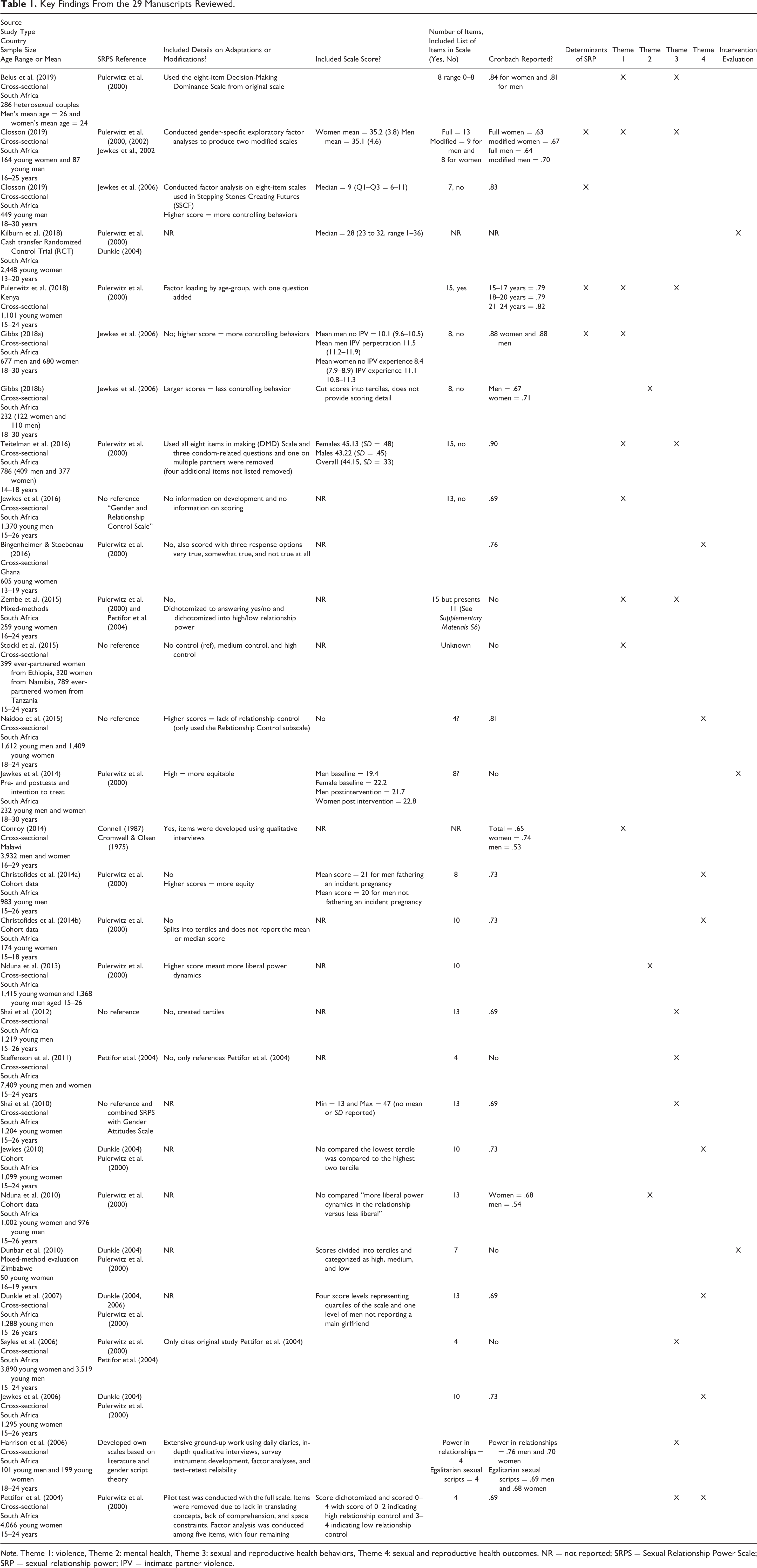
Note. Theme 1: violence, Theme 2: mental health, Theme 3: sexual and reproductive health behaviors, Theme 4: sexual and reproductive health outcomes. NR = not reported; SRPS = Sexual Relationship Power Scale; SRP = sexual relationship power; IPV = intimate partner violence.
Associations Between Measures of SRP Equity and HIV Risk Factors Among Young Men and Women
SRP equity, intimate partner violence, rape, and relationship dynamics (n = 9/29)
Nine of the 29 papers included analyses examining associations between SRP equity and experiences and/or perpetration of IPV (n = 7), nonpartner rape (n = 1), and relationship dynamics (n = 2). Of the seven studies including young women, six found that greater SRP equity was associated with reduced odds of experiencing different forms of IPV (including sexual, physical, and emotional; Belus et al., 2019; Closson, Dietrich, et al., 2019; Conroy et al., 2016; Gibbs, Jewkes, et al., 2018; Pulerwitz et al., 2018; Stockl et al., 2015). Among four studies including young men, two found that higher SRP equity was associated with reduced odds of perpetrating IPV (Conroy, 2014; Gibbs, Jewkes, et al., 2018) and two found no association between SRP equity and perpetration of IPV (Belus et al., 2019; Closson, Dietrich, et al., 2019). Only one study examined the complexities within relationship dynamics and the influence of SRP equity on intimacy and trust in relationships, indicating that greater SRP equity among young women was associated with lower emotional investment in the relationship and reduced likelihood of partner provisions of auxiliary financial support (Bingenheimer & Stoebenau, 2016).
Mental health (n = 5/29)
Five studies looked at associations between SRP equity and mental health. In three studies including young women, there were no associations between SRP equity and depression in adjusted models (Gibbs, Govender, & Jewkes, 2018; Nduna et al., 2010, 2013). Among three studies with young men, more SRP equity was associated with increased depressive symptoms in one study (Gibbs, Govender, & Jewkes, 2018) but no associations were found in the other two (Nduna et al., 2010, 2013).
SRP equity and sexual behavior/attitudes toward sexual behavior (n = 14/29)
Fourteen papers examined whether SRP was associated with sexual behaviors (41.4%), including condom use (n = 8), number of sexual partners (n = 4), frequency of sexual activity (n = 2), transactional sex (n = 2), and condom use self-efficacy (n = 1). In five studies with young women, three found that greater SRP equity was associated with increased condom use (Pettifor et al., 2004; Shai et al., 2010; Teitelman et al., 2016). In contrast, one found that higher SRP equity was associated with inconsistent condom use (Harrison et al., 2006) and one found no association (Closson, Dietrich, et al., 2019). Four studies examining condom use practices included young men, of which two found higher SRP equity was associated with increased condom use (Harrison et al., 2006; Shai et al., 2012). In contrast, one found greater SRP equity to be associated with reduced condom use (Teitelman et al., 2016) and one found no association (Closson, Dietrich, et al., 2019). Finally, in one study examining the association between SRP equity and condom use self-efficacy (one’s confidence in their ability to use condoms), the authors found no significant association in adjusted models for either young men or young women (Sayles et al., 2006).
One study among young women found higher SRP equity was associated with reduced frequency of any sexual encounters (Jewkes et al., 2006). In four studies looking at concurrency and number of recent sexual partners, two studies found associations between more SRP equity and reduced number of sexual partners for both young women and men (Harrison et al., 2006; Teitelman et al., 2016) and two found no association between SRP equity and relationship concurrency or multiple partners among either young women or men (Belus et al., 2019; Steffenson et al., 2011).
SRP equity was also associated with different types of relationships (n = 3). Among the two studies that only included women, one study found that young women had higher SRP equity within relationships in which they were not having sex (Dunbar et al., 2010) and one study found that greater SRP equity was associated with reduced likelihood of engaging in transactional sex (Jewkes et al., 2006). Among one study with young men, higher SRP equity was associated with reduced odds of engaging in transactional sex with main partner (Dunkle et al., 2007).
SRP equity and sexual and reproductive health outcomes (n = 6/29)
Six of the studies (20.7%) included in this review examined associations between SRP equity and sexual and reproductive health outcomes (HIV and pregnancy). Among young women, one study found that low SRP equity was associated with HIV incidence over 24 months of follow-up and estimated that the population attributable fraction of HIV acquisition due to low SRP was 14% (Jewkes et al., 2010). In contrast, two cross-sectional studies found no association between SRP equity and HIV prevalence among young women (Jewkes et al., 2006; Naidoo et al., 2015).
Three studies examined associations between SRP equity and pregnancy. Among two studies conducted with young women, one found that young women with lower SRP equity had a higher likelihood of becoming pregnant (Bingenheimer & Stoebenau, 2016), while one found that low SRP equity was found not to be associated with pregnancy incidence (Christofides et al., 2014a). In one study with young men, higher SRP equity was associated with reduced likelihood of fathering an incident pregnancy (Christofides et al., 2014b).
Interventions and SRPS (n = 3/29)
Three manuscripts were evaluations of different interventions aimed at improving sexual health behaviors (10.3%). One, the SHAZ! project, was specific to young women and focused mainly on HIV incidence reduction (Dunbar et al., 2010). The Stepping Stones and Creating Futures intervention included young men and women and was interested in improving HIV outcomes as well as experiences and perpetration of IPV (Jewkes et al., 2014). The HIV Prevention Trials Network (HPTN) 068 study was a conditional cash transfer program aimed at improving HIV incidence among impoverished young women of schooling age.
The SHAZ! pilot intervention found significant bivariate improvements in SRP equity 6 months following the intervention pilot among 49 young women (Dunbar et al., 2010). Using a quasi-experimental design, the Stepping Stones and Creating Futures proof of concept study found that young men had higher SRP equity scores post intervention; however, the intervention did not improve SRP equity for young women (Jewkes et al., 2014). HPTN 068 did not improve SRP equity for young women (Kilburn et al., 2018).
Quality of Papers
Supplementary Material S2 presents combined results from the independent quality assessment conducted by KC and JN. Overall, the quality of papers was fair (Voss & Rehfuess, 2013). All papers presented clear objectives and accurately defined their study population. However, some papers lacked a clear exclusion criterion for their specific analysis and many had limitations of generalizability. The majority of papers adequately presented and described the measures used within their study. However, few studies provided detailed reporting of the SRPS, the validation process, and how scale items were worded (Conroy, 2014; Harrison et al., 2006; Pulerwitz et al., 2018). Many of the studies included in the review were sub-studies of larger interventions or research programs, as such some of the descriptions of the study as a whole were minimal, referencing the original protocol or trial paper. Also, many of the papers included did not have a strong theoretical framework and were interested in more exploratory analyses examining factors related to an outcome. As such, many of these papers did not meet the quality criteria for “key confounding variables measured and adjusted for” and made determining whether exposure and outcome measures were clearly defined difficult. Also, given that most of the studies included in the review were cross-sectional, it was challenging to determine the criteria for temporality (if the exposure was measured before the outcome).
Discussion (Recommendations)
We reviewed 29 papers (from 15 studies) that met our inclusion criteria. Within sub-Saharan African youth studies, the vast majority of papers utilizing measures of SRP equity were among South African youth and were drawn from two studies. Results indicate that there is a wide variety of ways in which the SRPS has been adapted, modified, and used within the reviewed papers. Despite the diverse ways in which SRP equity has been measured, none of the reviewed papers included measures of SRP equity outside of heterosexual relationships. Our review demonstrates that among young people, measures of SRP inequity were associated with experiences and perpetration of IPV as well as numerous determinants of HIV acquisition, including condom use, highlighting potential pathways from SRP inequity to HIV risk of young women and men living in sub-Saharan Africa. Based on our review, we have a number of recommendations for future research, practice, and policies (Table 2).
Recommendations and Implications for Research, Practice, and Policy.

Research
We found great variation in SRP measures and limited reporting of adaptations and modifications to the original SRPS. As such, it is difficult to determine and compare levels of SRP equity across study settings. Adaptations to quantitative scales in survey research are necessary for constructs to be contextual; however, these adaptations create challenges for the comparability of findings across studies. This is particularly true when there is a lack of information regarding how and why adaptations and modifications to existing measures were done.
Results from our review indicate few consistencies across papers in the number of items used. Reliability of measures varied widely and reviewed papers presented limited detail into the adaptation and/or modification processes of such scales. Given that the original Pulerwitz et al. (2000) scale was developed and validated among a sample of 833 mainly Latina women in the United States, there is a need for researchers to describe how they have adapted the SRPS to ensure that the items asked are accurately measuring the construct of SRP equity for young men and women in sub-Saharan African contexts. Also, detailed descriptions of the items used, removed, and modified should be reported in order to better understand which items function best within a diverse range of contexts. It is possible, that due to journal-specific word count requirement, authors may be limited in how much detail they can provide regarding the scales included in their analyses. Given the limited information regarding adaptation processes in the literature, our study team is currently investigating young men and women’s perceptions of items used within the South African adaptation of the SRPS, with South African youth participating in a youth-engaged cohort study (Closson, Dietrich, et al., 2019). This research will help to ensure that young people accurately understand the items asked, identify and address any potential issues in translation, and if there are missing aspects of SRP equity that are currently not being asked.
Only two of the studies in the review used the original scoring recommendation of dividing total scale score by the number of items (Closson, Dietrich, et al., 2019; Pulerwitz et al., 2018). The majority of papers in this review thus have differential scores that are not comparable across studies. Future research using the SRPS should consider scoring the SRPS using the original authors recommendations and depending on the distribution of the data, potentially creating terciles in order to compare levels of SRP equity across studies and populations.
Associations between SRP equity scores and sexual behavior and condom use is dependent on which items were included in the scale. Although Pulerwitz recommends that questions around condom use be removed when assessing the relationship between SRP equity and condom use, at least one study that found an association between SRP equity and condom use did not remove this item (Pettifor et al., 2004). Given that not all papers included the full list of items used, we are unable to determine whether some of the studies’ associations were conflated or not. Despite this potential bias in results, there were relatively consistent results showing associations between SRP equity and increased condom use among young women (Pettifor et al., 2004; Shai et al., 2010; Teitelman et al., 2016). For men, however, results were inconsistent, finding that SRP equity was associated with reduced likelihood of condom use among men in one study (Teitelman et al., 2016) and increased condom use in two others (Harrison et al., 2006; Shai et al., 2012). This may partially be explained by the way in which the scale assessed SRP equity for young men. For example, Teitelman’s (2016) findings highlights that men in relationships where they perceive their partner to be controlling are less likely to use condoms, and those reporting they themselves are controlling were also less likely to use condoms. These results may be due to multiple interacting factors beyond SRP equity influencing condom use for young men (Chirinda & Peltzer, 2014; Manyaapelo et al., 2017; Mehra et al., 2014). Associations between SRP equity and sexual partners were more consistent across genders, where studies found that young women and young men with higher SRP equity were more likely to report fewer partners (Harrison et al., 2006; Teitelman et al., 2016). All studies around sexual behavior were cross-sectional, highlighting a need to examine time-dependent associations between SRP equity and HIV-risk behavior.
Power dynamics within youth’s sexual relationships vary widely depending on the type of relationship. One major limitation of the SRPS for use among youth is that it primarily only asks the participant to discuss the level of power inequity occurring within their primary relationships. Prior studies on relationships among young people in sub-Saharan Africa have demonstrated that it is common for both young men and women to have multiple concurrent partnerships (Crankshaw et al., 2016; Maughan-Brown et al., 2014; Steffenson et al., 2011). Moreover, many of the SRPS items are heteronormative in nature. Given the shifting relationship dynamics of young people, it is challenging to assess whether the partner that youth are referring to when answering the SRPS is the same partner perpetrating IPV or passing HIV. Also, the scale does not allow for use within nonheterosexual relationships. If many sexual acts are occurring outside of young men and women’s perceived primary partners, current measures of SRP equity will not be able to capture potential SRP inequities within these relationships. For example, Harrison et al. (2006) found that men who were more dominant were less likely to use condoms in their nonprimary relationships. Future research should consider asking questions around relationship control and decision-making power for the multiple relationships that young men and women may have, including within nonheterosexual relationships.
Practice
No study found any significant association between mental health and SRP equity among young women after adjusting for potential confounders, which requires further investigation due to the adverse traumatic effects associated with IPV (Cavanaugh et al., 2010; Fulu et al., 2013; Hansrod et al., 2015). It is likely that mental health outcomes may be more closely linked to experiences of IPV, which is a common consequence of low SRP equity for young women (Kiene et al., 2017; Tsai et al., 2016). Among young men, one study did find that young men with greater SRP equity had less depressive symptoms (Gibbs, Govender, & Jewkes, 2018). However, this analysis was cross-sectional, and given previous longitudinal studies that have found no association between SRP equity and depression among men (Nduna et al., 2010), future research is needed to establish the temporality and directionality of the association. High levels of unemployment and poverty among young men growing up in South Africa, and other sub-Saharan African nations impact young men’s mental health and contribute to gender role strain, which has been associated with increased controlling behaviors as well as perpetration of IPV (Closson, Hatcher, et al., 2019; Gottert et al., 2016, 2018). Despite the important role mental health plays in terms of SRP equity and perpetration of violence, in many sub-Saharan African settings, there exists few resources and support for mental health. With a growing body of literature on masculinities and how gender role strain may result in young men forming harmful masculinities resulting in behaviors that impact the health and well-being of their partners (Gibbs et al., 2014; Jewkes et al., 2011a, 2011b; Morrell et al., 2013), increased efforts are being rolled out to attempt to provide opportunities for young men to address gender role stressors, including restrictive emotionality, through men’s programs aimed at redressing harmful formations of masculinity (Peacock & Barker, 2014; Peacock & Levack, 2004; Seidler, 2007).
Although papers related to health impacts, including HIV acquisition and pregnancy incidence, were more likely to use cohort (time series) data, only a small number of papers included in the review looked at these outcomes (Christofides et al., 2014a, 2014b; Jewkes et al., 2010). Jewkes and colleagues’ (2010) seminal paper found that low SRP equity was associated with HIV incidence (Jewkes et al., 2010). Using data from the same intervention, Christofides and colleagues (2014) found no association between low SRP equity and subsequent incidence of unwanted pregnancy among young women; however, there was an association between experiencing physical IPV and incidence of unwanted pregnancy at 12-month follow up (Christofides et al., 2014a).
Addressing gender inequities and experiences of violence toward women are global health priorities. In our review, a number of papers showed associations between having low SRP equity and experiencing IPV among young women (Belus et al., 2019; Closson, Dietrich, et al., 2019; Conroy, 2014; Pulerwitz et al., 2018; Stockl et al., 2015) and perpetrating IPV among young men (Gibbs, Jewkes, et al., 2018). However, SRP equity may not be directly associated with other health outcomes such as depression or pregnancy that have been associated with increased experiences of IPV (Christofides et al., 2014b, 2014; Nduna et al., 2013). Previous evaluations of gender transformative interventions, such as Stepping Stones, have found some evidence that educational training and workshops centered on shifting harmful gender norms had reduced the perpetration of IPV among young men; however, there was no documented improvement in SRP equity (Jewkes et al., 2008). Moreover, interventions providing conditional cash transfers may function to reduce IPV through mediating pathways of reduced sexual partners and delaying sexual debut, however, not through SRP equity (Kilburn et al., 2018). Given the strong association between SRP equity and IPV, these findings appear to be counterintuitive and may be the result of SRP equity measures not accurately capturing experiences of power imbalances in sub-Saharan African youth’s relationships. An increased understanding of how SRP manifests within the relationships of young people can inform violence and mental health practice, specifically treatment and prevention strategies.
Policy
In order for effective policies to be implemented, there is a need to improve the quality and standards of research in the area of gender equity and VAWG globally (Jewkes, 2010). At present, little is known regarding pathways from SRP equity to IPV and HIV. Gibbs et al. (2018) was the only reviewed paper that used structural equation modeling to examine the multiple intersecting pathways that are potentially driving low SRP equity in relationships and then in turn how SRP inequities result in negative outcomes, such as perpetrating IPV (Gibbs, Jewkes, et al., 2018). Identifying potential drivers of SRP inequities is key for informing interventions and policies which may help to mitigate risk of experiencing SRP inequities. Given the complexity in the pathways from SRP inequity to HIV and other sexual and mental health outcomes, future research is needed to assess gendered pathways between SRP equity and HIV. Moreover, there is a gap in understanding the temporal relationships between SRP equity and sexual and reproductive health outcomes, as well as mental health.
The majority of papers included in this review rely on the assumption that young women with more SRP equity will in turn have increased agency to negotiate safe sex, including condom use. The results presented herein should take into consideration that some young women with high decision-making power may choose to not negotiate condom use for multiple reasons beyond having limited agency in their relationships, such as simply not wanting to use a condom or that condomless sex is associated with increased feelings of emotional intimacy (Gebhardt et al., 2003). Complexities in intimacy, sexual pleasure, power, and control within young people’s relationships may indicate why one study found that increased SRP equity was associated with reduced condom use among young women (Harrison et al., 2006). Furthermore, the studies presented here assume that sex is mostly negotiated and consensual and yet evidence suggests otherwise (Nduna, 2020). Although HIV-prevention studies have not delineated transmissions that occur from consensual versus nonconsensual sex, the risk inherent in sexual violence should always be borne in mind when designing HIV-prevention interventions for sub-Saharan Africa. With the roll out of diverse options for HIV prevention including pre-exposure prophylaxis, future quantitative and qualitative studies should examine condom use preference that move beyond the assumption that all women with improved sexual agency will increase condom negotiation and use.
Limitations
Due to the varied ways in which SRP equity was measured, including discrepancies in the number of items used, we were unable to conduct a meta-analysis. Also, given that many of the papers included in the review were both exploratory and cross-sectional in nature, we were unable to determine some dimensions of the quality, direction of effect, and temporality in the results presented within the reviewed papers. This review specifically was interested in exploring the use of the SRPS within quantitative youth-specific studies in sub-Saharan Africa. There are a number of other studies which have used the SRPS with older cohorts that include young men and women, and studies that have qualitatively explored the role of SRP equity within the sexual lives of young men and women growing up in sub-Saharan Africa; however, due to our inclusion criteria, they were not included in this review. The exclusion of these studies may have resulted in missed opportunities for examining the use of the SRPS within sub-Saharan African contexts.
Conclusion
Results from this review indicate that measures of SRP have been previously associated with a range of pathways to HIV risk; however, the evidence remains mixed and there exists a paucity of research examining the validity and reliability of SRP equity measures among youth in sub-Saharan African contexts. To successfully improve the overlapping epidemics of gender-based violence and HIV, we need valid and reliable evidence that reflects the relationships of youth growing up in globally diverse contexts.
Supplemental Material
Supplemental Material, sj-pdf-1-tva-10.1177_1524838020979676 - Gender, Power, and Health: Measuring and Assessing Sexual Relationship Power Equity Among Young Sub-Saharan African Women and Men, a Systematic Review
Supplemental Material, sj-pdf-1-tva-10.1177_1524838020979676 for Gender, Power, and Health: Measuring and Assessing Sexual Relationship Power Equity Among Young Sub-Saharan African Women and Men, a Systematic Review by Kalysha Closson, Jane Ndungu, Mags Beksinska, Gina Ogilvie, Janan J Dietrich, Anne Gadermann, Andrew Gibbs, Mzikazi Nduna, Jenni Smit, Glenda Gray and Angela Kaida in Trauma, Violence, & Abuse
Footnotes
Declaration of Conflicting Interests
The author(s) declared no potential conflicts of interest with respect to the research, authorship, and/or publication of this article.
Funding
The author(s) received financial support for the research, authorship, and/or publication of this article: KC is supported by CIHR Vanier Canadian Scholars Program. The work reported herein for JJD was made possible through funding by the South African Medical Research Council through its Division of Research Capacity Development under the SAMRC Postdoctoral Programme through funding received from the South African National Treasury as well as the CIPHER GROWING THE LEADERS OF TOMORROW grant from the International AIDS Society.

Supplemental Material
The supplemental material for this article is available online.
References
Supplementary Material
Please find the following supplemental material available below.
For Open Access articles published under a Creative Commons License, all supplemental material carries the same license as the article it is associated with.
For non-Open Access articles published, all supplemental material carries a non-exclusive license, and permission requests for re-use of supplemental material or any part of supplemental material shall be sent directly to the copyright owner as specified in the copyright notice associated with the article.
