



Abstract
Traditionally, the literature has sought to understand the impact of racial minority status and trauma as it relates to interpersonal violence, domestic violence, and sexual assault. What has not been as extensively reviewed and summarized is how racially or ethnically motivated hate crimes impact the mental health of minorities—particularly Latinx/Hispanic groups. This review aims to summarize the current body of literature on the intersection of race-motivated hate crime and trauma responses within Latinx community. To do so, the theoretical foundation for this inquiry will build from a race-based trauma perspective. Specifically, this review connects existing frameworks for race and trauma and integrates literature that examines Latinx or Hispanic populations that have experienced discrimination, bias, or hate crime as a result of their identity or perceived identity. The importance of situating bias or hate events within the trauma literature stems from a lack of overall formal evaluation of these events, and how these occurrences are historically overlooked as a traumatic stressor. The findings of this review suggest that (1) experiencing racially motivated victimization can cause adverse mental and physical health outcomes in Latinxs and (2) currently, there is only one study that has examined the impact of hate crime on Latinxs in the United States. This leaves the field with unanswered questions about the impact of hate crime victimization among Latinxs, which is an ever-growing area in need of attention.
Hate Crime and Latinxs—The New Reality?
The impact of racism and discrimination against racial and ethnic minorities is a pervasive narrative throughout U.S. history. Increasingly, the culmination of race-based incidents and victimization has directed national dialogue to the perpetration of hate crimes against vulnerable and marginalized populations. In recent years, the upsurge in rates of hate crime perpetration has been particularly directed toward Latinx 1 and Hispanic immigrants and communities (Martinez, 2014; U.S. Department of Justice, 2017b). From a Latinx man having acid thrown in his face and being told to “go back to his country” outside a Mexican restaurant (Ismay, 2019) to viral videos of Latinx families being harassed with racially loaded insults, being called animals, drug dealers, and rapists, one woman saying “even the president of the United States says you’re a rapist” (Selk, 2018), these incidents can be highly distressing and traumatic. As with many other forms of victimization, hate crime has been shown to produce adverse mental health outcomes like posttraumatic stress disorder (PTSD) and other trauma symptomology (Abu-Ras & Suarez, 2009; Holmes et al., 2016; Polanco-Roman et al., 2016). Despite the diverse bodies of literature in the areas of race, hate crime, and complex trauma, limited empirical work attempts to unify such processes together in the context of Latinx’s experiences. To meaningfully merge these concepts together, this review utilizes a race-based trauma framework in order to examine how the racial implications of hate crime victimization, and its respective harm, relate to victims and their experience and highlights the implications for treatment of such trauma among the Latinx community.
Scope of the Issue
The legal definition of a hate crime is a criminal act driven by an offender’s bias against an ethnicity, national origin, race, religion, sexual orientation, gender and gender expression, or disability (U.S. Department of Justice, 2017a). From what has been established about hate crimes, often referred to as bias crimes, they are usually perpetrated by individuals who are motivated by bigotry (Levin & McDevitt, 1993; McDevitt et al., 2002), can involve assault, threats of harm, harassment, and are more prevalent toward racial minorities than religious or LGBTQIA+ groups (Masucci & Langton, 2017). Despite the social and political attention regarding hate crime, bias-motivated criminal incidents are vastly underreported in part due to the personal nature of the offenses, as well as a persistent belief among minority communities that nothing will be done by officials to respond to them (Davis & Henderson, 2003). For Latinxs, this is further evidenced by comparing the past year rate of hate crime reporting from the uniform crime report (approximately .001% in 2017) versus self-reported figures of almost 10% (Cuevas et al., 2019). Both political and social interest groups have worked to respond to such incidents through the enactment of hate crime legislation and enhanced penalties as a way to stand with marginalized or vulnerable communities. This is particularly true for racial minorities who are at heightened risk for being the target of a hate crime and for whom these acts can put them at increased likelihood of revictimization and trauma. Evidence regarding bias- or hate-motivated crimes established across disciplines has shown that there is an intrinsically personal nature of such offenses. In particular, being the target of a crime due to actual or perceived membership in a particular group or community creates a unique perception of danger, helplessness, and emotional trauma as compared to other types of victimization (Lannert, 2015).
Nationally, official reporting of hate crime perpetration has increased 18.5% over the past few years (2015–2017; U.S. Department of Justice, 2017b). While it is clear that hate crime prevalence is on the rise overall, the increase is disproportionately higher for Latinx populations, rising 30.0% over that same time period (U.S. Department of Justice, 2017b). Researchers and policy makers have responded to these trends by pushing for empirical assessments regarding how racially or ethnicity-based victimization relates to traumatization and adverse mental health outcomes. The negative impacts of both discrimination and racism on minority populations have been reviewed extensively (Alvarez et al., 2016; Broman et al., 2000; Paradies et al., 2015), yet how these effects manifest within the context of hate crime has not been examined as thoroughly. Since the enactment of Matthew Shepard and James Byrd Jr. Hate Crime Prevention Act (2009), there has been renewed debate regarding hate and bias crime events, and how these crimes might differ from non-hate-motivated incidents on those who experience them. Despite this national discussion, the resulting victimization and trauma felt by members of a targeted group, particularly Latinx populations, is understudied.
Consequences of Hate Crime Perpetration
Related to the historical movement for implementing hate crime legislation is the role of racial inequality at both the microlevel and macrolevel in the United States. As racial categories were created with the intention of perpetuating race-based slavery and to maintain economic and social power structures, the U.S. racial divide remains an inherently violent social schema with lasting historical legacies. Violence perpetrated on the basis of race has long historical precedent (Carter, 2007), but the term hate crime is a modern conceptualization of this violence, borne out of victim rights and advocacy movements including the civil and women’s rights movements, advancement of LGBTQIA+ equality, and the efforts to reform the criminal justice system (McPhail, 2002). Hate crimes are considered to be an encapsulation of this continuing violence, and within a trauma framework are rooted within historical trauma, resulting in damaging effects on the individuals and communities who experience such events.
These enduring inequalities have culminated in particular difficulties for racial minorities, which are often overlooked in practical applications, such as psychological evaluations, as a particular risk for adverse mental health and stress outcomes. Such outcomes are the product of the emotional, psychological, and physical effects of racism, racially motivated discrimination, and bias or hate events. The definition of racism has undergone many variations and conceptualizations (Carter, 2007), but for the purposes of this review is defined in part as “the transformation of racial prejudice into individual racism through the use of power directed against racial group(s) and their members, who are defined as inferior by individuals, institutional members, and leaders” (Carter, 2007, p. 24; Jones & Carter, 1996). For the purpose of this review, a race-based trauma framework is utilized and is defined as a racially motivated interpersonal severe stressor that causes physical harm, threatens one’s life, or is an emotional injury that is motivated by hate, fear of a person, or group of people as a result of their race (Bryant-Davis, 2007). While there are many additional definitions that capture important aspects of racism and ethno-racial trauma presented throughout race scholarship (Bryant-Davis, 2007; Chavez-Duenas et al., 2019; Essed, 1991; D. Williams & Williams-Morris, 2000), this framework allows for the situation of racially motivated hate events and the subsequent adverse mental health outcomes for racial minorities.
In racially charged incidents such as bias- or hate-motivated events, racial identity becomes tied to the stress of being discriminated against. Race scholars, psychologists, and social scientists have examined the role of race and stress, particularly among African American populations, which has grounded the majority of the race-based or ethno-racial stress literature (Paradies et al., 2015). A key component currently missing within practices includes evaluating how racially based stressors cause harm or trauma, which currently is not recognized in formal psychological or psychiatric diagnostic criteria or symptomology (Pai et al., 2017; Prilleltensky, 1995). In recent years, scholars have addressed this gap by beginning to situate the experiences of racism among ethnic minorities within the PTSD diagnostic criteria, while noting that racial trauma is potentially unrecognized among practitioners and clinicians due to lack of understanding, potential unease discussing race, or a lack of competent assessment tools (M. T. Williams et al., 2018). This is especially true in areas where there are potential cultural and language barriers between racial minorities and mental health providers, as is the case in many Latinx immigrants and communities. When individuals experience repeated or profound psychological distress, the occurrence(s) can culminate into traumatogenic symptoms. Generalized stress is a response to any event or situation that is considered negative or undesirable that results in an emotional, physical, and behavioral response and plays a central role in a racial-trauma framework (Carter, 2007). This process becomes exacerbated in instances where “emotionally painful events that are sudden, negative, and out of one’s control and that result in primary symptom clusters that include avoidance, arousal, and intrusion as well as other reactions,” thereby producing traumatic stress (Carlson, 1997). There is therefore a need to recognize and evaluate race-based trauma, particularly for a racial group that is seeing increased incidents of bias and hate crimes nationally such as Latinx populations.
Latinx Populations—A Need for Attention
To date, few studies have examined the stress and related trauma associated with racially motivated instances of bias, and until very recently none on hate crime focusing on Latinx communities (Cuevas et al., 2019). The studies that do exist tend to look at stress related to perceived discrimination, immigration, acculturation, combat-related PTSD, and general victimization (Araújo & Borrell, 2006; Capielo Rosario et al., 2019; Ruef et al., 2000). Table 1 outlines the 14 articles that are included within this narrative review that discuss race-based issues and mental health outcomes among Latinx populations and represent important areas of scholarship that addresses particularly important intersecting arguments relevant for the framework presented here. 2 Recently, scholars have accurately demonstrated that in the context of both racialized trauma and hate crime, Latinx populations are evidently missing or underrepresented. This is in spite of the fact that this population is one of the fastest growing demographics in the country, as measured in the U.S. census in 2016, with Latinxs accounting for 18% of the nation’s population and therefore becoming the second largest racial or ethnic group behind Whites (A. Flores et al., 2019). This rise in population underscores the problematic absence of Latinxs in current empirical literature, as this demographic represents a large proportion of the U.S. population yet their experiences are underreported and understudied.
Key Findings From Reviewed Articles Incorporating Discrimination, Racism, and Hate Crime Among Latinos and Their Mental Health Outcomes.
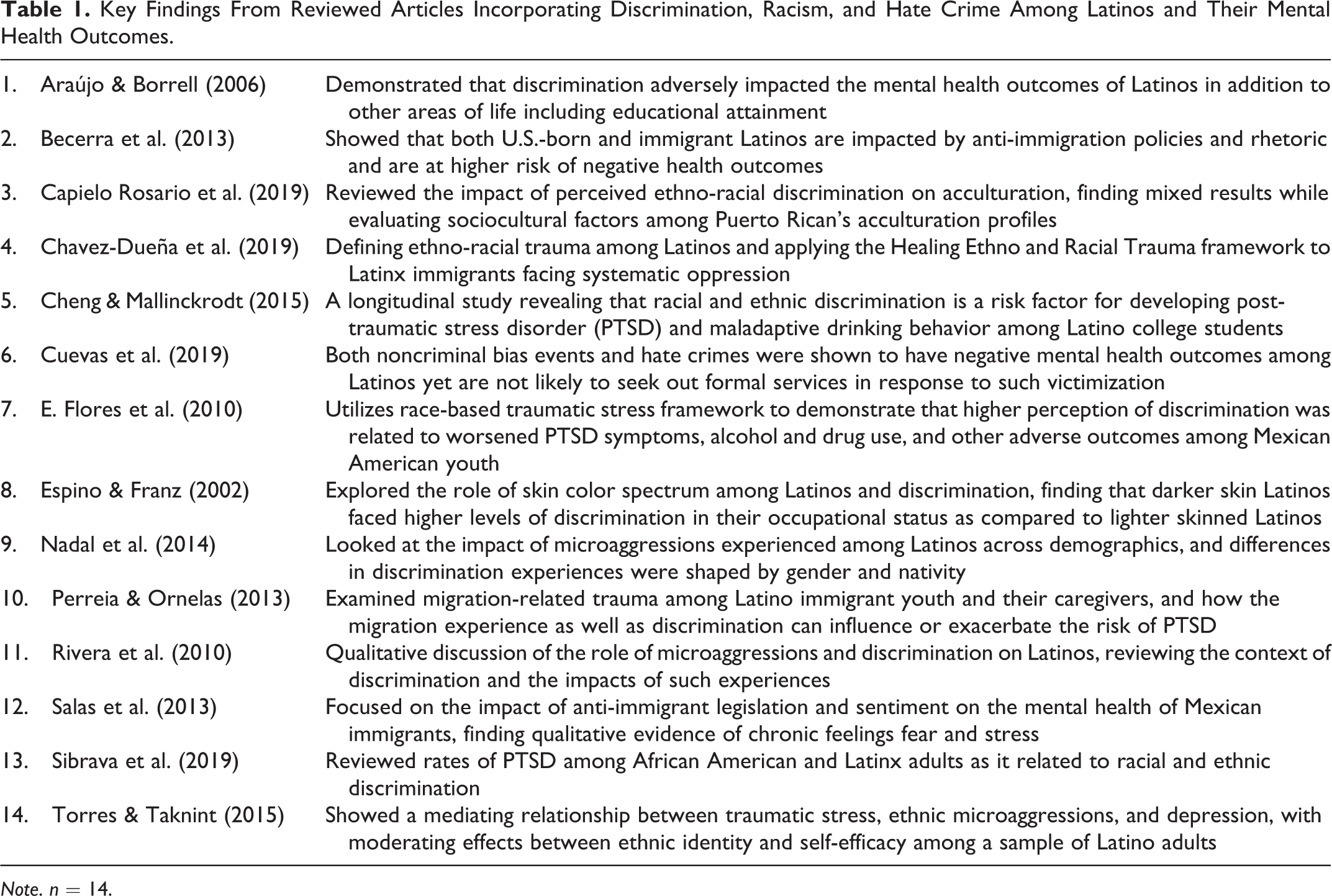
Note. n = 14.
Additionally, Latinx’s rising rates of hate crime victimization have made it imperative to situate their experiences within these contexts. It should be noted that, given the diversity that exists among the Latinx population including skin color, ethnic heritage, immigration status, documentation status, and acculturation, these situations encompass a wide variation of experiences and perspectives that are not always universal. Latinx populations have long contended with categorization schemas that have a history of treating race and ethnicity synonymously, an example can be seen through the U.S. Census Bureau denoting Hispanics/Latinos as a singular category until recently with the addition of multiple race options (Chavez-Duenas et al., 2019). This occurs despite the diversity of Latinx populations, consisting of many racial and ethnic backgrounds, which has established an erroneous pattern of denoting Latinx populations as a homogenous minority group. Scholars have noted this categorization has in many ways contributed to the generalization, stereotype, and racism experienced by these individuals (Smedley, 2018). While this review discusses Latinx experiences in this general framework to capture all relevant empirical evidence, future research should take care to note racial and ethnic heritage, culture, and identity, when examining Latinx experiences within their samples.
Identifying the sources and outcomes of race-based trauma among Latinx groups has been a growing interest for social science scholars, largely due to the recent increase in anti-immigrant rhetoric and policy shifts directed at Latinx populations (Chavez-Duenas et al., 2019). The implications for adverse mental health outcomes, particularly relating to trauma, are especially high for Latinx populations. It has been previously noted that, as compared to other racial groups, Latinx individuals are more susceptible to high levels of acculturation-related trauma (Heilemann et al., 2005), substance abuse resulting from PTSD symptoms (Cheng & Mallinckrodt, 2015), and adverse behavior among Latinx adolescents as a result of discrimination (E. Flores et al., 2010). The majority of the research that has been done has centered on the experiences of immigrants, or how the immigrant experience has differed from U.S.-born Latinxs (Perreira & Ornelas, 2013). While it can be posited that the perception and experience of immigrants and hate crime might differ from U.S.-born Latinx adults, racially motivated hate crimes are centered on ethnic and racial identity and the perception of national origin, not based on actual citizenship or immigration status (Nadal et al., 2014).
Examination of the mental health scholarship on Latinx populations has consistently demonstrated links between culture- and identity-related stress to poorer mental and physical health as compared to other immigrant and racial groups (Cuevas et al., 2012; Marshall et al., 2009). With distinct linguistic and cultural factors among Latinx communities, established avenues for victim assistance might present specific barriers regarding the accessibility for Latinxs. These can include a lack of Spanish-speaking or Latinx staff, few locations in communities where Latinxs live or work, lack of cultural awareness regarding the needs of this community, or an inability to treat individuals on a spectrum of insurance coverage, without which many Latinxs cannot benefit from such services. Such barriers may also perpetuate the belief that Latinx populations will not be comfortable receiving formal help or treatment after victimization experiences, reducing overall reported incidents of victimization and crime (Sabina et al., 2012). Studies that review Latinx samples have reliably shown that factors such as discriminatory rhetoric, legislative action, and overall fear of crime have a profound impact on short- and long-term wellness outcomes (Zeiders et al., 2019), which can be compounded for individuals who are undocumented or reside in the U.S without legal status (Becerra et al., 2013). These factors, coupled with diminished avenues to service providers and treatment, leave Latinxs particularly vulnerable to adverse health outcomes resulting from victimization.
Given that there is an additional fear of deportation depending on immigration status (Passel & Cohn, 2015) and insufficient competency regarding cultural or bilingual staff at many health centers (Cabassa et al., 2006; Rizo & Macy, 2011), there is a lack of overall formal help-seeking or trust in law enforcement after victimization among Latinx communities (Sabina et al., 2012). It is therefore reasonable to posit that hate and bias crimes are highly underreported by Latinx individuals, including reporting to police as well as seeking other formal services such as medical attention or legal assistance (Bridges et al., 2018; Dunbar, 2006). While generally members of a stigmatized or targeted group are less likely to report victimization and more likely to have adverse mental health outcomes, this is particularly true for Latinx populations who have historically been treated as perpetual foreigners or second-class citizens as well as more likely to experience daily microaggressions in public and the workplace (Nadal et al., 2014; Rivera et al., 2010; Torres & Taknint, 2015). Little scholarly work has been dedicated to Latinx populations that are U.S. born or generations that have more fully assimilated into American society. Research looking at these groups has examined the relationship between enculturation, immigration, and crime (Alvarez-Riveraet al., 2014) but not on acculturation, American identity, and victimization. This is important to note because these events affect people who are very assimilated but are targeted based on appearance or ethnicity. It is an erroneous assumption that these events are experienced primarily by immigrants, as these events are happening to U.S.-born individuals who identify or are perceived to be Latinx regardless of immigration status (Cuevas et al., 2019). Particularly in the context of hate crime, when “othering” can be one of the significant outcomes of such an event, additional trauma can be placed on individuals who are American but are treated as though they are not (Chavez-Duenas et al., 2019).
Especially pertinent for Latinxs that are experiencing victimization is the evidence that this population reports higher levels of stigma and conceal their experiences after experiencing various forms of victimization (Mendoza et al., 2015) in addition to higher rates of avoidance related to seeking mental health services (Cha et al., 2019). At the individual level, victimization experiences are deeply personal yet can have significant social and cultural implications. In instances such as interpersonal violence, research has demonstrated that Latina women are less likely than their White counterparts to seek help after experiencing partner violence (Sabina et al., 2014; West et al., 2005) as well as suppressed reporting of rape or sexual assault (Rennison, 2007). This is compared to Latino men who have been reported to be at higher risk of violent victimization yet little research has been dedicated to understanding how Latino men address victimization (Lauritsen & White, 2001). Even less scholarship exists that looks specifically at transgender or nonbinary Latinx adults (James & Salcedo, 2017). While there is high reluctance to engage in formal help-seeking behavior among Latinxs after experiencing victimization, Ingram (2007) demonstrated that Latinx groups are far more likely to rely on familial support networks after experiencing interpersonal violence as compared to non-Latinx groups (Sabina et al., 2014). This resistance to formal assistance is then compounded when victimization centers on racial identity, as individuals who already feel stigmatized believe such incidents reflect poorly not just on themselves but on their community. The role of collective identity in these instances, or an individual’s evaluation of membership in a group that is perceived to share characteristics, can weigh heavily on the related social expectations of behavior following victimization (Ashmore et al., 2004; Lannert, 2015). For Latinxs, there may also be an increased hesitation to seek external help due to cultural and familial values that emphasize reliance on interpersonal and community support (Cuevas et al., 2014; Sanders-Phillips et al., 1995).
Being the victim of bias- or hate-motivated crime involves both personal trauma and the feeling of being targeted due to the membership of a larger racial group. Studies that review Latinx experiences regarding bias incidents have shown that racially motivated discrimination culminates in negative consequences in overall health, feelings of safety or vulnerability, and everyday functioning (Berry & Sabatier, 2010; Chavez-Duenas et al., 2019; Cuevas et al., 2019; Salas et al., 2013). Hate crime incidents represent the most severe and at times life-threatening form of racially motivated victimization, yet to date, there is very limited research that highlights the engagement with official or formal services by Latinx individuals after they have experienced a bias or hate crime (Cuevas et al., 2019). Within the race-based trauma frame, these victimizations meet the proposed criteria for events that are racially based, are emotionally painful, sudden, and result in adverse psychological symptomology that includes avoidance, arousal, and intrusion. Literature in the victimization domain has been limited to racial discrimination that would not be considered rising to the standard of a hate crime, which necessitates the expansion of empirical scrutiny to include Latinx populations that experience trauma from hate crime perpetration in addition to other noncriminal bias events.
Race-Based Trauma, Discrimination, and Hate Crime
Many scholars have sought to understand and deconstruct racism into specific components that incur psychological distress or trauma responses (Bryant-Davis & Ocampo, 2005). The literature on racism and race-based stress has shown that generally, people of color encounter these stressors in micro (individual) and macro (institutional and cultural) contexts (Elligan & Utsey, 1999) and that these stressors can impact psychological and physical health (Carter et al., 2005; Harrell, 2000). While both are derived from structural racism, microaggressions are the instances of bias that occur more daily (i.e., noncriminal bias events) and can include microassaults, microinsults, and microinvalidations related to race, such as being called a racial slur or demeaned on the bases of race or ethnicity (Osanloo et al., 2016). Macroaggressions occur at the structural level and inflict harm upon racial minorities through purposeful exclusion through both institutional actions and omissions in policy such as racialized immigration enforcement (Osanloo et al., 2016). Hate crimes represent an interesting middle ground, as they can occur at an individual level but are meant to be a message to a larger community and are perpetrated to continue the existing social, economic, and structural hierarchy. All such instances of race-based hostility can engender enduring psychological harm. Conspicuously missing from historical perspectives within stressful life event literature is the role of racial identity, racial stress, and the role of racism in the context of trauma. As such, the role of racial identity and trauma is posited to be invariably intertwined in experiences of discrimination and hate crime, yet have not been explored in this framework. Current literature on race, racism, and discrimination is examined to provide an important overview regarding the intersection of racial identity and victimization and the implications for mental health. These findings speak to the underlying mechanisms that exist in the context of hate crime, and how severe victimization relating to racial identity can impact Latinx’s health, and inform how they view their victimization experience.
There is a large body of theoretical and empirical research that has been dedicated to understanding the role of victimization of racial minorities and their mental health outcomes. Developing from this growing literature is a diverse number of definitions that seek to understand the role of race and trauma. Particularly, three main conceptualizations have emerged: minority stress, ethno-racial trauma, and race-based trauma. Minority stress is defined as the “unique stressful experiences faced by stigmatized minorities in addition to general life stressors, including discrimination, social exclusion inequality, lack of opportunity, and threatened or actual victimization” (Lannert, 2015). Conversely, ethno-racial trauma has been defined as “individual and/or collective psychological distress and fear of danger that results from experiencing or witnessing discrimination, threats of harm, violence, and intimidation directed at ethno-racial minority groups” (Chavez-Duenas et al., 2019). For the purposes of this review, race-based trauma encapsulates these ideas and is defined as a racially motivated interpersonal severe stressor that causes physical harm, threatens one’s life, or is an emotional injury that is motivated by hate, fear of a person, or group of people as a result of their race (Bryant-Davis, 2007).
Situating race-related stress in trauma scholarship has been formulated best by Carter (2007) utilizing Carlson’s (1997) model of traumatic stress. This model outlined three elements that establish the criteria of traumatic stress, which are subjective appraisal or perception that the event is negative, the experience or event is sudden in occurrence, and that the event is deemed uncontrollable by the individual who experienced it (Carlson, 1997). While specific instances of bias or hate crime might be deemed unpredictable or out of one’s control, the existence of racism and prevalence of racist practices make the possibility of an event a more consistent source of stress. When research seeks to understand the unique stress placed on minorities, the integration of racially motivated trauma into a traumatic stress model allows for the unique intersection of life stressors that are derived from racially charged incidents and the negative mental health outcomes they produce.
Traditionally, adverse stress reactions to violence or threats were evaluated based on the diagnostic criteria for PTSD, which can include violent victimization or combat. Traumatic events were formally recognized within the psychology literature stemming from the examination of combat-related trauma. Early scholarship recognized that there was a psychological disruption attributed to the emotional toll experienced in combat and war zones in soldiers returning back from the front lines, first documented during World War I as “shell-shock” (Monson et al., 2007). The earliest scholar to integrate organic and psychological explanations of trauma, Abram Kardiner, noted some of the first physical and cognitive traumatic reaction responses that were unique to severe traumatization in veterans including sensory triggers and altered emotional state (Monson et al., 2007, p. 39). Importantly for Latinx veterans, researchers found that Latinx adults who were coming back from war zones were experiencing higher levels of PTSD than their White counterparts (Lewis-Fernández et al., 2008), which they believed highlighted the need to have more Latinx-specific examination. This has since been expanded upon and reviewed in other combat and noncombat contexts, informing the basis for the major trauma diagnosis of PTSD (Hoge et al., 2014).
Starting with the Diagnostic and Statistical Manual of Mental Disorders–Third Edition (;American Psychiatric Association, 1980)), PTSD has had an etiological requirement, meaning that an individual experienced, witnessed, or was exposed to severe event(s), which must be the cause of the traumatic reaction. PTSD is the only diagnostic criteria to include such an event to qualify (American Psychiatric Association, 2013). Additionally, such events must rise to a severe threat of death, injury, or, in its most recent iteration, sexual violence (American Psychiatric Association, 2013). These events would not necessarily include situations such as having hate speech said to an individual, despite that situation eliciting a severe and potentially traumatic reaction. It is because of these reactions that researchers have noted that such trauma can and should be extended to any event or situation that is, to the individual, experienced as shocking or unpleasant enough to elicit such symptoms (Norris, 1992). Despite this, many of the current attempts to reframe racial trauma are still based on the PTSD diagnostic criteria (Bryant-Davis & Ocampo, 2005; Roberts et al., 2011). More recently, there has been renewed evidence that for people of color the trauma caused by race-based incidents can have negative implications for physical and mental health without necessarily rising to the level of threatened harm, death, or injury (Paradies et al., 2015; Pieterse et al., 2012). For Latinx populations particularly, PSTD has been shown to be related to racial and ethnic stressors, such as discrimination, which elevates their risk of adverse health outcomes (Sibrava et al., 2019).
An important factor for understanding and contextualizing traumatic events is the number, intensity, and duration of those incidents (Carter, 2007), which is particularly significant for hate crime victimization. While racial microaggressions and discrimination can cause stress, hate crimes are considered by many to be the most severe forms of racism or discrimination and can include more severe forms of aggression or violence (Craig, 2002). Broadening the definition of what can cause trauma to include those that are racially biased or hate motivated allows practitioners to more accurately account for the adverse outcomes experienced by victims of hate crime. For example, while repeated incidents of microaggressions or racial slurs are unlikely to meet the PTSD diagnostic criteria for a traumatic event, they still hold the potential to elicit a traumatic reaction and related PTSD symptomatology (Sibrava et al., 2019).The psychological and psychiatric community now fully recognizes PTSD as both reaction to victimization and a strong predictor for future revictimization incidents (Cougle et al., 2009). The race-based trauma framework moves this diagnostic framework further by specifically addressing the role of race and ethnicity as a contributing factor in both the trauma and victim response.
What has not been extensively reviewed in the literature is the direct impact of experiencing trauma such as violence or threats on the basis of racial or ethnic identity. In previous research, the majority of studies use race as a control variable to compare across groups but not as its own unique factor for trauma outcomes. Mental health and trauma exposure deriving from racist or discriminatory incidents is limited and has historically been based on scales such as the Everyday Discrimination Scale (Gonzales et al., 2016) and self-reported exposure to racial microaggressions or racist incidents among diverse samples of minority groups (Torres & Taknint, 2015).
Absent from this dialogue is the empirical link between trauma experienced in Latinx communities as a result of events that meet the definition of a bias or hate crime. This is despite an increase in scholarly work examining the impact of hate crimes and related trauma among other marginalized communities such as LGBTQIA+ (Frost et al., 2015; Lannert, 2015), African American populations (Piatkowska et al., 2019), and religious groups such as Jewish (Graham & Boyd, 2017) and Muslim populations (Samari et al., 2018). Hate crime, like other forms of severe violence or threats, has been linked to more severe physical and psychological acute outcomes including the need for victims to seek hospitalization or medical care (Tessler et al., 2018) and risk of suicidal behavior or ideation (Cramer et al., 2018; Duncan & Hatzenbuehler, 2014). These present unique stressors that can reinforce or worsen trauma symptomology from the incident that, unresolved, can perpetuate into chronic mental health issues.
General research on victimization that includes Latinx samples and mental health variables suggests that many of the effects of trauma are similar to other groups who have experienced victimization, such rates as revictimization, general worsening of mental health, and adverse behavioral coping such as substance abuse and suicidality (Basile et al., 2004; Boney-McCoy & Finkelhor, 1995; Briere & Elliott, 2003; Briere & Jordan, 2004; Macmillan, 2001; Norris & Kaniasty, 1994). Latinxs have also been shown to present some unique trauma profiles associated with violent victimization and posttraumatic stress reactions to violence (Cuevas et al., 2010; Marshall et al., 2009; Ortega & Rosenheck, 2000). As such, it is plausible that bias- or hate-motivated violence can create a uniquely harmful impact on Latinxs, yet this is unexplained or unaccounted for in the current literature.
Latinx-Specific Considerations in Victimization Research
Due to the scarcity of research on mental health outcomes among Latinxs related to hate crime, it is more important than ever to evaluate existing programs and models to determine how they may inform future methodological evaluation. Additionally, conducting research on minority victimization rests upon valid and accurate measures that account for racial and ethnic heterogeneity and capture the unique distinctions among particular populations. These include distinct grouping of individuals in racial, ethnic, language, and national classifications that most accurately represents themselves as Latinxs, through specific sampling strategies and inclusion protocols. As victimization research with Latinx individuals is highly dependent on cultural competency, language inclusion, and understanding of the community, scholarly endeavors will remain limited until such barriers are removed, and researchers are better able to capture Latinx experiences through accurate and validated measures (Pfeffer et al., 2018). This section reviews existing research and measures that are in use to evaluate Latinx populations.
Bias and Hate Crime
While there are various victimization and trauma metrics that have been used to capture racism and discrimination, the majority of these scales were founded through evaluating the experiences of either African American or mixed-race samples (Carter, 2007). Research that has focused on the experiences of Latinx populations have pointed out that unique aspects of their victimization experiences rest on the skin tone of Latinxs, ranging from lighter to darker skinned, as well as immigrant status and language proficiency or accents (Araújo & Borrell, 2006; Espino & Franz, 2002). Importantly, researchers can capture many of these differences by avoiding ethnic lumping or the collapse of distinct groups into a larger category (Fontes, 1995). Generally, victimization studies that have been conducted have not captured these experiences with the understanding that for Afro-Latinx and Indigenous populations, racism and hate crime victimization may be different than other Latinx groups.
Attempts have been made to measure discrimination among national samples of Latinx adults, as demonstrated through the National Survey of Latinos (2018) from Pew Research Center. This survey asked a battery of questions regarding discrimination such as being called offensive names, language discrimination, remarks regarding immigration status, or being treated unfairly due to being Latinx. This dataset described that 22% of Latinxs experienced discrimination and 18% endorsed they had been criticized due to speaking Spanish in the past year (2018). Additionally, this data demonstrated Latinxs experienced discrimination events such as being told to go back to their country (17%) or being called names (14%). Information such as immigration status, phenotype, and language are critical elements of the Latinx experience that are currently absent or underdeveloped in such metrics. When national data have captured hate crime perpetration against Latinxs, such as the Federal Bureau of Investigation, their reports have shown a worrying rise in perpetration, as such incidents increasing from 552 in 2017 to 671 in 2018 (Federal Bureau of Investigation, 2018), reflecting a 21.6% increase. These incidents, independent of further context and analysis, do little to assist researchers in understanding what the motivations for these crimes are nor what the long-term implications are for those who experience them.
A recent study funded by the National Institute of Justice is the only study to date that has been conducted focused on bias victimization of Latinxs. The researchers aimed to examine the impact of incidents that would rise to the level of a hate crime as well as noncriminal bias events (i.e., racial slurs, discrimination in stores, etc.). The results show that over half of the sample had experienced any bias victimization including either a noncriminal bias event or a hate crime in their lifetime (52.9%), and more specifically, 28% of the sample reported experiencing a hate crime due to their race or ethnicity (Cuevas et al., 2019). Importantly, this study found that experiencing a bias victimization was significantly associated with adverse mental health outcomes such as depression and anxiety even while controlling for other forms of nonbias victimization (Cuevas et al., 2019). Despite these findings, this study also revealed that few Latinx victims seek help from formal institutions such as police or mental health services after such incidents (18%) and instead rely on informal networks such as family and friends (Cuevas et al., 2019). This study serves as a starting point for future work that incorporates bias victimization and hate crime into trauma-centered research among Latinxs.
Victimization
Traditional victimization surveys are limited in their ability to capture or provide information regarding bias- or hate-motivated events. Those who have attempted to, such as the National Crime Victimization Survey (NCVS), have demonstrated that victims of bias-motivated events perceived ethnicity (51%) as a primary contributing factor relating to their experience as compared to other characteristics such as religion or sexual orientation, representing a rate which is steadily increasing over time (Wilson, 2014) and the 2015 NCVS hate crime rate against Latinx was 1.3 per 1,000 surveyed, or 0.13% (Masucci & Langton, 2017). What is not clear is how this trend directly impacts various Latinx populations, with particular emphasis regarding ethnicity and victimization between Latinx subgroups. This is because the NCVS and other large data sources do not allow for the inclusion of more specific identities such as specific ethnicity or national origin within Hispanic/Latinx as well as immigrant status (Cuevaset al., 2012; Miller & Lopez, 2015). These larger national surveys may also miss subgroups with the population who may be at greater risk of being victimized in this way, such as those that are undocumented, are more transient, or are located in particular communities that put them at greater risk that are not captured within a national sample (Pfeffer et al., 2018).
Other victimization types have been more thoroughly measured among Latinx samples including interpersonal violence (Cuevas et al., 2012, 2014) or domestic violence (Gonzalez et al., 2018) and childhood trauma (Hoskins et al., 2018; Yan et al., 2010). Specifically, the examination of victimization among these populations has established that once victimized, there is a significant risk of revictimization or polyvictimization across all forms of victimization types (Cuevas et al., 2010, 2014; Sabina et al., 2016). Violence in particular has been routinely studied among Latinx subgroups, demonstrating that Latinxs are at significant risk of revictimization once they have experienced violence (Miller & Lopez, 2015). Key to understanding many of the findings presented in the violence scholarship on Latinxs are cultural factors such as immigration status and acculturative stress. Acculturation, or changes that occur from intercultural adaptations (Schwartz et al., 2010), are of particular importance when researching immigrants and first- and second-generation citizens within Latinx communities.
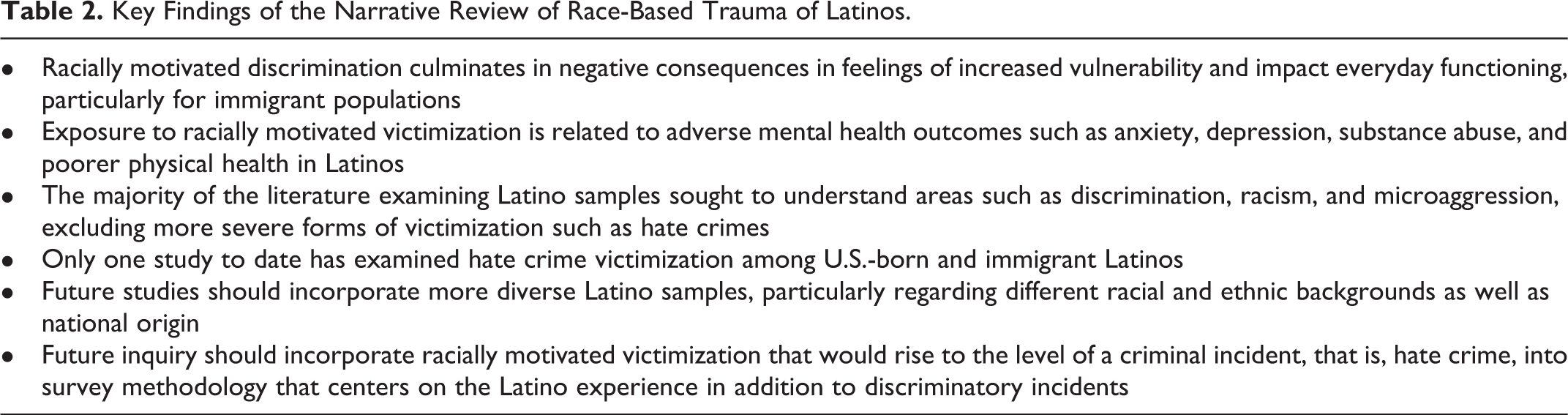
The connection between culture of origin and the dominant culture of the United States can be a complex. Particular emphasis has been placed on measuring the differences between foreign-born and native Latinxs, which in general victimization studies have shown that Latinxs that have more fully acculturated are more likely to become victimized when compared to Latinxs that reside in ethnic enclaves, or Latinx-dominated and culturally oriented spaces (Gibson & Miller, 2010), which is a finding that has been routinely found among Latinx immigrants and communities (Stowell & Martinez, 2009). Research on interpersonal violence among Latina women that had reported more acculturation was shown to have increased odds of interpersonal victimization as compared to women who embraced more culture of origin orientations, who were shown to have decreased odds in interpersonal violence (Sabina et al., 2013). What is not established is if this protective buffer extends to Latinx immigrants when faced with bias victimization, nor what other cultural factors may put these communities at risk, or protect, from such incidents. Empirical inquiries about the role of culture, language, and community must be explored to understand how Latinxs may experience or perceive themselves at risk of bias or hate crimes (Table 2).
Key Findings of the Narrative Review of Race-Based Trauma of Latinos.
Where Are the Victims?
One of the central ways official statistics and authorities can report and understand victimization trends and rates is through victim disclosure or when a victim comes forward seeking services. As researchers have explored why victims do not come forward, victimization scholarship has demonstrated the substantial need to explore both official statistics and victim self-report data to more accurately gauge the experience. Otherwise, relying on official data can present a difficult challenge, as victims often experience shame or embarrassment and do not want to tell officials about their experience, they may perceive the police to be untrustworthy and likely to disbelieve their account of the incident (Blee, 2005). Moreover, there is significant stigmatization of mental illness within the Latinx community and so seeking treatment might be suppressed, all of which can explain the reasons why this population report decreased rates of seeking formal help (Cuevas et al., 2014; McCart et al., 2010).
Generally, victims of hate crimes who belong to minority communities engage in lower rates of formal help-seeking, such as reporting to the police, as compared to nonracial hate crimes (Zaykowski, 2010). This is despite hate crimes against racial minorities being demonstrated as one of the largest categories of bias victimization through self-report surveys but represents one of the least likely to be officially reported as compared to other demographics (Harlow, 2005). Additionally, while the risk of physical harm is amplified during these events, victims are less likely to seek medical services unless the injury is severe (Zaykowski, 2010). Those who do not seek or receive the proper mental and physical health treatment are left to cope with trauma unaided, which can exacerbate adverse affective responses and can have significant implications for individuals and communities who experience violence. More empirical evidence is needed to establish if these findings hold true for victims in hate crime contexts, and what their specific mental and physical outcomes are regarding this victimization type.
Research, Policy, and Future Directions
Trauma that stems from a crime perpetrated against an individual or group due to the perceived or actual identity of the victim(s) can elicit complex mental health outcomes. The extent that individuals interpret such threats and incidents as part of their daily lives, or the lives of their loved ones, can increase stress responses and perpetuate adverse mental health outcomes. Untreated or unrecognized, these responses can culminate in long-term negative repercussions, particularly in communities where mental health services are not readily accessible. As demonstrated by the current landscape of victimization research, Latinxs exhibit unique mental health characteristics and profiles that, compared to other racial or ethnic groups, impact their psychological symptomology and long-term outcomes in unique ways (Ortega & Rosenheck, 2000). It is exponentially more important to give particular emphasis to this population regarding discrimination and trauma, given the continued growth of this community and the current state of political rhetoric and actions regarding Latinx immigrants (Martinez et al., 2015). The concerns for this population are becoming more prominent and regarded as likely to impact a larger proportion of Latinxs in the United States in direct or vicarious ways.
Significant barriers exist between these communities, care providers, and other official resources due to a lack of multilingual staff and inability for such institutions to gain trust in Latinx-dominated spaces. The lack of available reporting data can lead to a false perception that perpetration of these events is low or authorities are unaware of the full extent of the problem. These barriers also directly translate to researchers who wish to capture Latinx experiences, yet have not taken the necessary steps to properly approach or accurately represent the Latinx communities they are seeking to collect data from. Such steps include researchers gaining as much knowledge about the cultural and ethnic specificities of the population they are approaching, having diverse research staff that include members of the target population, creating multilanguage versions of data collection instruments, alleviating transportation concerns to study sites, and being respectful of the potential participant concerns when becoming involved with unfamiliar institutions (Pfeffer et al., 2018).
This absence of data is most notable in areas of disclosure, reporting, and help-seeking among Latinx victims of bias and hate crimes. While it is clear that hate crime generally is underreported (Harlow, 2005), particular factors associated with Latinxs and hate crime perpetuate further risk of stagnant underreporting and lack of communication between victims and service providers. Similar to other forms of violent victimization, perceptions of safety, believability, and trust in formal institutions are likely to decrease rates of disclosure of bias or hate crime. Having the ability to properly build trust and support for these victims is crucial to properly identify and serve Latinx victims (Table 3). Given the potential harm derived from bias- and hate-motivated crimes, it is alarming that there is no empirical research that has assessed what the effect and impact are on a particularly vulnerable population. Studies that seek to provide such insight must allow for the inclusion of heterogeneity in identity, sample underrepresented Latinxs such as undocumented immigrants, and create instruments that are culturally informed and appropriate.
Implications for Practice.

Given the dearth of information regarding bias- and hate-motivated crime and its related trauma and mental health outcomes among Latinxs, future scholars should strive to conduct longitudinal mixed-method studies to accurately capture these experiences in their entirety. Other methodologies, such as cross-sectional or purely qualitative studies, are more likely to be limited in their ability to establish the effects of bias- or hate-motivated events and trauma in a generalizable or conclusive manner. These approaches can also help overcome limitations of large-scale national surveys or official crime report data that may miss those most vulnerable to this form of victimization. Direct examination and analysis of victimization experiences, perceptions of vulnerability, and mental health can shed much-needed light on the lived experiences of Latinxs in the United States and how bias- or hate-motivated crimes impact the development of trauma. Given the relevance of this topic in the current sociopolitical climate, and the notable discussion that is pervasive within the public domain, it is clear that research in this area is increasingly necessary.
Policy measures taken at the federal, state, and local levels on hate crime against Latinxs must be informed by the population experiencing these events, and how their needs would best be met. It is critical for researchers, mental health providers, and policy makers to understand the impact of racism, and how it can manifest into bias- and hate-motivated crimes against Latinxs. The growing body of literature on discrimination must expand to include bias- and hate-motivated victimization to more accurately capture the various ways racial and ethnic identities are related to victimization trauma and adverse mental health outcomes. Most importantly, capturing this information may assist in the development of better methodology for assessment and responses for vulnerable populations, particularly Latinxs. Empirically investigating the impact of hate crime on trauma validates the lived experiences of Latinxs across the country, in a way that informs researchers, practitioners, and policy makers on the impact such events have on the individuals and communities that live through them.
Footnotes
Acknowledgments
The authors are grateful for comments received by research faculty and graduate students of the Violence and Justice Research Laboratory at Northeastern University, Boston.
Declaration of Conflicting Interests
The author(s) declared no potential conflicts of interest with respect to the research, authorship, and/or publication of this article.
Funding
The author(s) received no financial support for the research, authorship, and/or publication of this article.
