



Abstract
Although evidence suggests that individuals’ appraisals (i.e., subjective interpretations) of adverse or traumatic life events may serve as a mechanism accounting for differences in adversity exposure and psychological adjustment, understanding this mechanism is contingent on our ability to reliably and consistently measure appraisals. However, measures have varied widely between studies, making conclusions about how best to measure appraisal a challenge for the field. To address this issue, the present study reviewed 88 articles from three research databases, assessing adults’ appraisals of adversity. To be included in the scoping review, articles had to meet the following criteria: (1) published no earlier than 1999, (2) available in English, (3) published as a primary source manuscript, and (4) included a measure assessing for adults’ (over the age of 18) subjective primary and/or secondary interpretations of adversity. Each article was thoroughly reviewed and coded based on the following information: study demographics, appraisal measurement tool(s), category of appraisal, appraisal dimensions (e.g., self-blame, impact, and threat), and the tool’s reliability and validity. Further, information was coded according to the type of adversity appraised, the time in which the appraised event occurred, and which outcomes were assessed in relation to appraisal. Results highlight the importance of continued examination of adversity appraisals and reveal which appraisal tools, categories, and dimensions are most commonly assessed for. These results provide guidance to researchers in how to examine adversity appraisals and what gaps among the measurement of adversity appraisal which need to be addressed in the future research.
Adverse experiences (e.g., physical illness, interpersonal violence, and childhood maltreatment) are not monolithic, and neither are reactions to these experiences. Even when exposures are similar in type, those exposed may respond in a variety of ways, suggesting that adversity may have a nonspecific impact on functioning. One possible mechanism that may explain the variability in response is appraisal. That is, how one interprets an event may be an important predictor to consider when determining how one subsequently responds to a given event. However, research on exposure to adversity and subsequent outcomes often focuses only on the number or type of experiences and not on the individual’s perception of the experiences (Grant et al., 2004). Given that it is not often included in research on adversity, it may be the case that measuring appraisal is more complex than counting numbers of exposures (e.g., Carpenter, 2016; Deprince et al., 2010), making it difficult for researchers to understand how to assess for this aspect of adversity exposure. To this end, the aim of the current study was to review how appraisal of adverse events is measured, so that researchers may be more informed about the nature of possible appraisal tools that could aid in the future work.
Defining Appraisal and Its Importance
Lazarus and Folkman (1984) define appraisal as a cognitive process by which individuals evaluate events and components of their environment. According to this theory, there are two main types of appraisals—primary appraisal and secondary appraisal (Lazarus, 1991; Lazarus & Folkman, 1984). For primary appraisal, once exposed to an event, before it is defined as an adversity or not, a person determines the significance of the experience to their well-being (e.g., irrelevant [i.e., poses no major implications], benign-positive [i.e., improves well-being], or stressful [i.e., harms well-being]). Secondary appraisal is the thought a person has about how to respond to adversity (e.g., blame or emotion focused coping) and how effectively they perceive their ability to implement a response (e.g., self-efficacy and control). Taken together, appraisal theory posits primary and secondary appraisals of events are what lead to emotional and behavioral responses to events (Lazarus & Folkman, 1984). As such, two individuals exposed to the same event might show different responses based on differences between subjective appraisals of the event.
This seminal theory of appraisals and emotional responding provides a useful structure for categorizing appraisal (Carpenter, 2016); however, some have taken this idea a bit further and applied it to specific emotional responses. For example, Ehlers and Clark (2000) developed a cognitive model of post-traumatic stress disorder (PTSD), theorizing specific cognitive appraisals, such as overgeneralizations (e.g., “nowhere is safe”) following a traumatic event play a crucial role in the development of PTSD. Despite differences in how appraisal may be defined across cognitive theories, theories of appraisal share the notion that appraisals are critical for understanding why all those who experience adversity do not develop symptomatology and the variability in symptomatology when present (Kaufman, 2006; Seery, 2010). In fact, despite the theoretical framework used, empirical evidence has frequently found adversity appraisal to be associated with a range of symptoms (e.g., post-traumatic stress, Kichline et al., 2017; depression, Gunthert et al., 2007; and anxiety, Gillanders et al., 2015). As such, research that includes only objective exposure but not subjective interpretations of adversity may fail to understand its impact and differences in adjustment.
Neurocognitive research has given credence to appraisal theories’ assertion of the connection between appraisal and emotional processing (Brosch & Sander, 2013). In fact, several neurocognitive studies have found the amygdala, which is the neural mechanism most often associated with emotional responding and expression, is implicated in primary appraisals of relevance and threat (e.g., reviews by Brosch & Sander, 2013; Kalisch et al., 2015). Brosch and Sander (2013) also highlight other areas of the brain are evidenced in appraisal, such as the connection between several brain regions in secondary appraisals of agency or control. In fact, multiple reviews of neurocognitive research highlight appraisal of an event as a dynamic process involving multiple interacting neural mechanisms (Brosch & Sander, 2013; Kalisch et al., 2015; Sander et al., 2018). Measurement models of self-reported appraisal have also found appraisal to be multidimensional (Deprince et al., 2010; Gourounti et al., 2012). That is, appraisals can not only be classified into the theoretical categories of primary and secondary but also into appraisals dimensions (e.g., threat, loss, and controllability) within each category.
Given the multifaceted nature of appraisal, it is unsurprising there is wide variability in terms of what categories (e.g., primary or secondary) and dimensions (e.g., self-blame, threat, and challenge) of appraisals each measure captures. This variability has also contributed to many different appraisal measurement tools for adverse experiences. Carpenter (2016) provided initial steps in appraisal measure selection by reviewing measurement tools available for appraisal of health-related adversities. The review found despite the large number of tools available, only five self-report measures met Lazarus and Folkman’s (1984) theoretical classification of primary and secondary appraisals (Carpenter, 2016). However, this review did not include measures of nonhealth-related adversity appraisal or measures that did not explicitly classify appraisal according to Lazarus and Folkman’s (1984) model. Thus, this review may have been too restrictive to give researchers a full picture of adversity appraisal measurement tools to guide study designs and future directions in measuring adversity appraisal.
Purpose of the Present Review
Due to the complexity of appraisal measurement and the lack of information comparing tools, the current review has several aims. First, the review provides an examination of available adversity appraisal measurement tools for adult samples. Second, consistent with the original theoretical model of appraisal (Lazarus & Folkman, 1984), the review examines the assessment of primary, secondary, or a combination of both appraisal categories. The present review also includes information on appraisal dimensions commonly measured in each category. Third, the review classifies which types of adversity tools have been used for as well as what outcomes (e.g., mental health and quality of life) were assessed for in each article. Fourth, information on the reliability and validity of each measure is presented. The result is a comprehensive resource to aid in deciding how best to assess adversity appraisal for future studies and recommend next steps for improving appraisal measurement.
Method
Search Strategy and Criteria of Inclusion
A scoping review was conducted utilizing research databases: PsycINFO, Web of Science, and PubMed in May 2019. The search terms included are as follows: measurement OR assessment AND stress appraisal OR trauma appraisal AND symptom OR adjustment. Search filters were applied to only include peer-reviewed empirical articles, written in English, and published in a scholarly journal on or after January 1, 1999, with participants aged 18 and older. All abstracts were independently reviewed by two members of the research team to determine whether each article met eligibility criteria to be included in the review. To be included in the review, articles had to meet the following criteria: (1) published no earlier than 1999, (2) available in English, (3) published as a primary source manuscript, and (4) included a measure assessing for adults’ interpretations of an adverse event or multiple events.
Search Results
The search produced 1,369 articles, approximately 92 of which did not meet inclusion criteria based on filter settings. Additionally, 407 duplicate articles were identified and deleted from the data set. Based on these results, 870 article abstracts were eligible for screening. During full abstract review, 407 abstracts were determined to not meet inclusion criteria. However, there were many abstracts that did not describe their appraisal measurement, and thus, a full article review was required. As such, 463 full-text articles were reviewed, and 88 of these articles were found to meet inclusion criteria and were coded using a thematic codebook.
Thematic Codebook and Coding Procedure
A comprehensive thematic codebook was developed to identify pertinent details in each article for review (see below). Two members of the research team reviewed and coded full-text copies of each article. Coders had a 92% agreement in their coding, and any discrepancies were discussed by two members of the coding team and settled based on consensus for accuracy.
Demographics
Participant age, gender, race or ethnicity, income level, and global region were coded. If an article reported demographic information for multiple samples or subsets of one sample, the most relevant sample demographics were coded (e.g., demographics of the subset that appraised the event(s) or directly experienced the adversity). However, if no subsample appeared as most relevant or the study focused on cross-sample comparisons, article demographic information was not coded. Sample demographics from articles using the same sample were coded and counted twice in frequency descriptions (e.g., Gourounti et al., 2010, 2012; Katerndahl, Burge, Ferrer, Wood, et al., 2015; Katerndahl, Burge, Ferrer, Becho, et al., 2015).
Name of appraisal measure
The name of each appraisal measure was coded for each measure(s) authors classified as assessing for appraisal, for an identified adversity. However, if the article identified a measure of broader cognitive patterns (e.g., measures of general feelings of hopelessness) outside of appraising specific adverse experiences, this measure was not included. Further if a measure was classified as measuring appraisal in one study but classified as measuring a different construct (e.g., coping) in another study, this measure was only coded as an appraisal measure for the study that classified it as capturing the study’s appraisal construct. If the appraisal measure described was created by the authors for the specific use in their study, this was captured by one code (i.e., created by study’s authors).
Appraisal category and dimensions
Each appraisal measure was coded as measuring primary, secondary, or a combination of both primary and secondary appraisal. This coding was done, whether or not the article specified their appraisal construct through primary and/or secondary appraisal categories, so as to not exclude articles that did not explicitly use this framework but to allow a comparison across multiple articles. Two members of the research team coded this information, for each article, based on Lazarus and Folkman’s (1984) and Lazarus’s (1991) definition of primary and secondary appraisal categories. Codes were also created for the dimensions, or subscales, making up each appraisal measure. These codes were created based on themes represented by each measure’s subscales. For example, one code was created titled the “ability to cope with an event,” which included a range of measurement subscales such as self-efficacy, fighting spirit, and ability to decrease pain.
Type of adversity appraised
The types of adverse events appraised were coded into medical adversity and/or a nonmedical adversity. Medical adversities were then coded based on 15 different types of medical adversities (e.g., cancer, chronic pain, and accidental injury). Nonmedical adversities were similarly coded, resulting in seven different nonmedical adversities (e.g., multiple life stressors, interpersonal violence, and abuse).
Outcome variables
The outcome(s) each article assessed in relation to appraisal was also coded using eight thematic categories.
Reliability and validity
Reliability and validity information was coded for each measure, based on information the authors reported in each article. Given most articles were not measurement specific papers, reliability information was most commonly reported in the form of the internal consistency or test–retest reliability. If the article only reported on a previous study’s internal consistency and did not provide the internal consistency for their sample, this information was coded as “not reported.” Validity information was most commonly reported in the form of predictive (e.g., appraisal’s association with an outcome at a later time point) and concurrent validity (e.g., appraisal’s association with an outcome measured at the same time point). Construct validity (e.g., factor structure of measures) and convergent validity (e.g., significant correlations) among multiple measures of appraisal were also coded.
Results
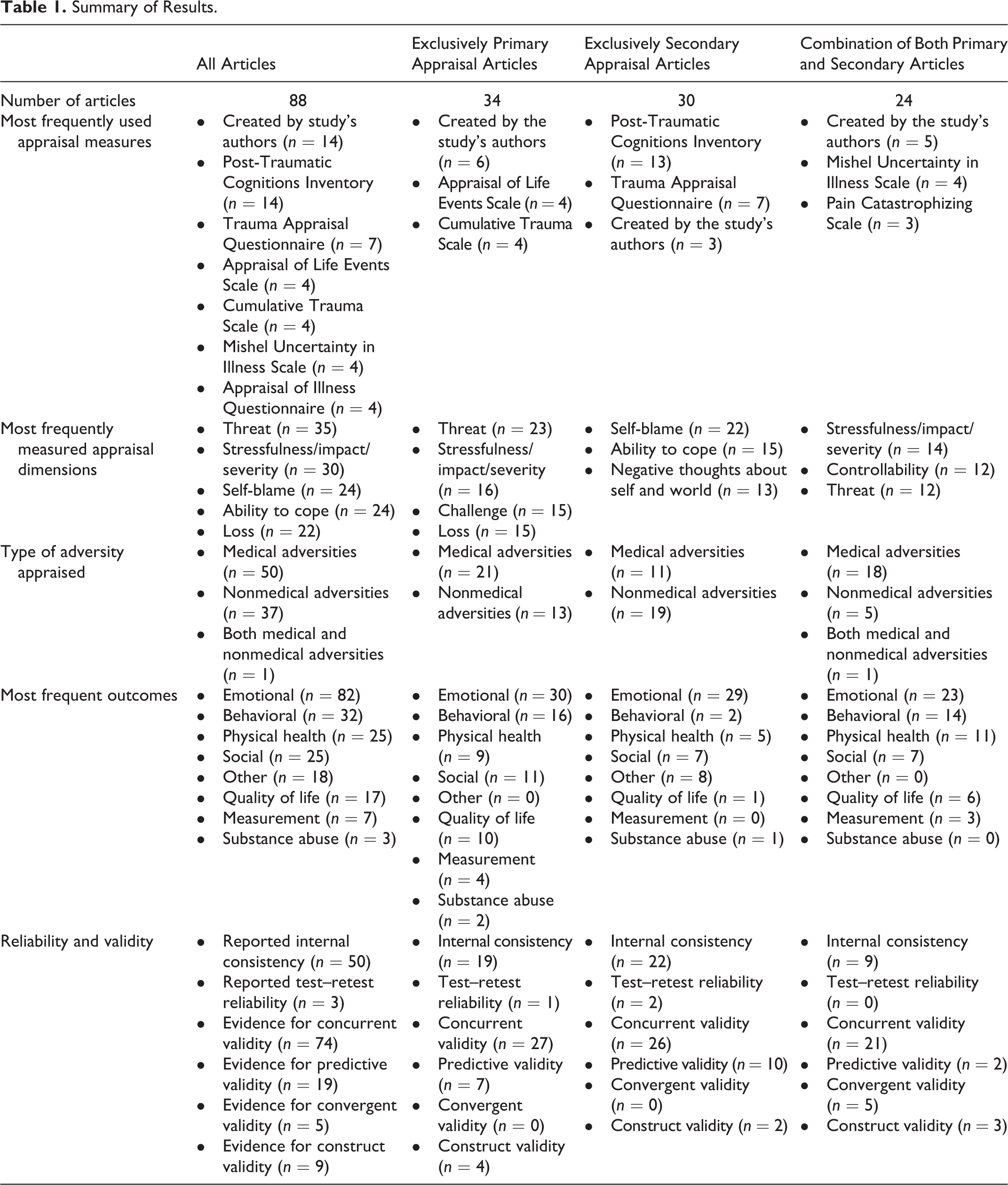
A summary of results, including the frequency descriptives, is provided in Table 1. Of the 88 articles included in the scoping review, 38.6% of tools measured primary appraisal, 34.1% measured secondary appraisal, and 27.3% measured a combination of both primary and secondary appraisal. Table 2 summarizes primary appraisal articles, Table 3 secondary appraisal articles, and Table 4 articles that included both primary and secondary appraisals.
Summary of Results.
Exclusively Primary Appraisal Articles.

Note. ALE = Appraisal of Life Events Scale; ALTTIQ = Assessment of Life Threat and Treatment Intensity Questionnaire; PERI = Psychiatric Epidemiology Research Interview; DRRI = Deployment Risk and Resilience Inventory; CTS = Cumulative Trauma Scale; COPD = chronic obstructive pulmonary disease; PTSD = post-traumatic stress disorder.
a Whether study used multiple samples and which sample was selected as most relevant to the review and included in analyses. Articles are organized first by whether the appraisal measurement tool was used for a medical, nonmedical, or both medical and nonmedical adversity and then organized alphabetically by appraisal measurement tool. For reliability statistics, if the measure had multiple subscales, the range of internal consistency αs across subscales was reported.
Exclusively Secondary Appraisal Articles.
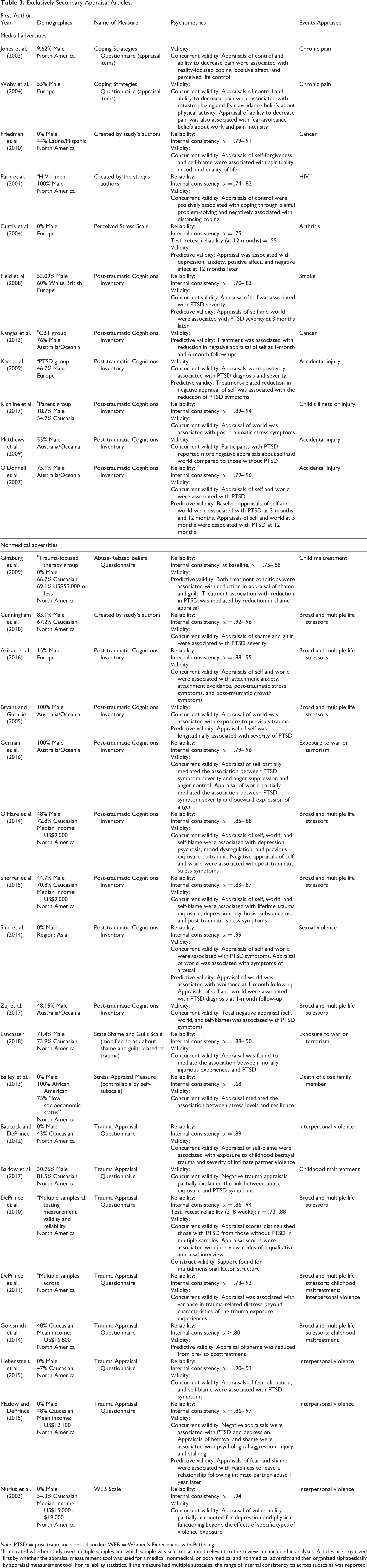
Note. PTSD = post-traumatic stress disorder; WEB = Women’s Experiences with Battering.
a It indicated whether study used multiple samples and which sample was selected as most relevant to the review and included in analyses. Articles are organized first by whether the appraisal measurement tool was used for a medical, nonmedical, or both medical and nonmedical adversity and then organized alphabetically by appraisal measurement tool. For reliability statistics, if the measure had multiple subscales, the range of internal consistency αs across subscales was reported.
Combination of Both Primary and Secondary Appraisal Articles.
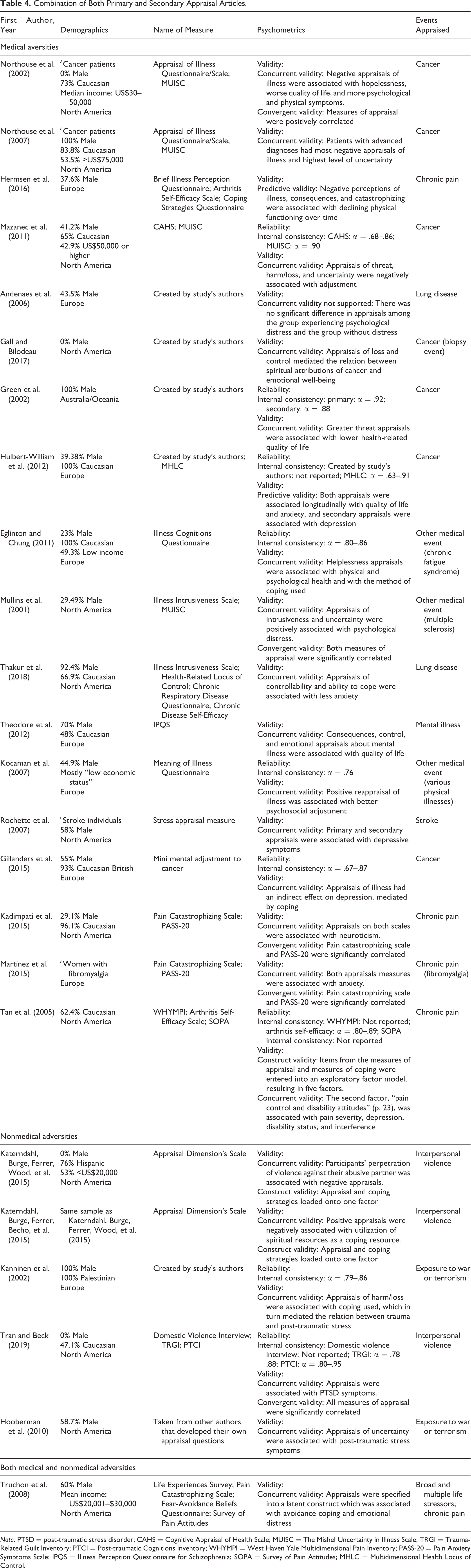
Note. PTSD = post-traumatic stress disorder; CAHS = Cognitive Appraisal of Health Scale; MUISC = The Mishel Uncertainty in Illness Scale; TRGI = Trauma-Related Guilt Inventory; PTCI = Post-traumatic Cognitions Inventory; WHYMPI = West Haven Yale Multidimensional Pain Inventory; PASS-20 = Pain Anxiety Symptoms Scale; IPQS = Illness Perception Questionnaire for Schizophrenia; SOPA = Survey of Pain Attitudes; MHLC = Multidimensional Health Locus of Control.
Demographics
The average age of the samples in the present review was 45.78 years and ranged from 20.30 to 82.30 years. The average percentage of males was 60.10%. Forty-six articles (52%) did not report any information on the racial/ethnic background of their samples. When averaging the percentages of racial/ethnic data across articles that did report this information (n = 42), the majority of participants were Caucasian/White (62.8%), followed by African American (23.3%), Latino/Hispanic (13.2%), Native American (5.5%), Asian/Pacific Islander (5.0%), Other (2.6%), and Multiracial (.9%). Only 23 articles (26%) reported sample income-level data. The frequency of sample global region was as follows: North America (50%), Europe (31.8%), Australia/Oceania (11.4%), Asia (3.4%), multiple global regions (2.3%), and Middle East and North Africa (1.1%).
Appraisal Categories, Measures, and Dimensions
In total, there were 54 different measures of appraisal across the 88 reviewed articles. Among articles that assessed for exclusively primary appraisals and those that assessed for exclusively secondary appraisals, 100% of the articles used only one measure for their appraisal construct. However, articles assessing a combination of primary and secondary appraisals commonly used more than one measure of appraisal. The frequency of the most often used appraisal measures is presented in Figure 1 and can also be seen in Table 1. Additional appraisal tools were used less frequently, by one to three articles (noted in Tables 2–4). The three most used appraisal measurement tools were those created by study authors for the purpose of the reviewed study, the Post-traumatic Cognitions Inventory (PTCI; Foa et al., 1999), and the Trauma Appraisal Questionnaire (TAQ; Deprince et al., 2010).
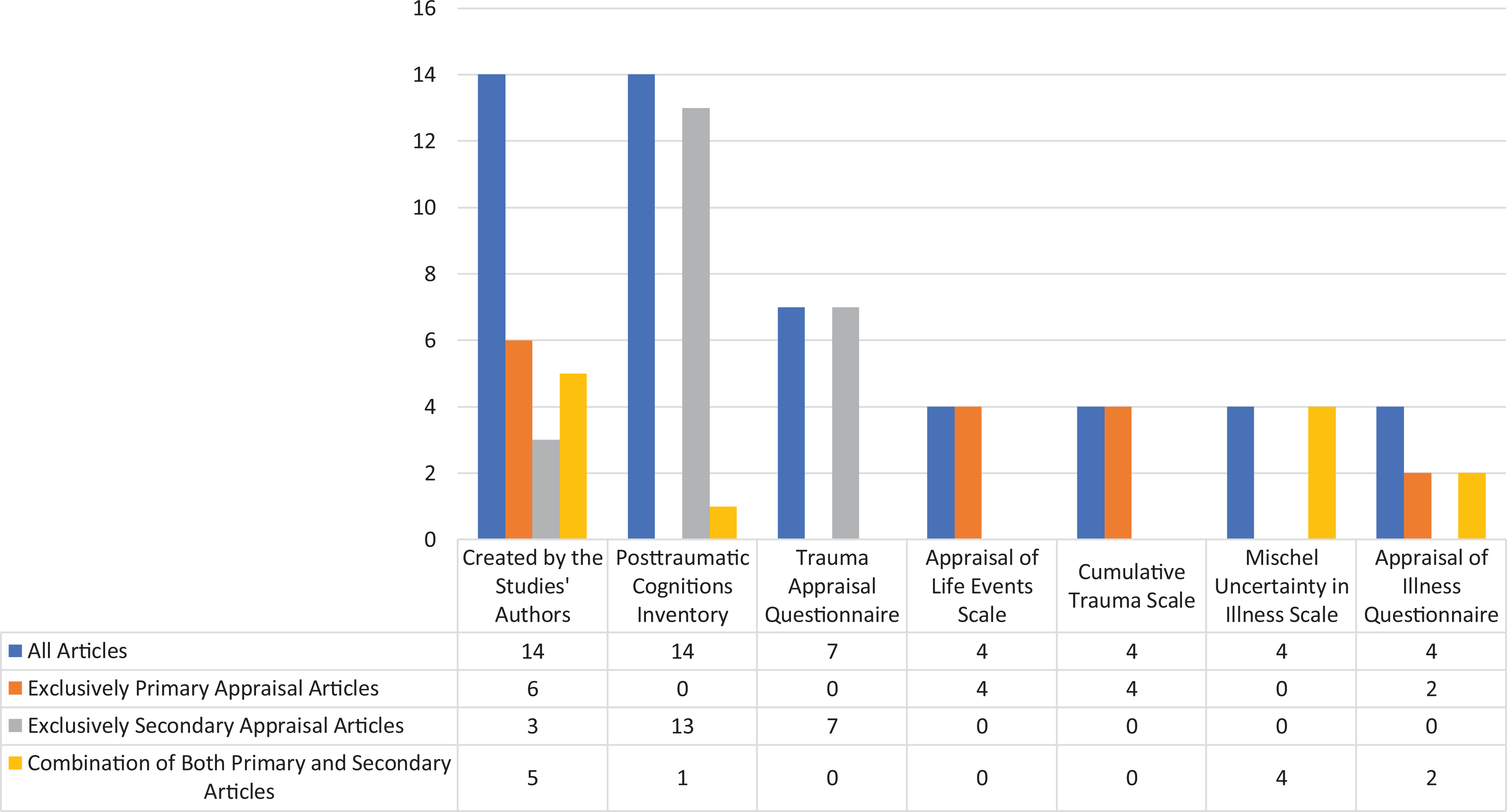
Number of articles that included the most frequently used appraisal measurement tools.
In total, there were 18 thematic codes of appraisal dimensions. The most commonly assessed dimensions of appraisal were threat, stressfulness/impact/severity, self-blame, ability to cope, and loss. Common dimensions for each category of appraisal are presented in Table 1.
Type of Adversity Appraised
Across all 88 articles, 56.8% appraised medical adversities, 42.1% appraised nonmedical adversities, and 1.1% appraised both medical and nonmedical adversities. As presented in Table 1, medical adversities were the most common adversities appraised for primary and a combination of both primary and secondary articles, but nonmedical adversities were the most common adversities appraised for articles measuring exclusively secondary appraisals. Among all articles, the majority of appraisals focused on adverse events in adulthood (72%), with less measuring appraisal of events across the life span (18%) or in childhood (2%). Seven articles (8%) had insufficient information regarding the timing of the adversity being appraised.
As shown in Figure 2, measures created by study’s authors were most often used to measure medical adversities. The PTCI was used more often for nonmedical adversities than for medical adversities. The TAQ was only used for nonmedical adversities.

Frequencies among the three most commonly used appraisal measures.
Outcome Variables Examined in Relation to Appraisal
Across all articles, 93.2% included study outcomes of emotional functioning, 38.6% included behavioral functioning outcomes, 28.4% included physical health and social functioning outcomes, 20.5% included “other” outcomes (e.g., stigma and religiousness), 19.3% included quality of life outcomes, 8% included psychometrics as outcomes, and 3.4% included substance abuse outcomes. The breakdown of outcomes among each category of appraisal is further presented in Table 1. See Figure 2 for information regarding outcomes assessed among articles using measures created by study’s authors, the PTCI, and the TAQ.
Reliability and Validity
See Table 1, for the number of articles that reported internal consistency, test–retest reliability, as well as evidence for concurrent validity, predictive validity, convergent validity, and construct validity. Specific information for each article is presented in Tables 2–4. Across all articles, only 56.8% reported information about the internal consistency of appraisal measure(s) and only 3.4% reported information on the measures’ test–retest reliability. Among articles that reported internal consistency information, Cronbach’s αs were frequently in the acceptable to excellent range, and only 16% of articles reported internal consistency of a measure to fall below the acceptable range (α < .70). Among articles that examined test–retest reliability of measures (n = 3), correlations ranged from r = .55–.88, with second retest time points ranging from 3 weeks to 12 months. As displayed in Figure 2, for measures created by study’s authors, six reported internal consistency information, all of which were acceptable or higher (α > .70). Nine articles using the PTCI reported internal consistency information, all acceptable or higher (α > .70). Six articles using the TAQ reported internal consistency information in the acceptable or higher range (α > .70), and one article reported test–retest reliability.
Validity information is presented in Tables 2–4. Across articles, 84.1% reported evidence in support of concurrent validity, 21.6% reported evidence of the predictive validity, 10.2% reported evidence of construct validity, and 5.7% reported evidence of the convergent validity of the appraisal measure(s) used. See Figure 2 for information regarding validity among articles using measures created by study’s authors, the PTCI, and the TAQ.
Discussion
The present review sought to review the measurement of appraisal in relation to exposure to adverse life events. Empirical findings reported across the studies reviewed showed the importance of assessing appraisals of adversity. In fact, consistent with appraisal theories of emotion (e.g., Ehlers & Clark, 2000; Lazarus & Folkman, 1984), almost all articles (93%) found an association between appraisals and emotional functioning (e.g., mental health symptoms). In particular, appraisals were commonly associated with PTSD symptoms (e.g., Tran & Beck, 2019), depression (e.g., Gourounti & Anagnostoploulos, 2010), and anxiety (e.g., Gillanders et al., 2015), sometimes above and beyond the exposure to adversity (e.g., Deprince et al., 2011). Results also commonly found appraisals to be associated with coping strategies (e.g., Kira et al., 2014), physical health (e.g., Eglinton & Chung, 2011), and social support and interpersonal relationships (e.g., Sumpio et al., 2017).
However, it is important to consider the sample characteristics for most research in this area and note that more than 50% of the articles reviewed did not report on participant racial/ethnic background, and among those that did report on participant racial/ethnic background, the majority (62.75%) of participants were Caucasian/White. Similarly, participant income level was frequently not reported across studies (73.9%). Interpretation of events and the kind of events one experiences may be quite different depending on one’s access to resources like income and one’s ethnic background and thus the present state of the appraisal field suggests some inequities regarding inclusion of participants of diverse backgrounds. Further research is needed to address appraisals of adversity among underrepresented groups, particularly given a lack of available information on the impact of diversity characteristics on appraisal style.
One of the most commonly used forms of appraisal measurements found in the context of the present scoping review were those created by study’s authors for the purposes of their specific study. This was particularly true for articles measuring primary or a combination of both primary and secondary appraisals. Often, studies created measures which consisted of 1 or 2 items aimed at assessing the impact of an adverse life event. Although a good start, it may be unlikely that a few items are sufficient to fully capture the complexity of how one interprets significant adverse experiences. In conjunction with appraisal theory (Lazarus & Folkman, 1984; Lazarus, 1991) and previous empirical support (e.g., Deprince et al., 2010), which frequently suggest appraisals are multidimensional and indicates that the field requires more studies to examine the full nature and dimensionality of appraisal in research.
It is relevant to consider the rationale behind why many authors may elect to develop their own measures of appraisal rather than utilize established adversity measures available in the empirical literature base. In fact, in comparing tools created by study authors to the PTCI (used as frequently as author developed appraisal measures across studies included in the review), there was more support for the reliability and validity of the PTCI. As such, when validated tools such as the PTCI are available, it is unclear why many authors elect to create their own tools with similar appraisal dimensions as those of already validated measures. There are several possible reasons why authors may be frequently creating their own appraisal tools.
First, existing measures may not fully meet the needs of researchers’ empirical questions related to appraisal. This might explain why when measuring a combination of both primary and secondary appraisals, it was common for authors to use two or more measurement tools to capture all appraisal dimensions of interest. Second, it is possible researchers may not be aware of the availability of published appraisal measures, given the large and topically diverse selection of measures identified in the present review (e.g., 54 appraisal measurement tools used in the past 20 years). Third, a great deal of specificity was seen among appraisal measurement tools in terms of the types of adversity appraisal items pertained to (e.g., the Cognitive Appraisal Inventory for Chronic Pain Patients). Therefore, despite the large number of appraisal tools, authors may feel the need to create a highly specific appraisal tool based on their specific research questions. In fact, measures created by study’s authors and the PTCI were the only appraisal measures that were used for both medical and nonmedical adversities. Other measures that were found to have frequent reliability and validity support were only used for medical adversities (e.g., Appraisal of Life Events Scale) or only used for nonmedical adversities (e.g., TAQ). This points to a need for further examination of the utility and validity of measures across both medical and nonmedical adversity types, which may provide researchers with more information on available and validated tools that can be applicable to a wide range of adversity types. Furthermore, most appraisal measures including the frequently used PTCI are designed for participants to appraise one specific type of adversity. Even if the article assessed for broad/multiple life stressors, participants would be asked to select one stressor or adversity to appraise (e.g., Bryant & Guthrie, 2005). Thus, more evidence is needed regarding an appraisal measure that can reliably assess for appraisal patterns, across multiple events, that researchers could use consistently and across studies.
Findings from the present review also demonstrate the relevance and utility of different appraisal dimensions across articles (n = 18) and significant variability in terms of which dimensions each reported appraisal tool measured. Taken together, there appears to be a general lack of consensus as to the appraisal dimensions that are most important for examining adjustment following adversity exposure. Despite this overarching lack of consensus, results do point to a pattern in which specific appraisal dimensions were most commonly associated with poorer adjustment outcomes, including dimensions of perceived threat, impact, challenge, loss, self-blame, ability to cope, and controllability. However, this does not negate the importance of other, less commonly measured dimensions such as harm or valence of adversity’s impact (i.e., if there was a perceived positive impact or if the impact was perceived as strongly negative) that several articles also found as important to adjustment after adversity (e.g., Herrero et al., 2008; Kira et al., 2014). Collectively, these findings demonstrate a need for more empirical research which aims to narrow the relevance and utility of appraisal dimensions in relation to adjustment after adversity exposure.
Results from this review also found that over the past two decades, the majority of empirical studies on adult appraisal after adversity have focused exclusively on the category of primary appraisal. That is, more studies addressed interpretations of adversity as to the relevance and potential harm or threat to one’s well-being, more so than interpretations of one’s ability to cope with adverse life experiences. Although theory posits neither primary nor secondary appraisals supersede one another, it is interesting that empirical measurements of both primary and secondary appraisals were the least used category of appraisal measurement across studies included in the review. Future research is warranted to determine whether researchers should consider utilizing more complex frameworks of appraisal when examining the adjustment of individuals exposed to medical and nonmedical adversity.
It also relevant to note the disparity of psychometric information reported across the studies included in the present review. Although this review did not focus on measure development articles, many articles included in the review simply cited psychometric properties derived from original measure development articles and did not report reliability statistics derived from their study sample. Thus, continued efforts are necessary to establish publication norms for the transparency of sample specific reliability and validity information to strengthen the current psychometric underpinnings behind the majority of appraisal measures included across the studies within this scoping review.
Limitations and Future Directions
Although this scoping review provides the field with an organized summary and preliminary analysis of appraisal measures used in the adversity literature to date, it is not without its limitations. First, the review was limited to adult samples, therefore research on adolescent appraisal of events was not included and may limit generalizability beyond adult populations. Second, the review included only quantitative measures of appraisal and excluded qualitative measures of appraisal. Although qualitative measures can provide rich information about appraisals and participants lived experiences, they are traditionally conducted via unstructured interview and thus less open to universal application. Third, the review categorized appraisal measures based upon Lazarus and Folkman’s (1984) appraisal theory, and although this is the most common theoretical approach to appraisal, new models have emerged that also warrant attention (e.g., the cognitive model of PTSD; Ehlers & Clark, 2000). Fourth, the original development articles, for most of the appraisal measurement tools found in this review, were not included among the articles reviewed, due to falling outside of the past two decades or not being captured by the review’s search terms. However, results of the review demonstrate each measure’s utility across different samples and researchers.
Despite the limitations, several important implications and future directions are evident from results of this review of the adversity appraisal literature. Practice, policy, and research implications are outlined in “Implications” section.
Implications for Practice, Policy, and Research
Regarding practice implications, results support the importance of practice identifying multiple dimensions of appraisal. Appraisal dimensions such as perceived threat, level of impact, challenge, loss, and ability to cope were found to be frequently associated with adjustment following adversity and should be more frequently identified in practice. Therefore, in addition to the many recommendations for the screening of exposure to adverse experiences (e.g., Dube, 2018), results of the present review point to the importance of screening or assessing for multiple dimensions of how individuals’ appraisal these adverse experiences. This may be particularly important in mental health settings, as appraisals were consistently found to be associated with emotional functioning. Results may also have programmatic policy implications by identifying a need for more therapeutic programs focused on the evaluation of multiple appraisals following adversity. This will likely require increased efforts to improve methods for appraisal evaluation as well as efforts to learn how to shift or change adversity appraisals. Additional funding and support will be needed in the development and assessment of such programming. Lastly, results provide a comprehensive resource to aid researchers in deciding how best to assess adversity appraisal, by illustrating readily available measures that have been used for particular types of adversity and their associated outcomes. Additional efforts are warranted to guide and improve future research related to appraisal after adversity, such as the active utilization existing and psychometrically validated measures which capture the multidimensional nature of appraisals; the improvement of methodological reporting of sample characteristics and the psychometric properties of appraisal measures specific to each empirical study sample; and the need for substantial diversification of the samples in which adversity appraisal has been based thus far (e.g., inclusion of samples of diverse racial, ethnic, and socioeconomic backgrounds; adult appraisal of childhood events). Further, results call for a need to avoid the “silo effect” of medical versus nonmedical literature areas of adversity in order to establish more comprehensive and interdisciplinary adversity-related findings.
Implications for Practice, Policy, and Research
Practice
Results support the importance of practice identifying multiple dimensions of appraisal. ˆ Appraisal dimensions such as perceived threat, level of impact, challenge, loss, and ability to cope were found to be frequently associated with adjustment following adversity and should be more frequently identified in practice. ˆ Therefore, in addition the many recommendations for the screening of exposure to adverse experiences (e.g., Dube, 2018), results of the present review point to the importance of screening or assessing for multiple dimensions of how individuals’ appraisal these adverse experiences. ▪ This may be particularly important in mental health settings, as appraisals were consistently found to be associated with emotional functioning. ▪ Results of the present review also provide a resource for practitioners looking for appraisal measurement tools that may be relevant to their population.
Policy
Results may also have programmatic policy implications by identifying a need for more therapeutic programs focused on the evaluation of multiple appraisals following adversity. This will likely require increased efforts to improve methods for appraisal evaluation, as well as efforts to learn how to shift or change adversity appraisals. Additional funding and support will be needed in the development and assessment of such programming.
Research
Results provide a comprehensive resource to aid researchers in deciding how best to assess adversity appraisal, by illustrating readily available measures that have been used for particular types of adversity and their associated outcomes. Additional efforts are warranted to guide and improve future research related to appraisal after adversity, such as: ▪ The active utilization existing and psychometrically validated measures which capture the multidimensional nature of appraisals. ▪ The improvement of methodological reporting of sample characteristics and the psychometric properties of appraisal measures specific to each empirical study sample. ▪ The need for substantial diversification of the samples in which adversity appraisal has been based thus far (e.g., inclusion of samples of diverse racial, ethnic, and socioeconomic backgrounds; adult appraisal of childhood events). ˆ Avoidance of the “silo effect” of medical versus nonmedical literature areas of adversity to establish more comprehensive and interdisciplinary adversity-related findings.
Footnotes
Authors' Note
Rachel Petrie is also affiliated with University of North Carolina, NC, USA.
Declaration of Conflicting Interests
The author(s) declared no potential conflicts of interest with respect to the research, authorship, and/or publication of this article.
Funding
The author(s) received no financial support for the research, authorship, and/or publication of this article.
