



Abstract
Childhood sexual abuse (CSA) is a complex trauma with devastating long-term, negative effects on survivors. This study extended the understanding of experiences of women survivors of CSA in relation to nonsupportive significant adults documented in literature, as to date, there exists no summary in literature on this particular topic. As such, a scoping review was conducted on publications between 1980 and January 2020. A total of 26 733 were selected for analysis in accordance with the search terms. After duplicates were removed and the exclusion criteria were applied, a total of 58 articles were selected for inclusion in the review. Thematic analysis was conducted on the studies included, and three themes were developed pertaining to the experiences of women survivors of CSA in relation to nonsupportive significant adults. Theme 1 identified nonsupportive behaviors experienced before disclosure or discovery of abuse. Theme 2 identified nonsupportive behaviors experienced during or after disclosure or discovery of abuse. Theme 3 identified the long-term negative consequences of nonsupportive experiences. These three themes support the findings of Freyd’s betrayal trauma theory and Bowlby’s attachment theory, extend on the global knowledge base of this topic, and identify gaps for further exploration.
Keywords
Childhood sexual abuse (CSA) is described as a unique and complex trauma that may be exacerbated by contextual factors such as the relationship between the child and the perpetrator, the nature and severity of the abuse, and the lack of support from the nonoffending significant adult (NOSA) (Finkelhor & Brown, 1985; Summit, 1983; Weiss & Alexander, 2013). The NOSA refers to an individual who is a primary caregiver to the child and does not deliberately participate in the sexual abuse, such as a biological mother, stepmother, aunt, grandmother, father, or legal guardian (Cyr et al., 2013). In most cases when victims of CSA disclose, they do so to someone they trust, and who they believe could stop or prevent the abuse (Allnock & Miller, 2013; Lovett, 2004; Wager, 2013). However, double betrayal may occur when the victim’s disclosure is met with a negative response and where the significant adult(s) who are able to protect and/or prevent further abuse fail to do so (Wager, 2013).
Nonsupportive significant adults (NSSA) in the context of female survivors of CSA could be understood in relation to the betrayal trauma theory coined by Freyd (1994, 1996) and Bowlby’s (1969) attachment theory. According to Freyd et al. (2005), betrayal trauma can have damaging effects on the victim’s well-being and can impact the victim’s sense of trust, relationships, self-concept, and beliefs in regard to themselves, others, and the world. In the context of the attachment theory, Bowlby (1969) defines attachment as a biological bond between the child and caregiver and states that the child’s need for availability and responsiveness from an adult is developed during infancy and childhood. This bond serves as a protective function, which the child uses to safely explore their environment. Bowlby (1973) found that attachment behaviors are activated during times of crises and as such the reaction and support received from significant others during abuse will indeed contribute to the survivor’s ability to cope with the traumatic experience. A body of research found that responses from those closest to the victim in times of crises (usually the primary nonoffending parental figure) play a pivotal role in how the victim will navigate the emotional and cognitive effects of the abuse trauma, may well have lasting negative outcomes spanning into adulthood, and thus could be more detrimental to the survivor than the sexual abuse itself (Adams, 1994; Alexander, 1992; Bolen et al., 2015; Elliott & Carnes, 2001; Summit, 1983). It is worthy to note that not all NOSA are nonsupportive, thus the distinction was made throughout between the nonoffending significant adult (NOSA) and the nonsuppportive significant adult (NSSA).
Although this topic has received much attention in literature, a synthesis of what is already known about nonsupportiveness; before, during, and after disclosure of CSA; and the survivor’s experiences thereof has not been documented in literature to date. Such a synthesis will contribute toward an enhanced understanding of this phenomenon by contributing toward the global knowledge base and identifying research gaps warranting further studies. Due to the reported differences between the CSA experiences of male and female survivors and the short- and long-term impact thereof (Artz et al., 2016), this study only focused on female survivors, although it in no way disputes the impact on men. As such in this scoping review, NSSA are defined by the researchers as any nonoffending adult or caregiver significant to the CSA survivor who is in a position to protect the CSA survivor but fails to do so, by not preventing the abuse from happening, actively participating in the abuse or encouraging the abuse, and not believing the child who discloses (purposefully or accidentally), or who responds negatively to the disclosure or passively or intentionally discourages disclosure; makes no attempt to stop further abuse or victimization and offers no or insufficient support in the recovery process; and acts or behaves in any manner that actively impedes the victim from disclosing the sexual abuse.
Methodology
Information Sources and Search Strategy
The following electronic databases were searched: EBSCOhost (Academic Search Premier, Africa-Wide Information, E-Journals, ERIC, PsycArticles, PsycINFO, and SocINDEX), African Journals (previously SAePublications), and ScienceDirect (Social Sciences and Humanities). The combination of Boolean/phrases used during the search is non-supportiveness, non-supportive caregiver/parent/mother/family, non-supportive disclosure, support, response, betray*, protect*, non-offender, non-offending caregiver/parent/mother/family, child sexual abuse, survivors, and adult women.
Literature studies that comply with the following eligibility criteria were included in the review: publications between 1980 and January 2020, publications in English, studies that reported on nonsupportive experiences by significant adults as described by survivors of CSA, and studies depicting a global perspective. Any studies that reported on males (or did not clearly distinguish between genders), children under the age of 18 as victims of CSA, and sexual offenders were excluded. Furthermore, studies that reported from the perspective of the nonoffending caregiver, and those that exclusively addressed adult disclosures were also excluded. Publication types not accepted for this scoping review were training manuals or updates, book reviews or sections, policy or government documents, summaries of judgments or papers, volume content or table of contents, conference programs, reference to blogs, reference books, newspaper or magazine articles, and review articles.
During the search process, 26 733 titles and abstracts were screened for eligibility. A total of 167 full-text articles were downloaded and subjected to a full-text review. Another 117 articles were sourced from reference lists of each full text that was screened. After another round of screening 284 full-text articles against the eligibility criteria, 58 articles were selected for inclusion in the review (Figure 1). The second and third authors reviewed the included articles to ensure that it met the eligibility criteria. Hereafter, a quality appraisal process was employed using the Joanna Briggs Institute Reviewers Manual: 2011 Edition (Joanna Briggs Institute, 2017). The first author and the second and third authors independently conducted quality appraisal of the studies.
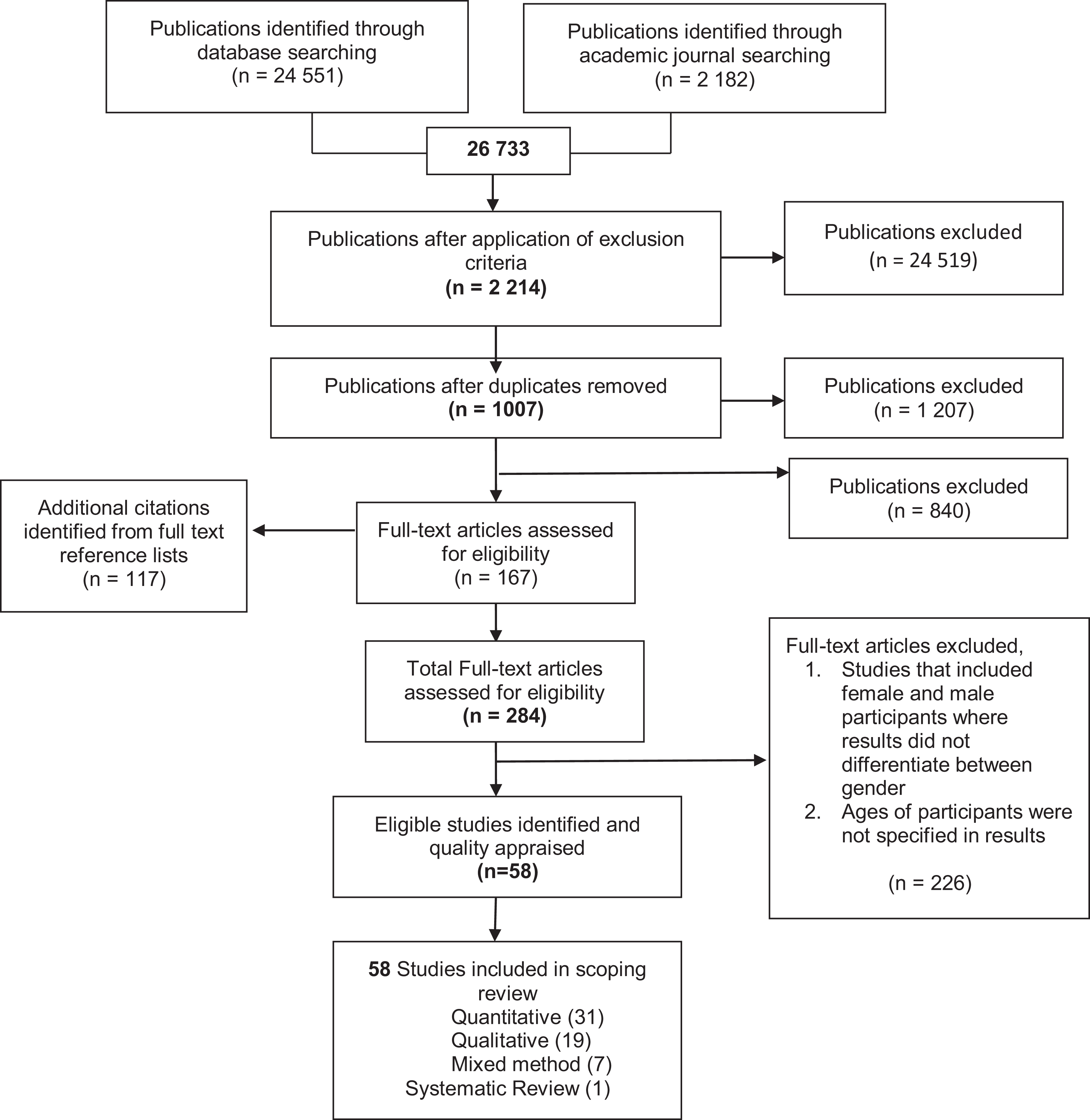
Flow diagram.
Data Extraction and Analysis
A data-charting form (see Table 1) was developed (Levac et al., 2010) and included the following items: author, publication year, country, research approach, method, participants, contextual factors of sample background, and key findings extracted from the findings and conclusions sections of included articles (Levac et al., 2010). Braun and Clarke’s (2006) six phases of thematic analysis were used to analyze the key findings and to develop themes related to NSSA experienced by women survivors of CSA. The first author recorded initial notes, and hereafter, codes were assigned to primary features within the data, which related to experiences of CSA survivors in relation to NSSA. Preliminary codes were then identified, followed by an interpretive analysis of the codes. These codes were then created as subcategories and then developed and refined into themes. Atlas.ti 8 (2017) was used as an assistive tool during this process as recommended by Levac et al. (2010). A report was then drawn up using Atlas.ti 8 (2017) to extract the presented themes. An independent coder with a masters degree in Psychology and experience in qualitative research assessed the eligibility of the articles for inclusion. After a consensus discussion between the three authors and the independent coder, three themes and seven subthemes were finalized.
Data Charting Form.

Note. CSA = childhood sexual abuse; QSA = qualitative secondary analysis.
**Inclusion criteria states that articles which includes female survivors, however relevant articles were chosen which distinguishes between male and female survivors in findings
Findings
Description of Included Studies
This scoping review included 58 studies: quantitative (n = 31), qualitative (n = 19), mixed-method studies (n = 7), and a systematic review (n = 1) that were synthesized to provide a summary of what is known about women survivors of CSA’s experiences in relation to NSSA (Figure 2). Only empirical retrospective studies, published between 1980 and 2020, in which women survivors of CSA reported on their experiences of NSSA, were included for analysis. The authors chose publication dates from 1980 due to the amplified focus on CSA in literature at this time (Green, 1993) and specifically the seminal work of Finkelhor and Browne (1985). Sixteen (n = 16) of the 58 studies did not specify the participant’s race. The majority of the samples from 42 studies were Caucasian/White/European American, and the remaining were classified as Black/African American, Asian/Asian American/Chinese, Hispanic/Latina/Mexican, Indian/West Indian, Afro Caribbean, Pakistani, Swedish, Pacific Islander, Anglo Australian, Israeli Jews, Arab American, Egyptian Cosmopolitan, Filipino, Peruvian, Jamaican, mixed race/multiracial, and other. The majority of studies were from developed countries such as the United States (n = 35), Canada (n = 5), UK (n = 4), Australia (n = 4), Sweden (n = 3), the Netherlands (n = 1), Norway (n = 1), and Hong Kong (n = 1) with few studies arising from developing countries such as Taiwan (n = 2) and Israel (n = 2). Country classifications as developed or developing are based on the United Nations World Economic Situation and Prospects, which classifies a country based on high income, upper middle income, lower middle income, and low income, with these thresholds levels per capita established by the World Bank (United Nations, 2019). No studies were identified within a South African context.
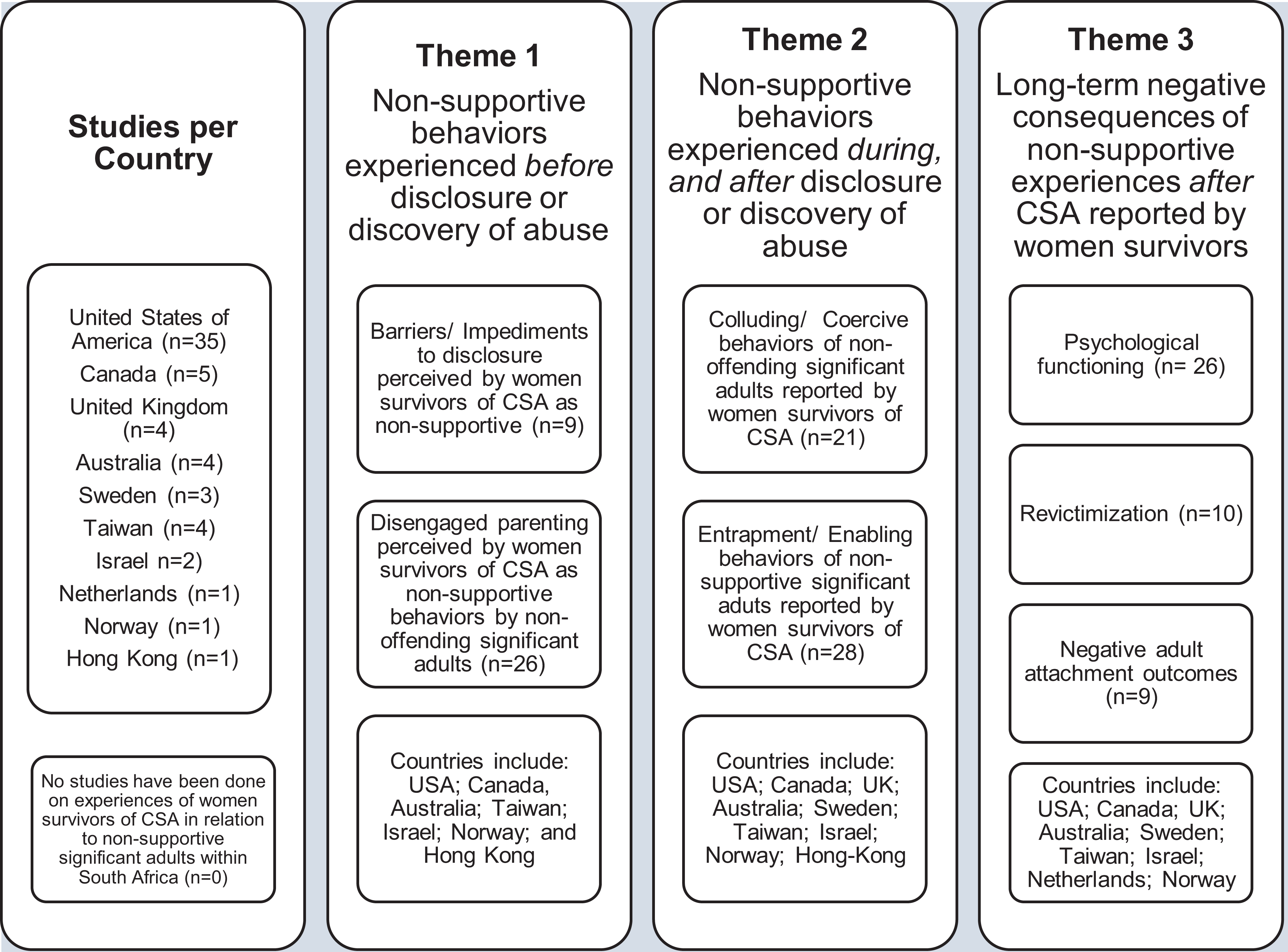
Studies on experiences of women survivors of childhood sexual abuse in relation to nonsupportive significant adults per theme and per country.
A framework depicting the nonsupportive experiences reported by women survivors of CSA was developed (Figure 3) and consists of three themes and seven subthemes. Theme 1 identified nonsupportive behavior experienced before disclosure or discovery of abuse and included the following subthemes: (1) barriers/impediments to disclosure and (2) disengaged parenting. Theme 2 identified nonsupportive behavior experienced during or after disclosure or discovery of abuse and included two subthemes: (1) colluding/coercing and (2) entrapment/enabling. Theme 3 identified the long-term negative consequences of nonsupportive experiences and included: (1) psychological functioning, (2) revictimization, and (3) negative adult attachment outcomes.
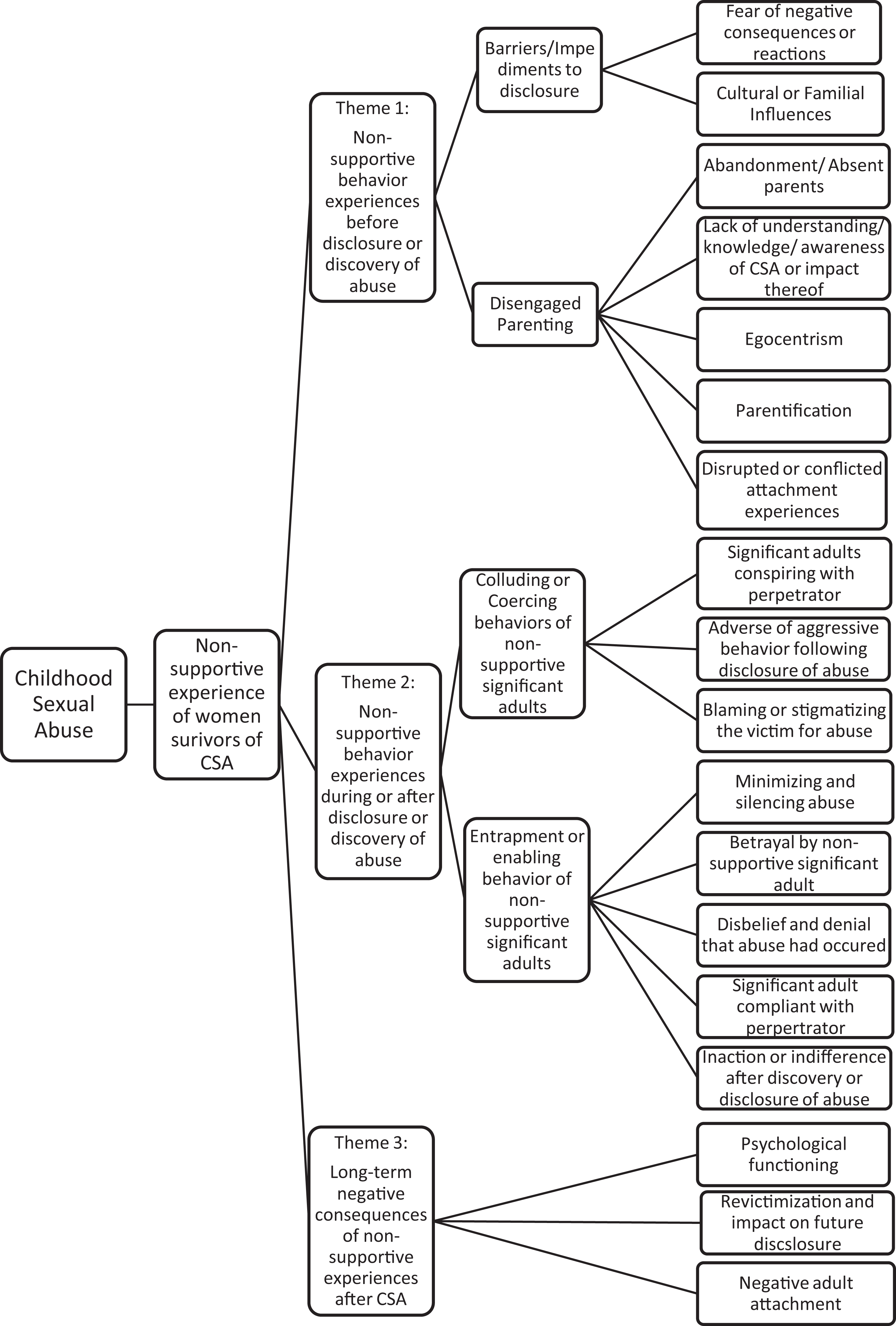
Conceptual framework of nonsupportive experiences in women survivors of childhood sexual abuse as reported in literature.
Theme 1: Nonsupportive Behavior Experienced Before Disclosure or Discovery of Abuse
Nonsupportive experiences before disclosure or discovery of CSA reported by women survivors indicated that behavior of NSSA inhibited childhood disclosure (Alaggia, 2010; Chien, 2005, 2008; Tyagi, 2002). Two subthemes were identified in the scoping review, namely: (1) barriers or impediments to disclosure perceived as nonsupportive behavior and (2) disengaged parenting perceived by women survivors of CSA as nonsupportive behavior from NOSA.
Barriers or impediments to disclosure perceived as nonsupportive behavior
A total of nine studies (N = 9) identified factors or behavior from NOSA that prevented survivors from disclosing their victimization. These barriers to disclosure are (1) a fear of consequences or negative reactions as a result of disclosure and (2) cultural or familial influences.
Fear of consequences and negative reactions
Studies reported fear of being disbelieved, rejected, or blamed for the abuse (Alaggia, 2010; Gill & Harrison, 2019; Timraz et al., 2019) and participants’ own interpretation of consequences (Chien, 2008; Collin-Vèzina et al., 2015; Mayhall, 2014; Tyagi, 2002) and inhibited disclosure. These studies indicate that certain behavior of NOSA does not provide a supportive family environment for disclosure to take place and that the survivors did not feel open to disclose the CSA due to the anticipation or fear of negative consequences.
Cultural and family factors that influence disclosure
Factors such as patriarchal power structure, strong familial moral codes or familial values, and secrecy of family shame in various cultures contributed to the victim’s inability to disclose the acts (Gill & Harrison, 2019; Hardy, 2018; Timrazet al., 2019; Tsun, 1999; Tyagi, 2002). These cultural barriers that prevented disclosure included maintaining family ties; fear of ruining the family’s reputation, secrecy, and privacy; maintaining a “good face” in the community; dishonoring the family; loyalty; respecting the elders; and showing obedience (Timrazet al., 2019; Tyagi, 2002). Family values appeared to impact the ability of the victim to disclose their abuse, where a lack of close relationships with family members caused victims to not disclose, as they felt they had no one to confide in (Gill & Harrison, 2019; Hardy, 2018). As such, not only do family values impact disclosure but so does the family environment. According to Collin-Vèzina and colleagues (2015), violence and dysfunction in the family and power dynamics in terms of secrecy and containment were identified as barriers to disclosure.
Disengaged parenting perceived by women survivors of CSA as nonsupportive behavior by NOSA
Nonsupportive behavior is not always encountered upon disclosure or discovery of abuse. Many of the studies included (n = 26) reported that nonsupportiveness was also perceived as behavior that allowed and enabled the abuse to initially happen or to continue without intervention. These behaviors are perceived as detached or indifferent and presented as: (1) abandonment or absent parents; (2) lack of understanding, knowledge, or awareness of CSA, or the impact thereof; (3) egocentrism displayed by NOSA; (4) parentification; and (5) disrupted or conflicted attachment experiences.
Abandonment or absent parents
Abandonment and/or absent parents were reported as a form of nonsupportive behavior experienced by many survivors. Women reported that their mother’s physical absence was one of the reasons they felt unsupported and it was a contributing factor to the abuse occurring (Alaggia, 2010; Mayhall, 2014; Tyagi, 2002). Participants did not only attribute absence or abandonment to physical forms, but many experienced an absence in parenting due to the NOSA being unavailable due to illness, substance abuse, or depression (Zinzow et al., 2010). Such experiences of absent parent’s result in the victim feeling abandoned, lonely, neglected, and vulnerable or exposed (Hardy, 2018; Karakurt & Silver, 2014; Monahan, 2010; Tsun, 1999; Winnett, 2012). Furthermore, neglectful parenting can become a catalyst for abuse, as many women were removed from familial homes and placed in foster homes where sexual abuse occurred or continued (Mayhall, 2014). These behaviors perceived by survivors as abandonment and absent parenting result in the victim feeling vulnerable and alone while navigating the abusive environment.
Lack of understanding, knowledge, or awareness of sexual abuse or impact thereof
Instances of NOSA lacking understanding or knowledge of sexual abuse were especially reported by survivors from low-income cultural backgrounds, where talk about sex was seen as taboo. Furthermore, NOSA had little knowledge of CSA such as associated risk factors, signs or symptoms, and/or the documented causes (Chien, 2008; Tyagi, 2002). Survivors of CSA also reported that there were instances where nonsupportiveness was experienced as a lack of understanding of the impact or severity of the sexual abuse (Guelzow et al., 2002; Lorentzen et al., 2008).
Egocentrism by NOSA
According to Testa et al. (1990), egocentrism refers to the NOSA focusing on their own well-being and interests instead of that of the victim. This was also seen in a study where survivors were resented by the NOSA for the father–daughter relationship (in instances of incestuous abuse; Karakurt & Silver, 2014; Salter, 2013). Hunter (2015) also described instances of egocentrism where victims of CSA were forced to choose the outcome of abuse after disclosure. These behaviors are perceived as disengaged parenting as they place young victims in a vicarious position where they are compelled to make an adult choice and/or decision.
Parentification
This was reported in instances where survivors reported having to take on the mother figure role, where the mother was absent in her role or duties as mother, wife, or partner to the offender (Chien, 2005; Mayhall, 2014; Tyagi, 2002). This was the case when victims felt obligated to protect the nonoffending parent instead of being protected themselves (Hunter, 2015; Monahan, 2010; Tener, 2018; Tyagi, 2002; Winnett, 2012).
Disrupted/conflicted attachment experiences
Low levels of support were reported as detached and disturbed familial relationships (Guelzow et al., 2002; Leifer et al., 2001). Stroebel et al. (2013) identified low maternal affection and attachment as a risk factor for incest. This lack of affection appeared to drive the victim toward the perpetrator for need fulfillment, as the perpetrator provided affection, which was withheld by the mother (Salter, 2013). Survivors also reported feeling unsupported by NOSA, where they were ignored or treated indifferently (Brenner & Ben-Amitay, 2015; Guelzow et al., 2002; Roesler & Wind, 1994). In instances where nonoffending mothers were described as emotionally unavailable or absent, survivors reported feeling judged, which, in some instances, drove the victim toward the perpetrator for affection and need fulfillment (Salter, 2013; Tyagi, 2002; Wind & Silvern, 1994).
Theme 2: Nonsupportive Behaviors Experienced During or After Disclosure or Discovery of Sexual Abuse
With regard to nonsupportive behavior during or after disclosure or discovery of sexual abuse by the NOSA, two subthemes were identified in the scoping review: (1) collusion or coercion behavior and (2) entrapment or enablement behavior.
Collusion or coercion behavior
A total of 21 studies (n = 21) indicated some form of collusion or coercion behavior, resulting in further harm or victimization. Colluding or coercing behavior can be defined as actions that were experienced by survivors as intentionally harmful or deliberate by the NOSA (Cavanaugh et al., 2015; Chien, 2005, 2008). These behaviors are indicated as (1) NOSA conspiring with perpetrator, (2) adverse or aggressive behavior following disclosure/discovery, and (3) blaming or stigmatizing the victim.
NOSA conspiring with perpetrator
A lack of support goes beyond experiences of violence and aggression from the perpetrator and can also refer to interactions with the NOSA after discovering the abuse. Researchers report that women experienced violence and aggression from the NOSA, and in some cases, her mother was present during the abuse or witnessed the abuse but offered no support (Cavanaugh et al., 2015; Middelton, 2013). Alongside experiences of not receiving support, many women reported that significant adults also participated in the abuse and/or encouraged the abuse (Cavanaugh et al., 2015; Middelton, 2013). Many survivors reported that family members knew of the abuse and thus colluded with the perpetrator, or were also victims, and so failed to offer any support on disclosure (Crowley & Seery, 2001). Similarly, Middleton (2013) reports that many NOSA were perceived as supporting the perpetrator upon disclosure or discovery of the CSA. Winnet (2012) states that in those cases where the significant adult failed to protect the victim and participated in the sexual abuse, a breakdown occurred in the child’s caregiving system, and a higher degree of betrayal was experienced.
Adverse or aggressive behavior following disclosure
Studies indicated some form of punishment, violence, or abuse (verbal or physical) toward the victim upon disclosure or discovery (Crowley & Seery, 2001; Glamb, 2011; Hunter, 2015; Mayhall, 2014; Salter, 2013; Testa et al., 1990; Ussher & Dewberry, 1995). As such, adverse responses such as anger or rejection were experienced by women survivors upon disclosure (Bagley & Young, 1999; Brenner & Ben-Amitay, 2015; Roesler & Wind, 1994; Timraz et al., 2019; Tsun, 1999; White, 2013).
Stigmatization and blaming the victim for abuse
Looking back at the responses to disclosure or discovery of sexual abuse, many behavior patterns of the NOSA were perceived as harmful in terms of stigmatizing and blaming reactions (Chien, 2005; Hunter, 2015; Rees et al., 2019; Winnett, 2012). Accusing the victim of the sexual abuse, or stating that the victim brought the abuse upon herself, is seen as a nonsupportive behavior (Gill & Harrison, 2019; Waller & Ruddock, 1993) and may result in future nondisclosure (Chien, 2005; Collin-Vézina et al., 2015), psychopathology (Waller & Ruddock, 1993), and negatively impact the victim’s therapeutic process of recovery (Bagley & Young, 1999).
Entrapment or enablement behavior
Twenty-eight (n = 28) studies were indicative of women survivors of CSA reporting that NOSA enabled their sexual abuse or caused them to feel entrapped in the abuse. In many cases, these behaviors were perceived as unintentional, yet passively entrapped the victim in the abusive environment thereby allowing the abuse to continue. According to literature, these nonsupportive behaviors include (1) minimization and silencing of abuse, (2) betrayal, (3) disbelief and denial, (4) NOSA compliant with perpetrator, and (5) inaction/indifference after discovery or disclosure of abuse.
Minimization or silencing of sexual abuse
For many survivors, exiting the abusive environment was difficult or unlikely. These women reported that family members appeared to ignore, normalize the abuse, or minimize the severity thereof (Crowley & Seery, 2001; Lorentzen et al., 2008; Rees et al., 2019; Testa et al., 1990; White, 2013) and accuse the victim of not knowing what they were talking about (Mayhall, 2014) or that they had misunderstood the event (Crowley & Seery, 2001). In some cases, the victims were told upon disclosure that it was too late to disclose or report the abuse (Ussher & Dewberry, 1995). Tener (2018) reports that some women felt that their thoughts and feelings about the abuse were treated insignificantly, and in many cases, they were forced to uphold a normative public facade, hereby entrapping them within the abusive environment. These behaviors were seen as forms of silencing tactics so as to ensure cooperation from the victim so as to not disclose the abuse (Crowley & Seery, 2001; Hunter, 2015; Lorentzen et al., 2008; Tener, 2018; Ussher & Dewberry, 1995).
Betrayal
Numerous survivors do not only suffer betrayal at the hands of the perpetrator but also report that the lack of support from the NOSA allowed them to feel betrayed. Alaggia (2010) found that women who attempted to disclose at the time of the sexual abuse or shortly thereafter received insensitive responses. In contrast, Ullman and Filipas (2005) state that women reporting longer duration sexual abuse experiences were more likely to receive negative responses when they disclosed the abuse. These women were also more likely to blame the nonoffending family for the abuse (Zinzow et al., 2010). Women reported that the lack of protection from their mothers, by not stopping the abuse, caused them to feel betrayed (Karakurt & Silver, 2014; Tsun, 1999).
Disbelief and denial
In many studies, women survivors experienced a lack of support by not being believed by the NOSA and by being accused of lying, or fabricating the sexual abuse, or seeking attention (Gill & Harrison, 2019; Glamb, 2011; Mayhall, 2014; Rees et al., 2019; Testa et al., 1990; Ussher & Dewberry, 1995; Waller & Ruddock, 1993; Winnett, 2012). In some cases, survivors reported that the NOSA refused to acknowledge that the abuse had happened, or denied that the perpetrator could be capable of such behavior (Cavanaugh et al., 2015; Crowley & Seery, 2001; Monahan, 2010; Tener, 2018; Timraz et al., 2019). Jonzon and Lindblad (2004) subsequently found that the degree of closeness to the perpetrator was linked to the victim being disbelieved, especially in cases of incest. These negative disclosures also influenced the victims’ decision for future disclosure (Chien, 2005; Hunter, 2015).
NOSA compliant with perpetrator
Perpetrators are known to use many tactics to ensure the continuation of sexual abuse. These tactics are not only directed at the victim but also at the extended family. A body of research found that many survivors reported abusive childhood family environments (Collin-Vézina et al., 2015; Timraz et al., 2019; Tsun, 1999, Tyagi, 2002), where in many cases, the NOSA was also a victim of CSA. In such cases of abusive environments, the NOSA appears submissive toward the perpetrator and, in many cases, becomes compliant to the victim’s abuse, thereby allowing the abuse to continue and consequently being unable to offer support to the victim (Herman, 2005; Hunter, 2015; Monahan, 2010; Salter, 2013; Tsun, 1999). Moreover, Tener (2018) found that such complicit behaviors by the NOSA created an environment in which the perpetrator became idolized, this resulted in a negative public identity of the victim, resulting in the absence of disclosure.
Inaction or indifference after abuse has been discovered or disclosed
In most studies (n = 21) reporting on enabling or entrapment experiences by survivors of CSA, nonsupportive behavior was experienced as the inability of the NOSA to act in a supportive manner upon the discovery or disclosure of the abuse, resulting in the continuation of the abuse (Arata, 1998; Chien, 2008; Crowley & Seery, 2001; Glamb, 2011; Herman, 2005; Mayhall, 2014; Middleton, 2013; Simmel et al., 2012; Ussher & Dewberry, 1995; White, 2013).
Indifference and inaction were also reported by victims as the inability of the NOSA to offer any emotional or practical responses following disclosure by the victim (Waller & Ruddock, 1993). For others, this enabling behavior presented in the belief that the NOSA knew about the ongoing abuse but failed to act upon it and thus failed to offer protection to the victim (Hunter, 2015; Winnett, 2012). Other instances of inaction or indifference were the beliefs that the NOSA (usually the mother) was unable to handle the disclosure or was unable to provide any action due to their submissive relationship with the perpetrator (Cavanaugh et al., 2015; Chien, 2005; Salter, 2013). These behaviors were seen as enabling or entrapping, as their actions offered no support to the victim and allowed the abuse to continue (Karakurt & Silver, 2014; Lorentzen et al., 2008; Monahan, 2010; Testa et al., 1990).
Theme 3: Long-Term Negative Consequences of Nonsupportive Experiences Reported by Women Survivors After CSA
CSA is known to have many short- and long-term negative effects on survivors. In most articles identified in the scoping review (n = 40), survivors of CSA reported that nonsupportiveness had negative consequences or outcomes. These negative outcomes include the following: (1) psychological functioning, (2) revictimization, and (3) negative adult attachment outcomes.
Psychological functioning
Many of the studies identified indicated that the perceived level of support by CSA survivors strongly impacted their psychological functioning in late adolescence or adulthood, especially in terms of psychopathological symptoms (Guelzow et al., 2002; Marquee-Fleintjies, 2017; Reese et al., 2019). Negative responses and a perceived lack of support from significant adults indicated higher levels of post-traumatic stress disorder, anxiety, depression, suicidal ideation, lower levels of self-esteem, and poorer adult adjustment (Glover et al., 2010; Jonzon, 2006; Lange et al., 1999; Palo & Gilbert, 2015; Wind & Silvern, 1994; Winnett, 2012). Moreover, higher levels of dissociation (Everill & Waller, 1995), somatic symptoms (Kennedy & Prock, 2016), and borderline personality disorders and eating disorders (Waller & Ruddock, 1993) have been reported by women survivors who indicated a lack of support from significant adults.
Alongside these negative psychological outcomes, Bagley and Young (1999) found that women reporting a lack of support displayed poorer therapeutic progress than women who reported feeling supported. Furthermore, Stoler (2001) and Williams (1995) found that negative disclosure experiences are linked strongly to delayed memories of abuse experiences. Women who reported receiving lower levels of abuse-specific support also reported higher levels of self-blame (Glamb, 2011; Kennedy & Prock, 2016; Ullman & Filipas, 2005).
Although many of these studies were indicative of a strong link between a perceived lack of support and negative psychological outcomes, other studies found that reactions to disclosure or levels of perceived support from significant others had a lesser impact on outcomes of abuse (Arata, 1998; Holt, 2007; Jonzon & Lindblad, 2005; Merrill et al., 2001; Ussher & Dewberry, 1995; Zlotnick et al., 1995).
Revictimization
Whenever a victim of CSA is met with nonsupportive responses toward their abuse experience, it renders them vulnerable to revictimization and permits the sexual abuse to continue (Chien, 2005, 2008; Glamb, 2011; Jonzon, 2006; Lorentzen et al., 2008; Roesler & Wind, 1994). Furthermore, when little or no support is received during childhood victimization, it appears to continue, resulting in reported levels of higher revictimization in adulthood (Brenner & Ben-Amitay, 2015; Simmel et al., 2012). Victims who experience a lack of support in childhood are also at higher risk for further revictimization, resulting in these victims being hesitant to disclose the sexual abuse again (Chien, 2005; Collin-Vézina et al., 2015; Mayhall, 2014; Simmel et al., 2012). Contrary to these findings, Jankowski et al. (2002) found that higher levels of parental caring perceived by survivors of CSA did not appear to buffer against revictimization.
Negative adult attachment outcomes
Negative supportive experiences appear to result in negative adult attachment outcomes (Murphy et al., 2014). Familial blame (especially directed toward the mother) was frequently reported, women survivors expressed blame and anger toward the NOSA for neither stopping the abuse nor offering protection or support during their time of need (Chien, 2008; McMillen & Zuravin, 1997, 1998; Monahan, 2010; Newman-Lubell & Peterson, 1998; O’Rinn et al., 2013; Tener, 2018). Zinzow and colleagues (2010) reported that familial blame directed toward those that did not offer support upon discovery or disclosure of the abuse strongly related to dynamics of interfamilial abuse. As such, more negative responses toward sexual abuse were received in cases of poly-incestuous abuse, where the victim was abused by more than one family member (Crowley & Seery, 2001). In numerous instances of interfamilial abuse, it was reported that women survivors perceived lower levels of support, especially from their mothers (Guelzow et al., 2002; Jonzon & Lindblad, 2004). Contrarily, Ullman and Filipas (2005) found that a less well-known victim–offender relationship received a greater negative response from a NOSA.
Discussion
The aim of this scoping review was to identify what could be learned from literature about the nonsupportive experiences of women survivors of CSA. This study provides a useful summary of the experiences of women survivors of CSA in relation to NSSA as reported in the literature. Findings were translated into a conceptual framework as depicted in Figure 3. Considering the research objectives of this scoping review, the researchers were able to provide a comprehensive overview of the existing literature and the crucial messages from current publications and to identify key themes within literature on the experiences of women survivors of CSA in relation to NSSA.
Summary of Findings
It is acknowledged that the search strategy used in this study may have overlooked some studies; however, 58 studies were identified regarding the experiences of NSSA in women survivors of CSA. The majority of studies were quantitative (n = 31) focusing on clinical samples. Additionally, many of the qualitative studies (n = 19) conducted were based on small sample sizes. Several identified studies focused on selective variables associated with the perceived lack of support from the NOSA before, during, or after disclosure of the abuse. Women survivors of CSA report experiencing a lack of support from significant adults before, during, and after CSA disclosure, and these experiences appear to have a lasting impact on the survivor. Several studies primarily focused their research on the impact of such nonsupportive experiences during disclosure, although there is an indication that many behaviors from NSSA tend to be nonsupportive even before the sexual abuse is disclosed. These behaviors may cause further vulnerability and appear to allow the abuse to continue, thus leaving these victims unprotected and defenseless.
Although some of the earlier studies were conducted more than a decade ago, many gaps still exist in the conceptualization of nonsupportive experiences (Collings, 2005; Elliott & Carnes, 2001; Godbout et al., 2014), with limited variation found between results. These gaps could explain why many contradictory findings were highlighted by the scoping review. Many studies also focused on the experience of the nonsupportive behavior in terms of single acts, instead of continued experiences. Also, there was little focus on the impact of these experiences. Hence, there is a call for theoretically based studies to evaluate how responses from these NSSA affect women survivors of CSA (Ullman, 2003). As indicated in Figure 2, the majority of studies were conducted in developed countries, with limited studies (n = 2) done in developing countries. No studies were identified in Africa or Southern Africa. This is indicative of the need for further studies in African developing countries such as Morocco, Tanzania, and specifically South Africa where CSA is rife and often underreported (Artz et al., 2016; Pereda et al., 2009).
Theoretical Analysis
By generating an overview of the nonsupportive experiences of women survivors of CSA and identifying the negative impact of themes of destructive reactions before, during, or after the CSA, this study was able to support Bowlby’s (1969) theory of attachment and Freyd’s (1994, 1996) betrayal trauma theory. As such, throughout one’s life, there is an ongoing attachment of being loved and having one’s safety and security needs fulfilled (Alexander, 1992; Bowlby, 1969, 1973). When this need is not fulfilled or betrayed by the perpetrator and then additionally betrayed by the NOSA, the victim experiences revictimization, resulting in lasting negative outcomes for the adult survivor (Gobin & Freyd, 2009; Wagner, 2003). Furthermore, these negative experiences surrounding the lack of support may have a lasting impact on the survivor. This study therefore demonstrates, in accordance with Bowlby’s (1969) attachment theory and Freyd’s (1994, 1996) theory of betrayal trauma, that additional betrayal arises when women survivors of CSA experience a lack of support from the NOSA before, during, or after disclosure of the abuse and that these experiences result in lasting distressing outcomes. It is worthy to note that only two studies explicitly indicated themes of betrayal (Karakurt & Silver, 2014; O’Rinn et al., 2013).
Conclusion
This study provides the first known summary of the experiences of women survivors of CSA in relation to NSSA and proposes a conceptual framework as depicted in Figure 3 in order to contribute to a better understanding of this phenomenon. Also, it identifies gaps in research requiring further exploration. Finally, the study supports the significance of the specific treatment needs of women CSA survivors in terms of double betrayal trauma and attachment injuries. In this regard, this study contributes a novel treatment need, namely, to explore any destructive reactions of the NOSA before, during, or after the CSA.
Implications for Research, Policy and Practice
It is recommended that larger studies be conducted to develop and expand the data on experiences of CSA in relation to NOSA in the female survivors in the South African context and it would be worthwhile to examine how these experiences could be incorporated with treatment outcomes to improve strength-based interventions that are tailored to survivors of CSA. Furthermore, a primary study should be conducted to explore the experiences of NSSA in adult female survivors of CSA. In addition, it would be beneficial if this study could be replicated with adult male survivors of CSA which would bring light to gender differences. The findings of this study contributes to practice by supporting the specific treatment needs, of some CSA women survivors, in terms of double betrayal trauma and attachment injuries and the novel ingredient of exploring any destructive reactions of the NSSA before, during, or after the CSA. The current study also holds implications for delayed reporting to authorities and subsequent legal prosecution.
Limitations
The results of the current study should be interpreted in view of the following limitations. First, only studies published in English were used for the scoping review, and this may have excluded any other significant research conducted in other languages. Second, due to the broad scope and variability of terminology (O’Brien et al., 2016) associated with the experiences of women survivors of CSA in relation to NSSA, significant research may have fallen through the gaps as search terms were difficult to identify due to the lack of conceptualization of nonsupportive experiences, a factor also influencing inclusion and exclusion criteria. Finally, the authors acknowledge that given the extent of published and unpublished studies worldwide, the search was restricted to specific search engines, journals, and search terms, which could have caused studies to be overlooked. Therefore, the scope of identifying other valuable resources was limited.
Supplemental Material
Supplemental Material, Cover_Letter - Experiences of Women Survivors of Childhood Sexual Abuse in Relation to Nonsupportive Significant Adults: A Scoping Review
Supplemental Material, Cover_Letter for Experiences of Women Survivors of Childhood Sexual Abuse in Relation to Nonsupportive Significant Adults: A Scoping Review by Bianca Brits, Hayley Walker-Williams and Ansie Fouché in Trauma, Violence, & Abuse
Supplemental Material
Supplemental Material, Ms1_Rebuttal_table_Reviewer_Comments - Experiences of Women Survivors of Childhood Sexual Abuse in Relation to Nonsupportive Significant Adults: A Scoping Review
Supplemental Material, Ms1_Rebuttal_table_Reviewer_Comments for Experiences of Women Survivors of Childhood Sexual Abuse in Relation to Nonsupportive Significant Adults: A Scoping Review by Bianca Brits, Hayley Walker-Williams and Ansie Fouché in Trauma, Violence, & Abuse
Supplemental Material
Supplemental Material, TVA-20-060.R2_Table_2_Summary_of_critical_findings_and_Implications_for_research - Experiences of Women Survivors of Childhood Sexual Abuse in Relation to Nonsupportive Significant Adults: A Scoping Review
Supplemental Material, TVA-20-060.R2_Table_2_Summary_of_critical_findings_and_Implications_for_research for Experiences of Women Survivors of Childhood Sexual Abuse in Relation to Nonsupportive Significant Adults: A Scoping Review by Bianca Brits, Hayley Walker-Williams and Ansie Fouché in Trauma, Violence, & Abuse
Footnotes
Declaration of Conflicting Interests
The author(s) declared no potential conflicts of interest with respect to the research, authorship, and/or publication of this article.
Funding
The author(s) received no financial support for the research, authorship, and/or publication of this article.

Supplemental Material
The supplemental material for this article is available online.
References
Supplementary Material
Please find the following supplemental material available below.
For Open Access articles published under a Creative Commons License, all supplemental material carries the same license as the article it is associated with.
For non-Open Access articles published, all supplemental material carries a non-exclusive license, and permission requests for re-use of supplemental material or any part of supplemental material shall be sent directly to the copyright owner as specified in the copyright notice associated with the article.
