



Abstract
Intimate partner violence (IPV) is a major human rights and public health problem which occurs at exceptionally high rates among tertiary students. Attitudes toward IPV are increasingly being recognized as a key risk factor for IPV and targeted in IPV prevention programs on college and university campuses. Understanding the influence of culture on attitudes toward IPV is necessary to change attitudes supportive of IPV and ultimately reduce the occurrence of IPV in the student population. This review sought to systematically identify, appraise, and synthesize research studies examining cross-cultural differences in attitudes toward IPV among tertiary students. A comprehensive search of nine electronic databases was conducted from inception to 15 May 2019. Studies were required to have compared attitudes toward IPV (e.g., acceptance or justification of IPV) among two or more cultural groups (based on country, race, or ethnicity) of tertiary students. Eighteen articles met eligibility criteria for the review, representing over 6,800 students. The studies provide considerable evidence that student attitudes toward IPV differ across cultures. Students in the United States and ethnic majority students in the United States generally showed less accepting attitudes toward IPV than their counterparts in other countries and ethnic minority groups. The particular contexts in which IPV is justified may reflect cultural values and norms. The findings have important implications for prevention and intervention strategies aimed at improving attitudes toward IPV among tertiary students.
Violence against women has gained increased visibility and attention over the past several decades and is now publicly recognized as a major human rights violation and global health problem (World Health Organization [WHO], 2017). The most common form of violence against women is intimate partner violence (IPV), defined as any behavior within an intimate relationship that causes physical, sexual, or psychological harm (WHO & London School of Hygiene and Tropical Medicine, 2010). The term IPV includes and is often used interchangeably with “domestic violence” and “dating violence.” Global estimates indicate that almost one in three (30%) women who have ever been in a relationship have experienced physical and/or sexual violence by an intimate partner in their lifetime (WHO, 2013).
Tertiary students are a cohort that appears to experience exceptionally high rates of IPV (Amar & Gennaro, 2005; Chan et al., 2008; Edwards et al., 2015; Makepeace, 1981; Straus, 2004). In an analysis of International Dating Violence Study data from nearly 16,000 university students in 21 countries, Chan and colleagues (2008) found that a median of 30% (17%–44% across countries) had perpetrated physical assault against a dating partner, and a median of 26% (12%–39% across countries) had been the victim of physical assault by a dating partner, in the previous 12 months. Additionally, a median of 22% (8%–34% across countries) had perpetrated sexual coercion against a dating partner, and a median of 24% (9%–46% across countries) had been the victim of sexual coercion by a dating partner, in the previous 12 months. In light of the high prevalence of IPV in this population, tertiary students have become the focus of much IPV prevention programming and research on IPV and its contributory factors.
Patriarchy and gender inequality are now widely recognized as root causes of IPV and underpin the prevention approaches of eminent global organizations including the United Nations (UN Women, 2015) and WHO (WHO & London School of Hygiene and Tropical Medicine, 2010). Patriarchy broadly refers to systems of male dominance and female subordination (Hunnicutt, 2009). On a structural level, patriarchy is the hierarchical organization of institutions and relations that provides men with more power than women (Dobash & Dobash, 1979). On an ideological level, patriarchy serves to justify and defend men’s dominance over women (Dobash & Dobash, 1979). Feminist scholars argue that patriarchy promotes men’s use of violence as a means of exerting power and control, and thereby fosters an environment in which violence against women is legitimized (Hunnicutt, 2009). The resulting approval of IPV may occur on both societal and individual levels.
At the individual level, attitudes toward IPV are gaining increasing attention as a risk factor for IPV. Attitudes can be defined as beliefs held by individuals that have an evaluative component, wherein something is considered good, bad, or otherwise (Heise & Manji, 2016). Attitudes are thereby distinguished from norms, which refer to beliefs shared by members of a group about what constitutes typical and appropriate behavior (Heise & Manji, 2016). Attitudes have been identified as significant in shaping three key domains of violence against women: perpetration, women’s responses to victimization, and community and institutional responses to victims/survivors (see Flood & Pease, 2009, for a review). There is substantial evidence that attitudes supportive of IPV are associated with IPV perpetration among men (Stith et al., 2004) and IPV victimization among women (Abramsky et al., 2011), with similar findings among college students specifically (e.g., Ozaki & Otis, 2017; Spencer et al., 2017). The associations between attitudes toward IPV and experiences with IPV have led to a focus on attitudes in prevention and intervention programs (Flood & Pease, 2009).
Research suggests that attitudes toward IPV differ cross-culturally. General population studies tend to indicate more widespread acceptance of IPV in low- and middle-income countries than high-income countries (e.g., García-Moreno et al., 2005; Herrero et al., 2017), though acceptance of IPV also varies widely among the former (e.g., Sardinha & Nájera Catalán, 2018; Tran et al., 2016; Uthman et al., 2009). For example, in an analysis of population-based survey data from 49 low- and middle-income countries, Sardinha and Nájera Catalán (2018) found that the regional prevalence of justification of wife beating was higher in South and Southeast Asia (47%) and sub-Saharan Africa (38%) than Central and West Asia and Europe (29%) and Latin America and the Caribbean (12%). Yet greater variation was evident within than between regions; for example, the prevalence of justification of wife beating in South and Southeast Asia ranged from 22% in the Maldives to 84% in Timor-Leste. In a review of general population studies of IPV justification, Waltermaurer (2012) examined the proportions of people in 67 countries who justified IPV in 10 different scenarios. The prevalence of IPV justification for any one scenario ranged from below 1% in New Zealand and Cyprus to above 80% in Zambia. The scenarios that yielded the highest rates of IPV justification also differed across countries; for example, a woman neglecting her children was the most common justification for IPV in sub-Saharan African and Asian countries, whereas a woman disobeying her husband was a more common justification for IPV in Middle Eastern countries. These findings may reflect differences in cultural norms regarding women’s roles and responsibilities, which may in turn define the situations in which violence against women is perceived as justified (Waltermaurer, 2012).
Beyond geographical differences, a small number of general population studies have investigated racial and ethnic differences in attitudes toward IPV. The results of studies in Western countries including the United States (Simon et al., 2001; Torres, 1991), Australia (Webster et al., 2019), and New Zealand (Fanslow et al., 2010) suggest that White or Anglo-Saxon participants tend to have less tolerant attitudes toward IPV than ethnic minority participants. Such differences have important implications, insofar as strategies and campaigns aimed at preventing or reducing IPV may need to be tailored to the cultural context or population to be maximally effective.
The high prevalence of IPV among tertiary students warrants examination of attitudes toward IPV in this population specifically. Research indicates that substantial proportions of students hold attitudes supportive of IPV (Aktaş, 2016; Garcia-Diaz et al., 2020; Gursoy et al., 2016; Haj-Yahia & de Zoysa, 2007; Haj-Yahia & Shen, 2017; Haj-Yahia & Uysal, 2011; Miller, 2011). However, studies conducted in different cultural settings have yielded disparate results, pointing again to the influence of culture on attitudes toward IPV. For example, in a study of over 2,000 college students in the United States, Miller (2011) found that 6.1% believed that abuse is effective in resolving conflict in dating relationships, and smaller proportions believed that abuse is acceptable (2.5%), necessary (2.5%), normal (2.2%), or appropriate (1.7%). Much of the research conducted in non-Western countries has examined students’ beliefs about wife beating in particular. For example, in analogous studies of university students in Taiwan (Haj-Yahia & Shen, 2017), Turkey (Haj-Yahia & Uysal, 2011), and Sri Lanka (Haj-Yahia & de Zoysa, 2007), the proportion of students who tended to justify wife beating in some circumstances was between 1% and 16% in Taiwan, 8% and 27% in Turkey, and 7% and 33% in Sri Lanka. Studies conducted in other countries, and in the same countries using other measures, have reported both lower and higher rates of attitudinal support for IPV among tertiary students (e.g., Aktaş, 2016; Garcia-Diaz et al., 2020; Gursoy et al., 2016). While several studies have directly compared cultural groups of students in their attitudes toward IPV, these studies vary in terms of the particular cultural groups compared and the operationalization of attitudes toward IPV.
To date, there have been no published attempts to review the body of research examining cross-cultural differences in student attitudes toward IPV. This represents a critical gap in the literature, as a thorough understanding of the influence of culture on attitudes toward IPV is necessary to change attitudes that support IPV and, ultimately, reduce the occurrence of IPV. This review aimed to systematically identify, appraise, and synthesize the empirical literature examining cross-cultural differences in attitudes toward IPV among tertiary students. The findings may have important implications for prevention and intervention efforts for this high-risk population.
Method
Search Strategy
A comprehensive search strategy was applied to the following nine electronic databases from inception to 15 May 2019: MEDLINE Complete, Embase, PsycINFO, CINAHL Complete, Global Health, Informit Health Collection, SocINDEX with Full Text, Social Work Abstracts, and ERIC. Search terms covered the concepts of IPV, attitudes, tertiary students, and cross-cultural differences using a combination of free-text words and controlled vocabulary specific to each database (see Online Appendix for full search strategy). Reference lists of included articles were hand-searched to identify additional relevant articles.
Eligibility Criteria
Studies that made cross-cultural comparisons of tertiary students’ attitudes toward IPV were considered for inclusion in the review. Cross-cultural comparisons were defined as comparisons between two or more cultural groups based on country, race, or ethnicity, allowing for both inter- and intra-country comparisons. Tertiary students were defined as any persons undertaking postsecondary studies including both higher and vocational education. Attitudes toward IPV were defined as individually held beliefs about IPV that have an evaluative component, suggesting that IPV is good, bad, acceptable, unacceptable, and so on (see Heise & Manji, 2016). This could include, for example, acceptance of IPV (e.g., it is acceptable to use violence against a partner), contextual justification of IPV (e.g., violence is justified if the victim cheats), normalization of IPV (e.g., violence is to be expected in a relationship), and victim blaming (e.g., the victim deserved the violence). Attitudes were distinguished from knowledge of IPV, which was defined as awareness or understanding of IPV (e.g., definitions of IPV, recognition of IPV). Only attitudes toward IPV itself, and not related constructs (e.g., attitudes toward gender roles, attitudes toward community or institutional responses to IPV), were considered. Studies that examined attitudes toward IPV against women specifically (e.g., a husband beating his wife) and/or attitudes toward IPV in general or gender-neutral terms (e.g., violence against a partner) were eligible. Only peer-reviewed studies published in English were included.
Screening
The database search results were exported to EndNote (version X9.3.3) and duplicates were removed. The remaining records were exported to Covidence (version accessed 23 May 2019) for title, abstract, and full-text screening. If the title and/or abstract appeared to meet the eligibility criteria, or if eligibility was unclear, the full-text article was retrieved. Full texts were reviewed in detail against the eligibility criteria and reasons for exclusion were recorded. For all potentially relevant references identified during the hand search of reference lists, full-text articles were retrieved and reviewed, and reasons for exclusion were recorded. Each stage of screening was conducted by one reviewer (L.Z.) and decisions were confirmed by a second reviewer (L.S.).
Data Extraction
A data extraction form was developed in Microsoft Excel to capture all relevant information from included articles. This included methodological and sample characteristics, details of the measure(s) of attitudes toward IPV, results regarding cross-cultural differences in attitudes toward IPV, and study limitations. Only those measures/items relevant to the review (i.e., those assessing attitudes toward IPV as defined in the eligibility criteria), and results corresponding to those measures/items, were extracted. Variables controlled in the analyses of interest were considered only for the purpose of the quality assessment, and interactions between culture and other variables were beyond the scope of this review. Data were extracted by one reviewer (L.Z.) and independently checked for accuracy by a second reviewer (L.S.), with any discrepancies resolved by consensus.
Assessment of Methodological Quality
The methodological quality of included studies was assessed using the National Institutes of Health (2014) Quality Assessment Tool for Observational Cohort and Cross-Sectional Studies. This tool is designed to assist in the evaluation of the internal validity of a study. Two of the original 14 criteria (Criteria 6 and 7) were excluded, as they apply only to observational cohort studies which were not represented in the review. The importance of each criterion to the review topic was considered in determining overall ratings of good, fair, or poor. Higher numbers of satisfied criteria generally corresponded to higher quality ratings.
A number of the quality assessment criteria refer to exposure and outcome measures. For the purpose of this review, the exposure was culture (i.e., country, race, or ethnicity) and the outcome was attitudes toward IPV, though this did not always correspond to the study’s exposure(s) and/or outcome(s). Thus, the assessment pertains to the quality of evidence relevant to this review, which may not always reflect the quality of the study more generally. For example, a study may have adjusted for potential confounding variables (Criterion 12) in its main analyses, yet not in cross-cultural comparisons, and would therefore not satisfy this criterion for the purpose of this review. The quality assessment was conducted by one reviewer (L.Z.) and independently checked for accuracy by a second reviewer (L.S.), with any discrepancies resolved by consensus.
Results
Study Selection
A flow diagram for the study selection process is presented in Figure 1 in accordance with the Preferred Reporting Items for Systematic Reviews and Meta-Analyses (PRISMA) statement (Moher et al., 2009). The database searches yielded 1,193 results, 500 of which were duplicates. Of the remaining 693 articles, 667 were excluded on the basis of titles and abstracts. Of the 26 articles that progressed to full-text review, 11 were excluded for the following reasons: three did not exclusively sample tertiary students, two did not compare cultural groups on the variable(s) of interest and three did not statistically compare cultural groups on the variable(s) of interest, two measured attitudes toward violence using a mix of IPV and non-IPV items (and did not disaggregate the results), and one examined knowledge of IPV rather than attitudes toward IPV. From the hand-search of reference lists of the 15 included articles, an additional six articles were identified as potentially relevant. Three were excluded during full-text review: one that did not statistically compare cultural groups on the variable of interest, one that used a mix of IPV and non-IPV items, and one that examined knowledge of IPV. Thus, three additional articles were retained, yielding a final total of 18 articles. One article (Vandello & Cohen, 2003) included two separate studies with distinct samples, which both met eligibility criteria for the review; each is hereafter considered separately.

Preferred Reporting Items for Systematic Reviews and Meta-Analyses (PRISMA) flow diagram for study selection. Adapted from Moher et al. (2009).
Study Characteristics
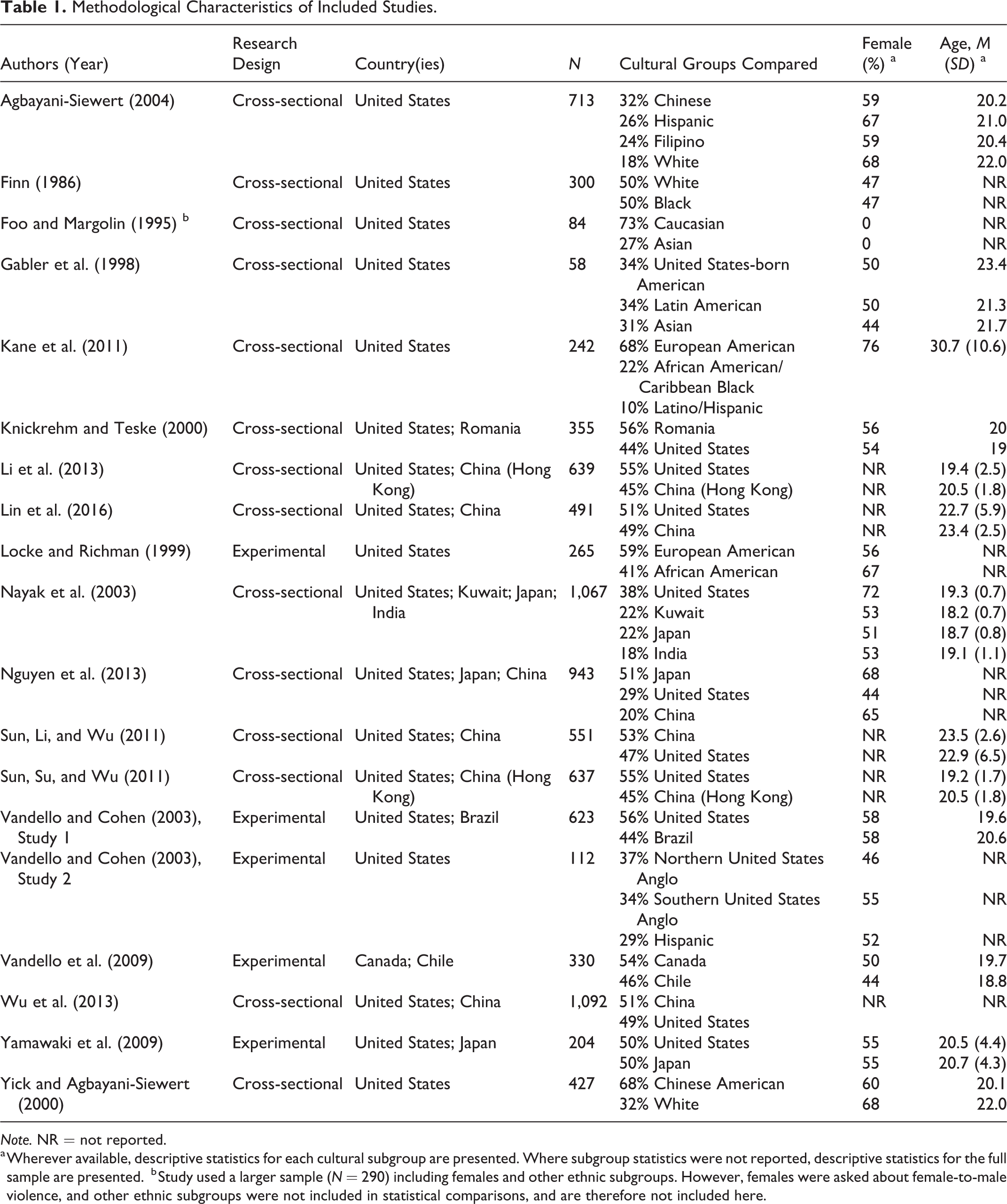
The methodological characteristics of the included studies are summarized in Table 1. Studies are cited in text only when information is not included in tables. Publication dates spanned 30 years, from 1986 to 2016. Seven (37%) studies were published from 2010 onward, eight (42%) between 2000 and 2009 (inclusive), three (16%) between 1990 and 1999 (inclusive), and one (5%) before 1990. Twelve (63%) studies (Finn, 1986; Foo & Margolin, 1995; Gabler et al., 1998; Kane et al., 2011; Knickrehm & Teske, 2000; Locke & Richman, 1999; Nayak et al., 2003; Nguyen et al., 2013; Vandello & Cohen, 2003, Study 1; Vandello & Cohen, 2003, Study 2; Vandello et al., 2009; Yamawaki et al., 2009) collected primary data and seven (37%; Agbayani-Siewert, 2004; Li et al., 2013, 2016; Sun, Li, & Wu, 2011; Sun, Su, & Wu, 2011; Wu et al., 2013; Yick & Agbayani-Siewert, 2000) conducted secondary analyses on subsets of data from larger studies. Five of the latter studies (Li et al., 2013; Lin et al., 2016; Sun, Li, & Wu, 2011; Sun, Su, & Wu, 2011; Wu et al., 2013) analyzed data from the International Project of Attitudes Toward Criminal Justice (IPACJ), which involved data collection from several universities in China and the United States. While the most recent publication was in 2016, the most recent data collection occurred in 2012 (Nguyen et al., 2013), highlighting a shortage of current data on tertiary students’ attitudes toward IPV.
Methodological Characteristics of Included Studies.
Note. NR = not reported.
a Wherever available, descriptive statistics for each cultural subgroup are presented. Where subgroup statistics were not reported, descriptive statistics for the full sample are presented.
b Study used a larger sample (N = 290) including females and other ethnic subgroups. However, females were asked about female-to-male violence, and other ethnic subgroups were not included in statistical comparisons, and are therefore not included here.
The majority (14; 74%) of the studies were cross-sectional in design, while five (26%) employed an experimental design. The five experimental studies involved the presentation of a fictional IPV scenario with certain variables manipulated to produce different versions of the scenario, and participants allocated to receive one such version. Only the cross-sectional comparisons across cultural groups have been evaluated here.
Eleven (58%) studies made cross-country comparisons. Eight compared students in the United States and Asia, more specifically: five compared the United States and China using IPACJ data; one compared the United States and Japan; one compared the United States, Japan, and China; and one compared the United States, Japan, Kuwait, and India. Two studies compared students in North American and South American countries: one compared the United States and Brazil and the other compared Canada and Chile. Finally, one study compared the United States and Romania. The other eight (42%) studies compared racial or ethnic groups within the United States. All of these studies included a European American or White subgroup in their comparisons; three also included an African American or Black subgroup, four included a Latinx or Hispanic subgroup, and four included an Asian American subgroup(s). Evidently, only a small number of countries and broad ethnic groups are represented in this review.
The sample size of studies ranged from 58 to 1,092, with an average sample size of 481 and a total sample size of at least 6,815. As five of the studies used data from the IPACJ and the number of overlapping participants could not be determined, only the largest of these five samples was counted toward the total; the remaining four samples ranged from 491 to 639. All samples were composed of college and/or university students (hereafter referred to collectively as college students). Of the 14 (74%) studies that reported the gender breakdown of participants, most comprised over 50% females. Of the 14 (74%) studies that reported the mean age of participants, most had mean ages between 18 and 24 years. Thus, the current collection of results predominantly reflects the attitudes of young adult college students.
Methodological Quality of Studies
The quality assessment of each study is presented in Table 2. Six (32%) studies were assessed to be of good quality, 12 (63%) of fair quality, and one (5%) of poor quality. The main strengths across the studies were clearly stating the research question or objective (19; 100%), clearly specifying the study population (17; 89%), clearly defining the exposure variable (i.e., how cultural groups were determined; 15; 79%), and using well-defined and psychometrically sound outcome measures (15; 79%). The main weaknesses across the studies were not providing a sample size justification, power description, or effect size estimate (11; 58%) and not adjusting for potential confounding variables in the analyses of interest (10; 53%). Three of the quality assessment criteria (Criteria 6, 8, and 10) did not apply to the exposure variable of interest, and one (Criterion 11) did not apply to any of the studies due to lack of follow-up assessment. Overall, the strength of the evidence is moderate, with most (95%) studies of fair or good methodological quality.
Quality Assessment of Included Studies.

Note. Criteria: 1 = Was the research question or objective in this article clearly stated? 2 = Was the study population clearly specified and defined? 3 = Was the participation rate of eligible persons at least 50%? 4 = Were all the subjects selected or recruited from the same or similar populations (including the same time period)? Were inclusion and exclusion criteria for being in the study prespecified and applied uniformly to all participants? 5 = Was a sample size justification, power description, or variance and effect estimates provided? 6 = For exposures that can vary in amount or level, did the study examine different levels of the exposure as related to the outcome (e.g., categories of exposure or exposure measured as a continuous variable)? 7 = Were the exposure measures (independent variables) clearly defined, valid, reliable, and implemented consistently across all study participants? 8 = Was the exposure(s) assessed more than once over time? 9 = Were the outcome measures (dependent variables) clearly defined, valid, reliable, and implemented consistently across all study participants? 10 = Were the outcome assessors blinded to the exposure status of participants? 11 = Was loss to follow-up after baseline 20% or less? 12 = Were key potential confounding variables measured and adjusted statistically for their impact on the relationship between exposure(s) and outcome(s)? Symbols: + = yes, − = no, ? = cannot determine or not reported, and / = not applicable.
Measures of Attitudes Toward IPV
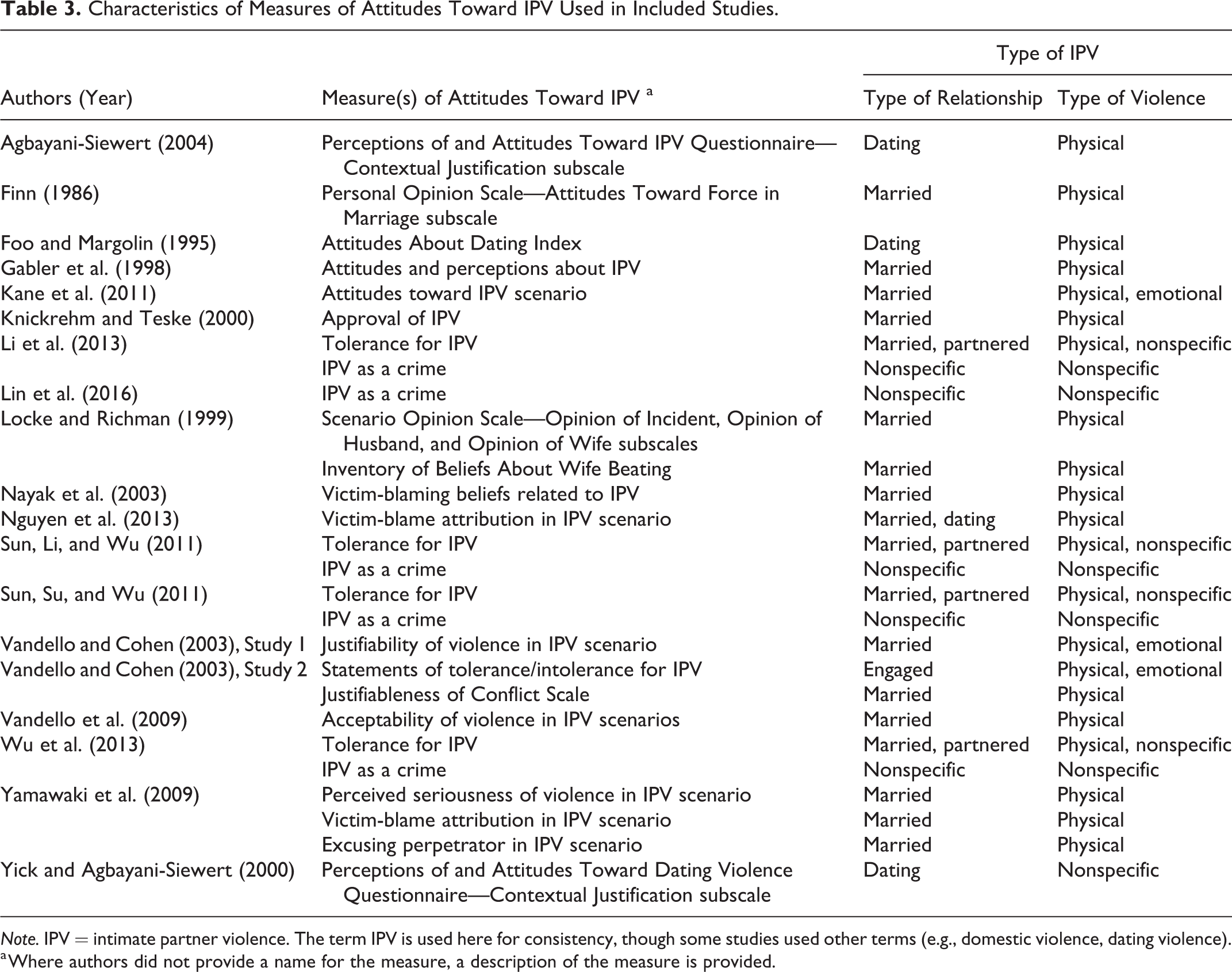
The characteristics of the measures used in the studies are summarized in Table 3. All 19 studies used self-report questionnaire instruments to measure attitudes toward IPV, and one study (Vandello & Cohen, 2003, Study 2) also examined real-life communications with a confederate IPV victim. Six (32%) studies (Agbayani-Siewert, 2004; Foo & Margolin, 1995; Locke & Richman, 1999; Nayak et al., 2003; Nguyen et al., 2013; Yick & Agbayani-Siewert, 2000) used or adapted previously developed measures, and five studies (26%; Li et al., 2013; Lin et al., 2016; Sun, Li, & Wu, 2011; Sun, Su, & Wu, 2011; Wu et al., 2013) analyzed data collected with the IPACJ survey instrument. The remaining eight studies used measures specifically developed for the study or did not specify the origin of the measure.
Characteristics of Measures of Attitudes Toward IPV Used in Included Studies.
Note. IPV = intimate partner violence. The term IPV is used here for consistency, though some studies used other terms (e.g., domestic violence, dating violence).
a Where authors did not provide a name for the measure, a description of the measure is provided.
The questionnaires varied in terms of the type of attitude, type of relationship, and type of violence assessed. With regard to the type of attitude, nine studies (Agbayani-Siewert, 2004; Finn, 1986; Foo & Margolin, 1995; Gabler et al., 1998; Knickrehm & Teske, 2000; Vandello & Cohen, 2003, Study 1; Vandello & Cohen, 2003, Study 2; Vandello et al., 2009; Yick & Agbayani-Siewert, 2000) assessed acceptance or justification of IPV in particular circumstances or for particular purposes. The five IPACJ studies examined agreement that IPV should be viewed as a crime, and four also examined tolerance for IPV through contextual justification and normalization of IPV (Li et al., 2013; Sun, Li, & Wu, 2011; Sun, Su, & Wu, 2011; Wu et al., 2013). Two studies (Nayak et al., 2003; Nguyen et al., 2013) exclusively assessed victim blaming and two other studies (Locke & Richman, 1999; Yamawaki et al., 2009) assessed victim blaming, perpetrator excusing, and perceived seriousness of an IPV incident. One of the latter studies (Locke & Richman, 1999) also used a separate measure of attitudes regarding the acceptability of IPV. Finally, one study (Kane et al., 2011) assessed various types of attitudes toward IPV including acceptance, justification, and normalization.
With regard to the type of relationship, 10 (53%) studies exclusively examined attitudes toward marital violence and three (16%) exclusively examined attitudes toward dating violence. Only one study (Nguyen et al., 2013) examined attitudes toward marital and dating violence separately. The remaining five studies (i.e., the IPACJ studies) used measures that did not specify the type of relationship (e.g., specifying only domestic violence or “partners”) and/or measures that included a mix of specific and nonspecific items.
With regard to the type of violence, 10 (53%) studies exclusively examined attitudes toward physical violence and three (16%) examined attitudes toward physical and emotional (including verbal) abuse. The remaining six studies (including the five IPACJ studies) used measures that did not specify the type of violence (e.g., specifying only domestic violence) and/or measures that included a mix of specific and nonspecific items. Taken together, the measures used in the included studies predominantly examine attitudes toward physical violence perpetrated by husbands against their wives. There is a scarcity of data on student attitudes toward other (i.e., nonphysical and nonmarital) forms of IPV.
Cross-Cultural Differences in Attitudes Toward IPV
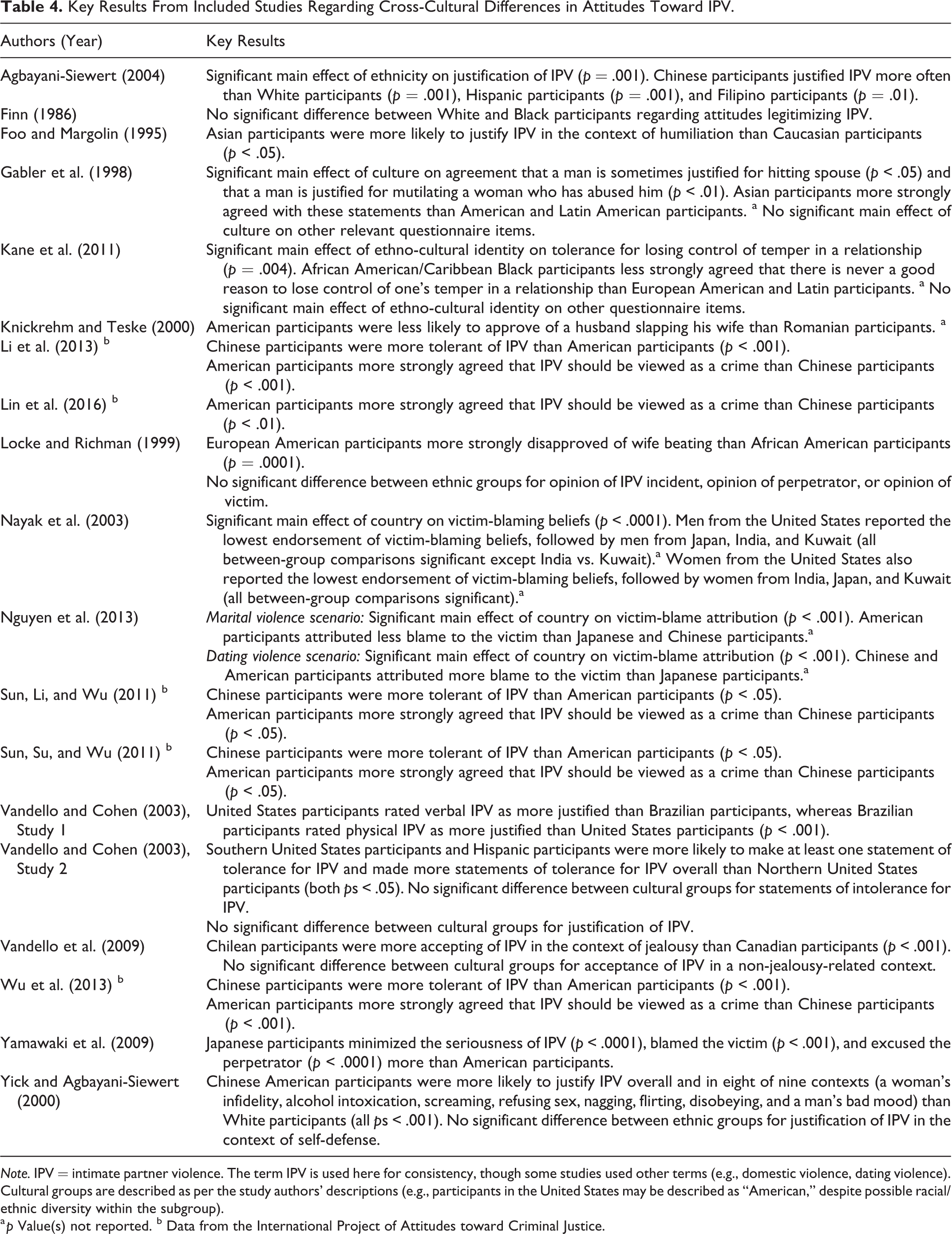
The key results from the 19 studies, including p values where available, are presented in Table 4. These findings are collectively summarized here, followed by detailed reviews of Country comparisons and Racial and ethnic comparisons separately. Overall, 11 (58%) studies (Agbayani-Siewert, 2004; Knickrehm & Teske, 2000; Li et al., 2013; Lin et al., 2016; Nayak et al., 2003; Nguyen et al., 2013; Sun, Li, & Wu, 2011; Sun, Su, & Wu, 2011; Vandello & Cohen, 2003, Study 1; Wu et al., 2013; Yamawaki et al., 2009) found significant cultural differences on all relevant measures (or in all conditions). Seven (37%) studies (Foo & Margolin, 1995; Gabler et al., 1998; Kane et al., 2011; Locke & Richman, 1999; Vandello & Cohen, 2003, Study 2; Vandello et al., 2009; Yick & Agbayani-Siewert, 2000) found significant cultural differences on some measures/items (or in some conditions) but not others. These seven studies varied in terms of their relative evidence for and against cultural differences; for example, Kane and colleagues (2011) found significant cultural differences on one of 10 relevant questionnaire items, while Yick and Agbayani-Siewert (2000) found significant cultural differences on eight of nine items. Only one (5%) study (Finn, 1986) found no significant cultural differences on its measure of attitudes toward IPV. Overall, there is considerable evidence that college students’ attitudes toward IPV differ cross-culturally.
Key Results From Included Studies Regarding Cross-Cultural Differences in Attitudes Toward IPV.
Note. IPV = intimate partner violence. The term IPV is used here for consistency, though some studies used other terms (e.g., domestic violence, dating violence). Cultural groups are described as per the study authors’ descriptions (e.g., participants in the United States may be described as “American,” despite possible racial/ethnic diversity within the subgroup).
a p Value(s) not reported. b Data from the International Project of Attitudes toward Criminal Justice.
Country comparisons
Of the 11 studies that compared attitudes toward IPV among students in different countries, eight compared the United States and Asia. Students in China were found to have more supportive attitudes toward IPV than their counterparts in the United States (Li et al., 2013; Lin et al., 2016; Nguyen et al., 2013; Sun, Li, & Wu, 2011; Sun, Su, & Wu, 2011; Wu et al., 2013). This was evident in terms of lower agreement that IPV should be viewed as a crime, higher tolerance for IPV, and greater victim blaming. Students in Japan were also found to have more supportive attitudes toward IPV than those in the United States, as indicated by greater victim blaming, perpetrator excusing, and minimization of IPV (Nayak et al., 2003; Nguyen et al., 2013; Yamawaki et al., 2009). However, one study (Nguyen et al., 2013) found that while students in Japan had more supportive attitudes toward marital violence than those in the United States, the reverse was true for dating violence. Thus, the general finding of less supportive attitudes among United States students may not hold across all contexts of IPV. Finally, students in India and Kuwait were found to have more supportive attitudes toward IPV than those in the United States, as indicated by greater victim-blaming beliefs (Nayak et al., 2003). Further between-group comparisons revealed variation among Asian countries, with more supportive attitudes among students in Kuwait than those in Japan and India (Nayak et al., 2003), and more supportive attitudes among students in China than those in Japan (Nguyen et al., 2013). Such findings highlight the limitations of regional generalizations.
Two studies compared students in North American and South American countries. The first (Vandello & Cohen, 2003, Study 1) found that students in Brazil were more accepting of physical IPV in response to infidelity than those in the United States, whereas the reverse was true for verbal IPV. The second (Vandello et al., 2009) found that students in Chile were more accepting of jealousy-related IPV than those in Canada, though the two groups did not differ in their acceptance of non-jealousy-related IPV. These findings further highlight the relevance of contextual factors (in this case, the precipitating event) in the cultural acceptance of IPV. Finally, one study (Knickrehm & Teske, 2000) found that students in Romania were more accepting of IPV than those in the United States. Taken together, the results from the cross-country studies indicate that college students in North American countries tend to hold less supportive attitudes toward IPV than their counterparts in countries in Asia, South America, and Europe. However, such generalizations must be interpreted with caution given evidence of variation in attitudes toward IPV within regions, and the influence of contextual variables including relationship type, violence type, and precipitating event on these differences.
Racial and ethnic comparisons
Of the eight studies that compared attitudes toward IPV among racial/ethnic groups of students in the United States, four compared White or United States-born students and Asian American students, and two of these also included a Latinx/Hispanic subgroup in comparisons. Asian American students were generally found to have more supportive attitudes toward IPV than White or United States-born students (Foo & Margolin, 1995; Gabler et al., 1998; Yick & Agbayani-Siewert, 2000) and Latinx students (Gabler et al., 1998), as indicated by greater contextual justification of IPV. However, these differences were not apparent in the context of self-defense; that is, Asian American students were more likely to justify IPV in contexts such as humiliation, a woman being unfaithful, drunk, screaming hysterically, unwilling to have sex, nagging, flirting, and disobeying her partner, but typically not in the context of a man defending himself (Foo & Margolin, 1995; Gabler et al., 1998; Yick & Agbayani-Siewert, 2000). One study (Agbayani-Siewert, 2004) included two separate Asian American subgroups and found that Chinese students justified IPV more than White, Hispanic, and Filipino students, while Filipino students were more attitudinally similar to White and Hispanic students. Agbayani-Siewert (2004) emphasizes that these results challenge the assumption of cultural similarity among Asian subgroups and indicate that broad ethnic categorizations may mask important differences. This intra-ethnic variation is also consistent with evidence of intra-regional variation from cross-country studies.
Three studies compared European American/White students and African American/Black students, and one of these also included a Latinx/Hispanic subgroup in comparisons. Two of these studies (Kane et al., 2011; Locke & Richman, 1999) found more supportive attitudes toward IPV among African American students in terms of approval of wife beating (Locke & Richman, 1999) and approval of losing control of one’s temper in a relationship (Kane et al., 2011), but not in terms of opinions about an IPV scenario (Locke & Richman, 1999) or other questionnaire items measuring justification, acceptance, or normalization of IPV (Kane et al., 2011). One study (Finn, 1986) found no significant difference between White and Black students on attitudes legitimizing IPV. Overall, the results indicate more similarities than differences in attitudes toward IPV between these two groups.
Finally, one study (Vandello & Cohen, 2003, Study 2) compared Northern United States Anglo, Southern United States Anglo, and Hispanic students. Southern Anglo and Hispanic students were found to have more supportive attitudes toward IPV in a jealousy-related context than Northern Anglo students according to their actual behavior, but not according to self-report. More specifically, after witnessing a jealousy-related IPV incident in person, Southern Anglo and Hispanic students were more likely to communicate tolerance for IPV to the victim than were Northern Anglo students. However, all subgroups condemned IPV on a questionnaire, suggesting that social desirability and explicit negativity toward IPV may obscure cultural differences in attitudes toward IPV (Vandello & Cohen, 2003, Study 2). In the three above-mentioned studies that also included a Latinx/Hispanic subgroup in cross-cultural comparisons (Agbayani-Siewert, 2004; Gabler et al., 1998; Kane et al., 2011), this subgroup did not appear to substantially differ from European American/White students in their attitudes toward IPV (though direct statistical comparisons were not always conducted).
Taken together, the results indicate that European American/White college students tend to hold less supportive attitudes toward IPV than Asian American students, but the evidence regarding other racial/ethnic groups is less clear. There is some evidence suggesting that European American/White students hold less supportive attitudes toward IPV than African American/Black students, though the results indicate more similarities than differences between these two groups overall. Latinx/Hispanic students do not appear to substantially differ from European American/White students in their attitudes toward IPV according to self-report, though greater tolerance for IPV among Hispanic students was evident in their actual behavior. Together with the evidence from cross-country studies, the findings broadly suggest that students in the United States and ethnic majority students in the United States tend to hold less supportive attitudes toward IPV than their counterparts in other countries and ethnic minority groups.
Discussion
This review examined cross-cultural differences in attitudes toward IPV among tertiary students. The 19 included studies provide considerable evidence that student attitudes toward IPV differ across countries and racial/ethnic groups. This may contribute to cross-cultural variation in IPV prevalence and indicates the necessity of culturally appropriate programs to address attitudes supportive of IPV in the student population. The findings will be summarized and then integrated with theoretical explanations below.
There is fair to good evidence suggesting that college students in North America, predominantly in the United States, have less supportive attitudes toward IPV than their counterparts in Asia, South America, and Europe; more specifically, in China (Li et al., 2013; Lin et al., 2016; Nguyen et al., 2013; Sun, Li, & Wu, 2011; Sun, Su, & Wu, 2011; Wu et al., 2013), Japan (Nayak et al., 2003; Nguyen et al., 2013; Yamawaki et al., 2009), India (Nayak et al., 2003), Kuwait (Nayak et al., 2003), Brazil (Vandello & Cohen, 2003, Study 1), Chile (Vandello et al., 2009), and Romania (Knickrehm & Teske, 2000). Within the United States, there is fair evidence suggesting that White students have less supportive attitudes toward IPV than Asian students (Agbayani-Siewert, 2004; Foo & Margolin, 1995; Gabler et al., 1998; Yick & Agbayani-Siewert, 2000). However, the evidence regarding other racial/ethnic differences is less clear. There is some evidence that White/European American students have less supportive attitudes toward IPV than Black/African American students, though there appears to be more similarities than differences between these two groups overall (Finn, 1986; Kane et al., 2011; Locke & Richman, 1999). Additionally, some results indicate that Hispanic/Latinx students are attitudinally similar to White/European American students (Agbayani-Siewert, 2004; Gabler et al., 1998; Kane et al., 2011), though one study found greater tolerance for IPV among Hispanic students as measured by behavior (Vandello & Cohen, 2003, Study 2).
Taken together, the findings broadly suggest that college students outside the United States, and ethnic minority students within the United States, may benefit from more targeted interventions to reduce attitudes supportive of IPV. (It is worth reiterating here that the United States served as a comparator in the majority of the included studies, therefore making it a key focus of the review, rather than representing or leading a group of countries.) However, there is also evidence of variation within regions (Nayak et al., 2003; Nguyen et al., 2013) and ethnic groups (Agbayani-Siewert, 2004). Additionally, a number of studies suggest that cross-cultural differences in attitudes toward IPV may depend on contextual variables such as the type of relationship (Nguyen et al., 2013), type of violence (Vandello & Cohen, 2003, Study 1), and precipitating event or provocation for violence (Vandello et al., 2009; Yick & Agbayani-Siewert, 2000). These nuances will be discussed further below.
In theorizing and explaining cross-cultural differences in attitudes toward IPV, the studies collectively emphasize the interrelated roles of patriarchy, gender inequality, and traditional gender roles. While many cultures are traditionally patriarchal, the extent to which male superiority and female inferiority are valued and embedded in daily life varies dramatically across cultural settings (Nayak et al., 2003; Yamawaki et al., 2009). The United States has witnessed multiple waves of women’s movements that have gradually improved gender equality and increased public consciousness of women’s rights and issues, including IPV (Lin et al., 2016; Sun, Su, & Wu, 2011). While other countries have also undergone significant improvements in these domains, the social and political development of non-Western and low- and middle-income countries generally tends to lag behind that of Western and high-income countries (though there are notable exceptions, including a number of matriarchal societies within low- and middle-income countries that were not represented in this review). Enduring patriarchal ideologies and practices may account, at least in part, for greater acceptance of IPV among students in these countries (Lin et al., 2016; Sun, Li, & Wu, 2011). Even within one country such as the United States, the degree to which cultural subgroups espouse patriarchal ideologies and traditional gender roles varies widely, likely contributing to the observed racial/ethnic differences in attitudes toward IPV (Agbayani-Siewert, 2004; Yick & Agbayani-Siewert, 2000). These explanations align with feminist theory suggesting that patriarchy fosters approval of IPV (Dobash & Dobash, 1979; Hunnicutt, 2009).
Beyond the overarching influence of patriarchy, many studies point to particular cultural values and norms in explaining cross-cultural differences in attitudes toward IPV (Agbayani-Siewert, 2004; Li et al., 2013; Nguyen et al., 2013; Sun, Li, & Wu, 2011; Sun, Su, & Wu, 2011; Vandello & Cohen, 2003; Vandello et al., 2009; Yamawaki et al., 2009; Yick & Agbayani-Siewert, 2000). For example, traditional Chinese values of Confucianism emphasize hierarchical family structures in which women’s roles are as caretakers who are obedient and virtuous, and family loyalty is of the utmost importance (Agbayani-Siewert, 2004; Yick & Agbayani-Siewert, 2000). Behavior that transgresses these norms may be perceived as warranting violence. Indeed, Chinese students were more likely to justify IPV in situations which deviated from these prescriptions of the family and women’s roles, such as when a woman is drunk, nagging, flirting, or disobeying her partner (Yick & Agbayani-Siewert, 2000). Additionally, the Asian cultural norm of “saving face” motivates individuals to protect themselves and their families from shame (Agbayani-Siewert, 2004; Yick & Agbayani-Siewert, 2000). This may explain why Asian students were more likely to justify IPV in situations where the man was humiliated by his partner’s behavior, yet not in the context of self-defense (Foo & Margolin, 1995; Yick & Agbayani-Siewert, 2000).
Cultural values and norms regarding honor may similarly contribute to cross-cultural differences in attitudes toward IPV. In cultures of honor such as Hispanic and Latinx cultures, a man’s masculine identity and family reputation are paramount, and depend greatly on the good name of his female partner (Vandello & Cohen, 2003; Vandello et al., 2009). A woman’s infidelity not only betrays a man’s trust, but also threatens his honor and that of his family. Within this cultural context, men’s use of violence against women may be seen as appropriate and even necessary to preserve their honor (Vandello & Cohen, 2003). This may explain why students belonging to cultures that value honor highly (i.e., Hispanic/Latinx and Southern United States. students) were more likely to justify IPV in the context of jealousy than those from cultures that do not place high importance on honor (i.e., Canadian and Northern United States students; Vandello & Cohen, 2003; Vandello et al., 2009). It should, however, be noted that cultural explanations of honor-based violence have been critiqued, particularly for not accounting for wider social and political contexts that shape the phenomena, and for running the risk of stereotyping certain communities and sensationalizing the issue (Bhanbhro et al., 2016; Gill, 2006).
While few studies made comparisons among countries outside the United States or among minority racial/ethnic groups, those that did found variation among these groups (Agbayani-Siewert, 2004; Nayak et al., 2003; Nguyen et al., 2013). Specifically, there is evidence that Chinese students have more supportive attitudes toward IPV than Japanese students (Nguyen et al., 2013) and Filipino students (Agbayani-Siewert, 2004), and that students in Kuwait have more supportive attitudes toward IPV than those in Japan and India (Nayak et al., 2003). These findings also fit within the framework of patriarchy. For example, Agbayani-Siewert (2004) highlights that Filipino culture reflects egalitarian rather than patriarchal ideology and structure, while the reverse is true of Chinese culture; this may explain why Filipino students were more attitudinally similar to White students than to Chinese students. These findings also highlight the limitations of broad cultural categorizations such as “Asian” and the need to further specify cultural groups based on cultural values and norms.
In summarizing the findings from this review, it must be stressed that while students in the United States and ethnic majority students in the United States appear to have less supportive attitudes toward IPV than those in other countries and ethnic minority groups, this does not imply that they are free from problematic attitudes or the need for intervention. Indeed, most studies showed some degree of attitudinal acceptance of IPV among United States or White students. Thus, all cultural groups would benefit from more exposure to programs designed to improve attitudes toward IPV, though cultural minority groups may require more intensive intervention on this front.
It is also crucial to acknowledge the cultural essentialism that currently dominates the field of cross-cultural research on IPV. There is a tendency to view culture as static and unchanging, and the attitudes of entire national groups as homogeneous across gender, class, religion, and so forth. Such essentialist generalizations of culture, within and beyond the context of IPV, have been strongly critiqued (e.g., Park, 2005; Volpp, 2002; Warrier, 2008), and more contemporary views recognize culture as multidimensional and dynamic. As the current review reflects the current state of the literature, its conclusions do not capture these more nuanced conceptualizations of culture.
Limitations of the Studies
There are a number of important limitations of the current body of evidence. First, the scope of cross-cultural comparisons was limited, with only eight countries and four main racial/ethnic groups within the United States represented in this review. The United States and White students served as the main comparison points for all other countries and racial/ethnic groups. Only two studies included multiple countries outside the United States, and only three studies included multiple racial/ethnic minority groups within the United States. Thus, the evidence as a whole permits only broad conclusions regarding cross-cultural differences in attitudes toward IPV. Furthermore, cultural groups are themselves diverse, comprising further subgroups with distinct cultural values and norms. Other culture-related variables, including country of origin and acculturation, may make country and race/ethnicity less salient indicators of culture. More broadly, as discussed above, an essentialist view of culture is inherently limiting, and moving beyond static and rigid constructions of culture may provide more nuanced insights into attitudes toward IPV.
There was also considerable diversity in the measures of attitudes toward IPV used in studies. Different studies assessed different types of attitudes (e.g., contextual justification, victim blaming), which likely contribute to variability in results. Yet, the majority of studies exclusively measured attitudes toward physical violence in marital relationships. Only three studies also incorporated emotional/verbal abuse, and only one of these studies examined attitudes toward the different types of violence separately. There is a clear need to investigate students’ acceptance of other forms of IPV, including emotional, sexual, and financial, and the possibility of different patterns of cultural acceptance for different types of violence. Similarly, only three studies examined attitudes toward dating violence as opposed to marital violence, and only one study examined attitudes toward dating and marital violence separately. Further research is needed to determine whether cross-cultural differences in attitudes toward IPV vary according to relationship type. Finally, as the study samples predominantly comprise young undergraduate college students in the United States, the findings may not be generalizable to the wider population of tertiary students.
Strengths and Limitations of the Review
This review employed a comprehensive systematic search strategy to identify relevant studies and a comprehensive quality assessment procedure to assess their methodological quality. Both country comparisons and racial/ethnic comparisons were included, which allowed for a broad evaluation of cultural differences in student attitudes toward IPV. The findings highlight the importance of the role of culture in attitudes toward IPV and of tailoring attitude change programs to the cultural context in which they are delivered.
Still, some important limitations of this review must be considered. First, we did not include unpublished studies or gray literature and did not assess for potential publication bias. It is possible that negative or null results are underrepresented in the published literature and therefore this review. Second, we did not include studies published in languages other than English. This may have led to the systematic exclusion of findings published in non-English journals, which is a particular limitation for cross-cultural research. Third, interrater reliability statistics could not be calculated as the screening, data extraction, and quality assessment were verified rather than independently conducted by a second reviewer. Any country or regional generalizations from this review must be interpreted with caution, as some countries and regions are represented by only one study, and there was evidence of variation in attitudes toward IPV within countries and regions.
Implications for Practice, Policy, and Research
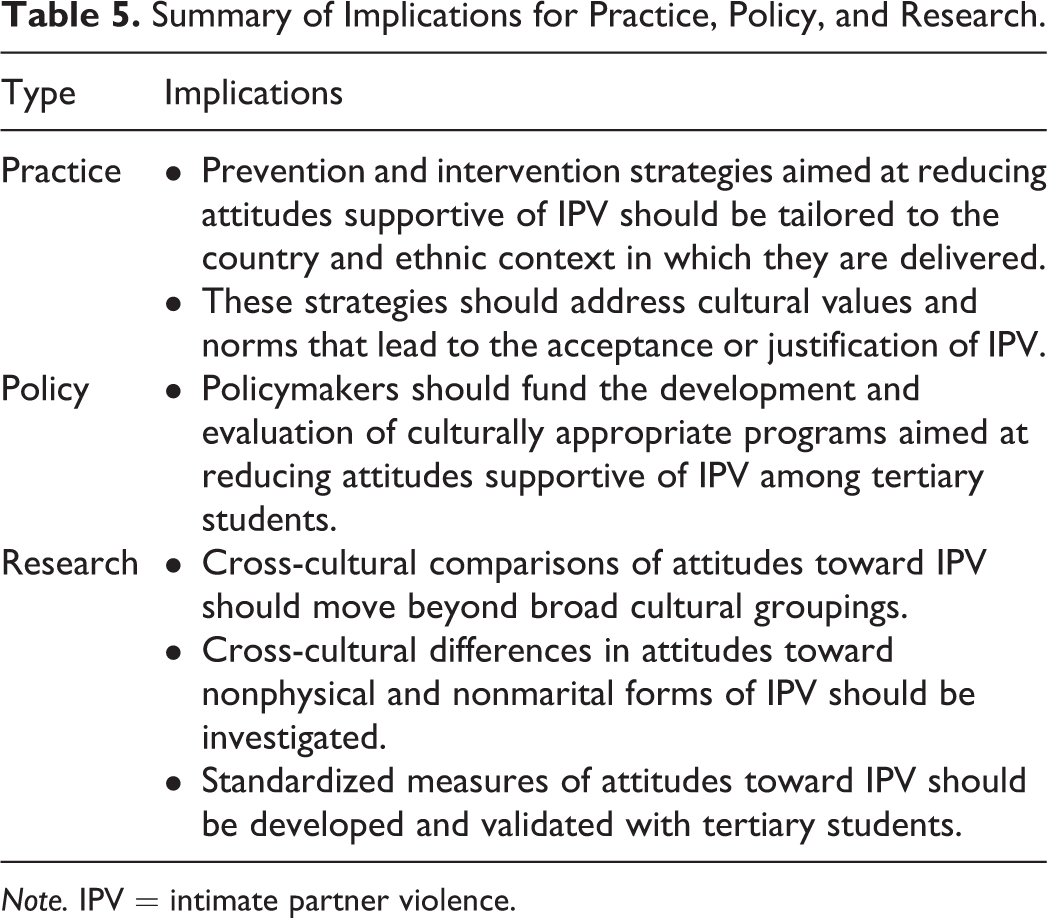
Attitudes toward IPV have been implicated in the etiology and maintenance of IPV and have therefore become a key target of prevention and intervention strategies (Flood & Pease, 2009). A thorough understanding of the factors that influence attitudes toward IPV is necessary to change attitudes supportive of IPV and, ultimately, reduce IPV. This review highlights that student attitudes toward IPV differ across cultural settings and backgrounds. This broadly suggests that research on attitudes toward IPV and strategies aimed at changing attitudes in this population should take account of cultural factors. The implications of the review are summarized in Table 5.
Summary of Implications for Practice, Policy, and Research.
Note. IPV = intimate partner violence.
Practice and policy
The exceptionally high rates of IPV among college students, coupled with the increasing cultural diversity of the student population, necessitate culturally sensitive IPV programs and services. This review indicates that a “one-size-fits-all” approach to policymaking and service provision will not be maximally effective in improving student attitudes toward IPV. Prevention and intervention strategies should be tailored to the country and ethnic context rather than adapted from those developed in other countries and/or for other ethnic groups. These strategies should address cultural values and norms that lead to the acceptance or justification of IPV. Consultation with cultural organizations and community leaders can shed light on the most relevant norms to target and thus inform the design and implementation of programs and services. Certain cultural values may also be leveraged to discourage violence, such as values emphasizing interpersonal harmony and respect (Yick & Agbayani-Siewert, 2000) and face-saving values, which may deter students from initiating IPV due to the poor community reputation it may bring (Li et al., 2013).
Research
The review findings emphasize the importance of considering culture when examining student attitudes toward IPV. The limitations of the current body of evidence call for future research to broaden the scope of cross-cultural comparisons. This could be achieved by including multiple cultural groups in comparisons, examining narrower cultural subgroups, and making comparisons among minority groups (rather than using the majority group as the only reference point). Future research should also endeavor to broaden the types of IPV investigated, including exploring cross-cultural differences in student attitudes toward dating violence and nonphysical forms of violence. There is some indication that patterns of cultural acceptance of IPV differ according to the type of violence, type of relationship between the victim and perpetrator, and other contextual factors such as the precipitating event. Further research is needed to clarify the particular contexts in which IPV is justified within cultures. These research pursuits would provide a more nuanced understanding of cross-cultural differences in student attitudes toward IPV, and thus more precise targets for intervention with this high-risk population. It would also be beneficial to develop and validate standardized measures of attitudes toward IPV for use with students, to facilitate comparisons across studies.
Conclusions
This is the first systematic review of cross-cultural differences in attitudes toward IPV among tertiary students. The review found considerable evidence that attitudes toward IPV vary across countries and racial/ethnic groups. Generally, students in the United States and ethnic majority students in the United States had less accepting attitudes toward IPV than their counterparts in non-Western countries and ethnic minority groups. The findings highlight the importance of culturally appropriate prevention and intervention strategies to reduce attitudes supportive of IPV among students. Future research should aim to broaden the scope of cross-cultural comparisons and types of IPV examined in order to develop more nuanced understandings of patterns of cultural acceptance of IPV. Given the exceptionally high rates of IPV among tertiary students, urgent and persistent efforts are required to reduce attitudes that support IPV in this population and move closer toward zero tolerance for IPV.
Supplemental Material
Supplemental Material, sj-pdf-1-tva-10.1177_1524838020985565 - Cross-Cultural Differences in Student Attitudes Toward Intimate Partner Violence: A Systematic Review
Supplemental Material, sj-pdf-1-tva-10.1177_1524838020985565 for Cross-Cultural Differences in Student Attitudes Toward Intimate Partner Violence: A Systematic Review by Laura Zark and Lata Satyen in Trauma, Violence, & Abuse
Footnotes
Declaration of Conflicting Interests
The author(s) declared no potential conflicts of interest with respect to the research, authorship, and/or publication of this article.
Funding
The author(s) disclosed receipt of the following financial support for the research, authorship, and/or publication of this article: Laura Zark is supported by the Lina Ricciardelli Memorial Scholarship from the School of Psychology, Deakin University.

Supplemental Material
The supplemental material for this article is available online.
References
Supplementary Material
Please find the following supplemental material available below.
For Open Access articles published under a Creative Commons License, all supplemental material carries the same license as the article it is associated with.
For non-Open Access articles published, all supplemental material carries a non-exclusive license, and permission requests for re-use of supplemental material or any part of supplemental material shall be sent directly to the copyright owner as specified in the copyright notice associated with the article.
