



Abstract
Health care providers are often “second victims” of traumatic childbirth events and should be adequately supported by their organizations to alleviate occupational stress and burnout. Therefore, this review aimed to explore and understand the vicarious traumatic childbirth experiences of health care providers, including obstetricians, midwives, nurses, and students. A systematic review of qualitative studies was conducted. Seven electronic databases, namely, PubMed, CINAHL, Embase, PsycINFO, Cochrane, Scopus, and Web of Science, were searched from each database’s inception to May 2020. In total, 1,575 studies were retrieved and screened according to the Preferred Reporting Items for Systematic Reviews and Meta-Analyses guidelines. Seventeen studies were included in this review and were meta-summarized and then meta-synthesized using the Sandelowski and Barroso approach. The overarching theme of “Tunneling through the trauma with a hope of finding an end” was derived, and four main themes along with 15 subthemes were identified. The four main themes were (1) “instantaneous response to the trauma,” (2) “finding hope in the midst of chaos,” (3) “dealing with the aftermath,” and (4) “resolution to move on.” Communication and teamwork among health care team members were identified as challenges contributed by professional hierarchy and lack of role clarity. Midwives and labor and delivery nurses expressed powerlessness in advocating for women on many occasions, and health care providers often had feelings of guilt and self-blame after adverse events. Health care providers also reported inadequate support from their colleagues and organizations, which influenced their ability to cope with the aftermath of trauma and their decision to stay in the profession.
Keywords
Majority of women worldwide perceive childbirth as a momentous event. However, the complex and erratic nature of childbirth can result in numerous perinatal and postpartum complications (Schrøder et al., 2017). Traumatic childbirth events usually involve unanticipated interventions and complications, such as shoulder dystocia, obstetric anal sphincter injuries, massive hemorrhage, placental abruption, instrumental deliveries, or emergency caesarean sections (Beck, 2013; Edqvist et al., 2014; Elmir et al., 2010). Several women who experienced such complications revealed that the management of childbirth by health care providers was a significant factor that contributed to their trauma (Byrne et al., 2017; Nicholls & Ayers, 2007; Reed et al., 2017; Rodríguez-Almagro et al., 2019; Stankovic, 2017; G. Thomson & Downe, 2008). Women expressed that their decisions were often not respected by health care providers which included obstetricians, midwives, and labor and delivery (L&D) nurses and that their concerns were not acknowledged, causing them to feel powerless and afraid during labor (Karlström et al., 2015; Waldenstrom et al., 2004).
Over the past decade, researchers have attempted to understand the intricacies of traumatic childbirth events from the perspectives of health care providers and reported that they were “second victims” of such events (Elmir et al., 2017; Schrøder et al., 2019). They were subjected to feelings of guilt, self-blame, and self-doubt when adverse outcomes could not be prevented, even if they knew that they were not at fault (Schrøder et al., 2019; Schrøder et al., 2017). Those who were empathetic and compassionate and had built emotional connections with their patients were more at risk of being vicariously traumatized by adverse childbirth events (Sheen et al., 2014; Wilson & Thomas, 2004). Vicarious traumatization was first coined by Pearlman and Saakvitne (1995) as a traumatic experience among helping professionals who witness and work in high-stress and trauma-exposed fields, such as health care professionals and therapists. Figley (1995) had also introduced the concept of compassion fatigue among health care professionals and further discussed their vulnerability to secondary trauma.
Lapses in communication among health care providers, deviation from standardized protocols, or failure in monitoring, assessing, and reporting clinical abnormalities can contribute to adverse events (Miller et al., 2016; Vincent et al., 2014). Of the adverse outcomes in maternity care, 72% are attributed to ineffective communication and teamwork (Pronovost et al., 2011). Moreover, effective communication in emergency situations dealing with childbirth complications can be more challenging for an interprofessional team of obstetricians and midwives (Moreira & French, 2019). However, patient safety should not be compromised due to such issues.
The multifactorial stress experienced by health care providers in the delivery unit seriously affects their job satisfaction levels. In a recent Western Canadian study, 34.7% of the midwives had serious considerations on leaving their profession, and the majority of them were concerned about their physical and mental well-being (Stoll & Gallagher, 2019). Similarly, in a study done in European and Asian countries, 37.8% of the midwives had intentions to leave their career (Jarosova et al., 2016). A study conducted in China reported that 56.6% of the obstetricians and pediatricians experienced occupational stress and burnout (Ye et al., 2019). Another recent study done across the hospitals in the United Kingdom also reported that more than one third of the obstetricians and gynecologists experienced burnout, especially trainees (Bourne et al., 2019) and suggested that these medical professionals were more vulnerable to burnout symptoms as compared to those in other specialties (Moradi et al., 2015). Without adequate support from organizations, occupational stress, burnout, and staff retention rates can worsen the shortage of man power in health care sectors (Vidal, 2019).
A reliable team of maternity health care professionals is crucial in ensuring that women receive the best care during one of the biggest moments in their lives. A deep understanding of how to support these health care professionals is required to assist in future development of programs and measures, and using a naturalistic inquiry approach could potentially enhance the understanding of human experiences especially in such traumatic events (Polit & Beck, 2010). To date, the understanding of how health care providers perceive traumatic childbirth events remains limited. To the best of our knowledge, only three existing qualitative systematic reviews were published and all of them focused on exploring the traumatic childbirth experiences of midwives. Two of the reviews only included studies up to 2016 (Elmir et al., 2017; Sheen et al., 2014), and the most recent review focused on studies reporting quality of provider interaction (Patterson et al., 2019). No reviews that explored the vicarious traumatic childbirth experiences of an interdisciplinary health care team were identified. Yet this information is valuable to the comprehensive understanding of interprofessional factors involved in the traumatic events. This review aimed to include midwifery and medical students as well because they contribute fresh perspectives as observers and individuals with untouched midwifery or medical philosophies. This systematic review of qualitative studies aimed to explore and understand the vicarious traumatic childbirth experiences of health care providers, including obstetricians, midwives, nurses, and students, with an ultimate goal of providing appropriate support as needed.
Method
Study Design
This qualitative systematic review meta-summarized and meta-synthesized available evidence on the vicarious traumatic childbirth experiences of obstetricians, midwives, and students.
Search Strategy
A comprehensive and systematic search for eligible studies was conducted according to the Preferred Reporting Items for Systematic Reviews and Meta-Analyses (PRISMA) guidelines (Moher et al., 2009). PubMed and CINAHL were searched initially to identify key words and subject headings that were relevant to the topic of interest. The finalized search terms were then grouped into three main concepts, “childbirth,” “traumatic,” and “health personnel.” Following, they were combined using Boolean operators, truncation, and proximity search techniques under the guidance of the institute’s resource librarian. Afterward, seven electronic databases, namely, PubMed, CINAHL, Embase, PsycINFO, Cochrane, Scopus, and Web of Science, were thoroughly searched from the inception of each database to May 2020. Mednar was also searched to retrieve relevant gray literature and unpublished studies. As multilingual reviewers were unavailable, only studies published in English were retrieved. Lastly, the reference lists of selected secondary literature were explored to identify relevant studies not generated by the database search. The detailed search strategy can be referred to in Online Appendix A.
Eligibility Criteria
This review included both qualitative and mixed-methods studies published in English that focused on the vicarious traumatic childbirth experiences and perspectives of health care providers. However, only those mixed-methods studies from which the qualitative findings can be distinctly extracted were selected for inclusion. The participants in this review consisted of obstetricians, midwives, nurses, and students training to become nurses, midwives, and doctors who had encountered at least one traumatic episode involving childbirth. Given the limited number of publications on this topic of interest and the specificity of the participants, an exclusion criterion was not set.
Search Outcomes
The search in PubMed, CINAHL, Embase, PsycINFO, Cochrane, Scopus, and Web of Science yielded 1,624 studies. A total of 430 studies were also generated from the search in Mednar. The titles, abstracts, and publication details of each study were imported into the EndNoteX9 software for screening. After 282 duplicated studies were removed, the remaining studies were screened based on their titles and abstracts for relevance to this review’s topic. Irrelevant studies were excluded, leaving 76 studies to be assessed for eligibility based on their full texts. Sixty-one studies were excluded with reasons, and two studies were identified by searching the reference lists of relevant secondary literature. As a result, a total of 17 studies qualified for inclusion, of which 13 are qualitative and four are mixed-methods studies. This screening process is illustrated in the PRISMA flow diagram (Moher et al., 2009) shown in Figure 1.
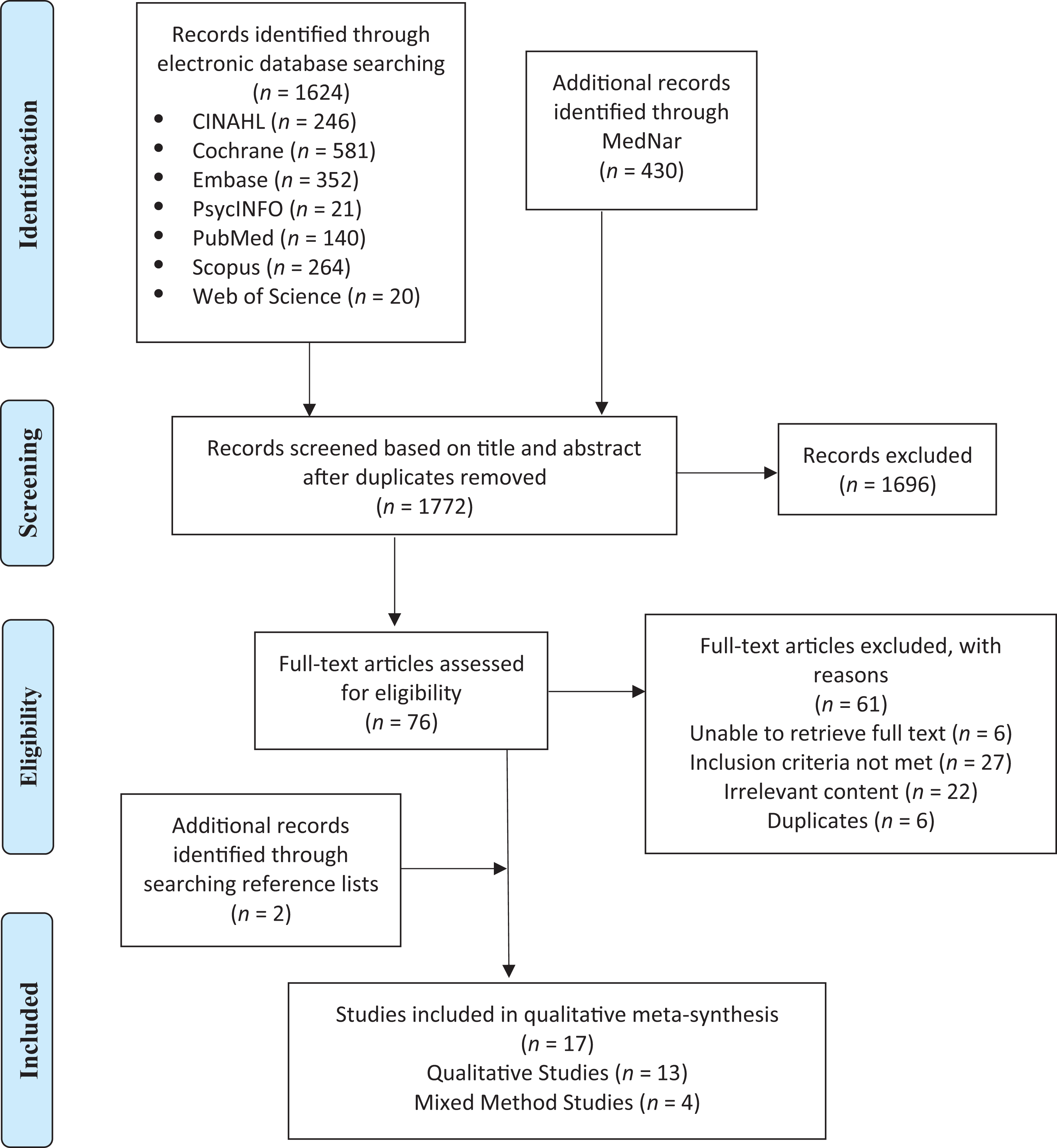
Preferred Reporting Items for Systematic Reviews and Meta-Analyses flow diagram.
Quality Appraisal
All 17 included studies were critically appraised for their quality using the Critical Appraisal Skills Programme checklist for qualitative studies (Milton Keynes Primary Care Trust, 2002). This 10-item checklist assessed the appropriateness and clarity of the study aims and objectives, methods, design, sampling strategy, data collection, reflexivity of researchers, ethical considerations, rigor of data analysis, findings, and research value. Each item on the checklist was rated a “yes” (three points), “can’t tell” (two points), or “no” (one point). The quality appraisal was done independently by the two authors, and any discrepancies were discussed until a consensus was reached. Each study was scored out of 30, and the scores across the 17 studies ranged from 27 to 30, with an average of 28.2. The details on quality appraisal of each study are provided in Online Appendix B. All studies were of good quality. All the studies were included in this review regardless of their scores so as to improve the rigor of the meta-synthesis.
Data Extraction
Data from the included studies were extracted in two steps. The first step involved extracting and organizing the publication details (name of author(s) and year of publication), study title, country, study aim(s), methodology (sample characteristics, sampling, design, and analysis), and results (main theme, themes, and subthemes) of each included study as recommended by the PRISMA guidelines (Moher et al., 2009). In the second step, the verbatim and nonverbatim statements of the obstetricians, midwives, and students on their traumatic childbirth experiences were extracted for thematic analysis and new theme generation. The two authors resolved any disparities that emerged before synthesizing the extracted data.
Data Synthesis
Sandelowski and Barroso’s two-step approach was adopted to synthesize the extracted data (Sandelowski & Barroso, 2007; Sandelowski et al., 2007). Step 1 involved meta-summarizing by extracting, organizing, and abstracting the text findings from the included studies. The two authors then independently analyzed the themes across all included studies and classified them into new main themes and subthemes (Braun & Clarke, 2006). The two authors eventually reached unanimity on the new themes before proceeding to the second step, which involved meta-synthesizing the data. In this step, new concepts were generated from the refined themes to enhance and expand the understanding of the experiences and perspectives of health care providers when encountering traumatic childbirth events. Consistent comparison between the meta-summary and individual studies was ensured throughout the meta-synthesis to maintain triangulation.
Results
Characteristics of Included Studies
The characteristics of each of the 17 included studies are presented in Online Appendix C. The earliest study was published in 2009 (McCool et al., 2009), and the most recent studies were published in 2020 (Wahlberg et al., 2020). One study recruited participants from various parts of the world, including the United States, North America, South America, Asia, Australia, Europe, and Africa (McCool et al., 2009). The rest of the studies were conducted in individual countries: five in Sweden (Edqvist et al., 2014; Lindberg et al., 2013; Rönnerhag et al., 2019; Wahlberg et al., 2019; Wahlberg et al., 2020), three in the United States (Beck & Gable, 2012; Beck et al., 2015; Goldbort et al., 2011), three in the United Kingdom (Coldridge & Davies, 2017; Davies & Coldridge, 2015; Sheen et al., 2016), two in Australia (Rice & Warland, 2013; Toohill et al., 2019), one in Denmark (Schrøder et al., 2016), one in China (Huang et al., 2019), and one in Israel (Halperin et al., 2011).
Six studies had their designs based on phenomenology (Coldridge & Davies, 2017; Davies & Coldridge, 2015; Edqvist et al., 2014; Goldbort et al., 2011; Huang et al., 2019; McCool et al., 2009), two mixed-methods studies used a convergent parallel design (Beck & Gable, 2012; Beck et al., 2015), and one study was based on a modified constructivist grounded theory design (Wahlberg et al., 2019). All the studies obtained data either through semistructured interviews or open-ended questions for written responses, and all the data were analyzed using either content or thematic analysis.
The total number of participants across the 17 included studies was 925: 548 were midwives, 331 L&D nurses, 11 were students training to become midwives, and 13 were obstetricians. One study involved 22 obstetricians, midwives, and nurses but did not specify the number of each category of participants (Rönnerhag et al., 2019). In nine of the studies, the participants were purely midwives. Two of the studies solely focused on students training to become midwives (Coldridge & Davies, 2017; Davies & Coldridge, 2015). Two of the studies (Beck & Gable, 2012; Goldbort et al., 2011) exclusively focused on L&D nurses. The remaining four studies had a mix of obstetricians, midwives, and nurses (Rönnerhag et al., 2019; Schrøder et al., 2016; Wahlberg et al., 2019; Wahlberg et al., 2020).
The meta-synthesis of the findings from the 17 included studies established an overarching theme of “Tunneling Through the Trauma with a Hope of Finding an End,” which demonstrates the magnitude of childbirth trauma confronted by maternity unit health care providers in their daily lives through the following four main themes and 15 subthemes. Figure 2 and Table 1 show the diagrammatic representation and summary of these themes and subthemes, respectively.

Diagrammatic representation of themes and subthemes of “tunneling through the trauma with a hope of finding an end.”
Summary of Main Themes and Subthemes.

Theme 1: Instantaneous Response to the Trauma
This theme revealed the scenarios of health care providers encountering childbirth-related trauma, how they identified with themselves and their patients emotionally, and how they struggled to become their patients’ advocates through four subthemes: “witnessing trauma,” “empathizing with patients,” “role confusion,” and “emotional response.”
Witnessing trauma
Health care providers who reported that they were traumatized by adverse events during childbirth were often new and inexperienced, and such events had greater impacts on them as compared to those who were more senior in the profession (Beck & Gable, 2012; Davies & Coldridge, 2015; Rice & Warland, 2013; Sheen et al., 2016). Facing the death of a newborn, witnessing the violent and abusive deliveries, participating in emergency situations, and observing the coercion of women to comply during labor were the examples of traumatic scenarios described by midwives, L&D nurses, and student midwives (Beck & Gable, 2012; Davies & Coldridge, 2015; Goldbort et al., 2011; Rice & Warland, 2013; Sheen et al., 2016; Toohill et al., 2019). The studies exclusively focused on L&D nurses (Beck & Gable, 2012; Goldbort et al., 2011) highlighted that the L&D nurses “felt like an accomplice to crime” as they witnessed something unnecessary but harmful being done to the laboring women. The “unusual severity” of these occurrences was difficult for them to mentally process and “too big for the brain to grasp,” leaving them overwhelmed, horrified, in shock, and in “disbelief.” Such responses to trauma were contributed by health care providers’ empathetic attitudes toward their patients as reported in three of the studies (Davies & Coldridge, 2015; Rice & Warland, 2013; Sheen et al., 2016).
Empathizing with patients
Student midwives perceived that empathizing with women was an imperative quality that a midwife should possess, and they felt satisfaction from providing compassionate care (Coldridge & Davies, 2017; Davies & Coldridge, 2015). However, several students expressed that empathizing with women was painful, distressing, overwhelming, and not encouraged by some midwives (Coldridge & Davies, 2017; Davies & Coldridge, 2015). Midwives who had built meaningful relationships with their patients felt connected to their patients’ trauma, such that it affected them emotionally as well (Rice & Warland, 2013; Sheen et al., 2016). Some midwives also mentioned the lack of continuity of care especially when their shifts were passed on to their colleagues, leaving them concerned about their patients’ well-being (Rice & Warland, 2013). In one study conducted in China, midwives empathized with women who were pressured by their families to give birth to a boy and to have a vaginal delivery and furthermore neglected by their families postpartum (Huang et al., 2019).
Role confusion
After witnessing a traumatic birth, health care providers especially midwives and L&D nurses often questioned themselves whether they had done their best in fulfilling their roles and duties. In eight of the studies, obstetricians, midwives, nurses, and student midwives all reported being powerless and helpless in traumatic situations which they could not control. Most midwives and L&D nurses expressed that they had failed to advocate for women, especially when witnessing them fighting against unwanted medical interventions or struggling against violent approaches used by obstetricians (Beck & Gable, 2012; Beck et al., 2015; Halperin et al., 2011; Huang et al., 2019; Rice & Warland, 2013; Sheen et al., 2016; Toohill et al., 2019; Wahlberg et al., 2020). Similarly, student midwives who were often “spectators” in traumatic scenarios felt “useless” for being unable to assist women in fulfilling their birthing wishes (Coldridge & Davies, 2017; Davies & Coldridge, 2015). Midwives and L&D nurses frequently reflected on what they could have done better or differently for these women and if they had exhausted their efforts to protect them from unnecessary suffering (Beck & Gable, 2012; Edqvist et al., 2014; Rice & Warland, 2013; Sheen et al., 2016; Toohill et al., 2019; Wahlberg et al., 2020).
The professional hierarchy was accentuated in the delivery room, whereby obstetricians had the most authority in making decisions, often disregarding midwives’ recommendations (Halperin et al., 2011; Rice & Warland, 2013; Toohill et al., 2019; Wahlberg et al., 2020). However, obstetricians also reported feeling responsible and powerless when their actions did not result in a desired or positive outcome (Rönnerhag et al., 2019; Wahlberg et al., 2020). Consequently, feelings of self-blame, guilt, shame, and anger were common emotional responses experienced by health care providers.
Emotional response
Guilt was most reported by midwives who felt that they had contributed to the negative outcomes in delivery, such as sphincter tears, infant demise, or even unnecessary suffering for the women (Edqvist et al., 2014; Lindberg et al., 2013; Rice & Warland, 2013; Schrøder et al., 2016; Sheen et al., 2016; Wahlberg et al., 2019). As a result, many midwives blamed and doubted themselves for “missing something” during their care that possibly led to undesirable consequences for the women and their babies (Edqvist et al., 2014; Sheen et al., 2016). Obstetricians and midwives alike faced shame for their incompetence, lack of knowledge, and “bad judgments” for failing to protect their patients from adverse outcomes (Edqvist et al., 2014; Wahlberg et al., 2019). Feelings of anger was also mentioned by a few midwives who were “forced” to comply with medical procedures or interventions that they were opposed to (Toohill et al., 2019). However, for the L&D nurses, the experience was much more intense as they watched the “abusive deliveries” like “watching a rape” (Beck & Gable, 2012). They were “helpless” and “powerless” and felt as if they “did not protect their patients” (Beck & Gable, 2012; Goldbort et al., 2011).
Theme 2: Finding Hope in the Midst of Chaos
In this theme, health care providers shared how their colleagues, superiors, and organizations contributed to their traumatic experience as well as supported them during the tough times through three subthemes, namely, “communication and teamwork,” “collegial relationship: realities and hopes,” and “organizational support: expectations and certainties.”
Communication and teamwork
A pleasant childbirth experience often involves effective communication and trust among the obstetricians, midwives, and their patients. Health care providers recognized that respectful communication and coordination among team members optimized their decision-making process, especially in critical situations (Rönnerhag et al., 2019). However, in many cases, obstetricians and midwives had disagreements and misunderstandings with regard to patient care (Rönnerhag et al., 2019; Wahlberg et al., 2020). Midwives struggled with voicing their opinions due to the hierarchical structure that gives obstetricians more power in decision making, resulting in some midwives feeling disrespected within the health care team (Toohill et al., 2019; Wahlberg et al., 2020). Furthermore, the escalation of disagreements frequently led to hostility among team members (Toohill et al., 2019). Obstetricians also reported that midwives were sometimes unwilling to cooperate and that they felt pressured when their decisions were not supported by midwives (Wahlberg et al., 2020). Student midwives who were entangled in such conflicts highlighted that instead of a strong supportive culture within the health care team, “finger-pointing” was more prominently observed (Coldridge & Davies, 2017). Health care providers also acknowledged that decision making and communication should involve patients, but this was difficult to achieve during emergency situations (Rönnerhag et al., 2019).
Collegial relationship: Realities and hopes
During stressful situations in childbirth, collegial relationships can either improve or worsen the traumatic experience of the health care providers. Some obstetricians and midwives reported positive experiences of camaraderie among their colleagues by sharing their traumatic encounters with one another, gaining objective viewpoints and critique as well as obtaining validation, reassurance, and emotional support (Beck et al., 2015; Sheen et al., 2016; Toohill et al., 2019). However, the majority of the midwives and a few obstetricians shared unpleasant incidences of colleagues gossiping about them and pointing “invisible fingers” at them, intensifying their feelings of abandonment and betrayal (Beck et al., 2015; Halperin et al., 2011; Lindberg et al., 2013; Rice & Warland, 2013; Schrøder et al., 2016; Sheen et al., 2016; Toohill et al., 2019; Wahlberg et al., 2020). Some midwives also expressed fear of judgment by their colleagues and feelings of loneliness and rejection (Halperin et al., 2011; Lindberg et al., 2013; Schrøder et al., 2016).
Student midwives felt a lack of “safe” space to share their concerns, and being silenced into compliance was part of the midwifery culture (Coldridge & Davies, 2017). Furthermore, midwives reported that their senior colleagues and managers were often more concerned about the legal implications of the adverse childbirth event rather than acknowledging their distress and supporting them (Sheen et al., 2016). Conversely, obstetricians felt respected and appreciated by their managers who provided them with support (Toohill et al., 2019). Health care providers generally wished for a multidisciplinary team debrief session after a traumatic event to discuss and share their thoughts and feelings with one another, with the hope of “getting through” the bad outcome “together” (Beck & Gable, 2012; Davies & Coldridge, 2015; Goldbort et al., 2011; Halperin et al., 2011; Lindberg et al., 2013; Toohill et al., 2019).
Organizational support: Expectations and certainties
Besides collegial support, midwives and student midwives highlighted the importance of formal support from the management, such as professional help from a social worker or psychologist or a formal debrief session by a “mentor,” to guide them through difficult times (Coldridge & Davies, 2017; Davies & Coldridge, 2015; Halperin et al., 2011; Rice & Warland, 2013). Such support was usually inadequate or unavailable, except in one study that mentioned team simulations were held to prepare health care providers for emergency situations by encouraging communication and teamwork (Beck & Gable, 2012). Issues on insufficient staffing, heavy workload, and poor staff mix were also raised by several midwives as hazards that contributed to adverse events or worsening of such events (Goldbort et al., 2011; Sheen et al., 2016; Toohill et al., 2019; Wahlberg et al., 2020).
Theme 3: Dealing With the Aftermath
This theme discussed the various impacts of traumatic childbirth experiences on health care providers through five subthemes: “haunting of memories,” “keeping it professional,” “shouldering the blame,” “changing perceptions of career,” and “affecting personal life and relationships.”
Haunting of memories
In four of the studies, obstetricians and midwives reported that they were able to “vividly” recall memories of traumatic childbirth situations, which included the smells, sounds, sights, and touch (Goldbort et al., 2011; Halperin et al., 2011; Sheen et al., 2016; Wahlberg et al., 2020). Some of the L&D nurses experienced nightmares and recurring flashbacks that “haunted” them for years (Beck & Gable, 2012; Beck et al., 2015; Goldbort et al., 2011; Halperin et al., 2011). A few others became “numb” to protect themselves from the mental trauma (Wahlberg et al., 2020). In one case, an obstetrician experienced a mental block and was unable to recall the incidents related to the traumatic event (Wahlberg et al., 2020). Student midwives observed that some midwives had become “cold,” “mechanical,” and “emotionless” toward their patients as a form of emotional avoidance to continue their care professionally (Coldridge & Davies, 2017).
Keeping it professional
Most student midwives struggled with compartmentalizing and controlling their emotions in front of their patients (Coldridge & Davies, 2017). Midwives and nurses shared that detaching from their emotions was necessary for them to focus on completing other tasks or procedures, such as providing support for women or delivering a decapitated infant (Beck & Gable, 2012; Sheen et al., 2016). However, many health care providers still expressed difficulty in suppressing their emotions in front of patients and their families, especially when relaying bad news (Beck & Gable, 2012; Coldridge & Davies, 2017; Goldbort et al., 2011; Lindberg et al., 2013). Apart from the emotional aspects, maintaining professionalism for midwives meant focusing on the best interest of the patient and challenging the authority of obstetricians as needed (Halperin et al., 2011).
Shouldering the blame
When childbirth involved injury and death, facing litigation was not uncommon for the health care team. Health care providers especially obstetricians and midwives revealed feelings of anger, betrayal, fear, anxiety, and dread after being named in a lawsuit (Beck et al., 2015; McCool et al., 2009). Even if they were eventually exonerated, the long and tortuous legal process forced them to relive the traumatic events and realize that they were still partially responsible for the adverse outcomes (Beck et al., 2015; Schrøder et al., 2016). Some studies also reported that obstetricians and midwives were publicly humiliated through mass media and in some cases even “harassed” and “attacked” by the media (McCool et al., 2009; Schrøder et al., 2016; Wahlberg et al., 2019). Some distraught patients and their families turned aggressive and verbally abusive toward health care providers, with one obstetrician receiving years of “long, long, long, evil letters” from a woman who had lost her infant in a traumatic childbirth (Schrøder et al., 2016; Wahlberg et al., 2019). Obstetricians and midwives were often left feeling frustrated, threatened, and wronged, yet sorry and miserable (Wahlberg et al., 2019). This “culture of blame” in health care was highlighted in several studies, resulting in serious implications on how health care providers perceived their career (Coldridge & Davies, 2017; Sheen et al., 2016; Toohill et al., 2019).
Changing perceptions of career
Obstetrician and midwives were increasingly afraid of making mistakes and getting blamed, which caused many of them to lose confidence in their practice (Davies & Coldridge, 2015; Halperin et al., 2011; Sheen et al., 2016). Midwives reported becoming more cautious, guarded, and meticulous, and they ensured to be always “prepared for the worst” (Beck et al., 2015; Goldbort et al., 2011; McCool et al., 2009). When questioned by colleagues or faced with accountability, some midwives became increasingly defensive (Lindberg et al., 2013; Sheen et al., 2016). They were often preoccupied with fear of tarnishing their professional records and not being able to prove their competency as midwives (Halperin et al., 2011; Lindberg et al., 2013). Some midwives, L&D nurses, and student midwives expressed that they were “shaken” by this reality of midwifery; had “lost their naivety,” “faith,” and “spirit”; and felt that their philosophy of midwifery was challenged (Beck et al., 2015; Coldridge & Davies, 2017; Rice & Warland, 2013; Wahlberg et al., 2019). However, multiple studies highlighted that some midwives took the opportunity to learn from traumatic experiences through self-reflections, analysis of their own practice, and keeping up with the latest research and evidence (Lindberg et al., 2013; Rice & Warland, 2013; Sheen et al., 2016). Yet, a proportion of midwives and L&D nurses felt that the constant fear and pressure might not be worth the damage to their personal lives and well-being (Schrøder et al., 2016; Wahlberg et al., 2019). Some L&D nurses made the career move from direct patient care to less intensive settings such as graduate school, academia, or the antepartum clinics (Beck & Gable, 2012).
Affecting personal life and relationships
After experiencing traumatic situations at work, midwives and nurses reported they had decreased appetite and difficulties with concentrating, sleeping, and controlling their irritability around family members (Halperin et al., 2011). Generalized weakness, body aches, headaches, palpitations, dizziness, and hand tremors were also reported (Halperin et al., 2011). Some studies stated that midwives experienced low mood, hopelessness, and struggles to find joy in life especially with their children (Beck et al., 2015; Schrøder et al., 2016; Sheen et al., 2016). One obstetrician even highlighted a “sense of loneliness” while having thoughts of managing life and death situations. One study also mentioned that midwives became more protective of their loved ones in fear of losing them to adverse events (Sheen et al., 2016).
Theme 4: Resolution to Move On
The final theme described how health care providers explored ways to cope with traumatic experiences and how some of them eventually chose to leave the career through three subthemes: “personal coping,” “choosing to leave,” and “wish list.”
Personal coping
To some health care providers, coping with traumatic experiences meant accepting the fact that they had put in their best effort and acknowledging the inevitability of adverse events in L&D (Edqvist et al., 2014; Rice & Warland, 2013; Sheen et al., 2016; Toohill et al., 2019; Wahlberg et al., 2019). Discussing traumatic experiences with their spouse, family, and friends; seeking information to understand the occurrence of the adverse event; and praying were common methods of coping as reported in multiple studies (Beck & Gable, 2012; Davies & Coldridge, 2015; Halperin et al., 2011; Lindberg et al., 2013; Sheen et al., 2016; Wahlberg et al., 2019). Some midwives shared that positive delivery experiences promoted restoration, and some obstetricians expressed that receiving forgiveness from their patients helped them heal (Sheen et al., 2016; Wahlberg et al., 2019). In other cases, health care providers refrained from reminding themselves of the traumatic events by creating quiet time to “clear” their minds (Davies & Coldridge, 2015; Sheen et al., 2016).
Choosing to leave
For some health care providers, leaving their career in obstetrics was the best option for them to move on with their lives. Two studies reported that midwives struggled to return to work after a traumatic event (Halperin et al., 2011; Schrøder et al., 2016). One study revealed that L&D nurses had transferred to another department or reallocated themselves to management positions (Beck & Gable, 2012). Two studies disclosed that a few health care providers even left their positions completely (Beck et al., 2015; Wahlberg et al., 2019).
Wish list
Having encountered traumatic childbirth events, health care providers wished to be more prepared, competent, and better trained for similar situations in future (McCool et al., 2009; Rönnerhag et al., 2019; Sheen et al., 2016). They also felt that the public should be more aware of the adversities in childbirth and stressed the importance of educating the community on prenatal care (McCool et al., 2009). Especially, health care providers who were less experienced wished for an improved support network in terms of having opportunities to share their anxieties with colleagues and their managers (Davies & Coldridge, 2015; Rönnerhag et al., 2019; Sheen et al., 2016; Wahlberg et al., 2019). They wished to have a support network where open communication can be maintained without any judgments.
Discussion
This review aimed to investigate and understand the vicarious traumatic childbirth experiences of health care providers from the perspectives of obstetricians, midwives, L&D nurses, and student’s midwives. The meta-synthesized findings revealed that the inevitability of traumatic childbirth encounters in the field of obstetrics had subjected health care providers to a multitude of challenges throughout their career. While appearing professional, health care providers struggled to maintain a balance between empathizing with their patients and suppressing their emotions. Communication, teamwork, and support within the health care team and organization had significant impacts on their perceptions of trauma. Health care providers were also forced to deal with consequences, such as litigations and post-traumatic stress, which affected their personal lives and career. Nevertheless, some of them were eventually able to find resolution through means of personal coping. Others left the profession completely.
Our findings revealed that health care providers perceived childbirth situations as traumatic when intrapartum events did not turn out as expected, often involving unanticipated infant complications or deaths, or extreme obstetric violence to women. Obstetricians and midwives who were more experienced had greater exposure to the adversities of childbirth and were gradually desensitized as they face such realities on a regular basis (Wu et al., 2017). On the other hand, younger staff members, trainees, and L&D nurses who were new and unfamiliar with such adversities were often unpleasantly shocked by the differences between the witnessed scenario and their preconceived notions on childbirth events (Beck & Gable, 2012; Thompson et al., 2019; Yanti et al., 2015). In addition, their judgments of health care providers who lacked empathy and compassion were contributed by their inadequate understanding of emotional regulation and professionalism in the health care setting (Skogheim & Hanssen, 2015; Thompson et al., 2019).
On many occasions, midwives and L&D nurses were placed in complex situations whereby obstetricians’ authority overshadowed their clinical recommendations and attempts to advocate for distressed women, leaving them feeling powerless and confused about their role fulfillment as midwives. In high-tension scenarios such as childbirth, the overemphasis on hierarchy in the labor room can distract health care providers from their main responsibility of patient safety by inciting unnecessary conflicts, misunderstandings, and offensive attitudes among the health care team members (Lane, 2006; Nguyen et al., 2019). Furthermore, obstetricians’ authority came with such intense pressure and responsibility that many of them developed defensive dispositions when their clinical judgments were challenged by midwives (Gilardi et al., 2014). This would not only create hostility between the obstetricians and midwives but could also instill more anxiety and uncertainty in women, thus putting them at greater risk of undesirable clinical outcomes. The voices of midwives and nurses were often not heard even in cases whereby they strongly disagreed with obstetricians’ judgments and actions. Specific to L&D nurses, they felt helpless and experienced the deep trauma of not being able to protect the women under their care that may have left them morally injured. The concept of moral injury, although more commonly associated with war veterans, was also apparent in such situations whereby midwives and L&D nurses were not able to display their sense of righteousness due to the overpowering hierarchy in childbirth and were eventually overwhelmed with guilt and shame (Drescher et al., 2011; Frankfurt & Frazier, 2016; Nillni et al., 2020; Stovall et al., 2020). However, from the perspectives of distressed women who were preoccupied with their own birthing anxieties, they could only form biased deductions on health care providers as apathetic individuals who neglected them and only focused on their own agendas (Byrne et al., 2017; Reed et al., 2017; Rodríguez-Almagro, et al., 2019). Such implications on women could be ideally avoided if health care providers had more understanding of others’ professional intentions, so that teamwork could be enhanced to help them focus on their common goal, which was to ensure the safety of the woman and her infant.
Evident from the findings in this review, health care providers faced challenges with regard to communicating effectively with their colleagues, especially during chaotic childbirth situations. Communication in such situations can be extremely challenging when health care providers were required to focus and communicate concurrently with intermittent interruptions from women and their partners (Moreira & French, 2019). Furthermore, the invisible barriers between obstetricians, midwives, and L&D nurses preconceived by stereotypes and social norms could contribute to communication breakdowns and hierarchical tensions (Foronda et al., 2016; Liberati et al., 2016; K. Thomson et al., 2015). Organizations should recognize the consequences of ineffective communication on patient safety and therefore invest in resources to improve communication and team collaboration among health care providers. Such resources may include standardized communication workflow, effective communication workshops, and team simulations (Foronda et al., 2016; Khan et al., 2017; Moreira & French, 2019). For the L&D nurses who were deeply traumatized by the abusive deliveries and overwhelmed by the sense of helplessness in raising their concerns, there should be communication channels such as whistleblowing where they can make a disclosure of their experiences of professional wrongdoings without any repercussions (Berry, 2004).
In response to traumatic childbirth situations that often resulted in unfavorable outcomes for the woman and her infant, health care providers were emotionally disturbed by feelings of guilt and self-blame as well as vivid memories of the traumatic event. The process of childbirth has situated health care providers in dimensions of emergency, responsibility, and professionalism while having expectations and scrutiny pinned on them by women and their families to produce desirable outcomes (Alexander & Bogossian, 2018). Even if the obstetricians and midwives exerted their best efforts, they were frequently held accountable for outcomes that were not necessarily theirs to blame. However, litigations were unavoidable, especially when women and their families were unable to accept these outcomes and felt the need to investigate the matter. As a result, health care providers were increasingly cautious, defensive, and stringent to protect themselves from being implicated, which also contributed to the culture of blame in health care (Alexander & Bogossian, 2018; Elmir et al., 2017). Specific to L&D nurses, they felt helpless and guilt conscious when they did not question the practices of obstetricians that caused unnecessary trauma to the women and the nurses themselves. Organizations should strongly emphasize and promote patients’ safety by abiding by the professional code of conduct and provide a safe work environment for the employees to raise their concerns (Berry, 2004; King & Scudder, 2013; Pohjanoksa et al., 2019).
This review revealed that the majority of health care providers were silently blamed and judged by their colleagues after a traumatic event, resulting in feelings of abandonment and loneliness. Although such a blame culture had positive influences on practice, for instance, meticulous documentation and strict adherence to clinical guidelines, it could also potentially cause fear in reporting of mistakes, self-doubt, isolation, and avoidance of workplace (Hood et al., 2010; Robertson, 2016). In addition, such behaviors contributed to a negative practice environment, which had a direct impact on the quality of patient care and retention of health care staff (Aiken et al., 2011; Twigg & McCullough, 2014). If not adequately addressed, the focus would remain on finding the person to blame rather than on evaluating the bad outcomes and improving on work processes, therefore compromising the quality of care (Woodward et al., 2009). Furthermore, the well-being of health care providers involved in adverse events could be dealt with in a respectful manner, such that they would not feel deserted by their colleagues (Kerkman et al., 2019; Schrøder et al., 2019).
As established in various studies, managers and supervisors have critical roles to play in resolving conflicts, building collegial relationships, and providing support to their staff (Flynn et al., 2010; Tourangeau et al., 2010; Zori et al., 2010). The findings of this review suggested that most health care providers found getting their superiors to acknowledge their feelings regarding traumatic events difficult. As influential figures in the health care system, superiors’ failure to foster an open and trustworthy relationship with their staff could worsen the emotional and physical strains on health care providers caused by these traumatic experiences (Vidal, 2019). The findings also revealed that man power issues, such as inadequate staffing and poor skill mix, contributed to the occurrence of adverse events. As confirmed by various studies, having limited experienced staff or lack of staff in a shift could result in instability of the health care unit, leading to work overload, stress, and burnout (Bradley et al., 2015; Duffield et al., 2011; Twigg & McCullough, 2014; Vidal, 2019). When the health care team is fundamentally flawed, patient safety is often directly affected especially in stressful events like childbirth (Bradley et al., 2015; Duffield et al., 2011).
Health care providers wished to become more competent and prepared for future childbirth events. Organizations could engage them in simulation training to enhance their familiarity with critical situations, improve role clarity, and promote care collaboration (Foronda et al., 2016; Moreira & French, 2019). This review also revealed that health care providers hoped for more formal support in the form of debriefs or group discussion to help them alleviate their psychological and emotional burdens after a traumatic event. However, a recent review discussed that as much as debriefs had shown potential in promoting therapeutic effects, an evidence-based framework on how debriefs should be optimally conducted is lacking (Harder et al., 2020). In addition, the management should pay more attention to the health and mental well-being of their health care staff to ensure that they are not overwhelmed by the erratic nature of their jobs, which may lead to burnout and resignation (Goodman & Boss, 2002; Maslach, 2017). This can be achieved by promoting work engagement through acknowledging their concerns, providing mentorship, and encouraging peer support (Kahn & Fellows, 2013; Leeds & Nierle, 2014).
Limitations
The review has several limitations. Of the 17 included studies, only four studies included obstetricians that too with the midwives and nurses, only two studies included student midwives, and only two studies included L&D nurses. The remaining nine studies focused on midwives, which might have led to overrepresentation of midwives’ experiences rather than overall health care providers’ experiences in this review. Doulas, who often provided physical, emotional, and psychological support to women during childbirth (Meadow, 2015), were also not represented in this review as no existing literature on the experiences and perspectives of doulas were published. Only papers published in English were included in this review, so pertinent papers published in other languages might be missed. Despite these limitations, to the authors’ best of knowledge, this is the first qualitative systematic review that consolidated the traumatic childbirth experiences of obstetricians, midwives, L&D nurses, and student midwives. The review provided rich insights into the journey experienced by health care providers after witnessing traumatic birth situations.
Implications for Future Research and Practice
This review explored the vicarious traumatic experiences of health care providers and evaluated that such trauma could be better addressed by the organization and management. The meta-synthesis revealed that less experienced staff such as student midwives and the L&D nurses were more traumatized by adverse childbirth situations, so providing young L&D nurses and students with proper guidance and training on handling trauma is crucial to prepare them adequately. Communication among health care team members can be challenging in critical situations, and the enforcement of teamwork is required to optimize patient safety and outcomes. Organizations can engage in effective communication workshops, standardize communication workflow in the health care team, and conduct team simulations to improve collaboration among obstetricians and midwives. To eradicate professional wrongdoings, the organizations should strongly emphasize and promote patients’ safety by abiding by the professional code of conduct and provide whistleblowing platforms, so that staff can share their concerns without any repercussions.
In recognition of the trauma faced by health care providers due to adverse childbirth events, clinical supervisors should step in time to support their staff through acknowledging their problems, encourage a positive and supportive working environment, and provide necessary support through debriefs or discussions. More research can be done on developing a framework for formal debriefs, such that health care providers who often face traumatic events may benefit from them. As majority of the existing studies focused on the traumatic experiences of midwives, future research can explore on such experiences of obstetricians, and students, especially house officers on rotations in maternity units, so as to achieve a more balanced understanding on the collaboration between maternity unit staff. Qualitative research on the experiences and perspectives of L&D nurses and doulas in traumatic childbirths should also be emphasized on given its limited existing literature. The professional hierarchy within the birthing suite could also be further explored to provide insight and understanding on interprofessional collaborations, which directly affect the childbirth experiences of women and the health care providers. Specifically, the concept of moral injury should be explored in detail among health care providers especially in L&D nurses, doulas, and midwives of the birthing suite. In addition, student midwives’ perspectives in traumatic situations are valuable in guiding organizations’ direction in enhancing the training of incoming staff and hence should be further explored. The shortage of health care workers is a recurrent global issue, and emphasis should be placed on retaining them in the industry by supporting them adequately. Summary of implications for future research and practice is presented in “Summary of Implications for Future Research and Practice” section.
Conclusion
This meta-synthesis presented a consolidated and comprehensive understanding of how health care providers perceived and handled traumatic childbirth events. The findings revealed that the trauma was contributed by ineffective team collaboration and support during critical situations and that the psychological and emotional impacts on these health care providers were inadequately addressed by the management and organizations. Majority of the studies in this review focused on the experiences of midwives, and thus, the findings might not sufficiently represent obstetricians, L&D nurses, and students, who are also heavily involved in childbirth events. By improving post-traumatic support measures, health care providers may eventually feel a stronger engagement to their work, and this is an important consideration for the retention of staff. Therefore, emphasis should be placed on providing support for health care providers to help them push through the challenges in their workplace and ultimately find satisfaction.
Summary of Implications for Future Research and Practice
Effective communication workshops for health care providers, standardization of communication workflow in the health care team, and simulations to improve collaboration among obstetricians and midwives.
Clinical supervisors to acknowledge problems of their staff, encourage a positive and supportive working environment, and provide debriefs or discussions.
Future research to focus on developing a framework for formal debriefs or discussions.
Experiences of obstetricians and medical students, especially house officers on rotations in maternity units and labor and delivery nurses, could be further explored to obtain a more balanced understanding on the phenomenon of interest.
Supplemental Material
Supplemental Material, sj-docx-1-tva-10.1177_15248380211013135 - Vicarious Trauma Experienced by Health Care Providers Involved in Traumatic Childbirths: A Meta-Synthesis
Supplemental Material, sj-docx-1-tva-10.1177_15248380211013135 for Vicarious Trauma Experienced by Health Care Providers Involved in Traumatic Childbirths: A Meta-Synthesis by Shefaly Shorey and Phyllis Zhi En Wong in Trauma, Violence, & Abuse
Supplemental Material
Supplemental Material, sj-docx-2-tva-10.1177_15248380211013135 - Vicarious Trauma Experienced by Health Care Providers Involved in Traumatic Childbirths: A Meta-Synthesis
Supplemental Material, sj-docx-2-tva-10.1177_15248380211013135 for Vicarious Trauma Experienced by Health Care Providers Involved in Traumatic Childbirths: A Meta-Synthesis by Shefaly Shorey and Phyllis Zhi En Wong in Trauma, Violence, & Abuse
Supplemental Material
Supplemental Material, sj-docx-3-tva-10.1177_15248380211013135 - Vicarious Trauma Experienced by Health Care Providers Involved in Traumatic Childbirths: A Meta-Synthesis
Supplemental Material, sj-docx-3-tva-10.1177_15248380211013135 for Vicarious Trauma Experienced by Health Care Providers Involved in Traumatic Childbirths: A Meta-Synthesis by Shefaly Shorey and Phyllis Zhi En Wong in Trauma, Violence, & Abuse
Footnotes
Acknowledgments
The authors would like to thank the Librarian Ms Wong Suei Nee for her support with search strategy for this review.
Declaration of Conflicting Interests
The author(s) declared no potential conflicts of interest with respect to the research, authorship, and/or publication of this article.
Funding
The author(s) received no financial support for the research, authorship, and/or publication of this article.

Supplemental Material
The supplemental material for this article is available online.
References
Supplementary Material
Please find the following supplemental material available below.
For Open Access articles published under a Creative Commons License, all supplemental material carries the same license as the article it is associated with.
For non-Open Access articles published, all supplemental material carries a non-exclusive license, and permission requests for re-use of supplemental material or any part of supplemental material shall be sent directly to the copyright owner as specified in the copyright notice associated with the article.
