




Abstract
The pervasive effects of cumulative harm resulting from adverse childhood experiences influence all aspects of an individual’s life course. Research highlights a relationship between early trauma and career choice; however, there is a dearth of research pertaining specifically to cumulative harm and the influence on career choice in the helping professions. A systematic literature review was conducted to explore the associations of cumulative harm and childhood trauma on career decision making in people in the helping professions. A search was conducted across databases between February 1990 and February 2019 relevant to searches combining three areas of interest: (a) “childhood trauma,” (b) “career choice,” and (c) “helping professionals.” Database searches and further manual searches yielded a total of 208 articles, and 28 studies satisfied all inclusion criteria. Only studies that were peer-reviewed and published between February 1990 and February 2019 were included. The evidence from the review indicated that family of origin dysfunction, parentification, individual characteristics, and traits developed through adversity, and experiential motivations were associated with the career choice in the helping professions. Further research is required to explore different professional cohorts and the utility of life themes as both a source of data for research and reflexive practice in helping professionals.
The present research explores associations between cumulative trauma and adversity suffered in childhood and vocational decision making and career behavior. The impact of cumulative adverse childhood events, known as “cumulative harm” (Bromfield et al., 2007), often result in lifelong consequences, including complex trauma (Felitti et al., 1998). Miller (2007) defined cumulative harm as being the “effects of multiple adverse circumstances and events in a child’s life, the impacts of which can be profound and exponential, and diminish a child’s sense of safety, stability, and wellbeing” (p. 1). The pervasive effects of cumulative harm may influence all aspects of an individual’s life course, including relationships, parenting strategies, and career decisions.
The effects of cumulative harm are a concern for researchers, helping professionals, and governments (Bath, 2014; Broadley, 2014; Bromfield et al., 2007; Sheehan, 2019). Trauma experienced early in life may produce lifelong outcomes across the major domains of personal and social functioning, with many survivors encountering criminal justice and mental health systems (Felitti et al., 1998; Gilbert et al., 2009; Kwong et al., 2003; Miller-Perrin & Perrin, 2007; Turner et al., 2006). The implications of the life span impact of trauma for individuals, families, support services, and social policy for prevention, protection, and intervention are being clarified (Classen et al., 2005; Price-Robertson et al., 2013).
Seminal works have explored the role childhood experiences play in career choice, including the development of a “vocational self” (Lent et al., 1994; Saka et al., 2008; Savickas, 2005; Super, 1980), unconscious processes (Bordin et al., 1963; Meijers & Lengelle, 2012; Savickas, 2011), and the influence of early relationships (Blustein, 2011; Blustein et al., 1995). According to Malach-Pines and Yafe-Yanai (2001), an individual is driven to choose a career that reflects childhood experiences, satisfies needs previously unmet in childhood, and actualizes familial aspirations.
Trauma is an essential concept within career construction theory (CCT; Savickas, 2005, 2013) and features in CCT’s Proposition 15: “career construction is prompted by vocational development tasks, occupational transitions, and personal traumas and then produced by responses to these life changes” (Savickas, 2005, p. 46). Savickas asserts that career adaptability involves the actions of attitudes, beliefs, and competencies that resolve personal trauma and that life themes are the personal truths—stories—which make trauma meaningful. “People strive to actively master what they passively suffer” (Savickas, 2001, p. 55). Thus, through the conceptual lens of CCT, a person’s trauma and how it is made meaningful is crucial to understanding their adaptation and career development. According to CCT, Savickas (2013) suggests that people engage in interesting activities to resolve their preoccupations and problems drawn from their family of origin.
Savickas and Porfeli (2012) define career adaptability as the “individual’s resources for coping with current and anticipated tasks, transitions, and traumas in their occupational roles that, to some degree large or small, alter their social integration” (p. 662). While self-concept and implementation of self-concept are critical elements, the core of the CCT lies in the integration of these elements to construct life themes, self-defining stories that explore tasks, transitions, and traumas across an individual’s vocational life course. Savickas (2005) argued that careers are constructed subjectively by imposing personal meaning on past memories, present experiences, and future aspirations. This meaning-making process forms a narrative that spans an individual’s vocational life course. In emphasizing the role of life themes, Savickas (2013) used an example of a helping professional life theme to highlight the meaningfulness of associations between early life trauma and career: “I will become (actor’s reputation) so that I can (agent’s goal), and in the process (author’s theme).” For example, one medical student’s mapping sentence was “I will become a psychiatrist so that I may heal families in crisis and in the process reduce my own feelings of helplessness about my own family’s suffering.” (p. 165)
Research has highlighted a relationship between trauma and career choice (Elliott & Guy, 1993; Follette et al., 1994; Pope & Feldman-Summers, 1992; Racusin et al., 1981). However, there is a dearth of research that pertains specifically to cumulative harm and the influence on career choice in the helping professions. Racusin et al. (1981) found in their study that half of the therapists (participants) they interviewed disclosed abuse, neglect, or household dysfunction in childhood. Similarly, Pope and Feldman-Summers (1992) found 33.1% of mental health professionals reported a history of child abuse, with 36.6% reporting some form of abuse in adulthood. In a study of 558 mental health practitioners and law enforcement personnel, 29.8% of therapists and 19.6% of police officers reported experiencing some form of childhood adversity (Follette et al., 1994). Elliott and Guy (1993) also concluded that women working in helping professions experienced higher rates of childhood trauma than women in other fields. Adverse experiences in childhood may increase risks of bias, countertransference, or diminished objectivity, but a personal history of trauma can also provide strengths that may support an individual’s professional capacity (Calhoun & Tedeschi, 2006). This finding is consistent with CCT’s premise that early trauma may become adaptation via career choices—in the present case, to turn their helplessness earlier in life into helping others in adult life.
The Present Study
There are insufficient empirical studies focused on the influence of cumulative harm on career choice for people entering the helping professions. Helping professions, in the context of the present study, are those that respond to the welfare of individuals and address challenges in a person’s physical, psychological, intellectual, and emotional well-being. These professions include, but are not limited to, psychology, nursing, counseling, social work, human services, and education (Egan & Reece, 2018). The present study uses a systematic literature review (SLR; Moher et al., 2009) to explore the relations between childhood trauma and cumulative harm and career decision related to being in a helping profession. Therefore, the research question posed for the present study is, “How does cumulative harm influence an individual’s decision to enter the helping professions?” The overarching goal is to synthesize the existing evidence on the relationship between childhood trauma and vocational decision making and to inform further research into cumulative harm and career choice.
Method
Cumulative harm and complex trauma are conceptually distinct. Cumulative harm focuses on the ongoing and repeated trauma and negative outcomes experienced by children and individuals who have endured childhood maltreatment. However, complex trauma is the model used to conceptualize the complexity of traumatic outcomes for survivors of victimization across the life span. Additionally, complex trauma refers to a diagnosis, cumulative harm, and focuses more broadly on events of harm. A majority of individuals who experience complex trauma have endured cumulative harm; however, not all those who have experienced cumulative harm will develop complex trauma. Thus, “cumulative harm” or “childhood trauma” were used as search terms to set specific parameters around the study.
Search Strategy
Using the Preferred Reporting Items for Systematic Reviews and Meta-analyses (PRISMA) guidelines as defined by Moher et al. (2009), a systematic search of published literature was commenced in February 2019, using databases; Pubmed, EBSCOHost Megafile Ultimate, ProQuest, and Scopus. A research question was formulated using the PICO model, explained as population or patient groups studied, intervention, comparison or control, and outcome (Wright et al., 2007). The research question guided the development of the search protocol which was implemented to search databases; however, due to limited results located in the scoping searches, the search terms were further developed using Boolean searches combining three areas of interest: (a) “childhood trauma,” (b) “career choice,” and (c) “helping professionals.” Database searches resulted in 208 studies, with 119 remaining following duplicate removal.
After the database searches were complete, duplicates removed, and remaining studies screened for relevance to the research question, the reference lists of the relevant hits were inspected for additional studies. The results of the manual reference list searches were then screened for relevance and duplicates were removed. Additional search methods included citation searches of the relevant hits from the database searches and the reference list mining, using Google Scholar. The manual searches of the selected domains were conducted and resulted in an additional 42 studies (112 duplicates removed). Only studies that were peer-reviewed and published between February 1990 and February 2019 were included.
Study Selection
The selection of studies involved Cohen’s (1990) method of Preview, Question, Read, and Summarize (Cronin et al., 2008). The preview stage was employed to screen article titles and abstracts and to categorize the studies as qualitative, quantitative, or mixed methods. It was determined that the review would include only empirical studies, as the purpose of the review was to establish the evidence base regarding the influence of childhood trauma on career decision making. During the “question” and “read” stage, studies were appraised against the inclusion/exclusion criteria. Studies that met the inclusion criteria of an investigation into all three elements of the research question (i.e., childhood trauma, career choice, and helping professions), full-text articles, and studies published in English were included for appraisal.
Additionally, journal titles for all eligible studies were entered into Ulrich’s Website, an authoritative source of bibliographic and publisher information for all types of academic and scholarly journals, to ensure all selected studies were peer-reviewed. Studies removed were duplicates, not empirical or peer-reviewed, not fully accessible, and studies that did not unequivocally focus on the three core elements of the research question (childhood trauma, career choice, and helping professions). The search, exclusion, and inclusion process is depicted in Figure 1 as a PRISMA flowchart. To aid the summary step, a tabulated synthesis matrix tool was generated and included studies indexed; the matrix is presented in Online Appendix A (Cronin et al., 2008). The synthesis matrix tool provided a table for organizing and summarizing the data as it was extracted from each study, including the quality of resources, participants, aims, methodology, limitations, results, and conclusions.
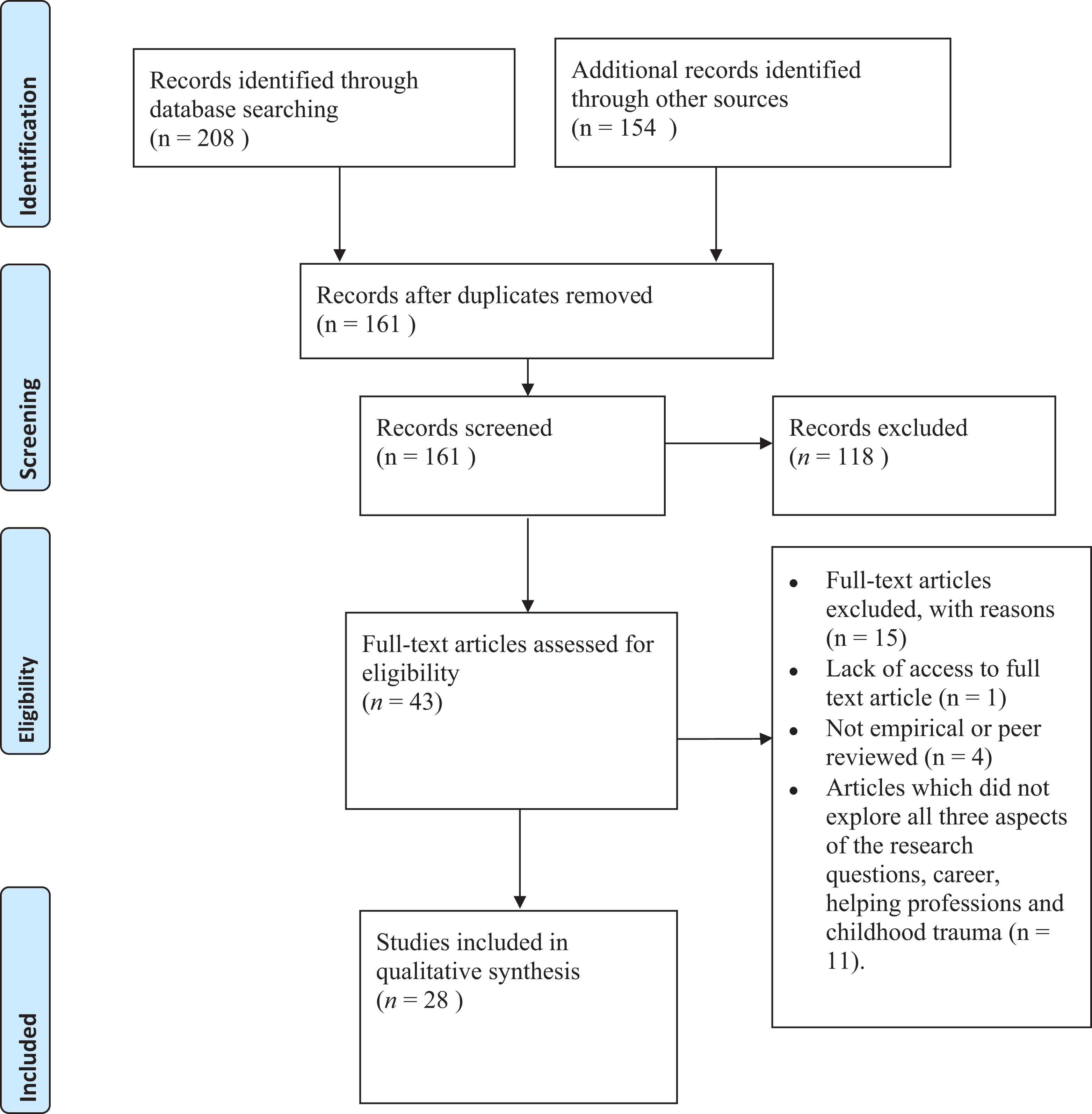
Preferred Reporting Items for Systematic Reviews and Meta-analyses flow diagram.
Quality Assessment
Twenty-eight studies met the exclusion/inclusion criteria and were categorized according to their qualitative or qualitative methodology. The qualitative studies (n = 10) were assessed and ranked against the Critical Appraisal Skills Programme (see Majid & Vanstone, 2018) criteria, analyzing each study against the following areas: aims; methodology, design, sampling, data collection, and ethical considerations; analysis; findings; and value. The single mixed-methods study was collated with the qualitative studies based on its predominantly qualitative methodological approach. Quantitative studies (n = 18) were assessed and ranked using the Strengthening the Reporting of Observational Studies in Epidemiology (STROBE; von Von Elm et al., 2014) evaluation tool to adequately appraise cross-sectional studies. The following criteria were assessed: abstract, introduction, methods (including study design, study size, participants, quantitative variables, attempts to resolve bias, data sources, and measurement), results (including data description, key results, limitations, interpretations), participants clearly defined, summary, and outcome measures clear, bias/generalizability addressed (Von Elm et al., 2014).
Each quantitative study was ranked low, moderate, or high according to the STROBE tool. The bias/generalizability of each quantitative study was considered low due to the presence of convenience bias, as each study drew on purposive sampling to inform the population group under review, common to academic research (Wright et al., 2007). Despite the bias, quantitative studies were relevant to the research question and provided valuable insight into childhood trauma as a motivator in career decision making. No studies were eliminated based on the quality appraisal of each of the quantitative, qualitative, and mixed-method studies; however, limitations were noted where necessary. The final number of studies included in this systematic review consisted of 28 studies.
Triangulation
Systematic reviews rely upon an objective, transparent, and rigorous approach to minimize bias and ensure future replicability (Mallett et al., 2012). Triangulation is primarily used to describe the process of comparing concurrently collected findings (O’Cathain et al., 2010). To ensure greater reliability, a second researcher replicated the search strategy and quality assessment processes. The second researcher achieved identical findings.
Data Synthesis and Emerging Themes
Following the quality assessment, the 28 studies were analyzed using the synthesis matrix tool (Wright et al., 2007). A descriptive evaluation was undertaken to assess, summarize, and organize the studies and identify the preliminary themes that emerged. A narrative synthesis was established as the most appropriate method of analysis (Wright et al., 2007).
The study design comprised of a systematic review of qualitative, quantitative, and mixed-method studies. The reason for including all three approaches was due to the articles being predominantly cross-sectional, with both qualitative and quantitative methods being deemed appropriate to inform the research question. A meta-analysis/meta-synthesis was not feasible due to heterogeneity across the qualitative and quantitative studies (Cronin et al., 2008; Wright et al., 2007). Subsequently, a thematic synthesis was determined as the most appropriate method for analysis (Wright et al., 2007). Thematic analysis is a “method for identifying, analyzing, and reporting patterns (themes) within data” (Braun & Clarke, 2006, p. 79). Methodologically, thematic analysis involves searching the data to find repeated patterns, undergoing a progression of deconstruction and synthesis, so that “tangible data can be analytically interpreted” (Liamputtong, 2009, p. 242). The six stages of thematic analysis were employed and described as familiarizing oneself with the data, generating initial codes, searching for themes, reviewing themes, defining and naming themes, and producing a report (Braun & Clarke, 2006). A multiphase top-down thematic analysis was applied in response to the research question; the first-order descriptive themes were identified and synthesized under the results (themes) heading of the synthesis matrix tool used to extract the data (Braun & Clarke, 2006; Wright et al., 2007). This formed the total data sample of the review.
During the next stage of the thematic analysis, second-order themes were developed after a process of reformulating first-order themes (Braun & Clarke, 2006). These themes included relational disruptions, child abuse and neglect, childhood carer roles, childhood counselor roles, skills and talents, altruism, empathy, experiences of loss, experiences of using helping professions, rescuing or saving others, and redemptive or remedial experiences. Finally, third-order themes were generated based on a synthesis of second-order themes and involved analyzing the relationship of the themes to each other and the research question (Braun & Clarke, 2006). This process resulted in the following core themes: family of origin dysfunction, parentification, individual traits and characteristics, and experiential motivations. A breakdown of the coding process is presented in Online Appendix B.
NVivo 12 software was used to collate all available data related to the identified themes (Braun & Clarke, 2006). The number of files (studies) in which each code appeared and the number of references to each code in the entire data set were recorded. The citations collated according to each theme are presented in Online Appendix C.
Results
This SLR discerned associations between childhood trauma and career. The findings identify four influences: family of origin dysfunction, parentification, individual traits and characteristics developed through trauma, and experiential motivations.
Family of Origin Dysfunction
Black et al. (1993) established that a relationship exists between early family dysfunction and the selection of a career in the helping professions. Family of origin dysfunction encompasses a vast array of traumatic familial events, including divorce and separation, physical and mental illness, death, substance misuse, child abuse and neglect, and other traumatic experiences (Black et al., 1993). Of the 28 studies reviewed, n = 24 reflected connections between family of origin dysfunction or problems a career in the helping professions. The studies reported two distinct aspects of dysfunction that contributed to career decision making, relational disruptions (n = 18) and child abuse and neglect (n = 20).
Relational disruptions
Relational trauma associated with disrupted attachment was a dominant theme within the literature concerning career choice in helping motivation (Barnett, 2007; Brems et al., 1995; Black et al., 1993; Doron et al., 2013; Elliott & Guy, 1993; Fussell & Bonney, 1990; Holliday et al., 2018; Nikčević et al., 2007; Olson & Royse, 2006; Phillips, 1997; Rompf & Royse, 1994; Sellers & Hunter, 2005; van Heugten, 2001). Five studies reported that participants from helping professions experienced greater perceived or actual lack of intimacy from a caregiver, parental rejection, loneliness, abandonment, family dysfunction, and caregiver absenteeism compared to nonhelping participants (Barnett, 2007; Brems et al. 1995; Elliott & Guy, 1993; Fussell & Bonney, 1990; van Heugten, 2001). Similarly, Fussell and Bonney (1990) asserted that participants expressed greater negative memories with respect to experiencing uncertainty regarding the thoughts and feelings of family members. Furthermore, the review provided evidence that the early lives of those choosing a career in helping were often restricted or strained, with their needs coming second to others (Brannen, 2009).
Although a few studies identified relational problems and problems in the family unit as explicit motivating factors contributing to a decision to pursue a helping profession (Holliday et al., 2018; Rompf & Royse, 1994; van den Bosse & McGinn, 2009), two studies identified experiencing a positive and reparative relationship with a helping professional or other responsible figures as influencing career choice in the helping professions (Holliday et al., 2018; van den Bosse & McGinn, 2009). The review also identified disrupted attachment and relational trauma characterized by physical and sexual abuse (Elliott & Guy, 1993; Nikčević et al., 2007; Pack, 2010; Phillips, 1997), abandonment, neglect, and separation (Holliday et al., 2018; Huynh & Rhodes, 2011; Phillips, 1997; van Heugten, 2001) as an implicit motivation for choosing a helping career.
Child abuse and neglect
The review identified childhood victimization, characterized by physical and sexual abuse, abandonment, and neglect, as an implicit motivation for choosing a helping career (Barnett, 2007; Black et al., 1993; Brems et al., 1995; DiCaccavo, 2002; Doron et al., 2013; Elliott & Guy, 1993; Fussell & Bonney, 1990; Holliday et al., 2018; Nikčević et al., 2007; Olson & Royse, 2006; Phillips, 1997; Rompf & Royse, 1994; Sellers & Hunter, 2005; van Heugten, 2001). Seven studies also reported significant negative home environments, including poverty, neglect, familial conflict, and emotional abuse (Barnett, 2007; Brems et al., 1995; Nikčević et al., 2007); emotional challenges (Holliday et al., 2018; Rompf & Royse, 1994); and sexual and physical abuse (Black et al., 1993; Elliott & Guy, 1993). Substance misuse in the family of origin was identified as a common adversity experienced by helping professionals. Black et al. (1993) identified that greater than 55% of the social work students originated from families that experienced problems with alcohol. These findings were similar to other studies that compared the early lives of 340 psychotherapists versus 2,623 nonpsychotherapists (Elliott & Guy, 1993) and 415 social work students versus 203 nonsocial work students (Rompf & Royse, 1994), which, respectively, identified alcoholism as a problem within the family unit of helping professionals. Additionally, Sellers and Hunter (2005) found that 44% of social workers experienced challenges with substance misuse in the family of origin. Van Heugten (2001) also drew attention to broader childhood victimizations of discrimination and violence prevalent in the lives of helping professionals.
Parentification
Parentification refers to the inverse distortion of the parent and child relationship, whereby the child assumes the roles and responsibilities of a parent. Parentification is developmentally incongruent with the child’s age and stage by way of the child assuming domestic and household duties and caregiving for siblings and parents (Braunstein-Bercovitz et al., 2012; DiCaccavo, 2002). Yew et al. (2017) suggest that parentified children can be broadly categorized into two subtypes, the former caregiving subtype as described above and the other an emotional subtype whereby the child or adolescent assumes the role of counselor and confidant, caring for the parent’s mental and emotional well-being. Motivation to pursue a helping profession was a dominant theme described both implicitly (Barnett, 2007; Brannen et al., 2009; Buchbinder, 2007; DiCaccavo, 2002; Elliott & Guy, 1993; Fussell & Bonney, 1990; Holliday et al., 2018; Huynh & Rhodes, 2011; Nikčević et al., 2007; Pack, 2010; Parker & Merrylees, 2002; van den Bosse & McGinn, 2009; van Heugten, 2001) and explicitly as a natural progression from the role of parentified child to helping professional (Pack, 2010; van den Bosse & McGinn, 2009; van Heugten, 2001).
Childhood carer role
The inverse role of the parentified child forces the child to assume the physical and practical responsibilities of the dominant caregiver, with the child’s needs coming second to their parents due to substance misuse, diminished emotional or mental capacity, or physical ill-health. A comparative study by Fussell and Bonney (1990) reported significantly greater rates of caretaking and parentification among psychologists compared to physicists. Comparatively, Brannen et al. (2009) suggested forced, rather than chosen, caretaking roles in childhood were common to childcare workers, and Parker and Merrylees (2002) identified that three social work and nursing participants performed a caregiver role for their siblings with intellectual impairment. DiCaccavo (2002) found a lack of paternal care was associated with high scores on a parentification questionnaire for both counseling and art students and a lack of maternal care, and self-efficacy for care was associated with increased parentification scores for female participants (DiCaccavo, 2002).
Childhood counselor role
Van Heugten (2001) highlighted the commonality among social workers to have undertaken family facilitator or mediator roles in childhood, with participants reporting experiences of inappropriate responsibility and acting as a child counselor between parties. Stemming from their parentification experiences, participants acknowledged that their career motivation was driven by concern for those experiencing neglect and emotional pain, as well as experiences managing conflictual situations, and a propensity to be self-directed when making decisions (van Heugten, 2001). Similarly, Barnett (2007) investigated unconscious motivations for choosing a career in psychotherapy and counseling and identified several participants who were confidant for others and felt their needs were dismissed. Participants identified performing the role of mediator in inappropriate conversations, while others acted as a counselor and confidant for peers at boarding school (Barnett, 2007; Buchbinder, 2007).
Individual Traits and Characteristics
Sixteen studies identified the traits and characteristics developed through childhood trauma experiences, which in turn influenced career decision making. These included altruism (n = 8), empathy (n = 3), and skills and talents (n =12).
Altruism
Eight studies referenced altruism as a trait possessed by participants, motivating career choice (Krouse & Nauta, 2005; Murphy & Halgin, 1995; Pack, 2010; Parker & Merrylees, 2002; Rompf et al., 1994; Stidham et al., 2012; van Heugten, 2001; Wilson & McCrystal, 2007). Stidham et al. (2012) investigated the altruistic tendencies of 121 sexual violence survivors and identified that altruistic tendencies motivated 12.39% of survivors in their sample to choose a helping profession. Other studies identified that humanitarian and altruistic values and a desire to help others and serve disadvantaged populations were a motivation for choosing a helping profession (Krouse & Nauta, 2005; Pack, 2010; Parker & Merrylees, 2002; Rompf et al. 1994; van Heugten, 2001; Wilson & McCrystal, 2007).
Empathy
The systematic review identified studies (n = 3) that highlighted empathy as a motivational factor for participants choosing to study or work in a helping profession (Krouse & Nauta, 2005; van Heugten, 2001; Wilson & McCrystal, 2007). Krouse and Nauta (2005) highlighted that an ability to empathize with those who needed services motivated participants to engage in helping professions with underserved populations. Furthermore, Wilson and McCrystal (2007) suggested that survivors felt empowered to pursue a social work career, and their adverse experiences in childhood enabled empathy with others.
Skills and talents
Several studies (n = 12) highlighted the process by which trauma in childhood influenced the development of certain skills or talents that were conducive to helping professions and motivated career decision making. Buchbinder (2007) referred to the sharpening or deepening of understanding of distress and sensitivity to others’ vulnerability, which played a central role in carer choice. Additionally, several studies drew attention to the way in which experiencing childhood adversity helped participants to develop skills and resilience necessary for working with distressed clients and manage the psychological demands of others (DiCaccavo, 2002; Pack, 2010; Stidham et al., 2012; van den Bosse & McGinn, 2009; van Heugten, 2001). Several studies emphasized more generally the ways childhood adversity led them to develop certain skills and talents they now drew on in their professional lives, such as listening, overcoming adversity in creative ways, and communication skills (Elliott & Guy, 1993; Evans & Evans, 2019; Nikčević et al., 2007; Pack, 2010; Parker & Merrylees, 2002; Stidham et al., 2012; Triplett et al., 2013; van den Bosse & McGinn, 2009; van Heugten, 2001; Wilson & McCrystal, 2007)
Experiential Motivations
While all the studies in the review make reference to experiential motivations of some sort, both intrafamilial and extrafamilial, a number of studies empathized the role-specific past experiences play in career decision making, including loss and prior experience as a service utilizer. These studies drew attention to the ways in which prior experiences motivate career choice through a desire to make meaning of and remedy traumatic childhood events or to prevent others from experiencing those same adversities.
Loss
Loss was a reoccurring theme that emerged from a number of studies and was broadly categorized across all studies (n = 6), including death, separation, divorce, and abandonment. Barnett (2007) concluded that all participants in their study experienced some form of loss prior to adulthood, with only one experience of loss relating to death. Other studies specifically identified themes of loss through the death of a family member or friend as a motivator for choosing a helping profession (Buchbinder, 2007; Huynh & Rhodes, 2011), with some studies drawing attention to parental death or suicide more specifically (Elliott & Guy, 1993; Huynh & Rhodes, 2011; van Heugten, 2001; Wilson & McCrystal, 2007).
Service utilizer
Nine studies highlighted the influence of exposure to helping professions on career choice. Byrne (2017) identified that 63% of social work students had prior exposure to the profession through either an acquaintance, or professional, or therapeutic encounter. Additionally, Huynh and Rhodes (2011) reported that participants were influenced by the help they received from professionals in their childhood, including negative experiences. Furthermore, Parker and Merrylees (2002) identified that the three participants in their study shared poor experiences, discontent, and conflicting beliefs about appropriate care concerning care providers, which led to a motivation to effect systematic change and improve health service delivery to the intellectually impaired and their families. Helping professionals participating in research had received help from professionals in childhood, including social workers, counselors, and psychologists, which influenced their career choice (Byrne, 2017; Huynh & Rhodes, 2011; Krouse & Nauta, 2005; Pack, 2010). Two studies specifically identified children experiencing the welfare system and out-of-home care as a motivating factor in career decision making (Evans & Evans, 2019; Parker & Merrylees, 2002).
Rescuing
Eight studies made reference to the desire to rescue or save others from experiencing the trauma that participants had endured in their own childhood. The review revealed that participants identified feeling rejected, unloved, and uncared for and wanting to prevent others experiencing the same (Brannen et al., 2009) and a desire to provide resources to those in need that they themselves lacked and to reverse injustices they themselves experienced (Krouse & Nauta, 2005). Studies emphasized a motivation to prevent further abuses, stop the cycle of violence, and assist others through traumatic experiences that participants had survived themselves (Brannen et al., 2009; Pack, 2010; Stidham et al., 2012).
Redemptive/Remedial/narcissistic injury
Twelve studies alluded to participants’ motivations to choose a career in a helping profession to make meaning of their traumatic childhood experiences, to assist their healing. Meaning was addressed in several studies, calling to attention the way in which helping professions actively make meaning of their own trauma by helping others (Buchbinder, 2007; Huynh & Rhodes, 2011; Nikčević et al., 2007; Pack, 2010; Stidham et al., 2012). Stidham et al. (2012) indicated that participants stressed that helping others helped make sense of their experiences with sexual violence. Fussell and Bonney (1990) highlighted that caretaking in vocation is often a coping mechanics for early experiences. This was supported by other studies that proposed that participants sought to cope with and address their own distress vicariously through clients (Buchbinder, 2007; DiCaccavo, 2002; Doron et al., 2013; Fussell & Bonney, 1990; Parker & Merrylees, 2002; Phillips, 1997). Mention was also made in the body of research of the participants seeking resolution of their problematic histories through helping others (Barnett, 2007; Murphy & Halgin, 1995; Parker & Merrylees, 2002).
Discussion
This study synthesized research literature about evidence of associations between cumulative harm and vocational decision making for workers in helping professions. Cumulative harm is the “effects of multiple adverse circumstances and events in a child’s life the impacts of which can be profound and exponential, and diminish a child’s sense of safety, stability, and wellbeing” (Miller, 2007, p. 1). Drawing on the core themes identified, we now turn to an interpretation of the findings in terms of CCT (Savickas, 2005, 2013).
CCT
According to Savickas (2005, 2013), people build careers by turning their preoccupations into occupations and thereby actively master what they passively suffer. CCT occupies both a constructionist and contextual perspective and acknowledges the role personal and social environments play in influencing career decision making. Thus, CCT draws attention to interpretive processes, social interactions, and negotiation of meaning (Savickas, 2005). In this way, CCT emphasizes the recursive interplay between self and society, interweaving self-organization (vocational personality) and self-extension (career adaptability) to arrive at a self-defined whole (life themes).
Vocational personality
An individuals’ personality continues to develop throughout the developmental life course (Savickas, 2005). Research clearly articulates the pervasive effect cumulative harm can have on development across the life span, with ramifications for cognitive, emotional, social, and relational development (Nader, 2008; Sachs-Ericsson et al., 2009; Shonkoff & Phillips, 2001; Widom et al., 2007). Child abuse, neglect, and attachment disruptions can significantly influence social–emotional development and thus the construction of self-concept and a child’s sense of self in the world (Turner et al., 2010). Research concludes that maltreated individuals experience multiple episodes of interrelated and overlapping victimizations; therefore, the cumulative impact of these experiences on the formation of self-organization and vocational personality should be duly acknowledged (Hamilton & Browne, 1999; Higgins, 2004; Rossman & Rosenberg, 1998).
An individuals’ personality is expressed within the context of their family of origin (Savickas, 2005). Dysfunction in the family of origin is crucial to understanding its influence on vocational personality, as the experiences of childhood maltreatment and relational disruptions shape the development of self. Cumulative childhood adversity, through familial dysfunction, relational difficulties, loss, or victimization, may stimulate internal changes that become characteristics and traits (Terr, 1991).
Self-concept is highly influenced by interpersonal relationships, in particular interfamilial relations formed early in life (Savickas, 2002, 2005, 2011). A reoccurring theme across the findings of this SLR was that chronically unmet relational needs in childhood were strongly associated with career choice in a helping profession. Cumulative childhood trauma is particularly devastating when experienced at the hands of an attachment figure as it forms a dual liability by creating extreme distress and undermining the development of the biological, emotional, and behavioral capacities which regulate that distress (Allen, 2002). Repeated childhood experiences of separation, rejection, abandonment, loneliness, loss, emotional absence or unavailability, and conflict reflect the array of relational difficulties which contribute to cumulative harm and shape the lifespan development of individuals (Barnett, 2007; Black et al., 1993; Brems et al., 1995; Doron et al., 2013; Elliott & Guy, 1993; Fussell & Bonney, 1990; Holliday et al., 2018; Nikčević et al., 2007; Olson & Royse, 2006; Phillips, 1997; Rompf et al., 1994; Sellers & Hunter, 2005; van Heugten, 2001). Thus, cumulative harm and the influence these dysfunctional relational experiences have on self-concept are a likely source of influence on self-organization and the development of the vocational personality.
Career adaptability
Career adaptability represents an individual’s self-regulative resources, encompassing attitudes, behaviors, and competencies, for managing “imminent vocational developmental tasks, occupational transitions, and personal traumas” (Savickas, 2005, p. 51). Evidence from the present study demonstrates the mechanisms by which traits and characteristics, skills, and talents are fostered or honed through the experience of cumulative adversity.
Many of the studies reviewed in this study refer to the way in which cumulative childhood adversity developed and sharpened specific skills and talents which were well aligned with helping professions (Buchbinder, 2007; DiCaccavo, 2002; Elliott & Guy, 1993; Evans & Evans, 2019; Nikčević et al., 2007; Pack, 2010; Parker & Merrylees, 2002; Stidham et al., 2012; Triplett et al., 2013; van den Bosse & McGinn, 2009; van Heugten, 2001; Wilson & McCrystal, 2007). Equally, the theme of parentification, emerging from childhood caretaking and counselor roles, was noted to provide individuals with a set of skills well-suited to the helping professions.
CCT asserts that through the family, individuals compose a social role, then adapt and extend this role into their occupational contexts (Savickas, 2013). Parentified children often enter the helping professions in adulthood as extensions of their childhood roles (Blumenstein, 1986; Guy, 1987; Nikčević et al., 2007). Early caretaking roles often potentiate caretaking in vocation, which reflects both the skills developed through parentification and a desire to remediate cumulative harm through professional helping occupations, as individuals address and cope with their own distress vicariously (Fussell & Bonney, 1990). These experiences are reflective of career adaptability, of drawing on resources developed through cumulative childhood adversity, to resolve unfamiliar, complex problems presented by work-related tasks, transitions, and traumas (Savickas, 2005).
Life themes
While content (the what of vocational personality, the actor) and process (the how of career adaptability, the agent) are important, exploring these elements in isolation neglects the dynamics of the open system which traverses both self-organization and self-extension, to arrive at the self-defined whole (Savickas, 2005). Savickas argued that, rather than a sequential, staged process of career development, CCT posits a reciprocal process in which self-defining life stories guide adaptation through the evaluation of opportunities and constraints and use vocational personality traits to address developmental tasks, occupational transitions, and personal adversity and traumas.
Self-defining life stories are reflected in the SLR through the themes of experiential motivations, which highlight the role of meaning making as a motivation for entering a helping profession. Twelve of the 28 studies included in the review revealed the individuals’ desire to make sense of their traumatic childhoods was a motivation for career choice. In the context of cumulative harm experiences, the review highlighted that career choice was influenced by a need to construct a narrative that fostered an understanding of their childhood experiences and early life traumas. This intrinsic motivation organically contributed to the process of building a life narrative and a career story that reflected their active attempt to make meaning and shape their future (Savickas, 2005). The themes evident in the SLR that reflected active making meaning through helping others illustrate biographical reflexivity espoused in CCT, whereby individuals reconstruct the past to understand current choices and plan future action (Josselson, 2000).
Reflected in the SLR, rescuing as a vocational behavior may be seen as an extension of the career narrative, in which an individual use their life themes to prevent similar cumulative adversity occurring for others through occupational channels (Brannen et al., 2009; Krouse & Nauta, 2005; Pack, 2010; Stidham et al., 2012). Additionally, findings of the SLR, which revealed emotive motivations of altruism and empathy as guiding career choice in the helping professions, are reflective of the meaning-making process central to CCT. Individuals develop feelings of altruism, empathy, and empowerment through their own narratives of cumulative harm, which in turn motivate career decision making, as both a reflection of career adaptability and vocational personality (Krouse & Nauta, 2005; Pack, 2010; Parker & Merrylees, 2002; Rompf et al. 1994; van Heugten, 2001; Wilson & McCrystal, 2007). Similarly, exposure to professional helping through cumulative childhood adversity, observed in the themes of service utilizer in the SLR, contributes to the vocational narrative and the self-defined whole (Byrne, 2017; Huynh & Rhodes, 2011; Krouse & Nauta, 2005; Pack, 2010). The less tangible experiential and emotive motivations are reflected, not as vocational personality traits or career adaptability, but as the threads that weave through these elements as a pattern of meaning (Savickas, 2005).
Limitations
There are several notable limitations to this study. First, nine of the 28 studies reviewed encompassed participant groups that included male and female cohorts; however, representation in these studies was predominately female. Only two studies had equal representation of males and females, and these studies had small participant cohorts; one study examined females only. Interestingly, in one study in particular (Black et al., 1993), the cohort of social workers comprised predominately female participants, and the comparative cohort of business professionals was represented chiefly by males. This alludes to the gendered workforce of helping professionals (Fiore & Facchini, 2013). Race and ethnicity were not reported in the studies reviewed, and therefore, assumptions cannot be made about the influence of culture and race on experiences of traumatized individuals seeking a career in the helping professions. This limitation highlights the need to explore the role of race and culture in the lived experience of cumulative harm and career decision making, especially given the overrepresentation of Indigenous and ethnically diverse peoples exposed to childhood adversity and maltreatment (Euser et al., 2011; Tilbury, 2009; Trocmé et al., 2004). Secondly, the review relied on the accuracy and methodology of secondary data from previous studies. Moreover, significant heterogeneity of methodological approaches was present, including both qualitative and quantitative studies which used different methods, assessment instruments, and subscales from different sources, with participants not asked directly about their exposure to cumulative harm, their role, or motivation toward helping. Third, the majority of the studies originated in the United States or the United Kingdom, with only one Australian study identified in the review. The studies were also predominantly career-specific (e.g., social work or psychotherapists) rather than focused more generally on helping professions. Fourth, although the review identified associations between relational trauma, parentification, and choice of a helping career, the qualitative nature of the review could not determine or conclude direct causal or dose-dependent relationships. Furthermore, it must be acknowledged that the identification of cumulative harm as an influence on career could be explained, in part, by potentially higher levels of awareness in helping professionals. Helping professionals may possess a heightened self-awareness and greater insight into their career motivations than other nonhelping professions due to the reflective nature of careers such as social work and psychology. Fifth, the research design did not allow for the assessment of the influence of reparative relationships, healing, and/or resilience factors on cumulative harm and career choice in helping. Finally, this review did not aim to determine whether adverse childhood experiences directly hindered or enhanced professionals’ self-efficacy for their helping work and its effectiveness.
Recommendations
There is a paucity of research that focuses on the life themes and career stories of cumulative harm, delving deeply into the lived experiences of career construction for helping professionals who have endured cumulative childhood adversity. Research methods that explore the life narratives of individuals (e.g., Adler et al., 2017) who have experienced cumulative harm may inform theoretical perspectives and the formulation of research studies that could specifically test potential predictive relations between trauma and career choice. Future research is recommended that explores the lived experience of cumulative harm to achieve a greater depth of understanding of the specific influences on career choice in the helping professions and to discern reasons why some individuals with a history of trauma choose helping professions whereas others do not.
Counseling methods that draw on qualitative data on lived experience and the themes identified in this review would permit practitioners to identify and address, with increased accuracy, the influence of cumulative harm on career choice in the helping professions. Within the frame of CCT, Career Construction Interview (Savickas, 2005, 2011, 2013) is a useful method for facilitating individuals’ career explorations and finding meaningfulness in their stories. Other narrative career counseling methods are similarly amenable for career exploration and reflective practice in professionals (Lengelle et al., 2016; McIlveen & Patton, 2010; Taylor & Savickas, 2016) that may be used to generate life themes to resolve matters of trauma toward effective personal and professional outcomes. These narrative tools may be integrated into the coursework of degree programs for helping professions so as to develop these future practitioners’ reflexive awareness of their resolutions. Narrative approaches are strongly supported in trauma-informed therapy and counseling more broadly (White, 2004, 2005).
Conclusion
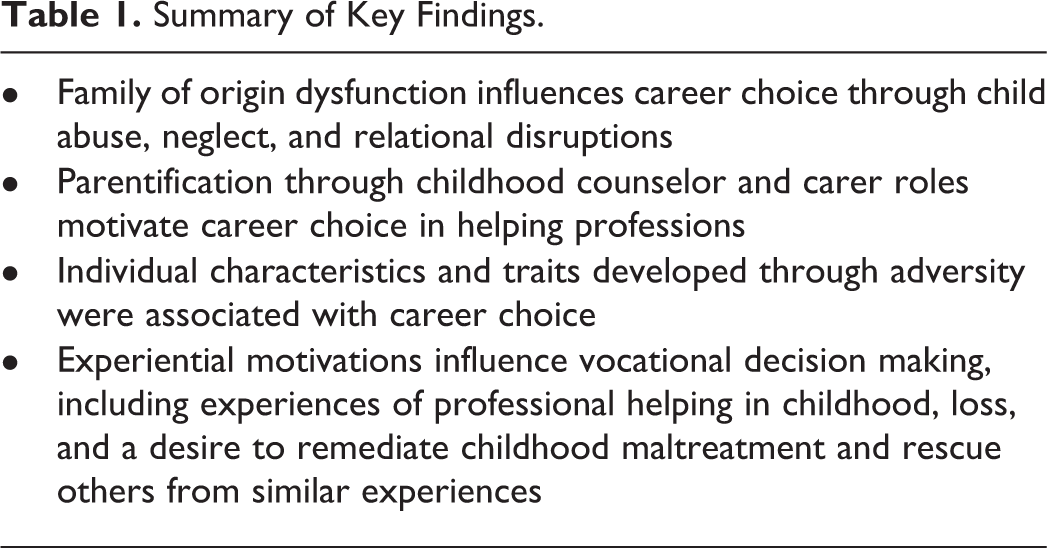
This SLR identified key themes related to the influence of cumulative harm on career choice in the helping professions. The review’s key findings are summarized in Table 1, with implications for policy, research, and practice summarized in “Implications for Policy, Research, and Practice” section. The evidence indicates that some helping professionals, and preservice practitioners, are motivated to pursue a career in helping, through family of origin dysfunction, including childhood abuse and neglect, parentification, individual characteristics and traits developed through adversity, and through experiences, such as experiences of professional helping in childhood, loss, and a desire to remediate childhood maltreatment and rescue others from similar experiences. These elements reflect self-orientation and self-extension, which converge to create a self-defined whole, as espoused by the constructionist approach to career given in CCT. Additionally, the results signify that helping professionals entering the profession from a background of adverse childhood experiences are motivated by a multiplicity of factors, not a single factor. This finding illustrates the importance of considering the accumulation of childhood adverse experiences when exploring vocational narratives. Finally, we recommended that future research investigate life themes in career construction and the lived experience of cumulative harm in helping professionals, with the view to developing a deeper understanding of these influences on practitioners’ career decision making. Such knowledge will be valuable in the future construction of self-assessment tools for current and future helping professionals.
Summary of Key Findings.
Implications for Practice, Policy, and Research
Practice
Counseling methods that draws on qualitative data on lived experience and the themes identified in this review would permit practitioners to identify and address, with increased accuracy, the influence of cumulative harm on career choice in the helping professions.
These narrative tools may also be integrated into the coursework of degree programs for helping professions so as to develop these future practitioners’ reflexive awareness of their resolutions.
Policy
Policy in the helping professions need to reflect consideration for the motivations for career decision making, with a view to its impact in staff retention and satisfaction, especially with regard to vicarious trauma, retraumatization, and burnout.
Career development and counseling policy in higher education should also reflect an understanding of the influence of cumulative harm and trauma on career choice and academic progression.
Research
The review highlights the need for future research which investigates narratives of trauma and life themes in career construction and further explores the lived experience of cumulative harm in helping professionals.
Supplemental Material
Supplemental Material, sj-pdf-1-tva-10.1177_15248380211016016 - A Systematic Literature Review of the Career Choice of Helping Professionals Who Have Experienced Cumulative Harm as a Result of Adverse Childhood Experiences
Supplemental Material, sj-pdf-1-tva-10.1177_15248380211016016 for A Systematic Literature Review of the Career Choice of Helping Professionals Who Have Experienced Cumulative Harm as a Result of Adverse Childhood Experiences by India Bryce, David Pye, Gavin Beccaria, Peter McIlveen and Jan Du Preez in Trauma, Violence, & Abuse
Footnotes
Acknowledgment
The authors would like to acknowledge and thank Krystal Schaffer (University of Southern Queensland) for her advice and guidance during the development of the methodology for this study.
Declaration of Conflicting Interests
The author(s) declared no potential conflicts of interest with respect to the research, authorship, and/or publication of this article.
Funding
The author(s) received no financial support for the research, authorship, and/or publication of this article.

Ethical Approval
This article does not contain reports of studies involving primary data collection requiring ethical approval.
Supplemental Material
The supplemental material for this article is available online.
References
Supplementary Material
Please find the following supplemental material available below.
For Open Access articles published under a Creative Commons License, all supplemental material carries the same license as the article it is associated with.
For non-Open Access articles published, all supplemental material carries a non-exclusive license, and permission requests for re-use of supplemental material or any part of supplemental material shall be sent directly to the copyright owner as specified in the copyright notice associated with the article.
