



Abstract
This systematic scoping literature review synthesizes scholarship about intimate partner violence (IPV) and parenting into a conceptual model. We integrate findings from across 136 studies. To be included, studies had to consider how IPV influenced one’s parenting and/or how parents responded to the violence they encountered in terms of their practices related to their children. Studies had to be peer-reviewed, empirical articles, done using quantitative, qualitative, or mixed methods, and published in English. There were no limits on the dates or locations of studies. Using these predetermined criteria, authors screened over 6,000 articles, finally selecting 136 studies to be coded and analyzed. Results demonstrate IPV undermines maternal well-being and parenting practices. Our findings also highlight multiple ways that mothers struggle to realize the complex tasks of parenting within IPV, including through emotional coping, action-based coping, and social support. By systematically bringing together and analyzing existing data on the topic, this study helps build the knowledge base around how women facing IPV plan for physical and psychological safety of themselves and their children. Our synthesis of the literature helps expand theoretical frameworks, and stregthen prevention practices and policies so they reflect both the suffering and the resilience of mothers who grapple with IPV. Our review draws attention to the need to focus interventions on promoting the mental health and parenting self-efficacy of mothers who suffer from the direct effects of IPV and its attacks on their mental health and parental role.
Almost one in three women have experienced intimate partner violence (IPV), which includes physical, sexual, and emotional violence as well as threats (World Health Organization [WHO], 2013). IPV is more common in households with children than without children (McDonald et al., 2006)—one in 15 children witness IPV (Hamby et al., 2011). For mothers and children alike, IPV is implicated in an array of negative effects on mental health, increasing the risks of depression, post-traumatic stress disorder, substance abuse, and behavioral problems (Margolin & Gordis, 2000; WHO, 2013).
While various factors within the parent–child relationship (e.g., warm and responsive parenting, appropriate discipline, and mothers’ connections with external resources) protects children from deleterious outcomes(Herrenkohl et al., 2008; Holt et al., 2008), in circumstances of IPV, caregiving is profoundly challenged. Mothers suffering from abuse are often emotionally and logistically overwhelmed by violence and may face diminished logistical and social support (Osofsky, 1999). Indeed, recent reviews highlight substantial evidence about the connections between IPV and both negative parenting practices and problems with attachment (Chiesa et al., 2018; Velotti et al., 2018). Furthermore, abusers and the systems that surround IPV, including criminal justice and child welfare systems, often undermine or even directly attack women’s sense of confidence and efficacy as mothers (Radford & Hester, 2006). At the same time, mothers contending with IPV shore up internal and external resources to protect their children and promote family well-being—a process that has been termed parental resilience (Gavidia-Payne et al., 2015).
According to theories about parental resilience, three key factors undergird the process: psychological well-being, a sense of self-efficacy and optimism, and resources within and connections to outside family members, friends, and communities (Belsky, 1984; Gavidia-Payne et al., 2015). Parental resilience can be conceptualized in much the same way as we now understand resilience writ large: as independent of outcomes, specific characteristics, or achievement, but rather constituted within steady, multifaceted, often ongoing coping responses people mount in the face of oftentimes unrelenting stress and violence (Anderson & Danis, 2006; Lazarus, 2000). Applied to IPV, theories about parental resilience must represent its unfolding as complex and manifold, evident in acts that are small or large, fruitful or not.
Adequately conceptualizing mothers’ lives within IPV requires we derive nuanced understandings about women’s experiences using analyses of how mothers actually operate and strategize within violent contexts. Most importantly, we need to counter an overreliance on victimhood among women and a myopic focus on problems with attachment or negative parenting practices, as these deficit-based models leave out women’s agency and resilience (Lapierre, 2008; Levendosky, 2000; Nixon, Bonnycastle, & Ens, 2017). Indeed, through drawing out the complex dynamics that surround parenting practices within IPV, we can enrich integrative work and devise conceptual models that more accurately depict the realities of parenting within IPV (Anderson & Van Ee, 2018; Austin et al., 2017). Addressing this need for deeper exploration into how people actually experience and respond to the effects of IPV on their parenting, we undertook a systematic scoping review (Arksey & O’Malley, 2005; Levac et al., 2010). Our review focuses on two questions: first, what does existing literature demonstrate about how living within IPV influences parenting, and second, what is the state of empirical findings related to how, despite the many adversities that occur within IPV, mothers navigate their duties as caregivers and continue to promote well-being?
Method
Identification: Search Process and Criteria
Given the vast conceptual and methodological range of literature on the topic, we chose to conduct a scoping review. This approach best suited our aim of synthesizing findings across multiple studies to “map,” or ascertain the central ideas, about mothering within IPV. In so doing, it allowed us to build a conceptual framework that reflected the current state of the literature about the relationship of IPV to parenting (Levac et al., 2010; Peters et al., 2015; Snilstveit et al., 2012). We employed an integrated design in which we gathered and analyzed information from quantitative, qualitative, and mixed methods studies, using best practices for narrative, scoping reviews (Arksey & O’Malley, 2005; Levac et al., 2010; Popay et al., 2006; Sandelowski et al., 2006; Thomas & Harden, 2008). In line with practices tied to narrative scoping reviews, we did not exclude studies based on their methods, although we did track and later analyze methods used and the associated benefits derived from these methods (e.g., longitudinal designs or those that used mediation or moderation).
Figure 1 illustrates the process for literature searching, including the search terms and engines used. We began this review with the aim to look at parenting within three different types of violence: IPV as well as community violence and political violence (later, we separated the project into three distinct analyses of these different kinds of violence). We initially conducted preliminary searches in fall 2014 and summer and fall 2015 that were broad and sweeping to ascertain the feasibility and general terrain of the literature. Using results from these searches and consultation with a subject expert librarian, we clarified search terms, arriving at multiple variations for IPV, as well as all variations for parent, mother, or father (e.g., parent, parents, parenting, parenthood, etc.) through using an asterisk in ProQuest and Web of Knowledge or searching for all iterations in Google Scholar. Final searches in 2016 and 2019 (for articles from 2016 to 2019) were confined to eight databases in ProQuest since the searches from 2015 in Web of Knowledge and Google Scholar resulted in thousands of duplicates and only three unique articles during the title searching. As suggested by analysis of best practices for review articles (Dickersin et al., 1994; Helmer et al., 2001), to increase the comprehensiveness of our search, we conducted hand searches of reference lists and our existing databases to identify additional articles that met the criteria for inclusion.
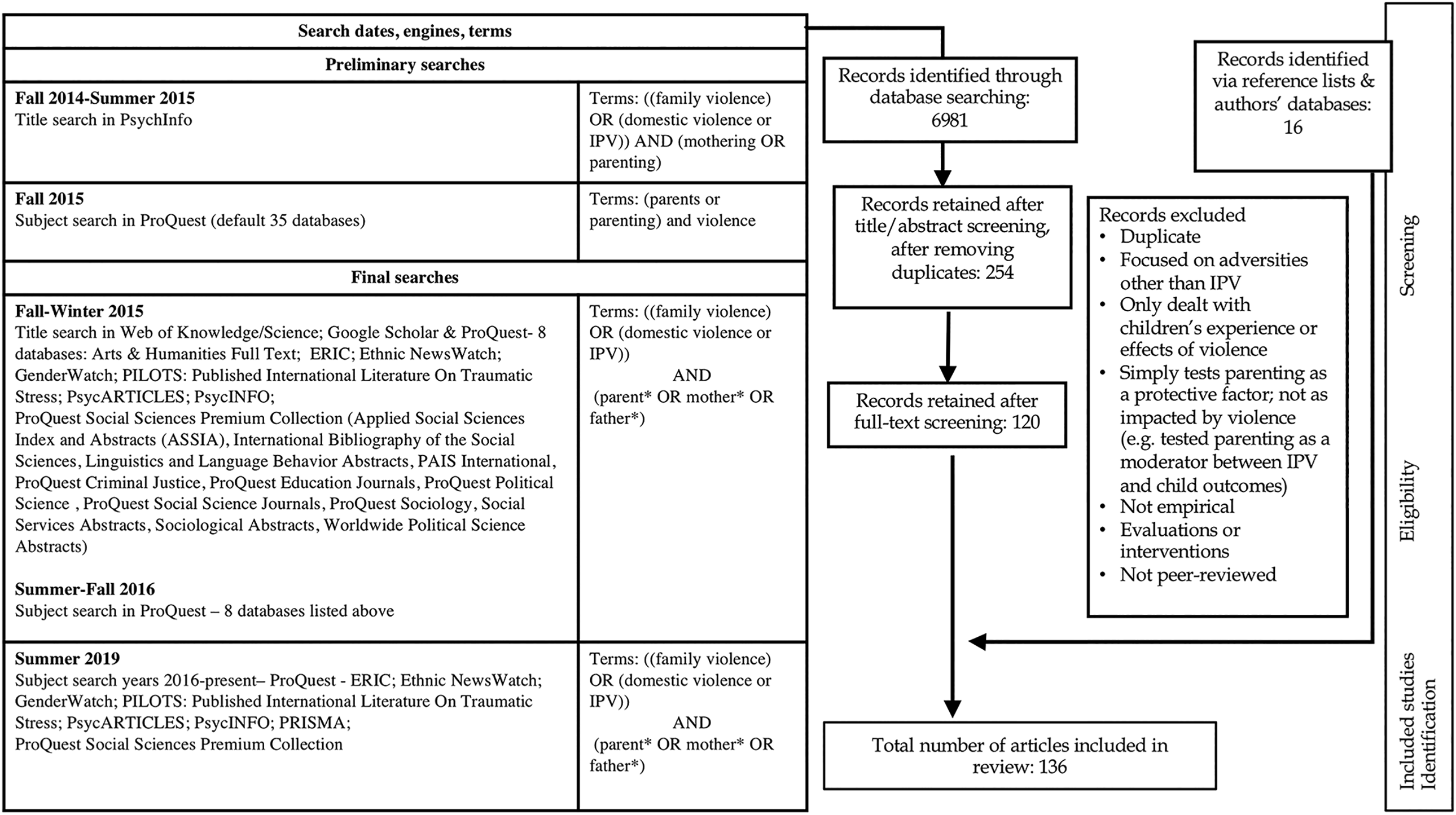
Flowchart of literature search.
Table 1 documents our inclusion criteria and examples of reasons for exclusion. We developed the general criteria prior to beginning searches and clarified it after our initial broad comb through the literature in the formative searches (fall 2014 and summer and fall 2015). For our final searches, we consulted these preestablished criteria to make decisions. If there were questions about inclusion, the first two authors of this review (CS and MS) read the article and jointly resolved the issue. No articles remained in dispute after consultations. To determine the reliability between reviewers, a random sample of 50 titles and abstracts was drawn from a search using the search terms “violence and parent* or mother* or father*.” The first two authors of this review (initials blinded) independently decided which articles they would include in the next step, the full-text review. This test resulted in a 90% agreement rate. The results of this test of interrater reliability, along with the detailed, ongoing process of joint deliberation, enhanced the soundness of the selection process, as suggested by scholarship on best practices for literature reviews (Shamseer et al., 2015). We initially identified over 6,000 articles through our database searches. Our process of screening resulted in 136 articles that were included in the review. It should be noted that we did not explicitly limit ourselves to studies about women facing IPV, yet no articles focused on men’s experiences of IPV turned up through our process of identification and thus our analysis and reporting focuses on women and on mothering.
Inclusion Criteria.
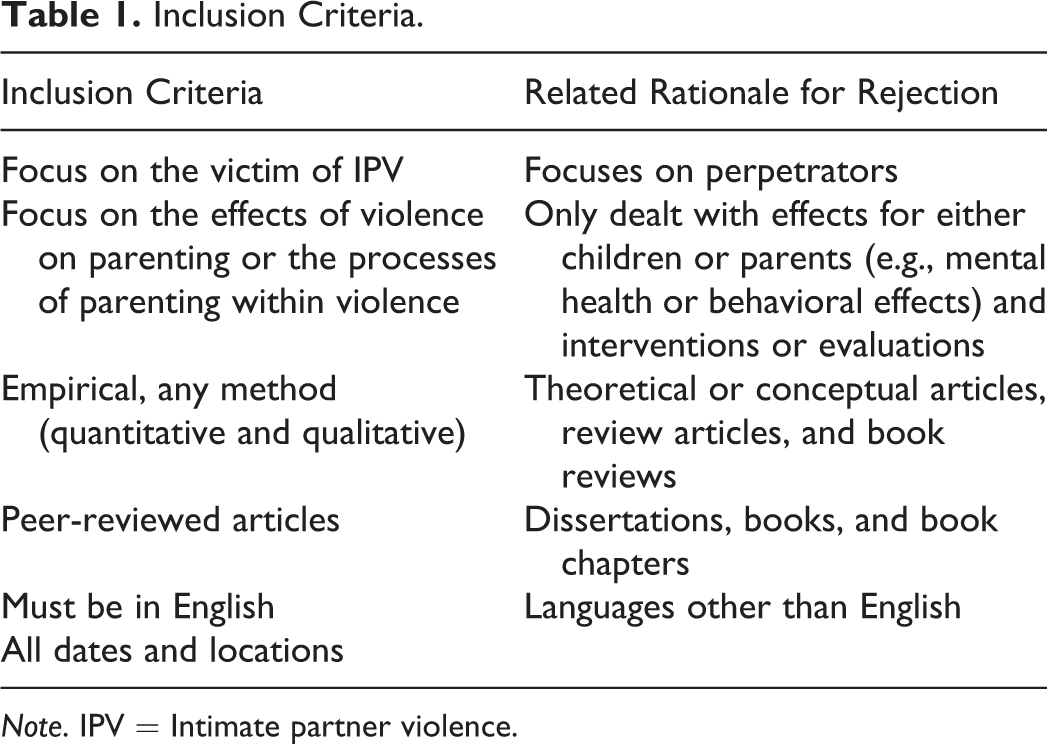
Note. IPV = Intimate partner violence.
Organizing, Analyzing, and Synthesizing Results of Studies
We first charted the data by using a data extraction form that we created based on our study questions (Arksey & O’Malley, 2005). Here, we documented multiple study characteristics in columns (location, the sample size and strategy, methods for collecting and analyzing the data, tools or measures used to collect data, and follow-up period where applicable). We also documented (in two separate columns) the effects on parenting and processes of coping and resilience. In addition to noting substantive findings (including null results) related to the questions posed in this review, we noted other information that would help us to explain the contexts of the findings or how other variables included in the study influenced findings (e.g., how coping strategies related, how effects on children differed by age or gender).
We then applied codes to our data extraction form and analyzed results, generating themes organized along the two dimensions of our research questions: (1) effects of violence and (2) coping and resilience. We discussed and refined these themes throughout the iterative process of organizing data from our data extraction form into our thematic table (Table 2) and analyzing our findings into a conceptual model that we used to further synthesize the results of studies. Our themes were developed in the fall–winter 2015 title search process, at which point we had 31 articles. While the subsequent subject searches yielded about 100 additional articles, analyses of these did not lead to any new themes, indicating that the initial coding scheme soundly reflected the state of the literature.
Findings Organized by Themes and Subthemes.
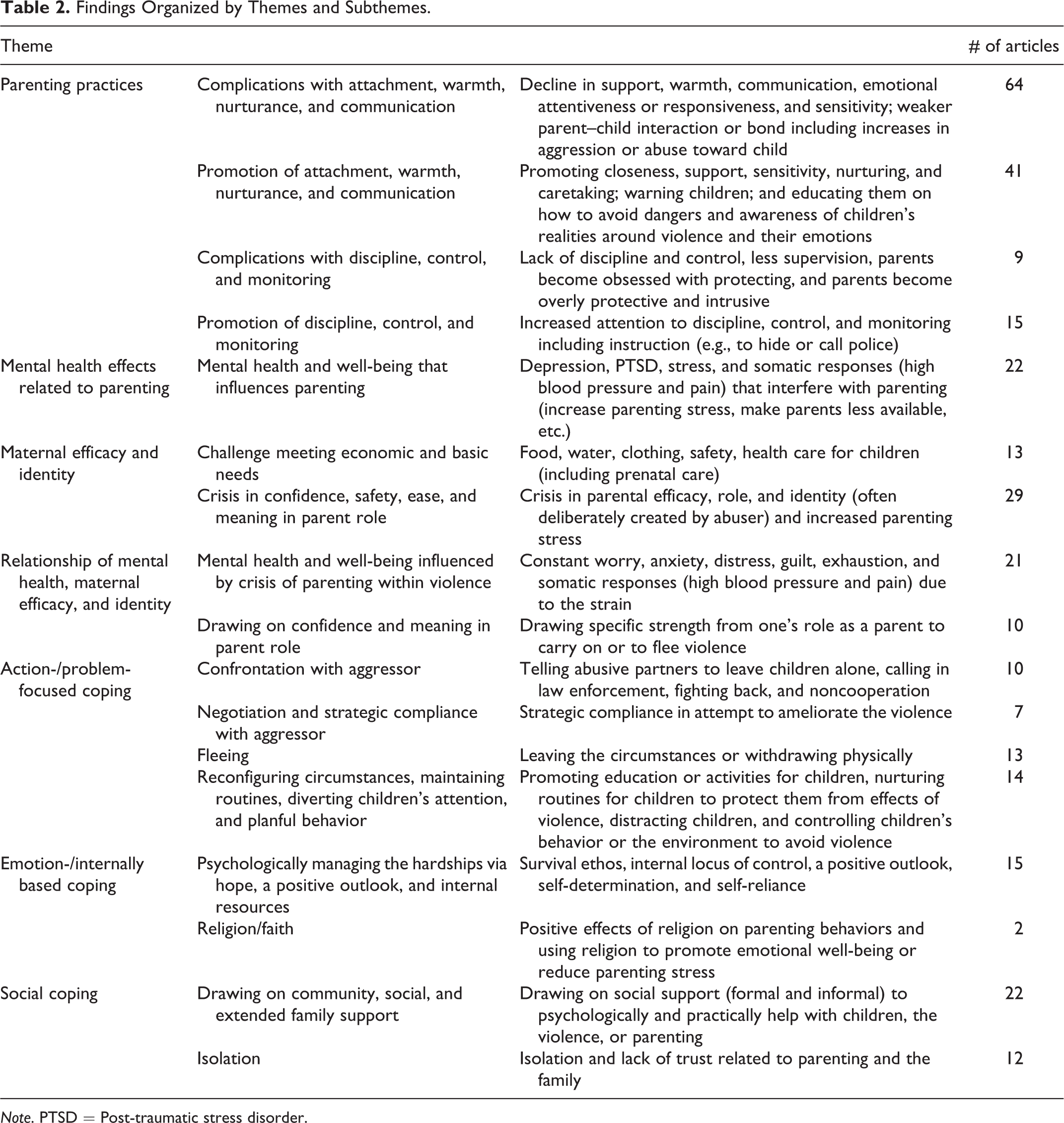
Note. PTSD = Post-traumatic stress disorder.
As we analyzed our results, we were concerned with exploring and documenting any specific nuances provided by study authors. In our data extraction form, we documented whether studies explicitly captured causal mechanisms relating to how parents’ experiences of violence influenced their parenting and then child outcomes, either by using mediation or moderation or through qualitative design that elicited causal chains. Because there might be specific implications for interventions, we also documented whether studies explored whether or how strategies of resilience were results of parents’ calculated actions (e.g., helping children express their emotions as a direct parental response to children’s demonstrated emotional problems) rather than more generically deployed parenting strategies (i.e., demonstrating warmth because it is generally known to be protective). In our full thematic table that listed each study (Table 2 is an abbreviated version of this full table), we used notations to signify whether the studies used mediation or moderation, were longitudinal, or ascertained that mothers’ coping behaviors or amplified caregiving practices were deliberately planned to address specific issues or challenges. In our discussion, we devote some limited space to discuss these aspects of studies and how these nuances offered particular insights into the processes related to parenting within violent contexts. Our more detailed thematic table with all 136 citations and the notations signifying the abovementioned methodological aspects of studies is available from the authors.
Results
Table 2 documents the final themes and corresponding number of articles that emerged through our analysis regarding the effects that living in violent contexts have on parenting and aspects of parents’ coping. Readers should consult the table for definitions of the broad themes and the various subthemes described by the expansive themes that are our section headings in our presentation of results. Our conceptual framework (see Figure 2) was developed throughout our analysis within an iterative process, wherein we both represented our major thematic findings and used the process of conceptual model creation to refine and sharpen the final themes (and the relationships between themes). Paying particular attention to parental resilience, here we briefly discuss results from a few key studies that offer particular insight into the processes surrounding the broad findings we describe. We remind readers that we are summarizing findings from across multiple articles. Our conceptual model helped us bring together disparate themes. While it was particularly important to us in our conceptual model to think through the ways that various pieces fit together (as several articles do suggest some connections), in crafting a story line, we do not mean to imply a causal process across separate articles.

Conceptual model: Relationship of intimate partner violence (IPV) to mothering.
Parenting Practices
Attachment, warmth, nurturance, and communication
Given the developmental importance of parents accurately reading and responding to children’s emotional cues (Bowlby, 1969; Bradley, 2007), it is not surprising that multiple studies focused on how IPV influenced this process. Multiple studies (n = 64) demonstrated that IPV was related to a decline in nurturance and communication and often led to an increase in abuse of or aggression toward children. In some cases, studies showed that mothers may engage in harsher parenting out of their own emotional exhaustion pursuant to the abuse or in attempts to create order and avoid more severe actions from the abusive partner (Greeson et al., 2014; Levendosky & Graham-Bermann, 2000). For example, one qualitative study of women experiencing IPV found that women described that their abuse of their children was often due to the fear and exhaustion caused by their own abuse or represented attempts to manage children’s behavior so as to not “set off” the abuser (Damant et al., 2010).
On the other hand, many of the studies we located challenged the conclusion that experiencing IPV absolutely curtails attachment, warmth, and nurturing (n = 41). For example, findings from one national study from a sample of almost 2,000 women indicated that while current IPV victims had significantly lower scores on measures of parenting responsiveness and learning stimulation than past victims of IPV, there were no significant differences on this measure between current IPV victims and those who were never exposed to IPV; furthermore, neither past nor current IPV significantly increased the risks for mothers’ use of spanking (Casanueva et al., 2008). Other work indicated that IPV was positively associated with mother–child attachment and parenting effectiveness, and even that women may positively compensate in order to overcome the effects of IPV on their children (Anderson & Danis, 2006; Buchbinder, 2004). In a quantitative study of women exposed to IPV in the prior year (N = 350), 94% reported their top protective parenting strategies were affection and paying attention to raising children’s self-esteem (Nixon, Tutty, et al., 2017).
Discipline, control, and monitoring
Another aspect of parenting influenced by living within IPV is effective and appropriate supervision and monitoring, with nine studies indicating that parents responded with either a hyperincrease in supervision or a deterioration of supervision. Cataloging these findings helped to draw out important points such as those from a qualitative study that demonstrated that, within violent contexts, mothers were preoccupied with monitoring not only children but also circumstances that may precipitate violence, particularly the moods of an abusive partner (Lapierre, 2010a). Other studies found that mothers were increasingly disempowered by the IPV they experienced, which led them to become overly permissive rather than harsher.
Parental vigilance may represent both a maladaptive outcome of violence, one that significantly interferes with the well-being of parents and families (as discussed above) and a deliberate, thoughtful, and/or highly protective response to violence, as 15 studies found. One qualitative study discovered that mothers increased their monitoring of their children to try to avoid violent episodes from the abusive man (Wendt et al., 2015). Increased monitoring may be important not just for the situation of violence but to help nurture resilience within children; a quantitative study of mothers (N = 219) found that effective discipline and limits protected children from the mental health effects of living with IPV (Graham-Bermann et al., 2009).
While the body of findings related to parenting practices was consistent and came together well into a heuristic understanding of the relationships between IPV and parenting, it was also important for us to clarify the mechanisms within women’s lives that might be responsible for how IPV impacts their parenting. Through our analysis of the literature and concomitant creation of our conceptual model (Figure 2), we developed a deeper understanding of how parenting practices are directly influenced by maternal well-being and by maternal coping (and the relationships between these two dynamics). Specifically, maternal well-being and coping help children directly but also, as many studies indicated, undergirded parenting practices such that mothers experiencing IPV with substantial mental health consequences would, for example, have poorer attachment. The inverse was true as well—for instance, mothers experiencing IPV who were able to cope with the situation through various strategies had better mental health, which supported their abilities to provide their children with stronger parenting practices like increased warmth and better discipline.
Maternal Well-Being: Relationships to and Between Mental Health and Maternal Efficacy
In our heuristic, maternal well-being as related to IPV included three intertwined factors: the mental health effects of IPV as related to women’s parenting, women’s sense of efficacy, and women's sense of identity as mothers.
Mental health effects related to parenting
Many studies (n = 22) had findings indicating that mothers’ proclivity toward insensitivity and even violence against their children might be the result of poorer mental health resulting from the violence mothers endure in their homes. For example, one longitudinal study of 705 participants revealed that the effects of IPV on harsh parenting are mediated through maternal depression (Cox & Gustafsson, 2012). Similarly, in a qualitative study, Lapierre (2010a) reported that mothers felt the violence constrained their mothering, leading them to experience depression, which in turn made it difficult to perform the hard work involved in caring for their children. Maternal mental health suffers not only because of IPV itself but also by the crisis of parenting within violence, which incites constant worry and anxiety, distress, guilt (Kelly, 2009; Wendt et al., 2015); exhaustion and somatic responses to the strain (DeVoe & Smith, 2002); and increased stress and worry about caretaking (Buchanan et al., 2013; Kelly, 2009). On the other hand, not all studies that tested it supported the notion that poor mental health resulting from parents’ exposure to IPV results in impairments in parenting; one longitudinal study using path models found no indirect effects of maternal mental health within the relationship of IPV to parenting behavior (Yoo & Huang, 2013)
Maternal efficacy and identity
Our analysis also demonstrated that IPV undermines the abilities of parents to provide for children’s material or emotional well-being and, in so doing, destabilizes the confidence related to one’s role as a mother.
Several (N = 13) studies concluded that IPV creates challenges with mothers meeting basic needs for their children like food, water, safety, and health care. A quantitative study of mothers (N = 111) found that 90% reported they were unable to care for children as they would have wanted to due to abuser’s behavior (Mbilinyi et al., 2007). Multiple studies showed how IPV creates a particular crisis around finances, resulting in implications for the health of children, and also mothers, as they sacrifice their own food security and access to medications for their children (Brodsky, 1999; Ford-Gilboe et al., 2005). One large quantitative study found that the odds of mothers receiving inadequate prenatal care were two times higher for women exposed to IPV than for women not exposed to IPV (Cha & Masho, 2014). McInnes (2004) showed that mothers experienced difficulties providing for their children because they needed to abandon basic living necessities when fleeing the violence.
Difficulties providing for children due to IPV lead to profound crises about women’s confidence in their identity as a mother as multiple studies (N = 29) demonstrated. Some of these studies illustrated how woman’s sense of maternal competence is being targeted by aggressors who preyed on women’s parental role as part of the violence they enact. For instance, two studies found being pregnant, or parenting increased the duration or severity of IPV (Lapierre, 2010a; Vatnar & Bjørkly, 2010). In qualitative studies about IPV, women reported that abusers particularly preyed on mother–child bonds and caretaking as well as their sense of authority and increased vulnerability as a mother (Goldblatt et al., 2014; Jones & Vetere, 2017; Moulding et al., 2015).
Relationships between maternal mental health and sense of maternal efficacy
As our conceptual model illustrates (Figure 2), our findings pointed to the extent to which threats to maternal confidence and self-efficacy influence maternal mental health for women facing IPV. Multiple studies (N = 21) demonstrated that failure to meet the tasks of parenting can undermine mothers’ confidence in their parenting skills, producing intense feelings of guilt and maternal inadequacy. Some studies (particularly qualitative ones) linked parents’ psychological responses (including their feelings of inadequacy, guilt, anxiety, and depression) to their challenges in safeguarding children or providing for their children. For example, in one qualitative study of 16 women who had left violent relationships, mothers facing IPV reported sleeplessness, constant anxiety, and despair, disrupting the mother–child relationship as women prioritize achieving physical safety for children over emotional needs—although these mothers remained resolute in their aim of protecting and nurturing their children (Buchanan et al., 2013).
As described above, IPV tends to create deep-seated crises for women around their parenting, with profound effects for their mental health. Yet at the same time, results of some studies (N = 10) also pointed to how motherhood constitutes a particular identity that lends meaning, a sense of agency, purpose, and pride to the responsibilities of parenting within IPV. Findings from one study of mothering within IPV highlighted how, against a backdrop of demoralizing violence and the suffering it causes, mothering might represent one of the few areas in which women gain confidence and a certain degree of power, circumscribed as it may be by the women’s everyday realities of abuse and control (Semaan et al., 2013). Studies indicated that seeing the effects of IPV on their children was one of the most important motivators for mothers to seek help or flee (Randell et al., 2012; Rhodes et al., 2010) and that women found internal strength from the role of parent (Wendt et al., 2015). Regaining a sense of power from the role of oneself as a parent is only one way that mothers cope with parenting within IPV as we describe below.
Coping
As illustrated in our conceptual model, coping occupies a central place within the relationships among IPV, maternal well-being, and parenting. We grouped our findings regarding coping into three categories: action coping, emotional- or internally based coping, and social coping.
Action-/Problem-focused coping
When faced with violent circumstances, some studies showed how mothers directly took actions against the aggressor and the violence itself as well as its consequences. Studies showed how mothers faced with violence might direct actions toward the oppressor, strategizing to overtly or covertly undermine the perpetrator’s authority. For instance, studies pointed to how mothers would sometimes directly confront their aggressor, including telling them to leave children alone, calling in law enforcement on the perpetrator, or fighting back (n = 10). Nixon, Bonnycastle, and Ens’s (2017) survey study of 350 mothers facing IPV found that 61% of respondents reported ending the relationship in order to protect children and parent effectively. Some studies also pointed to how mothers might use negotiation and strategic compliance to try to ameliorate the violence and its effects (n = 7). For example, one qualitative study of 18 women found that mothers tried to avoid abuse through appearing to comply with the abuser (Nixon, Bonnycastle, & Ens, 2017). Women might also be able to flee, leaving the circumstances either permanently or temporarily, as over 10 studies showed (n = 12). These studies showed that leaving the situation of violence with one’s children may become a central task of parenting (Kelly, 2009; McInnes, 2004). Even when parents cannot escape the violence, they may physically or emotionally isolate themselves and their children, mandating the children go to their rooms, for example (Haight et al., 2007; Pels et al., 2015).
Multiple studies also showed that even if they do not directly attack the violence, mothers reconfigure material and psychological circumstances (n = 14). Examples of these strategies included attempts by parents to normalize daily living for and with children and to promote children’s well-being through maintaining children’s schooling and other routines. For instance, one study found that mothers ignored their own needs and utilized their scarce resources to protect and care for their children, ensuring tasks like getting children to school were accomplished despite maternal physical injuries (Lapierre, 2010b). While all of the studies in this section demonstrated a variety of action-based coping methods, some studies uncovered how women used multiple strategies based on complex and ongoing decision-making processes. Kelly (2009), for instance, who interviewed 17 women exposed to IPV, found that mothers oscillated among their use of all of the strategies mentioned in this Action Coping section, including staying, fleeing, confronting the abuser, and parenting, as they sought to protect themselves and their children.
Emotion-/internally based coping
When dealing with the considerable trauma and stress of IPV, women might also turn inward as a way to mitigate the effects of violence on themselves and their children. One such strategy is modifying their own emotional reactions to the circumstances - as 15 studies concluded. In this case, mothers attempt to nurture their own feelings of hope and deny their pain in order to adopt a positive outlook (Buchbinder, 2004). A few studies drew out how women focus on internal, emotionally based coping explicitly so that their children will not suffer additional stress (Buchanan et al., 2013; Busch & Lieberman, 2010). As one might imagine-but the rare study captures- these efforts require mothers to deny their own pain and suffering while they try to maintain hope and agency to literally and figuratively move forward (Haight et al., 2007; Kennedy, 2005). Relatedly, though these findings were limited, one study pointed to how religion and faith helped with maternal endurance within violence (Pels et al., 2015).
Social coping
Another set of findings pointed to how mothers facing IPV tend to seek resources and support networks to promote well-being among their children both psychologically and logistically (N = 22). For instance, a quantitative study of women exposed to IPV found that three of four mothers reached out to informal support networks and half to formal support from professionals in the community (Nixon, Tutty, et al., 2017). It is not always the case that the support networks are positive—this same study also had the women rank the three most and least helpful strategies they used, of 20 strategies—alongside physically fighting back against the partner and staying with him, mothers identified contacting the police as among the least helpful strategies (Nixon, Tutty, et al., 2017). These findings are echoed by Jones and Vetere (2017), who found that women recalled unhelpful responses from police. Another qualitative study found that mothers were reluctant to reach out for fear of triggering a CPS report (Rhodes et al., 2010). One study also illustrated how mothers living with IPV might experience their social networks as further burdens and responsibilities rather than a source of help (Bohrman et al., 2017).
While social support is clearly important, multiple studies demonstrated how IPV can isolate a mother from her social support networks, closing her off to the tangible and emotional benefits external support can potentially provide her and her children. Many of the studies we examined (N = 12) found that mothers experiencing IPV were considerably isolated from family, friends, and community. Some studies showed how this was a tactic of abusers to further their control over women, and the loss signified diminished practical and emotional help with children (McCarthy, 2019).
As our analysis of various coping strategies (action/problem focused, emotion/internally based, and social) illustrate, the effects of IPV on family and child well-being are not simple but, indeed, operate through multiple points. Uncovering these points helps us to better understand both the ways that mothers suffer and the ways they adjust their actions to help support their own resilience and that of their children. Our analysis of the literature suggests that IPV profoundly influences parenting practices, often through its effects on maternal well-being (both mothers’ mental health and their sense of efficacy and identity). Maternal well-being, in turn, is profoundly influenced by mothers’ coping. Through bringing together a wide range of literature, our analysis helped us build a more comprehensive understanding of the dynamics surrounding motherhood within IPV (see our conceptual model, Figure 2). Our integrative work consisted of not only documenting, but also analyzing, the ways that more comprehensive considerations of the realities of mothering within IPV would benefit from conceptual and methodological shifts.
Conceptual and Methodological Issues
Having gone over the major themes of the articles, we now turn to a presentation of conceptual and methodological issues we identified within the body of literature we analyzed.
The first issue we noted was how uncommon it was for studies to describe the multidimensional reality of living within IPV. Some studies, particularly qualitative ones, were able to tease out women’s own descriptions of how living in violence might simultaneously result in both diminished and amplified parenting. For instance, two studies that featured qualitative inquiry found that IPV interfered with bonding and attachment and increased maternal feelings of anger and depression but also that women actively work so that the effects of IPV are lessened for their children (Letourneau et al., 2013; Levendosky, 2000). Considering the precursors to women’s resilience as parents is important, as we need to consider what might undergird women’s attempts at parental resilience and what might make these responses more effective. Only a few of the studies we collected aimed to explicitly uncover predictors of maternal actions in the face of IPV. Given the prevalence and consequences of IPV, more attention should be paid not to what parents do so much as how they decide and enact their choices, discovering factors that underlie the process of parental resilience. Another relevant and related area of inquiry is how women’s efforts to continue the essential tasks of parenting might either tax their well-being or be a potential source of strength—or both—as many studies demonstrated.
Second, it was the rare study that investigated factors that might lead to particular risks or potentials for resilience among mothers and children (e.g., cultural or ethnic variations; age and gender of children; education, income, or professional status). These few studies that looked critically at these details offered important insights into how the relationships between IPV and parenting might differ based on external or situational factors. Relatedly, many of the studies we reviewed had findings that illustrated the importance of social context for women. Yet, most studies did not explicitly consider how IPV intersects with structural violence related to poverty, inequality, and oppression based on aspects of identity such as gender, sexual orientation, race, or nationality. Of the few that did, important findings emerged. For instance, a handful of articles noted the particularities of struggling to parent within IPV for undocumented immigrants or for lesbian or bisexual mothers. Their results revealed how stigma, isolation, and the legal risks of involving social services might be heightened when IPV collides with structural violence (Hardesty & Ganong, 2006; Hardesty et al., 2011; Kelly, 2009).
Finally, one of the major methodological issues we identified in the literature on IPV and parenting was that temporal sequence is often unclear. It could be assumed that women’s diminished mental health or caretaking practices were due to their violent circumstances. Yet in most studies, these types of causal chains were not specifically examined. Most studies did not elucidate, in most cases, if violence promotes stronger parenting behaviors (for instance, an increased effort toward closeness and communication), or if these behaviors already existed. There are a few key exceptions to this—these studies were qualitative, and explicitly asked how parenting had changed due to the violent circumstances, or were advanced quantitative studies that used mediation or moderation models. These types of methods provided some meaningful details such as the possibility that the relationship between parents’ exposure to violence and their harsh or unsupportive parenting might largely be due to the mediating effects of parental mental health or parenting stress (Cox & Gustafsson, 2012; Dehon & Weems, 2010; Loucks & Shaffer, 2014). Qualitative studies also tended to capture important nuances related to timing and the complex processes related to the mechanisms through which violence affects parenting and the varied ways that parents respond. For example, one study that used open-ended interviews was able to consider data arising from mothers’ reflections throughout the trajectory of living within the IPV, fleeing, and then trying to rebuild their relationships with children after they were free of the violent situation (McInnes, 2004).
Discussion
In analyzing the costs that IPV poses to parenting and the varied ways that parents respond, our analysis highlighted the considerable evidence that women grappling with IPV attempt to compensate for the potential effects of violence on their children. The complexities we highlight in our review related to the experience of parenting within diverse violent contexts demonstrate how theory, research, and practice related to children’s well-being must take seriously parents’ actual experiences and varied strategies of persistence in these situations (see our summary of critical findings in Table 3).
Critical Findings.
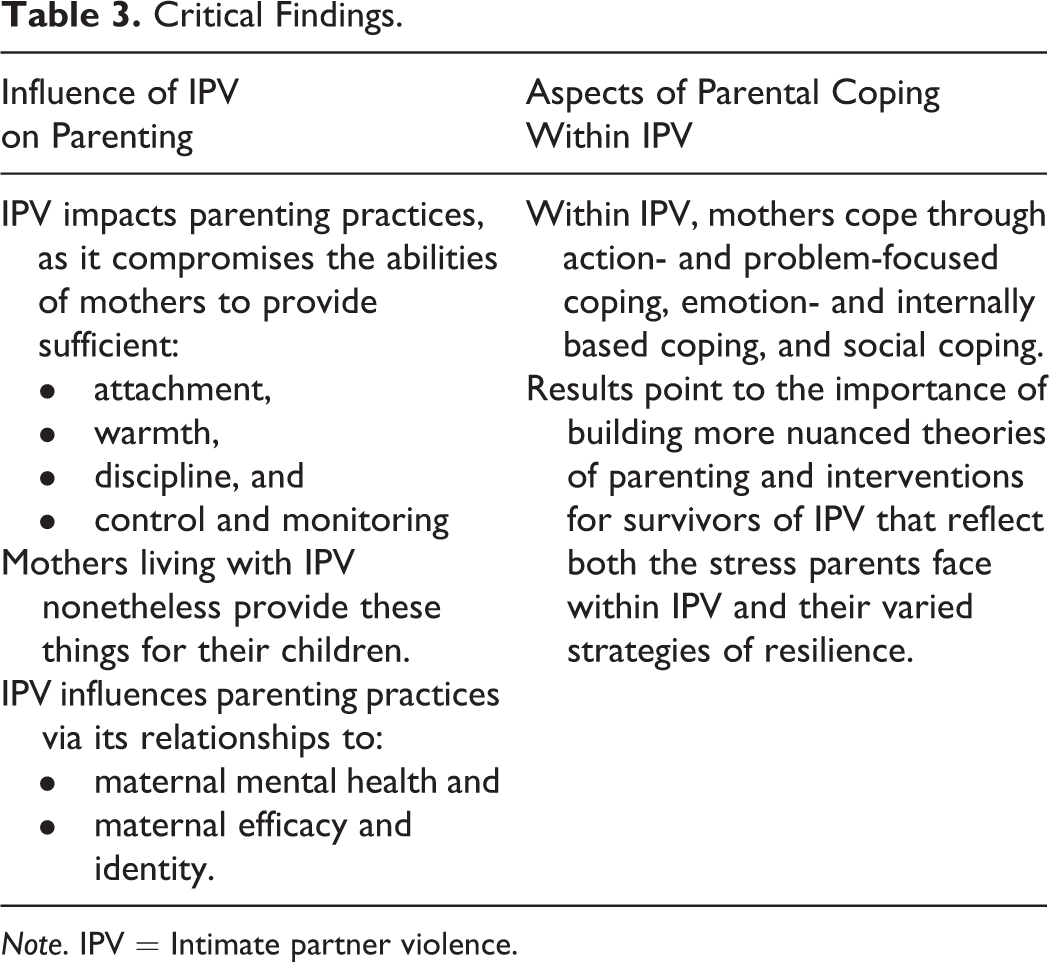
Note. IPV = Intimate partner violence.
Our analysis highlights the need to deepen our understandings of how parenting is profoundly influenced by and responsive to violence. For example, much of the work around parenting within violence rests on the theory that parents’ experiences permeate into their relationships with their children, an idea that was originally developed to try to explain how conflicts within the marital relationship influence the parent–child relationship (Engfer, 1988). There is a strong empirical base for this theory (Chiesa et al., 2018; Erel & Burman, 1995; Krishnakumar & Buehler, 2000). To a large extent, our findings also lend support to the spillover theory, as we found a great deal of evidence that the violence that parents encounter profoundly shapes, and in many ways, greatly inhibits, their parenting. At the same time, our results regarding the multiplicity of coping point to the importance of building more nuanced theories of parenting that account for both the effects of the stress women face within IPV and their varied strategies of resilience.
Our results thus point to the importance of building more nuanced theories and associated research that account for both the effects of the stress parents face within violence and women’s varied strategies of resilience. The many studies we analyzed led us to conclude that whether women mobilize it intentionally or not, they exhibit considerable strength and resourcefulness within violent circumstances and continue to promote attachment and provide support as well as supervision and monitoring. Women draw on both internal and external resources to see them through, including religious and cultural supports. Our findings highlight how mothers take on the challenging work of strategizing to maintain the safety and well-being of themselves and their children within IPV; this work includes, for instance, navigating the financial and practical constraints around leaving abusive partners and strategizing for the safety of themselves and their children. As well, our results indicate how much parents must engage in complex decision making around if, when, and how to comply, flee, or fight back and the ways in which official sources of help (e.g., the police) might actually hinder women’s help-seeking (Jones & Vetere, 2017; Nixon, Tutty, et al., 2017; Rhodes et al., 2010)—findings that help us to further our understandings of the kinds of complex thinking required of motherhood (Ruddick, 1995).
Regarding resilience, our work helped uncover the varied sets of protective actions women enact within violent settings. As we drew out, the existing body of scholarship on the topic bolsters the notion that resilience is a dynamic process of creating meaning, trust, and connection within adversity (Henry et al., 2015; Walsh, 2016). Our systematic gathering and examination of the literature helped make clear that we must continue to refine the concept of resilience as it relates to parenting (Gavidia-Payne et al., 2015). Our findings specifically point to how theories of parental resilience benefit from incorporating insights from theories that speak to the multiple, tenacious responses that people exhibit within trauma and oppression and the connections between resistance and resilience (Anderson & Danis, 2006). For women to endure violence themselves while also attempting to physically and emotionally shield and nurture their children is a formidable task. In the context of IPV, evidence for women’s varied attempts and abilities to protect their children, no matter the outcome, is a glimpse into how resilience is quite complex and best conceptualized as a multivaried and ongoing process.
In drawing attention to the multiple ways women who are mothers respond to IPV, our study highlights the importance of moving beyond the oft-cited parenting theories to which we often turn (Ainsworth & Bell, 1970; Bowlby, 1969; Winnicott, 1992). To more fully understand the lived experiences of mothers within settings of violence, we must continue to build critical theories about motherhood that take into consideration the complex emotional and intellectual attention required for parenting as well as the social and political contexts within which parents act (Rich, 1976; Roberts, 1993; Ruddick, 1995).
Arising from these implications for theory and research, the evidence collected here about factors that promote positive parenting within IPV strengthens the body of evidence from which to build interventions aimed at effectively interrupting how women’s exposure to violence inhibits their parenting (see Implications for Practice, Policy, and Research section). Our findings regarding the remarkably similar themes across multiple studies surrounding mothering and children’s well-being within IPV suggest several implications for practice around mother and child well-being; lessons drawn from our review therefore might help us prepare to meet the pressing need of examining interventions for mothers and children affected by IPV (Anderson & Van Ee, 2018; Austin et al., 2017). Specifically, our review highlights that interventions related to family functioning in the aftermath of IPV must concentrate on promoting the mental health and sense of parenting self-efficacy of mothers, who face violence alongside their children and suffer from its direct effects and its attacks on their mental health and their role as a parent. Indeed, studies of interventions related to parents and children who have experienced violence have shown the positive effects of programs that build the parent–child relationship, a factor that our review demonstrates to be extremely protective for children whose families face IPV (Rosenblum et al., 2017; Ziegler & Weidner, 2006).
As our findings make abundantly clear, parenting cannot be analyzed apart from the larger forces that affect it. Building well-being within violence thus depends on the implementation of change across not only the level of individual parents and children or even of the family alone. Rather, results here demonstrate how much parents draw and depend on their social environments, and the violence women encounter and their available options for coping are highly determined by parents’ social, economic, and political milieu (Lindhorst et al., 2005). Interventions therefore must take into account the social situatedness and the political ecology of families within contexts of violence, helping women survivors of IPV to rebuild ties to and draw on guidance and care from their community and social contexts (National Council on Family Relations, 2003).
Despite the potential ways this review might inform theory, research, and practice about parenting and violence, it is not without its limitations. Using only peer-reviewed literature available in English might have restricted our global reach, as evident in the lower volume of international literature we found about interpersonal violence. Although our inclusion criteria allowed for a broad outline of the relationships between IPV and parenting, the sheer volume of papers we reviewed limited us in terms of the depth we could offer here in terms of description or discussion of the findings of particular studies. Furthermore, as described above in our analysis of the methodological issues we identified throughout multiple studies, the descriptive nature of many of the studies limits our abilities to identify causal conclusions. These limitations notwithstanding, we hope that the overview provided here helps forward theories, research, and practice models that address the realities of parents’ attempts to foster children’s growth within adversity.
While our findings illustrate the multiple ways that parents work to maintain family well-being even in terrible circumstances, the overwhelming psychological costs of violence to parental functioning are also quite evident in this synthesis of evidence. The documentation herein about the many ways that violence threatens effective parenting underscores the importance of primary prevention of IPV. While working on interventions to address the consequences of violence, we must also attend to universal, broad-based interventions to prevent IPV itself (Spivak et al., 2014; WHO, 2010)
Implications for Practice, Policy, and Research
Interventions related to family functioning in the aftermath of IPV must concentrate on: promoting the mental health and sense of parenting self-efficacy of mothers, who face violence alongside their children and suffer from its direct effects and its attacks on their mental health and their role as a parent; the social situatedness and the political ecology of families within contexts of violence, helping women survivors of IPV to rebuild ties to and draw on guidance and care from their community and social contexts; and primary prevention of IPV via universal, broad-based efforts to prevent IPV itself.
Research on parenting within IPV need to pay closer attention to several methodological factors including closer attention in research design to: the varied (and sometimes contradictory) responses to IPV as it relates to parenting; factors that might lead to particular risks or potentials for resilience among mothers and children (e.g., cultural or ethnic variations; age and gender of children; education, income, or professional status); and temporal or causal sequences among IPV, mental health, efficacy, and parenting practices.
Footnotes
Declaration of Conflicting Interests
The author(s) declared no potential conflicts of interest with respect to the research, authorship, and/or publication of this article.
Funding
The author(s) received no financial support for the research, authorship, and/or publication of this article.
