



Abstract
Keywords
The South Asian community includes individuals originating from the Indian sub-continent (e.g., India, Pakistan, Bangladesh, and Sri Lanka). They are typically classified under the umbrella term of Asian Americans in the United States (U.S.), who comprise ∼7% of the U.S. population (United States Census Bureau, 2021). Among South Asians, Asian Indians are a subgroup of individuals reporting India as their country of origin; they make up ∼21% of this rapidly growing Asian American community in the U.S. (Budiman & Ruiz, 2021). Asian Indians, a community of color and a “visible minority,” are a distinct racial-ethnic minority in the U.S. For instance, Asian Indians historically immigrated to the U.S. primarily for personal and professional pursuits (e.g., career/academic opportunities; better education for children); family members such as their aging parents later joined them (Nandan, 2007). Relative to other racial-ethnic minorities, Asian Indians have higher rates of educational attainment and English fluency, have higher median household income, and are employed in high-paying occupations (Pew Research Center, 2012; U.S. Census Bureau, 2009). Nonetheless, this group has variations in English proficiency levels, communication abilities, educational level, and socioeconomic status (especially among first-generation Asian Indians; Tummala-Narra & Deshpande, 2018). Also, Asian Indians have distinct cultural values and norms such as collectivism, emphasis on religion and spirituality, patriarchal society, and being family-oriented (Suar et al., 2002; Tummala-Narra & Deshpande, 2018; Wrightson & Wardle, 1987).
Critical Findings of the Review.
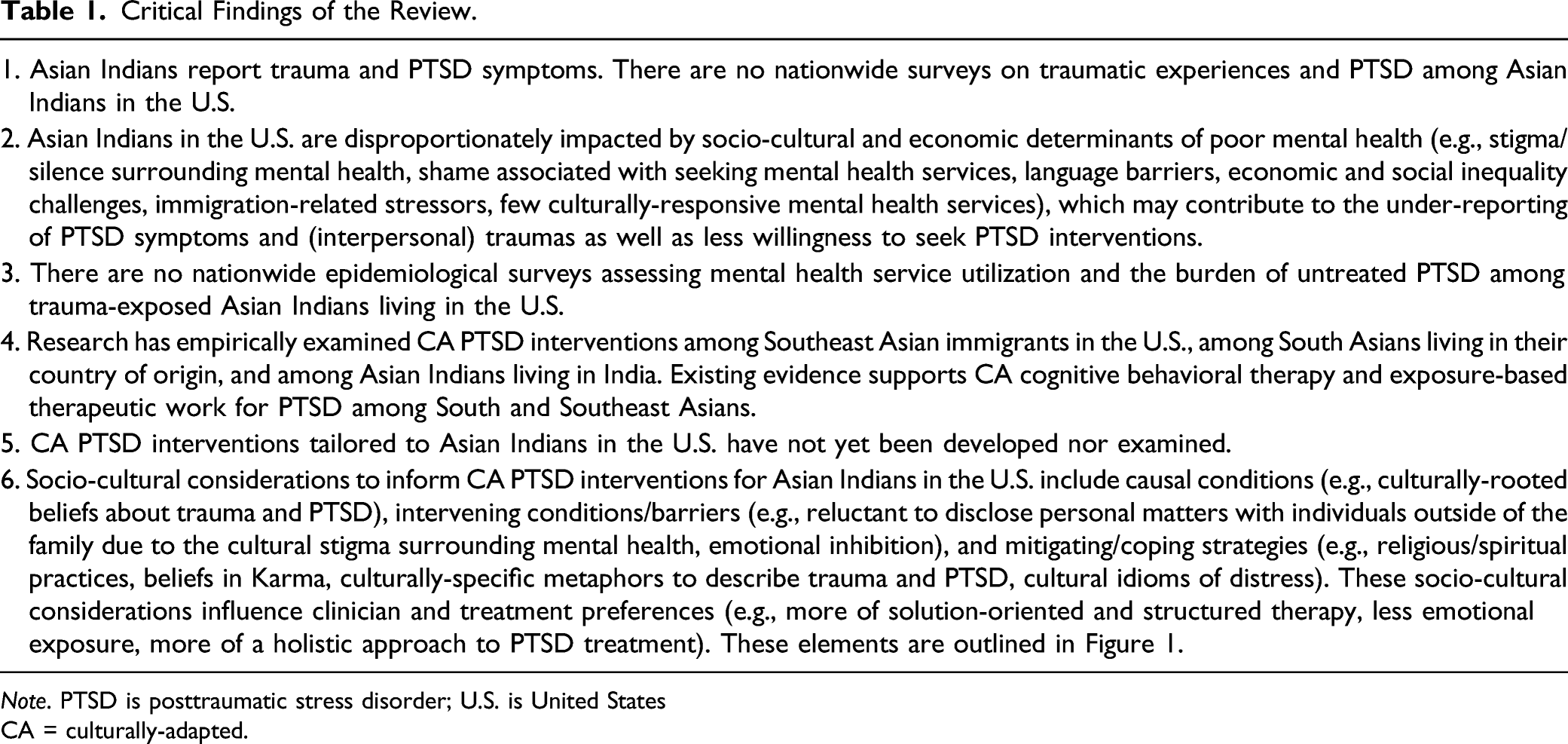
Note. PTSD is posttraumatic stress disorder; U.S. is United States
CA = culturally-adapted.
Implications of Review Findings for Practice, Policy and Research.

Notes. PTSD is posttraumatic stress disorder; CA is culturally-adapted; U.S. is United States; CBT is cognitive behavioral therapy; CPT is cognitive processing therapy; NET is narrative exposure therapy; EMDR is eye movement desensitization and reprocessing.
We used a narrative literature review framework, which is a conventional literature review that utilizes a purposive sampling approach for the literature review (Kiteley & Stogdon, 2013; Sutton et al., 2019). While this approach is not as comprehensive and methodological as a systematic review (e.g., our review did not examine rigor indices for included articles; Kiteley & Stogdon, 2013; Sutton et al., 2019), this framework was optimal to our aim of providing a rationale for, and information on, a cultural framework for PTSD treatments tailored to Asian Indians. Methodologically, a co-author searched titles and abstracts in PubMed and PsycInfo with these keywords: (“India” OR “Pakistan” OR “Bangladesh” OR “Bhutan” OR “Nepal” OR “Sri Lanka” OR “Maldives” OR “South Asians” OR “Asian Americans” OR “Asian immigrants”) AND (“PTSD” OR “post traumatic stress disorder” OR “posttraumatic stress disorder” OR “post-traumatic stress disorder” OR “trauma*” OR “posttraumatic stress symptom*” OR “post-traumatic stress symptom*” OR “post traumatic stress symptom*” OR “traumatic event” OR “traumatic experience*”) AND (“intervention*” OR “treatment*” OR “therap*” OR “strategy” OR “culturally adapted” OR “culturally sensitive” OR “prolonged exposure” OR “cognitive processing therapy” OR “cognitive behavioral therapy” OR “cognitive-behavioral therapy” OR “brief eclectic psychotherapy” OR “stress inoculation therapy” OR “interpersonal psychotherapy” OR “eye movement desensitization and reprocessing” OR “present-centered therapy” OR “written exposure therapy” OR “narrative exposure therapy” OR “family therapy” OR “couples therapy” or “group therapy” OR “trauma-focused intervention” OR “trauma-focused treatment” OR “trauma-focused”). The search was conducted on 9/26/2021, resulting in 238 unique articles. The first author reviewed the abstracts and identified 26 articles from this larger set of articles with relevant content for the current review. Although we focused our review on Asian Indians in the U.S. given the geographical location and the scope of clinical and research work of the primary authors, most of the review material is relevant to Asian Indians living in non-U.S. countries (including in India).
Traumatic Experiences and Posttraumatic Stress Disorder
Asian Indians report traumatic experiences before, during, or after immigration to the U.S., such as natural disasters, witnessing violent death of family members, war/conflict, torture as political prisoners, medical-related traumas, interpersonal traumas (e.g., domestic violence), and racial traumas (Dar & Deb, 2021; Dolan et al., in press; A. R. Gilmoor et al., 2019; Kaduvettoor-Davidson & Inman, 2013; Lee & Lu, 1989; Maji et al., 2021; Pillaia et al., 2015; Rechsteiner et al., 2019). One cross-sectional study conducted in the Kashmir Valley of India indicated that ∼33% of participants reported high traumatic exposure, and ∼24% reported experiencing >14 traumatic events amidst ongoing conflict and war (Dar & Deb, 2021). A recent study on Asian Indians in the U.S. indicated that ∼30% of participants reported >3 adverse childhood experiences, and ∼50% reported ≥1 adverse childhood experiences such as emotional abuse, emotional neglect, and physical abuse (Santoro et al., 2021). Critically, the Asian Indian community has a high prevalence of intimate partner violence (IPV), interpersonal traumas, and sexual violence (Inman et al., 2014; Rechsteiner et al., 2019; Tummala-Narra & Deshpande, 2018). In this regard, studies have shown that the rates of physical or sexual domestic violence against married women in India range from 8% to 31% (Dalal & Lindqvist, 2012), and rates of child sexual abuse or assault in India are >50% in certain high-risk samples (e.g., children who live on streets or at institutions; Carson et al., 2013). A study on South Asian immigrant women in Boston (U.S.) found that ∼41% of the women experienced physical or sexual abuse perpetrated by their partners (Raj & Silverman, 2002). Concerningly, the experience of interpersonal traumas is linked to severe psychological symptoms, including depression and hazardous substance use (Contractor et al., 2018). Acknowledging the diversity in methodological components across studies, these prevalence estimates of traumatic experiences among Asian Indians are comparable to those reported by a national U.S. sample (Kilpatrick et al., 2013).
Traumatic events are etiologically linked to the experience of PTSD symptoms, such as intrusive thoughts and memories, avoidance of trauma reminders, negative changes in cognition and mood, and arousal (American Psychiatric Association, 2013). A recent review found prevalence estimates of PTSD among Asian Indians living in India to be as high as 70–90% in some studies (A. R. Gilmoor et al., 2019; Pillaia et al., 2015), and a recent study indicated a prevalence rate of ∼41% for probable PTSD among Asian Indians living in India during the COVID-19 pandemic (Georgieva et al., 2021). Notably, average prevalence rates of PTSD are higher among Asian Indians reporting abuse experiences (28%) and natural disasters (31%; A. R. Gilmoor et al., 2019). While there have not been many studies examining Asian Indians specifically, a meta-analysis found a prevalence rate of ∼17% for PTSD among the South Asian countries more broadly (Naveed et al., 2020). Also, Asian Indians tend to experience symptoms of complex PTSD (e.g., emotional dysregulation) given their experiences of unaddressed chronic interpersonal traumas (Sunderaraman et al., 2021).
Critically, we do not know of nationwide surveys on traumatic experiences and PTSD among Asian Indians in the U.S. In fact, among studies that have sampled Asian Americans, heterogeneity in this community has not been frequently considered, with insufficient representation of Asian Indians (Sue et al., 2012). While we can extrapolate estimates for Asian Indians in the U.S. based on studies on Asian Indians living in India or on Asian Americans, the Asian Indian community in the U.S. carries its own unique set of socio-cultural and immigration-related considerations that may influence impacts and prevalence rates of traumatic experiences. Examples of such socio-cultural and immigration-related considerations include prejudicial experiences, racial discrimination, and marginalization (e.g., anti-Muslim sentiment post 9/11, anti-Asian sentiment during the COVID-19 pandemic, “Dot Buster” incidents); stress due to the immigration process; economic stressors (e.g., financial responsibilities for accompanying families, need to send money to family in India); communication and language barriers; acculturation stressors (e.g., cultural shock); colonial mentality; stress due to ethnic identity conflicts; and the lack of knowledge about local healthcare institutions and policies (Chandra et al., 2016; Falicov et al., 2020; Inman, 2006; Inman, Yeh, et al., 2007; Jin et al., in press; Lee & Lu, 1989; Nadimpalli et al., 2016; Nikalje & Çiftçi, 2021; Tewari et al., 2003; Tummala-Narra & Deshpande, 2018; Tummala-Narra et al., 2011). Indeed, experiences of racism and discrimination contribute to poor psychological (Kaduvettoor-Davidson & Inman, 2013) and physical (Utsey et al., 2000) health. Asian Indian immigrants may also lose extended family support, which could contribute to poor health (Leung et al., 2011; Masood et al., 2009). Thus, nationwide and community-based research on and screenings of traumatic experiences and posttrauma impacts among Asian Indians in the U.S. is needed to understand their mental health needs, risk factors, and treatment considerations (Schauer & Schauer, 2010).
Disparities in Treatment for Posttraumatic Stress Disorder and Burden of Untreated Posttraumatic Stress Disorder
Asian Indians in the U.S. are disproportionately impacted by several socio-cultural and economic determinants of poor mental health. They include stigma and silence surrounding mental health issues, shame associated with seeking mental health services, language barriers (e.g., lack of bilingual practitioners or interpreters), economic challenges (e.g., inadequate health insurance), social inequality challenges (e.g., limited access to transportation or to childcare serving as barriers to attending therapy appointments), immigration-related stressors, few culturally-responsive mental health services (e.g., no racial-ethnic match between clinicians and clients), and lack of knowledge of available mental health services (Abe-Kim & Takeuchi, 1996; Chandra et al., 2016; De Gagne et al., 2015; Housen et al., 2019; Loya et al., 2010; Sue et al., 1991; Sue et al., 2012; Tewary, 2005; Tummala-Narra, 2013; Tummala-Narra & Deshpande, 2018; US Department of Health and Human Services Office of the Surgeon General, 2001). Further, Asian Indians often perceive mental health symptoms as self-inflicted behaviors to seek attention or incentives (Tewary, 2005), tend to prioritize physical well-being over mental health (Tewary, 2005), and can have negative beliefs regarding mental health treatment (e.g., “counseling is not a South Asian thing,” Inman, Yeh, et al., 2007). Such factors contribute to the under-reporting of PTSD symptoms, and consequently to less willingness towards seeking treatment for such symptoms, as elaborated next.
Indeed, Asian Indians under-report or reluctantly report interpersonal traumas (e.g., domestic violence) and posttrauma symptoms (*Hall-Clark et al., 2016; Rastogi et al., 2014; Sue et al., 2012; Tummala-Narra & Deshpande, 2018). In fact, evidence suggests that several Asian Indians do not recognize abuse as a traumatic experience (Ahmad et al., 2004; Inman et al., 2014). Numerous reasons underlie these behavioral patterns: reluctance to disclose personal matters with individuals outside of one’s family due to the cultural stigma around mental health (Mahapatra, 2012; Maji et al., 2021; Nadimpalli et al., 2016), prioritizing family health and community reputation over individual well-being (Tripathi & Azhar, 2020), reluctance to disclose sexual abuse or domestic violence to preserve familial honor and to honor the sacred laws of marriage (D'Silva et al., 2018; Sheehan et al., 2000; Tummala-Narra & Deshpande, 2018), reluctance to file for divorce due to cultural stigma (Chaudhry & Chen, 2019), inadequate support after reporting abuse (Rechsteiner et al., 2019), and beliefs that violence is the result of karma (Tripathi & Azhar, 2020). Additionally, Asian Indian women frequently immigrate to the U.S. with a visa that makes them legally and financially dependent on their spouse (Bhandari, 2008) and are not provided opportunities to be financially independent (D’Silva et al., 2018).
Further, Asian Indians in the U.S. are less likely to use mental health–related services, including those for PTSD symptoms, compared with the general U.S. population (Abe-Kim et al., 2007; Loya et al., 2010). Notably, we do not have estimates on mental health utilization rates for Asian Indians in the U.S. (Karasz et al., 2019). When examining the broader and more heterogeneous group of Asian Americans, studies suggest that Asian Americans (including Asian Indians) have low rates of mental health service utilization and help-seeking behaviors (Hall et al., 2018; Sue et al., 2012; U.S. Department of Health and Human Services, 2001; Ying & Hu, 1994). For instance, in a national sample of Asian Americans in the U.S. (which includes Asian Indians), ∼9% sought any mental health-related service, ∼4% sought help from general medical providers, ∼3% sought help from mental health providers in the past 12 months; and ∼34% with a probable diagnosis sought any services (Abe-Kim et al., 2007), which is lower than compared to the ∼41% estimate of individuals in the general U.S. population seeking services (Wang et al., 2005). Further, evidence suggests that Asian Americans (as a broader group) have higher rates of premature termination from treatment than European Americans (Owen et al., 2012). Also, South Asians and Asian Indians in the U.S. tend to seek mental health treatment only when experiencing critical symptom severity (Loya et al., 2010; Rastogi et al., 2014) and often report mental health concerns when in trouble with the law or academic/occupational institutions (Rastogi et al., 2014). In addition, South Asian women experiencing abuse delay help-seeking (Raj & Silverman, 2002; Reidy & Von Korff, 1991).
We can cautiously speculate that the experience of the aforementioned socio-cultural and economic determinants of poor mental health contribute to the underreporting of trauma/PTSD and less willingness to seek PTSD interventions, which exacerbates or maintains PTSD severity. While not explicitly documented among Asian Indians in the U.S., untreated PTSD carries economic burden (McGowan, 2019), physical health burden (Ryder et al., 2018), as well as psychological health burden, including depression (Contractor et al., 2020), suicidal ideation (Patel et al., 2021), substance use (Mushtaq et al., 2016), and overall distress (Contractor et al., 2014). Specific to the Asian Indian community, untreated PTSD may also contribute to the inter-generational transmission of aggression and violence (Schauer & Schauer, 2010). Further, untreated PTSD may also contribute to chronic illnesses such as cardiovascular diseases in this community (Kumar & Sinha, 2020) and subsequent high rates of mortality in this group (Sunderaraman et al., 2021). Similarly, a recent study indicated that Asian Indians who reported more adverse childhood experiences were more likely to report diabetes and high blood pressure in adulthood (Santoro et al., 2021). Again, while evidence suggests disparities in mental health treatment for PTSD and the burden of untreated PTSD among Asian Indians in the U.S., we are unaware of any nationwide epidemiological survey that has empirically addressed these research questions.
Existing Culturally-Adapted Posttraumatic Stress Disorder Interventions
Considering the prevalence of traumatic events and PTSD, immigration-related factors, as well as culturally-influenced help-seeking barriers for mental health services among Asian Indians in the U.S., it is crucial to develop and examine the effects, feasibility, and scalability of CA PTSD interventions tailored to this community (Castro et al., 2010). Such work can address mental health disparities, reduce the burden of untreated PTSD, and aid equitable access to effective interventions. This viewpoint is consistent with the “culturally responsiveness” theory, which indicates that interventions aligned with cultural values are more effective (Sue et al., 1991). In this regard, we discuss CA PTSD interventions for the Asian Indian community.
Research has empirically examined CA PTSD interventions among immigrant Asians in the U.S. (predominantly Southeast Asian immigrants). For example, Hinton and colleagues (2005; 2004) found that CA cognitive behavioral therapy (CA-CBT) reduced PTSD severity, depression, anxiety, and panic attack symptoms among Vietnamese refugees; and reduced PTSD severity, anxiety/depression-related distress, and fear of anxiety-related somatic sensations among Cambodian refugees. Finally, Otto et al. (2003) found that combined treatment of sertraline and CA-CBT among Cambodian women improved PTSD, depression, anxiety, and somatic symptoms. Beyond such clinical trials, there is a documented case study of a Pakistani-American woman reporting chronic sexual abuse; after receiving CA Cognitive Processing Therapy (CPT), she demonstrated improvements in PTSD symptoms and depression (Glowacki & Glowacki, 2021). Overall, the evidence favors the beneficial effects of CA-CBT techniques on PTSD symptoms, primarily among immigrants from Southeast Asia.
Research has also empirically examined CA PTSD interventions among South Asians in their country of origin. For instance, *Catani et al. (2009) compared Narrative Exposure Therapy (NET) and meditation-relaxation among children in a Sri Lankan refugee camp, and found less PTSD symptoms and functional impairment in both conditions. Further, Jha et al. (2017) examined the feasibility of brief trauma-focused therapies for PTSD (Narrative Exposure Therapy-Revised [NET-R] or group-based control-focused behavioral treatment [CFCBT]) among earthquake survivors in Nepal, which revealed that CFCBT was more acceptable and affordable. Finally, Latif et al. (2021) investigated a CA trauma-focused CBT-based self-help protocol compared to a waitlist group for female victims of domestic violence in Pakistan; this protocol reduced PTSD, depression, anxiety, and disability post-intervention. Beyond these clinical trials, there are documented case studies demonstrating the beneficial impacts of CBT and Eye Movement Desensitization Reprocessing (EMDR) on PTSD severity and associated symptoms (e.g., distress, anxiety, depression) among tsunami victims in Sri Lanka (Hettiarachchi, 2007; Jayatunge, 2008). Altogether, the evidence supports CA-CBT and exposure-based work for PTSD (e.g., written narratives of traumatic events) among South Asians residing in their home countries.
Finally, limited work has empirically examined CA PTSD interventions among Asian Indians living in India. Parker et al. (2008) conducted an uncontrolled field study on the effects of a somatically-based therapy among tsunami victims in India and found improved PTSD symptoms post-treatment. Further, Satapathy and Walia (2006) reported a case study on a girl involved in a school fire tragedy in India; she received play therapy and demonstrated reduced PTSD symptoms, stress, and anxiety. Lastly, Descilo et al. (2010) compared a yoga breath intervention, a yoga breath intervention followed by three traumatic incident reduction techniques (exposure to trauma cues to evoke conditioned fear responses), and a waitlist condition among tsunami survivors in India; they found that both intervention groups reported fewer PTSD symptoms. As we can see, very few studies have examined PTSD interventions among Asian Indians broadly, and most of these studies do not have the highest level of empirical rigor (e.g., did not compare the treatment condition with a control group); thus, it is difficult to synthesize existing findings meaningfully.
Notably, the research community has not developed or empirically examined CA PTSD interventions tailored to Asian Indians in the U.S., who present with unique cultural considerations, immigration stressors, and acculturation issues. This gap in the existing knowledge base is discussed in several reviews, including a meta-analysis on mental health interventions among Asians (Huey & Tilley, 2018), a systematic review on IPV interventions among South Asian women in the U.S. (Tripathi & Azhar, 2020), a review of interventions targeting childhood sexual abuse (Choudhary et al., 2016), a review on PTSD prevalence estimates and interventions in India (A. R. Gilmoor et al., 2019), and a review on mental health and stress among South Asians (Karasz et al., 2019). To inform CA PTSD interventions for Asian Indians in the U.S., we next discuss relevant socio-cultural considerations.
Socio-Cultural Considerations for Culturally-Adapted Posttraumatic Stress Disorder Interventions
The Asian Indian community is diverse and heterogeneous in several facets, including language, religion, and cultural practices (Tewary, 2005). Despite this diversity, the Asian Indian community shares some common cultural worldviews and norms that warrant attention for CA PTSD interventions. These elements are outlined in Figure 1, representing a mental health treatment framework for culturally diverse communities (Kaur et al., under review) derived from the recommended research methodology for vigorous cross-cultural research (Barrera & Castro, 2006). Specifically, this framework was created based on mixed-methods data collected from various racially and ethnically diverse communities to ensure that such a framework could be adapted and applied to unique cultural communities (Asnaani et al., in press). Many elements of the sociopolitical context in Figure 1 have already been discussed above, and how each remaining aspect of the framework maps to considerations specific to Asian Indians experiencing PTSD symptoms is delineated next. Framework for Culturally-Adapted PTSD Interventions for Asian Indians living in the U.S. [Adapted from (Kaur et al., under review)]. Notes. PTSD is posttraumatic stress disorder.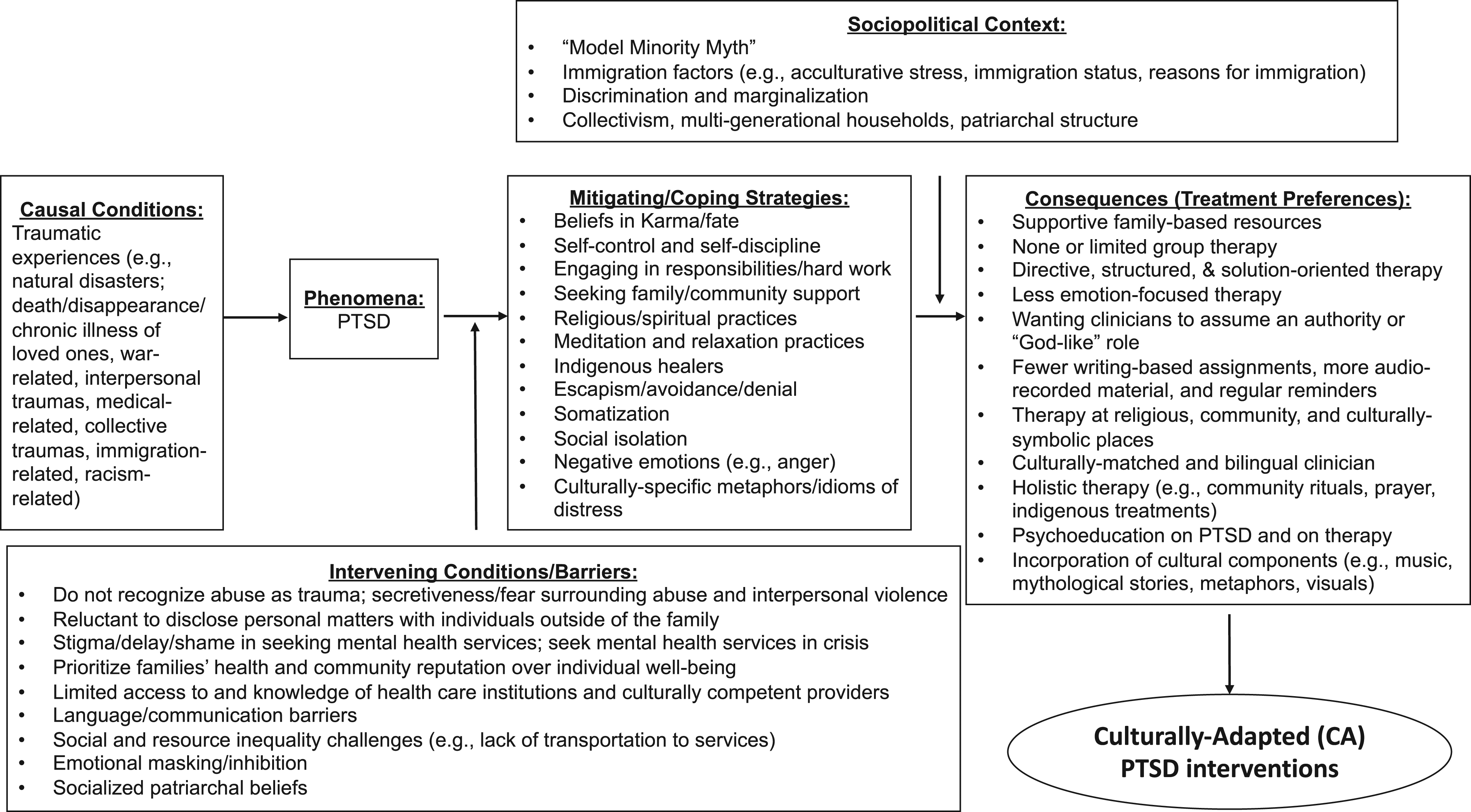
Causal Conditions
Causal conditions refer to what impacts an individual’s mental health or how they perceive mental health (Kaur et al., under review). Asian Indians have culturally-rooted beliefs about what constitutes a trauma and what causes posttrauma distress; some of these beliefs match Western-based definitions and interpretations. Beyond the traumatic experiences already discussed, Asian Indians attribute the onset or exacerbation of posttrauma distress to additional stressors such as poor physical health, death or disappearance of loved ones, interpersonal problems including family conflicts, collective trauma for lower-caste individuals, immigration-related traumas, lack of basic and financial resources, value-action gap (e.g., engaging in behaviors counter to cultural values such as promiscuity), and lack of academic and professional achievement (Ahammed, 2019; Daga et al., 2020; A. Gilmoor et al., 2020; Housen et al., 2019). Asian Indians also attribute trauma and posttrauma distress to supernatural phenomena (Kar, 2008), religious beliefs (e.g., “God’s will”), and destiny (Rechsteiner et al., 2020).
Intervening Conditions/Barriers
The intervening conditions/barriers are conceptualized as cultural factors that typically constrain the coping strategies individuals use to manage their mental health (Kaur et al., under review). As discussed above, several socio-cultural and economic factors such as not recognizing abuse as trauma and stigma/shame around mental health contribute to the under-reporting or reluctance in reporting traumatic experiences and posttrauma distress and disproportionately impact health outcomes among Asian Indians. Additionally, Asian Indians are not socialized and encouraged to express (intense and negative) emotions, particularly to individuals outside of their family; thus, they display emotional inhibition and avoidance (Chandra et al., 2016; Fishman et al., 2014). Relatedly, Asian Indians believe that negative emotions are an inevitable part of life and are fleeting, so individuals should learn to move past such negative emotions (Fishman et al., 2014). Language is another critical point to consider in PTSD intervention work with Asian Indians; Asian Indians speak >25 languages and ∼200 different dialects, with English as a commonly spoken language, and Hindi spoken by ∼30% of the population (Tewary, 2005). There is limited data on cross-cultural validation of back-translated trauma/PTSD assessments that can meaningfully inform therapeutic practices for this community (Inman et al., 2014).
Moreover, the Asian Indian community has a patriarchal structure (Tewary, 2005). Usually, men are considered the head of the household and hold the most amount of power for decision-making; women are perceived as subordinate and dependent on men, with their primary role being that of a caretaker for the family and raising the children (Tewary, 2005; Tummala-Narra, 2013). This situation may be different in immigrant Asian Indian families; women may hold positions of authority and seek out work opportunities, and have the freedom to assert themselves (Tummala-Narra, 2013). With a culturally-relevant assessment of the degree to which each of these aspects may be true for specific Asian Indian clients, PTSD interventions should account for socialized patriarchal beliefs, which may impact how clinicians (especially male clinicians) are viewed by women clients, along with the amount of autonomy that can be expected in the context of IPV issues in particular.
Mitigating and Coping Strategies
Asian Indians have culturally-specific coping strategies in response to traumatic experiences (Daga et al., 2020). Some functional ways of coping with trauma/stressors have been beliefs in Karma and in fate to reconstruct life after experiencing a trauma (Lee & Lu, 1989; Rajkumar et al., 2008), exercising self-control and self-discipline (Lee & Lu, 1989), engaging in hard-work that is valued, primarily if focused on work and home responsibilities (Fishman et al., 2014; A. Gilmoor et al., 2020; Inman, Yeh, et al., 2007; Rechsteiner et al., 2019), creating a support system (A. Gilmoor et al., 2020; Lee & Lu, 1989; Rajkumar et al., 2008; Rechsteiner et al., 2019), participating in religious/spiritual practices (Daga et al., 2020; Fishman et al., 2014; Inman, Yeh, et al., 2007; Rajkumar et al., 2008), engaging in meditation and relaxation (Daga et al., 2020; Fishman et al., 2014), and approaching indigenous healers (e.g., astrologers, religious leaders; Inman, Yeh, et al., 2007). Indeed, beliefs in Karma and in Eastern religions like Buddhism or Hinduism foster thinking patterns aligned with “external locus of control” (Suar et al., 2002; Wrightson & Wardle, 1987) and accepting one’s destiny (Pole et al., 2008), as well as values of endurance when experiencing a trauma (Pole et al., 2008). Some potentially unhealthy ways of coping with stressors/trauma among Asian Indians have been denial and silence (Lee & Lu, 1989), somatization in lieu of expressing mental health concerns (Daga et al., 2020; Lee & Lu, 1989), avoidance of trauma reminders (Lee & Lu, 1989), escapism such as hazardous substance use (Daga et al., 2020; Housen et al., 2019), expressing aggression (Housen et al., 2019), social withdrawal and isolation (Daga et al., 2020; A. Gilmoor et al., 2020; Inman, Yeh, et al., 2007), and impaired social responsibilities (e.g., unable to take care of others or to engage in work; A. Gilmoor et al., 2020). These distinct coping styles should be considered when developing a CA PTSD intervention tailored to this community (Lee & Lu, 1989).
Further, Asian Indians have culturally-specific metaphors to describe trauma and posttrauma symptoms/well-being, as well as cultural idioms of distress, which, as recommended, should be used for CA PTSD interventions (Heim & Kohrt, 2019) and which might provide a vehicle through which Asian Indians might be willing to address their symptoms. For instance, Asian Indians use native-language words such as “dukh,” “bure halath,” “taan,” “traas,” and “pareshani” to indicate stressors and trauma (Daga et al., 2020; Housen et al., 2019; Rechsteiner et al., 2019); “shanti” and “sukoon” to indicate well-being (Daga et al., 2020; Housen et al., 2019); “ghabrahat” to describe nervousness (Housen et al., 2019); “dhakkā” to reference emotional shock after a trauma (A. Gilmoor et al., 2020; Rechsteiner et al., 2020); and “manasik jakham” to reference consequences of trauma (Rechsteiner et al., 2019, 2020). Asian Indians also use native-language equivalents of English words/phrases referencing “tension,” “stress,” and “trouble” to describe both traumatic and non-traumatic experiences (Rechsteiner et al., 2019); “emotional shock,” “not getting out,” “coming out of sorrows/bad events,” “being in despair,” or “being stuck in tragedy” to reference the feeling of being trapped after a trauma (A. Gilmoor et al., 2020; Rechsteiner et al., 2020); “a large load,” “something you cannot carry,” “mental burden,” “fear/rape in the mind,” and “mental wound” when referencing consequences of trauma (Rechsteiner et al., 2019, 2020); and “something that happens all of a sudden” to indicate abruptness of a trauma (Rechsteiner et al., 2019). Also, several culturally-specific metaphors reference the heart-mind connection, such as “mental burden” or “heavy mind” (Rechsteiner et al., 2020).
Consequences (Treatment Preferences)
The Asian Indian culture is highly collectivistic, emphasizing societal, familial, and community interdependence, needs, as well as goals (Chadda & Deb, 2013; Tewary, 2005). Asian Indians often live with extended or joint family members (Augustine, 2014; Glowacki & Glowacki, 2021); ∼25% of Asian Americans in the U.S. live in multigenerational households (Budiman & Ruiz, 2021). Living with extended family and experiencing effective family communication has been shown to predict posttraumatic growth following a trauma, potentially because healthy familial connections provide emotional and financial support to deal with the trauma (Augustine, 2014) and the sharing of the trauma with family members provides an opportunity to garner empathy and support (Lee & Lu, 1989). In fact, Asian Indians utilize supportive family and friends as primary coping resources for mental health symptoms instead of seeking professional mental health services (Inman, Howard, et al., 2007). Thus, PTSD interventions tailored to the Asian Indian community could capitalize on supportive family-based resources to foster coping (Augustine, 2014; Lee & Lu, 1989; Mahr et al., 2015). Notably, Asian Indians may be hesitant to receive group therapy (Tripathi & Azhar, 2020) because they may not want to share personal experiences with individuals beyond their family and may be concerned about confidentiality (Lee & Lu, 1989).
Asian Indians have distinct preferences for clinician/treatment characteristics and different treatment expectations (Lee & Lu, 1989), which are essential to consider for CA PTSD interventions. Specifically, research suggests that Asian Indians may prefer a more directive, structured, and solution-oriented therapeutic approach (e.g., CBT) that primarily focuses on symptom reduction rather than on emotional release (Chandra et al., 2016). Thus, Asian Indians may be accepting of manualized PTSD interventions. Further, PTSD interventions that involve emotional exposure strategies (e.g., prolonged exposure [PE]) may have to be modified or tailored to account for the default tendency for emotional avoidance and suppression in this community. This is particularly important given that emotional inhibition reduces the opportunity for therapeutic exposure to trauma memories and for challenging trauma-related beliefs (Mahr et al., 2015). If PTSD interventions use emotional exposure strategies, it may be helpful to emphasize being mindful about emotions and to encourage a focus on the present moment, as done with CA-CBT (Hinton et al., 2004), or to facilitate emotional release through expressions of love, kindness, and compassion as done with testimonial therapy (Agger et al., 2012).
Further, Asian Indians are likely to perceive clinicians as authority figures (Fillauer et al., 2019) or “God-like” figures (Rastogi et al., 2014) and defer to them for treatment decisions (Rastogi et al., 2014). Alternatively, Asian Indians may be open to an opportunity to develop a collaborative treatment plan (Fillauer et al., 2019; Hall et al., 2018) given their collectivistic orientation, and thus, may need to be explicitly guided to this format given their default perspective of the clinician as an authority figure. In terms of the treatment format, Asian Indians may prefer fewer writing-based assignments, more audio-recorded material, and regular reminders to increase treatment retention and homework compliance (Naeem et al., 2015). Notably, therapeutic spaces may be conceptualized differently by Asian Indians than Westerners; a systematic review on IPV interventions among South Asian women in the U.S. indicated that religious spaces were preferred for therapy (Tripathi & Azhar, 2020). Asian Indians may also prefer to receive PTSD interventions from culturally-matched and bilingual clinicians who are sensitive to and show an understanding of their cultural norms (Inman, Yeh, et al., 2007; Rastogi et al., 2014) and from cultural-specific organizations (e.g., South Asian consulate; Inman, Yeh, et al., 2007) at religious, community, or culturally-symbolic spaces or “natural communities” such as temples (Agger et al., 2012; Otto et al., 2003; Schauer & Schauer, 2010; Tripathi & Azhar, 2020).
Asian Indians may also prefer a holistic therapeutic approach for PTSD that adheres to a broader definition of wellness incorporating emotional, spiritual, and physical well-being (Asnaani et al., in press) given the collectivistic nature and religious/spiritual orientation of this community. This holistic approach may include indigenous treatments (yoga), local/communal rituals, Ayurvedic practices, prayer, or seeking help from spiritual healers (Agger et al., 2012; Ahammed, 2019; Housen et al., 2019; Pillaia et al., 2015; Tewary, 2005). Indeed, a study on psychiatric inpatients in India found that 75% of patients sought faith-healing rituals before seeking medical help and found these rituals to be beneficial (Kar, 2008).
From a culturally-responsive treatment perspective, PTSD interventions may be enhanced in effectiveness and retention if (1) psychoeducation on PTSD as well as on therapeutic processes are offered as a preparatory augmentation to active therapeutic components (Rastogi et al., 2014), given the anxiety-provoking myths about therapy among Asian Indians (Mahr et al., 2015; Raiya & Pargament, 2010); and (2) cultural components (e.g., Asian Indian music, mythological stories, cultural-specific visuals and metaphors) are interwoven in the intervention (Rastogi et al., 2014), as done with CA-CBT (Hinton et al., 2004; Otto et al., 2003). One study indicated that Asian Indian immigrants in the U.S. preferred educational programs on managing their health, “health melas” that are community-based events for health promotion, and community-based healthcare programs (De Gagne et al., 2015). Taken together, it may be helpful to conceptualize CA PTSD interventions for Asian Indians as most likely to be effective if they are multilevel by targeting relationship factors and preferred communication styles, as well as involving community clinics and religious institutions, beyond only targeting individual-level health and knowledge. Relatedly, Asian Indians may prefer to use terms such as “skills training” rather than “psychotherapy” to reference PTSD interventions (Rastogi et al., 2014).
Finally, we acknowledge the debate and dearth of research on whether PTSD is a cross-culturally valid diagnostic construct for Asian Indians (Gilmoor et al., 2019; *Hall-Clark et al., 2016; Mehta et al., 2005; Pillaia et al., 2015). Limited evidence suggests that Asian American clients and their clinicians have similar assessments of the severity/type of experienced PTSD symptoms (*Hall-Clark et al., 2016), and there is correspondence between distress symptoms (somatic, behavioral, cognitive, social) reported by Asian Indians when assessing for PTSD and symptoms queried by PTSD measures used in the Western culture (e.g., Hopkins Symptoms Checklist; Housen et al., 2019). This being said, a few things need to be considered. One, in the Asian Indian context, and particularly for women, it is acceptable to express distress via somatic symptoms rather than verbally (Tummala-Narra & Deshpande, 2018). Thus, PTSD, similar to other mental health disorders, may be manifested more as somatic symptoms or as idioms of distress within the socio-cultural and psychological framework of the Asian Indian culture (Housen et al., 2019; Inman, Yeh, et al., 2007; Kar et al., 2007; Rastogi et al., 2014). Further, in terms of specific PTSD symptom clusters, evidence suggests that Asian Indians may report fewer avoidance symptoms and more negative cognitions (*Hall-Clark et al., 2016; Rajkumar et al., 2008). For instance, in a study on tsunami survivors in Tamil Nadu (India), participants had limited opportunities to avoid stimuli associated with the trauma and were socialized to talk and mourn about the trauma collectively using religious rituals; thus, PTSD avoidance symptoms were less frequently endorsed (Rajkumar et al., 2008). Also, some studies suggest that PTSD can be expressed through other symptoms, such as sadness, anxiety, fear, and disturbed sleep (A. R. Gilmoor et al., 2019). Finally, studies have highlighted cultural idioms of distress or culture-bound syndromes that may impact how PTSD is manifested, diagnosed, and treated. For instance, in South Asia, individuals may report trances during religious and spiritual events (Jacob & Kuruvilla, 2012), “dhat syndrome” (fear of losing semen; Sumathipala et al., 2004), or “Suudu” (painful urination and heat in the pelvic area; Chhabra & Bhatia, 2008). Considering such culturally-rooted beliefs, metaphors, syndromes, and practices can help accurately assess and treat PTSD in the Asian Indian community (Tummala-Narra & Deshpande, 2018) and enhance therapeutic buy-in, adherence, and retention.
Clinical and Research Recommendations for Future Culturally-Adapted Posttraumatic Stress Disorder Interventions
Currently, there are several empirically supported treatments for PTSD, including PE, CPT, and CBT, among others (Watkins et al., 2018). However, to our knowledge, no study has developed a CA PTSD intervention and empirically examined its effectiveness, acceptability, and feasibility among Asian Indians in the U.S. Our aim, thus, was to outline a few guidelines and recommendations towards this broader goal of conceptualizing and treating PTSD within the socio-cultural context of Asian Indians.
To start, we need nationwide and epidemiological studies on traumatic experiences, as well as on prevalence estimates of and risk factors for PTSD among Asian Indians (especially Asian Indians living in other countries such as the U.S.). Currently, not only is there lack of such data, but also existing research on mental health is inadequate because of insufficient representation of Asian Indians in study samples, failure to consider cultural factors influencing the conceptualization of mental disorders, failure to consider culturally-based reporting biases (e.g., under-reporting of symptoms), and a lack of empirically-supported back-translated measures of disorders such as PTSD (Baxter et al., 2013; A. R. Gilmoor et al., 2019; Sue et al., 2012). Further, even if studies have sampled Asian Americans, heterogeneity in this community has not been considered—differences in regions of origin, cultural values, English language proficiency, acculturation levels, and immigrant status (Sue et al., 2012). Such nationwide studies can inform CA PTSD interventions by providing data on the nature and extent of the problem and by identifying the most crucial clinical targets.
Culturally-adapted PTSD interventions interventions for Asian Indians in the U.S. must consider the various circumstances of and factors related to immigration because they may influence manifestation, maintenance, severity, and comorbidities of PTSD. Some factors to consider include the wave of immigration, generational status, access to support from family and community in their home and host countries, experiences of discrimination (e.g., racism), English language fluency, educational background, and enculturation/acculturation levels (Tummala-Narra, 2013). In this regard, research has shown that U.S.-born Asian Americans are more likely to use mental health services than their immigrant counterparts (Abe-Kim et al., 2007); third-generation (or later) immigrants with a mental health disorder seek help at much higher rates (62.6%) compared to first-generation (30.4%) or second-generation (28.8%) immigrants (Abe-Kim et al., 2007); and positive help-seeking attitudes relate to more acculturation (Inman et al., 2014).
Culturally-adapted PTSD interventions for Asian Indians in the U.S. would benefit from empirically testing the influence of the cultural elements described in the treatment framework of Figure 1. Such cultural elements include qualitative and quantitative assessment of causal conditions (e.g., interpersonal traumas), intervening barriers (e.g., emotional inhibition), and mitigating/coping strategies (e.g., religious/spiritual practices) throughout treatment; and how these cultural elements influence changes in clinical targets or are themselves changed by CA PTSD interventions. These empirical studies should also examine how the integration of culturally-prescribed coping strategies (e.g., reliance on social support) may amplify CA PTSD intervention effects and how all of these factors interplay with PTSD intervention preferences for Asian Indians (e.g., preference for family-based interventions).
Finally, we need culturally-valid assessments of PTSD symptoms and to test the efficacy of PTSD interventions for the Asian Indian community. Such assessments may include a spectrum of somatic symptoms, cultural idioms of distress, as well as culture-bound syndromes most associated with traumatic experiences and PTSD. Indeed, as done with other CA interventions, CA PTSD interventions may benefit from addressing interpretations of somatic symptoms triggered by the traumatic memories (Hinton et al., 2004), exposure to somatic sensations associated with PTSD (Otto et al., 2003), or sleep hygiene (Mahr et al., 2015).
Final Considerations
The high proportion of Asian Indian residents and immigrants in the U.S. presents challenges in ensuring that we have adequate, potentially innovative, and culturally-appropriate mental health services to reach this community and serve their mental health needs (Abe-Kim et al., 2007; Sue et al., 2012). Using the outlined cultural considerations, researchers and clinicians could begin to develop and test CA PTSD interventions using recommended cross-cultural methodologies (Barrera & Castro, 2006), which includes (1) information gathering (e.g., reviewing the literature, conducting focus groups), (2) culturally adapting the PTSD intervention preliminarily by using information gathered in the first stage, (3) piloting the modified and CA intervention to examine feasibility, effects, and underlying mechanisms of action (preferably by involving stakeholders, such as local community clinics), and (4) refining the CA intervention based on pilot results (helpful to include a mixed-methods approach). It would also be beneficial to examine the effects of such CA PTSD interventions on social functioning and on the economic burden associated with untreated PTSD (e.g., number of hospital visits, medication costs). Relatedly, comparing the effectiveness of existing evidence-based approaches (e.g., skill-oriented vs. CBT vs. treatments combining emotional processing and behavioral approaches) among Asian Indians could meaningfully inform CA PTSD interventions by outlining effective therapeutic components. Additionally, a component analysis to identify effective therapeutic elements of CA PTSD interventions could inform the scalability and feasibility of implementing the intervention.
Another essential consideration would be to involve and train paraprofessionals who do not identify with the core mental health disciplines and local service providers to deliver CA PTSD interventions to enhance capacity-building, scalability, and implementation (Schauer & Schauer, 2010). Drawing from existing evidence, it may be helpful for paraprofessionals working with Asian Indians to be literate in the native language, have good interpersonal and therapeutic skills (e.g., empathy), demonstrate motivation for this kind of work, and share some cultural values as the target group (Jain, 2010; Neuner et al., 2008). Also, evidence suggests that paraprofessionals can effectively administer trauma interventions with beneficial therapeutic outcomes, can lead group discussions, and also can serve as peers to individuals who seek treatment for PTSD symptoms (Dowling et al., 2006; Jain, 2010; Neuner et al., 2008; Xiong et al., 2019). Further, it would be helpful to provide regular and effective supervision to paraprofessionals to prevent burnout, to integrate them into treatment teams effectively, and to ensure ethical and legal compliance to therapeutic procedures (Jain, 2010; Rahman et al., 2008). Paraprofessionals would benefit from intensive and time-limited training (e.g., 2 weeks) in how to make referrals to specialized services and to skilled professionals when appropriate (i.e., skills around how to triage and when to externally refer individuals for topics outside of their scope of practice), in general counseling skills, in skills needed for CA PTSD interventions, as well as in relevant cultural components (Neuner et al., 2008; Xiong et al., 2019). Relatedly, there is a need to diversify the mental health profession and discipline with steps such as increasing the training, recruitment, and retention of mental health professionals identifying as Asian Indians. Such steps can begin to address barriers to seeking and accessing mental health services and can begin to address cultural competency for clinicians to potentially improve PTSD treatment access and retention. Conclusively, these CA PTSD interventions may improve overall psychological health and well-being at the individual, familial, and community levels, and thus, reduce PTSD-related burden on Asian Indians in the U.S.
Footnotes
Acknowledgments
We acknowledge the efforts by Ms. Gurleen Kaur to obtain articles for this review.
Declaration of Conflicting Interests
The author(s) declared no potential conflicts of interest with respect to the research, authorship, and/or publication of this article.
Funding
The authors disclosed receipt of the following financial support for the research, authorship, and/or publication of this article: This study was supported by grants from National Institutes of Health under Award Number UL1TR002538.
Author’s Note
Work on this paper for Dr. Anu Asnaani was partially supported by the National Center for Advancing Translational Sciences of the National Institutes of Health under Award Number UL1TR002538, for a project entitled “Investigation of Community-Level Definitions of Mental Health, Mental Health Priority Areas, and Barriers to Care Across Diverse Communities: Development of a Framework for Culturally-Responsive, Evidence-Based Mental Health Intervention” (PIs: Asnaani & Sanchez-Birkhead). The content herein is solely the responsibility of the authors and does not necessarily represent the official views of the National Institutes of Health.
Data Availability Statement
There is no dataset associated with this review.
