



Abstract
Exposure to intimate partner violence (IPV) between parents or caregivers can result in lifelong mental, physical, and relational challenges for children. Although the impacts of IPV on children are well documented, the aim of this systematic review was to be the first to synthesize the literature on children’s perspectives of fathers who have perpetrated IPV. Five electronic databases were searched using a string of search terms relating to the variables of interest. In total, 11,40 records were obtained from the database search. Screening based on a strict inclusion and exclusion criteria yielded 24 qualitative articles addressing the perceptions of children concerning fathers who perpetrate IPV. Research capturing the views of children regarding fathers who perpetrate IPV is scant. The current review highlights that children experience a range of feelings about their perpetrating fathers, including fear, anger, hatred, as well as ambivalence and love toward their father and children often have difficulty integrating contradictory experiences of their fathers’ behaviors. Father–child relationships are severely affected by IPV, including their fathers’ use of coercive control, even after the parents have separated. Finally, children’s experiences of their fathers’ attempts at behavior change varied. More research is needed to understand the views of children in this area, with consideration given to children’s developmental stage and the type of IPV experienced. Recommendations for research and interventions for children and families are emphasized further within this review.
Intimate Partner Violence (IPV) includes all forms of violence and coercive control that occur between two current or former intimate partners (Australian Institute of Health and Wellbeing: AIHW, 2018). While IPV can be perpetrated by both men and women and within same sex relationships, evidence suggests that IPV is overwhelmingly perpetrated by men toward women. The Australian Personal Safety Survey (Australian Bureau of Statistics: ABS, 2017) found that one in four women had experienced at least one incident of IPV from the age of 15 (ABS, 2017). Further, 65% of the women who had reported IPV also reported that they had children in their care when they experienced violence, and that their children had heard or witnessed the violence as it occurred (ABS, 2017). Estimates published by the World Health Organization suggest worldwide almost one-third (27%) of women aged 15 to 49 years who have been in a relationship have reported IPV (World Health Organisation, 2021).
Differential developmental outcomes for children and adolescents who have been exposed to parental IPV when compared to their same aged peers are well documented. Meta-analyses of cross-sectional and longitudinal samples have found significant effect sizes for the impact of childhood and adolescent exposure to IPV on their socio-emotional outcomes (Vu et al., 2016); risk of mental health problems (Sonego et al., 2018); risk of bullying perpetration and victimization (Hlavaty & Haselschwerdt, 2019); and likelihood of experiencing IPV in their own intimate relationships (Hlavaty & Haselschwerdt, 2019). Children’s exposure to parental IPV has also been found to negatively impact cognitive development (Samuelson et al., 2012), language development (Peterson et al., 2019), moral development (Garrigan et al., 2018), and academic outcomes (Kiesel et al., 2016) of children.
The Ecobiological Developmental Framework (EBD) proposes that a child’s ecology (e.g., home, school, and community environment) activates biological processes, both adaptive and disruptive, that affect neurological development, and this in turn impacts a child’s overall health and development (e.g., learning, behavior, physical, and mental wellbeing; Shonkoff et al., 2012). Within this model, exposure to IPV can diminish social and physical safety for the child, increase cortisol levels and delay developmental outcomes of children, and compromise attachment with the perpetrating father. Impacting children further, maternal exposure to IPV has been found to negatively impact the quality of mother–child relationships via maternal trauma (Mueller & Tronick, 2019), and the emotional availability of mothers to their children (Lapierre et al., 2017). Importantly, while research suggests that fathers play a unique role in child development (C. E. Baker et al., 2015), little is known about the role of IPV perpetrating fathers in children’s development (Kulkarni, 2018).
Understanding how children perceive fathers who perpetrate IPV is important as children’s exposure to IPV can impact their social-emotional development and increase their risk of exposure to bullying in childhood and IPV in adulthood. A study using interviews with children reported that children’s efforts to understand violence in their home can affect their beliefs and attitudes that may lead them to perpetrate or be exposed to aggression in close relationships (DeBoard-Lucas & Grych, 2011). Research shows that children exposed to IPV experience higher levels of peer bullying victimization (Vikse Nicholson et al., 2018) and are more likely to perpetrate bullying with peers (H. Lee et al., 2022). McKinney et al. (2009) also found that IPV in childhood increases exposure to bullying, IPV victimization, and violence across the lifespan.
The experience of having a father who perpetrates violence may present different challenges for children of different ages. Fathers also differ in their views about the impact and consequences of family violence for their children. Perpetrating fathers have been reported to express inappropriate developmental expectations for their children, a lack of empathy for their children, a focus on their own needs rather than the needs of their children, and a belief that corporal punishment is an acceptable form of discipline (Burnette et al., 2015). Fathers who perpetrate IPV have also expressed concern regarding how their use of violence might affect their child (Stanley et al., 2012). For example, fathers have reported feeling shame, guilt, regret (Fox et al., 2002), and remorse (J. Smith & Humphreys, 2019) about their violent episodes. Information about children’s perspectives of fathers who perpetrate IPV may assist men who are pre-contemplative about changing their parenting and violent behaviors to move toward more active stages of change (Soleymani et al., 2018). In addition to an ecobiological perspective of children’s experiences of IPV, the Betrayal Trauma Theory (BTT) may offer a further explanatory framework to account for the perspectives of children when exposed to IPV (Freyd, 1996). BTT posits that individuals process events based on how heavily that event represents a betrayal by someone who is meant to care for them (DePrince et al., 2012). Children may dissociate from, or not allow themselves to truly connect with, IPV that violates their expectations of a caregiver (i.e., their perpetrating father) as means of self-protection. According to BTT, the way that IPV is remembered depends on the degree of perceived betrayal by a trusted caregiver (DePrince et al., 2012). In an application of BTT, repeated IPV trauma (as opposed to single incidents of trauma) resulted in women holding paradoxical views of their partner as both loving and respectful, while also abusive (Platt et al., 2009). The maintenance of these contrasting representations of their partner served to uphold their attachment to their abusive partner, and it is possible that children show similar defense mechanisms and conflicting views associated with their abusive father (Platt et al., 2009).
To date, four identified qualitative systematic reviews have been conducted that have focused on children and adolescents’ experiences of IPV (Arai et al., 2019; Hines, 2014; Noble-Carr et al., 2019; Ravi & Casolaro, 2017). One review identified children’s perceived need to keep themselves, and often their mother and/or siblings, safe (Arai et al., 2019). Noble-Carr et al. (2019) found that there is considerable disruption to daily life of children which occurs as a result of IPV. These reviews also focused on the positive and negative coping strategies utilized by young people (Arai et al., 2019; Ravi & Casolaro, 2017), and what protective factors and service needs exist for children exposed to IPV (Hines, 2014; Noble-Carr et al., 2019). While these reviews provided valuable contributions to research, they did not explicitly focus on children’s and adolescents’ perceptions of fathers who perpetrate IPV. Further, several systematic reviews focused on quantitative data with children exposed to IPV have been conducted. One example is a systematic review by Fong et al. (2019) which explored the risk and protective factors for externalizing problems among children exposed to IPV, or a systematic review on interventions to support students, conducted by Latzman et al. (2019). These reviews provide valuable information about children’s intervention needs and effective interventions for children in response to IPV. However, development and delivery of interventions should also rely on children’s perceptions and experiences of their father as these views have the potential to impact suitability of programs for children exposed to violence.
Aim of the Current Study
The aim of the current study was to synthesize the available qualitative research that has examined children’s experiences and perceptions of their fathers who have perpetrated IPV toward that child’s mother. A synthesis of the qualitative literature is important for service providers to understand the experiences and challenges of children with fathers who perpetrate IPV. The overarching research question for this study was: What are children’s and adolescents’ experiences and perceptions of their fathers who have perpetrated IPV against that child’s mother. The current systematic review of the qualitative research will provide a collection of the views and experiences of children regarding IPV perpetrating fathers across multiple studies and provoke the design and delivery of future research and IPV-based interventions. The results of this review may be of particular relevance due to the current COVID-19 circumstances and increased rates of IPV (Boxall et al., 2020). In particular, there is a call for more research and interventions to address the consequences of increasing IPV exposure among children and families (Peterman et al., 2020).
Method
Search Definitions and Terms
The research question was developed using the Sample, Phenomenon of Interest, Design and Evaluation and Research Type (SPIDER) tool for development of qualitative systematic review questions (Cooke et al., 2012). The target sample consisted of children and adolescents under the age of 18 who had been exposed to IPV perpetrated by their father (or father figure) toward their mother. Retrospective reports from young adults (up to the age of 30) were also included in the search. For the purpose of this review, the terms “father” and “father figure” refer to biological father, non-biological father, step-father or any other male figure who fulfils the male parental role. For this review, the term “mother” refers to biological mother, non-biological mother, step-mother, or any female figure who has a permanent female maternal caregiver role. The review required articles to address IPV perpetrated by the male parental figure within a heterosexual relationship. The term violence included all forms of violence perpetrated within a current or previous intimate heterosexual relationship. Studies that focused exclusively on violence that was directed toward a child were excluded from the study (i.e., child abuse). In recognition of the high comorbidity between IPV exposure and child abuse (S. J. Lee et al., 2009; Shlonsky et al., 2019), studies were not excluded if they included narratives about children’s direct experience of violence perpetrated by their father alongside narratives about children’s and adolescents’ experience of IPV between parental figures.
Studies were included if the design and evaluation of the studies included research methods commensurate with qualitative research approaches, including: interviews, focus groups, qualitative components of mixed method studies, and other qualitative methods that were designed to elicit the experiences and perceptions of children and youth exposed to IPV perpetrated by their father toward their mother. Papers with qualitative data were the focus of this review to capture children’s narratives about their experiences of fathers who perpetrate violence. Search terms were developed using recommendations made by previous analyses of qualitative search approaches (Evans, 2002). The search terms were combined with the BOOLEAN term “OR” to form the four separate concept groups of IPV, fathers, children, and qualitative. Each of these concept groups were then combined with the specifier “AND” to produce a final combined search (see Table 1).
Search Terms Used Within Databases.
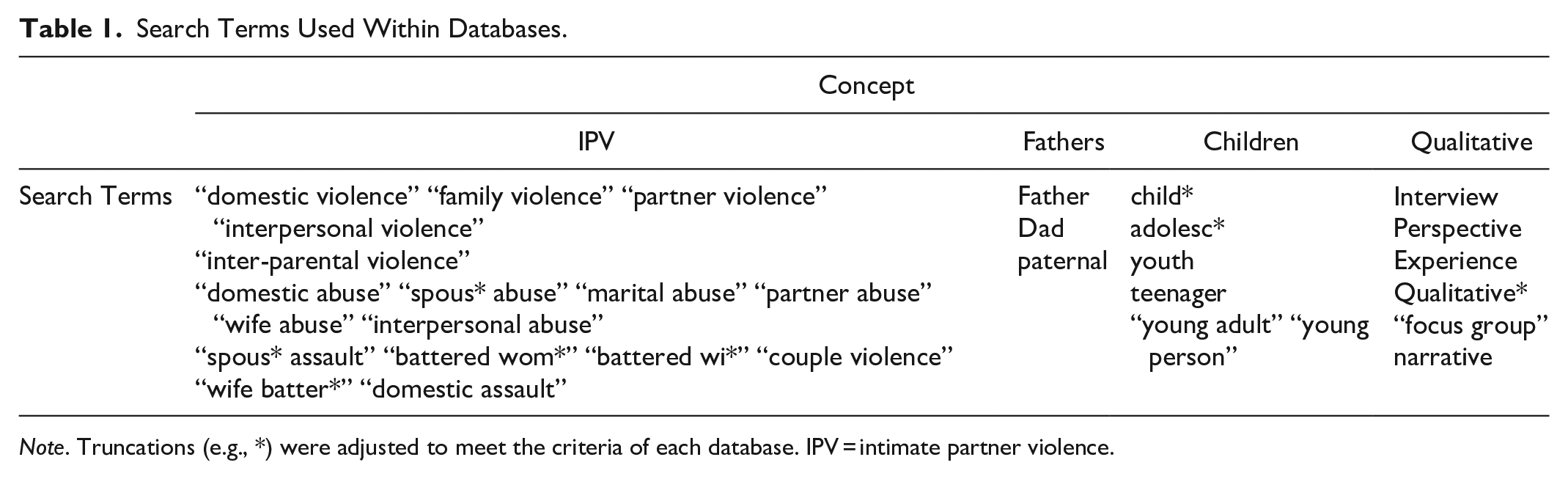
Note. Truncations (e.g., *) were adjusted to meet the criteria of each database. IPV = intimate partner violence.
Search Strategy
The Preferred Reporting Items of Systematic Review and Meta-Analyses (PRISMA) protocol, Cochrane handbook and Joanna Briggs Institute (JBI) scoping reviewer’s manual were used to inform this review. Specifically, these manuals and manual checklists were used to ensure completeness of the search approach and review. A comprehensive search was conducted during July and August 2019. Five electronic databases: Scopus, PsycINFO, Web of Science, ProQuest Dissertations and Theses Global, and Medline were used to search for published peer reviewed articles and unpublished theses. Articles were then saved into Endnote and screened for duplicates. The title, abstract and full text of articles were screened for relevance to the research question and with reference to the exclusion criteria. Limits were set to include only English language studies. All searches, with the exception of a search conducted within ProQuest Dissertations and Theses Global (which restricts searches to theses), were restricted to original peer reviewed research, with review articles and editorials excluded. The search was restricted to the last 20 years to reflect the publication patterns since the publication of seminal research relating to children’s experience of IPV (Peled, 1998, 2000; Peled & Edleson, 1999). Manual backward reference searching (searching reference lists) and forward reference searching (searching citation information) of the articles was also conducted.
Data Screening
In step one, titles were screened and included if they referenced the IPV experiences of children or adolescents. Articles were excluded if the title indicated that they were clearly not qualitative or original research articles. Step two of screening involved screening the abstracts of articles with reference to the exclusion criteria (specified previously). Qualitative articles that reported on children’s experience of their fathers and/or articles that reported on children’s experience of IPV more generally were included in this step to enable further screening via full text during step three.
The search strategy procedure and outcomes are presented in Figure 1. Studies were excluded in full text screening due to a range of reasons including: (a) wrong sample (two studies included mothers’ narratives only, two studies included retrospective reports from participants over 30 years of age, and 19 studies focused on fathering in the context of IPV that did not include children’s perspectives of their fathers), (b) wrong research methods (two case studies, one quantitative study, two review articles, and two qualitative studies that did not include children’s narratives), and (c) wrong phenomenon of interest (three studies focused on children’s experience of parental homicide, one study focused on children’s resilience, two studies focused on children’s experiences of substance abusing fathers, one study focused on children’s symptomatology, one study focused on parental conflict but not IPV, and one study focused on children’s experience of IPV but not their experience of fathers). Lastly, one study (Morrison, 2015) was excluded as the data contained within this article was discussed in greater depth within the authors PhD dissertation (Morrison, 2014) which was included in the final synthesis.
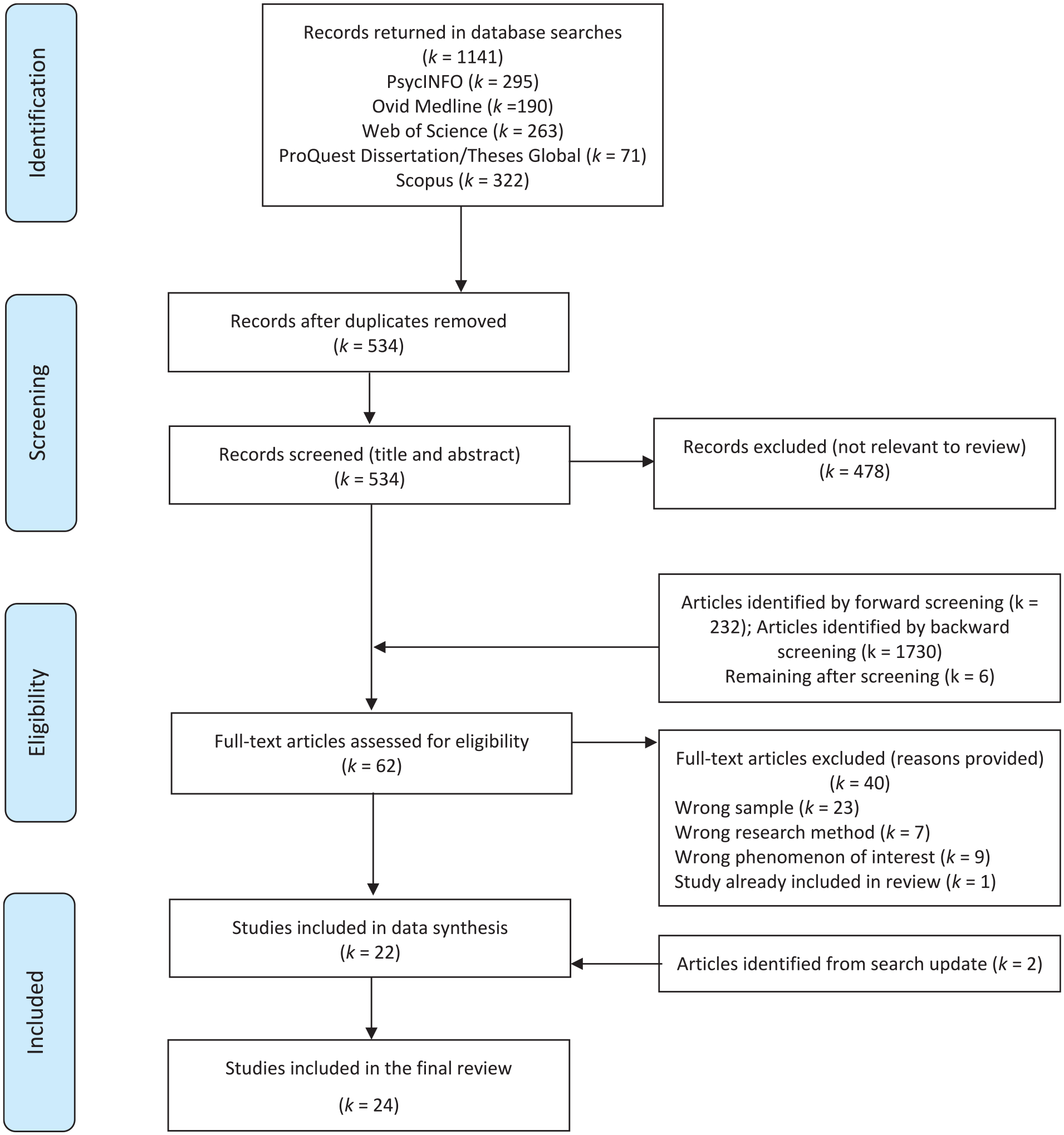
Flowchart of the literature review process and articles included and excluded at each stage.
Sixteen references from the initial search were retained from full text screening. A total of six additional records, as a result of the backward and forward search, were yielded after screening these articles by title, abstract, and full text. Another search occurred for articles published from September 2019 to June 2021, and screening using the procedure above yielded a further two studies deemed as meeting inclusion criteria, and thus were included in the review.
The total number of sources included in this review was 24 references (18 peer reviewed journal articles, 3 PhD theses, 1 project report, and 2 book chapters).
Quality Assessment Procedure
A quality assessment of the selected articles was undertaken utilizing the Mixed Methods Appraisal Tool (MMAT), chosen for its ability to evaluate different methodologies with one instrument (Hong et al., 2018). The MMAT begins with two screener questions evaluating the study’s appropriateness to be appraised by the MMAT. The study is then classified into its relevant category, with all studies included in this review falling into Category 1—Qualitative. The reviewer then answer’s five category-specific questions related to the quality of the study. Reviewers are encouraged to decide and specify what indicators for each criteria are relevant to their field and apply this criteria uniformly across all studies. The authors of the MMAT discourage an overall score for each study; instead, results are to be presented in table format to allow for a more detailed analysis.
Extraction Process
Information was extracted from each of the 23 articles by the researchers according to: (a) sample age and gender, (b) study location (country and setting where participants were recruited from), (c) primary focus of the study (author’s stated study aim), (d) supplementary focus that is related to fatherhood, (e) data collection method, (f) analysis type, (g) results, and (h) document type. Details of the included studies are included in Table 2 and the MMAT results are presented in Table 3.
Studies Obtained From the Systematic Search on Children’s Experience of Fathers who Perpetrate IPV.
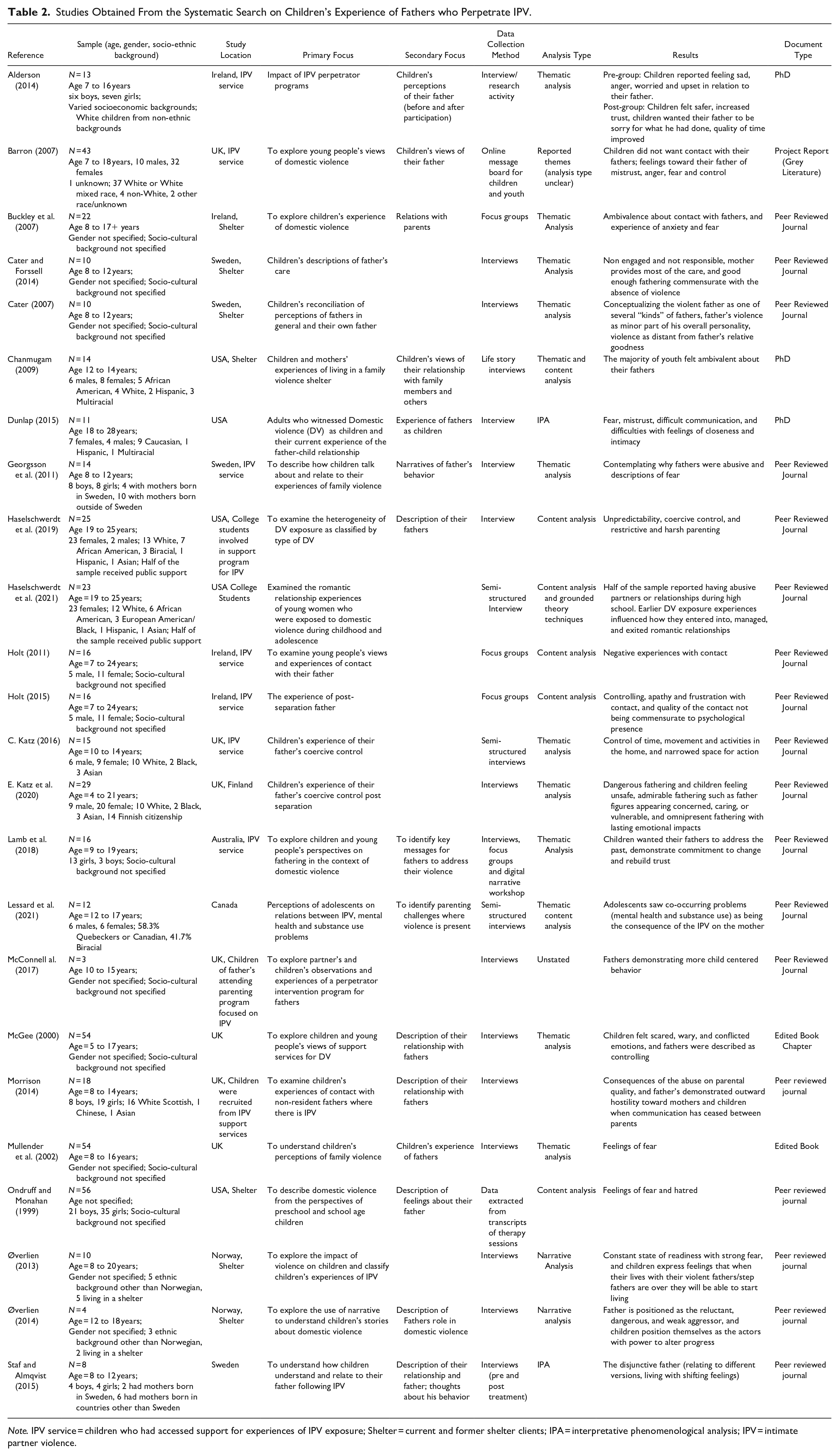
Note. IPV service = children who had accessed support for experiences of IPV exposure; Shelter = current and former shelter clients; IPA = interpretative phenomenological analysis; IPV = intimate partner violence.
MMAT Quality Assessment.
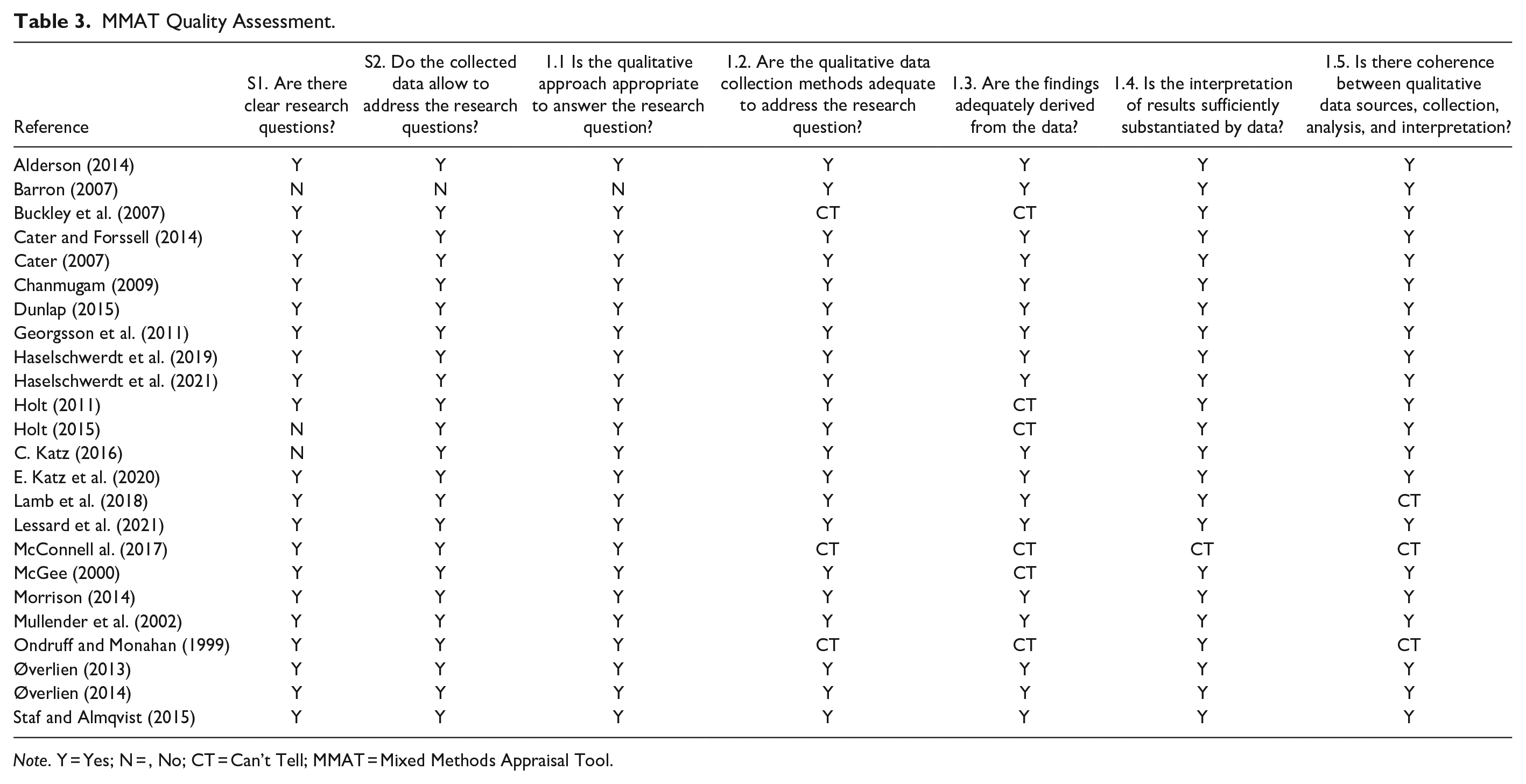
Note. Y = Yes; N = , No; CT = Can’t Tell; MMAT = Mixed Methods Appraisal Tool.
Results
The 24 references identified for this review provide narratives (verbal and written via an online message board) representing a total of 496 participants. Ten participants’ data were used in two studies (Holt, 2011, 2015) thus reducing the total number of participant narratives to 486 individual narratives. The age range of participants was reported as four to 28 years of age. Studies sampled participants from the following countries: United Kingdom (n = 7), Sweden (n = 4), Ireland (n = 4), United State of America (n = 5), Norway (n = 2), Canada (n = 1), and Australia (n = 1).
Ten studies did not provide information about the cultural/racial background of participants, five studies were unclear about the cultural background of participants (i.e., two describing participants as born in countries other than Sweden; Georgsson et al., 2011; Staf & Almqvist, 2015; two describing participants with an ethnic background other than Norwegian; Øverlien, 2013, 2014; one classifying half of the sample as holding Finnish citizenship; E. Katz et al., 2020), and four studies included samples with majority White or White-mixed race participants (82% to 100% White or White-mixed race participants; Alderson, 2014; Barron, 2007; Dunlap, 2015; Morrison, 2014). The final five studies included samples of White, African American, Hispanic, Multiracial, and Asian participants (Chanmugam, 2009; Haselschwerdt et al., 2019; 2021; C. Katz, 2016; Leesard et al., 2021). Only seven studies provided limited information about the socio-economic background of participating children by indicating that these participants were or had been residing in shelters or receiving public support. Studies which included non-Western samples or samples who had resided in shelters have been identified in the results.
A range of qualitative methods were used including: interviews (structured, semi-structured, life story), and focus groups. Barron (2007) utilized a moderated message board to collect data. Quotes from this study are included in their original format with typographical, grammatical, and spelling errors to maintain data integrity. The results of the 24 identified records are summarized in Table 2.
Overall, the MMAT indicated the studies included in this review were of good quality (Hong et al., 2018). The reviewers considered the following to be indicative of a high quality study; the study used the appropriate qualitative method to explore the research question (Question 1.1), the data collection and interview schedule was transparent and ethical (Question 1.2), the analyses procedure was detailed and based on well-researched methods (Question 1.3), the themes were adequately drawn from the data, including illustrative quotes from participants (Question 1.4), and finally there was a logical flow between qualitative data sources, collection, analysis, and interpretation (Question 1.5). Sixteen of the 24 studies were rated as including adequate information across questions 1.1 to 1.4 of the MMAT, five were rated as missing information on one item of the MMAT, and three were rated as missing information on two or more items of the MMAT. Given that excluding studies based on lower rankings can introduce bias, the studies missing information on two or more items of the MMAT were retained for the review; however, the articles to note include Buckley et al. (2007), McConnell et al. (2017), and Ondruff and Monahan (1999) as missing items on two or more aspects of the MMAT. The most common factors to impact the MMAT criteria were a lack of detail or transparency in the interview procedure and/or in the analyses of the data. The results of the MMAT are presented in Table 3.
Data Analysis
Results of this review have been categorized into six overarching categories of: (a) children’s feelings toward their father, (b) children’s experiences of contact with their father post-separation, (c) reflections on the quality of father–child relationships, (d) children’s integration of contradictory experiences of their father, (e) children’s experience of their father’s coercive control, and (f) children’s narratives about their father’s behavioral change. Sub-categories have also been identified within each overarching category.
Children’s Feelings Toward Their Father
Experiences of fear, anger and hatred
Fear toward fathers was identified as either a theme or subtheme in 10 studies across numerous countries through interviews with children and adults retrospectively (Barron, 2007; Cater, 2007; Dunlap, 2015; Georgsson et al., 2011; Holt, 2011; McGee, 2000; Morrison, 2014; Mullender et al., 2002; Ondruff & Monahan, 1999; Øverlien, 2013). Children expressed fear toward their father “I’m scared of my [sic] him” (Ondruff & Monahan, 1999, p. 283). Children also cited previous incidents of violence when discussing their fear of their father’s actions, with one boy describing an incident where his father had harmed a magpie and then noted: “if he can do that to a magpie, what can he do to me?” (Georgsson et al., 2011, p. 125).
Children and adolescents’ fear of their fathers sometimes continued in their father’s absence. For example, Mona’s (aged 17 years) description that “I’m scared though because, he’s, he’s everywhere” (McGee, 2000, p. 84) suggests that her father’s influence is omnipotent. Some children expressed hypervigilance when presented with reminders of their father. . . “I jump and have a panic attack when I see the same car” (Barron, 2007, p. 13), and further re-experiencing symptoms “I have nightmares all the time toooo [sic]!” (Barron, 2007, p. 13). Further, some children expressed fear that their father would harm them or their mother (Dunlap, 2015; Georgsson et al., 2011). Children and adolescents also cited verbal threats; “he told me that if I ever told anybody he would kill me” (Mullender et al., 2002, p. 208), and physically threatening behavior, “I saw him put a gun to my mum’s head” (Ondruff & Monahan, 1999, p. 283) when outlining this anticipated risk. Children and adolescents’ fear did not cease when contact with their father was absent . . . “I am a bit scared ’cause [sic] he knows where we live” (Øverlien, 2014, p. 283).
Anger toward fathers was identified as a theme across multiple studies (Alderson, 2014; Barron, 2007; Cater, 2007; McGee, 2000; Mullender et al., 2002; Ondruff & Monahan, 1999; Staf & Almqvist, 2015). Similar to children and adolescents’ expression of fear, children incorporated reports of witnessing IPV when expressing anger toward their father. For example, “I am mad with my daddy for hurting my mummy and me and my sisters and brother” (Tara, 8 years old), (Barron, 2007, p. 14). Children also relayed experiences of directing their own anger toward their father (McGee, 2000; Mullender et al., 2002). For example, “I would really get angry and start shouting at him, telling him off. I didn’t hold anything back” (Mullender et al., 2002, p. 10). In contrast, fear precluded the expression of some children’s anger toward their father, “I never dared to get really angry with him” (Staf & Almqvist, 2015, p. 154).
Children and adolescents’ expression of hatred toward their father was also identified in a number of studies (Barron, 2007; Chanmugam, 2009; McGee, 2000; Mullender et al., 2002), including the study by Chanmugam (2009) which included adolescent participants from a USA shelter and from different cultural/racial backgrounds. Children’s expression of hatred toward their father was sometimes embedded within the expression of anger or an expressed desire for their father to die or disappear. For example, an 11-year old stated that she wanted to tell her father to “go and die in the gutter” (Mullender et al., 2002, p. 186). Children and adolescents’ narratives also reflected metaphorical annihilation of their father in response to hatred. . . “I hate my dad so much I don’t say ‘dad’ any more, I say ‘you-know-who’” (Barron, 2007, p. 14). Children’s expression of hatred toward their father contrasted other children’s separation of their feelings toward their fathers and their judgement of their father’s behavior. For example, one adolescent stated, “I still didn’t like what he was doing to Mum. [I] don’t hate him” (Mullender et al., 2002, p. 191).
Maintaining closeness with perpetrating fathers
While the majority of studies identified that children experienced negative affect toward their fathers, children’s love for their fathers was not absent from the narratives. In one study of adolescents from different racial backgrounds and residing in a USA shelter, adolescents described their relationship with their father as their closest relationship (Chanmugam, 2009). Children are also sometimes encouraged to maintain positive feelings toward their father, as illustrated by the following quote from a child in a USA shelter: “My mum tells me to love him (father)” (Ondruff & Monahan, 1999, p. 357).
Children’s Experiences of Contact with Fathers Post-separation
Fear and ambivalence post-separation
Children’s experiences of post-separation contact with their father was the primary focus of several studies (Buckley et al., 2007; Holt, 2011, 2015; E. Katz et al., 2020; Morrison, 2014). Children’s experiences of post-separation contact were also contained within studies that had examined children’s experiences of IPV more generally (Barron, 2007; Chanmugam, 2009; Ondruff & Monahan, 1999). Children’s contact experiences were generally described as negative or at best, children were ambivalent about their contact experiences (Buckley et al., 2007; Chanmugam, 2009), including in the study by Chanmugam (2009) of adolescents from different racial groups. Fathers were described as controlling of contact (Holt, 2015) and as using ongoing coercive control (E. Katz et al., 2020). Such experiences resulted in children’s perceptions of their father as a dangerous person, and as someone who has ongoing influence on their mental and emotional state, even from afar (E. Katz et al., 2020).
Children also described not feeling that their contact preferences were heard. Children expressed a need to choose the type of contact they have with their fathers (Barron, 2007; Buckley et al., 2007). Children expressed anxiety about possibly not being heard, “. . .I just hope the court will listen to me and my mummy, I think we shouldn’t have to see him” (Barron, 2007, p. 23). When engaging in message board posts, some children expressed injustice in relation to the legal system “Why can’t he just leave us alone????? I fink the judge is mean for this” (Barron, 2007, p. 23). Children’s interest in contact was also viewed as conditional of seeing meaningful change prior to reunification (Ondruff & Monahan, 1999).
Children’s post-separation narratives were often consistent with children trying to process contradictory feelings toward contact with their fathers as demonstrated in the following quote, “But it’s not that I don’t love my dad, it’s just that with all the bad stuff it’s hard to trust him and stuff” (Morrison, 2014, p. 149). Children also expressed apathy and frustration with contact (Holt, 2011). Children in Holt’s (2011) study described that their contact with their father was based on his need for control and that fathers focused on their needs rather than the children’s needs. For example, one 9-year old stated, “visits should be about the kids, not the adults” (Holt, 2011, p. 340). Children also expressed a wish to feel connected and safe with their fathers during contact:
“To be a ‘proper’ dad, he doesn’t have to bring us anywhere, he doesn’t have to spend anything, we just wouldn’t have to feel awkward around him, we could actually talk to him, just being in the same room as him and not being all tense and awkward.” (Holt, 2015, p. 216)
Continued love for their father
While many children and adolescents did not wish to have contact with their father, the love of their father sometimes overrode the ambivalence they expressed about their father, “he’s an arsehole most of the time—excuse me—but I do kind of love him too, because he’s my father. So I don’t want to lose touch with him” (Mullender et al., 2002, p. 17). Children’s wishes about contact intersected with other aspects of their feelings toward their father (e.g., those who hated their father did not want to see him; Mullender et al., 2002).
Reflections on the Quality of Father–Child Relationships
Lack of fathering
Cater and Forssell (2014) conducted a study that focused exclusively on children’s perceptions of their fathers’ caregiving in the context of IPV. This study drew from a sample of children who had been residing in a shelter in Sweden. Fathers were largely described as disengaged parents who took on little or no parenting responsibility. On the other hand, mothers were viewed as the predominant care giver:
“You can see the differences between the fathers and mothers [. . .] the mothers help more. They help even though they can’t sometimes. The fathers say, “No, I can’t help and so I won’t”. Or like, “No, I’m not up to it. I’m not up to driving the children to school” or something like that. They almost think more about themselves” (Cater & Forssell, 2014, p. 198).
Good enough fathering
When asked to describe a “good father”, children’s narratives revealed that the absence of violence was viewed as “good enough” fathering, “Those who don’t use violence, they are good fathers, and those who use it, you can tell that they are no good” (Cater & Forssell, 2014, p. 190).
As noted above, children in Cater and Forssell’s (2014) study described fathers as not being actively engaged in the parenting role. This has been further depicted in multiple studies. For example, fathers were described as physically present but uninvolved and emotionally disconnected in Dunlap’s (2015) study. Similarly, children’s descriptions of their fathers centered on their fathers’ engaging in solitary activities within the home (e.g., watching TV alone; Staf & Almqvist, 2015) rather than interacting with their children, “He doesn’t eat with us, he just sits at the computer and eats” (Cater & Forssell, 2014, p. 188). Similarly, children’s descriptions of contact with their father post-separation demonstrated continued disconnection, “I’d go with him somewhere and just wait for hours and hours and hours while he’s doing [work] and that and then after that he might take me somewhere—if I’m lucky” (Dunlap, 2015, p. 196).
Attachment to fathers
The narrative offered by some children depicted an absence of meaningful attachment to their father. For example, “all I remember was my dad being this person that was in my house but was really just a stranger. . . He’s just this stranger that I’m related to” (Dunlap, 2015, p. 41). Similarly, another child noted that “I’ve never had it (relationship with her father) so I can’t miss it” (Holt, 2011, p. 340), further demonstrating the disconnection that some children reported experiencing. Retrospective reports in one study indicated that the quality of already poor relationships worsened over time and continued into early adulthood (Dunlap, 2015). Additionally, some narratives provided evidence of fathers not being attuned to their children, “He never seemed to get the way that I felt about him” (Dunlap, 2015, p. 37).
Children’s Integration of Contradictory Experiences of Their Father
Two studies (Cater, 2007; Staf & Almqvist, 2015) focused on exploring how children integrate different and often contrasting perceptions of their fathers. The following two quotes from Staf and Almqvist (2015) highlight one boy’s contrasting narratives about his father on two different interview occasions, “every time I asked [dad] for something, he would do that for me /. . ./ Every time I wanted something, he would do that for me” (Staf & Almqvist, 2015, p. 153) and on the second occasion, “it’s been a year since I spoke to my dad on the phone. He like, he talked like this all the time, that I’m going to come back, so go to the airplane, go to (place X). I don’t want to, so I don’t want to talk to him” (Staf & Almqvist, 2015, p. 153).
Similarly, Cater (2007) concluded that children conceptualize their father’s violence as a minor part of his overall personality and as being distant from his relative goodness. Further examples of children’s attempts to integrate two opposing versions of their father are found in other accounts such as the one below:
“My Dad tried to strangle my Mum, so I grabbed the phone and threatened them by saying I would phone the Police, and they stopped. I still have contact with my Dad and he can be fun sometimes, but other times I don’t have a clue when he’s going to erupt” (Barron, 2007, p. 26).
Children identified a range of possible causes of their father’s behavior including: their father’s experience of military service (Georgsson et al., 2011), intergenerational trauma (Haselschwerdt et al., 2019; Øverlien, 2014), substance abuse (Lessard et al., 2021), and mental illness (Chanmugam, 2009). Lessard et al. (2021) identified that children and young people felt parent substance use and mental illness were consequences of family violence. Chanmugam (2009), Haselschwerdt et al. (2019), and Lessard et al. (2021) all included samples of participants from different racial/cultural groups. Children’s use of language (as depicted below) indicated they used modifiers (e.g., “just”) to reduce the seriousness of their father’s behavior, “he just got cross, ‘cause [sic] when he was little he also experienced violence, his dad almost killed his mom [sic], and this is why he gets so very, very angry” (Øverlien, 2014, p. 159).
Children’s Experience of Their Father’s Coercive Control
Children and adolescents’ experience of their father’s coercive control was explored in four studies (Haselschwerdt et al., 2019; C. Katz, 2016; Katz et al., 2020; Øverlien, 2013). Of these studies, Øverlien (2013) was the only study to explore coercive control among other forms of IPV. Haselschwerdt et al. (2019) and C. Katz (2016) sampled young people from various racial backgrounds. Children’s experience of their father’s coercive control was found to affect time spent with their mother, “Lots of times when Mum was giving me attention he’d tell her to go over to him so she’d have to leave me to play by myself” (C. Katz 2016, p. 52). Fathers’ coercive control was also found to impact socialization outside of the family unit, “When people come over, he kind of sits in the corner, and it’s weird—he’s not saying anything . . . So, we’ve never really been a household with a lot of visitors. A lot of people know how my dad acts and they kind of want to stay away” (Haselschwerdt et al., 2019, p 1527).
Fathers’ coercive control was also found to impact children’s experience of freedom, even when he was not present. The following is an account in which a father had monitored both the child and mother, taken from a study of families who had resided in a Norwegian shelter:
“He also tape recorded conversations at home, when mom and I were talking about our feelings when he was not home, and she told me how she felt and she cried with me, she told me how horrible he was, we cried together, we listened to music, we had tea, and then suddenly we heard bip, bip [making an electronic sound] and we could see the light blinking on the computer” (Øverlien, 2013, p. 286)
Fathers were also reported to use coercive control techniques post-separation to further alienate their children and ex-partners or to garner sympathy from their children and extended family (E. Katz et al., 2020). For example, E. Katz et al. (2020) referenced children reporting their father playing the “vulnerable victim” (p. 317) and performing “admirable acts” (p. 317) in order to appear caring and loyal, all the while undermining the child–mother relationship and emotionally manipulating their children.
“. . . Yeah, he claimed that our mother had kidnapped us and that there will be a reward for the person who finds us.” E. Katz et al., 2020, p. 318) “He’d say ‘oh your mum makes me cry’, he’d just paint such a bad picture of her. . . he blamed her and us for everything. . . He said he was on antidepressants because I wasn’t seeing him enough. . . I felt very small and bad” (E. Katz et al., 2020, p. 317)
An experience of ongoing fear and anxiety regarding fathers was commonly reported by participants in E. Katz et al.’ (2020) study, with the term “omnipresent fathering” (p. 319) being used to reflect the constant, negative emotional and mental influence of fathers on children and adolescents. Children also reported being regularly made to feel responsible for their father’s well-being, as well as their mother’s safety and feeling conflicted about how to respond to their fathers’ seemingly admirable behaviors, such as gift-giving (E. Katz et al., 2020). In circumstances where the parents were still cohabitating, adolescents (both biracial and Canadian) appeared to be aware of and highly concerned about the impact of their father’s cohesive behaviors on their mother (Lessard et al., 2021).
Children’s Narratives About Father’s Behavior Change
Two studies focused on children and adolescents’ evaluation of their father’s behavior after participation in a behavior change program (Alderson, 2014; McConnell et al., 2007), while one study explored what changes children and adolescents would need to observe in their father to convince them that their father had made meaningful change (Lamb et al., 2018). Additional studies (Alderson, 2014; Cater, 2007; Dunlap, 2015) included narratives about what change children would like to observe in their fathers’ behaviors.
The only Australian study included in this review saw children express a need for their fathers to address their past perpetration of IPV, demonstrate commitment to change their behavior and rebuild trust within the family (Lamb et al., 2018). The need for fathers to address the past (e.g., acknowledge what they had done and apologize) and demonstrate meaningful and sustained change was also expressed by children and young people in two further studies (Cater, 2007; Dunlap, 2015). Inherent in children’s need to observe sustained change was children’s apprehension and mistrust of their father’s verbal apologies. For example, “saying sorry. . . well they are just words. I need actions” (Lamb et al., 2018, p. 166). Children were also able to describe how they would know that their father had changed by the way they felt when they were with him, “not to make me feel uncomfortable when I’m there, to make me feel safe, to make me feel wanted, to make me feel loved, like yeah” (Lamb et al., 2018, p. 167).
Children’s evaluation of their father’s involvement in programs addressing parenting within the context of IPV perpetration indicate that some children experienced changes in their father’s emotional attunement, “He’s kinder, nicer. He’s more interested. Yeah, he was interested before but, like, he actually listens to everything you say” (McConnell et al., 2017, p.411). Children also described increased feelings of safety toward their fathers following their father’s involvement in behavior change programs (Alderson, 2014).
Discussion
This systematic review synthesized the extant that qualitative research has examined children and adolescents’ experiences of their fathers who perpetrate IPV against their mother. The review identified 24 studies that had represented children and adolescents’ experience of their fathers via the use of qualitative methods. The studies represented the experiences of 496 participants. Children’s and adolescents’ affective experiences toward their father were often negative and encompassed reactions that were associated with trauma (e.g., fear and anger). Children and adolescents reported re-experiencing symptoms (e.g., nightmares) and hypervigilance, which persisted when children had limited or no contact with their fathers (Øverlien, 2014).
The type of IPV that children and adolescents were exposed to also appeared to impact children’s affective experience. C. Katz (2016) found coercive control was associated with increased fear when compared to physical IPV, as well as reduced access to and availability of social support. Coercive control is less recognized as a form of IPV among victims (Cater & Forssell, 2014; Naughton et al., 2018) and perpetrators (Haland et al., 2016), and is more easily rationalized by victims as the result of stress or drinking, compared to physical forms of IPV (Platt et al., 2009). Freyd (1996) originally proposed child physical, emotional, and sexual violence as examples of betrayal within BTT, and BTT has been applied less to our understanding of the impact of cohesive control on children and mothers.
Consistent with the results of C. Katz (2016) and BTT theory, children exposed to cohesive control may experience less dissociation as a way to protect themselves from recalling physically abusive experiences, but more fear of their father as a result of their cohesive behaviors. Research on children’s experiences of cohesive control should consider the type of control and manipulation used by fathers and how this relates to children’s expression of dissociation, memory of events, and sense of betrayal. Emerging reports of the use of coercive control during the current COVID-19 circumstances (i.e., telling partners that they cannot leave the house because they have COVID-19; Gearin & Knight, 2020) highlights the importance of these findings within the current environment of COVID-19. Research that incorporates IPV typology, including coercive control, when researching children’s experiences is encouraged.
Children’s and adolescents’ narratives depicted an insecure attachment to their father that was typically distant, anxious, or ambivalent in nature (Ainsworth, 1978; Bowlby, 1988). Consistent with this, children and adolescents expressed mistrust toward their father and a need to feel safe when with him, indicating a degree of uncertainty about their father’s level of change following intervention (Lamb et al., 2018). While fathers may recognize their compromised attachment with their children, they do not always have the capacity to mentalize children’s experiences or to implement change (Mohaupt & Duckert, 2016; Stover & Coates, 2016). The results of this review clearly indicate that children are aware of the emotional and relational deficits of fathers who perpetrate IPV and this prevents these children from pursuing or making efforts to maintain a relationship with their father post-separation.
Children within the studies of this review often expressed ambivalence when discussing their experience of their father and this is consistent with the wider abuse literature (A. L. Baker & Schneiderman, 2015). Consistent with the BTT framework and children’s desire to maintain an attachment with their father, children showed contrasting views of fathers as both loving and respectful, while also violent and dangerous (Platt et al., 2009). In addition, the capacity to recognize the experience of affective ambivalence (where two contrasting emotions are experienced simultaneously) continues to develop during childhood and adolescence (Burkitt et al., 2019; Rostad & Pexman, 2014). Fathers who perpetrate IPV have also described that they sometimes make active attempts to conceal and deny emotions (e.g., smiling while internally experiencing anger) which may further impede a child’s ability to interpret their father’s emotions and motives (Mohaupt et al., 2019). BTT and EBD are useful theories for understanding children’s ambivalence and confusion when they describe their father’s behavior or discuss contact with their father post-separation.
BTT describes that children will lose some conscious awareness of the abuse, but experience traumatic and toxic stress reactions, meaning that the violence cannot be forgotten entirely (C. P. Smith & Freyd, 2013). This physiological arousal can result in victims feeling confused about the violence and whether they could have done something to prevent the behavior, resulting in feelings of guilt and shame (Dorais, 2002). Confusion can also result from children’s different experiences of their father (e.g., loving vs. violent) across different social contexts. EBD theory stipulates that a child’s development and wellbeing is the result of their direct interactions with others (e.g., teachers, peers, parents), as well as the indirect interactions that occur between people in their life (e.g., parents interacting with teachers, parents interacting with friends) (Sabri et al., 2013). A violent father’s divergent behavior across different contexts and social situations can confuse children and create contrasting narratives about their father’s capacity to provide a safe and nurturing environment for the child.
Children’s accounts of their father’s perpetration of IPV often reduced their father’s responsibility for his behavior and this minimization overlaps with the explanations offered by men who perpetrate violence (Maglinte et al., 2016; Pornari et al., 2013). While minimization of a father’s undesired qualities may reflect children’s defense mechanisms to guard against trauma and maintain an attachment to their abusive parent (Staf & Almqvist, 2015), it may also reflect their moral development which shifts from concrete judgements based on one’s own perspective toward more complex judgements that incorporate the perspectives of others (e.g., intentions of the actor; Gibbs, 2014; Kohlberg, 1984). However, moral development is influenced by capacities that have been shown to develop differently in children who have been exposed to IPV (Garrigan et al., 2018). Future research is encouraged to explore children’s experiences of their fathers through a nuanced developmental lens and using samples of different developmental stages.
While children and adolescents often minimized fathers’ responsibility for IPV, they typically expressed a need for fathers to take responsibility for their behavior (Alderson, 2014; Lamb et al., 2018). The finding that children and adolescents report contradictory experiences of their father across different interviews, coupled with children and adolescents’ reported ambivalence, has implications for legal proceedings about child contact with fathers. Parents have previously expressed concern about family court reports (reports that are used to represent interests of young people within Family Law matters) being written on the basis of a single session (Francia et al., 2019). For children who attempt to present a positive view of their father, these reports based on a single session will not reflect the complex nature of child–father relationships when a father perpetrates IPV. Children and adolescents appear to require intervention to disentangle their experience of ambivalence, attachment insecurity, and fear and mistrust that is unlikely to be achieved in a single session. Healthcare and family violence service policies should also reflect these nuances of children’s experiences of fathers who perpetrate IPV, such as the differences in how children talk about these events, which might have a direct impact on allocation of services for children and families (Table 4).
Summary of the Critical Findings.
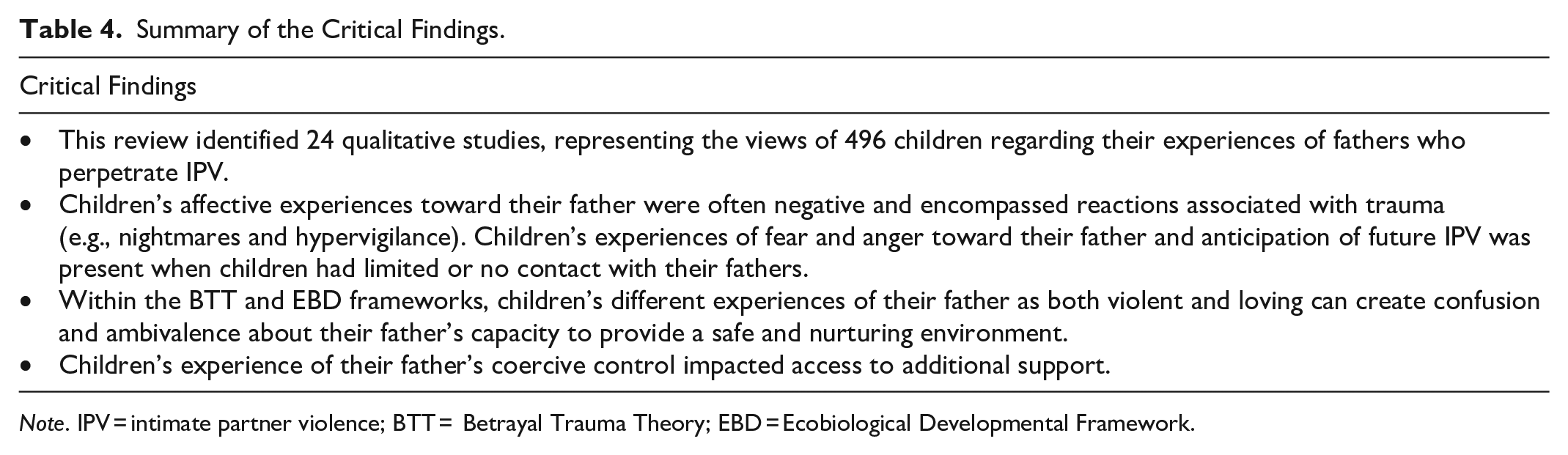
Note. IPV = intimate partner violence; BTT = Betrayal Trauma Theory; EBD = Ecobiological Developmental Framework.
Limitations and Implications for Future Research
To the authors’ knowledge, this is the first qualitative systematic review to synthesize children and adolescents’ experience of fathers who have perpetrated IPV toward their mother. The current review points to numerous ecological factors which are compromised in the context of IPV. The perceived absence of physical and relational safety appears to activate several internal experiences which impact a child’s social and emotional development. For example, while anger, fear, hatred, ambivalence, and distrust are all expected responses to witnessing violence between caregivers, these experiences can manifest in maladaptive ways, such as low self-esteem, poor behavioral and emotional regulation, and future relationships characterized by unhealthy dynamics (Pingley, 2017). As such, this study has implications for therapeutic work with children who have witnessed IPV in their families.
At present, the majority of treatment interventions for children impacted by IPV are aimed at enhancing parent–child attachment and focus on mother–child dyads (C. Katz, 2019). Existing attachment-based interventions are also based on models of maternal–child attachment, with little to no recognition of the unique features of father–child attachment (e.g., risk management; Paquette, 2004). However, Brewer (2008) suggests that holistic support which addresses the mental health, interpersonal and daily living needs of children exposed to IPV is necessary. Results from the current study suggest that target support for children exposed to father-perpetrated IPV may benefit from focusing on ensuing the physical safety of children, as well as the development of healthy coping strategies and attachment behaviors.
In regards to research development, the application of Johnson’s (2008) typologies may provide a useful conceptual framework for discussing inter-partner violence. The notion of intimate terrorism, violent resistance, and situational couple violence and the consequent impact on father–child and mother–child relationships was not overtly addressed in the papers reviewed, highlighting an important theoretical gap within the current IPV literature. Exploring different forms of violence perpetrated by father or mother figures, the frequency of a child’s exposure to IPV, and the impact on children is important for the future. Furthermore, studies failed to differentiate between the impact of IPV on the relationship between children and biological fathers compared to children and step-fathers or father figures. It is hoped that findings from this review will inform further evaluative research and treatment planning.
While access to limited research on the topic is a limitation for the current review, the lack of research highlights the need for further research into the experiences of children whose fathers perpetrate IPV. Further, while generalizability is not an aim of qualitative research, the sampling techniques used in studies reviewed may limit the understanding of the experiences of children and adolescents who have not had access to family violence services. One-third of the studies recruited children and adolescents who were either staying in a shelter or who had stayed in a shelter in the past. These children may have witnessed more severe IPV between their caregivers compared to children sampled in the general population. The experience of homelessness itself can impact on children’s and adolescents’ experiences of safety and their development of internalizing and externalizing behaviors (Haland et al., 2016; McPherson et al., 2018; Vagnerova et al., 2014). However, closer inspection of the data shows few differences between the views of children sampled from within and outside of shelters. The children from shelters expressed similar contrasting views of their father, including ambivalence about their father or that their relationship with their father was their closest. Another limitation of the current review is associated with the proximity of some participants to their experiences of IPV. Within the current study, 8 of 24 studies included retrospective data from individuals aged between 19 and 28. However, it should be noted that this is a common limitation in childhood-trauma research as the impact of trauma is often measured long after the experience.
Almost all of the studies were conducted in Europe, with a small number of studies conducted within the USA and Australia, which also limits the generalizability of the results to different cultural groups, such as African American communities, Aboriginal communities, and groups with varied cultural and linguistic differences. Only five studies sampled participants from non-Western cultural backgrounds. Although it seemed that children from non-Western backgrounds were more likely to report substance abuse and mental illness as precipitating and perpetuating factors related to IPV (Chanmugam, 2009; Lessard et al., 2021), it is impossible to draw meaningful conclusions based on the lack of available literature. People from different cultures may hold beliefs about gender roles, help-seeking, and IPV (Kasturirangan et al., 2004), meaning that women and children from different communities will have different needs and levels of vulnerability.
This systematic review ultimately revealed that there is limited research on children’s and adolescents’ perspectives of fathers who perpetrate IPV. The paucity of research that has examined children’s and adolescents’ experiences of fathers who perpetrate IPV extends to an absence of specific research where unique models of fatherhood and child development exist, such as among Aboriginal Australians (Heward-Belle, 2015; Reilly & Rees, 2018) (Table 5).
Summary of the Implications for Practice, Policy, and Research.
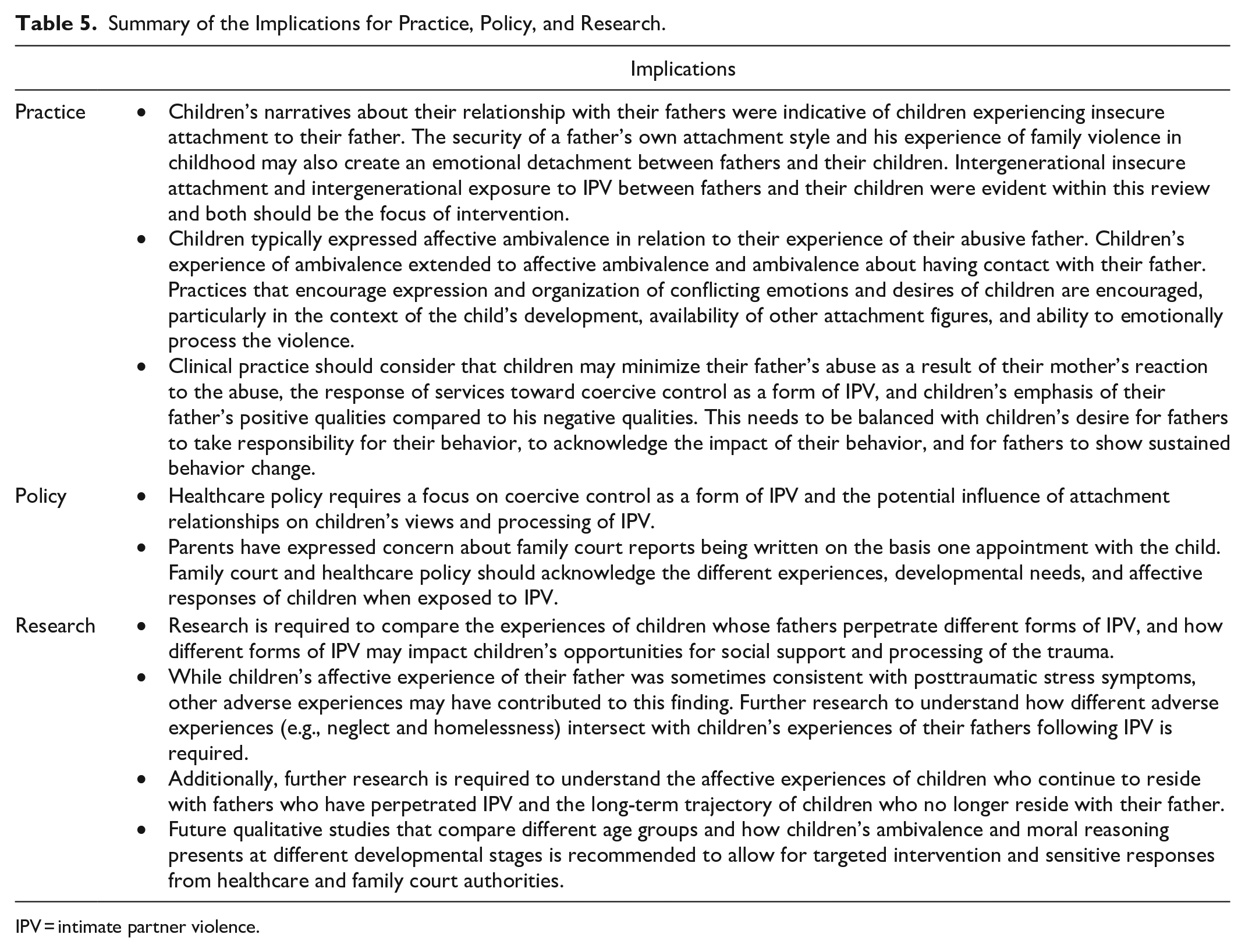
IPV = intimate partner violence.
Conclusion
In conclusion, the existing literature that has examined children and adolescents’ experiences of fathers who perpetrate IPV is varied and requires more integration of developmental research and theory to advance the field. Researchers are encouraged to further research on children’s perceptions of fathers who perpetrate IPV, including comparisons of different typologies of IPV, age groups of children, and children and families from different socio-cultural backgrounds. A shift toward a more nuanced understanding of the intersecting contribution of these factors will in turn assist with developing more targeted interventions for children at different developmental stages and fathers with different parenting needs and who perpetrate different forms of IPV.
Footnotes
Author’s Note
Kristin Rogers is also affiliated to Swinburne University, Hawthorn, Australia.
Emily Berger is also affiliated to School of Rural Health, Faculty of Medicine, Nursing and Health Sciences, Churchill, Australia.
Declaration of Conflicting Interests
The author(s) declared no potential conflicts of interests with respect to the authorship and/or publication of this article.
Funding
The author(s) received no financial support for the research, authorship, and/or publication of this article.
