



Abstract
Sexual and gender-based violence (SGBV) is a highly prevalent issue, both in North America and globally, with well-recognized adverse impact on survivors’ physical, emotional, and economic well-being. The objective of this systematic review is to collect and synthesize empirical work on the effects of SGBV victimization on educational trajectories, goals, attainment, and outcomes. The review summarizes what is known about factors associated with victimization that affect survivors’ educational trajectories and highlights gaps in the literature pertaining to the effects of victimization on education. Five databases were searched for this review: Web of Science, Sociological Abstracts, PubMed, APA PsycInfo, and ERIC. For inclusion, the articles must present research on the academic impact of any form of SGBV experienced in higher education and must have been conducted in the United States or Canada. The 68 studies that met these criteria presented research on six key areas of educational outcomes: impacts on academic performance and motivation; attendance, dropout, and avoidance; changes in major/field of study; academic disengagement; educational attitudes and satisfaction; and academic climate and institutional relationships. Research also revealed factors mediating the relationship between SGBV exposure and educational outcomes such as mental health, physical health, social support, socioeconomic status, and resiliency, which we summarize in a pathway model. The research reviewed had significant limitations, including weak study designs, limited generalizability, and diversity concerns. We offer recommendations for future research on this topic.
Introduction
Intimate partner violence (IPV), including physical and sexual abuse, is highly prevalent among young people in the United States. One in four women and 1 in 10 men in the United States experience intimate partner physical violence, sexual violence, and stalking at some point during their lifetime (Smith et al., 2018). Much of the research surrounding the topic of sexual and gender-based violence (SGBV) is on prevalence, methods of intervention, and effects on survivors’ physical and mental health. Impacts extend far beyond health sequelae, and a growing body of work examines SGBV’s academic impacts. For example, Cantor et al. (2020) found that for those students who are raped while at school, 62% of women and 48% of male survivors experience at least one academic consequence. Mostly, survivors reported short-term consequences such as decreased class attendance and difficulty concentrating (Cantor et al., 2020). Long-term consequences such as changes in major or career plan and withdrawal from the institution were uncommon, with less than 20% of SGBV incidents resulting in those types of impacts (Cantor et al., 2020). However, it is highly likely that even the short-term consequences can have a serious impact on a survivor’s future.
This systematic review synthesizes this expanding body of literature, with a focus on the impact of SGBV victimization on the post-secondary educational trajectories of survivors. It builds on a previous review conducted by Molstad et al. (2021), which examined sexual assault’s impact on academic outcomes in higher education. The authors found that those who were victims of sexual assault experienced a negative impact on their academics (Molstad et al., 2021). Molstad et al.’s (2021) review was instrumental in advancing knowledge about the relationship between sexual assault and education; the current review builds on that work by examining additional forms of SGBV, including sexual harassment, cyber violence, and psychological violence, experienced in higher education that impacts survivors’ educational trajectories, as well as sexual assault. In addition, Molstad et al.’s (2021) research looked exclusively at the academic impact of sexual assault on women, whereas studies included here examine the impact on people of any gender, including non-binary and transgender people, ages 18 and older.
A substantial proportion of students experience SGBV during their time as an undergraduate or graduate student. Around 13% of graduate and undergraduate students combined experience some form of nonconsensual sexual contact such as rape or unwanted sexual touching (Cantor et al., 2020). Among undergraduates, 26.4% of females and 6.8% of males experience a form of either rape or unwanted sexual touching, with students at greatest risk in their first year of college (Cantor et al., 2020; Department of Justice et al., 2014). Almost 10% of females and 7% of males experience a form of either rape or unwanted sexual touching in graduate school (Cantor et al., 2020). Transgender, genderqueer, and nonconforming (TGQN) college students are especially at risk, with recent data showing that 23% of TGQN college students have experienced nonconsensual sexual contact (Cantor et al., 2020). In addition, nearly 6% of students experience stalking, a form of sexual violence, after they enter college (Cantor et al., 2020).
There is powerful research showing the economic impacts of victimization. The cost of rape specifically is estimated to be around $120,000 per victim due to medical costs, costs associated with the criminal justice system, and lost productivity (CDC, 2021). Waechter and Ma (2015) reported that the estimated annual incidence of experiencing a form of sexual violence is around 2.5 times higher than the incidence of cardiovascular disease, cancer, diabetes, and HIV/AIDS combined, and estimated that overall, the economic impact of rape—looking only at women’s experiences—is $921.72 billion USD, compared to the annual economic impact of cardiovascular disease ($537.59 billion), cancer ($235.2 billion), diabetes ($248.6 billion), and HIV/AIDS ($47.1 billion) among both men and women in the United States (Waechter & Ma 2015). They pointed out also that violence as a whole has the lowest ratio of public spending to economic burden at 0.09%; comparing this to HIV/AIDS which has the highest ratio at 7.72% makes it evident that SGBV is not a public health funding priority (Waechter & Ma 2015). The association between higher educational attainment and future earnings (Doyle & Skinner 2016) underlines the importance of attending to SGBV’s impact on educational trajectories.
This systematic review collects and synthesizes empirical work on the effects of SGBV victimization on educational trajectories, goals, attainment, and outcomes.
The specific aims are:
To analyze that research in order to understand factors associated with victimization that contribute to changes in the survivors’ educational trajectories, in order to develop a model of the pathways through which SGBV affects educational trajectories.
To describe disparities in outcomes and highlight gaps in the literature pertaining to the effects of victimization on education and to propose areas for future research opportunities.
Methods
A protocol for this review was registered on PROSPERO: https://www.crd.york.ac.uk/prospero/display_record.php?ID=CRD42022307201.
There were three inclusion criteria: (1) measuring exposure to SGBV; (2) examining outcomes related to educational trajectories in higher education, and (3) being conducted in the United States or Canada. For SGBV, we not only used the United Nation definitions but also accepted alternate definitions if authors explicitly stated that they are studying any form of the phenomenon of “sexual and gender-based violence.” The UN defines sexual violence as: a form of gender-based violence and encompasses any sexual act, attempt to obtain a sexual act, unwanted sexual comments or advances, or acts to traffic, or otherwise directed against a person’s sexuality using coercion, by any person regardless of their relationship to the victim, in any setting (United Nations Human Rights Office of the High Commissioner 2014).
Sexual violence included but was not limited to acts such as rape, sexual coercion, unwanted touching, stalking, sexual harassment, and more. The UN defines gender-based violence (GBV) as “any harmful act directed against individuals or groups of individuals on the basis of their gender,” including attacks against people who identify as transgender or non-binary (United Nations Human Rights Office of the High Commissioner 2014). The UN definition of GBV also encompasses domestic violence, emotional violence, relationship/dating violence, and more. For the scope of this review, the terms “intimate partner violence” and “relationship violence” were interchangeable.
Indicators of outcomes related to educational trajectories at the higher education level included—but were not limited to—GPA, attendance rates, educational attitudes, and academic achievement. Articles met criteria for inclusion if educational outcomes were part of study hypotheses and reported in the results, even if educational outcomes were not the sole focus of the research.
A third inclusion criteria is that studies took place in the United States or Canada. Study designs included surveys, mixed-methods studies, retrospective studies, longitudinal studies, cohort studies, cross-sectional studies, qualitative studies, quantitative studies, and case–control studies. Relevant dissertations were also included. Media articles, reviews, case studies, case reports, case series, books, and government reports were excluded. Because Fry et al. (2018) reviewed the literature on the impact of childhood violence on educational outcomes, this review excluded research in which the SGBV exposure occurred during high school or childhood, even if participants were 18 years or older at the time of the study.
Five databases were searched: Web of Science, Sociological Abstracts, PubMed, APA PsycInfo, and ERIC, with final searches conducted on November 2, 2021. Keywords reflected the two main search concepts: SGBV and Education. A preliminary literature search for related articles and a consultation with a reference librarian produced a list of keywords to identify research on these two concepts. An example of the search strategy used for Web of Science is as follows: ((sex* OR gender* OR intimate* OR domestic OR economic OR financ* OR psycholog* OR interpersonal OR dating OR relationship OR emotion* OR physical*) NEAR/3 (violence OR assault OR coerc* OR abuse* OR harass* OR exploit* OR trauma* OR harm* OR misconduct OR crime*) OR ((acquaint* OR date) NEAR/3 rape) OR (stalk* OR grop* OR (non-consen* sex*) OR (non-consen* touch*) OR (unwanted sex*) OR (unwanted touch*) (revenge porn*))) AND ((education* OR academic*) NEAR/3 (trajector* OR goal* OR outcome* OR attitude* OR perform* OR correlates OR major* OR retention OR attainment OR achievement OR disengage* OR path* OR motiv*) OR (“GPA” OR (grade point average) OR attendance* OR dropout* OR grades OR burnout)). Depending on the database, the authors added relevant MeSH terms to each of the search strategies as well. Search strategies for each database are included in Supplemental Appendix A. Searches were limited to the title and abstract, and English-language results only. The search included all publication dates and explicitly excluded systematic reviews and literature reviews, when the database functionality allowed for it.
Ultimately, the searches yielded a total of 11,300 results. Results were downloaded, imported into Endnote for deduplication, and then imported into Covidence for screening and an additional deduplication process. After deduplication in Endnote, there were a total of 7,966 results. Twenty-four duplicates were removed after importation into Covidence, and a total of 7,942 articles entered the screening process. To select studies for inclusion, authors Geppert and Shah independently inspected the title and abstract of each study. This blinded screening was conducted in Covidence. If the title or abstract did not provide sufficient information, the full paper was retrieved and reviewed to determine inclusion or exclusion. After all titles and abstracts were reviewed, 113 potential studies were deemed eligible for full-text screening. Following standard Preferred Reporting Items for Systematic Reviews and Meta-Analyses (PRISMA) procedures, reference lists of all articles included in full-text screening were also examined, producing a list of additional relevant articles to review. Due to reference chaining, an additional 13 articles were added to full-text screening. Four studies were excluded at this stage because the full text could not be accessed. Authors Geppert, Shah, and Hirsch independently read the full text of each study to determine inclusion in the review. Fifty-six articles were then excluded, and the 70 remaining articles were moved to data extraction (see Figure 1). At all stages, conflicts were resolved by consensus.
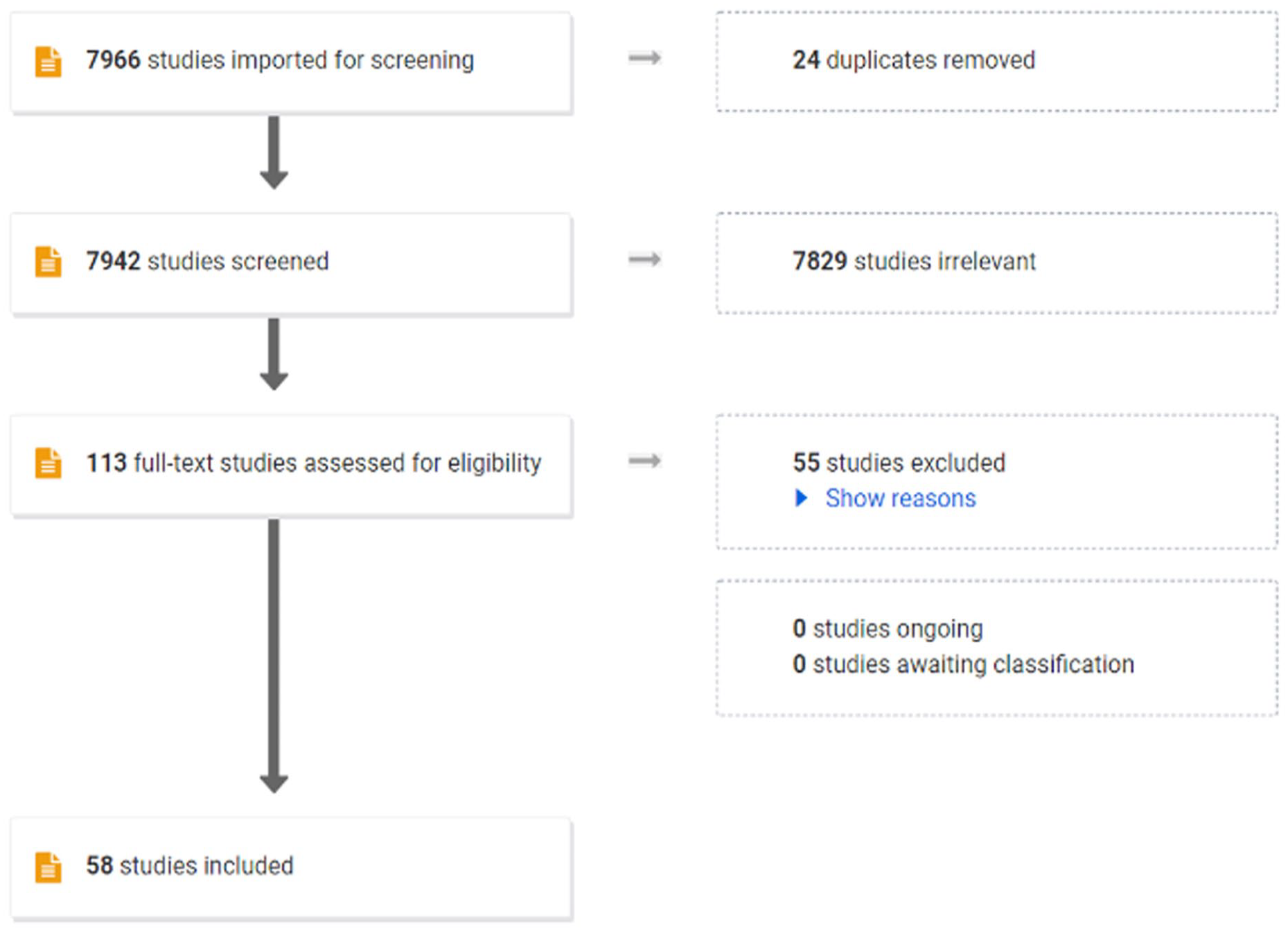
PRISMA flow chart.
Data extraction took place in Covidence after full-text screening was completed. The first and second authors independently extracted data from all included studies using a customized template designed in Covidence. The data items extracted were: title, authors, year of publication, aims and study objectives, study design, location (United States or Canada, and region, if applicable), type of educational institution, setting, time period of data collection, participant recruitment method, details of sample strategy, method of data collection, population description, total number of participants, inclusion and exclusion criteria, type of SGBV (exposure) studied, type of educational indicator (outcome) examined, type of analysis used, results, and any mediators or disparities described in the study.
The quality and risk of bias for included studies were independently assessed by the same two reviewers in tandem with data extraction in Covidence, using the Joanna Briggs Institute critical appraisal checklists. The relevant checklist questions for cohort studies, cross-sectional studies, qualitative studies, and case–control studies were inputted into Covidence and answered for each study. The study was ultimately designated as either included or excluded based on the results of the checklist. After each reviewer completed both data extraction and quality assessment, the reviewers met to resolve conflicting assessments of study quality. Studies deemed to be of low quality or at high risk of bias based on the checklist results would have been excluded, but no studies were excluded for quality or bias. However, after data extraction and quality assessment, two additional studies were excluded after the reviewers concluded they were not relevant to the review, leaving 68 studies for synthesis. The characteristics of included studies, a list of the excluded studies, and quality assessment scores can be seen in Supplemental Appendices B, C, and D, respectively.
This review used a narrative synthesis method, with the studies coded for major themes and patterns, then grouped by outcomes (the type of educational indicator examined), and then divided into subgroups by study design. In order to develop a pathway model to explain how experiencing SGBV impacts educational outcomes, mediators identified in the studies were listed and grouped.
Results
Educational Outcomes
The presentation of findings is organized into sections by type of academic impact. They are presented in this way, rather than by type of SGBV exposure because this grouping highlights the main ways in which SGBV affects survivors’ educational trajectories, reflecting the questions that motivated this review. Additionally, our focus is on SGBV exposure as a whole and its impact on academics rather than specific types of SGBV exposure, especially since many types of SGBV had similar outcomes. The main findings are listed in Table 1.
Critical Findings Table.

Note. IPV = intimate partner violence; GPA = grade point average.
Academic Performance and Motivation
Forty studies examined connections between SGBV and academic performance and motivation outcomes.
Cross-Sectional Studies
Twenty-four cross-sectional studies examined academic performance and motivation as outcomes of SGBV. The main exposures in this subgroup were sexual and heterosexist harassment, IPV, and sexual assault. Sexual and heterosexist harassment had minimal effect on academic performance, based on results from the six studies that examined this exposure (Cholewinski & Burge 1990; McMullen 2019; Reilly et al., 1986; Rowland et al.,1982; Schneider 1987; Woodford & Kulick 2015). Most of the sexual harassment studies found that only a small portion of participants reported declines in academic performance, GPA, and missed opportunities (Reilly et al., 1986; Rowland et al.,1982; Schneider 1987; Woodford & Kulick 2015). Some of the studies reported no effects of sexual harassment on academic performance (Cholewinski & Burge 1990; McMullen 2019). However, it is important to note that all of the sexual harassment studies had relatively small sample sizes compared to those examining IPV and sexual assault, several studies were conducted three or four decades ago, and none focused exclusively on graduate students.
The studies that examined sexual assault and IPV as SGBV exposures found that a significant percentage of participants reported general decreases in GPA, worsening academic behaviors, inability to concentrate, and decreased motivation (Arria et al., 2020; Artime et al., 2018; BlackDeer et al., 2020; N. Q. Brewer & Thomas, 2019; N. Brewer et al., 2018; Jordan et al., 2014; Kaufman et al., 2019; Klein & Dudley 2014; LeBlanc et al., 2014; Mengo & Black, 2016; Mitchell 2020; Muro & Mein 2010; Muro 2013; Patterson Silver Wolf et al., 2018; S. J. Potter et al., 2022; Sorokas 2018; Stermac et al., 2020; Tremblay et al., 2008). The two studies that examined sexual assault and IPV as the exposure, both of which looked at racial and ethnic disparities in outcomes (BlackDeer et al., 2020; Kaufman et al., 2019), found that experiencing IPV and identifying as African-American was significantly associated with declines in academic performance. One study examined disparities in academic outcomes after sexual assault among sexual minority students and found a greater negative effect on academic performance after sexual assault for bisexual students compared to heterosexual and gay/lesbian participants (Klein & Dudley 2014).
Three studies compared the academic outcomes of participants who had a history of sexual violence to academic outcomes of those who did not (Artime et al., 2018; Sorokas 2018; Stermac et al., 2020). Artime et al. (2018), Sorokas (2018), and Stermac et al. (2020) found that those who experienced sexual assault were more likely to have a lower GPA, be delayed in their schoolwork, and report academic impediments than those without a history of sexual assault. Additionally, Sorokas (2018) and Tremblay et al. (2008) highlighted differences in outcomes among a variety of sexual violence exposures. They found that completed sexual assault had a larger negative impact on GPA and academic work, respectively, compared to other types of sexual violence such as stalking and unwanted touching (Sorokas 2018; Tremblay et al., 2008). Significant indirect pathways from IPV exposure to academic performance were reported in two studies, both mediated by negative mental health outcomes (N. Brewer et al., 2018; Mitchell 2020).
Qualitative Studies
Eleven qualitative studies examined academic performance and motivation as outcomes of SGBV. The majority looked at sexual assault and IPV as the main exposure, and as a group found evidence of decline in academic performance and, perhaps contrary to what would be expected, some reports of positive academic impacts.
In contrast to the quantitative studies, most of the qualitative research found that participants described a drop in GPA post-exposure (Hodge & Privott 2017; Lorenzo 2019; Pomerantz 1994; Raymond & Corse 2018; Stermac et al., 2018; Stewart et al., 2020; Thomas 1998; Voth Schrag et al., 2022; Watson 2009). Three studies included distinct, direct reasons for this change in GPA (Raymond & Course 2018; Stermac et al., 2018; Thomas 1998). Stermac et al. (2018) reported that a few participants felt their ability to succeed in school was impeded due to feelings of being uncomfortable around male professors and classmates. One participant stated: If I’m in a group with all [males], I would do really bad. In university, I was in a group of three and two of them were guys and I was so afraid to talk to them. It put a block in my learning. I was frozen. Also, if it’s a male teacher and I would want to go for help, I won’t. (Stermac et al., 2018)
Raymond and Corse (2018) presented another reason for this drop in GPA: feeling “intellectually hobbled.” Participants described being “hardly able to move, much less open a book.” Thomas (1998) found that participants would describe interference as a reason for their drop in GPA. Participants’ partners would talk or shout while they were trying to study or sleep the night before exams (Thomas 1998).
Voth Schrag, Wood, et al. (2020) and Watson (2009) also found that disruption while studying impeded academic performance. Both studies, conducted in the Midwest region of the United States, revealed that arguments perpetrated by the participants’ partner led to loss of focus and inability to complete homework (Voth Schrag, Wood, et al., 2020; Watson 2009). Loss of focus and concentration was another common impediment to academic performance (Lorenzo 2019; Pomerantz 1994; Stermac et al., 2018; Thomas 1998; Voth Schrag et al., 2022; Watson 2009). Flashbacks and recurring thoughts about the assault were frequently pointed to as the causal pathway (Lorenzo 2019; Stermac et al., 2018; Thomas 1998; Voth Schrag et al., 2022; Watson 2009).
Quite a few of these studies also noted a positive academic impact, with participants reporting that experiences of abuse may have served as a motivator to do well in school (Pinter 2015; Voth Schrag, Wood, et al., 2020). When asked about how the crime affected her schoolwork, a participant in Pinter (2015) stated: No. I was, maybe I was more determined to do well, to be a very strong woman.
Additionally, improved educational commitment was described as a coping mechanism among some of the participants (Pomerantz 1994; Stewart et al., 2020).
Mixed-Methods
Three mixed-methods studies examined academic performance and motivation as outcomes of SGBV, all of which primarily looked at sexual harassment and sexual assault as exposures. All found a drop in grades following exposure (Benson & Thomson 1982; S. Potter et al., 2018; van Roosmalen & McDaniel 1999). However, Benson and Thomson (1982) and van Roosmalen and McDaniel (1999), both of which studied sexual harassment, identified different mechanisms for this drop in grades. Participants in Benson and Thomson (1982) described receiving lower grades as a punishment for refusing to perform sexual favors or reciprocate sexual attention. Van Roosmalen and McDaniel (1999) found that participants who reported experiencing sexual harassment faced deterioration in the quality of their work. Notably, S. Potter et al. (2018), who studied sexual assault, found that around 20% of participants reported improved academic performance.
Cohort and Case–Control Studies
One cohort study and one case–control study examined academic performance and motivation as outcomes of SGBV. The exposures studied included heterosexist harassment and sexual assault. Both studies (P. C. Silverschanz 2007; Rothman et al. 2021) found that those who experienced SGBV had a significantly lower GPA than those who did not.
Attendance, Dropout, and Avoidance
Thirty-two studies examined attendance, dropout, and avoidance outcomes as a result of SGBV.
Cross-Sectional Studies
Sixteen cross-sectional studies examined attendance, dropout, and avoidance as outcomes of SGBV. The majority looked at sexual harassment as the main exposure, with a few that examined heterosexist harassment, sexual assault, and relationship abuse. The main findings included increased school avoidance behaviors, with a few reports of participants having left the university post-exposure.
Notably, most of these studies of sexual harassment were conducted in the years between 1986 and 1990 (Cholewinski & Burge 1990; Fitzgerald et al., 1988; McKinney et al., 1988; Reilly et al., 1986; Schneider 1987). These studies mainly included undergraduate and/or graduate students as participants. A common finding was that many participants would take steps to avoid classes and their harasser (Fitzgerald et al., 1988; McKinney et al., 1988; Reilly et al., 1986; Schneider 1987). However, when studying impacts on dropout rates among participants after harassment, the authors found that very few, if any, left their school (Cholewinski & Burge 1990; Fitzgerald et al., 1988; McKinney et al., 1988; Reilly et al., 1986). These earlier studies focused on general impacts of sexual harassment, but two more recent studies, McMullen (2019) and Heiderscheit et al. (2021), highlighted disparities in attendance, dropout, and avoidance outcomes. McMullen (2019) compared the sexual harassment experiences of female and male undergraduate students and found that females attempted to avoid their harasser and particular campus locations to a higher degree than male students. Heiderscheit et al. (2021) looked at the experiences of LGBTQ+ residents in medical school compared to their non-LGBTQ+ peers, and LGBTQ+ residents were more likely to consider leaving their program.
P. Silverschanz et al. (2008) and Zeanah (2016) both looked at heterosexist harassment. Heterosexist harassment, otherwise known as heterosexism, is defined as a “system that denies, denigrates, and stigmatizes any nonheterosexual form of behavior, identity, relationship, or community” (Herek 1990). P. Silverschanz et al. (2008) found that participants who experienced heterosexist harassment reported worse school avoidance behaviors than those who did not experience heterosexist harassment. Zeanah (2016), however, found no significant relationship between heterosexist harassment and school avoidance behaviors. Zeanah’s (2016) much smaller sample size (N = 297 compared to P. Silverschanz et al.’s (2008) [N = 3,128]), which may have been underpowered, could explain the discrepancy in findings.
Lindquist et al. (2013), Stermac et al. (2020), S. J. Potter et al. (2022), and Mengo and Black (2016) examined sexual assault as an exposure. Stermac et al. (2020) and S. J. Potter et al. (2022) found that participants reported missing class as a common outcome post-assault. Lindquist et al. (2013) conducted their research in Historically Black Colleges and Universities (HBCUs), unlike many other studies, and found that very small percentages of participants reported dropping class or changing universities. Interestingly, academic levels seemed to play a role in dropout rates, according to Mengo and Black (2016). They found that first-year students were more likely to leave the university after SGBV exposure, compared to students at other grade levels (Mengo & Black 2016).
Riger et al. (2000) and Muro and Mein (2010), both of which studied IPV, found that some participants were prevented from attending class by their partner. Only one of these studies examined stalking, and they found that very few participants missed or changed schools as a result of having been stalked (Amar 2006).
Qualitative Studies
Eleven qualitative studies examined attendance, dropout, and avoidance as outcomes of SGBV. The majority looked at sexual assault as the main exposure, though a few included IPV and sexual harassment. There were three main impacts: decline in class attendance, dropout or thoughts of leaving university, and avoidance of campus areas (Bonomi et al., 2018; Gu 2012; Hodge & Privott 2017; Lorenzo 2019; Pinter 2015; Pomerantz 1994; Stermac et al., 2018; Stewart et al., 2020; Voth Schrag, Wood, et al., 2020; Voth Schrag et al., 2022; Watson 2009). Students pointed to a fear of running into their abuser or of another incident occurring (Pinter 2015; Stermac et al., 2018; Voth Schrag et al., 2022).
Mixed-Methods
Four mixed-methods studies examined attendance, dropout, and avoidance as SGBV outcomes. Three examined sexual assault as the main exposure (Loya 2012; S. Potter et al., 2018; South 2018), whereas the fourth studied mainly sexual harassment (van Roosmalen & McDaniel 1999). All reported increased dropout rates, increased school avoidance behaviors, and taking time off from school as common results (Loya 2012; S. Potter et al., 2018; South 2018; van Roosmalen & McDaniel 1999). Notably, participants in the van Roosmalen and McDaniel (1999) study described feeling encouraged or forced to leave the harassing environment, which in this case was university.
Cohort Studies
In addition to academic performance and motivation, the one cohort study identified also examined the impact of heterosexist harassment on attendance, dropout, and avoidance (P. C. Silverschanz, 2007). That study, P. C. Silverschanz (2007), found that experiencing heterosexist harassment was directly linked to school avoidance behaviors.
Change in Major/Field of Study
Eleven studies examined SGBV’s impact on changes in major or field of study.
Cross-Sectional Studies
Seven cross-sectional studies examined changes in major or field of study as outcomes of SGBV. The majority looked at the impact of sexual harassment (Kuchynka et al., 2018; Leaper & Starr 2019; McKinney et al., 1988; Reilly et al., 1986; Stratton et al., 2005); two looked at sexual assault (Lindquist et al., 2013; S. J. Potter et al., 2022). These studies found that a small percentage of participants changed majors after exposure (Lindquist et al., 2013; Reilly et al., 1986; McKinney et al., 1988; S. J. Potter et al., 2022). Stratton et al. (2005) examined sexual harassment specifically in a medical school setting. With regard to changes in field of study, the authors found that the majority did not consider sexual harassment as an influential factor, but more than one-third of participants reported an effect on their medical specialty choice (Stratton et al., 2005). Interestingly, there was a stronger correlation between sexual harassment experience and medical specialty choice among men than women even though more women reported an influence (Stratton et al., 2005). Stratton et al. (2005) suggests although fewer men are affected by sexual harassment, their experiences may hold more weight when deciding their specialty as compared to women.
Kuchynka et al. (2018) and Leaper and Starr (2019) examined the impact on STEM aspirations among participants enrolled in STEM courses. Both found sexual harassment and instructor’s STEM-related gender bias to be related to a student’s choice not to major in STEM (Leaper & Starr 2019; Kuchynka et al., 2018); in Leaper and Starr (2019), this was only significant for women who did not identify as an underrepresented minority.
Qualitative Studies
Three qualitative studies, all focused on sexual assault as the main exposure, examined changes in major or field of study as outcomes of SGBV. The main results focused on participants’ decisions to change to more female-dominated majors (Raymond & Corse 2018; Stermac et al., 2018). In addition, one of the six participants in Lorenzo (2019) decided against adding a second-language minor that she had been considering as a result of the assault.
Mixed-Methods
One mixed-method study examined the impact of sexual assault on changes in major or field of study and found that one-third of participants changed their major following the assault (S. Potter et al. 2018).
Academic Disengagement
Six studies examined SGBV and academic disengagement.
Cross-Sectional Studies
The studies that examined academic disengagement were all cross-sectional, with exposures that included sexual and heterosexist harassment and IPV (Lorenz et al., 2019; McClain et al., 2021; Voth Schrag, Edmond, et al., 2020; Woodford & Kulick 2015; Wood et al., 2018) and sexual assault (Kammer-Kerwick et al., 2021). Findings suggested that these types of SGBV increased academic disengagement (Kammer-Kerwick et al., 2021; Lorenz et al., 2019; McClain et al., 2021; Voth Schrag, Edmond, et al., 2020; Woodford & Kulick 2015; Wood et al., 2018). Voth Schrag, Edmond, et al. (2020) and Wood et al. (2018) both found a significant relationship between severity of psychological IPV and academic disengagement behaviors. Voth Schrag, Edmond, et al. (2020) also found a significant indirect path from physical and psychological IPV to academic disengagement behavior, mediated by depression symptoms. Wood et al. (2018) was the only study identified that examined cyber IPV as an exposure and found a significant association with increased academic disengagement behaviors.
While Woodford and Kulick (2015), noted above, was the only study identified with a sample consisting solely of sexual minority students, Kammer-Kerwick et al. (2021) created detailed models that showed disparities in the impact of sexual assault on academic disengagement behaviors among sexual minority students and cisgender, heterosexual students. They found that bisexual and pansexual students reported significantly more academic disengagement behaviors than cisgender, heterosexual students.
Educational Attitudes and Satisfaction
Eleven studies examined educational attitudes and satisfaction as an outcome as a result of SGBV.
Cross-Sectional Studies
Eight cross-sectional studies examined SGBV’s impact on educational attitudes and satisfaction. The majority focused on sexual and heterosexist harassment (Barling et al., 1996; Huerta 2007; Huerta et al., 2006; Kuchynka et al., 2018; Leaper & Starr 2019; Morris & Lent 2019); two studies also looked at sexual assault (Banyard et al., 2020; Rosenthal 2018). All eight studies found lower academic satisfaction and lower self-efficacy among students who had experienced sexual or heterosexist harassment (Banyard et al., 2020; Barling et al., 1996; Huerta, 2007; Huerta et al., 2006; Kuchynka et al., 2018; Leaper & Starr 2019; Morris & Lent 2019; Rosenthal 2018). Huerta et al. (2006), Barling et al. (1996), and Huerta (2007) all found similar associations between experiences of sexual harassment, increased psychological distress or negative mood, and lower school satisfaction and self-esteem. Huerta (2007), the only study identified that examined racialized sexual harassment in addition to general sexual harassment, found that racialized sexual harassment was significantly associated with lower school satisfaction, but not with psychological distress (Huerta 2007). Huerta et al. (2006) also found that students experienced lower school satisfaction when harassed by a high-status individual. In addition, Morris and Lent (2019) found an indirect path to academic satisfaction, though their exposure of interest was heterosexist harassment and the mediator was environmental support. They did not find any direct statistically significant path between heterosexist harassment and school satisfaction (Morris & Lent 2019). Leaper and Starr (2019) and Kuchynka et al. (2018) both found that sexual harassment had a negative association with STEM attitudes and self-efficacy.
Rosenthal (2018) and Banyard et al. (2020) both examined sexual assault as an exposure. Interestingly, Rosenthal (2018) focused on deny, attack and reverse victim and offender (DARVO) exposure, which refers to a perpetrator’s attempt to assume the role of the victim and make the actual victim of sexual assault into an alleged offender (Freyd 1997). Rosenthal (2018) found that those with DARVO exposure presented with higher academic self-efficacy than those without DARVO exposure. Banyard et al. (2020), however, found higher levels of collegiate stress and lower academic self-efficacy among those who experienced sexual assault, IPV, and stalking. The discrepancy may be attributed to how Banyard et al. (2020) did not specifically examine DARVO exposure and had a much larger sample size (6,482 vs. 113).
Qualitative Studies
One qualitative study examined the relation of sexual assault with educational attitudes and satisfaction. The main finding was that after the assault experience, participants described feeling like a “nonexistent person,” which seemed to impact the participants’ development of academic potential (Raymond & Corse 2018).
Mixed-Methods
We identified two mixed-methods studies that examined educational attitudes and satisfaction as SGBV outcomes. Both studied sexual harassment as the main exposure. The main results found were loss of confidence and negative attitudes toward school (Benson & Thomson 1982; van Roosmalen & McDaniel 1999). The studies, Benson and Thomson (1982) and van Roosmalen and McDaniel (1999), were conducted over 20 years ago, and so these findings may not be generalizable today. Future research should focus on using mixed-methods to study educational attitudes and satisfaction outcomes after SGBV exposure in order to update the literature.
Academic Climate and Institutional Relationships
Seven studies examined academic climate and institutional relationships in relation to SGBV victimization.
Cross-Sectional Studies
Seven cross-sectional studies examined academic climate and institutional relationships as outcomes after having experienced sexual and heterosexist harassment and sexual assault. The main results included reduced feelings of acceptance and respect on campus, reduced feelings of safety, and negative perceptions of the university climate (Banyard et al., 2020; Cortina et al., 1998; Kammer-Kerwick et al., 2021; McClain et al., 2021; P. Silverschanz et al., 2008; Woodford & Kulick 2015; Zeanah 2016). Both Woodford and Kulick (2015) and Kammer-Kerwick et al. (2021) focused their research on sexual minority students. Woodford and Kulick (2015) examined sexual minority student’s experiences of heterosexist harassment and found harassment experiences to be negatively correlated with feeling accepted on campus. Kammer-Kerwick et al. (2021) found that those who were victims of SGBV reported lower feelings of safety than those who were not.
Pathway Model
We developed a pathway model (Figure 2) to synthesize findings about factors that mediated the pathway between SGBV exposure and academic outcomes. We identified five main mediators: mental health, physical health, social support, resiliency, and socioeconomic status (SES). The vast majority of these studies examined sexual assault as the exposure of interest, followed by IPV. This should be kept in mind as the mediators mentioned may not be generalizable to all forms of SGBV.
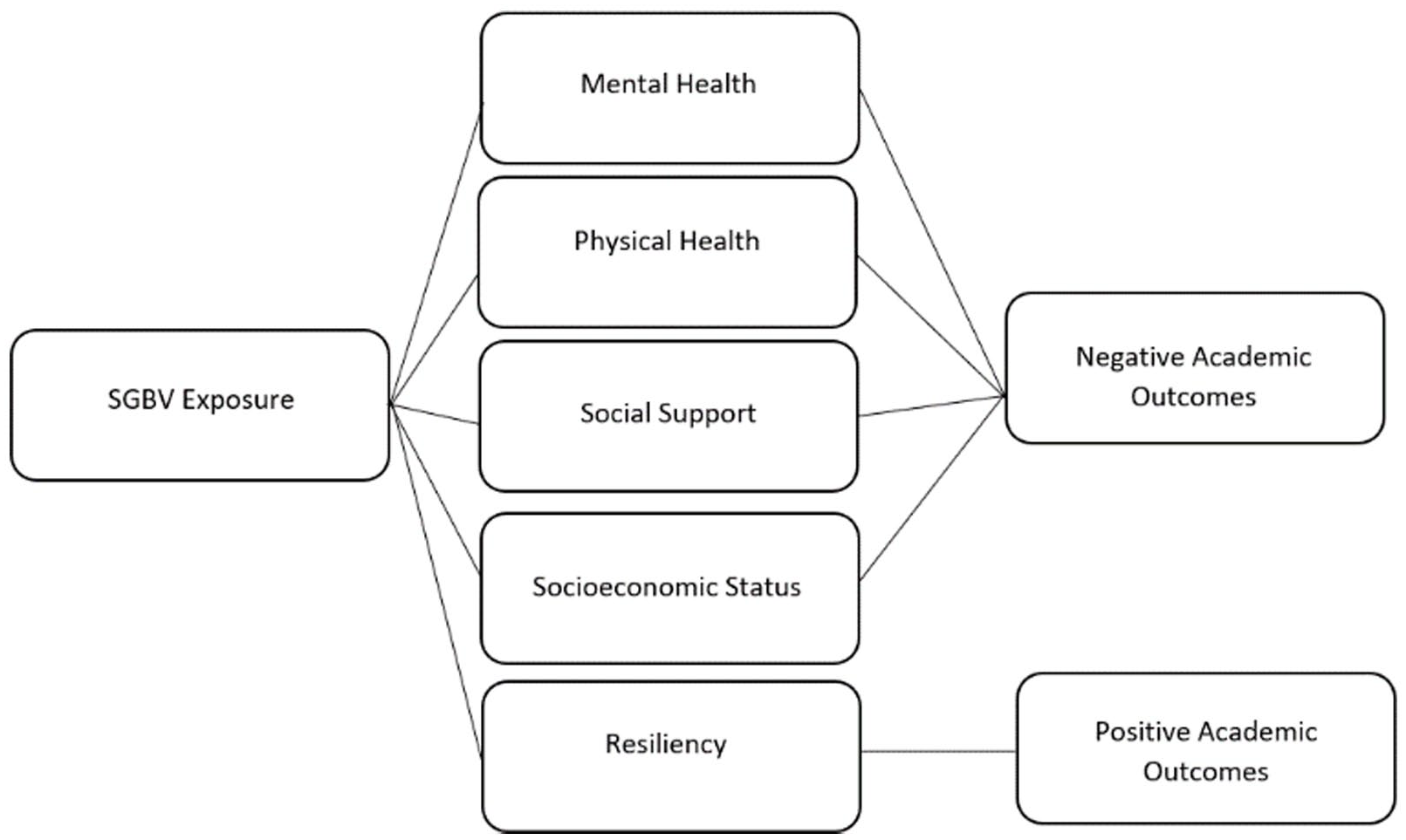
Pathway model.
Mental Health
Twenty-one studies examined mental health as a mediator between SGBV exposure and academic outcomes. In many of these cases, SGBV exposure had mental health consequences such as development of PTSD, anxiety, depression, and psychological distress (Amar 2006; Arria et al., 2020; Artime et al., 2018; Barling et al., 1996; Bonomi et al., 2018; N. Q. Brewer & Thomas 2019; N. Brewer et al., 2018; Hodge & Privott 2017; Huerta et al., 2006; Lindquist et al., 2013; Lorenzo, 2019; Loya, 2012; Mitchell, 2020; S. Potter et al., 2018; Rosenthal, 2018; Rothman et al., 2021; P. C. Silverschanz, 2007; Sorokas, 2018; South, 2018; Voth Schrag, Wood, et al., 2020; Voth Schrag, Edmond, et al., 2020). These mental health symptoms, in turn, were significantly correlated with academic motivation, disengagement, grades, attendance and dropout rates, and study and avoidance behaviors (Amar, 2006; Arria et al., 2020; Artime et al., 2018; Barling et al., 1996; Bonomi et al., 2018; N. Q. Brewer & Thomas, 2019; N. Brewer et al., 2018; Hodge & Privott, 2017; Huerta et al., 2006; Lindquist et al., 2013; Lorenzo, 2019; Loya, 2012; Mitchell, 2020; S. Potter et al., 2018; Rosenthal, 2018; Rothman et al., 2021; P. C. Silverschanz, 2007; Sorokas, 2018; South, 2018; Voth Schrag, Wood, et al., 2020; Voth Schrag, Edmond, et al., 2020).
Physical Health
Four studies looked at physical health as a mediator between SGBV exposure and academic outcomes. Health outcomes such as fatigue, headaches, gastrointestinal issues, and other chronic health problems occurred as a result of SGBV exposure (N. .Q. Brewer & Thomas, 2019; Hodge & Privott 2017; S. Potter et al., 2018; Voth Schrag, Wood, et al., 2020), and the participants in these studies described those problems as being impediments to academic performance and negatively affecting attendance rates (N. Q. Brewer & Thomas, 2019; Hodge & Privott, 2017; S. Potter et al., 2018; Voth Schrag, Wood, et al., 2020).
Social Support
Another four studies identified examined lack of social support as a mediator between SGBV exposure and academic outcomes. The forms of social support, or lack thereof, included sense of community, environmental support, social exclusion, and disclosure of the SGBV experience to family, friends, and/or the institution (Mennicke et al., 2020; Morris & Lent 2019; P. C. Silverschanz, 2007; Voth Schrag, Edmond, et al., 2020). A limited sense of community or environmental support led to decreased academic satisfaction and thoughts of dropout (Morris & Lent, 2019; Voth Schrag, Edmond, et al., 2020). Being socially excluded after disclosing SGBV exposure was related to increased school avoidance behaviors and decreased academic performance (Mennicke et al., 2020; P. C. Silverschanz, 2007). Mennicke et al. (2020) studied academic consequences resulting from all types of SGBV through a mediating relationship with number of disclosures. They found that the number of disclosures after experiencing SGBV was positively associated with the number of consequences participants would feel (Mennicke et al., 2020).
Resiliency
One study mentioned resiliency as a mediator between SGBV exposure and academic outcomes. In contrast with all other identified mediators, resiliency acted in a constructive way leading to positive academic outcomes. This study indicated that those SGBV survivors who had positive academic outcomes demonstrated resilience and that, as students, they persisted despite barriers and did not let their abuse make a difference in their academic performance (Muro, 2013).
Socioeconomic Status
Four studies mentioned SES as a possible intermediate factor. Pinter (2015) identified SES as a mediator and showed that those with lower SES did not have the ability or resources to promote healing the same way as those with higher SES (Pinter, 2015). Two other studies highlighted the role of financial issues in the pathway between SGBV exposure and academic outcomes (N. Q. Brewer & Thomas, 2019; Loya, 2012). Financial issues among students who experienced SGBV often led to increased dropout as students could not pay for school due to loss of scholarships or costs associated with hospital bills, legal fees, and more (N. Q. Brewer & Thomas, 2019; Loya, 2012). We identified one study that mentioned perpetrator social status as a mediator (Huerta et al., 2006). Students who experienced SGBV at the hands of a higher-status perpetrator often experienced decreased academic satisfaction (Huerta et al., 2006).
Summary and Discussion
Public discussions about SGBV have commonly focused on prevalence, prevention, or adjudication, especially in the wake of the #MeToo social movement. While these discussions are important, it is also critical to understand how SGBV experiences impact other aspects of a survivor’s life. This review synthesizes the growing body of research on academic impacts resulting from SGBV exposure in higher education, utilizing findings from 68 studies about the relation of all forms of SGBV to academic consequences. The majority of these studies found that any type of SGBV exposure had a significant negative impact on the educational trajectories of university students. This included research on six different academic impacts of SGBV: (1) academic performance and motivation; (2) attendance, avoidance, and dropout rates; (3) changes in major or field of study; (4) academic disengagement; (5) educational attitudes and satisfaction; and (6) academic climate and institutional relationships. While not all of the research reviewed examined the pathways through which SGBV produced adverse academic impacts, studies that did pointed to five main pathways between SGBV exposure and educational trajectories: mental and physical health consequences, social support (or lack thereof), resiliency, and SES. Further research on pathways, and in particular an examination of those pathways that suggest that social disadvantage can amplify the impact of experiencing SGBV, could advance knowledge of strategies to support SGBV survivors.
Each measure of academic impact has strengths and weaknesses. Academic performance and motivation may be subjective and difficult to define, and thus present measurement reliability challenges. However, academic performance and motivation as well as attendance, avoidance, and dropout rates can also be measured quantitatively which is an advantage. Changes in field of study clearly shows a divergence in educational trajectory, but does not take into account mediating factors. Academic disengagement, educational attitudes and satisfaction, academic climate, and institutional relationships may provide context as to why survivors’ educational trajectories are altered but give only an indirect measure of how they are altered. Alone, each academic outcome may not be sufficient to explain the complete effect that SGBV has on the educational trajectories of survivors; in combination, they present a nuanced representation of SGBV’s myriad academic impacts.
This synthesis reveals questions that merit further research. For educational attitudes and satisfaction as well as academic climate and institutional relationships, the main exposure looked at was sexual harassment. Only three studies for each of those categories of outcomes examined sexual assault as an exposure (Banyard et al., 2020; Kammer-Kerwick et al., 2021; Raymond & Corse, 2018; Rosenthal, 2018). Additionally, we identified no research looking at IPV/relationship abuse in relation to changes in major or field of study. There is a need for more work that examines the academic impacts of both sexual assault and IPV. Moreover, we identified no work looking at mediators of academic climate and institutional relationship outcomes. Future research should address these gaps.
Few studies looked at emotional abuse or cyber abuse as the main exposure. Emotional abuse would be important to examine in future studies because psychological distress was found to be a significant mediator in the pathway from violence to academic outcomes. Cyber violence would also be important to look at given the intensity of engagement with technology. Additionally, a handful of studies mentioned a small number of participants reporting academic improvements post-exposure; although perhaps counter-intuitive, this demands further study. Regarding academic outcomes, we found no research that studied how specific academic skills were affected—whether, for example, there were different impacts on math skills, writing quality, or reading comprehension, or certain subjects or types of assignments were affected more than others. A few studies examined STEM outcomes, or specific academic programs such as medical school and social work (Cholewinski & Burge 1990; Heiderscheit et al., 2021; Kuchynka et al., 2018; Leaper & Starr, 2019; McClain et al., 2021; Stratton et al., 2005; Zeanah, 2016); however, none compared the performance of SGBV survivors in one subject versus another. Research going forward could examine how the specific trauma of experiencing SGBV affects different dimensions of cognitive functioning.
Other outcomes that could benefit from additional research include impacts on residence choice. SGBV could have an impact on a survivor’s choice to live on-campus versus off-campus, the specific dorm they choose to live in, and even their roommate preferences. Another outcome to consider would be the impact on disciplinary action taken against the student for problem behaviors. For example, a student may start acting out after their SGBV experience and subsequently encounter an increase in disciplinary action, such as detention. However, this outcome may be better suited for research performed in a high school setting rather than higher education. Another question that could merit further research is the difference in impact of SGBV exposures perpetrated by faculty or staff compared to those perpetrated by peers. This could provide important implications about the obligation of institutions to comply with Title IX and create positive learning environments for all students. Additionally, since education has been linked to economic well-being (Doyle & Skinner, 2016), longitudinal research could answer questions about pathways between SGBV exposure, academic outcomes, and future earnings.
This review did not examine secondary victimization on the part of the survivors’ friends and family. Most students who experience sexual violence on campus rely on their friends for support, rather than making a formal report (Hirsch & Khan, 2020; Khan et al., 2018), and so the experiences of “co-survivors” is both an element of the community mental health burden produced by SGBV and, potentially, a source of academic challenges. Furthermore, there are other important everyday activities beyond work or school. Future research could also address the impact of SGBV on personal pursuits such as hobbies, interests, social activities, relationships, life satisfaction, as well as on the many extracurricular activities offered on college campuses, which affect social and emotional well-being as well as professional development.
There is substantial room for more research on the specific experiences of different minoritized groups. SGBV exposure had consistent effects across the majority of studies, regardless of the study design or setting. However, there were some noted disparities in the severity of impact among sexual minority students and underrepresented racial and ethnic minority students, and only one study focused on participants with disabilities (Bonomi et al., 2018), which is striking given the elevated rates of SGBV experienced by people with disabilities. The majority of the research included in this review was conducted in large, public universities. More work on this subject should include more community colleges, vocational schools, and HBCUs.
Future research on these questions should use stronger study designs and combine multiple approaches. For example, longitudinal designs could provide detailed information on how a survivor’s educational trajectory is affected over time, and ethnographic research could offer an in-depth look at the survivor’s environment and cultural context that may lead to certain outcomes. Future research should also focus on using mixed-methods to study educational attitudes and satisfaction outcomes after SGBV exposure in order to update the literature. It may also be beneficial to compare results across campuses in order to identify any disparities or possible causal or protective factors. The information presented in this review can also be useful in informing policy dissemination and implementation studies. Table 2 details further implications for practice, policy and research.
Implications for Practice, Policy, and Research.

Note. SGBV = Sexual and gender-based violence
This review has a number of limitations. Most of the research reviewed here was either cross-sectional studies or, to a lesser extent, qualitative research. Several studies had very small sample sizes, and thus potentially limited generalizability. The review itself looked only at SGBV as the exposure, and this may not have captured all forms of violence that students experience. For example, studies that specifically examined racialized violence or familial abuse may not have been included. The same could be true for studies that examined microaggressions, bullying, or other bias incidents, especially among sexual minority students. Future reviews could build upon this gap by approaching victimization intersectionally and by including incidents of racism and noncriminal peer victimization like bullying, as these experiences may also have adverse impacts on education. This review only gathered data from studies set in the United States. or Canada and as such, is not generalizable to the whole world.
Conclusion
Overall, this review provides strong evidence of the impact of SGBV on academic trajectories. While cishetero men certainly do experience SGBV, it disproportionately affects women and sexual and gender minorities, thus creating a substantially unequal environment, with potential economic (and other) impacts across the life course. Beyond the question of Title IX compliance, effective SGBV prevention in higher education is vital to building academic environments in which every student has the opportunity to fulfill their educational potential.
Supplemental Material
sj-docx-1-tva-10.1177_15248380231173430 – Supplemental material for “Hardly Able to Move, Much Less Open a Book”: A Systematic Review of the Impact of Sexual and Gender-Based Violence Victimization on Educational Trajectories
Supplemental material, sj-docx-1-tva-10.1177_15248380231173430 for “Hardly Able to Move, Much Less Open a Book”: A Systematic Review of the Impact of Sexual and Gender-Based Violence Victimization on Educational Trajectories by Angela B. Geppert, Aarushi H. Shah and Jennifer S. Hirsch in Trauma, Violence, & Abuse
Footnotes
Declaration of Conflicting Interests
The authors declared no potential conflicts of interest with respect to the research, authorship, and/or publication of this article.
Funding
The authors disclosed receipt of the following financial support for the research, authorship, and/or publication of this article: Author Aarushi H. Shah’s contribution was supported by funding from the US Eunice Kennedy Shriver National Institute of Child Health and Human Development, through the Predoctoral Fellowship in Gender, Sexuality, and Health (5T32HD049339, PI: JSH). Author Jennifer S. Hirsch’s contribution was supported by the US Eunice Kennedy Shriver National Institute of Child Health and Human Development under Grant number P2CHD058486, awarded to the Columbia Population Research Center (PIs: JSH and Jane Waldfogel). Opinions, findings, and conclusions or recommendations expressed in this material are those of the authors and do not necessarily reflect the views of the US National Science Foundation or the US National Institutes of Health.

Supplemental Material
Supplemental material for this article is available online.
Author Biographies
References
Supplementary Material
Please find the following supplemental material available below.
For Open Access articles published under a Creative Commons License, all supplemental material carries the same license as the article it is associated with.
For non-Open Access articles published, all supplemental material carries a non-exclusive license, and permission requests for re-use of supplemental material or any part of supplemental material shall be sent directly to the copyright owner as specified in the copyright notice associated with the article.
